Святого Апостола и Евангелиста Марка из лика 70 Апостолов отличают от Марка, называемого в Писании также Иоанном. Последний был родом Еврей, от колена Левиина, из племени священнического, мать его – Мария жила в Иерусалиме; её посещал Ап. Пётр (Деян.12:12). Марк Иоанн был племянник Ап. Варнаве (Кол.4:10), и через него сделался известен Ап. Павлу и был спутником его и Варнавы в первом их Апостольском путешествии (Деян.12:25,13:5,13). Когда Варнава отдельно от Ап. Павла странствовал для проповеди Евангелия, Марк Иоанн сопутствовал Варнаве (Деян.15:37–39). Впоследствии Марк сделался благопотребен Павлу в службу (2Тим.4:11) и был его споспешник (Флм.1:23). Евангелист же Марк был Еллин из Кирены, города в Пентаполе Ливийском. Обращением своим к Иисусу Христу Марк обязан Ап. Петру, который называет его сыном своим (1Пет.5:13), конечно в том смысле, что Ап. Пётр родил его своим благовествованием в благодатную жизнь. Марк был спутником Ап. Петра и сказателем его преданий.
The Holy Apostle and Evangelist Mark, one of the Seventy Apostles, is distinguished from the Mark who is also called John in Scripture. The latter was a Hebrew by birth, of the tribe of Levi, from a priestly family; his mother, Mary, lived in Jerusalem; she was visited by the Apostle Peter (Acts 12:12). Mark John was a nephew of the Apostle Barnabas (Col. 4:10), and through him became known to the Apostle Paul and was his companion and that of Barnabas on their first Apostolic journey (Acts 12:25, 13:5, 13). When Barnabas traveled separately from the Apostle Paul to preach the Gospel, Mark John accompanied Barnabas (Acts 15:37–39). Later, Mark became useful to Paul in service (2 Tim. 4:11) and was his fellow-worker (Philem. 1:23). The Evangelist Mark, however, was a Greek from Cyrene, a city in the Libyan Pentapolis. Mark owed his conversion to Jesus Christ to the Apostle Peter, who calls him his son (1 Pet. 5:13), certainly in the sense that the Apostle Peter gave birth to him through his preaching into a life of grace. Mark was a companion of the Apostle Peter and an interpreter of his traditions.
Евангелие проповедал св. Марк на берегах Адриатики и в Египте. Бывши в Риме с Апостолом Петром в качестве его спутника, Марк, по благочестивому желанию Римских из язычников христиан, коим хотелось иметь письменный памятник устно преподанного Апостолом Петром об Иисусе Христе, написал через 10 лет по Вознесении Господа на Греческом языке святое Евангелие, «еже похвали Пётр и Церкви предаде». В Евангелии своём преимущественно описывает действия Спасителя, особенно чудесные, которые имели большее влияние на умы язычников, чем учение. В Венеции доселе хранится весьма древняя рукопись сего Евангелия.
St. Mark preached the Gospel on the shores of the Adriatic and in Egypt. While in Rome with the Apostle Peter as his companion, Mark, at the pious desire of the Roman Christians from among the pagans, who wished to have a written record of the orally delivered teaching of the Apostle Peter concerning Jesus Christ, wrote the holy Gospel in Greek ten years after the Ascension of the Lord, "which Peter praised and committed to the Church." In his Gospel, he chiefly describes the actions of the Savior, especially the miraculous ones, which had a greater influence on the minds of pagans than did doctrine. In Venice, a very ancient manuscript of this Gospel is preserved to this day.
Из Рима посылаемый Апостолом Петром, св. Марк, взяв списанное им Евангелие, около 49 года по Р. X. перешёл для проповеди веры Христовой в Александрию, а вместо себя оставил в Риме ученика своего Гермогора, который рукоположен был в епископа древней Аквилеи. Свою спасительную проповедь Марк простёр в западные области Африки Ливию, Мармарику, Киренаику или Пентаполь. Церковь Александрийская приняла от Марка составленный им чин литургии, который долго сохранялся в его Церкви, и доселе в Богослужении Египетских христиан – Коптов сохраняются некоторые молитвы, приписываемые Марку.
Sent from Rome by the Apostle Peter, St. Mark, taking the Gospel he had written, went around the year 49 A.D. to Alexandria to preach the Christian faith, and left in his place in Rome his disciple Hermagoras, who was ordained bishop of ancient Aquileia. Mark extended his saving preaching to the western regions of Africa: Libya, Marmarica, Cyrenaica or Pentapolis. The Church of Alexandria received from Mark the order of the Divine Liturgy he composed, which was long preserved in his Church, and to this day certain prayers attributed to Mark are preserved in the divine services of the Egyptian Christians—the Copts.
Марк был первым епископом и мучеником Александрийской Церкви. Язычники Александрийские в 14 год царствования Нерона, или около 68 года по Р. X. предали святого Марка мученической смерти, во время празднества своего, отправлявшегося в Александрии в честь Сераписа. Впоследствии мощи святого Евангелиста Марка, в 828 году, перенесены из Александрии в Венецию, где они и доселе почивают. Впрочем, Церковь Александрийская чтит св. Марка своим просветителем и покровителем. Патриарх Александрийский доселе сохранил в своей печати изображение крылатого льва, держащего Евангелие, усвоенного изображению святого Евангелиста Марка, и в своих посланиях даёт благословение: «да будет благословение Владыки Христа, Пресвятой Богородицы и святого Евангелиста Марка.
Mark was the first bishop and martyr of the Church of Alexandria. The pagans of Alexandria, in the 14th year of the reign of Nero, or around 68 A.D., subjected St. Mark to a martyr's death, during their festival celebrated in Alexandria in honor of Serapis. Later, the relics of the holy Evangelist Mark were transferred from Alexandria to Venice in the year 828, where they still repose. Nevertheless, the Church of Alexandria venerates St. Mark as its enlightener and patron. The Patriarch of Alexandria to this day retains in his seal the image of a winged lion holding a Gospel, ascribed to the image of the holy Evangelist Mark, and in his epistles gives the blessing: "May the blessing of the Lord Christ, the Most Holy Theotokos, and the holy Evangelist Mark be with you."
Церковь величает св. Марка в своём Богослужении, между прочим, просветителем Александрии, в которой «разрушил он риторские плетения».
The Church glorifies St. Mark in its divine services, among other things, as the enlightener of Alexandria, in which "he destroyed the rhetorical fabrications."
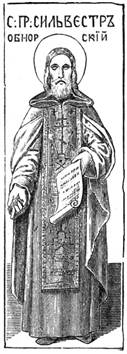
По рукописным святцам, «преп. Сильвестр, игумен Воскресенского монастыря, иже на Обноре реце, бысть ученик святого Сергия чудотворца». Получив духовное воспитание под руководством великого Сергия, Сильвестр по ревности к безмолвной жизни отправился искать пустынного места по духу своему. Он остановился в глухом лесу на берегу Обноры, поставилъ здесь крестъ и келью и начал подвизаться в молитве и посте. Долго оставался отшельник незнаемым для людей, совершая подвиги самоотречения. Раз один из жителей края того сбился с дороги и неожиданно увидел келью отшельника. К изумлённому вышел пустынник, одетый в рубище. Пустынник неприятно удивлён был появлениемъ человека в месте пустынном, где дотоле никого не видел он и не хотел видеть. Путник сказал преподобному о себе, кто он и как попал сюда; сказал и то, что над местом, где жил преподобный, часто видел он то светоносные лучи, то столб облачный. В ответ преподобный изъявил скорбь, что тайное место его стало известным. По просьбе путника, он сказал ему своё имя и рассказал, что уже не малое время живёт он в пустыне, питаясь травами и кореньями, и умолял его никому не говорить о месте пребывания его. На вопрос пришельца, как мог он жить без хлеба и в такой глуши? преподобный отвечал, что в первое время нередко изнемогал он от голода и от изнеможения сил падал на землю, но явился ему чудный муж, который, прикоснувшись к нему рукой, укрепил его, и с тех пор он безбедно пребывает в пустыне. После того пришелец нарочито посетил отшельника и принёс ему хлеба и муки. Согласно с таким преданием о пустынной жизни преп. Сильвестра, древний тропарь, вышитый на покрове чудотворца Сильвестра 1664 г., говорит: «из млада Христа возлюбив, верою приближился еси к Нему и изнурил многострадальное тело твое, блаженне!»
According to the handwritten saints' calendars, "the Venerable Sylvester, abbot of the Resurrection Monastery on the Obnora River, was a disciple of the holy Wonderworker Sergius." Having received spiritual upbringing under the guidance of the great Sergius, Sylvester, out of zeal for the silent life, set out to seek a desert place according to his spirit. He stopped in a dense forest on the bank of the Obnora, set up a cross and a cell there, and began to struggle in prayer and fasting. For a long time, the hermit remained unknown to men, performing feats of self-denial. Once, one of the inhabitants of that region lost his way and unexpectedly saw the hermit's cell. The desert-dweller, clad in rags, came out to the astonished man. The hermit was unpleasantly surprised by the appearance of a man in the desert place, where until then he had seen no one and wished to see no one. The traveler told the Venerable One about himself, who he was and how he had come there; he also said that over the place where the Venerable One lived, he had often seen either luminous rays or a pillar of cloud. In reply, the Venerable One expressed sorrow that his secret place had become known. At the traveler's request, he told him his name and related that he had already lived in the desert for a considerable time, feeding on herbs and roots, and implored him to tell no one about his place of abode. To the visitor's question of how he could live without bread and in such a wilderness, the Venerable One replied that at first he often grew faint from hunger and, from exhaustion of strength, fell to the ground, but a wondrous man appeared to him, who, touching him with his hand, strengthened him, and since then he has dwelt in the desert without want. After that, the visitor purposely visited the hermit and brought him bread and flour. In accordance with this tradition about the desert life of the Venerable Sylvester, the ancient troparion embroidered on the cover of the Wonderworker Sylvester in 1664 says: "Having loved Christ from youth, you drew near to Him with faith and exhausted your much-suffering body, O blessed one!"
Довольно было одному видеть святого подвижника, чтобы узнали о нём многие. Окрестные жители стали приходить к нему за духовными советами, и некоторые решились жить с ним. Преподобный не препятствовал доброму желанию, и подражатели святого поставили себе кельи. Когда число желавших подвизаться под руководством Сильвестра стало значительным, преподобный увидел нужду в храме. Он пошёл к святителю Алексию просить благословения на создание пустынного храма. Святитель выдал антиминс и самому Сильвестру поручил игуменство над собравшейся братией. Храм построен и освящён в славу Воскресения Спасителя, и устроился монастырь. Это был первый монастырь на Обноре. Преп. Сергий и Павел пришли в эти места гораздо после преп. Сильвестра и основали обители свои, один в 30-ти, другой – в 20 верстах от Воскресенского монастыря.
It was enough for one person to see the holy ascetic for many to learn of him. The surrounding inhabitants began to come to him for spiritual counsel, and some decided to live with him. The Venerable One did not hinder this good desire, and the imitators of the saint set up cells for themselves. When the number of those wishing to struggle under Sylvester's guidance became significant, the Venerable One saw the need for a church. He went to the Hierarch Alexis to ask for a blessing to build a desert church. The Hierarch issued an antimension and entrusted the abbacy over the gathered brethren to Sylvester himself. The church was built and consecrated in honor of the Resurrection of the Savior, and a monastery was established. This was the first monastery on the Obnora. The Venerable Sergius and Paul came to these places much later than the Venerable Sylvester and founded their own monasteries, one thirty, the other twenty versts from the Resurrection Monastery.
Со времени устроения обители посещения искавших у преп. советов умножились. К нему приходили князья и бояре за утешениями духовными, а простой народ ещё усерднее был к преподобному. Это сильно печалило его и – он для безмолвных подвигов удалялся в глухое место дремучего леса. Это место доныне сохраняет название Заповедной рощи, так как преподобный строго заповедал не рубить этого леса. В средине этой рощи труженик Божий выкопал три колодца, а четвёртый на склоне горы к реке Обноре. Последний и до сих пор источает струи чистой воды, с благоговением почерпаемой Богомольцами. Так как народ жаждал видеть и слушать св. старца, то по временам выходил он из своего уединения на определённое место для беседы с народом. Это место издавна отмечено часовней, к которой каждый год бывает крестный ход в день памяти преподобного.
From the time of the monastery's establishment, visits from those seeking counsel from the Venerable One increased. Princes and boyars came to him for spiritual consolation, and the common people were even more zealous toward the Venerable One. This greatly grieved him, and he withdrew for silent struggles to a remote place in the dense forest. This place still retains the name Forbidden Grove, because the Venerable One strictly forbade cutting this forest. In the midst of this grove, the divine laborer dug three wells, and a fourth on the slope of the hill toward the Obnora River. The last one still pours forth streams of pure water, reverently drawn by pilgrims. Since the people thirsted to see and hear the holy elder, he would from time to time come out of his seclusion to a designated place to converse with the people. This place has long been marked by a chapel, to which a procession of the cross is made every year on the day of the Venerable One's memory.
Почувствовав близость кончины своей, преподобный собрал братию и преподал им последнее наставление своё. На свитке древней иконы его написаны вязью следующие слова: «внемлите, о братия моя возлюбленная, Бога бойтеся и страх Его в сердце своём имейте, сохраняйте заповеди Господни, святых церквей не отлучайтеся, святительский и весь освященный и монашеский чин честно соблюдите; в нынешнем веце, братия моя, потерпите мало и причастницы будете Царствию Божию и венцы получите». По надписи на покрове 1664 г. преп. Сильвестр «в лето 6887 (1379) преставися мес. апр. в 25 д. при преосвященном Киприане митрополите – и положены быша честные мощи его в созданном от него монастыре».
Sensing the approach of his end, the Venerable One gathered the brethren and gave them his final instruction. On a scroll of an ancient icon of his, the following words are written in ligature: "Hearken, O my beloved brethren: fear God and keep His fear in your heart, preserve the commandments of the Lord, do not separate yourselves from the holy churches, honorably keep the hierarchal and all the sacred and monastic order; in this present age, my brethren, suffer a little, and you will be partakers of the Kingdom of God and receive crowns." According to the inscription on the cover of 1664, the Venerable Sylvester "in the year 6887 (1379) reposed on the 25th day of the month of April, under the Most Reverend Metropolitan Cyprian—and his honorable relics were placed in the monastery founded by him."
Уже в шитой надписи на воздухе 1599 г. преп. Сильвестр называется чудотворцем. На шитом шелками и золотом покрове находится такая надпись: «1664 г. дал в дом Сильвестру чудотворцу покров чёрный старец Сильвестр на Обнору реку по себе и родителех». В середине покрова вышита икона преп. Сильвестра, а по сторонам – тропарь и кондак св. Сильвестру. Дошедшее до нас описание чудес преп. изображает чудеса с 1645 г. Заметим два из них.
Already in the embroidered inscription on the veil of 1599, the Venerable Sylvester is called a wonderworker. On a cover embroidered with silk and gold is the following inscription: "In the year 1664, the black-clad elder Sylvester gave this cover to the house of Sylvester the Wonderworker on the Obnora River for himself and his parents." In the middle of the cover is embroidered an icon of the Venerable Sylvester, and on the sides—the troparion and kontakion of St. Sylvester. The description of the Venerable One's miracles that has come down to us depicts miracles from 1645. Let us note two of them.
В обители Воскресения Христова и преп. Сильвестра был строителем иеромонах Иов. Он собрал крестьян и велел рубить на дрова бывшую за монастырём чудотворцеву рощу. – Крестьяне начали рубить лес, а Иов, прогневавший преп. Сильвестра самовольным распоряжением, вдруг ослеп и четыре недели ничего не видел. Он начал приносить покаяние и просил преп. Сильвестра даровать ему прощение в грехе и прозрение очам, обещаясь отслужить молебен преподобному и вперёд не делать по своей воле, а всё по совету братии. После молебного пения, когда приложился он к св. иконам и облобызал чудотворцеву раку, Бог молитвами преподобного даровал ему опять зрение. Это случилось в 1645 г.».
In the monastery of the Resurrection of Christ and the Venerable Sylvester, the builder was the hieromonk Job. He gathered the peasants and ordered them to cut down for firewood the wonderworker's grove that was behind the monastery. The peasants began to cut the forest, and Job, who had angered the Venerable Sylvester by his arbitrary order, suddenly went blind and saw nothing for four weeks. He began to repent and asked the Venerable Sylvester to grant him forgiveness for his sin and the opening of his eyes, promising to serve a moleben to the Venerable One and henceforth not to act by his own will, but everything by the counsel of the brethren. After the moleben, when he had venerated the holy icons and kissed the wonderworker's reliquary, God, through the prayers of the Venerable One, granted him his sight again. This happened in 1645.
Земледелец-скоморох Прохор Дружина сошёл с ума; его связывали цепями, но он грыз цепь зубами, драл себе волосы и лицо, навешал себе на ворот и на пояс лаптей старых. Соседи повели его в обитель преподобного и, когда совершено было молебное пение, с трудом подвели его приложиться к раке чудотворца, после чего он сделался совсем здоров. Это было 3 августа 1646 г.
A peasant skomorokh, Prokhor Druzhina, went mad; they bound him with chains, but he gnawed the chain with his teeth, tore his hair and face, and hung old bast shoes on his collar and belt. His neighbors led him to the monastery of the Venerable One, and when a moleben had been sung, they with difficulty brought him to venerate the wonderworker's reliquary, after which he became completely well. This was on August 3, 1646.
С половины 1860 г. исцеления от гроба преподобного потекли обильной струёй и текут доныне306.
From the middle of the year 1860, healings from the grave of the Venerable One began to flow in an abundant stream and continue to flow to this day306.
Чудеса преп. Сильвестра и жизнь его описаны г. Смирновым в Душеп. Чт. 1861 г. III, 229–269. По переписи 1662 г. за Воскресенским монастырём 42 двора.
The miracles of the Venerable Sylvester and his life are described by Mr. Smirnov in Dushepoleznoe Chtenie 1861, III, 229–269. According to the census of 1662, the Resurrection Monastery had 42 households.