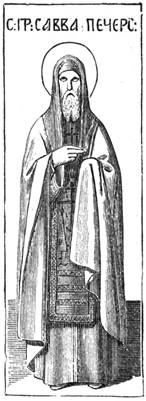
Савва, родом Готф, саном стратилат (полковник), во время гонений на христиан посещал заключённых и помогал им, чем мог. Донесли имп. Аврелиану, что Савва – христианин. На допросе он открыто исповедал веру свою во Христа и, бросив воинский пояс, явил себя готовым на всякие муки. Его бичевали, палили огнём, бросили в котёл с кипящей водой, но он мужественно пребыл в вере; семьдесят воинов, уверовавших при виде его подвигов, тотчас были избиты, а святой ещё раз, на другой день, приведён на испытание и наконец утоплен в реке. Это было в 272 г., в Риме.
Sabbas, a Goth by birth, holding the rank of stratelates (colonel), during the persecution of Christians visited those imprisoned and helped them as he could. They reported to Emperor Aurelian that Sabbas was a Christian. At the interrogation he openly confessed his faith in Christ and, casting off his military belt, showed himself ready for every torment. They scourged him, burned him with fire, threw him into a cauldron of boiling water, but he courageously remained in the faith; seventy soldiers, who believed at the sight of his struggles, were immediately beaten to death, and the saint was brought again for trial on the next day and finally drowned in the river. This occurred in the year 272, in Rome.
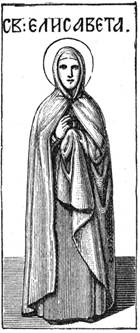
Ещё в юных летах, отданная в Цареградскую обитель чистых дев, блаженная Елисавета298, дав обеты девства в зрелом возрасте, с пламенной ревностью выполняла их, – проводила жизнь в посте, трудах и молитвах. Зимой и летом одна была на ней одежда – грубая власяница; тело её коченело от холода, но душа горела любовью к Господу. Какое, скажут, насилие природе! Да, насилие; но законное. Что прикажете делать, когда природа дурна и её нельзя иначе приблизить к нормальному состоянию, как насилием? Иначе не желаете ли попасть в ад. Если желаете, попадёте. Благочестивый император Иустин (518–527 г.) и супруга его София, положив мощи св. мучеников Козьмы и Дамиана в храме щедро построенном, открыли тут женскую обитель299. В этой-то обители настоятельницей была блаженная Елисавета300.
Given in her early youth to the monastery of pure virgins in Constantinople, the blessed Elizabeth298, having made vows of virginity at a mature age, fulfilled them with fervent zeal—she spent her life in fasting, labors, and prayers. In winter and summer she had but one garment—a coarse hair-shirt; her body grew stiff from cold, but her soul burned with love for the Lord. What violence to nature, one might say! Yes, violence; but lawful violence. What is one to do when nature is evil and cannot otherwise be brought near to its normal state except by violence? Otherwise, would you not prefer to end up in hell? If you so wish, you will end up there. The pious Emperor Justin (518–527 A.D.) and his wife Sophia, having placed the relics of the holy martyrs Cosmas and Damian in a church they had generously built, founded a women's monastery there299. In this monastery the blessed Elizabeth was abbess300.
Борьба преподобной с собой не ослабевала до гроба. Она питалась только растениями, не вкушая хлеба; даже масла не прибавляла она к суровой своей пище. Пост её по временам продолжался до 40 дней. Три года во время молитвы не взводила она очей на небо, по примеру смиренного мытаря. Тела своего не мыла она во всю жизнь. Так смиряла она и сладострастное тело, и гордость духа подвигами переменными.
The Venerable one's struggle with herself did not weaken until the grave. She fed only on plants, eating no bread; she added not even oil to her austere food. Her fast sometimes lasted up to forty days. For three years during prayer she did not raise her eyes to heaven, following the example of the humble publican. She did not wash her body her whole life. Thus she subdued both the pleasure-loving body and the pride of the spirit through varied ascetic labors.
Вместе с тем она ревностно заботилась о спасении сестёр её о Господе. Опытная подвижница, хорошо узнавшая сердце женское, внушала сёстрам и жёнам особенно остерегаться лживого лукавства и злоязычия, как грехов очень частых между женщинами. Мы слабы и телесной силой, и умом, так рассуждала она. Премудрый говорит: «человека (умного мужчину) я нашёл одного из тысячи, а женщин (умной) из всех их (из тысячи) не нашёл ни одной» (Еккл.7:28). В укоризну говорит пророк об Израиле: «дети– вожди народа моего; женщины господствуют над ним» (Ис.3:12,19:16). И при такой-то слабости мы думаем быть сильными то хитростью, то языком злым. Но хитрость наша, как неразлучная с ложью, ставит нас прямо под влияние сатаны. Он – отец лжи и отважно действует там, где любят ложь. Кто, изворачиваясь во лжи, думает, что выказывает ум и силу, тот ошибается до жалости, – он послушное орудие сатаны, отца лжи. Отец тьмы наводит на такую душу тьму, она не сознаёт грехов своих, не видит своей опасной низости и остаётся в бесчувствии. Говорливость женская тем более грешна, что, при недостатке рассудительности и при раздражительности сердца, расточаем мы всего чаще пустоту, ложь, клевету, легкомыслие, вредное для себя и других. «Сердце праведного подумав отвечает; а уста беззаконных рекою льют худое», говорит мудрый (Притч.15:28). Что обнаруживает собой болтливое злоязычие? Злость гордости, беснующейся от сознания своей слабости. В бедности женщина по зависти чернит других; богатая унижает других по гордости. Сколько бед, сколько страданий выходит от того для людей! Любите друг друга, а не злобствуйте, сказано нам. Блаженная игуменья полна была любовью к другим. У неё готова была помощь для бедных и вдов; обиженных защищала она от обижающих перед начальством их; призирала и воспитывала сироток301.
At the same time she zealously cared for the salvation of her sisters in the Lord. An experienced ascetic, well acquainted with the female heart, she admonished the sisters and women especially to beware of deceitful cunning and evil-speaking, as sins very common among women. "We are weak," she reasoned, "both in bodily strength and in mind. The Wise One says: 'One man among a thousand I have found, but a woman among all these I have not found' (Eccl. 7:28). In reproach the prophet says of Israel: 'Children are the princes of my people; women rule over them' (Is. 3:12, 19:16). And with such weakness we think to be strong, now by cunning, now by an evil tongue. But our cunning, being inseparable from falsehood, places us directly under the influence of Satan. He is the father of lies and acts boldly where falsehood is loved. Whoever, twisting in lies, thinks he displays intelligence and strength, is mistaken to a pitiful degree—he is a willing instrument of Satan, the father of lies. The father of darkness brings darkness upon such a soul; it does not recognize its sins, does not see its dangerous baseness, and remains in insensibility. Feminine talkativeness is all the more sinful because, with a lack of discernment and with irritability of heart, we most often pour forth emptiness, falsehood, slander, frivolity, harmful to ourselves and others. 'The heart of the righteous ponders how to answer, but the mouth of the wicked pours out evil things,' says the wise man (Prov. 15:28). What does talkative evil-speaking reveal? The malice of pride, raging from the awareness of its own weakness. In poverty, a woman blackens others out of envy; the rich woman humiliates others out of pride. How many troubles, how many sufferings come from this for people! 'Love one another, and do not be spiteful,' it is said to us. The blessed abbess was full of love for others. She had help ready for the poor and widows; she defended the wronged from their oppressors before their superiors; she cared for and raised orphans301.
«Хотя внешний наш человек тлеет, но внутренний со дня на день обновляется», учит Апостол (2Кор.4:16). «Любящих Меня Я люблю, и усердно ищущие Меня найдут Меня», говорит Господь (Притч.8:17). Очищенная долгими скорбями подвижничества, преп. Елисавета была сосудом Св. Духа. В ночных молитвах осиявалась она светом небесным. В земной жизни называлась она и была чудотворницей: по молитве её издох змей и исцелилась кровоточивая жена302.
"Though our outward man is perishing, yet the inward man is renewed day by day," teaches the Apostle (2 Cor. 4:16). "I love those who love Me, and those who diligently seek Me will find Me," says the Lord (Prov. 8:17). Purified by the long sorrows of asceticism, the Venerable Elizabeth was a vessel of the Holy Spirit. In her night prayers she was illumined with heavenly light. During her earthly life she was called and was a wonderworker: through her prayer a serpent died and a woman with an issue of blood was healed302.
Русские поклонники святыни Стефан Новгородец в 1350 г. и иеродиакон Зосима в 1420 г. поклонялись мощам преподобной Елисаветы в Констант. монастыре св. Козмы и Дамиана303.
Russian pilgrims to the holy places, Stephen of Novgorod in 1350 and Hierodeacon Zosima in 1420, venerated the relics of the Venerable Elizabeth in the Constantinopolitan monastery of Sts. Cosmas and Damian303.
У Кальнофойского, у Сирига и в ркп. святцах пр. Савва Печерский назван чудотворцем; мощи его открыто почивают в Антониевой пещере304. Подвиги его совершались, по всей вероятности, в конце XII в.305.
In Kalnofoysky, in Syrig, and in manuscript saints' calendars, the Venerable Sabbas of the Kiev Caves is called a wonderworker; his relics rest openly in the Anthony Cave304. His ascetic labors took place, in all probability, at the end of the 12th century305.
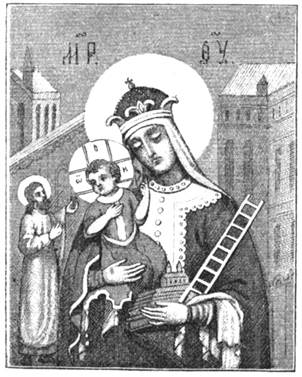
Празднование этой иконе совершается в Молченской Софрониевой пустыни 18 сент., а в Путивльском Молченском монастыре 24 апреля. Икона явилась 18 сент. 1405 года на болоте Молче, в 20 верстах от Путивля, где существовал монастырёк, разорённый татарами около 1605 г. По случаю его запустения икона перенесена в 1605 г. в Путивльский монастырь, вероятно, 24 апреля, когда и празднуется иконе в Путивле. Хотя же монастырь на месте обретения и был возобновлён около 1630 года (это – Софрониева пустынь), но икона осталась в Путивльском монастыре (см. Архим*. Димитрия* месяцеслов святых, вып. 3, Тамб. 1880, стр. 164). На иконе Богоматерь в венце, с главой полунаклонённой к правой стороне; на правой руке её Богомладенец, обратившийся к предстоящему перед Ним какому-то святому и десницей показующий вверх; в левой руке у Богоматери лестница и башня с пятью верхами. Позади виднеются здания, может быть – вид монастыря.
The feast of this icon is celebrated in the Molchensk Sophroniev Hermitage on September 18, and in the Putivl Molchensk Monastery on April 24. The icon appeared on September 18, 1405, at the Molche swamp, 20 versts from Putivl, where a small monastery existed, destroyed by the Tatars around 1605. Due to its desolation, the icon was transferred in 1605 to the Putivl Monastery, probably on April 24, when the icon is celebrated in Putivl. Although the monastery at the place of its uncovering was restored around 1630 (this is the Sophroniev Hermitage), the icon remained in the Putivl Monastery (see Archim. Demetrius's Menologion of the Saints, issue 3, Tambov, 1880, p. 164). On the icon, the Mother of God wears a crown, with her head half-inclined to the right side; on her right arm is the God-Child, turned towards some saint standing before Him and pointing upward with His right hand; in the left hand of the Mother of God are a ladder and a tower with five cupolas. Behind, buildings are visible, perhaps a view of the monastery.
Ни в Менологе, ни в Синаксаре не указаны время и место подвигов св. Елисаветы. Но так как мощи её покоились в обители Бессребреников, построенной императором Юстинианом (518–527 г.), то этим определяются время и место подвигов её.
Neither in the Menologion nor in the Synaxarion are the time and place of the struggles of St. Elizabeth indicated. But since her relics rested in the monastery of the Unmercenaries, built by Emperor Justinian (518–527 A.D.), this determines the time and place of her struggles.
Менолог Василия: „святая и чудотворица Елисавета, последовав учению св. отцов, с детства обрекла себя на труды благочестия. Потому получив дар исцелений, исцеляла всякие болезни. Совершила она много великих дел: помогала бедным и вдовам, доставляла пропитание сиротам; тех, которые терпели обиды, защищала от притеснителей. Во всякое время года, одетая только одной одеждой, переносила зимой стужу, согреваемая Духом Св. Во всю жизнь никогда не мыла тела своего. Как вдревле Моисей, 40 дней пробыла без всякой пищи. В три года, устремив ум к Богу, не подымала очей своих на небо. Хлеба не вкушала, также и масла. Совершая такую жизнь, творила много чудес“.
Menologion of Basil: "The holy and wonderworker Elizabeth, following the teaching of the holy fathers, from childhood devoted herself to the labors of piety. Therefore, having received the gift of healings, she healed every illness. She accomplished many great deeds: she helped the poor and widows, provided sustenance for orphans; those who suffered wrongs she defended from oppressors. In every season, clothed only in one garment, she endured the cold in winter, warmed by the Holy Spirit. Throughout her whole life she never washed her body. Like Moses of old, she remained forty days without any food. For three years, having directed her mind to God, she did not raise her eyes to heaven. She ate no bread, nor oil either. Living such a life, she performed many miracles."
Путешествия их, по изданию Сахарова (СПб. 1849 г.), стр. 53. 62. Русские паломники объясняют и дополняют во многом показания Дю-Канжа о монастырях Цареградских. По их показаниям, женские монастыри в Цареграде: 1) монастырь Богородицы близь Одигитрии, где глава св. Златоуста (Dn-Cangii Const. p. 33); 2) монастырь Панахран (Παναχϱαντος) с главой св. Василия (Du-Cangii р. 93); 3) близ Софии монастырь зовомый Панданассы (Παντανασσης); – царицы всех, р. 94); 4) там же, близ храма св. Ирины, мон. с мощами св. Евдокии; 5) близ Софии, мон. Христа милостивого (Φιλανϱωπου р. 81); 6) мон. с мощами св. Андрея (р. 112); 7) мон. Козмы и Дамиана (р. 121. 122); 8) монастырь св. Евфимии (р. 145); 9) мон. с мощами св. Климента Анкирского (р. 181); 10) близ Предтечева мон. обитель св. Николая с мощами св. Михаила (р. 130); 11) мон. Богоматери благодатной с мощами Иоанна Дамаскина (р. 87); 12) мон. Евергетис с мощами Феодосии (р. 87); 13) мон. Липеси с мощами св. Стефана (р. 138); 14) Омонейсский с мощами св. Пантелеймона (р. 137). Путешествия, по изданию Сахарова, стр. 52–55. 61–63. 73. У Дю-Канжа женские монастыри, построенные до X в.: а) Прокопиин, построенный тёткой имп. Юстиниана; б) Гастрийский; в) Деспоты; г) Икасии; д) Кирианов; е) св. Домнины или пр. Захарии; ж) св. Мавры; з) Матроны; и) Мирилевский; и) Маврикиев, новый монастырь; к) Покаянный; л) Покаянный Новый; м) Богородицы всеблаженной – Constant, chr. p. 93. 153. 154.157–160.185.186.0 других не показано, были ли они мужские или женские.
Their travels, according to the edition of Sakharov (St. Petersburg, 1849), pp. 53, 62. Russian pilgrims explain and supplement in many respects the accounts of Du Cange concerning the monasteries of Constantinople. According to their accounts, the women's monasteries in Constantinople: 1) the monastery of the Theotokos near the Hodegetria, where the head of St. John Chrysostom is (Du-Cangii Const. p. 33); 2) the monastery of Panachrantos (Παναχϱαντος) with the head of St. Basil (Du-Cangii p. 93); 3) near Hagia Sophia, the monastery called Pantanassa (Παντανασσης)—Queen of All, p. 94); 4) likewise, near the church of St. Irene, a monastery with the relics of St. Eudocia; 5) near Hagia Sophia, the monastery of Christ the Merciful (Φιλανϱωπου p. 81); 6) a monastery with the relics of St. Andrew (p. 112); 7) the monastery of Cosmas and Damian (p. 121. 122); 8) the monastery of St. Euphemia (p. 145); 9) a monastery with the relics of St. Clement of Ancyra (p. 181); 10) near the Forerunner's monastery, the monastery of St. Nicholas with the relics of St. Michael (p. 130); 11) the monastery of the Mother of God of Grace with the relics of John of Damascus (p. 87); 12) the monastery of the Euergetis with the relics of Theodosia (p. 87); 13) the monastery of Lipa with the relics of St. Stephen (p. 138); 14) the Omonoeis monastery with the relics of St. Panteleimon (p. 137). Travels, according to the edition of Sakharov, pp. 52–55, 61–63, 73. In Du Cange, women's monasteries built before the 10th century: a) the Procopius monastery, built by the aunt of the emperor Justinian; b) the Gastria monastery; c) the Despot's monastery; d) the Ikasia monastery; e) the Cyriac monastery; f) the monastery of St. Domnina or of the Prophet Zacharias; g) the monastery of St. Maura; h) the Matrona monastery; i) the Myrelaeum monastery; j) the Mauritius monastery, a new monastery; k) the Penitential monastery; l) the New Penitential monastery; m) the monastery of the All-Blessed Theotokos—Constant. chr. p. 93. 153. 154. 157–160. 185. 186. Of others it is not shown whether they were men's or women's.