Преподобного Феодора, архимандрита Сикеотского, епископа Анастасиопольского
Venerable Theodore, Archimandrite of Sykeon, Bishop of Anastasiopolis
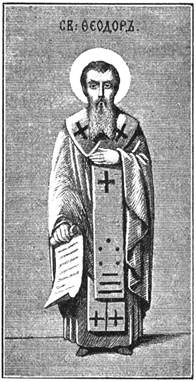
Феодор, по прозванию Сикеот, родился в Малой Азии, в Сикее (Сикеон в Галатии – город со многими церквами – в 12,000 шагах от Анастасиополя). Влияние благочестивой семьи, среди которой он воспринял первые свои впечатления, с детства уже было заметно на нём. Отданный в училище, будучи восьми лет, он своим благонравием отличался между всеми своими товарищами; никогда не ссорился с ними и всегда старался ссорившихся помирить.
Theodore, surnamed Sykeotes, was born in Asia Minor, in Sykea (Sykeon in Galatia—a city with many churches, 12,000 paces from Anastasiopolis). The influence of a pious family, among whom he received his first impressions, was already noticeable in him from childhood. Sent to school at the age of eight, he was distinguished among all his companions by his good conduct; he never quarreled with them and always tried to reconcile those who did.
Вместе с родителями его жили две почтенные родственницы: бабушка и незамужняя тётка и ещё старец Стефан. Этот старец постоянно соблюдал самый строгий пост, много молился и пример его сильно действовал на мальчика. В подражание ему Феодор, возвращаясь из училища, часто отказывался от обеда и любил вместе со старцем ходить молиться в бывшую по близости церковь св. великомученика Георгия. Иногда он лишал себя даже и сна, проводя в церкви время ночное. Мать его, видя такое усердие ребёнка, опасалась, чтобы он не расстроил своего здоровья, чтобы не ослабел в своих силах. Она запрещала ему уходить из дому в тёмное время и даже привязывала его к кровати, чтобы он не мог уходить. Тогда великомуч. Георгий явился ей в сонном видении и сказал, чтобы она не отклоняла сына своего от служения Богу... С этих пор мать Феодора и жившие с ней поняли, что ребёнком руководит высшая сила, и предоставили его воле Божией.
Living with his parents were two respected relatives: his grandmother, an unmarried aunt, and also an elder named Stephen. This elder constantly observed the strictest fast, prayed much, and his example strongly influenced the boy. In imitation of him, Theodore, returning from school, often refused dinner and loved to go with the elder to pray in the nearby church of the holy Great Martyr George. Sometimes he even deprived himself of sleep, spending the night in church. His mother, seeing such zeal in the child, feared that he might harm his health or weaken his strength. She forbade him to leave the house in the dark and even tied him to his bed so that he could not go out. Then the Great Martyr George appeared to her in a dream and told her not to turn her son away from serving God... From that time on, Theodore's mother and those living with her understood that a higher power was guiding the child, and they left him to the will of God.
Между тем, возрастая, Феодор всё прилежнее и прилежнее читал свящ. Писание, всё более и более привыкал и привязывался к молитве, и мыслью о Боге и молитвой прониклось всё его сердце. Однажды узнал он, что недалеко за городом живёт благочестивый отшельник, по имени Гликерий, начал ходить к нему, беседовать с ним и высказал ему, наконец, своё желание удалиться от мира.
Meanwhile, as he grew, Theodore read the Holy Scriptures more and more diligently, became more and more accustomed and attached to prayer, and his whole heart was filled with the thought of God and prayer. Once he learned that a pious hermit named Glycerius lived not far from the city; he began to visit him, converse with him, and finally expressed to him his desire to withdraw from the world.
– Проси Бога вразумить тебя, – сказал на это отшельник, – и Бог исполнит твоё желание.
"Ask God to enlighten you," said the hermit in response, "and God will fulfill your desire."
Через несколько времени, а именно, когда Феодору исполнилось 14 лет, он решился жить один на горе, близ церкви св. великомуч. Георгия. Он упросил домашних не препятствовать ему в этом; ископал себе пещеру при храме и поселился в ней, выходя в церковь только на молитву.
After some time, namely when Theodore turned fourteen, he decided to live alone on a mountain near the church of the holy Great Martyr George. He begged his household not to hinder him in this; he dug a cave for himself by the church and settled in it, going out to church only for prayer.
Питался он в это время одними просфорами, а когда мать и бабушка приносили ему хлеб и овощи, то отдавал их бедным.
At this time he ate only prosphora, and when his mother and grandmother brought him bread and vegetables, he gave them to the poor.
Дивились все такой жизни отрока, но он не удовлетворялся ею в своём ненасытимом стремлении предстоять перед лицом Единого Бога, не развлекаясь никаким земным впечатлением... Перед душевным взором его носился образ Иоанна Предтечи и увлекал его в пустыню... Он ушёл наконец на отдалённую гору и там пробыл два года затворником в пещере, куда приносил ему изредка хлеб и воду один только знавший об его местопребывании церковный служитель.
Everyone marveled at such a life in a youth, but he was not satisfied with it in his insatiable striving to stand before the face of the One God, undistracted by any earthly impression... Before the eyes of his soul hovered the image of John the Forerunner, drawing him into the desert... He finally went to a distant mountain and remained there for two years as a recluse in a cave, where only one church servant who knew his whereabouts occasionally brought him bread and water.
Мать между тем сокрушалась о нём, и церковный служитель, сжалившись над ней, открыл ей о затворничестве её сына. По просьбе родных Феодор возвратился домой. Узнав о такой жизни юноши, епископ Анастасиопольский пожелал видеть его и благословил его быть пресвитером, сказав ему при этом: «Господь, удостоивший тебя принять сан пресвитера, удостоит и сана епископа» ...
Meanwhile, his mother grieved for him, and the church servant, taking pity on her, revealed to her her son's seclusion. At the request of his relatives, Theodore returned home. Learning of such a life in the young man, the bishop of Anastasiopolis wished to see him and blessed him to be a presbyter, saying to him: "The Lord, who has deemed you worthy to receive the rank of presbyter, will also deem you worthy of the rank of bishop"...
С радостью Феодор приступил к совершению бескровной жертвы и вообще со всем усердием исполнял святые обязанности своего сана. – В это время совершил он путешествие на поклонение св. местам в Палестине и в Хозевитской лавре, бывшей близ Иордана, принял пострижение в иночество. По возвращении на родину, Феодор стал снова жить в пещере; скоро Бог прославил подвижника Своего даром чудных исцелений людей от болезней. Народ во множестве прибегал к нему и поучался его беседами. Близ него поселились и бабушка его Ельпидия, и тётка Диспения, и молодая сестра Влатта и проводили жизнь в молитве и трудах; выручаемые же за труды деньги употребляли в пользу нуждающихся. Диспения и Влатта, поступившия в девичий монастырь, вскоре скончались; престарелая Ельпидия, пожив ещё несколько времени при внуке, поступила в монастырь. Сюда часто присылал к ней Феодор женщин и девиц, нуждавшихся в добром влиянии, и она привлекала их к молитве, посту и добрым делам; многих из них сумела отвлечь от дурной жизни и удержать на добром пути.
With joy Theodore began to offer the bloodless sacrifice and in general fulfilled the holy duties of his rank with all zeal. At this time he made a journey to venerate the holy places in Palestine, and in the Lavra of Choziba, which was near the Jordan, he received the tonsure into monasticism. Upon returning to his homeland, Theodore again began to live in the cave; soon God glorified His ascetic with the gift of miraculous healings of people from illnesses. The people flocked to him in multitudes and were instructed by his conversations. Near him settled his grandmother Elpidia, his aunt Dispenia, and his young sister Blatta, and they spent their lives in prayer and labor; the money they earned from their labors they used for the needy. Dispenia and Blatta, having entered a convent, soon reposed; the aged Elpidia, after living a little longer with her grandson, entered a monastery. Theodore often sent to her women and maidens in need of good influence, and she attracted them to prayer, fasting, and good deeds; she managed to turn many of them away from a bad life and keep them on the good path.
Похоронив свою бабушку, Феодор получил извещение и о смерти матери. – «Не умерла мать моя, но и теперь живёт и будет жить во веки!» – сказал он, и предался посту и молитве об упокоении души своей матери, а от богатого наследства, оставшегося после её смерти, отказался.
After burying his grandmother, Theodore received news also of his mother's death. "My mother has not died, but even now lives and will live forever!" he said, and gave himself over to fasting and prayer for the repose of his mother's soul, and he renounced the rich inheritance left after her death.
Многие из исцелённых Феодором и обращённых им на спасительный путь, а также слышавшие о жизни его и чудесах оставляли дома свои и поселялись близ подвижника. Святость его была как бы центром, привлекающим к себе Боголюбивые души, которым привольно было процветать под животворным влиянием такого светила. Для таких пришельцев, готовых к иноческой жизни, Феодор основал монастырь, который стал управляться под его руководством и по написанному им уставу и из которого многие иноки, ученики его, прославились высокой жизнью.
Many of those healed by Theodore and turned by him to the path of salvation, as well as those who had heard of his life and miracles, left their homes and settled near the ascetic. His holiness was like a center attracting God-loving souls, who found it free to flourish under the life-giving influence of such a luminary. For such newcomers, ready for the monastic life, Theodore founded a monastery, which came to be governed under his guidance and according to the rule he wrote, and from which many monks, his disciples, became renowned for their lofty life.
Между тем кончил жизнь епископ Анастасиопольский; тогда граждане единодушно избрали на его место Феодора. Невольно подчинился он общему желанию и никогда не переставал скорбеть об оставлении своего монастыря. Одиннадцать лет однако же он трудился для своей паствы в сане епископа. Продолжавший таинственно и чудно руководствовать Феодора св. великомученик Георгий, явись ему снова в сонном видении, запретил ему покидать епархию, которая нуждалась в нём...
Meanwhile, the bishop of Anastasiopolis ended his life; then the citizens unanimously elected Theodore in his place. He involuntarily submitted to the general desire and never ceased to grieve over leaving his monastery. For eleven years, however, he labored for his flock in the rank of bishop. The holy Great Martyr George, who continued mysteriously and wondrously to guide Theodore, appeared to him again in a dream and forbade him to abandon the diocese, which had need of him...
Наконец, после многих утомительных трудов Феодор, помолясь Богу, чтобы желание его оставить епископство не было вменено в грех ему, собрал клир и народ и просил их избрать другого епископа, и по разрешении Цареградского патриарха Кириака и императора Маврикия, которые написали Анкирскому митрополиту, чтобы «он не препятствовал угоднику Божию, желающему жить в безмолвии», возвратился в свой монастырь, где и продолжал своё подвижничество, прославляемое от Бога многими поразительными чудотворениями. Между прочими повествуется об одном, явленном как бы в доказательство того, что Богу неугодны приношения, источником которых служит неправедно приобретённое имущество... Когда бывшая в монастыре Сикеотском церковь во имя св. великомуч. Георгия оказалась не довольно поместительной для умножившегося числа братий, то Феодор построил церковь более просторную – во имя Архангела Михаила. Между прочими принадлежностями для службы в новом храме понадобился новый сосуд для совершения Божественных Таин, которые до сих пор совершались в маленьком мраморном сосуде. Феодор послал диакона своего купить серебряный сосуд в Константинополе. Посланный привёз богатый, художественно-сделанный серебряный сосуд. Феодор же, взглянув на него, не захотел его принять, сказав, что он зачернён и смраден... Послали обратно сосуд к золотых дел мастеру, и тогда оказалось, что он был сделан из серебряной вещи, принадлежавшей прежде женщине, которая приобрела эту вещь нечистым способом...
Finally, after many wearisome labors, Theodore, having prayed to God that his desire to leave the episcopacy might not be counted as a sin against him, gathered the clergy and the people and asked them to choose another bishop. And with the permission of Patriarch Cyriacus of Constantinople and Emperor Maurice, who wrote to the Metropolitan of Ancyra that "he should not hinder the man of God, who desired to live in silence," he returned to his monastery, where he continued his asceticism, glorified by God with many striking miracles. Among other things, there is related one miracle, shown as if in proof that offerings whose source is unjustly acquired property are not pleasing to God... When the church in the Sykeon monastery in the name of the holy Great Martyr George proved insufficiently spacious for the increased number of brethren, Theodore built a more spacious church in the name of the Archangel Michael. Among other furnishings for the service in the new church, a new vessel was needed for the celebration of the Divine Mysteries, which until then had been celebrated in a small marble vessel. Theodore sent his deacon to Constantinople to buy a silver vessel. The envoy brought a rich, artistically made silver vessel. But Theodore, looking at it, refused to accept it, saying that it was blackened and foul-smelling... They sent the vessel back to the goldsmith, and then it turned out that it had been made from a silver item that had previously belonged to a woman who had acquired that item in an unclean way...
Вообще, много было случаев, оправдавших чудную прозорливость Феодора; в бытность свою в Константинополе, который он посетил два раза по желанию патриарха и императора, принимавших его с большой честью, он в последнее своё посещение, при императоре Фоке (602–610), предсказал близкую кончину патриарха и будущие бедствия Церкви и государства.
In general, there were many cases that justified Theodore's wondrous clairvoyance; during his stay in Constantinople, which he visited twice at the desire of the patriarch and the emperor, who received him with great honor, on his last visit, under Emperor Phocas (602–610), he foretold the imminent death of the patriarch and the future calamities of the Church and the state.
Дожив до глубокой старости, Феодор, во всю свою жизнь напутствоваемый чудным покровительством св. великомуч. Георгия, не был оставлен им и при смерти, о которой известил его св. Георгий, когда, явясь ему во сне и вручая жезл, приказывал идти за собой в дальний путь...
Having lived to a ripe old age, Theodore, who throughout his life was guided by the wondrous protection of the holy Great Martyr George, was not abandoned by him even at his death, of which St. George informed him, appearing to him in a dream and, handing him a staff, commanded him to follow him on a distant journey...
Жизнь Феодора описана учеником его Евсевием (в иночестве Георгием), свидетелем многих чудес преподобного, «а чего он сам не видал, то написал по рассказу очевидцев или исцелённых святым, многое слышал и от самого святого». В конце жития сказано, что св. Феодор скончался 22 апреля, в третий год правления Ираклия296 (613).
The life of Theodore was written by his disciple Eusebius (in monasticism George), a witness of many of the Venerable One's miracles, "and what he himself did not see, he wrote from the account of eyewitnesses or of those healed by the saint; much he also heard from the saint himself." At the end of the life it is said that St. Theodore reposed on April 22, in the third year of the reign of Heraclius296 (613).