Св. священномученика Иануария епископа и с ним Прокула (Прокла), Соссия и Фавста диаконов, Дисидерия чтеца, Евтихия и Акутиона мирян
St. Hieromartyr Januarius the Bishop and with him Proculus (Proclus), Sossius and Faustus the Deacons, Desiderius the Reader, Eutychius and Acutio the Laity
В жизнеописании Иануария, как и в жизнеописании многих дивно прославленных Богом мучеников – не знаешь, чему более удивляться: беспредельной ли силе чудес, совершившихся над ними, или беспредельной слепоте и ожесточению душ, пребывших в неверии и бесчувствии даже при совершившихся в их присутствии, так сказать, воочию, поразительных чудных явлениях, которыми соизволяет Господь в определённые времена знаменовать своё Божественное могущество...
In the life of Januarius, as in the life of many martyrs wondrously glorified by God, one knows not what more to marvel at: the boundless power of the miracles wrought upon them, or the boundless blindness and hardness of souls that remained in unbelief and insensibility even in the presence of the striking and wondrous manifestations that took place, so to speak, before their very eyes, by which the Lord is pleased at certain times to signify His Divine might...
Св. Иануарий, бывший епископом в Кампанийской области в Италии, был во время гонения при Диоклитиане предан истязаниям за веру Христову. Но вот, брошенный в раскалённую печь, он выходит из неё невредимым... Выведенный на следующий день на съедение зверям вместе с другими христианами: Прокулом и Соссием, Фавстом и Десидерием, клириками в г. Путеолах, и мирянами: Евтихием и Акутионом – Иануарий и дружина его остаются неприкосновенными: звери с кротостью припадают к ногам епископа к общему изумлению бесчисленной толпы народа...
St. Januarius, who was bishop in the Campania region of Italy, was delivered up to torments for the faith of Christ during the persecution under Diocletian. But behold, cast into a red-hot furnace, he came forth from it unharmed... Brought out the next day to be devoured by beasts together with other Christians: Proculus and Sossius, Faustus and Desiderius, clerics of the city of Puteoli, and the laity: Eutychius and Acutio – Januarius and his company remained untouched: the beasts meekly crouched at the bishop's feet, to the astonishment of the countless multitude of people...
Правитель Кампании – Тимофей, предавший на мучения христиан, не поражается однако же таким чудом хранения Божия; он в душевной своей слепоте это чудо приписывает волшебству... и как бы в кару за свою слепоту, происходящую от бесчувственности, слепнет в эту минуту и своими телесными очами...
The governor of Campania, Timothy, who had delivered the Christians to torments, was not, however, struck by such a miracle of God's protection; in his spiritual blindness he attributed this miracle to sorcery... and, as if in punishment for his blindness proceeding from insensibility, he became blind at that very moment even in his bodily eyes...
Но и это не пробуждает в нём ни мысли, ни чувства... Тогда Господь, ищущий всегда спасения грешников, благоволит действовать на него милосердием. Он даёт незлобивому мученику Иануарию силу исцелить ослепшего. Но и радость исцеления не трогает очерствелого сердца, между тем как пять тысяч язычников, свидетелей этих чудес, в это же время обращаются к истинному Богу.
But even this awakened in him neither thought nor feeling... Then the Lord, Who ever seeks the salvation of sinners, was pleased to act upon him with mercy. He gave the meek martyr Januarius the power to heal the blinded man. But even the joy of healing did not touch his hardened heart, while five thousand pagans, witnesses of these miracles, at the same time turned to the true God.
Но чем более преизбыточествует благодать Господня, тем более злобствует ослеплённая душа и не терпит, а предаёт смерти просвещённых истиной... Все они со св. епископом по повелению Тимофея отведены за город и казнены мечом.
But the more the grace of the Lord abounded, the more the blinded soul raged, and could not endure, but delivered to death those enlightened by the truth... All of them, together with the holy bishop, by the command of Timothy, were led outside the city and beheaded with the sword.
Святые останки их были взяты жителями разных мест; тело же св. Иануария перенесено в Неаполь, где и до сих пор благоговейно чтится память его, и Неаполитанцы почитают его своим защитником и покровителем, не перестающим изливать на них свою чудодейственную помощь, подтверждаемую «достоверными свидетелями, всякий подлог устраняющими»271. Явление св. Иануария святому Павлину перед его кончиною (431 г.) описано присутствовавшим при кончине Павлина пресвитером Уранием в его письме, из которого видно, что св. Иануарий тогда особенно был чтим в Неаполе272. Огнедышащий Везувий однажды внезапно прекратил извержение пламени, когда народ, поражённый ужасом, собрался у гроба мученика и молил его о своём спасении... По разве можно исчислить все чудеса! Беспредельно дивен Бог во святых Своих!
Their holy remains were taken by inhabitants of various places; the body of St. Januarius, however, was translated to Naples, where his memory is reverently honored to this day, and the Neapolitans venerate him as their defender and protector, who ceases not to pour out upon them his wonder-working help, confirmed by "trustworthy witnesses, excluding all fraud"271. The appearance of St. Januarius to St. Paulinus before his death (A.D. 431) is described by the presbyter Uranius, who was present at Paulinus's death, in his letter, from which it is evident that St. Januarius was especially venerated in Naples at that time272. The fire-belching Vesuvius once suddenly ceased its eruption of flame when the people, stricken with terror, gathered at the martyr's tomb and prayed to him for their deliverance... But can one enumerate all the miracles! Boundlessly wondrous is God in His saints!
Св. Александра была жена импер. Диоклитиана и потаённая христианка; мужество, твёрдость в исповедании и чудеса великомученика Георгия возбудили в ней ревность по вере, и она гласно исповедала Христа. Осуждённая Диоклитианом на смерть, она на пути к месту казни предала дух свой Богу (304 г.).
St. Alexandra was the wife of the Emperor Diocletian and a secret Christian; the courage, steadfastness in confession, and miracles of the Great Martyr George aroused in her zeal for the faith, and she openly confessed Christ. Condemned to death by Diocletian, on the way to the place of execution she commended her spirit to God (A.D. 304).
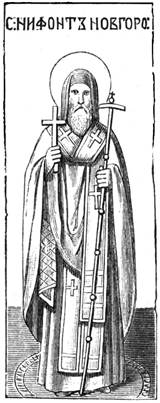
Родители блаж. Нифонта, в мире Никиты, были люди благочестивые и зажиточные, жившие близ Киева, и обучили сына книжному учению и страху Божию273. По смерти их добрый сын роздал имение бедным, посвятил себя иноческому житию в Печерском монастыре и здесь усердно и долго подвизался в посте и молитвах274. Знакомство его с местными обычаями Греческой Церкви, которое так видно в его ответах Кирику, показывает, что он путешествовал по востоку275. В конце 1129 г. Иоанн, епископ Новгородский, оставил кафедру и на его место (янв. 1-го 1130 г.) поставили Нифонта, как мужа Богобоязненного и святого по жизни276. В 1135 г. видим блаж. Нифонта примирителем Киевлян с Черниговцами 277. Под 1136 г. помещено в древней летописи известие, но не совсем ясное, о пастырском распоряжении его по случаю брака князя Святослава. По словам летописи, когда князь женился в Новгороде, то «венчали его свои попы у св. Николая, а Нифонт не венчал его, не позволил ни священникам, ни чернецам быть при браке и говорил: не следует тебе брать её». Какая была причина запрещению, не сказано278. – У Татищева летопись говорит, что слуги князя убили отца невесты279. Если это так, то остаётся положить, что правдолюбивый пастырь требовал, чтобы наперёд преступление наказано было строгим покаянием. – Как бы то ни было, только князь Святослав признал поступок пастыря справедливым и не оскорбился им. В следующем году Святослав, по согласию с архипастырем, выдал грамоту с назначением доходов для Новгородской кафедры. Вместо того, чтобы собирать десятину для кафедры и для князя, князь назначил для кафедры 100 гривен серебра и определённую подать с некоторых мест, что всё составляло до 250 фунтов серебра годового дохода280. Св. Нифонт великолепно возобновил Софийский храм и построил каменный храм Успения; близ Пскова, на Завеличье, построен им в монастыре каменный храм Спасителя; здесь и доныне показывают чашу его, вырезанную из древесного корня и оправленную серебром281.
The parents of blessed Niphon, in the world Nicetas, were pious and well-to-do people living near Kiev, and they taught their son book-learning and the fear of God273. After their death, the good son distributed his property to the poor, dedicated himself to the monastic life in the Monastery of the Caves, and there zealously and long labored in fasting and prayer274. His acquaintance with the local customs of the Greek Church, which is so evident in his answers to Kirik, shows that he traveled in the East275. At the end of 1129, John, Bishop of Novgorod, left the cathedra, and in his place (January 1, 1130) they appointed Niphon, as a God-fearing man and holy in life276. In 1135 we see blessed Niphon as a peacemaker between the people of Kiev and Chernigov277. Under the year 1136, an account, though not entirely clear, is placed in the ancient chronicle concerning his pastoral arrangement on the occasion of the marriage of Prince Svyatoslav. According to the chronicle, when the prince was married in Novgorod, "his own priests married him at St. Nicholas', but Niphon did not marry him, nor did he allow either priests or monks to be present at the wedding, and said: 'You should not take her.'" The reason for the prohibition is not stated278. – In Tatishchev's chronicle it is said that the prince's servants killed the bride's father279. If this is so, then it remains to suppose that the truth-loving pastor demanded that the crime first be punished by strict penance. – However that may be, Prince Svyatoslav acknowledged the pastor's action as just and did not take offense at it. The following year, Svyatoslav, in agreement with the archpastor, issued a charter assigning revenues for the Novgorod cathedra. Instead of collecting a tithe for the cathedra and for the prince, the prince assigned to the cathedra 100 grivnas of silver and a fixed tax from certain places, which altogether amounted to about 250 pounds of silver in annual income280. St. Niphon magnificently renovated the Cathedral of St. Sophia and built a stone church of the Dormition; near Pskov, on Zavelichye, he built a stone church of the Savior in a monastery; here even to this day they show his cup, carved from a tree root and mounted in silver281.
С 1147 г. началось для него тяжёлое время. В. кн. Изяслав предложил собору пастырей посвятить затворника Климента в митрополита, без сношения с Цареградом. Онуфрий, епископ Черниговский, и с ним три епископа говорили, что по древним правилам три епископа могут поставлять первого епископа области. Нифонт и с ним Грек Мануил, епископ Смоленский, утверждали, что митрополита посвящает патриарх. Климент, не смотря на несогласие Нифонта, посвящён был в Киеве282. – В 1148 г. по желанию Новгородцев Нифонт отправился в Суздаль для заключения мира с Суздальским князем, и Юрий, враг Изяслава, с честью принял пастыря, противодействовавшего желаниям Изяслава, согласился отпустить с Нифонтом пленников, принимал его ласково и с почётом. Он пожелал, чтобы бл. Нифонт освятил новые храмы в Суздале. И по летописи, Нифонт в Суздале «церковь святи св. Богородица великым священиемь». Поныне цел антиминс, освящённый в 1148 г. для храма св. Георгия «от Нифонта архиепископа Новгородского, повелением епископа Ростовского Нестора, при благоч. князи Георгии сыну Мономахову». Эта надпись показывает, что Нифонт, при всём желании сделать приятное кн. Юрию, не иначе дозволил себе освятить храм не в своей епархии, как испросив дозволение местного архипастыря283. В следующем году Нифонт за то, что не поминал в молитвах нового митрополита, вызван был в Киев и заключён в Печерском монастыре, но не надолго. В том же году Юрий овладел Киевом и отпустил Нифонта в Новгород, где встретили его с радостью. В 1153 г. основан Нифонтом каменный храм св. Климента. Между тем Изяслав снова вошёл в Киев, и Климент оставался на митрополичьей кафедре до начала 1155 г. – Бл. Нифонт, сколько ни убеждали его лаской и угрозами покориться Клименту, не отказался от своих убеждений о Клименте284 и искал себе защиты у патриарха285. П. Николай писал ему в своей грамоте:
From 1147 a difficult time began for him. Grand Prince Izyaslav proposed to a council of pastors to consecrate the recluse Clement as metropolitan, without communication with Constantinople. Onuphrius, Bishop of Chernigov, and with him three bishops, said that according to the ancient canons three bishops could appoint the first bishop of a region. Niphon, and with him the Greek Manuel, Bishop of Smolensk, maintained that the patriarch consecrates the metropolitan. Clement, despite Niphon's disagreement, was consecrated in Kiev282. – In 1148, at the desire of the Novgorodians, Niphon set out for Suzdal to conclude peace with the Prince of Suzdal, and Yuri, the enemy of Izyaslav, received the pastor who had opposed Izyaslav's wishes with honor, agreed to release the captives with Niphon, and received him kindly and with respect. He desired that blessed Niphon should consecrate the new churches in Suzdal. And according to the chronicle, Niphon in Suzdal "consecrated the church of the Most Holy Theotokos with great consecration." To this day there remains an antimension consecrated in 1148 for the church of St. George "by Niphon, Archbishop of Novgorod, by the command of Nestor, Bishop of Rostov, under the pious Prince George, son of Monomakh." This inscription shows that Niphon, despite all his desire to please Prince Yuri, did not permit himself to consecrate a church not in his own diocese otherwise than by asking the permission of the local archpastor283. The following year, Niphon, because he did not commemorate the new metropolitan in his prayers, was summoned to Kiev and confined in the Monastery of the Caves, but not for long. That same year Yuri took possession of Kiev and released Niphon to Novgorod, where he was received with joy. In 1153 a stone church of St. Clement was founded by Niphon. Meanwhile Izyaslav again entered Kiev, and Clement remained on the metropolitan cathedra until the beginning of 1155. – Blessed Niphon, however much they tried to persuade him with kindness and threats to submit to Clement, did not abandon his convictions concerning Clement284 and sought protection from the patriarch285. Patriarch Nicholas wrote to him in his letter:
«О Св. Духе сыну и сослужителю смирения нашего, доброму пастырю разумных овец, господину епископу Новгорода Нифонту желаем радоватися о Господе. Слышали мы о твоём невинном страдании, Какое терпишь ты для Бога за митрополита Климента, без нашего благословения, самовластно восхитившего Киевскую митрополию; слышали, что ты осуждаешь такую дерзость его, не хочешь служить с ним святительски, не поминаешь его в священной службе и много перенёс от него досад и оскорблений. Но ты, святой отец, потерпи ещё за правду, для Господа, и не ослабевай перед тем аспидом и его советниками, дабы быть причтённым к лику святых, пострадавших за православие; покажи пример терпения святителям, которые имеют быть в земле Русской, и всему народу. – Мир тебе, отче! Благословение смирения нашего да будет над тобой, страдалец Христов, во веки, аминь»286.
"To our son in the Holy Spirit and fellow-servant of our humility, the good shepherd of rational sheep, the lord Bishop of Novgorod Niphon, we wish joy in the Lord. We have heard of your innocent suffering, which you endure for God's sake on account of Metropolitan Clement, who without our blessing, of his own authority, seized the Kiev Metropolia; we have heard that you condemn such audacity of his, that you will not serve with him in a hierarchal manner, that you do not commemorate him in the sacred service, and that you have endured many vexations and insults from him. But you, holy father, suffer yet a little more for the truth, for the Lord's sake, and do not grow weak before that asp and his counselors, that you may be numbered among the choir of saints who suffered for Orthodoxy; show an example of patience to the hierarchs who shall be in the Russian land, and to all the people. – Peace be with you, father! May the blessing of our humility be upon you, sufferer for Christ, forever, amen."286
При перемене обстоятельств в России, в Константинополе не замедлили избрать и посвятить нового митрополита Грека. И Нифонт, получив известие из Царяграда, что Константин уже отправился в Россию, поспешил в Киев, чтобы встретить столько желаемого митрополита; но добродушный пастырь, всегда действовавший по убеждению совести, свиделся с Константином уже в другой жизни. В Киеве блаж. Нифонт сильно занемог. – За три дня до своей предсмертной болезни он видел дивный сон. «По выходе из утрени, так рассказывал он, лёг я отдохнуть и вот вижу себя в Печерской церкви, на месте Святоши; долго молился я со слезами перед св. Богородицей, чтобы видеть мне отца Феодосия; собралось много братий в церкви, и один из них говорит мне: ты хочешь видеть отца Феодосия? Я отвечал: если возможно, покажи мне. И он взял меня и привёл в алтарь, и здесь показал мне отца Феодосия. Я, подойдя, поклонился ему и встал; он обнял меня и сказал: хорошо, что пришёл ты, брат и сын Нифонт! Теперь уже будешь ты с нами неотлучно. Он держал свиток в своей руке и по моей просьбе дал мне посмотреть, я развернул и прочёл его; в нём было написано: се аз и дети, яже ми дал есть Бог. Тогда проснулся я»287. Св. Нифонт блаженно почил 21-го апреля 1156 г. в субботу Великой, Пасхальной недели288. – Новгородский летописец, благоговея перед высокими добродетелями почившего пастыря, говорит с скорбью: «мы только за грехи наши лишены утешения видеть у себя гроб его»289.
With the change of circumstances in Russia, they did not delay in Constantinople to elect and consecrate a new metropolitan, a Greek. And Niphon, having received news from Constantinople that Constantine had already set out for Russia, hastened to Kiev in order to meet the so greatly desired metropolitan; but the good-natured pastor, who always acted according to the conviction of his conscience, met with Constantine only in the other life. In Kiev, the blessed Niphon fell grievously ill. – Three days before his final illness, he saw a wondrous dream. “After leaving Matins,” he related, “I lay down to rest, and behold, I see myself in the Church of the Caves, at the place of Svyatosha; for a long time I prayed with tears before the Most Holy Theotokos, that I might see Father Theodosius; many brethren gathered in the church, and one of them said to me: ‘Do you wish to see Father Theodosius?’ I answered: ‘If it is possible, show him to me.’ And he took me and led me into the altar, and there he showed me Father Theodosius. I, approaching, bowed to him and stood up; he embraced me and said: ‘It is good that you have come, brother and son Niphon! Now you shall be with us inseparably.’ He held a scroll in his hand, and at my request he gave it to me to look at; I unrolled it and read it; in it was written: ‘Behold, I and the children whom God has given Me.’ Then I awoke.”287 St. Niphon reposed blessedly on the 21st of April, 1156 A.D., on the Saturday of Great, Paschal Week.288 – The Novgorod chronicler, revering the lofty virtues of the reposed pastor, says with sorrow: “It is only for our sins that we are deprived of the consolation of seeing his grave among us.”289
Ныне известны ответы блаж. Нифонта на вопросы Кирика, которые Аитониевский доместик предлагал во время собора о Клименте, как своему архипастырю, так и митр. Клименту290. Ответы блаж. Нифонта в древнее время пользовались полным уважением всей Русской Церкви. Заметим некоторые из них.
Now known are the responses of the blessed Niphon to the questions of Kirik, which the domesticus of the Anthony Monastery proposed during the council concerning Clement, both to his own archpastor and to Metropolitan Clement.290 The responses of the blessed Niphon in ancient times enjoyed the full respect of the entire Russian Church. Let us note some of them.
Должно ли резать скот или птицу в недельный день? «Это – день святой и праздничный; надобно быть в церкви и молиться; но нет греха резать что-нибудь в воскресный день, если случится гость или другая надобность». – «Хотят идти в чужую сторону, в Иерусалим, к святым местам; и ныне я запрещаю ходить, приказываю здесь делать добро: грех ли, владыко, запрещать это?» – «Напротив очень хорошо делаешь: если идут с тем, чтобы быть в праздности, есть и пить, – это дурно, возбраняй»291. Самые замечательные ответы относились к святой евхаристии. На вопрос: давать ли причастие больному, если из уст его течёт гной? св. Нифонт отвечает, «несомненно должно: не то – смрад и отлучает от святыни, что исходит из уст у иных, а смрад грехов». – «Должно ли служить с одной просфорой?» – «Если это будет далеко от торга, напр. в селе, и негде взять другой просфоры, то следует служить». За упокой так велел служить: «всегда служи с тремя просфорами, – одна великая для вынимания Агнца, здесь мёртвый не поминается, а те две за упокой»292. – Советы вполне умные и верные! Необходимая для евхаристии просфора – одна великая, – из неё вынимается Агнец. Так по учению Апостола, который говорит, что все причащаемся одним хлебом (1Кор.10:17); известны и ныне служебники XIV века, где чин проскомидии ограничивается только приготовлением Агнца293. Для заказной заупокойной литургии блаж. Нифонт считал приличным, чтобы принесли, кроме великой, две просфоры, одну для поминовения умершего, за которого совершается служба, другую для поминовения других умерших. Но из слов его вовсе не видно устава о определённом числе просфор, о чём так жарко спорят неумные ревнители старины. В служебнике Антониева монастыря времени Нифонтова счёт просфор также не означен. Здесь после описания действий над главной просфорой показаны: а) молитва, «да приимет о здравии и спасении»; в) молитвы, да помянет Господь души усопших. И более ничего294. Кирик прочёл в собрании правило – заменять этими литургиями: «10 литургий, говорит правило, избавят от наказания за грехи 4 месяцей». Св. Нифонт сказал с негодованием: «что это такое? Царь или богатые люди, согрешая, будут давать деньги за службу, а сами будут оставаться без всякой епитимьи». И при чтении другого правила, также не умного, заметил: «эта книга стоит того, чтобы сжечь её» 295. Так не всё старое – свято! И пример св. Нифонта показывает, что пастыри Церкви поступают свято, осуждая иное старое в старых книгах.
Should one slaughter cattle or fowl on the Lord’s Day? “This is a holy and festive day; one ought to be in church and pray; but there is no sin in slaughtering something on a Sunday, if a guest arrives or there is some other need.” – “They wish to go to a foreign land, to Jerusalem, to the holy places; and now I forbid them to go, commanding them to do good here: is it a sin, Vladyka, to forbid this?” – “On the contrary, you do very well: if they go in order to be idle, to eat and drink—this is bad, forbid it.”291 The most remarkable responses concerned the Holy Eucharist. To the question: should one give Communion to a sick person if pus flows from his mouth? St. Niphon answers, “One undoubtedly must: for it is not the stench that issues from the mouth of some that separates from the holy thing, but the stench of sins.” – “Should one serve with a single prosphora?” – “If this is far from a market, for example, in a village, and there is nowhere to obtain another prosphora, then one should serve.” For a requiem he commanded to serve thus: “Always serve with three prosphoras—one great for the removal of the Lamb; here the dead are not commemorated, but the other two are for the departed.”292 – Counsels entirely wise and correct! The prosphora necessary for the Eucharist is one great one—from it the Lamb is removed. So according to the teaching of the Apostle, who says that we all partake of the one bread (1 Cor. 10:17); even now service books of the 14th century are known, where the rite of the proskomedia is limited only to the preparation of the Lamb.293 For a commissioned requiem Liturgy, the blessed Niphon considered it fitting that, besides the great one, two prosphoras be brought: one for the commemoration of the deceased for whom the service is performed, the other for the commemoration of other departed. But from his words there is no rule at all concerning a fixed number of prosphoras, about which the foolish zealots of antiquity argue so heatedly. In the service book of the Anthony Monastery from the time of Niphon, the count of prosphoras is likewise not indicated. Here, after the description of the actions over the main prosphora, are shown: a) a prayer, “that He may receive for health and salvation”; b) prayers, that the Lord may remember the souls of the departed. And nothing more.294 Kirik read in the assembly a rule—to replace these Liturgies: “10 Liturgies, says the rule, will deliver from punishment for sins of 4 months.” St. Niphon said with indignation: “What is this? A tsar or rich people, sinning, will give money for the service, while they themselves will remain without any penance.” And upon reading another rule, likewise unwise, he remarked: “This book is worthy of being burned.”295 Thus, not everything old is holy! And the example of St. Niphon shows that the pastors of the Church act holily when they condemn some old things in old books.
Новгород. 3 л.: „взят из Печерского монастыря, из Киева... Положен бысть в Киевских пещерах, в монастыре, у своего обещания“. Собр. л. 3. 214. 215.
Novgorod Chronicle 3 l.: “He was taken from the Monastery of the Caves, from Kiev... He was placed in the Kiev Caves, in the monastery, at his vow.” Collection of Chronicles 3. 214. 215.
Ответы его: „в Царигороде только в лентьи станет, коли мажют и миром, и маслом, рече, не мазати“. Ещё: „по всей Гречестей земли и области не дают (молитвы) своим женам попове“ (Памят. XII в. 176. 178). В этих словах виден „бывалый человек“, но напрасно хотят видеть в них Грека: Нифонт не то, что монах пришлый в Печерской лавре, а постриженец её. См. пр. 164.
His responses: “In Constantinople only in the Lenten season, when they anoint with myrrh and oil, he said, do not anoint.” Also: “Throughout all the Greek land and region, priests do not give (the prayer) to their own wives” (Monuments of the 12th Cent. 176. 178). In these words is seen “a man of experience,” but it is in vain that some wish to see in them a Greek: Niphont was not a monk who arrived at the Kiev Caves Lavra, but a tonsured one of it. See note 164.
Собр. л. 3, 7. Василий говорит, что Нифонт запрещал брак по родству жениха с невестой. Но какое могло быть родство у кн. Святослава Ольговича с гражданкой Новгородской? Догадка – неумная!
Collection of Chronicles 3, 7. Basil says that Niphont forbade marriage based on kinship between the groom and the bride. But what kinship could there be between Prince Svyatoslav Olgovich and a female citizen of Novgorod? A foolish conjecture!
Собр. л. 3, 9. 12. 212. „Который епископ тако украси святую Софию? Притворы испьса, кивот сотвори и всю извну украси. А Пльскове св. Спаса церковь сзда камяну, другую св. Климента“. На дне чаши серебряная бляха с изображением креста и с надписью: „в. л. 6664 апр. 8, в пречистую обитель Спасо-Мирожского монастыря“. – В 1135 г. заложен был каменный храм Успения Богородицы; но так как главный строитель его св. кн. Всеволод скоро удалён был из Новгорода, то храм окончен только в 1144 г. Собр. л. 3, 7. 124. 214. IV, 4. 7.
Collection of Chronicles 3, 9. 12. 212. “Which bishop so adorned holy Sophia? He painted the narthexes, made the iconostasis, and adorned the whole exterior. And in Pskov he built a stone church of the Holy Savior, another of St. Clement.” On the bottom of a chalice is a silver plate with an image of a cross and an inscription: “in the year 6664, April 8, into the most pure monastery of the Spaso-Mirozh Monastery.” – In 1135 a stone church of the Dormition of the Theotokos was founded; but since its chief builder, St. Prince Vsevolod, was soon removed from Novgorod, the church was completed only in 1144. Collection of Chronicles 3, 7. 124. 214. IV, 4. 7.
Снимок с антиминса – в Христ. Древн. Прохорова 1863 г. 2, 2–4. Изв. Акад. VI, 87. 88. Вероятно звание архиепископа давал блаженному Нифонту только кн. Юрий, но не митрополит. Новгород. летописи говорят, что сан архиепископа получил от митрополита св. Иоанн. См. сентябрь. Г. Беляев (Рассказы из Русск. Ист. 72, 115) на помянутом антиминсе строит догадки и о митрополии Суздальской и о подчинении Нифонта Суздальскому митрополиту. Но в летописях и намёка нет на то, что при кн. Юрии хотели основать особую митрополию на севере. По самому названию храма, храма Георгиева, вероятно, что антиминс освящён в Суздале, по желанию кн. Юрия, а не в Новгороде.
A copy of the antimension – in Christian Antiquities by Prokhorov, 1863, 2, 2–4. News of the Academy VI, 87. 88. Probably the title of archbishop was given to the blessed Niphont only by Prince Yuri, but not by the metropolitan. The Novgorod chronicles say that St. John received the rank of archbishop from the metropolitan. See September. G. Belyaev (Tales from Russian History 72, 115) builds conjectures on the aforementioned antimension both about a Suzdal metropolis and about the subordination of Niphont to the Suzdal metropolitan. But in the chronicles there is not even a hint that under Prince Yuri they wished to establish a separate metropolis in the north. By the very name of the church, the Church of St. George, it is probable that the antimension was consecrated in Suzdal, at the wish of Prince Yuri, and not in Novgorod.
Киевск. летоп. о Нифонте: „бысть бо ревнив по Божественному, его же Клим понуживаше служити с собою; он же ему молвяюет: неси приял благословение от святой Софье и святого великого собора и от патриарха; тем же не могу служити, ни воспоминати тебе в святей службе, но поминаю патриарха“. Собр. л. II, 80. 45. 64. III, 10. 11. V, 160.
Kiev Chronicle about Niphont: “For he was a zealot for the Divine; Clement compelled him to serve with him; but he said to him: ‘You have not received the blessing from holy Sophia and the holy great cathedral and from the patriarch; therefore I cannot serve, nor commemorate you in the holy service, but I commemorate the patriarch.’” Collection of Chronicles II, 80. 45. 64. III, 10. 11. V, 160.
Сношения с Цареградом конечно не дёшевы были Новгородской кафедре. Отселе жалобы некоторых на Нифонта, хотя и излишне резкие: „мнозии глаголаху, яко полупив св. Софью, пошел Царьгороду, и много глаголаху на нь, но собе на грех“. Собр. л. III, 12. „Сими укоризнами содеваху ему спасение, а себе на грех“. Собр. л. IX, 206. 207.
Relations with Constantinople were, of course, not cheap for the Novgorod see. Hence the complaints of some against Niphont, though excessively harsh: “Many said that, having plundered holy Sophia, he went to Constantinople, and they said much against him, but to their own sin.” Collection of Chronicles III, 12. “With these reproaches they wrought salvation for him, and sin for themselves.” Collection of Chronicles IX, 206. 207.
Грамота патр. Николая Музалона – у Варлаама в житии св. Нифонта. Николай Музалон был патриархом 1147–1152 г. Киевск. л. под 1766 г.: „патриарх же присла к нему грамоты, блажа и причитая к святым его. Он боле крепляшется, послушавая грамот патриарш“.
The letter of Patriarch Nicholas Mouzalon – in Barlaam’s life of St. Niphont. Nicholas Mouzalon was patriarch from 1147–1152 A.D. Kiev Chronicle under 1766: “The patriarch sent him letters, blessing him and numbering him among the saints. He grew ever stronger, heeding the patriarch’s letters.”
По 1 Новгород. лет. „преставися апр. 21 д.“ 1156 г. Собр. л. 3, 12. Тоже в Соф. Врем. 7, 64. По 2 Новгород. и Никон. лет. „преставися апр. 15, праздной недели в субботу“. В 3 и 4 Новгор.: „преставися апр. в 18 д.“ Собр. л. 3, 124. 179. 4, 9. 5, 160. 9, 206. По четьей минее „преставися апр. 8 светлые недели в субботу“. Но в 1156 г. суббота светлой недели была апр. 21 д. Потому несомненно, что блаж. Нифонт почил 21 апр. 1156 г. Варлаам в конце жития, обращаясь к св. Нифонту, говорит: „молись за пречестнейшего архиерея Макария, содержащего святительский престол всей России, который уставил соборно праздновать честную память твою“. Итак, повсеместное празднование св. Нифонту установлено митр. Макарием, но в каком году? Неизвестно. Мощи св. Нифонта ныне открыто почивают в Антониевой пещере, но у Кальнофойского они ещё не показаны. Опис. лавры, стр. 108. 289,293. Воскр. л. (7, 64) говорит: „положен бысть в Феодосьеве печере“. Но все другие говорят только, что положен в Печерском мон.
According to the 1st Novgorod Chronicle: “He reposed on April 21st,” 1156 A.D. Collection of Chronicles 3, 12. Likewise in the Sophia Timepiece 7, 64. According to the 2nd Novgorod and Nikon Chronicles: “He reposed on April 15, the Saturday of Bright Week.” In the 3rd and 4th Novgorod Chronicles: “He reposed on April 18th.” Collection of Chronicles 3, 124. 179. 4, 9. 5, 160. 9, 206. According to the Chetya-Mineia: “He reposed on April 8, the Saturday of Bright Week.” But in 1156 A.D., the Saturday of Bright Week was April 21st. Therefore it is beyond doubt that the blessed Niphont reposed on April 21, 1156 A.D. Barlaam, at the end of the life, addressing St. Niphont, says: “Pray for the most honorable hierarch Macarius, who holds the hierarchal throne of all Russia, who established by council the celebration of your venerable memory.” Thus, the universal celebration of St. Niphont was established by Metropolitan Macarius, but in what year? It is unknown. The relics of St. Niphont now openly repose in the Anthony Cave, but they are not yet shown by Kalnofoysky. Description of the Lavra, pp. 108, 289, 293. The Resurrection Chronicle (7, 64) says: “He was placed in the Theodosius Cave.” But all others say only that he was placed in the Monastery of the Caves.
В Воскресенском монастыре служебник 1380 г. Новгор. Софийского собора один служебник конца XIII в., другой – XIV в., в обоих литургия с одной просфорой. Изв. Акад. 6, 313. 317. 7, 265. 266.
In the Resurrection Monastery, a service book of 1380 A.D. Of the Novgorod Sophia Cathedral, one service book is from the end of the 13th century, another from the 14th century; in both, the Liturgy is with one prosphora. News of the Academy 6, 313. 317. 7, 265. 266.
Христ. Чтен. 1863 г. 4, 93. 94. В этом служебнике на ектеньях поминается то архиепископ (л. 8. 12. 106. 107), то епископ (л. 23. 33. 48. 56. 65) и след. он писан при самом Нифонте или вскоре после 1165 г., когда ещё не утвердился обычай называть Новгородского архипастыря архиепископом. – Кроме трёх литургий в нём находятся: чин освящения воды в Богоявление, чин крещения, молитвы духовным детям на Петров день, на Рождество Христово и на Пасху, чин причащения больных. В чине крещения показано, как совершает крещение с миропомазанием святитель при содействии священника с диаконом.
Christian Reading, 1863, 4, 93–94. In this service book, at the litanies, sometimes the archbishop is commemorated (fol. 8, 12, 106, 107), sometimes the bishop (fol. 23, 33, 48, 56, 65); consequently, it was written during the time of Niphon himself or soon after 1165 A.D., when the custom of calling the Novgorod archpastor an archbishop had not yet become established. – Besides the three Liturgies, it contains: the rite of the blessing of water at Theophany, the rite of Baptism, prayers for spiritual children on the Feast of Sts. Peter and Paul, on the Nativity of Christ, and on Pascha, and the rite of Communion of the sick. In the rite of Baptism, it is shown how the Hierarch performs Baptism with Chrismation with the assistance of a priest and a deacon.