Феодор, родом Цареградец, сын богатых родителей, оставил богатство, славу и честь, и, удалившись в провинцию Еленопонт, в митрополию Амасийскую, сделался монахом в некоем пустынном монастыре близ Евхаит (в 40 верстах от Амасии). Воздержанием он иссушил свою плоть и носил одну только одежду, суровую власяницу, почему и назван Трихиною (по-Гречески, а по-Русски – власяничник). Во время святой жизни своей и по смерти сотворил много чудес и исцелений, благодатью Божией. Время же жизни его определяется тем, что патриарх Антиохийский, еретик Пётр Фуллон (Сукновал), за участие в убийстве православного патриарха Стефана предназначенный импер. Зеноном к ссылке в Питиунт, около года (479 г.) скрывался близ монастыря Трихины и затем бежал в Армению.
Theodore, a native of Constantinople by birth, the son of wealthy parents, abandoned riches, glory and honor, and, withdrawing to the province of Helenopontus, in the metropolis of Amasia, became a monk in a certain desert monastery near Euchaita (40 versts from Amasia). Through abstinence he dried up his flesh and wore only one garment, a rough hair-shirt, wherefore he was called Trichinas (in Greek, and in Russian – Vlasianichnik, i.e., hair-shirt wearer). During his holy life and after death he wrought many miracles and healings, by the grace of God. The time of his life is determined by the fact that the Patriarch of Antioch, the heretic Peter Fullo (the Fuller), who for his participation in the murder of the Orthodox Patriarch Stephen was sentenced by the Emperor Zeno to exile in Pityus, hid for about a year (A.D. 479) near the monastery of Trichinas and then fled to Armenia.
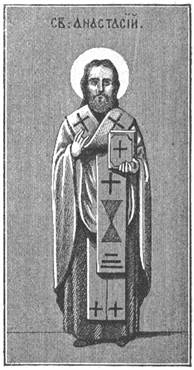
Анастасий 1-й, патриарх с 561 года; в 561 году предназначен был к ссылке за несогласие с любимой мыслью импер. Юстиниана о нетлении тела Христова до воскресения, но указ о том не был исполнен за смертью Юстиниана. В 569 г. император Юстин, по некоей личной неприязни, хотя под предлогом расточения церковного имущества, низложил его, и Анастасий пробыл в заточении 23 года; уже император Маврикий, по смерти патр. Григория, возвратил его на кафедру в 593 году. В слове по случаю возвращения, в среду Страстной седмицы, 25 марта, говорил он пастве: «мир, и ещё мир, и в третий раз мир вам». Согласно с желанием императора он перевёл на Греческий язык «Пастырское Правило» Григория Двоеслова и написал в заточении несколько собственных сочинений догматических и нравоучительных. Скончался в 599 году, оставив кафедру другому Анастасию.
Anastasius I, patriarch from the year 561; in 561 he was sentenced to exile for disagreeing with the favorite idea of the Emperor Justinian concerning the incorruptibility of Christ's body before the Resurrection, but the decree was not carried out due to Justinian's death. In 569, the Emperor Justin, out of some personal animosity, although under the pretext of squandering church property, deposed him, and Anastasius remained in confinement for 23 years; only the Emperor Maurice, after the death of Patriarch Gregory, restored him to his see in 593. In a sermon on the occasion of his return, on Wednesday of Holy Week, March 25, he said to his flock: "Peace, and again peace, and a third time peace be unto you." In accordance with the emperor's wish, he translated into Greek the "Pastoral Rule" of Gregory the Dialogist and wrote several of his own dogmatic and moral works while in confinement. He reposed in the year 599, leaving the see to another Anastasius.
Анастасий второй управлял Церковью десять лет. Когда в 609 году импер. Фока дал повеление креститься всем Евреям, то при исполнении сего в Антиохии вспыхнул бунт, и жиды в сентябре убили патриарха, подозревая его в соглашении с императором.
Anastasius II governed the Church for ten years. When in 609 the Emperor Phocas gave the order for all Jews to be baptized, during the execution of this order a riot broke out in Antioch, and the Jews in September killed the patriarch, suspecting him of collusion with the emperor.
Из игуменов Фаранской обители возведён на престол волей императора в 569 году. В книге Лимонар, главе 140, читаем: «говорили некоторые старцы о сём Григории, что был милостив, непамятозлобен и сострадателен к согрешающим. Святейший же Софроний, патриарх Иерусалимский, такое даёт о нём свидетельство: достоин этот муж, Григорий Блаженный, воспоминаться между святыми и преподобными; потому что и на патриаршество взят против воли, и свято пожил во славу Христа, Господа нашего». Скончался 593 года.
From the abbots of the Monastery of Pharan he was elevated to the throne by the will of the emperor in 569. In the book Limonar, chapter 140, we read: "Some elders said of this Gregory, that he was merciful, not mindful of wrongs, and compassionate toward sinners. And His Holiness Sophronius, Patriarch of Jerusalem, gives this testimony of him: 'This man, Gregory the Blessed, is worthy to be remembered among the saints and venerable; because he was taken to the patriarchate against his will, and lived holily to the glory of Christ our Lord.'" He reposed in the year 593.
Источником великого подвижничества свят. Анастасия Синаита является христианское воспитание, полученное среди благочестивой семьи. Запав глубоко в душу дитяти, оно сказалось в юноше определённым стремлением посвятить себя на служение Богу, вследствие чего Анастасий и поступил в монастырь. Посетив однажды Синайскую гору для поклонения св. местам, узнав великих подвижников Синайских, Анастасий так пленился здешней иноческой жизнью, что пожелал остаться здесь навсегда и предался с усердием подвижнической жизни по примеру прославивших до него своей жизнью обитель Синайскую. Таким образом достиг он звания пресвитера и игумена горы Синайской.
The source of the great asceticism of St. Anastasius of Sinai is the Christian upbringing received in a pious family. Having sunk deep into the soul of the child, it manifested itself in the youth as a definite striving to dedicate himself to the service of God, as a result of which Anastasius entered a monastery. Having once visited Mount Sinai to venerate the holy places, and having come to know the great ascetics of Sinai, Anastasius was so captivated by the monastic life there that he wished to remain there forever and devoted himself with zeal to the ascetic life, following the example of those who had glorified the Monastery of Sinai by their life before him. Thus he attained the rank of presbyter and abbot of Mount Sinai.
Между тем, в это время, когда по причине Евтихианской ереси и разных выделившихся из неё сект, в православной Церкви происходили большие смущения, побуждаемый пламенной любовью к истине, Анастасий не ограничился подвижничеством в пустыне, но, глубоко зная св. Писание и писания св. отцов, решился выступить на защиту Православия. Он несколько раз покидал своё любимое уединение на Синае и путешествовал по Сирии, Палестине и Египту – с целью борьбы с еретиками. Беседами с ними частными и прениями при многочисленном стечении народа Анастасий вразумительно действовал на них и, присоединяя к проповеди своей чудотворения (однажды во время засухи молитвами своими испросил спасительный дождь), он многих из еретиков обратил в православие.
Meanwhile, at this time, when because of the Eutychian heresy and the various sects that had split off from it, great disturbances were taking place in the Orthodox Church, driven by a fervent love for the truth, Anastasius did not limit himself to asceticism in the desert, but, deeply knowing Holy Scripture and the writings of the holy fathers, he resolved to come forth in defense of Orthodoxy. He several times left his beloved solitude on Sinai and traveled through Syria, Palestine and Egypt – with the aim of combating heretics. Through private conversations with them and debates before large gatherings of people, Anastasius acted convincingly upon them and, adding to his preaching the working of miracles (once during a drought he obtained by his prayers life-giving rain), he converted many of the heretics to Orthodoxy.
Св. Анастасий скончался в глубокой старости (около 686 г.). Он был известен многими сочинениями, в которых видна его большая начитанность и знание отцов Церкви.
St. Anastasius reposed in extreme old age (about 686). He was known for many writings, in which his great erudition and knowledge of the Church Fathers are evident.
Верования Анастасия выражаются между прочим в следующих словах из «Слова» его на неделю Фомы: «видевшие Христа во плоти считали Его за пророка, а мы хотя и не видели Его телесными очами, но, когда ещё были отроками и детьми, познали в Нём Бога, научились исповедовать Его Владыкой вселенной, Творцом веков, сиянием Славы Отчей. Святое же Евангелие Его слушаем с такой верой, как бы видим Самого Христа. Когда же видим на иконе изображение только Божественного подобия Его, как Самого Его, призирающего на нас с неба, чтим, поклоняемся и припадаем».
The beliefs of Anastasius are expressed, among other places, in the following words from his "Sermon" for the Sunday of Thomas: "Those who saw Christ in the flesh considered Him a prophet, but we, though we have not seen Him with bodily eyes, yet when we were still youths and children, came to know Him as God, learned to confess Him as the Master of the universe, the Creator of the ages, the Radiance of the Father's Glory. And we hear His Holy Gospel with such faith as if we saw Christ Himself. And when we see on an icon the representation only of His Divine likeness, as if He Himself were looking down upon us from heaven, we honor, worship, and fall down before it."
И ещё в своём догматико-полемическом сочинении «Путеводитель»249 так, между прочим, говорит Анастасий: «преподавая ученикам на Тайной Вечери животворящий хлеб, Христос сказал: приимите, ядите, сие есть Тело Мое. Подобно и чашу по вечери даде им, глаголя: сия есть Кровь Моя (Мф.26). Не сказал: сие есть образ Тела и Крови Моей. И в других местах говорит Христос: ядый Мою Плоть и пияй Мою Кровь имать живот вечный» (Ин.6).
And again in his dogmatic-polemical work "The Guide"249 Anastasius speaks thus, among other things: "When He gave the life-giving bread to the disciples at the Last Supper, Christ said: 'Take, eat, this is My Body.' Likewise also the cup after supper He gave to them, saying: 'This is My Blood' (Mt. 26). He did not say: 'This is the image of My Body and Blood.' And in other places Christ says: 'He who eats My Flesh and drinks My Blood has eternal life' (Jn. 6)."
«Примеры Авраама, Иова и Давида, которые имели жён, детей и богатства и, следовательно, были обременены множеством забот, отнимают у людей мирских предлог к нерадению о своём спасении».
"The examples of Abraham, Job and David, who had wives, children and wealth and were consequently burdened with many cares, take away from worldly people the pretext for negligence concerning their own salvation."
«Время смерти скрыто от нас по действию Промысла, потому что, если бы мы знали о нём, то до последних дней стали бы отлагать попечение о своём спасении».
"The time of death is hidden from us by the action of Providence, because if we knew of it, we would put off care for our salvation until the last days."
«Нельзя быть истинным христианином без веры и добрых дел, но и их недостаточно для того, чтобы сделать человека совершенным христианином, а необходимо ещё, чтобы их сопровождало смирение».
"One cannot be a true Christian without faith and good works, but even these are not sufficient to make a man a perfect Christian; it is also necessary that humility accompany them."
«Для принесения истинного покаяния в грехах недостаточно удерживаться от них впоследствии, но нужно понести наказание за прошедшие грехи и заставить служить правде то, что служило в нас нечистоте».
"For the offering of true repentance for sins, it is not enough to abstain from them afterwards, but one must also bear punishment for past sins and compel that which served in us for impurity to serve righteousness."
«Хорошо открывать свои недостатки людям духовным; нужно при этом, чтобы они имели мудрость и знание, чтобы не повредили нам или излишней кротостью, или излишней строгостью».
"It is good to reveal one's faults to spiritual men; it is necessary, however, that they have wisdom and knowledge, so that they do not harm us either by excessive gentleness or by excessive severity."
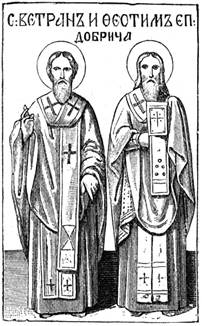
Созомен250, описывая бедственное время арианина Валента, говорит: «где церквами управляли люди мужественные, там только народ не изменял прежних своих мыслей. В самом деле по такой именно причине и Скифы остались, как передают, с той же верой (православной). Этот народ имеет много городов, селений и крепостей». По словам Плиния251, страна, которой владели Скифы – земледельцы, простираясь от устьев Дуная к Фракии, заключала в себе «прекраснейшие города – Петрополь (Дунавец), Томи (ныне Кюстенджи), Каллатис, Дионисиополь, прежде называвшийся Кроны». Эта равнина в средние времена называлась Добричь252, а ныне Добруджа. «Метрополия Скифов, продолжает Созомен, – Томи, город обширный и богатый, лежащий у моря, на левой стороне для въезжающего в Чёрное море. Там и доныне хранится обычай древний, чтобы всеми церквами этого народа управлял один епископ. В описываемое время правил Ветран. Царь Валент прибыл в Томи. Придя в церковь, по обыкновению своему начал убеждать Ветрана вступить в общение с арианами; Ветран, мужественно и смело высказав государю мысли свои в пользу учения Никейских отцов, оставил его и перешёл в другую церковь, а за ним последовал и народ; а народу было почти весь город, – сошлись, отчасти чтобы видеть царя, а отчасти в ожидании каких-либо новостей. Оставшись один с своей свитой, Валент сильно раздражён был тем, считая то за намеренное оскорбление. Он велел арестовать Ветрана и сослать в ссылку. Потом однако вскоре позволил ему возвратиться. Ибо, когда узнал, что Скифы ропщут за изгнание своего епископа, то стал опасаться, как бы не затеяли чего. Он знал, что и этот народ мужественен и по местному положению нужен для империи, потому что охранял её от пограничных варваров. Итак, Ветран в этом случае явился выше усилий государя. По свидетельству самих Скифов, он был муж вообще добрый и отличался святостью жизни».
Sozomen250, describing the calamitous time of the Arian Valens, says: "Where churches were governed by courageous men, there the people did not change their former beliefs. Indeed, for this very reason the Scythians also remained, as they report, with the same (Orthodox) faith. This people has many cities, villages and fortresses." According to Pliny251, the country possessed by the Scythian farmers, extending from the mouths of the Danube towards Thrace, contained "the most beautiful cities – Petropolis (Dunavets), Tomi (now Constanța), Callatis, Dionysopolis, formerly called Crony." This plain in medieval times was called Dobrich252, and now Dobrudja. "The metropolis of the Scythians," continues Sozomen, "is Tomi, a large and wealthy city, lying by the sea, on the left side for one entering the Black Sea. There even to this day the ancient custom is preserved, that all the churches of this people are governed by one bishop. At the time described, Vetran ruled. Emperor Valens came to Tomi. Entering the church, he began, according to his custom, to persuade Vetran to enter into communion with the Arians; Vetran, having courageously and boldly declared to the sovereign his thoughts in favor of the teaching of the Nicene fathers, left him and went to another church, and the people followed him; and the people were almost the whole city – they had gathered partly to see the emperor, and partly in expectation of some news. Left alone with his retinue, Valens was greatly angered by this, considering it a deliberate insult. He ordered Vetran to be arrested and sent into exile. Later, however, he soon allowed him to return. For when he learned that the Scythians were murmuring over the exile of their bishop, he began to fear lest they might start something. He knew that this people was also courageous and, by its geographical position, necessary for the empire, because it guarded it from the barbarians on the border. Thus Vetran in this case proved superior to the efforts of the sovereign. According to the testimony of the Scythians themselves, he was a man generally good and distinguished by the holiness of his life."
Феодорит кратко, но ещё с большим одушевлением, говорит о блаж. архипастыре Скифском; он пишет: «и Вретанион, сиявший всякой добродетелью и властью архипастыря правивший городами всей Скифии, воспламенял свой дух ревностью и обличал в порче догматов и в беззаконии по отношению к святым. Он с Богодухновенным Давидом говорил: глаголах о свидениях твоих пред цари и не стыдяхся» (Ис.18:46)253.
Theodoret briefly, but with even greater animation, speaks of the blessed archpastor of Scythia; he writes: "And Vretanion, who shone with every virtue and with the authority of an archpastor ruled the cities of all Scythia, inflamed his spirit with zeal and reproved them for corrupting the dogmas and for lawlessness toward the saints. He said with the God-inspired David: 'I spoke of Thy testimonies before kings, and was not ashamed'" (Ps. 118:46)253.
Св. Ветран, и в сане епископа носивший Славянское имя, скончался, вероятно, на другом году после победы своей над Валентом († 377 г.), так как на 2, Вселенском Соборе в 381 г. находился уже преемник его – Томский епископ Геронтий254, за которым следовал св. Феотим, «родом Скиф», по словам Грека, или что тоже Славянин255.
St. Vetran, who even in the rank of bishop bore a Slavic name, reposed, probably, in the year following his victory over Valens († 377), since at the Second Ecumenical Council in 381 his successor was already present—the Bishop of Tomi Gerontius254, after whom followed St. Theotimus, "a Scythian by birth," according to the Greek, or, what is the same, a Slav255.
В 392 г. Феотим уже известен был Иерониму и как писатель и как епископ256. Когда в 399 г. св. Златоуст рассматривал на соборе дело о Ефесском епископе, то на этом соборе вместе с другими епископами присутствовал и Феотим из Скифии и Фракии»257. В 402 г., когда Епифаний настоятельно требовал от св. Златоуста и других произнести осуждение на Оригена, «Скифский епископ Феотим даже явно порицал Епифания; неблагочестиво оскорблять, говорил он, давно скончавшегося, восставать против суда древних и отвергнуть одобренное ими. Он вынес одно из сочинений Оригена, прочитал его и, показав, что прочитанное полезно церквам, прибавил: те, которые осуждают эти книги, поносят и то, о чём здесь говорится»258.
In 392, Theotimus was already known to Jerome both as a writer and as a bishop256. When in 399 St. Chrysostom examined at a council the matter concerning the Bishop of Ephesus, at this council, together with other bishops, there was also present Theotimus from Scythia and Thrace257. In 402, when Epiphanius insistently demanded from St. Chrysostom and others that they pronounce condemnation upon Origen, "the Scythian bishop Theotimus even openly reproved Epiphanius; 'it is impious,' he said, 'to insult one long since deceased, to rise up against the judgment of the ancients and to reject what they approved.' He brought out one of the works of Origen, read it, and, having shown that what was read was profitable for the churches, added: 'those who condemn these books also revile that of which they speak'"258.
Довольно трудов требовала от него и собственная его Славянская епархия, весьма обширная. На другом (на левом) берегу Дуная кочевали тогда Гунны, подчинившие себе живших там Славян259. Феотим простёр силу веры и любви и на дикие племена; путешествовал в стране занятой ими с проповедью Евангельской и молитвой побеждал дикость их; привыкших к грабежам старался смягчать любовью благотворительной, угощал и ласкал их подарками. Сила чудес, совершенных им о имени Господа Иисуса, до того поражала племена грубые, что они называли Феотима богом Римским. Историк пишет: «в то же время (во время Златоуста) Церковью Томиса и прочей Скифии управлял Феотим, родом Скиф, человек воспитанный в любомудрии, которого Придунайские варвары Гунны, дивясь его добродетели, называли богом Римским, потому что и в самом деле видели от него опыты дел Божественных. Рассказывают, например, что однажды он путешествовал по тамошней стране варваров и встретил нескольких туземцев, шедших в Томис. Бывшие с ним стали плакать, полагая, что будут убиты. Но он, сошедши с лошади, начал молиться, и – варвары миновали их, не заметив ни его самого, ни его спутников, ни лошадей, с которых они сошли. Так как жители той страны (Гунны) своими частыми набегами разоряли Скифов (Славян), то этих зверообразных людей Феотим приучил к кротости, – угощая их и по-дружески предлагая им подарки. Один варвар, предполагая, что он богат, решился хитростью захватить его в плен. С этою целью приготовил он аркан. Опершись на щит, как обыкновенно делывал, стоял он и разговаривал с неприятелями. Потом, подняв правую руку, хотел забросить на него верёвку, чтобы тащить его к себе и к единоплеменникам; но во время этого действия рука его осталась протянутой в воздухе и не прежде освободилась от невидимых уз, как когда Феотим, по просьбе других, помолился за варвара Богу. Говорят, что этот епископ постоянно носил длинные волосы, с тех пор как начал прилежно изучать любомудрие. Он держался простого образа жизни, вкушал пищу не в одно и то же время, но когда чувствовал голод или жажду»260.
His own Slavic diocese, which was very extensive, demanded considerable labors from him. On the other (left) bank of the Danube there then roamed the Huns, who had subjugated the Slavs living there259. Theotimus extended the power of faith and love even to the savage tribes; he traveled through the country occupied by them with the preaching of the Gospel and conquered their savagery by prayer; he strove to soften those accustomed to plunder with charitable love, feasting them and caressing them with gifts. The power of the miracles performed by him in the name of the Lord Jesus so astonished the rude tribes that they called Theotimus the Roman god. The historian writes: "at the same time (during the time of Chrysostom) the Church of Tomis and the rest of Scythia was governed by Theotimus, a Scythian by birth, a man nurtured in philosophy, whom the Danube barbarians the Huns, marveling at his virtue, called the Roman god, because indeed they saw from him proofs of divine deeds. They relate, for example, that once he was traveling through that country of the barbarians and met several natives who were going to Tomis. Those with him began to weep, supposing that they would be killed. But he, dismounting from his horse, began to pray, and—the barbarians passed them by, without noticing either him or his companions, or the horses from which they had dismounted. Since the inhabitants of that country (the Huns) by their frequent raids were devastating the Scythians (Slavs), Theotimus accustomed these beast-like men to gentleness—feasting them and offering them gifts in a friendly manner. One barbarian, supposing that he was rich, resolved to capture him by guile. With this purpose he prepared a lasso. Leaning on his shield, as was his custom, he stood and conversed with the enemies. Then, raising his right hand, he wished to throw the rope over him, to drag him to himself and to his tribesmen; but during this action his hand remained stretched out in the air and was not freed from the invisible bonds until Theotimus, at the request of others, prayed to God for the barbarian. They say that this bishop constantly wore long hair, from the time he began diligently to study philosophy. He adhered to a simple way of life, partaking of food not at a fixed time, but when he felt hunger or thirst"260.
Блаж. Иероним писал: «Феотим, Скифский епископ Том, издал в разговорах, по образцам древнего красноречия, краткие и прекрасные трактаты и, как слышу, пишет и другие сочинения»261. Леонтий, живший недолго после Феотима, выписывал краткие места из двух сочинений его – из сочинения «об учении Спасителя» и из другого – «против идолов»262. Св. Дамаскин поместил в свои параллели несколько мест – из последнего сочинения и из трёх других: «на бытие», на толкования слов: «аще принесеши дар твой ко олтарю», и из слова: «о посте»263.
Blessed Jerome wrote: "Theotimus, the Scythian bishop of Tomis, has published in dialogues, after the models of ancient eloquence, brief and beautiful treatises, and, as I hear, is writing other works as well"261. Leontius, who lived not long after Theotimus, excerpted brief passages from two of his works—from the work "On the Teaching of the Savior" and from another—"Against Idols"262. St. Damascene placed in his Parallels several passages—from the latter work and from three others: "On Genesis," on the interpretation of the words: "If thou bring thy gift to the altar," and from the homily "On Fasting"263.
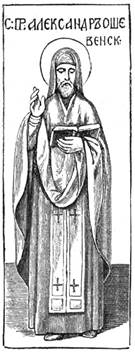
Блаженны алчущие и жаждущие правды, ибо они насытятся (Мф.5:6). К числу тех, к которым относятся сии слова Спасителя, принадлежит и преп. Александр Ошевенский266.
Blessed are they that hunger and thirst after righteousness, for they shall be filled (Mt. 5:6). To the number of those to whom these words of the Savior refer belongs our Venerable Father Alexander of Oshevensk266.
В 80 верстах от Белозерска, в Вашеозерской волости, жил зажиточный и благочестивый земледелец Никифор Ошевен. Он имел четырёх сыновей; но ему хотелось ещё иметь сына. По молитве благочестивой жены его родился Алексий. Сын молитвы был обучен грамоте и, послушный родителям во всём, любил поститься и молиться, что не совсем нравилось им. На 18 году родители хотели сочетать его браком, но он с дозволения их отправился на Богомолье в Кириллов монастырь и здесь остался на некоторое время для молитв. Последнее сильно огорчило отца, но потом успокоился он мыслью, что в монастыре не учат худому. В обители Алексий усовершился в книжном учении и жил весьма внимательно к себе. Игумен готов был постричь его в иночество. Но Алексий объявил со смирением, что желает испытать себя в готовности на крестный путь и приучить молодость свою к игу Христову. Спустя год отец посетил сына в праздник пр. Кирилла и дозволил ему ещё остаться в обители до времени. Потом родители его насилием властелина и вынуждены были перейти в Каргополь, а спустя год поселились в 30 верстах от Каргополя на земле, отведённой им землевладельцем. «Приходит (Никифор) к боярину Ивану и бьёт челом и просит грамоту слободскую; Иван же, видев его человека доброзрачна и речиста, даёт ему грамоту на тые места, слободу копити, жильцов называти и дворы ставити, и оттуду и доныне прозвася весь та слобода Ошевнева», так говорит древнее известие. Печали родителей печалили сына, но он молился, и молитва не осталась не услышанной. Спустя 6 лет пребывания в обители, Алексий принял монашество с именем Александра и удвоил свои подвиги. Послушный и строгий к себе инок приобрёл общее внимание к себе. Когда объявил он настоятелю, что, желая повидаться с родителями, он вместе с тем желает найти себе место для уединённых подвигов, игумен отвечал: тому, кто не окреп в духовной жизни, не безопасно пускаться в отшельническую жизнь; в общежитии братия подкрепляют друг друга, и это благотворно особенно для не утвердившихся в добре; и бывает, что мечтательная гордость увлечёт неопытного в пустыню под видом усердия к нерассеваемому подвижничеству и потом предаёт его праздности и нерадению; всему время; надобно испытать себя. Блажен. Александр смиренно покорился голосу настоятеля: снова подверг себя и желание своё испытанию. Тогда настоятель благословил желание его. Подвижник прибыл на родину. – Обрадованный отец просил сына найти вблизи место для своего пребывания и обещал помочь при устроении пустынного жилища. На р. Чурюге, в соседстве лесов и озёр, преп. Александр водрузил крест, в основание будущей пустынной обители. В Кирилловой обители, по возвращении, посвящённый в иеромонаха, получил от игумена в благословение икону Одигитрии и икону святителя Николая и с такими средствами дал при кресте на Чурюге обет провести остальную жизнь в будущей обители. Поручив отцу надзор за построением храма, отправился он в Новгород. Здесь святитель Иона преподал ему благословение на устроение обители и антиминс для храма её. Благочестивая боярыня Анастасия и сын её Юрий, приглашённые вспомоществовать новой обители, готовы были отдать преподобному целую волость со всеми её угодьями, но блаженный не хотел того, – зачем, сказал он, печалить наследников? Боярыня выдала четыре грамоты на сенные угодья с лесом и деревней. Храм был освящён во имя святителя Николая. Блаженный Александр с бодрой душой начал пустынную жизнь и с твёрдостью переносил её бедность и труды. С ним по воле игумена пришёл сюда из Кириллова монастыря старец; но старец не перенёс трудной пустынной жизни и возвратился в Кириллов монастырь. Блаженный остался один; он очищал лес, готовил под пашню землю и засевал; трудился неутомимо, освящая труды молитвами. Мало по малу собрались к нему братия; он поставил кельи, трапезу и другие принадлежности, радуясь желанию их служить Господу. Установив общежитие, преподобный ввёл строгий чин во всём: в храме не говорить ни с кем, в трапезу приходить в молчании и здесь слушать чтение; в кельи не быть без дела; во время работ по послушанию иметь в уме псалом или молитву Иисусову. «Братия, говорил подвижник Божий, пусть не страшат нас труды и скорби пустыни: вы знаете, что путём скорбей входят в Царствие Небесное. Пусть живёт в вас взаимная любовь и смирение. Бог любы есть, и смиренных любит Он». Блаженный владел даром слова и духовной рассудительностью; многие, даже из мирских, приходили слушать наставления его. Два племянника его, сыновья двух родных братьев, часто посещали обитель и наконец по просьбе их были пострижены в иночество. Брат Амвросий сильно раздражился тем; прибёг в обитель, ругал блаженного весьма грубо и грозил разогнать обитель. На брань исступлённого блаж. Александр отвечал кротостью, и это смягчило брата, так что он просил простить его. Потом племянники, так дорого доставшиеся ему, нанесли тяжёлую скорбь блаженному: охладев в ревности к борьбе с нуждами пустыни, они, не смотря на увещания дяди, оставили обитель его. Скорби за спасение духовных чад до того отяготели над душой блаженного, что он стал тяжко болен. Не мог он поднять ни головы, ни руки, не мог даже выговорить слова: так расслаб всем телом. В этом изнеможении он молился преп. Кириллу, в обители коего вступил в подвижническую жизнь. И вот видит святолепного старца, украшенного сединой, в белых ризах и с крестом в руке. Осенив крестом больного, святой сказал: «не скорби, брат! я помолюсь, и будешь здоров; только не забывай обета, – не оставляй сего места; я буду помогать тебе». Проснувшись, блаженный почувствовал себя здоровым и на утро пошёл в церковь; в утешение братии он рассказал о посещении преп. Кирилла. В подвижнических трудах преподобный провёл в своей обители 27 лет и мирно предал дух свой Господу на 52 году жизни, 20 апреля 1479 г.
Eighty versts from Belozersk, in the Vashëzero Volost, there lived a prosperous and pious farmer named Nikifor Osheven. He had four sons; but he desired yet another son. Through the prayer of his pious wife, Alexius was born. The son of prayer was taught to read and write and, obedient to his parents in all things, loved to fast and pray, which did not entirely please them. In his eighteenth year, his parents wished to marry him, but with their permission he set off on a pilgrimage to the Kirillov Monastery and remained there for a time in prayer. This greatly grieved his father, but he later calmed himself with the thought that in a monastery they do not teach evil. In the monastery, Alexius perfected himself in book-learning and lived with great attentiveness to himself. The abbot was ready to tonsure him into monasticism. But Alexius declared with humility that he wished to test himself in readiness for the way of the cross and to accustom his youth to the yoke of Christ. A year later, his father visited his son on the feast of St. Cyril and permitted him to remain yet longer in the monastery for a time. Afterwards, his parents were compelled by the violence of a ruler and forced to move to Kargopol, and a year later they settled thirty versts from Kargopol on land allotted to them by a landowner. “Nikifor comes to the boyar Ivan and bows low and asks for a sloboda charter; and Ivan, seeing him to be a man of goodly appearance and eloquent speech, gives him a charter for those places, to gather a sloboda, to call inhabitants, and to set up houses, and from that time even to this day the whole sloboda is called Oshevneva,” so says the ancient account. The sorrows of his parents grieved the son, but he prayed, and his prayer was not left unheard. After six years of sojourn in the monastery, Alexius received monastic tonsure with the name Alexander and doubled his ascetic labors. An obedient and strict monk, he acquired universal attention. When he declared to the abbot that, desiring to see his parents, he also wished to find for himself a place for solitary labors, the abbot answered: it is not safe for one who has not grown strong in the spiritual life to embark upon the hermitic life; in the cenobitic life the brethren support one another, and this is beneficial especially for those not yet established in good; and it happens that dreamy pride may draw the inexperienced into the desert under the guise of zeal for undistracted asceticism and then deliver him to idleness and negligence; there is a time for everything; one must test oneself. Blessed Alexander humbly submitted to the voice of the abbot: he again subjected himself and his desire to trial. Then the abbot blessed his desire. The ascetic arrived in his homeland. – The overjoyed father asked his son to find a place nearby for his dwelling and promised to help in the establishment of a hermitage. On the River Churyuga, in the vicinity of forests and lakes, St. Alexander set up a cross, as the foundation of the future desert monastery. In the Kirillov Monastery, upon his return, having been ordained a hieromonk, he received from the abbot as a blessing an icon of the Hodegetria and an icon of St. Nicholas, and with such means he made a vow at the cross on the Churyuga to spend the rest of his life in the future monastery. Entrusting his father with oversight of the construction of the church, he set off for Novgorod. There Hierarch Jonah gave him a blessing for the establishment of the monastery and an antimension for its church. The pious boyarina Anastasia and her son George, invited to assist the new monastery, were ready to give the Venerable One an entire volost with all its lands, but the blessed one did not wish this—why, he said, should we grieve the heirs? The boyarina issued four charters for hayfields with forest and a village. The church was consecrated in the name of St. Nicholas. Blessed Alexander began the desert life with a cheerful soul and steadfastly endured its poverty and labors. With him, by the will of the abbot, an elder came here from the Kirillov Monastery; but the elder could not endure the difficult desert life and returned to the Kirillov Monastery. The blessed one remained alone; he cleared the forest, prepared land for plowing, and sowed; he labored tirelessly, sanctifying his labors with prayers. Little by little, brethren gathered to him; he set up cells, a refectory, and other necessities, rejoicing in their desire to serve the Lord. Having established the cenobitic rule, the Venerable One introduced a strict order in all things: in church to speak with no one, to come to the refectory in silence and here to listen to the reading; in the cell to be without idleness; during work in obedience to keep in mind a psalm or the Jesus Prayer. “Brethren,” said the ascetic of God, “let not the labors and sorrows of the desert frighten us: you know that by the way of sorrows one enters the Kingdom of Heaven. Let mutual love and humility live in you. God is love, and the humble He loves.” The blessed one possessed the gift of speech and spiritual discernment; many, even from the worldly, came to hear his instructions. Two of his nephews, sons of two of his own brothers, often visited the monastery and finally, at their request, were tonsured into monasticism. His brother Ambrose became greatly angered by this; he rushed to the monastery, reviled the blessed one very coarsely, and threatened to scatter the monastery. To the rage of the frenzied man, Blessed Alexander answered with meekness, and this softened his brother, so that he asked to be forgiven. Afterwards, the nephews, who had cost him so dearly, brought heavy sorrow upon the blessed one: having grown cold in zeal for struggling with the needs of the desert, they, despite their uncle’s admonitions, left his monastery. Sorrows for the salvation of his spiritual children weighed so heavily upon the blessed one’s soul that he became grievously ill. He could not lift his head nor his hand, nor could he even utter a word: so weakened was he in all his body. In this exhaustion he prayed to St. Cyril, in whose monastery he had entered upon the ascetic life. And behold, he sees a saintly-looking elder, adorned with gray hair, in white vestments and with a cross in his hand. Having made the sign of the cross over the sick man, the saint said: “Grieve not, brother! I will pray, and you shall be well; only forget not your vow—do not leave this place; I will help you.” Upon waking, the blessed one felt himself well and in the morning went to church; for the consolation of the brethren he told of the visit of St. Cyril. In ascetic labors the Venerable One spent twenty-seven years in his monastery and peacefully surrendered his spirit to the Lord in the fifty-second year of his life, on the 20th of April, 1479.
По смерти ученика его Лаврентия, игумена, обитель его пришла было в упадок, – здания обветшали, братия почти все разошлись, так что не осталось ни одного иеромонаха. Раз монастырский служитель Марк видит в сонном видении: обитель полна народа; старец в святительской одежде, седой, крестом осеняет обитель и работающих в ней на постройке; другой старец, с брадой до персей, окропляет святой водой; третий среднего роста, с русыми волосами, окаждает за ними; а ещё четвёртый, молодой, вдали следует за ними. Марк узнал в третьем преп. Александра, и препод. по его прошению сказал: первый старец – святитель Николай, имени коего посвящён храм обители, второй – препод. Кирилл, обещавшийся помогать мне, – по моей просьбе они пришли сюда, а молодой человек – избираемый в игумена Матвей. Сын иеромонаха пустынника Матвей, в иночестве Максим, посвящённый в игумена архиепископом Сергием (1483–1485), в самом деле восстановил обитель по всем частям. При построении нового храма в честь свят. Николая, по указанию самого явившегося преподобного, найдены были нетленными мощи его. Новый храм освящён при игум. Вассиане 2, и при нём же преподобный велел написать образ его. По рассказу одного старца, который знал преподобного ещё в земной жизни, преподобный был роста среднего, лицом сухой, с впалыми глазами, с небольшой и не густой бородой, с проседью в русых волосах. В таком виде и был он написан.
After the death of his disciple Laurence, the abbot, his monastery fell into decline—the buildings decayed, the brethren almost all dispersed, so that not a single hieromonk remained. Once, a monastery servant named Mark saw in a dream vision: the monastery was full of people; an elder in hierarchal vestments, gray-haired, was making the sign of the cross over the monastery and those working in it on a building; another elder, with a beard reaching to his chest, was sprinkling holy water; a third, of medium stature, with light-brown hair, was censing after them; and yet a fourth, a young man, was following them at a distance. Mark recognized in the third St. Alexander, and the Venerable One, at his request, said: the first elder is St. Nicholas, to whose name the monastery church is dedicated; the second is St. Cyril, who promised to help me—at my request they came here; and the young man is Matthew, who is to be chosen as abbot. The son of a hieromonk hermit, Matthew, in monasticism Maxim, consecrated abbot by Archbishop Sergius (1483–1485), indeed restored the monastery in all its parts. During the construction of a new church in honor of St. Nicholas, at the indication of the Venerable One himself, who appeared, his relics were found incorrupt. The new church was consecrated under Abbot Vassian II, and under him the Venerable One commanded that an icon of him be painted. According to the account of an elder who had known the Venerable One in his earthly life, the Venerable One was of medium stature, lean of face, with sunken eyes, with a small and not thick beard, with gray in his light-brown hair. In such a form he was painted.
Затем следовали различные чудеса преподобного. Чудо, которое испытал на себе иеромонах Феодосий, описавший житие и чудеса преподобного в 1562 г., весьма замечательно по свидетельству о крестном знамении. Феодосий вместе с другими восставал на игумена обители с укоризнами и жалобами. Явившийся преподобный сказал: «а кто здесь игумен? конечно не ты; игумену скажи: пусть творит своё дело; тебе же говорю: пекись о твоей душе». Феодосий раскаялся; он положил было описать житие и чудеса преподобного, но потом стал волноваться сомнениями и оставил начатое дело. Явившийся преподобный наказал его тремя ударами прута. «И уведех бывшая над собою, пишет Феодосий, яко десная моя рука ослабе, длань же о запястий (с запястия) согнуся, три же персты верхних едва возмогох вместе сдвинути, еже на лицы своем крестное знамение воображати, два же персты нижних ко длани прикорчишася». Вот как в обители преп. Александра в 1562 г. изображалось крестное знамение! тремя первыми перстами! Сильное вразумление отважному самовластью преподано преподобным.
Thereafter followed various miracles of the Venerable One. A miracle which the hieromonk Theodosius, who described the life and miracles of the Venerable One in 1562, experienced upon himself is very remarkable for its testimony concerning the sign of the cross. Theodosius, together with others, rose up against the abbot of the monastery with reproaches and complaints. The Venerable One, appearing, said: “And who is abbot here? Certainly not you; say to the abbot: let him do his own work; but to you I say: care for your own soul.” Theodosius repented; he had undertaken to describe the life and miracles of the Venerable One, but afterwards became agitated with doubts and abandoned the work he had begun. The Venerable One, appearing, punished him with three blows of a rod. “And I perceived what had happened to me,” writes Theodosius, “that my right hand grew weak, the palm bent from the wrist, and I could scarcely move together the three upper fingers to form the sign of the cross on my face, while the two lower fingers were drawn to the palm.” Behold how the sign of the cross was depicted in the monastery of the Venerable Alexander in 1562! with the three first fingers! A strong admonition to rash self-will was given by the Venerable One.
Прибыл в Каргополь воеводой боярин Иван Михайл. Юрьев, брат царицы Анастасии. Игумен Вассиан, наслышавшись о его гордости и жестокости, со страхом отправился на поклон к новому воеводе. Боярин принял его несурово. Игумен представил ему царскую несудимую грамоту о обители; воевода, посмотрев, сказал: есть одна пошлина, которую будет он брать с монастырских крестьян. Боязливый игумен промолчал. Но бывший с ним простодушный и прямой старец Евсевий сказал: «не взимать тебе её с нас, господине». – «Когда прикажу, то дадите», сказал с гневом воевода. Старец заметил: «тогда будет, когда возьмёшь». И Боярин, рассвирепев, закричал: «горе, чернец! Царь государь пожаловал меня Каргополем и всею Онегой с поморьем, – а этот не хочет слушаться и ещё спорит». – Испуганный игумен поспешил убраться в монастырь и дорогой бранил старца за его резкость. Гневный боярин после того допытывался: нет ли кого, кто бы мог жаловаться на монастырь и особенно на Евсевия? Узнав о том, в обители трепетали боярина и негодовали на Евсевия. «Ступай, говорили ему, умилостивляй, как знаешь, боярина, – не погибать же нам за тебя». Огорчённый старец ночью со слезами молил Господа об утишении боярина, и на следующий день пошёл в Каргополь, готовый на всё. В городе на улице встретившийся ему домовый священник боярина неожиданно говорит ему: «ну, поздравляю тебя, Евсевий». Старец изумился. «Бог помиловал вас, продолжал священник, – святитель Николай и начальник вашей обители защитили вас от бед», Затем рассказал, что воевода, хотя не нашёл жалующихся на обитель, отдал было уже приказание самому жестокому из своих чиновников, – отправиться в монастырь и, сковав тебя, доставить в городскую тюрьму. Но в минувшую ночь явились ему, святитель и преподобный, и задали ему урок. Святитель, так рассказывал боярин, сказал ему: «если не покаешься, горе тебе». И преподобный также грозил. В страхе боярин отвечал: «не погуби меня, святитель, но другого не знаю, как называть». «Ты не знаешь его; вот он пришёл защищать труды свои и меня взял с собой, – там храм в моё имя». Боярин каялся и обещал быть защитником обители. Ступай же теперь смело к боярину, заключил священник. Старец явился к боярину, и тот принял его весьма ласково, – просил извинить его за грубость и дерзости; рассказал о видении святителя и преподобного и жалел о том, что не заехал в Ошевенскую обитель, – а наконец вручил старцу милостыню для обители. Мощи преподобного свидетельствованы были по распоряжению митр. Антония Варлаамом, епископом Вологодским267. Ныне они почивают под спудом в каменном храме, где один придел в 1707 г. посвящён преп. Александру. Ещё целы иконы, принесённые им из Кириллова монастыря268.
The boyar Ivan Mikhailovich Yuriev, brother of Tsarina Anastasia, arrived in Kargopol as voivode. Abbot Vassian, having heard of his pride and cruelty, went with fear to pay homage to the new voivode. The boyar received him without severity. The abbot presented him with the tsar’s charter of immunity for the monastery; the voivode, after looking at it, said: there is one toll which he would collect from the monastery’s peasants. The timid abbot remained silent. But the simple and straightforward elder Eusebius, who was with him, said: “You shall not take it from us, my lord.” – “When I command, you will give it,” said the voivode with anger. The elder remarked: “That will be when you take it.” And the boyar, enraged, cried out: “Woe, monk! The Tsar-Sovereign has granted me Kargopol and all the Onega with the Pomor’e – and this one does not wish to obey and even argues.” The frightened abbot hastened to return to the monastery and on the way scolded the elder for his sharpness. The angry boyar afterwards made inquiries: was there anyone who could complain about the monastery, and especially about Eusebius? Learning of this, those in the monastery trembled before the boyar and were indignant at Eusebius. “Go,” they said to him, “appease the boyar as you know how – we are not to perish because of you.” The grieved elder at night with tears prayed to the Lord for the pacification of the boyar, and on the following day went to Kargopol, ready for anything. In the city, on the street, the boyar’s domestic priest, meeting him, unexpectedly said to him: “Well, I congratulate you, Eusebius.” The elder was astonished. “God has had mercy on you,” continued the priest, “St. Nicholas and the founder of your monastery have defended you from misfortune.” Then he related that the voivode, although he had not found anyone complaining about the monastery, had already given orders to the most cruel of his officials to go to the monastery and, having put you in chains, deliver you to the city prison. But during the past night, the Hierarch and the Venerable One appeared to him and gave him a lesson. The Hierarch, so the boyar related, said to him: “If you do not repent, woe to you.” And the Venerable One also threatened. In fear the boyar answered: “Do not destroy me, O Hierarch, but the other I do not know what to call.” “You do not know him; behold, he has come to defend his labors and has taken me with him – there is a church in my name there.” The boyar repented and promised to be a protector of the monastery. “Go now boldly to the boyar,” concluded the priest. The elder appeared before the boyar, and he received him very kindly – asked forgiveness for his rudeness and insolence; told of the vision of the Hierarch and the Venerable One, and regretted that he had not stopped at the Oshevensk monastery – and finally gave the elder alms for the monastery. The relics of the Venerable One were attested by order of Metropolitan Antony by Barlaam, Bishop of Vologda267. Now they rest hidden under the ground in the stone church, where one side-chapel in 1707 was dedicated to the Venerable Alexander. The icons he brought from the Kirillov Monastery are still intact268.
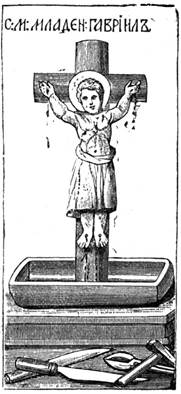
В Городненском повете, верстах в 13 от Заблудова, есть дер. Зверки, принадлежавшая к ключу Заблудовскому. Здесь жили Пётр Гавдель и супруга его Анастасия, православные и благочестивые поселяне, не смотря на невзгоды времени, твёрдо сохранившие православную веру, принятую от предков своих. Здесь 1684 г. мар. 20 родился у них сын Гавриил, которого они крестили и воспитали также в правилах православия. Когда Гавриилу было около 6 лет, случилось, что мать понесла в поле мужу обед. Жид Щутко, арендатор Зверков, приласкал к себе дитя, завёл в дом свой и увёз; его в Белый Сток; здесь сбежавшиеся жиды мучили отрока; без милосердия: внеся его в тёмное место, распяли и пустили из боку кровь, потом кололи его разными инструментами, пока не выпустили всей крови: а мёртвое тело бросили в поле269. Псы три дня бегали около тела и лаем отгоняли от него хищных птиц. По тому же лаю нашли замученное тело и представили в Заблудово. По ране в боку и другим знакам очевидно было, что кровь выпущена из отрока изуверством жидовским, и страдальческая смерть невинного отрока тогда же записана в местную книгу Заблудова; жиды судебно уличены в преступлении; тело предано земле. Страдальческая кончина блаж. Гавриила последовала 20 апреля 1690 г. «О сем кто хощет пространнее ведати, отсылаем до книг правных магдебургии Заблудовские», говорит старинная записка. Спустя 30 л. (1720 г.), когда погребали другого младенца, нашли мощи Гавриила нетленными и поставили их в церковном склепе.
In the Grodno district, about thirteen versts from Zabłudów, is the village of Zvierki, belonging to the Zabłudów estate. Here lived Peter Gawdel and his wife Anastasia, Orthodox and pious peasants, who, despite the adversities of the time, firmly preserved the Orthodox faith received from their forefathers. Here on March 20, 1684, a son, Gabriel, was born to them, whom they baptized and raised also in the rules of Orthodoxy. When Gabriel was about six years old, it happened that his mother carried dinner to her husband in the field. The Jew Shutko, the leaseholder of Zvierki, coaxed the child to himself, led him into his house and took him away to Białystok; here the Jews who had gathered tormented the child without mercy: having brought him into a dark place, they crucified him and let blood from his side, then pierced him with various instruments until they had let out all his blood; and they threw the dead body into a field269. Dogs ran around the body for three days and by their barking drove away birds of prey from it. By this barking the tortured body was found and brought to Zabłudów. From the wound in the side and other signs it was evident that the blood had been let from the child by Jewish fanaticism, and the martyric death of the innocent child was then recorded in the local book of Zabłudów; the Jews were judicially convicted of the crime; the body was committed to the earth. The martyric end of the blessed Gabriel occurred on April 20, 1690. “Whoever wishes to know more about this, we refer to the law books of the Magdeburg law of Zabłudów,” says an ancient note. Thirty years later (1720), when another infant was being buried, the relics of Gabriel were found incorrupt and were placed in the church crypt.
Так говорил блаженный в Польских стихах, написанных в 1755 г. знаменитым Михаилом Козачинским, архимандритом Слуцким. Пожар был в 1746 г.; а в 1755 г. 9 мая нетленные мощи с честью перенесены были в Слуцкий монастырь.
Thus spoke the blessed one in Polish verses written in 1755 by the renowned Michael Kozaczynski, Archimandrite of Slutsk. The fire was in 1746; and in 1755, on May 9, the incorrupt relics were honorably translated to the Slutsk monastery.
Кондак св. мученику: «святе младенче Гаврииле, ты за Прободенного нас ради от Иудей люте от тех же в ребра прободен был еси и за Истощившего кровь Свою о нас все тело твое на истощание крове в лютые язвы предал еси. Ныне же во славе вечной с Ним веселитися. Тем поминай тамо и нас, молим, зде чтущих тя, прося нам здравие телесам и спасение душам нашим»270.
Kontakion to the holy martyr: “O holy infant Gabriel, you were cruelly pierced in the ribs by the Jews for Him who was pierced for us, and for Him who poured out His blood for us you gave up all your body to cruel wounds for the pouring out of blood. Now in eternal glory you rejoice with Him. Wherefore, we pray, remember us also who here honor you, asking health for our bodies and salvation for our souls.”270
Составившемся частью из посланий к разным лицам, писанных в разрешение возражений, предлагавшихся со стороны севериан и акефалитов, и почитающемся одним из лучших сочинений против евтихианства.
Composed partly from epistles to various persons, written in resolution of objections offered by the Severians and Acephali, and considered one of the best works against Eutychianism.
У Халкондилы: „Владислав (ок. 1444 г.), – вышедши из Трансильвании, перешёл Дунай, перевёл все войска свои в страну царскую и расположился лагерем вДобродичии, приморской стране Болгаров“, и пр. ed. Nigbur р. 326.
In Chalcocondyles: “Vladislav (c. 1444), having come out of Transylvania, crossed the Danube, led all his troops into the imperial country and encamped in Dobrudja, a maritime country of the Bulgarians,” etc. ed. Niebuhr p. 326.
Созомена Ист. 7, 28. Никита Хоният: „Русь, которую и Скифами называют“. Лев диакон: „Тавро-Скифы, которых общий язык обыкновенно называет Русью“. Сл. янв. 20.
Sozomen History 7, 28. Nicetas Choniates: “The Rus’, whom they also call Scythians.” Leo the Deacon: “The Tauro-Scythians, whom common speech usually calls Rus’.” Cf. January 20.
По Нестору, издавна жили по Богу Дулебы, по Днестру до Дуная и моря Угличи иТиверцы; там великая Скифия Греков. Лаврен., стр. 7.
According to Nestor, from ancient times the Dulebes lived along the Bug, the Uglichi and Tivertsy along the Dniester to the Danube and the sea; there was the great Scythia of the Greeks. Laurentian, p. 7.
Acta sanet, ad 20 april. Как память св. Феотима по Римскому мартирологу показана апр. 20, так в том же мартирологе память св. Ветрана показана янв. 25. О последнем: Tomis in Scythia s. Bretannionis episcopi, qui mira sanctitate et zelo catholicoe fidei sub Valente imp. ariano, cui fortiter restitit, in ecclesia floruit. О Феотиме: Tomis in Scythia s. Theotimi episcopi, quem ob insignem eius sanctitatem et miracula etiam infideles et barbari venerati sunt.
Acta sanctorum, ad 20 April. As the memory of St. Theotimus is shown in the Roman Martyrology on April 20, so in the same Martyrology the memory of St. Vetranio is shown on January 25. Concerning the latter: “Tomis in Scythia, of St. Bretannio, bishop, who flourished in the Church with wonderful holiness and zeal for the Catholic faith under the Arian emperor Valens, whom he bravely resisted.” Concerning Theotimus: “Tomis in Scythia, of St. Theotimus, bishop, whom even the infidels and barbarians venerated on account of his remarkable holiness and miracles.”
Ркп. житие преп. Александра, опис. иер. Феодосием, бывшим священником. Оно есть у Толстого 2. № 164. 331, у Царского № 325, у Ундольского № 276. Об источниках сведений Феодосий пишет: „отец мой священствовал в том самом селении, откуда был родом преподобный, и там видел ещё в живых сродника его, земледельца Исаака, сына старшего брата его Амвросия, бывшего немного моложе Александра; с юного возраста жил он (Исаак) вместе с ним и всё знал о нём подробно. – Часто приходил он к отцу моему и разговаривал о святом; родитель любовью расспрашивал о его подвигах. Я же хотя был тогда отроком, внимательно слушал разговор их... часто приходил к нему (к отцу с. Надпорожье на Онеге) священник (обители Александровой) Корнилий, который также беседовал с отцом моим о житии и чудесах преподобного, а иное записал и по повелению старца Леонида (Леонтия, брата преп. Александра). Некоторый дьяк много лет провёл в обители, быв принят для служения по храму. Много и от него слышал я о преподобном... Когда лишился я супруги: то пришёл в обитель и облёкся в иноческие одежды; а преосвящ. архиепископ Пимен скоро посвятил меня в священный сан. В обители нашёл я древних иноков, сродников святого, которые рассказывали о чудесах его, явных и тайных“.
Manuscript Life of the Venerable Alexander, described by Hieromonk Theodosius, formerly a priest. It is found in Tolstoy 2. No. 164. 331, in Tsarsky No. 325, in Undolsky No. 276. Concerning the sources of his information, Theodosius writes: “My father served as priest in that same village from which the Venerable One was descended, and there he saw still alive a relative of his, the farmer Isaac, son of his elder brother Ambrose, who was a little younger than Alexander; from his youth he (Isaac) lived together with him and knew everything about him in detail. – He often came to my father and talked about the saint; my father lovingly inquired about his struggles. I, though I was then a boy, listened attentively to their conversation... The priest (of the monastery of Alexander) Cornelius often came to him (to the father in the village of Nadporozhye on the Onega), who also conversed with my father about the life and miracles of the Venerable One, and wrote down some things by the command of the elder Leonidas (Leontius, brother of the Venerable Alexander). A certain deacon spent many years in the monastery, having been accepted for service at the church. I heard much from him also about the Venerable One... When I lost my wife, I came to the monastery and was clothed in monastic garments; and the Most Reverend Archbishop Pimen soon ordained me to the sacred rank. In the monastery I found ancient monks, relatives of the saint, who told of his miracles, both manifest and secret.”
Вследствие сего свидетельствования царь грамотой 1578 года предписал отмежевать в пользу обители препод. Александра земли и лесу на 5 вёрст кругом обители. Ист. Акт. 1. № 202. Служба препод. Александру – у Царского № 563.
As a result of this attestation, the tsar by a charter of 1578 ordered that land and forest for five versts around the monastery be allotted to the monastery of the Venerable Alexander. Historical Acts 1. No. 202. The service to the Venerable Alexander is in Tsarsky No. 563.
Старинные Польские стихи, сочинение архимандрита Михаила Козачинского: Gdie sie zydzi wnet insi pozbegali, Ktorzy bez miloserdzia tam mnie mordowalie. Narzod do zbyt ciemnego lochu mnie wniesiono. J wycignowscy krzyrzem krew z bocu pucziono, Potym instrumentami roznemi dreczyli, Az poki do ostatka krwie nie wysgcyli.
Ancient Polish verses, composition of Archimandrite Michael Kozaczynski: “Where other Jews soon ran together, Who without mercy there tormented me. First they brought me into a very dark dungeon, And having stretched me on a cross, let blood from my side, Then tormented me with various instruments, Until they had let out all my blood to the last.”
Ркп. повесть и стихи о св. Гаврииле. В словаре святых 1836 г., стр. 71 несколько ошибок. Нет сомнения, что иногда и несправедливо обвиняли Евреев в краже и убиении младенцев. Но несомненно и то, что находили младенцев с несомненными знаками выпущенной крови. В Еврейской книге, печатанной в XVI в., „чин пасхи“, есть гравюра, изображающая царя в короне, покрытого струнами: он стоит в ванне; пред ним вельможи растворяют младенцам жилы и из них кровь фонтаном льёт на тело царя и в ванну. Сл. Eusenmenger d. entdecte iudenthum. На новогреческом языке Неофита „открытые таинства жидовской веры“.
Manuscript narrative and verses about St. Gabriel. In the Dictionary of Saints of 1836, p. 71 there are several errors. There is no doubt that sometimes Jews were unjustly accused of stealing and killing infants. But it is also undoubted that infants were found with undoubted signs of having had their blood let. In a Jewish book printed in the 16th century, “The Order of the Passover,” there is an engraving depicting a king in a crown, covered with streams: he stands in a bath; before him nobles open the veins of infants and from them blood pours in a fountain onto the king’s body and into the bath. Cf. Eisenmenger, Entdecktes Judenthum. In the Modern Greek work of Neophytos, “The Revealed Mysteries of the Jewish Faith.”