Иоанн, в юности оставив мир, пошёл к преп. Григорию Декаполиту, пострижен им, разделял его труды и подвиги, и сопутствовал ему в странствованиях. В 814 г. прибыл с учителем своим в Константинополь, и здесь они вместе с Иосифом Песнописцем наставляли и укрепляли православных против ереси иконоборцев. Когда Иосиф, посланный в Рим, попал в руки врагов и томился в заточении на острове Крите, тогда Григорий скончался; а Иоанн продолжал свои подвиги на спасение ближних. По возвращении же Иосифа скончался (может быть 821) и похоронен им при гробе Григория.
John, having forsaken the world in his youth, went to the Venerable Gregory of Decapolis, was tonsured by him, shared his labors and struggles, and accompanied him in his travels. In the year 814 he arrived with his teacher in Constantinople, and there together with Joseph the Hymnographer they instructed and strengthened the Orthodox against the heresy of the Iconoclasts. When Joseph, sent to Rome, fell into the hands of enemies and languished in confinement on the island of Crete, Gregory reposed; and John continued his struggles for the salvation of his neighbors. Upon Joseph's return, John reposed (perhaps in 821) and was buried by him at the tomb of Gregory.
Косьма, епископ Халкидоиский, терпел скорби и изгнание со св. Авксентием во время Льва Армянина (813–820 г.), скончался в изгнании.
Cosmas, Bishop of Chalcedon, suffered afflictions and exile together with St. Auxentius during the reign of Leo the Armenian (813–820), and reposed in exile.
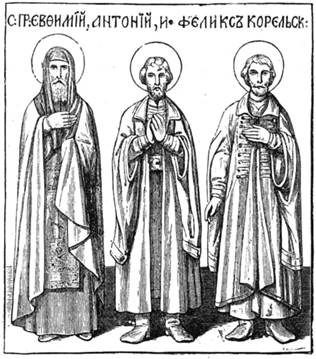
Преподобный Евфимий был основателем Корельского Николаевского монастыря, на Корельском берегу невдали от Белого моря236. Это было около 1410 года. Но едва усердный труженик успел построить храм святителя и несколько келий, как в 1419 году Норвежцы напали на монастырь, сожгли церковь и умертвили нескольких иноков237. Надлежало вновь устроять обитель, и преп. Евфимий принялся за святое дело. Между тем сыновья Марфы посадницы, владевшей на севере огромными пространствами земли, осматривая имения свои, утонули в устье Двины. Поражённая потерей их Марфа предоставила преп. Евфимию богатые средства для устроения обители. По летописи Марфа называется женой Исаака Борецкого. В грамоте своей монастырю пишет она: «вот я, раба Божия Марфа, написала при жизни сие рукописание, поставив храм св. Николая в Корельском, над гробами детей моих Антония и Феликса; я дала в дом св. Николая покупку мужа моего Филиппа – село на острове Лавле, да два села в Конечных... Приказываю дом св. Николая господину моему деверю Феодору Григорьевичу и его детям и зятю моему Ефрему Васильевичу»238. Поэтому видно, что Антоний и Феликс были сыновья первого мужа Марфы Филиппа Васильевича. поскольку же Марфа была действующим лицом в событиях 1470 г., то легко понять, что построение Николаевской обители Марфой было уже после 1419 г. и что Феликс и Антоний окончили земное течение своё людьми молодыми. Феликс известен и по личной благотворительности своей, именно монастырю св. Михаила, что в 30 верстах от устья Двины, на Пур-Наволоке239. Блаженный Евфимий известен не только по трудам и заботам в построении зданий нужных для обители, но, что гораздо важнее, сам, исполненный ревности к духовному совершенству, он просвещал дикий Корельский край светом Евангельской истины и возбуждал ревность к жизни, достойной созданного по образу Божию. В Поморском прибережье, между Русскими колониями, жили тогда пять видов Финского племени, или, как называли их Новгородцы, Корельских детей. Это были Курольцы, Ровкульцы, Вымольцы, Тиврульцы и Валедоли или Валдолейский род. Эти Корелы и Лопари имели в Поморье свои отчины, земли, угодья и промыслы. Так видно по Соловецким грамотам240. Какова была вера их? Об этом вот что говорит старинная Соловецкая повесть: «древле быша сии вышереченные родове, яко зверие дивии, живущие в пустынях непроходимых... Отнюдь Бога истинного единого и от Него посланного Иисус Христа ни знати, ни разумети хотяху; но имже кто тогда чрево насытит, тогда оно и Бога си поставляше; аще иногда каменем зверя убивает, камень почитает, и аще палицею поразит ловимое, палицу боготворит, еже и ныне в Самоедах зловерие закаменелое обретается, еще и в Лопарех, обаче отчасти»241. Вот между какими людьми довелось жить преп. Евфимию! Подвижник Божий, полный любви к людям и к истине небесной, просвещал заблудших и словом, и жизнью своею. Он воспитал в учениках своих искреннюю ревность к святому подвижничеству 242. Кончина преп. Евфимия последовала около 1435 г. По рукоп. святцам преп. Евфимий «Архангельский чудотворец». Мощи его, прославленные чудесами, открыты в 1647 г.243. Над гробами Антония и Феликса сперва стояла часовня, а с 1749 г. существует храм Сретения Господня244.
The Venerable Euthymius was the founder of the Korela St. Nicholas Monastery, on the Korela shore not far from the White Sea236. This was around the year 1410. But scarcely had the zealous laborer succeeded in building a church of the Hierarch and a few cells, when in 1419 the Norwegians attacked the monastery, burned the church, and killed several monks237. It was necessary to rebuild the monastery, and the Venerable Euthymius set about the holy work. Meanwhile, the sons of Martha the Posadnitsa, who possessed vast tracts of land in the north, while inspecting their estates, drowned at the mouth of the Dvina. Stricken by their loss, Martha provided the Venerable Euthymius with abundant means for the building of the monastery. According to the chronicle, Martha is called the wife of Isaac Boretsky. In her deed to the monastery she writes: "Behold, I, the handmaiden of God Martha, have written this testament during my lifetime, having built the church of St. Nicholas in Korela, over the graves of my children Anthony and Felix; I have given to the house of St. Nicholas the purchase of my husband Philip—the village on the island of Lavla, and two villages in Konechnye... I entrust the house of St. Nicholas to my lord, my brother-in-law Theodore Grigorievich, and to his children, and to my son-in-law Ephraim Vasilievich"238. From this it is evident that Anthony and Felix were the sons of Martha's first husband, Philip Vasilievich. Since Martha was an active figure in the events of 1470, it is easy to understand that the building of the St. Nicholas monastery by Martha took place after 1419, and that Felix and Anthony ended their earthly course as young men. Felix is also known for his personal charity, namely to the monastery of St. Michael, which is 30 versts from the mouth of the Dvina, on Pur-Navolok239. Blessed Euthymius is known not only for his labors and cares in the construction of the buildings necessary for the monastery, but, what is far more important, himself filled with zeal for spiritual perfection, he enlightened the wild Korela region with the light of Gospel truth and aroused zeal for a life worthy of one created in the image of God. On the Pomorian coast, among the Russian colonies, there then lived five tribes of the Finnish people, or, as the Novgorodians called them, Korela children. These were the Kuroltsy, Rovkultsy, Vymoltsi, Tivrultsy and the Valedoli or Valdolei clan. These Korels and Lapps had their own patrimonies, lands, properties and trades in Pomorie. This is evident from the Solovki charters240. What was their faith? Concerning this, an ancient Solovki tale says the following: "In ancient times these aforementioned tribes were like wild beasts, living in impassable wildernesses... They had no desire at all to know or understand the one true God and Jesus Christ sent by Him; but whatever then filled their belly, that they set up as their god; if one killed a beast with a stone, he honored the stone, and if he struck his prey with a club, he deified the club, which hardened superstition is still found among the Samoyeds, and also among the Lapps, though in part"241. Behold among what kind of people the Venerable Euthymius was destined to live! The man of God, filled with love for men and for heavenly truth, enlightened the erring both by word and by his life. He nurtured in his disciples sincere zeal for holy asceticism242. The repose of the Venerable Euthymius followed around the year 1435. According to manuscript menologia, the Venerable Euthymius is "the Wonderworker of Archangel." His relics, glorified by miracles, were uncovered in 1647243. Over the graves of Anthony and Felix there first stood a chapel, and since 1749 there has been a church of the Meeting of the Lord244.
В простой, смиренной душе Иоанна загорелся порыв к высшему подвигу, и Господь послал ему силу осуществить этот подвиг и прославил его и в земной жизни и в вечности.
In the simple, humble soul of John there blazed forth an impulse toward the highest struggle, and the Lord sent him the strength to accomplish this struggle and glorified him both in earthly life and in eternity.
Родом из Янины – в Эпире245, Иоанн был воспитан в благочестивой семье. Он вырос в любви к Богу. Любимым его отдыхом было посещение храма и чтение свящ. Писания, почерпаемые из которого уроки он применял к жизни. Был предан труду и получаемый им заработок делил на три части: родителям, бедным и остальное – на свои и всякие другие нужды.
A native of Ioannina in Epirus245, John was raised in a pious family. He grew up in love for God. His favorite recreation was visiting the church and reading the Holy Scriptures, the lessons from which he applied to life. He was devoted to labor, and the earnings he received he divided into three parts: for his parents, for the poor, and the remainder for his own and all other needs.
Осиротев в молодых годах, он переселился в Константинополь и занялся торговлей. Рядом с ним торговали в своих лавочках частью Турки (во власти которых находился тогда Константинополь), частью – отступники от христианской веры, подчинившиеся победоносному в то время магометанству. Те и другие невзлюбили христианского юношу. Для бывших христиан он служил наглядным обличением их малодушного отступничества; магометане же досадовали, что примерный во всех отношениях труженик принадлежит к чуждой для них по вере среде. Магометане, вообще, как из фанатизма, так и потому, что они дорожат христианами, как способными, смышлёными, честными работниками, стараются обращать их в исламизм. И потому они не могли оставить без внимания работящего, добросовестного, умного, обладающего притом и видной наружностью, выдающегося среди трудящегося люда Иоанна... Им очень хотелось привлечь его в свою среду, т. е. обратить его в магометанство.
Having become an orphan at a young age, he moved to Constantinople and engaged in trade. Alongside him, in their little shops, traded partly Turks (in whose power Constantinople then was), and partly apostates from the Christian faith, who had submitted to the then-victorious Mohammedanism. Both groups disliked the Christian youth. For the former Christians, he served as a visible reproach of their faint-hearted apostasy; the Mohammedans, for their part, were vexed that a worker exemplary in every respect belonged to a community alien to them in faith. The Mohammedans, in general, both out of fanaticism and because they value Christians as capable, intelligent, honest workers, try to convert them to Islam. And therefore they could not leave without attention the industrious, conscientious, intelligent John, who also possessed a handsome appearance and stood out among the working people... They very much wished to draw him into their midst, that is, to convert him to Mohammedanism.
– Не в такой бы тёмной доле жить такому прекрасному юноше! – говорили Турецкие торговцы своему соседу, – если бы ты принял нашу веру, то перед тобой открылась бы широкая дорога, ты мог бы достигнуть больших почестей и богатства...
"What a fine young man to live in such a lowly lot!" the Turkish merchants would say to their neighbor. "If you were to accept our faith, a broad path would open before you; you could attain great honors and wealth..."
Иоанн благодушно отшучивался от таких безумных в его глазах рассуждений, не обращая на них сначала никакого внимания; но так как рассуждения эти и уговаривания стали принимать более серьёзный характер, становились настоятельными, то они навели Иоанна на мысль, что ему, как христианину, предстоит серьёзная с ними борьба... ему стал представляться исход борьбы – обыкновенный под влиянием Турецкого владычества: мученичество...
John good-naturedly laughed off such reasonings, which in his eyes were insane, paying them no attention at first; but since these reasonings and persuasions began to take on a more serious character and became insistent, they led John to the thought that, as a Christian, a serious struggle with them lay before him... The outcome of the struggle began to present itself to him—the usual one under Turkish dominion: martyrdom...
Не страхом, но небесной радостью сказалась его душе первая мысль о подобном исходе. Иоанн был так полон любви к Богу, что мысль о мученическом подвиге проблеснула в его душе только в виде соединения его с Тем, Кого он с детства привык любить. И вот, он спешит принять совет опытного наставника по поводу чувств, преисполнивших его сердце. Он сообщает протоиерею великой церкви, по имени Калофету, о своём намерении, хотя бы это довело его и до мученичества – отстаивать свою веру, в от- отступлении от которой его так настоятельно убеждают...
Not with fear, but with heavenly joy did the first thought of such an outcome resound in his soul. John was so filled with love for God that the thought of the martyr's struggle dawned in his soul only as a union with Him Whom he had been accustomed to love from childhood. And so, he hastens to seek the counsel of an experienced guide concerning the feelings that filled his heart. He informs the protopresbyter of the Great Church, named Calophetus, of his intention—even if it should lead him to martyrdom—to defend his faith, from apostasy from which he was being so insistently urged...
Пастырь, однако же, постарался отклонить Иоанна от его намерения, напомнил ему, что даже святыми канонами запрещается произвольно предпринимать мученический подвиг – в виду того, что никто заранее не может измерить степени своих сил и что они могут поколебаться под тяжестью испытаний...
The pastor, however, tried to dissuade John from his intention, reminding him that even the holy canons forbid voluntarily undertaking the martyr's struggle—in view of the fact that no one can beforehand measure the extent of his own strength, and that it may falter under the weight of trials...
Между тем наступил Великий пост. Среди усиленно-благочестивого настроения, возбуждаемого в это время в душе всякого истинного христианина, как-то особенно чувствительно отзывались в душе Иоанна насмешки и побуждения со стороны Турок, чтобы он принял исламизм. Вместе с тем в нём росла решимость отстоять свою веру, в нём разгорался порыв пострадать за Христа... В ночь на Великую пятницу в сновидении он увидел себя, подобно отрокам Вавилонским, окружённым пламенем и воспевающим славу Христа и, приняв это за знамение воли Божией, он пришёл снова к пастырю и убедительно просил его напутствовать его на подвиг молитвами, благословением и приобщением Божественных Таин. Видя неудержимое стремление юноши, старец от души помолился за него, приобщил его св. Таин и, благой словив, отпустил.
Meanwhile, Great Lent arrived. Amidst the intensively pious disposition aroused at this time in the soul of every true Christian, the mockeries and urgings of the Turks that he accept Islam resounded with particular sensitivity in John's soul. At the same time, his resolve to defend his faith grew within him, and the impulse to suffer for Christ blazed up... On the night of Great Friday, in a dream, he saw himself, like the youths of Babylon, surrounded by flame and singing the glory of Christ, and taking this as a sign of God's will, he came again to the pastor and earnestly begged him to guide him to the struggle with prayers, blessing, and communion of the Divine Mysteries. Seeing the youth's irrepressible striving, the elder prayed for him with all his soul, communed him with the Holy Mysteries, and, having blessed him, sent him forth.
Радостно возвратился Иоанн в свою мастерскую, и не замедлило осуществиться его заветное желание... Ещё пребывал он в своём благочестиво-восторженном настроении, как вдруг обступили его соседи и, как будто сговорясь между собой, стали снова побуждать его принять исламизм и к этому присоединили ещё и клевету, будто бы он в городе Трик-кале давал обещание отречься от Христа, и между тем всё ещё не исполняет своего обещания.
Joyfully John returned to his workshop, and his cherished desire was not long in being fulfilled... He was still abiding in his pious and rapturous disposition, when suddenly his neighbors surrounded him and, as if by agreement, began again to urge him to accept Islam, and to this they added also a slander, that he had supposedly given a promise in the city of Trikkala to renounce Christ, and yet still had not fulfilled his promise.
– Никогда и нигде не имел я мысли отречься от Христа! – с жаром возразил Иоанн, – напротив того, я жил и буду жить о Христе моём и готов умереть за Него! Разве возможно изменить Ему ради самозванца и врага Христова Мухаммеда? Я отвергаю и Мухаммеда, и веру его. Делайте со мной, что хотите, и чем больше будете меня мучить, тем больше сделаете мне добра.
"Never and nowhere have I had the thought of renouncing Christ!" John retorted with fervor. "On the contrary, I have lived and will live in Christ my Lord, and I am ready to die for Him! Is it possible to betray Him for the sake of an impostor and enemy of Christ, Muhammad? I reject both Muhammad and his faith. Do with me what you will, and the more you torment me, the more you will do me good."
Приведённый на суд за такие слова, Иоанн твёрдо исповедал Христа и резко обличал учение Мухаммеда. Судья предал его на жертву разъярённой толпе, которая с неистовством напала на христианина. Страдалец терпеливо переносил истязания и только молил Бога дать ему силу устоять до конца.
Brought to trial for such words, John firmly confessed Christ and sharply denounced the teaching of Muhammad. The judge delivered him as a sacrifice to the enraged crowd, which fell upon the Christian with fury. The sufferer patiently endured the tortures and only prayed to God to grant him strength to stand firm to the end.
Судья, предполагая, что если предоставить Иоанну время размыслить и обсудить своё положение, то он одумается и отступит перед дальнейшими страданиями, велел отвести его на ночь в тюрьму, но и на следующее утро он увидел его непоколебимым в исповедании веры Христовой, и тогда, потеряв терпение, он приказал зажечь костёр, чтобы немедленно покончить с мучеником, но, получив денежную сумму от христиан, решился исполнить их просьбу – отложить казнь Иоанна до окончания праздничных дней.
The judge, supposing that if he gave John time to reflect and consider his situation, he would come to his senses and shrink from further sufferings, ordered him to be taken to prison for the night; but on the following morning he saw him still unshaken in his confession of the faith of Christ. Then, losing patience, he commanded a pyre to be lit in order to make an end of the martyr at once; but, having received a sum of money from the Christians, he decided to grant their request—to postpone John's execution until the end of the festive days.
Лишние дни томления не ослабили душевную силу Иоанна и, выведенный в условный день снова на суд, он, в ответ на принуждения отречься от Христа, радостно воскликнул: «никогда не отрекусь от сладчайшего и спасительного имени Христа, Бога истинного! Он – моё богатство, моя слава, моя похвала! За Него приму все страдания! Венец мученический и жизнь вечная – вот одно моё помышление! Чему вы смеётесь, несчастные? Я же радуюсь о Боге моём и вместе с ангелами воспеваю Ему!»
The extra days of languishing did not weaken John's spiritual strength, and when he was brought again to trial on the appointed day, in response to the urgings to renounce Christ, he joyfully exclaimed: "Never will I renounce the most sweet and saving name of Christ, the true God! He is my wealth, my glory, my boast! For Him I will accept all sufferings! The martyr's crown and eternal life—this is my sole thought! Why do you laugh, wretched ones? I, on the contrary, rejoice in my God and together with the angels sing praises to Him!"
И затем чудным голосом запел: «Христос воскресе из мертвых, смертию смерть поправ, и сущим во гробех живот даровав!»
And then, with a wondrous voice, he began to sing: "Christ is risen from the dead, trampling down death by death, and upon those in the tombs bestowing life!"
Судья окончательно приговорил Иоанна к сожжению на костре. Между тем как его разжигали, изуверы наносили мученику жестокие удары палками и камнями. Он же, как бы и не чувствуя их, радостно пел: Христос воскресе! Наконец, когда костёр был готов, Иоанн сам бросился в огонь; окружённый пламенем, он продолжал воспевать: Христос воскресе! – И таким образом осуществилось его сновидение.
The judge finally sentenced John to be burned at the stake. While the pyre was being kindled, the fanatics dealt the martyr cruel blows with sticks and stones. He, as if not feeling them, joyfully sang: Christ is risen! At last, when the pyre was ready, John himself cast himself into the fire; surrounded by flames, he continued to chant: Christ is risen!—And thus his dream was fulfilled.
Видя его страдания, некоторые христиане с помощью денег упросили палачей усечь мечем голову Иоанна, чтобы скорее прекратились его страдания, и ценой же золота приобрели его обгоревшие останки и перенесли их в великую церковь. Здесь, при всём собравшемся для поклонения мученику христианском народе, мощи пострадавшего за веру Христову Иоанна положены были на приличном месте в патриаршей церкви и с тех пор, по свидетельству писателя жизни Иоанна, современника его протоиерея Навплийского Николая Малакса, источают изобильные и великие чудеса246.
Seeing his sufferings, some Christians, with the help of money, persuaded the executioners to cut off John's head with a sword, so that his torments might end more quickly; and with gold they purchased his charred remains and transferred them to the great church. There, before all the Christian people gathered to venerate the martyr, the relics of John, who had suffered for the faith of Christ, were placed in a fitting location in the patriarchal church; and from that time, according to the testimony of the writer of John's life, his contemporary the protopresbyter of Nauplia, Nicholas Malaxas, they pour forth abundant and great miracles246.
«Многие из нас возбуждены и примером его утверждены и укреплены к тому, чтобы не изменять своей вере так легко, как прежде» ... говорит жизнеописатель Иоанна.
"Many of us have been stirred up and, by his example, confirmed and strengthened not to betray our faith as easily as before," says John's biographer.
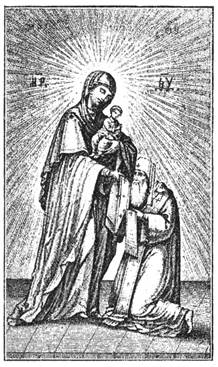
Икона Максимовская изображает во весь рост Богоматерь; перед Нею митрополита Максима, стоящего на коленях и приемлющего из пречистых рук её омофор. – «Сей святый и чудотворный образ Пресвятые Богородицы, как гласит надпись на сей иконе, написан бысть в лето 6807 (1299), по видению Максима, митрополита Владимирского и всея России чудотворца, родом Грека, по пришествии его из Киева во Владимир, когда он, от путного шествия в келье своей мало уснув, абие видит, аки яве, свет велик и необычен, и в том свете явися ему Пречистая Дева Богородица, держащи на руку Превечного Младенца, и глагола: рабе Мой Максим, добре пришел еси семо посетити град Мой, и подаде ему омофор, глаголя: приими сей омофор и паси в граде Моем словесные овцы; он же прием, возбудися от сна, и в келии никого же виде, а омофор обретеся в руце его. Он же страхом объят бысть на мног час, абие поведа великому князю Андрею, и построиша ковчег злат, и положиша в него той омофор, и прославися сие чудо по всей Русской земле и в Палестине, и повеле написати сей образ тем подобием, якоже виде Максим святый во время безбожного царевича Талыча, егда плени град и разори». Таким образом явление Богоматери митрополиту Максиму служило знамением небесного благословения на перенесение митрополии из Киева во Владимир. Впоследствии икона Максимовская прославилась многими чудесами и теперь находится во Владимире в соборной кафедральной церкви.
The Maximov Icon depicts the Mother of God in full stature; before Her, Metropolitan Maxim, kneeling and receiving an omophorion from Her most pure hands. — "This holy and wonderworking image of the Most Holy Theotokos, as the inscription on this icon states, was painted in the year 6807 (1299), according to the vision of Maxim, Metropolitan of Vladimir and Wonderworker of all Russia, a Greek by birth, after his coming from Kiev to Vladimir, when, having fallen asleep for a little while in his cell from the journey, he suddenly saw, as if awake, a great and unusual light, and in that light the Most Pure Virgin Theotokos appeared to him, holding the Eternal Child in her arms, and said: 'My servant Maxim, you have come well hither to visit My city,' and gave him an omophorion, saying: 'Receive this omophorion and shepherd the spiritual sheep in My city.' He, receiving it, awoke from sleep, and saw no one in the cell, but the omophorion was found in his hand. He was seized with fear for many hours; then he told Grand Prince Andrew, and they made a golden ark and placed that omophorion in it; and this miracle was glorified throughout all the Russian land and in Palestine; and he commanded that this image be painted in that likeness, just as St. Maxim saw it during the time of the godless prince Talych, when he captured the city and laid it waste." Thus the appearance of the Mother of God to Metropolitan Maxim served as a sign of heavenly blessing for the transfer of the metropolitan see from Kiev to Vladimir. Later, the Maximov Icon was glorified by many miracles, and it is now in Vladimir, in the cathedral church.
Двинск. лет., стр. 7. Собр. л. 3, 108. „Мурмане, – с 500 человек, в бусах и шнеках, повоеваша в Варгузе (река Варгуза Кольского уезда Архангельск. губ.), погост Корельский и в земли Заволочской погосты: в Неноксе (Архангельск. уезда), в Корельском монастырь св. Николы, Конечный погост, Яковлю, Курью, Андреянов берег, Кит остров, Кярь остров, Михаилов монастырь, Чиглоним, Хлечинимо; 3 церкви сожгли; а христиан и черноризец посекли“.
Dvina Chronicle, p. 7. Collection of Chronicles 3, 108. "The Murmans—with 500 men, in boats and snekkjas—ravaged in Varguz (the Varguz River of Kola District, Arkhangelsk Province), the Karelian pogost, and in the Zavolochye lands the pogosts: in Nenoksa (Arkhangelsk District), in the Karelian Monastery of St. Nicholas, the Konetsky Pogost, Yakovlya, Kurya, Andreyanov Bereg, Kit Island, Kyar Island, the Michael Monastery, Chiglonym, Khlechinimo; they burned three churches; and they cut down Christians and monks."
По ркп. святцам в Корельском монастыре покоятся, кроме праведных Антония и Феликса, „праведный Стефан подвижник, преподобнии отцы Исаия и Никонор новые чудотворцы“.
According to manuscript menologia, in the Karelian Monastery, besides the Righteous Anthony and Felix, there repose "the Righteous Stephen the ascetic, and the Venerable Fathers Isaiah and Nicanor, new wonderworkers."
Повесть о обретении мощей и чудесах преп. Евфимия у Царского № 136. Максимовича Географ. Словарь 3, 738. 739.
The Tale of the Uncovering of the Relics and Miracles of the Venerable Euthymius, in Tsarsky's No. 136. Maksimovich's Geographical Dictionary 3, 738, 739.
Иоаннина или Янина – город, считаемый за древнюю Кассиону между Триккой фессалийской и Амвракией эпирской к югу („Полн. месяцесл.“ арх. Сергия, т. II, ч. II, стр. 110).
Ioannina or Janina—a city considered to be ancient Cassiope, between Tricca in Thessaly and Ambracia in Epirus to the south (Archimandrite Sergius, Complete Menologion, vol. II, part II, p. 110).