О Св. Аристархе, обращённом к И. X. Апост. Павлом, упоминается в «Деяниях Апостольских» (Деян.19:29), что ремесленники, делавшие серебряные храмы Артемиды и получавшие от того немалую прибыль, возмутились против Апост. Павла и спутников его, проповедовавших, что «делаемые руками человеческими не суть боги», и, «схватив Македонян Гаия и Аристарха, они единодушно устремились на зрелище» ... Другое упоминание об Ап. Аристархе – в послании Ап. Павла к Колоссянам – свидетельствует о том, что он был узником вместе с Ап. Павлом: «Приветствует вас Аристарх, заключённый вместе со мной» ... (Посл. Кол.4:10). Ещё упоминает о нём св. Павел в послании к Филимону: «приветствуют тебя Епафрас, Марк, Аристарх и другие сотрудники мои» (Флм.1:23).
Concerning St. Aristarchus, converted to Jesus Christ by the Apostle Paul, mention is made in the Acts of the Apostles (Acts 19:29), that the craftsmen who made silver shrines of Artemis and derived no small profit from this, rose up against the Apostle Paul and his companions, who preached that "they are not gods which are made with hands," and, "having caught Gaius and Aristarchus, men of Macedonia, they rushed with one accord into the theatre." Another mention of the Apostle Aristarchus is in the Epistle of the Apostle Paul to the Colossians, which testifies that he was a prisoner together with the Apostle Paul: "Aristarchus, my fellow prisoner, saluteth you" (Col. 4:10). St. Paul also mentions him in the Epistle to Philemon: "Epaphras, Mark, Aristarchus, and my other fellow workers salute thee" (Philem. 1:23).
Аристарх был епископом в Апамее Сирской. – Кончина его произошла при императоре Нероне; он был обезглавлен в одно время с Апп. Павлом, Пудом и Трофимом.
Aristarchus was bishop in Apamea of Syria. His end came under the emperor Nero; he was beheaded at the same time as the Apostles Paul, Pudens, and Trophimus.
Св. Пуд, упоминаемый во 2-м послании св. Павла к Тимофею (2Тим.4:21): «приветствуют тебя Еввул и Пуд и все братия», был Римским сенатором и благочестивым человеком; он принимал в дом свой святых первоверховных Апостолов Петра и Павла, и всех христиан, так что дом его служил как бы Церковью.
St. Pudens, mentioned in the second epistle of St. Paul to Timothy (2 Tim. 4:21): "Eubulus greeteth thee, and Pudens, and all the brethren," was a Roman senator and a pious man; he received into his house the holy chief Apostles Peter and Paul, and all Christians, so that his house served as a church.
Об Ап. Трофиме, бывшем родом из Ефеса, обращённом ко Христу св. Ап. Павлом, упоминается в «Деяниях Апостольских» (Деян.20:4,21:29), что он сопровождал Ап. Павла на его пути благовествования, и во 2-м посл. к Тимофею (2Тим.4:20) Павел говорит: «Трофима же я оставил больного в Милете». Последовав за Павлом и во время гонения при императоре Нероне, был в 64-м году обезглавлен вместе с ним и другими Апостолами.
Concerning the Apostle Trophimus, who was a native of Ephesus and converted to Christ by St. Paul, mention is made in the Acts of the Apostles (Acts 20:4, 21:29), that he accompanied the Apostle Paul on his journey of preaching, and in the second epistle to Timothy (2 Tim. 4:20) Paul says: "Trophimus have I left at Miletus sick." Having followed Paul also during the persecution under the emperor Nero, he was beheaded in the year 64 together with him and the other Apostles.
Просвещённые верой Христовой от самих Апостолов, эти благородные Римлянки, посвятив себя на служение Христу, погребали замученных в Риме за исповедание Иисуса Христа и за это сами после истязаний обезглавлены при Нероне. – Мощи их в Риме, в церкви Божией Матери – Умиротворительницы.
Enlightened with the faith of Christ by the Apostles themselves, these noble Roman women, having dedicated themselves to the service of Christ, buried those who had been tortured in Rome for confessing Jesus Christ, and for this they themselves were beheaded under Nero after tortures. Their relics are in Rome, in the church of the Mother of God, the Peacemaker.
Свв. мучч. Сухия и 16 Месукевийцев, его сподвижников, обращённых ко Христу св. Хризосом и четырьмя учениками его, крещёнными Ап. Фаддеем. Пострадали при Армянском царе Датианосе в 123-м г. На месте их мученической смерти св. Григорий, просветитель великой Армении, воздвиг храм и учредил братство, впоследствии образовавшееся в монашество.
The holy martyrs Sukhy and the sixteen Mesukevians, his companions, converted to Christ by St. Chrysos and his four disciples, who were baptized by the Apostle Thaddaeus. They suffered under the Armenian king Datianos in the year 123. On the site of their martyrdom, St. Gregory, the enlightener of Great Armenia, erected a church and established a brotherhood, which later developed into a monastery.
Иверская Церковь издревле празднует память святых подвижников Месукевийских. – (См. «Полн. жизнеопис. свв. Груз. Церкви» – Сабинина).
The Iberian Church from ancient times celebrates the memory of the holy ascetics of Mesukevea. (See "Complete Lives of the Saints of the Georgian Church" by Sabinin.)
В IV-м веке христианство начало распространяться между Готфами, жившими по берегам Дуная. Во время гонения, воздвигнутого на просветившихся верой Христовой при Афанарихе (вследствие поражения его Римлянами), оказалось, что между ними было уже много ревностных последователей нового учения, которые не отступили перед мученическою смертью за исповедание Иисуса Христа. Одним из таковых был св. мученик Савва.
In the fourth century, Christianity began to spread among the Goths who lived along the banks of the Danube. During the persecution raised against those enlightened by the faith of Christ under Athanaric (as a result of his defeat by the Romans), it turned out that among them there were already many zealous followers of the new teaching, who did not shrink from martyrdom for confessing Jesus Christ. One of these was the holy martyr Sabbas.
В послании Готфской Церкви к Каппадокийской, отправленном с нетленным телом мученика Саввы, описаны (очевидцами) подвиги и чудеса святого.
In the epistle of the Gothic Church to the Cappadocian Church, sent with the incorrupt body of the martyr Sabbas, the struggles and miracles of the saint are described (by eyewitnesses).
«Ради памяти мученика и пользы верующих, – говорится в церковном послании, – мы рассудили, по кончине его за Господа, не умолчать о славных делах его, но предать их письму. Он был правоверен, благоговеен, во всяком праведном деле послушлив, кроток, прост в слове, но не в разуме; со всеми говоря смело за истину, заграждал уста идолослужителям; был готов на всякое доброе дело; пел в церкви, заботился о храме Божием, презирал богатство, молился и постился усердно, был чужд тщеславия, побуждал всех к Богоугодному житию, соблюдал «веру, действующую любовью» (Гал.5:6), и никогда не боялся свободно говорить о Господе, за что не раз терпел мучения от нечестивых»193.
"For the sake of the memory of the martyr and the benefit of the faithful," it is said in the church epistle, "we have determined, after his death for the Lord, not to be silent about his glorious deeds, but to commit them to writing. He was orthodox, reverent, obedient in every righteous deed, meek, simple in speech, but not in understanding; speaking boldly with all for the truth, he stopped the mouths of idolaters; he was ready for every good work; he sang in church, cared for the temple of God, despised wealth, prayed and fasted diligently, was a stranger to vainglory, urged all to a God-pleasing life, kept 'faith which worketh by love' (Gal. 5:6), and never feared to speak freely of the Lord, for which he more than once suffered torments from the ungodly."193
Когда начальники Готфские увидели, что вера христианская быстро распространяется между язычниками, то они начали преследовать христиан. Прежде всего они принуждали их вкушать от идольских жертв.
When the Gothic chiefs saw that the Christian faith was spreading rapidly among the pagans, they began to persecute the Christians. First of all, they forced them to eat of the idolatrous sacrifices.
– Кто вкусит идоложертвенных мяс, тот не может быть христианином! – напоминал Савва и удерживал христиан от исполнения языческого обряда. За это он был изгнан на несколько времени из селения.
"He who eats meat offered to idols cannot be a Christian!" Sabbas reminded them, and restrained the Christians from fulfilling the pagan rite. For this he was expelled from the village for some time.
Когда гонение возобновилось, и воины снова начали забирать христиан, то жители села, где жил Савва, опасаясь обыска и преследований, с клятвой стали уверять начальника края, что между ними нет ни одного христианина.
When the persecution was renewed, and the soldiers again began to seize Christians, the inhabitants of the village where Sabbas lived, fearing a search and persecution, began with an oath to assure the chief of the region that there was not a single Christian among them.
Во время праздника Пасхи, при возобновившемся яростном гонении в 372-м г. Савва был захвачен язычниками, напавшими на христиан в то время, как они торжественно праздновали святые дни. Его вместе с благочестивым сельским священником беспощадно поволокли по жестокому пути до самого города, били палками и мечами и мучили до ночи; на другой день стали принуждать есть идоложертвенную пищу, и когда они отказались, то Савву снова предали истязаниям и наконец – утопили в реке.
During the feast of Pascha, in the renewed fierce persecution in the year 372, Sabbas was seized by pagans who attacked the Christians while they were solemnly celebrating the holy days. Together with the pious village priest, he was mercilessly dragged along the harsh road to the city itself, beaten with clubs and swords, and tormented until night; the next day they began to force him to eat food offered to idols, and when they refused, Sabbas was again subjected to tortures and finally drowned in the river.
Перед смертью он только славил Бога и молился, и когда ведшие его на казнь, тронутые кротостью мученика, пожелали и произвольно решили его отпустить на свободу, то Савва не принял их предложения: так жаждала душа его скорее соединиться с Христом...
Before death he only glorified God and prayed, and when those leading him to execution, touched by the meekness of the martyr, wished and voluntarily decided to set him free, Sabbas did not accept their offer: so greatly did his soul thirst to be united with Christ...
Св. Савва пострадал, имея от роду 38 лет. – Воины вынули из воды тело его и бросили на берегу, на съедение птицам, но оно осталось нетронутым, и через несколько времени мог приобрести его один христианин, который перенёс эти святые останки в своё отечество – Каппадокию, при чем было доставлено и вышеупомянутое послание, кончавшееся так: – «совершая память мученика в день, в который он увенчался, возвещайте то и прочим братьям, да во всей кафолической Апостольской Церкви, духовно веселясь, прославляют Господа, избравшего Себе рабов Своих. Приветствуйте всех святых; приветствуют вас братья, терпящие с вами гонение. – Могущему же нас благодатью и человеколюбием Своим привести в Небесное Царство – слава и честь и поклонение, со единородным Его Сыном и Пресвятым Духом, во веки, аминь».
St. Sabbas suffered at the age of 38. The soldiers pulled his body out of the water and threw it on the bank to be devoured by birds, but it remained untouched, and after some time a certain Christian was able to acquire it, who carried these holy remains to his homeland—Cappadocia—along with the aforementioned epistle, which ended thus: 'Celebrating the memory of the martyr on the day on which he was crowned, announce this also to the other brethren, that in the whole Catholic Apostolic Church, rejoicing spiritually, they may glorify the Lord, Who hath chosen His servants for Himself. Salute all the saints; the brethren who suffer persecution with you salute you. To Him Who is able by His grace and love for mankind to bring us into the Heavenly Kingdom, be glory, honor, and worship, with His Only-begotten Son and the Most Holy Spirit, forever, amen.'
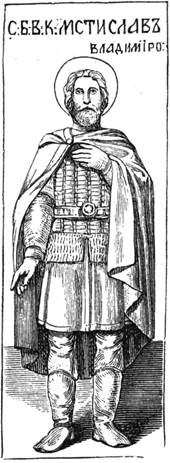
Аз есмь Господь Бог твой, благоугождай предо Мною и буди непорочен (Быт.17:1). Такова воля Божия о человеке. Кн. Мстислав Владимирович, названный великим, твёрдо знал и выполнял волю Божию о человеке, и он поставлен в числе святых ещё в прологе XIII века194.
I am the Lord thy God; walk before Me, and be thou perfect (Gen. 17:1). Such is the will of God concerning man. Prince Mstislav Vladimirovich, called the Great, firmly knew and fulfilled the will of God concerning man, and he is numbered among the saints already in the prologue of the 13th century.194
В 1088 г. сын Владимира Мономаха, в крещении Феодор, будучи 12 лет, отправлен дедом княжить в Новгород195. На 19 году он уже является образцом мужества и великодушия христианского. Олег, князь Черниговский, убил брата его Изяслава, захватил Ростов и Суздаль, принадлежавшие Мстиславу. Мстислав, не желая лить кровь, послал сказать Олегу: «ты убил брата моего, но на войне гибнут цари и вельможные люди; будь же доволен наследственным городом (Рязанью); в таком случае я упрошу отца моего помириться с тобою». Олег не хотел слушать предложений любви и собрался взять Новгород. Мстислав дал сражение (1096 г.), и Олег, потеряв Суздаль и Ростов, едва укрылся в Муром. Мстислав снова предложил мир Олегу и желал для себя только возвращения пленных; он убедительно просил отца простить Олега, и отец согласился, сознавшись, что сын пристыдил своим великодушием отца196. Олег притворно согласился на мир. Мстислав распустил войска свои и в празднование вел. муч. Феодору, в субботу первой недели поста, приобщись св. Таин, спокойно сидел за обедом в Суздали, как гонцы принесли ему весть, что дядя Олег стоит на Клязьме с войском. Мстислав в одни сутки собрал дружины – Новгородскую, Ростовскую, Белозерскую и готов был к битве за городским валом. Через 4 дня поспел к нему брат с войском. Началось жаркое и упорное сражение; мужество Мстислава склонило победу на его сторону: Олег бежал и, оставив Муром брату, скрылся в Рязани. Мстислав и в счастии остался христианином. Он не хотел брать ни Мурома, ни Рязани, и только удовольствовался свободою пленников. – Олег в отчаянии бегал, не зная, где приклонить голову. Блаженный Мстислав послал сказать ему: «Святополк и Владимир, – о себе не говорил, – не лишат тебя земли Русской, – я буду твоим ходатаем; останься в своём княжении; только смирись». Вслед затем он вышел из Муромской области и, возвратясь в Новгород, примирил с Олегом вел. кн. Святополка и отца своего Владимира197.
In 1088, the son of Vladimir Monomakh, named Theodore in baptism, being 12 years old, was sent by his grandfather to reign in Novgorod.195 At the age of 19, he already appears as a model of Christian courage and magnanimity. Oleg, Prince of Chernigov, killed his brother Izyaslav and seized Rostov and Suzdal, which belonged to Mstislav. Mstislav, not wishing to shed blood, sent word to Oleg: "You have killed my brother, but in war kings and noble men perish; be content with your hereditary city (Ryazan); in that case I will beg my father to make peace with you." Oleg did not want to listen to proposals of love and prepared to take Novgorod. Mstislav gave battle (1096), and Oleg, having lost Suzdal and Rostov, barely took refuge in Murom. Mstislav again offered peace to Oleg and desired only the return of captives for himself; he earnestly begged his father to forgive Oleg, and the father agreed, confessing that his son had put his father to shame by his magnanimity.196 Oleg feignedly agreed to peace. Mstislav disbanded his troops and, on the feast of the Great Martyr Theodore, on the Saturday of the first week of Lent, having partaken of the Holy Mysteries, was sitting quietly at dinner in Suzdal, when messengers brought him word that his uncle Oleg was standing on the Klyazma with an army. Mstislav gathered his druzhinas—of Novgorod, Rostov, and Beloozero—in a single day and was ready for battle beyond the city rampart. After four days, his brother arrived with troops. A fierce and stubborn battle began; the courage of Mstislav turned the victory to his side: Oleg fled and, leaving Murom to his brother, hid in Ryazan. Mstislav remained a Christian even in good fortune. He did not wish to take either Murom or Ryazan, and was content only with the freedom of the captives. Oleg ran about in despair, not knowing where to lay his head. The blessed Mstislav sent word to him: "Sviatopolk and Vladimir"—he did not speak of himself—"will not deprive you of the Russian land; I will be your intercessor; remain in your principality; only humble yourself." Thereupon he withdrew from the Murom region and, returning to Novgorod, reconciled Oleg with the Great Prince Sviatopolk and his father Vladimir.197
Понятно, что таким князем не могли не дорожить Новгородцы. На общем совете вел. кн. Святополка с Мономахом и другими князьями положено послать в Новгород сына Святополка. Новгородские послы объявили Святополку: «если у сына твоего две головы, пусть идёт он в Новгород, Новгороду нужен Мстислав, Новгородцам дал его Всеволод, и они вскормили его для себя». И Мстислав возвратился в Новгород198. Благодарный за милости Божии, князь заложил храм Благовещения на Городище, вблизи Новгорода. – Каменный храм князя – жертва искреннего благочестия его. Он был украшен со всей щедростью: иконостас его обложен был серебром199. Для сего-то храма благочестивый князь поручил написать драгоценное для нас Мстиславово Евангелие, и дорогой оклад Евангелия устроен был в Константинополе200. Глаголемому старообрядцу уже показано, что в сём Евангелии имя Иисуса пишется большей частью сокращённо, но до 80 раз встречается с удвоенной в начале гласной: «Иисусу» или «Иисус»201.
It is understandable that the Novgorodians could not but treasure such a prince. At a general council the Great Prince Sviatopolk with Monomakh and other princes decided to send Sviatopolk’s son to Novgorod. The Novgorodian envoys declared to Sviatopolk: “If your son has two heads, let him come to Novgorod; Novgorod needs Mstislav; Novgorod was given him by Vsevolod, and they have nurtured him for themselves.” And Mstislav returned to Novgorod198. Grateful for the mercies of God, the prince founded the church of the Annunciation at Gorodishche, near Novgorod. – The prince’s stone church was a sacrifice of sincere piety. It was adorned with all generosity: its iconostasis was overlaid with silver199. For this church the pious prince commissioned the writing of the Mstislav Gospel, precious to us, and the costly cover of the Gospel was made in Constantinople200. It has already been shown to the so-called Old Believer that in this Gospel the name Jesus is for the most part written in abbreviated form, but up to eighty times it appears with a doubled initial vowel: “Iisusu” or “Iisus”201.
Совершив поход в дикую Эстонию, Мстислав (в 1113 г.) заложил на княжьем дворе каменный храм во имя святителя Николая202. Этот храм был памятником признательности его к святителю и за исцеление от болезни203. В тяжкой болезни благочестивый князь усердно призывал в помощь святителя, коего мощи незадолго перед тем были перенесены в Бар-град204 и который тогда же чудодействовал в Киеве205. Святитель в видении повелел послать в Киев за иконой своей, которой вид и мера были показаны; воля святителя немедленно была исполнена, послы посланы; а послушание награждено гораздо скорее, чем можно было ожидать. Послы бурей, поднявшейся на оз. Ильмене, удержаны были на острове Липном три дня, и на четвёртый нашли плавающую на воде икону святителя того самого вида (круглую) и размера, какие показаны в видении. – Больной князь, приложась к св. иконе, получил исцеление206. Впоследствии на месте явления иконы, на острове Липном, устроился монастырь с каменным храмом святителя207.
Having completed a campaign into wild Estonia, Mstislav (in 1113) founded a stone church on the prince’s court in the name of St. Nicholas202. This church was a monument of his gratitude to the Saint, also for healing from illness203. In a grievous illness the pious prince earnestly called upon the Saint for help, whose relics had shortly before been translated to Bari204 and who at that same time was working miracles in Kiev205. The Saint in a vision commanded that an icon of him be sent for to Kiev, the appearance and dimensions of which were shown; the Saint’s will was immediately fulfilled, and envoys were sent; and the obedience was rewarded much sooner than could be expected. The envoys, by a storm that arose on Lake Ilmen, were detained on Lipno Island for three days, and on the fourth they found floating on the water an icon of the Saint of the very same appearance (round) and dimensions as had been shown in the vision. – The ailing prince, venerating the holy icon, received healing206. Later, at the place of the icon’s appearance, on Lipno Island, a monastery was established with a stone church of the Saint207.
В марте 1116 г. доблестный князь опять смирял Эстов, взял Оденпе, выжег сёла и захватил множество пленных, и по возвращении заложил он в Новгороде крепость, более обширную, чем была она прежде. – Вместе с тем озаботился он о построении нового, более обширного, помещения для Новгородского владыки208. В то же время, по его распоряжению, посадник Павел заложил крепость в Ладоге, и здесь построен был поныне целый, каменный храм в честь вел. муч. Георгия209.
In March 1116 the valiant prince again subdued the Estonians, took Odenpe, burned the villages, and captured many prisoners, and upon his return he founded a fortress in Novgorod, more extensive than it had been before. – At the same time he concerned himself with the building of a new, more spacious residence for the Novgorodian bishop208. At that same time, by his order, the posadnik Pavel founded a fortress in Ladoga, and there was built a stone church, still intact, in honor of the Great Martyr George209.
В 1117 г. Мономах, желая иметь в сыне близкого помощника себе, перевёл Мстислава в Белгород, а в Новгороде оставил сына Мстиславова Всеволода. Волынский князь Ярослав в союзе с Поляками домогался достать себе старшинство перед Мономаховичами. Он до того увлёкся желанием чести, что прогнал от себя и жену, дочь Мстислава. Не раз усмиряемый то увещаниями, то оружием, Ярослав в 1123 г. привёл в Россию огромное войско, Польское и Венгерское. – и Мстислав поспешил против него с своей дружиной, но – Ярослав убит был двумя Поляками210.
In 1117 Monomakh, desiring to have his son as a close helper, transferred Mstislav to Belgorod, and left Mstislav’s son Vsevolod in Novgorod. The Volhynian prince Yaroslav, in alliance with the Poles, sought to obtain seniority over the Monomakhovichs. He was so carried away by the desire for honor that he drove away from himself his wife, Mstislav’s daughter. Subdued more than once, now by admonitions, now by arms, Yaroslav in 1123 brought into Rus’ a huge army, Polish and Hungarian. – And Mstislav hastened against him with his retinue, but Yaroslav was killed by two Poles210.
В 1125 г., оплакав кончину отца своего, Мстислав вступил на великокняжеский престол. В первые два года он должен был скорбеть о бедствии России, страдавшей от голода особенно на севере. В 1127 г. добросердечный князь, дав клятву защитить князя Ярослава, изгнанного племянником из Чернигова, но смягчённый просьбами бояр и духовенства не проливать крови христианской, не выполнил клятвы, и в чём каялся до гроба. За то блистательно расчёлся он с союзниками Всеволода и постоянными врагами России – Половцами: он прогнал их не только за Дон, но за Волгу. Строго наказал он и князей Полоцких, отказавшихся воевать против этих заклятых врагов христианства: он выслал их из России в Грецию. В 1128 г. начал он строить великолепный храм и монастырь в честь вм. Феодора. Это было данью благодарности за небесную помощь, избавившую его от бед, приготовленных коварным Олегом в Феодорову субботу211. – По его ли желанию основан был знаменитый Юрьев монастырь, остаётся сомнительным. Но в 1130 г. писал он в грамоте: «вот я Мстислав, сын Владимира, держащий Русскую землю в своём княжении, велел сыну моему Всеволоду отдать св. Георгию Буйце с данью, вирами (пошлинами с судных дел уголовных) и продажами (пошлинами с дел гражданских) и вено волоцкое... И ты, игумен Исаия, и вы, братия, молите Бога за меня и за детей моих, пока стоит мир. И осенние подарки народа, 25 гривен, также святому Георгию»212. – В 1131 г. построил он вблизи Киева храм в честь пирогощей иконы Пресв. Богородицы, доставленной из Царяграда213. В том же году ходил с детьми войной против дикой Литвы и возвратился с богатой добычей. В 1132 г. на пасхальной неделе (апр. 15), доблестный и благочестивый князь скончался на 56 г. своей жизни и положен был в построенном им храме св. мученика214. Ещё современники его не только называли его добрым и христолюбивым князем, но надеялись на молитву его, как угодного Богу215. Древний пролог, сказав, что он «был неудержимо милостив ко всякому» оканчивает описание жизни его так: «сребра и злата в руце свои не примаше, зане не любяше богатства, и в день преставления своего, уведев преставление свое, повеле слугам своим гробь себе уготовати и тако честне преставися»216.
In 1125, having mourned the death of his father, Mstislav ascended the grand-princely throne. In the first two years he had to grieve over the calamity of Rus’, which suffered from famine especially in the north. In 1127 the kind-hearted prince, having sworn to protect Prince Yaroslav, who had been driven out of Chernigov by his nephew, but softened by the pleas of the boyars and clergy not to shed Christian blood, did not fulfill the oath, and repented of this to the grave. For this he brilliantly settled accounts with Vsevolod’s allies and the constant enemies of Rus’—the Polovtsy: he drove them not only beyond the Don, but beyond the Volga. He also severely punished the Polotsk princes, who had refused to fight against these sworn enemies of Christianity: he exiled them from Rus’ to Greece. In 1128 he began to build a magnificent church and monastery in honor of the Great Martyr Theodore. This was a tribute of gratitude for heavenly help that delivered him from the troubles prepared by the treacherous Oleg on Theodore Saturday211. – Whether the famous Yuriev Monastery was founded at his wish remains doubtful. But in 1130 he wrote in a charter: “Behold, I, Mstislav, son of Vladimir, holding the Russian land in my reign, have commanded my son Vsevolod to give to St. George Buice with tribute, viras (fines from criminal cases) and sales (fines from civil cases) and the Volok tribute... And you, Abbot Isaiah, and you, brethren, pray to God for me and for my children, as long as the world stands. And the autumn gifts of the people, 25 grivnas, also to St. George”212. – In 1131 he built near Kiev a church in honor of the Pirogoshcha Icon of the Most Holy Theotokos, brought from Constantinople213. In the same year he went with his sons to war against the wild Lithuanians and returned with rich booty. In 1132, during Paschal week (April 15), the valiant and pious prince reposed in the 56th year of his life and was laid in the church of the holy martyr which he had built214. His contemporaries not only called him a good and Christ-loving prince, but hoped for his prayer as one well-pleasing to God215. The ancient Prologue, having said that he “was unceasingly merciful to everyone,” concludes the description of his life thus: “Silver and gold he did not take into his hands, for he loved not wealth, and on the day of his repose, knowing of his repose, he commanded his servants to prepare a grave for him, and thus he honorably reposed”216.
Св. Василий Великий, получив св. мощи мученика Саввы и послание от укреплявшего Савву на подвиг епископа Солунского Асхолия и от Сарана, военачальника Скифии, родом Каппадокиана, благодарил их в 374 году письмами, дошедшими до нашего времени (см. Твор. св. отцов ч. X, 1847).
St. Basil the Great, having received the holy relics of the Martyr Sabbas and a letter from the Bishop of Thessalonica, Ascholius, who strengthened Sabbas for the feat, and from Saran, the military commander of Scythia, a Cappadocian by birth, thanked them in 374 with letters that have come down to our time (see Works of the Holy Fathers, vol. X, 1847).
Пролог Румянцева № 319. Опис. Муз., стр. 452. Недавно ещё сталь известен Белградский синаксарь 1340 г., где также показана под 15 апр. память „благоверного князя Мстислава, ему же в св. крещении имя Феодор». Здесь помещено тоже само сказание о благов. князе Мстиславе, что и в синаксаре (прологе) Румянцева. Сказание Белградского списка напеч. в VI т. Зап. Имп. Акад. Наук, стр. 114. 115. И само дело и частью язык показывают, что в этих списках синаксаря как сказание о кн. Мстиславе, так сказания о кн. Ольге и о кн. Борисе и Глебе сочинение Русское. Справедливо указывают особенно на слова сказания об Ольге: „от Ольги взрастошя князьи нашя“. См. Зап. Акад. VI, 111. 114–116.
Rumyantsev Prologue No. 319. Description of the Museum, p. 452. Recently the Belgrade Synaxarion of 1340 has become known, where under April 15 the memory is also indicated of “the Right-believing Prince Mstislav, whose name in holy baptism was Theodore.” Here is placed the same account of the Right-believing Prince Mstislav as in the Synaxarion (Prologue) of Rumyantsev. The account of the Belgrade copy is printed in Vol. VI of the Notes of the Imperial Academy of Sciences, pp. 114–115. Both the matter itself and partly the language show that in these copies of the Synaxarion, the account of Prince Mstislav, as well as the accounts of Princess Olga and of Princes Boris and Gleb, are Russian compositions. They rightly point especially to the words of the account of Olga: “from Olga grew our princes.” See Notes of the Academy VI, 111, 114–116.
Лет. у Карамз. 2, пр. 163. 172. Собр. л. 1, 89. Мстислав родился в 1076 г. (собр. л.1:85). В повести о чуде св. Николая сказано, что князь Мстислав назывался по крещению Георгий. Но в Мстиславовом Евангелии писец благодарит Бога, что написал Евангелие „Богу честимому князюФеодору, а мирскы Мьстиславу, внуку сущю Всеволожю, а сыну Володимерю, князю Новгородьскому“. И потом: „о Господи! спаси князя нашего Феодора многа лет, а мирскы Мьстислава“. Современник без сомнения знал имя князя своего. В опис. древностей архиеп. Макария кн. Мстислав называется Георгием (1, 15. 404) т. е. в след за повестью.
Chronicle in Karamzin 2, note 163, 172. Collection of Chronicles 1, 89. Mstislav was born in 1076 (Collection of Chronicles 1:85). In the account of the miracle of St. Nicholas it is said that Prince Mstislav was called George in baptism. But in the Mstislav Gospel the scribe thanks God that he wrote the Gospel “for the God-honored Prince Theodore, and in the world Mstislav, being grandson of Vsevolod, and son of Vladimir, Prince of Novgorod.” And then: “O Lord! save our Prince Theodore for many years, and in the world Mstislav.” A contemporary undoubtedly knew the name of his prince. In the Description of Antiquities by Archbishop Macarius, Prince Mstislav is called George (1, 15, 404), i.e., following the account.
В 1093 г. по взаимному согласию великих князей Святополка и Мономаха Давид получил вместо Смоленска Новгород, а Мстиславу назначен Ростов; в начале 1094 г. Давид явился в Новгород, а в конце ушёл в Смоленск, потому что послы Новгорода настоятельно требовали и получили князя Мстислава. Собр. л. 5, 150. 7, 8. Карамз. 5, пр. 172. Извест. акад. 6, 222–224.
In 1093, by mutual agreement of the great princes Sviatopolk and Monomakh, David received Novgorod instead of Smolensk, and Rostov was assigned to Mstislav; at the beginning of 1094 David appeared in Novgorod, and at the end went to Smolensk, because the envoys of Novgorod insistently demanded and obtained Prince Mstislav. Collection of Chronicles 5, 150; 7, 8. Karamzin 5, note 172. News of the Academy 6, 222–224.
Собр. л. 3, 122. 213. 5, 154. Синаксарь Румянцева и Белградский о церкви: „и окова ю златом и серебром и каменьем многоценным“. Храмовая икона Благовещения писана была Греческими мастерами. Акт. э. 1, 248.
Collection of Chronicles 3, 122, 213; 5, 154. The Synaxarion of Rumyantsev and the Belgrade one about the church: “and he overlaid it with gold and silver and precious stones.” The temple icon of the Annunciation was painted by Greek masters. Acts of the Expedition 1, 248.
См. прим. 85. Надпись 1551 г.: „обновлено бысть св. Евангелие в великом Новгороде честнаго храма Пречистые Богородицы честного ея и славнаго Благовещения на Городище, в лет. 7059“. Невоструева исследование в Изв. акад. наук IX, 65–80.
See note 85. Inscription of 1551: “This holy Gospel was renewed in Great Novgorod of the honorable church of the Most Pure Theotokos of her honorable and glorious Annunciation at Gorodishche, in the year 7059.” Nevostruev’s study in News of the Academy of Sciences IX, 65–80.
Во 2 Новгород. лет.: „победи Мстислав на Бору Чудь и церковь заложи св. Николу, в Новгороди, на княжи дворе“. В 4 л. л. буквально тоже. В 1 л. тоже по смыслу. Собр. л. III, 4. 122. IV, 1. V, 156. VII, 23. 11. 4.
In the 2nd Novgorod Chronicle: “Mstislav defeated the Chud at Bor and founded the church of St. Nicholas in Novgorod, on the prince’s court.” In the 4th Chronicle literally the same. In the 1st Chronicle also the same in meaning. Collection of Chronicles III, 4, 122; IV, 1; V, 156; VII, 23, 11, 4.
Собр. л. III, 214. „В л. 6621 (1113) князь в. Мстислав Володимерович – заложил церковь каменную в в. Новгороде св. Николы чудотворца на княжи дворе. Того же лета образ Николы чудотворца Мирликийского приплыл из Киева в в. Новгород, дска круглая, и взяли на Липне при епископе Иоанне, и тое икону устроиша в том превеликом храме на Ярославле дворище в церкви“.
Collection of Chronicles III, 214. “In the year 6621 (1113) the Great Prince Mstislav Vladimirovich founded a stone church in Great Novgorod of St. Nicholas the Wonderworker on the prince’s court. In the same year the icon of Nicholas the Wonderworker of Myra in Lycia floated from Kiev to Great Novgorod, a round board, and they took it at Lipno under Bishop John, and that icon was placed in that great church at Yaroslav’s Court.”
Ист. Русск. Цер. 1, 99. Собр. л. VII, 3. В Синод. апостоле 1307 г.: „в л. 6582 (1074) перенесение мощем св. о. Николы“.
History of the Russian Church 1, 99. Collection of Chronicles VII, 3. In the Synodal Apostle of 1307: “in the year 6582 (1074) the translation of the relics of the holy father Nicholas.”
Сказание об исцелении князя: „слышав же о чудесех вел. архиер. и чудотворца Николы, бывших в то время в Барстем граде, – и в граде Киеве в они же дни чудо той великий отец сотвори; утопшее отроча пред образом своим в церкви св. Софии обрести дарова, мокроте водней от него истекающей, – призва в помощь сего преславного чудотворца“.
Account of the healing of the prince: “Hearing of the miracles of the great hierarch and wonderworker Nicholas, which took place at that time in the city of Bari, – and in the city of Kiev in those days that great father performed a miracle; he granted that a drowned child be found before his icon in the church of St. Sophia, with water flowing from it, – he called upon this most glorious wonderworker for help.”
Сказание о чуде над князем известно в двух видах; старшая редакция, но едва ли старше XVI в., у преосв. Макария в Ист. Русск. Цер. 2, 180. 289. 335. 339. – Князь Георгий, именованный Мстислав, стяжая веру к цельбоносному образу, сотвори церковь каменну с бабой своей вел. княгиней Анной, на дедине Ярославле дворе, во имя св. Николая“. Другая редакция сказания в Дворищенском летописце XVIII в. поправляет некоторые ошибки старшей редакции, но не все. Здесь участницей в устроении храма выставляется супруга кн. Мстислава Анна, а не баба, скончавшаяся ещё в 1050 г. Время чудесного события относится здесь ко времени святого Никиты; но это не согласно со всеми летописями. См. пр. 92. В 3 Новгор. л. кроме того, что исцеление князя показано под 1113 г., прибавлено ещё, что каменный храм на Липне построен спустя 180 лет после чуда, в 1292 г., следовательно, чудо было в 1113 г. (собр. л. III, 213. 221). О. Макарий (Древности 1, 248–251) увлекается поздней повестью вовсе напрасно; сама же повесть относит событие к 1113 г.
The account of the miracle concerning the prince is known in two versions; the earlier redaction, though hardly earlier than the 16th century, is found in His Grace Macarius in History of the Russian Church 2, 180. 289. 335. 339. – “Prince George, named Mstislav, acquiring faith in the healing icon, built a stone church with his grandmother, the Grand Princess Anna, on the ancestral court of Yaroslav, in the name of St. Nicholas.” The other redaction of the account in the Dvorishchensky Chronicle of the 18th century corrects some errors of the earlier redaction, but not all. Here the participant in the building of the church is presented as the wife of Prince Mstislav, Anna, and not his grandmother, who had died as early as 1050. The time of the miraculous event is here referred to the time of St. Nikita; but this does not agree with all the chronicles. See note 92. In the 3rd Novgorod Chronicle, besides the fact that the healing of the prince is shown under the year 1113, it is also added that the stone church on Lipna was built 180 years after the miracle, in 1292; consequently, the miracle occurred in 1113 (Collection of Chronicles III, 213. 221). Fr. Macarius (Antiquities 1, 248–251) is carried away by the later narrative quite in vain; the narrative itself, however, refers the event to the year 1113.
Собр. л. III, 4. 214. V. 166. VII, 23. II, 7. Надпись на настенной иконе Спасителя в Иоанновском доме: „образ с 1116 г. по летописи“. События с князьями 1136 и 1142 г. показывают, что тогда на дворе владыки Новгор. был не один Никитский дом. Дом с иконой, пред которой молился в 1169 г. св. архиепископ, уже в сказании назывался Иоанновским, как называется поныне. Всё это показывает, что дом построен епископом Иоанном Попином тогда же, как кн. Мстислав (в 1116 г.) строил новую крепость. Опис. Новгород. архиер. дома, стр. 9–11. 29. 30. 45. СПб. 1859 г.
Collection of Chronicles III, 4. 214. V. 166. VII, 23. II, 7. The inscription on the wall icon of the Savior in the House of John: “the image from 1116 according to the chronicle.” The events with the princes of 1136 and 1142 show that at that time on the court of the Vladyka of Novgorod there was not only the Nikitsky House. The house with the icon before which St. Archbishop prayed in 1169 was already called the House of John in the account, as it is called to this day. All this shows that the house was built by Bishop John Popin at the same time as Prince Mstislav (in 1116) was building a new fortress. Description of the Novgorod Hierarch’s House, pp. 9–11. 29. 30. 45. St. Petersburg, 1859.
Собр. л. 3, 4. 214. Ист. Иер. 4, 136–138. По 4 Новгородской летоп. (собр. л.4:123) „того же (1446) лета архиепископ Евфимий заложи монаст. св. Георгия в городке, в Ладоге, и стену каменную понови и церковь св. Георгия понови и подписа, идеже отпало, и покры ю чешуею (черепицей) и бысть крестьяном прибежище“. Следовательно, только храм, а не монастырь, принадлежал блажен. кн. Мстиславу. Свед. о монаст., стр. 479. 480. Фрески с горняго места Георгиевской церкви XII в. у Прохорова, в Христ. Древн. 1863 г., т. 2, стр. 103. Там же – изображение самого храма и описание его. Т. 2.
Collection of Chronicles 3, 4. 214. History of the Hierarchy 4, 136–138. According to the 4th Novgorod Chronicle (Collection of Chronicles 4:123) “in the same (1446) year Archbishop Euthymius founded the monastery of St. George in the town, in Ladoga, and renewed the stone wall and renewed and painted the church of St. George, where it had fallen away, and covered it with shingles (tiles), and it became a refuge for Christians.” Consequently, only the church, and not the monastery, belonged to the blessed Prince Mstislav. Information on Monasteries, pp. 479. 480. Frescoes from the sanctuary of the 12th-century St. George’s Church in Prokhorov, in Christian Antiquities, 1863, vol. 2, p. 103. Ibid. – an image of the church itself and its description. Vol. 2.
Собр. л. 1, 131. 2, 12. VII, 26–28. Синаксарь по Сербск. сп. Румянцева и по Белградскому 1340 г.: „в Киеве же сзда церковь св. Феодора и святи ю священием великим, с митрополитом Михаилом створи честный монастырь св. Феодора“. Монастырь Феодоровский Мстислава называли „вотчим“ – отцовским и здесь погребены были многие князья. Кальнофойский, описывая старый Киев, говорил: „церковь св. Феодора Тирона, только стены стоят“. Остатки Феодоровского храма ныне – в саду Королева, в Андреевском отделении.Закревского Киев § 32 М. 1858 г.
Collection of Chronicles 1, 131. 2, 12. VII, 26–28. Synaxarion according to the Serbian copy of Rumyantsev and according to the Belgrade copy of 1340: “In Kiev he built the church of St. Theodore and consecrated it with a great consecration; with Metropolitan Michael he established the honorable monastery of St. Theodore.” The Theodore Monastery of Mstislav was called “otchim” – paternal, and many princes were buried there. Kalnofoisky, describing old Kiev, said: “the church of St. Theodore Tyron, only the walls stand.” The remains of the Theodore church are now in the garden of Korolev, in the Andreevsky district.Zakrevsky Kiev § 32 M. 1858.
Грамота в Доп. к Ист. Акт. 1. № 2, с объяснениями м.Евгения в 3 т. Труд. Общ. Ист. г. Срезневского в Извест. Акад. Наук 8, 348–353. Летопись: в 1119 году „заложи Кюрьяк игумен и кн. Всеволод церковь камяну, монастырь св. Георгия, Новегороде“. Собр. л. 3, 5. 214.
Charter in Supplements to Historical Acts 1. No. 2, with explanations of Metropolitan Eugene in vol. 3 of Works of the Society of History, of Mr. Sreznevsky in News of the Academy of Sciences 8, 348–353. Chronicle: in 1119 “Abbot Kyuryak and Prince Vsevolod founded a stone church, the monastery of St. George, in Novgorod.” Collection of Chronicles 3, 5. 214.
Писец Евангелия называет кн. Мстислава благоверным и христолюбивым. Наслав, устраивавший оклад по воле князя, говорит: „много труда подъял и печали: но Бог утеши мя доброго князя молитвою... Дай Бог его молитву всем Христианом и мне худому Наславу, правящи его орудия в правду“ т. е. дай Бог, чтобы по его молитве успешны были все христиане и я худой Наслав, обязанный честно исправлять дела его.
The scribe of the Gospel calls Prince Mstislav right-believing and Christ-loving. Naslav, who arranged the cover by the prince’s will, says: “I endured much labor and sorrow: but God comforted me by the prayer of the good prince... May God grant his prayer to all Christians and to me, wretched Naslav, who righteously execute his affairs,” i.e., may God grant that by his prayer all Christians and I, wretched Naslav, who am obliged to honestly execute his affairs, may be successful.