Св. муч. Ардалиона. Из лицедеев (комедиантов). Начав играть роль мученика для народной потехи, он кончил нелицемерным исповеданием Христа и смертью на железной сковороде, в царствование Максимиана (в начале IV в.).
St. Martyr Ardalion. One of the actors (comedians). Having begun to play the role of a martyr for the amusement of the people, he ended with an unfeigned confession of Christ and death on an iron gridiron, in the reign of Maximian (at the beginning of the 4th century).
Ольгерд, с 1345 г. великий князь Литовский, ещё при жизни отца крестился в православие167. Это было тогда, как вступил он в брак с Марией, княжной Витебской168. Благочестивая Мария построила в Вильне на месте капища Рагутиса приходский храм св. Параскевы, в котором она и погребена, так же как в Витебске, по дозволению Ольгерда, построены были две церкви169. Но Ольгерд, приняв христианство по расчётам житейским, от того, что с рукой княжны Витебской получал Витебское княжество, по расчётам же житейским готов был и изменить христианству. В 1342 г. Псковичи приглашали его к себе на княжение, с условием, чтобы он крестился. Ольгерд отвечал, что он крещён. Знали ли Псковичи о его крещении, неизвестно; но по словам их видно, что они не видели в делах его ничего христианского и желали видеть в нём искреннего христианского князя. Ольгерд, по расчётам житейским, не принял Пскова и послал туда сына Андрея, тогда же крестившегося170. Особенно тогда, как умерла супруга Мария (это было не позже 1346 г.)171, – Ольгерд из угождения жрецам и народу своему, ещё косневшему в язычестве, опять стал язычником и язычником свирепым.
Olgerd, from 1345 Grand Prince of Lithuania, was baptized into Orthodoxy during his father's lifetime167. This occurred when he entered into marriage with Maria, Princess of Vitebsk168. The pious Maria built in Vilna, on the site of the shrine of Ragutis, a parish church of St. Paraskeva, in which she was buried; likewise in Vitebsk, with Olgerd's permission, two churches were built169. But Olgerd, having accepted Christianity out of worldly calculations—because with the hand of the Princess of Vitebsk he received the Principality of Vitebsk—was, out of the same worldly calculations, ready to abandon Christianity. In 1342 the men of Pskov invited him to reign over them, on condition that he be baptized. Olgerd replied that he was already baptized. Whether the men of Pskov knew of his baptism is unknown; but from their words it is evident that they saw nothing Christian in his deeds and wished to see in him a sincere Christian prince. Olgerd, out of worldly calculations, did not accept Pskov and sent there his son Andrew, who was then baptized170. Especially after his wife Maria died (this was no later than 1346)171, Olgerd, to please the priests and his people, who still languished in paganism, again became a pagan, and a savage one.
Пресвитер Нестор, духовник княгини Марии; обратил несколько Литовцев к христианству, в том числе двух придворных, родных братьев, любимцев Ольгерда. Кумец и Нежило – так назывались братья172, любимцы Ольгерда, – не являлись в храм Перкуна для принесения жертв огню173 и соблюдали пост в известные дни. – Это открыло веру их жрецам. Литовцы, столько важные в глазах народа, открыто пренебрегают верой предков! это нестерпимая обида для старой веры. Это – опасность для ремесла жрецов. Жрецы жаловались Ольгерду, и по их настоянию Ольгерд велел бросить братьев в темницу.
Presbyter Nestor, the confessor of Princess Maria, converted several Lithuanians to Christianity, among them two courtiers, blood brothers, favorites of Olgerd. Kumets and Nezhilo—so were the brothers called172, the favorites of Olgerd—did not appear at the temple of Perkunas to offer sacrifices to the fire173 and observed the fast on appointed days. This revealed their faith to the priests. Lithuanians, so important in the eyes of the people, openly despise the faith of their forefathers! This is an unbearable insult to the old faith. This is a danger to the trade of the priests. The priests complained to Olgerd, and at their insistence Olgerd ordered the brothers to be thrown into prison.
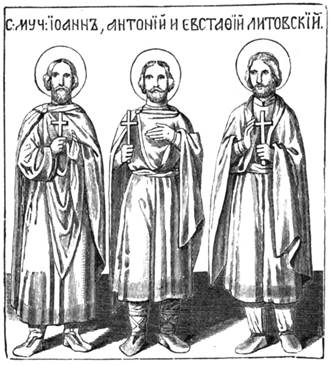
Иоанн и Антоний, так назывались братья в крещении, целый год провели в тюрьме, томимые голодом и сыростью темницы; ласки и угрозы жрецов не успевали возвратить их на путь лжи; они оставались тверды. На другом году Иоанн, старший брат, ослабел и объявил жрецам, что отрекается от христианства. Ольгерд освободил обоих братьев.
John and Anthony—so the brothers were called in baptism—spent a whole year in prison, tormented by hunger and the dampness of the dungeon; the caresses and threats of the priests did not succeed in bringing them back to the path of falsehood; they remained steadfast. In the second year, John, the elder brother, grew weak and declared to the priests that he renounced Christianity. Olgerd released both brothers.
Антоний ни от мук, ни от ласк не переставал быть искренним христианином. Он открыто совершал дела христианские и отказывался от языческих. Жрецы положили испытать обоих братьев. В день постный сказано было: братья должны быть при столе князя. Иоанн разделял мясную трапезу, Антоний отказался от обычая языческого. Ольгерд уговаривал его не пренебрегать обычаем Литовским. Антоний хотел быть верным христианскому правилу, и его опять бросили в темницу.
Anthony, neither by torments nor by caresses, ceased to be a sincere Christian. He openly performed Christian deeds and refused pagan ones. The priests resolved to test both brothers. On a fast day it was announced: the brothers must be present at the prince's table. John shared the meat meal; Anthony refused the pagan custom. Olgerd urged him not to disregard the Lithuanian custom. Anthony wished to be faithful to the Christian rule, and he was again thrown into prison.
На этот раз положение св. страдальца было до крайности отягчено. Всё, что могла придумать злость жрецов, было употреблено для того, чтобы победить твёрдость Антония. Но он был твёрд и покоен; он утешался тем, что верен Господу своему, Тому, Кто приготовил блаженную вечность верным Своим. Слух о твёрдости Антония, о его радости в темнице обратил к нему многих, а слушавшие исповедника Христова чувствовали, что устами его говорит небесная истина.
This time the position of the holy sufferer was extremely aggravated. Everything that the malice of the priests could devise was employed to overcome Anthony's steadfastness. But he was firm and calm; he consoled himself that he was faithful to his Lord, to Him Who has prepared a blessed eternity for His faithful. The report of Anthony's steadfastness, of his joy in prison, drew many to him, and those who heard the confessor of Christ felt that heavenly truth spoke through his lips.
Кумец напротив того чувствовал, что нет для него радости без имени Христова. Сами придворные Ольгерда, привыкшие уважать твёрдость военную, пренебрегали малодушным, а брат Антоний не хотел и видеть его. Мучимый стыдом и совестью, Иоанн открыл свою душу священнику Нестору и просил примирить с ним брата. Антоний отвечал, что у него ничего нет общего с отступником веры. – Иоанн решился снять с души свой грех. Раз служил он, по обыкновению, князю в бане и здесь объявил, что он – христианин. Ольгерд смолчал; но после спросил его при других: точно ли он отрёкся от веры отцов? Иоанн смело отвечал: «государь! открыто сознаюсь, что я опять христианин; делай со мной, что тебе угодно, но более не изменю я святой вере». Ольгерд вышел из себя, – бил Иоанна своими руками, велел бить его палками и, закованного в тяжкие оковы, приказал бросить в темницу174.
Kumets, on the contrary, felt that there was no joy for him without the name of Christ. Even Olgerd's courtiers, accustomed to respect military steadfastness, despised the faint-hearted man, and his brother Anthony did not want even to see him. Tormented by shame and conscience, John opened his soul to the priest Nestor and asked him to reconcile him with his brother. Anthony replied that he had nothing in common with an apostate from the faith. John resolved to remove his sin from his soul. Once he was serving the prince, as usual, in the bathhouse, and there he declared that he was a Christian. Olgerd was silent; but afterwards he asked him in the presence of others: had he indeed renounced the faith of his fathers? John boldly replied: "Sovereign! I openly confess that I am again a Christian; do with me what you will, but I will no longer betray the holy faith." Olgerd lost his temper—he beat John with his own hands, ordered him to be beaten with sticks, and, having put heavy fetters on him, commanded that he be thrown into prison174.
Как рад был теперь Антоний! Как легко было на душе у Кумеца! Братья вместе хвалили Господа; вместе причастились они Св. Таин. Темница узников стала училищем святой веры. Туда собирался народ видеть бестрепетных исповедников новой веры. Поражаемые ангельским спокойствием их и силой проповедуемой ими истины, многие принимали св. крещение, тайно от жрецов175.
How glad Anthony was now! How light Kumets' soul felt! Together the brothers praised the Lord; together they partook of the Holy Mysteries. The prison of the captives became a school of the holy faith. The people gathered there to see the fearless confessors of the new faith. Struck by their angelic calm and the power of the truth they preached, many received holy baptism, secretly from the priests175.
Узнав о том, что в темницу Иоанна и Антония стекается народ с благоговением, жрецы испугались последствий. Они явились к Ольгерду и объявив, что Кумец и Нежило чарами обольщают народ, требовали решительного суда над ними176. Ольгерд отдал их в распоряжение жрецов. Надобно представить себе грубость нравов того времени и дикую злость Литовских жрецов – этих торговцев, чтобы понять лютость мук, каким подверглись св. Иоанн и Антоний. Они терзали и мучили их со всем зверством. Апреля 14, на месте преступников, повешен был Антоний на дубе. В Иоанне ещё надеялись опять увидеть слабость и долее мучили его; наконец 24 апреля задушили его и повесили на том же дереве177.
Learning that the people were flocking with reverence to the prison of John and Anthony, the priests were frightened of the consequences. They appeared before Olgerd and, declaring that Kumets and Nezhilo were seducing the people with sorcery, demanded a decisive judgment upon them176. Olgerd handed them over to the disposal of the priests. One must imagine the coarseness of the morals of that time and the wild malice of the Lithuanian priests—these tradesmen—to understand the ferocity of the torments to which Sts. John and Anthony were subjected. They tormented and tortured them with all bestiality. On April 14, Anthony was hanged on an oak tree, on the place of criminals. They still hoped to see weakness in John and tormented him longer; finally, on April 24, they strangled him and hanged him on the same tree177.
Мученическая смерть Антония и Иоанна принесла прекрасный плод. Родственник мучеников Круглец, также придворный Ольгерда, юноша умный и прекрасный собой, поражённый твёрдостью св. страдальцев, принял крещение от блаж. Нестора. Ольгерд, заметив, что он отращивает волосы (Литовцы-язычники стригли волосы и брили бороду), спросил: «и ты – христианин?» Христианин, смело отвечал Круглец. Ольгерд, думая принудить его к своей воле, приказал ему есть мясо. Это было в пяток поста Рождественского. Круглец отвечал, что не может он нарушать правил св. веры своей. Гордый Ольгерд вышел из себя. В жестокий мороз приказал он лить в рот Круглеца холодную воду. От этой пытки останавливалось дыхание у св. исповедника, и тело его посинело. Но св. Евстафий, так назван Круглец, и после того отказался от запрещённой пищи. Ольгерд, в бешенстве, велел бить и ломать железными прутьями ноги Круглеца и содрать с головы кожу вместе с волосами. Мученик терпел, не подавая и вида, что страдает. Напротив, он ещё утешал стоявших христиан надеждами на блаженную вечность. Наконец, св. страдальца повесили 13 декабря на том самом дубе, который освящён смертью Иоанна и Антония178. Это было в 1347 г.179.
The martyric death of Anthony and John brought forth beautiful fruit. A relative of the martyrs, Kruglets, also a courtier of Olgerd, a youth intelligent and handsome, struck by the steadfastness of the holy sufferers, received baptism from the blessed Nestor. Olgerd, noticing that he was letting his hair grow (the pagan Lithuanians cut their hair and shaved their beards), asked: "And you—are you a Christian?" "A Christian," Kruglets boldly replied. Olgerd, thinking to compel him to his will, ordered him to eat meat. This was on a Friday of the Nativity Fast. Kruglets replied that he could not violate the rules of his holy faith. The proud Olgerd lost his temper. In severe frost he ordered cold water to be poured into Kruglets' mouth. From this torture the breathing of the holy confessor was stopped, and his body turned blue. But St. Eustathius—so Kruglets was named—even after that refused the forbidden food. Olgerd, in a rage, ordered Kruglets' legs to be beaten and broken with iron rods and the skin to be torn from his head together with his hair. The martyr endured, giving no sign that he was suffering. On the contrary, he even consoled the Christians standing by with hopes of a blessed eternity. Finally, the holy sufferer was hanged on December 13 on that same oak tree which had been consecrated by the death of John and Anthony178. This was in the year 1347179.
Мощи св. мучеников погребены были «у св. Николы»180, или «в церкви св. Николая»181, что стояла на правом углу нынешнего Лоточка Вильны182. На месте мученического подвига страдальцев, при второй супруге Ольгердовой183, построен храм св. Троицы с монастырём, заменённый в 1514 г. каменным великолепным храмом по усердию князя Острожского184. В 1364 г. св. Алексий установил праздновать страдания св. мучеников во всей Церкви185; а мощи мучеников в 1826 г. свидетельствованы были, по распоряжению Свят. Синода, в Духовом монастыре, куда перенесены они были для безопасности от насилий унии и папизма186. Тертуллиан говорил в своё время: «кровь мучеников – семя христиан». Кровь мучеников Литовских была тем же в Литве. Сам жестокий Ольгерд не только возвратился к христианской вере, но при конце жизни принял иночество; он похоронен в построенном им храме Пречистой187. Все 12 сыновей его были христианами Православной Церкви188. Целая половина Вильны, столицы Литовского княжества, в 1387 г. состояла из христиан православных189 и легат в 1393 г. видел «в Вильне много Русских церквей»190. Даже при язычнике Кейстуте в Троках верным слугой его оставался с ним и в тюрьме в 1381 г. «Григорий Омулич» – уроженец из Трок, православный Литвин191, а в 1384 г. Витовт подарил в Троках монастырю Рождества Богородицы земли и угодья192. Такова сила св. веры!
The relics of the holy martyrs were buried "at St. Nicholas's"180, or "in the church of St. Nicholas"181, which stood on the right corner of the present-day Lotoček of Vilna182. On the site of the martyric feat of the sufferers, during the time of Olgerd's second wife183, a church of the Holy Trinity was built with a monastery, replaced in 1514 by a magnificent stone church through the zeal of Prince Ostrogsky184. In 1364 St. Alexis established the commemoration of the sufferings of the holy martyrs throughout the whole Church185; and the relics of the martyrs were examined in 1826, by order of the Most Holy Synod, in the Monastery of the Holy Spirit, to which they had been translated for safety from the violence of the Unia and papism186. Tertullian said in his time: "the blood of the martyrs is the seed of Christians." The blood of the Lithuanian martyrs was the same in Lithuania. Even the cruel Olgerd not only returned to the Christian faith, but at the end of his life received monasticism; he was buried in the church of the Most Pure One which he had built187. All twelve of his sons were Christians of the Orthodox Church188. A whole half of Vilna, the capital of the Lithuanian principality, in 1387 consisted of Orthodox Christians189, and a legate in 1393 saw "in Vilna many Russian churches"190. Even under the pagan Keistut in Troki, his faithful servant who remained with him even in prison in 1381 was "Gregory Omulich"—a native of Troki, an Orthodox Lithuanian191; and in 1384 Vytautas granted to the monastery of the Nativity of the Theotokos in Troki lands and estates192. Such is the power of the holy faith!
Родился в Тосканском городе Тоди от родителей знатного происхождения. Получив блистательное образование, сосредоточил любовь свою на св. Писании и посвятил себя на служение Церкви. Успев заслужить общее уважение на этом добровольно-избранном им поприще и достигнув сана пресвитера, был, по смерти папы Феодора, против воли своей возведён (5-го июля 649 г.) в достоинство папы – в царствование императора Констанса II-го.
He was born in the Tuscan city of Todi, of parents of noble lineage. Having received a brilliant education, he concentrated his love upon Holy Scripture and dedicated himself to the service of the Church. Having succeeded in earning universal respect in this freely chosen path of his, and having attained the rank of presbyter, he was, after the death of Pope Theodore, against his own will elevated (on July 5, 649) to the dignity of pope—in the reign of the Emperor Constans II.
Не замедлило осуществиться в жизни святителя, бывшего на высоте своего избрания, изречение Иисуса Христа: «блаженны вы, когда будут поносить вас и гнать, и всячески неправедно злословить за Меня... Блаженны изгнанные за правду, ибо тех есть Царство Небесное» ...
The saying of Jesus Christ was not slow to be fulfilled in the life of the Hierarch, who was at the height of his calling: "Blessed are ye, when men shall revile you, and persecute you, and shall say all manner of evil against you falsely, for My sake... Blessed are they which are persecuted for righteousness' sake: for theirs is the Kingdom of Heaven"...
Борьба за истину предстояла Мартину в самом начале своего нового пути. Споры монофелитские волновали тогда Церковь. Царь и патриарх были заражены этой ересью, влиявшей потому и на поверхностную, невежественную впечатлительность народной массы.
A struggle for the truth awaited Martin at the very beginning of his new path. The Monothelite disputes were then disturbing the Church. The emperor and the patriarch were infected with this heresy, which therefore influenced also the superficial, ignorant impressionability of the popular mass.
Император Констанс, имея в виду прекратить эти споры о двух волях в едином лице Иисуса Христа, издал эдикт под именем типа веры (типос), которым строго запрещалось входить в какие-либо прения об этом спорном вопросе.
The Emperor Constans, having in view to put an end to these disputes about two wills in the one person of Jesus Christ, issued an edict under the name of the Type of Faith (Typos), by which it was strictly forbidden to enter into any debate on this disputed question.
Папа Мартин, получив повеление от императора Констанса исповедывать еретическое учение и утвердить его собором, отвечал: «если бы и весь мир принял это противное учение, то я не приму его и не отступлю от Евангельского и Апостольского учения и преданий св. отцов, если бы и пришлось пострадать до смерти».
Pope Martin, having received a command from the Emperor Constans to profess the heretical teaching and to confirm it by a council, answered: "If the whole world were to accept this contrary teaching, I would not accept it, nor would I depart from the Gospel and Apostolic teaching and the traditions of the holy fathers, even if I were to suffer unto death."
Затем, безуспешно обратившись к Цареградскому патриарху Павлу, прося его убедить царя оставить ересь, папа Мартин, по совету преподобного Максима исповедника, собрал поместный собор. На этом соборе, состоявшем из ста-пяти западных епископов, была осуждена ересь и императорское постановление по её поводу. За это, по повелению разгневанного императора, папа Мартин был сначала, захваченный ночью военной силой, отправлен к Цикладским островам, на одном из которых был содержан в течение года в голоде и других лишениях, а потом, в 654-м г., вызван в Царьград, заключён в мрачной и тесной комнате пустого дома, где в продолжение 93-х дней его томили голодом и жаждой. Потом представили на суд, где судили папу не по делам Церкви, а как государственного преступника. С тяжёлым железным ошейником, под стражей, он был выведен из сената; с ним обходились так жестоко, что стражи и народ до слёз жалели невинно-страдавшего...
Then, having turned without success to the Patriarch of Constantinople, Paul, beseeching him to persuade the emperor to abandon the heresy, Pope Martin, on the advice of the Venerable Maximus the Confessor, gathered a local council. At this council, consisting of one hundred and five Western bishops, the heresy and the imperial decree concerning it were condemned. For this, by order of the enraged emperor, Pope Martin was first seized by military force at night, sent to the Cyclades Islands, on one of which he was kept for a year in hunger and other deprivations, and then, in the year 654, summoned to Constantinople, confined in a dark and narrow room of an empty house, where for ninety-three days they tormented him with hunger and thirst. Afterwards they brought him to trial, where the pope was judged not on matters of the Church, but as a state criminal. With a heavy iron collar, under guard, he was led out of the senate; they treated him so cruelly that the guards and the people pitied the innocent sufferer to the point of tears...
После этого суда папа Мартин около года томился ещё в общей тюрьме с злодеями; 85 дней провёл в тюрьме, так называемой Диомидовой; потом был отвезён на корабле в Херсонес, где после двухлетних страданий скончался в 655 году. Был погребён в церкви Богородицы, называемой Влахернской. – Мощи его были перенесены в Константинополь, а впоследствии – в Рим, где находятся в церкви св. Мартина Турского.
After this trial, Pope Martin languished for about a year more in a common prison with criminals; he spent eighty-five days in the prison called Diomede's; then he was taken by ship to Cherson, where after two years of suffering he died in the year 655. He was buried in the church of the Mother of God, called Blachernae. – His relics were translated to Constantinople, and later to Rome, where they are in the church of St. Martin of Tours.
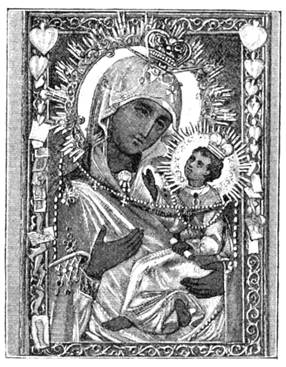
По сказанию местных преданий, Виленская икона написана Ев. Лукой, привезена в Вильну, как знамение родительского благословения, Еленой, дочерью собирателя России Иоанна III Васильевича, при вступлении её в супружество с Александром, князем Литовским, в 1495 году. По смерти Елены образ поставлен был в Пречистенском храме, где она погребена. В 1569 г. Иоанн IV Васильевич предлагал за образ королю Сигизмунду Августу 50 знатнейших Литовских пленных, но мена не состоялась. После образ перенесён в Виленский Троицкий собор, где он теперь находится.
According to the account of local traditions, the Vilna Icon was painted by the Evangelist Luke, and was brought to Vilna as a sign of parental blessing by Elena, the daughter of the gatherer of Russia, John III Vasilievich, upon her marriage to Alexander, Prince of Lithuania, in the year 1495. After Elena's death, the image was placed in the Church of the Most Pure One, where she was buried. In 1569, John IV Vasilievich offered for the image to King Sigismund Augustus fifty of the most noble Lithuanian captives, but the exchange did not take place. Afterwards, the image was transferred to the Vilna Cathedral of the Holy Trinity, where it now remains.
Сочинитель жития мучеников (помещ. в минее Макария) называет их „новоявленными». По этому видно, что он писал при святит. Алексии, когда установляли празднование им.
The author of the Life of the Martyrs (placed in the Menaion of Macarius) calls them "newly-appeared." From this it is evident that he wrote under St. Alexis, when their feast was established.
Стебельский chron. р. 7. Lat. Litow. 1 kr. Russk. p. 27. Собр. л. 2,349. О храме Параскевы рукопись Даниила Лодзяты и перевод её в статье: Литва (Вестник Говорского, стр. 131. 132).
Stebelski, Chron. p. 7. Lat. Litow. 1 kr. Russk. p. 27. Sobr. l. 2, 349. On the Church of Paraskeva, the manuscript of Daniel Lodziat and its translation in the article: Lithuania (Vestnik Govorskogo, pp. 131, 132).
По летописи, Ольгерд женился на второй супруге Юлиании в 1349 г., и первый сын её Ягайло – Яков родился в 1350 г. В служебнике XVI в. выпись из помянника Пречистенской церкви: „великая княжна Мария Ярославовна усопшая на память преп. Илариона“. Это первая жена Ольгерда. Далее там же: „великая княжна Иулиана, во святой схиме Мария, усопшая на память св. Апост. Симеона Зилота“. – По степен, кн. 1, 1. 512, „княгиня Ольгердова Ульяна, в монашеском чину Марина, преставилась в 1392 г.“.
According to the chronicle, Olgerd married his second wife, Juliana, in 1349, and her first son, Jagiello – James, was born in 1350. In a service book of the 16th century, an excerpt from the diptych of the Church of the Most Pure One: "The Grand Princess Maria Yaroslavovna, reposed on the memory of Venerable Hilarion." This was Olgerd's first wife. Further, in the same place: "The Grand Princess Juliana, in holy schema Maria, reposed on the memory of the Holy Apostle Simeon the Zealot." – According to the Book of Degrees, 1, 1, 512, "Princess Olgerdova Ulyana, in the monastic order Marina, reposed in 1392."
О Виленском храме Перкуна, построенном в 1285 г. в дубовой роще, там, где ныне кафедральный костёл. Хроника у Нарбута, в Север. Арх. 1822 г. 1, 227–231.
On the Vilna temple of Perkun, built in 1285 in an oak grove, where the cathedral church now stands. Chronicle in Narbut, in Severny Arkhiv, 1822, 1, 227–231.
Четь-Минея. У Нарбута hist. nar. lit. Иоанн повешен 24 апреля, а Антоний – 24 июля. Ошибка по ркп. житию Антоний пострадал 14 апреля, а Иоанн 24 апреля.
Chetya-Minea. In Narbut, Hist. nar. lit. John was hanged on 24 April, and Anthony on 24 July. An error: according to the manuscript Life, Anthony suffered on 14 April, and John on 24 April.
Летопись Даниловича р. 169. 170. „Того же (1347) лета убиен бысть от вел. князя Ольгерда ЛитовскогоКруглец, нареченный в св. крещенииЕвстафий, за православную веру христианскую, и положен бысть у святого Николы, с сродники своими в гробе, с великими мучениками Антонием и Иоанном, иже пострадаша за православную веру христианскую и прията венцы небесные от руки Господни“. Тоже собр. V, 228. VII, 214. Львов. л. 2, 115. Стебельский (Zywoty ss. pan. II, 5) и Густинская л. (Собр. л. II, 346) относят кончину мучеников к 1328 г., но это – очевидная ошибка. Тогда владел Литвой Гедимин.
Chronicle of Danilovich, pp. 169, 170. "In the same (1347) year, Kruglets, named in holy baptism Eustathius, was slain by the Grand Prince Olgerd of Lithuania for the Orthodox Christian faith, and was laid at St. Nicholas, with his kinsmen in the grave, with the great martyrs Anthony and John, who suffered for the Orthodox Christian faith and received heavenly crowns from the hand of the Lord." Also, Sobr. V, 228. VII, 214. Lvov. l. 2, 115. Stebelski (Zywoty ss. pan. II, 5) and the Gustin Chronicle (Sobr. l. II, 346) refer the death of the martyrs to 1328, but this is an obvious error. At that time, Gediminas ruled Lithuania.
Так показано место её на плане г. Вильны 1671 г. в собр. грам. Вильны, Вильно 1833 г. Здесь же показан другой храм св. Николая, перенесения мощей святителя, построенный в 1514 г. кн. Острожским, существующий поныне.
Thus its location is shown on the plan of the city of Vilna of 1671 in the collection of charters of Vilna, Vilna 1833. Here is also shown another church of St. Nicholas, of the translation of the relics of the Hierarch, built in 1514 by Prince Ostrozhsky, existing to this day.
По грамоте каменный храм Св. Троицы построен там же, где „издревле был деревянный с монастырём“. Собр. Виленских грам. 2, 14. Вильно, 1843, у м. Сильвестра (patericon р. 176) читаем: повешены „на том месте, где стоит церковь Св. Троицы; христиане, похоронив их на том же месте, построили тут деревянную церковь Св. Троицы“.
According to a charter, the stone church of the Holy Trinity was built on the same place where "of old there was a wooden one with a monastery." Sobr. Vilenskikh gram. 2, 14. Vilna, 1843. In Metropolitan Sylvester (Patericon, p. 176) we read: they were hanged "on that place where the church of the Holy Trinity stands; Christians, having buried them on the same place, built there a wooden church of the Holy Trinity."
Собр. л. 2, 350, м. Сильвестр (patericon р. 176) о св. Алексии: „снесшись с п. Филофеем, включил он Литовских мучеников в число святых и установил праздновать им в 14 день апреля“. Дубовича hierarchia lib. 4. р. 173, „новоявленным чудотворцам, – пострадавшим при Ольгерде нечестивом“ – в сборнике XVI в. № 397, стр. 595.
Sobr. l. 2, 350. Metropolitan Sylvester (Patericon, p. 176) on St. Alexis: "having communicated with Patriarch Philotheus, he included the Lithuanian martyrs among the saints and established the celebration of them on the 14th day of April." Dubowicz, Hierarchia, lib. 4, p. 173, "newly-appeared wonderworkers, – who suffered under the impious Olgerd" – in a collection of the 16th century, No. 397, p. 595.