Артемон был шестнадцати лет от роду чтецом, 28 – диаконом и 33 – священником в Лаодикии Сирской (нын. Латакии). В гонение Диоклитианово мучен был в Кесарии Палестинской и обезглавлен 303 г.
Artemon was a reader at sixteen years of age, a deacon at twenty-eight, and a priest at thirty-three in Syrian Laodicea (present-day Latakia). During the persecution of Diocletian, he was tortured in Caesarea of Palestine and beheaded in the year 303.
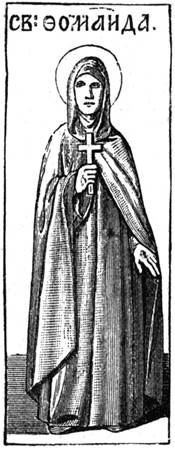
Авва Даниил, который 40 лет прожил в общежитии, потом с 420 года жил отшельником в Скитской пустыне 162, пришёл с учеником своим в Александрию, и при них случилось следующее: сын инока Окто декадского имел молодую жену Фомаиду. Отец, бывая у сына, разжигался похотью на сноху, обнимал и целовал её; та принимала эти ласки в простоте чистой души за выражение любви родительской. В одну ночь товарищи рыбаки вызвали сына-рыбака на рыбную ловлю. Отец стал приставать к снохе с явным грешным требованием. «Что с тобой, отец? Оградись знамением креста Господня и отойди», сказала Фомаида. Тот, распалившись похотью, не отходил, а приставал. Фомаида сопротивлялась твёрдо. Над кроватью сына висел меч. Схватив меч, отец стал грозить Фомаиде, что убьёт её, если не послушается его. Фомаида отвечала твёрдо: «хотя бы рассекали меня на части, никогда не соглашусь я на беззаконие».
Abba Daniel, who had lived for forty years in a cenobitic community and thereafter from the year 420 lived as a hermit in the Skete desert162, came with his disciple to Alexandria, and the following occurred in their presence: the son of a monk of the Octodecate monastery had a young wife named Thomais. The father, visiting his son, was inflamed with lust for his daughter-in-law, embracing and kissing her; she, in the simplicity of a pure soul, received these caresses as an expression of parental love. One night, fellow fishermen summoned the son, who was a fisherman, to go fishing. The father began to importune his daughter-in-law with an open sinful demand. "What is the matter with you, father? Sign yourself with the sign of the Lord's cross and depart," said Thomais. He, burning with lust, did not depart but persisted. Thomais resisted firmly. Above the son's bed hung a sword. Seizing the sword, the father began to threaten Thomais that he would kill her if she did not obey him. Thomais answered firmly: "Even if you cut me to pieces, I will never consent to lawlessness."
Распалённый гневом, несчастный преступник ударил Фомаиду мечом и убил. Приходят другие рыбаки звать сына и видят убийство. Отец говорит им: «ведите меня к князю, – я убийца». Авва Даниил, узнав о том, говорит ученику: «надобно с честью похоронить тело страдалицы». Он идёт в Октодекадский монастырь Александрийский; его встретил настоятель с братией. Старец сказал инокам: тело Фомаиды должно быть положено не иначе, как с отцами. Иные с ропотом отозвались: «вот велит положить тело жены вместе с отцами». Старец сказал: «эта отроковица – амма (мать) мне и вам, она умерла за чистоту». Тогда никто более не возражал старцу, и она погребена была с отцами.
Inflamed with anger, the wretched criminal struck Thomais with the sword and killed her. Other fishermen come to summon the son and see the murder. The father says to them: "Lead me to the prince—I am the murderer." Abba Daniel, learning of this, says to his disciple: "We must bury the body of the sufferer with honor." He goes to the Octodecate monastery in Alexandria; the abbot met him with the brethren. The elder said to the monks: "The body of Thomais must be laid to rest nowhere else but with the fathers." Some responded with murmuring: "Behold, he bids us lay the body of a woman together with the fathers." The elder said: "This maiden is an amma (mother) to me and to you; she died for chastity." Then no one further objected to the elder, and she was buried with the fathers.
В одно время в скиту восстала блудная брань на брата, и он объявил о том авве Даниилу. «Иди, сказал ему старец, в Октодекадский монастырь, в гробницу отцов и молись там так: «Боже, ради молитв святой Фомаиды, помоги мне». Брат поступил так, как велел старец, и, возвратясь из Октодекадского монастыря, пал к ногам старца. «Бог, по молитвам твоим, избавил меня от блудной брани», говорил брат. «Не то говоришь ты; говори, как освободился ты?» сказал старец. Брат отвечал: «я сотворил только 12 поклонов и, наклонившись на гробницу, заснул. Приходит отроковица и говорит мне: «прими сие благословение и иди с миром в келью свою». И я почувствовал, что брань перестала. Но что значит то благословение, не понимаю». Старец сказал: «благословение – дар мученицы целомудрия; такое дерзновение имеют перед Богом подвижники чистоты»163.
At one time in the skete, a brother was assaulted by the warfare of fornication, and he revealed this to Abba Daniel. "Go," the elder said to him, "to the Octodecate monastery, to the tomb of the fathers, and pray there thus: 'O God, for the sake of the prayers of holy Thomais, help me.'" The brother did as the elder commanded, and returning from the Octodecate monastery, fell at the elder's feet. "God, through your prayers, has delivered me from the warfare of fornication," said the brother. "You are not saying that correctly; tell me, how were you delivered?" said the elder. The brother answered: "I made only twelve prostrations and, bending down upon the tomb, fell asleep. A maiden comes and says to me: 'Receive this blessing and go in peace to your cell.' And I felt that the warfare had ceased. But what that blessing means, I do not understand." The elder said: "The blessing is the gift of the Martyr of chastity; such boldness before God do the ascetics of purity possess."163
Русский поклонник святынь, инок Зосима, в 1420 г. писал о Царьграде: «монастырь женский, идеже лежат мученики Козьма и Дамиан, и ту лежит Фомаида блаженная, яже посечена бысть от свекра... И даде ей Бог исцеления, иже кому брань плотская приходит. И притекают и поклоняются гробу ея, и абие отходит брань молитвами ея»164.
A Russian pilgrim to the holy places, the monk Zosima, wrote in 1420 about Constantinople: "A women's monastery, where lie the martyrs Cosmas and Damian, and there lies the blessed Thomais, who was cut down by her father-in-law... And God gave her healings for those upon whom carnal warfare comes. And they hasten and bow down before her tomb, and immediately the warfare departs through her prayers."164
Верность долгу супружества награждается Господом и в этой жизни. «Пришли мы в Аскалон, пишет блаженный Иоанн Мосх, и авва Евгений, пресвитер, рассказывал нам: один купец из нашего города, пустившись в море, лишился собственного и чужого; только сам спасся. Когда он прибыл сюда, то был взят заимодавцами своими, посажен в темницу и лишён всего, что было у него в доме, так что не осталось у него ничего, кроме того, что сам носил и жена его. Жена его от тяжёлой скорби и заботы едва могла кормить мужа хлебом. В один день, когда она сидела и ела с мужем своим в темнице, пришёл какой-то важный человек подать милостыню узникам и, увидев жену, сидевшую вместе с мужем своим, уязвился любовью к ней (она была весьма хороша собой) и сказал ей через тюремного сторожа, чтобы она пришла к нему. Она охотно пошла, думая получить милостыню. Отведя её к стороне, тот человек спросил её: «кто ты и зачем здесь?» Она рассказала ему всё. Он сказал ей: «если я заплачу за тебя долг, проспишь ли со мной эту ночь?» Прекрасная и вместе целомудренная жена отвечала ему: «я слышала, господин мой слова Апостола, что жена не владеет своим телом, но муж; и так позволь мне, господин, спросить об этом мужа моего; что он прикажет, то и сделаю». Она пошла и сказала обо всём мужу. Благоразумный муж, по любви к жене своей, не захотел таким средством освободиться из темницы; но, тяжко вздохнув, со слезами сказал жене своей: «пойди, сестра, откажи этому человеку и скажи: я говорила мужу своему, но он не согласился; нас Бог не оставит». В тоже время заключён был в темнице один разбойник, который слышал весь разговор мужа с женой и, вздохнув, сказал сам себе: «в какой крайности они находятся и однако ж не захотели купить свободы своей за деньги; они предпочли целомудрие всякому богатству, пренебрегли всем в этой жизни! И я, несчастный, что делаю? Никогда не подумал даже и о том, что есть Бог, и вот почему я виновен в стольких злодеяниях». Подозвав их в окно к тому месту, где заключён был, разбойник сказал им: «я был разбойником и делал много зла, и многих умертвил, и знаю, что когда придёт начальник, меня казнят как убийцу. Увидав целомудрие ваше, я сокрушился за вас. Пойдите вот на это место городской стены, раскопайте и возьмите деньги, которые там найдёте, и помолитесь за меня, чтобы я обрёл милость». Спустя несколько дней, начальник, прибывший в город, приказал вывести разбойника и обезглавить. Спустя день, жена сказала мужу своему: «позволь, господин мой, сходить на то место, о котором толковал нам разбойник, я посмотрю, правду ли он говорил?» Муж отвечал: «если тебе угодно, ступай». Жена взяла бороздник, пошла вечером на то место и, покопав, нашла горшок с золотом. Она поступила осмотрительно: отдавала деньги заимодавцам понемногу, чтобы они подумали, будто она у других занимает деньги; наконец выплатила всем.
Faithfulness to the duty of marriage is rewarded by the Lord even in this life. "We came to Ascalon," writes blessed John Moschos, "and Abba Eugenius, a presbyter, told us: A certain merchant from our city, having set out to sea, lost both his own goods and those of others; only he himself was saved. When he arrived here, he was seized by his creditors, thrown into prison, and deprived of everything he had in his house, so that nothing remained to him except what he himself and his wife wore. His wife, from heavy grief and care, could barely feed her husband bread. One day, as she sat and ate with her husband in the prison, a certain important man came to give alms to the prisoners and, seeing the wife sitting together with her husband, was wounded with love for her (she was very beautiful) and said to her through the jailer that she should come to him. She willingly went, thinking to receive alms. Taking her aside, that man asked her: 'Who are you, and why are you here?' She told him everything. He said to her: 'If I pay the debt for you, will you sleep with me this night?' The beautiful and likewise chaste wife answered him: 'I have heard, my lord, the words of the Apostle, that the wife does not have authority over her own body, but the husband; so permit me, my lord, to ask my husband about this; whatever he commands, that I will do.' She went and told everything to her husband. The prudent husband, out of love for his wife, did not wish to be freed from prison by such means; but, sighing heavily, he said with tears to his wife: 'Go, sister, refuse this man and say: I spoke to my husband, but he did not consent; God will not abandon us.' At the same time, a certain robber was imprisoned in the prison, who heard the entire conversation of the husband with his wife and, sighing, said to himself: 'In what extremity are they, and yet they did not wish to buy their freedom with money; they preferred chastity to every riches, they despised everything in this life! And I, wretch, what am I doing? I never even thought that there is a God, and that is why I am guilty of so many evil deeds.' Beckoning them to the window at the place where he was confined, the robber said to them: 'I was a robber and did much evil, and killed many, and I know that when the governor comes, I will be executed as a murderer. Seeing your chastity, I was moved with compassion for you. Go to this place in the city wall, dig, and take the money you will find there, and pray for me, that I may obtain mercy.' A few days later, the governor, having arrived in the city, ordered the robber to be brought out and beheaded. A day later, the wife said to her husband: 'Permit me, my lord, to go to that place of which the robber spoke to us; I will see if he told the truth.' The husband answered: 'If you wish, go.' The wife took a hoe, went in the evening to that place, and, having dug, found a pot of gold. She acted prudently: she gave money to the creditors little by little, so that they might think she was borrowing money from others; finally she paid off everyone.
Так она освободила мужа своего. Тот, кто рассказывал нам это, присовокупил: вот они сохранили заповедь Божию и Господь Бог наш возвеличил милость Свою над ними165.
Thus she freed her husband. He who told us this added: Behold, they kept the commandment of God, and the Lord our God magnified His mercy upon them.165
Сборный Патерик под знам. I и Д. Пролог июня 7. В 392 г. брат Даниила Иоанн Колов принял под своё духовное управление учителя царского, Арсения Великого. Ист. монашества, ч. 2, стр. 130.
The Paterikon of the Fathers, under the sign I and D. Prologue, June 7. In 392, John Kolob, brother of Daniel, received the royal teacher, Arsenius the Great, under his spiritual guidance. History of Monasticism, part 2, p. 130.
Сборный или скитский Патерик Славянский под знам. Ф. Acta Sanet, ad d. 14 april. Память св. Фомаиды апр. 13, по Римскому мартир. 14 апреля.
The Slavonic Paterikon of the Fathers or of the Skete, under the sign F. Acta Sanctorum, ad d. 14 april. The memory of St. Thomais, April 13; according to the Roman Martyrology, April 14.