Зинон, родом Сирский Грек, после продолжительного путешествия по Востоку – с целью усовершенствования себя в христианском образовании, изучивший между тем и Греческую и Римскую литературу, прибыл в Италию и в 362 г. был поставлен епископом в г. Вероне. Хотя гонения на христиан в это время уже прекратились, но ещё повсюду было много язычников, которых Зинон и просвещал деятельно христианским учением. Сверх того, ему пришлось вести борьбу с арианами, в которой он оказался твёрдым исповедником истин православия, не отступившим перед воздвигаемыми на него гонениями во времена покровителей арианского учения – Констанция и Валента.
Zeno, a Syrian Greek by birth, after a lengthy journey through the East for the purpose of perfecting himself in Christian education, having in the meantime also studied both Greek and Roman literature, arrived in Italy and in the year 362 was appointed bishop in the city of Verona. Although the persecutions against Christians had already ceased at this time, there were still many pagans everywhere, whom Zeno actively enlightened with Christian teaching. Moreover, he had to wage a struggle against the Arians, in which he proved to be a firm confessor of the truths of Orthodoxy, not retreating before the persecutions raised against him during the times of the patrons of Arian teaching—Constantius and Valens.
После него осталось много письменных наставлений о всех предметах, необходимых для христианина. Некоторые из них написаны в обличение ариан «о Божестве Сына Божьего»113. В наставлении «о воздержании» Зинон, приведя слова Апостола: «время сокращено есть: да будут имеющие жён, как не имеющие», говорит: «если почти за 400 лет или и более Апостольское изречение стало иметь силу, почему я не возвещу?» –
After him there remained many written instructions on all subjects necessary for a Christian. Some of them were written in refutation of the Arians, "concerning the Divinity of the Son of God"113. In the instruction "on temperance," Zeno, citing the words of the Apostle: "the time is shortened: let those who have wives be as though they had none," says: "if almost 400 years or more ago the Apostolic saying began to have force, why should I not proclaim it?"—
В «Деяниях Святых» есть повествование о чудесах, совершившихся по смерти Зинона, и о перенесении его тела в Венгрию. Одно из чудес описано св. Григорием В., современником события. В 558 г. (в день памяти святого), в Италии было необыкновенное наводнение. Тибр вышел из берегов выше стен Рима и наводнил окрестности. В то же время близ Вероны р. Атесис вышла из берегов; воды её окружили храм св. Зинона и возвысились до окон, которые были близ крыши. Двери церковные были отворены, но вода не вошла в храм, а стала стеной при дверях и заградила выход находившимся в церкви христианам, так что они опасались умереть от голода, между тем приходили к дверям и утоляли жажду, черпая воду, которая стояла стеной. Св. Григорий приводит очевидцев этого чуда – графа Пронульфа и трибуна Иоанна 114.
In the "Acts of the Saints" there is a narrative of the miracles that took place after the death of Zeno, and of the translation of his body to Hungary. One of the miracles is described by St. Gregory the Great, a contemporary of the event. In the year 558 (on the day of the saint's memory), there was an extraordinary flood in Italy. The Tiber overflowed its banks above the walls of Rome and flooded the surrounding area. At the same time, near Verona, the river Adige overflowed its banks; its waters surrounded the church of St. Zeno and rose to the windows, which were near the roof. The church doors were open, but the water did not enter the church, but stood as a wall at the doors and blocked the exit for the Christians who were in the church, so that they feared they would die of hunger, yet they came to the doors and quenched their thirst, drawing the water that stood like a wall. St. Gregory cites eyewitnesses of this miracle—Count Pronulfus and Tribune John114.
Преп. Исаак, родом из Сирии, подвизался в Италии, устроив сначала одинокую келью, потом монастырь на горе Монте-Люко, близ г. Сполето. Здесь, вместе с молитвенными подвигами, братия соединяли телесные труды, сами возделывая землю. Преподобный в особенности старался внушить братии нестяжательность и любовь к труду. – «Монах, приобретающий на земле имения, – не монах!» – говорил он братиям, когда они просили его позволить им принимать приношения от посетителей. Таким образом, строго запрещал он пользоваться плодами чужих трудов. – «Я знаю брата, – говорил Исаак, – который в то время, как жал на поле, захотел съесть пшеничный колос, но даже и такой малостью не решился воспользоваться, прежде чем спросил у хозяина: позволишь ли мне съесть пшеничный колос? – Так был осторожен брат в пользовании чужой собственностью, зная, что стяжание, начинаясь обыкновенно с малого, доводит человека до великого неправедного приобретения»...
The Venerable Isaac, a native of Syria, asceticised in Italy, having first built a solitary cell, then a monastery on Mount Monte Luco, near the city of Spoleto. Here, together with prayerful labors, the brethren combined bodily toils, themselves tilling the land. The Venerable one especially strove to instill in the brethren non-acquisitiveness and love of labor. — "A monk who acquires possessions on earth is not a monk!" he said to the brethren when they asked him to allow them to accept offerings from visitors. Thus, he strictly forbade them to enjoy the fruits of others' labors. — "I know a brother," Isaac said, "who, while reaping in the field, wanted to eat a wheat ear, but did not dare to make use of even such a small thing before asking the owner: 'Will you allow me to eat a wheat ear?' — So cautious was the brother in using another's property, knowing that acquisition, usually beginning with small things, leads a man to great unrighteous gain"...
Однажды велел он братиям собрать все земледельческие орудия и вынести их на ночь в монастырский сад. На другой день утром, заказав приготовить значительное количество пищи, после Богослужения повёл братию в сад. Там они увидели столько работающих людей, сколько было земледельческих орудий. Между тем это были люди, забравшиеся сюда ночью с намерением обобрать садовые плоды... но вразумлённые чудной силой, изменили своё намерение, увидели рабочие орудия и принялись работать...
Once he ordered the brethren to gather all the agricultural implements and bring them out at night into the monastery garden. The next morning, having ordered a considerable amount of food to be prepared, after the Divine Service he led the brethren into the garden. There they saw as many working people as there were agricultural implements. Meanwhile, these were people who had crept in there at night with the intention of stealing the garden fruits... but, admonished by a wondrous power, they changed their intention, saw the working implements, and set to work...
– Здравствуйте, братья! Отдохните, вы трудились всю ночь! – сказал им Исаак и велел их накормить. Когда они насытились, он отпустил их, снабдив хлебом, и на прощанье сказал: «перестаньте вы промышлять воровством... уж лучше приходите просить открыто и получите» ...
— "Greetings, brothers! Rest, you have labored all night!" Isaac said to them and ordered them to be fed. When they were satisfied, he sent them away, supplying them with bread, and said at parting: "Cease to ply the trade of theft... it is better to come and ask openly and you shall receive"...
– Пойди в ближайший лес, – сказал преподобный одному из своих учеников, – там ты увидишь дерево с дуплом, а в нём одежды; принеси их...
— "Go into the nearest forest," said the Venerable one to one of his disciples, "there you will see a tree with a hollow, and in it, clothing; bring them"...
И, получив утаённые обманщиками одежды, Исаак предложил им эти их собственные одежды для прикрытия их наготы... Обличённые таким образом люди со стыдом удалились.
And, having received the clothes hidden by the deceivers, Isaac offered them these very same clothes of theirs to cover their nakedness... Thus exposed, the people withdrew in shame.
Один добрый человек поручил своему мальчику отнести в монастырь две корзины с пищей. Мальчик одну корзину припрятал по дороге, а другую принёс. Приняв её, прозорливый Исаак такими словами обличил мальчика: «ты осторожнее прикасайся к той корзинке, которую спрятал, идя сюда: в неё забралась змея... так смотри, чтобы она тебя не укусила» ... Таким-то образом незлобивый подвижник возбуждал в виновных сознание греха... Поражая ум их своей чудной прозорливостью и трогая сердце милосердым снисхождением, он возбуждал в них раскаяние и исправлял...
A certain good man entrusted his boy with taking two baskets of food to the monastery. The boy hid one basket along the way and brought the other. Receiving it, the clairvoyant Isaac exposed the boy with these words: "Be more careful when you touch that basket which you hid on your way here: a snake has crawled into it... so see that it does not bite you" ... In this way, the meek ascetic aroused in the guilty an awareness of sin... Striking their minds with his wondrous clairvoyance and touching their hearts with merciful condescension, he aroused in them repentance and corrected them...
О преподобном свидетельствует св. Григорий Двоеслов, которому передал жизнь Исаака Елевферий, друг Исаака, почитаемый в Римской Церкви, как святой.
Concerning the Venerable one, St. Gregory the Dialogist bears witness, to whom Eleutherius, a friend of Isaac, venerated in the Roman Church as a saint, related the life of Isaac.
Преп. Акакия нового, Кавсокаливийского, подвизавшегося на Афоне и многих напутствовавшего на мученический подвиг за исповедание веры Христовой. Мирно преставился 12-го апреля 1730 года.
The Venerable Acacius the New, of Kavsokalyvia, who asceticised on Mount Athos and guided many to the martyr's struggle for the confession of the faith of Christ. He reposed peacefully on the 12th of April, 1730.
Епископ Пария (Παϱιον) в Геллеспонте, близ Кизика; в царствование Льва Армянина за несогласие с иконоборцами изгнан с престола и скрывался в разных местах, по смерти же его (826 г.) возвращён на кафедру и мирно скончался (после 830 г., в котором посвятил Игнатия, будущего патриарха, в пресвитера).
Bishop of Parium (Παϱιον) in the Hellespont, near Cyzicus; during the reign of Leo the Armenian, for disagreeing with the iconoclasts he was cast out from his see and hid in various places, but after his death (826 A.D.) he was returned to his cathedra and reposed peacefully (after 830 A.D., in which year he ordained Ignatius, the future patriarch, as a presbyter).
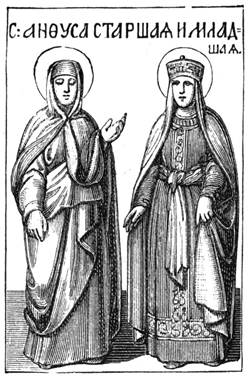
Старшая Анфуса116, оставив родительский дом, подвизалась сперва в пещерах уединённо, переходя из одной в другую; потом, встретив старца, подвижника Сисиния, продолжала подвиги по его советам и столько успела в духовной жизни, что её управлению отдали себя в Мантинее многие девы. К советам её обращались жаждавшие спасения, и не оставались без пользы. Высокая жизнь её приобрела ей уважение и лучших из мирских людей Эллады. Император Константин Копроним настойчиво хотел быть тем, чем впоследствии был Лютер: страхом и обманом вынудил он (в 753 г.) оправдать на соборе магометанское (т. е. глупое) отвращение от св. икон, почитание святых выдавал за суеверие, обеты девства – за извращение природы117. Услыхав, что Анфуса в своей обители благоговейно и без страха перед людьми чтит св. иконы и даже уговорила своего брата стать в ряды защитников св. икон, он приказал представить к себе смелую игуменью со всеми её 90 сёстрами. Гордый и развратный деспот118 потребовал, чтобы отказались они от своего образа мыслей; он думал, что пустынная игуменья легко уступит гордой воле его, как уступали искатели честей его и прохладной жизни. «Христианская совесть», отвечала Анфуса, «не дозволяет выполнить несправедливую царскую волю: поклонение св. иконам – дело святое, оправданное постоянной практикой св. Церкви, а жить для удовлетворения одним скотским потребностям – не значит жить достойно человека; надобно плакать, что и без повелений власти так много несчастных, которые любят грязную жизнь»119. – Копроним велел бить её бичами без пощады. Воля деспота была исполнена. Копроним отдал приказание отослать игуменью с сёстрами в заточение. В это самое время императрица страшно страдала муками родов. Преподобная сказала вслух всех, что императрица родит двойни, сына и дочь, и указала судьбу двойней. Разрешившаяся двойнями императрица стала чтить пр. Анфусу, как духовную мать, и для её обители сделала много пожертвований. – Блаж. Анфуса скоро предала дух свой Господу, в глубокой старости, в 759 г.120.
The elder Anthusa116, having left her parental home, asceticised at first in caves in solitude, moving from one to another; then, having met an elder, the ascetic Sisinnius, she continued her labors according to his counsels and so advanced in the spiritual life that many maidens in Mantinea placed themselves under her guidance. Those thirsting for salvation turned to her counsels and did not remain without benefit. Her lofty life won her the respect even of the best among the worldly people of Hellas. The Emperor Constantine Copronymus stubbornly wished to be what Luther later became: by fear and deceit he forced (in 753 A.D.) the Council to justify the Mohammedan (i.e., foolish) aversion to holy icons, passed off the veneration of saints as superstition, and vows of virginity as a perversion of nature117. Hearing that Anthusa in her monastery reverently and without fear of men honored the holy icons and even persuaded her brother to stand in the ranks of the defenders of the holy icons, he ordered the bold abbess to be brought before him with all her 90 sisters. The proud and depraved despot118 demanded that they renounce their way of thinking; he thought that the desert abbess would easily yield to his proud will, as seekers of honors and an easy life yielded. "The Christian conscience," answered Anthusa, "does not permit the fulfillment of an unjust royal will: the veneration of holy icons is a holy matter, justified by the constant practice of the holy Church, but to live only for the satisfaction of bestial needs is not to live worthily of man; one must weep that even without the commands of authority there are so many unfortunates who love a filthy life"119. — Copronymus ordered her to be beaten with whips without mercy. The despot's will was carried out. Copronymus gave the order to send the abbess with her sisters into exile. At that very time, the empress was suffering terribly from the pangs of childbirth. The Venerable one said aloud before all that the empress would give birth to twins, a son and a daughter, and foretold the fate of the twins. The empress, having been delivered of twins, began to honor the Venerable Anthusa as a spiritual mother, and made many donations for her monastery. — The blessed Anthusa soon surrendered her spirit to the Lord, in deep old age, in the year 759120.
«Отец желал, говорит Менолог о младшей Анфусе121, выдать дочь замуж; но она отказалась от предложения. По смерти его († 775 г.) получив свободу, роздали имущество: одни расточала на нищих, другие употребляла на построение церквей и монастырей; золотые одежды свои, которые носила, обратила на украшение святынь. Она была матерью для многих сирот: собирая брошенных младенцев, воспитывала и пристраивала их; если иные умирали, поручала их Богу, а которые оставались живы, помещала в дом престарелых122. Блаженная царица Ирина (780–802 г.) не раз приглашала её к участию в управлении империей; но она уклонилась от того. Затем пострижена она была в инокиню патриархом Тарасием (784–816 г.) в монастыре св. Евфимии123, в том самом, который жалким отцом её «превращён был в арсенал и в общественный нужник»124.
"The father wished," says the Menologion concerning the younger Anthusa121, "to give his daughter in marriage; but she refused the proposal. After his death († 775 A.D.), having obtained her freedom, she distributed her property: some she lavished on the poor, others she used for the building of churches and monasteries; her golden garments, which she wore, she turned to the adornment of holy things. She was a mother to many orphans: gathering abandoned infants, she raised them and placed them; if some died, she commended them to God, and those who remained alive, she placed in a home for the elderly122. The blessed Empress Irene (780–802 A.D.) more than once invited her to participate in the governance of the empire; but she declined this. Then she was tonsured as a nun by Patriarch Tarasius (784–816 A.D.) in the monastery of St. Euphemia123, in that very one which her wretched father had 'turned into an arsenal and a public latrine'"124.
По другим известиям125, святая и тогда ещё, как жила во дворце, под пышной одеждой царевны, носила власяницу, довольствовалась хлебом и водойю и занималась чтением священных книг. Безобразна была жизнь отца её и смерть его была ужасна: он кричал, что горит он и наказывается за хулы на Богоматерь126. Жизнь безобразием её, а смерть ужасами её без сомнения более всего расположили царевну вести жизнь благочестивую. Приняв пострижение и став настоятельницей Омонейского монастыря127, она, полная смирения и любви, сама носила воду для сестёр и выполняла другие услуги. В столице империи, как и в Тавенне, женская обитель боялась принимать для себя недвижимые имения. «Греческие иноки не имеют рабов, а Латинские имеют», говорил западный Кантерберийский архиепископ128. Община дев Анфусы рукоделиями добывала себе хлеб и другое содержание, а царская дочь-игуменья сама служила сёстрам с смиренной любовью. Особенно строго выполняла игуменья Анфуса, в отношении к себе и другим, древнее правило – не выходить из обители в мир, так как иначе душа расстраивается мирскими впечатлениями, да и другим подаётся случай к соблазну. Много значило для блаженной постановление Трулльского собора об этом предмете129, а ещё более тот шум, который поднимали против монастырей при отце её. Вселенский Собор постановил: «не долженствует монах или монахиня оставлять свой монастырь и отходити во иный» (пр. 21). Так блаж. Анфуса ни сама не переступала ногой за ограду обители, ни сёстрам не дозволяла являться в миру без самой крайней нужды. Благоговейная настоятельница твёрдо выполняла и другое правило собора: «ни жена в мужеском, ни муж в женском монастыре да не спит»130; тем более, что и современный ей собор подтвердил это правило до того, что запретил монаху с монахиней говорить наедине 131, а в столичной женской обители требовалась особенная осторожность относительно посетителей обители. Блаженная игуменья не допускала в свою обитель и того простодушного обыкновения, которое осудил собор 692 г. В некоторых женских обителях принимавшие иночество наряжались тогда, как невесты, и в таком виде приходили в храм для пострижения. Запрещая это, Констант. собор 692 г. писал: «не следует быть тому, чтобы, по собственному произволению отложившая уже всякую житейскую приятность, возлюбившая жизнь по Боге, утвердившаяся в ней непреклонными мыслями, возвращалась воспоминанием к тому, что уже предано забвению, и от сего явилась бы колеблющеюся, возмущалась бы в душе как от волн потопляющих и бросающих туда и сюда; иногда и проливая слёзы не являет она сердечного сокрушения, а если и упадёт слеза искренности, зрители думают, что это не столько от усердия к монашескому подвигу, сколько от разлуки с миром и с тем, что в мире»132. – Молитвы св. Анфусы были неусыпные и стояние на бдениях неослабное; слёзы сокрушения постоянно текли из очей её. «Прекрасная ветвь дурного дерева, честная Анфуса отцвела для земной жизни»133 12 апр. 811 г. на 57 году её жизни.
According to other accounts125, even then, when she lived in the palace, beneath the splendid raiment of a princess, the saint wore a hair-shirt, contented herself with bread and water, and occupied herself with reading the sacred books. The life of her father was shameful, and his death was terrible: he cried out that he was burning and being punished for his blasphemies against the Mother of God126. The shamefulness of his life and the horrors of his death undoubtedly disposed the princess more than anything else to lead a pious life. Having received the tonsure and become the abbess of the Omonia Monastery127, she, filled with humility and love, herself carried water for the sisters and performed other services. In the capital of the empire, as in Tabenna, women’s monasteries feared to accept immovable property. “Greek monks have no slaves, but Latin monks do,” said the Western Archbishop of Canterbury128. The community of the virgins of Anthusa obtained bread and other sustenance by their handiwork, and the royal daughter, the abbess, herself served the sisters with humble love. The abbess Anthusa observed with particular strictness, toward herself and others, the ancient rule—not to go out from the monastery into the world, since otherwise the soul is disturbed by worldly impressions, and occasion for scandal is given to others. Much significance for the blessed one had the decree of the Council of Trullo on this subject129, and even more, the uproar that was raised against monasteries during the time of her father. The Ecumenical Council decreed: “A monk or a nun must not leave their own monastery and go to another” (Canon 21). Thus the blessed Anthusa herself never set foot beyond the enclosure of the monastery, nor did she permit the sisters to appear in the world without the most extreme necessity. The reverent abbess also firmly observed another rule of the Council: “Let no woman sleep in a men’s monastery, nor a man in a women’s monastery”130; all the more so since the Council contemporary with her confirmed this rule to the point of forbidding a monk to speak alone with a nun131, and in the capital’s women’s monastery, particular caution was required regarding visitors to the monastery. The blessed abbess also did not permit in her monastery that simple-minded custom which the Council of 692 condemned. In some women’s monasteries, those receiving the monastic tonsure adorned themselves as brides and in such attire came to the church for the tonsure. Forbidding this, the Council of Constantinople of 692 wrote: “It should not be that she who, of her own will, has already put aside every worldly pleasure, has loved the life according to God, and has established herself in it with unwavering thoughts, should return in memory to what has already been consigned to oblivion, and from this appear wavering, disturbed in soul as if by overwhelming waves tossing her here and there; sometimes, even if she sheds tears, she does not show heartfelt contrition, and if a tear of sincerity does fall, the onlookers think that this is not so much from zeal for the monastic struggle as from separation from the world and from what is in the world”132. — The prayers of St. Anthusa were unceasing, and her standing at vigils was unwavering; tears of compunction constantly flowed from her eyes. “A fair branch of an evil tree, the honorable Anthusa faded from earthly life”133 on April 12, 811 A.D., in the 57th year of her life.
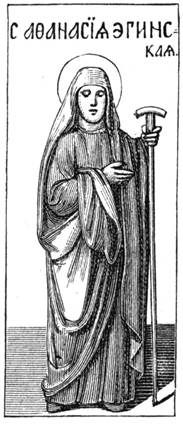
Остров Эгина – один из островов Эгейского моря, ближайших к материку Эллады, на юг от Саламина. Здесь родилась и здесь подвизалась св. Афанасия134. Родители её, Никита и Ирина, были люди богатые, благородные и добрые христиане. Они дали дочери хорошее образование. Дочь с юности не находила утешения в приятностях земной жизни: душа её стремилась служить одному Господу. Но благой Сердцеведец знает, какие меры всего удобнее могут привести душу ко спасению, и употребляет самые полезные. Родители выдали Афанасию замуж против её желания за военного: партия блистательная! Но на 17 день брака Арабы напали на остров, и муж Афанасии в схватке с ними был убит135. Афанасия рада была тому, что может вступить в монашескую жизнь. Но указ императора Михаила Заики предписал выдать молодых вдов замуж за молодых военных людей. И Афанасия выдана была за второго мужа, опять против своего желания. К счастью её, муж был человек расположенный к добру; супруга своей добротой самоотверженной приобрела влияние на него. С дозволения супруга посвящала она большую часть времени и средств на дела милосердия: помогала бедным, посещала больных и часто оставалась в больницах для услуг страждущим; для вдов и сирот была она самой нежной матерью. Она снабжала одних пищей, других и одеждой. Такая высокая, христианская любовь к другим и Господу произвела в муже решительную перемену. Он удалился в монастырь, как желала супруга. Афанасия, оставшись свободной, продала земли, составлявшие наследство её, и большую часть денег раздала бедным. Дом свой обратила она в дом молитвы для душ воздыхающих о небе. К ней собралось довольно девственниц. Спустя 4 года упросили её быть игуменьей. Она горячо подвизалась. На теле её была власяница; спала она на каменьях; пищей её был ячменный хлеб; рыбу вкушала только два раза в год, в Пасху и в Рождество Христово; во весь Великий пост принимала пищу только два раза. Прислугой себе была она сама; даже не допускала, чтобы лили на её руки воду. – Никогда не опускала общих молитв, и кроме того в келье своей совершала ночные молитвы. Спустя четыре года, по совету духовного старца, избрала она более уединённое место для пребывания молитвенниц и устроила монастырь с храмом. – Пустынный храм – отрада для пустынниц, и в нём же служитель Божий – врач душевный. Блаженная игуменья внушала сёстрам каяться перед Господом искренно, и по ложному стыду не скрывать перед духовником какой-либо язвы душевной, – к пагубе своей. Она напоминала им о древнем законе Божием относительно священников: «по закону, которому научат они тебя, и по определению, какое они скажут тебе, поступи, не уклоняйся ни направо, ни налево от того, что они скажут тебе. А кто поступит так дерзко, что не послушает священника, стоящего там в служении перед Господом Богом твоим, или судии: тот должен умереть» (Втор.17:11–12). – К себе самой преподобная по-прежнему была строга, но ещё более стала смиренна и добра к другим. Слух о её подвижничестве разошёлся по всему острову. В обитель её приносили больных, и они получали тут здоровье. Но слава имени преподобной сильно тяготила её по многим причинам, между прочим и потому, что посещавшие отнимали время нужное для молитвы и беседы с своей душой, а внося в чужую душу суеты свои, не платили ни вздохом о себе самих. Она удалилась в Константинополь. Здесь также скоро узнали о ней. Царица Феодора желала слушать советы её. Хотя, по положению тогдашних дел Церкви, пребывание Афанасии в столице было полезно для многих, но борьба придворных страстей была слишком шумна, и пустынная душа страдала в такой атмосфере: она скорбела о том, что люди выгнали её из тихой обители её. Наконец Эгинские сёстры явились к ней с неотступными просьбами возвратиться в свою обитель. Она была рада тому. Но кончина её была уже близка: спустя 20 дней по возвращении в свою обитель, почила она о Господе, так покойно, как бы заснула обыкновенным сном. Это было августа 14-го 860 г.
The island of Aegina is one of the islands of the Aegean Sea, closest to the mainland of Hellas, south of Salamis. Here St. Athanasia was born and here she struggled134. Her parents, Nicetas and Irene, were wealthy, noble, and good Christians. They gave their daughter a good education. From her youth, the daughter found no consolation in the pleasures of earthly life: her soul yearned to serve the Lord alone. But the good Knower of hearts knows what measures are most fitting to lead a soul to salvation, and He employs the most beneficial ones. Her parents gave Athanasia in marriage against her will to a military man—a brilliant match! But on the seventeenth day of the marriage, the Arabs attacked the island, and Athanasia’s husband was killed in a skirmish with them135. Athanasia was glad that she could enter the monastic life. But an edict of the Emperor Michael the Stammerer ordered young widows to be given in marriage to young military men. And Athanasia was given to a second husband, again against her will. Fortunately for her, her husband was a man disposed to good; the wife, by her self-sacrificing kindness, gained influence over him. With her husband’s permission, she devoted most of her time and means to works of mercy: she helped the poor, visited the sick, and often remained in hospitals to serve the suffering; for widows and orphans she was a most tender mother. She supplied some with food, others with clothing. Such lofty, Christian love for others and for the Lord produced a decisive change in her husband. He withdrew to a monastery, as his wife desired. Athanasia, left free, sold the lands that constituted her inheritance and distributed most of the money to the poor. She turned her house into a house of prayer for souls sighing for heaven. A considerable number of virgins gathered around her. After four years, they prevailed upon her to become abbess. She struggled fervently. On her body she wore a hair-shirt; she slept on stones; her food was barley bread; she ate fish only twice a year, at Pascha and at the Nativity of Christ; throughout the entire Great Fast she partook of food only twice. She was her own servant; she did not even allow anyone to pour water on her hands. — She never omitted the common prayers, and in addition, in her cell she performed night prayers. After four years, on the advice of a spiritual elder, she chose a more secluded place for the dwelling of the prayerful sisters and built a monastery with a church. — A wilderness church is a comfort for wilderness-dwellers, and in it the servant of God is a physician of the soul. The blessed abbess exhorted the sisters to repent before the Lord sincerely, and not, out of false shame, to conceal from the confessor any wound of the soul, to their own ruin. She reminded them of the ancient law of God concerning priests: “According to the law which they shall teach thee, and according to the judgment which they shall tell thee, thou shalt do: thou shalt not decline from the sentence which they shall show thee, to the right hand nor to the left. And the man that will do presumptuously, and will not hearken unto the priest that standeth to minister there before the Lord thy God, or unto the judge, even that man shall die” (Deut. 17:11–12). — Toward herself, the Venerable One remained as strict as before, but she became even more humble and kind to others. The report of her asceticism spread throughout the whole island. The sick were brought to her monastery, and they received healing there. But the fame of the Venerable One’s name greatly burdened her for many reasons, among others because visitors took away the time needed for prayer and conversation with her own soul, and, bringing their own vanities into another’s soul, did not repay with even a sigh for themselves. She withdrew to Constantinople. Here, too, she was soon discovered. The Empress Theodora desired to hear her counsels. Although, given the state of Church affairs at that time, Athanasia’s presence in the capital was beneficial to many, the struggle of courtly passions was too noisy, and her wilderness soul suffered in such an atmosphere: she grieved that people had driven her out of her quiet monastery. Finally, the sisters of Aegina came to her with insistent entreaties that she return to her monastery. She was glad of this. But her end was already near: twenty days after her return to her monastery, she reposed in the Lord, as peacefully as if she had fallen into an ordinary sleep. This was on August 14, 860 A.D.
Перед смертью завещала она кормить нищих до 40 дней в её память. Сёстры ставили трапезу 9 дней, потом прекратили. Явясь в 40-й день, говорила она: «напрасно нарушено моё завещание. Поминовение по умершим, совершаемое в храме до 40 дней, или питание нищих в то же время, много помогает грешным в загробной жизни, праведных низводит благословения небесные на совершающих поминовение». Явившаяся воткнула игуменский жезл свой в землю и перестала быть видимой. Оставленный жезл оказался на другой день живым деревцом136.
Before her death, she commanded that the poor be fed for forty days in her memory. The sisters set out a meal for nine days, then stopped. Appearing on the fortieth day, she said: “In vain has my command been broken. The commemoration of the departed, performed in church for forty days, or the feeding of the poor during that same time, greatly helps sinners in the afterlife, and for the righteous brings down heavenly blessings upon those who perform the commemoration.” The one who appeared thrust her abbess’s staff into the ground and ceased to be visible. The staff left behind proved the next day to be a living tree136.
Считаем уместным и должным привести здесь повествование Агапия, инока Критского, о событии, касавшемся вопросов, занимавших душу блаж. Афанасии.
We consider it fitting and proper to relate here the account of Agapius, a monk of Crete, concerning an event that touched upon the questions that occupied the soul of the blessed Athanasia.
Надобно сказать, что император Михаил Заика (820–828) жил как язычник, без веры в будущую жизнь; для него все веры были одной цены – не важной; он не допускал бессмертия и бытия духов, и жизнь грязная137, плотская была для него жизнь безгрешная.
It must be said that the Emperor Michael the Stammerer (820–828) lived like a pagan, without faith in the future life; for him, all faiths were of equal value—unimportant; he did not admit immortality or the existence of spirits, and a filthy137, fleshly life was for him a sinless life.
Была, пишет он, одна женщина добрая и благочестивая. Она раздавала милостыню, постилась и творила другие добрые дела. Но бедная допустила один грех тяжкий, и не исповедалась в нём. Не раз порывалась она открыть грех свой духовнику, и, тогда как рассказывала о других грехах, стыдилась сказать о том, и так уходила от духовника. Часто с горькими слезами молилась она перед иконой Богоматери и просила защиты её. Наконец, умерла она, не исповедав греха своего. Родные и особенно сёстры захотели похоронить её в другом месте, и погребение совершалось на третий день. Когда отпевали её в церкви, вдруг мёртвая поднялась, села на одре и сказала: «велика помощь Твоя, Владычица непорочная!» Призвав духовника, исповедала перед ним скрываемый грех. Затем вслух всех говорила: «бедная я, от стыда не исповедалась в одном грехе, так и умерла; но я каждый день с глубоким сокрушением молила Пресвятую Богородицу о том, чтобы не понести мне наказания за свой грех. Когда несчастная душа моя разлучилась с телом, тёмные злобные духи укоряли меня в тайном грехе и радовались, считая меня своей добычей. Но явилась Царица ангелов и Своим светом разогнала духов злобы; Она сказала им с негодованием: «Господь не дал вам власти над этой душой». Потом привела меня к Господу и просила Его явить милость Свою надо мной; она, говорила, оказывала много любви и веры. Господь сказал: «пусть эта душа соединится с телом своим и как должно исповедует грех свой». Тогда ангел хранитель мой оживил меня. Прошу тебя, любезная сестра, и всех родных моих, не плакать о мне, – это не принесёт мне никакой пользы, а пусть совершаются литургии и подаётся милостыня за меня. За тем она снова почила во Господе138.
There was, he writes, a certain woman, good and pious. She gave alms, fasted, and performed other good deeds. But the poor woman committed one grievous sin, and did not confess it. More than once she resolved to reveal her sin to her spiritual father, and while she spoke of other sins, she was ashamed to speak of that one, and so she would depart from her spiritual father. Often with bitter tears she prayed before the icon of the Mother of God and begged for Her protection. At last she died, without having confessed her sin. Her relatives, and especially her sisters, wished to bury her in another place, and the burial was performed on the third day. When they were singing the funeral service for her in the church, suddenly the dead woman rose up, sat on the bier, and said: “Great is your help, O Lady Immaculate!” Summoning her spiritual father, she confessed before him the hidden sin. Then she said aloud to all: “Wretched am I, for out of shame I did not confess one sin, and so I died; but every day with deep contrition I prayed to the Most Holy Theotokos that I might not bear punishment for my sin. When my unhappy soul was separated from the body, dark, evil spirits reproached me for the secret sin and rejoiced, counting me as their prey. But the Queen of the angels appeared and with Her light scattered the spirits of malice; She said to them with indignation: ‘The Lord has not given you power over this soul.’ Then She brought me to the Lord and begged Him to show His mercy upon me; She said that I had shown much love and faith. The Lord said: ‘Let this soul be united with its body and properly confess its sin.’ Then my guardian angel revived me. I beg you, dear sister, and all my relatives, do not weep for me—this will bring me no benefit, but let Divine Liturgies be celebrated and alms given for me.” Then she again reposed in the Lord138.
Св. Кирилл Александрийский в своё время обличал тех, которые говорили, что «не надобно приносить жертву за умерших». Если, учил он, ни к чему не служит и бесполезно удостаивать умерших нашего приношения, то и в простых молитвах наших не нужно поминать их. Если же вы попираете законы любви и, ни за что считая умерших, оставляете их погибать; то вы оказываетесь камнями бездушными и людьми бесчеловечными. Затем, повторяет Евангельское повествование об исцелении сына сотникова и говорит: «смотри, вот исцелённый за веру другого. Зачем же вы упрекаете нас в любостяжании, когда мы, не виновные в том, И стараемся привлекать милость небесную на усопших в вере, и приносим за них таинственную жертву, столько благотворную, от которой пала смерть и засияла надежда на жизнь нескончаемую139?» Св. Златоуст писал: «не напрасно узаконено Апостолами поминать умерших при страшных тайнах. Они знали, что великая бывает от того польза для умерших»140. Другой великий учитель Церкви говорил: «не надобно отвергать того, что души умерших получают облегчение от благочестия живых родственников, когда приносится за них жертва Ходатая, или раздаётся милостыня в церкви для их пользы... Подлинно есть образ жизни, который не столько честен, чтобы не требовал того по смерти, и не столько худ, чтобы не послужило ему это в пользу по смерти. Есть образ жизни столь честный, что не требует помощи, и есть образ жизни столь худой, что это не может помочь ему по смерти. Кому молитвы полезны, то полезны или столько, что бывает полное отпущение грехов, или столько, что сносное бывает осуждение»141.
St. Cyril of Alexandria in his time rebuked those who said that “it is not necessary to offer the sacrifice for the dead.” If, he taught, it serves no purpose and is useless to honor the dead with our offering, then neither should we commemorate them in our simple prayers. But if you trample upon the laws of love and, counting the dead as nothing, leave them to perish, then you prove yourselves to be soulless stones and inhuman men. Then he repeats the Gospel account of the healing of the centurion’s son and says: “Behold, here is one healed for the faith of another. Why then do you reproach us with covetousness, when we, who are not guilty of that, strive to draw down heavenly mercy upon those who have fallen asleep in the faith, and offer for them the mystical sacrifice, so beneficent, by which death has fallen and hope for unending life has shone forth139?” St. Chrysostom wrote: “Not in vain was it ordained by the Apostles to commemorate the dead at the dread Mysteries. They knew that great benefit comes from this for the dead140.” Another great teacher of the Church said: “We must not reject the fact that the souls of the dead receive relief from the piety of living relatives, when the sacrifice of the Mediator is offered for them, or alms are distributed in the church for their benefit… Truly there is a manner of life which is not so honorable as to require no such help after death, and not so evil that this would not benefit it after death. There is a manner of life so honorable that it needs no help, and there is a manner of life so evil that this cannot help it after death. To those for whom prayers are beneficial, they are beneficial either to the extent that there is full remission of sins, or to the extent that the condemnation is made more tolerable141.”
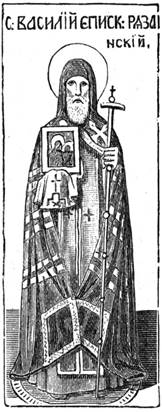
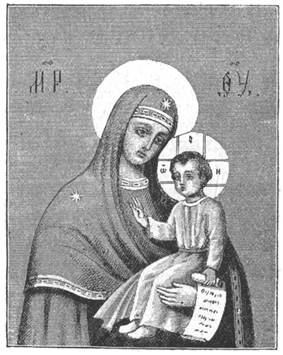
В сказании «о граде Муроме и о епископьи его»142 читаем: «неколикое время бысть во граде Муроме епископ праведен, именем Василий, сего добляго жития нетерпя враг, нача нань споны творити». По другому известию о св. Василии143, спустя много лет после благов. Муромского князя Петра прибыл в запустевший Муром князь Георгий Ярославич, поставил себе двор, и тоже сделали бояры его и купцы. – Князь возобновил древний храм Благовещения и другой св. страстотерпцев Бориса и Глеба, поставил у церкви мучеников дом для епископа и призвал на кафедру епископа Василия, человека праведного и благочестивого. – По тому и другому известью против праведного святителя восстали с подозрениями в нечистой жизни его, от того только, что видали в его келье девушку; чернь и знать потребовали, чтобы Василий оставил Муром. «Возсташа на св. владыку, говорит ещё иной памятник144, и поругашася ему, ни святительства его убояшася, ни благолепия честных его седин устыдешася и спасеннаго его учения отвергошася и из града Мурома изгнаша». Древняя повесть говорит: «приидоша к епископу в дом тоя ради вины изгонити из епископьи. Епископ же приим икону Предвечного написана Младенца и Богородицы, на нюже имеяше надежю о всяцем спасеньи своем, пойде из епископьи и провожаху его до реки Оки». По другому сказанию, праведник уверял народ в своей невинности; но его не слушали и хотели даже убить. Тогда сказал он: «отцы и братья! дайте мне время до утра». Затем молился он со слезами во всю ночь в храме мучеников, с наступлением дня совершил литургию и взял с собой ту святую икону, которую принёс с собой просветитель Мурома св. князь Константин145. «И хотяху, продолжает древняя повесть, дати ему отплыти судно мало. Святый же стоя на брезе, снем манатью и простре на воду и вступи на ню, нося Божий и Богородичный образ. И абие духом бурным несен бысть с образом противу струям, отюдуже река течет. Поведаху же, яко бысть се в 3 часу дни и того же дни, в 9 час, Божиим неизреченным повелением приплы на манатьи своей вверх в место, еже ныне зовомо старая Рязань146. Князь же Рязанский Олег срете со кресты. «Ту бо тогда пребываху князя Рязанстии. Чудесная же та икона, юже епископ принесе, и до ныне в Рязани есть. Он бо верою упова на Ню (Богородицу), Сия же милостью удиви, хотя явити без порока раба Своего».
In the account “of the city of Murom and of its bishopric”142 we read: “For some time there was in the city of Murom a righteous bishop, named Basil; the enemy, unable to endure his valiant life, began to create obstacles for him.” According to another account of St. Basil143, many years after the Right-believing Prince Peter of Murom, Prince George Yaroslavich came to the desolate Murom, built himself a court, and his boyars and merchants did likewise. The prince restored the ancient church of the Annunciation and another of the holy Passion-bearers Boris and Gleb, built a house for the bishop at the church of the martyrs, and summoned to the cathedra Bishop Basil, a righteous and pious man. According to both accounts, suspicions of an impure life were raised against the righteous Hierarch, only because a girl was seen in his cell; the common people and the nobles demanded that Basil leave Murom. “They rose up against the holy vladyka,” says yet another monument144, “and reviled him, neither fearing his hierarchal dignity, nor being ashamed of the comeliness of his honorable gray hairs, and they rejected his saving teaching and drove him out of the city of Murom.” The ancient narrative says: “They came to the bishop’s house for this reason, to drive him out of the bishopric. The bishop, taking the icon of the Pre-eternal Child and the Mother of God, in which he placed his hope for all his salvation, went out from the bishopric, and they escorted him to the Oka River.” According to another account, the righteous man assured the people of his innocence; but they would not listen to him and even wished to kill him. Then he said: “Fathers and brothers! Give me time until morning.” Then he prayed with tears all night in the church of the martyrs, at daybreak celebrated the Divine Liturgy, and took with him that holy icon which the enlightener of Murom, St. Prince Constantine, had brought with him145. “And they wished,” continues the ancient narrative, “to give him a small boat to sail away. The saint, standing on the bank, took off his mantle and spread it on the water, and stepped onto it, bearing the icon of God and the Mother of God. And immediately, carried by a stormy wind with the icon against the current, from whence the river flows. And they reported that this was at the third hour of the day, and on the same day, at the ninth hour, by God’s ineffable command, he sailed on his mantle upstream to the place now called Old Ryazan146. Prince Oleg of Ryazan met him with crosses. ‘For there the Ryazan princes then dwelt. And that miraculous icon, which the bishop brought, is in Ryazan to this day. For he trusted in Her (the Mother of God) with faith, and She showed mercy wondrously, wishing to reveal Her servant as blameless.’”
Современностью св. Василия кн. Юрию, возобновителю Мурома, и кн. Олегу поставляется вне всякого сомнения то, что св. Василий епископ жил и почил в средине XIV века. По летописям, князь Юрий Ярославич, сын князя Ярослава Юрьевича Муромского и младший брат кн. Василия147, возобновил на старом месте Муром в 1351 г.148 после того, как Муромский край не раз опустошаем был Татарами149. Возобновителю Мурома естественно было пожелать, чтобы кафедра епископа была поставлена в его новом городе, тем более, что это был город, освящённый пребыванием св. кн. Глеба и город старшего из княжеств Рязанских; да и новая Рязань так была опустошена перед тем, что Рязанский князь Ярослав (Димитрий) Александрович жил (в 1343 г.) в Ростиславле, малом городке на Оке, близ Каширы150. Между тем и в Муроме блаж. Василий, по возвращении своём из Москвы после хиротонии151, не мог уже застать князя Юрия: тот в 1354 г. изгнан был кн. Феодором Глебовичем и хотя домогался возвратить себе Муром, но умер в темнице. Волнения сильные происходили тогда в Муроме152, и они, конечно, были в связи с печальной судьбой блаж. святителя. Эти волнения, плод княжеских раздоров, объясняют нам происхождение клеветы, взведённой на святителя, клеветы дикой, мало доступной для простодушного народа, без участия стороннего.
The contemporaneity of St. Basil with Prince George, the restorer of Murom, and with Prince Oleg places beyond all doubt that St. Basil the bishop lived and reposed in the middle of the 14th century. According to the chronicles, Prince George Yaroslavich, son of Prince Yaroslav Yuryevich of Murom and younger brother of Prince Basil147, restored Murom on its old site in 1351148 after the Murom region had been repeatedly devastated by the Tatars149. It was natural for the restorer of Murom to desire that the bishop’s cathedra be established in his new city, the more so as this was a city sanctified by the sojourn of St. Prince Gleb and the senior city of the Ryazan principalities; moreover, New Ryazan had been so devastated before that the Ryazan prince Yaroslav (Demetrius) Alexandrovich lived (in 1343) in Rostislavl, a small town on the Oka near Kashira150. Meanwhile, in Murom, the blessed Basil, upon his return from Moscow after his consecration151, could no longer find Prince George: the latter was driven out in 1354 by Prince Theodore Glebovich, and although he sought to regain Murom, he died in prison. Great disturbances then occurred in Murom152, and they were, of course, connected with the sad fate of the blessed Hierarch. These disturbances, the fruit of princely dissensions, explain to us the origin of the slander brought against the Hierarch—a wild slander, hardly accessible to the simple-hearted people without outside involvement.
У кн. Олега Ивановича блаж. Василий нашёл самый радушный приём. Он пользовался уважением и князей Рязанских и первосвятителей России. Святитель Алексий писал о нём грамоту на Червлёный Яр, с строгим обличением своеволию паствы153. Князь Олег в грамоте своей Ольгову монастырю писал: «милосердием Божиим, молитвою отца моего князя великого Ивана Александровича и благословением Василия, епископа Рязанского и Муромского, я, князь великий» и пр.154. Князь Олег пожаловал уважаемому святителю несколько сёл с богатыми угодьями и с правом суда; а Пронский князь Владимир Дмитриевич дал место на Дону с бобровыми гонами155. Блаженный святитель не долго управлял Рязанской паствой. Он, как видно, созрел в жизни духовной и до поступления на кафедру. Блаженная кончина его последовала 3 июля 1360 г.156. Надгробная надпись давнего времени говорит: «перенесены мощи, иже во святых отца нашего Василия, епископа Рязанского и Муромского чудотворца, из старого Острога, от церкви св. страстотерпцев Бориса и Глеба, в новопостроенную церковь Успения Пресвятые Богородицы, преосвященным Феодоритом, архиепископом Рязанским и Муромским157. Это происходило 10 июня 1609 г.158. С того времени каждый год праздновали июня 10 память св. Василия, епископа Рязанского, как видно по записям кафедры; на водосвятной чаше 1653 г., устроенной архиеп. Мисаилом, упоминается «св. Василий епископ Рязанский чудотворец» вместе с князьями Борисом и Глебом; а на серебр. кресте 1655 г. св. Василий изображён с св. Ионой митрополитом159. Указом Синода 1814 г. дозволено праздновать апреля 12-го чудотворной иконе Муромской, прославившей невинность святителя, а его память – в неделю всех святых160. О нём же вспоминается мая 21 вместе с св. князем Константином Муромским161.
The blessed Basil found the most cordial reception from Prince Oleg Ivanovich. He enjoyed the respect of both the Ryazan princes and the first Hierarchs of Russia. Hierarch Alexis wrote a letter concerning him to the Chervleny Yar, with a stern rebuke of the willfulness of the flock153. Prince Oleg, in his charter to the Olgov Monastery, wrote: “By the mercy of God, through the prayer of my father, the great Prince Ivan Alexandrovich, and the blessing of Basil, Bishop of Ryazan and Murom, I, the great prince,” etc.154. Prince Oleg granted the revered Hierarch several villages with rich lands and the right of judgment; and Prince Vladimir Dmitrievich of Pronsk gave him a place on the Don with beaver runs155. The blessed Hierarch did not govern the Ryazan flock for long. He had, as is evident, matured in the spiritual life even before his accession to the cathedra. His blessed repose occurred on July 3, 1360156. An ancient epitaph says: “The relics of our father among the saints Basil, Bishop of Ryazan and Murom, Wonderworker, were translated from the old Ostrog, from the church of the holy Passion-bearers Boris and Gleb, to the newly-built church of the Dormition of the Most Holy Theotokos, by the Most Reverend Theodoret, Archbishop of Ryazan and Murom157.” This took place on June 10, 1609158. From that time, the memory of St. Basil, Bishop of Ryazan, was celebrated annually on June 10, as is evident from the records of the cathedra; on the water-blessing chalice of 1653, made by Archbishop Misael, “St. Basil, Bishop of Ryazan, Wonderworker” is mentioned together with the princes Boris and Gleb; and on a silver cross of 1655, St. Basil is depicted with St. Jonah the Metropolitan159. By a decree of the Synod in 1814, it was permitted to celebrate on April 12 the miraculous Murom Icon, which glorified the innocence of the Hierarch, and his memory on the Sunday of All Saints160. He is also commemorated on May 21 together with St. Prince Constantine of Murom161.
«Не прикасайтеся к помазанным Моим и пророкам Моим не делайте зла» (Пс.104:15). «Слушающий вас (иерархов) Меня слушает, и отвергающийся вас Меня отвергается» (Лк.10:16). Эти слова Господа сами собой становятся в заключение истории святителя Василия.
“Touch not Mine anointed ones, and do My prophets no harm” (Ps. 104:15). “He who hears you (the hierarchs) hears Me, and he who rejects you rejects Me” (Lk. 10:16). These words of the Lord naturally stand as the conclusion to the history of Hierarch Basil.
Икона Богоматери, именуемая Муромской, принесена в Муром св. князем Константином Муромским, пришедшим туда из Киева в начале XII в. Константин долго старался любовью и убеждением склонить народ к христианству; успеха не было. Друзья старины составили заговор и поклялись убить или выгнать князя. Константин, узнав о том, вышел к злоумышленникам с иконой Богоматери, и они смутились, переменили намерение и сами просили крещения.
The Icon of the Mother of God, called the Murom Icon, was brought to Murom by the holy Prince Constantine of Murom, who came there from Kiev at the beginning of the 12th century. Constantine long strove with love and persuasion to incline the people to Christianity; there was no success. The friends of antiquity formed a conspiracy and swore to kill or drive out the prince. Constantine, learning of this, went out to the malefactors with the Icon of the Mother of God, and they were confounded, changed their intention, and themselves asked for Baptism.
В средине XIV века в Муроме был епископом святой Василий. Народ, ложно подозревая его в жизни порочной, хотел его умертвить. Василий просил отсрочить смерть до утра, до третьего часа дня. Всю ночь молился он во храме св. страстотерпцев Бориса и Глеба; совершив литургию, он пошёл в храм Благовещения, и там перед образом Пресвятые Девы Марии, принесённым некогда из Киева благоверным князем Константином, отслужил молебен. Возложив надежду спасения на Небесную Заступницу, Василий взял св. икону, и с ней пошёл из церкви до Оки. Снявши с себя мантию, он распростёр её по воде, стал на неё с образом Богоматери, и сильным ветром понесён был против течения. В девятый час дня, он доплыл уже до места, называемого Старая Рязань.
In the middle of the 14th century, the holy Basil was bishop in Murom. The people, falsely suspecting him of a dissolute life, wished to put him to death. Basil asked that his death be postponed until morning, until the third hour of the day. He prayed all night in the church of the holy Passion-bearers Boris and Gleb; having celebrated the Divine Liturgy, he went to the Church of the Annunciation, and there before the image of the Most Holy Virgin Mary, once brought from Kiev by the Right-believing Prince Constantine, he served a moleben. Placing his hope of salvation on the Heavenly Intercessor, Basil took the holy Icon, and with it went from the church to the Oka River. Taking off his mantle, he spread it upon the water, stood upon it with the Icon of the Mother of God, and was carried by a strong wind against the current. At the ninth hour of the day, he had already sailed to the place called Old Ryazan.
Князь и народ и весь священный клир вышли со крестами на встречу чудному пловцу. С тех пор упразднилась епископская кафедра в Муроме, учредилась в Рязани новая, где осталась и чудотворная икона Муромская, принесённая святителем, и называется молением св. Василия.
The prince and the people and all the sacred clergy went out with crosses to meet the wondrous voyager. From that time, the episcopal see in Murom was abolished, and a new one was established in Ryazan, where the wonderworking Murom Icon, brought by the Hierarch, remained, and it is called the prayer of St. Basil.
Три года спустя после пришествия своего в Старую Рязань, святитель Василий избрал для жительства своего более защищённое место от монголов – нынешнюю Новую Рязань, где стоял тогда Переяслав Рязанский, и там утвердил в 1358 г. свою кафедру; туда перенёс и икону Муромскую.
Three years after his arrival in Old Ryazan, Hierarch Basil chose for his dwelling a place more protected from the Mongols—the present New Ryazan, where then stood Pereslavl of Ryazan—and there in 1358 he established his see; thither he also transferred the Murom Icon.
„Полн. месяцесл. Востока“, архим. Сергия, т. 2, ч. 2, стран. 105 и „Учение об Отц. Церкви“ Фил. Черн., ч. II, стран. 61.
Complete Menologion of the East by Archimandrite Sergius, vol. 2, part 2, p. 105, and Teaching on the Fathers of the Church by Philaret of Chernigov, part II, p. 61.
Память другого Исаака Сирина, еписк. Ниневии, жившего в VII в., см. 28-го января, и „Учение об Отцах Церкви“ Фил. Черн., ч. III, § 236.
The memory of another Isaac the Syrian, Bishop of Nineveh, who lived in the 7th century, see January 28, and Teaching on the Fathers of the Church by Philaret of Chernigov, part III, § 236.
Менолог Василия и краткий менолог у Баснажа на 27 июня. Святая Анфуса, о которой говорится здесь, была старшей между подвижницами. Были ещё две мученицы Анфусы, старшая при импер. Валериане, чтимая 22 августа, и младшая V века, чтимая декабря 8.
Menologion of Basil and the brief menologion in Basnage on June 27. The holy Anthusa, of whom it is spoken here, was the eldest among the ascetics. There were also two other Martyrs Anthusa, the elder under the Emperor Valerian, commemorated on August 22, and the younger of the 5th century, commemorated on December 8.
Никифора хроника р. 73. 74. ed. Bonn. 1837. J. Iohannis Damasceni op. I, 613 S. Сербская летопись о Копрониме: „ненавистный кровопийца-волк старался погасить славу святых, – запрещал называть кого-либо святым, а велел просто называть одним именем, и Богородицу приказал именовать не Богородицей, а матерью Христовой; светлые душой чины иночествующих поносил как бешеный пёс, – закалал их как агнцев, наполнял ими темницы: в одной, называемой претор, содержал 345 иноков и одним отрезал носы, другим уши, иным выколол глаза, других, обмазав бороды смолой, обуглил; св. Стефана, венец иноков, и других многих замучил до смерти“. Гласник X, 251. 252. Самое сильное гонение против икон, святых и иночества происходило в 765 и 766 г. Никифора хроника р. 80–83. Le Quien ог. chr. I. 237. 238.
Nicephorus, Chronicle, pp. 73, 74, ed. Bonn, 1837. J. Joannis Damasceni, op. I, 613 S. The Serbian Chronicle on Copronymus: "The hateful blood-drinking wolf tried to extinguish the glory of the saints—forbade calling anyone a saint, but ordered them to be called simply by one name, and commanded that the Theotokos be called not the Theotokos, but the Mother of Christ; the bright-souled ranks of monastics he reviled like a mad dog—he slaughtered them like lambs, filled prisons with them: in one, called the Praetor, he kept 345 monks, and cut off the noses of some, the ears of others, gouged out the eyes of others, smeared the beards of others with pitch and charred them; St. Stephen, the crown of monks, and many others he tortured to death." Glasnik X, 251, 252. The most severe persecution against icons, saints, and monasticism occurred in 765 and 766. Nicephorus, Chronicle, pp. 80–83. Le Quien, Oriens Christianus I, 237, 238.
Кодин: „старческий дом Герагафы построила Агафия, дочь патриция Петра, красавица редкая. Она называлась Герагафой от того, что сохранила непорочным девство своё до старости; Константин Копроним наконец осквернил её и осыпал богатствами, но она тайно почитала св. иконы. Когда окончен был этот дом, нечестивец собрал в него все иконы и сжёг тут“, ed. Beckeri р. 94. По словам Зонары, Копроним „не христианин, не язычник, не жид, а смесь всякого нечестия, дикий Африканский зверь“. Annal XVI 5. р. 84.
Codinus: "The old women's home of Geragatha was built by Agatha, daughter of the patrician Peter, a rare beauty. She was called Geragatha because she preserved her virginity immaculate until old age; Constantine Copronymus finally defiled her and showered her with riches, but she secretly venerated the holy icons. When this house was completed, the impious man gathered all the icons into it and burned them there," ed. Beckeri, p. 94. According to Zonaras, Copronymus was "neither a Christian, nor a pagan, nor a Jew, but a mixture of all impiety, a wild African beast." Annal XVI 5, p. 84.
Пролог: „заточена бысть в Малом острове и тамо в глубоцей старости ко Господу отыде“. Римский мартиролог под 27 июля: „в Константинополе кончина блаженной девы Анфусы: она при Константине Копрониме за почитание св. икон была бита бичами и, сосланная в ссылку, почила в Господе“. Если преподобная и была отправлена на остров, то этот остров вблизи столицы. У Вершинского (стр. 115) Амфиса – ошибка: такого нет Греческого имени.
Prologue: "She was confined on a small island and there in deep old age departed to the Lord." Roman Martyrology under July 27: "In Constantinople, the repose of the blessed virgin Anthusa: under Constantine Copronymus, for the veneration of the holy icons, she was beaten with whips and, sent into exile, fell asleep in the Lord." If the Venerable one was sent to an island, that island was near the capital. In Vershinsky (p. 115) "Amphisa" is an error: no such Greek name exists.
В Константинопольском монастыре св. Евфимии спаслись дочери имп. Василия Македонянина и жена импер. Льва Мудрого Зоя. Du-Cangii Constant. chron. р. 146. В месяцеслове Вершинского (стр. 57) сказано, что Анфуса скончалась в мон. Евмения. Эго ошибка. Такой обители не было в Цареграде.
In the Constantinople monastery of St. Euphemia, the daughters of Emperor Basil the Macedonian and the wife of Emperor Leo the Wise, Zoe, were saved. Du Cange, Constantinopolis Christiana, chron. p. 146. In the menologion of Vershinsky (p. 57) it is said that Anthusa reposed in the monastery of Eumenius. This is an error. Such a monastery did not exist in Constantinople.
Кодин у Дю-канжа, Const. clir. р. 145. Кодин прибавляет, что спустя 35 лет имп. Ирина Афинянка возобновила храм и перенесла из него св. мощи, найденные у острова Лемноса, ed. Beckeri р. 75.
Codinus in Du Cange, Constantinopolis Christiana, p. 145. Codinus adds that 35 years later, the Empress Irene the Athenian restored the church and translated from it the holy relics found near the island of Lemnos, ed. Beckeri, p. 75.
По Греч. синаксарю и по прологу св. Анфуса жила в Омонейском монастыре и не дозволяла другим выходить из обители. Это значит, что здесь она была игуменьей, тогда как в Евфимиевом монастыре пострижена была в иночество, о чём говорит Менолог Василия. Омонейский монастырь известен особенно тем, что при импер. Феодосии Великом в храме его были заседания Вселенского Собора. Du Cangii Constant, chr. p. 157. Во время Анфусы, вследствие соборного определения, было большое передвижение иноков и инокинь из одного места в другое.
According to the Greek Synaxarion and the Prologue, St. Anthusa lived in the Omonaea Monastery and did not allow others to go out of the monastery. This means that here she was abbess, whereas in the Monastery of Euphemia she was tonsured into monasticism, of which the Menologion of Basil speaks. The Omonaea Monastery is especially known for the fact that under the Emperor Theodosius the Great, sessions of the Ecumenical Council were held in its church. Du Cange, Constantinopolis Christiana, p. 157. In the time of Anthusa, as a result of a conciliar decree, there was a great movement of monks and nuns from one place to another.
Трулльский собор 692 г. определил: „избравшие подвижническое житие и определённые в монастырь отнюдь да не исходят. Аще же неизбежная некая нужда побудит их к сему: да делают сие по благословению и изволению настоятельницы, но и тогда исходити должны не одни, а с старшими старицами и с первенствующими в монастыре, по повелению игуменьи. Обнощевати же вне монастыря совсем не позволяется им“. Прав. 46, в книге правил. Превосходные рассуждения о нужде для иночествующих не выходить из обители см. у Василия Велик. в правил. Твор. 5, 53. 59, 191–193.
The Trullan Council of 692 decreed: "Those who have chosen the ascetic life and are assigned to a monastery shall by no means go out. If some unavoidable necessity compels them to do so, they shall do this with the blessing and permission of the superior, but even then they must go out not alone, but with the elder nuns and those holding primacy in the monastery, by command of the abbess. To spend the night outside the monastery is not permitted to them at all." Canon 46, in the Book of Canons. Excellent reflections on the need for monastics not to go out of the monastery are found in Basil the Great, in his Rules, Works 5, 53, 59, 191–193.
Вселсн. 7 соб. пр. 20: „определяем не быти отныне монастырям двойным, потому что сие бывает соблазном и преткновением для многих, – аще же восхотят некой с сродниками от мира отрещися и монашескому житию последовати: то мужам отходити в мужеский монастырь, а женам входить в женский монастырь, ибо сим благоугождается Бог. А обретающийся до ныне двойные монастыри да будут управляемы по правилу св. отца нашего Василия: да не будут во едином монастыре монахи и монахини... Да не имеет дерзновения монах с монахинею или монахиня с монахом беседовати наедине“.
Seventh Ecumenical Council, Canon 20: "We decree that from now on there shall be no double monasteries, because this is a cause of scandal and stumbling for many. But if any wish to renounce the world with their relatives and follow the monastic life, then let men go to a men's monastery and women enter a women's monastery, for thereby God is well pleased. And the double monasteries that exist until now shall be governed according to the rule of our holy father Basil: let there not be monks and nuns in one monastery... Let no monk dare to converse alone with a nun, nor a nun with a monk."
Трулльское прав. 45. Это простодушное обыкновение сохранялось даже в XVIII столетии в некоторых южных женских монастырях России. См. Опис. Харьковской епархии I, 133. 134. Харьков. 1859 г.
Trullan Canon 45. This simple custom was preserved even into the 18th century in some southern women's monasteries of Russia. See Description of the Kharkov Diocese I, 133, 134. Kharkov, 1859.
Житие её – в Четье-Минее апр. 12 Греческий текст in act. Sanet, ad 12 augusti. Биограф говорит: „приняв на себя это (описать жизнь и чудеса), передаю я не пустые вымыслы, но то, что сам собственными глазами видел, частью же слышал от святых жён... Все они хорошо знали деяния блаж. Афанасии. Потому и я поверил им». В прологе апр. 12 и в сборном Патерике (знам. 1) краткое известие с несколькими добавлениями.
Her Life is in the Cheti-Minei for April 12. The Greek text in Acta Sanctorum ad 12 Augusti. The biographer says: "Undertaking this (to describe the life and miracles), I relate not empty fictions, but what I myself saw with my own eyes, and partly heard from holy women... They all knew well the deeds of the blessed Athanasia. Therefore I also believed them." In the Prologue for April 12 and in the Paterikon (Znam. 1) there is a brief account with several additions.
И по Римскому мартирологу, „авг. 14 д. в Эгине кончина св. вдовицы Афанасии, славной монашескими подвигами и благодатью чудес“. Св. Димитрий справедливо заметил: „сея преподобные Афанасии память почитати приличнее есть августа в 14 день, в навечерии Успения Пресв. Богородицы, когда та святая преставися“.
And according to the Roman Martyrology, "On August 14, in Aegina, the repose of the holy widow Athanasia, glorious for monastic labors and the grace of miracles." St. Demetrius rightly observed: "It is more fitting to commemorate the memory of this Venerable Athanasia on August 14, on the eve of the Dormition of the Most Holy Theotokos, when that saint reposed."
Повесть в ркп. XVII в. Моск. д. акад. Она же у Царского в ркп. XVII в. № 397. По языку оно принадлежит началу XVI в. или концу XV в. В лет. Рус. лит. 1859 г. 4, 59–61, напеч. по ркп. XVII в. – довольно изменившей текст.
A tale in a 17th-century manuscript of the Moscow Theological Academy. It is also in Tsarsky's 17th-century manuscript, No. 397. By its language, it belongs to the beginning of the 16th century or the end of the 15th. In Chronicles of Russian Literature for 1859, 4, 59–61, printed from a 17th-century manuscript—considerably altering the text.
„Сказание о обновлении града Мурома и о св. Василии, епископе Муромском“, в ркп. нач. XVIII в. Румянц. № 364. Здесь оно следует после жития св. кн. Константина. Нап. в Памят. Русск. лит. I, 235–237. СПб. 1860 года.
"The Tale of the Renewal of the City of Murom and of St. Basil, Bishop of Murom," in a manuscript of the early 18th century, Rumyantsev No. 364. Here it follows the Life of the holy Prince Constantine. Printed in Monuments of Russian Literature I, 235–237. St. Petersburg, 1860.
Древний стольный город Рязанских князей называется городок „Старой Рязанью“ в грамотах XV в. (собр. грам. 1 № 127. 144), а также в книге большого чертежа; а в 1679 г. уже „село Старая Рязань“. Грам. Пискарева № 45. Страус в 1669 г. писал о Рязани: „развалины, тут находящиеся, показывали, что когда-то Рязань была большим городом“. Сл. Калайдовича письма об исследов. в Рязани, М. 1824. Ж. М. Просв. 1849. ч. 63, отд. VI, 357. 358.
The ancient capital city of the Ryazan princes is called the town "Old Ryazan" in charters of the 15th century (Collection of Charters 1, No. 127, 144), and also in the Book of the Great Map; and in 1679 it was already "the village of Old Ryazan." Charter of Piskarev, No. 45. Straus in 1669 wrote of Ryazan: "The ruins found there showed that Ryazan was once a large city." Cf. Kalaidovich, Letters on Research in Ryazan, M. 1824. Journal of the Ministry of Public Education, 1849, part 63, section VI, 357, 358.
Никон. л. III, 194. 205. Собр. л. VII, 244. Карамз. 4, прим. 370, кн. Василий Ярославич, брат Юрия, похоронен в церкви Бориса и Глеба на р. Ушне в 15 вер. от Мурома. До 1351 г. Муромцы от разгромов неприятельских жили в 8 верстах от Мурома, у села Чаадаева. Владимирский сборник, стр. 82. М. 1857 г.
Nikon Chronicle III, 194, 205. Collection of Chronicles VII, 244. Karamzin 4, note 370: Prince Basil Yaroslavich, brother of Yury, was buried in the Church of Boris and Gleb on the Ushna River, 15 versts from Murom. Until 1351, the people of Murom, due to enemy devastations, lived 8 versts from Murom, near the village of Chaadaevo. Vladimir Collection, p. 82. M. 1857.
Муромский край опустошаем был татарами в 1281 г. (собр. л. VII, 180. Никон. л. III, 72. 73), в 1288 г. (Карамз. 4. пр. 182) и в 1293 г. (совр. л. III, 190).
The Murom region was ravaged by the Tatars in 1281 (Collection of Chronicles VII, 180; Nikon Chronicle III, 72, 73), in 1288 (Karamzin 4, note 182), and in 1293 (Nikon Chronicle III, 190).
В каком году посвящён Василий? Летописи (Карамз. 4, пр. 399. Ник. л. 3, 206. Собр. лет. I, 230. Степ. кн. 1, 452–454) говорят о том под 1356 г. по тому случаю, что в этом году умер Ростовский епископ Иоанн и посвящён Игнатий, и под тем же годом ставят ещё посвящение двух епископов. – Будто и вероятно, что четверо посвящены в один год, тогда как моровая язва действовала в 1353–1355 г., и св. Алексий возвратился в сане митрополита в Москву в 1354 году.
In what year was Basil consecrated? The chronicles (Karamzin 4, note 399; Nikon Chronicle 3, 206; Collection of Chronicles I, 230; Book of Degrees 1, 452–454) speak of this under the year 1356, on the occasion that in that year John, Bishop of Rostov, died and Ignatius was consecrated, and under the same year they also place the consecration of two bishops. It is hardly probable that four were consecrated in one year, especially since the plague was raging in 1353–1355, and St. Alexis returned to Moscow in the rank of metropolitan in 1354.
Кн. Олегом даны блаж. Василию: место на р. Кикине у с. Селезнева, „первых владык купля“, Воинское, Засечье, Хмелево. – Воздвиженского Рязан. иер. 49. 50. Иловайского Рязан. княж., стр. 257. 285.
Prince Oleg granted to Blessed Basil: a place on the Kikina River near the village of Seleznevo, "the purchase of the first vladykas," Voinskoye, Zasechye, Khmelevo. — Vozdvizhensky's Ryazan Hierarchs, pp. 49, 50. Ilovaisky's Ryazan Princes, pp. 257, 285.
Никон. л. IV, 62. Карамз. 5, пр. 55. Ркп. святцы: „святый Василий епископ Рязанский, чудотворец – преставися в л. 6800 июля в 3 д.“. Здесь показание о годе кончины – не полное: не показаны десятки и единицы. Это – не первый примерь в ркп. святцах. – Надлежало написать: „в л. 6868“. Рязанский старожил (Чтен. обиц. ист. 1859 года, кн. 3) бьётся из всех сил доказать, что св. Василий скончался в 1292 г., и выдаёт такую мысль о св. Василии за предание. Странно! Будто предание считает года событиям; года считают книжники. Старожил указывает на то, что в службе св. Василий назван первым Рязанским епископом. Но: а) когда написана служба? Без сомнения, по перенесении мощей, в 1609 г. б) Мнение о том, что св. Василий был первым Рязанским епископом, во всяком случае несогласно с летописями и Рязанскими грамотами (Рязанские иерархи пр. 2. 6–8, стр. 3. 8). „Предание, говорит старожил, записано на гробнице св. Василия и на памятнике чугунном“. Даже и чугунный памятник, поставленный в нынешнем столетии и с самыми грубыми ошибками в надписи, – для старожила решает вопрос о годе кончины св. Василия!.. Когда написана надпись на гробнице? По исследованию Воздвиженского, в 1715 г. (иер. 21). Старожил говорил, что это – не первая надпись, и выставляет следующие слова просьбы 1723 г.: „а что написано было у гробницы его, Василия епископа, в возглавии на клейме, вместо тумбы, образ перенесения мощей... и то написано по прошению тояж церкви бывшего дьячка Бориса Иванова, а написал я (священник Успенского собора) тот образ с совету товарища своего попа Льва против летописи,что написано с каноном Василия епископа“. За эту выписку – благодарность Рязан. старожилу. Но от этой выписки также нелегко ему, как и от канона. Очевидно, первая летопись написана в одно время с каноном, т. е. не раньше 1609 г. После того, так как старожил не выставляет более отзывов предания или доказательств своему мнению, то статья его должна бы назваться так: голос в защиту произвольного мнения книжников XVII в. о св. Василии.
Nikon Chronicle IV, 62. Karamzin 5, note 55. Manuscript menologia: "St. Basil, Bishop of Ryazan, wonderworker — reposed in the year 6800, July 3." Here the indication of the year of his death is incomplete: the tens and units are not shown. This is not the first example in manuscript menologia. It should have been written: "in the year 6868." A Ryazan old-timer (Readings of the Society of History, 1859, Book 3) struggles with all his might to prove that St. Basil died in 1292, and presents such an opinion about St. Basil as tradition. Strange! As if tradition counts the years of events; years are counted by scribes. The old-timer points out that in the service St. Basil is called the first Bishop of Ryazan. But: a) when was the service written? Without doubt, after the translation of the relics, in 1609. b) The opinion that St. Basil was the first Bishop of Ryazan is in any case inconsistent with the chronicles and Ryazan charters (Ryazan Hierarchs, notes 2, 6–8, pp. 3, 8). "The tradition," says the old-timer, "is recorded on the tomb of St. Basil and on a cast-iron monument." Even the cast-iron monument, erected in the present century and with the crudest errors in its inscription, decides the question of the year of St. Basil's death for the old-timer!.. When was the inscription on the tomb written? According to Vozdvizhensky's investigation, in 1715 (Hierarchs, p. 21). The old-timer said that this was not the first inscription, and cites the following words from a petition of 1723: "And what was written at his, Bishop Basil's, tomb, at the head on a panel, instead of a pedestal, the image of the translation of the relics... and that was written at the request of the same church's former clerk Boris Ivanov, and I (the priest of the Dormition Cathedral) painted that image with the advice of my colleague, priest Lev, against the chronicle,which was written with the canon of Bishop Basil." For this excerpt — thanks to the Ryazan old-timer. But this excerpt is no easier for him than the canon. Obviously, the first chronicle was written at the same time as the canon, i.e., no earlier than 1609. After that, since the old-timer adduces no further testimonies of tradition or proofs for his opinion, his article should be called: A Voice in Defense of the Arbitrary Opinion of 17th-Century Scribes Concerning St. Basil.
Воздвиженского Ряз. иер., стр. 22. О Рязанском или древнем городе см. древности гор. Рязани в Чтен. общ. ист. 1859 г., стр. 104–108. О Борисоглебском соборе Рязанские иерархи, стр. 22. 23, пр. 85.
Vozdvizhensky's Ryazan Hierarchs, p. 22. On Ryazan or the ancient city, see Antiquities of the City of Ryazan in Readings of the Society of History, 1859, pp. 104–108. On the Boris and Gleb Cathedral, Ryazan Hierarchs, pp. 22, 23, note 85.