В апокалипсисе св. Апостола Иоанна сказано, что Господь в откровении св. Иоанну повелел ему писать к семи ангелам, т. е. епископам семи Мало-Азийских Церквей. При этом упоминается и о святителе Антипе, бывшем епископом Церкви Пергамской.
In the Apocalypse of the Holy Apostle John, it is said that the Lord in a revelation commanded St. John to write to the seven angels, that is, the bishops of the seven Churches of Asia Minor. In this, mention is also made of the Hierarch Antipas, who was bishop of the Church of Pergamum.
«И ангелу Пергамской Церкви напиши, – слышался голос Иоанну, – знаю твои дела, и что ты живёшь там, где престол сатаны, и что содержишь имя Моё, и не отрёкся от веры Моей, даже в те дни, в которые у вас, где живёт сатана,умерщвлён верный свидетель Мой Антипа» (Откр.2:13).
"And to the angel of the Church in Pergamum write," the voice was heard by John, "I know your works, and that you dwell where Satan's throne is, and that you hold fast My name, and did not deny My faith, even in those days in which among you, where Satan dwells, My faithful witness Antipas was slain" (Rev. 2:13).
Из слов этих, относящихся к преемнику Антипы в Пергаме, видно, что Антипа предан был смерти за веру свою. Поставленный во епископа Иоанном Богословом в то время, когда ещё везде царило язычество, Антипа епископ должен был вести упорную и трудную борьбу с господствовавшим верованием. Наконец, во время гонения, воздвигнутого Домицианом, он был взят, как распространитель гонимого нового учения, и представлен правителю города.
From these words, which refer to the successor of Antipas in Pergamum, it is evident that Antipas was put to death for his faith. Appointed bishop by John the Theologian at a time when paganism still reigned everywhere, Bishop Antipas had to wage a stubborn and difficult struggle against the prevailing belief. Finally, during the persecution raised by Domitian, he was seized as a spreader of the persecuted new teaching and brought before the governor of the city.
– Ты ли Антипа? – спросил его игемон, – который не только сам не повинуешься царским указам, но ещё и других учишь не почитать их... Жрецы доносят, что языческие храмы пустеют, они жалуются на оскудение жертв, говорят, что разгневанные боги перестали покровительствовать городу, в котором не воздаётся подобающая им почесть...
"Are you Antipas?" the hegemon asked him, "who not only yourself disobey the imperial decrees, but also teach others not to honor them... The priests report that the pagan temples are emptying; they complain of the scarcity of sacrifices, saying that the angered gods have ceased to protect the city, in which they are not given the honor due to them..."
– Бессильны те боги, которые требуют приношений от людей, – возразил Антипа, – и потому они – ложные боги; верить в них – заблуждение... Истина же в том, чтобы веровать в Бога Всемогущего, Христа, сшедшего с неба, чтобы спасти род человеческий...
"Those gods who require offerings from men are powerless," Antipas replied, "and therefore they are false gods; to believe in them is an error... The truth, however, is to believe in the Almighty God, Christ, who came down from heaven to save the human race..."
– Что это за новая вера? Вера во Христа, Которого Пилат распял, как злодея! Оставь, старец, эту веру, ради которой забыто древнее богопочитание, освящённое веками! Повинуйся царским повелениям... Отступи от вашей безумной веры. Подумай о том, чтобы дожить твой век спокойно и почётно, как это подобает твоим преклонным летам...
"What is this new faith? Faith in Christ, whom Pilate crucified as a malefactor! Abandon, old man, this faith, for which the ancient worship of the gods, sanctified by centuries, has been forgotten! Obey the imperial commands... Renounce your foolish faith. Consider living out your old age peacefully and honorably, as befits your advanced years..."
– Безумием было бы то, если бы, приближаясь к кончине, я отрёкся от спасительной истины, которую постиг разум мой, просвещённый изучением Божественных писаний. Сознай сам эту истину, если не хочешь погибнуть...
"It would be folly if, approaching my end, I were to deny the saving truth which my mind, enlightened by the study of the Divine Scriptures, has grasped. Acknowledge this truth yourself, if you do not wish to perish..."
Возбуждённые до ярости словами святителя язычники, схватив его, повлекли в храм богини Артемиды и там, раскалив медного быка91, бросили в него исповедника истины...
The pagans, aroused to fury by the words of the Hierarch, seized him, dragged him into the temple of the goddess Artemis, and there, having heated a bronze bull91, they cast the confessor of the truth into it...
Велико было страдание мученика, но он, мужественно преодолевая его, только молился... Благодарил Бога, избравшего его пострадать за имя Его святое, молил Его за весь мир и за своих гонителей, испросил у Бога благодать исцеления от болезней всем, поминающим имя его в молитве, и, осеняя себя крестным знамением, предал свою душу Господу.
Great was the suffering of the martyr, but he, courageously overcoming it, only prayed... He gave thanks to God, who had chosen him to suffer for His holy name; he prayed to Him for the whole world and for his persecutors; he asked of God the grace of healing from illnesses for all who remember his name in prayer; and, signing himself with the sign of the cross, he commended his soul to the Lord.
«Мощи святого, – говорит описывающий мученичество епископа Антипы житель Пергама, – положены в сём месте Пергама, где мы, собираясь, воздаём благодарение Богу, что то место, где совершилось мучение, до сего дня сияет чудесами, и многие в нём совершаются исцеления» 92.
"The relics of the saint," says a resident of Pergamum who describes the martyrdom of Bishop Antipas, "are laid in this place of Pergamum, where we, gathering together, give thanks to God, that the place where the martyrdom took place shines with miracles to this day, and many healings are performed in it"92.
В одном прологе св. Антипе приписывают исцеление в особенности от зубных болей. Это верование – древнее и очень распространённое. В древних наших месяцесловах к имени св. Антипы прибавляется обыкновенно замечание: «иже благодать имать от Бога целити болезнь зубную», а в сказании о том, каким святым в каких случаях должно молиться, полагается ему и особая молитва от зубной боли. – В одном из древних южнославянских сборников церковных, Дечанском, есть также особая молитва к св. Антипе от зубной боли: «Моление приношу тебе, помолися о мне грешном ко Господу Богу, об отпущении грехов моих, и неутишимые зубные боли избави мя молитвами, святе, твоими».
In one prologue, St. Antipas is credited especially with healing from toothaches. This belief is ancient and very widespread. In our ancient menologia, to the name of St. Antipas is usually added the remark: "who has grace from God to heal the tooth ailment," and in the account of which saints should be prayed to in which circumstances, a special prayer for toothache is assigned to him. — In one of the ancient South Slavic church collections, the Dečani Codex, there is also a special prayer to St. Antipas for toothache: "I offer a prayer to you; pray for me, a sinner, to the Lord God for the remission of my sins, and deliver me from unceasing toothache by your prayers, O saint."
Основанием для подобного верования, относительно св. Антипы, бесспорно послужило то, что он как при жизни, так и по смерти прославился многими чудесными исцелениями от различных болезней.
The basis for such a belief concerning St. Antipas was undoubtedly that he, both during his life and after death, was glorified by many miraculous healings from various illnesses.
Свв. мучч. Прокесса иМартиниана, бывших надзирателями в Мамертинской темнице в то время, как Апп. Пётр и Павел были заключены в ней по приказанию Нерона, и обращённых к вере Христовой чудесами, совершёнными при них св. Апостолами. За исповедание веры претерпели истязания и обезглавлены за стенами Рима на Аврелиевой дороге. Тела их с честью были погребены блаженной Люцилой. Они покоятся в Ватиканском соборе Ап. Петра в приделе их имени. (См. «Полн. месяцесл. востока» архим. Сергия).
Sts. Martyrs Processus and Martinian, who were overseers in the Mamertine Prison at the time when the Apostles Peter and Paul were imprisoned there by order of Nero, and were converted to the faith of Christ by the miracles performed in their presence by the holy Apostles. For confessing the faith they endured tortures and were beheaded outside the walls of Rome on the Aurelian Way. Their bodies were honorably buried by the blessed Lucilla. They rest in the Vatican Cathedral of the Apostle Peter in a chapel dedicated to them. (See "Complete Menologion of the East" by Archimandrite Sergius).
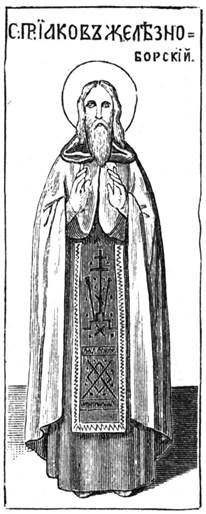
В тридцати верстах от Галича, в глухом лесу, у железных рудников, жил (с 1392 года) в уединённой хижине пустынник, и этот пустынник молитвами возвратил к жизни супругу могущественного властителя России. Это был преп. Иаков, ученик великого Сергия Радонежского. Супруга великого князя Василия Дмитриевича, София Витовтовна, страдала родами и была при смерти. Преп. Иакову случилось тогда быть в Москве; он пребывал в монастыре Иоанна Предтечи под бором, за рекой Москвой, – Великий князь слышал о его святой жизни и послал просить его помолиться о больной супруге. Преподобный отвечал: «молись Богу и Пречистой Матери Его; о княгине не скорби, будет здорова и в этот же вечер родит сына наследника тебе». София благополучно родила сына Василия. Это было в 1415 г. Признательный вел. князь дал блаж. Иакову средства построить на месте уединённых подвигов его, на железном борку, монастырь с храмом в честь св. Предтечи, и определил землю на содержание обители93.
Thirty versts from Galich, in a dense forest, near the iron mines, a hermit lived (from 1392) in a solitary hut, and this hermit by his prayers restored to life the wife of the mighty ruler of Russia. This was the Venerable James, a disciple of the great Sergius of Radonezh. The wife of Grand Prince Basil Dimitrievich, Sophia Vitovtovna, was suffering in childbirth and at the point of death. It happened that the Venerable James was then in Moscow; he was staying at the Monastery of John the Forerunner "under the pines," beyond the Moscow River. The Grand Prince had heard of his holy life and sent to ask him to pray for his ailing wife. The Venerable One replied: "Pray to God and His Most Pure Mother; do not grieve for the princess; she will be well and this very evening will bear you a son, an heir." Sophia safely gave birth to a son, Basil. This was in 1415. The grateful Grand Prince gave the blessed James the means to build a monastery with a church in honor of the holy Forerunner on the site of his solitary ascetic labors, at Zhelezny Bor, and granted land for the support of the community93.
Преподобный родом из Галичских дворян Амосовых94, был усердным насадителем иноческой жизни в родной стороне своей. Скоро собрались к нему ревнители уединения. Он устроил строгое общежитие, – в обители никто ничего не называл своим; его пример одушевлял учеников к строгой жизни; по примеру наставника ученики благодушно терпели нужду и скорби; блаж. Иаков учил их чистоте душевной и телесной, посту, взаимной любви, смирению и терпению.
The Venerable One, by birth from the Galich nobles, the Amosovs94, was a zealous planter of monastic life in his native region. Soon zealots of solitude gathered to him. He established a strict cenobitic rule — in the monastery no one called anything his own; his example inspired the disciples to a strict life; following the example of their teacher, the disciples cheerfully endured need and sorrows; the blessed James taught them purity of soul and body, fasting, mutual love, humility, and patience.
Сильное искушение испытали обитель Иакова и её окрестности в 1429 году. Шайки Казанских татар опустошали окрестности Галича, подступали под Галич и, не взяв его, в самый день Крещения захватили Кострому, набрали множество пленных и ушли. – По летописи, тогда как главные силы Москвы, не догнав Татар, возвратились от Нижнего, воеводы Феодор Добрынский и князь Феодор Пёстрый поплыли Волгой, нагнали их за Нижним, напав разбили, многих истребили и всех пленных отняли. «Зато, прибавляет летопись, тем воеводам честь, а по смерти – вечная память»95. Преподобный с учениками своими удалялся от страшной бури в тёмный лес. По возвращении на место молитв он должен был поднимать обитель из развалин. Он построил теперь и трапезный храм в честь св. Николая, выкопал своими руками обширные пруды; теперь явилось в стороне той много бедных и голодных; преподобный кормил всех приходивших и помогал, сколько мог. После стольких лет подвижничества братия упросили его быть игуменом их; он отправился в Москву и там облечён был саном; он получил там и разные пособия для чад своих. В глубокой старости постигла его предсмертная болезнь; он назначил преемника себе из учеников своих и принял в напутствие в ту жизнь св. Тайны96. По ркп. святцам «препод. Иаков, игумен Предтеченского монастыря на железном борку, Костромский Чудотворец, преставися в лето 6950 (1442) апреля в 11 день»97. Святое тело его покоится под спудом в основанной им обители98. Великий князь Василий Васильевич в 1450 году, после победы над Шемякой под Галичем, отправлялся в обитель Иакова благодарить Господа за успех свой99. Обитель преподобного и после него не раз страдала от Татар и двое из её игуменов, Савва и Вениамин, скончались страдальчески; но обитель его поныне существует100.
A severe trial befell the monastery of James and its surroundings in 1429. Bands of Kazan Tatars ravaged the environs of Galich, approached Galich, and, not taking it, on the very day of Theophany seized Kostroma, took many captives, and departed. — According to the chronicle, while the main forces of Moscow, not having caught the Tatars, returned from Nizhny Novgorod, the voivodes Theodore Dobrynsky and Prince Theodore Pestriy sailed down the Volga, overtook them beyond Nizhny Novgorod, attacked, defeated them, destroyed many, and recaptured all the captives. "Therefore," adds the chronicle, "honor to those voivodes, and after death — eternal memory"95. The Venerable One and his disciples withdrew from the terrible storm into the dark forest. Upon returning to the place of prayer, he had to raise the monastery from its ruins. He now also built a refectory church in honor of St. Nicholas, dug extensive ponds with his own hands; now many poor and hungry appeared in that region; the Venerable One fed all who came and helped as much as he could. After so many years of asceticism, the brethren begged him to become their abbot; he went to Moscow and there was invested with the rank; he also received various aids there for his children. In extreme old age, a terminal illness overtook him; he appointed a successor from among his disciples and received the Holy Mysteries96 as a viaticum for the life to come. According to the manuscript saints' calendars, "the Venerable James, abbot of the Monastery of the Forerunner at Zhelezny Bor, Kostroma Wonderworker, reposed in the year 6950 (1442) on the 11th day of April"97. His holy body rests under the earth in the monastery he founded98. Grand Prince Basil Basilievich in 1450, after his victory over Shemyaka near Galich, went to the monastery of James to give thanks to the Lord for his success99. The monastery of the Venerable One also suffered from the Tatars after him, and two of its abbots, Sabbas and Benjamin, died as martyrs; but his monastery exists to this day100.
По памятникам видим, что уже в 1536 г. чтили в обители Иаковлевой основателя её как угодника Божия, называли его преподобным отцом, а немного позже называли и чудотворцем101.
From records we see that already in 1536, in the monastery of James, they honored its founder as a saint of God, calling him our Venerable Father, and a little later they also called him a wonderworker101.
Из чудес, совершившихся при гробе его, особенно замечательно исцеление бесноватого Нифонта и параличного Фотия. Нифонт не один год одержим был нечистым духом, скитался в лесу и, возвращаемый, рвал на себе цепи. Раз братия, поймав, притащили его к гробу Иакова; как только коснулся он гробницы, пришёл в себя, со слезами пал перед иконой преподобного, стоявшей на гробнице, молил спасти душу и тело его и встал здоровым. – Фотий, человек богатый, поклялся в неправде; вслед затем лицо его искривилось, и он впал в расслабление. Три года пробыл он в таком положении. Родные привезли его в обитель преподобного. Во время молебного пения он громко каялся в грехах своих; в то же время лицо его выпрямилось, и он стал здоровым.
Among the miracles performed at his tomb, especially notable are the healings of the demoniac Niphon and the paralytic Photius. Niphon was possessed by an unclean spirit for many years, wandered in the forest, and when brought back, tore his chains. Once the brethren, having caught him, dragged him to the tomb of James; as soon as he touched the tomb, he came to himself, fell with tears before the icon of the Venerable One that stood on the tomb, begged to save his soul and body, and rose up healthy. — Photius, a wealthy man, swore falsely; immediately his face became distorted, and he fell into paralysis. He remained in this condition for three years. His relatives brought him to the monastery of the Venerable One. During the singing of the moleben, he loudly repented of his sins; at the same time his face straightened, and he became healthy.
Вот опыт любви преподобного к своей обители и иночеству. – Инок Феодосий, лежавший расслабленным три года, обратился с молитвой слёзной к блаж. Иакову: «отче Иакове, говорил он в душе, ты много подаёшь исцелений у гроба твоего; помоги и мне в тяжкой моей болезни». Внезапно, в тиши ночной, явился ему преподобный и сказал: «дай Богу обещание пребывать в обители моей до смерти и будь у гроба моего». Расслабленный сказал о том братии; по приказанию игумена принесли его к гробу, отпели молебен, и больной сам приложился к гробу и стал здоров. «Пока жив буду, не выйду из обители», сказал он с восторгом, и выполнил обещание.
Such was the experience of the Venerable One’s love for his monastery and for monasticism. – The monk Theodosius, who had lain paralyzed for three years, turned with tearful prayer to the blessed James: “Father James,” he said in his soul, “you grant many healings at your tomb; help me also in my grievous illness.” Suddenly, in the silence of the night, the Venerable One appeared to him and said: “Give God a promise to remain in my monastery until death, and be at my tomb.” The paralytic told the brethren of this; by the command of the abbot they brought him to the tomb, sang a moleben, and the sick man himself venerated the tomb and became well. “As long as I live, I will not leave the monastery,” he said with rapture, and he fulfilled the promise.
Из трёх опытов исцеления слепых святым особенно замечателен один. Ослепшая Фотиния, привлечённая слухом о чудесах Иакова, просила отслужить молебен и внезапно прозрела. Игумен велел ей пребыть в чистоте 40 дней. Она не исполнила заповеди, и опять закрылись глаза её. В раскаянии пришла она вместе с мужем просить себе прощения при гробе Иакова, и снова прозрела.
Of the three experiences of the healing of the blind by the saint, one is especially remarkable. The blind Photinia, drawn by the report of James’s miracles, asked that a moleben be served, and suddenly received her sight. The abbot commanded her to remain in purity for forty days. She did not keep the commandment, and her eyes were again closed. In repentance she came together with her husband to ask forgiveness at the tomb of James, and again received her sight.
Чудеса преподобного привлекали в его обитель многих Богомольцев и многих благотворителей. Последние доставили ей небедные средства к содержанию102.
The miracles of the Venerable One attracted many pilgrims and many benefactors to his monastery. The latter provided it with no meager means of support102.
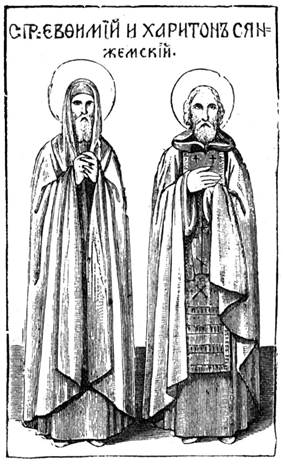
Преподобный Евфимий, уроженец Вологодский, совершал начальные иноческие подвиги в Спасском монастыре на Кубенском озере. Отселе перешёл на р. Кубенку, за 2 версты от Кубенского озера, и в малой кельи работал Господу постом и молитвой. Когда Евфимий уступил своё уединение преп. Александру, а сам перешёл на место его подвигов, на реку Сянжему, – сюда пришёл к нему делить подвиги пустыни Харитон. Преп. Евфимий основал на Сянжеме, в 20 верстах от Вологды, Сянжемскую Вознесенскую обитель. Преп. учитель и ученик его сами копали землю, садили овощи, рубили и носили дрова и, так изнуряя плоть свою, возвышались в духовной жизни. Наставник стоял в храме как перед лицом Божиим, и слёзы умиления текли из очей его; псалмы Давидовы пел он и за рукоделием. – Перед кончиной своей передал он управление обителью ученику своему Харитону. – Собеседник преп. Александра, скончавшегося в 1439 г., блаженно почил вероятно не далее 1465 г., тогда как ученик его Харитон почил 11 апреля 1509 г. Мощи их почивают под спудом в Вознесенском, ныне приходском, храме103.
The Venerable Euthymius, a native of Vologda, performed his initial monastic labors in the Savior Monastery on Lake Kubenskoye. From there he moved to the Kubenka River, two versts from Lake Kubenskoye, and in a small cell he labored for the Lord by fasting and prayer. When Euthymius yielded his solitude to the Venerable Alexander, and himself moved to the place of his labors, on the Sianzhema River, Chariton came to him there to share the labors of the wilderness. The Venerable Euthymius founded the Sianzhema Ascension Monastery on the Sianzhema, twenty versts from Vologda. The Venerable teacher and his disciple themselves dug the earth, planted vegetables, cut and carried wood, and thus mortifying their flesh, they were exalted in the spiritual life. The teacher stood in church as before the face of God, and tears of compunction flowed from his eyes; he sang the psalms of David even while at handiwork. – Before his end, he handed over the governance of the monastery to his disciple Chariton. – The companion of the Venerable Alexander, who reposed in 1439, he blessedly reposed probably no later than 1465, while his disciple Chariton reposed on April 11, 1509. Their relics rest under a bushel in the Ascension church, now a parish church103.
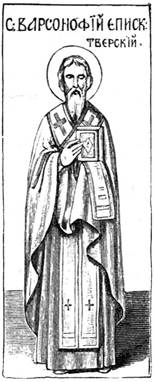
Блаженный Варсонофий родился в 1495 г., в гор. Серпухове104 от иерея Василия и в св. крещении наречён был Василием105. Отцу его не было довольно времени обучать сына грамоте, и он отдан был для обучения благоговейному учителю. Юный Василий одарён был отличными способностями ума, «бе глубок ум имея», потому скоро изучил псалтирь, которая, по словам св. Василия, содержит в себе всё полезное; Василий научился и церковному пению так хорошо, что мог и сам петь правильно и управлять другими. В 1512 г. сыновья хана Менгли-Гирея опустошили берега Оки и захватили многих в плен106; в том числе взят был в плен и Василий. Горько было положение пленника; но слёзы, какие проливал он в тяжком плену, были то же для сердца его, что поливка для дерева. Зная на память псалмы Давидовы, он взывал к Богу отцов своих: «Отец мой еси Ты, Бог мой и заступник спасения моего (Пс.88:27); избави мя от руки чуждих» (Пс.143:7). Молитва и Богомыслие не только облегчали скорбь его, но доставляли сердцу его такое утешение, какого не чувствовал он в доме родительском. – В нём росла любовь к Богу, а с нею и преданность воле Его. В таком расположении души молодой Василий работал неверным со всем усердием и обучался послушанию безответному, терпению и незлобию. Пост, сперва невольный, обратился в дело воли его. – Утомительные работы невольника занимали у него всё время дня, и он посвящал ночь молитве, ставшей потребностью души его. – Всегдашняя готовность к услугам, верность и жизнь чистая смягчали сердце варваров; на другом году плена облегчили ему тяжесть трудов и дали некоторую свободу. Василий изучил разговорный язык татарский; по своей даровитости он узнал его столько, что мог излагать мысли свои на письме татарском. Мало и того: имея теперь более свободы, он изучал основания магометанской веры, так что мог отчётливо говорить как о содержании этой веры, так и об ошибках и заблуждениях её. Основательным познанием языка и веры татар исполнилась премудрая цель, для которой Господь попустил рабу своему быть в плену. И – вот, спустя три года плена, отец нашёл средства выкупить дорогого сына из неволи татарской.
The blessed Barsanuphius was born in 1495, in the city of Serpukhov104, to the priest Basil, and in holy baptism was named Basil105. His father did not have sufficient time to teach his son to read and write, and he was given for instruction to a devout teacher. The young Basil was endowed with excellent mental abilities, “for he had a deep mind,” and therefore soon learned the Psalter, which, according to the words of St. Basil, contains everything profitable; Basil also learned church singing so well that he could both sing correctly himself and direct others. In 1512, the sons of Khan Mengli-Girey ravaged the banks of the Oka and took many captive106; among them Basil was also taken captive. Bitter was the captive’s lot; but the tears he shed in grievous captivity were for his heart like watering for a tree. Knowing the psalms of David by heart, he cried out to the God of his fathers: “Thou art my Father, my God, and the rock of my salvation (Ps. 88:27); deliver me from the hand of strangers” (Ps. 143:7). Prayer and the thought of God not only eased his sorrow, but brought to his heart such consolation as he had not felt in his parental home. – Love for God grew within him, and with it devotion to His will. In such a disposition of soul, the young Basil served the unbelievers with all diligence and learned unquestioning obedience, patience, and meekness. Fasting, at first involuntary, became a matter of his will. – The exhausting labors of a slave occupied all the time of his day, and he devoted the night to prayer, which had become a need of his soul. – His constant readiness to serve, his faithfulness, and his pure life softened the hearts of the barbarians; in the second year of his captivity they lightened the burden of his labors and gave him some freedom. Basil learned the spoken Tatar language; by his giftedness he learned it so well that he could set down his thoughts in Tatar writing. And not only that: having now more freedom, he studied the foundations of the Mohammedan faith, so that he could speak clearly both about the content of this faith and about its errors and delusions. Through a thorough knowledge of the Tatar language and faith, the wise purpose was fulfilled for which the Lord permitted His servant to be in captivity. And – behold, after three years of captivity, his father found the means to ransom his precious son from Tatar bondage.
Василий возвратился на родину; но сердце его уже не могло увлечься земными радостями. Раб Божий покорил себя сам игу Христову в Андрониевой обители и принял монашество с именем Варсонофия. Потом жил он при Тверском епископе Акакии в сане иеродиакона. Там и здесь совершаемы им были иноческие подвиги с полным усердием. Слух о его духовной жизни дошёл до митр. Макария, и в 1544 г. посвящён он в игумена Пешношской обители. – В этом звании был он лично известен царю Иоанну, который в 1547 г. пожаловал игум. Варсонофию грамоту на владение имениями, а в 1553 г. был сам в Пешноше107.
Basil returned to his homeland; but his heart could no longer be captivated by earthly joys. The servant of God subjected himself to the yoke of Christ in the Androniev Monastery and received monasticism with the name Barsanuphius. Afterwards he lived under the Tver bishop Acacius in the rank of hierodeacon. There and elsewhere he performed monastic labors with full zeal. The report of his spiritual life reached Metropolitan Macarius, and in 1544 he was consecrated abbot of the Peshnosha Monastery. – In this rank he was personally known to Tsar John, who in 1547 granted Abbot Barsanuphius a charter for the possession of estates, and in 1553 himself visited Peshnosha107.
Когда в Казани открывали (в 1555 г.) новую епархию, блаж. Варсонофий, как опытный наставник в иноческой жизни и знакомый с татарством, отправлен был в Казань в сане архимандрита для основания там новой обители. Варсонофий взял с собою добрых иноков, постриженцев Пешноши. Храм в честь Преображения Господня и братские келии скоро были построены; новая обитель, по примеру Пешношской, устроена общежительная. Ещё цел устав, данный «в общий монастырь Спаса многогрешным чернцом архимандритом Варсонофием, что был игумен на Пешноше; а писан с Пешновского устава»108. В новом общежитии введён был блаж. Варсонофием дух искреннего благочестия; обитель его скоро процвела, так что при митр. Гермогене в ней было уже до 100 братий. Блаж. Гермоген пишет, что при открытии мощей св. Гурия и Варсонофия он «видел в святой обители той не токмо сих святых телеса, нетлением почтенные от Бога, но иноцы и мирстии нетленнии мнози обретошася, ихже имена в книгах животных написана суть». Блаж. Варсонофий служил образцом строгой жизни для иноков и мирян. Рукоделием его было шить Греческие клобуки, которые раздавал он братиям, прося молитв их за него. По воле святителя Гурия, к которому сохранял он полное послушание и сыновнюю любовь, ревностно занимался он обращением магометан к христианской вере. В этом подвиге помогали ему, после святой жизни, знание языка и веры татар и искусство врачевать болезни. – Знание татарского языка доставило ему удобства входить в близкое сношение с татарами, а основательное знание учения Магометова, при его глубоком уме, представляло обличения его магометанству неотразимыми. – Уменье лечить болезни привлекало к нему больных всякого рода, тогда как болезнь сама отворяет душу для всего лучшего и след. для принятия мыслей христианских; к тому же терпеливое и бескорыстное лечение больного со стороны Варсонофия внушало доверие к Варсонофию не только в больных, но и в здоровых.
When a new diocese was opened in Kazan (in 1555), the blessed Barsanuphius, as an experienced instructor in monastic life and familiar with the Tatars, was sent to Kazan in the rank of archimandrite to found a new monastery there. Barsanuphius took with him good monks, tonsured brethren of Peshnosha. A church in honor of the Transfiguration of the Lord and monastic cells were soon built; the new monastery, following the example of Peshnosha, was established as a cenobitic community. The rule given “to the common monastery of the Savior by the much-sinful monk Archimandrite Barsanuphius, who was abbot at Peshnosha; and it was written from the Peshnosha rule”108 is still preserved. In the new community, the blessed Barsanuphius introduced a spirit of sincere piety; his monastery soon flourished, so that under Metropolitan Hermogenes it had up to one hundred brethren. The blessed Hermogenes writes that at the uncovering of the relics of Sts. Gurias and Barsanuphius he “saw in that holy monastery not only the bodies of these saints, honored by God with incorruption, but also many monks and laymen were found incorrupt, whose names are written in the book of life.” The blessed Barsanuphius served as a model of strict life for monks and laymen. His handiwork was sewing Greek cowls, which he distributed to the brethren, asking for their prayers for him. By the will of Hierarch Gurias, to whom he preserved complete obedience and filial love, he zealously labored in the conversion of Mohammedans to the Christian faith. In this labor, besides his holy life, he was aided by his knowledge of the Tatar language and faith and his skill in healing diseases. – His knowledge of the Tatar language gave him the opportunity to enter into close relations with the Tatars, and his thorough knowledge of the teaching of Mohammed, together with his deep mind, made his refutations of Mohammedanism irresistible. – His skill in treating diseases attracted to him all kinds of sick people, while illness itself opens the soul to everything better and consequently to the reception of Christian thoughts; moreover, the patient and selfless treatment of the sick by Barsanuphius inspired trust in him not only in the sick, but also in the healthy.
Когда умер Тверской епископ Акакий († 14 янв. 1567 г.), по избранию собора блаж. Варсонофий посвящён был святителем Филиппом в Тверского епископа. – Так как Акакий от дряхлости и болезни более трёх лет мало занимался делами109, то преемнику его надлежало много трудиться, чтобы дела получили ход безостановочный и исправлены были неустройства. – По сохранившемуся антиминсу, в ноябре 1567 г. освящён был блаж. Варсонофием соборный храм в Тверском Оршине монастыре; время освящения вовсе не такое, чтобы 75-летний старец без труда и насилия себе мог совершить долгое служение. Благоговея к свят. Арсению Тверскому, Варсонофий отыскал в Микулине панагию его и возложил на него. В описи Микулина 1602 г. сказано: «панагия святого Спаса взята из Микулина владыкой Варсонофием в Желтиков»110. Блаженный Варсонофий и в сане святителя соблюдал строгий пост, а ночи проводил на молитве, не за одного себя, но и за паству. И в Твери лечил он телесные болезни, а ещё усерднее старался врачевать душевные болезни – страсти. – Произволы грозного царя были свирепы и дики: святитель Филипп, посвящавший Варсонофия, не только низведён был с кафедры, но и удушен был в том монастыре, который мог видеть Варсонофий из окон своего дома. Легко ли было блаженной душе смотреть, на это? В 1570 г. свирепствовали в России моровая язва и голод. Ослабленный старостью 80 лет, блаженный Варсонофий чувствовал, что не может он управлять паствой без некоторых опущений, особенно в такое страшное время. В начале 1571 г. отказался он от управления епархией и возвратился в Казанский Преображенский монастырь.
When the Tver bishop Acacius died († January 14, 1567), by the election of the council the blessed Barsanuphius was consecrated by Hierarch Philip as Bishop of Tver. – Since Acacius, from decrepitude and illness, had for more than three years little attended to affairs109, his successor had to labor much to give affairs an uninterrupted course and to correct disorders. – According to a preserved antimension, in November 1567 the cathedral church in the Tver Orshin Monastery was consecrated by the blessed Barsanuphius; the time of consecration was by no means such that a 75-year-old elder could without labor and strain perform a long service. Revering St. Arsenius of Tver, Barsanuphius found his panagia in Mikulin and placed it upon him. In the inventory of Mikulin of 1602 it is said: “the panagia of the holy Savior was taken from Mikulin by Vladyka Barsanuphius to Zheltikov”110. The blessed Barsanuphius, even in the rank of hierarch, observed a strict fast, and spent nights in prayer, not for himself alone, but also for his flock. And in Tver he healed bodily illnesses, and even more zealously he strove to heal spiritual illnesses – the passions. – The caprices of the terrible tsar were fierce and wild: Hierarch Philip, who had consecrated Barsanuphius, was not only deposed from his see, but was strangled in that monastery which Barsanuphius could see from the windows of his house. Was it easy for a blessed soul to look upon this? In 1570, pestilence and famine raged in Russia. Weakened by the old age of 80 years, the blessed Barsanuphius felt that he could not govern his flock without some omissions, especially in such a terrible time. At the beginning of 1571 he resigned from the governance of the diocese and returned to the Kazan Transfiguration Monastery.
В обители продолжал он подвижническую жизнь. Когда от дряхлости не мог он ходить в церковь, – по его просьбе ученики возили его на тележке к Богослужению; так любил он молитву и славословия храма! Блаженная кончина его последовала 11 апреля 1576 г. на 86 году жизни его.
In the monastery he continued his ascetic life. When from decrepitude he could not walk to church, at his request his disciples carried him on a cart to the divine services; so greatly did he love prayer and the praises of the church! His blessed end occurred on April 11, 1576, in the 86th year of his life.
Святые мощи святителя Варсонофия обретены нетленными вместе с мощами свят. Гурия, в 1596 г. Поразителен рассказ Гермогена о том, как исцелён был дьяк Иван Панкратьев. Он был так болен, что близок был к смерти и призвал помощь св. Гурия и Варсонофия. В тонком сне представилось ему, что входит он в Казанский собор. Встретившийся ему святитель Гурий хотел взять его за руку, но в трепетном благоговении пал он в ноги ему. Святитель, приподняв его, сказал: «раб Божий Иоанн! не скорби, будешь здоров; иди, прими благословение у друга моего Варсонофия». Гурий привёл больного к Варсонофию. «Брат Варсонофий! благослови Иоанна и избавь его от болезни», сказал св. Гурий. – Варсонофий, благословляя, сказал: «не скорби, сын Иоанн, по вере твоей в Бога будешь здоров». Пробудившийся больной нашёл себя здоровым. И это не единственный опыт загробной братской любви святителей. – «Иди, приложись к брату моему Варсонофию», говорил в видении св. Гурий больному Сумарокову. – Тот благоговейно приложился. – Св. Гурий сказал затем: «Господь и Бог наш Иисус Христос, молитвами Пречистой Своей Матери, умилосердился над тобой и посылает исцеление». Больной стал здоровым. Солдатка Варвара сильно страдала головной болью. Явившийся св. Гурий готовил её к смерти, но св. Варсонофий упросил отсрочить время смерти. Проснувшаяся Варвара нашла себя здоровой и обещалась идти благодарить святителей у их мощей. Отправлявшиеся на службу муж и сыновья просили её отслужить за них молебен святителям; но Варвара не исполнила ни своего обещания, ни просьбы близких к душе её. И она стала опять больной, до того, что отчаивались в её жизни. Явившийся св. Гурий строго сказал ей: «почему так скоро забыла ты о своём выздоровлении и не исполнила просьбы мужа и детей?» Св. Варсонофий опять упросил простить её. – Проснувшаяся больная чувствовала облегчение болезни и, поспешив отслужить молебен, совсем выздоровела111. – «Любовь не умирает», сказал Апостол. По загробным делам св. Гурия и Варсонофия видим то же самое. Здесь в опытах видим, что не умирают там никакие святые чувства, никакие святые расположения.
The holy relics of Hierarch Barsanuphius were uncovered incorrupt together with the relics of St. Gurias, in 1596. The account of Hermogenes concerning how the deacon John Pankratiev was healed is striking. He was so ill that he was near death and called upon the help of Sts. Gurias and Barsanuphius. In a light sleep it appeared to him that he was entering the Kazan cathedral. The Hierarch Gurias, who met him, wished to take him by the hand, but he fell in trembling reverence at his feet. The Hierarch, raising him up, said: “Servant of God John! Grieve not; you shall be well; go, receive a blessing from my friend Barsanuphius.” Gurias led the sick man to Barsanuphius. “Brother Barsanuphius! bless John and deliver him from his illness,” said St. Gurias. – Barsanuphius, blessing him, said: “Grieve not, son John; according to your faith in God you shall be well.” The awakened sick man found himself healthy. And this is not the only experience of the posthumous brotherly love of the hierarchs. – “Go, venerate my brother Barsanuphius,” said St. Gurias in a vision to the sick man Sumarokov. – He reverently venerated. – St. Gurias then said: “The Lord and our God Jesus Christ, through the prayers of His Most Pure Mother, has had mercy upon you and sends healing.” The sick man became healthy. A soldier’s wife, Barbara, suffered severely from headache. St. Gurias, who appeared, was preparing her for death, but St. Barsanuphius begged to postpone the time of death. The awakened Barbara found herself healthy and promised to go and thank the hierarchs at their relics. Her husband and sons, setting out for service, asked her to have a moleben served to the hierarchs for them; but Barbara fulfilled neither her own promise nor the request of those near to her soul. And she fell ill again, so severely that they despaired of her life. St. Gurias, appearing, said sternly to her: “Why have you so soon forgotten your recovery and not fulfilled the request of your husband and children?” St. Barsanuphius again begged that she be forgiven. – The awakened sick woman felt relief from her illness and, hastening to have a moleben served, was completely healed111. – “Love never dies,” said the Apostle. From the posthumous deeds of Sts. Gurias and Barsanuphius we see the same thing. Here in these experiences we see that no holy feelings, no holy dispositions die there.
Уже по уставу конца XVI в. видим: октября 3 «память Гурия и Варсонофья, Казанских чудотворцев»; декабря 3 «преставленье св. Гурия, архиеп. Казан.»; апреля 11 «преставленье Варсонофья, Казанского чудотворца»112.
Already by the Typicon of the end of the 16th century we see: October 3, “the memory of Gurias and Barsanuphius, Wonderworkers of Kazan”; December 3, “the repose of St. Gurias, Archbishop of Kazan”; April 11, “the repose of Barsanuphius, Wonderworker of Kazan”112.
И как было не праздновать Русской Церкви память святителей страны магометанской? Чудеса их, живых и по смерти, – слава для христианства и обличение магометанству. Это истина очевидная, истина неотразимая никакой магометанской силой ума и меча. Чудеса – дело одного Всемогущего. – Всемощный никогда не действует вопреки Своей премудрости и святости. Потому, если Он являет силу Свою через лучших исповедников христианства, – это означает, что Он признаёт христианскую веру верой лучшей и хочет, чтобы признавали её такой же люди; это означает, что Он хочет утвердить и распространить во вселенной христианскую веру, как веру высокую по своему содержанию, как веру способную преобразовать и усовершить человечество. Так говорит Он людям делами Своими – чудесами. Никакой магометанин не в праве отвергать действительность такого чуда, каково нетление мощей св. Гурия и Варсонофия. Пусть приходит и смотрит. Чудо перед его глазами. Гурий и Варсонофий жили с его предками, но жили как самые ревностные проповедники христианства и обличители магометанства. Если же они прославлены нетлением; если они силой Божией совершают чудеса и по смерти, то в них прославляется их вера живая; их слава – слава христианства. Найдёт ли что-нибудь подобное магометанин в своём магометанстве? Нет. Никогда и ничем Бог не явил Своего благоволения к магометанской вере, никаким чудом и никаким знамением. История Магометовой веры – тоже, что история каждой языческой веры, тоже, что история каждой веры, придуманной людьми. – Слава Отцу и Сыну и Св. Духу, ныне и во веки веков, аминь.
And how could the Russian Church not celebrate the memory of the hierarchs of a Mohammedan land? Their miracles, living and after death, are glory for Christianity and a reproach to Mohammedanism. This is an obvious truth, a truth irresistible by any Mohammedan power of mind or sword. Miracles are the work of the Almighty alone. – The Almighty never acts contrary to His wisdom and holiness. Therefore, if He manifests His power through the best confessors of Christianity, this signifies that He acknowledges the Christian faith as the best faith and desires that men also acknowledge it as such; this signifies that He desires to establish and spread throughout the universe the Christian faith, as a faith lofty in its content, as a faith capable of transforming and perfecting humanity. Thus He speaks to men through His works – miracles. No Mohammedan has the right to deny the reality of such a miracle as the incorruption of the relics of Sts. Gurias and Barsanuphius. Let him come and see. The miracle is before his eyes. Gurias and Barsanuphius lived among his ancestors, but lived as the most zealous preachers of Christianity and denouncers of Mohammedanism. If, then, they are glorified by incorruption; if by the power of God they work miracles even after death, then their living faith is glorified in them; their glory is the glory of Christianity. Will a Mohammedan find anything similar in his Mohammedanism? No. Never and in nothing has God manifested His good pleasure toward the Mohammedan faith, by no miracle and by no sign. The history of the Mohammedan faith is the same as the history of every pagan faith, the same as the history of every faith invented by men. – Glory to the Father and to the Son and to the Holy Spirit, now and unto the ages of ages, amen.
По свидетельству Кедрина (XI в.), при Феодосии Великом привезён был в Константинополь тот бык, в котором сожжён был св. Антипа.
According to the testimony of Cedrenus (11th century), the bull in which St. Antipas was burned was brought to Constantinople under Theodosius the Great.
Собр. л. VI, 140. Ннк. л. V, 56. Степ. кн. II, 3. 4. Ркп. житие преп. Иакова. Сведение о монаст., стр. 159. М. 1852 г.
Collection of Chronicles VI, 140. Nikon Annals V, 56. Book of Degrees II, 3. 4. Manuscript Life of Venerable James. Information on Monasteries, p. 159. M. 1852.
Так сказано в житии. Но монастырь преподобного называли монастырём Иакова Широконосого (пр. 88): не берёмся соглашать одного с другим.
Thus it is said in the Life. But the monastery of the venerable one was called the monastery of James Shirokonosy (note 88): we do not undertake to reconcile the one with the other.
В словаре святых, стр. 126. СПб. 1834 г.: „св. Иаков преставился в 1392 г.“. Но это – явная несообразность со временем рождения князя Василия Васильевича.
In the Dictionary of Saints, p. 126. St. Petersburg, 1834: “St. James reposed in 1392.” But this is a clear inconsistency with the time of the birth of Prince Basil Vasilievich.
В Железноборском синодике записаны игумены Железноборские Досифей, Савва убиенный, Вениамин убиенный, Иосиф, Левкий, Иларион, Феодосий, Евстратий (Ж. М. Просв. 1853 г. июль).
In the Zheleznoborsk Synodicon are recorded the Zheleznoborsk abbots Dositheus, Sabbas murdered, Benjamin murdered, Joseph, Levkius, Hilarion, Theodosius, Eustratius (J. M. of Public Ed. 1853, July).
В конце ркп. минеи за март приписка: „в л. 7044 (1536) списана – при архиеп. Данииле митроп., а написана – великому и чудному Иоанну Предтечи, в Яковль монастырь Широконосов преподобного отца нашего игумена Иакова, иже основавый обитель сию, – повелением господаря нашего игумена Нифонта, настоятеля и учителя“. На другой минее: „л. 7049 (1541) написана на железном борку у преподобного отца Иакова, стяжанием игумена Нифонта“. На Евангелии надпись: „7078 (1570) дал игумен Тихон великому Ивану Предтечи –и преподобному Иакову чудотворцу“. – Ж. М. Просв. 1853 г., ч. 78. отд. II, 86–90. В сборнике Нижегород. Благовещ. монастыря XVI в. под 5 мая „преставление преп. отца нашего игумена Иакова, Костромского чудотворца, иже на железном борку“, здесь и служба и чудеса его. Мая 5 – день открытия мощей.
At the end of a manuscript menaion for March there is a note: “in the year 7044 (1536) it was copied – under Archbishop Daniel the Metropolitan, and was written – for the great and wondrous John the Forerunner, in the Yakovlev monastery of Shirokonosy of our venerable father Abbot James, who founded this monastery, – by the command of our lord Abbot Niphon, superior and teacher.” On another menaion: “in the year 7049 (1541) it was written at Zhelezny Borok by the venerable father James, by the acquisition of Abbot Niphon.” On a Gospel an inscription: “7078 (1570) gave Abbot Tikhon to the great John the Forerunner – and to the venerable James the Wonderworker.” – J. M. of Public Ed. 1853, part 78, div. II, 86–90. In a 16th-century collection of the Annunciation Monastery of Nizhny Novgorod, under May 5, “the repose of our venerable father Abbot James, Wonderworker of Kostroma, who is at Zhelezny Borok”; here are also his service and miracles. May 5 is the day of the uncovering of his relics.
Ркп. житие преп. Александра Кушт.; Ист. Иер. IV, 96. Сведен. о мон. 70, ркп. святцы: „преп. отцы Харитоний и Евфимий игумены Сянжемского монаст., преставишася в л. 7017“, по Отенскому и другому современному, „Харитон преставися в л. 7017 апреля в 11 день“. Словарь святых 108. 271. В 1662 г. у Евфимиева монастыря 113 дворов поселенцев.
Manuscript Life of Venerable Alexander of Kusht; Hist. of Hier. IV, 96. Information on Mon. 70, manuscript menology: “the venerable fathers Chariton and Euthymius, abbots of the Syanzhemsky Monastery, reposed in the year 7017”; according to the Otensky and another contemporary source, “Chariton reposed in the year 7017, on April 11.” Dictionary of Saints 108. 271. In 1662, the Monastery of Euthymius had 113 households of settlers.
Послесловие устава. – Здесь же сказано: „а братии с ним (Варсонофием) пришло из Пешноши келарь Тихон крылошанин, Феодорит казначей крылошанин, Иев Далматов крылошанин, а постриженцы Пешношские, – да Симеон Неронов, Андрониковский постриженец крылошанин, да Андроник подкеларник, да Сильвестр служебник Яхонтова, а постриженец Пешношский“.
Afterword of the Typicon. – Here it is also said: “and with him (Barsanuphius) came from Peshnosha the brethren: cellarer Tikhon the choir-singer, Theodoret the treasurer choir-singer, Job Dalmatov choir-singer, and they were tonsured at Peshnosha, – and Simeon Neronov, a tonsured choir-singer of the Andronikov Monastery, and Andronik the under-cellarer, and Sylvester the server of Yakhontov, and he was a tonsured monk of Peshnosha.”