Св. Георгий был из числа тех епископов, которые в 815 году не согласились на определение беззаконного собора уничтожать иконы; император Лев Армянин сослал его в Херсонес Таврический, где он и скончался.
St. George was among those bishops who in the year 815 did not consent to the decree of the lawless council to destroy icons; the Emperor Leo the Armenian exiled him to Chersonesus in Taurica, where he reposed.
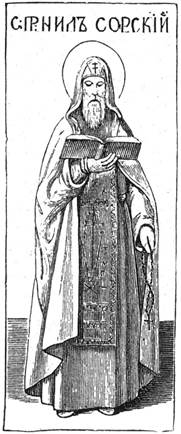
Он был из дворянской фамилии Майковых. Начало иноческой жизни полагал он в обители преп. Кирилла Белозерского. Здесь он пользовался советами умного и строгого старца Паисия Ярославова, который потом был игуменом Сергиевой лавры и не захотел быть митрополитом. Затем путешествовал на восток, чтобы видеть в опытах жизнь духовную, был, по его словам, «на горе Афонской, в странах Цареградских и других местах»67. – По возвращении с востока короткое время жил он за оградой Кириллова монастыря, в уединённой келье; потом в 15 верстах от монастыря, на р. Сорке, поставил себе крест с часовней и келью, и – тем, которые хотели делить с ним подвиги, предлагал жизнь не общежительную, а скитскую.
He was of the noble family of the Maikovs. He began his monastic life in the monastery of the Venerable Cyril of White Lake. There he profited from the counsels of the wise and strict elder Paisius Yaroslavov, who later became abbot of the Trinity–St. Sergius Lavra and refused to become metropolitan. Afterwards he traveled to the East, in order to see spiritual life in practice; he was, in his own words, "on Mount Athos, in the regions of Constantinople and in other places"67. — Upon his return from the East he lived for a short time outside the enclosure of the Cyril Monastery, in a solitary cell; then, fifteen versts from the monastery, on the River Sorka, he set up a cross with a chapel and a cell, and to those who wished to share his labors he offered not a cenobitic life, but a skete life.
Историю внутренней своей жизни отчасти открыл сам преподобный в послании к кн. иноку Вассиану, по настоятельной его просьбе. «Пишу к тебе, говорит он, показывая себя: – любовь твоя по Боге вынуждает к тому и делает меня безумным, чтобы писать тебе о себе. – Не просто и не по случаям надобно нам поступать, а по святому Писанию и по преданию св. отцов. – Удаление моё из монастыря (Кириллова) не было ли ради душевной пользы? Ей, ради её. – Я видел, что там живут не по закону Божию и преданию отеческому, а по своей воле и человеческому рассуждению. Много ещё и таких, которые, поступая так, неправильно мечтают, будто проходят житие добродетельное... Когда мы жили вместе с тобой в монастыре (Кирилловом), ты знаешь, как удалялся я мирских связей и старался жить по священному Писанию, хотя по лености моей и не успевал. По окончании странствования моего пришёл я в монастырь (Кириллов) и вне монастыря, вблизи его, устроив себе келью, жил, сколько мог. – Теперь переселился я вдаль от монастыря, нашёл благодатью Божией место по мыслям моим, мало доступное для мирских людей, как сам ты видел. Живя наедине, занимаюсь испытанием духовных писаний; прежде всего испытываю заповеди Господни и их толкование, и предания Апостолов, потом жития и наставления св. отцов. – О всём том размышляю и что, по рассуждению моему, нахожу Богоугодного и полезного для души моей, переписываю для себя. В этом жизнь моя и дыхание. О немощи моей и лени возложил упование на Бога и Пречистую Богородицу. – Если что случается к мне предпринимать, и если не нахожу того в писании, на время отлагаю в сторону, пока не найду. – По своей воле и по своему рассуждению не смею предпринимать что-нибудь. – Живёшь ли отшельнически или в общежитии, внимай святому Писанию и следуй по стопам отцов или повинуйся тому, кто известен как муж духовный в слове, жизни и рассуждении... Святое Писание жёстко лишь для того, кто не хочет смириться страхом Божиим и отступить от земных помышлений, а желает жить по своей страстной воле. Иные не хотят смиренно испытывать св. Писание, не хотят даже слышать о том, как следует жить, как будто Писание не для нас писано, не должно быть выполняемо в наше время. Но истинным подвижникам и в древние времена и в нынешние и во все века слова Господни всегда будут словами чистыми, как очищенное серебро; заповеди Господни для них дороги более, чем золото и каменья дорогие, сладки более, чем мёд и сот»68.
The history of his inner life the Venerable One partly revealed in an epistle to the prince-monk Bassian, at his urgent request. "I write to you," he says, "showing myself: your love in God compels me to it and makes me foolish, that I should write to you about myself. — Not simply nor by chance ought we to act, but according to Holy Scripture and the tradition of the holy fathers. — Was my withdrawal from the monastery (of Cyril) not for the sake of spiritual profit? Yea, for its sake. — I saw that there they live not according to the law of God and the tradition of the fathers, but according to their own will and human reasoning. There are many even who, acting thus, wrongly imagine that they are leading a virtuous life... When we lived together with you in the monastery (of Cyril), you know how I shunned worldly ties and strove to live according to the sacred Scripture, although through my laziness I did not succeed. After the completion of my wandering I came to the monastery (of Cyril) and outside the monastery, near it, having built myself a cell, I lived as best I could. — Now I have moved far from the monastery; by the grace of God I have found a place according to my thoughts, little accessible to worldly people, as you yourself have seen. Living in solitude, I occupy myself with the examination of spiritual writings; first of all I examine the commandments of the Lord and their interpretation, and the traditions of the Apostles, then the lives and teachings of the holy fathers. — On all this I meditate, and what, according to my reasoning, I find pleasing to God and profitable for my soul, I copy out for myself. In this is my life and my breath. Concerning my weakness and laziness I have placed my hope on God and the Most Pure Theotokos. — If anything occurs to me to undertake, and I do not find it in the writings, I put it aside for a time, until I find it. — By my own will and my own reasoning I dare not undertake anything. — Whether you live as a hermit or in a cenobium, attend to Holy Scripture and follow in the footsteps of the fathers, or obey one who is known as a spiritual man in word, life and reasoning... Holy Scripture is hard only for him who does not wish to humble himself with the fear of God and to withdraw from earthly thoughts, but desires to live according to his own passionate will. Others do not wish humbly to examine Holy Scripture; they do not even wish to hear about how one ought to live, as if Scripture were not written for us, and ought not to be fulfilled in our time. But for true ascetics, both in ancient times and in the present and in all ages, the words of the Lord will always be words pure, like refined silver; the commandments of the Lord are more precious to them than gold and precious stones, sweeter than honey and the honeycomb"68.
По этому письму видно, между прочим, и то, что путь жизни, избранный Нилом, изумлял собой современников. Да и подлинно было чему изумляться, особенно для слабых.
From this letter it is evident, among other things, that the path of life chosen by Nilus amazed his contemporaries. And indeed there was cause for amazement, especially for the weak.
Дико, мрачно, пустынно место, которое избрал для скита своего преп. Нил. Это – не местность Афонская, где столько красот природы, где воздух живительный, плоды роскошные. Речка Сорка, передавшая своё имя Русскому угоднику Божию, похожа более на болото, чем на текущую реку, чуть тянется вниз; – вся местность скита низменная и болотистая. И здесь-то подвизался Русский отшельник. – Ещё целы прудок, выкопанный преп. Нилом, и его трудов – колодезь с превкусной водой, которую употребляют для исцеления69. – Ещё цела одежда Нила; волосья её колются как иглы. – Всё скитское общество преподобного состояло из иеромонаха, диакона и 12 старцев70. – В число их явились из Иосифова монастыря Дионисий из князей Звенигородских и Нил Полев – потомок князей Смоленских. Первый из них, когда жил в Иосифове, «в хлебопекарне работал за двух и к тому же пел 77 псалмов и творил по 3000 поясных поклонов каждый день. Но, полюбив уединение, просился и получил благословение идти к о. Нилу, который тогда сиял как светило в пустыни на Белоозере». Так говорит современник!71. Для нужд братий пр. Нил устроил на речке небольшую мельницу. Когда решились построить храм, надобно было предпринять много работ. На почве болотистой надлежало сделать высокие насыпи для храма, тем более, что здесь же надлежало быть и братской усыпальнице. Руками святого старца и его скитников насыпан был высокий холм для храма и усыпальницы. – Каждая келья поставлена на возвышении и каждая от другой и от храма на расстоянии брошенного камня. Скитники собирались в храм свой, по примеру восточных, только по субботам, воскресеньям и праздникам; в прочие дни каждый молился и трудился в своей келье. Всенощная скитская продолжалась во всю ночь, в полном смысле слова: за каждой кафизмой предлагалось по три и четыре чтения из отцов. Во время литургии пели только трисвятую песнь, аллилуия, херувимскую и достойно; всё прочее читалось протяжно, нараспев. В субботу приходили в братскую усыпальницу, где совершалась панихида за упокой усопших. – Таков церковный устав Нила72.
Wild, gloomy, and desolate is the place which the Venerable Nilus chose for his skete. It is not like the region of Athos, where there is so much natural beauty, where the air is life-giving and the fruits are luxurious. The River Sorka, which gave its name to this Russian saint of God, resembles a swamp more than a flowing river; it barely trickles downward; the whole area of the skete is low and marshy. And it was here that the Russian hermit struggled. — The little pond dug by the Venerable Nilus is still intact, and the well of his labor, with most delicious water, which is used for healing69. — The clothing of Nilus is still intact; its hairs prick like needles. — The entire skete community of the Venerable One consisted of a hieromonk, a deacon, and twelve elders70. — Among them came from the Joseph Monastery Dionysius, of the princes of Zvenigorod, and Nilus Polev, a descendant of the princes of Smolensk. The first of these, when he lived at the Joseph Monastery, "worked in the bakery for two men and besides that sang seventy-seven psalms and made three thousand prostrations from the waist every day. But, having come to love solitude, he asked for and received a blessing to go to Father Nilus, who then shone like a luminary in the wilderness on White Lake." So says a contemporary!71 For the needs of the brethren the Venerable Nilus built a small mill on the river. When they decided to build a church, many labors had to be undertaken. On the marshy ground it was necessary to make high embankments for the church, all the more so since the brethren's burial vault was also to be there. By the hands of the holy elder and his skete-dwellers a high hill was heaped up for the church and the burial vault. — Each cell was placed on an elevation, and each was at a stone's throw from the others and from the church. The skete-dwellers gathered in their church, following the example of the Eastern fathers, only on Saturdays, Sundays, and feast days; on the other days each prayed and labored in his own cell. The All-night Vigil of the skete lasted the whole night, in the full sense of the word: after each kathisma three or four readings from the fathers were offered. During the Divine Liturgy they sang only the Thrice-Holy Hymn, the Alleluia, the Cherubic Hymn, and "It is truly meet"; everything else was read slowly, in a chant-like manner. On Saturday they came to the brethren's burial vault, where a panikhida was served for the repose of the departed. — Such was the church rule of Nilus72.
Пр. Нил был один из тех, которые душой скорбели о порче книг церковных, и старался исправлять их. Это, как и против него скитская жизнь, дотоле невиданная, возбуждало неудовольствия. – Он терпеливо шёл путём своим73.
The Venerable Nilus was one of those who grieved in soul over the corruption of church books, and strove to correct them. This, as well as his skete life, hitherto unseen, aroused displeasure. — He patiently walked his path73.
В 1491 г. видим преп. Нила на соборе о жидовствующих еретиках74. По делу о них же ревнитель православия блаж. Геннадий в 1492 г. желал лично видеть преп. Нила, чтобы слышать суждения его о предметах недоумений75.
In the year 1491 we see the Venerable Nilus at the council concerning the Judaizer heretics74. Concerning the same matter, the zealot of Orthodoxy, the blessed Gennadius, in 1492 wished to see the Venerable Nilus in person, in order to hear his judgments on subjects of perplexity75.
Неизвестный современник писал: «Нил Майков, ученик Паисия, был в св. горе. В. князь содержал их (Паисия и Нила) в великой чести. Когда окончился собор о вдовых попах и диаконах (1503 года), старец Нил предложил, чтобы не было сёл у монастырей, а жили бы трудами рук своих. – К нему присоединились и Белозерские пустынники». Другой современник так говорит о том же: «некоторые отцы, проводящие и любящие безмолвие и уединённую жизнь (между ними первый св. Нил), твёрдо помня отеческие наставления о нестяжательности, необходимой для черноризцев, скорбели о том, что монастыри владеют сёлами, и полагали, что напрасно произносится отречение от мира монахами, – ибо они точно так же, как миряне, волнуются и ссорятся с мирянами и между собой, ходят по судам и ведут тяжбы. – Потому они предлагали о том самодержцу, как имеющие доступ к нему по своей крепкой жизни и по великой добродетели и как уважаемые самодержцем». – По известию того и другого современника, на соборе Иосиф Волоколамский и другие подали другой голос о монастырских имуществах, и их голос был уважен76.
An unknown contemporary wrote: "Nilus Maikov, a disciple of Paisius, was on the Holy Mountain. The Grand Prince held them (Paisius and Nilus) in great honor. When the council concerning widowed priests and deacons (1503) was concluded, the elder Nilus proposed that monasteries should not have villages, but should live by the labor of their own hands. — The hermits of White Lake joined him." Another contemporary says the same: "Some fathers, leading and loving silence and the solitary life (among them first of all St. Nilus), firmly remembering the patristic teachings on non-acquisitiveness, necessary for monks, grieved that monasteries possessed villages, and thought that the renunciation of the world by monks was made in vain — for they are just as agitated as laymen, and quarrel with laymen and among themselves, go to courts and conduct lawsuits. — Therefore they proposed this to the Autocrat, as having access to him by reason of their strict life and great virtue, and as being respected by the Autocrat." — According to the account of both contemporaries, at the council Joseph of Volokolamsk and others gave a different opinion concerning monastic properties, and their opinion was respected76.
В предсмертном завещании преподобный, заповедуя ученикам бросить тело его в пустыни, в пищу зверям, или закопать в яму с презрением, писал: «оно тяжко согрешило перед Богом и недостойно погребения», и затем прибавлял: «сколько в моей силе было, старался я не пользоваться никакою честью на земле, в этой жизни; так пусть будет и по смерти». Преподобный скончался 7 мая 1508 г.77.
In his dying testament, the Venerable One, commanding his disciples to cast his body into the wilderness as food for beasts, or to bury it in a pit with contempt, wrote: "it has grievously sinned before God and is unworthy of burial," and then added: "as much as was in my power, I strove to receive no honor on earth in this life; so let it be also after death." The Venerable One reposed on May 7, 150877.
Мощи преподобного почивают под спудом. – Грозный царь в 1569 г. хотел на место деревянного построить каменный храм. Но преподобный, явясь Иоанну, строго запретил ему строить такой храм; так он и за гробом остаётся ревнителем скитской простоты78.
The relics of the Venerable One rest hidden. — The Terrible Tsar in 1569 wished to build a stone church in place of the wooden one. But the Venerable One, appearing to John, strictly forbade him to build such a church; thus even beyond the grave he remains a zealot of skete simplicity78.
Как жизнь пр. Нила была жизнь особенная, так и в писаниях своих он такой наставник, какого дотоле не было в Русской Церкви. Он учитель жизни созерцательной.
As the life of the Venerable Nilus was a singular life, so in his writings he is such a teacher as had not before existed in the Russian Church. He is a teacher of the contemplative life.
«Устав скитского жития пр. Нила»79, после предисловия о мысленном делании, предлагает наставления: 1) о различии мысленной брани; 2) о борьбе с помыслами; 3) как укрепляться в подвиге против помыслов; 4) о содержании духовной брани; 5) об 8 помыслах; 6) о борьбе с каждым из них; 7) как важно памятование о смерти! 8) о слезах; 9) о хранении сокрушения; 10) о смерти для мира; 11) о том, что всё должно делать в своё время. В заключении св. Нил говорит, с какими расположениями предложил он свой устав.
"The Rule of Skete Life of the Venerable Nilus"79, after a preface on the noetic work, offers instructions: 1) on the distinction of the noetic warfare; 2) on the struggle with thoughts; 3) how to be strengthened in the struggle against thoughts; 4) on the content of the spiritual warfare; 5) on the eight thoughts; 6) on the struggle with each of them; 7) how important is the remembrance of death! 8) on tears; 9) on the preservation of compunction; 10) on death to the world; 11) on the fact that everything must be done in its own time. In conclusion, St. Nilus speaks of the dispositions with which he offered his rule.
«Умная молитва, говорит он, выше телесной: телесное делание – лист, а внутреннее, умное – плод. Кто молится только устами, об уме же не брежет, тот молится воздуху. Ибо Бог внимает уму. Упражнение во внутренней молитве доводит человека до высшего духовного состояния, в котором дух даже не имеет молитвы, ни движения, ни самовластия, а наставляется силой иной». – На этом пути, кроме молитвы, необходима борьба с помыслами. «Если не можешь молиться в безмолвии, без помыслов, и даже видишь их умножающимися в уме твоём, – не малодушествуй, пребывай постоянно в молитве». Наставления пр. Нила о помыслах заключают в себе глубокие психологические наблюдения над действиями души. Он разлагает дело души на части самые тонкие, едва заметные; показывает, как помысл из безгрешного постепенно переходит в действие более и более преступное, и опасное. Относительно внешней деятельности пр. Нил предписывает скитскую полную нестяжательность и простоту во всём. Необходимое для жизни велит приобретать только трудами рук своих, повторяя слова Апостола: аще кто не хощет делати, ниже да яст. «Иноческая милостыня – помочь брату словом во время нужды, утешить в скорби духовным рассуждением: душевная милостыня настолько выше телесной, насколько душа выше тела. Если придёт к нам странник, успокоим его по силе и, если требует хлеба, подадим ему и отпустим его». – Преп. Нил часто говорит словами отцов и чаще других приводит слова Григория Синаита и Симеона нового Богослова. О первом говорит он: «сей блаженный, обнимая содержание писаний всех духовных отцов, по их чину, повелевает иметь прилежную заботливость о молитве».
“Noetic prayer,” he says, “is higher than bodily prayer: bodily labor is the leaf, while inner, noetic labor is the fruit. He who prays only with his lips, but takes no heed of his mind, prays to the air. For God hearkens to the mind. The exercise of inner prayer brings a man to the highest spiritual state, in which the spirit no longer has prayer, nor movement, nor self-will, but is guided by another power.” – On this path, besides prayer, struggle with thoughts is necessary. “If you cannot pray in stillness, without thoughts, and even see them multiplying in your mind, do not be faint-hearted; abide constantly in prayer.” The instructions of the Venerable Nilus concerning thoughts contain profound psychological observations on the workings of the soul. He analyzes the soul’s activity into its most subtle, barely perceptible parts; he shows how a thought from a sinless state gradually passes into an ever more sinful and dangerous action. With regard to outward activity, the Venerable Nilus prescribes for the skete complete non-acquisitiveness and simplicity in all things. He commands that the necessities of life be obtained only by the labor of one’s own hands, repeating the words of the Apostle: “If any man will not work, neither let him eat.” “The almsgiving of a monk is to help a brother with a word in time of need, to console him in sorrow with spiritual reasoning: spiritual almsgiving is as much higher than bodily almsgiving as the soul is higher than the body. If a stranger comes to us, we shall give him rest according to our ability, and if he asks for bread, we shall give it to him and let him go.” – The Venerable Nilus often speaks in the words of the Fathers, and most frequently cites the words of Gregory of Sinai and Symeon the New Theologian. Of the former he says: “This blessed one, embracing the content of the writings of all the spiritual fathers, according to their order, commands that diligent care be given to prayer.”
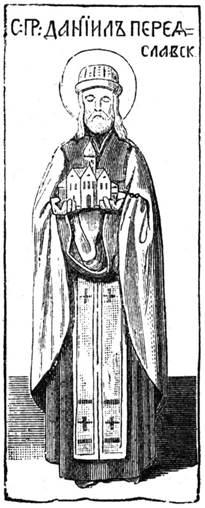
Родители преп. Даниила, в мире Димитрия, были из г. Мценска, но переселились в Переяславль Северный80. Здесь родился Димитрий в 1459 году.81. Ещё в юных летах он обнаруживал порывы души к строгим подвигам. Услышав при чтении жития препод. Симеона Столпника, что тот тайно обвил себя верёвкой для усмирения плоти, отрок отрезал себе конец верёвки, которой рыбаки привязывали к берегу ладью, – обвил ею стан свой и так крепко, что верёвка по времени стала въедаться в тело; родители увидели у спящего мучительный пояс и поспешили снять его. Воспитанный потом для жизни иноческой в Никитском монастыре у родственника игумена Ионы, он с братом своим Герасимом тайно ушёл в Пафнутиев монастырь. Здесь, приняв пострижение с именем Даниила, поручен он был опытному старцу Левкию. В послушаниях, посте и молитве провёл он здесь 10 лет и потом два года жил с блаж. Левкием в пустыни на р. Рузе82.
The parents of the Venerable Daniel, in the world Demetrius, were from the city of Mtsensk, but moved to Pereslavl Severny80. Here Demetrius was born in the year 145981. Even in his youthful years he displayed impulses of soul toward strict ascetic labors. Hearing during the reading of the Life of the Venerable Symeon the Stylite that he had secretly bound himself with a rope to subdue the flesh, the youth cut off the end of a rope with which fishermen tied a boat to the shore, wound it around his waist so tightly that in time the rope began to cut into his body; his parents saw the painful belt on him while he slept and hastened to remove it. Later, having been raised for the monastic life in the Nikitsky Monastery by his relative, Abbot Jonah, he secretly fled with his brother Gerasimus to the Paphnutius Monastery. There, having received the tonsure with the name Daniel, he was placed under the guidance of the experienced elder Leucius. In obediences, fasting, and prayer he spent ten years there, and then lived for two years with the blessed Leucius in the hermitage on the Ruza River82.
По смерти родителей, блаж. Даниил возвратился в Переяславль; пробыв несколько времени в Никитской обители, поселился в Успенской обители, что на Горнцах; архимандрит Антоний, родственник его, зная чистоту его, убедил его принять сан священства. – К нему стали приходить на исповедь и за советами. Тут совершал он особенный подвиг любви к ближним: – умерших странников, убитых, замёрзших, утопших бедняков на своих руках переносил он в скудельницу; он просил и других сказывать ему, если увидят где застигнутого печальною смертью, и ночью шёл отпевать покойного. – Местом скудельницы владел немилосердый воин, дорого продавший услугу свою несчастным мертвецам и никогда не приглашавший священника для отпевания их. Преп. Даниил приходил сам, никем не прошенный, и совершал память о безвестно умерших. Так продолжал он не один год. По ночам, смотря из Горицкой кельи на скудельницу, он думал: сколько тайных рабов Божиих лежит, быть может, в этой скудельнице, попав туда только оттого, что не хотели они быть известными миру, ни при жизни, ни при смерти! Эта мысль особенно часто стала посещать его после того, как один странный человек, не сказывавший о себе, кто он, но часто находивший у Даниила в кельи покой себе, зимней ночью найден был им уже умершим и был похоронен в скудельнице. По временам преподобный видел на скудельнице огонь, и до слуха его доносилось оттуда пение. Игумен Никольский с своей стороны говорил ему, что и он видал и слыхал подобное на скудельнице83. – В нём родилась мысль построить храм в Божедомье. Пришли к нему три странника – иноки. Он открыл им мысль свою, рассказал о немом и о видениях. «Отцы советуют, отвечали старцы, если влечёт к чему мысль, по-видимому, и полезному, не выполнять её прежде трёх лет, поручив её воле Божией. Так поступи и ты, чтобы не трудиться напрасно». Даниил положил выполнить духовный совет. – По временам сильно желалось ему скорее исполнить свою мысль, душа горела и волновалась; но он сдерживал себя и ожидал воли Божией.
After the death of his parents, the Venerable Daniel returned to Pereslavl; after spending some time in the Nikitsky Monastery, he settled in the Dormition Monastery on the Gornitsy; Archimandrite Anthony, his relative, knowing his purity, persuaded him to receive the priesthood. – People began to come to him for confession and for counsel. Here he performed a special labor of love for his neighbors: he carried in his own arms the bodies of deceased strangers, murdered, frozen, or drowned paupers to the pauper’s burial ground; he also asked others to tell him if they saw anyone overtaken by a sorrowful death, and at night he would go to sing the funeral service for the dead. – The place of the pauper’s burial ground was owned by a merciless soldier, who sold his service to the unfortunate dead at a high price and never invited a priest to bury them. The Venerable Daniel came himself, uninvited by anyone, and performed the commemoration of those who had died unknown. Thus he continued for more than one year. At night, looking from his cell in the Gornitsy Monastery toward the pauper’s burial ground, he thought: how many secret servants of God lie, perhaps, in this burial ground, having ended up there only because they did not wish to be known to the world, either in life or in death! This thought began to visit him especially often after a certain strange man, who never revealed who he was but often found rest in Daniel’s cell, was found by him one winter night already dead and was buried in the pauper’s burial ground. At times the Venerable One saw a fire over the burial ground, and singing reached his ears from there. The abbot of the Nicholas Monastery, for his part, told him that he too had seen and heard something similar at the burial ground83. – The thought arose in him to build a church at the House of the Poor. Three stranger-monks came to him. He opened his thought to them and told them about the mute man and the visions. “The Fathers advise,” the elders replied, “that if a thought draws you to something that seems even beneficial, you should not fulfill it before three years, committing it to the will of God. Do likewise, so that you may not labor in vain.” Daniel resolved to follow this spiritual counsel. – At times he strongly desired to fulfill his thought more quickly; his soul burned and was agitated, but he restrained himself and awaited the will of God.
Воля Божия открылась по окончании срока неожиданно, помимо воли Данииловой. – Бояре Иван и Василий Андреевичи Челядины, избавленные молитвами Даниила от княжеской опалы, представили его лично великому князю Василию Ивановичу, выпросили ему дозволение иметь в своём распоряжении всё Божедомье и построить там храм. – Неизвестная женщина принесла ему сто сребреников для построения храма над прахом родных её, погребённых в Божедомье; а два селянина принесли по стольку же и с теми же мыслями. – Получив так неожиданно одно за другим три пожертвования и для одной цели, преподобный начал строить храм во имя Всех Святых. – Это было в 1508 г.84. Раз, когда покупал он лес для храма, купец Феодор, один из переселённых Новгородцев, говорит ему: благослови и мне, отче, купить леса, – у церкви поставлю я себе келью и постригусь». «Я думал, отвечал Даниил, построить храм, но не монастырь, впрочем, да будет воля Божия». Феодор, с именем Феодосия, впоследствии был первым постриженцем в храме Всех Святых, а за ним и некоторые другие из граждан Переяславля и поселян, по благословению старца, построили себе кельи близ храма и стали жить под руководством преподобного. Даниил обнёс Божедомье оградой, дал правила монашеского жития и каждый день ходил из Гориц совершать службу в Божедомском храме; потом из живших при храме посвящён был иеромонах для совершения ежедневной службы и поминовения по усопшим. Не обошлись преподобному подвиги святой любви его без тяжких скорбей. – Жестокий продавец покоя скудельного и некоторые из граждан подняли ропот за землю. Близ Божедомья сельцом Воргушей владел Иван Немчин; жена его была женщина сварливая и свирепая; они каждый день бранили Даниила, опасаясь, что он завладеет их землёй, а иногда даже бивали поселившихся в Божедомье. Даниил не судился с оскорбителями, а молился за них, и вражда наконец потухла. Но явилась и другая скорбь. Братия восстали на Даниила с негодованием за скудную трапезу. Это так отяготило подвижника, что он хотел отказаться от Божедомья и удалиться на место пострижения своего; но благочестивая старица Феодосия, мать его, жившая инокиней в Переяславле, удержала его от поступка малодушия, и он с новой ревностью продолжал трудиться для Божедомья. – По его молитве Бог послал и средство содержания для Божедомья. В. князь Василий Иванович, в первый раз посетив бедную обитель, назначил для неё ежегодный отпуск хлеба.
The will of God was revealed at the end of the appointed time unexpectedly, apart from Daniel’s own will. – The boyars Ivan and Vasily Andreevich Chelyadnin, delivered by Daniel’s prayers from the prince’s disfavor, presented him personally to the Grand Prince Vasily Ivanovich and obtained for him permission to have at his disposal the entire House of the Poor and to build a church there. – An unknown woman brought him one hundred silver pieces for the building of a church over the remains of her relatives, buried in the House of the Poor; and two villagers brought the same amount each, with the same intention. – Having thus unexpectedly received three donations one after another for a single purpose, the Venerable One began to build a church in the name of All Saints. – This was in the year 150884. Once, when he was buying timber for the church, a merchant named Theodore, one of the resettled Novgorodians, said to him: “Bless me also, Father, to buy timber; I will set up a cell for myself by the church and be tonsured.” “I thought,” replied Daniel, “to build a church, but not a monastery; nevertheless, let the will of God be done.” Theodore, with the name Theodosius, later became the first tonsured monk at the Church of All Saints, and after him some other citizens of Pereslavl and villagers, with the elder’s blessing, built cells for themselves near the church and began to live under the guidance of the Venerable One. Daniel enclosed the House of the Poor with a fence, gave rules for monastic life, and each day went from the Goritsy Monastery to perform the service in the church of the House of the Poor; later, a hieromonk was ordained from among those living at the church to perform the daily service and the commemoration of the departed. The Venerable One’s labors of holy love did not pass without grievous sorrows. – The cruel seller of the burial ground’s repose and some of the citizens raised a murmur over the land. Near the House of the Poor, the village of Vorgusha was owned by Ivan Nemchin; his wife was a quarrelsome and fierce woman; they reviled Daniel daily, fearing that he would take possession of their land, and sometimes even beat those who had settled at the House of the Poor. Daniel did not go to law with his offenders, but prayed for them, and the enmity finally died out. But another sorrow arose. The brethren rose up against Daniel with indignation over the meager fare. This so weighed down the ascetic that he wished to abandon the House of the Poor and withdraw to the place of his tonsure; but the pious nun Theodosia, his mother, who lived as a nun in Pereslavl, restrained him from this act of faint-heartedness, and he with renewed zeal continued to labor for the House of the Poor. – Through his prayer, God also sent means of support for the House of the Poor. The Grand Prince Vasily Ivanovich, having visited the poor monastery for the first time, appointed an annual allowance of grain for it.
Престарелый Горицкий архимандрит Исаия удалился в Пафнутиеву обитель, на место пострижения своего; иноки Горицкие и бояре Челядины упросили Даниила быть архимандритом Горицким. «Если настояли вы на том, чтобы был я вашим настоятелем, говорил Даниил братии, то должны слушаться меня». «Желаем повиноваться», отвечали иноки. – «У вас есть обычай», говорил настоятель, «ходить из монастыря на торг, без благословения настоятеля; ходите в мирские дома и там пируете и ночуете по нескольку суток. Прошу вас вперёд не делать так». Иноки обещались исполнять волю настоятеля. – «Вы ходите в бани, продолжал настоятель, и там бываете вместе с мирскими людьми. Этому не должно быть». Согласились и на то иноки. Преподобный сказал потом: в праздники, в именины, в поминовение родных созываете вы к себе родных, друзей, знакомых с жёнами и детьми, и они гостят у вас по нескольку дней и ночей. Вперёд не только не должно быть пиров, не только не должен никто из женского пола ночевать в кельях ваших, но жён и никогда не должны вы принимать в кельи». Тяжело было согласиться и на это инокам, но – согласились. «Кельи у вас очень высоки, с высокими крыльцами, как у вельмож», сказал ещё преподобный, – «это неприлично монашескому смирению». Братиям неприятно было это замечание, но прекословить не могли. Только один Антоний Суровец с гневом сказал: «разлучил ты нас совсем с мирской жизнью, и я уже не буду падать (нетрезвостью)». Преподобный с весёлым лицом сказал братии: «надобно и нам, братия, следовать примеру раскаяния его: видите, брат не постыдился исповедать грех свой». Антоний действительно пришёл в чувство. Даниил начал настоятельствовать в Торице не властью, а примером жизни и увещаниями любви. Преподобный архимандрит вместе с послушниками носил дерева, копал землю, ставил столбы в ямы, делая ограду обители. – Вельможа, идя в обитель, спрашивает работающего Даниила: дома ли архимандрит? «Архимандрит – пустой человек; но иди в обитель, там примут тебя», отвечал Даниил, и сам поспешил в обитель, где принял вельможу со всей радушной любовью. Вельможа понял смиренномудрие архимандрита. Но не прошло и года, как Даниил отказался от настоятельства Горицкого. – В Горицы вызван был на настоятельство из Московской Богоявленской обители иеромонах Иона. Ревностный Даниил, по благословению митр. Варлаама (1511–1523 г.), построил на Божедомьи новый, более обширный храм и другой тёплый с трапезой, а старый Божедомский перенесён в Горицкую обитель на место сгоревшего. Великий князь Василий, посетив во второй раз Божедомскую обитель, пожелал, чтобы основатель её сам игуменствовал в ней, и смиренный Даниил переселился в Божедомье85.
The aged Goritsky Archimandrite Isaiah withdrew to the Paphnutius monastery, to the place of his tonsure; the Goritsky monks and the Chelyadin boyars begged Daniel to become archimandrite of Goritsy. “If you have insisted that I be your superior,” said Daniel to the brethren, “then you must obey me.” “We desire to obey,” the monks replied. – “You have a custom,” said the superior, “of going from the monastery to the marketplace without the superior’s blessing; you visit worldly homes and there feast and spend the night for several days at a time. I ask you not to do this in the future.” The monks promised to fulfill the superior’s will. – “You go to the baths,” continued the superior, “and there you are together with worldly people. This ought not to be.” The monks agreed to this as well. The Venerable One then said: “On feast days, on name-days, and at commemorations of relatives, you summon to yourselves relatives, friends, and acquaintances with their wives and children, and they visit with you for several days and nights. Henceforth, not only must there be no feasts, not only must no one of the female sex spend the night in your cells, but women must never even be received into your cells.” It was difficult for the monks to agree to this as well, but they agreed. “Your cells are very high, with high porches, like those of nobles,” said the Venerable One further, “this is unbecoming to monastic humility.” This remark was unpleasant to the brethren, but they could not contradict him. Only one, Antony Surovets, said with anger: “You have completely separated us from worldly life, and I will no longer fall (through intemperance).” The Venerable One said to the brethren with a cheerful countenance: “We too, brethren, must follow the example of his repentance: you see, the brother was not ashamed to confess his sin.” Antony indeed came to his senses. Daniel began to rule as superior in Goritsy not by authority, but by the example of his life and the exhortations of love. The Venerable Archimandrite, together with the novices, carried logs, dug the earth, and set posts into pits, making the enclosure of the monastery. – A nobleman, coming to the monastery, asked Daniel, who was working: “Is the archimandrite at home?” “The archimandrite is an empty man; but go into the monastery, they will receive you there,” answered Daniel, and himself hastened to the monastery, where he received the nobleman with all cordial love. The nobleman understood the humble-mindedness of the archimandrite. But not even a year had passed when Daniel resigned from the Goritsky superiorship. – To Goritsy, Hieromonk Jonah was summoned to be superior from the Moscow Theophany monastery. The zealous Daniel, with the blessing of Metropolitan Barlaam (1511–1523), built at the House of the Poor a new, more spacious church and another warm one with a refectory, while the old House of the Poor church was transferred to the Goritsky monastery to replace the one that had burned down. Grand Prince Vasily, having visited the House of the Poor monastery a second time, desired that its founder himself should be its abbot, and the humble Daniel moved to the House of the Poor85.
Став начальником Божедомья не по одной своей благой воле, но и по распоряжению власти, преподобный с большей ревностью стал устроять иноческий порядок своей новой обители. Он ввёл здесь строгое общежитие и не допускал тех беспорядков, какие от времени завелись было в Горицкой обители; – сам списывал жития святых для пользы братии и сам бывал на работах общежития. – Князь Димитрий Углицкий, брат великого князя, во время проезда своего в Москву, каждый раз посещал старца и полюбил его. Перед смертью своей он завещал для обители его 150 р. В 1525 г. игумен Даниил, по докладе великому князю, купил на эти деньги, с прибавлением 60 р. монастырских, село старое Будовское, а через два года приобретена ещё деревня Будовская86. Это было обеспечением для существования обители. В 1530 году великий князь поручил восприемному отцу детей его87 построить в обители на счёт князя каменный храм Св. Троицы с приделом в честь Крестителя. Преподобный продолжал подвиги любви своей к ближним: по-прежнему собирал умерших на дороге или от бедности, пел над ними погребение, поручая имена их Господу, Которому одному они и были известны. – Во время голода обитель Даниила, где было уже до 70 братий, питала страдавших от голода. Раз сказали преподобному, что муки так мало осталось, что не станет для братии на неделю. Преподобный пошёл посмотреть, и в то же время подходит вдова, изнурённая голодом с детьми, и просит помощи. Преподобный дал ей муки и приказал отпускать оставшуюся муку всем нуждающимся по их просьбе. В продолжении 8 месяцев в обители Даниила доставало для всех хлеба. – И после голодного времени многие, зная любовь преподобного к несчастным, бросали у ворот монастыря больных, увечных и не имевших чем кормиться. Преподобный с радостью принимал их в монастырь, лечил и кормил, одевал и покоил. – Будучи образцом христианской любви к ближним, он до гроба был и образцом смиренного подвижничества. Когда случалось ему отправляться в Москву, брата инока посадит в возок, а сам идёт пешком в виде послушника. Он воспитал и в учениках своих любовь к подвижничеству. Инок Нил, родом Немец, постриженный преподобным, такой соблюдал пост, что довольствовался только хлебом и водой, и то в меру. Преподобный ещё при жизни прославился даром чудес: молитвы его исцелили двух больных иноков. Раз отправился он с купцами в Новгород по нуждам обители, особенно же для приобретения икон. Не вдали от Колязина напала шайка знаменитого разбойника Симона Воронова; купцов стали мучить, выпытывая у них деньги, а Даниил уклонясь в хижину, стал на молитву; разбойники хотели сжечь хижину и в ней Даниила., но огонь гас, сколько раз ни зажигали; в страхе они разбежались. Впоследствии поймали их и судьи дали знать преподобному игумену, чтобы требовал он своё. «Не могу мстить», отвечал святой. Достигнув глубокой старости, преподобный отказался от управления обителью и в архимандрита поставлен был (1539 г.), по его желанию, постриженник его Иларион. Святой старец преставился на 81 году своей жизни, 7 апреля 1540 года. Нетленные мощи его, после неоднократного свидетельства, торжественно открыты 30 декабря 1652 г. и ныне почивают в серебряной раке, в приделе соборного храма, устроенном в честь его88.
Having become the head of the House of the Poor not by his own good will alone, but also by the order of authority, the Venerable One began with greater zeal to establish the monastic order of his new monastery. He introduced strict cenobitic life there and did not permit those disorders which had over time crept into the Goritsky monastery; he himself copied the lives of the saints for the benefit of the brethren and himself took part in the labors of the common life. – Prince Demetrius of Uglich, the brother of the Grand Prince, each time he passed through on his way to Moscow, visited the elder and grew to love him. Before his death, he bequeathed 150 rubles for his monastery. In 1525, Abbot Daniel, upon reporting to the Grand Prince, bought with this money, adding 60 rubles from the monastery, the village of Staroye Budovskoye, and two years later the village of Budovskoye was also acquired86. This was a provision for the monastery’s existence. In 1530, the Grand Prince entrusted the godfather of his children87 with building in the monastery, at the prince’s expense, a stone church of the Holy Trinity with a side-chapel in honor of the Forerunner. The Venerable One continued his labors of love for his neighbors: as before, he gathered those who had died on the road or from poverty, sang the funeral service over them, entrusting their names to the Lord, to Whom alone they were known. – During a famine, Daniel’s monastery, where there were already up to 70 brethren, fed those suffering from hunger. Once they told the Venerable One that so little flour remained that it would not last the brethren for a week. The Venerable One went to look, and at that same moment a widow, exhausted by hunger with her children, approached and asked for help. The Venerable One gave her flour and ordered that the remaining flour be distributed to all the needy who asked for it. For eight months, there was enough bread for everyone in Daniel’s monastery. – Even after the time of famine, many, knowing the Venerable One’s love for the unfortunate, would leave sick, crippled, and those with nothing to eat at the monastery gates. The Venerable One joyfully received them into the monastery, healed and fed them, clothed and gave them rest. – Being a model of Christian love for his neighbors, he was also a model of humble asceticism until the grave. When he happened to travel to Moscow, he would seat a brother monk in the carriage, while he himself walked on foot in the guise of a novice. He also nurtured in his disciples a love for asceticism. The monk Nil, a German by birth, tonsured by the Venerable One, kept such a fast that he was content with only bread and water, and that in moderation. The Venerable One was glorified even during his lifetime by the gift of miracles: his prayers healed two sick monks. Once he set out with merchants for Novgorod for the needs of the monastery, especially to acquire icons. Not far from Kolyazin, a band of the famous robber Simon Voronov attacked them; the merchants were tortured to extract their money, while Daniel, having withdrawn into a hut, began to pray; the robbers wanted to burn the hut with Daniel in it, but the fire went out each time they lit it; in fear, they fled. Later they were caught, and the judges informed the Venerable Abbot that he might claim his property. “I cannot take vengeance,” answered the saint. Having reached a deep old age, the Venerable One resigned from the governance of the monastery, and his tonsured disciple Hilarion was appointed archimandrite (in 1539), according to his wish. The holy elder reposed in the 81st year of his life, on April 7, 1540. His incorrupt relics, after repeated examination, were solemnly uncovered on December 30, 1652, and now rest in a silver reliquary, in the side-chapel of the cathedral church built in his honor88.
Заключением житию преп. Даниила служит увещание Апостола: «служите друг другу, каждый тем даром, какой кто получил, как верные домостроители многоразличной благодати Божией. Говорит ли кто? Говори по слову Божию. Служит ли кто? Служи по силе, какую даёт Бог. Пусть во всём прославляется Бог через Иисуса Христа, Которому слава и держава во веки веков. Аминь».
The conclusion to the life of the Venerable Daniel is the exhortation of the Apostle: “Serve one another, each with the gift he has received, as faithful stewards of the manifold grace of God. If anyone speaks, let him speak as the oracles of God. If anyone serves, let him serve with the strength that God supplies, that in all things God may be glorified through Jesus Christ, to Whom be glory and dominion forever and ever. Amen.”
Сын сенатора и патриция, родом из Памфилии, Каллиопий, в Детском ещё возрасте, лишился отца и был воспитан благочестивой матерью, которая главным образом старалась достигнуть того, чтобы сделать сына своего христианином. Такому ли старанию не поможет Господь, если оно не ограничивается одними словами. Поэтому святое желание матери осуществилось: она получила от Бога более даже, чем смела ожидать...
The son of a senator and patrician, a native of Pamphylia, Calliopius, while still a child, lost his father and was raised by a pious mother, who chiefly strove to achieve this: to make her son a Christian. Will not the Lord aid such an effort, if it is not limited to words alone? Therefore the holy desire of the mother was fulfilled: she received from God even more than she dared to hope…
Каллиопий и мать его, Феоклия, жили во времена язычества; христиане преследовались государственными властями. Ревностная, но благоразумная христианка Феоклия, оберегая своего сына от преследования, так как она опасалась, что, по крайней его молодости, силы его ещё не соразмерны с мученическим подвигом, решилась удалить его в место более обеспеченное от опасностей гонения. Поручив его верным слугам, снабдив его достаточными средствами, она отправила его на корабле в Киликию.
Calliopius and his mother, Theoclia, lived in the times of paganism; Christians were persecuted by the state authorities. The zealous but prudent Christian woman Theoclia, guarding her son from persecution, since she feared that, due to his extreme youth, his strength was not yet equal to the martyr’s struggle, resolved to send him to a place more secure from the dangers of persecution. Entrusting him to faithful servants and supplying him with sufficient means, she sent him by ship to Cilicia.
Случилось так, что юноша прибыл в город Помпеополь Киликийский именно в такой день, когда там совершалось языческое празднество. Ему ещё не случалось присутствовать при подобном празднике, в котором принимал участие целый город. Он с удивлением спросил о причине такого общего веселия.
It so happened that the youth arrived in the city of Pompeiopolis in Cilicia precisely on a day when a pagan festival was being celebrated there. He had never before been present at such a festival, in which the whole city took part. He asked with astonishment about the reason for such general rejoicing.
– Я – христианин, – возразил Каллиопий, – я соблюдаю пост в честь Бога моего и не могу принять идоложертвенную пищу теми же устами, которыми молюсь и славлю Бога моего.
“I am a Christian,” objected Calliopius, “I keep a fast in honor of my God and cannot partake of food offered to idols with the same lips with which I pray and glorify my God.”
О таком ответе юноши было немедленно донесено правителю города. – Последовал допрос. Каллиопий с твёрдостью заявил себя христианином и, не убеждаясь ни лестными обещаниями, ни угрозами со стороны правителя, воспротивился принимать участие в празднестве в честь богов. Тогда правитель приказал подвергнуть его истязаниям. Они были жестоки. Но мученик только благодарил Бога и молился: «прииди, Господи, на помощь рабу Твоему, пусть увидят все, что надеющиеся на Тебя не посрамятся во веки!»
This answer of the youth was immediately reported to the city governor. – An interrogation followed. Calliopius firmly declared himself a Christian and, being persuaded neither by the governor’s flattering promises nor by his threats, refused to take part in the festival in honor of the gods. Then the governor ordered him to be subjected to tortures. They were cruel. But the martyr only thanked God and prayed: “Come, O Lord, to the aid of Thy servant; let all see that those who hope in Thee shall not be put to shame forever!”
Народ с ужасом и состраданием смотрел на мучения юноши и дивился его непостижимому терпению... Наконец, видя его непреклонность, правитель велел отвести его в темницу.
The people looked with horror and compassion upon the youth’s torments and marveled at his incomprehensible patience… Finally, seeing his inflexibility, the governor ordered him to be taken to prison.
Слух о страданиях Каллиопия дошёл до его матери. Благоразумно оберегавшая сына своего до этого времени, теперь всецело покорилась она тому, что произошло по воле Божией, и поспешила только увидеть своего сына ещё раз в этой жизни. Распорядившись своим имуществом в пользу бедных и Церкви, она отправилась в Киликию. Деньги открыли ей доступ в темницу, где томился в оковах, весь покрытый ранами, страдалец сын её. Не смутилась душа её при этом зрелище... – «Счастлива я! и благословен плод чрева моего!» – воскликнула она с благоговением, припав к ногам Каллиопия, и таким образом всю ночь провели они вместе в молитве, благодаря и славя Господа и взывая к Нему, чтобы Он подкрепил до конца.
The report of Calliopius’s sufferings reached his mother. Having wisely kept her son safe until this time, she now submitted wholly to what had come to pass by the will of God, and hastened only to see her son once more in this life. Having distributed her property in favor of the poor and the Church, she set out for Cilicia. Money gained her access to the prison where her suffering son languished in chains, covered all over with wounds. Her soul was not troubled at this sight… “Happy am I! and blessed is the fruit of my womb!” she exclaimed with reverence, falling at the feet of Calliopius, and thus they spent the whole night together in prayer, thanking and praising the Lord and crying out to Him that He would strengthen him to the end.
– Я – христианин и умру за Христа! – в последний раз подтвердил своё исповедание сын христианки и вслед затем присуждён быть распятым на кресте... Это было 7-го апреля, в Великий четверг (304 г.).
“I am a Christian and I will die for Christ!” — for the last time the son of the Christian woman confirmed his confession, and was thereupon sentenced to be crucified… This was on the 7th of April, on Great Thursday (304 A.D.).
Увидя сына своего, идущего на распятие, Феоклия успела, дав воинам несколько золотых монет, упросить их, чтобы они не распинали Каллиопия подобно тому, как был распят Христос, но – головой вниз... Ей казалось, что человек не достоин умереть одинаковой смертью со Христом...
Seeing her son going to crucifixion, Theoclia managed, by giving the soldiers several gold coins, to entreat them not to crucify Calliopius in the same manner as Christ was crucified, but head downwards… It seemed to her that man is not worthy to die the same death as Christ…
И так, святой мученик Каллиопий был распят на кресте головою вниз, в Великий четверг, а в Великую пятницу он скончался в 3-м часу дня...
And so, the holy martyr Calliopius was crucified on a cross head downwards, on Great Thursday, and on Great Friday he died at the third hour of the day…
Когда сняли с креста бездыханное тело Каллиопия, то мать, обняв сына, припала к груди его и, славя и благодаря Господа, предала Ему блаженную душу свою...
When the lifeless body of Calliopius was taken down from the cross, his mother, embracing her son, fell upon his breast and, praising and thanking the Lord, surrendered her own blessed soul to Him…
Чувств, пережитых этой матерью при подвиге её сына, не выдержать душе в её земной оболочке... Беспредельная вера, беспредельная скорбь и вместе со скорбью – беспредельное блаженство сознания, что сын её достиг спасения вечного, такие чувства составляют достояние загробной жизни, в которой духовная сила не имеет ни пределов, ни меры...
The feelings experienced by this mother during the feat of her son cannot be borne by the soul in its earthly shell… Boundless faith, boundless sorrow, and together with sorrow — boundless bliss in the consciousness that her son had attained eternal salvation — such feelings belong to the life beyond the grave, in which spiritual power has neither limits nor measure…
Нил в предисловии к уставу: „повсюду обретается в св. писаниях похваляемо, еже во единем или двема безмолвие, якоже и самовидцы бехом в св. горе Афонстей и в странах Цареградских и на иных местех многа суть такова пребывания“. О путешествии и в письме его.
Nil in the preface to the Rule: “everywhere in the holy Scriptures it is praised, that silence in one or two is found, as we ourselves have seen on the holy Mount Athos and in the regions of Constantinople and in other places there are many such dwellings.” Concerning his journey and in his letter.
Вассиян в своём оправдании: „сие лжеши на мя и на моего старца Нила (Сорского), что мы хулим чудотворцев и древних и новых. Чудес из их святых писаний ничего старец Нил не выкинул, наипаче исправил, со иных справил списков“. Рукоп. Синод. б. № 738.
Vassian in his defense: “You lie against me and against my elder Nil (of Sora), that we revile the wonderworkers, both ancient and new. Elder Nil cast out nothing of the miracles from their holy writings; on the contrary, he corrected them, collating them with other copies.” Manuscript of the Synodal Library No. 738.
Прибавления к Творениям Отцов 10, 505. 509. 510. Голос преп. Нила, говорит первый современник, поддерживал ученик его инок Вассиян Косой. Вассиян сам писал в своём оправдании: „веси самь, Иосифе, и во св. правилах, что вдовцам чистым повелевают служити... А о селех не подобает монастырем сел держати; у соборных церквей у мирских повелевают св. правила земли держати, но не епископу ими владети, ни попом, но все церковное богатство ведати иконому и давать от него со епископля доклада причетникам церковным всем. А иноком не подобает богатствовати и земель держати, понеже отреклися сего всего“. Ркп. Синод. библ. № 738.
Supplements to the Works of the Fathers 10, 505. 509. 510. The voice of Venerable Nil, says a contemporary, was supported by his disciple, the monk Vassian Kosoy. Vassian himself wrote in his defense: “You yourself know, Joseph, and in the holy canons, that they command widowers who are pure to serve… And concerning villages: it is not fitting for monasteries to hold villages; the holy canons command that cathedrals and parish churches hold lands, but not that the bishop should own them, nor the priests, but that all church wealth should be administered by the steward and from it, with the bishop’s report, given to all the church clergy. And it is not fitting for monks to grow rich and hold lands, for they have renounced all this.” Manuscript of the Synodal Library No. 738.
Ист. иер. V. 211–213. Ркп. святцы: „преп. Нил начальник Сорского скитского жития на Белоозере, преставися в лет. 7016“. Так по старшему списку. В Отенских святцах: „преп. Нил, начальник Сорские пустыни скитского жития на Беле озере, преставися в лето 7016 (1508) априлия в 7 день“. Тот же месяц и число кончины – в святцах общ. ист. № 231. и в третьем ещё списке. В словаре святых, стр. 214, днём кончины показано 7 мая, но едва ли это не день одной памяти, установленной по чудесному событию.
History of the Hierarchy V, 211–213. Manuscript calendar: “Venerable Nil, founder of the skete life at Sora on Beloozero, reposed in the year 7016.” So according to the oldest list. In the Otensky calendar: “Venerable Nil, founder of the Sora hermitage of skete life on Beloozero, reposed in the year 7016 (1508) on the 7th day of April.” The same month and day of his repose — in the calendar of the Society of History No. 231 and in yet a third list. In the Dictionary of Saints, p. 214, the day of his repose is given as May 7, but this is hardly anything other than the day of a commemoration established for a miraculous event.
Предание или наставление преп. Нила напеч. в ист. иер. V, 214–236, но не исправно. Исправнее – новое издание: преп. Нила предание, М. 1849 г. Письма ещё не изданы.
The Tradition or Instruction of Venerable Nil was printed in the History of the Hierarchy V, 214–236, but incorrectly. A new edition is more correct: The Tradition of Venerable Nil, Moscow, 1849. His letters have not yet been published.
Ркп. житие преп. Даниила у Толстого II, № 296. Ундольского № 301. Оно же с малыми переменами в степ. кн. 2, 218–236. В Русск. врем. 3 2, 303–315. Сочинитель жития, – ученик преп. Даниила, писал спустя 13 лет после кончины Даниила, след. в 1553 г. „Трем на десять летом минувшим, отселе же старец к Богу отъиде и нигде же ни от кого писано видех, ни слышах, о житии его, еже мнози в повестех похваляюще обношаху... Запрещения старча бояхся. Понеже, еще жив сый, по часту в поучении глагола нам, не повелеваше никому же самохотением писати о св. отцех, аще не извещен будет от Бога или от власти“.
Manuscript Life of Venerable Daniel in Tolstoy II, No. 296. Undolsky No. 301. The same, with minor changes, in the Book of Degrees 2, 218–236. In the Russian Chronicle 3 2, 303–315. The author of the Life, a disciple of Venerable Daniel, wrote thirteen years after Daniel’s repose, therefore in 1553. “Thirteen years having passed since the elder departed to God, and nowhere did I see anything written by anyone about his life, though many praised him in their accounts… I feared the elder’s prohibition. For while he was still alive, he often said to us in his teaching, commanding no one to write about the holy fathers of his own will, unless he be assured by God or by authority.”
На древней гробнице преподобного написано: „поживе лет всех мало вяще осмдесять... преставися апреля 7 1540“. Следов. родился 1459 г.
On the ancient tomb of the venerable one it is written: “He lived all his years a little more than eighty… he reposed on April 7, 1540.” Consequently, he was born in 1459.
О. Свирелин (о начале Данилова монаст., стр. 6) пишет, что преп. Даниил „в 1490 г. по кончине преп. Пафнутия прибыл в Переславский Никитский монастырь“. Преп. Пафнутий скончался в мае 1479 года. Если Даниил, прибыв в Пафнутиеву обитель 16 лет, все 10 лет пребывания в Пафнутиевой обители прожил при жизни преп. Пафнутия; то надлежало бы положить, что он родился в 1453 г. и прибыл в Горицкий монастырь в 1483 г. Но так как это непримиримо с годами жития, указанными на гробнице (81 г.), то остаётся принять, что преп. Даниил пробыл в Пафнутиевой обители при жизни преп. Пафнутия только 4 года и поступил в Горицкий монастырь в 1489 г., а посвящён в иеромонаха (30 лет) в 1491 г. Блаженный Левкий, наставник Даниила, был основателем Успенской пустыни на реке Рузе в Волоколамском уезде. Мощи его – под спудом в Успенской церкви, прежней монастырской. Сведен. о монаст., стр. 284.
O. Svirelin (On the Beginning of the Danilov Monastery, p. 6) writes that Venerable Daniel “in 1490, after the repose of Venerable Paphnutius, arrived at the Pereslavl Nikitsky Monastery.” Venerable Paphnutius reposed in May 1479. If Daniel, having arrived at the Paphnutius monastery at age 16, spent all 10 years of his stay in the Paphnutius monastery during the life of Venerable Paphnutius, then it would be necessary to suppose that he was born in 1453 and arrived at the Goritsky Monastery in 1483. But since this is irreconcilable with the years of life indicated on the tomb (81 years), it remains to accept that Venerable Daniel spent only 4 years in the Paphnutius monastery during the life of Venerable Paphnutius and entered the Goritsky Monastery in 1489, and was ordained a hieromonk (at age 30) in 1491. Blessed Leukius, Daniel’s teacher, was the founder of the Dormition Hermitage on the Ruza River in Volokolamsk district. His relics are hidden in the Dormition Church, the former monastery church. Information on Monasteries, p. 284.
Житие говорит, что Даниил прожил в Горицах 30 лет; но в каком именно году перешёл в Божедомье, не определено. – Имея в виду то, что в иеромонаха посвящён он в Горицах не ранее 30 лет и, следовательно, не прежде 1491 г., должны мы отнести и переселение в Божедомье к 1519 г. О. Свирелин (о начале Данилова монаст., стр. 64) относит переселение в Божедомье к 1525 г. Но а) в этом году преп. Даниил уже получал грамоты вел. князя в пользу Божедомской обители, как её игум., б) в таком случае жизнь в Горицах простиралась бы до 36 лет.
The Life says that Daniel lived in Goritsy for 30 years; but in what year exactly he moved to Bozhedomye is not determined. — Bearing in mind that he was ordained a hieromonk in Goritsy no earlier than age 30 and, consequently, not before 1491, we must date his move to Bozhedomye to 1519. O. Svirelin (On the Beginning of the Danilov Monastery, p. 64) dates the move to Bozhedomye to 1525. But a) in that year Venerable Daniel was already receiving charters from the Grand Prince in favor of the Bozhedomsk monastery as its abbot; b) in that case his life in Goritsy would have extended to 36 years.
Две купчии, 1525 и 1527 г., напеч. в опис. Данилова мон., стр. 112–117. М. 1860 г. По описи 1636 г. в Даниловом монастыре „книга четья, в честь, Данила Чудотворца, письменная“. Цела ли она?
Two deeds of purchase, of 1525 and 1527, printed in the Description of the Danilov Monastery, pp. 112–117. Moscow, 1860. According to the inventory of 1636, in the Danilov Monastery “a book for reading, in honor of Daniel the Wonderworker, handwritten.” Is it still intact?
„А приемник его (Иоанна) был во святой купели Касьян Босой, ученик Пафнутия чудотворца и собеседник старцу Иосифу преподобному, да Данил архимандрит малый Переяславский, ученик Пафнутия чудотворца“. Акт. Ист. 1, 410. Пролог 7 апреля.
“And his (John’s) godfather at the holy font was Kassian Bosoy, a disciple of Paphnutius the Wonderworker and a companion of the Venerable Elder Joseph, and Daniel the little archimandrite of Pereslavl, a disciple of Paphnutius the Wonderworker.” Acts of History 1, 410. Prologue, April 7.
Об открытии мощей переписка напечатана в описании Данилова монаст., стр. 11–20. М. 1860 г. Здесь не раз сказано: „чудотворца образ, житие, канон и стихиры исстари написаны“. Сл. пр. 19.
Concerning the uncovering of the relics, the correspondence is printed in the Description of the Danilov Monastery, pp. 11–20. Moscow, 1860. Here it is said more than once: “the image, life, canon, and stichera of the wonderworker were written from ancient times.” Cf. Prol. 19.