Св. муч. Агафопода диакона иФеодула чтеца. Из клира Солунской церкви; в гонение Диоклитиана, в 303 году, за исповедание веры утоплены в море.
Sts. Martyrs Agathopodes the deacon and Theodulus the reader. From the clergy of the Church of Thessalonica; during the persecution of Diocletian, in the year 303, for confessing the faith they were drowned in the sea.
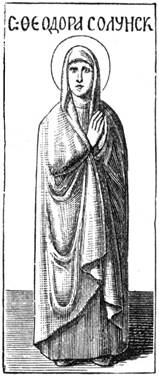
Солунская подвижница Феодора32 родилась на острове Эгине, от родителей благочестивых, ревнителей чистой веры. Выданная замуж, имела у себя дочку. Неприятельским нашествием вынуждена она была с мужем переселиться в Солунь. Здесь отдала дочь свою в монастырь; а потом, по смерти мужа, и сама приняла иночество в обители, где жила дочь её. Порча души нашей так велика, что противовес, остающийся у нас для борьбы с нею, противовес разума и совести, не силён предохранять нас от самых дурных поступков. Что же делать нам с собою? Молиться и молиться, чтобы оживляла и укрепляла нас больных благодать Божия. Так поступала блаж. Феодора. Она для того и заперлась в монастырь, чтобы молиться и молиться, молиться молитвой, не рассееваемой миром, молитвой вседушевной. И вот, укрепляемая благодатию, она трудами послушания и смирения, постом и самоотречением, молитвой и хвалой, столько угодила Господу, что по смерти своей, последовавшей в 879 г., совершала разные чудеса. Когда, спустя несколько времени, скончалась игуменья обители, и гроб последней ставили вблизи мощей Феодоры, то блаженная Феодора, отдавая честь настоятельнице обители, подвинулась, как живая, и дала место усопшей игуменьи. Из тела её истекала благовонная и целительная масть, и Феодора называлась мироточивой; масть исцеляла разные болезни. Когда Турки (в 1430 г.) взяли Солунь, то, предав поруганию мощи св. великомученика Димитрия, то же неистовство фанатизма «показали и над мощами святой и мироточивой Феодоры, бросили их на землю и раздробили на части»33. Те, которые знают только жизнь животную, скотскую, не терпят видеть осязаемые знаки победы духа бессмертного над веществом. Жалкие люди! «Бог поругаем не бывает: что сеет человек, то и пожнёт. Сеющий в плоть свою от плоти пожнёт тление, а сеющий в дух от духа пожнёт жизнь вечную» (Гал.6:7–8).
The Thessalonica ascetic Theodora32 was born on the island of Aegina, to pious parents, zealots of the pure faith. Given in marriage, she had a daughter. Compelled by an enemy invasion, she moved with her husband to Thessalonica. Here she placed her daughter in a monastery; and then, after the death of her husband, she herself received the monastic life in the convent where her daughter lived. The corruption of our soul is so great that the counterbalance remaining in us for struggling against it—the counterbalance of reason and conscience—is not strong enough to preserve us from the most evil deeds. What then are we to do with ourselves? To pray and to pray, that the grace of God may enliven and strengthen us who are sick. Thus did the blessed Theodora. For this very reason she shut herself up in the monastery: to pray and to pray, to pray with a prayer not distracted by the world, with a prayer of the whole soul. And behold, strengthened by grace, through labors of obedience and humility, by fasting and self-denial, by prayer and praise, she so pleased the Lord that after her death, which occurred in the year 879, she performed various miracles. When, some time later, the abbess of the convent reposed, and the coffin of the latter was placed near the relics of Theodora, the blessed Theodora, showing honor to the superior of the convent, moved as if alive and made room for the reposed abbess. From her body flowed a fragrant and healing ointment, and Theodora was called the Myrrh-streaming; the ointment healed various illnesses. When the Turks (in 1430) took Thessalonica, having subjected the relics of the holy Great Martyr Demetrius to outrage, the same frenzy of fanaticism "they showed also toward the relics of the holy and myrrh-streaming Theodora, casting them to the ground and breaking them into pieces"33. Those who know only the animal, brutish life cannot bear to see tangible signs of the victory of the immortal spirit over matter. Pitiable people! "God is not mocked; for whatever a man sows, that he will also reap. For he who sows to his flesh will of the flesh reap corruption, but he who sows to the Spirit will of the Spirit reap everlasting life" (Gal. 6:7–8).
Во время гонения на христиан, воздвигнутого Диоклитианом в 303-м г., когда многие христиане бежали из городов и скрывались в разных местах, двое благочестивых служителей Церкви в Фессалонике: престарелый диакон Агафопод и молодой, прекрасный собой чтец Феодул остались в городе, и день и ночь молились о Церкви Божией. Они без всякого страха ожидали мучений. Мучения не заставили долго ждать себя. Не таившие веры своей христиане были взяты и заключены в темницу. Правитель города Фавстин приказал привести к себе исповедников Христовых. С бодростью предстали они перед ним и неустрашимо признали себя христианами. Затем, на все увещания и угрозы со стороны правителя они отвечали только непоколебимым исповеданием святой веры.
During the persecution against Christians raised by Diocletian in the year 303, when many Christians fled from the cities and hid in various places, two pious servants of the Church in Thessalonica—the elderly deacon Agathopodes and the young, handsome reader Theodulus—remained in the city, and day and night prayed for the Church of God. They awaited torments without any fear. The torments were not long in coming. The Christians, who did not hide their faith, were seized and cast into prison. The city governor Faustinus ordered the confessors of Christ to be brought before him. With courage they stood before him and fearlessly confessed themselves Christians. Then, to all the exhortations and threats of the governor, they answered only with an unshakable confession of the holy faith.
Опасаясь, что твёрдость их будет служить ободряющим примером для других христиан, приведённых на истязание, Фавстин велел отвести Агафопода и Феодула в темницу. Здесь поместили их вместе с узниками, заключёнными за разные вины и преступления. Ночью мученики усердно молились. Вслушиваясь в молитву их, тронутые ею, другие узники перестали бояться смерти, припали к ногам их и выражали раскаяние в грехах своих. Народ стал собираться в темнице и с удивлением и умилением вслушивался в речи праведников. Тогда донесено было о них правителю, что если долго оставлять в живых этих двух христиан, содержащихся в темнице, то они многих успеют отвести от службы богам... Снова позваны были к правителю исповедники и, после многих напрасных угроз и увещаний, приговорены к смерти, а пока отведены в темницу. Здесь собрались к ним близкие и знакомые и печалились о них со слезами.
Fearing that their steadfastness would serve as an encouraging example for other Christians brought for torture, Faustinus ordered Agathopodes and Theodulus to be taken back to prison. Here they were placed together with prisoners confined for various offenses and crimes. At night the martyrs prayed fervently. Listening to their prayer, moved by it, the other prisoners ceased to fear death, fell at their feet, and expressed repentance for their sins. The people began to gather at the prison and listened with wonder and compunction to the words of the righteous. Then it was reported to the governor that if these two Christians held in prison were left alive much longer, they would succeed in turning many away from the service of the gods... The confessors were summoned again to the governor and, after many vain threats and exhortations, were condemned to death, but for the time being were taken back to prison. Here their relatives and acquaintances gathered to them and sorrowed for them with tears.
Проводя в оковах эту последнюю ночь в темнице, мученики, помолившись, уснули, и оба во сне были утешены видением, предвещавшим им мученическую кончину и вечную радость. Ободренные, они благодарили Господа и при наступлении дня спокойно пошли на последнее испытание и пребыли твёрдыми до конца. Наконец, их отвели к морю, связали им руки назад и, повесив камни на шею, утопили... Море вынесло на берег тела их и верующие предали их погребению.
Spending this last night in chains in the prison, the martyrs, having prayed, fell asleep, and both were comforted in sleep by a vision, foretelling their martyric end and eternal joy. Encouraged, they thanked the Lord and, at the approach of day, went calmly to the final trial and remained steadfast to the end. Finally, they were led to the sea, their hands were bound behind them, and stones were hung around their necks, and they were drowned... The sea cast their bodies ashore, and the faithful gave them burial.
Этот подвижник прожил в пустыне 95 лет... С радостными слезами встретил он по прошествии почти столетия впервые посетившего его человека – авву Серапиона, отшельника Египетского, ученика Иоанна, из внутренней Антониевой пустыни; благословив и поцеловав своего гостя, пришедшего к нему по указанию в сновидении, преп. Марк так рассказал ему о себе: «родился я в Афинах и учился разным наукам, проходил и философское учение. Потом, когда родители мои умерли, я отказался от этого мира, где всему предстоит смерть, и предал себя на служение вечному Богу... Сбросив одежды, я на доске бросился в море и приплыл, куда принесло меня волнами по изволению Божию... Первые тридцать лет провёл я здесь в великой нужде и в страдании; терпел и голод, и холод, и наготу, а главное терзали меня искушения... Но в последующие годы плоть моя изменилась... Господь излил на меня Свою благодать... Я видел явления Царствия Небесного... Я постиг духом блаженство праведников... Теперь же наступил предел жития моего, и Господь послал тебя сюда, чтобы ты предал земле тело моё» ...
This ascetic lived in the desert for 95 years... With joyful tears he met, after the passage of nearly a century, the first man to visit him—Abba Serapion, an Egyptian hermit, a disciple of John, from the inner Antonine desert; having blessed and kissed his guest, who had come to him by direction in a dream, the Venerable Mark told him about himself: "I was born in Athens and studied various sciences, and also pursued philosophical learning. Then, when my parents died, I renounced this world, where everything is subject to death, and gave myself over to the service of the eternal God... Throwing off my clothes, I cast myself into the sea on a plank and was carried by the waves wherever it pleased God to bring me... The first thirty years I spent here in great need and suffering; I endured hunger, cold, and nakedness, and above all, temptations tormented me... But in the following years my flesh was transformed... The Lord poured out His grace upon me... I saw manifestations of the Kingdom of Heaven... I comprehended in spirit the blessedness of the righteous... Now the limit of my life has come, and the Lord sent you here so that you might commit my body to the earth"...
Побеседовав ещё с Серапионом до наступления вечера, сделав и ему некоторые вопросы о мире, о состоянии веры в мире, старец Марк сказал ему: «брате, пробудь эту ночь без сна – ради кончины моей!»
Having conversed further with Serapion until evening fell, and having asked him some questions about the world and the state of the faith in the world, the elder Mark said to him: "Brother, stay awake this night—for the sake of my end!"
И тогда, став на молитву, оба старца начали петь псалмы Давидовы. И опять, после некоторого молчания, Марк обратился к посетителю своему: «брате, велик для меня сегодняшний день, величайший из всех дней жизни моей! Сегодня разрешается душа моя от страданий плотских, от уз земных и идёт успокоиться в обители небесной», – и, взяв за руку Серапиона, прибавил: «пусть тело моё, это вместилище болезней, нужд и трудов, пребудет до общего воскресения в пещере этой, в которой пребывал я во временной моей жизни... Ты же, Господи, отдели от него душу мою, так как ради Тебя терпел я и голод, и жажду, и наготу, и зной, и мороз, и всякие тяготы... Усните, глаза мои, не знавшие дремоты во время ночной молитвы! Отдохните, ноги мои, потрудившиеся в ночном стоянии! Душой же отхожу я от временной жизни и всем, остающимся на земле, желаю спастись! Спаситесь, постники, скитающиеся в горах и пещерах Господа ради! Спаситесь, узники Христовы, заточённые, изгнанные правды ради и не имеющие утешения, кроме единого Бога! Спаситесь, иноки, трудящиеся для Бога день и ночь! Спаситесь, священники Господни, ходатаи перед Богом о людях! Спаситесь, христолюбцы, принимающие странников, как Самого Христа! Спаситесь, милостивые, достойные помилования! Спаситесь, богатые, благоподатливые и богатеющие перед Богом в Богоугодных делах! Спаситесь, обнищавшие Господа ради! Спаситесь, благоверные цари и князья, праведный и милостивый суд творящие! Спаситесь, подвижники поста и трудолюбия, спаситесь, любящие друг друга о Господе! Да спасена будет вся земля и все живущие на ней в любви и мире!.. Спасись и ты, брат Серапион, потрудившийся Христа ради совершить путь в мою пустыню! Заклинаю тебя Господом Иисусом Христом: не бери ничего, ни даже единого волоса от убогого тела моего; не украшай его никакими ризами: пусть погребальной одеждой служат мне мои волосы, которыми покрыл меня Господь, и сам ты не оставайся здесь» ...
And then, standing at prayer, both elders began to sing the psalms of David. And again, after some silence, Mark turned to his visitor: "Brother, great is this day for me, the greatest of all the days of my life! Today my soul is released from the sufferings of the flesh, from earthly bonds, and goes to find rest in the heavenly dwelling,"—and, taking Serapion by the hand, he added: "Let my body, this vessel of illnesses, needs, and labors, remain until the general resurrection in this cave in which I dwelt during my temporal life... But do Thou, O Lord, separate my soul from it, for for Thy sake I endured hunger, thirst, nakedness, heat, frost, and every hardship... Sleep, my eyes, which knew no slumber during night prayer! Rest, my feet, which labored in nightly standing! With my soul I depart from temporal life, and to all who remain on earth I wish salvation! Be saved, O fasters, wandering in mountains and caves for the Lord's sake! Be saved, O prisoners of Christ, confined, exiled for righteousness' sake, having no consolation save God alone! Be saved, O monks, laboring for God day and night! Be saved, O priests of the Lord, intercessors before God for men! Be saved, O lovers of Christ, who receive strangers as Christ Himself! Be saved, O merciful ones, worthy of mercy! Be saved, O rich, bountiful givers, growing rich before God in God-pleasing deeds! Be saved, O you who have become poor for the Lord's sake! Be saved, O right-believing kings and princes, who render righteous and merciful judgment! Be saved, O ascetics of fasting and diligence, be saved, O you who love one another in the Lord! May all the earth be saved, and all who dwell upon it in love and peace!.. Be saved also, O brother Serapion, who have labored for Christ's sake to make the journey to my desert! I adjure you by the Lord Jesus Christ: take nothing, not even a single hair, from my poor body; do not adorn it with any garments: let my hair, with which the Lord has covered me, serve as my burial shroud, and do not remain here yourself"...
Серапион положил тело св. Марка в пещере и молился всю ночь. На другой день он совершил песнопение со слезами и, завалив камнем отверстие пещеры, сошёл с горы, прославляя Господа и призывая на помощь святого. Возвратясь в свою обитель, он рассказал о Божием старце Марке-отшельнике Иоанну и ученикам его, и все с благоговением прославили Бога.
Serapion placed the body of St. Mark in the cave and prayed all night. The next day he performed the hymnody with tears and, having blocked the opening of the cave with a stone, descended from the mountain, glorifying the Lord and calling upon the saint for help. Returning to his own monastery, he told John and his disciples about the divine elder Mark the hermit, and all with reverence glorified God.
Рождённый от благочестивых родителей в 735-м г., с детства сирота, Платон получил хорошее воспитание в доме своих родственников. Достигнув зрелого возраста, роздал бедным приобретённое им посредством труда и воздержания во всём хорошее состояние и удалился на Олимп-гору в Мизии, на Фригийско-Вифинской границе (ныне – Кашиш-даг), в монастырь в Символех. Здесь подвизался в строгом иночестве, трудился особенно над переписыванием книг и составлением сборников из писаний св. отцов. По смерти настоятеля монастыря Феоктиста (770) был здесь игуменом.
Born of pious parents in the year 735, orphaned from childhood, Plato received a good upbringing in the house of his relatives. Having reached a mature age, he distributed to the poor the good estate he had acquired through labor and temperance in all things, and withdrew to Mount Olympus in Mysia, on the Phrygian-Bithynian border (now Kashish-Dag), to the monastery at Symbola. Here he struggled in strict monasticism, laboring especially at copying books and compiling collections from the writings of the holy Fathers. After the death of the monastery's abbot Theoctistus (770), he became abbot there.
Впоследствии, отказавшись от митрополии Никомидийской, предложенной ему патриархом Тарасием, удалился в пустыню вместе с племянниками своими – Феодором Студитом (пам. 11-го ноября), и Иосифом, еп. Солунским, и основал обитель в Сакудионе (782). В 788 г. присутствовал на 7-м Вселенском Соборе. Подвергся тюремному заключению за обличение императора Константина VI-го, женившегося на Феодотии при жизни первой своей жены. По кончине его был освобождён и поступил в Студийский монастырь в Константинополе, где был тогда игуменом племянник его Феодор Студит, оставивший Сакудион по причине нападения на страну Сарацын. При императоре Никифоре Платон снова подвергся преследованию и изгнанию (807 г.). Был возвращён в Константинополь из изгнания в 811-м г. уже совсем больным; преставился в 813 г.
Afterwards, having declined the metropolitan see of Nicomedia, which had been offered to him by Patriarch Tarasius, he withdrew into the wilderness together with his nephews—Theodore the Studite (commemorated November 11) and Joseph, Bishop of Thessalonica—and founded a monastery at Sakkudion (782). In 788 he was present at the Seventh Ecumenical Council. He was subjected to imprisonment for rebuking Emperor Constantine VI, who had married Theodote while his first wife was still living. After the emperor’s death he was released and entered the Studion Monastery in Constantinople, where his nephew Theodore the Studite, who had left Sakkudion because of Saracen raids on the region, was then abbot. Under Emperor Nicephorus, Plato was again subjected to persecution and exile (807). He was brought back to Constantinople from exile in 811, already completely ill; he reposed in 813.
Племянник Платона Феодор Студит почтил его погребальной беседой, в которой изобразил его высокую жизнь. Она помещена в Деян. св. (Apr. 1. 366 и XLVI). В Слав. Мин. о нём – в жит. св. Феодора Студита, 11-го ноября.
Plato’s nephew, Theodore the Studite, honored him with a funeral oration, in which he depicted his lofty life. It is included in the Acta Sanctorum (April 1, 366 and XLVI). In the Slavonic Menologion, it is found in the Life of St. Theodore the Studite, November 11.
После двух указов Диоклитиана: 1) разрушать христианские храмы, сжигать книги и лишать христиан всех гражданских прав и должностей, и 2) употреблять все меры, чтобы склонить христиан к отречению, а непокорных казнить, – последовал ряд страшных пыток и казней христиан во всех областях Римской империи. Тюрьмы переполнились заключёнными за исповедание веры Христовой, так что недоставало уже места для настоящих преступников. В Египте в течение одного месяца погибло до 17,000 христиан; церковь в Никомидии была сожжена в самую ночь на праздник Пасхи, и в ней погибло до 20,000 христиан. Перестали служить для них убежищем даже и отдалённые пустыни: преследователи проникали и туда и пытали и казнили отчуждённых от мира служителей Господа. По словам историка Евсевия, очевидца, в Фиваиде «гонение было страшное, число ежедневно умиравших в некоторых городах доходило до ста. Тела казнённых лежали грудами; орудия казни тупились, и палачей недоставало для исполнения смертных приговоров». Но все эти изощрённые истязания и лютые казни не только не устрашали христиан, напротив, казалось, что воспламеняли их исповедническое рвение до крайних пределов. Произвольно предавались они в руки мучителей и с восторженным радованием принимали смерть. «Едва произносим был приговор над одними, – пишет историк, – тотчас с разных сторон прибегали другие и исповедовали себя христианами, вовсе не смущаясь ужасами пытки. Сохраняя непоколебимую веру в Бога, они с радостью, с улыбкой и благодушием принимали смертный приговор и до последнего издыхания возносили к Богу песнопения и благодарения».
After two edicts of Diocletian—the first to destroy Christian churches, burn books, and deprive Christians of all civil rights and offices, and the second to use every means to induce Christians to renounce their faith and to execute the disobedient—there followed a series of terrible tortures and executions of Christians in all regions of the Roman Empire. Prisons became filled with those imprisoned for confessing the faith of Christ, so that there was no longer room for actual criminals. In Egypt, within a single month, up to 17,000 Christians perished; the church in Nicomedia was burned on the very night of the feast of Pascha, and up to 20,000 Christians perished in it. Even the remote deserts ceased to be a refuge for them: the persecutors penetrated even there, torturing and executing the servants of the Lord who had withdrawn from the world. According to the historian Eusebius, an eyewitness, in the Thebaid “the persecution was terrible; the number of those dying daily in some cities reached one hundred. The bodies of the executed lay in heaps; the instruments of execution grew dull, and there were not enough executioners to carry out the death sentences.” But all these refined torments and cruel executions not only did not frighten the Christians; on the contrary, they seemed to inflame their confessional zeal to the utmost. They voluntarily gave themselves into the hands of the tormentors and received death with rapturous joy. “Scarcely was sentence pronounced on some,” writes the historian, “when immediately others ran up from various sides and confessed themselves Christians, in no way troubled by the horrors of torture. Preserving an unshakable faith in God, they received the death sentence with joy, with a smile and good cheer, and until their last breath sent up hymns and thanksgivings to God.”
Что ещё более воодушевляло их, и вместе с тем содействовало распространению познания истинного Бога в неверующих, это были нередкие чудесные проявления Божией помощи мученикам. Евсевий был свидетелем казни пяти мучеников в Тире Финикийском. Они были выведены на арену, и на них выпущено было несколько разъярённых диких зверей, которых продолжали дразнить раскалёнными в огне железными прутьями. С яростью устремлялись звери на безоружных людей – христиан, но вдруг, удерживаемые какой-то невидимой силой, удалялись, не тронув их... Евсевий упоминает об юноше, стоявшем без оков – с распростёртыми крестообразно руками: «непоколебимый и бесстрашный духом, он усердно молился и не двигался, не уклонялся в сторону от того места, где стоял, между тем как медведи и пантеры, дыша яростью и смертью, почти касались его тела, и только Божественная и неизреченная сила, не знаю как, замыкала пасть их, и они тотчас уходили назад... Пятерых мучеников, которых пощадили звери, казнили мечом, и тела их бросили в море34.
What further inspired them, and at the same time helped spread the knowledge of the true God among the unbelievers, were the frequent miraculous manifestations of God’s help to the martyrs. Eusebius was a witness to the execution of five martyrs in Tyre of Phoenicia. They were led out into the arena, and several enraged wild beasts were let loose upon them, which were further provoked with red-hot iron rods heated in fire. The beasts rushed with fury upon the unarmed men—the Christians—but suddenly, held back by some invisible force, they withdrew without touching them... Eusebius mentions a youth who stood without bonds, with his arms outstretched in the form of a cross: “unshakable and fearless in spirit, he prayed fervently and did not move, did not turn aside from the place where he stood, while bears and panthers, breathing fury and death, almost touched his body, and only a divine and ineffable power, I know not how, closed their mouths, and they immediately drew back... The five martyrs, whom the beasts had spared, were executed by the sword, and their bodies were cast into the sea34.
У Болландистов похвала Николая Кавасилы, архиепископа Солунского, св. Феодоре, lat. et graec. april. 1, 405–409, append. р. 55–59. Извлечения – в Четье-Минее на 5 апр.
Among the Bollandists, a eulogy by Nicholas Cabasilas, Archbishop of Thessalonica, to St. Theodora, in Latin and Greek, April 1, 405–409, appendix pp. 55–59. Extracts are in the Cheti-Minei for April 5.
Слова Иоанна чтеца в повествовании о Турках, гл. 16. У Кавасилы св. Феодора также называется мироточивой. Монастырь, где лежали мощи св. Феодоры, у Франза (2, 42) называется монастырём св. Феодоры Tafel de Thessalonica pag. 120. 121.
Words of John the Reader in the narrative concerning the Turks, ch. 16. In Cabasilas, St. Theodora is also called myrrh-streaming. The monastery where the relics of St. Theodora lay is called, in Phrantzes (2, 42), the Monastery of St. Theodora. Tafel, de Thessalonica, pp. 120, 121.