Преп. Иосифа Песнописца и творца канонов
Venerable Joseph the Hymnographer and Composer of Canons
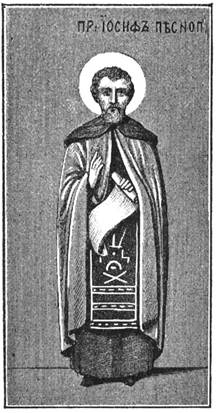
Сегодня Церковь совершает память св. Иосифа Песнописца – одного из великих борцов, отстаивавших иконопоклонение, одного из высоких молитвенников, «просвещённого дарами Божиими», обогатившего красноречивыми канонами сокровищницу молитвенных излияний, славословий – во все века возносимых верующими от избытка чувств, переполняющих сердце.
Today the Church commemorates St. Joseph the Hymnographer – one of the great champions who defended icon veneration, one of the exalted men of prayer, "enlightened by the gifts of God," who enriched the treasury of prayerful outpourings and glorifications with eloquent canons – those hymns raised through all ages by the faithful from the abundance of feelings that fill the heart.
Отечеством св. Иосифа была Сицилия, но, когда ещё он был отроком, произошло нападение Сарацин на Сицилию, и родители его, благочестивые Платон и Агафия, принуждённые оставить свою родину, удалились в Пелопонес. – По переселении сюда, со временем, в юноше Иосифе, с детства напитанном чтением св. Писания, взросшем в любви к посту и молитве, определилось окончательно отчуждение от всего мирского. Поэтому, расставшись с родителями, он, на 15-м году своего возраста, поступил иноком в Солунскую обитель, где и предался с самого начала строгой подвижнической жизни.
The homeland of St. Joseph was Sicily, but while he was still a youth, the Saracens attacked Sicily, and his parents, the pious Plato and Agatha, forced to leave their native land, withdrew to the Peloponnese. – After settling there, in time, in the young man Joseph, who from childhood had been nourished by the reading of Holy Scripture and had grown up in love for fasting and prayer, a final estrangement from all worldly things was determined. Therefore, parting from his parents, at the age of fifteen he entered as a monk the monastery of Thessalonica, where from the very beginning he gave himself over to a strict ascetic life.
Спал он на земле, покрытой кожей, одежда его состояла в едва прикрывающем его тело рубище; пища – в небольшом куске хлеба и «в меру» питие воды; молитвой его было постоянное пение в устах, стояние коленопреклонённое и продолжавшееся часто всю ночь. Чтение св. Писания и списывание книг было его главным и любимым занятием; таким образом преуспевал он из силы в силу в разуме духовном; был между братией, как ангел Божий, сияющий святостью, ради чего и был избран единодушно и принуждён принять чин настоятеля обители и сан священства. В этом сане ещё ревностнее предавался он трудам и подвигам, работая Богу своему и молясь о всём мире часто со слезами – при совершении Божественных Таин.
He slept on the ground covered with a skin; his clothing consisted of a ragged garment barely covering his body; his food – a small piece of bread and a "measured" drink of water; his prayer was constant singing on his lips, kneeling, often continuing through the whole night. The reading of Holy Scripture and the copying of books were his chief and beloved occupations; thus he advanced from strength to strength in spiritual understanding; he was among the brethren as an angel of God, shining with holiness, for which reason he was unanimously chosen and compelled to accept the rank of abbot of the monastery and the dignity of the priesthood. In this rank he gave himself even more zealously to labors and struggles, serving his God and praying for the whole world, often with tears – at the celebration of the Divine Mysteries.
Однажды посетил монастырь, где подвизался Иосиф, преп. Григорий Декаполит и, видя святую жизнь Иосифа, возлюбил его всей душой, сблизился с ним и пожил в монастыре несколько времени. Потом, отправляясь в Византию для укрепления верных, смущаемых тогда еретиками, пожелал ехать туда вместе с Иосифом, провидя в нём великого помощника в деле защиты Церкви, волнуемой бурей еретической. Прибыв в Византию, поселились они в церкви св. мучеников Сергия и Вакха и ревностно занялись вразумлением народа – как оберегать себя от вреда еретического и твёрдо держаться догматов и обычаев веры отцов своих.
Once the Venerable Gregory Dekapolites visited the monastery where Joseph was struggling, and seeing Joseph's holy life, he loved him with all his soul, drew close to him, and lived in the monastery for some time. Then, setting out for Byzantium to strengthen the faithful, who were then troubled by heretics, he wished to travel there together with Joseph, foreseeing in him a great helper in the work of defending the Church, which was being tossed by the storm of heresy. Arriving in Byzantium, they settled in the church of the holy Martyrs Sergius and Bacchus and zealously undertook to instruct the people – how to guard themselves from the harm of heresy and firmly hold to the dogmas and customs of the faith of their fathers.
В то время возобновилась иконоборная ересь при императоре Льве Армянине. Одним из первых дел его по вступлении на престол было – строго запретить почитание икон. Поэтому их из церквей выносили, выбрасывали с поруганием и попирали ногами. Духовные лица, противящиеся этому, подвергались лишению занимаемых ими мест, ссылались в изгнание и были заменяемы еретиками, единомысленными царю иконоборцу. Тогда св. Григорий с св. Иосифом начали открыто – на площадях городских и среди собраний народных, обходя также и дома верующих – убеждать и умолять всех не соблазняться новым учением, не отступать от правил, преподанных учителями Православия. И «подобно росе утренней, освежающей и оживляющей цветы и травы поникнувшие, полу-увядшие накануне от зноя дневного, слова их оживляли сердца малодушествующие, сомневающиеся и как бы увядающие от зноя яростного гонения и еретических учений»...
At that time the iconoclast heresy was revived under the Emperor Leo the Armenian. One of his first acts upon ascending the throne was to strictly forbid the veneration of icons. Therefore they were taken out of churches, cast out with abuse, and trampled underfoot. Clergy who opposed this were deprived of their positions, sent into exile, and replaced by heretics who shared the mind of the iconoclast emperor. Then St. Gregory together with St. Joseph began openly – in the city squares and among popular assemblies, also going about the homes of the faithful – to exhort and beseech all not to be seduced by the new teaching, not to depart from the rules handed down by the teachers of Orthodoxy. And "like the morning dew, refreshing and reviving the drooping flowers and grasses that had withered the day before from the daytime heat, their words revived the hearts of the faint-hearted, the doubting, who were as though withering from the heat of the fierce persecution and heretical teachings"...
Между тем, видя, что многие готовы уступить силе соблазна и отступить от православия, иночествующие в разных монастырях убеждали Григория преподобного, чтобы он послал Иосифа в Рим возвестить православному папе Леону III-му о бедствиях Церкви в Константинополе, надеясь, что любимый учитель их, твёрдый крепостью души и тела, перенесёт тягость дальнего пути и «в слове искусный», красноречивый убедит папу восстать на помощь притесняемым еретиками.
Meanwhile, seeing that many were ready to yield to the power of temptation and to fall away from Orthodoxy, the monastics in various monasteries urged the Venerable Gregory to send Joseph to Rome to announce to the Orthodox Pope Leo III the calamities of the Church in Constantinople, hoping that their beloved teacher, firm in strength of soul and body, would bear the burden of the distant journey, and being "skilled in word," eloquent, would persuade the Pope to rise up in aid of those oppressed by the heretics.
– О сын мой, – говорил св. Григорий Иосифу, возлагая а на него это поручение, – настало время проявить усердие твоё к Богу и доказать преданность твою правому делу: иди на запад и возвести первосвятителю и всем верным о бедствиях гонения на православную веру на Востоке, и как попираются ногами иконы Спасителя и Пречистой Его Матери, и какое поругание совершается над украшением церквей, и как неправославные, подкупаемые золотом или страхом пастыри поставляются вместо верных блюстителей стада Христова. Возвести обо всём этом, убеди и умоли поднять за нас меч слова Божия и восстать на нашу защиту.
– O my son, – said St. Gregory to Joseph, laying this commission upon him, – the time has come to show your zeal for God and to prove your devotion to the righteous cause: go to the West and announce to the chief hierarch and to all the faithful about the calamities of the persecution of the Orthodox faith in the East, and how the icons of the Savior and His Most Pure Mother are trampled underfoot, and what abuse is inflicted upon the adornment of churches, and how unorthodox pastors, bribed by gold or fear, are appointed in place of faithful guardians of Christ's flock. Announce all this, persuade and beseech them to take up for us the sword of the word of God and to rise up in our defense.
Неисповедимыми судьбами Божиими положено было, однако же, препятствие на пути отправившемуся в Рим Иосифу.
By the inscrutable judgments of God, however, an obstacle was placed in the path of Joseph, who had set out for Rome.
Зная, что многие жители оставляют Константинополь в это смутное и опасное время борьбы с ересью, нашлись такие люди, которые, желая прислужиться царю, старались захватывать и возвращать убегающих в руки иконоборцев. Узнав и об отправлении Иосифа в западную столицу, эти люди не допустили совершиться его путешествию: устроив с помощью морских разбойников нападение на корабль, они захватили всех бывших на нём и предали их на острове Крите в руки иконоборцев. Преп. Иосиф, окованный цепями, был брошен в темницу, где он встретил многих страдальцев, заключённых также за хранение правой веры. Иные из них, измученные до изнеможения, готовы были впасть в уныние. Тогда-то явился общим утешителем св. Иосиф, день и ночь ободряя всех вдохновенными своими речами: – «что может быть отраднее и радостнее тех цепей, которыми связаны мы ради любви к Богу и ради чествования Его изображения! – говорил он, сам радующийся узам своим за Господа, – если и пострадаем во временном нашем здесь заключении, то должны мы благодарить за это Бога, имея перед собой светлый образ св. Ап. Павла, который узы и цепи почитал лучшим, драгоценнейшим украшением своим, радуясь, что удостоился пострадать за имя Христово. И не больше ли ещё нашего пострадал за нас Сам Христос, Который «не сделал никакого греха и, будучи злословим, Он не злословил взаимно; страдая, не угрожал», – как говорит о Нём св. Апостол Пётр (1Пет.2:22–23).
Knowing that many inhabitants were leaving Constantinople in this troubled and dangerous time of struggle with heresy, there were found people who, wishing to ingratiate themselves with the emperor, tried to seize and return the fugitives into the hands of the iconoclasts. Learning also of Joseph's departure for the western capital, these people did not allow his journey to be accomplished: having arranged, with the help of sea pirates, an attack on the ship, they seized all who were on it and handed them over on the island of Crete into the hands of the iconoclasts. The Venerable Joseph, bound in chains, was thrown into prison, where he met many sufferers also imprisoned for keeping the right faith. Some of them, exhausted to the point of weariness, were ready to fall into despondency. Then St. Joseph appeared as a common comforter, day and night encouraging all with his inspired speeches: – "What could be more comforting and joyful than those chains with which we are bound for the love of God and for the honoring of His image!" – he said, himself rejoicing in his bonds for the Lord's sake, – "If we suffer in our temporary confinement here, we ought to thank God for this, having before us the bright example of the holy Apostle Paul, who considered bonds and chains his best, most precious adornment, rejoicing that he was deemed worthy to suffer for the name of Christ. And did not Christ Himself suffer more than we for us, He Who 'committed no sin, and when He was reviled, He did not revile in return; when He suffered, He did not threaten,' – as the holy Apostle Peter says of Him (1 Pet. 2:22–23)."
– Конечно, – продолжал увещевать узников св. Иосиф, – тяжелы страдания и болезни телесные, но невозможно никому назваться носителем ига Христова, если не последует по пути Его, принимая на себя те страдания, которые Господь определил нам понести, чтобы от них рождалась та сила добродетели, которой отверзалась бы для нас небесная дверь, грехами нашими затворяемая... И не на иной путь нам к спасению указал, как только на усыпанный трудами и скорбями. Не смущайтесь же, теряя здоровье в страданиях за честь св. икон Спасителя и Его Божественной Матери: в законной борьбе за правду Божию – человека не оставит Сам Бог».
– Of course, – continued St. Joseph to exhort the prisoners, – sufferings and bodily illnesses are grievous, but no one can call himself a bearer of the yoke of Christ if he does not follow His path, taking upon himself those sufferings which the Lord has appointed us to bear, so that from them might be born that power of virtue by which the heavenly door, closed by our sins, might be opened to us... And He pointed us to no other path to salvation than that strewn with labors and sorrows. Be not troubled, then, losing health in sufferings for the honor of the holy icons of the Savior and His Divine Mother: in the lawful struggle for the truth of God – God Himself will not abandon a man."
Между прочими узниками содержался в темнице один православный епископ. Его в особенности удручали тюремные мучения, он уже охладевал в борьбе против ереси... Поняв смущение старца, Иосиф со слезами молил и убеждал его восстать от своего изнеможения и ободриться в борьбе. И не напрасны были Боговдохновенные увещания Иосифа: старец укрепился духом, произвольно предал себя в руки мучителей, с твёрдостью перенёс истязания... Он был повешен, в обнажённом виде предан терзанию тела и наконец, поражённый в голову огромным камнем, предал душу свою Богу.
Among the other prisoners, there was kept in prison one Orthodox bishop. He was especially oppressed by the torments of imprisonment; he was already growing cold in the struggle against heresy... Understanding the elder's confusion, Joseph with tears besought and exhorted him to rise from his exhaustion and take courage in the struggle. And Joseph's God-inspired exhortations were not in vain: the elder was strengthened in spirit, voluntarily gave himself into the hands of the torturers, and with firmness endured the torments... He was hanged, in a naked state given over to the tearing of his body, and finally, struck on the head with a huge stone, he gave up his soul to God.
И многих ещё избавил св. Иосиф от душевной гибели, неутомимо поучая и поддерживая всех на правом пути, и хранил Господь его полезную жизнь... Шесть лет провёл он в темнице – до самой смерти императора Льва Армянина, убитого своими воинами в самую ночь Рождества Христова, во время заутрени, о чём в тот же час был извещён св. Иосиф через явившегося ему, молящемуся всю ту ночь, – св. Николая Чудотворца, сказавшего ему при том, что теперь следует ему возвратиться в Константинополь, для утверждения многих благодатью Духа Святого, в нём пребывающего...
And St. Joseph delivered many others from spiritual perdition, tirelessly teaching and supporting all on the right path, and the Lord preserved his useful life... He spent six years in prison – until the very death of the Emperor Leo the Armenian, who was killed by his own soldiers on the very night of the Nativity of Christ, during Matins, of which St. Joseph was informed that same hour through the appearance to him, as he prayed all that night, of St. Nicholas the Wonderworker, who said to him at the same time that now he should return to Constantinople, for the strengthening of many by the grace of the Holy Spirit dwelling in him...
Освобождённый вслед за этим из темницы (в 820 г.), Иосиф прибыл в Константинополь, но не застал уже в живых любимого отца своего Григория Декаполита и поселился в уединённом месте за городом, близ церкви св. Иоанна Златоустого. Здесь занялся он сооружением церкви во имя святителя Николая, перенёс в неё тело св. Григория Декаполита, и близ церкви устроил монастырь, в который скоро собралось значительное число иноков и сверх того множество народа собиралось назидаться его Боговдохновенным, доходящим до сердца каждого, утешительным и вразумительным словом.
Freed from prison soon after this (in 820 A.D.), Joseph arrived in Constantinople, but no longer found alive his beloved father Gregory Dekapolites, and settled in a secluded place outside the city, near the church of St. John Chrysostom. Here he undertook the building of a church in the name of St. Nicholas, transferred into it the body of St. Gregory Dekapolites, and near the church established a monastery, into which soon gathered a considerable number of monks, and moreover a multitude of people gathered to be edified by his God-inspired, comforting and instructive word, which reached the heart of each one.
Вскоре Иосиф построил при обители ещё новую, небольшую церковь во имя св. Апостола Варфоломея и с честью положил в этой церкви часть мощей св. Варфоломея, полученную им однажды в дар от одного благочестивого человека. Великую любовь и веру имел Иосиф к святому Апостолу, часто видел его в сонном видении и желал хвалебным пением возвеличить праздник его, но, считая себя недостойным приступить к такому делу, он только молился Богу и Апостолу, прося себе вразумления и внушения; при молитве также долго и строго постился. И вот, накануне дня праздника св. Апостола Варфоломея, он удостоился видеть его во сне: св. Апостол явился ему в алтаре в белых ризах и, подняв занавесь в алтаре, казалось, призывал к себе Иосифа. Когда же Иосиф приблизился к нему, то св. Варфоломей, взяв св. Евангелие со стола Божественной трапезы, возложил на грудь Иосифа и сказал: «да благословит тебя десница Всесильного Бога, да истекут на язык твой воды небесной премудрости, да вместит сердце твоё Духа Святого и песнопения твои да усладят вселенную!»
Soon Joseph built at the monastery yet another small church in the name of the holy Apostle Bartholomew and with honor placed in this church a portion of the relics of St. Bartholomew, which he had once received as a gift from a pious man. Joseph had great love and faith for the holy Apostle, often saw him in a dream vision, and desired to magnify his feast with hymns of praise, but considering himself unworthy to approach such a work, he only prayed to God and the Apostle, asking for understanding and inspiration; at prayer he also fasted long and strictly. And behold, on the eve of the feast day of the holy Apostle Bartholomew, he was deemed worthy to see him in a dream: the holy Apostle appeared to him in the sanctuary in white vestments and, raising the curtain in the sanctuary, seemed to call Joseph to himself. When Joseph drew near to him, St. Bartholomew, taking the holy Gospel from the table of the Divine altar, placed it on Joseph's breast and said: "May the right hand of Almighty God bless you, may the waters of heavenly wisdom flow upon your tongue, may your heart contain the Holy Spirit, and may your hymns sweeten the universe!"
И с этого часа, почувствовав себя осенённым благодатью свыше, св. Иосиф начал писать свои Боговдохновенные каноны и песнословия в честь Божией Матери и святых, за которые Церковь именует его «Песнописцем».
And from that hour, feeling himself overshadowed by grace from on high, St. Joseph began to write his God-inspired canons and hymns in honor of the Mother of God and the saints, for which the Church calls him the "Hymnographer."
Снова настало время тяжких испытаний для Иосифа, в царствование императора Феофила, приверженца иконоборческой ереси. За смелое обличение еретиков Иосиф был сослан в изгнание – в г. Херсонес, где протомился до тех пор, пока, при вдовствующей жене Феофила – Феодоре, не прекратилось иконоборческое гонение, и все изгнанные ревнители православия, вместе с святейшим патриархом Мефодием, были возвращены из ссылки.
Again a time of grievous trials came for Joseph, during the reign of the Emperor Theophilus, a devotee of the iconoclast heresy. For his bold denunciation of the heretics, Joseph was sent into exile—to the city of Cherson, where he languished until, under the widowed wife of Theophilus, Theodora, the iconoclast persecution ceased, and all the exiled zealots of Orthodoxy, together with the most holy Patriarch Methodius, were returned from exile.
По смерти св. Мефодия, занявший после него патриарший престол Игнатий поставил Иосифа сосудохранителем при великой Константинопольской Софийской церкви. Здесь, пользующийся всеобщей любовью и уважением, Иосиф пребывал в постоянных трудах, молясь, песнословя и неутомимо поучая народ.
After the death of St. Methodius, Ignatius, who occupied the patriarchal throne after him, appointed Joseph as skeuophylax at the great Church of Hagia Sophia in Constantinople. Here, enjoying universal love and respect, Joseph abode in constant labors, praying, hymn-singing, and tirelessly teaching the people.
Через несколько лет, однако же, он снова подвергся изгнанию, восстановив против себя знатнейшего вельможу Варду тем, что обличал его и укорял за жестокое обращение его с своей женой и за вступление во второй брак при живой жене, да ещё с близкой родственницей. За такие же обличения и подобной же участи подвергся и патриарх Игнатий. Оба они возвращены были из ссылки и заняли вновь свои почётные должности при Василии Македонянине, воцарившемся (827 г.) по смерти сына Феодоры Михаила и родственника царского Варды, убитых царедворцами.
After a few years, however, he again suffered exile, having set against himself the most noble magnate Bardas by denouncing and reproaching him for his cruel treatment of his wife and for entering into a second marriage while his wife was still alive, and moreover with a close relative. For such denunciations, Patriarch Ignatius also underwent a similar fate. Both were returned from exile and again occupied their honorable positions under Basil the Macedonian, who came to the throne (A.D. 827) after the death of Theodora's son Michael and the royal kinsman Bardas, who were slain by courtiers.
Фотий, патриарх Константинопольский после Игнатия, также любил и настолько уважал Иосифа, что называл его отцом отцов, ангелом во плоти и поставил его духовником всего Константинопольского клира.
Photius, Patriarch of Constantinople after Ignatius, also loved and so respected Joseph that he called him father of fathers, an angel in the flesh, and appointed him confessor of the entire clergy of Constantinople.
Достигнув до глубокой старости, великий труженик Иосиф почувствовал себя наконец изнемогающим телесно и впал в болезнь, которая привела его к кончине, в 883-м г.
Having reached a deep old age, the great laborer Joseph at last felt himself growing weak in body and fell into an illness which brought him to his end, in the year 883.
Получив извещение свыше о предстоящем ему близком упокоении, Иосиф сделал список всех вверенных ему церковных дел и вещей, послал его к патриарху Фотию, а сам, готовясь к кончине, так молился:
Having received notice from on high of his imminent repose, Joseph made a list of all the church affairs and items entrusted to him, sent it to Patriarch Photius, and himself, preparing for his end, prayed thus:
– Благодарю Тебя, Господи Боже мой, что сохранил меня во все дни жизни моей и ныне до конца сохрани душу мою, да не порадуется враг мой в неведении и в немощи содеянным согрешениям моим. Сохрани, Господи, людей Твоих и всё созданное Тобой защити до конца веков. Буди Помощником сынам Церкви Твоей возлюбленным. Даруй ей мир вечный и тишину безбурную; ересь гибельную из неё искорени; душе же моей дай в мире и тишине отойти от тела моего. И хотя, зная грехи мои перед Тобой, не могу я причислить себя к угодникам Твоим, в которых обитает Дух Твой Святый, но молю Твою всего мира грехами непреодолеваемую благость, не взирая на мои беззакония, достойным меня соделать чести избранных сынов Твоих! – И, причастившись св. Таин и благословив всех окружающих, радостно предал праведник душу свою Господу – в неделю Пасхи, 4-го апреля.
"I thank Thee, O Lord my God, that Thou hast preserved me all the days of my life, and now preserve my soul unto the end, lest mine enemy rejoice over my sins committed in ignorance and weakness. Preserve, O Lord, Thy people, and protect all that Thou hast created unto the end of the ages. Be a Helper to the beloved sons of Thy Church. Grant her eternal peace and calm tranquility; root out from her the destructive heresy; and grant my soul to depart from my body in peace and quietness. And although, knowing my sins before Thee, I cannot count myself among Thy saints, in whom Thy Holy Spirit dwells, yet I entreat Thy goodness, which is not overcome by the sins of all the world, that, not regarding my iniquities, Thou make me worthy of the honor of Thine elect sons!" And having partaken of the Holy Mysteries and blessed all those around him, the righteous one joyfully surrendered his soul to the Lord—on the Sunday of Pascha, the 4th of April.
Никто из песнописцев не написал столько священных песней, сколько написал их Иосиф. Большая часть канонов написана в честь мучеников, притом тех, которые менее славятся Церковью, и потом таких же святителей. По исследованию разных лиц, число их простирается от 211-ти до 300.
No hymnographer has written as many sacred hymns as Joseph wrote. The greater part of his canons were composed in honor of martyrs, especially those who are less celebrated by the Church, and likewise of such hierarchs. According to the research of various persons, their number ranges from 211 to 300.
О песнопениях св. Иосифа ученик его Феофан пишет: «преподобный, быв просвещён благодатью, так легко и скоро составлял св. песни, что казалось, будто он не сочиняет новое, а только припоминает забытое» ...
Concerning the hymns of St. Joseph, his disciple Theophanes writes: "The Venerable one, being enlightened by grace, composed sacred hymns so easily and quickly that it seemed as though he were not composing something new, but only recalling what had been forgotten"...
О духе и силе песнопений св. Иосифа так пишет жизнеописатель преподобного Иоанн, диакон Константинопольской Церкви (около 890 г.):
Concerning the spirit and power of the hymns of St. Joseph, the biographer of the Venerable one, John, deacon of the Church of Constantinople (about A.D. 890), writes thus:
«Когда он стал писать стихи, то и слух поражал чудной приятностью звука, и поражал сердце силой мыслей. Какого рода музыки нет у него? какая сладость стиха не исторгается из уст его? Сон и леность бегут от людей ленивых, когда начинают они не слух только, но и душу услаждать пением. Чудное отдохновение находят здесь и те, которые стремятся к жизни совершенной; возмущаемые, как волнами, сердечными движениями, укрощают в себе смятение, когда слушают их; а радующиеся начинают плакать от полноты радости и восторга. Писатели, оставив другие стихотворения, из этой одной сокровищницы – из писаний Иосифа, стали почерпать сокровища для своих песней или, лучше, ежедневно черпают. Наконец, все народы переводят их на свой язык, чтобы просвещать песнями тьму ночи и, прогоняя сон, продолжать бдения до восхода солнечных лучей. Да и кто столько нечувствителен будет, чтобы, читая сладкие восхитительные песни Деве Богородице, не поразился до глубины души и не стал скорбеть и оплакивать грехов своих? Но что я говорю о разнообразии и гармонии стихов? Зачем распространяюсь о приятности и сладости, которыми, как благоуханными ароматами, благоухают поэмы Иосифа? Если кто прочтёт жизнь святого, празднуемого в какой-либо день Церковью, тот сам увидит достоинство песней Иосифа и узнает жизнь прославляемого. Подлинно, тогда как жизнь и дела почти каждого святого украшены хвалами, не достоин ли бессмертной славы тот, кто так достойно и прекрасно умел прославить их! Пусть славят иные святые кротость его, другие – мудрость, третьи – дела его; и все вместе да славят благодать Св. Духа, которая так щедро и беспримерно обогатила его своими дарами».
"When he began to write verses, he both struck the ear with wondrous pleasantness of sound and struck the heart with the power of thoughts. What kind of music is not found in him? What sweetness of verse is not drawn from his lips? Sleep and sloth flee from lazy men when they begin to delight not only the ear but also the soul with singing. Wonderful rest is found here also by those who strive for the perfect life; those who are agitated, as by waves, by the movements of the heart, calm their disturbance when they hear them; and those who rejoice begin to weep from fullness of joy and rapture. Writers, leaving aside other poems, from this one treasury—from the writings of Joseph—began to draw treasures for their hymns, or rather, they draw daily. Finally, all nations translate them into their own language, to illumine the darkness of night with hymns and, driving away sleep, to continue vigils until the rising of the sun's rays. And who would be so insensible that, reading the sweet, rapturous hymns to the Virgin Theotokos, he would not be struck to the depths of his soul and begin to grieve and lament his sins? But why do I speak of the variety and harmony of the verses? Why do I dwell on the pleasantness and sweetness with which, as with fragrant aromas, the poems of Joseph are fragrant? If anyone reads the life of the saint celebrated by the Church on any given day, he himself will see the worth of Joseph's hymns and will learn the life of the one being glorified. Truly, whereas the life and deeds of almost every saint are adorned with praises, is not he worthy of immortal glory who was able to glorify them so worthily and beautifully! Let some saints praise his meekness, others his wisdom, others his deeds; and let all together praise the grace of the Holy Spirit, which so generously and incomparably enriched him with its gifts."
Для первого ознакомления с канонами св. Иосифа, могут служить ниже помещаемые стихи из его покаянного и других канонов:
For a first acquaintance with the canons of St. Joseph, the verses given below from his penitential and other canons may serve:
«Множество грехов моих, по множеству милости Твоея, истреби, Христе, молюся Тебе: даруй мне помышление об обращении, чтобы славил я Твою благость, превосходящую ум мой!»
"The multitude of my sins, according to the multitude of Thy mercy, blot out, O Christ, I pray Thee: grant me thought of repentance, that I may glorify Thy goodness, which surpasses my understanding!"
«По великой милости Твоей, Ты явился на земле воплощённый. И потому, согрешившего более всякого человека, приими меня ныне, когда припадаю в покаянии к щедротам Твоим!»
"According to Thy great mercy, Thou didst appear on earth incarnate. And therefore, me who have sinned more than any man, receive me now, when I fall down in repentance before Thy compassions!"
«Чины бесплотных вместе с нами воспевают Тебя, достойная песней Дева: ибо Необъятного, во чреве Твоём вместившегося, Ты родила, оставшись Девой, как и прежде рождества, Богоневеста!»
"The ranks of the bodiless ones together with us hymn Thee, O Virgin worthy of hymns: for Thou didst bear the Uncontainable, Who was contained in Thy womb, remaining a Virgin, as before the birth, O Bride of God!"
«Пробудись, иди душа и взывай к Создателю твоему, ведающему твои тайные дела; покажи плоды покаяния, да помилует тебя щедрый Господь и избавит огня вечного!»
"Awake, go, O my soul, and cry out to thy Creator, Who knows thy secret deeds; show the fruits of repentance, that the merciful Lord may have mercy on thee and deliver thee from the eternal fire!"
«Очисти, Единый Благий, очисти и спаси меня; как мытарь взываю перед Тобой во трепете: увлекаюсь множеством грехов, преклоняюсь под тяжестью прегрешений, полон стыда безмерного.»
"Cleanse me, O only Good One, cleanse and save me; as the publican I cry out before Thee in trembling: I am carried away by a multitude of sins, I bow down under the weight of transgressions, I am filled with boundless shame."
«Спаситель мой! Ты, Который определил покаяние для обращающихся, даруй мне покаяние, Благий, прежде конца жизни моей, даруй мне сокрушение и воздыхание, как подал блуднице, лобызавшей ноги Твои, Владыко!»
"My Savior! Thou Who didst appoint repentance for those who turn back, grant me repentance, O Good One, before the end of my life, grant me contrition and sighing, as Thou didst grant to the harlot who kissed Thy feet, O Master!"
«Каждый день грешу и не страшусь Тебя, Христе, Тебя, Который долготерпеливо ищет моего покаяния. Даруй же мне помышления об обращении, как Благий, и не пренебреги мною.»
"Every day I sin and do not fear Thee, O Christ, Thee Who long-sufferingly seekest my repentance. Grant me, then, thoughts of conversion, as the Good One, and do not despise me."
«Грехи к грехам прилагаю, Христе, и нимало не престаю несчастный. Единый Благий и Безгрешный! Ущедри и спаси меня!»
"I add sins to sins, O Christ, and do not at all cease, wretched one. O only Good and Sinless One! Be merciful and save me!"
«Потоки слёз пошли мне, Слово Божие! да отмою, Владыко, нечистоты грехопадений!»
"Streams of tears send me, O Word of God! that I may wash away, O Master, the filth of my falls!"
«От мглы чрезмерных страстей ослеп я умом, не знаю, что делаю, опустошённый в сердце моём; обрати меня, Христе, и даруй покаяние для очищения скверн моих!»
"From the gloom of excessive passions I am blinded in mind, I know not what I do, laid waste in my heart; turn me, O Christ, and grant me repentance for the cleansing of my stains!"
«Стенай, душа моя, чтобы избавиться стенаний; лей слёзы, чтобы не пришлось тебе в муке лить слёзы непрестанные и совсем бесполезные...»
"Groan, O my soul, that thou mayest be delivered from groans; shed tears, lest thou have to shed tears unceasing and utterly useless in torment..."
«Из глубины лености и страстей безмерных извлеки меня, Благая; Ты, Которая родила Источник милосердия, даруй мне источник слёз, Приснодева!»
"From the depth of sloth and measureless passions draw me up, O Good One; Thou Who didst bear the Source of mercy, grant me a source of tears, O Ever-Virgin!"
«Как Хананея, взываю к Тебе: помилуй меня, Христе; как некогда скорченную, так меня исправь, Иисусе, как Петра Спаситель, спаси меня, утопающего в грехах»
"As the Canaanite woman, I cry to Thee: have mercy on me, O Christ; as once the bent woman, so straighten me, O Jesus; as Peter the Savior, save me, drowning in sins."
«Вот, при дверях Жених: укрась душа свечу, напоя её елеем милостыни и прочих добрых дел; потщись войти со Христом в радость несказанную!»
"Behold, at the doors is the Bridegroom: adorn the lamp, O my soul, filling it with the oil of almsgiving and other good deeds; strive to enter with Christ into ineffable joy!"
Св. Церковь поёт св. Иосифу: «Покаяния источник неисчерпаемый, утешения податель некончаемого, и умиления пучина еси, Иосифе, слёзы нам даждь покаяния Божественного, ими же утешение зде плачущеся, обрящем от Бога, твоея помощи просяще, Святе!»
The Holy Church sings to St. Joseph: "An inexhaustible source of repentance, a giver of unending consolation, and an abyss of compunction art thou, O Joseph; grant us tears of divine repentance, whereby, weeping here, we shall find consolation from God, asking for thy help, O holy one!"