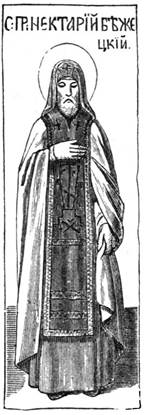
Св. Никиты исповедника, игумена Мидикийского
St. Nicetas the Confessor, Abbot of Medikion
Никита, родом из Кесарии Вифинской, с юных лет посвятил себя на служение Господу и, придя в Мидикийский монастырь, недалеко от г. Плусиады, пострижен тамошним игуменом Никифором. Через несколько лет убеждён был принять сан пресвитера и посвящён Тарасием, Константинопольским патриархом. По смерти игумена Никифора, братия избрала его в игумены. Добродетельная жизнь его была образцом для всех, и Господь прославил его благодатью исцелений. Когда император Лев Армянин и едино-мысленный с ним патриарх Феодот в мае 815 года на своём нечестивом соборе изрекли проклятие на почитающих иконы, то император призвал к себе игуменов лучших монастырей и убеждал согласиться с определением того собора. Несогласившихся заключил в темницы. В числе таковых был и преп. Никита, которого скоро сослали в городок Масалеон, где пострадал и от холода зимнего и от немилосердного приставника. Через пять дней снова был возвращён в Константинополь вместе с другими и посажен в сырую тюрьму, куда подавали и хлеб гнилой, и воду нечистую. Наконец еретики сказали исповедникам: «приобщитесь раз только из рук патриарха Феодота, и мы ничего больше не потребуем от вас!» Тогда игумены решились уступить обстоятельствам и, придя к Никите, убеждали его войти на время в общение с патриархом. Почти насильно извлекли его из тюрьмы и. пошли с ним к Феодоту. А этот, приведши их в некую домовую церковь, украшенную иконами, и лицемерно выставляя себя почитателем их, совершил литургию и из своих рук приобщил их. После того каждый пошёл в свой монастырь; но преп. Никита, сожалея об уклонении, решился идти в другую сторону и там каяться о своём прегрешении. Посему отправился на остров Проконнис (нын. Мармара), но скоро возвратился в Константинополь и, ходя по городу, открыто учил держаться православных догматов. Узнав о том, царь велел ему идти в свой монастырь, но исповедник сказал: «не пойду в монастырь свой, и не оставлю веры своей. Повинуясь отцам, умолявшим меня, я приобщился от лже-патриарха, но теперь жалею и каюсь. Отселе я не в общении с вами; ты же, царь, делай со мной как хочешь!» Царь выслал его под надзор на остров св. Гликерии, близ г. Ираклии, где был монастырь, а в нём игуменствовал еретик Анфим. И пробыл там святой в нужде и терзаниях от еретиков лет шесть, до смерти (25 декабря 820) Льва Армянина, а потом отпущен; но он не пошёл в свой монастырь, а поселился в некоем пустынном месте близ Константинополя, где по малом времени и скончался. Тело его тотчас по кончине перенесено в его обитель.
Nicetas, a native of Caesarea in Bithynia, from his youth dedicated himself to the service of the Lord and, coming to the Medikion Monastery not far from the town of Plousias, was tonsured by the local abbot, Nicephorus. After several years he was persuaded to accept the rank of presbyter and was ordained by Tarasius, Patriarch of Constantinople. Upon the death of Abbot Nicephorus, the brethren elected him as abbot. His virtuous life was a model for all, and the Lord glorified him with the grace of healings. When the Emperor Leo the Armenian and the like-minded Patriarch Theodotus, at their impious council in May of the year 815, pronounced an anathema against those who venerate icons, the emperor summoned the abbots of the chief monasteries and urged them to agree with the decree of that council. Those who did not agree he cast into prisons. Among these was the Venerable Nicetas, who was soon exiled to the small town of Masaleon, where he suffered both from the winter cold and from a merciless overseer. After five days he was again brought back to Constantinople together with others and placed in a damp prison, where they were given both rotten bread and unclean water. Finally the heretics said to the confessors: "Only once partake from the hands of Patriarch Theodotus, and we shall require nothing more of you!" Then the abbots decided to yield to circumstances and, coming to Nicetas, urged him to enter into communion with the patriarch for a time. Almost by force they drew him out of the prison and went with him to Theodotus. And he, having brought them into a certain house church adorned with icons, and hypocritically presenting himself as a venerater of them, celebrated the Divine Liturgy and from his own hands gave them Communion. After that each went to his own monastery; but the Venerable Nicetas, regretting his deviation, resolved to go in another direction and there repent of his transgression. Therefore he set out for the island of Proconnesus (now Marmara), but soon returned to Constantinople and, walking about the city, openly taught the holding fast to Orthodox dogmas. Learning of this, the emperor ordered him to go to his own monastery, but the confessor said: "I will not go to my monastery, and I will not abandon my faith. Obeying the fathers who besought me, I partook from the false patriarch, but now I grieve and repent. Henceforth I am not in communion with you; do with me, O emperor, as you will!" The emperor sent him into custody on the island of St. Glyceria, near the city of Heraclea, where there was a monastery, and in it the heretic Anthimus was abbot. And the saint remained there in need and torments from the heretics for about six years, until the death (December 25, 820) of Leo the Armenian, and then was released; but he did not go to his own monastery, but settled in a certain desert place near Constantinople, where after a short time he reposed. His body was immediately after his end translated to his monastery.
В тот же день св. муч.Агонии, Хионии иИрины Солунянки. Пострадали за Христа в гонение Максимиана, в 304 году; сожжены. На месте их мученической кончины, вне городских стен, в VI веке существовал монастырь.
On the same day, Sts. Martyrs Agape, Chionia and Irene of Thessalonica. They suffered for Christ in the persecution under Maximian, in the year 304; they were burned. On the site of their martyrdom, outside the city walls, a monastery existed in the sixth century.