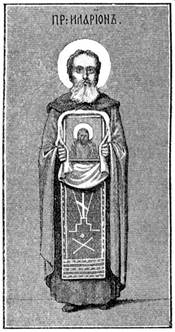
Стефан чудотворец был игуменом Триглийского монастыря (в окрестностях Константинополя) и за несогласие отвергнуться почитания икон, в 815 году, сослан императором Львом Армянином в заточение, где и умер. Иларион же, игумен Пеликитской обители близ города Бруссы, по разорении обители в 754 г., с другими монахами и сослан был и уморён голодом, в царствование Копронима.
Stephen the Wonderworker was abbot of the Triglia monastery (in the vicinity of Constantinople) and, for refusing to renounce the veneration of icons, was exiled in 815 by Emperor Leo the Armenian to confinement, where he died. Hilarion, abbot of the Pelicium monastery near the city of Brussa, after the destruction of the monastery in 754, was exiled together with other monks and starved to death during the reign of Constantine Copronymus.
Это первые известные мученики в Персии, пострадавшие в 327 году, в царствование Сапора. Ибо до сего в Персии христианство было терпимо, когда же в Римской империи христианская вера вместе с Константином восторжествовала, то Персидское правительство начало относиться к христианам подозрительно.
These are the first known martyrs in Persia, who suffered in 327, during the reign of Shapur. For until that time Christianity was tolerated in Persia; but when the Christian faith triumphed together with Constantine in the Roman Empire, the Persian government began to regard Christians with suspicion.
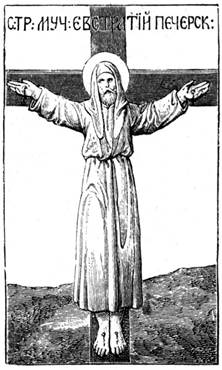
Блаженный Евстратий родился в Киеве, был богатым человеком; но следуя, как пишет блаж. Симон, Евангельским словам: «никтоже воин бывая обязуется куплями житейскими», роздал имение своё бедным и, из богача став нищим, вступил в Пещерную обитель, под управление преп. Антония. Он наложил на себя строгий пост и по примеру Господа постился сряду 40 дней, пребывая в молитве. Такой подвиг постничества оставил за ним имя «постника». В 1096 году хищные Половцы неожиданно напали на Киев; они «зажгли, так говорит очевидец Нестор, монастыри Стефанов и Герасимов и пришли к Печерскому монастырю, тогда как мы после утрени спали по кельям; подняв крик около монастыря, поставили два знамени перед воротами монастырскими; а мы побежали за монастырский дом, иные же убежали на хоры (на полати). Безбожные дети Измаиловы высекли ворота и по кельям выламывали двери и выносили всё, что находили в келье. Потом зажгли дома Владычицы, пришли к церкви и зажгли двери южные и северные, влезли в притвор у гроба Феодосиева, схватили иконы и хулили Бога и закон наш. Бог – терпел им: ещё не исполнилась мера грехов их. Они говорили: где Бог их? Пусть поможет им. – Они не знали, – что христианам надобно многими скорбями входить в Царствие Небесное; а эти нечистые и ругатели, после того как насладятся здесь веселием и простором, на том свете примут муки... Они убили нескольких из братий наших»249. Тогда в числе многих взят был в плен Половцами преподобный Евстратий250. Но страдания его не ограничились скорбями пленника. Вместе с 30 работниками Печерскими и 20 Киевлянами он продан был Херсонскому жиду. – Жадные до барышей, жиды вели тогда обширную торговлю невольниками-христианами; оборотливые торгаши покупали их у разных язычников – Половцев, Печенегов и пр. и наводняли ими рынки Испании, Польши, Азии251. Херсонский жид морил Евстратия и его товарищей голодом и по обыкновенной скупости, а ещё более, с тем, чтобы вынудить их отречься от Христа. Святой Евстратий укреплял товарищей в любви к святой Вере своими наставлениями. И они решились скорее умереть, чем отречься от Христа. Один за другим скончались они, кто через три дня, кто через семь, а иной через десять дней. Евстратий 14 дней провёл без пищи и пития и оставался жив. Жид рвался с досады и решился отмстить за себя. Когда пришёл праздник Пасхи, еврей открыл празднование тем, что распял Евстратия; к мукам страдальца прибавлял он хулы на Христа: проклят всяк висяй на древе, кричал он; другие жиды также издевались над христианином-мучеником. Евстратий благодарил Господа за то, что Он удостоил его пострадать так, как Сам пострадал. «Я верую, говорил он, что Господь скажет некогда и мне, как сказал разбойнику: днесь со Мною будеши в раи. Но на вас придёт отмщение за кровь мою и за кровь купленных вами христиан». Раздражённый Еврей схватил копье и пронзил им распятого Евстратия. Христов воин предал Господу дух свой. Тело святого мученика брошено было в море. И пророчество его скоро исполнилось. Император выдал указ гнать жидов из империи, имение их брать в казну, а старшин за мучение христиан предать смерти. Это повеление вышло по тому случаю, что один из почётных жидов, лицемерно приняв веру во Христа, почтен был саном Херсонского епарха и вслед за тем дал полную волю жидам делать, что хотят. Жид, распявший Евстратия, был повешен. Многие из Евреев, свидетели мученического подвига Евстратия и исполнения его пророчества, искренно уверовали и крестились. – Мощи святого Евстратия были отысканы верующими и привезены в Киев, где и поныне почивают, в пещерах преподобного Антония252.
Blessed Eustratius was born in Kiev and was a wealthy man; but, following, as the blessed Simon writes, the Gospel words: "No man that warreth entangleth himself with the affairs of this life," he distributed his possessions to the poor and, from a rich man becoming poor, entered the Cave monastery, under the guidance of the Venerable Anthony. He imposed upon himself a strict fast and, after the example of the Lord, fasted for forty consecutive days, remaining in prayer. Such a feat of fasting left him with the name "Faster." In 1096, the predatory Polovtsians unexpectedly attacked Kiev; they "set fire," as the eyewitness Nestor says, "to the monasteries of Stephen and Gerasimus and came to the Pechersk monastery, while we, after Matins, were sleeping in our cells; raising a shout around the monastery, they set up two banners before the monastery gates; and we fled behind the monastery building, while others fled to the choir-lofts. The godless sons of Ishmael broke down the gates and broke open the doors of the cells and carried off everything they found in the cells. Then they set fire to the houses of the Lady, came to the church and set fire to the southern and northern doors, climbed into the narthex at the tomb of Theodosius, seized the icons and blasphemed God and our law. God endured them: the measure of their sins was not yet full. They said: 'Where is their God? Let Him help them.' They did not know that Christians must enter the Kingdom of Heaven through many tribulations; but these unclean and blasphemers, after they have enjoyed pleasure and freedom here, will receive torments in the next world... They killed several of our brethren."249 Then, among many others, the Venerable Eustratius was taken captive by the Polovtsians.250 But his sufferings were not limited to the sorrows of a captive. Together with thirty Pechersk workers and twenty Kievans, he was sold to a Jew of Cherson. Greedy for profit, the Jews at that time carried on an extensive trade in Christian slaves; enterprising merchants bought them from various pagans—Polovtsians, Pechenegs, etc.—and flooded the markets of Spain, Poland, and Asia with them.251 The Jew of Cherson tormented Eustratius and his companions with hunger, both out of ordinary avarice and, even more, with the aim of forcing them to renounce Christ. Saint Eustratius strengthened his companions in love for the holy Faith by his instructions. And they resolved to die rather than renounce Christ. One after another they died, some after three days, some after seven, and others after ten days. Eustratius spent fourteen days without food or drink and remained alive. The Jew was beside himself with vexation and resolved to take revenge. When the feast of Passover came, the Jew began the celebration by crucifying Eustratius; to the sufferings of the martyr he added blasphemies against Christ: "Cursed is everyone that hangeth on a tree," he cried; the other Jews likewise mocked the Christian martyr. Eustratius gave thanks to the Lord for deigning to let him suffer as He Himself had suffered. "I believe," he said, "that the Lord will one day say to me also, as He said to the thief: 'Today shalt thou be with Me in paradise.' But vengeance will come upon you for my blood and for the blood of the Christians you have bought." Enraged, the Jew seized a spear and pierced the crucified Eustratius with it. The soldier of Christ gave up his spirit to the Lord. The body of the holy martyr was thrown into the sea. And his prophecy was soon fulfilled. The Emperor issued a decree to drive the Jews from the empire, to confiscate their property into the treasury, and to put their elders to death for the torture of Christians. This command was issued on the occasion that one of the prominent Jews, having hypocritically accepted faith in Christ, was honored with the rank of eparch of Cherson and thereafter gave the Jews full freedom to do as they pleased. The Jew who had crucified Eustratius was hanged. Many of the Jews, witnesses of the martyrdom of Eustratius and the fulfillment of his prophecy, sincerely believed and were baptized. — The relics of Saint Eustratius were found by the faithful and brought to Kiev, where they repose to this day, in the caves of the Venerable Anthony.252
«Распныйся умерщвлением плоти первее, от Иудей же распныйся второе, крепкий Евстратие, темже многое дерзновение у Христа обретый! от бед избави мя»253.
"Having been crucified first by mortification of the flesh, and crucified a second time by the Jews, O strong Eustratius, having therefore found great boldness before Christ, deliver me from troubles."253
Блаженный Иларион обучал себя молитве и подвижничеству у преподобного Евфросина Псковского. Но потом воспламенился усердием основать обитель молитвенников та, где её не было, в нынешнем Гдовском уезде. В 1424 г. в Гдове построена была Псковитянами крепость, как пограничная охрана против Ливонских Немцев и Шведов254. Иларион на берегу реки Желчи основал в 1460 г. Покровский-Озерский монастырь. – Обитель должна была бороться и с скудостью средств содержания и с опасностями со стороны не мирных соседей – папистов. Не легко было жить вблизи диких Эстов, а ещё тяжелее было от тех, которые под именем веры налагали на других железную власть папы и такую же Немецкую. – Преподобный Иларион мужественно подвизался для искреннего благочестия до смерти, которая последовала 28 марта 1476 года255.
Blessed Hilarion trained himself in prayer and asceticism under the Venerable Euphrosynus of Pskov. But later he was inflamed with zeal to found a monastery of prayerful ones where there was none, in what is now the Gdov district. In 1424, a fortress was built in Gdov by the Pskovites as a border defense against the Livonian Germans and Swedes.254 Hilarion founded the Pokrovsky-Ozersky monastery on the bank of the River Zhelcha in 1460. — The monastery had to struggle both with the scarcity of means of support and with dangers from its unpeaceful neighbors, the Papists. It was not easy to live near the wild Estonians, and even harder was it from those who, under the name of faith, imposed upon others the iron authority of the pope and likewise the German one. — The Venerable Hilarion courageously labored for sincere piety until his death, which occurred on March 28, 1476.255
Обитель его в 1623 году была ещё самостоятельной, а в 1695 году приписана к Псковскому архиерейскому дому256. Мощи его почивают под спудом в храме обители его, закрытой в 1764 г.257.
His monastery was still independent in 1623, but in 1695 it was attached to the Pskov bishop's house.256 His relics repose hidden under a covering in the church of his monastery, which was closed in 1764.257
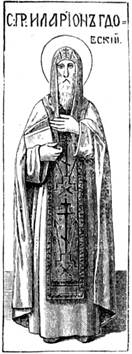
«Ещё в юности возложив крест на рамена свои», преподобный отрешился от всех сладостей мира и, предавшись иноческим трудам, скоро превзошёл всех строгой жизнью и добродетелями. Впоследствии был посвящён в сан пресвитера и игумена Пеликитской обители в Малой Азии, близ Геллеспонта.
“Having taken up the cross upon his shoulders while still in youth,” the Venerable one detached himself from all the sweetnesses of the world and, having given himself over to monastic labors, soon surpassed all in strictness of life and virtues. Afterwards he was ordained to the rank of presbyter and abbot of the Pelicium monastery in Asia Minor, near the Hellespont.
В царствование императора Константина Копронима Иларион потерпел гонение за почитание икон (и скончался около 754 г.). Он называетсяновым – в отличие от Илариона Далматского, также исповедника, потерпевшего гонение при Льве Армянине. – Преподобный Иосиф песнописец прославляет Илариона в следующих выражениях: «Честна твоя явися перед Богом смерть, Отче Священнейший, Того бо почтил еси икону и гонение претерпел еси, оскорбляем от мучителей, преподобне, мученик в сем показуяся!» (3-й. тропарь 8-ой песни).
During the reign of Emperor Constantine Copronymus, Hilarion suffered persecution for the veneration of icons (and reposed around 754). He is called the New — in distinction from Hilarion of Dalmatia, also a confessor who suffered persecution under Leo the Armenian. — The Venerable Joseph the Hymnographer glorifies Hilarion in the following words: “Precious before God hath thy death appeared, O most sacred Father, for thou didst honor His icon and didst endure persecution, afflicted by tormentors, O venerable one, showing thyself a martyr therein!” (3rd troparion of the 8th ode).
Касаясь письменных наставлений Илариона, песнописец прибавляет: «Сказание словес Божественных творя, разум Божественный, Отче, оттуда почерпал еси, всем же предал еси благочестие». «Слово твое происходит якоже роса, отгоняя зной уныния, преподобне» (2-й тропарь 4-ой песни и 2-й тропарь 7-ой песни).
Touching upon the written instructions of Hilarion, the hymnographer adds: “Making exposition of divine words, thou didst draw divine understanding therefrom, O Father, and didst deliver piety to all.” “Thy word goeth forth as dew, driving away the heat of despondency, O venerable one” (2nd troparion of the 4th ode and 2nd troparion of the 7th ode).
Между прочими письменными наставлениями Илариона сохранилось известным послание его, озаглавленное: «К старейшему брату моему и рабу Христову аз убогий и мний Иларион, малейший разумом и неключимый ни в коем же деле блазе. Все, отрекшиеся мира сего, приемше иноческий образ и вземше на рамо крест Христов, нарекшеся преемниками Апостолам! Возлюбим нравы тех, которых образ носим, последуем тем, которых учениками нарицаемся, возненавидим земное, по примеру отцев наших. Приидите, вопросим самовидца и слугу Слова Божия, любимого ученика Христова, возлегшего на перси Господни и почерпавшего тамо мудрость; приидите, мятущиеся среди земных вещей, приидите, двоедушные, не отвергшиеся мира и присвояющие жизнь вечную: приидите, вопросим Иоанна Девственника, и он возвестит полезное. Глаголи нам, глаголи, Иоанне Богослове, что сотворим, да спасемся? Какими хитростями можем избавиться муки и обрести жизнь вечную? Хочется нам Царствия Небесного, но правда-ли, что хощем? не видно; мы увлекаемся любовью к миру; любим золото, собираем имение, любим дома светлые, любим славу, честь, красоту; и это очевидно для каждого. Поведай же нам истину, Апостоле, разбери спор наш, примири нас, да будем единомысленны; богатые между нами иноки укоряют нищих, нищие осуждают богатых. Отвечай нам, красота Апостолов, Иоанне, отвечай нам, громогласные уста. И вот возглашает он: – «Аз, яко слышах и видех у Самого Слова Божия, тако же и проповедаю; не любите мира, ни яже в мире; аще бо кто любит мир сей, несть любви Отчей в нем».
Among the written instructions of Hilarion, there has been preserved a certain epistle of his, entitled: “To my elder brother and servant of Christ, I, the poor and least Hilarion, smallest in understanding and unprofitable in any good work.” “All who have renounced this world, having received the monastic form and taken the cross of Christ upon their shoulder, have named yourselves successors of the Apostles! Let us love the ways of those whose image we bear, let us follow those whose disciples we are called, let us hate earthly things, after the example of our fathers. Come, let us ask the eyewitness and minister of the Word of God, the beloved disciple of Christ, who leaned upon the Lord’s breast and drew wisdom therefrom; come, you who are troubled among earthly things, come, you double-minded, who have not renounced the world yet claim eternal life; come, let us ask John the Virgin, and he will declare what is profitable. Speak to us, speak, O John the Theologian, what shall we do that we may be saved? By what devices can we escape torment and find eternal life? We desire the Kingdom of Heaven, but is it true that we desire it? It is not evident; we are carried away by love of the world; we love gold, we gather possessions, we love bright houses, we love glory, honor, beauty; and this is evident to everyone. Tell us then the truth, O Apostle, settle our dispute, reconcile us, that we may be of one mind; the rich among us monks reproach the poor, the poor condemn the rich. Answer us, O beauty of the Apostles, John, answer us, O loud-voiced mouth.” And behold, he proclaims: — “I, as I heard and saw from the Word of God Himself, so also do I preach: Love not the world, neither the things that are in the world; for if any man love this world, the love of the Father is not in him.”
(Об Иларионе исповеднике см. «Учение об Отц. Церкви» Фил., архиеп. Черниг. Часть III, § 258, стр. 191–193).
(Concerning Hilarion the Confessor, see "The Teaching of the Fathers of the Church" by Philaret, Archbishop of Chernigov. Part III, § 258, pp. 191–193.)
Исихий, уроженец и с 412-го г. – пресвитер Иерусалимский, ученик св. Григория Богослова, почитается одним из знаменитейших учителей Церкви. «Всё св. Писание изъяснил и изложил он с ясностью и предложил для общей пользы, почему для всех он был весьма знаменит и удивителен»258.
Hesychius, a native of Jerusalem and from the year 412 a presbyter of Jerusalem, a disciple of St. Gregory the Theologian, is regarded as one of the most renowned teachers of the Church. “He explained and expounded all of Holy Scripture with clarity and set it forth for the common benefit, wherefore he was very renowned and wondrous to all.”258
В одной из пустынь Палестинских Исихий проводил жизнь подвижническую и вместе с тем был ревностно предан учёным исследованиям и изучению духа христианства. – До двенадцати «Бесед» Исихия известны и в настоящее время: содержание их, большей частью, составляют события из жизни Иисуса Христа и Божией Матери или те святые Божии, местом подвигов которых была преимущественно св. Земля. Одна из бесед Исихия начинается так: «Память о праведниках подлинно должна быть освящена, и каждый праздник в честь их есть праздник священный. Ибо все они мужественно подвизались за веру, все понесли труды за верное исповедание, все, по мановению Божию, отдали себя опасностям, чтобы достигнуть венцов истины. Но праздник, который совершается ныне, выше всякой хвалы, – это есть торжество Девы, Которая до того превосходит всех, что приняла Самого Бога-Слова, без стеснения обняла Его. Прежде всего Архангел Гавриил возвестил: радуйся, Благодатная, Господь с Тобою!»
In one of the Palestinian hermitages, Hesychius led an ascetic life and at the same time was zealously devoted to scholarly research and the study of the spirit of Christianity. – Up to twelve "Discourses" of Hesychius are known even at the present time: their content, for the most part, consists of events from the life of Jesus Christ and the Mother of God, or of those holy ones of God whose place of ascetic labors was chiefly the Holy Land. One of the discourses of Hesychius begins thus: "The memory of the righteous ought truly to be hallowed, and every feast in their honor is a sacred feast. For they all manfully struggled for the faith, they all bore labors for the true confession, they all, at the nod of God, gave themselves over to dangers, that they might attain the crowns of truth. But the feast which is celebrated today is above all praise—it is the triumph of the Virgin, Who so surpasses all that she received God the Word Himself, and without constraint embraced Him. First of all the Archangel Gabriel announced: Rejoice, O Full of Grace, the Lord is with Thee!"
Великой назидательностью отличается также сочинение св. Исихия «Душевное учение о трезвении и добродетели», писанное для инока Феодула259.
The work of St. Hesychius, "The Soul's Teaching on Sobriety and Virtue," written for the monk Theodulus, is also distinguished by great edification.259
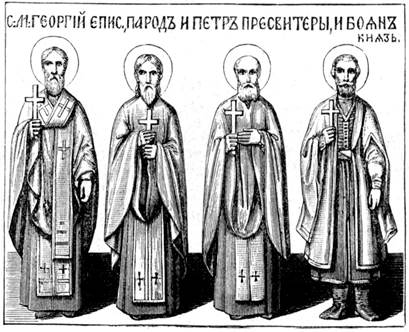
Когда Грубош (Крум), князь Болгарский, взяв несколько городов империи Греческой, одержал (июня 29-го 813 г.) под Одрином (Адрианополем) победу над Греческим войском; то, отправясь сам к Константинополю, поручил осаду Одрина сыну своему Обритому илиКрутогону, а часть пленников предоставлена была военачальнику Цоку260. В числе пленных, которых всех было более 100,000261, были и христиане из Славян. Таковы были родители будущего императора Василия Македонянина и сам Василий, тогда ещё юноша262. «Чудный архиерей (Мануил Адрианопольский) и бывший с ним народ многих из Болгар привели к вере Христовой и посеяли семена христианского учения там и здесь, отвлекали Славян от языческого заблуждения и приводили к свету Богопознания»263. Когда Цок увидал, что пленники так успешно распространяют веру Греков, ставших ненавистными особенно за неблагородный, предательский поступок Льва Армянина с Грубошом, – Цок, столько же жестокий, сколько и фанатик язычества, потребовал от знаменитых христиан, дабы отреклись от Христа. 377 христиан, между ними два военачальника, охотно приняли мученическую смерть. Прежде других предан мучительской смерти Мануил, епископ Адрианопольский264.Георгий, епископ Дебелого, иначе Загоры, одного из городов Славянской Фракии, и следовательно епископ Славян, также умер мучеником265. В числе пострадавших священников пресвитерПарод – Славянин по имени; Пётр священствовал в Славянском городе Мглине, и Болгары особенно чтут поныне сего мученика: вблизи Тернова есть монастырь св. Петра Мглинского266. Время Грубоша было весьма важным в истории южных Славян. Властители их, особенно по политической борьбе с Греками, ещё фанатически охраняли язычество, хотя и из них один, князь Цериг, в 777 г., оставив своих, принял крещение в Константинополе от патриарха-Славянина Никиты267. в народе Славянском св. Вера имела уже десятки и сотни тысяч чтителей своих, особенно после проповеди, преподанной пленниками Грубоша Славянам268.
When Grubosh (Krum), Prince of Bulgaria, having taken several cities of the Greek Empire, gained a victory (on June 29, 813 A.D.) near Odrin (Adrianople) over the Greek army; then, setting out himself for Constantinople, he entrusted the siege of Odrin to his son Obrit or Krutogon, while a portion of the captives was given over to the voivode Tsok.260 Among the prisoners, of whom there were in all more than 100,000,261 there were also Christians from among the Slavs. Such were the parents of the future Emperor Basil the Macedonian, and Basil himself, then still a youth.262 "The wondrous hierarch (Manuel of Adrianople) and the people with him brought many of the Bulgarians to the faith of Christ and sowed the seeds of Christian teaching here and there, drawing the Slavs away from pagan error and leading them to the light of the knowledge of God."263 When Tsok saw that the captives were spreading the faith of the Greeks so successfully—the Greeks having become hateful especially because of the ignoble, treacherous act of Leo the Armenian towards Grubosh—Tsok, as cruel as he was a fanatic of paganism, demanded of the renowned Christians that they renounce Christ. 377 Christians, among them two voivodes, willingly accepted a martyr's death. Before the others, Manuel, Bishop of Adrianople, was given over to a tormentor's death.264George, Bishop of Debeli, otherwise Zagora, one of the cities of Slavic Thrace, and consequently a bishop of the Slavs, also died a martyr.265 Among the suffering clergy, the presbyter Parod—a Slav by name; Peter served as a priest in the Slavic city of Mglin, and the Bulgarians especially honor this martyr to this day: near Tarnovo there is a monastery of St. Peter of Mglin.266 The time of Grubosh was very important in the history of the Southern Slavs. Their rulers, especially because of political struggle with the Greeks, still fanatically preserved paganism, although one of them, Prince Tserig, in 777 A.D., leaving his own people, received baptism in Constantinople from the Slav Patriarch Niketas.267 Among the Slavic people, the holy Faith already had tens and hundreds of thousands of its venerators, especially after the preaching delivered by the captives of Grubosh to the Slavs.268
Сын Грубоша Обритый, иначе Крутогон, помирился с империей и отпустил пленников269. Киннамон, прекрасный по наружности и ещё более прекрасный по душе, понравился Обритому, и он оставил Киннамона при себе. Князю не по душе было, что тот христианин; но он думал, что ласками и милостями склонит его к языческой жизни. Между тем, Киннамону довелось воспитать в молодом Болгарском князе Бояне мученика св. Веры. Когда совершалась торжественная жертва, Киннамона пригласили в числе Славянской знати к участию в жертве. Искренний христианин отвечал: «нельзя пить чаши Господней и чаши бесовской» (1Кор.10:20). Его привели насильно к месту жертвы. Он смело объяснял ничтожность языческих богов и преступную глупость поклонения им. Против него зашумели с неистовой злобой, жестоко избили его и бросили в смрадную тюрьму. Обритый не был против христиан; заключив мир с империей, он обратился против Немцев и в 824 г. спас имп. Михаила от бунтовщика Фомы270. – И однако Киннамон, по злости фанатиков язычества, пробыл в тюрьме до смерти Обритого († 826 г.).
The son of Grubosh, Obrit, otherwise Krutogon, made peace with the empire and released the captives.269Kinnamos, beautiful in appearance and even more beautiful in soul, pleased Obrit, and he kept Kinnamos with him. The prince was displeased that he was a Christian; but he thought that with caresses and favors he would incline him to pagan life. Meanwhile, Kinnamos was destined to raise the young Bulgarian Prince Boyan as a martyr of the holy Faith. When a solemn sacrifice was being performed, Kinnamos was invited, among the Slavic nobility, to participate in the sacrifice. The sincere Christian answered: "Ye cannot drink the cup of the Lord and the cup of devils" (1 Cor. 10:20). They brought him by force to the place of sacrifice. He boldly explained the worthlessness of the pagan gods and the criminal foolishness of worshipping them. They clamored against him with frenzied malice, beat him cruelly, and threw him into a foul prison. Obrit was not opposed to Christians; having concluded peace with the empire, he turned against the Germans and in 824 A.D. saved Emperor Michael from the rebel Thomas.270 – And yet Kinnamos, because of the malice of pagan fanatics, remained in prison until the death of Obrit († 826 A.D.).
Когда взошёл на Болгарский престол сын Обритого Маломир, иначе Владимир; брат его Боян, давно познакомившийся с Киннамоном, просил Маломира отыскать и прислать к нему Киннамона. Желание его было исполнено. Боян, увидав Киннамона, изумился, что тот до крайности истощён и исхудал. Киннамон объяснил, что неважно истомление тела, а очень опасно, если душа истомлена. «За что же ты так страдал?» – спросил князь. Киннамон отвечал, что ничего худого не делал он, только тьма не любит света. В долгой беседе искренний и просвещённый христианин объяснил князю-язычнику несчастие язычества Славянского и пагубу языческой жизни, равно неизбежную нужду христианства для вечности человеческой. Бог неба и земли, говорил христианин, унижается и оскорбляется поклонением болвану Перуну; солнце – творение Божие, а не Даждь Бог; огонь также творение Божие, а не бог Сварог271; всё язычество – дело грешного человечества, по движениям страстей и в угоду страстям придумавшего богов. Жертвы и омовение не очищают грешной души, а только питают грешную плоть272. Без Христа Иисуса нет света для ума, нет жизни для души. Он один и учитель человечества и Спаситель наш, примиривший правду Божию Своею смертью с виновным человечеством. Не желаешь себе погибели? Веруй в Господа Иисуса. Боян с радостью принял крещение и стал посвящать жизнь свою молитве, Богомыслию, посту. – Маломир, узнав о обращении брата к христианству, потребовал от него со всей настойчивостью отказаться от веры Греков. «Лучше приму смерть, чем решусь жить жизнью язычника; чту Христа Спасителя моего и умру за Него, отвечал Боян. Владетельный князь-язычник осудил брата-христианина на смерть. Исповедник, идя к месту казни, исполнился духа пророческого. «Вера, говорил он вслух всех, за которую я ныне лишаюсь жизни, распространится по всей стране Болгарской. Напрасно думают остановить её моей смертью. На всяком месте постановлено будет знамение креста; а идолы и их жертвенники с храмами исчезнут. Жаль, что брат мой Маломир скоро потеряет жизнь». – Предсказание исполнилось и прежде всего и над братом: Маломир скоро умер вовсе неожиданно († 830 г.); мученик князь скончался от удара меча273.
When the son of Obrit, Malomir, otherwise Vladimir, ascended the Bulgarian throne; his brother Boyan, who had long since become acquainted with Kinnamos, asked Malomir to find and send Kinnamos to him. His wish was fulfilled. Boyan, seeing Kinnamos, was amazed that he was extremely exhausted and emaciated. Kinnamos explained that the wasting of the body is not important, but it is very dangerous if the soul is wasted. "For what did you suffer so?" asked the prince. Kinnamos answered that he had done nothing evil, only that darkness does not love the light. In a long conversation, the sincere and enlightened Christian explained to the pagan prince the misfortune of Slavic paganism and the perdition of pagan life, as well as the inevitable need of Christianity for human eternity. The God of heaven and earth, said the Christian, is humiliated and offended by the worship of the idol Perun; the sun is a creation of God, and not Dazhdbog; fire is also a creation of God, and not the god Svarog;271 all paganism is the work of sinful humanity, which, according to the impulses of the passions and to gratify the passions, devised gods. Sacrifices and ablutions do not cleanse the sinful soul, but only nourish the sinful flesh.272 Without Christ Jesus there is no light for the mind, no life for the soul. He alone is both the teacher of humanity and our Savior, Who reconciled the righteousness of God with guilty humanity by His death. Do you not desire perdition for yourself? Believe in the Lord Jesus. Boyan joyfully received baptism and began to devote his life to prayer, the contemplation of God, and fasting. – Malomir, learning of his brother's conversion to Christianity, demanded of him with all insistence that he renounce the faith of the Greeks. "I would rather accept death than resolve to live the life of a pagan; I honor Christ my Savior and will die for Him," answered Boyan. The ruling pagan prince condemned his Christian brother to death. The confessor, going to the place of execution, was filled with a prophetic spirit. "The faith," he said in the hearing of all, "for which I am now deprived of life, will spread throughout the whole Bulgarian land. In vain do they think to stop it by my death. In every place the sign of the cross will be set up; but the idols and their altars with temples will disappear. It is a pity that my brother Malomir will soon lose his life." – The prophecy was fulfilled, and first of all concerning the brother: Malomir soon died quite unexpectedly († 830 A.D.); the prince-martyr died by the blow of a sword.273
Письмо еписк. Агобарда к Людовику Благочестивому: „мы проповедовали, дабы христиане не продавали жидам невольников христиан и не дозволяли бы жидам продавать христиан Испанцам“, ed. Balus, 1. 62. Об Адалберте, епископе Прагском, жизнь его: „каких пленников и невольников христиан покупал нещастным золотом торгаш Еврей, он (997 г.) выкупал, но не мог выкупать всех“. Ар. Freher. р. 77. сл. Nicephorus Gregoras Т. I. р. 60. Helmold hist. Slavor. II. 31.
Letter of Bishop Agobard to Louis the Pious: "We preached that Christians should not sell Christian slaves to Jews and should not permit Jews to sell Christians to the Spaniards," ed. Balus, 1. 62. Concerning Adalbert, Bishop of Prague, his Life: "whatever captives and Christian slaves the Jewish merchant bought with wretched gold, he (in 997 A.D.) redeemed, but could not redeem all." Ap. Freher. p. 77. cf. Nicephorus Gregoras T. I. p. 60. Helmold hist. Slavor. II. 31.
Поныне ещё видны здесь остатки каменных бойниц у земляного вала. По народному говору Гдовск в древности назывался Вдовск, потому будто бы, что дан был во владение вдовствующей вел. кн. Ольге. По книге большего чертежа: „от Иваня града 70 вёрст у Чудского озера град Гдов“. Изд. Спасского, стр. 172.
To this day the remains of stone loopholes at the earthen rampart are still visible here. According to popular speech, Gdovsk was in ancient times called Vdovsk, because it was supposedly given as a possession to the widowed Grand Princess Olga. According to the Book of the Great Map: "from Ivan-gorod 70 versts, at Lake Peipus, the town of Gdov." Ed. Spassky, p. 172.
Ист. княж. Псков. 3, 77. Ркп. святцы: преп. Иларион, игумен Покровского монастыря, иже на Желчи, бысть (Отен. сп. „преставися“) в л. 6984 г. марта 28 д.
History of the Principality of Pskov 3, 77. Manuscript menologia: the Venerable Hilarion, abbot of the Pokrovsky Monastery on the Zhelch, was (Oten. copy: "reposed") in the year 6984, March 28.
Даже после января 814 г. более 12,000 пленных уведено Крумом в Болгарию, а другая часть Крумовой армии увела ещё 50,000 – Чертков о Манассииной летоп. 92. Главное местопребывание Грубоша – Шумен, из которого после образовалась Шумла.
Even after January 814 A.D., more than 12,000 captives were led away by Krum into Bulgaria, and another part of Krum's army led away another 50,000 – Chertkov on the Chronicle of Manasses 92. The main residence of Grubosh was Shumen, from which later Shumla was formed.
Кедрин 2, 558. Зонара 2, 163. Василия Македонянина признают Славянином Арабский писатель Гамза и Византийский Генезий. По словам последнего Василий земледелец любил бороться „на подрез“. Переводчик Манассииной летописи говорит, что имп. Василий был „от села Белипра, близ сющаго праваго града Македонскаго“ (у Черткова, стр. 23), тогда как по словам монаха Георгия, „родился в Македонии, в округе Адрианопольском“ (р. 396), по выражению Симеона логофета, „был родом Македонянин, по отечеству Адрианополец“ (р. 326). По известию Кедрина (2, 399), имп. Михаил, предпринимая возвратить Одрин, не хотел употребить стенобитных башен, чтобы иначе „Скифы, живущие вокруг Адрианополя“, не научились действовать этими машинами. – Таким образом сёла, расположенные вокруг Одрина, в конце VIII века состояли из жителей Скифов –Славян и Македония – означала страну Славян, как и в древнее время. – Близ Адрианополя гор. Берсиниция – Березница (796 и 813 г. у Феофана) горный проход Гема – Берегава (678 г. у Феофана).
Cedrenus 2, 558. Zonaras 2, 163. The Arab writer Hamza and the Byzantine Genesius recognize Basil the Macedonian as a Slav. According to the latter, Basil, a husbandman, loved to wrestle "on the cut." The translator of the Chronicle of Manasses says that Emperor Basil was "from the village of Belipra, near the right city of Macedonia" (in Chertkov, p. 23), whereas according to the monk George, "he was born in Macedonia, in the district of Adrianople" (p. 396); in the words of Symeon the Logothete, "he was a Macedonian by birth, an Adrianopolitan by fatherland" (p. 326). According to the account of Cedrenus (2, 399), Emperor Michael, undertaking to recover Odrin, did not wish to use battering towers, lest "the Scythians living around Adrianople" learn to operate these machines. – Thus the villages situated around Odrin, at the end of the 8th century, consisted of inhabitants who were Scythians—Slavs, and Macedonia signified the land of the Slavs, as in ancient times. – Near Adrianople is the city of Bersinicia—Bereznitsa (in Theophanes, 796 and 813), and the mountain pass of Haemus—Beregava (in Theophanes, 678).
В менологе Василия под 21 января: „при имп. Льве АрмянинеКрум, Болгарский князь, со множеством людей, осадил Адрианополь Фракийский и взял св. Мануила епископа. Сперва велел он отрубить ему руки, потом рассечённого мечом отдал в пищу зверям. За это нечестие он подпал ненависти со стороны своего народа и был задушен верёвкой. – Принявший власть над Болгарами нечестивейшийЦок собрал всех пленных христиан, воевод, священников, простых мирян, принуждал отречься от христианской веры. Болгары тогда ещё не были христианами. – Когда же те не захотели исполнить его волю, велел иных обезглавить, других умертвить жестокими казнями“. Здесь много неверного. Грубош умер, задушенный приливом крови, в пятницу на Святой неделе апреля 14-го 814 г. (Krug byzantin. choronol. s. 156). Так как св. Мануил скончался 22 января, а в этом месяце 814 г. Лев Армянин хотел обманом умертвить Грубоша; то мученичество св. Манупла последовало конечно вслед за открывшимся обманом, янв. 22-го 814 г. – После Грубоша наследовал престол сын его Обритый, иначе Крутогон и Муртагон. – Цок никогда не был владетельным князем, а был только военачальником. ИмяЦока поныне обыкновенное у Болгар. Славян. перевод синаксаря 1340 г. (Зап. Акад. VI, 110) неверен подлиннику, но замечательны в нём Одринь град Фрачьски, Круг, Бльгарскы кнез.
In the Menologion of Basil under January 21: "Under Emperor Leo the Armenian, Krum, the Bulgarian prince, with a multitude of men, besieged Adrianople in Thrace and took the holy Manuel, the bishop. First he ordered his hands to be cut off, then, having been cut with a sword, he was given as food to the beasts. For this impiety he incurred the hatred of his people and was strangled with a rope. – The most impious Tsok, who received power over the Bulgarians, gathered all the captive Christians—voivodes, priests, and laymen—and compelled them to renounce the Christian faith. The Bulgarians were not yet Christians at that time. – When they refused to do his will, he ordered some to be beheaded and others to be put to death by cruel tortures." There is much that is inaccurate here. Grubosh died, choked by a rush of blood, on Friday of Bright Week, April 14, 814 A.D. (Krug, Byzantinische Chronologie, p. 156). Since St. Manuel reposed on January 22, and in that month of 814 A.D. Leo the Armenian intended to kill Grubosh by deceit, the martyrdom of St. Manuel undoubtedly followed the discovery of the deceit, on January 22, 814 A.D. – After Grubosh, his son Obrytyi, otherwise Krutogon and Murtagon, succeeded to the throne. – Tsok was never a sovereign prince, but was only a military commander. The name Tsok is still common among the Bulgarians. The Slavonic translation of the Synaxarion of 1340 (Zap. Akad. VI, 110) is inaccurate to the original, but notable in it are Odrin, a Thracian city; Krum, the Bulgarian prince.
Феофан (ар. Aseman. 2, 332) ясно говорит, что св. Георгий взят был в 811 г., когда взят был город Загоры. Не только минеи (выписки in act. Sanet. Ianuar. 2, 441. 442), но и Константин Порфирогенит (Vita Basilii р. 136) относят кончину св. Георгия и других уже ко времени Обритого. Но Обритый ли мучил христиан? Так как Обритый всегда был более расположен к христианам, чем отец его, и пленные поручены были Грубошем Цоку, то мучение христиан справедливо приписывается в месяцеслове Василия Цоку. Сл. прим. 23.
Theophanes (ap. Assemani, 2, 332) clearly states that St. George was taken captive in 811 A.D., when the city of Zagora was taken. Not only the Menaia (excerpts in Acta Sanctorum, Ianuar. 2, 441, 442), but also Constantine Porphyrogennetos (Vita Basilii, p. 136) refer the end of St. George and the others to the time of Obrytyi. But did Obrytyi torment the Christians? Since Obrytyi was always more favorably disposed toward Christians than his father, and the captives were entrusted by Grubosh to Tsok, the martyrdom of the Christians is rightly attributed in the Menologion of Basil to Tsok. Cf. note 23.
Историк чудес святого Димитрия Солунского говорит о пленниках Аварского кагана: „с того времени (со времени пленения) они (христиане) смешались с Болгарами, Анарами и другими язычниками и, когда родили одни от других детей и возросли в многолюдный народ, то дети от родителей переняли расположение и любовь к нравам Греческим; через веру православную и живительное крещение умножилось христианское племя“. – Кубарь с этим народом около 640 г. перешёл Дунай и поселил его невдали от Охриды. Св. Димитрий Солунский и Славяне, Μ. 1847 г. Окончательное и самое многолюдное переселение Славян с северного берега Дуная в древние южные свои места совершилось с 678 года. Тогда они, соединясь с оставшимися на юге Славянами, стали властвовать над колонистами Греками во Фракии, Македонии и Иллирике, – образовалось Болгарское княжество. Никифор Chron. р. 22–25. Феофан р. 296–301. Константин Багрян. de themat. 2, 20. 21. Зонара 2, 91–93. Кедрин 438–441. Манассиина лет. у Черткова, стр. 61. „О начале христианства, его распространении и утверждении (?) между Болгарами“ – в Христ. Чтен. 1858 года 11, 141. 216. 269. Здесь много собрано сведений верных, но довольно пропусков и ошибок. Лев Мудрый (Tactic. с. 18) писал: „и Славяне в древности были свободными, когда жили за Дунаем. Но Римляне победили Славян, проводивших жизнь пастушескую и прежде, чем перешли те через Дунай, покорны были игу Римской власти... Перешедши же (из-за Дуная) не хотели более покоряться никому, как своим; они думали, что лучше быть под властью и законами князя своего племени, чем у Римлян. Так они остаются одинаковыми до наших времён, хотя приняли освящение св. крещения“. О времени возвращения Славян в Македонию и Эпир – в Болгарском переводе Манассииной летописи. Здесь оно относится ко времени импер. Анастасия (491–518). См. слова у Черткова о Манассииной летоп., стр. 39. и в Ж. Μ. Просв. 1837 г. III, 364. Кодин о зданиях Констант.: „монастырь Дамиана построил Дамиан, родом Славянин, префект постельничих при импер. Феофиле иконоборце“ (829–841) ed Beck. р. 116. В статье Христ. чтен. 1858 г. II, 141. 216. 269: „о начале христианства, его распространении и утверждении (?) между Болгарами“ много собрано сведений верных, но много пропусков и ошибок.
The historian of the miracles of St. Demetrius of Thessalonica says of the captives of the Avar Khagan: "From that time (from the time of their captivity) they (the Christians) mixed with the Bulgarians, Avars, and other pagans, and when they bore children from one another and grew into a populous people, the children inherited from their parents a disposition and love for Greek customs; through the Orthodox faith and life-giving baptism, the Christian tribe multiplied." — Kubar with this people, around 640 A.D., crossed the Danube and settled them not far from Ohrid. St. Demetrius of Thessalonica and the Slavs, M. 1847. The final and most populous migration of the Slavs from the northern bank of the Danube to their ancient southern lands took place from 678 A.D. Then, uniting with the Slavs remaining in the south, they began to rule over the Greek colonists in Thrace, Macedonia, and Illyricum—the Bulgarian principality was formed. Nicephorus, Chronographia, pp. 22–25. Theophanes, pp. 296–301. Constantine Porphyrogennetos, De Thematibus, 2, 20, 21. Zonaras 2, 91–93. Cedrenus 438–441. The Chronicle of Manasses in Chertkov, p. 61. "On the Beginning of Christianity, its Spread and Establishment (?) among the Bulgarians"—in Christian Reading, 1858, 11, 141, 216, 269. Much reliable information is gathered here, but there are also many omissions and errors. Leo the Wise (Tactica, c. 18) wrote: "And the Slavs in antiquity were free, when they lived beyond the Danube. But the Romans conquered the Slavs, who led a pastoral life, and before they crossed the Danube, they were subject to the yoke of Roman power... Having crossed (from beyond the Danube), they no longer wished to submit to anyone but their own; they thought it better to be under the authority and laws of a prince of their own tribe than under the Romans. Thus they remain the same to our times, although they have received the sanctification of holy baptism." On the time of the return of the Slavs to Macedonia and Epirus—in the Bulgarian translation of the Chronicle of Manasses. There it is referred to the time of the Emperor Anastasius (491–518 A.D.). See the words in Chertkov on the Chronicle of Manasses, p. 39, and in the Journal of the Ministry of Public Education, 1837, III, 364. Codinus on the buildings of Constantinople: "The monastery of Damian was built by Damian, a Slav by birth, prefect of the bedchamber under the iconoclast Emperor Theophilus" (829–841 A.D.), ed. Bekker, p. 116. In the article of Christian Reading, 1858, II, 141, 216, 269: "On the Beginning of Christianity, its Spread and Establishment (?) among the Bulgarians," much reliable information is gathered, but there are many omissions and errors.
Константин de vita Basilii р. 136. 137. Мир заключён и пленники отпущены в 817 году. Assemani calend. 2, 353. 359. У Георгия монаха по некоторым спискам сказано, будто Крум полагал препятствия возвращению пленных; но в других списках препятствовавший назван Κομης – Комис, граф (Stritten Bulgarica § 73). В этом Комите нельзя не узнать милого Цока,
Constantine, De Vita Basilii, pp. 136, 137. Peace was concluded and the captives were released in 817 A.D. Assemani, Calendaria, 2, 353, 359. In George the Monk, according to some manuscripts, it is said that Krum placed obstacles to the return of the captives; but in other manuscripts, the one who hindered is called Κομης—Komis, Count (Stritten, Bulgarica, § 73). In this Komis one cannot fail to recognize the dear Tsok.
О божествах Болгарских св. Григорий в переводе Малаловой летописи у кн. Оболенского, в предисл., стр. 16. 17. Μ. 1851 г. Сл. Черниг. Епархиал. Известия 1863 г., стр. 521. 524. 525. 1864 г., стр. 32. Кое-что о религии Славян у Колесникова: обозрение известий Византийских о быте языческих Славян, стр. 208–213. Опыты студентов Харьковского университета, Харьк. 1848 г. О свароге Дитмара Шафарик в своих поправках: Славянские древности V, 271–276.
On the Bulgarian deities, St. Gregory in the translation of the Chronicle of Malalas, in Prince Obolensky, preface, pp. 16, 17. M. 1851. Cf. Chernigov Diocesan News, 1863, pp. 521, 524, 525; 1864, p. 32. Something on the religion of the Slavs in Kolesnikov: Survey of Byzantine Accounts of the Pagan Slavs, pp. 208–213. Essays of Students of Kharkov University, Kharkov, 1848. On Svarog, Ditmar, Šafárik in his corrections: Slavic Antiquities V, 271–276.
Симеон Логофет: „Крум, по обычаю народа устроив жертвенник за золотыми воротами, принёс в жертву множество скота и людей; потом, погрузив ноги у морского берега, омылся водой и очистил народ свой“. Stritten Bulgarica р. 554. О Руссах Святослава Лев Диакон: „совершая празднество, умертвили младенцев ипетухов, погрузив их в воды Дуная“. Hist. IX. р. 149 ed. Bon.
Symeon the Logothete: "Krum, according to the custom of the people, having built an altar before the Golden Gate, sacrificed a multitude of cattle and men; then, having dipped his feet at the seashore, he washed himself with water and purified his people." Stritten, Bulgarica, p. 554. On the Rus of Sviatoslav, Leo the Deacon: "Celebrating a festival, they killed infants and roosters, plunging them into the waters of the Danube." Historia IX, p. 149, ed. Bonn.
Феофилактово житие мучеников (ор. 3, 477 s. Venet. 1656) в переводе Савельева (Славянский сборник, СПб. 1848 г.), впервые объяснявшего Византийскую путаницу о Болгарских князьях, но не везде удачно. О происхождении Болгар подробное исследование гр. Уварова: De Bulgarorum utrorum que origine et sedibus antiquissimis, Dorpatiæ 1853. Сочинитель, знакомый с источниками и пособиями, доказывает, что Дунайские Болгары Славяне и их родина – Карпаты, тогда как родина Волжских Болгаров – Кавказ.
The Life of the Martyrs by Theophylact (op. 3, 477 s., Venet. 1656) in the translation of Saveliev (Slavic Collection, St. Petersburg, 1848), who first explained the Byzantine confusion concerning the Bulgarian princes, but not always successfully. On the origin of the Bulgarians, a detailed study by Count Uvarov: De Bulgarorum utrorumque origine et sedibus antiquissimis, Dorpat, 1853. The author, familiar with the sources and aids, proves that the Danubian Bulgarians are Slavs and their homeland is the Carpathians, whereas the homeland of the Volga Bulgarians is the Caucasus.