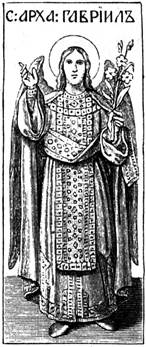
На другой день Благовещения Пресвятой Деве Церковью установлено торжество в честь Архистратига Гавриила, называемоеСобором, то есть собранием верных в честь его. Как в обществах гражданских уважаются представители и посланники государей, облечённые высокой властью; так св. Церковь чтит небесного посланника – Архангела Гавриила, принесшего на землю радостную весть о воплощении Сына Божия, собираясь для прославления Архангела и купно с ним прочих Небесных сил, на другой день после Благовещения, называя этот деньСобором Архангела Гавриила.
On the day after the Annunciation to the Most Holy Virgin, the Church has established a celebration in honor of the Chief Commander Gabriel, called the Synaxis, that is, the gathering of the faithful in his honor. Just as in civil societies, representatives and envoys of sovereigns, invested with high authority, are respected, so the holy Church honors the heavenly messenger—the Archangel Gabriel, who brought to earth the joyful tidings of the incarnation of the Son of God—by gathering for the glorification of the Archangel and together with him the rest of the Heavenly Powers, on the day after the Annunciation, calling this day the Synaxis of the Archangel Gabriel.
День собора в честь св. Архангела Гавриила установлен Церковью издревле, на основании Иерусалимского церковного устава, в коем сохранились для нас священные обычаи и установления первенствующей Церкви. В IX веке Иосиф Студит написал канон на день Собора Архангела Гавриила. В этот день Церковь прославляет св. Архангела Гавриила, как таинника и служителя Божественной славы и поборника миру, прося его заступления. «Пресветлые и честные и вседетельные, пренеизчетные и страшные Троицы, ты еси, Архистратиже славный, служителю и молитвенниче, ныне непрестанно моли, избавимся нам от всяких бед и мук».
The day of the synaxis in honor of the holy Archangel Gabriel was established by the Church from ancient times, on the basis of the Jerusalem Church Typicon, in which the sacred customs and ordinances of the primitive Church have been preserved for us. In the ninth century, Joseph the Studite composed a canon for the day of the Synaxis of the Archangel Gabriel. On this day, the Church glorifies the holy Archangel Gabriel as the initiate and minister of Divine glory and the champion of peace, beseeching his intercession: "Of the most radiant, honorable, all-effecting, unutterable, and awesome Trinity, thou art, O glorious Chief Commander, the servant and intercessor; now unceasingly pray that we may be delivered from every calamity and torment."
Хотя Славянская жупания и Словенцы (Ретийцы) с Нориной при Августе порабощены были Римлянами, но покорённые Славяне, за исключением некоторых, оставлены на своих местах233. Так они слушали первую проповедь Евангельскую наравне с победителями их и едва ли не охотнее последних. Св. Андроник, родственник св. Павла и прежде его уверовавший во Христа (Рим.16:17), был первым проповедником св. веры в Паннонии234.
Although the Slavic province and the Slovenes (Raetians) together with Noricum were subjugated by the Romans under Augustus, the conquered Slavs, with some exceptions, were left in their own places233. Thus they heard the first preaching of the Gospel equally with their conquerors, and scarcely less willingly than the latter. St. Andronicus, a relative of St. Paul and one who believed in Christ before him (Rom. 16:7), was the first preacher of the holy faith in Pannonia234.
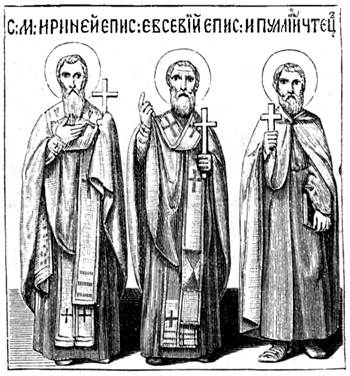
При Диоклитиане здесь уже были мученики. Таков был св. Ириней, епископ Срема, главного города Нижней Жупании, пострадавший за Христа в 304 г.235.
Under Diocletian, there were already martyrs here. Such was St. Irenaeus, Bishop of Sirmium, the chief city of the Lower Province, who suffered for Christ in the year 304235.
До принятия сана священства блаж. Ириней был женат и у него были дети. Высокие качества души, строгая жизнь, образованность, доставив ему уважение, возвели его на кафедру святительскую – ещё в молодых летах. – Множество родных, близких и дальних, окружавших его во время мученичества его, показывает, что он был в Среме туземец – Славянин, а не пришлый Римлянин. Став святителем, он отдал всего себя на служение Господу и пастве и жил девственником. Он ревностно учил приходящих к нему, оглашал Христовой истиной и открыто проповедовал Христа, не взирая на языческую власть236.
Before receiving the rank of the priesthood, the blessed Irenaeus was married and had children. The high qualities of his soul, his strict life, and his education, having gained him respect, raised him to the episcopal see—while still in his youth. The multitude of relatives, near and distant, who surrounded him during his martyrdom shows that he was a native of Sirmium—a Slav, and not a foreign Roman. Having become a hierarch, he gave himself entirely to the service of the Lord and his flock, and lived as a virgin. He zealously taught those who came to him, instructed them in the truth of Christ, and openly preached Christ, without regard to the pagan authority236.
Вследствие распоряжений Диоклитиана Проб, областной начальник Паннонии, приказал доставить к нему епископа Иринея. Когда святой явился к нему, Проб объявил: «священные законы повелевают всем приносить жертву богам». «Кто богам, а не Богу, приносит жертву, погибнет», отвечал Ириней. «Воля милостивых императоров такова, говорил Проб, чтобы или приносили жертву богам, или упорные терпели казнь». Ириней отвечал: «воля истинного Бога такова, чтобы переносил я все роды страданий, но не приносил жертвы богам». Иринея подвергли жестоким пыткам. «Что скажешь, Ириней? говорил префект; приноси жертву». «Приношу жертву добрым исповеданием Богу моему, Коему постоянно священнодействовал», отвечал Ириней.
In consequence of the decrees of Diocletian, Probus, the provincial governor of Pannonia, ordered that Bishop Irenaeus be brought to him. When the saint appeared before him, Probus declared: "The sacred laws command all to offer sacrifice to the gods." "He who offers sacrifice to gods, and not to God, shall perish," replied Irenaeus. "The will of the merciful emperors is this," said Probus, "that either you offer sacrifice to the gods, or the obstinate suffer punishment." Irenaeus replied: "The will of the true God is this, that I endure all kinds of sufferings, but not offer sacrifice to the gods." Irenaeus was subjected to cruel tortures. "What do you say, Irenaeus?" said the prefect; "offer sacrifice." "I offer sacrifice by a good confession to my God, to Whom I have constantly ministered as a priest," replied Irenaeus.
«Пришли родители святого и увидав, что его мучат, упрашивали его пожалеть молодость свою. Тут дети, обнимая ноги его, говорили: «пожалей себя и нас, отец»; там жена и мать умоляли. Родные рыдали, домашние стонали, соседи и друзья плакали». Но святитель оставался твёрд. «Знайте, говорил он, ни ваша любовь, ни угрозы власти не заставят меня нарушить волю Господа моего». «Склонись на эти слёзы, посоветуй умное твоей молодости», говорил префект. «Всегда советую не приносить жертвы идолам», отвечал мужественный Ириней. Проб приказал отвести его в тюрьму. Там он пробыл много дней и подвергался разным истязаниям.
"The parents of the saint came, and seeing that he was being tortured, begged him to take pity on his youth. Then the children, embracing his feet, said: 'Take pity on yourself and on us, father'; there, his wife and mother implored him. Relatives wept, household members groaned, neighbors and friends cried." But the hierarch remained steadfast. "Know," he said, "that neither your love nor the threats of authority will cause me to transgress the will of my Lord." "Yield to these tears, give good counsel to your youth," said the prefect. "I always counsel not to offer sacrifice to idols," replied the courageous Irenaeus. Probus ordered him to be taken to prison. There he remained many days and was subjected to various torments.
В одно время, в самую полночь, префект сидел в суде и сюда приведён был блаженнейший мученик Ириней. Проб сказал: «приноси жертву, Ириней, в избежание мук». «Делай, чего требует правда; а того не ожидай от меня», отвечал святой. Проб в гневе приказал бить его палками. Ириней говорил: «с юности моей научился я чтить Бога моего; чту Его, укрепляющего меня во всём; но рукотворенных богов не могу почитать». Префект опять пытался поколебать твёрдость его напоминанием о близких к его сердцу, особенно о детях. «У детей моих есть Бог, Который может сохранить их», отвечал святой. «Пожалей себя, молодой человек», говорил префект. «Делай, что хочешь; ты увидишь, какое Господь Иисус Христос подаст мне терпение», отвечал святой. Проб сказал: «произнесу приговор». «Буду благодарен», отвечал Ириней. «Иринея, не повинующегося указам императорским, приказываю бросить в реку», сказал префект; затем прибавил: «и лишить головы мечом». «Благодарю тебя, Господи Иисусе Христе, дарующего терпение скорбей и участие в славе вечной», сказал исповедник. Когда пришёл он на мост, называемый Босветский237, то, сняв одежды свои и подняв руки к небу, молился: «Господи Иисусе Христе, благоволивший пострадать за спасение мира! Да примут ангелы душу раба Твоего Иринея, страдающего за имя Твоё и за Твой народ Церкви Сремской; молю милосердие Твоё принять меня и утвердить их в вере Твоей». – Затем лишён он головы мечом и брошен в реку Саву.
At one time, at midnight itself, the prefect was sitting in the judgment hall, and the most blessed martyr Irenaeus was brought there. Probus said: "Offer sacrifice, Irenaeus, to avoid torments." "Do what justice demands; but do not expect that from me," replied the saint. Probus in anger ordered him to be beaten with rods. Irenaeus said: "From my youth I have learned to honor my God; I honor Him, Who strengthens me in all things; but I cannot honor gods made by hands." The prefect again tried to shake his steadfastness by reminding him of those near to his heart, especially his children. "My children have God, Who is able to preserve them," replied the saint. "Take pity on yourself, young man," said the prefect. "Do what you will; you shall see what patience the Lord Jesus Christ will grant me," replied the saint. Probus said: "I will pronounce the sentence." "I shall be grateful," replied Irenaeus. "Irenaeus, who does not obey the imperial decrees, I order to be thrown into the river," said the prefect; then he added: "and to be beheaded with the sword." "I thank Thee, O Lord Jesus Christ, Who grantest patience in afflictions and a share in eternal glory," said the confessor. When he came to the bridge called Bosvet237, he took off his garments and, raising his hands to heaven, prayed: "O Lord Jesus Christ, Who wast pleased to suffer for the salvation of the world! Let the angels receive the soul of Thy servant Irenaeus, who suffers for Thy name and for Thy people, the Church of Sirmium; I beseech Thy mercy to receive me and to confirm them in Thy faith." Then he was beheaded with the sword and thrown into the river Sava.
Раб Божий святой Ириней, епископ города Срема, пострадал в 8 иды апреля (26 марта) при императоре Диоклитиане, в царствование Господа нашего Иисуса Христа.
The servant of God, the holy Irenaeus, Bishop of the city of Sirmium, suffered on the 8th of the Ides of April (March 26) under the Emperor Diocletian, in the reign of our Lord Jesus Christ.
Так говорит повествование о святом Пуллии. По другим известиям оказывается, что Паннонская Церковь украсилась тогда очень многими мучениками. По мартирологам, а февр. 23 в Среме совершили подвиг мученичества 62 страдальца, которых имена остались неизвестными238. «Святой Ириней, сперва мученный жестокими пытками, потом много дней томлённый в темнице, лишён головы в 8 календы апреля», иначе марта 25 д.239. Пресвитер Монтан и его супруга Максима брошены в реку марта 26-го и – в тот же день окончили подвиг свой 40 друзей его240. Апреля 9-го в Среме увенчались вместе 7 дев; это были «освящённые девы» – диакониссы 241. И в тот же день пострадали в Среме другие 5 дев, также Фортунат, Донат и другие шесть242. – Святой Пуллий пострадал 28 апреля243. После него увенчались венцом мученическим, июля 4, «святые Иннокентий иСавватия с 30 другими»244.
Thus speaks the narrative concerning the holy Pullius. According to other accounts, it appears that the Pannonian Church was adorned at that time with very many martyrs. According to the martyrologies, on February 23 in Sirmium, 62 sufferers accomplished the feat of martyrdom, whose names remained unknown238. "Saint Irenaeus, first tortured with cruel torments, then tormented for many days in prison, was beheaded on the 8th of the Kalends of April," otherwise March 25239. The presbyter Montanus and his wife Maxima were thrown into the river on March 26, and on the same day, 40 of his friends finished their feat240. On April 9 in Sirmium, 7 virgins were crowned together; these were "consecrated virgins"—deaconesses241. And on the same day, another 5 virgins suffered in Sirmium, as well as Fortunatus, Donatus, and six others242. Saint Pullius suffered on April 28243. After him, on July 4, "the holy Innocent and Sabbatius with 30 others" were crowned with the martyr's crown244.
Проб решил, говорит записка о святом Пуллии, обойти соседние города. Когда он прибыл в город Кивалис (на притоке Савы), где в прежнее гонение пострадал Евсевий, епископ Церкви Кивальской245, то в тот же день схвачен был начальник чтецов Пуллий. «Как называешься ты?» спросил его Проб. «Христианином», отвечал Пуллий. «Какая твоя должность?» спросил префект. Пуллий отвечал: «начальник чтецов». – «Это те, говорил Проб, которые склоняют легкомысленных жён не вступать в брак?» – «Лёгкость нашу можешь ты испытать ныне», отвечал Пуллий, и прибавил: «легкомысленны те, которые, оставив Творца своего, довольствуются суевериями; а истинно благочестивые тверды в верности Царю вечному и выполняют заповеди Его даже среди мук». «Что это за заповеди?» спросил префект. «Это те, говорил исповедник, которые указывают на небе одного Бога и дают видеть, что Богом не может быть дерево и камень; это те, которые укрепляют праведного в добродетели и святых дев поучают достигать высшего совершенства; чистую супругу учат умеренности в деторождении; велят исполнять справедливые повеления начальства, прощать врагов, заботиться о бедных». – «Что пользы в том, сказал Проб, если человек лишается всех удовольствий телесных?» Пуллий отвечал: «вечный свет лучше света земного, и наслаждения неизменные слаще погибающих; не умно предпочитать минующее вечному». – «Но что до того? исполни волю императора, принеси жертву», сказал Проб. «Не могу этого исполнить», отвечал Пуллий, – «воля Бога единого выше всего». «Будешь казнён мечом, если не принесёшь жертвы», сказал префект. «Твори, что приказано тебе, отвечал исповедник; мне следует идти по стопам епископов, пресвитеров и всех отцов». Префект произнёс приговор сжечь Пуллия. Слуги схватили мученика, и он бестрепетно, славя Бога, совершил свой подвиг, в 304 г. в тот же самый день, в который скончался мученически епископ Евсевий246.
Probus decided, says the account of the holy Pullius, to go around the neighboring cities. When he arrived at the city of Cibalae (on a tributary of the Sava), where in a previous persecution Eusebius, Bishop of the Church of Cibalae, had suffered245, on that same day the chief of the readers, Pullius, was seized. "What is your name?" Probus asked him. "A Christian," replied Pullius. "What is your office?" asked the prefect. Pullius replied: "Chief of the readers." "Are these the ones," said Probus, "who persuade frivolous women not to enter into marriage?" "Our lightness you may test now," replied Pullius, and added: "Frivolous are those who, having abandoned their Creator, are content with superstitions; but the truly pious are steadfast in loyalty to the eternal King and fulfill His commandments even amidst torments." "What are these commandments?" asked the prefect. "These are they," said the confessor, "which point to the one God in heaven and make it evident that wood and stone cannot be God; these are they which strengthen the righteous in virtue and teach holy virgins to attain the highest perfection; they teach a pure wife moderation in childbearing; they command to fulfill the just orders of authority, to forgive enemies, to care for the poor." "What profit is there in that," said Probus, "if a man deprives himself of all bodily pleasures?" Pullius replied: "Eternal light is better than earthly light, and unchanging delights are sweeter than those that perish; it is not wise to prefer the transitory to the eternal." "But what of that? Fulfill the emperor's will, offer sacrifice," said Probus. "I cannot fulfill this," replied Pullius, "for the will of the one God is above all." "You will be executed by the sword if you do not offer sacrifice," said the prefect. "Do what is commanded you," replied the confessor; "I must follow in the footsteps of the bishops, presbyters, and all the fathers." The prefect pronounced the sentence to burn Pullius. The servants seized the martyr, and he, without trembling, glorifying God, accomplished his feat in the year 304, on the very same day on which Bishop Eusebius had died a martyr246.
Атилла, снявший (в 441 г.) Римское иго с Славян, степным язычеством своим сильно ослабил христианство в Паннонии; жестокие обры – унны распространили мрак языческий. При Атилле послом его в Константинополе был Орест, природный Паннонский Славянин и по имени христианин, а переводчиком Вигилас – Вигилий; при нем между первыми лицами были Негиш, Скотан247. Потом чем далее, тем становилось хуже, пока не явились здесь просветители Славян Кирилл и Мефодий248.
Attila, who removed (in 441 A.D.) the Roman yoke from the Slavs, greatly weakened Christianity in Pannonia with his steppe paganism; the cruel Avars—Huns—spread the darkness of paganism. Under Attila, his envoy to Constantinople was Orestes, a native Pannonian Slav and a Christian in name, and the interpreter was Vigilas—Vigilius; among the leading persons with him were Negish, Skotan247. Then, the further it went, the worse it became, until the enlighteners of the Slavs, Cyril and Methodius, appeared here248.
«За то, что он возлюбил Меня, избавлю его; защищу его, потому что он познал имя Моё» (Пс.90:14). – Такое великое обетование служит отзывом – чему? – Любви к Богу и познанию имени Его.
"Because he has set his love upon Me, therefore I will deliver him; I will protect him, because he has known My name" (Ps. 90:14). Such a great promise serves as a response—to what?—to love for God and the knowledge of His name.
Условие защиты, предстательства Самого Бога, т. е. высшего успокоения человека, находится – в чём? – В высшем же счастии человека, состоящем в способности любить Бога и познавать имя Его.
The condition for the protection, the intercession of God Himself—that is, for the highest repose of man—is found in what? In the highest happiness of man, which consists in the capacity to love God and to know His name.
При таких условиях человек есть истинно-блаженное и существо, и ему остаётся только сознавать всё то блаженство, каким окружена от Бога душа его, чтобы пользоваться им. Ничтожны перед подобным сознанием все скорби земные, Невозможно чувство страха для души, познавшей и возлюбившей Создателя своего: – «Аз есмь! Не бойтесь!» – вот сущность отношения человека к Богу, сущность всего его вечного бытия.
Under such conditions, man is a truly blessed being, and it remains for him only to be conscious of all the blessedness with which his soul is surrounded by God, in order to enjoy it. Insignificant before such consciousness are all earthly sorrows. The feeling of fear is impossible for the soul that has known and loved its Creator: "I am! Fear not!"—this is the essence of man's relationship to God, the essence of all his eternal existence.
Со вниманием и насколько разумению нашему доступно углубляясь в неисповедимые пути Божественного Промысла, постоянно можем замечать – как в собственной жизни, так и в жизни других – несомненные свидетельства Божественной защиты людей от всякого зла. – В самых же даже, по-видимому, гибельных обстоятельствах и разрушительных действиях природы можно усмотреть, что непостижимыми судьбами Премудрости Божией и они могут быть направлены и обращены во благо и спасение тех, кто с верой принимает всякую волю Божию о нём...
With attention, and insofar as our understanding can reach, delving into the inscrutable ways of Divine Providence, we can constantly observe—both in our own life and in the lives of others—unquestionable testimonies of the divine protection of people from every evil. Even in circumstances that seem most ruinous and in the destructive actions of nature, one can discern that by the incomprehensible judgments of the Wisdom of God, even these can be directed and turned to the good and salvation of those who accept every will of God concerning them with faith.
Кроме того, известны бесчисленные случаи неожиданного, но не случайного спасения от гибели; и в особенности, в жизни святых – многочисленны примеры необычайного действия благости Божией ко спасению благочестивых людей, что вместе с тем доказывает и ту истину, что «благочестие на всё полезно, имея обетование настоящей жизни и будущей» (1Тим.4:8), и что Господь знает, как избавить благочестивых от напастей... (2Пет.2:9).
Moreover, countless cases are known of unexpected, yet not accidental, deliverance from destruction; and especially in the lives of the saints, there are numerous examples of the extraordinary action of God's goodness for the salvation of pious people, which at the same time proves the truth that "godliness is profitable for all things, having promise of the present life and of that which is to come" (1 Tim. 4:8), and that the Lord knows how to deliver the godly out of temptations (2 Pet. 2:9).
Вот, и в жизни воспоминаемого сегодня угодившего Богу упованием на Него и стремлением к Нему – как солнце в малой капле вод – отражается та же великая, вечная, несомненная истина хранения Богом преданных Ему, защиты Божией – призывающим имя Его.
Behold, even in the life of him who is commemorated today, who pleased God by his hope in Him and his striving toward Him—as the sun is reflected in a small drop of water—the same great, eternal, undoubted truth is reflected: the preservation by God of those who are devoted to Him, the protection of God for those who call upon His name.
Малх в молодых ещё годах оставил родительский дом и поступил в один уединённый монастырь. Когда он узнал, что отец его умер, то ему захотелось навестить овдовевшую мать, чтобы утешить её; находил он также нужным возвратиться домой для того, чтобы распорядиться имением, оставшимся после отца.
Malchus, in his early years, left his parental home and entered a secluded monastery. When he learned that his father had died, he wished to visit his widowed mother to comfort her; he also found it necessary to return home in order to manage the estate left after his father.
Но «никто, возложивший руку свою на плуг и озирающийся назад, не благонадёжен для Царствия Божия» (Лк.9:62). Руководясь этими словами Иисуса Христа, игумен монастыря удерживал Малха, предостерегая его от возвращения в мир, всегда сопряжённого с опасностями для инока. Малх не послушал его и оставил монастырь, но на пути был схвачен Сарацинами и отведён в глубину Аравийской степи. Здесь, при разделе пленных, Малх, вместе с одной женщиной, также захваченной разбойниками, достался в рабство одному Сарацину. Теперь он сознал, что справедливо удерживал его игумен, и что Господь наказал его за непослушание. Он решился безропотно покориться своему несчастью, твёрдо веруя, что это – испытание, допущенное волей Божией. Долго переносил он тяжёлую неволю, исполнял в доме господина своего все тяжёлые работы и, главное, пас его стада. Глубоко скорбя душою, Малх укреплял себя надеждой на промысл Божий и не только не падал духом, но имел бодрость и смелость предпринять с помощью Божией – бегство из неволи. За ним последовала и пленённая вместе с ним старица. Оба они – в их безнадёжном, беспомощном положении призывали имя Божие и всецело предавали себя Его милосердию. И Господь чудно отозвался на несомненную веру в Него...
But "no one, having put his hand to the plow and looking back, is fit for the kingdom of God" (Lk. 9:62). Guided by these words of Jesus Christ, the abbot of the monastery restrained Malchus, warning him against returning to the world, which is always fraught with dangers for a monk. Malchus did not listen to him and left the monastery, but on the way he was seized by Saracens and taken into the depths of the Arabian steppe. There, during the division of the captives, Malchus, together with a woman also captured by the robbers, fell into slavery to one Saracen. Now he realized that the abbot had justly restrained him, and that the Lord had punished him for his disobedience. He resolved to submit without complaint to his misfortune, firmly believing that this was a trial permitted by the will of God. For a long time he endured grievous captivity, performing all the heavy labors in his master's house and, above all, tending his flocks. Deeply sorrowing in soul, Malchus strengthened himself with hope in the providence of God, and not only did not lose heart, but had the courage and boldness to undertake, with God's help, a flight from captivity. The aged woman captured with him followed him. Both of them—in their hopeless, helpless situation—called upon the name of God and wholly entrusted themselves to His mercy. And the Lord wondrously responded to their unwavering faith in Him.
Три дня измученные пленники шли среди знойной, безводной и открытой пустыни, не преследуемые никем. Наконец заметили они погоню господина своего с слугой на двух верблюдах. Скрыться было негде в открытой пустыне и пленникам предстояло опять попасть в руки варваров – и затем испытать ещё более горькую участь... Но вот они вдруг заметили глубокую пещеру и поспешили укрыться в ней, притаившись к стенке, недалеко от выхода из пещеры... Это было, однако же, поздно, потому что они были уже замечены... Подойдя к пещере, господин стал вызывать оттуда беглецов, но так как они не откликались, то он велел слуге своему спуститься в глубь пещеры и вывести их оттуда. Слуга бросился туда с обнажённым мечом, но попал в пасть львицы, которая имела тут своё логовище, и таким образом был немедленно растерзан. Хозяин, видя, что слуга не возвращается, также кинулся в пещеру и подвергся той же участи... Притаившиеся беглецы могли и себе ожидать такой же смерти от львицы, но она, захватив в зубы детёныша, спокойно вышла и даже не тронула верблюдов, стоявших близ пещеры. Убедившись в безопасности, освободившиеся пленники на оставшихся верблюдах возвратились на родину. Малх поселился в том же монастыре, где жил до плена, и мирно кончил свою Богоугодную жизнь.
For three days the exhausted captives walked through the scorching, waterless, and open desert, pursued by no one. At last they noticed the pursuit of their master with a servant on two camels. There was nowhere to hide in the open desert, and the captives faced falling again into the hands of the barbarians—and then suffering an even bitterer fate... But suddenly they noticed a deep cave and hastened to take refuge in it, pressing themselves against the wall, not far from the entrance of the cave... This, however, was too late, for they had already been seen... Approaching the cave, the master began to call the fugitives out, but since they did not answer, he ordered his servant to descend into the depths of the cave and bring them out. The servant rushed in with a drawn sword, but fell into the jaws of a lioness who had her lair there, and was thus immediately torn to pieces. The master, seeing that the servant did not return, also rushed into the cave and suffered the same fate... The hidden fugitives could expect the same death from the lioness for themselves, but she, taking her cub in her teeth, calmly went out and did not even touch the camels standing near the cave. Convinced of their safety, the freed captives returned to their homeland on the remaining camels. Malchus settled in the same monastery where he had lived before his captivity, and peacefully ended his God-pleasing life.
Этот пример и подобные не служат ли великим укреплением в том отрадном уповании, что мы все живём под кровом Всевышнего и покоимся под сенью Всемогущего... Вдохновенны слова пророка Давида:
Does not this example, and others like it, serve as a great confirmation of the comforting hope that we all live under the shelter of the Most High and rest under the shadow of the Almighty... Inspired are the words of the Prophet David:
«Прибежище моё и защита моя, Бог мой, на Которого я уповаю! – Он избавит от сети ловца, от гибельной язвы. – Щит и ограждение – истина Его. – Не убоюся ужасов в ночи, стрелы, летящей днём, язвы, ходящей во мраке, заразы, опустошающей в полдень».
"My refuge and my defense, my God, in whom I trust!—He will deliver you from the snare of the fowler, from the deadly pestilence. His truth is a shield and a buckler. I will not fear the terror by night, nor the arrow that flies by day, nor the pestilence that walks in darkness, nor the destruction that wastes at noonday."
Тому, кто сказал: «Господь – упование моё», – тому, кто избрал Всевышнего прибежищем своим – «не приключится зло, ибо ангелам Своим заповедает Господь охранять того на всех путях его» ... И «воззовёт к Богу, и Бог услышит его; с ним Бог в скорби и избавит, и прославит его; и долготой дней насытит его и явит ему спасение Своё» ...
To him who has said, "The Lord is my hope"—to him who has chosen the Most High as his refuge—"no evil shall befall him, for He will give His angels charge over him to guard him in all his ways"... And "he shall call upon God, and God will hear him; God is with him in trouble, and will deliver him and glorify him; with length of days He will satisfy him and show him His salvation"...
Боговдохновенны слова эти, служащие высшим выражением дарованного людям блаженнейшего свойства: всецело предавать себя милосердию Бога живого, милосердию всего мира грехами непреодолеваемой Благости, единственным условием для воспринятия которой есть вера в Неё...
God-inspired are these words, serving as the highest expression of the most blessed property granted to men: to wholly entrust oneself to the mercy of the living God, to the mercy of the Goodness that the sins of the whole world cannot overcome, the sole condition for receiving which is faith in Her...
Савельева Славянский сборник, стр. 117–119. 261–274. Преп. Нестор: „Иллюрик – Словяне, норци – Словене. Сели суть Словене по Дунаеви, где есть ныне Угорска земля и Болгарска“.Богуслав: Scribitur in vetustissimis codicibus, quod Pannonia sit mater et origo omnium Slavonicarum nationum. – Мюнхенская рукопись IX стол. (у Шафарика в Слав. древн. прилож. 79, ч. 1). Zerviani, quod tantum est regnum, est eo cunctae gente Slavorum exortae sint. Барнефрид (VI, 52): Karniolia slavorum patria. Срем, предводитель Трибаллов – Сербов, оставивший своё имя за город. Сремом, отважно защищался против Александра Македонского, который потом переходил через страну панов (παλαιος) в Македонию (Strabo VII, 2. Arrian. 1, 3). По Птоломеевой карте Паннонии (147 г.) и другим памятникам древности, названия городов, гор, урочищ, рек Паннонии – все Славянские. Временник X, 100. 101. XVI, 69–74. Каманича specimen philologiae et geographiae Pannoniorum. Zagzabiae 1795.Соларича Римляне славенствовавшие, Харьк. 1818. Что касается до слов Кесария о Славянах, то напрасно считали (Венелин 2, 205, 281. Христ. Чт. 1859 г.2:153) сочинителя разговоров за брата св. Григория Богослова. Сочинитель известный п. Фотию, пользующийся церковноф песнью: святый Боже, должен быть признан за современника пр. Максиму († 662 г.). Но и в таком виде слова его о Славянах важны. Греческий текст их и Славянский перевод XIV в. – в опис. Синод. ркп. № 129.
Saveliev's Slavic Collection, pp. 117–119, 261–274. Ven. Nestor: "The Illyrians—Slavs, the Norici—Slavs. The Slavs settled along the Danube, where the Hungarian and Bulgarian lands are now." Boguslav: Scribitur in vetustissimis codicibus, quod Pannonia sit mater et origo omnium Slavonicarum nationum. – Munich manuscript of the 9th century (in Šafárik's Slavic Antiquities, appendix 79, part 1). Zerviani, quod tantum est regnum, est eo cunctae gente Slavorum exortae sint. Barnefried (VI, 52): Karniolia slavorum patria. Srem, the leader of the Triballi—Serbs, who left his name to the city of Srem, bravely defended himself against Alexander the Great, who later crossed through the land of the Pannones (παλαιος) into Macedonia (Strabo VII, 2. Arrian. 1, 3). According to Ptolemy's map of Pannonia (147 A.D.) and other ancient monuments, the names of cities, mountains, localities, and rivers of Pannonia are all Slavic. Vremennik X, 100, 101; XVI, 69–74. Kamanich's specimen philologiae et geographiae Pannoniorum. Zagzabiae 1795. Solarich's The Romans Who Became Slavs, Kharkov 1818. As for the words of Caesarius about the Slavs, it was in vain that some considered (Venelin 2, 205, 281; Christian Reading 1859, 2:153) the author of the dialogues to be the brother of St. Gregory the Theologian. The author, known to Patriarch Photius and using the Church hymn "Holy God," must be recognized as a contemporary of Venerable Maximus († 662 A.D.). But even in this form, his words about the Slavs are important. Their Greek text and a 14th-century Slavic translation are in the description of Synodal manuscripts, No. 129.
О нём в прологе два известия, одно мар. 26 неверное, другое авг. 23 верное, взятое из Василиева менолога; в Четьи-Минее мар. 26 описание близкое к современной записке. Записка очевидца о мученичестве – у Геншения Act. sanet, mart. р. 555 у Руинарта Acta martyrum sine. 2, 220–224.
About him in the Prologue there are two accounts: one under March 26, which is incorrect, and another under August 23, which is correct, taken from the Menologion of Basil; in the Chet'i-Minei under March 26 there is a description close to a contemporary record. An eyewitness account of the martyrdom is in Henschen's Acta Sanctorum, March, p. 555, and in Ruinart's Acta Martyrum sincera 2, 220–224.
Menologium Basilii ad 23 Augusti. В 1807 г. найден в Баварии пергаменный сборник X в., в нём две исповеди и поучение Славянского языка, с отличиями Сербского наречия, нисаны Латинскими буквами. Поучение – то же самое, которое помещено в прологе под 25 апреля. Исповеди и поучение – образцы наставлений, предлагавшихся новокрещённым Славянам. Часть поучения изд. Срезневским в древн. Прохорова 1864 г., стр. 124. Так поучались в Паннонии при св. Иринее!
Menologium Basilii ad 23 Augusti. In 1807, a parchment collection of the 10th century was found in Bavaria; it contains two confessions and a homily in the Slavic language, with features of the Serbian dialect, written in Latin letters. The homily is the same as that placed in the Prologue under April 25. The confessions and the homily are examples of the instructions offered to the newly baptized Slavs. Part of the homily was published by Sreznevsky in Ancient Writings of Prokhorov, 1864, p. 124. Thus were they instructed in Pannonia under St. Irenaeus!
In Lat. Patrol. Т. 123. 124. Martyr. Adonis p. 231. 232 (Martyr. Usuardi p. 787–791. По Римскому мартирологу по 23 февр. „в Среме страдание 72 мучеников“.
In Lat. Patrol. T. 123, 124. Martyr. Adonis p. 231, 232 (Martyr. Usuardi p. 787–791). According to the Roman Martyrology on February 23: "In Srem, the passion of 72 martyrs."
Ado р. 242. Усуард р. 887. У Адона написано: Montani presbyteri, qui cum Maxima uxore sua tentus et in fluvium praecipitatus est. В Иеронимовом мартирологе Максима также названа женой пресвитера Монтана. У Усуарда не названа она женой Монтана, не потому ли, что ксёнзы начали жить не с своими жёнами? Вандальберт точен: Septima Montanum memorat cum coniuge sanctâAtque simul quadragena cum martyre passum. У Барония в Римском мартирологе под 23 февр. Монтан назван пресвитером и потом показано: „также (страдание) святых мучеников Кодрата, Феодосия, Эмануила и других 40“.
Ado p. 242. Usuard p. 887. In Ado it is written: Montani presbyteri, qui cum Maxima uxore sua tentus et in fluvium praecipitatus est. In the Hieronymian Martyrology, Maxima is also called the wife of the presbyter Montanus. In Usuard she is not called the wife of Montanus—perhaps because the priests (ksendzy) had begun to live not with their own wives? Wandalbert is precise: Septima Montanum memorat cum coniuge sanctâ Atque simul quadragena cum martyre passum. In Baronius's Roman Martyrology under February 23, Montanus is called a presbyter, and then it is shown: "also (the passion) of the holy martyrs Codratus, Theodosius, Emmanuel, and forty others."
Мученичество Пуллия – у Руинарта in act. Mart. sine. 2, 225–228. В описании говорится: de qva (urbe Cibalitarum) Valentinianus christianissimus imperator oriundus esse cognoscitur. Валентиниан был западным императором 364–375 г. Ясно, что известная ныне редакция мученичества составлена не раньше 364 г. Что касается дохристианских имён: Ириней, Евсевий, Монтан и других, то ещё Савельев справедливо заметил (Славян. сборник, стр. 261. 262), что как имя пр. Феодосия Печерского или Леонтия Рост. показывает, что имена даны служителями православной Восточной Церкви, а не то, что Феодосий – Грек; так имена мучеников Сремских и других говорят только о том, что тогда проповедники веры давали имена крещающимся как Греческие, так и Латинские.
The Martyrdom of Pullius—in Ruinart, Acta Martyrum Sincera, 2, 225–228. The account states: de qva (urbe Cibalitarum) Valentinianus christianissimus imperator oriundus esse cognoscitur. Valentinian was Western Emperor from 364–375 A.D. It is clear that the redaction of the Martyrdom known today was composed no earlier than 364 A.D. As for the pre-Christian names: Irenaeus, Eusebius, Montanus and others, Savelyev rightly observed (Slavic Collection, pp. 261, 262) that just as the name of the Venerable Theodosius of the Kiev Caves or Leontius of Rostov shows that the names were given by servants of the Orthodox Eastern Church, and not that Theodosius was a Greek, so too the names of the Sirmian martyrs and others indicate only that the preachers of the faith at that time gave both Greek and Latin names to those being baptized.