† Страдание преп. Евфросина Синозерского
† The Passion of the Venerable Euphrosynus of Sinozero
Преп. отцов Иоанна, Сергия, Патрикия и других, избиенных в обители пр. Саввы. Пострадали от разбойничьих шаек Сарацин, в 796 году, – 13 марта избиты 13 отцов, а 20-го – 18; из последних большая часть приведены были в пещеру и уморены дымом.
Of the Venerable Fathers John, Sergius, Patricius and others, slain in the monastery of the Venerable Sabbas. They suffered at the hands of robber bands of Saracens in the year 796; on March 13, thirteen fathers were slain, and on the 20th, eighteen; of the latter, the greater part were led into a cave and suffocated with smoke.
В тот же день и св. мученицы Фотины. Самарянка, с которой Господь Иисус беседовал у колодца Иаковлева (Иоан. 4 глава). По преданию, за распространение св. веры пострадала в гонение Нерона, в 66 г., и умерла, брошенная в колодезь.
On the same day, also the holy Martyr Photina. The Samaritan woman with whom the Lord Jesus conversed at Jacob's well (Jn. 4). According to tradition, she suffered for the spread of the holy faith in the persecution of Nero, in the year 66, and died, cast into a well.
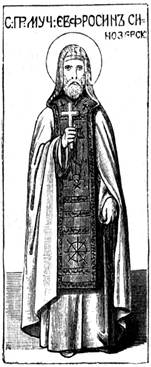
Преподобный Евфросин, в мире Ефрем203, родившийся в Корельском краю, близ озера Нево (Ладожского), юные лета провёл в Валаамской обители. Потом долго был причетником в с. Долосском Бежецкой пятины, в 30 верстах от Устюжны железнопольской. Достигнув зрелого возраста, почувствовал он сильное желание подвизаться иночески. Он вышел из дома, не взяв с собой ничего, и в большом Тихвинском монастыре принял монашество. С усердием искренним выполнял он здесь поручавшиеся ему послушания. Соскучив многолюдством посещавших обитель, в 1600 г. по благословению игумена оставил он Тихвинский монастырь, чтобы жить в пустынном уединении. В 15 верстах от с. Долосского и в 50 от Устюжны, в лесе, между топями и болотами, на берегу Синичьего озера нашёл он желаемое место для уединения. Здесь поставил он крест и выкопал себе пещеру, а через год поставил келью; но в оба года не видал куска хлеба, питаясь только растениями пустыни. – В такой дикой глуши найден он был нечаянно; но когда прошла молва о новом пустыннике Синичьего озера, стали приходить к нему с желанием слушать наставления его; иные же остались и жить при нём. Для собравшихся учеников надобно было построить храм, и Евфросин вместе с ними построил храм Благовещения Богоматери, который освящён был Гурием, игуменом Шалицким, чтимым поныне по жизни строгой204. Преподобный усердно подвизался для благочестия, усердно вёл и других путём спасения. И ему суждено было увенчаться смертью невинного страдальца.
The Venerable Euphrosynus, in the world Ephraim203, born in the Karelian region, near Lake Nevo (Ladoga), spent his youthful years in the Valaam monastery. Afterwards, for a long time he was a parish clerk in the village of Dolosskoye in the Bezhetsk Pyatina, thirty versts from Ustyuzhna Zheleznopolskaya. Having reached a mature age, he felt a strong desire to labor in the monastic life. He left his home, taking nothing with him, and in the great Tikhvin monastery received the monastic tonsure. With sincere zeal he fulfilled the obediences entrusted to him there. Growing weary of the multitude of people visiting the monastery, in the year 1600, with the blessing of the abbot, he left the Tikhvin monastery to live in desert solitude. Fifteen versts from the village of Dolosskoye and fifty from Ustyuzhna, in the forest, among marshes and swamps, on the shore of Lake Sinichye, he found the place he desired for solitude. There he set up a cross and dug out a cave for himself, and after a year built a cell; but during both years he did not see a piece of bread, nourishing himself only on the plants of the desert. — In such a wild wilderness he was found by chance; but when word spread about the new hermit of Lake Sinichye, people began to come to him, desiring to hear his instructions; some even remained to live with him. For the gathered disciples it was necessary to build a church, and Euphrosynus together with them built a church of the Annunciation of the Mother of God, which was consecrated by Gurias, Abbot of Shalitsk, still revered for his strict life204. The Venerable One zealously labored for piety, and zealously led others along the path of salvation. And it was ordained for him to be crowned with the death of an innocent sufferer.
Когда иезуиты отыскали для России нового самозванца – жида, ватаги ляхов в 1612 г. проникли в округ Устюжны для грабежа и разбоя205. – Православные, дорожа особенно св. Верой, спешили скрываться в глубоких лесах. Тогда пустыня Евфросинова послужила убежищем для них из окрестных мест. Марта 19 (1612 г.) преподобный объявил вслух всех, что скоро придут враги св. Веры и в его пустыню. Он советовал бежать, кто куда может; о себе же сказал, что он должен остаться здесь по обету. – Инок Иона в страхе хотел бежать вместе с другими. «Зачем допускать в душу страх малодушия? говорил ему преподобный. Когда настаёт брань, тогда-то и нужно мужество. Мы дали обет жить и умереть в пустыни. – Надобно быть верными слову, данному перед Господом. В таком случае смерть вводит в покой. Другое дело – мирские люди: они не связаны словом и им надобно беречь себя и для детей». Укреплённый словами преподобного, Иона остался с святым старцем. В следующий день Поляки явились в Евфросинову пустынь. Преподобный в схиме молился у креста, который поставил он, как только пришёл сюда. – Наглые грабители потребовали у Евфросина монастырских сокровищ. Пустынник указал на храм Богоматери, как единственное сокровище пустынника. Тогда один из кровопийцев ударил по шее преподобного и рассёк ему голову. Старец упал полумёртвым. Поляки ворвались в храм Божий, но в нём ничего не нашли и возвратились к своей жертве. Один ударил чеканом по голове Евфросина и разбил череп до самого мозга. – Новый страдалец предал душу свою в руки Господу. – С ним вместе убит был и инок Иона. – В 8 день после кончины св. старца собравшиеся православные похоронили страдальческое тело его у креста; с ним вместе похоронен был и ученик его Иона. Преп. Евфросин был роста среднего, с широкими плечами и мужественной грудью; русые волосы его украшены были сединами; борода – продолговатая и раздвоенная на конце. Так пересказал страдальческую кончину преп. Евфросина Долосский житель Иоанн, сам пострадавший тогда же от Поляков. В 1653 г. по благословению Новгородского митрополита Макария мощи преп. Евфросина перенесены были под колокольню Благовещенской церкви, тогда монастырской, а ныне приходской Синозерского погоста206.
When the Jesuits found for Russia a new impostor—a Jew—bands of Poles in 1612 penetrated into the district of Ustyuzhna for plunder and robbery205. — The Orthodox, especially treasuring the holy Faith, hastened to hide in the deep forests. Then the hermitage of Euphrosynus served as a refuge for them from the surrounding places. On March 19 (1612), the Venerable One declared aloud to all that enemies of the holy Faith would soon come to his hermitage as well. He advised them to flee, whither each could; concerning himself, he said that he must remain there by vow. — The monk Jonah, in fear, wished to flee together with the others. "Why admit the fear of cowardice into the soul?" the Venerable One said to him. "When the battle comes, then courage is needed. We have made a vow to live and die in the desert. — We must be faithful to the word given before the Lord. In such a case, death leads into rest. It is another matter for worldly people: they are not bound by a word, and they must take care of themselves and for their children." Strengthened by the words of the Venerable One, Jonah remained with the holy elder. The next day, the Poles appeared at the hermitage of Euphrosynus. The Venerable One, in the schema, was praying at the cross which he had set up as soon as he came there. — The insolent robbers demanded from Euphrosynus the monastery's treasures. The hermit pointed to the church of the Mother of God as the only treasure of a hermit. Then one of the bloodsuckers struck the Venerable One on the neck and split his head. The elder fell half-dead. The Poles burst into the church of God, but found nothing in it and returned to their victim. One struck Euphrosynus on the head with a chisel and shattered his skull down to the brain. — The new sufferer surrendered his soul into the hands of the Lord. — Together with him, the monk Jonah was also slain. — On the eighth day after the repose of the holy elder, the gathered Orthodox buried his martyred body by the cross; together with him was buried his disciple Jonah. The Venerable Euphrosynus was of medium stature, with broad shoulders and a manly chest; his light-brown hair was adorned with gray; his beard was long and forked at the end. Thus did John, a resident of Dolosskoye, who himself suffered at that same time from the Poles, recount the martyric end of the Venerable Euphrosynus. In 1653, with the blessing of Macarius, Metropolitan of Novgorod, the relics of the Venerable Euphrosynus were transferred under the bell-tower of the Annunciation Church, then a monastery church, and now the parish church of the Sinozero churchyard206.