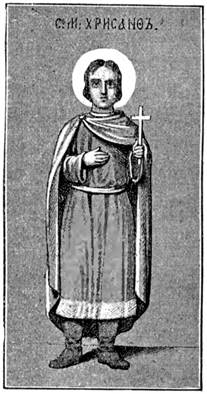
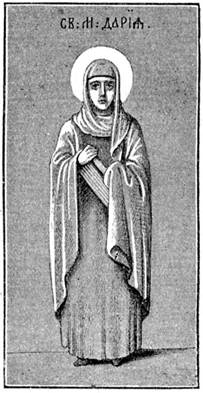
Во второй половин III-го столетия прибыл в Рим из Александрии один знаменитый и богатый человек, язычник Полемий, с тем чтобы доставить здесь наилучшее образование сыну своему Хрисанфу. Принятый благосклонно при дворе Римского императора, Полемий вскоре принял предложенную ему должность сенатора. – Таким образом и общественное положение отца, и образование, получаемое юношей Хрисанфом, открывали ему, казалось, блистательный путь впереди.
In the second half of the third century, a certain renowned and wealthy man, the pagan Polemius, arrived in Rome from Alexandria, intending to provide the best possible education for his son Chrysanthus. Received favorably at the court of the Roman emperor, Polemius soon accepted the offered position of senator. Thus, both the father's social standing and the education the youth Chrysanthus received seemed to open for him a brilliant path ahead.
Но что такое – человеческие расчёты перед правдой Божественного промысла и в чём – настоящий блистательный путь?..
But what are human calculations before the truth of Divine Providence, and wherein lies the truly brilliant path?..
Счастье, настоящее счастье действительно предстояло Хрисанфу, но только не на том пути, на котором готовили ему его люди.
Happiness, true happiness, indeed awaited Chrysanthus, but not on the path which men were preparing for him.
Одно обстоятельство в жизни юноши изменило весь ход человеческих начертаний его судьбы. Изучая философию, жадно прочитывая всякие рукописи, он встретил между ними и такие, в которых язычники рассуждали о христианстве и разбирали с своей точки зрения христианское учение. Чуткая душа чистого, просвещённого наукой и любознательного юноши с увлечением знакомилась с сущностью этого непостигаемого язычниками учения. Он постарался достать сочинения о Христе, написанные самими христианами, и чем более вникал в их смысл, тем неотразимее прельщался высотой и правдой Евангелия. Усердно принялся он тогда искать человека, который мог бы объяснить ему тайны этого нового учения. Такой учитель нашёлся; то был один отшельник, пресвитер Карпофор, скрывавшийся в горах по случаю бывшего тогда гонения на христиан. – И до такой степени «сама по себе была христианка» душа непорочного юноши, не успевшего ещё испортиться столкновением с жизнью язычников, что она быстро восприняла в себя «свет Христов», и после нескольких бесед с христианином отшельником Хрисанф был обращён, наставлен им и уже принял от него св. крещение.
One circumstance in the youth's life changed the entire course of human designs for his fate. Studying philosophy, eagerly reading every manuscript, he encountered among them those in which pagans discoursed about Christianity and examined Christian teaching from their own point of view. The sensitive soul of a pure, enlightened by science, and inquisitive youth eagerly acquainted itself with the essence of this teaching, incomprehensible to the pagans. He strove to obtain writings about Christ composed by Christians themselves, and the more he delved into their meaning, the more irresistibly he was captivated by the height and truth of the Gospel. He then diligently set about seeking a man who could explain to him the mysteries of this new teaching. Such a teacher was found; he was a certain hermit, the presbyter Carpophorus, who was hiding in the mountains on account of the persecution against Christians then taking place. And to such a degree was "of itself a Christian" the soul of the blameless youth, who had not yet been corrupted by contact with pagan life, that it quickly received into itself the "light of Christ," and after several conversations with the Christian hermit, Chrysanthus was converted, instructed by him, and had already received holy Baptism from him.
Преисполненный внезапно постигнутым им величием Богочеловека, предавшись Ему со всею горячностью своего молодого возраста, Хрисанф не мог таить в себе охватившей его любви ко Христу... избыток сердца требовал излияния – в слове... И едва минула неделя по принятии им св. крещения, как он уже открыто проповедовал просиявшую для него истину.
Filled with the suddenly comprehended majesty of the God-Man, having surrendered himself to Him with all the ardor of his youthful age, Chrysanthus could not conceal within himself the love for Christ that had seized him... the abundance of the heart demanded outpouring—in word... And scarcely a week had passed after his reception of holy Baptism, when he already openly preached the truth that had shone forth for him.
Можно себе представить ужас Полемия, человека взросшего и закоренелого в языческих понятиях, когда он узнал, что единственный сын его – христианин...
One can imagine the horror of Polemius, a man grown up and hardened in pagan notions, when he learned that his only son was a Christian...
Христианин! это – человек, который ставит себя наравне с презренными рабами, это – безумец, который не дорожит никаким имуществом, растрачивает своё состояние, не трепещет перед бесславием и позором на общественном суде, которому его подвергает его звание христианина... это – человек, ставящий в ничто все земные наслаждения... предпочитающий пещеру – дворцам, зверей в пустыне – человеческому обществу... и наконец,, это – тот человек, которому угрожают гонения, пытки и мучительная, позорная казнь, определяемая грозными законами языческого государства...
A Christian! This is a man who places himself on a level with despised slaves; this is a madman who values no property, squanders his wealth, does not tremble before dishonor and shame at the public judgment to which his status as a Christian subjects him... this is a man who counts all earthly pleasures as nothing... preferring a cave to palaces, beasts in the wilderness to human society... and finally, this is the man threatened with persecution, tortures, and a painful, shameful execution, decreed by the terrible laws of the pagan state...
– Моему ли сыну подобная участь! – ужасается и негодует отец язычник, и принимает всевозможные меры, чтобы заставить очнуться юношу от ненавистных христианских заблуждений... В слепоте своей он не ведает, что не смутить ему ничем ту душу, в которой поселился христианский Бог...
"Is such a fate for my son!"—the pagan father is horrified and indignant, and takes every possible measure to force the youth to come to his senses from the hateful Christian delusions... In his blindness, he does not know that he can disturb nothing in that soul in which the Christian God has taken up residence...
Испытав для приведения в разум сына и домашнее заключение, и всевозможные общественные, рассеивающие душу впечатления, но не достигнув желаемого успеха, Полемий, посоветовавшись с друзьями, решил сблизить Хрисанфа с одной молодой, образованной, необыкновенно красивой девицей, ревностной поклонницей богини Афины, при храме которой она и жила, рассчитывая на то, что под влиянием язычницы, которая не могла ему не понравиться, он охладеет в своём увлечении христианскими идеями...
Having tried, to bring his son to reason, both house arrest and all manner of public, soul-distracting impressions, but having achieved no desired success, Polemius, after consulting with friends, decided to bring Chrysanthus together with a certain young, educated, extraordinarily beautiful maiden, a zealous worshiper of the goddess Athena, at whose temple she lived, hoping that under the influence of a pagan woman, who could not fail to please him, he would grow cold in his enthusiasm for Christian ideas...
Полемий познакомил Хрисанфа с предполагаемой для него невестой – Дарией, но когда он высказал сыну желание своё, чтобы он женился на ней, то Хрисанф смутился при мысли иметь женой язычницу. Он отправился к епископу, чтобы спросить у него, как он должен поступить в этом случае? – «Апостол Павел не только не запрещает, но одобряет браки между христианами и язычниками, так как муж должен стараться обратить жену, а жена – мужа в истинную веру», – отвечал Хрисанфу епископ.
Polemius introduced Chrysanthus to the intended bride for him—Daria—but when he expressed to his son his wish that he marry her, Chrysanthus was troubled at the thought of having a pagan as a wife. He went to the bishop to ask him how he should act in this case. "The Apostle Paul not only does not forbid, but approves of marriages between Christians and pagans, since the husband should strive to convert his wife, and the wife her husband, to the true faith," the bishop answered Chrysanthus.
Успокоенный его ответом, Хрисанф уступил в этом случае воле отца и согласился быть мужем Дарии, но ещё до женитьбы на ней он успел христианскими речами своими так сильно подействовать на неиспорченную ещё молодую душу своей невесты, что она совершенно постигла и приняла его христианские убеждения, и когда она вступила с ним в брак, то это была уже не прежняя язычница Дария, преданная богам своей родины, но обновлённая душой христианка, с полным сознанием приступившая к тому великому таинству, которое соединяет людей ради того, чтобы им взаимно поддерживать друг друга на пути нравственного постоянного усовершенствования.
Reassured by his answer, Chrysanthus yielded in this matter to his father's will and agreed to be Daria's husband, but even before his marriage to her, he succeeded, by his Christian discourses, in so strongly influencing the still uncorrupted young soul of his betrothed, that she fully comprehended and accepted his Christian convictions; and when she entered into marriage with him, she was no longer the former pagan Daria, devoted to the gods of her homeland, but a Christian renewed in soul, who had approached with full awareness that great mystery which unites people so that they might mutually support one another on the path of constant moral perfection.
Скоро после бракосочетания Хрисанфа и Дарии Полемий умер. Тогда молодые супруги, никем не стесняемые, обратили свой дом как бы в церковь, где они открыто проповедовали веру Христову и привлекали к ней многих язычников.
Soon after the marriage of Chrysanthus and Daria, Polemius died. Then the young spouses, constrained by no one, turned their house as if into a church, where they openly preached the faith of Christ and attracted many pagans to it.
Так жили они несколько лет, проповедуя истину, благотворя всякими способами, посвящая всё время и все силы свои на служение Богу. Наконец, многие из родственников обращённых в христианскую веру язычников, недовольные тем, что уверовавшие избирают, большей частью, безбрачную жизнь, донесли Римским властям о том, что Хрисанф и Дария проповедуют христианское учение.
Thus they lived for several years, preaching the truth, doing good in every way, devoting all their time and all their strength to the service of God. Finally, many of the relatives of the pagans converted to the Christian faith, displeased that the believers for the most part chose a celibate life, reported to the Roman authorities that Chrysanthus and Daria were preaching Christian teaching.
Тогда трибун Клавдий потребовал их к себе и велел предать их истязаниям вместе с другими 23-мя христианами, но, видя истинно-чудную твёрдость мучеников, поражён был силой действовавшего в них Бога и, вместе с сыновьями своими припав к ногам Хрисанфа, воззвал к нему: – «вижу, что Бог твой – Бог истинный! Умоляю тебя, приведи нас к Нему, научи нас Ему молиться и сделай нас Его рабами!»
Then the tribune Claudius summoned them and ordered them to be subjected to tortures together with twenty-three other Christians; but seeing the truly wondrous steadfastness of the martyrs, he was struck by the power of God working in them, and together with his sons, falling at the feet of Chrysanthus, cried out to him: "I see that your God is the true God! I implore you, lead us to Him, teach us to pray to Him, and make us His servants!"
И просвещённый словами Хрисанфа о всемогуществе, благости и милосердии Бога христианского, близкого ко всякому человеку, который сердцем ищет Его, Клавдий и жена его Илария с сыновьями Иасоном и Мавром и множество свидетелей мучений и проповеди о Боге Хрисанфа уверовали и приняли св. крещение.
And enlightened by the words of Chrysanthus concerning the omnipotence, goodness, and mercy of the Christian God, who is near to every man who seeks Him with his heart, Claudius and his wife Hilaria, with their sons Jason and Maurus, and a multitude of witnesses of the tortures and of Chrysanthus' preaching about God, believed and received holy Baptism.
Узнав об этом, император приказал Клавдия утопить, а сыновей его и всех воинов, отрешившихся от язычества, обезглавить. Христиане похоронили тела их в пещере, близ которой совершена была казнь над ними: – Сюда, после того, на могилу своих сыновей приходила молиться Илария, и когда однажды язычники, застав её здесь, хотели взять её и представить на суд, то она, умолив их дать ей время помолиться, припала к могиле детей своих и, среди молитвы, скончалась... Сами язычники были поражены и растроганы при виде такой кончины и предоставили двум служанкам, бывшим при Иларии, похоронить свою госпожу при гробе детей её...
Learning of this, the emperor ordered Claudius to be drowned, and his sons and all the soldiers who had renounced paganism to be beheaded. The Christians buried their bodies in a cave, near which the execution had been carried out over them. Hither, afterward, Hilaria came to pray at the grave of her sons; and when once the pagans, finding her here, wanted to seize her and bring her to trial, she, having begged them to give her time to pray, fell at the grave of her children and, in the midst of prayer, reposed... The pagans themselves were struck and moved at the sight of such an end, and allowed the two maidservants who were with Hilaria to bury their mistress at the tomb of her children...
Между тем Хрисанф, оставшийся невредимым после различных истязаний, был в оковах отведён в темницу, а Дария брошена в одно из подземелий Колизея, и к ней был впущен дикий лев... но, ко всеобщему изумлению, он лёг у ног её и не допускал никого приближаться к ней... Дария же, обращаясь к приходившим к ней, продолжала убеждать их га в истине веры во Христа, творящего чудеса, которых они сами – свидетели... и вдохновенно воскликнула: – «о Римляне! не далеко то время, когда вы все уверуете во Христа!»
Meanwhile, Chrysanthus, having remained unharmed after various tortures, was led in chains to prison, while Daria was thrown into one of the underground chambers of the Colosseum, and a wild lion was let in to her... but, to the universal astonishment, it lay down at her feet and allowed no one to approach her... Daria, meanwhile, turning to those who came to her, continued to convince them of the truth of faith in Christ, who works miracles, of which they themselves were witnesses... and she cried out with inspiration: "O Romans! The time is not far off when you will all believe in Christ!"
После многих истязаний, которым снова были подвергаемы Хрисанф и Дария, претор, видя и уверившись наконец, что ничем не победить терпение мучеников (и силу Божию, очевидно действовавшую в них, и которую язычники, в невежественном суеверии своём, объясняли волшебством), видя также, что всё возрастает число уверовавших в Бога свидетелей мучений Хрисанфа и Дарии, приказал вывести их из города и зарыть в землю живыми...
After many tortures, to which Chrysanthus and Daria were again subjected, the praetor, seeing and at last becoming convinced that nothing could overcome the patience of the martyrs (and the power of God, manifestly working in them, which the pagans, in their ignorant superstition, explained as sorcery), seeing also that the number of those who believed in God, witnesses of the tortures of Chrysanthus and Daria, was ever increasing, ordered them to be led out of the city and buried alive in the earth...
С пением хвалы и величания Господу Богу святые шли на лютую смерть. Многочисленная толпа народа следовала за ними. Дойдя до колодца близ дороги, называемой Салария, исполнители казни столкнули в этот глубокий колодезь девственных супругов-мучеников и засыпали их камнями и землёй... С у тех пор начали истекать чудеса на этом месте кончины святых Хрисанфа и Дарии. Христиане часто собирались сюда – вблизи находившуюся пещеру, чтобы чествовать память их и молить о предстательстве их перед Господом. – В одно из таких собраний, когда народу было особенно много, вооружённые воины, по приказанию префекта, завалили пещеру и засыпали вход в неё, и все христиане, бывшие там, между которыми упоминается о Диодоре пресвитере и о диаконе Мариане – скончались голодной смертью (283–284 г.).
With the singing of praise and glorification to the Lord God, the saints went to a cruel death. A numerous crowd of people followed them. Having reached a well near the road called Salaria, the executioners pushed the virgin martyr-spouses into this deep well and covered them with stones and earth... From that time, miracles began to flow at this place of the death of the holy Chrysanthus and Daria. Christians often gathered here—to a nearby cave—to honor their memory and pray for their intercession before the Lord. During one such gathering, when there was an especially large number of people, armed soldiers, by order of the prefect, blocked up the cave and filled in the entrance to it, and all the Christians who were there, among whom mention is made of the presbyter Diodorus and the deacon Marian—died of starvation (283–284).
Кончина святых Хрисанфа и Дарии относится к временам императора Валериана (253–259).
The death of the holy Chrysanthus and Daria belongs to the times of the emperor Valerian (253–259).