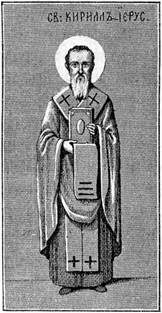
Родился и получил воспитание в недрах Иерусалимской Церкви; около 346 г. посвящён во пресвитера и в этом сане 346–349 г. говорил поучения готовящимся ко крещению и новокрещённым. В 350 г., по смерти Максима, сделался епископом Иерусалимским, г Пастырская жизнь была тяжела для святого Кирилла, потому что Ариане, Иудеи и Манихеи беспокоили Церковь, но ознаменована необычайными знамениями Божиими. В 351 г. 17 мая около 9 ч. утра явилось на небе крестное знамение, простиравшееся от Голгофы до Елеона; сияние креста так было ярко, что и сияние солнца не было сильнее. Явление продолжалось несколько часов сряду, в виду изумлённых обывателей и посетителей Иерусалима; множество Иудеев и язычников обратились ко Христу. «Все видели», писал Кирилл императору Констанцию, «что благочестивая Вера христианская состоит не в препретельных человеческой премудрости словесах». – В 357 г. Ананий, митрополит Кесарийский, на своём соборе лишил Кирилла кафедры за продажу церковных вещей в пользу бедных во время голода, но в действительности за несогласие с Арианами. Кирилл пребывал вне своей кафедры до 361 г., когда Юлиан император по своим целям возвратил всех епископов из ссылки. Этот император позволил Иудеям и приказал градоначальнику Иерусалимскому восстановить храм Еврейский. Святой Кирилл указывал слепцам на пророчества Даниила (Дан.9:26–27) и Спасителя (Мф.24:2); а в наставление векам Промысл разрушил замысел гордости сколько торжественно, столько и ужасно: огонь из оснований храма бросал камни и жёг деятелей суеты. Язычники трепетали и обращались ко Христу; Евреи признавали Сына Марии Богом. – Валент имп. в 367 году вновь изгнал Кирилла за несогласие принять арианство; а Феодосий в 378 г. возвратил. В 381 г. Кирилл на Втором Вселенском Соборе подписал осуждение еретикам духоборцам. Скончался в 386 г. – Излагая в одной из бесед, что благодать возрождения не освобождает нас от долга подвизаться против греха, говорит: «как Христос после крещения и нисшествия на Него Духа Св. сражался со врагом, так и вы после святого крещения и таинственного помазания, облекшись во всеоружие Духа Святого, стойте против диавола и боритесь с ним».
He was born and received his upbringing in the bosom of the Church of Jerusalem; around the year 346 he was ordained a presbyter, and in this rank, from 346 to 349, he delivered instructions to those preparing for baptism and to the newly baptized. In 350, upon the death of Maximus, he became bishop of Jerusalem. His pastoral life was difficult for St. Cyril, because the Arians, Jews, and Manichaeans troubled the Church, but it was marked by extraordinary signs from God. In 351, on May 17, about 9 a.m., a cross-shaped sign appeared in the sky, stretching from Golgotha to the Mount of Olives; the radiance of the cross was so bright that even the brightness of the sun was not stronger. The phenomenon lasted several hours in succession, before the astonished inhabitants and visitors of Jerusalem; a multitude of Jews and pagans turned to Christ. 'All saw,' wrote Cyril to Emperor Constantius, 'that the pious Christian Faith consists not in persuasive words of human wisdom.' – In 357, Ananias, metropolitan of Caesarea, at his council deprived Cyril of his see for selling church property for the benefit of the poor during a famine, but in reality for his opposition to the Arians. Cyril remained outside his see until 361, when Emperor Julian, for his own purposes, recalled all bishops from exile. This emperor permitted the Jews and commanded the governor of Jerusalem to rebuild the Jewish Temple. St. Cyril pointed out to the blind the prophecies of Daniel (Dan. 9:26–27) and of the Savior (Mt. 24:2); and for the instruction of the ages, Providence destroyed the proud design as solemnly as it was terribly: fire from the foundations of the temple cast up stones and burned the workers of vanity. The pagans trembled and turned to Christ; the Jews acknowledged the Son of Mary as God. – Emperor Valens in 367 again exiled Cyril for refusing to accept Arianism; and Theodosius in 378 restored him. In 381, Cyril at the Second Ecumenical Council signed the condemnation of the heretical Spirit-fighters. He reposed in 386. – In one of his homilies, explaining that the grace of regeneration does not free us from the duty to struggle against sin, he says: 'As Christ, after His baptism and the descent of the Holy Spirit upon Him, fought against the enemy, so also you, after holy baptism and the mystical anointing, having put on the whole armor of the Holy Spirit, stand against the devil and contend with him.'