Пострадали в царствование Диоклитиана, в Кесарии Палестинской, в 303 году. Агапий был из Газы, Тимолай из Понта, два Дионисия из Триполя Финикийского, Ромул был иподиакон Диоспольской (Лидды города, назыв. и Диосполем) церкви, Пуплий и два Александра из Египта, все едва переступившие юношеский возраст. В Кесарии, по случаю некоего языческого праздника, совершалось торжественное зрелище: один христианин после пыток сожжён, потом два другие брошены зверям на съедение. Смотря на это, шесть мужественных юношей – Пуплий, Тимолай, Ромул, два Александра и Дионисий, из ревности по вере связали себе руки в знак готовности пострадать за Христа и стали перед правителем Урбаном, говоря громогласно: «мы – христиане!» Урбан же, видя их юность, сперва ласково убеждал их пощадить себя и поклониться идолам, потом велел бросить в темницу. Через несколько дней к ним присоединён был и Агапий, ещё прежде исповедавший Христа и претерпевший муки; теперь он снова был взят с слугой Дионисием. С августа до марта содержались все эти восемь мучеников в узах, много раз были пытаны и, наконец, обезглавлены в пятнадцатый день сего месяца.
They suffered in the reign of Diocletian, in Caesarea in Palestine, in the year 303. Agapius was from Gaza, Timolaus from Pontus, the two Dionysiuses from Tripolis in Phoenicia, Romulus was a subdeacon of the church of Diospolis (the city of Lydda, also called Diospolis), Publius and the two Alexanders were from Egypt, all barely past their youthful age. In Caesarea, on the occasion of a certain pagan festival, a solemn spectacle was taking place: one Christian was burned after tortures, then two others were thrown to the beasts to be devoured. Watching this, six courageous youths—Publius, Timolaus, Romulus, the two Alexanders and Dionysius—out of zeal for the faith bound their hands together as a sign of readiness to suffer for Christ and stood before the governor Urban, crying out loudly: "We are Christians!" But Urban, seeing their youth, first kindly urged them to spare themselves and worship the idols, then ordered them to be cast into prison. After a few days, Agapius was also added to them, who had earlier confessed Christ and endured torments; now he was seized again together with the servant Dionysius. From August until March all these eight martyrs were kept in bonds, were tortured many times, and finally were beheaded on the fifteenth day of this month.
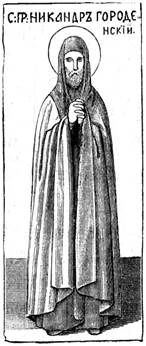
В Городненском погосте, при озере Городном, что в Валдайском уезде, по переписи 1581 года волость Лещуновская «была Воскресенского монастыря гончарного конца Новгородского169. В начале XVII века на берегу озера Городного раб Божий Никандр построил храм Воскресения Христова, собрал иноков и возобновил для окрестных жителей память о древней Воскресенской обители молитвы. Преп. Никандр служил для собранных им иноков примером святой жизни, проводил жизнь подвижническую в трудах, посте и молитвах. Мощи его покоятся под спудом, и в храме бывшей обители его есть придел «преп. Никандра Городно-Озерского»170.
In the Gorodno churchyard, on Lake Gorodno, in the Valdai district, according to the census of 1581, the Leshchunovskaya volost "belonged to the Resurrection Monastery of the Potter's End of Novgorod"169. At the beginning of the 17th century, on the shore of Lake Gorodno, the servant of God Nicander built a church of the Resurrection of Christ, gathered monks, and renewed for the surrounding inhabitants the memory of the ancient Resurrection monastery of prayer. The Venerable Nicander served as an example of holy life for the monks he had gathered, leading an ascetic life in labors, fasting and prayers. His relics lie hidden, and in the church of his former monastery there is a side-chapel of "the Venerable Nicander of Gorodno-Ozero"170.
Мануил родился на острове Крите в Сфаках. В детстве он был захвачен турками и насильственно обращён в исламизм, но, успев убежать и скрыться на о-ве Миконе, юноша рассказал священнику о своём невольном отступлении и, по исполнении наложенной на него епитимьи, был снова введён в Церковь Христову.
Manuel was born on the island of Crete in Sfakia. In childhood he was captured by the Turks and forcibly converted to Islam, but, having managed to escape and hide on the island of Mykonos, the youth told a priest about his involuntary apostasy and, after fulfilling the penance imposed on him, was again received into the Church of Christ.
Придя в возраст, Мануил женился и, имея уже шестерых детей, должен был с ними уйти от недостойной жены своей, не желая, впрочем, судиться с ней – во избежание гласного позора матери своих детей. Не смотря на такой мирный исход дела, брат оставленной виноватой женщины захотел и поклялся отмстить её мужу. Случай к отмщению представился. Однажды, этот несправедливый и злой человек, находясь в числе служителей на одном военном корабле, который наблюдал за судами в Архипелаге и Мраморном море, узнал на одном судне, плывшем с дровами с о-ва Самоса на о-в Микон и подошедшем к кораблю для осмотра, недруга своего Мануила. Он сейчас же указал на него своему капитану и донёс, что Мануил был турком, а теперь выдаёт себя за христианина.
Coming of age, Manuel married and, having already six children, was forced to depart with them from his unworthy wife, not wishing, however, to go to court with her—to avoid the public shame of the mother of his children. Despite such a peaceful outcome of the matter, the brother of the abandoned guilty woman wanted and swore to take revenge on her husband. An opportunity for revenge presented itself. One day, this unjust and evil man, being among the servants on a military ship that was watching over vessels in the Archipelago and the Sea of Marmara, recognized on a ship sailing with firewood from the island of Samos to the island of Mykonos and approaching the ship for inspection, his enemy Manuel. He immediately pointed him out to his captain and reported that Manuel had been a Turk, but now pretended to be a Christian.
Рассказав в ответ на допрос, сделанный ему, свою настоящую историю и подтвердив, что он – христианин, Мануил был задержан на корабле, шедшем в Хиос, и подвергся на пути всяким истязаниям от турецких солдат. – Зная, что его ожидает, он умолял одного христианина, бывшего на корабле, привести к нему с берега, во время остановки, священника для напутствования его св. Тайнами.
Having told, in answer to the interrogation made of him, his true story and confirmed that he was a Christian, Manuel was detained on the ship, which was going to Chios, and suffered every kind of torment from the Turkish soldiers along the way. Knowing what awaited him, he begged a certain Christian who was on the ship to bring a priest to him from the shore during a stop, to give him the Holy Mysteries as a farewell.
Но такой страх внушали в это время турки, что никто не осмелился прийти на корабль, и только один священник отозвался через посланного несчастному несколькими словами ободрения и утешения. Выслушав их, Мануил сказал: – «и я также думаю, – сегодня или завтра нужно умереть; таков уже закон природы! лучше уже сегодня умереть за веру и тем спасти душу, нежели завтра и – погубить её».
But such fear did the Turks inspire at that time that no one dared to come to the ship, and only one priest responded through a messenger to the unfortunate man with a few words of encouragement and consolation. Having heard them, Manuel said: "I also think so—today or tomorrow one must die; such is the law of nature! It is better to die today for the faith and thereby save one's soul, than tomorrow and—lose it."
Когда корабль пришёл в Хиос, то Мануил был представлен на суд к капитану-паше. Тот, узнав, что Мануил возвратился к христианской вере, немедленно приказал отрубить ему голову.
When the ship arrived at Chios, Manuel was brought to trial before the captain-pasha. He, learning that Manuel had returned to the Christian faith, immediately ordered his head to be cut off.
– Слава Тебе, Боже! – воскликнул только на это призванный Господом новый мученик, в радостном ожидании смерти. Но тут произошло что-то странное: палач, подойдя к осуждённому, почувствовал такой страх и трепет, что бросил свой меч и бежал... Турки смутились... Мануил продолжал молиться... Тогда один «пашийский чауш» выхватил свой ятаган и нанёс им несколько ударов в шею страдальца; не успев его обезглавить, он опрокинул его на землю, схватил за голову и отрезал её... – На другой день христиане собрались почтить св. останки убиенного, но правитель города, узнав об этом, приказал привязать тяжёлые камни к телу мученика и бросить его в море... Это происходило в 1772 году.
—Glory to Thee, O God!—exclaimed only this, the new martyr called by the Lord, in joyful expectation of death. But then something strange happened: the executioner, approaching the condemned man, felt such fear and trembling that he threw down his sword and fled... The Turks were dismayed... Manuel continued to pray... Then one "pasha's chaush" drew his yatagan and struck several blows to the sufferer's neck; not having managed to behead him, he threw him to the ground, seized him by the head, and cut it off... The next day, Christians gathered to honor the holy relics of the slain martyr, but the city governor, learning of this, ordered heavy stones to be tied to the martyr's body and thrown into the sea... This occurred in the year 1772.
Св. муч.Никандра епископа, врача, посещавшего и лечившего узников за веру Христову в темницах и предававшего погребению бесчестно брошенные тела замученных христиан, за что после мук и был обезглавлен во время гонения Диоклитианова, в 302 году.
St. MartyrNicander, bishop, physician, who visited and healed prisoners for the faith of Christ in dungeons and gave burial to the dishonorably cast-out bodies of tortured Christians, for which, after torments, he was beheaded during the Diocletian persecution, in the year 302.