Преп. Венедикт известен Греческой Церкви по жизнеописанию его, составленному п. Захарией на основании «жизни преп. Венедикта», написанной Григорием Двоесловом – со слов 4-х учеников преподобного, из которых один, именно Гонорат, ещё был жив, когда была писана книга, в 593 г.
Venerable Benedict is known to the Greek Church from his Life compiled by Pope Zacharias, based on the "Life of Venerable Benedict" written by Gregory the Dialogist from the words of four disciples of the venerable one, of whom one, namely Honoratus, was still alive when the book was written, in A.D. 593.
Венедикт родился около 480 г. в местечке Нурсии – в Умбрии (в Италии). Отправленный родителями своими на воспитание в Рим, оп был возмущён, видя развратную жизнь не только товарищей своих, но даже и учителей, и на 16-м году оставил мир и скрылся в пещере – в пустынной местности Субиако (где прежде были виллы Клавдия и Нерона); здесь провёл он три года в тяжёлой борьбе, но любовь к Богомыслию в ненарушаемом уединении превозмогла в нём всегда властные над душой юноши помыслы о мире. Весь пыл молодой души излился в подвижничестве, и Господь увенчал победой – труды и любовь устремившегося к Нему всеми чувствами своими и помышлениями.
Benedict was born around A.D. 480 in the town of Nursia in Umbria (in Italy). Sent by his parents to be educated in Rome, he was outraged at seeing the dissolute life not only of his companions but even of his teachers, and in his sixteenth year he left the world and hid himself in a cave in the desolate region of Subiaco (where the villas of Claudius and Nero had formerly stood); there he spent three years in severe struggle, but his love for contemplation of God in unbroken solitude prevailed over the thoughts of the world, which always held sway over the soul of the youth. All the ardor of his young soul poured itself out in ascetic labors, and the Lord crowned his efforts and love—of one who had hastened to Him with all his feelings and thoughts—with victory.
Пищу в своём уединении он получал от единственного человека, знавшего об его местопребывании – отшельника Романа; но, открытый впоследствии, по изволению Божиему, пастухами, Венедикт сделался известным и многим другим, в особенности же после того, как Бог прославил его даром чудотворений. Иноки соседней обители пожелали иметь подвижника Божьего своим игуменом; но он не желал принимать начальства над ними, так как в то время образ жизни в монастырях Итальянских был довольно распущенный, и он предвидел, что его строгие правила не понравятся братиям. Так и оказалось. Когда он, по настояниям иноков, согласился быть их игуменом и начал вводить строгие уставы, то они восстали против него, и нашлись между ними покусившиеся отравить Венедикта. Но Господь сохранил его, и этот случай послужил лишь к тому, чтобы засвидетельствовать о чудном таинственном действии крестного знамения, всесильного для охранения верующего от всякого зла...
He received food in his solitude from the only man who knew of his whereabouts—the hermit Romanus; but, later discovered, by God's will, by shepherds, Benedict became known to many others, especially after God glorified him with the gift of wonderworking. The monks of a neighboring monastery desired to have the God-pleasing ascetic as their abbot; but he did not wish to accept authority over them, since at that time the manner of life in Italian monasteries was rather dissolute, and he foresaw that his strict rules would not please the brethren. And so it proved. When, at the monks' insistence, he agreed to be their abbot and began to introduce strict rules, they rose up against him, and there were found among them those who attempted to poison Benedict. But the Lord preserved him, and this incident served only to testify to the wondrous mysterious power of the Sign of the Cross, all-powerful for protecting the faithful from every evil...
Когда подана была во время обеда преподобному чаша с отравленным питием, то, едва осенил он себя обычным крестным знамением перед принятием пищи, как чаша распалась как бы от сильного удара, питье разлилось, и Венедикт сознал злобу врагов своих и чудесное спасение своё силой Честного Животворящего Креста... Тогда решился он уйти от зла и возвратился в свою пещеру. Но уединиться вполне, с тех пор, ему уже сделалось трудно. Множество приходивших к нему расположились даже образовать близ него обители, и таким образом возникло 12 таковых, в каждой из которых поселились 12 монахов; но и здесь – строгостью своей жизни и своих постановлений подвижник возбудил к себе вражду... И отсюда ушёл он... И добравшись в 528 г. до Кампании, в южн. Италии, остановился на горе Кассино, истребил находившуюся тут рощу Аполлонову, где народ совершал ещё жертвоприношения перед идольскими капищами, просветил множество тамошних жителей светом христианской религии и основал новый монастырь – во имя Иоанна Крестителя – сделавшийся впоследствии знаменитым под именем Монте-Кассинского, при подошве горы Кассино. на левом берегу реки Лирис.
When a cup of poisoned drink was handed to the venerable one during dinner, as soon as he made the customary Sign of the Cross over himself before taking food, the cup shattered as if from a strong blow, the drink spilled, and Benedict recognized the malice of his enemies and his miraculous deliverance by the power of the Precious and Life-giving Cross... Then he resolved to flee from evil and returned to his cave. But to seclude himself completely from that time onward became difficult for him. The multitude of those who came to him even arranged to form monasteries near him, and thus twelve such monasteries arose, in each of which twelve monks settled; but here too, by the strictness of his life and his regulations, the ascetic aroused enmity against himself... And from there he departed... And making his way in A.D. 528 to Campania in southern Italy, he stopped on Monte Cassino, destroyed the grove of Apollo that was there, where the people still offered sacrifices before pagan temples, enlightened many of the local inhabitants with the light of the Christian religion, and founded a new monastery—in the name of John the Baptist—which later became famous under the name of Monte Cassino, at the foot of Monte Cassino, on the left bank of the River Liris.
Венедикт написал для этого монастыря устав, который принят был впоследствии во многих монастырях на Западе. При основании правил монастырской жизни, он руководствовался установлениями для восточных обителей Кассиана Римлянина, но он умерил их строгость, применяясь к слабому развитию монашества на Западе. Тем не менее устав Венедикта предписывал отречение от собственности, послушание безусловное и постоянный труд. Старшим из иноков предписывалось сверх того обучение детей и переписывание рукописей. Это последнее постановление оказалось весьма благотворным впоследствии, так как оно содействовало к сохранению от истребления множества памятников древности во времена невежества. Вообще и позже Бенедиктинцы совершили много для Церкви трудами своими над сочинениями первых времён христианства.
Benedict wrote a rule for this monastery, which was later adopted in many monasteries in the West. In laying down the rules of monastic life, he was guided by the regulations for Eastern monasteries of Cassian the Roman, but he moderated their strictness, adapting to the weak development of monasticism in the West. Nevertheless, Benedict's rule prescribed renunciation of property, unconditional obedience, and constant labor. The senior monks were also charged with teaching children and copying manuscripts. This last regulation proved very beneficial later, as it helped preserve many ancient monuments from destruction in times of ignorance. In general, the Benedictines later accomplished much for the Church through their labors on the writings of the early Christian centuries.
Преп. Венедикт почитается главным основателем монашества на Западе. Монастыри Бенедиктинского ордена быстро распространились по Западу. Он мудро управлял духовной своей паствой; являл в себе пример иноческого подвижничества, был одарён и возвеличен от Бога силой чудотворений и пользовался великой славой, которая привлекала к нему множество посетителей; даже предводитель варваров Тотилла пожелал видеть его, но старец безбоязненно обличил его, при свидании, за жестокий образ действий и прозорливо предрёк ему время его смерти, что с точностью и осуществилось.
Venerable Benedict is regarded as the chief founder of monasticism in the West. Monasteries of the Benedictine order spread rapidly throughout the West. He wisely governed his spiritual flock; he set an example of monastic asceticism, was gifted and exalted by God with the power of wonderworking, and enjoyed great fame, which attracted many visitors to him; even the barbarian leader Totila wished to see him, but the elder fearlessly rebuked him, at their meeting, for his cruel manner of acting and clairvoyantly foretold him the time of his death, which came to pass precisely.
О своей кончине преподобный также предвидел заранее и, приготовив себя причащением Св. Таин, мирно и радостно отошёл к Господу в 543 г. и погребён в основанном им монастыре св. Иоанна Предтечи.
The Venerable One also foresaw his own end beforehand and, having prepared himself by receiving the Holy Mysteries, peacefully and joyfully departed to the Lord in A.D. 543 and was buried in the monastery of St. John the Forerunner which he had founded.
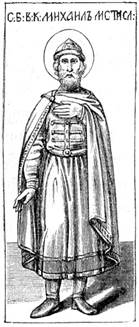
Сын святого отца, великого Мстислава, и внук благочестивого Мономаха, князь Ростислав, в крещении Михаил, записан в древних святцах с именем святого князя139. В молодых годах отличался он подвигами мужества в боях. Во время борьбы брата его вел. кн. Изяслава с Ольговичами и Юрием во многих случаях показал он храбрость бестрепетную, по вместе старался тушить вражду князей любовью уступчивой140. Получив (в 1127 г.) в удел Смоленск, он от всей души старался устроить счастье подданных, возбуждал и питал благочестие в них. Каменный храм в честь св. кн. Бориса и Глеба, построенный (1145 г.) на месте мученической кончины последнего, на Смядыне, и в Смоленске Петропавловский, – памятники благочестивого родоначальника князей Смоленских. Петропавдовский храм, не смотря на все перевороты времени, особенно страшные для Смоленска в 1612 году и 1812 году, уцелел поныне без повреждения141. Особенно открытие епископской кафедры в Смоленске (1137 г.) при новом храме Богородицы потребовало от князя Ростислава многих не лёгких пожертвований. Сохранившаяся грамота его показывает, с какими расположениями и с какими пожертвованиями князь открывал кафедру в Смоленске.
The son of a holy father, the great Mstislav, and the grandson of the pious Monomakh, Prince Rostislav, in baptism Michael, is recorded in the ancient saints' calendars with the name of a holy prince139. In his youth he was distinguished by deeds of courage in battle. During the struggle of his brother, Grand Prince Iziaslav, with the Olgovichi and Yuri, he showed fearless bravery on many occasions, but at the same time strove to quench the enmity of the princes with conciliatory love140. Having received (in A.D. 1127) Smolensk as his appanage, he strove with all his soul to arrange the happiness of his subjects and to arouse and nurture piety in them. The stone church in honor of the holy princes Boris and Gleb, built (A.D. 1145) on the site of the latter's martyrdom, on the Smyadyn, and the Church of Sts. Peter and Paul in Smolensk, are monuments of the pious founder of the Smolensk princely line. The Church of Sts. Peter and Paul, despite all the upheavals of time, especially terrible for Smolensk in 1612 and 1812, has survived to this day undamaged141. Especially the establishment of an episcopal see in Smolensk (A.D. 1137) at the new church of the Theotokos demanded from Prince Rostislav many difficult sacrifices. The surviving charter of his shows with what dispositions and with what sacrifices the prince established the see in Smolensk.
«Бог, Пресвятая Богородица и молитвы отца моего, писал благочестивый князь, благословили, и посоветовав с народом моим, установил я епископа в Смоленске. Это учинилось по воле святого отца моего, который хотел сделать это при жизни своей. Здесь доселе не бывало епископии. Но я, недостойный и грешный, в своё княжение, что дал мне Бог и молитва отца, установляю епископию и средства, чтобы мог жить епископ с клиром своим. Вот даю святой Богородице и епископу десятину из всех Смоленских даней, что и в них приходит истых кун, за исключением продажи, виры и полюдного сбора». Затем показывается, сколько дани шло с того или другого места князю, и определяется десятая доля епископу; – в сложности выходило для епископа 178 гривен или фунтов серебра. «И вот ещё даю святой Богородице и епископу, продолжает князь, в Торопце десятину из рыб, какие идут ко мне; и вообще какая ни есть в Смоленской области дань, малая или великая, десятину давать святой Богородице без всякой отговорки». Указав ещё на два села с их жителями и на земли, жалуемые кафедре, князь говорит: «и ещё даю на освящение святой Богородице из своего, двора восемь капий воска... Вот моё усердие к святой Богородице! По повелению святого отца моего, что мог, то даю. Тяжб епископских не судить никому, их судит сам епископ. Первая тяжба –развод; другая, если кто живёт с двумя жёнами; третья, если вступят в брак не по закону; четвёртая, если кто похитит девушку; за это, что возьмёт князь, половина того епископу; пятая, если похитят женщину, за что пеня епископу; шестая, отрава зелием и душегубством; – седьмая, если подерутся две женщины; осмая, если церковный человек провинится в чём-либо; девятая, если кто из церковных людей будет убит, по церкви не сделается зла. Я князь Ростислав с епископом Мануилом, так как поручен мне Смоленск Богом, по молитве деда и отца, установил епископию и постановляю правила. Если будет тяжба или продажа епископская, до того дела нет ни князю, ни посаднику, ни тиуну и никому другому во всей Смоленской области. По милости Божией и молитвами Богородицы ныне дани полные, а впредь что Бог устроит. Если по Божиему устроению оскудеет какая-либо дань или по случаю войны или по другой причине; то, что получится дани, из того десятая часть святой Богородице. Пусть не переменяет сего никто после меня, ни князь, ни народ... Если кто по страсти причислит сию епископию опять к Переяславской епископии и, преступая слово святого митрополита Русского Михаила, уничтожит Смоленскую епископию: то князь возьмёт своё, что назначил он для епископа святой Богородицы, – так как нарушится тогда воля отца моего Мстислава митрополита Русского Михаила». Грамота дана в сентябре 1150 г.142.
"God, the Most Holy Theotokos, and the prayers of my father," wrote the pious prince, "have blessed me, and having taken counsel with my people, I have established a bishop in Smolensk. This was done according to the will of my holy father, who wished to do this during his lifetime. Hitherto there has been no bishopric here. But I, unworthy and sinful, in my reign, which God and my father's prayer gave me, establish the bishopric and the means so that the bishop with his clergy may live. Thus I give to the Most Holy Theotokos and the bishop the tithe from all Smolensk tributes, from what comes in as actual money, excepting fines, bloodwite, and the polyudye collection." Then it is shown how much tribute came from this or that place to the prince, and the tenth part is assigned to the bishop; in total this came to 178 grivnas or pounds of silver for the bishop. "And further I give to the Most Holy Theotokos and the bishop," continues the prince, "in Toropets the tithe of the fish that come to me; and in general, whatever tribute there is in the Smolensk region, small or great, the tithe is to be given to the Most Holy Theotokos without any excuse." Having further indicated two villages with their inhabitants and lands granted to the see, the prince says: "and further I give for the consecration of the Most Holy Theotokos from my own court eight kapi of wax... This is my zeal for the Most Holy Theotokos! By the command of my holy father, what I could, I give. The bishop's lawsuits are to be judged by no one; the bishop himself judges them. The first lawsuit is divorce; the second, if someone lives with two wives; the third, if they enter into marriage unlawfully; the fourth, if someone abducts a girl; for this, whatever the prince takes, half of it goes to the bishop; the fifth, if a woman is abducted, for which the penalty goes to the bishop; the sixth, poisoning by potion and murder; the seventh, if two women fight; the eighth, if a churchman is guilty of something; the ninth, if someone from among the church people is killed, no evil is done to the church. I, Prince Rostislav, together with Bishop Manuel, since Smolensk has been entrusted to me by God, through the prayer of my grandfather and father, have established the bishopric and lay down the rules. If there is a lawsuit or penalty of the bishop, neither the prince, nor the posadnik, nor the tiun, nor anyone else in the entire Smolensk region has any part in that matter. By the mercy of God and the prayers of the Theotokos, the tributes are now full, and whatever God may ordain in the future. If, by God's arrangement, some tribute diminishes, whether because of war or another reason, then from whatever tribute is received, the tenth part goes to the Most Holy Theotokos. Let no one after me change this, neither prince nor people... If anyone, out of passion, should again attach this bishopric to the Bishopric of Pereyaslavl and, transgressing the word of the holy Metropolitan of Rus', Michael, should abolish the Bishopric of Smolensk, then the prince shall take back what he assigned for the bishop of the Most Holy Theotokos—since then the will of my father Mstislav and of Metropolitan Michael of Rus' will be violated." The charter was given in September A.D. 1150142.
Дадите Господу Богу вашему славу, прежде даже не смеркнется (Иерем.13:16), учит пророк Божий. Блаж. кн. Ростислав поступал по учению откровения Божия; За счастье земное благодарил Господа и блага земные употреблял в славу имени Божия; для него прежде всего и выше всего была слава Божия. В 1154 г. призван он был на великое княжение Киевское. Когда умер дядя Вячеслав, он роздал всё имение его заведениям Богоугодным; «созвав мужей отца своего, тиунов, ключников, приказал им принести всё имение Вячеслава-одежду, золото, серебро, и начал раздавать монастырям, церквам, темницам и нищим»; себе оставил из наследства один крест покойного. – «Лишась в том же году Киевского престола и едва не потеряв жизни в сражении, он возвратился в Смоленск143. В 1158 г. князья снова призвали его на великое княжение, и Киевляне (1159 г.) приняли его с восторгом. Первым делом его было теперь заключить союз любви с Черниговским князем Святославом, с юных лет неприязненным ему. Суздальский князь Андрей выгнал сына его из Новгорода, и Ростислав перенёс обиду великодушно. – Злобный князь Изяслав Данилович с хищными Половцами то там, то здесь разорял южную Россию, наконец ворвался в Киев; добрый Ростислав удалился в Вышгород; неприятель преследовал и тут Ростислава, но нашёл себе смерть; Ростислав не мстил неверным союзникам своим. С таким же великодушием простил он Мстислава Волынского, оскорблявшего его не раз своеволиями. Оставаясь с полным уважением к патриарху, он заставил однако Константинопольский собор принять за правило не посылать в Россию митрополита помимо её желаний. Заботясь об общем благе, склонил всех князей содействовать безопасной торговле Русских с Грецией144. В 1168 г., не смотря на старость свою, отправился он в Новгород, чтобы утвердить там сына своего Святослава. На дороге Смоленские послы встретили его за 300 вёрст от Смоленска; потом жители всех сословий приняли его с подарками: так любили добродетельного старца-князя в Смоленске. В Великих Луках взял он клятву с послов Новгородских забыть неудовольствия на сына, его и разлучиться с ним одной смертью. Больным прибыл он на возвратном пути в Смоленск. Сестра и сын уговаривали его остаться и в Смоленске, чтобы быть погребённым в храме, им созданном. «Везите меня в Киев, отвечал он; если умру на дороге, положите меня в отчем монастыре у св. Феодора; если Бог исцелит меня, молитвами Пречистой Своей Матери и св. Феодосия, постригусь в Печерском монастыре». Князь Ростислав, окружённый счастьем, не пленялся ничем земным. Никогда не искал он власти, а только принимал её, когда вручали, и притом как тяжесть. Незлобие его прощало всё другим; он помнил о своих грехах, о своих долгах перед Богом и забывал о том, чем должны ему другие. Он постоянно заботился о том, как угодить Господу.
Give glory to the Lord your God, before He cause darkness (Jer. 13:16), teaches the prophet of God. The blessed Prince Rostislav acted according to the teaching of divine revelation; for earthly happiness he thanked the Lord, and earthly goods he used for the glory of the name of God; for him, before all else and above all else, was the glory of God. In 1154 he was called to the great princely throne of Kiev. When his uncle Vyacheslav died, he distributed all his estate to God-pleasing institutions; "having summoned his father's men, the stewards and chamberlains, he commanded them to bring all of Vyacheslav's possessions—clothing, gold, silver—and began to distribute them to monasteries, churches, prisons, and the poor"; from the inheritance he kept for himself only the cross of the departed. – Having lost the Kiev throne that same year and barely escaping with his life in battle, he returned to Smolensk143. In 1158 the princes again called him to the great princely throne, and the people of Kiev (1159) received him with joy. His first act now was to conclude a covenant of love with the Chernigov Prince Svyatoslav, who had been hostile to him from youth. The Suzdal Prince Andrei drove his son out of Novgorod, and Rostislav bore the offense magnanimously. – The malicious Prince Izyaslav Danilovich, with the predatory Polovtsians, ravaged southern Russia now here, now there, and finally burst into Kiev; the good Rostislav withdrew to Vyshgorod; the enemy pursued Rostislav even there, but found his own death; Rostislav did not take vengeance on his faithless allies. With the same magnanimity he forgave Mstislav of Volhynia, who had offended him more than once by his self-will. While maintaining full respect for the patriarch, he nevertheless compelled the Council of Constantinople to adopt as a rule not to send a metropolitan to Russia against her wishes. Caring for the common good, he persuaded all the princes to promote safe trade between the Rus' and Greece144. In 1168, despite his old age, he set out for Novgorod to establish his son Svyatoslav there. On the way, envoys from Smolensk met him 300 versts from Smolensk; then inhabitants of all ranks received him with gifts: so greatly was the virtuous elder-prince loved in Smolensk. At Velikiye Luki he took an oath from the Novgorod envoys to forget their displeasure with his son and to part from him only by one death. He fell ill on the return journey and arrived in Smolensk. His sister and son urged him to remain in Smolensk, so that he might be buried in the church he had built. "Take me to Kiev," he replied; "if I die on the way, lay me in my father's monastery at St. Theodore; if God heals me, through the prayers of His Most Pure Mother and St. Theodosius, I will be tonsured in the Monastery of the Caves." Prince Rostislav, surrounded by happiness, was captivated by nothing earthly. He never sought power, but only accepted it when it was entrusted to him, and even then as a burden. His meekness forgave everything to others; he remembered his own sins, his own debts before God, and forgot what others owed him. He was constantly concerned with how to please the Lord.
Часто говорил он Печерскому игумену, особенно по смерти Святослава Черниговского: «приготовь мне келью, боюсь смерти неожидаемой». Во время Великого поста, по субботам и воскресным дням, приглашал он к своей трапезе игумена с 12 избранными старцами и беседовал с ними о душевном спасении; а в каждое воскресенье поста приобщался Св. Таин. Ему очень хотелось уклониться от сует жизни в Печерскую обитель, не раз говорил он о том Печерскому игумену. Игумен останавливал его, указывая на то, что дело князя ограждать покой людей правосудием и мечом, а наконец предложил ему предоставить себя воле Божией. Блаженный князь скончался на пути в Киев, с тихой молитвою на устах. «Ныне отпусти раба Своего, Владыко, по глаголу Твоему с миром», это были последние слова его, и слёзы остановились на застывшем лице его. Праведник почил 14 марта 1168 г. Тело его похоронено было в Киевском Феодоровском монастыре 27 числа145.
He often said to the abbot of the Caves, especially after the death of Svyatoslav of Chernigov: "Prepare me a cell, for I fear an unexpected death." During Great Lent, on Saturdays and Sundays, he invited the abbot with twelve chosen elders to his table and conversed with them about the salvation of the soul; and every Sunday of Lent he partook of the Holy Mysteries. He greatly desired to withdraw from the vanities of life into the Monastery of the Caves, and spoke of this more than once to the abbot of the Caves. The abbot restrained him, pointing out that a prince's duty is to safeguard the peace of men through justice and the sword, and finally suggested that he submit himself to the will of God. The blessed prince reposed on the way to Kiev, with a quiet prayer on his lips. "Now lettest Thou Thy servant depart, O Master, according to Thy word, in peace"—these were his last words, and tears remained on his lifeless face. The righteous one reposed on March 14, 1168. His body was buried in the Kiev Monastery of St. Theodore on the 27th145.
«Поступайте, говорит нам в заключение жизнь праведного князя, поступайте сообразно званию, в которое призваны, со всяким смиренномудрием, кротостью и великодушием, снисходя друг другу из любви» (Еф.4:1–2).
"Walk," the life of the righteous prince says to us in conclusion, "walk worthy of the vocation wherewith ye are called, with all lowliness and meekness, with longsuffering, forbearing one another in love" (Eph. 4:1–2).
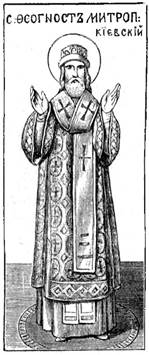
«И звезда от звезды разнится в достоинстве», говорит св. Апостол, объясняя разность между святыми (1Кор.15:41). И Блаженный святитель Феогност не был тем, чем был предшественник его, великий в смирении святитель Пётр; не был и тем, чем был преемник его, дивный по духу веры святитель Алексий. И однако он также в числе звёзд небесных, в лике святителей, угодивших Господу делами своими. Блаженный Феогност, родом Грек, посвящён был в митрополита России в 1328 г. и тогда же прибыл в Киев, а отсюда во Владимир и Москву. Избрание Москвы в место кафедры митрополичьей было не лёгким делом для святителя, а между тем оно было благодетельно для России по последствиям. Блаженный святитель был внимателен к воле Божией о Москве, высказанной предшественником его. Он положил жить «во дворе святителя Петра». Другим князьям неприятно было, что «город Москва», тогда и новый и очень незначительный по числу жителей, почтен таким великим отличием, что «живет в нём митрополит», первосвятитель России. Князьям тем более было это неприятно, что пребывание главы духовенства Русского в Москве, как предчувствовали они, будет иметь последствием возвышение князя Московского перед всеми князьями. Блаженному Феогносту давали чувствовать о своём неудовольствии князья; но он следовал воле Божией во всё время правления своего, следовал столько, что во всех случаях был твёрдым помощником князя Московского. Таким образом блаженный святитель был начальным и сильным деятелем при введении единодержавия в России, столько возвеличившего Россию. Это одно уже даёт ему значение высокое для Церкви Русской146.
"And one star differeth from another star in glory," says the holy Apostle, explaining the difference among the saints (1 Cor. 15:41). And the blessed Hierarch Theognostus was not what his predecessor, the great in humility Hierarch Peter, was; nor was he what his successor, the wondrous in spirit of faith Hierarch Alexis, was. Yet he too is among the stars of heaven, in the rank of the hierarchs who pleased the Lord by their deeds. The blessed Theognostus, a Greek by birth, was consecrated Metropolitan of Rus' in 1328 and then arrived in Kiev, and from there to Vladimir and Moscow. The choice of Moscow as the seat of the metropolitan see was no easy matter for the hierarch, yet it was beneficial for Russia in its consequences. The blessed hierarch was attentive to the will of God concerning Moscow, as expressed by his predecessor. He resolved to dwell "in the court of Hierarch Peter." Other princes were displeased that "the city of Moscow," then new and very insignificant in population, was honored with such a great distinction that "the metropolitan, the chief hierarch of Rus', dwells in it." This displeased the princes all the more because the presence of the head of the Russian clergy in Moscow, as they sensed, would result in the elevation of the Prince of Moscow above all princes. The princes made the blessed Theognostus feel their displeasure; but he followed the will of God throughout the entire time of his rule, followed it so steadfastly that in all circumstances he was a firm helper of the Prince of Moscow. Thus the blessed hierarch was an initial and powerful agent in the introduction of autocracy in Russia, which so greatly exalted Russia. This alone already gives him a high significance for the Russian Church146.
В 1330 г. прибыл из орды в Москву знаменитый мурза Чет и по желанию его был окрещён с именем Захария. Это – родоначальник Годуновых и Сабуровых. Могли не радоваться тому первосвятитель? Посвятив для Ростова вместо почившего Прохора епископа Антония, Феогност отправился из Москвы осматривать обширную паству свою. И прежде всего был он в Новгороде147. Здесь пришлось ему показать первый опыт святительской власти над совестью людей. Князь Александр Михайлович Тверской, убив в орде убийцу отца своего князя Юрия, принуждён был поспешно скрыться из орды в Тверь и потом в Псков. Псковичи приняли его с любовью. Хан Узбек настоятельно требовал, чтобы Александр явился на суд в орду. Даже братья Александра, князья Тверские, соединились с великим князем Иваном Даниловичем, чтобы силой принудить Александра исполнить волю хана: Узбек не задумывался по одному капризу гордости истреблять князей и целые области России148. Из Новгорода отправлялись во Псков святитель Моисей и посадник убеждать Псковичей и князя покориться воле хана. Александр готов был идти в орду; но Псковичи объявили, что готовы они лить кровь за него и за права свои. Великий князь придвинул войска ко Пскову. Прежде чем решать дело кровавым мечом, решились испытать духовное средство. По настоянию великого князя первосвятитель России послал запрещение на Псков за непокорность воле хана, грозившую бедствием для всей России. «Друзья Псковичи! сказал несчастный князь, пусть не тяготеет над вами отлучение духовное; иду из вашего города», и удалился в Литву. Псков смирился перед великим князем, и митрополит преподал благословение Пскову149.
In 1330, the renowned Murza Chet arrived from the Horde in Moscow and, at his own desire, was baptized with the name Zacharias. He is the progenitor of the Godunovs and the Saburovs. Could the chief hierarch fail to rejoice at this? Having consecrated Bishop Antony for Rostov in place of the reposed Prochorus, Theognostus set out from Moscow to survey his vast flock. And first of all he was in Novgorod147. Here it fell to him to show the first exercise of hierarchal authority over the conscience of men. Prince Alexander Mikhailovich of Tver, having slain in the Horde the murderer of his father, Prince Yuri, was forced to flee hastily from the Horde to Tver and then to Pskov. The Pskovites received him with love. Khan Uzbek insistently demanded that Alexander appear for judgment in the Horde. Even Alexander's brothers, the princes of Tver, united with Grand Prince Ivan Danilovich to compel Alexander by force to fulfill the khan's will: Uzbek did not hesitate, on a mere whim of pride, to destroy princes and entire regions of Russia148. From Novgorod, Hierarch Moses and the posadnik were sent to Pskov to persuade the Pskovites and the prince to submit to the khan's will. Alexander was ready to go to the Horde; but the Pskovites declared that they were ready to shed blood for him and for their rights. The Grand Prince moved his troops toward Pskov. Before deciding the matter by the bloody sword, they resolved to try a spiritual means. At the insistence of the Grand Prince, the chief hierarch of Rus' sent an anathema upon Pskov for disobedience to the khan's will, which threatened disaster for all Russia. "Friends, Pskovites!" said the unfortunate prince, "let not the spiritual anathema rest upon you; I depart from your city," and he withdrew to Lithuania. Pskov submitted to the Grand Prince, and the metropolitan gave his blessing to Pskov149.
Через Смоленск и Чернигов Феогност прибыл из Пскова на Волынь. Здесь надлежало ему пробыть некоторое время в утешение православию, сильно теснимому Римской пропагандой. Отсюда дал он знать в Новгород, дабы явился для посвящения избранный в архиепископа Василий. Псковичи отправили от себя посла к митрополиту с просьбой посвятить им особого епископа Арсения. Просьбу Псковичей поддерживал великий и князь Литвы Гедимин, с которым Псков вступил в связь через князя Александра. Новгородцам сильно не нравилось желание Пскова, собственно потому, что Псков с особым епископом пользовался бы церковной независимостью от Новгорода, а вместе с тем приобретал бы и гражданскую независимость от Новгорода. Между тем Псковская кафедра могла бы быть весьма благодетельной для дел св. Веры.
Through Smolensk and Chernigov, Theognostus arrived from Pskov in Volhynia. Here he was to remain for some time as a comfort to Orthodoxy, which was greatly oppressed by Roman propaganda. From here he sent word to Novgorod that the chosen Basil should appear for consecration as archbishop. The Pskovites sent their own envoy to the metropolitan with a request to consecrate for them a separate bishop, Arsenius. The request of the Pskovites was supported by the Grand Prince of Lithuania, Gediminas, with whom Pskov had entered into relations through Prince Alexander. The Novgorodians greatly disliked Pskov's desire, chiefly because Pskov with a separate bishop would enjoy ecclesiastical independence from Novgorod, and at the same time would acquire civil independence from Novgorod as well. Yet the Pskov see could have been very beneficial for the cause of the holy Faith.
Псковский архипастырь, по смежности с языческой Литвой, мог употреблять благовременно сильные меры для распространения св. Веры между Литовцами и тем мог смягчить вражду Литвы против России. К сожалению, недавняя непокорность Пскова великому князю и митрополиту не дала видеть светлой будущности в желаниях Пскова. – И митрополит посвятил (1331 г.) во Владимире Волынском Василия в архиепископа Новгороду и Пскову150. Здесь же посвящён им для Твери епископ Феодор151.
The Pskov archpastor, by reason of proximity to pagan Lithuania, could timely employ strong measures for the spread of the holy Faith among the Lithuanians and thereby could soften the enmity of Lithuania against Russia. Unfortunately, the recent disobedience of Pskov to the Grand Prince and the metropolitan did not allow the bright future in Pskov's desires to come to light. – And the metropolitan consecrated (1331) in Vladimir of Volhynia Basil as archbishop for Novgorod and Pskov150. Here also he consecrated Bishop Theodore for Tver151.
Посетив Перемышль, Холм и Галич, первосвятитель водворился на время в Киеве, чтобы несколько устроить древнюю митрополию, претерпевшую столько бед от Монголов и частью от Литвы. Сюда прибыли к нему послы великого князя Московского просить благословения на устроение обители вблизи дворца великого князя. Митрополит с любовью преподал благословение, и скоро построен был каменный храм Спасителя на бору, между жильями великого князя и митрополита, и основалась Спасская обитель152.
Having visited Peremyshl, Kholm, and Galich, the chief hierarch settled for a time in Kiev, to set in order somewhat the ancient metropolis, which had suffered so many calamities from the Mongols and partly from Lithuania. Hither came to him envoys of the Grand Prince of Moscow, asking a blessing for the establishment of a monastery near the Grand Prince's palace. The metropolitan lovingly gave his blessing, and soon a stone church of the Savior in the forest was built, between the dwellings of the Grand Prince and the metropolitan, and the Savior Monastery was founded152.
Из южной России Феогност отправился в Царьград и орду. В Константинополе был он для разрешения недоумений, возбуждённых при обзоре епархий; вероятно тогда-то предложил он собору о чудесах святителя Петра и получил письменное разрешение патриарха праздновать память его. В орде был он с тем, чтобы получить утверждение правам и преимуществам, предоставленным Церкви ханами153.
From southern Russia, Theognostus set out for Constantinople and the Horde. In Constantinople he went to resolve the perplexities that had arisen during his visitation of the dioceses; it was likely then that he presented to the council the account of the miracles of St. Peter and received the patriarch’s written permission to celebrate his memory. To the Horde he went in order to obtain confirmation of the rights and privileges granted to the Church by the khans153.
По возвращении в Москву святитель освятил (1333 г.) храм архангела Михаила в Кремле, будущую усыпальницу князей Московского рода154. Вслед затем крещена была в Москве дочь Гедимина и с именем Анастасии повенчана была с сыном великого князя Симеоном. Этот брачный союз, весьма полезный для великого князя Московского, по всей вероятности, был делом мудрых советов Феогноста и личных сношений его с Гедимином155. Блаженный святитель употребил своё содействие и к примирению великого князя с Новгородом, после того, как князь долго не соглашался мириться с гордым вольным городом156.
Upon his return to Moscow, the hierarch consecrated (1333) the church of the Archangel Michael in the Kremlin, the future burial vault of the princes of the Moscow line154. Soon after, the daughter of Gediminas was baptized in Moscow and, with the name Anastasia, was wedded to the son of the Grand Prince, Simeon. This marriage alliance, highly advantageous for the Grand Prince of Moscow, was in all likelihood the work of the wise counsels of Theognostus and of his personal dealings with Gediminas155. The blessed hierarch also lent his aid toward the reconciliation of the Grand Prince with Novgorod, after the prince had long refused to make peace with the proud free city156.
Посвятив для Ростова епископа Гавриила, первосвятитель утвердил (1336 г.) несчастного Тверского князя Александра в добром намерении отправиться в орду, с покорностью хану. – И князь с благословением святителя счастливо возвратился в Тверь, утверждённый сверх ожидания в правах на Тверское княжение. К сожалению, святителю не удалось потушить вражды Московского князя против князя Александра, и он молился во Владимире о упокоении убиенного князя Тверского, а в следующем году (1340 г.) погребал и соперника его князя Ивана Даниловича157. Смутное было тогда время на Руси от борьбы частных интересов. – Митрополит был зимой в Брянске. При нём поднялась крамола против князя Глеба Святославича. Напрасно Феогност уговаривал крамольных Брянцев; они не послушались и умертвили князя158. Счастливее был первосвятитель в смирении нового великого князя Симеона с Новгородом, который отказался было платить дань великому князю. Симеон отправил многочисленное войско против Новгорода; митрополит прибыл с великим князем в Торжок. Новгород испугался и прислал архиепископа к митрополиту и великому князю. При посредстве митрополита заключён был мир, не тяжкий для Новгорода.
Having consecrated Gabriel as bishop for Rostov, the chief hierarch confirmed (1336) the unfortunate Prince Alexander of Tver in his good intention to set out for the Horde in submission to the khan. – And the prince, with the hierarch’s blessing, returned happily to Tver, being unexpectedly confirmed in his rights to the Tver principality. Unfortunately, the hierarch did not succeed in quenching the enmity of the Moscow prince toward Prince Alexander, and he prayed in Vladimir for the repose of the murdered Prince of Tver, and in the following year (1340) he also buried his rival, Prince Ivan Danilovich157. Troubled was the time in Rus’ then, from the struggle of private interests. – The metropolitan was in Bryansk in winter. In his presence, sedition arose against Prince Gleb Svyatoslavich. In vain did Theognostus exhort the rebellious Bryantsians; they would not listen and put the prince to death158. The chief hierarch was more successful in humbling the new Grand Prince Simeon with Novgorod, which had refused to pay tribute to the Grand Prince. Simeon sent a numerous army against Novgorod; the metropolitan arrived with the Grand Prince at Torzhok. Novgorod took fright and sent its archbishop to the metropolitan and the Grand Prince. Through the mediation of the metropolitan, a peace was concluded, not burdensome for Novgorod.
В 1342 г. великий князь с князьями удельными отправился в орду к новому хану Джанибеку, который взошёл на престол, умертвив двух братьев. Затем необходимо было явиться к новому хану и митрополиту. Великий князь скоро возвратился в Москву. Но митрополит был задержан в орде. Фанатики исламизма были в почёте при дворе Джанибека; они внушили Джанибеку, что митрополит и духовенство его получают огромные доходы и ничего не платят хану, – а для славы магометанства надобно, чтобы христиане были только рабами; потому предложили хану настоятельно требовать, дабы митрополит платил дань за себя и духовенство. – Когда объявили такое требование хана митрополиту, Феогност отвечал: «этому не должно быть по ярлыкам ханов; Русское духовенство молится за спокойствие обществ и за благоденствие хана и за то свободно от всякой дани, – так говорят уставы ханов». – Поклонники Магомета видели справедливость ответа и боялись нарушить основные уставы Монгольского правительства. Они положили достигнуть цели своей, унижения христианства, без оскорбления уставов правительства. Если митрополит, думали они, как бы то ни было, но сам откажется от прежних преимуществ; это будет его делом, и они правы перед своим гражданским законом. Потому они обратились к насилиям против митрополита, домогаясь заставить его силой отказаться от прежних прав; томили и подвергали его истязаниям. Но блаженный Феогност терпел всё и не соглашался предать св. Церковь. Он роздал вельможам татарским богатые дары, всего до 600 рублей, и достиг, чего желал. Его отпустили в Россию с прежними правами160. Он даже получил тогда от жены Джанибековой следующий ярлык. «По Джанибекову слову Тайдулино слово ордынским улусным князьям и проч. С давних времён и поныне так называемые Богомольцы и весь священнический чин не платят никакой пошлины; поскольку они молятся Богу за нас и возносят молитвы за наше племя. Помня это, царь пожаловал митрополита Феогноста, дал ярлык с алою тамгою (печатью). И мы, не изменяя древних ярлыков, даём митрополиту Феогносту грамоту с мишенем. Он с тех пор, как сел во Владимире, молится за царя Джанибека и возносит молитвы за детей наших. Потому не требовать с него и его людей пошлин, ни подвод, ни кормов, ни временного сбора и никакой почести; не касаться нашим до его земель, вод, огородов, мельниц и всего церковного; не делать ни насилия, ни притязания и не отнимать ничего. Если остановятся где, то не брать у них ничего; такова воля наша. Если кто учинит какое-либо насилие или придумает пошлину, тому – смерть. Ты митрополит Феогност имеешь объявить о сей милости нашей. Если ты коснёшься не подлежащих тебе огородов, виноградников, вод и земли и дозволишь себе какую либо неправду; ты знаешь сам, что отвечать будешь Богу, – на тебе грех. Возноси же за нас молитву к Богу. На утверждение дали мы грамоту заячьего лета (лошадиного 1342 г.) в 8 ч. мес. арама, в Сарае, где кочевала орда»161. Такой подвиг и с такими последствиями был великой услугой блаженного Феогноста для Церкви, и Церковь признательна была к святителю, признав подвиг его «страданием за Церковь Русскую» 162.
In 1342, the Grand Prince, together with the appanage princes, set out for the Horde to the new khan, Janibek, who had ascended the throne after putting two brothers to death. It was then necessary for the metropolitan also to appear before the new khan. The Grand Prince soon returned to Moscow. But the metropolitan was detained in the Horde. Fanatics of Islam were held in honor at the court of Janibek; they suggested to Janibek that the metropolitan and his clergy received enormous revenues and paid nothing to the khan – and that for the glory of Mohammedanism it was necessary that Christians should be only slaves; therefore they proposed that the khan insistently demand that the metropolitan pay tribute for himself and the clergy. – When such a demand of the khan was announced to the metropolitan, Theognostus replied: “This ought not to be, according to the yarlyks of the khans; the Russian clergy pray for the peace of societies and for the well-being of the khan, and for this they are free from all tribute – so say the statutes of the khans.” – The worshippers of Mohammed saw the justice of this answer and feared to violate the fundamental statutes of the Mongol government. They resolved to attain their goal – the humiliation of Christianity – without offending the statutes of the government. If the metropolitan, they thought, in any way whatsoever, should himself renounce his former privileges, that would be his own doing, and they would be blameless before their civil law. Therefore they turned to violence against the metropolitan, seeking to compel him by force to renounce his former rights; they tormented him and subjected him to tortures. But the blessed Theognostus endured all and would not consent to betray the holy Church. He distributed rich gifts to the Tatar nobles, in all up to 600 rubles, and attained what he desired. He was let go to Rus’ with his former rights160. He even obtained from Janibek’s wife the following yarlyk: “By Janibek’s word, Taidula’s word to the Horde’s ulus princes, etc. From ancient times until now, the so-called Bogomoltsi and the entire priestly order have paid no toll, since they pray to God for us and offer up prayers for our race. Remembering this, the tsar has granted the metropolitan Theognostus a yarlyk with a red tamga (seal). And we, not altering the ancient yarlyks, give to Metropolitan Theognostus a charter with a mishen. From the time he sat in Vladimir, he has prayed for Tsar Janibek and offered up prayers for our children. Therefore, let no tolls, no carts, no provisions, no temporary levy, nor any honor be demanded from him or his people; let not our people touch his lands, waters, gardens, mills, or anything belonging to the Church; let them do no violence, make no claim, and take nothing away. If they stop anywhere, let them take nothing from them; such is our will. If anyone commits any violence or devises a toll, let him die. You, Metropolitan Theognostus, are to declare this our favor. If you touch gardens, vineyards, waters, or lands not belonging to you, and permit yourself any injustice, you yourself know what answer you will give to God – the sin be upon you. Offer up prayer to God for us. In confirmation, we have given this charter in the year of the hare (horse, 1342), on the 8th day of the month of Aram, in Sarai, where the Horde was encamped”161. Such a feat, with such consequences, was a great service of the blessed Theognostus to the Church, and the Church was grateful to the hierarch, recognizing his feat as “a suffering for the Russian Church”162.
Вскоре по возвращении из орды святитель огорчён был страшным пожаром, опустошившим Москву и истребившим до 18 церквей. Это бедствие тем более было тягостно, что пожар 1343 г. был уже четвёртый при блаженном Феогносте, а между тем столько расходов сделано было в орде. И однако ревностный архипастырь в следующем же году поручил Греческим художникам возобновить иконное письмо в кафедральном своём храме, и возобновление окончено в том же году163.
Soon after his return from the Horde, the hierarch was grieved by a terrible fire that devastated Moscow and destroyed up to 18 churches. This calamity was all the more grievous because the fire of 1343 was already the fourth during the time of the blessed Theognostus, and so many expenses had been incurred in the Horde. Yet the zealous archpastor, in the very next year, commissioned Greek artists to restore the icon painting in his cathedral church, and the restoration was completed that same year163.
По смерти Гедимина поднялись в Литве кровавые ссоры между сыновьями его; Евнутий вынужден был бежать из Литвы и явился в Москву; благосклонно принятый великим князем язычник князь крещён был митрополитом с именем Иоанна. Вслед затем прибыл к митрополиту Новгородский архиепископ с богатыми дарами, и первосвятитель почтил блаженного Василия кресчатыми ризами164.
After the death of Gediminas, bloody quarrels arose in Lithuania among his sons; Evnutius was forced to flee from Lithuania and appeared in Moscow; kindly received by the Grand Prince, the pagan prince was baptized by the metropolitan with the name John. Soon after, the Archbishop of Novgorod arrived before the metropolitan with rich gifts, and the chief hierarch honored the blessed Basil with cross-embroidered vestments164.
По случаю назначения особого митрополита для южной России блаженному Феогносту пришлось испытать тревоги и хлопоты. По совещании с великим князем посланы были в Царьград послы, и заботы святителя не были бесплодны. Константинопольский собор 1347 г. определил уничтожить прежнее определение об особом южном митрополите и почтил Феогноста званием «препочтенного митрополита и экзарха всей России»165. Обрадованный таким решением Константинопольского собора, блаженный Феогност в следующем году (1348) отправился на Волынь. Вслед за возвращением его в Москву Волынский князь Любарт Гедиминович, в крещении Феодор, прислал к великому князю Московскому просить для него руки племянницы великого князя, дочери Ростовского князя Бориса, и племянница охотно была выдана за усердного к святой Вере Любарта. Затем Ольгерд, великий князь Литовский, прислал в Москву послов с подобной просьбой, просил руки княжны Улиании, родственницы великого князя и дочери убиенного князя Тверского Александра. Ольгерд был плохой христианин: за год перед тем в угоду языческим жрецам замучил он трёх христиан в Вильне. Потому великий князь усомнился выдать за него родственницу и просил совета у митрополита. Первосвятитель, имея. в виду полезные последствия сего брачного союза, как для государства, так особенно для успехов святой Веры в языческой Литве, преподал (1349 г.) благословение на брак166.
On the occasion of the appointment of a separate metropolitan for southern Russia, the blessed Theognostus had to experience anxieties and labors. After consultation with the Grand Prince, envoys were sent to Constantinople, and the hierarch’s efforts were not fruitless. The Council of Constantinople in 1347 decreed to annul the former decision concerning a separate southern metropolitan and honored Theognostus with the title “most-honored metropolitan and exarch of all Russia”165. Rejoicing at such a decision of the Council of Constantinople, the blessed Theognostus set out for Volhynia the following year (1348). Soon after his return to Moscow, the Volhynian Prince Lubart Gediminovich, in baptism Theodore, sent to the Grand Prince of Moscow to ask for the hand of the Grand Prince’s niece, the daughter of Prince Boris of Rostov, and the niece was willingly given in marriage to Lubart, who was zealous for the holy Faith. Then Olgerd, the Grand Prince of Lithuania, sent envoys to Moscow with a similar request, asking for the hand of Princess Juliana, a relative of the Grand Prince and daughter of the murdered Prince Alexander of Tver. Olgerd was a poor Christian: a year before, to please the pagan priests, he had tortured three Christians to death in Vilna. Therefore the Grand Prince hesitated to give his relative to him and asked the metropolitan’s advice. The chief hierarch, having in view the beneficial consequences of this marriage alliance, both for the state and especially for the progress of the holy Faith in pagan Lithuania, gave (1349) his blessing for the marriage166.
Ослабленный летами и трудами блаженный Феогност в конце 1350 г. был тяжко болен. В следующем году открылась моровая язва в России; в 1352 г. свирепствовала она в ужасающем виде, – в иных местах не оставив ни одного живого человека. Престарелый святитель пережил тяжёлый год, готовясь к смерти. Блаженный Феогност, «наставник всей России, наставник великий», как называют его летописи, преставился 11 марта 1353 г. и 14 марта похоронен в кафедральном храме167. Мощи его обретены нетленными в 1471 г., а в 1474 г. над гробом его исцелел глухонемой. Мощи его почивают под спудом, вблизи у мощей святителя Петра в Успенском соборе168.
Weakened by years and labors, the blessed Theognostus fell gravely ill at the end of 1350. The following year, a plague broke out in Russia; in 1352 it raged in a terrifying manner – in some places leaving not a single living person. The aged hierarch survived that grievous year, preparing himself for death. The blessed Theognostus, “the teacher of all Russia, the great teacher,” as the chronicles call him, reposed on March 11, 1353, and was buried on March 14 in the cathedral church167. His relics were found incorrupt in 1471, and in 1474 a deaf-mute was healed at his tomb. His relics lie hidden beneath the floor, near the relics of St. Peter in the Dormition Cathedral168.
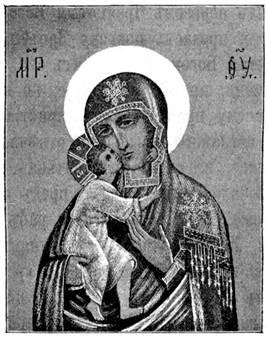
Феодоровская икона Божией Матери для нас особенно достопамятна тем, что в присутствии её в 1613 году Марфа Иоанновна благословила юного сына своего Михаила Феодоровича на Российский престол, потрясённый самозванцами и Поляками, и сын её изъявил своё согласие принять царское кормило правления. В столь смутные времена, каковы были перед воцарением Михаила Феодоровича, мать его долго не соглашалась на высокое призывание сына своего, и сам он страшился и уклонялся от этого призывания. Мать и сын боялись также, чтобы согласием своим не предать Филарета Никитича мщению Поляков, у коих был он в плену. Обстоятельства восшествия Михаила Феодоровича на престол содействием Богоматери, покрову коей вверена Православная Россия, трогательно изображены в грамоте к Михаилу Феодоровичу и матери его, в Кострому, о призывании Михаила Феодоровича на Всероссийский престол. «Челом бити благоверной Государыне Марфе Иоанновне и благоверному Государю Михаилу Феодоровичу, чтобы она благословила его на Московское царство, послали в Кострому от священного чина – Феодорита, архиепископа Рязанского и Муромского, Чудова монастыря архимандрита Аврамия, Спасо-нового монастыря архимандрита Иосифа и Троицы-Сергиева монастыря келаря Аврамия Палицына, и настоятелей Московских соборов Благовещенского и Архангельского; от царского же сигклита избрали и послали болярина Феодора Иоанновича Шереметева, и с ним окольничих, стольников, дворян, детей боярских, атаманов, казаков и множество людей всякого чина. Посольство отпустили с иконами Петровской Богородицы и великих чудотворцев Московских Петра, Алексия и Ионы. Посольство, не дойдя до Костромы на одно поприще, остановилось. В следующий день, 14 марта, архиепископ Феодорит с прочими духовными, в сопровождении всех чинов, пришедших из столицы, прибыли в соборный храм Костромы, отслужили молебен и, взяв местный чудотворный образ Феодоровской Богоматери, пошли в Ипатиевскую обитель, в которой находились Марфа Иоанновна и Михаил Феодорович. Михаил Феодорович и матерь его сретили крестное торжественное шествие за св. воротами обители. Помолившись Господу Богу и Пречистой Богородице, они со слезами приложились к чудотворным иконам, приняли благословение от архиерея, присланного из царствующего града и, быв упрошены, вступили с крестным ходом в соборную монастырскую церковь живоначальной Троицы. Здесь поднесли матери и сыну многомолебное писание от всего священного собора, и от бояр, и от всего воинства и от христоименитого народа Российские державы, чтобы государыня благословила сына своего Михаила Феодоровича Царём и Государем на Московское государство и над прочими государства Российские державы, и чтобы и благоверный Великий Государь Михаил Феодорович прошения не презрил. Долго умоляли Марфу Иоанновну дать благословение; она была сначала непреклонна, плакала и говорила: «яко мнози прежде бывшие цари обругаемы бяху; а инии и чуждую землю познаша; мое же чадо, младо суще, недоумеет к уменьшению людских злостей управляти: молю вас, не лишите меня единородного чада». После продолжительных и напрасных убеждений склонить Марфу Иоанновну на желания отечества, архиепископ приемлет на руки свои чудотворную Феодоровскую икону Пресв. Богородицы, а Троице Сергиевский келарь Аврамий образ св. чудотворцев Московских Петра, Алексия и Ионы, подносят св. иконы к старице, и твёрдым голосом вещают Марфе Иоанновне и Михаилу Феодоровичу: «для чего же пречистая и чудотворная икона Пресв. Богородицы и великие святители Христовы шествовали с нами? Если не склоняетесь на милость ради нас, по крайней мере ради чудотворного образа Царицы всех и Богоматери, и ради великих святителей не преслушайтесь и сотворите повеленное вам от Бога; ибо воистину от Бога вы избраны. Не прогневайте всех Владыку и Бога». Марфа Иоанновна не могла более противиться желанию России. Проливая слёзы умиления перед образом Пречистой Богородицы, мать берёт сына своего и предаёт покрову Заступницы небесной. «Се Тебе, Пречистая Богомати, говорит она, в Твои пречистые руки, Владычице, предаю чадо свое, по воле Твоей устрой полезное ему и всему православному христианству». Михаил просил мать не соглашаться, но она отвечала: «се дело Божие, а не человеческое, не смею противиться». Михаил плакал, все безмолвствовали. Он повергся перед иконой Богоматери и произнёс: «Боже, Твоя есть воля, я раб Твой, аще на то есть воля Божия. Да буди тако», и, приняв прошение и благословение, на выю и перси животворящий крест, в десницу жезл царский, сел на престол царский и наречён был Богом избранный благоверный Великий Государь Царь и Великий Князь, всея России Самодержец в церкви Ипатиевского монастыря, волею Божией и Московского государства всех чинов хотением. Так помощью Богоматери в 1613 году 14 марта совершилось избрание Михаила Феодоровича на Всероссийское царство. В этот день великая была радость в Костроме; установили совершать праздник в честь Богородицы Феодоровские иконы в память этого избрания.
The Theodore Icon of the Mother of God is especially memorable for us in that, in its presence in 1613, Martha Ioannovna blessed her young son Michael Theodorovich for the Russian throne, shaken by impostors and the Poles, and her son expressed his consent to take up the royal helm of government. In such troubled times as those before the accession of Michael Theodorovich, his mother long did not consent to the lofty calling of her son, and he himself feared and shrank from this calling. Mother and son also feared that by their consent they might deliver Philaret Nikitich to the vengeance of the Poles, in whose captivity he was. The circumstances of Michael Theodorovich’s ascent to the throne, through the intercession of the Mother of God, to whose protection Orthodox Russia is entrusted, are touchingly depicted in the letter to Michael Theodorovich and his mother, in Kostroma, concerning the calling of Michael Theodorovich to the All-Russian throne. “The Right-believing Sovereign Lady Martha Ioannovna and the Right-believing Sovereign Michael Theodorovich were entreated, that she might bless him for the Moscow Tsardom; they sent to Kostroma from the sacred order: Theodoret, Archbishop of Ryazan and Murom; Abraham, Archimandrite of the Chudov Monastery; Joseph, Archimandrite of the New Savior Monastery; and Abraham Palitsyn, Cellarer of the Trinity–St. Sergius Monastery; and the superiors of the Moscow cathedrals of the Annunciation and the Archangel; from the royal synclite they chose and sent the boyar Theodore Ioannovich Sheremetev, and with him okolnichies, stolniks, nobles, boyars’ children, atamans, Cossacks, and a multitude of people of every rank. The embassy was sent forth with the icons of the Petrovskaya Mother of God and of the great wonderworkers of Moscow, Peter, Alexis, and Jonah. The embassy, not having reached Kostroma by one verst, halted. The next day, March 14, Archbishop Theodoret with the other clergy, accompanied by all the ranks who had come from the capital, arrived at the cathedral church of Kostroma, served a moleben, and, taking the local wonderworking icon of the Theodore Mother of God, went to the Ipatiev Monastery, where Martha Ioannovna and Michael Theodorovich were. Michael Theodorovich and his mother met the solemn cross procession at the holy gates of the monastery. Having prayed to the Lord God and the Most Pure Theotokos, they tearfully venerated the wonderworking icons, received the blessing from the hierarch sent from the reigning city, and, being entreated, entered with the cross procession into the cathedral monastery church of the Life-originating Trinity. Here they presented to the mother and son a much-supplicatory writing from the entire sacred council, and from the boyars, and from all the host, and from the Christ-named people of the Russian dominion, that the sovereign lady might bless her son Michael Theodorovich as Tsar and Sovereign over the Moscow state and over the other states of the Russian dominion, and that the Right-believing Great Sovereign Michael Theodorovich might not despise the petition. Long did they entreat Martha Ioannovna to give her blessing; at first she was unyielding, wept, and said: ‘Many former tsars were reviled; and others even came to know a foreign land; my child, being young, knows not how to govern for the lessening of human evils: I beseech you, deprive me not of my only-begotten child.’ After prolonged and vain persuasions to incline Martha Ioannovna to the desires of the fatherland, the archbishop takes into his arms the wonderworking Theodore Icon of the Most Holy Theotokos, and the Trinity–St. Sergius cellarer Abraham the image of the holy wonderworkers of Moscow, Peter, Alexis, and Jonah; they bring the holy icons to the elder woman, and with a firm voice declare to Martha Ioannovna and Michael Theodorovich: ‘For what purpose, then, have the most pure and wonderworking icon of the Most Holy Theotokos and the great hierarchs of Christ journeyed with us? If you do not incline to mercy for our sakes, at least for the sake of the wonderworking image of the Queen of all and Mother of God, and for the sake of the great hierarchs, be not disobedient and do that which is commanded you by God; for truly you are chosen by God. Anger not the Lord and Master of all.’ Martha Ioannovna could no longer resist the desire of Russia. Shedding tears of compunction before the image of the Most Pure Theotokos, the mother takes her son and entrusts him to the protection of the heavenly Intercessor. ‘Behold, to Thee, O Most Pure Mother of God,’ she says, ‘into Thy most pure hands, O Lady, I entrust my child; according to Thy will, arrange what is profitable for him and for all Orthodox Christendom.’ Michael begged his mother not to consent, but she answered: ‘This is the work of God, not of man; I dare not resist.’ Michael wept; all were silent. He prostrated himself before the icon of the Mother of God and uttered: ‘O God, Thy will be done; I am Thy servant; if such be the will of God, so be it.’ And, having accepted the petition and blessing, the life-giving cross upon his neck and breast, and the royal scepter in his right hand, he sat upon the royal throne and was named the God-chosen Right-believing Great Sovereign Tsar and Grand Prince, Autocrat of all Russia, in the church of the Ipatiev Monastery, by the will of God and the desire of all ranks of the Moscow state. Thus, with the help of the Mother of God, on March 14, 1613, the election of Michael Theodorovich to the All-Russian tsardom was accomplished. On this day there was great joy in Kostroma; they established the celebration of the feast in honor of the Theodore Icon of the Mother of God in memory of this election.
Феодоровская икона, столь славная в отечественной нашей истории, украшена золотым окладом, более полупуда весом, с бриллиантами, яхонтами, изумрудами, рубинами и другими драгоценными каменьями. С нею ежегодно бывают крестные ходы в день Пятьдесятницы в Ипатиевский монастырь, а 16 августа в Спасо-запруденскую церковь. Феодоровская икона привлекает к себе отовсюду множество Богомольцев. Ежедневно с утра до вечера, говорят очевидцы, к ней притекают и поклоняются перед нею усердствующие (см. о ней 16 августа).
The Theodore Icon, so glorious in our national history, is adorned with a gold riza, weighing more than half a pood, with diamonds, sapphires, emeralds, rubies, and other precious stones. With it, processions of the cross are made annually on the day of Pentecost to the Ipatiev Monastery, and on August 16 to the Savior-by-the-Pond Church. The Theodore Icon draws to itself from everywhere a multitude of pilgrims. Daily from morning until evening, eyewitnesses say, the devout flock to it and worship before it (see about it on August 16).
Ркп. описание святых Киева: „святый, благоверный, великий князь Ростислав Мстиславич преставися в л. 6674 мес. марта в 14 день“.
Manuscript description of the saints of Kiev: “The holy, right-believing Grand Prince Rostislav Mstislavich reposed in the year 6674, on the 14th day of the month of March.”
Им умерщвлены: в 1318 г. св. к. Михаил, в 1325 г. сын его к. Димитрий, в 1339 г. другой сын Александр вместе с своим сыном Феодором; в 1325 г. князь Новосильский Александр, в 1327 г. Рязанский князь Иоанн Ярославич, в 1330 г. Стародубский князь Феодор. В 1334 г. Узбек велел Русским князьям идти с Товлубием опустошать Смоленское княжество за то только, что Смоленский князь помирился с Брянским князем, хотя перед тем жаловался на него.
By him were put to death: in 1318, St. Prince Michael; in 1325, his son Prince Demetrius; in 1339, another son, Alexander, together with his son Theodore; in 1325, Prince Alexander of Novosil; in 1327, Prince John Yaroslavich of Ryazan; in 1330, Prince Theodore of Starodub. In 1334, Uzbek ordered the Russian princes to go with Tovlubiy to lay waste the Smolensk principality, merely because the Prince of Smolensk had made peace with the Prince of Bryansk, although he had previously complained against him.
Писали: не ранее 1332 г. пришёл он в Москву; там вскоре освятил церковь св. муч. Евстафия Плакиды“. В источниках сказано, что освящена была церковь архангела Михаила, на память св. Евстафия Плакиды, и это было сент. 20 1333 г. Никон. л. 3, 160. Собр. л. V, 220. IV, 53.
They wrote: “Not earlier than 1332 did he come to Moscow; there he soon consecrated the church of the holy martyr Eustathius Placidas.” In the sources it is said that the church of the Archangel Michael was consecrated, on the memory of St. Eustathius Placidas, and this was on September 20, 1333. Nikon Chronicle 3, 160. Collection of Chronicles V, 220. IV, 53.
Степ. кн. 1. 442–444. Собр. л. III, 82. IV, 57. V, 224. Никои, л. 3, 178. 179. Русск. времен. 1, 173. Если летопись говорит: „Чанибек Азбекович – многу льготу сотвори земле Русской“ (Ник. л.2:209), то эта льгота была не следствием его благорасположения к христианству, а допущена была от того, что он занят был войной с Персией. На монетах называли его: „слава веры“, т. е. магометанства. Зап. археол. общ. XII. 16–18. 185–188.
Book of Degrees 1, 442–444. Collection of Chronicles III, 82. IV, 57. V, 224. Nikon Chronicle 3, 178, 179. Russian Timepiece 1, 173. If the chronicle says: “Chanibek Azbekovich granted much relief to the Russian land” (Nikon Chronicle 2:209), this relief was not a consequence of his good disposition toward Christianity, but was permitted because he was occupied with war against Persia. On coins they called him: “glory of the faith,” i.e., of Mohammedanism. Notes of the Archaeological Society XII, 16–18, 185–188.
В прологе под 14 марта „страдание Феогноста митрополита“ и описывается только страдание при Джанибеке. – Более, чем вероятно, что обычай некоторых раскольников выстригать себе макушку, считаемый ими за святыню, одолжен происхождением слишком простому желанию. Белое духовенство стригло тогда себе макушку. – Жившие на землях духовенства миряне, чтобы быть свободными от насилий баскаков, также стали выстригать себе макушку. Им стали подражать другие уже вовсе не по мыслям чистой совести. Теперь спрашивается: какой смысл имеет ныне обычай раскольничий выстригать макушку? Никакого!
In the Prologue under March 14, “The Passion of Metropolitan Theognostus,” and only the suffering under Janibek is described. – It is more than probable that the custom of some schismatics to shave the crown of their heads, which they consider a sacred thing, owes its origin to an overly simple desire. The white clergy at that time shaved the crown of their heads. – Laymen living on the lands of the clergy, in order to be free from the violence of the baskaks, also began to shave the crown of their heads. Others began to imitate them, entirely not from thoughts of a pure conscience. Now the question is: what meaning does the schismatic custom of shaving the crown of the head have today? None at all!
Собр. л. IV, 150. VI, 195. Пролог 14 марта. По Русск. Времен. 2 123, „Феогноста же митроп. положиша в церкви св. Ап. Петра, об едину стену с митроп. Петром чудотворцем, на верх мосту“ (след. не в земле) „и окладоша кирпичем“. Львов. летоп. 3, 37. 38. По ркп. святцам „святый Феогност митрополит преставися в л. 6861 м. марта в 14 д.“, по другому списку „обретены мощи его того же лета“. Последнего известия не видно в летописях. В Муз. Румянцева № 160 сказание на „перенесение мощей святых святителей митрополитов Феогноста, Киприяна, Фотия, Ионы“, авг. 27 д.
Collection of Chronicles IV, 150. VI, 195. Prologue, March 14. According to the Russian Timepiece 2, 123, "Theognostus the metropolitan was placed in the church of the Holy Apostle Peter, against the same wall as Metropolitan Peter the Wonderworker, above the floor" (i.e., not in the earth) "and they covered him with brick." Lvov Chronicle 3, 37. 38. According to manuscript calendars of saints, "the holy Theognostus the metropolitan reposed in the year 6861, on March 14," and according to another copy, "his relics were uncovered in the same year." The latter notice is not found in the chronicles. In the Rumyantsev Museum, No. 160, there is a narrative on the "translation of the relics of the holy hierarchs, the metropolitans Theognostus, Cyprian, Photius, and Jonah," on August 27.