Уроженец Константинополя, служивший в императорской гвардии, он по воле императора Льва Хазара вступил в супружество, но в первый же день брака взял с жены слово хранить целомудрие. По смерти Льва (780 г.) отослал супругу в монастырь на остров Питий (один из Принцевых), а сам в Полихрониевом монастыре, на берегу Мраморного моря, прилежал молитве, чтению и списыванию книг. Потом на своё иждивение устроил два монастыря, из коих в одном, на горе Сигрианской, верстах в 20 от Кизика, был и игуменом. Император Лев Армянин лаской и угрозами требовал от него согласия с решением нечестивого собора (в апреле 815 года), на коем преданы анафеме почитающие св. иконы и повелено уничтожать изображения священные. Феофан отвечал письменно, как исповедник православия, – и тогда монастырь его предали огню, самого его держали в темнице два года и, наконец, заточили на остров Самофракию, где он скоро и скончался (818 г.). – Преподобный Феофан оставил после себяхронографию, Церковную Летопись с 285 по 813 год, замечательную богатством содержания.
A native of Constantinople who served in the imperial guard, he entered into marriage at the will of Emperor Leo the Khazar, but on the very first day of the marriage he obtained from his wife a promise to preserve chastity. After the death of Leo (A.D. 780), he sent his wife to a monastery on the island of Pitius (one of the Princes' Islands), while he himself, in the Polychronius Monastery on the shore of the Sea of Marmara, devoted himself to prayer, reading, and the copying of books. Afterwards, at his own expense, he founded two monasteries, in one of which, on Mount Sigriana, about twenty versts from Cyzicus, he also served as abbot. Emperor Leo the Armenian, by flattery and threats, demanded his agreement with the decision of the impious council (in April 815), at which those who venerate the holy icons were anathematized and the destruction of sacred images was commanded. Theophanes replied in writing, as a confessor of Orthodoxy—and then his monastery was given over to the flames, he himself was held in prison for two years, and finally was exiled to the island of Samothrace, where he soon reposed (A.D. 818). — The Venerable Theophanes left behind him a Chronography, a Church Chronicle from the year 285 to 813, remarkable for the richness of its content.
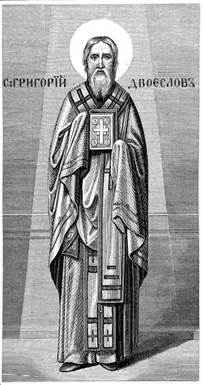
Св. Григорий Великий, Двоеслов (собеседник, беседователь), названный так за своё сочинение – «Беседы или диалоги о жизни и чудесах Италийских святых», – родился в Риме, около половины VΙ стол., происходил из рода, славного не только знатностью, но и благочестием; дедом его был святой папа Феликс; мать его Сильвия и тётки Тарсилла и Емилиана причислены также Римской Церковью к лику святых.
St. Gregory the Great, the Dialogist (converser, interlocutor), so named for his work—"Conversations or Dialogues on the Life and Miracles of the Italian Saints"—was born in Rome, around the middle of the sixth century A.D., and was descended from a family glorious not only for its nobility but also for its piety; his grandfather was the holy Pope Felix; his mother Silvia and his aunts Tarsilla and Aemiliana are also numbered among the saints by the Roman Church.
На мирской службе Григорий, в молодых ещё летах, занимал должности префекта и сенатора, но чувствуя расположение к иночеству, он, по смерти своих родителей, употребил всё богатое после них наследство на устройство больниц, странноприимных домов и монастырей, в один из которых, во имя св. Апостола Андрея Первозванного, «променяв свои палаты на тесную келью», поступил и сам.
In secular service, Gregory, while still in his youth, held the offices of prefect and senator, but feeling a disposition toward monasticism, upon the death of his parents he used all the rich inheritance left by them for the establishment of hospitals, hospices, and monasteries, into one of which, dedicated to the holy Apostle Andrew the First-Called, "exchanging his palaces for a cramped cell," he himself entered.
В 577 г. Григорий был посвящён в диакона-регионария; потом, в качестве папского нунция (посла), был послан по церковным делам в Константинополь, по возвращении откуда был избран Римским папой – в 590 г. Это совершилось против воли смиренного Григория, который почитал и называл себя «рабом рабов», тяготился светской властью и употребил все зависящие от него средства, чтобы уклониться от неё, но, облечённый ею, он усердно, хотя и постоянно больной, предался исполнению своих пастырских обязанностей. – Главной заботой папы Григория было распространение и объяснение слова Божия; многих еретиков он обратил к правоверию; содействовал к утверждению веры и в отдалённой Британии (Англии), послав туда в 597 г. проповедников под начальством монаха Бенедиктинского чина Августина, который убедил принять св. крещение самого короля Этельберта, что окончательно содействовало распространению христианской веры по всей стране.
In A.D. 577, Gregory was ordained a regionary deacon; afterwards, as a papal nuncio (envoy), he was sent on church affairs to Constantinople, upon his return from which he was elected Pope of Rome—in A.D. 590. This came to pass against the will of the humble Gregory, who considered and called himself "the servant of servants," was burdened by secular authority, and used every means within his power to avoid it, but, once invested with it, he zealously, though constantly ill, devoted himself to the fulfillment of his pastoral duties. — The chief concern of Pope Gregory was the spread and explanation of the word of God; he converted many heretics to the true faith; he also contributed to the establishment of the faith in distant Britain (England), sending there in A.D. 597 preachers under the leadership of the monk of the Benedictine order, Augustine, who persuaded King Ethelbert himself to receive holy Baptism, which finally contributed to the spread of the Christian faith throughout the entire land.
Св. Григорий отличался необыкновенной благотворительностью. Среди бедствий от Лонгобардов, опустошавших тогда Римские области, также во время голода и заразительных болезней, он с отеческой любовью заботился о своей пастве, помогал ей деньгами, укреплял души словом Божиим, смягчал даже ожесточённых врагов-варваров.
St. Gregory was distinguished by extraordinary charity. Amidst the calamities caused by the Lombards, who were then ravaging the Roman territories, as well as during the famine and pestilential diseases, he cared for his flock with fatherly love, aided them with money, strengthened their souls with the word of God, and even softened the hardened barbarian enemies.
Большую ревность показал св. Григорий и в устроении церковного Богослужения. В бытность свою в Константинополе он имел случай и старался приобрести точные сведения об обрядах Восточной Церкви, просиявшей столькими великими деятелями веры и благочестия, и постоянно руководствовался ими во время своего святительства и вводил лучший порядок в церковное управление; некоторые западники, как видно из одного письма св. Григория, жаловались, что «он вводит в их службу чужое, Греческое, хочет покорить их Грекам» ...
St. Gregory also showed great zeal in the ordering of Church Divine Services. During his stay in Constantinople, he had the opportunity and took pains to acquire accurate knowledge of the rites of the Eastern Church, which shone with so many great figures of faith and piety, and he constantly guided himself by them during his hierarchate and introduced better order into church governance; some Westerners, as is evident from one letter of St. Gregory, complained that "he was introducing into their service something foreign, Greek, and wished to subject them to the Greeks"...
Св. Григорий был составителем литургии Преждеосвященных даров, которая до VI века совершалась только по устному преданию и по местному обыкновению. Он первый, дополнив её несколькими молитвами, изложив её письменно, и составленный им таким образом чин литургии Преждеосвященных даров, утверждённый 6-м Вселенским Собором, окончательно был принят всей православной Церковью.
St. Gregory was the compiler of the Liturgy of the Presanctified Gifts, which until the sixth century was celebrated only according to oral tradition and local custom. He was the first to supplement it with several prayers, to set it down in writing, and the rite of the Liturgy of the Presanctified Gifts thus composed by him, confirmed by the Sixth Ecumenical Council, was finally adopted by the entire Orthodox Church.
Св. Григорий Двоеслов, известный в истории под именем Великого, скончался в 604 г. Тело его в Ватиканском соборе св. Петра, в придельном храме, посвящённом его имени.
St. Gregory the Dialogist, known in history under the name of the Great, reposed in A.D. 604. His body lies in the Vatican Cathedral of St. Peter, in a side church dedicated to his name.
Св. Григорий оставил после себя несколько сочинений, из которых лучшие: «Правило пастырское», «Разговоры о жизни Италийских отцов», 848 писем (см. о св. Григории Двоеслове: «Уч. об отц. Церкви» Фил. Черн. § 238–240).
St. Gregory left behind him several works, of which the best are: "The Pastoral Rule," "Dialogues on the Life of the Italian Fathers," and 848 letters (see concerning St. Gregory the Dialogist: "Teachings on the Fathers of the Church" by Philaret of Chernigov, §§ 238–240).
Жизнеописатель и ученик Симеона – Никита Стифат говорит о своём учителе, что он был воспитан при Константинопольском дворе (во время царствования Василия и Константина), но когда умер его покровитель дядя – сенатор, то Симеон ещё в молодых годах поступил в Студийскую обитель, где и предался строжайшему подвижничеству под руководством Симеона благочестивого. Потом, по совету Симеона же, он перешёл в обитель св. Мамонта138, где по смерти настоятеля был посвящён в сан пресвитера и в звание игумена.
The biographer and disciple of Symeon—Nicetas Stethatos—says of his teacher that he was brought up at the court of Constantinople (during the reign of Basil and Constantine), but when his patron, his uncle the senator, died, Symeon, while still in his youth, entered the Studite monastery, where he gave himself over to the strictest asceticism under the guidance of Symeon the Pious. Afterwards, on the advice of the same Symeon, he transferred to the monastery of St. Mammas138, where, upon the death of the abbot, he was ordained to the rank of presbyter and to the office of abbot.
Симеон подвизался в священстве в продолжение 48-ми лет: удалившийся однажды по случаю возникших недоразумений, он с честью был возвращён в столицу, где ему даже был предложен сан митрополита, но он отказался принять его.
Symeon labored in the priesthood for forty-eight years: having once withdrawn on account of some misunderstandings that had arisen, he was honorably brought back to the capital, where he was even offered the rank of metropolitan, but he refused to accept it.
Множество мирян, желавших поучаться его замечательными наставлениями, привлекал Симеон Богослов в свою Мамонтовскую обитель, и мирно скончался в 1021-м г.
A multitude of laymen, desiring to be instructed by his remarkable teachings, were drawn by Symeon the Theologian to his Monastery of St. Mammas, and he peacefully reposed in the year 1021.
Об учительстве его говорит ученик и жизнеописатель его Никита Стифат: «Он не был для себя своим, но, по благодати Божией, усвоившей его себе, язык его был тростью скорописца, а ум – источником премудрости Божией, потому то он богословствовал, хотя не знал наук, как возлюбленный ученик». Он оставил после себя много сочинений о духовной жизни. Главным предметом наставлений Симеона нового Богослова – «Делание во Христе сокровенное». Он объясняет пути внутренней брани; обучает мерам совершенствования преимущественно духовным; заставляет подвизаться в особенности против духовных страстей, против помыслов и движений греховных, «Начальное наше падение», – говорит он, – «совершилось от гордости, поэтому и должно смирять душу». Вот ответ Симеона современным со-вопросникам, восстававшим против него, как против нарушителя известного им, условного порядка спасения: «не верят и уверяют себя, что быть не может, чтобы человек совсем был чист от похотей и пороков, чтобы принял в себя утешителя существенно. Против своего собственного спасения говорят и поступают, заключают для самих себя двери Царствия Небесного и запрещают прочим, которые хотели бы войти. Если слышат о ком-либо, что он законно подвизался и чист от возмутительных страстей, проповедует перед всеми чудеса Божии, которые соделал в нём Бог по неложным обетованиям Своим... перестань, – говорят, – ты, обольщённый и гордый! Кто таков, каковыми были отцы? Кто видел или может видеть Бога? Кто принял в таком обилии Духа, чтобы удостоился через Него видеть Отца и Сына? Да, из вас, точно, никто, как сами говорите вы. Но из тех, которые решились нести крест, идти тесным путём, готовы погубить душу свою для жизни вечной, – те и очень многие видели Бога, и очень многие, как думаю, и теперь видят, увидит и каждый, кто только захочет». – «Говорят: прельстился он; ибо кто говорит, что не грешит, тот слеп и не видит. Правда, но тот, кто имеет Бога, не может грешить, ибо семя Его в нём пребывает, а как сказал Иоанн Богоразумнейший, гром Апостолов». Хотя такое высокое состояние души и представляется достижимым по разумению Симеона, но он же указывает и на те чрезвычайные подготовительные подвиги, которыми оно только может быть достигнуто: – «прежде сетования и слёз пусть не обольщают нас пустыми словами, и не будем сами обманывать себя в успехе благочестия... Без слёз не смягчится жестокость сердца нашего, душа не снищет духовного смирения, не в силах будем сделаться смиренными, а кто так не устроил себя, тот не может соединиться с Духом Святым» ...
Concerning his teaching, his disciple and biographer Nicetas Stethatos says: "He was not his own, but, by the grace of God which had appropriated him to itself, his tongue was the pen of a ready writer, and his mind a fountain of the wisdom of God; therefore he theologized, though he knew not the sciences, like the beloved disciple." He left behind him many writings on the spiritual life. The chief subject of the instructions of Symeon the New Theologian is "the hidden work in Christ." He explains the paths of the inner warfare; he teaches the means of perfection, especially spiritual ones; he urges one to struggle particularly against spiritual passions, against thoughts and sinful movements. "Our original fall," he says, "was accomplished through pride; therefore the soul must be humbled." Here is the answer of Symeon to his contemporary questioners, who rose up against him as a violator of the conventional order of salvation known to them: "They do not believe and assure themselves that it cannot be that a man should be entirely pure from lusts and vices, that he should receive the Comforter substantially. They speak and act against their own salvation, they shut for themselves the doors of the Kingdom of Heaven and forbid others who would enter. If they hear of someone that he has lawfully striven and is pure from disturbing passions, that he preaches before all the wonders of God which God has wrought in him according to His unfailing promises... 'Stop,' they say, 'you deluded and proud one! Who is such as the fathers were? Who has seen or can see God? Who has received the Spirit in such abundance as to be vouchsafed through Him to see the Father and the Son?' Yes, of you, truly, no one, as you yourselves say. But of those who have resolved to take up the cross, to walk the narrow way, who are ready to lose their soul for eternal life—these, and very many, have seen God, and very many, as I think, see Him even now, and everyone who only wills shall see Him." — "They say: 'He is deluded; for he who says he does not sin is blind and does not see.' True, but he who has God cannot sin, for His seed abides in him, as said John the most wise in theology, the thunder of the Apostles." Although such a high state of the soul is represented as attainable according to the understanding of Symeon, he also points out the extraordinary preparatory labors by which alone it can be attained: — "Let not empty words deceive us before lamentation and tears, and let us not deceive ourselves in the success of piety... Without tears the hardness of our heart will not be softened, the soul will not obtain spiritual humility, we will not be able to become humble, and he who has not so disposed himself cannot be united with the Holy Spirit"...
Сочинениями Симеона Богослова нередко свидетельствуется преп. Нил Сорский: – «якоже Симеон новый Богослов повелевает» ... «Якоже рече св. Симеон» ... Преп. Иосиф Волоколамский также делал выписки из сочинений нового Богослова, – в сборнике своём он поместил до 15-ти его слов.
The Venerable Nilus of Sora often testifies by the writings of Symeon the Theologian: "as Symeon the New Theologian commands"... "as St. Symeon said"... The Venerable Joseph of Volokolamsk also made extracts from the writings of the New Theologian—in his collection he placed up to fifteen of his discourses.
В Славянских молитвенниках читается Симеонова молитва перед приобщением Св. Таин. Одна читается и в Греческих под названием: «Симеона нового Богослова благочестивое испытание о св. Причащении».
In Slavonic prayer books, the prayer of Symeon before Communion of the Holy Mysteries is read. One is also read in Greek under the title: "The pious examination of Symeon the New Theologian concerning Holy Communion."
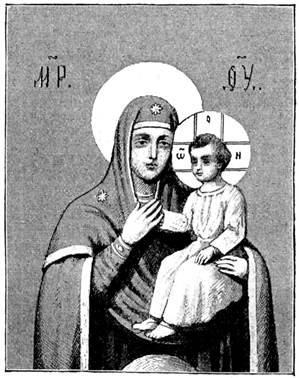
Св. Апостолы Пётр и Иоанн Богослов, прежде отшествия своего в отдалённые страны для проповеди слова Божия, благовествовали Господа Иисуса в местах, ближайших к Иерусалиму. Когда они обратили к христианской вере множество народа в городе Лиде, названном впоследствии Диосполем; тогда соорудили здесь для новообращённых храм во имя Пресвятой Девы Марии и, пришедши в Иерусалим, молили Богоматерь посетить и Своим пришествием освятить и благословить сей храм, посвящённый Её имени, дабы возносимые в нём молитвы верующих благоприятны были рождённому от Неё Сыну Божию. Пречистая Дева сказала им: «идите с миром; там и Я с вами буду». Пришедши в созданный ими храм, они узрели на одном из поддерживавших его столбов образ Богоматери, по-видимому не человеческой рукой, но Самим Богом написанный и представлявший истинное подобие святого лика и честных одежд Владычицы. Увидевши это дивное знамение, Апостолы с благоговением поклонились нерукотворенному образу и возблагодарили Господа. Потом Сама Богоматерь посетила храм Лидский и, нашедши там весьма многих, уверовавших во Христа, возрадовалась духом и даровала образу Своему благодать и силу чудотворения. В честь явления этого образа установлено и совершается празднование12 марта.
The Holy Apostles Peter and John the Theologian, before their departure to distant lands for the preaching of the word of God, proclaimed the Lord Jesus in places nearest to Jerusalem. When they had converted to the Christian faith a great multitude of people in the city of Lydda, later called Diospolis, they built there for the newly-converted a church in the name of the Most Holy Virgin Mary and, having come to Jerusalem, besought the Mother of God to visit and, by Her coming, to sanctify and bless this church dedicated to Her name, so that the prayers of the faithful offered up in it might be acceptable to the Son of God born of Her. The Most Pure Virgin said to them: "Go in peace; there I shall be with you." Having come to the church they had built, they beheld on one of the pillars supporting it an image of the Mother of God, seemingly not painted by human hand, but written by God Himself, representing the true likeness of the holy countenance and venerable garments of the Lady. Seeing this wondrous sign, the Apostles reverently bowed before the not-made-by-hands image and gave thanks to the Lord. Afterwards, the Mother of God Herself visited the Lyddan church and, finding there very many who had believed in Christ, rejoiced in spirit and bestowed upon Her image grace and wonderworking power. In honor of the appearance of this image, the celebration is established and observed on March 12.
В IV веке во время гонения, воздвигнутого Юлианом на Церковь Христову, послан был им в Лиду сродник его для уничтожения образа Пресвятой Богородицы. При этом последовало новое чудо: как ни старались каменосечцы разными орудиями стесать священное изображение, но оно не сглаждалось, а углублялось более и более внутрь столба со всеми красками и очертаниями, так что ремесленники, не могши никакими усилиями уничтожить его, принуждены были оставить свою безуспешную работу. Слух о великих и многочисленных чудесах, бывших от честного образа Божией Матери, распространился во все концы мира, и потому верующие ежегодно отовсюду стекались в Лиду для поклонения ему.
In the fourth century, during the persecution raised by Julian against the Church of Christ, a kinsman of his was sent by him to Lydda to destroy the image of the Most Holy Theotokos. Thereupon a new miracle occurred: however much the stonecutters strove with various tools to hew away the sacred image, it was not effaced, but sank deeper and deeper into the pillar with all its colors and outlines, so that the craftsmen, being unable by any efforts to destroy it, were compelled to abandon their fruitless labor. The report of the great and numerous miracles wrought by the venerable image of the Mother of God spread to all ends of the world, and therefore the faithful flocked yearly from everywhere to Lydda to venerate it.
Обитель св. Мамонта Ксилоцирская находилась у городской стены Ксилоцирк (деревянный цирк) у городских ворот того-же имени, почему Симеон называется игуменом обители Мамонтовой у Ксилоцирка, иногда и просто Ксилоцирским.
The monastery of St. Mammas of Xylocircus was situated near the city wall of Xylocircus (the wooden circus) at the city gate of the same name, for which reason Simeon is called the abbot of the monastery of Mammas at Xylocircus, and sometimes simply Xylocircan.