Orthodox Translations

March 1010 марта

Old Calendar: civil March 23 · New Calendar: civil March 10

History

Св. муч. Кодрата Никомидийского и с ним Саторина, Руфина и прочих

St. Martyr Quadratus of Nicomedia and with him Saturninus, Rufinus, and others

E1.TAI draft

В царствование Римского императора Декия возникло на христиан новое гонение, которое отличалось от всех прочих тем, что в это время было особенно много христиан, поколебавшихся перед страхом мучений и ради спасения своей жизни не отступивших даже перед участием, хотя только и наружным, в языческих жертвоприношениях. Объяснить такое явление можно тем, что в период времени между последним и предыдущим гонением, христиане довольно долго пользовались миром; в беспечности своей успевали слишком привязываться к благам земным, что и ослабило в них благодетельное бодрственное напряжение и святую ревность о вере. Но Господь не покидал ослабевающих и воздвигал их на пути их падения посредством избранных орудий Своих. Таковым был между прочими чествуемый сегодня св. Церковью св. мученик Кодрат.

During the reign of the Roman emperor Decius, a new persecution arose against the Christians, which differed from all others in that at this time there were especially many Christians who wavered before the fear of torments and, for the sake of saving their lives, did not shrink even from participation, albeit only outward, in pagan sacrifices. Such a phenomenon can be explained by the fact that in the period between the last persecution and the preceding one, Christians had enjoyed peace for quite a long time; in their carelessness they became too attached to earthly goods, which weakened in them the salutary vigilant tension and holy zeal for the faith. But the Lord did not abandon those who were weakening and raised them up on the path of their fall through the chosen instruments of His. Such a one, among others, was the holy martyr Quadratus, honored today by the holy Church.

E1.0AI draft

Когда, во время наступившего при Декии в половине III-го века гонения, страх охватил христиан Никомидийских, и они убегали в горы и пустыни, то были между ними и такие, которые спокойно ожидали решения своей участи, не боясь ни мучений, ни смерти. В числе их находился один молодой христианин, всеми уважаемый, богатый и знатный – Кодрат. Он заботливо относился к своим единоверцам, посещал тех из них, которых уже судьи успели заключить в темницы, ободрял их, молился с ними и всеми силами убеждал их стоять твёрдо за веру Христову.

When, during the persecution that began under Decius in the middle of the third century, fear seized the Christians of Nicomedia, and they fled to the mountains and deserts, there were among them also those who calmly awaited the decision of their fate, fearing neither torments nor death. Among them was a certain young Christian, respected by all, wealthy and noble—Quadratus. He cared solicitously for his fellow believers, visited those of them whom the judges had already succeeded in casting into prison, encouraged them, prayed with them, and with all his strength urged them to stand firm for the faith of Christ.

E1.1AI draft

Однажды, когда посланный в Никомидию императором судья Перенний приказал представить ему узников и спросил их об их имени, звании и отчестве, то Кодрат, опасаясь, что у них недостанет твёрдости исповедывать открыто веру во Христа, поспешил встать среди узников и отвечал за всех судье: – «имя наше – христиане; звание и благородство – быть рабами Христа; отечество наше – небо, где Бог вселит надеющихся на Него... Я сам произвольно являюсь перед тобой, чтобы свидетельствовать от имени всех братьев моих. Делай скорее то, зачем пришёл, и убедись, что мы – мужественные воины Христа.

One day, when the judge Perennius, sent to Nicomedia by the emperor, ordered the prisoners to be brought before him and asked them their name, rank, and patronymic, Quadratus, fearing that they might lack the firmness to openly confess faith in Christ, hastened to stand among the prisoners and answered the judge for all: "Our name is Christians; our rank and nobility is to be servants of Christ; our fatherland is heaven, where God will give a dwelling to those who hope in Him... I myself voluntarily appear before you, to testify on behalf of all my brethren. Do quickly what you have come for, and be convinced that we are courageous soldiers of Christ."

E1.2AI draft

– Но назови прежде твоё имя, безумец! – спросил поражённый смелостью исповедника Перенний.

"But first give your name, madman!" asked Perennius, struck by the boldness of the confessor.

E1.3AI draft

– Я уже сказал тебе, что мы – христиане; это – и имя, и звание и достоинство наше, – отвечал Кодрат.

"I have already told you that we are Christians; this is our name, and rank, and dignity," answered Quadratus.

E1.4AI draft

Узнав однако же от жителей, что Кодрат – один из знатнейших граждан Никомидийских, Перенний, успевший уже отдать приказ, чтобы пытали дерзкого христианина за сопротивление его совершить жертвоприношение, – встревожился и начал склонять его мягкими мерами отречься от Христа.

Having learned, however, from the inhabitants that Quadratus was one of the most notable citizens of Nicomedia, Perennius, who had already given the order to torture the insolent Christian for his resistance to performing a sacrifice, became alarmed and began to persuade him by gentle measures to renounce Christ.

E1.5AI draft

– Многие христиане, – говорил он между прочим Кодрату, – согласились принести жертву богам; разве ты считаешь себя лучше их?

"Many Christians," he said to Quadratus among other things, "have agreed to offer sacrifice to the gods; do you consider yourself better than them?"

E1.6AI draft

– Конечно, я лучше тех, которые отступили от Бога, если я останусь верен Ему, – отвечал Кодрат, – но где же те, о ком ты говоришь?

"Of course, I am better than those who have fallen away from God, if I remain faithful to Him," answered Quadratus, "but where are those of whom you speak?"

E1.7AI draft

К сожалению, слова судьи оказались справедливыми... Действительно, многие из христиан согласились совершить языческое жертвоприношение; иные же из них за деньги приобретали письменные свидетельства участия их в жертвоприношениях...

Unfortunately, the judge's words proved true... Indeed, many Christians agreed to perform a pagan sacrifice; others of them purchased for money written certificates of their participation in the sacrifices...

E1.8AI draft

Между тем, судья, видя, что никакими убеждениями нельзя поколебать твёрдость Кодрата, возобновил приказ предать его истязаниям, и в то же время послал за отрёкшимися христианами. Когда, в надежде, что они убедят мученика сохранить свою жизнь подобно им – ценой отречения от Христа, их привели к тому месту, где мучили Кодрата, то, увидев их, он с ужасом и сокрушением сердца за них воскликнул:

Meanwhile, the judge, seeing that no persuasion could shake Quadratus's firmness, renewed the order to subject him to tortures, and at the same time sent for the Christians who had renounced. When, in the hope that they would persuade the martyr to save his life like them—at the price of renouncing Christ—they were brought to the place where Quadratus was being tortured, then, seeing them, he exclaimed with horror and heartfelt grief for them:

E1.9AI draft

– Несчастные! Что вы сделали! Разве вы не верите в воскресение мёртвых и в жизнь вечную, что отдали Царство Небесное за кратковременную земную жизнь? «Не бойтесь убивающих тело, душу же не могущих убить, а бойтесь более Того, Кто может и душу и тело погубить в геенне» ... (Мф.10:18.)

"Wretches! What have you done! Do you not believe in the resurrection of the dead and in eternal life, that you have given away the Kingdom of Heaven for a brief earthly life? 'Fear not those who kill the body, but cannot kill the soul; rather fear Him who can destroy both soul and body in Gehenna' (Mt. 10:28)."

E1.10AI draft

И, забыв собственные страдания, мученик всей душой обратился к несчастным отступникам, умолял, убеждал их и успел пробудить в них раскаяние.

And, forgetting his own sufferings, the martyr turned with his whole soul to the unfortunate apostates, implored, urged them, and succeeded in awakening repentance in them.

E1.11AI draft

– Не отчаявайтесь, братия, – утешал он их тогда, – Бог милостив, молитесь Ему со слезами покаяния, твёрдо исповедуйте святое имя Его, омойте кровью ваш грех и приблизитесь к Нему!..

"Do not despair, brethren," he then consoled them, "God is merciful; pray to Him with tears of repentance, firmly confess His holy name, wash away your sin with blood, and you will draw near to Him!.."

E1.12AI draft

Христиане отозвались исповеднику слезами и пламенной молитвой к Богу.

The Christians responded to the confessor with tears and fervent prayer to God.

E1.13AI draft

Узнав о случившемся, судья велел усилить мучения Кодрата, огнём опалять раны его... Но эта боль была ничто в сравнении с блаженством души, возлюбившей Бога и ближнего более, чем себя...

Having learned of what had happened, the judge ordered Quadratus's torments to be intensified, to sear his wounds with fire... But this pain was nothing compared to the bliss of a soul that loved God and neighbor more than itself...

E1.14AI draft

– Господи! – восклицал страдалец, – возьми душу мою за души их и помилуй их!

"Lord!" exclaimed the sufferer, "take my soul for their souls and have mercy on them!"

E1.15AI draft

Ободрённые, воодушевлённые любовью брата о Христе, безбоязненно исповедали веру свою отрёкшиеся прежде от неё христиане, и все были осуждены на смерть.

Encouraged, inspired by the love of a brother in Christ, the Christians who had previously renounced their faith fearlessly confessed their faith, and all were condemned to death.

E1.16AI draft

Кодрата же Перенний брал с собой во время объезда им разных городов115 и часто предавал его жестоким истязаниям; но ничто не могло победить веры праведного, а сверхъестественная твёрдость его и терпение поражали неверующих и привлекали души их к истинному Богу...

As for Quadratus, Perennius took him with him during his circuit of various cities115 and often subjected him to cruel tortures; but nothing could overcome the faith of the righteous man, and his supernatural firmness and patience amazed the unbelievers and drew their souls to the true God...

E1.17AI draft

В Кесарии, в селении близ реки Риндака, где возобновлены были страдания Кодрата, множество христиан стали громогласно исповедывать вместе с ним имя Господне, и двое из них – Саторин и Руфин приняли мученическую смерть. Наконец и св. Кодрат и с ним многие другие были обезглавлены.

In Caesarea, in a settlement near the river Rhyndacus, where Quadratus's sufferings were renewed, a multitude of Christians began to loudly confess the Lord's name together with him, and two of them—Saturninus and Rufinus—received a martyr's death. Finally, St. Quadratus and many others with him were beheaded.

E1.18AI draft

Память мученика Кодрата праздновалась в Константинополе, близ Ксероцирка.

The memory of the martyr Quadratus was celebrated in Constantinople, near the Xerocircus.
E1.19AI draft

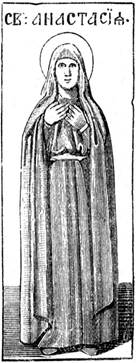
† Преп. Анастасии

† The Repose of the Venerable Anastasia

E2.TAI draft
Engraving

Св. Анастасия116 и по рождению своему была из высшей дворянской фамилии двора Цареградского и была в замужестве за первым сановником империи. Потому и звали её патрицианкой. По смерти мужа, жила она в страхе Божием и усердно исполняла заповеди Божии. За добродетели и редкую красоту пользовалась она общим уважением. Император Юстиниан оказывал особенное внимание к молодой вдове. Это одно было причиной преследования явного, поднятого императрицей против Богобоязненной вдовы. Анастасия, более благородная душой, чем думали о ней и добрые люди, сказала себе: вот случай – спасать свою душу; ты должна избавить императрицу от ревности; иди же в пустыню, – там можешь заслужить венец небесный; тебя гонят от двора, почему же и не уйти?

St. Anastasia116 was by birth from a most noble family of the court of Constantinople and was married to the first dignitary of the empire. For this reason she was also called the Patrician. After the death of her husband, she lived in the fear of God and diligently fulfilled the commandments of God. For her virtues and rare beauty she enjoyed universal respect. The emperor Justinian showed particular attention to the young widow. This alone was the cause of the open persecution raised by the empress against the God-fearing widow. Anastasia, more noble in soul than even good people thought of her, said to herself: here is an opportunity—to save your soul; you must deliver the empress from jealousy; go then into the desert—there you may earn a heavenly crown; you are being driven from the court, so why not depart?

E2.0AI draft

Взяв деньги и драгоценности, какие могла собрать, Анастасия, не сказав ни слова при дворе, отправилась на корабле в Египет. Не вдали от Александрии построила она монастырь и с ревностью начала подвизаться в молитве. Монастырь этот долго и после Анастасии назывался монастырём патрицианки. Анастасия смиренно занималась простым женским рукодельем, читала назидательные книги, пела псалмы в храме и была покойна.

Taking the money and valuables she could gather, Anastasia, without saying a word at court, set sail for Egypt. Not far from Alexandria she built a monastery and with zeal began to labor in prayer. This monastery was long called, even after Anastasia, the monastery of the Patrician. Anastasia humbly occupied herself with simple women's handiwork, read edifying books, sang psalms in church, and was at peace.

E2.1AI draft

Императрица умерла. Император Юстиниан, сохранив уважение к высоким качествам Анастасии, велел искать её везде, с приглашением возвратиться ко двору. Когда слух о том дошёл до Александрии и до Анастасии, Анастасия сильно встревожилась распоряжением царя. Она полюбила уединение; любовь к Господу возросла в ней, а двор царский казался ей теперь только жилищем смут, интриг, тревог, то вовсе бесполезных, то решительно вредных для души; по крайней мере для себя самой считала она теперь жизнь придворную невыносимой.

The empress died. The emperor Justinian, having preserved respect for Anastasia's high qualities, ordered her to be sought everywhere, with an invitation to return to court. When the rumor of this reached Alexandria and Anastasia, Anastasia was greatly troubled by the emperor's command. She had come to love solitude; her love for the Lord had grown within her, and the imperial court now seemed to her only a dwelling of disturbances, intrigues, and anxieties, either completely useless or decidedly harmful to the soul; at least for herself she now considered court life unbearable.

E2.2AI draft

Боязнь быть принуждённой возвратиться ко двору заставила её бежать в глубокую пустыню. Ночью оставила она свой монастырь. Отыскав авву Даниила, начальника скитников, бросилась к ногам его, рассказала ему всё и просила помочь ей. Авва, помолившись, дал ей одежду послушника и с именем евнуха Анастасия, запер её в пещере; он дал ей правила, по которым должна она жить. Самое главное правило было – не покидать никогда пещеры, ни под каким предлогом, и не принимать никого к себе. Одному из поспутников приказано было доставлять евнуху Анастасию раз в неделю хлеб и сосуд с водой, ставить это у пещеры и удаляться не произнося ни слова.

The fear of being forced to return to court drove her to flee into the deep desert. By night she left her monastery. Having found Abba Daniel, the superior of the skete-dwellers, she threw herself at his feet, told him everything, and begged him to help her. The abba, having prayed, gave her the clothing of a novice and, under the name of the eunuch Anastasius, shut her up in a cave; he gave her rules by which she was to live. The most important rule was never to leave the cave, under any pretext, and to receive no one. One of the companions was ordered to bring the eunuch Anastasius bread and a vessel of water once a week, to place these at the cave and withdraw without uttering a word.

E2.3AI draft

Анастасия, жившая прежде в роскоши и в почестях, в неге и шуме двора, жила теперь в суровом посте, с лишениями крайними, в уединении глубоком. Твёрдая душа выполняла правила аввы со всей точностью. Один Бог знает, и Он Благий оценил скорби и борьбы, какие пришлось переносить затворнице. Так прожила она 17 лет117 – и стала сосудом Духа Святого. Господь открыл рабе Своей день смерти её. На черепке начертала она слова: «честный отец, возьми с собой ученика, приносившего мне хлеб и воду; принесите орудия, чтобы предать земле чадо твоё, евнуха Анастасия». Тогда же Бог открыл и авве близость кончины Анастасии; он послал послушника к пещере, и тот нашёл черепок с надписью. Пришедшие вслед затем авва и ученик нашли евнуха больным. Авва со слезами говорил: «блажен ты, брат Анастасий; памятуя о смерти, ты пренебрёг земной славой; помолись за нас ко Господу». – «Я имею нужду в молитвах ваших», отвечал евнух. – «Надобно исполнить нашу просьбу, как первую», сказал старец. Сидя на рогоже, святая обняла голову старца и тихо молилась. Старец, взяв ученика, приклонил его к ногам её, с словами: «благослови ученика моего, твоё же чадо». – «Бог отец моих, сказала святая, готовый разлучить меня с землёй, да упокоит дух отца на сыне, как почил дух Илии на Елисее». Потом сказал евнух: «Господа ради, не снимайте с меня одежды моей». Старец причастил святую Св. Таин. Лицо её засияло как огонь. Оградив себя крестным знамением, сказала она: Господи! в руки Твои предаю дух мой, и – скончалась. Авва и ученик выкопали перед пещерой могилу; старец снял с себя рясу; одень брата, сказал он ученику. Тот одевая увидал, что это жена, – груди её высохли как листья. На дороге ученик сказал старцу: «знаешь ли, авва, что это жена?» – «Да, знаю», отвечал авва и рассказал, что одел её в одежду евнуха по нужде, – её требовали ко двору, где не могла она быть. Историю дивной Анастасии узнали затем и другие. Преподобная почила в 565 г., в один год с блаженным императором.

Anastasia, who had formerly lived in luxury and honors, in the softness and noise of the court, now lived in severe fasting, with extreme privations, in deep solitude. Her firm soul fulfilled the abba’s rules with all exactness. God alone knows, and He, the Good One, appraised the sorrows and struggles which the recluse had to endure. Thus she lived for seventeen years117 – and became a vessel of the Holy Spirit. The Lord revealed to His handmaiden the day of her death. On a potsherd she inscribed the words: “Honorable father, take with you the disciple who brought me bread and water; bring the implements to commit to the earth your child, the eunuch Anastasius.” At the same time, God also revealed to the abba the nearness of Anastasia’s end; he sent a novice to the cave, and he found the potsherd with the inscription. The abba and the disciple, who came afterward, found the eunuch ill. The abba said with tears: “Blessed are you, brother Anastasius; mindful of death, you despised earthly glory; pray for us to the Lord.” – “I have need of your prayers,” answered the eunuch. – “We must fulfill our request, as the first,” said the elder. Sitting on a mat, the saint embraced the elder’s head and prayed silently. The elder, taking the disciple, bowed him at her feet, with the words: “Bless my disciple, who is also your child.” – “The God of my fathers,” said the saint, “who is ready to separate me from the earth, may He cause the spirit of the father to rest upon the son, as the spirit of Elijah rested upon Elisha.” Then the eunuch said: “For the Lord’s sake, do not remove my clothing.” The elder communed the saint with the Holy Mysteries. Her face shone like fire. Having made the sign of the cross over herself, she said: Lord! into Thy hands I commit my spirit, and – she reposed. The abba and the disciple dug a grave before the cave; the elder took off his own cassock. “Clothe the brother,” he said to the disciple. While clothing him, he saw that it was a woman – her breasts had withered like leaves. On the road, the disciple said to the elder: “Do you know, abba, that this is a woman?” – “Yes, I know,” answered the abba, and told how he had clothed her in the garb of a eunuch out of necessity – she was being sought for the court, where she could not be. The story of the wondrous Anastasia then became known to others as well. The Venerable One reposed in the year 565, in the same year as the blessed emperor.

E2.4AI draft

Примечания Notes

Никомидии, Никеи, Апамеи, Кесарии в Вифинии.

Nicomedia, Nicaea, Apamea, Caesarea in Bithynia.

N115AI draft

Житие её в Патерике сборном, в Прологе – и в Четьи-Минее март. 10. Act. Sanet. 10 mart. По Славянской рукописи житие пр. Анастасии помещали под 21 декабря. Царского № 264, л. 628; № 614, л. 774. Жизнеописатель говорит, что монастырь Анастасии существует доселе, т. е. до сего времени. Это даёт видеть, что он жил до завоевания и опустошения Египта Арабами-магометанами, в конце VI века.

Her Life is in the Paterikon Miscellany, in the Prologue – and in the Chetii-Minei for March 10. Act. Sanct. 10 Mart. According to a Slavonic manuscript, the Life of the Venerable Anastasia was placed under December 21. Tsarskogo No. 264, fol. 628; No. 614, fol. 774. The hagiographer says that the monastery of Anastasia exists to this day, i.e., up to the present time. This shows that he lived before the conquest and devastation of Egypt by the Arab-Mohammedans, at the end of the sixth century.

N116AI draft

Пролог говорит о 28 годах пустынной жизни св. Анастасии, но это число надобно считать со времени удаления Анастасии от двора. Царица Феодора умерла в 548 г., после того Юстиниан жил 17 лет; а св. Анастасия почила в один год с блаженным царём.

The Prologue speaks of 28 years of the desert life of St. Anastasia, but this number should be counted from the time of Anastasia’s withdrawal from the court. Empress Theodora died in 548; after that, Justinian lived 17 years; and St. Anastasia reposed in the same year as the blessed emperor.

N117AI draft