Это были Греческие воины, взятые в плен магометанами в городе Амории, во Фригии, в 838 году. По взятии города все жители и рядовые воины были избиты, а генералы и офицеры отосланы в Багдад, где их целых семь лет заставляли принять магометанство, томили заключением, голодом и бичеванием. Наконец все они были обезглавлены и брошены в реку Ефрат, в 845 году.
These were Greek warriors, taken captive by the Mohammedans in the city of Amorium, in Phrygia, in the year 838. After the capture of the city, all the inhabitants and common soldiers were slain, while the generals and officers were sent to Baghdad, where for seven whole years they were compelled to accept Mohammedanism, tormented by imprisonment, hunger, and scourging. Finally, they were all beheaded and cast into the river Euphrates, in the year 845.
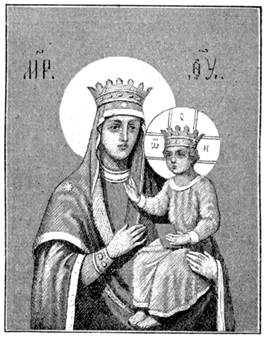
По сказанию предания эта икона написана Евангелистом Лукой в Иерусалиме. В Константинополь она принесена царицей Еленой, когда она ходила в Иерусалим для поклонения св. местам и обрела крест Христов в 326 году 6 марта. Из Константинополя в Россию эта святая икона принесена Русским великим князем – основателем Львова (Лемберга) Львом, который с великой честью препроводил её в своё отечество и поставил в Бельзском замке под ведением православного духовенства. Здесь она просияла многими чудотворениями.
According to tradition, this icon was painted by the Evangelist Luke in Jerusalem. It was brought to Constantinople by the Empress Helena when she journeyed to Jerusalem to venerate the holy places and discovered the Cross of Christ on March 6, 326. From Constantinople, this holy icon was brought to Rus by the Russian Grand Prince Leo, the founder of Lvov (Lemberg), who conveyed it with great honor to his fatherland and placed it in the castle of Belz, under the care of the Orthodox clergy. Here it shone forth with many miracles.
Впоследствии по покорении юго-западной России оружию Польскому, сия чудотворная икона досталась тогдашнему правителю Царства Польского Владиславу, князю Опольскому. Татары,
Later, when southwestern Russia was subdued by Polish arms, this wonderworking icon came into the possession of the then-ruler of the Kingdom of Poland, Vladislav, Prince of Opole. The Tatars,
вторгнувшись в пределы России, осадили замок Белз. Владислав приказал вынести сию святыню из церкви и поставить на городской стене. Татары, стрелявшие в замок, попали стрелой и в чудотворный образ. Из язвины стекла кровь и видна на иконе доселе. В то же время спустилась на них некая вредоносная мгла, от которой татары начали умирать в чрезвычайном множестве. Это побудило их оставить осаду замка и удалиться в свои области. По отшествии татар, Владислав в сонном видении услышал глас, повелевавший ему перенести чудотворный образ из замка на Ясную гору Ченстоховскую. На Ясной горе (называющейся иначе горой свидения), получившей такое название от чудес Богоматери, соорудив монастырь, Владислав в 1352 году перенёс в него сию чудотворную икону, отдав её на хранение западным монахам ордена Паулинского. Через несколько лет обитель сия испытала нападение гусситов, которые, лишив её всех сокровищ, хотели похитить и сей образ Богоматери. Он был уже вынесен из церкви и поставлен в приготовленный для него возок; но невидимая сила удерживала лошадей, так что они не могли тронуться с места. Это обстоятельство привело гусситов в ярость, и один из них, схватив образ Богоматери, в бешенстве бросил его на землю, другой ударил мечом в лицо. Но дерзкие в то же время испытали на себе кару Божию.
having invaded the borders of Russia, laid siege to the castle of Belz. Vladislav ordered this sacred object to be brought out of the church and placed upon the city wall. The Tatars, shooting at the castle, struck the wonderworking image with an arrow. Blood flowed from the wound and is visible on the icon to this day. At the same time, a certain harmful mist descended upon them, from which the Tatars began to die in extraordinary numbers. This compelled them to abandon the siege of the castle and withdraw to their own territories. After the departure of the Tatars, Vladislav heard in a dream a voice commanding him to transfer the wonderworking image from the castle to the Bright Mountain of Czestochowa. On the Bright Mountain (otherwise called the Mount of Vision), which received this name from the miracles of the Mother of God, having built a monastery, Vladislav in the year 1352 transferred this wonderworking icon into it, entrusting it to the care of Western monks of the Pauline Order. Several years later, this monastery suffered an attack by the Hussites, who, having stripped it of all its treasures, also wished to steal this image of the Mother of God. It had already been taken out of the church and placed in a prepared carriage; but an invisible force held the horses, so that they could not move from the spot. This circumstance enraged the Hussites, and one of them, seizing the image of the Mother of God, threw it to the ground in fury, while another struck it in the face with a sword. But the insolent men at once experienced God's punishment upon themselves.
В 1813 году, по взятии Ченстоховской крепости Русскими войсками, настоятелем и братией лавры поднесён был генералу Сакену список с Ченстоховской иконы. Император Александр I-й украсил сей список богатой ризой с драгоценными камнями и поставил в Казанском С.-Петербургском соборе, в южном боковом приделе, где горит перед ним неугасимая лампада.
In the year 1813, after the capture of the Czestochowa fortress by Russian troops, the abbot and brethren of the Lavra presented General Sacken with a copy of the Czestochowa Icon. Emperor Alexander I adorned this copy with a rich riza set with precious stones and placed it in the Kazan Cathedral of St. Petersburg, in the southern side-chapel, where an unquenchable lampada burns before it.
Благочестивый житель Иконии – Конон, лишившись жены, посвятил себя воспитанию осиротевшего сына и, когда ему минуло семь лет, поселился вместе с ним в соседней обители, где жили христиане, посвятившие себя Богу. Благочестивой своей жизнью Конон сподобился помощи свыше – просвещать христианскою верой темных язычников.
A pious inhabitant of Iconium, Conon, having lost his wife, devoted himself to the upbringing of his orphaned son, and when the boy turned seven years old, he settled together with him in a neighboring monastery where Christians who had dedicated themselves to God lived. Through his pious life, Conon was vouchsafed help from above to enlighten the benighted pagans with the Christian faith.
Узнав о таком влиянии Конона на народ, областной начальник Домитиан нарочно приехал в Иконию, чтобы воспрепятствовать распространению христианского учения. Конон был призван на суд и за сопротивление принести жертвы идолам предан истязаниям.
Having learned of Conon's influence over the people, the regional governor Domitian came specially to Iconium to hinder the spread of Christian teaching. Conon was summoned to trial and, for refusing to offer sacrifices to the idols, was subjected to tortures.
Узнав, что у Конона есть сын, юноша 17-ти лет, Домитиан понадеялся хотя его склонить к отречению от христианской веры, но, встретив и в молодом Кононе (бывшем уже тогда диаконом) непоколебимо-мужественного исповедника истины Христовой, он велел, после многих жестоких мучений, отсечь головы и отцу, и сыну.
Learning that Conon had a son, a youth of 17 years, Domitian hoped at least to incline him to renounce the Christian faith; but having encountered in the young Conon (who was already a deacon at that time) an unshakably courageous confessor of Christ's truth, he ordered, after many cruel torments, that both father and son be beheaded.
– «Благодарим Тебя, Господи, что сподобил нас пострадать за имя Твоё!» – воскликнули мученики, радостно приняв смертный приговор, – «молим Тебя, дай мир Церкви Твоей, низвергни силу идольскую, утверди и умножь верующих в Тебя, нас же приими к Себе и дай покой душам нашим!» . Это было в царствование Аврелиана, в 275 г. – Город Ацерра в Италии (в Кампании) хвалится тем, что владеет мощами этих мучеников, которые перенесены сюда неизвестно когда.
"We thank Thee, O Lord, for deigning that we should suffer for Thy Name!" the martyrs exclaimed, joyfully receiving the death sentence. "We beseech Thee: grant peace to Thy Church, cast down the power of idols, strengthen and multiply those who believe in Thee, and receive us unto Thyself and give rest to our souls!" This occurred during the reign of Aurelian, in the year 275. The city of Acerra in Italy (in Campania) boasts that it possesses the relics of these martyrs, which were transferred there at an unknown time.
Память его – 1-го апреля. – Русские купцы из Мурома, бывшие свидетелями мученической кончины св. Авраамия, погребли тело его в Болгарах (1229 г.), а в 1230 г. перенесены были мощи святого во Владимир и положены в Княгинином монастыре (что ныне – Успенский девичий). С честью встретил святые мощи великий князь Георгий Всеволодович – с духовенством и со всем городом и до 1712 г. покоились они в приделе Божией Матери в каменном гробе, в этом же году, 11-го мая переложены в деревянную раку и перенесены в главный храм Успения. В 1805 г. мощи мученика переложены из деревянной раки в новую серебряную.
His commemoration is on April 1st. Russian merchants from Murom, who were witnesses to the martyric end of St. Abraham, buried his body in Bolgary (1229), and in 1230 the relics of the saint were transferred to Vladimir and placed in the Princess's Monastery (which is now the Dormition Convent). Grand Prince George Vsevolodovich, together with the clergy and the whole city, met the holy relics with honor, and until 1712 they rested in a stone coffin in the chapel of the Mother of God; in that same year, on May 11th, they were transferred to a wooden reliquary and moved to the main Dormition church. In 1805, the martyr's relics were transferred from the wooden reliquary into a new silver one.
Замечательно, что святого Авраамия считают покровителем детей, и родители, имеющие больных детей, приносят их к раке св. мученика и молятся об их выздоровлении. «Радуйся, болящих детей исцеление!» говорится в акафисте святому Авраамию (икос 6), и в молитве к нему: «веруем, преславне Чудотворче, яко ты силою Всемогущего Иисуса Христа через святые твои мощи... благосердно помогавши немощным младенцам!»
It is noteworthy that St. Abraham is considered a protector of children, and parents who have sick children bring them to the reliquary of the holy martyr and pray for their recovery. "Rejoice, O healing of ailing children!" is said in the akathist to St. Abraham (ikos 6), and in the prayer to him: "we believe, O glorious Wonderworker, that thou, by the power of Almighty Jesus Christ through thy holy relics... mercifully helpest weak infants!"
«Честна пред Господом смерть преподобных Его!» (Пс.115:6). – В глубокой старости тихо и мирно скончался блаженный Иов, сказав перед кончиной, как бы уже проницая духовным взором своим блаженство, предстоящее ему в высшем мире: – «благословен Бог отцов наших! Если так, то не боюсь, но в радости отхожу от мира!»
"The death of His venerable ones is honorable before the Lord!" (Ps. 115:6). In deep old age, the blessed Job quietly and peacefully reposed, saying before his end, as if already perceiving with his spiritual gaze the blessedness awaiting him in the higher world: "Blessed is the God of our fathers! If it be so, then I am not afraid, but depart from the world with joy!"
В этой смерти – отражение всей жизни блаженного. Величественно проста в своей высоте была как та, так и другая. В мире – священник Иоанн, он был не только на высоте своего призвания, но исполнял сверх того и иноческое молитвенное правило и, быв ещё в мире, был уже как бы монахом. Строго постился, уединялся в своей комнате, где в коленопреклонённой молитве часто молился всю ночь до рассвета, обыкновенно со слезами взывая: помилуй мя, Господи! пощади мя, Господи! и т. п. – Частные отношения его к людям были совершенно исключительные. С любовью принимал он всех приходивших к нему и с полным участием беседовал со всяким, применяя разговор свой к положению, званию и состоянию всякого. Он любил и сам посещать своих друзей и знакомых, иногда неожиданно являлся куда-либо в дом – не званный – и всегда с какою-нибудь благодетельною целью. Поэтому все с радостью принимали его и слушали его поучения. Если ему нечаянно доводилось оскорбить кого-нибудь, то он немедленно просил прощения у оскорблённого.
In this death is reflected the whole life of the blessed one. Majestically simple in its height was both the one and the other. In the world, a priest named John, he was not only at the height of his calling, but also fulfilled, in addition, the monastic rule of prayer, and, while still in the world, was already as if a monk. He strictly fasted, secluded himself in his room, where in kneeling prayer he often prayed all night until dawn, usually crying out with tears: "Have mercy on me, O Lord! Spare me, O Lord!" and the like. His personal relations with people were quite exceptional. He received with love all who came to him and conversed with full sympathy with everyone, adapting his speech to the position, rank, and condition of each. He also loved to visit his friends and acquaintances himself, sometimes appearing unexpectedly in some house uninvited, and always with some beneficent purpose. Therefore, everyone received him with joy and listened to his teachings. If he happened inadvertently to offend someone, he immediately asked forgiveness of the offended one.
Иногда приходил о. Иоанн в дом к простым людям в виде частного лица, в одежде мирянина, и, беседуя таким образом с бедными, легче узнавал он о домашней нужде их и оказывал им посильную помощь, обращая при этом главное внимание на их мысли и чувства, которые не оставлял без утешения и наставления. – Его же дом был всегда открыт для бедных; усадив их за трапезу, он сам садился среди них и, как добрый отец, отрадно беседовал с ними и, отпуская их, наделял, чем мог. Подвергался ли кто-нибудь разорению от пожара, от неурожая, все знали, что у сострадательного о. Иоанна найдут необходимую помощь. – Пользуясь уважением и со стороны высокопоставленных лиц, он успешно ходатайствовал перед ними за обиженных и невинно-страдающих.
Sometimes Father John would come to the homes of simple people in the guise of a private person, in lay clothing, and conversing thus with the poor, he would more easily learn of their domestic needs and render them what help he could, turning his main attention at the same time to their thoughts and feelings, which he did not leave without consolation and instruction. His own house was always open to the poor; having seated them at table, he himself would sit among them and, like a kind father, converse pleasantly with them, and, dismissing them, would give them what he could. If anyone suffered ruin from fire or crop failure, everyone knew that they would find necessary help from the compassionate Father John. Enjoying respect also from persons in high positions, he successfully interceded with them on behalf of the wronged and the innocently suffering.
Тяготился добрый пастырь человеческою славой, но не могла укрыться от неё его добродетельная жизнь. Царь Пётр I, услыхав о нём, призвал его для священнослужения в придворной церкви и пожелал иметь его духовником своим и членом царствующего дома. Пользуясь влиянием своим при дворе, о. Иоанн радовался, что это предоставляет ему ещё более средств быть полезным бедствующим и заступником притеснённых. – В особенности сострадал он заключённым в темницах за преступления и долги. С участием посещал их и, изведывая при этом их совесть, оказывал на преступников благотворное влияние, а содержащимся за долги помогал в уплате долга.
The good pastor was burdened by human fame, but his virtuous life could not remain hidden from it. Tsar Peter I, having heard of him, summoned him to serve as a priest in the court church and desired to have him as his confessor and a member of the reigning house. Using his influence at court, Father John rejoiced that this afforded him even more means to be useful to the suffering and an intercessor for the oppressed. He especially sympathized with those imprisoned for crimes and debts. He visited them with compassion and, probing their conscience in so doing, exerted a beneficial influence on the criminals, while helping those held for debts to pay them off.
Но чем светоноснее становилась деятельность истинного пастыря христианского, тем более стремилась омрачить её клевета людская. Даже посещение им темниц подвергалось пересудам, и тогда он на некоторое время решился прекратить посещение темниц, не прекращая впрочем благотворений своих посредством доверенных лиц. Вообще, кроме церковных служб, о. Иоанн решился никуда не выходить из дома и остаток дней своих посвятить Богомыслию. Нуждавшиеся же в его помощи или совете обращались к нему письменно, и он не тяготился отзываться ни на какое обращение. Таким образом среди постоянных, Богоугодных трудов, достиг праведный Иоанн до преклонного возраста. Тогда – неожиданно настал для него час испытания. В 1701 г., по ложному доносу в сношениях с известным фанатиком Григорием Талицким царский духовник был сослан в Соловецкий монастырь, где и пострижен 3-го апреля с именем Иова и отдан на послушание опытному старцу...
But the more luminous the activity of this true Christian pastor became, the more human slander sought to darken it. Even his visits to the prisons were subjected to gossip, and then he decided for a time to cease visiting the prisons, though not ceasing his benefactions through trusted persons. In general, apart from church services, Father John resolved not to go out of his house anywhere and to devote the remainder of his days to the contemplation of God. Those in need of his help or advice turned to him in writing, and he did not grudge responding to any appeal. Thus, amidst constant, God-pleasing labors, the righteous John reached an advanced age. Then—unexpectedly—an hour of trial came for him. In 1701, on a false denunciation of having dealings with the notorious fanatic Gregory Talitsky, the Tsar's confessor was exiled to the Solovetsky Monastery, where he was tonsured on April 3rd with the name Job and given over to the obedience of an experienced elder...
После многих испытаний старец Иов был освобождён от послушания и уединился в безмолвии в своей келье; здесь постоянно молился он Иисусовой молитвой, занимался чтением св. Евангелия, Апостола, Псалтири, жития преподобных Савватия и Зосимы и рукоделием. Пищи он мало принимал от братской трапезы, а особо для себя не готовил ничего. Снова слава об его святой жизни дошла до Петра Великого и, удостоверясь в бывшей на него клевете, царь снова пожелал приблизить его к себе, но Иов просил позволить ему остаться в обители. После этого, желая ещё большего безмолвия, он переселился на жительство в Анзерский скит. Здесь с новым рвением предался он иноческим подвигам и вскоре, по смерти Анзерского строителя, был назначен настоятелем этого скита.
After many trials, the elder Job was released from his obedience and withdrew into silence in his cell; here he constantly prayed the Jesus Prayer, occupied himself with reading the Holy Gospel, the Apostle, the Psalter, the lives of the Venerable Sabbatius and Zosimas, and with handiwork. He took little food from the common refectory and prepared nothing special for himself. Again the fame of his holy life reached Peter the Great, and having ascertained the slander that had been brought against him, the Tsar again wished to draw him near, but Job asked permission to remain in the monastery. After this, desiring even greater silence, he moved to live in the Anzersk Skete. Here with new zeal he gave himself over to monastic struggles, and soon, upon the death of the builder of the Anzersk Skete, he was appointed superior of this skete.
На новом поприще служения священноинок Иов умножил свои труды и подвиги. Братство при нём стало умножаться и в скором времени достигло числа 30-ти.
In this new field of service, the hieromonk Job multiplied his labors and struggles. The brotherhood under him began to increase and soon reached the number of thirty.
Всех вообще, и особенно новоначальных иноков, о. Иов поучал смиренному послушанию Богу и начальникам, считая послушание первой добродетелью, без которой не может быть спасения; заботился также о том, чтобы они постоянно были в труде; посещал больных, сам служил им, омывая и перевязывая их раны собственными руками, и недуги их нередко молитвой своей исцелял.
All in general, and especially the newly-tonsured monks, Fr. Job taught humble obedience to God and to superiors, considering obedience the first virtue, without which there can be no salvation; he also took care that they should be constantly at work; he visited the sick, served them himself, washing and bandaging their wounds with his own hands, and often healed their infirmities by his prayer.
Нередко удалялся иеросхимонах Иисус в пустынные места ради безмолвия, и также часто ходил к пустынножителям для духовной беседы. Однажды, пребывая в келье, предоставленной ему одним пустынножителем Паисием, жившим при горе, назыв. Голгофой, он ночью долго читал псалмы и молился. Когда же, утомлённый, он задремал, то увидел во сне – среди необыкновенного света, озарившего келью, Божию Матерь и преподобного Елеазара Анзерского; Божия Матерь сказала ему, что на горе Голгофе будет устроена церковь Распятия Иисуса Христа, и учредится скит, и соберутся иноки для прославления имени Божьего...
The hieroschemamonk Jesus often withdrew to desert places for the sake of silence, and also frequently went to the hermits for spiritual conversation. Once, while staying in a cell provided for him by a hermit named Paisius, who lived near the mountain called Golgotha, he long read psalms and prayed at night. When, exhausted, he dozed off, he saw in a dream—amid an extraordinary light that illumined the cell—the Mother of God and the Venerable Eleazar of Anzersk; the Mother of God told him that on Mount Golgotha a church of the Crucifixion of Jesus Christ would be built, and a skete would be established, and monks would gather for the glorification of the name of God...
Почувствовав радость от сновидения этого, принимая его как благословение Божие, старец Иов предпринял с этой минуты учреждение новой киновии на Голгофской горе. Он переселился на жительство на гору Голгофу и вскоре, с помощью учеников своих, основал Голгофо-Распятный скит на Анзерском острове. Скоро братии собралось тут до 20-ти человек; каждый из них должен был сам устроить келью для себя; пустынники же жили в уединённых местах под ведением схимника Иисуса и приходили в скит каждое воскресенье для присутствия при Божественной службе и для исповеди перед старцем. Тут жили все эти подвижники в подвигах духовных и в трудах телесных. Сам старец Иисус, в пример другим, нередко рубил дрова, носил на гору воду для поварни, в пекарне растворял тесто для хлеба. – В келье в свободное время он постоянно занимался рукоделием; вырученные за труд деньги употреблял на церковь, на нужды братии и на милостыню.
Feeling joy from this dream, receiving it as a blessing from God, the elder Job from that moment undertook the establishment of a new cenobitic community on Golgotha Mountain. He moved to live on Mount Golgotha and soon, with the help of his disciples, founded the Golgotha-Crucifixion Skete on Anzersk Island. Soon as many as twenty brethren gathered there; each of them had to build a cell for himself; the hermits, however, lived in solitary places under the guidance of the schemamonk Jesus and came to the skete every Sunday to attend the Divine service and to confess before the elder. All these ascetics lived there in spiritual struggles and bodily labors. The elder Jesus himself, as an example to others, often chopped wood, carried water up the mountain for the kitchen, and mixed dough for bread in the bakery. In his cell, in his free time, he constantly occupied himself with handiwork; the money earned from his labor he used for the church, for the needs of the brethren, and for alms.
Так прошли годы, и старец стал чувствовать приближение смерти. Он сосредоточил тогда всю заботу свою на приготовлении к жизни загробной; смиренная душа его возбуждала себя к покаянию: «душе моя, душе моя, восстани! что спиши? конец приближается, и имаши смутитися» ... Всю жизнь свою угождавший Богу трепетал, как бы не угодивший...
Thus the years passed, and the elder began to feel the approach of death. He then concentrated all his care on preparing for the life to come; his humble soul stirred itself to repentance: "O my soul, my soul, arise! why dost thou sleep? the end draweth nigh, and thou shalt be troubled"... He who had pleased God all his life trembled, as one who had not pleased Him...
Между тем, Господь, удостоивший его и прежде особенных откровений, не утаил от него теперь и времени его кончины. Задолго до смерти он сказал братии, что смерть его последует в воскресный день до восхода солнца. Так и сбылось. И в предсмертные минуты он весь исполнен был необыкновенной радости, которая доказывала, что он готов был перейти в вечность... И вечность наступила для него. Пожив на земле подобно ангелу, бестрепетно отошёл он продолжать своё ангельское житие перед лицом Живущего во свете неприступном...
Meanwhile, the Lord, who had vouchsafed him special revelations even before, did not now conceal from him the time of his end. Long before his death he told the brethren that his death would occur on a Sunday before sunrise. And so it came to pass. And in his dying moments he was filled with extraordinary joy, which proved that he was ready to pass into eternity... And eternity came for him. Having lived on earth like an angel, he departed without fear to continue his angelic life before the face of Him Who dwells in light unapproachable...