Родом из Назарета Галилейского, жил и трудился в Памфилии, в городе Мандоне, занимаясь огородничеством. Нравом был прост, некнижен, но боялся Бога и хранил заповеди Его. В гонение Декия (251 г.) воевода Публий велел схватить его и принуждал принесть жертву идолам; и когда Конон пребыл твёрдым в своём исповедании, то ему вбили гвозди в ноги и заставили бежать. Мученик изнемог, пал на колена и, помолившись, предал дух свой Богу.
He was a native of Nazareth in Galilee, and lived and labored in Pamphylia, in the city of Mandona, occupying himself with gardening. In character he was simple, unlettered, but he feared God and kept His commandments. During the persecution of Decius (A.D. 251), the voivode Publius ordered him to be seized and compelled him to offer sacrifice to idols; and when Conon remained steadfast in his confession, they drove nails into his feet and forced him to run. The Martyr grew faint, fell to his knees, and having prayed, he gave up his spirit to God.
Родители Конона – Нестор и Нада, жившие в селении Видании, в 80-ти поприщах от Исаврии, были современниками Апостолов. Конон, обручённый родителями своими с избранной ими для него невестой – Анной, хотя и исполнил волю их и вступил с нею в брак, но всей душой преданный единой заботе о будущей жизни в вечности, жил с женой своей, как брат с сестрой, подобно ангелам, служа и работая Богу, По смерти же отца своего, св. Нестора, который был замучен язычниками за исповедание веры Христовой, похоронив также жену свою и мать, он посвятил всю остальную жизнь свою до глубокой старости – Богомыслию и строгому подвижничеству в трудах, посте и молитве. Облагодатствованпый от Бога даром великих чудотворений, посредством их обратил он к Христу жителей Исаврийских.
The parents of Conon—Nestor and Nada, who lived in the village of Vidania, eighty stadia from Isauria—were contemporaries of the Apostles. Conon, betrothed by his parents to a bride chosen by them for him—Anna—although he fulfilled their will and entered into marriage with her, yet being devoted with his whole soul to the sole care of the future life in eternity, he lived with his wife as a brother with a sister, like the angels, serving and laboring for God. After the death of his father, St. Nestor, who was tortured to death by pagans for his confession of the faith of Christ, and having also buried his wife and mother, he dedicated all the remainder of his life, even to deep old age, to the contemplation of God and strict asceticism in labors, fasting, and prayer. Endowed by God with the gift of great wonderworking, through them he converted the inhabitants of Isauria to Christ.
Когда же настало гонение на христиан и в Исаврию прибыл воевода Мигдон и начались страдания мучеников, между которыми первый пострадал Онисий, то предан был истязаниям и Конон за сопротивление принести жертвы языческим богам.
When the persecution of Christians began and the voivode Migdon arrived in Isauria, and the sufferings of the martyrs commenced—among whom Onesius was the first to suffer—then Conon was also delivered up to torments for refusing to offer sacrifices to the pagan gods.
Исавряне, услышав об этом, вооружились и хотели убить воеводу, но тот спасся бегством. Конона же они нашли связанным и тело его покрытым ранами и окровавленным. С благоговением припали они к мученику, целовали раны его и собирали кровь, желая освятиться ею... Конон же скорбел, что не допустили его пострадать до конца. Верующие отнесли его на его родину, в селение Виданию, и заботились об исцелении его. Он прожил после того ещё два года и скончался, оплакиваемый просвещёнными им (во II веке).
The Isaurians, hearing of this, armed themselves and wished to kill the voivode, but he saved himself by flight. They found Conon bound, his body covered with wounds and bloodied. With reverence they fell down before the Martyr, kissed his wounds, and gathered his blood, desiring to be sanctified by it... But Conon grieved that they had not allowed him to suffer to the end. The faithful carried him to his homeland, to the village of Vidania, and cared for his healing. He lived after that for another two years and reposed, mourned by those he had enlightened (in the second century).
По древнерусскому народному верованию, он почитается хранителем детей от оспы; в воспоминание того, что ему дана была власть целить болезни, составлена особая молитва ему от этой болезни.
According to ancient Russian folk belief, he is venerated as a protector of children from smallpox; in remembrance that he was given power to heal diseases, a special prayer to him for this illness was composed.
В молодости любимым занятием Марка было чтение св. Писания и, обладая замечательной памятью, он знал его наизусть. Жаждущий духовного просвещения, был слушателем и учеником Иоанна Златоустого; сорока лет поступил в иночество и 60 лет подвизался в Нитрийской пустыне в таком суровом воздержании, что получил название аскета. Прожив более ста лет, скончался около половины V столетия.
In his youth, Mark’s beloved occupation was the reading of Holy Scripture, and possessing a remarkable memory, he knew it by heart. Thirsting for spiritual enlightenment, he was a hearer and disciple of John Chrysostom; at forty years of age he entered monasticism and for sixty years he struggled in the Nitrian desert in such severe abstinence that he received the name of ascetic. Having lived more than a hundred years, he reposed around the middle of the fifth century.
Был прославлен от Бога даром чудес. Был опытным и мудрым наставником в вере и благочестии и оставил после себя известные до сих пор сочинения. Вот одно из них о тех, «которые думают оправдаться делами».
He was glorified by God with the gift of miracles. He was an experienced and wise instructor in faith and piety, and left behind writings that are known to this day. Here is one of them concerning “those who think to be justified by works.”
«Господь, желая показать, что мы – должники перед каждой заповедью, и что усыновление даровано людям собственно Его кровью, говорит: «когда вы исполните все повеленное вам, говорите: мы – рабы, ничего не стоящие; потому что сделали, что должны были сделать» (Лк.17:10). Поэтому, Царство Небесное не есть возмездие за дела, но благодать Владыки, уготованная верным рабам. Раб не требует свободы, как платы, но угождает, как должник, и ожидает её от милости».
“The Lord, wishing to show that we are debtors to every commandment, and that adoption is granted to men properly by His blood, says: ‘When you have done all that is commanded you, say: We are unprofitable servants; for we have done what we ought to have done’ (Lk. 17:10). Therefore, the Kingdom of Heaven is not a recompense for works, but the grace of the Master, prepared for faithful servants. A servant does not demand freedom as a wage, but pleases as a debtor, and expects it from mercy.”
«Те, которые, называясь подвижниками, гордятся перед ленивыми, думают оправдаться делами плоти. Знание без дел, соответственных ему, – ещё не твёрдо, хотя бы было и верно, потому что подтверждением всему служит дело. Часто от нерадения о деятельности помрачается и знание; ибо что совсем перестают делать, то мало по малу выходит и из памяти. Иные, не исполняя заповедей, считают себя правоверующими, а иные, исполняя их, ожидают царствия, как должного возмездия; те и другие – далеки от истины... Мы, которые удостоились быть омытыми возрождением, творим добрые дела не для получения награды, но, чтобы сохранить данную нам чистоту. Каждое доброе дело, сделанное естественными силами, хотя удаляет нас от зла, но без благодати не может дать нам освящения. Истинно кающийся не поставляет трудов покаяния, как замену прежним грехам, но ими умилостивляет Бога. Если в природе нашей есть что-либо доброе, то мы должны творить его каждый день. Что же воздадим Богу за зло, сделанное прежде? Всякое приумножение добродетели, какое мы сегодня сделали, служит обличением прежнему нерадению, а не возмездием. Благодать таинственно дарована крестившимся во Христа; действует же по мере исполнения заповедей. Благодать не перестаёт помогать нам тайно, но в нашей власти состоит по сим – делать добро или не делать. Во-первых, она возбуждает совесть, отчего и злодеи, покаявшись, угодили Богу. Во-вторых, она открывается иногда в учении других, а иногда входит в мысль чтением и естественным путём научает ум свой истине» ... «Что обыкновенный дом в отношении к воздуху, то ум в отношении к Божественной благодати: по мере освобождения от вещей входит воздух, и по мере загружения – выходит. Вещи в доме – сосуды и съестное, а вещи в уме – тщеславие, сластолюбие. Широта сердца – надежда на Бога, а теснота – попечение о теле. Благодать Духа – одна и неизменна, но действует в каждом, как хочет. Как дождь, оросив землю, даёт растениям свойственное им качество, – сладость сладким, горечь горьким, так благодать, глубоко проникая в сердца верных, дарует приличные добродетелям действия» …
“Those who, calling themselves ascetics, are proud before the slothful, think to be justified by works of the flesh. Knowledge without works corresponding to it is not yet firm, even if it be true, because deed serves as the confirmation of all. Often from neglect of activity, knowledge itself is darkened; for what one completely ceases to do, little by little passes out of memory. Some, not fulfilling the commandments, consider themselves orthodox believers, while others, fulfilling them, expect the kingdom as a due recompense; both are far from the truth... We who have been accounted worthy to be washed by regeneration do good works not for the sake of receiving a reward, but to preserve the purity given to us. Every good work done by natural powers, although it removes us from evil, cannot without grace give us sanctification. He who truly repents does not set the labors of repentance as a substitute for former sins, but by them propitiates God. If there is anything good in our nature, we must do it every day. What then shall we render to God for the evil done before? Every increase of virtue that we make today serves as a reproof of former negligence, not as a recompense. Grace is mysteriously given to those baptized into Christ; it acts according to the measure of fulfilling the commandments. Grace does not cease to help us secretly, but it is in our power accordingly to do good or not to do it. First, it stirs the conscience, whence even evildoers, having repented, pleased God. Secondly, it is sometimes revealed in the teaching of others, and sometimes enters the mind through reading, and by a natural path teaches one’s mind the truth.” ... “As an ordinary house is in relation to the air, so is the mind in relation to Divine grace: to the extent of being freed from things, the air enters, and to the extent of being filled, it departs. The things in the house are vessels and food, but the things in the mind are vainglory and love of pleasure. The breadth of the heart is hope in God, and its narrowness is care for the body. The grace of the Spirit is one and unchanging, but it acts in each as it wills. As rain, watering the earth, gives to plants their proper quality—sweetness to the sweet, bitterness to the bitter—so grace, deeply penetrating the hearts of the faithful, bestows actions suitable to the virtues.” ...
Перенесение мощей благоверного князяФеодора Смоленского и Ярославского, и чад его Давида иКонстантина. Св. Феодор преставился в 1299 г. схимником в Ярославле, в Спасо-Преображенском, ныне упразднённом, монастыре, где потом были похоронены его сыновья Давид, умерший в 1321 г., и Константин. Мощи их были обретены в 1463 г., а перенесены и положены в каменную раку 5-го марта 1464 г.
Translation of the relics of the Right-believing Prince Theodore of Smolensk and Yaroslavl, and of his children David and Constantine. St. Theodore reposed in 1299 as a schemamonk in Yaroslavl, in the Transfiguration of the Savior Monastery, now abolished, where his sons David, who died in 1321, and Constantine were later buried. Their relics were uncovered in 1463, and were translated and placed in a stone reliquary on March 5, 1464.
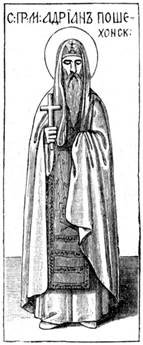
Преподобный Адриан обучался иноческому житию у преп. Корнилия Комельского92. По смерти великого наставника († 1537 г.) он, как и некоторые другие ученики Корнилия, желал насадить где-либо в глухом месте новый рассадник иночества. Раз в храме Корнилиевой обители явился благолепный старец. «Кто ты?», – спросил его Адриан, на которого он сделал сильное впечатление. «Я – Безстуж», отвечал старец. Адриан пригласил его к себе в келью; в духовной беседе старец между прочим сказал Адриану: «ты хочешь строить дом Богоматери и собрать к себе иноков; мне известна пустыня, в которой ещё не ходила нога человеческая». Адриан рад был идти в эту пустыню. «Блаженный отец наш Корнилий заповедовал отпускать учеников его, если пожелают пустыни», говорил Адриан игумену Лаврентию и просил благословить его на удаление из обители в уединение пустынное. Лаврентий благословил. В сентябре 1540 г. Адриан, будучи иеродиаконом, с послушником Леонидом и ещё другим вышли из Корнилиевой обители; черноризец Безстуж привёл их в дремучий Пошехонский лес и незаметно скрылся. Это было накануне Воздвижения Господня. На берегу р. Вотхи поставили они на дубе икону Богоматери, с которой пришли, и пропели канон кресту Господнему. Когда затем отправились они осмотреть окрестные места, рыболовы с. Белаго, ловя рыбу в Вотхе, вышли на берег и увидали икону Богоматери на дубе. Один из них хотел снять икону и унести домой, но упал без языка и движения. Придя в себя, объявил он, что явившийся старец строго запретил ему брать икону. Рыбаки оставили при дубе пойманную рыбу и белый хлеб. Возвратившиеся пустынники с изумлением увидели у дуба столько нужную для них пищу и, прославив Богоматерь, остались жить на благословенном Ею месте. В 1543 г. Адриан отправился к митрополиту Макарию испросить благословение на основание обители и храма в честь Успения Пресвятой Богородицы на р. Вотхе; митрополит преподал благословение на св. дело и посвятил Адриана в игумена. В новую пустынную обитель собралось довольно братии; уставом её был устав Корпилиевой обители; женщинам не дозволялось входить в неё; пустынники довольствовались малым и большую часть времени проводили в чтении Псалтири. Преподобный настоятель занимался писанием св. икон, в назидание своё и другим93. Старец Леонид мирно почил в 1549 г.
The Venerable Adrian was trained in the monastic life under the Venerable Cornelius of Komel92. After the death of the great instructor († 1537), he, like some other disciples of Cornelius, desired to plant a new nursery of monasticism somewhere in a remote place. Once in the church of the monastery of Cornelius, a comely elder appeared. “Who are you?” asked Adrian, upon whom he had made a strong impression. “I am Beztuzh,” answered the elder. Adrian invited him to his cell; in spiritual conversation the elder said to Adrian among other things: “You wish to build a house of the Mother of God and gather monks to yourself; I know a wilderness where no human foot has yet trodden.” Adrian was glad to go into this wilderness. “Our blessed father Cornelius commanded that his disciples be let go if they desire the wilderness,” said Adrian to Abbot Lavrenty, and asked his blessing to depart from the monastery into solitary wilderness. Lavrenty blessed him. In September 1540, Adrian, being a hierodeacon, with the novice Leonid and another, went out from the monastery of Cornelius; the monk Beztuzh led them into the dense forest of Poshekhonye and disappeared unnoticed. This was on the eve of the Exaltation of the Lord. On the bank of the River Votkha they placed on an oak the icon of the Mother of God with which they had come, and sang the canon to the Cross of the Lord. When they then set out to examine the surrounding places, fishermen from the village of Beloye, fishing in the Votkha, came ashore and saw the icon of the Mother of God on the oak. One of them wanted to take down the icon and carry it home, but fell down speechless and motionless. Coming to himself, he declared that an appearing elder had strictly forbidden him to take the icon. The fishermen left the caught fish and white bread by the oak. The returning hermits saw with astonishment at the oak food so necessary for them, and glorifying the Mother of God, they remained to live on the place blessed by Her. In 1543, Adrian went to Metropolitan Macarius to ask a blessing for the foundation of a monastery and a church in honor of the Dormition of the Most Holy Theotokos on the River Votkha; the Metropolitan gave his blessing for the holy work and consecrated Adrian as abbot. A considerable number of brethren gathered into the new wilderness monastery; its rule was the rule of the monastery of Cornelius; women were not permitted to enter it; the hermits were content with little and spent most of their time in reading the Psalter. The Venerable Superior occupied himself with writing holy icons, for his own edification and that of others93. The elder Leonid peacefully reposed in 1549.
В 1550 г. в Великий пост шайка дурных людей с. Белого напала на Адрианову пустынь, вооружённая по разбойничьи. Жившие в обители спешили скрыться, кто куда мог; игумен скрылся в дровянике, но его скоро нашли здесь. Злодеи жгли его горящей лучиной, кололи ножом, давили накинутой на шею верёвкой, выпытывая деньги. Страдалец, указав на кувшин с сорока рублями, сказал: «вот всё наше имущество; им хотел я строить новый храм Богоматери: возьмите деньги и отпустите нас иноков в Корнилиеву обитель, – мы не придём к вам более». Злодеи с наглой насмешкой сказали: «мы здесь наденем на тебя шлем и пустим на небо». И удавили святого старца. Это было 5 марта. Бросив за тем связанными послушников Адриана, ограбили всё в храме. Найдя за престолом трёх иноков, одного убили в трапезе, двух мучили до того, что трещали кости их. Тело преп. Адриана увезли из обители и скрыли. Разбойники скоро затем уличены были судом в злодействах своих и получили достойное наказание94.
In 1550, during Great Lent, a band of evil men from the village of Beloye attacked Adrian's Hermitage, armed like robbers. Those living in the monastery hastened to hide, wherever they could; the abbot hid in the woodshed, but they soon found him there. The villains burned him with a flaming torch, stabbed him with a knife, and choked him with a rope thrown around his neck, extorting money from him. The sufferer, pointing to a jug with forty rubles, said: "Here is all our property; with it I wished to build a new church of the Mother of God: take the money and let us monks go to Cornelius's monastery—we shall not come to you again." The villains said with insolent mockery: "Here we shall put a helmet on you and send you to heaven." And they strangled the holy elder. This was on the 5th of March. Then, having bound Adrian's novices, they plundered everything in the church. Finding three monks behind the altar, they killed one in the refectory and tortured two until their bones cracked. The body of the Venerable Adrian was taken from the monastery and hidden. The robbers were soon afterwards exposed by the court for their villainies and received a fitting punishment94.
В 1626 г. инок Иона перед смертью своей открыл духовнику, что по предсмертной исповеди отца его, священника Исидора, когда в 1550 г. Белосельские злодеи бросили тело убитого ими игумена Адриана на рубеже Белого, на берегу р. Ушломы, он Исидор с соседями свезли тело к опустевшей церкви прор. Илии и похоронили его под полом храма. Впоследствии храм развалился; на могиле, для памяти, посадили рябину. У могилы стали совершаться чудеса. Хотя чудес не записывали, но собиравшиеся каждый год в д. пр. Илии на ярмарку по слуху о чудесах совершали при могиле Адриана молебны м. Параскеве и пр. Илии, клали приношения на могилу, и больные получали исцеление. Об этом предсмертном сведении игумен Троицкой Пошехонской пустыни сообщил игумену Адриановой пустыни, взяв с него и братии обещание – прекратить нетрезвую жизнь в пустыни. Получив донесения, патриарх Филарет предписал перенести мощи в Адрианову пустынь и донести95. Во время перенесения мощей совершилось несколько чудес, между прочим прозрел слепой отрок. Ныне мощи преп. Адриана почивают открыто в храме обители его, построенном в 1659 г.; один придел сего храма посвящён преп. Адриану96.
In 1626, the monk Jonah, before his death, revealed to his confessor that, according to the deathbed confession of his father, the priest Isidore, when in 1550 the villains from Beloye threw the body of the murdered Abbot Adrian on the boundary of Beloye, on the bank of the River Ushloma, he, Isidore, together with his neighbours, brought the body to the deserted church of the Prophet Elijah and buried it under the floor of the church. Later the church fell into ruin; a rowan tree was planted on the grave as a memorial. Miracles began to occur at the grave. Although the miracles were not recorded, those who gathered each year at the village of the Prophet Elijah for the fair, hearing of the miracles, performed molebens at Adrian's grave to the Martyr Paraskeva and the Prophet Elijah, placed offerings on the grave, and the sick received healing. The abbot of the Trinity Hermitage of Poshekhonye reported this deathbed information to the abbot of Adrian's Hermitage, having taken from him and the brethren a promise to put an end to intemperate living in the hermitage. Having received the reports, Patriarch Philaret ordered the relics to be translated to Adrian's Hermitage and a report to be made95. During the translation of the relics, several miracles occurred, among them the restoration of sight to a blind youth. Today the relics of the Venerable Adrian repose openly in the church of his monastery, built in 1659; one side-chapel of this church is dedicated to the Venerable Adrian96.
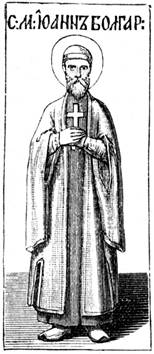
Блаженный Иоанн был родом из Болгарии97. Турки силами стараются, или точнее старались в прежнее время, обращать христиан в магометанство, между прочим и по такому умному поверью. В раю, говорят, не будет огня для раскурки трубки, а его придётся доставать из геенны; – далеко ходить. Если кто успеет обратить христианина в исламизм, – обращённый в магометанство будет в раю, но как изменник своей вере превратится в огненный столп и – вот туркам легко будет раскуривать трубки98. Как в этом поверье выражается скотская лень магометанства, а вместе и невольное признание достоинства веры христианской! С таким-то высоким поверьем Туркам как-то удалось довести Иоанна до того, что отрёкся он от веры Христовой. – Несчастный, спустя немного времени, пришёл в себя и, горько оплакивая грех свой, пришёл в Афон, в лавру св. Афанасия. Здесь стал он подвизаться в покаянии, подчинив себя одному старцу. Три года жил он, как строгий к себе послушник; но совесть не давала ему покоя, постоянно был он печален. Наконец, не могши переносить укоров совести, оставил он св. гору, прибыл в Константинополь и, одевшись в одежду турка, пришёл в мечеть Софии. Здесь в виду всех стал он творить на себе знамение св. креста и молился христианскою молитвой. Взволнованные турки подбегают к нему и спрашивают: что ты делаешь? Раб Христов спокойно отвечает, что он христианин и молится по-христиански – Христу Сыну Божию и единственному Спасителю людей грешных. Фанатики кричат: молчи, молчи, – потом уговаривали его быть магометанином. Святой твёрдо отвечал, что исповеданию своему не изменит, – говорил и будет говорить, что без Христа Иисуса нет спасения. Его вывели на двор мечети и отсекли ему главу. Св. Иоанн принял мученическую кончину на 19 году своего возраста, в 1784 г.
The blessed John was a native of Bulgaria97. The Turks strive, or rather strove in former times, to convert Christians to Mohammedanism, among other things by reason of the following clever superstition. In paradise, they say, there will be no fire for lighting a pipe; it will have to be fetched from Gehenna—a long way to go. If anyone succeeds in converting a Christian to Islam, the convert to Mohammedanism will be in paradise, but as a traitor to his faith he will turn into a pillar of fire—and thus it will be easy for the Turks to light their pipes98. How this superstition expresses the brutish laziness of Mohammedanism, and at the same time an involuntary recognition of the worth of the Christian faith! With such a lofty superstition, the Turks somehow managed to bring John to the point where he renounced the faith of Christ. The unfortunate man, after a short time, came to himself and, bitterly lamenting his sin, came to Mount Athos, to the Lavra of St. Athanasius. There he began to labour in repentance, placing himself under an elder. For three years he lived as a strict novice; but his conscience gave him no peace, and he was constantly sorrowful. Finally, unable to bear the reproaches of his conscience, he left the Holy Mountain, arrived in Constantinople, and, having dressed himself in Turkish clothing, came to the mosque of Hagia Sophia. There, in the sight of all, he began to make the sign of the holy cross upon himself and to pray the Christian prayer. The agitated Turks ran up to him and asked: "What are you doing?" The servant of Christ calmly replied that he is a Christian and prays in the Christian manner—to Christ the Son of God and the only Savior of sinful men. The fanatics shouted: "Silence, silence!"—then they urged him to become a Mohammedan. The saint firmly replied that he would not change his confession—he had said and would say that without Jesus Christ there is no salvation. They led him out into the courtyard of the mosque and cut off his head. St. John suffered a martyr's death in the nineteenth year of his age, in A.D. 1784.
В 3 т. ист. акт. № 141 две памяти от 1 апр. и 12 октябр. 1626 г. Здесь показания схимника Ионы, записанные духовником его Лукианом. Здесь же грамота п. Филарета с предписанием перенести мощи в Адрианову пустынь.
In vol. 3 of Historical Acts, No. 141, two memoranda of 1 April and 12 October 1626. Here are the testimonies of the schemamonk Jonah, recorded by his confessor Lucian. Here also is the charter of Patriarch Philaret with the order to translate the relics to Adrian's Hermitage.
Сведения о монасг. 552. Ркп. святцы: „преп. Адриан и Леонид; строитель Успенского монастыря, Адриан, убиен бысть от разбойников, у Троицы в Рябинкине пустыне положен. Бысть ученик Корнилия Комельского; а перенесены мощи его декабря в 17 день“.
Information on Monasteries, 552. Manuscript Menology: "The Venerable Adrian and Leonid; the builder of the Dormition Monastery, Adrian, was slain by robbers, laid to rest at Trinity in the Ryabinkin Hermitage. He was a disciple of Cornelius of Komel; his relics were translated on the 17th day of December."