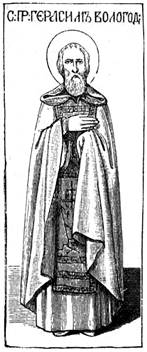
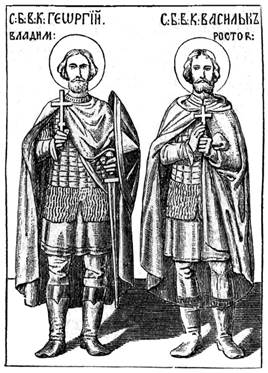
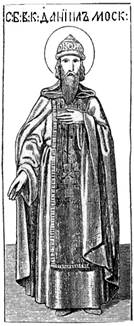
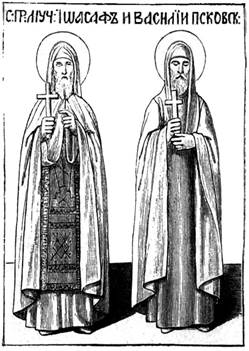
Преп. Герасим, живший в V веке, был родом из Ликии; с молодых лет принявший в сердце своё исключительный помысл о Боге, удалился он от мирского рассеяния и полюбил пустыню – пустыню, которая всегда привлекала к себе подвижников и в особенности стала им дорога с тех пор, как освятило её сорокадневное пребывание в ней Христа. Образ Христа, постившегося и молившегося в пустыне, привлекал возлюбивших подражание Ему, – и целый мир неизреченных духовных радостей приобретали пустынножители взамен отчуждения от земных пристрастий... Сначала подвизался преп. Герасим в Фиваиде, потом отошёл он в ту самую пустыню Иорданскую, где явил Господь Божественную победу Свою над искушениями злого духа... Пустыня эта находилась в 35-ти верстах от Иерусалима и в одной версте от Иордана; в ней поселился Герасим и, собрав вокруг себя многих братий, основал обитель и словом, и примером своим руководствовал всех пришедших к нему в подвигах иноческой жизни. Образ жизни этих иноков отличался строгостью. Пять дней в неделе они проводили в уединении, каждый в своей келье, питаясь только хлебом, финиками и водой, и то в небольшом количестве, и не готовили себе горячего кушанья. В субботу собирались в обители к Божественной службе и для причащения св. тайн; потом обедали за общей трапезой и в воскресенье, после обедни, расходились по своим кельям, взяв с собой запас пищи на всю неделю и финиковых ветвей для плетения корзин. Особенно строгим постничеством отличался сам преп. Герасим; во всю св. Четыредесятницу он не вкушал ничего до самого дня Светлого Воскресения и подкреплял себя только приобщением Христовых тайн. Воспоминание о строгом воздержании его может служить во все времена руководством в посильных для всякого подвигах воздержания и поста по уставу церковному. Пример св. Герасима хотя и недостижим для современной немощности, но он, по крайней мере, замыкает уста возражающих против возможности и благотворности поста. Он напоминает, что были люди, которые могли исполнить завет Христов: «образ даю вам, да якоже Аз сотворил, и вы творите» ... (Ин.13:15). Стало быть, и для всех обязательно следовать этому образцу, по крайней мере, в посильной степени. Подобного ангельскому жития достигли иноки, подвизавшиеся в Герасимовой обители. Сам преподобный кротостью своей привлекал к себе в пустыне даже диких зверей... Рассказывают, что один лев, которого встретил однажды Герасим и, заметив, что он страдает от раны, перевязал и излечил её, везде потом следовал за ним и служил ему, как домашнее животное, а по смерти его умер от печали на могиле его... Пример подчинения дикой твари воле человека встречается нередко и в житиях других святых. «Не ясно ли указывает это на то, – говорит составитель воскресных бесед о житиях святых, что в у житии подвижническом падшее естество наше возводится к первому блаженному состоянию, в каком пребывали первые люди в раю? Потому что, если, по слову Апостола, «вся тварь совокупно стенает и мучится доныне» (Рим.8:22) от рабства греховного, то естественный плод победы над грехом есть восстановление правильных и мирных отношений всех созданий Божиих как между собой, так и в отношении к человеку, составляющему венец тварей» ... – При жизни Герасима, ещё в первые годы его пустынно-подвижничества в Церкви происходили смущения от ереси Евтихиевой. Один из приверженцев этой ереси, инок Феодосий, происками своими содействовавший даже низложению правоверного Иерусалимского патриарха Ювеналия и сам занявший потом его место, успел увлечь в заблуждение Герасима, но это было только временно: душа, жаждущая истины, не лишится, но раньше или позже обретёт её; так и Герасим, обратясь за советом к св. Евфимию Великому, отрёкся от своего заблуждения и покрыл его своим ревностнейшим служением делу Божию – до самого конца своей долголетней жизни. Он мирно скончался, оплакиваемый всеми братиями.
The Venerable Gerasimus, who lived in the fifth century, was a native of Lycia; having received into his heart from his youth an exceptional thought of God, he withdrew from worldly distraction and loved the desert—the desert which has always drawn ascetics to itself and became especially dear to them from the time when Christ's forty-day sojourn in it sanctified it. The image of Christ, fasting and praying in the desert, drew those who loved to imitate Him—and a whole world of ineffable spiritual joys did the desert-dwellers acquire in exchange for their estrangement from earthly attachments... At first the Venerable Gerasimus struggled in the Thebaid, then he departed to that very Jordan desert where the Lord manifested His Divine victory over the temptations of the evil spirit... This desert was situated thirty-five versts from Jerusalem and one verst from the Jordan; there Gerasimus settled and, having gathered many brethren around him, founded a monastery and guided all who came to him in the labors of monastic life both by word and by example. The manner of life of these monks was distinguished by strictness. Five days of the week they spent in solitude, each in his own cell, eating only bread, dates, and water, and that in small quantity, and they prepared no hot food for themselves. On Saturday they gathered at the monastery for the Divine service and for Communion of the Holy Mysteries; then they dined at the common table, and on Sunday, after the Liturgy, they dispersed to their cells, taking with them a supply of food for the whole week and palm branches for weaving baskets. The Venerable Gerasimus himself was distinguished by especially strict fasting; during the entire holy Great Lent he tasted nothing until the very day of Bright Resurrection and strengthened himself only by partaking of the Mysteries of Christ. The remembrance of his strict abstinence may serve at all times as a guide in the feasible labors of abstinence and fasting according to the Church rule for every man. The example of St. Gerasimus, though unattainable for modern weakness, at least closes the mouths of those who object against the possibility and beneficence of fasting. It reminds us that there were men who could fulfill the covenant of Christ: "an example I give you, that as I have done, so you also should do" (Jn. 13:15). Consequently, it is obligatory for all to follow this pattern, at least to a feasible degree. The monks who struggled in Gerasimus's monastery attained a life like unto the angels. The venerable one himself, by his meekness, drew even wild beasts to himself in the desert... They relate that a lion, which Gerasimus once encountered and, noticing that it was suffering from a wound, bound up and healed, thereafter followed him everywhere and served him like a domestic animal, and at his death died of grief upon his grave... The example of the submission of the wild creature to the will of man is encountered not infrequently in the lives of other saints as well. "Does this not clearly indicate," says the compiler of Sunday discourses on the lives of the saints, "that in the ascetic life our fallen nature is raised up to the first blessed state in which the first men dwelt in paradise? For if, according to the word of the Apostle, 'the whole creation groaneth and travaileth together until now' (Rom. 8:22) from the bondage of sin, then the natural fruit of victory over sin is the restoration of the proper and peaceful relations of all God's creatures both among themselves and in relation to man, who constitutes the crown of creatures"... — During the lifetime of Gerasimus, even in the early years of his desert asceticism, disturbances arose in the Church from the heresy of Eutyches. One of the adherents of this heresy, the monk Theodosius, who by his intrigues had even contributed to the deposition of the orthodox Patriarch of Jerusalem Juvenal and himself afterwards occupied his place, succeeded in drawing Gerasimus into error, but this was only temporary: a soul thirsting for truth will not be deprived of it, but will find it sooner or later; so too Gerasimus, having turned for counsel to St. Euthymius the Great, renounced his error and covered it over with his most zealous service to the work of God—to the very end of his long life. He reposed peacefully, mourned by all the brethren.
Павел и Иулиания были родные брат и сестра, жившие в Финикийском городе Птоломаиде во второй половине III-го века. Они исповедовали христианскую веру, которая подвергалась тогда почти непрерывным гонениям, и всякий христианин мог тогда раньше или позже подвергнуться мучительным и смертельным пыткам за исповедание своей веры. Наступил час испытания и для Павла и для соединяемой с ним неразрывной братской любовью сестры его Иулиании.
Paul and Juliana were brother and sister by birth, living in the Phoenician city of Ptolemais in the second half of the third century. They confessed the Christian faith, which was then subjected to almost unceasing persecutions, and every Christian could then, sooner or later, be subjected to torment and deadly tortures for the confession of his faith. The hour of trial came also for Paul and for his sister Juliana, bound to him by unbreakable brotherly love.
Однажды, обезжая свою империю, император Аврелиан прибыл в Птоломаиду. Павел стоял среди народа, встречавшего государя, и, увидев его, осенил себя крестным знамением с молитвой – да будет во благо приезд царя...
Once, while making a tour of his empire, the emperor Aurelian arrived in Ptolemais. Paul stood among the people who were greeting the sovereign, and, seeing him, made the sign of the cross over himself with a prayer—that the emperor's arrival might be for good...
Когда на следующий день при допросе, сделанном Павлу, он твёрдо исповедал себя христианином, то Аврелиан приказал «привязать его к столбу и мучить до тех пор, пока придёт Христос и избавит его от палачей» ...
When at the interrogation conducted the next day Paul firmly confessed himself a Christian, Aurelian ordered "that he be bound to a pillar and tortured until Christ should come and deliver him from the executioners"...
Не знал язычник, какая правда скрывается в том условии, которым он определил срок истязаний христианина... Неизвестно было ему то блаженство, которое бессознательно он предрекал своей жертве, предоставляя ей быть избавленной Самим Христом...
The pagan did not know what truth was hidden in that condition by which he set the term of the Christian's torments... Unknown to him was that blessedness which he unconsciously foretold for his victim, leaving her to be delivered by Christ Himself...
– Мучитель, за что ты так терзаешь брата моего? – бесстрашно обратилась к Аврелиану сестра Павла Иулиания, присутствовавшая при его страданиях, – за что ты мучаешь того, кто никогда никого не обидел? Не я одна, сестра его, но весь народ может поручиться тебе в этом... Пощади его!
— Tormentor, why do you so tear apart my brother? — Paul's sister Juliana, who was present at his sufferings, fearlessly turned to Aurelian, — why do you torment one who has never wronged anyone? Not I alone, his sister, but the whole people can vouch for this to you... Spare him!
И страшны были истязания, которым подвергли их обоих... но муки от железных когтей, и в котлах с кипящею смолою, и на раскалённых решётках оказались ничтожными в сравнении с твёрдостью веры и терпением детей Божиих, ждавших избавления от Отца своего...
And terrible were the torments to which they subjected them both... but the pains from iron claws, and in cauldrons of boiling pitch, and on red-hot gratings proved to be as nothing in comparison with the firmness of faith and the patience of the children of God, who awaited deliverance from their Father...
– Вот, увидим, придёт ли ваш Христос избавить вас! – говорил Аврелиан, смотря с негодованием, но вместе и с изумлением на безропотных мучеников...
— There, we shall see whether your Christ will come to deliver you! — said Aurelian, looking with indignation, but also with amazement, at the uncomplaining martyrs...
– Он – с нами и помогает нам! – воскликнула Иулиания, – ты не видишь Его, потому что не веришь в Него, но уверуй, и Он примет тебя, потому что Он – благ и милосерд!
— He is with us and helps us! — exclaimed Juliana, — you do not see Him because you do not believe in Him, but believe, and He will receive you, for He is good and merciful!
– Мы веруем! Мы веруем, что нет другого Бога, кроме Того, Который помогает Павлу и Иулиании! – отозвались внезапно двое из мучителей их, поражённые сверхъестественным их терпением и постигшие, что в немощи человеческой совершается высшая сила...
— We believe! We believe that there is no other God besides Him Who helps Paul and Juliana! — two of their tormentors suddenly responded, struck by their supernatural patience and perceiving that in human weakness a higher power is accomplished...
– Не бойтесь! – говорили им Павел и Иулиания, – смерть эта – временная, но перед вами – вечная жизнь, где царствует вечная радость... – И радостно преклонили под меч свои головы эти новые мученики: Квадрат и Акакий, взывая молитвенно: Господи Боже, Которого исповедуют Павел и Иулиания! Ты будь с нами, потому что мы умираем, не сделав злого...
— Fear not! — Paul and Juliana said to them, — this death is temporary, but before you is eternal life, where eternal joy reigns... — And joyfully bowed their heads under the sword these new martyrs: Quadratus and Acacius, crying out in prayer: O Lord God, Whom Paul and Juliana confess! Do Thou be with us, for we die having done no evil...
На другой день повторилось подобное. Новый исполнитель казни, Стратилат, видя, какой неземной отрадой сияют лица Павла и Иулиании среди жесточайших мучений, также познал силу Христову... Бросив орудие пытки, опрокинул он идола, стоявшего здесь, и, перекрестившись, воскликнул: «и я – христианин! Делайте со мною, что хотите!»
On the next day something similar was repeated. A new executor of the execution, Stratilatus, seeing with what unearthly consolation the faces of Paul and Juliana shone amid the most cruel torments, also came to know the power of Christ... Throwing down the instrument of torture, he overturned the idol standing there and, crossing himself, cried out: "I too am a Christian! Do with me what you will!"
Меч сразил его голову. «Боже истинный! – воззвал он перед смертью, – не отвергни меня, хотя на краткое мгновение успевшего исповедать святое имя Твоё!»
The sword struck off his head. "O true God!" he cried out before death, "reject me not, though I have succeeded in confessing Thy holy name but for a brief moment!"
Видя, что никакими пытками не удаётся достигнуть отречения от своей веры христиан и что, напротив того, чудная твёрдость их среди страданий поражает народ и создаёт новых верующих, Аврелиан приказал прекратить истязание мучеников и совершить над ними смертную казнь.
Seeing that by no tortures could the renunciation of their faith be achieved from the Christians and that, on the contrary, their wondrous firmness amid sufferings struck the people and created new believers, Aurelian ordered the torment of the martyrs to cease and the death sentence to be carried out upon them.
Христиане, взяв ночью тела свв. мучеников, выброшенные за городом, с честью похоронили их. Это было в 273 г.
The Christians, taking by night the bodies of the holy martyrs, which had been cast out beyond the city, buried them with honor. This was in the year 273.
Жизнь преп. Иакова может служить примером того, что никакая степень духовной высоты не обеспечивает человека от глубочайшего падения и, вместе с тем, она служит доказательством, что никакое падение человека не истощает милосердия Божьего, если вслед за падением последует искреннее покаяние.
The life of the Venerable James may serve as an example that no degree of spiritual height secures a man from the deepest fall and, at the same time, it serves as proof that no fall of man exhausts the mercy of God, if sincere repentance follows after the fall.
Тысячи искушений победоносно отразил спасавшийся в своей пустыне отшельник Иаков. Многие годы провёл он в непогрешительном предстоянии пред Господом. Молву о делах его и чудотворениях не утаила и безмолвная пустыня... Люди шли к нему для исцеления своих душевных и телесных недугов... Люди превозносили благодатного пустынника. Может быть тогда и сам он склонился к сознанию своей высоты и – в таком случае – к погибели всего своего духовного, хотя бы и обильного стяжания...
Thousands of temptations did the hermit James, saving himself in his desert, victoriously repel. Many years he spent in blameless standing before the Lord. The fame of his deeds and wonderworkings the silent desert did not conceal... People came to him for the healing of their spiritual and bodily ailments... People extolled the grace-bearing desert-dweller. Perhaps then he himself inclined to the consciousness of his own height and—in that case—to the ruin of all his spiritual acquisition, however abundant it was...
И вот, «дадеся ему жало в плоть», «чтобы не превозносился он чрезвычайностью откровений» и «удручил его ангел сатаны, чтобы он не превозносился» ... Постигло Иакова искушение, смутившее его при множестве благодатных даров, которыми обладал он.
And behold, “there was given to him a thorn in the flesh,” “lest he be exalted above measure through the abundance of the revelations,” and “a messenger of Satan buffeted him, lest he be exalted above measure”… A temptation befell James, troubling him amid the multitude of grace-given gifts which he possessed.
Искушение, зорко сторожащее праведника, предстало перед ним в такую минуту, когда, беспечно доверяя обычной победе над кознями врага, не был он вооружён непреодолимыми против них щитами: неослабным бодрствованием над собой и смирением...
The temptation, which watches vigilantly over the righteous man, stood before him at that moment when, carelessly trusting in his usual victory over the wiles of the enemy, he was not armed with the shields that are irresistible against them: unceasing watchfulness over himself and humility…
Чем с большей высоты происходит падение, тем глубже бездна, в которую погружаешься... В глубине же её – окончательная гибель. Так было и с душой Иакова, близкого теперь к отчаянию – этой окончательной, безвозвратной гибели человека... Но Господь, неисследимыми путями Своими допустивший падение подвижника Своего, но всё Тот же Господь, всеблагий и всемогущий, не предал его до конца... Тот, Кто внушил покаяние Давиду, Тот, Кто принял покаяние отрёкшегося от Него Петра, изгнал отчаяние и из сердца павшего служителя Своего Иакова и чудно спас его путём покаяния, покрывшего грех...
The higher the height from which a fall occurs, the deeper the abyss into which one plunges… And in its depth lies final perdition. So it was with the soul of James, now near to despair—that final, irrevocable perdition of man… But the Lord, Who by His unsearchable ways permitted the fall of His ascetic, yet the same Lord, all-good and almighty, did not give him over to the end… He Who inspired repentance in David, He Who accepted the repentance of Peter who denied Him, drove out despair also from the heart of His fallen servant James and wondrously saved him by the path of repentance, which covered the sin…
Исповедал свою сокрушённую душу Иаков одному благочестивому иноку, встретившемуся ему в пустыне, из которой с ужасом преступник бежал... бежал, преследуемый своими воспоминаниями, которые теперь страшными призраками населили возлюбленную им до совершения греха пустыню...
James confessed his contrite soul to a certain pious monk who met him in the desert, from which the transgressor had fled in terror… fled, pursued by his memories, which now, like terrible phantoms, peopled the desert that he had loved before committing the sin…
Сострадательная любовь брата осветила и согрела его душу... Луч тепла дал почувствовать Солнце... Бог стал «близ сокрушённого сердцем», и сердце оживилось верой в Господа кающихся... И снова пустыня приняла человека... Ей одной лишь доступно вместить всю его скорбь, всё его беспредельное покаяние...
The compassionate love of the brother illumined and warmed his soul… A ray of warmth made him feel the Sun… God became “nigh unto the contrite in heart,” and the heart revived with faith in the Lord of the penitent… And again the desert received the man… To it alone is it given to contain all his grief, all his boundless repentance…
Какими словами передать беседу с Богом сокрушённого, но всей силой своей скорби взывающего к Богу сердца человека?.. Только Богу измерить глубину её... только Ему – сосчитать слёзы покаяния – подобные лишь каплям бездонных пучин морских... Человеку не измерить. И суду человеческому – не вместить прощения. Оно – у Бога, и оно непреложно даруется кающемуся грешнику...
With what words can one convey the converse with God of a contrite heart, which yet cries out to God with all the force of its sorrow?.. Only God can measure its depth… only He can count the tears of repentance—like naught but the drops of the bottomless abysses of the sea… Man cannot measure them. And human judgment cannot contain forgiveness. It is with God, and it is unchangeably granted to the repentant sinner…
Таким образом, преданный всецело подвигу покаяния, десять лет Иаков пробыл в пещере, похороня себя заживо в этом гробу. Пищей его была растущая вокруг трава. – И Господь принял его великое покаяние. И простил грехи его, и знамением прощения Своего явил ему снова благодать чудотворений. Однажды в той стране были бездождие и засуха и угрожали голодом. Молили Бога все люди о дожде. Тогда епископу города было откровение от Бога, что в стране их есть человек, живущий в гробнице, и что если он помолится о дожде, то молитва его будет исполнена. Епископ с клиром и народом пошли к пещере Иакова, но не отворил он им свою пещеру, весь погруженный в скорбное моление перед Богом...
Thus, wholly given over to the feat of repentance, James remained ten years in the cave, burying himself alive in this tomb. His food was the grass growing around. And the Lord accepted his great repentance. And He forgave his sins, and as a sign of His forgiveness He again manifested to him the grace of wonderworking. Once in that land there was a drought and a dry spell, threatening famine. All the people prayed to God for rain. Then the bishop of the city received a revelation from God that in their land there was a man living in a tomb, and that if he prayed for rain, his prayer would be fulfilled. The bishop, with the clergy and the people, went to James’s cave, but he did not open his cave to them, being wholly absorbed in sorrowful prayer before God…
И во второй раз, после вторичного откровения об Иакове, пришёл народ к пещере его, и силой вывели его оттуда, умоляя помолиться о спасении от беды.
And a second time, after a second revelation concerning James, the people came to his cave, and they forcibly brought him out, beseeching him to pray for deliverance from the calamity.
И многими ещё чудесами впоследствии проявил Господь прощение и благодать Свою покаявшемуся перед Ним. До кончины своей Иаков пребывал в гробнице и по его просьбе и похоронен был в ней. Со временем епископ основал церковь во имя Иакова, близ его пещеры, и перенёс в церковь останки его.
And by many other miracles thereafter the Lord manifested His forgiveness and grace to him who had repented before Him. Until his end James remained in the tomb, and at his request he was buried in it. In time the bishop founded a church in the name of James, near his cave, and translated his remains into the church.
В 1147 г. пришёл он из Киева на реку Вологоду и у ручья Кайсарова основал обитель с храмом св. Троицы. Это было ещё «до начала города Вологды». Тогда был здесь глухой лес и в лесу посад с храмом Воскресения, а на Ленивой площади «малый торжок». Недавно умер в Вологде купец Пятышев, последний потомок Пятышева, не хотевшего дать блаж. Герасиму земли под монастырь, а после согласившегося с благочестивым желанием преподобного. Подвижник благочестия примером самой жизни и светлыми наставлениями озарил дикую страну – и мирно почил 4 марта 1178 г. Мощи его почивают под спудом в Троицком храме обители его, упразднённой в 1764 г.49.
In 1147 he came from Kiev to the Vologda River and at the Kaysarov Brook founded a monastery with a church of the Holy Trinity. This was still “before the beginning of the city of Vologda.” At that time there was a dense forest here, and in the forest a settlement with a church of the Resurrection, and on Lazy Square a “small marketplace.” Not long ago in Vologda there died the merchant Pyatyshev, the last descendant of the Pyatyshev family, who had at first refused to give the blessed Gerasim land for a monastery, but later consented to the pious desire of the venerable one. The ascetic of piety illumined the wild region by the example of his very life and his bright instructions, and peacefully reposed on March 4, 1178. His relics rest hidden beneath a bushel in the Trinity Church of his monastery, which was abolished in 176449.
Великий князь Всеволод 3 назначил старшего сына, князя Константина, в преемника престола своего, но с тем, чтобы он отдал Ростов брату Георгию, а третьему сын Ярославу предоставлен Новгород, где был прежде Константин. Полюбив Ростов, Константин не хотел выехать из него и желал владеть им и великим княжением. Оскорблённый отец, собрав вече, объявил (в 1212 г.) Георгия преемником Владимирского престола. – Георгий своими качествами обещал России покой; он был правой рукой отца против врагов его и прославился победами. Правление делами всей России начал он тем, что возвратил свободу князьям и епископу Рязани, которых отец держал пленниками; потом был в Ростове у Константина, оказывая ему все ласки любви братской. Четыре года дела шли счастливо, как Ярослав поднял бурю. Своими жестокостями раздражил он Новгородцев и возбудил их к войне.
Grand Prince Vsevolod III appointed his eldest son, Prince Constantine, as successor to his throne, but on condition that he give Rostov to his brother George, and that the third son, Yaroslav, be given Novgorod, where Constantine had previously been. Having come to love Rostov, Constantine did not wish to leave it and desired to possess both it and the grand principality. The offended father, having convened a veche, declared (in 1212) George successor to the Vladimir throne. – George, by his qualities, promised peace to Russia; he was the right hand of his father against his enemies and was famed for victories. He began his rule over the affairs of all Russia by granting freedom to the princes and the bishop of Ryazan, whom his father had held as captives; then he went to Rostov to see Constantine, showing him every kindness of brotherly love. For four years affairs went happily, until Yaroslav stirred up a storm. By his cruelties he angered the Novgorodians and provoked them to war.
Георгий, несмотря на то, что Ярослав оскорблял его, не хотел оставить брата без защиты, тем более, что Ярослав умел прикинуться пред ним угнетённой невинностью. Константин соединился с Новгородцами, которые обещали доставить ему престол вел. князя. В битве Липецкой (1216 г.) Георгий был разбит на голову и сдался на волю победителей. Ему дан был Городец Волжский. «Суди, Боже, брату моему Ярославу, – он довёл меня до этого», говорил Георгий с слезами на гробе отца своего. В 1217 г. Константин объявил Георгия наследником своим – и отдал ему Суздаль50.
George, despite the fact that Yaroslav had insulted him, did not wish to leave his brother without defense, the more so because Yaroslav knew how to feign before him oppressed innocence. Constantine united with the Novgorodians, who promised to obtain for him the throne of the Grand Prince. In the Battle of Lipitsa (1216), George was utterly defeated and surrendered to the will of the victors. He was given Gorodets on the Volga. “Judge, O God, my brother Yaroslav—he brought me to this,” said George with tears at the grave of his father. In 1217, Constantine declared George his heir and gave him Suzdal50.
В 1219 г. Константин умер, и Георгий опять взошёл на престол Владимирский. Против Болгар, которые взяли Устюг, послал он брата своего Святослава; тот разбил их и заставил клятвой утвердить мир. Оберегая границы на востоке, Георгий (в 1221 г.) заложил на берегу Волги Нижний-Новгород, где прежде был Болгарский городок; здесь построен им каменный храм Спасителю и устроен общежительный монастырь с храмом Богоматери; в тоже время построен им каменный храм Спасителю в Суздале, где пол храма устлан был красным мрамором, присланным в дар Болгарами; а во Владимирском Рождественском монастыре поставлен каменный храм Богоматери. В 1225 г. находясь в 140 вер. от Костромы, на Волге, по явлении иконы св. Георгия, основал на горе Юрьевец-Поволгский. Занимаясь с полным усердием устройством Русской земли, посылал он своё войско на помощь Новгородцам против Ливонских Немцев; и когда потом сами Новгородцы вызывали было его на войну, охотно согласился на мирное предложение их. В 1228 г. наказал войной дикую Мордву; потом ещё раз заставил Болгар просить у него мира и снова наказал Мордву. В 1230 г. отдал священную почесть Болгарскому мученику Аврамию, перенесением мощей его во Владимир; а в следующем году перенесены были в новый Ростовский собор мощи святителя Леонтия51.
In 1219, Constantine died, and George again ascended the throne of Vladimir. Against the Bulgars, who had taken Ustyug, he sent his brother Svyatoslav; he defeated them and compelled them to confirm peace by oath. Guarding the eastern borders, George (in 1221) founded Nizhny Novgorod on the bank of the Volga, where a Bulgar settlement had previously stood; there he built a stone church to the Savior and established a coenobitic monastery with a church of the Mother of God; at the same time he built a stone church to the Savior in Suzdal, where the floor of the church was paved with red marble sent as a gift by the Bulgars; and in the Vladimir Nativity Monastery he erected a stone church of the Mother of God. In 1225, while 140 versts from Kostroma on the Volga, upon the appearance of an icon of St. George, he founded Yuryevets-Povolzhsky on the mountain. Occupied with full zeal in the ordering of the Russian land, he sent his army to aid the Novgorodians against the Livonian Germans; and when later the Novgorodians themselves summoned him to war, he willingly agreed to their peaceful proposal. In 1228, he punished the wild Mordvins with war; then again he compelled the Bulgars to sue for peace, and again punished the Mordvins. In 1230, he paid sacred honor to the Bulgar Martyr Abraham by translating his relics to Vladimir; and in the following year, the relics of Hierarch Leontius were translated to the new Rostov cathedral51.
Не ожидали в России того страшного бедствия, которое после отказывались и изображать. В 1236 г. Монголы разгромили Болгар, предав всё огню и мечу. Об этом узнали и тогда же в соседнем Владимире. И зимой того же года Георгий женил двух сыновей своих Владимира и Мстислава. Людям ли знать, когда начнётся над ними суд Божий? К несчастью, система областного правления, не руководимого сильной центральной властью, достигла тогда крайнего развития: каждый князь думал только о себе. В 1237 г. Монголы опустошительной войной шли на Россию. Великий князь Георгий послал сына Всеволода к Коломне; но Рязань уже была опустошена, а за тем и Всеволод разбит был на голову, оставив юного брата Владимира в плену. Георгий, оставив сыновей защищать Владимир, отправился собирать войска другие. Февраля 2-го 1238 г. татары подошли к Владимиру. В городе ли великий князь? спросили чиновники Батыя у золотых ворот. Из города пустили в ответ стрелы. Не стреляйте, кричали татары и, показывая пленного князя Владимира, говорили: узнаёте ли князя? Юный князь был бледен и истомлён страданием. Всеволод и Мстислав заплакали. «Лучше нам, братцы, сказали они дружинам, умереть за святую веру, чем быть в их неволе. Всё это навёл на нас Бог за грехи наши». Февраля 6 Владимирцы увидели, что неприятель ставит вокруг города стенобитные оружия, а вечером стал окружать его валом и тыном. Князья Всеволод и Мстислав, княгиня – мать их с дочерями и невестками, многие вельможи собрались в храм Богоматери и приняли от епископа Митрофана пострижение в иночество; все принесли исповедь в грехах своих, причастились св. тайн и приготовились к смерти. Февраля 7 в воскресенье мясопустное город был взят и страшно опустошён. Святитель Митрофан, супруга Георгия Агафия, дочь Феодора, невестки Мария и Христина – страдальчески умерли в пламени собора; сыновья Всеволод и Мстислав пали в сражении, большая часть жителей столицы убиты, немногие взяты в плен52. Георгий, получив весть о такой участи своего семейства и народа, сказал с Иовом: «так-ли, Господи, угодно милосердию Твоему? зачем я остался один?»53.
No one in Russia expected that terrible calamity which afterward they refused even to depict. In 1236, the Mongols devastated the Bulgars, consigning everything to fire and sword. This became known at that very time in neighboring Vladimir. And in the winter of that same year, George married off his two sons, Vladimir and Mstislav. Can men know when the judgment of God will begin over them? Unfortunately, the system of regional rule, not guided by a strong central authority, had then reached its extreme development: each prince thought only of himself. In 1237, the Mongols advanced upon Russia with a devastating war. Grand Prince George sent his son Vsevolod to Kolomna; but Ryazan had already been laid waste, and thereafter Vsevolod was utterly defeated, leaving his young brother Vladimir in captivity. George, leaving his sons to defend Vladimir, set out to gather other troops. On February 2, 1238, the Tatars approached Vladimir. “Is the Grand Prince in the city?” asked Batu’s officials at the Golden Gate. From the city they shot arrows in reply. “Do not shoot!” cried the Tatars, and, showing the captive Prince Vladimir, they said: “Do you recognize the prince?” The young prince was pale and exhausted from suffering. Vsevolod and Mstislav wept. “Better for us, brothers,” they said to their retinues, “to die for the holy faith than to be in their captivity. All this God has brought upon us for our sins.” On February 6, the Vladimirites saw that the enemy was setting up battering rams around the city, and in the evening began to surround it with a rampart and palisade. Princes Vsevolod and Mstislav, the princess—their mother—with her daughters and daughters-in-law, and many nobles gathered in the church of the Mother of God and received from Bishop Mitrophan the tonsure into monasticism; all made confession of their sins, partook of the Holy Mysteries, and prepared for death. On February 7, Meatfare Sunday, the city was taken and terribly devastated. Hierarch Mitrophan, George’s wife Agafia, his daughter Theodora, his daughters-in-law Maria and Christina—all died a martyr’s death in the flames of the cathedral; his sons Vsevolod and Mstislav fell in battle, the greater part of the capital’s inhabitants were killed, and few were taken captive52. George, receiving news of such a fate for his family and people, said with Job: “Is it thus, O Lord, pleasing to Thy mercy? Why have I remained alone?”53
Благоверный Георгий под тяжестью бед не только не пал духом, но ещё окреп. Удалясь в Ярославль, дорогой взял он с собой Ростовских князей с их дружинами54. Слыша же о страшном по огромному числу неприятеле, он решился идти в глухое место, на р. Сить, туда, где тянутся болота на огромных пространствах55. Туда же приглашены и ополчения князей Переяславского Ярослава и Юрьевского Святослава. Батый, взяв Владимир, отправил сильные отряды к Ярославлю, чтобы догнать в. князя56. Георгий решился сберегать слабые в сравнении с неприятелем силы свои до лучшего времени. На берегах Сити разбил он стан свой, и с. «Стапилово на Сити» с валами и окопами остаётся памятником стана его57. – В. князь отправил Дорожа (Дорофея Семёновича) с 3000 «пытать татар»58 – разведывать, где явятся они, чтобы во время или идти далее на север, в Новгородские владения, или приготовиться к битве. Но тогда, как Георгий ждал татар от Ярославля, до которого они гнались за ним, полководец Батыя Бурундай пошёл из Владимира Переяславско-скнятинской дорогой через Кашин, опустошил Переяславль, Скнятин, Кашин59, и истребительной волной двигался к Бежецкому Верху. Тут Дорож неожиданно наткнулся на татар; жаркая схватка Дорожа оставила по себе память в имени с. Могилищ.
The Right-believing George, under the weight of calamities, not only did not lose heart, but grew even stronger. Withdrawing to Yaroslavl, on the way he took with him the Rostov princes with their retinues54. Hearing of the enemy, terrible in their vast numbers, he resolved to go to a remote place, to the River Sit, where swamps stretch over enormous expanses55. Thither also were summoned the militias of the princes Yaroslav of Pereyaslavl and Svyatoslav of Yuryev. Batu, having taken Vladimir, sent strong detachments toward Yaroslavl to overtake the Grand Prince56. George resolved to preserve his forces, weak in comparison with the enemy, until a better time. On the banks of the Sit he pitched his camp, and the village “Stapilovo on the Sit” with its ramparts and entrenchments remains a monument to his camp57. The Grand Prince sent Dorozh (Dorotheus Semenovich) with 3000 men “to test the Tatars”58—to reconnoiter where they would appear, so as either to proceed further north into Novgorod territory, or to prepare for battle. But while George awaited the Tatars from Yaroslavl, to which they had pursued him, Batu’s commander Burundai marched from Vladimir by the Pereyaslavl-Sknyatin road through Kashin, devastated Pereyaslavl, Sknyatin, and Kashin59, and moved like a destructive wave toward Bezhetsky Verkh. There Dorozh unexpectedly stumbled upon the Tatars; a fierce skirmish by Dorozh left its memory in the name of the village Mogilishche.
Дорож поспешил к Георгию. «Князь! сказал он, татары уже обошли нас»60, т. е. с одной стороны шёл Бурундай, с другой, от Ярославля, двигались другие волны. В. князь ещё прежде того велел полководцу своему готовить войска к встрече с неприятелем. С Георгием были теперь брат Святослав и племянники князья Ростовские с их дружинами; но не было с ним брата Ярослава с его Переяславцами. Войска Георгия ещё не вполне готовы были к бою, как явились свирепые враги. Полки сошлись, и произошла кровопролитная битва. Перед неприятелем многочисленным и остервенелым Русские дружины, при всём мужестве, не устояли; великий князь был убит, и с ним пало множество войска его61. Это было
Dorozh hastened to George. “Prince!” he said, “the Tatars have already surrounded us”60, that is, on one side Burundai was advancing, on the other, from Yaroslavl, other waves were moving. The Grand Prince had already earlier ordered his commander to prepare the troops to meet the enemy. With George were now his brother Svyatoslav and his nephews, the Rostov princes with their retinues; but his brother Yaroslav with his Pereyaslavl men was not with him. George’s troops were not yet fully ready for battle when the fierce enemies appeared. The regiments clashed, and a bloody battle ensued. Before the numerous and enraged enemy, the Russian retinues, for all their courage, did not hold firm; the Grand Prince was killed, and with him fell a multitude of his troops61. This occurred
4-го марта 1238 г.62. Ростовский епископ Кирилл, возвращаясь из Белозерской стороны, куда благоразумно удалялся он от татар, отыскал в куче мёртвых обезглавленное тело великого князя Георгия. Он привёз его в Ростов и, с великой честью совершив надгробное служение, положил в Ростовском соборе; голова великого князя отыскана после и положена в гроб его. На втором году после кончины тело страдальца св. веры и отчизны, по распоряжению князя Ярослава, торжественно перенесено было во Владимир и положено в соборном храме63. Тогда увидели невиданное чудо. «Глава святая прильнула к св. телу, так что и следа не было отсечения на вые его; правая рука поднята была, как бы у живого, показывая на подвиг64.
on March 4, 123862. Rostov Bishop Cyril, returning from the Belozersk region, whither he had prudently withdrawn from the Tatars, found among a heap of dead the headless body of Grand Prince George. He brought it to Rostov and, having performed the funeral service with great honor, placed it in the Rostov cathedral; the head of the Grand Prince was found afterward and placed in his coffin. In the second year after his death, the body of the sufferer for the holy faith and fatherland, by order of Prince Yaroslav, was solemnly translated to Vladimir and placed in the cathedral church63. Then they saw an unprecedented miracle. “The holy head adhered to the holy body, so that no trace of severance remained on his neck; his right hand was raised, as if alive, pointing to the deed of valor”64.
Современная летопись так говорит о свойствах великого князя Георгия: «Юрий украшен был добрыми качествами. Он старался выполнять заповеди Божии и хранил страх Божий в сердце своём; помнил слова Господа: «о сем познают вси, яко Мои ученицы есте, аще любовь имате между собою». Даже врага своего отпускал он от себя с дарами... Был весьма милостив и не берёг имения своего, раздавая милостыню бедным, украшая храмы Божии иконами и книгами; почитал чин иноков и священников и подавал им нужное. Приносил Господу молитвы днём и ночью»65.
The contemporary chronicle speaks thus of the qualities of Grand Prince George: “George was adorned with good qualities. He strove to fulfill the commandments of God and kept the fear of God in his heart; he remembered the words of the Lord: ‘By this shall all men know that ye are My disciples, if ye have love one to another.’ Even his enemy he would send away from him with gifts... He was very merciful and did not spare his possessions, distributing alms to the poor, adorning the churches of God with icons and books; he honored the monastic and priestly orders and gave them what they needed. He offered prayers to the Lord day and night”65.
Мощи благоверного князя почивают открыто во Владимирском соборе, в серебряной раке. Эта рака устроена в 1645 г. патр. Иосифом «по обещанию, во славу и честь великому князю Георгию, мученику, Владимирскому чудотворцу», так говорит надпись её. Здесь в честь великого князя устроен и придельный храм. Здесь же надпись времён Екатерины над гробницей св. князя:
The relics of the Right-believing Prince rest uncovered in the Vladimir cathedral, in a silver reliquary. This reliquary was made in 1645 by Patriarch Joseph “by vow, to the glory and honor of Grand Prince George, martyr, Vladimir Wonderworker,” as its inscription says. Here, in honor of the Grand Prince, a side-chapel has also been built. Here also is an inscription from the time of Catherine above the tomb of the holy prince:
Св. Василько или Василий, благоверный князь Ростовский, разделивший с великим князем Юрием подвиги на реке Сити, родился в 1209 году в Ростове. Отец его Константин Всеволодович, князь Ростовский, потом великий князь Владимирский, любил Господа, твёрдо помнил о вечности и был весьма образованный; он любил духовные беседы, прилежно читал книги, держал при себе людей учёных. У такого отца Василько мог получить лучшее воспитание и по уму, и по сердцу. В 1212 г. в Ростове совершены были постриги юного князя Василька, – в первый раз посажен он был на коня, чтобы учиться доблестям воина67. В 1216 г. отец сел на столе великого князя во Владимире; юный Василько объявлен князем Ростовским, а брат его Всеволод князем Ярославским. Василько остался в Ростове без отца; но семилетнего князя хранил друг отцовского дома, духовник князя Константина, Пахомий, епископ Ростовский, пастырь, по отзыву летописи, искренний, бескорыстный, обличитель хищников и мздоимцев, щедрый, сострадательный и обогащённый книжным учением68. К тому же заботливый отец по временам посылал доверенных умных бояр смотреть, как живут и учатся ли добру юные князья69. Отец жил недолго. В духовном завещании своём он говорил детям: «любезные дети! живите в любви между собой, Бога бойтеся всею душою и заповеди Его соблюдайте во всём; живите, как жил я: нищих и вдовых не презирайте, не уклоняйтесь от церкви, уважайте иерейский и иноческий чин, слушайте книжное учение; будьте в любви между собой, и Бог мира будет с вами; слушайтесь старших, – они учат вас добру, а вы ещё молоды. Вижу, дети мои, что конец мой близок. – Поручаю вас Богу и Пречистой Богородице, и брату моему Георгию, который вам будет вместо меня»70. Добрый отец скончался 2 февраля 1219 г.; мать княгиня Анна Мстиславовна постриглась тогда же над гробом супруга и скончалась спустя два года71. Юные князья остались сиротами. Но великий князь Георгий, которому поручены они отцом, был в полном смысле отцом для племянников и отцом лучшим: он то вызывал их к себе, то посылал смотреть за ними людей стоивших доверия72.
St. Vasilko or Basil, the Right-believing Prince of Rostov, who shared with Grand Prince George the deeds of valor on the River Sit, was born in 1209 in Rostov. His father, Constantine Vsevolodovich, Prince of Rostov and later Grand Prince of Vladimir, loved the Lord, firmly remembered eternity, and was highly educated; he loved spiritual conversations, diligently read books, and kept learned men with him. From such a father Vasilko could receive the best upbringing both in mind and heart. In 1212, the tonsure rites of the young Prince Vasilko were performed in Rostov—for the first time he was set upon a horse, to learn the virtues of a warrior67. In 1216, his father sat upon the throne of the Grand Prince in Vladimir; the young Vasilko was proclaimed Prince of Rostov, and his brother Vsevolod Prince of Yaroslavl. Vasilko remained in Rostov without his father; but the seven-year-old prince was guarded by a friend of his father’s house, the confessor of Prince Constantine, Pachomius, Bishop of Rostov, a pastor who, according to the chronicle, was sincere, disinterested, a denouncer of plunderers and bribe-takers, generous, compassionate, and enriched with book learning68. Moreover, the solicitous father from time to time sent trusted wise boyars to see how the young princes were living and whether they were learning what is good69. The father did not live long. In his spiritual testament he said to his children: “Beloved children! Live in love among yourselves, fear God with all your soul and keep His commandments in all things; live as I lived: do not despise the poor and widows, do not turn away from the church, respect the priestly and monastic orders, heed book learning; be in love among yourselves, and the God of peace will be with you; obey your elders—they teach you what is good, for you are still young. I see, my children, that my end is near. I entrust you to God and the Most Pure Theotokos, and to my brother George, who will be to you in my place”70. The good father reposed on February 2, 1219; his mother, Princess Anna Mstislavovna, was tonsured at that very time over her husband’s grave and reposed two years later71. The young princes remained orphans. But Grand Prince George, to whom they were entrusted by their father, was in the full sense a father to his nephews, and a better father: he would either summon them to himself, or send trustworthy people to watch over them72.
Князь Василько скоро стал показывать делами своими, что он достоин был любви отца и дяди. – Он являлся для современников образцом лучшего князя и приводил их в восторг собою. Вот образ его, написанный современником: «красавец лицом, с очами светлыми и грозными, он был храбр, добр сердцем, ласков с боярами. Кто из бояр служил ему, кто ел хлеб его и пил из его чаши, тот не мог забыть его, не мог быть слугой другого князя; он очень любил служивших ему. В нём мужество соединено было с умом и правдивость с знанием. Он был во всём сведущ, на всё способен. Это был отец и кормитель сиротам, великое утешение печальным. Очи сердца его отверзты были Богом на весь церковный чин, и он был отцом для всех духовных и бедных73.
Prince Vasilko soon began to show by his deeds that he was worthy of the love of his father and uncle. He appeared to his contemporaries as a model of the best prince and filled them with delight in him. Here is his portrait, written by a contemporary: “Handsome in face, with bright and awe-inspiring eyes, he was brave, good of heart, and kind to the boyars. Whoever of the boyars served him, whoever ate his bread and drank from his cup, could not forget him, could not be a servant of another prince; he greatly loved those who served him. In him courage was united with wisdom and truthfulness with knowledge. He was skilled in all things, capable of all things. He was a father and nourisher to orphans, a great consolation to the sorrowful. The eyes of his heart were opened by God to the whole church order, and he was a father to all the clergy and the poor”73.
В 1223 г. южные князья соединились для отражения татар, впервые появившихся в Русских пределах. На помощь к ним великий князь Владимирский послал князя Василька с его Ростовцами. Василько был уже в Чернигове, когда с скорбью услышал о жестоком поражении князей на реке Калке. Василько, говорит летопись, сохранён был Богом. Молодой, 15 лет, князь конечно жалел и о том, что не пришлось ему показать на деле пылкое мужество своё; но Бог хранил жизнь его, чтобы вера его росла с летами и возвысилась до готовности встретить смерть мученика. Послушный дяде-отцу князь Василько через год ходил вместе с ним на помощь князю Михаилу, которого несправедливо теснил Курский князь Олег. При участии митрополита князья помирились и могло ли это не радовать трёх князей – трёх будущих мучеников? В следующем году князь Георгий женил Василька на дочери князя Михаила – Марии. В 1228 г. мужественный Василько вместе с дядей совершил славные походы против языческой Мордвы. Брат Юрия Ярослав, уже не раз возмущавший братьев и сродников против Юрия, успел было и племянников – Василька и его брата – восстановить против Юрия; но Юрий пригласил всех во Владимир, племянники спешили явиться к нему, а за ними пришлось явиться и Ярославу, и после объяснений последовало весёлое примирение74.
In 1223, the southern princes united to repel the Tatars, who had appeared for the first time within the Russian borders. To aid them, the Grand Prince of Vladimir sent Prince Vasil'ko with his Rostovites. Vasil'ko was already in Chernigov when he heard with sorrow of the cruel defeat of the princes on the River Kalka. Vasil'ko, says the chronicle, was preserved by God. The young prince, fifteen years old, no doubt regretted that he had not been able to show his ardent courage in deed; but God preserved his life so that his faith might grow with the years and rise to a readiness to meet a martyr's death. Obedient to his uncle-father, Prince Vasil'ko a year later went with him to the aid of Prince Michael, whom Prince Oleg of Kursk was unjustly oppressing. With the participation of the metropolitan, the princes were reconciled, and could this not gladden three princes—three future martyrs? In the following year, Prince George married Vasil'ko to Maria, the daughter of Prince Michael. In 1228, the courageous Vasil'ko, together with his uncle, made glorious campaigns against the pagan Mordvins. George's brother Yaroslav, who had more than once stirred up brothers and kinsmen against George, managed also to turn his nephews—Vasil'ko and his brother—against George; but George invited all to Vladimir, the nephews hastened to appear before him, and Yaroslav too had to appear after them, and after explanations a joyful reconciliation followed74.
Когда Кирилл, первый сего имени Ростовский епископ, отказался от кафедры, Василько (1230 г.) послал к великому князю и Владимирскому епископу просить отпустить в Ростов для управления епархией игумена Владимирского Кирилла и принял его в Ростове с честью; он тогда же и избрал его и своим духовником75. В том же году принимал он митрополита Кирилла в Ростове, а вслед затем избранный в епископа отправлен для посвящения в Киев, и потом новый епископ встречен был с торжественной радостью76. Ещё благочестивый отец Василька заложил (1213 г.) огромный для того времени, каменный собор в Ростове. Набожный сын продолжал и окончил постройку его, щедрой рукой украсил его и за радостной встречей нового святителя последовало торжество освящения кафедрального одноглавого собора, в 14 день августа. Ростовский собор и ныне удивляет лёгкостью своей постройки при своей высоте: как видно, план его взят с Владимирского собора; но последний уступает ему в красоте и лёгкости. Это храм вполне достойный высокой чести своей – быть местом покоя великих чудотворцев Леонтия и Исаии, которых мощи перенесены в новый собор при освящении его77. – Князь Василько наследовал после отца в числе других добродетелей и любовь к христианскому просвещению. Памятником тому служит уцелевшая до нашего времени книга с житием Нифонта Кипрского; писавший её, выражая признательность к покровительству князя учёным, говорит: «святии Апостоли, пророцы, мученицы, св. Нифонте! помозите моему господину Васильку»78. При нём и просвещённом епископе Кирилле в церкви Успения «левый клир гречески пояху, а правый – русски»79.
When Cyril, the first bishop of Rostov of that name, resigned his see, Vasil'ko (in 1230) sent to the Grand Prince and the bishop of Vladimir to ask that the hegumen of Vladimir, Cyril, be released to go to Rostov to govern the diocese, and he received him in Rostov with honor; he also at once chose him as his confessor75. In the same year he received Metropolitan Cyril in Rostov, and then the chosen bishop was sent to Kiev for consecration, and afterwards the new bishop was met with solemn joy76. The pious father of Vasil'ko had laid the foundation (in 1213) of a stone cathedral, enormous for that time, in Rostov. The devout son continued and completed its construction, adorned it with a generous hand, and after the joyful reception of the new hierarch, the consecration of the single-domed cathedral church followed on the 14th day of August. The Rostov cathedral even today astonishes with the lightness of its construction given its height: evidently, its plan was taken from the Vladimir cathedral; but the latter yields to it in beauty and lightness. This is a temple fully worthy of its high honor—to be the resting place of the great Wonderworkers Leontius and Isaiah, whose relics were translated into the new cathedral at its consecration77. — Prince Vasil'ko inherited from his father, among other virtues, a love for Christian enlightenment. A book that has survived to our time, containing the Life of Niphon of Cyprus, serves as a memorial of this; the one who wrote it, expressing gratitude for the prince's patronage of the learned, says: "Holy Apostles, Prophets, Martyrs, St. Niphon! Help my lord Vasil'ko"78. Under him and the enlightened Bishop Cyril, in the Church of the Dormition, "the left choir sang in Greek, and the right in Russian"79.
Наконец пришло время для христолюбивого князя показать славный подвиг любви своей к св. вере. Василько отважно бился с татарами на реке Сити. Когда Русское войско разбито было многочисленными полчищами, Василько был взят в плен. Торжествующие варвары повлекли князя за собой. Полчища Батыя волнами шли к Новгороду; но встретив физические препятствия, обратились на юг через Козельск80. Потому первый стан Бурундая, которого шайками взят был Василько, был конечно невдали от Бежецка и Кашина. В летописях показывается он у Шеренского леса81. Шеренский лес известен и ныне, в 25 верстах от Кашина и в 38 от Колязина. Здесь был Шеренский монастырь, конечно в память страдальческих подвигов князя-мученика, а ныне – село Ширинское, при реке Ширинке, в лесной стороне. Это место было и на дороге епископу Кириллу, возвращавшемуся с севера в Ростов и узнавшему о св. останках князя82. Здесь-то христианский князь должен был вытерпеть последнюю борьбу с обаяниями славы и с смертью. Василько был князь величественный ростом, а мужество и твёрдость руки его испытали на себе варвары. Как не пожелать татарам, хотя бы для одного блеска, видеть в рядах своих такого князя? Они весьма старались убедить князя «пристать к их нечестивым обычаям и воевать с ними», убеждали вступить в их службу и жить, как они живут83. Мужественный князь отверг предложение татар. Он не хотел прикоснуться к их пище и к питью, считая их то осквернёнными именем идолов, то нечистыми по их свойству. Напрасно обольщали его дружбой Батыя; напрасно хвалились военным счастьем своим. Он горячо любил свою отчизну и её веру. «Тёмное царство! отвечал христианский князь, не разлучить тебе меня со Христом моим. Моё несчастье тяжело; но оно спасительно мне. Что же ждёт тебя с твоим счастьем? Есть Бог, и тёмное царство погибнет, когда исполнится мера беззаконий его: взыщет Он кровь верных Своих». Татары скрежетали зубами от ярости, готовые напиться крови его. Изнурённый трудами, скорбью за отчизну и пыткой душевной, которую заставляли выдерживать враги, князь плакал, плакал особенно об ошибках прошлой жизни своей. «Господи! Ты знаешь все тайны сердца моего, все нечистоты его; от тайных моих очисть меня», так молился он вслух. В равнодушии гордого стоика нет величия; великая душа чувствует страдания, но торжествует над ними терпением, низводимым свыше её молитвой. Князь чувствовал свои страдания и желал избавиться их. Он молился за себя, потом за детей, за всех братьев христиан. Сила духа его росла с молитвой. Наконец он благодарил Бога, что в цвете лет (ему было 29 лет) умирает смертью достойной христианина, и память о нём не будет бесславной. Татары свирепо умертвили его и бросили в лесу Шеренском.
At last the time came for the Christ-loving prince to show a glorious deed of his love for the holy faith. Vasil'ko fought bravely against the Tatars on the River Sit'. When the Russian army was defeated by the countless hordes, Vasil'ko was taken captive. The triumphant barbarians dragged the prince along with them. The hordes of Batu advanced in waves toward Novgorod; but encountering physical obstacles, they turned south through Kozel'sk80. Therefore, the first camp of Burundai, by whose bands Vasil'ko was taken, was of course not far from Bezhetsk and Kashin. The chronicles place it at the Sherensk Forest81. The Sherensk Forest is known even today, 25 versts from Kashin and 38 from Kolyazin. Here was the Sherensk Monastery, doubtless in memory of the sufferings of the prince-martyr, and now—the village of Shirinskoe, on the River Shirinka, in a wooded region. This place was also on the road of Bishop Cyril, who was returning from the north to Rostov and learned of the holy remains of the prince82. Here the Christian prince had to endure his final struggle with the allurements of glory and with death. Vasil'ko was a prince of majestic stature, and the barbarians had experienced his courage and the firmness of his hand. How could the Tatars not wish, if only for the sake of splendor, to see such a prince in their ranks? They tried very hard to persuade the prince "to adopt their impious customs and to fight with them," urging him to enter their service and live as they lived83. The courageous prince rejected the Tatars' proposal. He would not touch their food or drink, considering them either defiled by the name of idols or unclean by their nature. In vain they tempted him with the friendship of Batu; in vain they boasted of their military fortune. He loved his fatherland and its faith fervently. "Dark kingdom!" answered the Christian prince, "you cannot separate me from my Christ. My misfortune is heavy, but it is saving for me. But what awaits you with your fortune? There is a God, and the dark kingdom will perish when the measure of its iniquities is filled: He will require the blood of His faithful ones." The Tatars gnashed their teeth in fury, ready to drink his blood. Exhausted by labors, grief for his fatherland, and the mental torment which the enemies forced him to endure, the prince wept, weeping especially over the errors of his past life. "Lord! Thou knowest all the secrets of my heart, all its impurities; cleanse me from my secret faults," thus he prayed aloud. There is no greatness in the indifference of a proud Stoic; a great soul feels suffering but triumphs over it through patience, brought down from above by its prayer. The prince felt his sufferings and wished to be delivered from them. He prayed for himself, then for his children, for all his Christian brethren. The strength of his spirit grew with prayer. At last he thanked God that in the flower of his years (he was 29 years old) he was dying a death worthy of a Christian, and that his memory would not be inglorious. The Tatars savagely put him to death and cast him into the Sherensk Forest.
Страдальческое тело св. князя увидала в лесу женщина, сказала о нём Богобоязненному человеку, и его положили до времени в тайном месте. Когда же узнали о том Ростовский епископ и вдова княгиня, то привезли св. тело в Ростов и положили в соборном храме; от плача и рыдания не слышно было надгробного пения в храме, говорит современник84.
A woman saw the suffering body of the holy prince in the forest, told a God-fearing man about it, and they placed it in a secret place for a time. When the Bishop of Rostov and the widowed princess learned of it, they brought the holy body to Rostov and placed it in the cathedral church; from the weeping and lamentation, the funeral singing in the church could not be heard, says a contemporary84.
Из четырёх сыновей св. князя Александра Невского только младший, Даниил, вполне усвоил себе христианское благочестие, наследственное в родстве Александра. И Господь, избрав для высокого назначения род Александра, избирает в этом роде только род Даниила быть властителем Русской земли: «его праведное семя возлюби Бог; благоволи царствовати в роды и роды»85.
Of the four sons of the holy Prince Alexander Nevsky, only the youngest, Daniel, fully assimilated the Christian piety hereditary in Alexander's lineage. And the Lord, having chosen the lineage of Alexander for a high purpose, chose from that lineage only the line of Daniel to be the ruler of the Russian land: "His righteous seed did God love; He was pleased that they should reign for generations and generations"85.
Жизнь Даниила отличается печатью избрания Божия и верностью избранию... Двух лет остался он по смерти отца и никем не тревожимый достиг лет зрелых. На младенца князя никто не нападает, никто не берёт удела его, – а как часто бывало совсем иначе в те времена! Как часто в то время и взрослые князья лишались уделов, невольно уступая силе князей сильных!
The life of Daniel is marked by the seal of God's election and by faithfulness to that election... He was left two years old at his father's death and, undisturbed by anyone, reached the age of maturity. No one attacks the infant prince, no one takes his appanage—yet how often it was quite otherwise in those times! How often in that time even grown princes were deprived of their appanages, involuntarily yielding to the force of powerful princes!
«Возникшая в веке слез и бедствий» Москва была тогда мала; не велико было и княжество Московское. Окрепший Даниил увеличил Московское княжество, но не мерами неправды и насилия.
"Moscow, which arose in an age of tears and calamities," was then small; the principality of Moscow was also not great. The mature Daniel enlarged the Moscow principality, but not by means of injustice and violence.
Неизбежно вовлекаемый в междоусобия князей, почти беспрерывные, Даниил вёл себя умеренно, берёг совесть. Раз видим его (1282 г.) с войском Московским на стороне брата Андрея, против старшего Димитрия; но при первой встрече вооружившиеся заключили мир и не лилась кровь. В другой раз, когда (1293 г.) волнуемый страстями Андрей привёл в Россию полчища татар, и они грабили города, Даниил дружелюбно впустил татар в свой город, не быв в состоянии защитить его от грабежа. Когда Андрей стал великим князем, открылись (1296 г.) ссоры между князьями удельными; но и Андрей признал тогда правоту Даниила, а епископы Владимирский Симеон и Сарский Измаил убедили прекратить ссору миром; когда же вслед затем Андрей хотел с войском своим завладеть Переяславлем, где не было князя, Даниил вместе с Тверским князем встретил Андрея с сильной ратью, – и после переговоров в другой раз заключён был мир. В 1301 г. был сейм князей в Дмитрове; Даниил окончил миром все счёты с Андреем и другими князьями, тогда как другие расстались, не окончив спора. За год перед тем Даниил ходил с войском к Переяславлю Рязанскому, где князь призвал к себе татар, или вернее татары своевольно хозяйничали от имени князя; Даниил разбил неприятелей, истребил множество татар, взял в плен князя Рязанского; это была первая победа Русских над татарами, – победа не громкая по себе, но замечательная, как первый порыв к свободе. Даниил, взяв в плен князя Рязанского, не отягчил его участи жестокостью, напротив ласково угощал его и содержал в почёте86. Так Даниил во всех случаях старается гасить ссоры любовью; если берётся за оружие, то для того, чтобы грозой меча вразумить забывчивых. Довольный своим жребием, он не берёт чужого, не отнимает собственности братьев князей ни насилием, ни коварством. За то Господь Сам, помимо искательств, расширяет границы владений его. Иоанн Дмитриевич, князь Переяславский, племянник Даниила, кроткий, благочестивый, благотворитель нищих, всегда уважал и любил благочестивого дядю, старался быть близким к нему. Даниил платил племяннику любовью за любовь его: одинаковые по расположениям сердца близки друг другу. Бездетный Переяславский князь умирая передал (1302 г.) Переяславль завещанием Даниилу, но не Андрею, который считал себя наследником его и уже распоряжался в Переяславле через своих бояр. Область Переяславская вместе с Дмитровым была после Ростова первой, как по числу жителей, так и по крепости главного города: Переяславль обведён был глубоким рвом с водой, высоким валом, двойной стеной с 12 башнями. Это важное приобретение поставило владетеля Московского на степень князя весьма сильного; сын Даниила уже великий князь. Здесь начало соединению земли Русской в одну мощную державу! И это – плод благочестия христианского, не хлопотливого о земном, но которому достаётся земное счастье само собой! Князь Даниил, искренно благочестивый, построил на берегу р. Москвы храм в честь ангела своего пр. Даниила Столпника, и при нём монастырь. В 1303 г. он почувствовал себя тяжко больным, принял схиму и 4 марта скончался. По глубокому смирению он не хотел быть погребённым в храме, а на общем монастырском кладбище близ церкви87.
Inevitably drawn into the almost unceasing internecine strife of the princes, Daniel conducted himself with moderation and preserved his conscience. Once we see him (in 1282) with the Moscow army on the side of his brother Andrew, against the elder Demetrius; but at the first encounter, those who had armed themselves concluded peace, and no blood was shed. On another occasion, when (in 1293) Andrew, agitated by passions, brought hordes of Tatars into Russia and they plundered the cities, Daniel amiably allowed the Tatars into his own city, being unable to defend it from pillage. When Andrew became Grand Prince, quarrels broke out (in 1296) among the appanage princes; but even Andrew then acknowledged the rightness of Daniel, and the bishops Simeon of Vladimir and Ishmael of Sarai persuaded them to end the quarrel peacefully. When, soon after, Andrew wished with his army to seize Pereyaslavl, where there was no prince, Daniel together with the Prince of Tver met Andrew with a strong force—and after negotiations, peace was concluded a second time. In 1301, a council of princes was held in Dmitrov; Daniel settled all accounts with Andrew and the other princes peacefully, whereas others parted without ending their dispute. A year before, Daniel had marched with an army to Pereyaslavl of Ryazan, where the prince had summoned Tatars to himself, or rather the Tatars arbitrarily ruled in the prince’s name; Daniel defeated the enemies, destroyed a multitude of Tatars, and took the Prince of Ryazan captive. This was the first victory of the Russians over the Tatars—a victory not loud in itself, but remarkable as the first impulse toward freedom. Daniel, having taken the Prince of Ryazan captive, did not burden his lot with cruelty; on the contrary, he entertained him kindly and kept him in honor86. Thus Daniel in all cases strove to quench quarrels with love; if he took up arms, it was to admonish the forgetful by the threat of the sword. Content with his own lot, he took not what was another’s, nor did he wrest the property of his brother princes either by violence or by guile. For this, the Lord Himself, apart from any seeking, enlarged the boundaries of his domains. John Dimitrievich, Prince of Pereyaslavl, Daniel’s nephew—meek, pious, a benefactor of the poor—always respected and loved his pious uncle and strove to be close to him. Daniel repaid his nephew’s love with love: hearts alike in disposition are near to each other. The childless Prince of Pereyaslavl, dying, bequeathed (in 1302) Pereyaslavl by testament to Daniel, and not to Andrew, who considered himself his heir and had already begun to administer Pereyaslavl through his boyars. The region of Pereyaslavl, together with Dmitrov, was after Rostov the first both in number of inhabitants and in the strength of its chief city: Pereyaslavl was surrounded by a deep moat filled with water, a high rampart, and a double wall with twelve towers. This important acquisition placed the ruler of Moscow at the level of a very powerful prince; Daniel’s son was already Grand Prince. Here is the beginning of the unification of the Russian land into one mighty power! And this is the fruit of Christian piety, not anxious about earthly things, but to which earthly happiness comes of itself! Prince Daniel, sincerely pious, built on the bank of the Moscow River a church in honor of his patron saint, the Venerable Daniel the Stylite, and with it a monastery. In 1303, he felt himself grievously ill, received the schema, and on March 4 reposed. Out of deep humility, he did not wish to be buried in the church, but in the common monastery cemetery near the church87.
Князь Иван Данилович, в 1332 г. построив близ дворца Спасский монастырь, поручил архимандриту сего монастыря заведовать и обителью Даниловой; но впоследствии монастырь блажен. князя Даниила упал и осталось только сельцо Даниловское. При вел. кн. Иоанне III одному придворному молодому человеку, проезжавшему мимо того места, явился некто неизвестный и сказал: «не бойся меня, – я христианин и господин сего места, имя моё Даниил, князь Московский, по воле Божией я положен здесь. Скажи от меня вел. князю Иоанну: «сам ты утешаешь себя, а меня забыл; но не забыл меня Бог». Великий князь установил петь соборные панихиды по родственниках – князьях, особенно же по кн. Данииле. При сыне его вел. кн. Василии князь Василий Шуйский, не смотря на предостережение, оказал неуважение к месту погребения блаженного князя Даниила, хотел с надгробного камня его сесть на лошадь; но тут же был наказан и после того часто ходил петь панихиды на гробе кн. Даниила. Во время царя Иоанна Васильевича при гробе Даниила исцелел сын Коломенского купца, бывший близким к смерти. Царь возобновил Данилов монастырь, построил каменный храм, – а собор пастырей установил каждый год совершать крестный ход в Данилову обитель. В 1652 г. августа 30 обретены нетленными мощи св. князя и ныне открыто почивают в храме обители его88.
Prince Ivan Danilovich, in 1332, having built the Savior Monastery near the palace, entrusted the archimandrite of this monastery with the oversight of the Danilov monastery as well; but later the monastery of the blessed Prince Daniel fell into decay, and only the village of Danilovskoye remained. Under Grand Prince John III, a certain courtier, a young man riding past that place, saw an unknown person who said: “Fear me not—I am a Christian and the master of this place; my name is Daniel, Prince of Moscow; by the will of God I was laid here. Say to the Grand Prince John from me: ‘You comfort yourself, but you have forgotten me; yet God has not forgotten me.’” The Grand Prince established that cathedral panikhidas be sung for his relatives the princes, and especially for Prince Daniel. Under his son, Grand Prince Basil, Prince Basil Shuisky, despite a warning, showed disrespect to the burial place of the blessed Prince Daniel, wishing to mount his horse from the prince’s tombstone; but he was punished on the spot, and afterward often went to sing panikhidas at Prince Daniel’s grave. In the time of Tsar John Vasilievich, at Daniel’s grave the son of a Kolomna merchant, who was near death, was healed. The Tsar restored the Danilov Monastery, built a stone church, and the council of pastors established that a procession of the cross be made every year to the Danilov Monastery. In 1652, on August 30, the incorrupt relics of the holy prince were uncovered, and they now repose openly in the church of his monastery88.
В четырёх верстах от Пскова, на берегу р. Великой, на У Снетной горе преп. Иоасаф основал монастырь в честь Рождества Пресвятые Богородицы и был в нём игуменом. В тоже время в Мирожской обители подвизался игумен Василий89. – Господу благоугодно было, дабы подвижническая жизнь их увенчалась страдальческой смертью, – а смерть других была очищением от грехов. В летописи читаем: «марта 4-го 1299 г. Немцы неожиданно напали на посад у Пскова, умертвили игумена Василия, Иоасафа игумена Снетной горы, множество черноризцев (17 иноков и инокинь) нищих, жён и детей; мужчин Бог сохранил, но монастыри сожжены». Немцам это не прошло даром. «Кн. Довмонт и Иван Дорогомилов вышли против них и разбили их на берегу у Петра и Павла; битва была жаркая: иных (из Немцев) убили, другие бросились с берега и потонули; феллинцев, взяв в плен, отослали к князю Андрею Александровичу в Россию; прочие побросали оружие и ударились бежать, устрашась храбрости Довмонта и Ивана Дорогомилова»90. – Нетленные мощи преп. Иоасафа почивают в его обители под спудом, а открыто, в особом ковчеге, хранятся две кости и глава его. Мощи преподобного Василия почивают в Мирожской обители, под спудом91.
Four versts from Pskov, on the bank of the Velikaya River, at Snyatnaya Hill, the Venerable Joasaph founded a monastery in honor of the Nativity of the Most Holy Theotokos and was abbot there. At the same time, Abbot Basil was asceticising in the Mirozh Monastery89.—It pleased the Lord that their ascetic life should be crowned with a martyric death—while the death of others was a cleansing from sins. In the chronicle we read: “On March 4, 1299, the Germans unexpectedly attacked the posad near Pskov, killed Abbot Basil, Abbot Joasaph of Snyatnaya Hill, a multitude of black-robe monks (17 monks and nuns), the poor, women, and children; the men God preserved, but the monasteries were burned.” This did not go unpunished for the Germans. “Prince Dovmont and Ivan Dorogomilov went out against them and defeated them on the bank at the Church of Peter and Paul; the battle was fierce: some (of the Germans) were killed, others threw themselves from the bank and drowned; the men of Fellin, taken captive, were sent to Prince Andrew Alexandrovich in Russia; the rest cast down their weapons and took to flight, terrified by the bravery of Dovmont and Ivan Dorogomilov”90.—The incorrupt relics of the Venerable Joasaph repose in his monastery under a bushel, while two bones and his head are preserved openly in a special reliquary. The relics of the Venerable Basil repose in the Mirozh Monastery under a bushel91.
По ркп. житию Герасим пришёл „от Богоспасаемаго града Киева, тояже веси Глѵшенскаго монастыря постриженник“. По самому составу слов видно, что Вологжанин многого не разобрал в подлиннике. – Глушенского монастыря не было в Киеве; а известна Гнилецкая Успенская обитель с пещерами (Киевлянин на 1841 г., стр. 27–47. Обозр. Киева, стр. 17. 18. К. 1847 г.). Предисловие жития говорит, что житие преп. Герасима и служба ему затерялись во время разорений Вологды и что предлагаемые сведения взяты из Вологодских летописных заметок.
According to the manuscript Life, Gerasim came “from the God-saved city of Kiev, a tonsured monk of the same village of the Glushensk Monastery.” From the very composition of the words, it is evident that the man of Vologda did not understand much in the original.—There was no Glushensk Monastery in Kiev; but the Gnyletsk Dormition Monastery with caves is known (Kievlyanin for 1841, pp. 27–47; Survey of Kiev, pp. 17, 18, K. 1847). The preface to the Life says that the Life of the Venerable Gerasim and the service to him were lost during the devastations of Vologda, and that the information offered is taken from Vologda chronicle notes.
Ист. иер. 4, 323. Карамз. 4, пр. 117. Ркп. святцы: „преп. отец Герасим, начальник Троицкого монастыря у Кайсарова ручья, преставися в л. 6686 месяца марта в 4 день“.
Hist. Hier. 4, 323. Karamz. 4, note 117. Manuscript menologia: “The Venerable Father Gerasim, founder of the Trinity Monastery at Kaisarov Creek, reposed in the year 6686, on the 4th day of March.”
Собр. л. 1, 190–196. 200. VII, 134–138. О храмах ркп. житие и Нижегород. летоп. О Юрьевце в ж. мин. внутр. дел 1848 г., стр. 22–24.
Collection of Chronicles 1, 190–196, 200; VII, 134–138. On the churches: manuscript Life and Nizhny Novgorod Chronicle. On Yuryevets: in Jour. of Min. of Int. Affairs, 1848, pp. 22–24.
Святитель Митрофан и княгиня Агафия со всеми показанными детьми внесены в число святых по ркп. святцам, сл. Доброхотова древности Владимира, ст. 48. 55. 62. 64. Буслаева словесность и искусство 2, 244.
Hierarch Mitrophan and Princess Agathia, with all the children shown, are included among the saints according to the manuscript menologia; see Dobrokhotov, Antiquities of Vladimir, pp. 48, 55, 62, 64; Buslaev, Literature and Art, 2, 244.
Собр. л. 198. В степ. кн. 1. 336 сказано: „венчася (Георгий) кровию месяца февраля в 4 день“. Этот день не был ли днём разве перенесения св. тела во Владимир, но днём кончины св. Георгия не мог быть. По летоп. Сузд. (Карамз. 3, пр. 364) „в неделю Мясопустную по заутрени приступиша (татары) к городу (Владимиру) февраля в седьмый“. Мясопуст февраля 7 был в 1238 г. „Поплениша Владимир и поидоша на вел. князя Георгия“. Ник. л. 1, 376. „И уже исходящу февралю месяцу прииде вестник к вел. князю Юрью Всеволодовичу, яко град Владимир взят бысть“. После того битва на Сити могла быть не ранее 4 марта, печатная служба благ. князя на 4 февраля.
Collection of Chronicles 198. In the Book of Degrees, 1, 336, it is said: “He (George) was crowned with blood on the 4th day of February.” This day may have been the day of the translation of his holy body to Vladimir, but it could not have been the day of the repose of St. George. According to the Suzdal Chronicle (Karamz. 3, note 364): “On Meatfare Sunday, after Matins, they (the Tatars) approached the city (Vladimir) on the seventh of February.” Meatfare Sunday, February 7, was in 1238. “They plundered Vladimir and went against Grand Prince George.” Nikon Chr. 1, 376: “And when February was already ending, a messenger came to Grand Prince Yuri Vsevolodovich, saying that the city of Vladimir had been taken.” After that, the battle on the Sit River could have been no earlier than March 4; the printed service to the blessed prince is for February 4.
Собр. л. 1, 187. 188. Татищева ист. 2, 416: см. Беляева: вел. князь Константин Всеволодович, во врем. общ. ист. кн. 3. 1849 г.
Collection of Chronicles 1, 187, 188. Tatishchev, History, 2, 416: see Belyaev, Grand Prince Constantine Vsevolodovich, in Transactions of the Society of History, Book 3, 1849.
Постриги – семейный праздник: малютке в первый раз стригли волосы и преподавалось молитвенное благословение священником или епископом; – его сажали на коня, чтобы был наездником; потом отец давал пир родным и друзьям. Собр. л. 1, 183. 185.
Postrigi—a family festival: a child’s hair was cut for the first time, and a prayerful blessing was given by a priest or bishop; he was placed on a horse, that he might be a rider; then the father gave a feast for relatives and friends. Collection of Chronicles 1, 183, 185.
Собр. л. 1, 220. 5, 173. О том, что начальный Ростовский собор был с одной главой, а не с пятью, как ныне, говорит следующее место из жития св. Леонтия: в 1408 г. во время пожара „комары великия (своды) падоша и лоб церковный позлащенный (глава) паде внутрь... Григорию же, Боголюбивому епископу, попечение велие имеющу о соборной церкви св. Богородицы, еже соделати комары великия и шею и лоб“.
Collection of Chronicles 1, 220; 5, 173. That the original Rostov cathedral had one dome, and not five as now, is indicated by the following passage from the Life of St. Leontius: in 1408, during a fire, “the great vaults fell, and the gilded head of the church fell inside... Gregory, the God-loving bishop, had great care for the cathedral church of the Holy Theotokos, to make the great vaults and the neck and the head.”
Свед. о мон. 416. Другие полагали этот лес на реке Шерне, протекающей мимо г. Александрова во Владимирской губернии. Но зачем было татарам возвращаться пустыми местами к Владимиру? Он вовсе не был на дороге от Торжка к Козельску. Г. Соловьев искал этот лес близ Серенска, около Козельска (ист. 3, пр. 275). Это столько же странно: Василько умер бы с голоду, прежде чем довели его до Козельска. – К тому же кончина его последовала в то же время 4 марта, когда пал в битве князь Георгий (пр. 75. 50); след. не вдали от Сити.
Information on monasteries 416. Others placed this forest on the Sherna River, which flows past the city of Alexandrov in Vladimir Province. But why would the Tatars return through empty places to Vladimir? It was not at all on the road from Torzhok to Kozelsk. Mr. Soloviev sought this forest near Serensk, around Kozelsk (Hist. 3, note 275). This is equally strange: Vasilko would have died of hunger before they brought him to Kozelsk. – Moreover, his death occurred at the same time, March 4, when Prince George fell in battle (note 75. 50); consequently, not far from the Sit River.
Современная записка: „нудиша и много проклятии безбожнии татарове обычаю поганскому (языческому), быти в их воли и воевати с ними“ (Собр. лет. I, 198). Тоже Софийск. лет. (V, 174). Троицкая лет.: „нудиша много – в поганской бити воли их и воевати с ними“. Тоже у Новгород. и Воскр. л. (собр. л. IV. 32 – VII. 142). Пролог 4 марта: „начаша увещавати его ово ласканием, ово же и прещением, к своей их пагубной вере и к скверному обычаю“.
A contemporary note: "the godless Tatars forced him with many curses to follow the pagan custom, to be in their will and to fight with them" (Collection of Chronicles I, 198). Likewise the Sophia Chronicle (V, 174). The Trinity Chronicle: "they forced him much – to be in the pagan will of theirs and to fight with them." Likewise in the Novgorod and Resurrection Chronicles (Collection of Chronicles IV. 32 – VII. 142). The Prologue for March 4: "they began to persuade him, partly with flattery, partly with threats, to their pernicious faith and foul custom."
Собр. л. I, 198. 199. 224. IV, 32. 33. V, 174. По прологу „4 марта – страдание блажен. князя Василька Ростовского... смерти предаша за исповедание Христово месяца марта в 4 день и причтен бысть в лице мученик“. По летоп. „сия злоба (убиение) ключися месяца марта 4 дня“. Собр. л. V, 174. IV 33. Записка о мученической кончине св. князя Василька и князя Юрия писана была тогда, как тела свв. князей положены были в Ростове, и тело князя Георгия ещё не было перенесено во Владимир: „се бо чудно бысть, и по смерти свокупи Бог телеса ею, вместе положены“. Собр. л. I, 199. IV, 33. V, 174. След. она писана была в 1238 году.
Collection of Chronicles I, 198. 199. 224. IV, 32. 33. V, 174. According to the Prologue, "March 4 – the suffering of the blessed Prince Vasilko of Rostov... they put him to death for confessing Christ, on the 4th day of the month of March, and he was numbered among the ranks of the martyrs." According to the chronicle, "this evil deed (the murder) occurred on the 4th day of the month of March." Collection of Chronicles V, 174. IV 33. The account of the martyric death of the holy Prince Vasilko and Prince George was written at the time when the bodies of the holy princes were laid in Rostov, and the body of Prince George had not yet been transferred to Vladimir: "for this was wondrous: even after death God united their bodies, and they were laid together." Collection of Chronicles I, 199. IV, 33. V, 174. Consequently, it was written in the year 1238.
Собр. л. IV, 45. 46. Никон. л. 3, 99–100. Степ. кн. 1, 377–381. Пролог 4 марта. Карамзин доверяет показанию Троицкой лет., которая говорит, что Даниил похоронен в храме св. Михаила (что после Архангельский собор Кремля) и не верит показанию степ. книги. Но сам же он находит целые четыре ошибки в словах той летописи о смерти Даниила (4, пр. 189). Храм арх. Михаила построен и освящён в 1333 году см. марта 14 о св. Феогносте.
Collection of Chronicles IV, 45. 46. Nikon Chr. 3, 99–100. Book of Degrees 1, 377–381. Prologue for March 4. Karamzin trusts the testimony of the Trinity Chronicle, which says that Daniel was buried in the church of St. Michael (later the Archangel Cathedral of the Kremlin) and does not believe the testimony of the Book of Degrees. But he himself finds as many as four errors in the words of that chronicle about the death of Daniel (4, note 189). The church of the Archangel Michael was built and consecrated in 1333 – see March 14 on St. Theognostus.
Степ. кн. 1. 380. Летоп. у Карамз. 4, пр. 382. Надпись на гробе в ист. иер. 4, 6. Ркп. житие у Румянцева № 155. 371. У Ундольского (№ 300) житие и служба. – Послесловие последней: „стихиры и канон блаженному вел. князю Даниилу сотворены по благословению святейшего Иова патриарха, – труды инока Сергия честные обители Пресв. Троицы Данилова монастыря Переславля Залеского“. Служба св. князю Даниилу и его житие напеч. в Москве 1791 года.
Book of Degrees 1, 380. Chronicle in Karamz. 4, note 382. Inscription on the tomb in Hist. of Hier. 4, 6. Manuscript life at Rumyantsev No. 155, 371. At Undolsky (No. 300) a life and a service. – The afterword of the latter: "the stichera and canon to the blessed Grand Prince Daniel were composed by the blessing of His Holiness Job the Patriarch – the labors of the monk Sergius of the honorable monastery of the Holy Trinity of the Danilov Monastery of Pereslavl-Zalessky." The service to the holy Prince Daniel and his life were printed in Moscow in 1791.