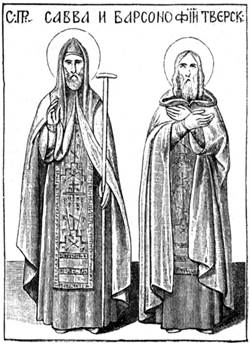
Преподобный Савва, игумен Сретенского, иначе Саввина, монастыря поставлен в числе святых по ркп. святцам. По свидетельству преп. Иосифа Волоколамского, преп. Савва и Варсонофий проводили высокую духовную жизнь и за святость жизни удостоены были дара чудес. – Он довольно подробно описывает жизнь их, называя их святыми. «Мы видели, говорит он, и блаженного Савву, который настоятельствовал в Саввином монастыре, в Тверской стороне, более 50 лет. Он так заботился о своей пастве, что всегда стоял в церковных дверях с жезлом в руке; если кто-либо из братии не приходил к началу служения в церковь, или выходил прежде отпуска, или во время пения разговаривал, или переходил с своего места на другое, то Савва никак не молчал о том, а запрещал, так что не опускал без внимания и малых проступков. А тех, которые вступали в спор и бесчинствовали, иногда бил жезлом, а иногда сажал в затвор; когда нужно, бывал он строг; а когда надобность была, бывал и милостив. Раз он, строго вразумляя бесчинного брата, положил бороду на окно, а этот, по внушению бесовскому, схватил обеими руками бороду его и едва не всю вырвал. Братия схватили его, привели к блаженному Савве и спрашивали: как велит наказать его? Он отвечал им: я бью жезлом и сажаю в затвор за бесчинства и оскорбления братии, но за свою обиду не могу наказывать, а должен всё терпеть. Когда же увидел он брата кающимся в своих грехах, то вскоре простил его, и прощённый брат пребыл в монастыре до смерти, в покаянии и умилении. Был большой мор, и священники перемёрли, – остался один блаженный Савва с заботами о своей братии – посещать больных, сподоблять исповеди и погребать умерших. Когда блаж. Савва посещал больного и сподоблял исповеди, а в это время приходил брат и говорил, что такой-то умирает и требует исповеди, то блаженный отвечал: иди, брат, скажи умирающему, чтобы не умирал, а подождал моего посещения, и как только брат передавал это умирающему, тому становилось легче; когда же приходил блаженный Савва и удостаивал св. причащения, тогда брат умирал. И это было не с одним или двумя, а со многими. – Мы слышали об этом от благоговейных старцев и особенно от того святого великого старца Варсонофия, называемого Неумоей, который был братом блаж. Савве и которого поставил настоятелем старший Савва Бороздин, бывший настоятелем той обители и потом отходивший в св. гору. Блаженный Варсонофий пробыл на игуменстве пять лет и потом удалился в пустыню, а игуменство передал сему Савве (брату своему), и тогда же велено ему принять сан священства. Варсонофий свидетельствовал, что чист он от чрева матери своей и достоин такой благодати. В пустыни прожил Варсонофий сорок лет и во все эти года другого дела не было у него, как молиться, петь и читать книги. Он брал книги у христолюбцев и по прочтении отдавал, потом брал в другом месте. У блаженного не было ничего, даже ни медной монеты, ибо любил он нищету и нестяжание. За долгое внимание к себе, безмолвие, молитвы, чтение удостоился он такой благодати, что помнил всё св. писание наизусть и свободно передавал всякому требующему. К нему приходили многие отовсюду, иноки и мирские благородные люди, иные для пользы душевной, другие требуя разрешения на какое либо место писания. Даже митрополит всей Руси Фотий по временам присылал к нему с просьбой дать объяснение непонятному изречению св. писания, о котором был у него, с кем-либо спор. Тамошние отцы с клятвой извещали нас, что, когда блаженный жил ещё в пустыне, пришёл к нему брат Саввина монастыря и молил его, чтобы пошёл к Савве и попросил простить ему некоторые согрешения. Блаженный Варсонофий, идя в монастырь, взглянул на образ Пресвят. Богородицы, стоявший в его келье, и сказал так: Пречистая Владычица Богородице! Ты будь хранительницей моим книгам. По удалении его, брат, прельщённый лукавым, положил все книги в пазуху свою и хотел бежать; но, подойдя к дверям кельи, поражён был незримой силой и пал мёртвым. Блаженный Варсонофий, возвратясь, нашёл его мёртвым и с книгами за пазухой. Он стал плакать и рыдать и говорил: я виновен и в смерти брата. – Брата отнесли в монастырь, чтобы предать земле. Когда стали отпевать его, блаженный Варсонофий столько плакал о брате, что всё место, где стоял он, смочено было слезами. Когда же стали прощаться с умершим, тогда мёртвый начал двигаться. Они открыли голову его и развязали его, и мёртвый сел. Братия, подняв его, спрашивали: что видел, или слышал он? Ничего не видал и не слыхал я, отвечал он. Брат жил после сего в монастыре до смерти добродетельно. Когда блаженный Варсонофий достиг глубокой старости, св. Савва повелел привести его в монастырь. Братия весьма рады были приходу его: блаженный был врачом для душевных и телесных немощей. Пока живы были блаж. Савва и св. Варсонофий, в монастыре было всё чинно, тихо и мирно, при их наставлениях. Если являлся какой-либо строптивый и с худым нравом, они не дозволяли ему творить свою волю. Когда же преставились блаж. Савва, св. Варсонофий и другие отцы, ревнители отеческого предания, братия выбрали игумена из другого монастыря, и тот начал жить не по уставу сего монастыря и не по преданию тех святых старцев: их предание было такое, чтобы никто не ел и не пил иначе, как за общей трапезой, чтобы не выходили из монастыря без благословения, чтобы отроки не жили по кельям или в дворе, и чтобы женщины не входили в монастырь; вообще у них всё было по уставу общежития. А тот игумен, пришедший сюда, всё это испортил и оставил без внимания. Спустя немного времени является ему во сне св. Савва и говорит: несчастный! почему ты нимало не заботишься о монастырском благочинии и благочестии, но всё пренебрёг и сочёл ни во что? И бил его жезлом довольно, так что тот не мог встать с постели. Когда же выздоровел и почувствовал свою неисправность, то уже не смел более и настоятельствовать, а вскоре возвратился туда, откуда пришёл»34. Монастырь, где подвизались преподобные Савва и Варсонофий, назывался Саввиной пустыней, по храму во имя пр. Саввы освященного, и находился в 20 верстах от Твери, там, где ныне остаётся с. Саввино. В храме с. Саввина есть древняя икона преп. Саввы и Варсонофия. Здесь же ещё целы царские врата с мелкотравчатой резьбой и с надписью: «л. 7069 (1561) августа в 29 д. поставлены двери сия царские при державе царя и в. к. Ивана Васил. – при епископе Акакии Тверском, в церковь преп. отца нашего Саввы освященного, старанием игумена Леванида Саввина монастыря»35. Московском Успенском соборе хранится устав Тверского Саввина монастыря XV в.; в конце пасхалии его, доведённой до 8 тысячи, сказано: «конец седми тысящам. Троице Святая, слава Тебе, δοξα σοι ο Θεοσ». На л. 295 читается древняя, драгоценная, заметка: «в л. 6940 (1432) в Петрово говение монастырю св. Саввы минуло 35 лет, а смерти князя великого Михаила 34 лета36. По этой заметке несомненно, что Тверский Саввин монастырь начался с 1397 года и с того же года начались подвиги пр. Варсонофия и Саввы в Саввиной пустыни. На ркп. книге Исаака Сирина подпись говорит, что книга писана в 1416 г. в монастыре препод. Саввы, на иждивение ктитора обители князя Александра Ивановича († 1426 года), по воле игумена Варсонофия. – Другая книга, лествица, писана в 1419 г. для священноинока Саввы37. поскольку же преп. Савва вместе с тем, как принял сан священства, принял и начальство над обителью (так пишет преп. Иосиф), то очевидно, что в 1419 г. игуменом Саввиной обители был уже преп. Савва. По времени же основания пустыни (1397 г.) и по немногим годам игуменства Варсонофиева (5 лет), надобно положить, что 1416 г. был последним годом игуменства Варсонофиева после правления Саввы Бороздина. Если же после того с 1417 г. будем считать 50 лет начальствования преп. Саввы Тверского, то блаженную кончину его должны будем отнести к 1467 г.38.
The Venerable Sabbas, abbot of the Sretensky, otherwise known as Sabbas’s, monastery, is numbered among the saints in the manuscript menologia. According to the testimony of the Venerable Joseph of Volokolamsk, the Venerable Sabbas and Barsanuphius led a lofty spiritual life and, for the holiness of their life, were vouchsafed the gift of miracles. He describes their life in considerable detail, calling them saints. “We saw,” he says, “the blessed Sabbas as well, who was abbot in the Sabbas Monastery, in the Tver region, for more than fifty years. He cared so greatly for his flock that he always stood in the church doors with a staff in his hand; if any of the brethren did not come to the beginning of the service in church, or left before the dismissal, or talked during the singing, or moved from his place to another, Sabbas by no means kept silent about it, but forbade it, so that he did not let even small faults pass without attention. And those who entered into disputes and behaved disorderly, he sometimes struck with his staff, and sometimes placed in confinement; when necessary, he was strict; and when need arose, he was also merciful. Once, while sternly admonishing a disorderly brother, he placed his beard on the window, and this brother, at the instigation of the demon, seized his beard with both hands and tore out nearly all of it. The brethren seized him, brought him to the blessed Sabbas, and asked: how does he command them to punish him? He answered them: I strike with the staff and place in confinement for disorderly conduct and offenses against the brethren, but for an offense against myself I cannot punish, but must endure all things. When, however, he saw the brother repenting of his sins, he soon forgave him, and the forgiven brother remained in the monastery until his death, in repentance and compunction. There was a great plague, and the priests died off—only the blessed Sabbas remained, with the care of visiting the sick, granting them confession, and burying the dead. When the blessed Sabbas visited a sick man and granted him confession, and at that time a brother would come and say that such-and-such a one was dying and required confession, the blessed one would answer: go, brother, tell the dying man not to die, but to wait for my visit; and as soon as the brother conveyed this to the dying man, he would feel better; and when the blessed Sabbas came and vouchsafed him holy Communion, then the brother would die. And this happened not with one or two, but with many. We heard of this from reverent elders, and especially from that holy great elder Barsanuphius, called Neumoya, who was a brother to the blessed Sabbas and whom the elder Sabbas Borozdin, who had been abbot of that monastery and later departed to the Holy Mountain, appointed as abbot. The blessed Barsanuphius remained as abbot for five years and then withdrew to the wilderness, and he handed over the abbacy to this Sabbas (his brother), and at the same time he was commanded to receive the rank of the priesthood. Barsanuphius testified that he was pure from his mother’s womb and worthy of such grace. In the wilderness Barsanuphius lived for forty years, and throughout all those years he had no other occupation than to pray, to chant, and to read books. He would borrow books from Christ-loving people and, after reading them, return them, then borrow from another place. The blessed one had nothing, not even a copper coin, for he loved poverty and non-acquisition. Through long attention to himself, silence, prayers, and reading, he was vouchsafed such grace that he remembered all of Holy Scripture by heart and freely imparted it to anyone in need. Many came to him from everywhere, monks and worldly noble people, some for spiritual benefit, others seeking an explanation of some passage of Scripture. Even Photius, the Metropolitan of all Rus’, would sometimes send to him with a request to give an explanation of an obscure saying of Holy Scripture about which he had a dispute with someone. The local fathers informed us under oath that, when the blessed one was still living in the wilderness, a brother from the Sabbas Monastery came to him and begged him to go to Sabbas and ask him to forgive him certain sins. The blessed Barsanuphius, as he was going to the monastery, looked at the icon of the Most Holy Theotokos that stood in his cell and said: ‘O Most Pure Lady Theotokos! Do Thou be the guardian of my books.’ After his departure, the brother, seduced by the evil one, put all the books into his bosom and wanted to flee; but, as he approached the doors of the cell, he was struck by an invisible force and fell dead. The blessed Barsanuphius, on his return, found him dead with the books in his bosom. He began to weep and lament and said: ‘I am guilty of the brother’s death as well.’ The brother was taken to the monastery to be buried. When they began to sing the funeral service for him, the blessed Barsanuphius wept so much over the brother that the entire place where he stood was soaked with tears. And when they began to bid farewell to the deceased, the dead man began to move. They uncovered his head and untied him, and the dead man sat up. The brethren, raising him up, asked: ‘What did you see or hear?’ ‘I saw and heard nothing,’ he answered. The brother thereafter lived in the monastery virtuously until his death. When the blessed Barsanuphius reached extreme old age, St. Sabbas commanded that he be brought to the monastery. The brethren were very glad at his coming: the blessed one was a physician for both spiritual and bodily infirmities. As long as the blessed Sabbas and St. Barsanuphius were alive, everything in the monastery was orderly, quiet, and peaceful, under their guidance. If any stubborn or ill-tempered person appeared, they did not permit him to do his own will. When, however, the blessed Sabbas, St. Barsanuphius, and the other fathers, zealots of the patristic tradition, had reposed, the brethren chose an abbot from another monastery, and he began to live not according to the rule of this monastery and not according to the tradition of those holy elders: their tradition was that no one should eat or drink except at the common meal, that no one should leave the monastery without a blessing, that youths should not live in the cells or in the courtyard, and that women should not enter the monastery; in general, everything among them was according to the rule of the cenobitic life. But that abbot, who came from elsewhere, corrupted all this and left it without heed. A short time later, St. Sabbas appeared to him in a dream and said: ‘Wretch! Why do you care nothing for the good order and piety of the monastery, but have neglected everything and counted it as nothing?’ And he struck him quite severely with his staff, so that he could not rise from his bed. When he recovered and perceived his fault, he no longer dared to be abbot, and soon returned to the place from which he had come.”34 The monastery where the Venerable Sabbas and Barsanuphius struggled was called the Sabbas Hermitage, after the church in the name of St. Sabbas the Sanctified, and was located twenty versts from Tver, at the place where the village of Savvino now remains. In the church of the village of Savvino there is an ancient icon of the Venerable Sabbas and Barsanuphius. Here also the Royal Doors are still intact, with fine floral carving and an inscription: “In the year 7069 (1561), August 29, these Royal Doors were set up under the rule of the Tsar and Grand Prince Ivan Vasilievich—under Bishop Akakios of Tver, in the church of our Venerable Father Sabbas the Sanctified, by the care of Abbot Levanid of the Sabbas Monastery.”35 In the Moscow Dormition Cathedral, the rule of the Tver Sabbas Monastery from the 15th century is preserved; at the end of its Paschal cycle, brought up to the 8th millennium, it says: “The end of the seven thousandth. O Holy Trinity, glory to Thee, δοξα σοι ο Θεοσ.” On folio 295, an ancient and precious note is read: “In the year 6940 (1432), during Peter’s Fast, the monastery of St. Sabbas completed 35 years, and the death of the Grand Prince Michael was 34 years ago.”36 According to this note, it is beyond doubt that the Tver Sabbas Monastery began in the year 1397, and from that same year the struggles of the Venerable Barsanuphius and Sabbas in the Sabbas Hermitage began. An inscription on a manuscript book of Isaac the Syrian states that the book was written in 1416 in the monastery of the Venerable Sabbas, at the expense of the ktetor of the monastery, Prince Alexander Ivanovich († 1426), by the will of Abbot Barsanuphius. Another book, the Ladder, was written in 1419 for the hieromonk Sabbas.37 Since the Venerable Sabbas, at the same time as he received the rank of the priesthood, also received authority over the monastery (as the Venerable Joseph writes), it is evident that in 1419 the abbot of the Sabbas Monastery was already the Venerable Sabbas. According to the time of the foundation of the hermitage (1397) and the few years of Barsanuphius’s abbacy (5 years), it must be supposed that the year 1416 was the last year of Barsanuphius’s abbacy after the rule of Sabbas Borozdin. If, after that, from 1417 we count 50 years of the rule of the Venerable Sabbas of Tver, then we must assign his blessed repose to the year 1467.38