Всё Писание – Богодухновенно и полезно для научения, для обличения, для исправления, для наставления в праведности; да будет совершен Божий человек, ко всякому доброму делу приготовлен» (2Тим.3:16–17).
"All Scripture is given by inspiration of God, and is profitable for doctrine, for reproof, for correction, for instruction in righteousness, that the man of God may be perfect, thoroughly furnished unto every good work" (2 Tim. 3:16–17).
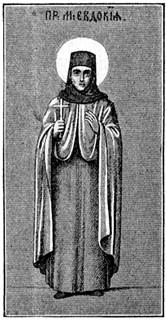
С поразительной верностью осуществились эти слова Боговдохновенного Апостола в жизни воспоминаемой сегодня Церковью блаженной Евдокии.
With striking truth were these words of the divinely inspired Apostle fulfilled in the life of the blessed Eudocia, whom the Church commemorates today.
Как ураган, налетевший внезапно на бездны морские, с непреодолимой силой крутит, потрясает волны, приводит их в сильнейшее движение и волнение и, проникая до самой глубины морской, могуче исторгает на поверхность предметы, сокрытые в недоступных глубинах, – так и свет, и мощь св. Писания внезапно проникли тёмную душу великой грешницы и исторгнули сокрытые в глубине её сокровища, присущие душе человеческой, но бездействующие, мёртвые, невидимые, пока мгла грехов тяготеет над ними...
As a hurricane, suddenly swooping down upon the abysses of the sea, with irresistible force swirls, shakes the waves, sets them into violent motion and agitation, and, penetrating to the very depths of the sea, mightily casts up to the surface objects hidden in inaccessible deeps—so the light and power of Holy Scripture suddenly penetrated the dark soul of the great sinner and brought forth the treasures hidden in its depths, treasures inherent in the human soul, but inactive, dead, invisible, as long as the gloom of sins weighs upon them...
Чудным путём Господь, «не хотящий смерти грешника, но обращения его от зла на путь добра и разума истинной жизни», извлёк далёкую от Него душу из самого безысходного, мрачного царства, греха – в светлое пристанище спасительного раскаяния. Путём этим было сокрушительное для греха действие Божественного слова Его.
By a wondrous path the Lord, "who desires not the death of a sinner, but his turning from evil to the way of good and the understanding of true life," drew a soul far from Him out of the most hopeless, dark kingdom of sin into the bright haven of saving repentance. This path was the crushing action of His Divine word upon sin.
Однажды, в то время, когда язычество ещё преобладало повсюду, и нравы языческие допускали ещё ничем не сдерживаемую распущенность, жила в городе Филиппийском Илиополе (нынешнем Бальбеке) одна богатая женщина, замечательная необыкновенной красотой, привлекавшей к ней многих поклонников, с которыми вместе она предавалась разгульной, беспечной жизни среди безумной роскоши и совершенной праздности. Казалось, что кроме нечистых удовольствий ничто не занимало её; это была язычница в полном смысле слова; в душу её не проникал ещё ни один луч света Христова.
Once, at a time when paganism still prevailed everywhere and pagan morals still permitted unbridled licentiousness, there lived in the city of Philippi in Heliopolis (present-day Baalbek) a wealthy woman, remarkable for her extraordinary beauty, which attracted many admirers, with whom she together gave herself over to a dissolute, carefree life amidst insane luxury and complete idleness. It seemed that nothing occupied her except impure pleasures; she was a pagan in the full sense of the word; not a single ray of Christ's light had yet penetrated her soul.
Но этот свет уже сиял в мире... и число пленяемых им распространялось повсеместно, – и эти-то избранные служили в свою очередь блаженным орудием для привлечения к нему новых счастливцев...
But this light already shone in the world... and the number of those captivated by it was spreading everywhere—and these chosen ones in turn served as a blessed instrument for attracting new fortunate ones to it...
Пришёл наконец час возрождения и погибающей Евдокии...
At last the hour of regeneration came for the perishing Eudocia...
Однажды, когда она предавалась ночному покою в роскошной комнате своего дома, внезапно среди ночи она проснулась. Господу угодно было определить эту минуту и на пробуждение её спящей души...
One night, as she was giving herself over to repose in the luxurious room of her house, she suddenly awoke in the middle of the night. The Lord was pleased to appoint this moment also for the awakening of her sleeping soul...
За стеной той комнаты, где спала Евдокия, находилось другое жилище, которое занимал один христианин. Случилось так, что в тот день прибыл в город и остановился в этом жилище христианина один инок, по имени Герман. Когда наступила ночь, то, прежде чем уснуть, он долго молился. После же молитвы стал читать свящ. Писание; он читал вслух; чтение его было умилительное; нередко прерывалось оно глубокими вздохами и молитвенными призываниями.
Beyond the wall of the room where Eudocia slept was another dwelling, occupied by a certain Christian. It so happened that on that day a monk, named Germanus, had arrived in the city and lodged in this Christian's dwelling. When night came, before falling asleep, he prayed for a long time. After prayer, he began to read Holy Scripture; he read aloud; his reading was moving; it was often interrupted by deep sighs and prayerful invocations.
Евдокия стала прислушиваться. Инок читал о страшном суде Господнем, о вечном блаженстве в Царствии Божием, которое предстоит праведным, о страшных мучениях, которые ожидают людей, ведущих беззаконную жизнь...
Eudocia began to listen. The monk read about the terrible judgment of the Lord, about the eternal blessedness in the Kingdom of God that awaits the righteous, about the terrible torments that await people who lead a lawless life...
Проснувшаяся Евдокия с любопытством прислушивалась. То, о чём читал инок, было для неё совершенно ново, Самарянка по происхождению, она никогда не была знакома с христианами, и учение Христово было для неё до сих пор совершенно неизвестно.
The awakened Eudocia listened with curiosity. What the monk read was completely new to her. A Samaritan by origin, she had never been acquainted with Christians, and the teaching of Christ had until now been completely unknown to her.
Слова Спасителя о страшном суде и о вечной жизни её поразили. Душа её смутилась под влиянием какого-то непонятного для неё страха... Евдокия не могла заснуть и рано утром призвала к себе инока.
The Savior's words about the terrible judgment and about eternal life struck her. Her soul was troubled under the influence of some fear incomprehensible to her... Eudocia could not fall asleep and early in the morning summoned the monk to her.
– Кто ты и откуда? Какая жизнь твоя и твоя вера? – спрашивала она инока, – с той минуты, как я услышала, что ты читал сегодня ночью, душа моя взволновалась... И если это правда, что грешным людям предстоит мучительная вечность, то скажи мне, кто же может спастись? Страшно и удивительно то, что ты читал о суде... я никогда об этом ничего не слыхала...
"Who are you and from where? What is your life and your faith?" she asked the monk. "From the moment I heard what you read tonight, my soul has been agitated... And if it is true that sinful people face a tormenting eternity, then tell me, who can be saved? Terrible and wondrous is what you read about the judgment... I have never heard anything about this..."
Какая же твоя вера, если ты говоришь, что никогда не слыхала о суде Господнем? – спросил Герман.
"What is your faith, if you say you have never heard of the judgment of the Lord?" asked Germanus.
– По отечеству и по вере я – Самарянка, – отвечала Евдокия, – я очень богата, и, услышав слова, что богатым трудно спастись, я ужаснулась...
"By country and by faith I am a Samaritan," answered Eudocia. "I am very rich, and having heard the words that it is hard for the rich to be saved, I was terrified..."
– Скажи мне, откуда у тебя такое богатство? Ты имеешь его от мужа? – спросил Герман.
"Tell me, from where do you have such wealth? Do you have it from your husband?" asked Germanus.
– Нет, я не имею законного мужа... но богатство моё я собрала от многих мужей... Только думаю теперь, какая мне польза от моего богатства, если богатым предстоят мучения в будущей жизни?
"No, I have no lawful husband... but my wealth I gathered from many husbands... Only now I think, what profit is my wealth to me, if the rich are destined for torments in the future life?"
– Женщина, скажи мне правду, потому что и Христос мой, Которому я служу, истинен и требует правды, – хочешь ли ты спастись, отказавшись от богатства, и жить в бесконечной радости, или, живя здесь в богатстве, лишиться отрадной участи в вечной жизни?
"Woman, tell me the truth, because my Christ, Whom I serve, is true and requires truth—do you wish to be saved, renouncing wealth, and to live in endless joy, or, living here in wealth, to lose the joyful portion in eternal life?"
– Я готова отдать своё богатство ради вечной радости... Но меня удивляет, за что ваш Бог так не терпит богатых...
"I am ready to give away my wealth for the sake of eternal joy... But I am surprised, why does your God so dislike the rich..."
– Нет, Бог не отвергает богатых, но отвергает только тех из них, кто неправедно приобретает богатство или неправильно употребляет его на удовлетворение незаконных потребностей и не на пользу ближних...
"No, God does not reject the rich, but rejects only those among them who acquire wealth unrighteously or use it wrongly to satisfy unlawful desires and not for the benefit of their neighbors..."
– А что скажешь ты о моём богатстве: праведное ли оно, или неправедное?
"And what would you say about my wealth: is it righteous or unrighteous?"
– Я считаю его истинно неправедным и противным Богу...
"I consider it truly unrighteous and contrary to God..."
– Отчего же это? Я многих бедных одела, многих накормила... Какое же зло в моём богатстве?
"Why is that? I have clothed many poor, I have fed many... What evil is there in my wealth?"
– Послушай меня, – возразил Герман, – хотя ты и подаёшь милостыню, ты не можешь быть приятной Богу, живя неправедно во многих других отношениях... Ты не можешь получить благодать Божию, живя в нечистоте... Кто приходит мыться в баню, тот не умывается мутной и грязной водой, – ты хотя и очищаешь свою душу милостыней, но средства для неё ты употребляешь неправильно нажитые... Кто ходит босыми ногами по терниям, тот подвергается занозам, и если ему и удастся вынуть из ноги несколько заноз, то всё-таки ещё много заноз останется в теле, которые могут быть вредными... Так и ты, если и подашь иногда милостыню нищему, и этой милостыней загладишь какой-нибудь греховный поступок, то всё же останется много греховных заноз на твоей совести, которые препятствуют твоему полному очищению перед Богом... которые готовят тебе мучительную вечность, ожидающую нераскаявшихся грешников; но ты можешь избежать её, если хочешь узнать заповеди Божии и исполнить их...
"Listen to me," replied Germanus, "although you give alms, you cannot be pleasing to God, living unrighteously in many other respects... You cannot receive the grace of God, living in impurity... He who comes to wash in a bath does not wash with muddy and dirty water—you, although you cleanse your soul with alms, you use for it means acquired wrongly... He who walks barefoot on thorns is subject to splinters, and if he succeeds in removing a few splinters from his foot, still many splinters remain in the body, which can be harmful... So also you, if you sometimes give alms to a beggar, and by this alms blot out some sinful act, yet many sinful splinters remain on your conscience, which hinder your complete cleansing before God... which prepare for you a tormenting eternity, awaiting unrepentant sinners; but you can avoid it, if you wish to know the commandments of God and fulfill them..."
– Побудь у меня ещё немного, слуга Божий, – молила Евдокия, – и расскажи мне о тех делах, которыми можно удостоиться милости Божией... Поучи меня христианской вере вашей... Возьми у меня сколько хочешь золота и проведи здесь несколько дней... Я же готова раздать всё моё богатство и пойти вслед за тобой, куда ты идёшь...
"Stay with me a little longer, servant of God," begged Eudocia, "and tell me about those deeds by which one may be vouchsafed the mercy of God... Teach me your Christian faith... Take from me as much gold as you wish and spend several days here... I am ready to distribute all my wealth and to follow you, wherever you go..."
– Мне не нужно золота, – отвечал инок, – я желаю только твоего спасения; и хотя я спешил возвратиться в свою обитель, я останусь здесь ещё несколько дней, чтобы видеть твоё обращение к Богу. А ты призови христианского пресвитера из этого города, чтобы он научил тебя и крестил тебя, потому что это – начало и основание спасения...
"I need no gold," answered the monk. "I desire only your salvation; and although I was hastening to return to my monastery, I will remain here a few more days, to see your conversion to God. But summon a Christian presbyter from this city, that he may teach you and baptize you, for this is the beginning and foundation of salvation..."
Не мало удивился священник, когда посланный от Евдокии пришёл приглашать его к ней, так как она известна была во всём городе, как легкомысленная женщина, преданная пустой, праздной, греховной жизни. Не замедлил он однако же пойти к ней. Увидев его, она припала к ногам его и молила его сделать её христианкой...
The priest was not a little surprised when the messenger from Eudocia came to invite him to her, for she was known throughout the city as a frivolous woman, given over to an empty, idle, sinful life. He did not delay, however, in going to her. Seeing him, she fell at his feet and begged him to make her a Christian...
Заметив, как мало ещё была подготовлена эта женщина к восприятию истины Христовой, как опутано было мышление её всякой мирской суетой и пока ещё только бессознательным страхом, священник не нашёл удобным совершить над ней немедленно св. крещение, а посоветовал ей провести хотя одну неделю в уединении и молитве. Между тем, он подготовлял её, раскрывая и объясняя ей главные истины христианской веры и ободряя её беспредельным милосердием Божиим ко всем и в особенности к кающимся грешникам.
Noticing how little this woman was yet prepared to receive the truth of Christ, how her thinking was entangled with all worldly vanity and as yet only unconscious fear, the priest did not find it convenient to perform holy Baptism over her immediately, but advised her to spend at least one week in solitude and prayer. Meanwhile, he prepared her, revealing and explaining to her the principal truths of the Christian faith and encouraging her with the boundless mercy of God toward all, and especially toward repentant sinners.
– Постарайся забыть о мире, – также говорил он ей, – не позволяй уму твоему рассеиваться; отгони страх и сомнение, чтобы они не отвратили тебя от доброго начинания. Направь к Богу все мысли и чувства твои, и ты убедишься в неизреченной милости Господней, так как в смиренной молитве душа примиряется с Богом, и свет Божественный открывается перед ней... Сложи с себя драгоценные украшения, надень не богатую одежду; вспоминай о грехах своих, моли Бога, чтобы Он помог тебе раскаяться и начать новую жизнь, и твёрдо надейся на Его помощь. Он благ и милостив; Он Сам идёт навстречу к тому, кто искренно желает приобрести Его; Он радуется более всего покаянию грешника.
"Strive to forget the world," he also said to her. "Do not allow your mind to be distracted; drive away fear and doubt, lest they turn you from your good beginning. Direct all your thoughts and feelings toward God, and you will be convinced of the ineffable mercy of the Lord, for in humble prayer the soul is reconciled with God, and the Divine light is revealed before it... Put off your precious adornments, put on plain clothing; remember your sins, pray to God that He may help you to repent and begin a new life, and firmly hope in His help. He is good and merciful; He Himself comes to meet him who sincerely desires to gain Him; He rejoices above all in the repentance of a sinner."
Когда священник ушёл, то Евдокия долго ещё беседовала с иноком Германом, расспрашивая его об образе жизни христиан, об иночестве. Простившись же с ним, Евдокия призвала слуг своих и приказала им никого не допускать к ней, сама же уединилась в своей комнате и семь дней провела в посте и молитве.
When the priest had gone, Eudocia conversed for a long time with the monk Germanus, questioning him about the way of life of Christians and about monasticism. Having taken leave of him, Eudocia summoned her servants and ordered them to allow no one to come to her; she herself withdrew into her room and spent seven days in fasting and prayer.
По прошествии этого времени инок Герман, по обещанию своему, посетил Евдокию. Он нашёл её изменившейся, утомлённой; лице её похудело, но светилось какой-то чудной радостью, как бы отражавшей свет преобразившегося сердца её, полного теперь любви и упования. Сверх того, она была обрадована чудным видением, о котором и сообщила Герману: – «меня вдруг осиял чудный свет, – говорила Евдокия, – и ангел светлый и прекрасный, взяв меня за руку, вознёс на небо... Там лики святых душ встретили меня радостно и называли меня сестрой. Но вдруг страшный образ духа злого представился в воздухе... Он с яростью устремился ко мне и старался вырвать меня из рук ангела. – «Эту ли душу ты хочешь вознести на небо? – говорил он ангелу, – она провела земную жизнь в грехе; она служила и угождала мне... она – моя»... Светлый ангел защищал меня и в это время послышались слова: «Богу милосердому угодно спасать грешников раскаивающихся... Пусть душа эта совершает подвиг свой, и я буду с ней во все дни жизни её». При этих словах злой дух исчез... ангел же, возвратив меня в дом мой, сказал: «много радости бывает на небе, когда грешник приходит к покаянию, потому что милосердый Отец Небесный не желает, чтобы погибла душа человеческая, пречистыми руками Его созданная по образу и подобию Своему». Сказав это, ангел перекрестил меня и отошёл...
After this time, the monk Germanus, according to his promise, visited Eudocia. He found her changed and weary; her face had grown thin, but shone with a certain wondrous joy, as if reflecting the light of her transformed heart, now full of love and hope. Moreover, she was overjoyed by a wondrous vision, which she related to Germanus: "A marvellous light suddenly shone upon me," said Eudocia, "and a bright and beautiful angel, taking me by the hand, raised me up to heaven... There the choirs of holy souls met me joyfully and called me sister. But suddenly a terrible image of an evil spirit appeared in the air... He rushed at me with fury and tried to tear me from the angel's hands. 'Is it this soul you wish to raise to heaven?' he said to the angel, 'she spent her earthly life in sin; she served and pleased me... she is mine'... The bright angel defended me, and at that moment words were heard: 'The merciful God is pleased to save repentant sinners... Let this soul accomplish her feat, and I will be with her all the days of her life.' At these words the evil spirit vanished... The angel, returning me to my house, said: 'There is much joy in heaven when a sinner comes to repentance, because the merciful Heavenly Father does not desire that the human soul, created by His most pure hands in His own image and likeness, should perish.' Having said this, the angel made the sign of the cross over me and departed..."
– Теперь, дочь моя, – сказал Герман, – ты уверилась, что есть истинный Бог, Который принимает кающихся и вводит их в Свой свет вечный?
"Now, my daughter," said Germanus, "are you convinced that there is a true God, Who receives the penitent and leads them into His eternal light?"
– Я верую, – отвечала Евдокия, – что нет другого Бога, кроме Того, к Чьему жилищу я приближалась...
"I believe," answered Eudocia, "that there is no other God besides Him, to Whose dwelling I drew near..."
– Так приготовь же себя к усердному служению этому Богу, – сказал Герман и, проведя ещё несколько времени с Евдокией, чтобы приготовить её к принятию св. крещения, возвратился в свою обитель. Она же, разгоревшаяся пламенной любовно к Богу, решилась всецело посвятить Ему всю жизнь свою; проводила время в посте и молитве, и дни и ночи плакала о грехах своих, которые сознала только с тех пор, как луч Христовой истины осенил её душу...
"Then prepare yourself for zealous service to this God," said Germanus, and after spending some more time with Eudocia to prepare her for the reception of holy Baptism, he returned to his monastery. She, burning with fervent love for God, resolved to devote her whole life entirely to Him; she spent her time in fasting and prayer, and wept day and night over her sins, which she had only come to know since the ray of Christ's truth had illumined her soul...
Наконец отправилась Евдокия к епископу Илиопольскому Феодоту и приняла от него св. крещение.
At last Eudocia went to Theodotus, the bishop of Heliopolis, and received holy Baptism from him.
Через несколько времени снова посетил её инок Герман увидев, что она всё своё богатство употребила для бедных, освободила рабов своих и сама живёт в бедности и смирении, отправил её в женскую обитель, находившуюся невдалеке от мужского монастыря, в котором жил он сам. Это было в 96-м году, в царствование императора Римского Траяна. Сделавшись монахиней, Евдокия ревностно занялась чтением св. Писания и изучением псалтири, посвятила себя вполне трудам и подвигам иноческой жизни и до такой степени превзошла всех монахинь в трудах поста и молитвы, что когда, на втором году её поступления в обитель, умерла здешняя настоятельница, то, согласно общему желанию, Евдокия была избрана игуменьей обители.
After some time, the monk Germanus visited her again. Seeing that she had used all her wealth for the poor, freed her slaves, and was herself living in poverty and humility, he sent her to a women's monastery, located not far from the men's monastery in which he himself dwelt. This was in the year 96, during the reign of the Roman Emperor Trajan. Having become a nun, Eudocia zealously devoted herself to reading the Holy Scriptures and studying the Psalter, gave herself wholly to the labors and feats of monastic life, and surpassed all the nuns to such a degree in the labors of fasting and prayer that when, in the second year of her entry into the monastery, the local abbess died, Eudocia was, by common consent, chosen as abbess of the monastery.
Между тем, в Илиополе вспоминали весёлую и богатую Евдокию, многие сожалели об удалении её и желали бы склонить её к прежней жизни... В особенности один юноша Филострат, любивший Евдокию, тяготился разлукой с ней и наконец решился идти к ней, чтобы уговорить её возвратиться в город и жить по-прежнему. Посредством обмана он успел достигнуть свидания с Евдокией, но в бледной, изнурённой подвижнице он едва мог узнать знаменитую в Илиополе, пленявшую· всех своей красотой молодую женщину... Он не понимал, что могло заставить её променять свою прежнюю блестящую жизнь на такую убогую обстановку... С увлечением начал он воспоминать о минувшем веселии и убеждать её возвратиться в город, где все так жалели об её отсутствии, где бывшие друзья её были готовы снова окружить её роскошью, осыпать богатейшими дарами, только бы она возвратилась к ним...
Meanwhile, in Heliopolis they remembered the cheerful and wealthy Eudocia; many regretted her departure and wished to persuade her to return to her former life... In particular, a certain youth named Philostratus, who had loved Eudocia, was burdened by separation from her and at last resolved to go to her, to persuade her to return to the city and live as before. By means of deceit he succeeded in obtaining a meeting with Eudocia, but in the pale, emaciated ascetic he could scarcely recognize the famous young woman of Heliopolis, who had captivated everyone with her beauty... He did not understand what could have induced her to exchange her former brilliant life for such a wretched setting... With enthusiasm he began to recall past merriment and to urge her to return to the city, where everyone so regretted her absence, where her former friends were ready again to surround her with luxury and shower her with the richest gifts, if only she would return to them...
С негодованием слушала Евдокия пылкого юношу... «Бог да накажет тебя, пришедшего меня искушать!» воскликнула она, и внезапно Филострат упал замертво и лежал в таком положении, пока Евдокия не спасла его своей молитвой. «Помолись, и Я воздвигну юношу, и он обратится ко Мне», – услышала она во время сна ночного и, когда, проснувшись, стала молиться над тем, кого уже все считали умершим, то он встал, как бы пробудившись от сна, и воскликнул: – молю тебя, блаженная Евдокия, раба Бога истинного, прими меня кающегося и прости меня, потому что я теперь знаю, какому милостивому и сильному Богу служишь ты» ... Этот случай обратил к Богу юношу, и был первым свидетельством дара чудес, который Господь ниспослал Евдокии в знамение того, что строгая, праведная жизнь её угодна Ему, – и после того не раз проявляла она этот Божественный дар и молитвой своей творила великие чудеса.
With indignation Eudocia listened to the ardent youth... "May God punish you, who have come to tempt me!" she exclaimed, and suddenly Philostratus fell down as if dead and lay in that state until Eudocia saved him by her prayer. "Pray, and I will raise up the youth, and he will turn to Me," she heard during the night in her sleep, and when, upon waking, she began to pray over him whom all already considered dead, he arose as if awakened from sleep and cried out: "I beseech you, blessed Eudocia, handmaid of the true God, receive me, a penitent, and forgive me, for now I know what a merciful and mighty God you serve" ... This incident turned the youth to God, and was the first testimony of the gift of miracles which the Lord bestowed upon Eudocia as a sign that her strict, righteous life was pleasing to Him—and thereafter she more than once manifested this divine gift and worked great miracles through her prayer.
Вскоре после этого граждане Илиополя, предполагая, что богатство, собранное Евдокией, она хранит в своей обители, пожелали отнять его у неё и послали для этой цели вооружённый отряд в обитель. Во главе отряда был сын начальника города; не дойдя до обители, он захворал смертельно, и возвратился к жизни только после молитвы о нём Евдокии. Это чудо поразило весь народ и самого правителя, который вместе с значительной частью народа познал тогда силу Бога христианского и обратился к нему.
Soon after this, the citizens of Heliopolis, supposing that the wealth Eudocia had gathered was kept in her monastery, desired to take it from her and sent an armed detachment to the monastery for this purpose. At the head of the detachment was the son of the city's governor; before reaching the monastery, he fell mortally ill, and returned to life only after Eudocia's prayer for him. This miracle amazed all the people and the governor himself, who, together with a considerable part of the people, then came to know the power of the Christian God and turned to Him.
Через несколько лет повторилось нечто подобное. Евдокия была вызвана на суд как христианка. Предупреждённая о помощи свыше в ночном сновидении, она без страха исповедала веру свою пред призвавшим её новым правителем города и была предана мучениям. Перенесла она их с невозмутимой твёрдостью и снова совершала чудеса, которые обратили к Христу и этого правителя: «сделай и меня христианином! – обратился он к Евдокии, – вижу, что велик тот Бог, Которого ты исповедуешь!»
Several years later, something similar occurred. Eudocia was summoned to trial as a Christian. Warned of help from above in a night vision, she fearlessly confessed her faith before the new city governor who had summoned her, and was given over to torments. She endured them with unshakable firmness and again worked miracles, which turned this governor also to Christ: "Make me a Christian too!" he said to Eudocia, "I see that great is the God Whom you confess!"
Таким образом приняли св. крещение начальник войска – Диодор, бывший при суде Евдокии, жена его и весь дом его, а также правитель города Диоген со всем домом своим и много народа. После этих событий св. Евдокия поселилась, по просьбе Диодора, в доме его и учила новообращённых христиан.
Thus, the commander of the troops, Diodorus, who was present at Eudocia's trial, together with his wife and all his household, as well as the city governor Diogenes with all his household and many people, received holy Baptism. After these events, St. Eudocia settled, at Diodorus's request, in his house and taught the newly-converted Christians.
Однажды случилось, что один отрок Зинон был укушен змеёй и лежал распухший и почерневший, не оказывая признаков жизни. Мать его, вдова, рыдала неутешно над своим единственным сыном.
It happened once that a certain youth, Zeno, was bitten by a snake and lay swollen and blackened, showing no signs of life. His mother, a widow, wept inconsolably over her only son.
Узнав об этом, Евдокия сказала Диодору: «пойдём утешить вдову, и ты увидишь милосердие и могущество нашего Бога».
Learning of this, Eudocia said to Diodorus: "Let us go and comfort the widow, and you shall see the mercy and power of our God."
Увидев помертвевшего отрока, Евдокия снова обратилась к Диодору: «теперь настало время, – сказала она ему, – чтобы ты проявил свою веру в Бога; помолись и воскреси мёртвого!»…
Seeing the deadened youth, Eudocia again turned to Diodorus: "Now the time has come," she said to him, "for you to show your faith in God; pray and raise the dead man!"…
– Но я ещё слишком слаб в вере... возразил Диодор...
"But I am still too weak in faith..." objected Diodorus...
– Призови всей душой всесильного Господа, и Он окажет милость Свою!
"Call upon the all-powerful Lord with your whole soul, and He will show His mercy!"
Преклонив голову, со слезами, Диодор громко воззвал: – «Господи Боже! удостоивший призвать меня грешного к святой вере Твоей и пославший нам эту рабу Твою на спасение душ наших, услышь и мою недостойную молитву, зная мою несомненную веру в Тебя! повели этому отроку ожить для прославления имени Твоего!»
Bowing his head, with tears, Diodorus cried out loudly: "O Lord God, Who hast vouchsafed to call me, a sinner, to Thy holy faith and hast sent us this Thy handmaid for the salvation of our souls, hear also my unworthy prayer, knowing my undoubting faith in Thee! Command this youth to come to life for the glorification of Thy name!"
«Во имя распятого Иисуса Христа, отрок, встань!»
"In the name of the crucified Jesus Christ, youth, arise!"
И внезапно ожил Зинон и встал... Все свидетели Божественного чуда уверовали в Бога.
And suddenly Zeno came to life and arose... All the witnesses of the divine miracle believed in God.
Св. Евдокия возвратилась в свою обитель и с этих пор долго спокойно пребывала здесь, обращая неверующих и утверждая верующих. Таким образом, продолжая свой христианский подвиг, она дожила до глубокой старости. После того, как она приняла св. крещение, прошло уже 56 лет. В это время возникло гонение на христиан; правителем города вместо умершего Диодора был враг христиан – Викентий. Узнав, что Евдокия успешно содействует распространению христианства, он осудил её на смерть. Св. Евдокия была взята из её обители и обезглавлена мечом. Это было 1-го марта 152-го года.
St. Eudocia returned to her monastery and from that time dwelt there peacefully for a long while, converting unbelievers and confirming believers. Thus, continuing her Christian feat, she lived to a ripe old age. Fifty-six years had passed since she had received holy Baptism. At that time a persecution arose against Christians; the governor of the city, in place of the deceased Diodorus, was an enemy of Christians—Vincentius. Learning that Eudocia was successfully promoting the spread of Christianity, he condemned her to death. St. Eudocia was taken from her monastery and beheaded with a sword. This occurred on the 1st of March in the year 152.
Церковь прославляет её следующим песнопением:
The Church glorifies her with the following hymn:
«Правостию умною, душу твою привязавши в любовь Христову, тленных и красных и временных забытием протекла, яко Слова ученица: пощением страсти первее умертвивши, страдальчески второе врага посрамила еси, тем Христос сугубых венца сподоби тя, славная Евдокие, преподобная страстотерпице, моли Христа Бога спастися душам нашим»!
"Having bound thy soul to the love of Christ with spiritual uprightness, thou didst pass through corruptible, fair, and temporal things with forgetfulness, as a disciple of the Word: having first mortified the passions through fasting, thou didst secondly put the enemy to shame through martyrdom; wherefore Christ hath vouchsafed thee twofold crowns, O glorious Eudocia, Venerable Passion-bearer; pray to Christ God that our souls may be saved!"