Родом из Киликии, подвизался сначала в обители Саввы Освященного, где он посвящен был в сан пресвитера. Потом поселился в Сирии, близ небольшого красивого городка Гавал, на холме, где, устроив тесное жилье, в котором ни сидеть, ни лежать, ни стоять не было удобно, он подвизался в молитве, посте, неустанной борьбе с злыми искушениями и в неослабеваемом покаянии.
He was a native of Cilicia, and at first he asceticised in the monastery of St. Sabbas the Sanctified, where he was ordained to the rank of presbyter. Afterwards he settled in Syria, near the small and beautiful town of Gabala, on a hill, where, having built a cramped dwelling in which it was convenient neither to sit, nor to lie down, nor to stand, he asceticised in prayer, fasting, unceasing struggle against evil temptations, and in unrelenting repentance.
По свидетельству окрестных жителей (как рассказывает о преп. Фалалее Феодорит, епископ Киррский340, молитвами этого подвижника совершены многие чудеса, имевшие такое влияние на народ, что из прежде бывшего нечестивым он просветился христианскою верою, и тогда преп. Фалалей на месте бывшего языческого капища воздвиг храм в честь мучеников, и сам совершал в нем ежедневное Богослужение.
According to the testimony of the neighboring inhabitants (as Theodoret, Bishop of Cyrrhus340, relates concerning Venerable Thalelaeus), through the prayers of this ascetic many miracles were performed, which had such an influence upon the people that he who had formerly been ungodly was enlightened with the Christian faith; and then Venerable Thalelaeus, on the site of a former pagan temple, erected a church in honor of the martyrs, and himself performed the daily Divine service in it.
После 60-ти летних подвигов, которые, по свидетельству св. Софрония, сопровождались неиссякаемыми слезами смиренного покаяния, преп. Фалалей мирно скончался в глубокой старости, около 460 г.
After sixty years of ascetic labors, which, according to the testimony of St. Sophronius, were accompanied by unceasing tears of humble repentance, Venerable Thalelaeus peacefully reposed in extreme old age, about the year 460 A.D.
Декаполем, то есть Десятиградием, назывался округ десяти городов за Иорданом, из коих знатнейшие были Вефсан (Скифоиоль) и Пелла. В этой стране Прокопий родился ιι проводил монашескую жизнь. Во время же иконоборного царя Льва Исаврянина за безбоязненное обличение ереси жестокое бичевание претерпел и с другом своим, преп. Василием, содержался в темнице до самой смерти мучителя (в июле 741 года). После сего был вместе с другими исповедниками отпущен и прочее время жизни провел в молитвах и пустынных подвигах.
Decapolis, that is, the Ten Cities, was the name of a district of ten cities beyond the Jordan, of which the most notable were Beth-shean (Scythopolis) and Pella. In this country Procopius was born and led a monastic life. During the reign of the iconoclast Emperor Leo the Isaurian, for his fearless denunciation of the heresy he endured a cruel scourging and, together with his friend, Venerable Basil, was kept in prison until the death of the tormentor (in July of the year 741 A.D.). After this he was released together with the other confessors, and the remaining time of his life he spent in prayers and desert ascetic labors.
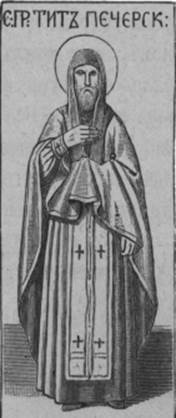
И вот еще расскажу тебе о чуде, что сам я видел», пишет блаженный Симон к Поликарпу. «Были два брата но духу, пресвитер Тит и черноризец Евагрий диакон. Тит имел искреннюю любови» к Евагрию, так что все дивились тому. Но ненавистник добра посеял вражду между ними до того, что стали они ненавидеть друг друга, не могли смотреть один на другого и старались не встречаться между собою. Когда один ходил с кадилом по храму, другой бегал от фимиама; если же последний не уходил, то тот проходил мимо его, не кадя. Так прошло много времени и они дерзали приносить св. Дары и причащаться, не примирясь и не попросив прощения. Братия старались примирить их, но они и слышать о том не хотели. Вот пресвитер Тит стал сильно больным, так что потерял и надежду выздороветь. Тогда начал он горько плакать о своем грехе и послал к Евагрию с просьбою простить его, Господа ради, за оскорбление гневом. Но тот не только не простил, но и бранил его жестокими словами. Братия, видя Тита уже умирающим, насильно привели Евагрия, чтобы простился с братом. Больной, увидев его, тотчас поднялся, упал к ногам его и со слезами говорил: «прости меня и благослови». Евагрий отворотился от брата и произнес такие слова: «не хочу проститься с ним ни в этом, ни в будущем веке». Сказав это, он вырвался из рук братии и тут же упал. Братия хотели поднять его и нашли его уже бездыханным; не могли даже ни согнуть рук, ни закрыть уст и очей его. Больной же пресвитер Тит в то же время встал и стал здоровым. Что было с тобою? спросили Тита. Я видел, говорил он, ангелов, отступивших от меня и сетующих о душе моей; а темные духи были в восторге, что в гневе не прощал я брата. И тотчас начал я просить брата о прощении. Когда привели его ко мне: увидел я ангела с пламенным копием; когда тот не захотел простить меня грешного: ангел ударил его и он пал мертвым, а мне сей ангел подал руку и исцелил меня».
"And now I will tell you also of a miracle which I myself saw," writes the blessed Simon to Polycarp. "There were two brothers in spirit, the presbyter Titus and the monk Evagrius the deacon. Titus had sincere love for Evagrius, so that all marveled at it. But the hater of good sowed enmity between them to such an extent that they began to hate each other, could not look upon one another, and tried not to meet each other. When one walked with the censer through the church, the other fled from the incense; if the latter did not depart, the former would pass by him without censing. Thus much time passed, and they dared to offer the Holy Gifts and to receive Communion, without being reconciled and without asking forgiveness. The brethren tried to reconcile them, but they would not even hear of it. Now the presbyter Titus fell grievously ill, so that he lost even hope of recovery. Then he began to weep bitterly over his sin and sent to Evagrius with a request to forgive him, for the Lord's sake, for the offense of anger. But he not only did not forgive, but also reviled him with harsh words. The brethren, seeing Titus already dying, forcibly brought Evagrius, that he might bid farewell to his brother. The sick man, seeing him, immediately rose up, fell at his feet, and said with tears: 'Forgive me and bless me.' Evagrius turned away from his brother and uttered these words: 'I will not be reconciled with him, neither in this age nor in the age to come.' Having said this, he tore himself from the hands of the brethren and immediately fell. The brethren wanted to raise him, and found him already lifeless; they could not even bend his arms, nor close his mouth and eyes. The sick presbyter Titus, at the same time, arose and became well. 'What happened to you?' they asked Titus. 'I saw,' he said, 'angels withdrawing from me and grieving for my soul; and the dark spirits were rejoicing that in my anger I did not forgive my brother. And immediately I began to ask my brother for forgiveness. When they brought him to me: I saw an angel with a fiery spear; when he did not wish to forgive me, a sinner, the angel struck him, and he fell dead, but this angel gave me his hand and healed me.'"
«Слыша это», говорит затем блаженный Симон, «мы в ужасе повторяли слова: оставите и оставится вам, яко всяк, гневайся на брата, повинен есть суду (Мф.5:22). Горе человеку, побежденному такою страстию! Блюдись ее и ты, брат мой! Не давай места гневному бесу. Кто кому покорится, тому и поработает. Поклонись враждующему против тебя, чтобы ты не был предан немилостивому ангелу. – Да сохранит тебя Господь от всякого гнева! Он сказал: солнце да не зайдет во гневе вашем»341.
"Hearing this," the blessed Simon then says, "we repeated in terror the words: 'Forgive, and it shall be forgiven you,' for 'everyone who is angry with his brother shall be liable to judgment' (Mt. 5:22). Woe to the man who is overcome by such a passion! Beware of it also, my brother! Give no place to the demon of anger. To whomsoever one submits, that one he will serve. Bow down to him who is hostile toward you, lest you be delivered over to the unmerciful angel. – May the Lord preserve you from all anger! He said: 'Let not the sun go down upon your wrath.'"341
Кальнофойский, показывая мощи почивающих в Антониевой пещере, пишет: «святый Тит, пресвитер, чудотворец, с братом своим во Христе Анастасием»342. Итак преподобный Тит вполне воспользовался уроком, преподанным ему благостию небесною. Он усвоил себе на вечность любовь, которая, по слову Апостола, есть союз совершенства (Кол.3:14). В остальное время жизни своей не опускал он случая, чтобы опытами усовершать в себе любовь, и стал чудотворцем. Мелетий Сириг в своем каноне говорит, что Тит смирением низложил беса гневного. Иначе – это значит, что смирение возвысило душу Тита до полной, самоотверженной любви, так как без смирения такая любовь – недостижима. По ркп. святцам, преп. отец иерей Тит преставися февраля 28 дня. Это было, по всей вероятности, не прежде 1190 г.343.
Kalnofoysky, showing the relics of those who repose in the Anthony Cave, writes: "St. Titus, presbyter, wonderworker, with his brother in Christ Anastasius."342 Thus our Venerable Father Titus fully profited by the lesson taught him by heavenly goodness. He made his own for eternity that love which, according to the word of the Apostle, is the bond of perfection (Col. 3:14). During the remaining time of his life he did not miss an opportunity to perfect love in himself through experience, and he became a wonderworker. Meletius Syrigus, in his canon, says that Titus cast down the demon of anger through humility. In other words, this means that humility raised the soul of Titus to full, self-sacrificing love, since without humility such love is unattainable. According to manuscript menologia, our Venerable Father, the priest Titus, reposed on February 28. This was, in all probability, not before the year 1190 A.D.343.
К обществу Боголюбцев, – повествует блаженный епископ Кирский Феодорит, – принадлежит и дивный Асклипий, отшельник и подвижник Сирийский. Говорят, что, еще живя с людьми в селении, Асклипий проводил жизнь подвижническую и воздержную, и не потерпел никакого вреда от сообщения с многими».
"To the company of the Lovers of God," relates the blessed Theodoret, Bishop of Cyrrhus, "belongs also the wondrous Asclepius, hermit and ascetic of Syria. They say that, while still living among people in the village, Asclepius led an ascetic and temperate life, and suffered no harm from association with many."
«Добродетелям его подражали многие другие, и его любомудрием исполнены не только наш город, но и соседние города и селения. Одним из таковых подражателей его был блаженный Иаков, заключившийся в небольшом домике близ селения, называемого Нимузами: до конца своей 90-летней жизни подвижник оставался заключенным один, давая ответы вопрошавшим его через небольшое отверстие, просверленное наискось, никем невидимый, никогда не употреблял огня и не пользовался светом светильника».
"Many others imitated his virtues, and not only our city, but also the neighboring cities and villages were filled with his wisdom. One such imitator of his was the blessed James, who shut himself up in a small house near a village called Nimuzai: until the end of his 90-year life the ascetic remained alone in seclusion, giving answers to those who questioned him through a small hole bored obliquely, seen by no one, never using fire nor availing himself of the light of a lamp."
Отличительными свойствами обоих подвияшиков были: кротость, страннолюбие, простота, любовь к величайшей бедности. Им доступно было болыиую часть жизни проводить в собеседовании с Богом. – Оба мирно кончили жизнь в Т веке.
The distinguishing characteristics of both ascetics were: meekness, hospitality, simplicity, and love of the greatest poverty. It was granted to them to spend the greater part of their life in converse with God. – Both peacefully ended their life in the 7th century.