Св. отца нашего Тарасия, патриарха Константинопольского
Our holy father Tarasius, Patriarch of Constantinople
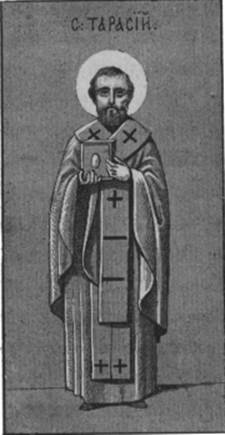
Тарасий происходил из знатного рода, получил превосходное образование, быстро возвышался по государственной службе и, будучи еще молодым человеком, занимал должность секретаря тайного совета Греческого императора и достиг звания сенатора, когда состоялось призвание его на патриаршую кафедру по следующему поводу.
Tarasius was born of a noble family, received an excellent education, and advanced rapidly in the civil service. While still a young man, he held the office of secretary of the privy council of the Greek emperor and attained the rank of senator, when his calling to the patriarchal throne took place for the following reason.
В Церкви происходили тогда иконоборческие смуты. В правление нескольких императоров-иконоборцев ересь эта значительно укрепилась. Духовная власть оказывалась бессильною в борьбе с нею. Бывший тогда в Константинополе патриарх Павел IV, который сам чествовал в тайуе иконы, не имел однакоже достаточно мужества, чтобы открыто требовать восстановления иконопочитания, и потому добровольно отказался от патриаршества, указав при этом императрице Ирине (правительнице государства во время малолетства сына ее Константина) на сенатора Тарасия, как на человека, способного заменить его и с успехом управлять Церковью в это трудное время. Все духовенство было согласно с избранием такого преемника Павлу, но сам Тарасий не считал себя достойным такого высокого сана и долго отказывался принять его. Наконец, он согласился подчиниться общему желанию и принял в 784 г. патриарший престол, но с тем только условием, чтобы созван был Вселенский собор для устранения церковного разлада и нестроения, «ибо, – говорил он, – я вижу расторгнутую Церковь Божию, распри между Востоком и Западом; обоюдную вражду там, где должно бы быть единство веры и любви». Предложение это было принято сочувственно и таким образом решено было созвать Вселенский собор, который и состоялся в Никее, в 788 г. Это и был 7-ой Вселенский собор, на котором было 367 св. отцов. Он открыл свои заседания 24-го сентября и продолжался 20 дней. Председательствовал на нем св. Тарасий. В защиту св. икон приводимы были свидетельства Священного Писания и предания, на основании которых почитание святых икон было восстановлено и ограждено составленными правилами. Положено было при этом: чествовать святые иконы и кланяться им не как Богу, но как Его и святых воспоминательному начертанию.
At that time, iconoclastic disturbances were occurring in the Church. During the reigns of several iconoclast emperors, this heresy had become considerably strengthened. The spiritual authority proved powerless in the struggle against it. The then Patriarch of Constantinople, Paul IV, who himself venerated icons in secret, did not, however, have sufficient courage to demand openly the restoration of icon veneration, and therefore voluntarily resigned the patriarchate, at the same time pointing out to the Empress Irene (the ruler of the state during the minority of her son Constantine) the senator Tarasius as a man capable of replacing him and of successfully governing the Church in this difficult time. All the clergy agreed with the choice of such a successor to Paul, but Tarasius himself did not consider himself worthy of such a high rank and long refused to accept it. Finally, he agreed to submit to the general desire and received the patriarchal throne in the year 784, but on the sole condition that an Ecumenical Council be convened to eliminate the church discord and disorder, "for," he said, "I see the Church of God rent asunder, dissension between East and West, mutual enmity where there ought to be unity of faith and love." This proposal was received sympathetically, and thus it was decided to convene an Ecumenical Council, which took place in Nicaea in the year 788. This was the Seventh Ecumenical Council, at which there were 367 holy fathers. It opened its sessions on the 24th of September and continued for 20 days. St. Tarasius presided over it. In defense of the holy icons, testimonies from Holy Scripture and Tradition were adduced, on the basis of which the veneration of holy icons was restored and safeguarded by the canons that were composed. It was decreed at this time: to honor the holy icons and to bow down to them, not as to God, but as to a memorial representation of Him and of the saints.
В Деяниях Вселенского собора помещены, между прочим, и два послания патриарха Тарасия к папе Римскому Адриану; в первом из них, упомянув о препятствиях, бывших для соединения собора и состоявших, между прочим, в обнаружении папою честолюбивых притязаний, Тарасий пишет «святейшему и блаженнейшему брату и сослужителю епископу Римскому»: «Наконец пришли все епископы в город Никею, с легатами Рима и наместниками восточными, и всем сидящим на соборе благорассудилось избрать главою – Самого Христа; на святом престоле было положено Евангелие, которое и внушило всем собравшимся судить правый суд. Мы повелели наперед по некоторому преимуществу прочесть письмо твоей святыни, потом грамоты восточных патриархов. Христос, Бог наш, сущий камень, на коем мы утверждены, не позволил далее быть расторгнутым Своему нетленному хитону, т. е. Своей Кафолической Церкви, Им и на Нем основанной».
In the Acts of the Ecumenical Council are included, among other things, two epistles of Patriarch Tarasius to Pope Adrian of Rome; in the first of them, having mentioned the obstacles to the convening of the council, which consisted, among other things, in the pope's manifestation of ambitious claims, Tarasius writes to "the most holy and most blessed brother and fellow-servant, the Bishop of Rome": "Finally, all the bishops came to the city of Nicaea, together with the legates of Rome and the vicars of the East, and it seemed good to all sitting in council to choose as Head—Christ Himself; upon the holy throne was placed the Gospel, which inspired all those assembled to judge righteous judgment. We ordered that, by a certain precedence, the letter of your holiness be read first, then the letters of the Eastern patriarchs. Christ, our God, who is the stone upon which we are founded, did not permit His incorruptible tunic, that is, His Catholic Church, founded by Him and upon Him, to be further rent asunder."
Таким образом был положен конец иконоборной ереси осуждением ее на Вселенском соборе, достигнуто было соглашение и по другим предметам веры и установлений церковных. Святой Тарасий предался тогда всецело деятельности по управлению своей паствы. Перейдя из светского в духовное звание, он начал вести жизнь еще более строгую; отказался от малейшей роскоши, все имение употребил в пользу нуждающихся; устроил больницы, сам служил больным; заводил богадельни. Принимал с любовию всех приходящих к нему, со вниманием выслушивал их; ходатайствовал за них и защищал обиженных.
Thus an end was put to the iconoclastic heresy by its condemnation at the Ecumenical Council, and agreement was reached also on other matters of faith and church institutions. St. Tarasius then devoted himself entirely to the activity of governing his flock. Having passed from the secular to the spiritual estate, he began to lead an even more strict life; he renounced the least luxury, used all his property for the benefit of the needy; he established hospitals, himself served the sick; he founded almshouses. He received with love all who came to him, listened to them attentively; he interceded for them and defended the wronged.
Не смотря на знатность своего рода и сана, вел жизнь самую простую, одевался просто, не допуская даже никого прислуживать себе при одевании; сам служил всем по мере возможности, во исполнение слов Спасителя: «Сын Человеческий не для того пришел, чтобы Ему служили, но чтобы послужить»... (Мф.20:28).
Notwithstanding the nobility of his lineage and rank, he led a most simple life, dressed plainly, not even permitting anyone to serve him while he dressed; he himself served everyone as much as possible, in fulfillment of the Savior's words: "The Son of Man came not to be served, but to serve" (Mt. 20:28).
Святитель Тарасий постоянно поучал и словами и письменными посланиями, и сам служил для всех образцом благочестивой жизни. С твердостию стоял он за истину, не боясь навлечь на себя злобу великих и сильных мира; не уклонился от правды, когда пришлось высказать ее самому императору. Обличил Константина (VI, 780–797), когда он, под влиянием страсти к одной своей родственнице, захотел жениться на ней и ради того развестись с своею женою Мариею (внучкою св. Филарета Милостивого)338, но, чтобы оправдать свой незаконный поступок, прибегнул к клевете на жену свою, обвинив ее в намерении отравить его. Слух об этом распространился в народе; никто не смел опровергать его. Один только патриарх Тарасий, когда император послал к нему одного из сановников с поручением сообщить ему об этом его семейном деле и просить благословения на новый брак, с негодованием восстал против намерений царя и возразил ему через посланного смелым обличением: «Не знаю я, как государь будет требовать от подданных своих, чтобы они жили честно и целомудренно, после того, как он им подает такой пример. Царица невинна, – я в этом уверен, и скорее умру, чем дам благословение на новый брак. Вот ответ мой; так будет отвечать и все духовенство. Донеси это царю».
The Hierarch Tarasius constantly taught both by words and by written epistles, and himself served as an example of a pious life for all. He stood firmly for the truth, not fearing to incur the wrath of the great and powerful of this world; he did not turn aside from the truth when it became necessary to speak it to the emperor himself. He rebuked Constantine (VI, 780–797) when he, under the influence of passion for one of his own relatives, wished to marry her and for that reason to divorce his wife Mary (the granddaughter of St. Philaret the Merciful)338, but, in order to justify his unlawful act, resorted to slander against his wife, accusing her of intending to poison him. A rumor of this spread among the people; no one dared to refute it. Only Patriarch Tarasius, when the emperor sent one of his dignitaries to him with the commission to inform him of this family matter and to ask for a blessing on the new marriage, rose with indignation against the emperor's intentions and replied to him through the envoy with a bold rebuke: "I do not know how the sovereign will demand of his subjects that they live honestly and chastely, after he gives them such an example. The empress is innocent—of this I am certain, and I would rather die than give a blessing for a new marriage. This is my answer; so will all the clergy answer. Report this to the emperor."
Опасаясь действовать против одобрения всеми уважаемого патриарха, Константин надеялся личным объяснением убедить его и расположить в свою пользу. Но призванный к нему патриарх Тарасий, вместе со старцем Иоанном, не склонился ни на какие доводы его и с неуклонною прямотою отвечал ему:
Fearing to act against the approval of the universally respected patriarch, Constantine hoped by a personal interview to convince him and win him over. But Patriarch Tarasius, summoned to him together with the elder John, did not yield to any of his arguments and answered him with unwavering directness:
«Не восставай, государь, против закона Божия! не борись тайным коварством против истины! Государю подобает действовать открыто, свободно, с чистою совестию, и не замышлять втайне против закона Господнего! Ты знаешь, как и все, невинность царицы и клеветою срамишь скипетр свой царский. Я потому и не разрешу законного супружества твоего и на беззаконный брак не дам своего благословения. Можно ли будет уважать тебя, когда ты явно преступишь заповедь Божию? Можно ли будет тебе причаститься св. Таин вместе с другими? Я перед Богом говорю тебе: хотя ты и царь, но я не допущу тебя к алтарю для причащения святых Христовых Таин, ибо в св. Писании сказано иереям: не дадите попрать алтаря Моего».
"Do not rise up, O sovereign, against the law of God! Do not fight against the truth with secret cunning! It befits a sovereign to act openly, freely, with a pure conscience, and not to plot in secret against the law of the Lord! You know, as does everyone, the innocence of the empress, and by slander you disgrace your royal scepter. Therefore I will not dissolve your lawful marriage, nor will I give my blessing for an unlawful one. Will it be possible for you to be respected when you openly transgress the commandment of God? Will it be possible for you to partake of the Holy Mysteries together with others? I say to you before God: although you are emperor, I will not admit you to the altar for the communion of the Holy Mysteries of Christ, for it is written in Holy Scripture to the priests: 'Do not allow My altar to be trampled upon.'"
К сожалению, увещания почтенных старцев не образумили, но только раздражили императора, и он с бесчестием велел их выгнать из дворца, и вопреки церковных законов дал удовлетворение своей страсти – удалил жену свою Марию в монастырь, а сам женился на своей близкой родственнице Феодотии. Нашелся один пресвитер Иосиф, который благословил этот противозаконный брак.
Unfortunately, the admonitions of the venerable elders did not bring the emperor to reason, but only angered him, and he ordered them to be driven out of the palace with dishonor, and contrary to the church canons, he satisfied his passion—he sent his wife Mary away to a monastery, and himself married his close relative Theodote. There was found one presbyter, Joseph, who blessed this unlawful marriage.
Святитель Тарасий не прибегал к расторжению этого брака, опасаясь, чтобы Константин не решился в отмщение за это воздвигнуть вновь иконоборство. Но он отстранился от императора; предался исключительно занятиям по управлению церковными делами и с терпением переносил враждебные отношения к нему Константина.
The Hierarch Tarasius did not resort to the dissolution of this marriage, fearing that Constantine might decide, in revenge for this, to stir up iconoclasm anew. But he held himself aloof from the emperor; he devoted himself exclusively to the administration of church affairs and patiently endured Constantine's hostile attitude toward him.
Впрочем Константин царствовал недолго. Ирина снова сделалась правительницею государства. С того времени Тарасий мирно управлял своею паствою и скончался в глубокой старости, уже при императоре Никифоре Патриции, около 806 года, быв патриархом в продолжение 22-х лет. Он был горько оплакиваем народом, чтившим его в особенности за его милосердие.
However, Constantine did not reign long. Irene again became the ruler of the state. From that time, Tarasius peacefully governed his flock and reposed in extreme old age, already under the Emperor Nicephorus Patricius, around the year 806, having been patriarch for twenty-two years. He was bitterly lamented by the people, who honored him especially for his mercy.
Тело его было предано погребению в созданном им монастыре, посвященном всем мученикам, в Стене Понтийском. Господь прославил его многими чудесными исцелениями, совершившимися при гробе его. Замечателен, между прочим, рассказ, свидетельствующий, что и по смерти своей святитель Тарасий бодрствовал о соблюдении иконопочитания и наказывал еретиков – иконоборцев. Так, когда Лев Армянин, сделавшись императором несколько лет спустя по смерти св. Тарасия, снова вооружился против почитателей св. икон, то однажды во сне увидел он св. Тарасия, который, указывая на него, приказывал убить его одному воину, Михаилу, и тот нанес ему смертельный удар мечем... Встревоженный этим сновидением Лев посылал в монастырь св. Тарасия разузнавать, не скрывается ли там воин Михаил... не подозревая того, что св. Тарасий предупреждал его во сне о Михаиле Вальосе, одном из военачальников, который действительно умертвил Льва в самый день Рождества Христова...
His body was committed to burial in the monastery he had founded, dedicated to all the martyrs, in the district of the Pontian Wall. The Lord glorified him with many miraculous healings that took place at his tomb. Remarkable, among other things, is the account testifying that even after his death the Hierarch Tarasius watched over the preservation of icon veneration and punished the heretical iconoclasts. Thus, when Leo the Armenian, having become emperor several years after the death of St. Tarasius, again armed himself against the venerators of the holy icons, he once saw in a dream St. Tarasius, who, pointing at him, ordered a certain soldier, Michael, to kill him, and that soldier dealt him a mortal blow with his sword... Troubled by this dream, Leo sent to the monastery of St. Tarasius to find out whether the soldier Michael was hiding there... not suspecting that St. Tarasius was warning him in the dream about Michael Balbus, one of the military commanders, who indeed killed Leo on the very day of the Nativity of Christ...
Жизнь патриарха Тарасия описана епископом Никейским Игнатием, который был близок к нему; в юности учился у него поэзии и присутствовал при его последних минутах. – Видом св. Тарасий походил на св. Григория Богослова.
The life of Patriarch Tarasius was written by Ignatius, Bishop of Nicaea, who was close to him; in his youth he studied poetry under him and was present at his final moments. In appearance, St. Tarasius resembled St. Gregory the Theologian.