Св. священномученика Поликарпа, еп. Смирнского
St. Hieromartyr Polycarp, Bishop of Smyrna
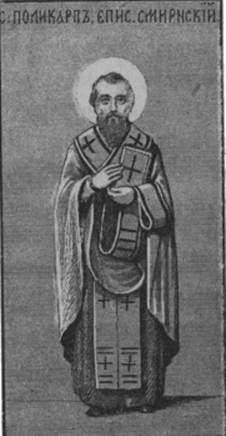
В продолжение долголетней жизни своей св. Апостол Иоанн Богослов образовал многочисленных учеников, которые деятельно содействовали к распространению Евангельского учения. – Таких благовествователей, принявших учение о Христе непосредственно от Апостолов, церковная история именует «мужами Апостольскими». Одним из известнейших между ними и просиявших во всем мире высокою христианскою жизнью и мученическою кончиною был один из любимых учеников св. Апостола Иоанна Богослова, слушавший и других Апостолов, св. Поликарп, епископ Смирнский.
During the course of his long life, St. John the Theologian formed numerous disciples who actively labored for the spread of the Gospel teaching. – Such evangelists, who received the teaching about Christ directly from the Apostles, Church history calls "Apostolic men." One of the most renowned among them, who shone throughout the whole world by his lofty Christian life and martyr's death, was a beloved disciple of St. John the Theologian, who also heard the other Apostles: St. Polycarp, Bishop of Smyrna.
Первое воспитание свое получил он в Смирне – в доме одной благочестивой и богатой вдовы Каллисты, которая, не имея своих детей, приютила у себя этого осиротевшего отрока. Он оказался вполне достойным этого благодеяния, так как с самого детства был замечательно добр и благочестив. Каллиста полюбила его, как сына, и когда он достиг совершеннолетия, то она поручила ему управление всем своим домом; умирая же, сделала его наследником всего своего имения. Но земные блага не привлекали к себе души юноши, и не терпело сердце его, чтобы жить в изобилии, когда вокруг себя он встречал многочисленных бедняков, не имевших даже необходимого. Блаженный Поликарп немедленно употребил имение свое в пользу нуждающихся, а сам предался строгому воздержанию среди занятий своих, состоявших в изучении св. Писания, в молитве и служении больным и престарелым.
He received his first upbringing in Smyrna, in the home of a certain pious and wealthy widow named Callista, who, having no children of her own, took in this orphaned youth. He proved fully worthy of this kindness, for from earliest childhood he was remarkably good and pious. Callista loved him as a son, and when he came of age, she entrusted him with the management of her entire household; dying, she made him heir of all her property. But earthly goods did not attract the soul of the youth, and his heart could not bear to live in abundance when around him he saw many poor people who lacked even necessities. Blessed Polycarp immediately used his property for the benefit of the needy, while he himself gave himself over to strict abstinence amidst his occupations, which consisted of studying Holy Scripture, prayer, and serving the sick and the elderly.
Бывший тогда в Смирне епископ Вукол, поставленный самим учителем своим – св. Апостолом Иоанном, обратил внимание на этого благочестивого юношу. Обращенного из язычества Поликарпа (что видно из следующих слов его позднейшего послания к Филиппийцам: «тогда еще не знал я Бога, когда вы, наученные Павлом, познали Его») епископ Вукол, видя его ревностную веру, поставил сначала клириком, потом диаконом. Самые Апостолы Павел и Иоанн Богослов, проповедовавшие тогда в Малой Азии, полюбили Поликарпа. Он был им учеником, подражателем их жизни, сообщником в трудах, сопровождая их во многие города Малой Азии и помогая распространять учение Христово. По воле св. Апостолов св. Вукол, по возвращении Поликарпа в Смирну, рукоположил его во священники. В этом сане он ревностно проповедовал народу, рассказывал слышанное им от возлюбленного ученика Господня Иоанна о жизни и чудесах Спасителя, объяснял закон, написал много посланий Церкви Христовой и с успехом обращал к Господу души язычников.
The bishop then in Smyrna, Bucolus, who had been appointed by his own teacher, St. John the Apostle, took notice of this pious youth. Polycarp had been converted from paganism (as is evident from the following words of his later epistle to the Philippians: "I did not yet know God at that time when you, taught by Paul, came to know Him"). Bishop Bucolus, seeing his fervent faith, first appointed him a cleric, then a deacon. The Apostles Paul and John the Theologian themselves, who were then preaching in Asia Minor, came to love Polycarp. He was their disciple, an imitator of their life, and a companion in their labors, accompanying them to many cities of Asia Minor and helping to spread the teaching of Christ. By the will of the holy Apostles, St. Bucolus, upon Polycarp's return to Smyrna, ordained him a priest. In this rank he zealously preached to the people, recounted what he had heard from the beloved disciple of the Lord, John, about the life and miracles of the Savior, explained the law, wrote many epistles to the Church of Christ, and successfully turned the souls of pagans to the Lord.
По смерти епископа Смирнского Вукола, «св. Поликарп, собеседник Апостолов, рукоположен был на епископию Смирнской Церкви очевидцами и слугами Господа»330.
After the death of Bucolus, Bishop of Smyrna, "St. Polycarp, the companion of the Apostles, was ordained to the bishopric of the Church of Smyrna by eyewitnesses and ministers of the Lord."330
Вскоре сделался он самым уважаемым епископом Малой Азии. О святой жизни его упоминает в посланиях своих друг его, св. Игнатий Богоносец. – Подражая примеру Иоанна – Апостола любви, Поликарп и в частной жизни своей, и в общественной деятельности, отличался в особенности милосердием, благотворил даже врагам веры – язычникам, которые поэтому почитали его.
Soon he became the most respected bishop of Asia Minor. His holy life is mentioned in the epistles of his friend, St. Ignatius the God-bearer. – Imitating the example of John, the Apostle of love, Polycarp, both in his private life and in his public activity, was distinguished especially by mercy; he did good even to enemies of the faith, the pagans, who therefore honored him.
Словом, и собственным примером, и чудотворениями утверждая в вере Христовой, св. Поликарп также ревностно охранял чистоту христианской веры, неутомимо преследуя ложные учения еретические. Впрочем, когда дело не касалось существенных основ веры, то тот же строгий охранитель истины остерегался и избегал нарушения мирных отношений с теми, кто различно от его мнений относился к некоторым, несущественным сторонам предмета, сохраняя во всяком случае христианскую любовь и общение. Например, он не только что не расторг союза о Римским епископом Аникитою по поводу разногласия, возникшего между ними по вопросу о времени празднования Пасхи, но употребил все старания, чтобы усмирить возбужденное при этом среди верных волнение. Будучи уже в преклонных летах, он нарочно ездил в Рим для совещаний по этому вопросу с епископом Аникитою, и хотя это совещание не привело к соглашению между пастырями, тем не менее спор был решен в духе мира и любви христианской, а именно, предоставлена была каждой Церкви свобода сохранить свое местное обыкновение, действовавшее не в ущерб самого догмата.
In a word, confirming others in the faith of Christ both by his own example and by miracles, St. Polycarp also zealously guarded the purity of the Christian faith, tirelessly pursuing false heretical teachings. However, when the matter did not touch the essential foundations of the faith, this same strict guardian of truth was careful to avoid violating peaceful relations with those who differed from his opinions on certain non-essential aspects of a subject, preserving in every case Christian love and communion. For example, he not only did not break off communion with the Roman bishop Anicetus over the disagreement that arose between them concerning the time of celebrating Pascha, but he used every effort to calm the disturbance stirred up among the faithful over this matter. Being already advanced in years, he purposely traveled to Rome for consultations on this question with Bishop Anicetus, and although this consultation did not lead to agreement between the pastors, nevertheless the dispute was resolved in a spirit of Christian peace and love, namely, each Church was granted the freedom to preserve its own local custom, which operated to the detriment of no dogma.
Между тем, во время пребывания Поликарпа в Риме, ему пришлось вступить в борьбу с действительным злом, а именно, с возникшею тогда в Церкви ересию, и он успешно действовал против последователей Валентина и Маркиана; многих из них обратил к православию и самого Маркиана строго обличил, когда, встретившись с ним однажды случайно, на дерзкое к нему обращение Маркиана со словами:
Meanwhile, during Polycarp's stay in Rome, he had to enter into struggle with a real evil, namely, the heresy that had then arisen in the Church, and he acted successfully against the followers of Valentinus and Marcion; he converted many of them to Orthodoxy and sternly rebuked Marcion himself when, meeting him once by chance, Marcion boldly addressed him with the words:
– Узнай нас!... – епископ отвечал: – «знаю тебя, первенца сатаны»...
– "Recognize us!..." The bishop replied: "I recognize you, the firstborn of Satan"...
Благодать Божия видимо пребывала на добродетельном служителе Церкви – Поликарпе; силою ее совершал он многие чудотворения, которыми утверждал благовествуемую им веру. Таким образом исцелил он от беснования слугу начальника города, остановил в городе опустошительный пожар, прекратил бездождие. Сам был охраняем чудною силою Божиею. Однажды, когда он путешествовал и остановился на ночной отдых в гостинице, то вдруг пробужден был видением Ангела, который приказал ему немедленно покинуть гостиницу, и едва успел он выйти из нее, как она обрушилась...
The grace of God visibly abode upon the virtuous servant of the Church, Polycarp; by its power he performed many miracles, by which he confirmed the faith he preached. Thus he healed the servant of the city prefect from demonic possession, stopped a devastating fire in the city, and ended a drought. He himself was protected by the wondrous power of God. Once, when he was traveling and stopped for a night's rest at an inn, he was suddenly awakened by a vision of an Angel, who commanded him to leave the inn immediately; and scarcely had he gone out of it when it collapsed...
Многие годы мудро и благодатно епископствовал св. Поликарп в Смирнской Церкви. В это время христиане подвергались частым преследованиям; наконец, в 167 году, когда святитель достиг уже глубокой старости, возникло при императоре Марке Антонине новое, сильнейшее гонение на христиан в Малой Азии. Множество христиан умирало в страшных мучениях; настало время мученического подвига и для светоносного столпа Церкви Христовой – св. Поликарпа. Озлобленные против него, как против могущественного проповедника веры Христовой – язычники и в особенности Иудеи неотступно стали требовать, чтобы он был предан суду.
For many years St. Polycarp wisely and graciously served as bishop of the Church of Smyrna. During this time Christians were subjected to frequent persecutions; finally, in the year 167, when the hierarch had already reached extreme old age, a new and more violent persecution of Christians arose in Asia Minor under the Emperor Marcus Antoninus. A multitude of Christians died in terrible torments; the time of martyrdom had come also for the luminous pillar of the Church of Christ, St. Polycarp. Embittered against him as a powerful preacher of the faith of Christ, the pagans, and especially the Jews, insistently demanded that he be brought to trial.
Святитель не боялся смерти и с невозмутимым спокойствием ожидал, чтобы ему предстать исповедником Бога своего. Но христиане, для которых дорога была жизнь благого учителя их, убеждали его удалиться из города и приютиться в безопасном месте, пока не стихнет ожесточенный порыв язычников против христиан, пока не прекратится преследование... Св. Поликарп уступил желанию и мольбам паствы своей и действительно укрылся в одном селении, имея в виду также и необходимость поддерживать в вере и терпении гонимых христиан. Проводя здесь большую часть времени в молитве, он однажды предупрежден был видением, что мученический конец его близок. Ему представилось, что изголовье его пылает огнем.... и он спокойно сказал тогда бывшим при нем: «я буду сожжен за имя Господа Иисуса».
The hierarch did not fear death and with imperturbable calm awaited the moment to appear as a confessor of his God. But the Christians, to whom the life of their good teacher was precious, urged him to leave the city and take refuge in a safe place until the fierce outburst of the pagans against the Christians should subside, until the persecution should cease... St. Polycarp yielded to the desire and entreaties of his flock and indeed hid himself in a certain village, having in view also the necessity of supporting the persecuted Christians in faith and patience. Spending most of his time here in prayer, he was one day warned by a vision that his martyr's end was near. It seemed to him that his pillow was ablaze with fire... and he calmly said to those who were with him: "I shall be burned for the name of the Lord Jesus."
Действительно, вскоре после этого видения убежище старца Поликарпа было открыто. Когда воины, посланные из Смирны, чтобы взять его, прибыли в селение, где он находился, то, сказав: «да будет воля Господа моего!» святитель сам пошел к ним на встречу. Воины поражены были величественным, неземным спокойствием старца и не осмелились наложить на него руки.
Indeed, soon after this vision the refuge of the elder Polycarp was discovered. When the soldiers sent from Smyrna to take him arrived at the village where he was, he said, "Let the will of my Lord be done!" and the hierarch himself went out to meet them. The soldiers were struck by the majestic, unearthly calm of the elder and did not dare to lay hands on him.
Поликарп с кротостию обратился к ним, предложил им подкрепить себя нищею и попросил у них час времени для молитвы. Излив свою душу пред Господом и восприняв благодатные дары молитвы, праведник вышел к воинам, которые посадили его на осла и повезли в Смирну.
Polycarp turned to them with meekness, offered them food to refresh themselves, and asked them for an hour's time for prayer. Having poured out his soul before the Lord and received the gracious gifts of prayer, the righteous man went out to the soldiers, who seated him on a donkey and brought him to Smyrna.
Едва вступил св. Поликарп в, амфитеатр, как сам он и предстоявшие услышали голос с неба: «мужайся, Поликарп!»
Scarcely had St. Polycarp entered the amphitheater when he and those present heard a voice from heaven: "Be strong, Polycarp!"
Проконсул потребовал, чтобы Поликарп отрекся от Христа и произнес хулу на Него.
The proconsul demanded that Polycarp deny Christ and utter blasphemy against Him.
Восемьдесят шесть лет служу я Христу, – отвечал старец, – и Он ничем не оскорбил меня. Как могу я хулить Царя моего, Который меня спас!
"For eighty-six years I have served Christ," replied the elder, "and He has done me no wrong. How can I blaspheme my King, Who has saved me!"
У меня есть звери, – сказал проконсул, – если ты не образумишься, то я велю бросить тебя на съедение им...
"I have wild beasts," said the proconsul, "if you do not come to your senses, I will order you to be thrown to them to be devoured..."
Делай, что хочешь, – отвечал Поликарп, – я все-таки не променяю добрых мыслей на худые...
"Do what you will," answered Polycarp, "I will still not exchange good thoughts for evil ones..."
Ты не боишься зверев? так я предам тебя огню...
"You are not afraid of beasts? Then I will consign you to the fire..."
Ты грозишь мне огнем угасающим, а сам не ведаешь, что есть огонь неугасимый для неверующих и совершающих беззакония...
"You threaten me with a fire that burns out, but you do not know that there is an unquenchable fire for the unbelieving and those who commit lawlessness..."
Судья велел провозгласить: Поликарп – христианин! – И тогда язычники и Иудеи стали с яростию требовать его казни, крича: «это – развратитель всей Азии, отец христиан, истребитель наших богов... Да будет он сожжен!» И поспешно стали собирать хворост и разводить костер. В это время мучители готовили железо и гвозди, чтобы приковать к костру святителя, но Поликарп сказал им: «оставьте меня, – Тот, Кто дает мне силу терпеть огонь, даст силу быть на костре и без гвоздей неподвижным».
The judge ordered the proclamation: "Polycarp is a Christian!" – And then the pagans and Jews began with fury to demand his execution, crying out: "This is the corrupter of all Asia, the father of the Christians, the destroyer of our gods... Let him be burned!" And they hastily began to gather brushwood and kindle a fire. At this time the tormentors prepared iron and nails to fasten the hierarch to the pyre, but Polycarp said to them: "Leave me; He Who gives me strength to endure the fire will give me strength to remain on the pyre unmoved even without nails."
Взойдя на костер, св. Поликарп устремил взор свой на небо и громогласно воскликнул: «Отец возлюбленного и препрославленного Сына Твоего, через Которого мы получили познание о Тебе! За все хвалю Тебя, благословляю Тебя вместе с вечным и пренебесным Иисусом Христом, возлюбленным Твоим Сыном, с Которым Тебе и Святому Духу слава и ныне и в будущие веки. Аминь».
Ascending the pyre, St. Polycarp fixed his gaze on heaven and cried out with a loud voice: "Father of Thy beloved and most glorified Son, through Whom we have received knowledge of Thee! For all things I praise Thee, I bless Thee, together with the eternal and heavenly Jesus Christ, Thy beloved Son, with Whom to Thee and the Holy Spirit be glory both now and unto the ages to come. Amen."
Между тем, как молитвы праведника, стоящего среди пламени, возносятся к Богу, – как бы в знамение Божественного отзыва на молитву его, – совершается чудо... Пламя, воздымаясь все выше и выше, образует над молящимся подобие свода, не касаясь тела его... Предавший тело свое огню, но возносящийся всею душою своею к Богу, стоит невредим...
Meanwhile, as the prayers of the righteous man standing in the midst of the flame ascend to God, as if in token of the Divine response to his prayer, a miracle takes place... The flame, rising higher and higher, forms above the one praying a kind of vault, not touching his body... He who has given his body to the fire, but is ascending with all his soul to God, stands unharmed...
Но разве могут видеть слепые? Разве могут быть тронуты ожесточенные сердца? Дивное совершается, но не поражает, не трогает неведающих Бога, – только смущает и раздражает их... Толпа вопиет, чтобы палач оружием своим сквозь пламень пронзил сердце исповедника... И вот, длинное копие пронзает святое тело его... Обильно хлынула мученическая кровь, так обильно, что... залила костер...
But can the blind see? Can hardened hearts be moved? A wonder is wrought, yet it does not strike, does not touch those who know not God—it only confuses and irritates them... The crowd cries out that the executioner, with his weapon, pierce the heart of the confessor through the flame... And lo, a long spear pierces his holy body... The martyr’s blood gushes forth abundantly, so abundantly that it... floods the pyre...
Чудным образом залито, погашено разгоревшееся пламя, но ничему не угасить разгоревшейся ненависти людей, в сердце которых нет истинного Бога Живаго... Иудеи просят судью, чтобы он велел сжечь пораженное убийственным копьем тело мученика... Они боятся, чтобы христиане не почтили его, как Бога.
The blazing flame is wondrously flooded and extinguished, but nothing can quench the blazing hatred of men in whose heart there is no true Living God... The Jews ask the judge to order the body of the martyr, struck by the deadly spear, to be burned... They fear that the Christians might honor him as God.
«Не знают они (Иудеи и язычники), что мы не можем отступить от Христа, пострадавшего за спасение всех, и поклоняться кому-либо другому», – так пишут очевидцы страданий св. Поликарпа в письме их ко всем Церквам. – «Ему мы поклоняемся, как Сыну Божию; а мучеников достойно любим, как учеников и подражателей Господа; любим за их неизменную приверженность к своему Царю и Учителю».
“They know not (the Jews and pagans) that we cannot depart from Christ, Who suffered for the salvation of all, and worship any other,”—thus write the eyewitnesses of the sufferings of St. Polycarp in their letter to all the Churches.—“Him we worship as the Son of God; but the martyrs we worthily love as disciples and imitators of the Lord; we love them for their unchanging devotion to their King and Teacher.”
«Сотник же, по повелению судьи, сжег тело Поликариа, – продолжают письмо свое Смирнские христиане, – мы же собрали от пепла кости его, драгоценнейшие злата и многоценных камней, и схоронили в чистом месте, где будем с веселием праздновать день его страданий, в память тех, которые пострадали за Христа, и в укрепление тем, которые такою же смертию будут исповедовать и прославлять Христа, истинного Бога нашего. Сие посылаем вам через брата Марка; когда прочтете, то доставьте сие послание прочим братиям, да и они прославят Бога, показавшего нам такого верного избранника и могущего и нас исполнить Своею благодатию и ввести в вечное царство Свое Сыном Своим Единородным Иисусом Христом, Емуже слава, и честь, и царство, и величество во веки, аминь».
“The centurion, by order of the judge, burned the body of Polycarp,”—continue the Christians of Smyrna in their letter,—“and we gathered his bones from the ashes, more precious than gold and costly stones, and buried them in a pure place, where we shall with joy celebrate the day of his sufferings, in memory of those who suffered for Christ, and for the strengthening of those who by such a death shall confess and glorify Christ, our true God. This we send to you through brother Mark; when you have read it, deliver this epistle to the other brethren, that they also may glorify God, Who has shown us such a faithful chosen one, and Who is able to fill us also with His grace and bring us into His eternal kingdom through His Only-begotten Son Jesus Christ, to Whom be glory, honor, kingdom, and majesty forever, amen.”
Из этого письма видно, что уже во II веке был обычай у христиан записывать, каким образом страдали и кончались мученики. К сожалению, таких записей, которыми одна Церковь оповещала другую, сохранилось немного, так как неверующие старались истреблять всякие христианские рукописи.
From this letter it is evident that already in the second century there was a custom among Christians to record how the martyrs suffered and ended their lives. Unfortunately, few such records, by which one Church informed another, have been preserved, since the unbelievers strove to destroy all Christian manuscripts.
После св. епископа Поликарпа сохранилось послание его к Филадельфийцам и предсмертная молитва, записанная свидетелями мученичества его. В послании своем он убеждает христиан усовершаться в вере «в Того, Которому все покорно, Которому все дышащее служит, Который придет судить живых и мертвых», убеждает их к твердости и терпению примером Того, «Который все потерпел за нас, чтобы нам жить в Нем», и примером исповедников веры.
After St. Bishop Polycarp, his epistle to the Philadelphians and his final prayer, recorded by witnesses of his martyrdom, have been preserved. In his epistle he exhorts Christians to perfect themselves in faith “in Him to Whom all things are subject, Whom every living thing serves, Who shall come to judge the living and the dead,” exhorts them to steadfastness and patience by the example of Him “Who suffered all things for us, that we might live in Him,” and by the example of the confessors of the faith.
Ириней, ученик св. Поликарпа, свидетельствует, что св. Поликарп «писал послания то к целым Церквам для их укрепления, то к некоторым братиям, преподавая им наставление и увещание».
Irenaeus, the disciple of St. Polycarp, testifies that St. Polycarp “wrote epistles, sometimes to whole Churches for their strengthening, sometimes to certain brethren, giving them instruction and exhortation.”
«Могу пересказать беседы его с народом», – пишет также св. Ириней, – «как припоминал он слова Апостолов, как и что слышал от них о Господе, и все его сказания согласны были с Писанием... Как он и в самой старости твердо помнил, что слышал от очевидцев Слова, и с любовию рассказывал ученикам своим, что видел и слышал у возлюбленного Иоанна».
“I can recount his conversations with the people,”—writes also St. Irenaeus,—“how he recalled the words of the Apostles, how and what he heard from them about the Lord, and all his sayings were in agreement with the Scriptures... How even in his old age he firmly remembered what he heard from the eyewitnesses of the Word, and with love told his disciples what he saw and heard from the beloved John.”
О посланиях св. Поликарпа св. Ириней говорит, что «заботливые о своем спасении могут видеть в них характер веры святителя и проповедь об истине».
Concerning the epistles of St. Polycarp, St. Irenaeus says that “those who care for their salvation may see in them the character of the Hierarch’s faith and the preaching of the truth.”