Уроженец Митилены Арменской, Мелетий около 357 г. избран на кафедру Севастийскую, но в 361 году Антиохийцы пригласили его к себе после того, как Мелетий удалился из Севастии по причине беспокойного духа Севастийцев. Впрочем и в Антиохии недолго прожил; после проповеди на слова: Господь созда Мя начало путей Своих в дела Своя (Притч.8:22), где показал, что тут говорится не о творении, а о новом виде домостроительства Божия, православие его явно стало всем, и ариане, окружавшие императора Констанция, побудили его изгнать Мелетия и заместить его арианином. Верные Мелетию собирались в так называемую «старую церковь», а иные, хотя и не отрекались от православия, составили особое общество и назывались «евстафианами», как ученики архиепископа Евстафия, скончавшегося в изгнании; они имели и своего епископа. По смерти Констанция Мелетий возвратился было, но изгнан Юлианом. Возвращенный Иовианом в 363 г., написал «Изложение веры» и многих ариан возвратил в православие. Валент в 372 году снова изгнал его. Возвращенный 378 года при Грациане, он отправился в 380 году на Второй Вселенский собор в Константинополь и был его председателем, но в феврале 381 года скончался, до окончания собора. Мощи его перенесены были из Константинополя в Антиохию.
A native of Armenian Mitylene, Meletius was elected to the See of Sebaste around the year 357, but in 361 the people of Antioch invited him to themselves after Meletius had withdrawn from Sebaste on account of the restless spirit of the Sebastenes. However, he did not live long even in Antioch; after a sermon on the words: The Lord created Me the beginning of His ways for His works (Prov. 8:22), in which he showed that this speaks not of creation, but of a new form of the divine dispensation, his Orthodoxy became manifest to all, and the Arians who surrounded the Emperor Constantius moved him to exile Meletius and replace him with an Arian. The faithful who remained with Meletius gathered in the so-called "old church," while others, though they did not renounce Orthodoxy, formed a separate community and were called "Eustathians," as disciples of Archbishop Eustathius, who had died in exile; they also had their own bishop. After the death of Constantius, Meletius returned for a time, but was exiled by Julian. Restored by Jovian in 363, he wrote an "Exposition of the Faith" and brought many Arians back to Orthodoxy. Valens again exiled him in 372. Restored in 378 under Gratian, he set out in 380 for the Second Ecumenical Council in Constantinople and was its president, but reposed in February of 381, before the council ended. His relics were translated from Constantinople to Antioch.
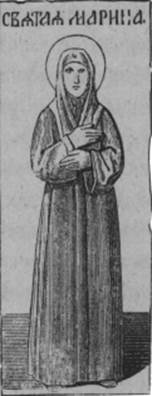
В Вифинии жил благочестивый человек Евгений192. Похоронив жену свою, он решился оставить мир. У него была маленькая дочка и значительное имение. То и другое поручил они надзору верного друга. Поселявшись в обители, стоявшей в 32 милях от города Александрии, он выполнял здесь послушание с любовию, и настоятель любил его более, чем других, как верного и усердного раба Божия. Спустя некоторое время, любовь отца привела на мысль его дочь, и он стал печалиться. Настоятель, заметив скорбь его, спросил его: о чем он печалится? «У меня осталось юное дитя в доме», отвечал отец. «Что же? возьми его сюда с собою», сказал настоятель, не знавший и не дознавшийся, что это дочь, а не сын. Евгений явился в дом. Девочка, после восторгов радости о свидании с отцом, объявила, что и она не желает оставаться в мире, но не хочет расставаться и с отцом. «Что ж делать нам? говорил отец; девочке не позволят жить в мужском монастыре». Она отвечает, что «острижет волосы свои и оденется в одежду послушника и так будет трудиться в монастыре». Отец и дочь роздали имение свое нищим; дочь преобразилась в смиренного послушника Марина, и они были приняты в обитель. Отец обучил дочь читать псалмы. Марин был усердным послушником. Когда дочери было 14 лет, отец, заботливый о ее спасении, сказал: «смотри, дочь моя; жить тебе между иноками то же, что близ огня; береги себя». Дочь произнесла твердый обет пред отцом и Господом – беречь чистоту души и тела. Отец взял с дочери слово и в том, что для себя и других до самого гроба не даст она знать ничем и никому о своем поле. В обители все думали, что живет с ними евнух Марин. Дочери было 17 л., когда умер отец. Послушливость и любовь к трудам, особенно по храму, были в иноке Марине таковы, что в обители смотрели на Марина с уважением.
In Bithynia there lived a pious man named Eugenius192. After burying his wife, he resolved to leave the world. He had a little daughter and considerable property. Both he entrusted to the care of a faithful friend. Settling in a monastery that stood 32 miles from the city of Alexandria, he performed his obedience there with love, and the abbot loved him more than the others, as a faithful and zealous servant of God. After some time, the love of a father brought his daughter to mind, and he began to grieve. The abbot, noticing his sorrow, asked him: "What are you grieving about?" "I have left a young child at home," the father replied. "Well then? Bring him here with you," said the abbot, who did not know and had not found out that it was a daughter, not a son. Eugenius went to the house. The little girl, after the transports of joy at seeing her father, declared that she too did not wish to remain in the world, but neither did she want to be parted from her father. "What are we to do?" said the father; "a girl will not be allowed to live in a men's monastery." She answered that "she would cut off her hair and dress in the garment of a novice and thus labor in the monastery." The father and daughter distributed their property to the poor; the daughter transformed herself into a humble novice, Marin, and they were received into the monastery. The father taught his daughter to read the psalms. Marin was a zealous novice. When the daughter was 14 years old, the father, solicitous for her salvation, said: "See, my daughter; to live among monks is the same as being near fire; guard yourself." The daughter made a firm vow before her father and the Lord—to guard the purity of soul and body. The father also extracted a promise from his daughter that neither for herself nor for others, even to the grave, would she reveal her sex to anyone by anything. In the monastery everyone thought that a eunuch named Marin was living among them. The daughter was 17 years old when her father died. Obedience and love for labors, especially in the church, were such in the monk Marin that in the monastery they looked upon Marin with respect.
Но вот встретило блаженную неожиданное и жестокое искушение. В монастыре была пара волов; с нею отправлялись иноки за три мили в морскую пристань, для покупки необходимого для обители; в самой пристани была общая гостиница, где по временам приходилось оставаться на ночь и инокам обители. В одно время настоятель говорит: «брат Марин! почему бы и тебе не ходить на ряду с прочими и не помогать в пристани?» – «Если повелишь, авва, буду исполнять это послушание». И Марин стал отправляться с телегою и волами и, если запаздывали, останавливались на ночь в гостинице. У гостинника была дочь. С каким-то прохожим солдатом свалялась она и стала готовою родить. Родители потребовали сказать: с кем она согрешила? Лукавая грешница отвечала, что инок Марин изнасиловал ее и она зачала от него. Родители с дочерью пришли в монастырь и говорили настоятелю: «вот что сделал инок Марин! Изнасиловал дочь». – «Допросим его», отвечал настоятель. «Марин! говорил он, ты ли сотворил грех с девушкою?» Марин долго думал и вздыхал и наконец сказал: «согрешил я, авва, каюсь в грехе моем; помолись за меня». Настоятель сильно разгневался и велел отколотить грешника инока. «Так как ты наделал такую пакость, сказал настоятель, то ты не будешь более жить в монастыре». И выгнал Марина из обители. Не сказав никому ни слова о своей тайне, так как дала слово отцу не открывать своего пола никому, блаженная осталась за обителию под открытым небом и каждого, кто входил в монастырь, просила помолиться за грешную душу. Так провела она три года, не удаляясь от монастыря. Между тем грешница родила гостиннику сынка и вскормила его. Мать ее принесла ребенка к Марину и сказала: «изволь кормить твое дитя». И, оставив ребенка, ушла. Святая дева взяла ребенка как будто собственного и куском хлеба, который подавали для Христа входившие в монастырь, кормила его. Так прошло два года. Наконец братия обители сжалились над Марином и просили настоятеля: «авва! прости брата Марина и прими его; вот уже пять лет совершает он покаяние у ворот монастыря; прими его, как принял Господь наш Иисус Христос кающихся». Настоятель велел Марину войти в монастырь, призвал его к себе и сказал: «отец твой был святой человек, как знаешь ты, и привел тебя в святой монастырь еще мальчиком; он не думал, чтобы ты сделал то, что сделано тобою, и никто в монастыре не ожидал того. Теперь ты вступил в монастырь с сыном твоим, плодом греха твоего, для покаяния. Приказываю тебе очищать все отхожие места обители, одному мыть власяницы братии и всем прислуживать193; тем только заслужишь любовь мою». Святая, охотною душою приняв поручение, исполняла все, что ей приказано было.
But now an unexpected and cruel temptation met the blessed one. The monastery had a pair of oxen; with them the monks would go three miles to the seaport to purchase necessities for the monastery; at the port itself there was a common inn, where the monks of the monastery sometimes had to stay overnight. On one occasion the abbot said: "Brother Marin! Why should you not also go in turn with the others and help at the port?" "If you command, abba, I will fulfill this obedience." And Marin began to go with the cart and oxen, and if they were delayed, they would stop for the night at the inn. The innkeeper had a daughter. She fell into sin with some passing soldier and became ready to give birth. The parents demanded that she say with whom she had sinned. The deceitful sinner answered that the monk Marin had raped her and that she had conceived from him. The parents came with the daughter to the monastery and said to the abbot: "See what the monk Marin has done! He raped our daughter." "Let us question him," the abbot replied. "Marin!" he said, "Did you commit sin with the girl?" Marin thought for a long time and sighed, and at last said: "I have sinned, abba; I repent of my sin; pray for me." The abbot became very angry and ordered the sinful monk to be beaten. "Since you have done such a foul thing," said the abbot, "you shall no longer live in the monastery." And he drove Marin out of the monastery. Without saying a word to anyone about her secret, since she had given her word to her father not to reveal her sex to anyone, the blessed one remained outside the monastery under the open sky and begged everyone who entered the monastery to pray for a sinful soul. Thus she spent three years, not departing from the monastery. Meanwhile, the sinful woman gave birth to a little son for the innkeeper and nursed him. Her mother brought the child to Marin and said: "Be so good as to feed your child." And, leaving the child, she went away. The holy virgin took the child as if it were her own and fed it with a piece of bread that those entering the monastery gave for Christ's sake. Thus passed two years. At last the brethren of the monastery took pity on Marin and begged the abbot: "Abba! forgive brother Marin and receive him; for five years now he has been performing repentance at the monastery gates; receive him, as our Lord Jesus Christ received the penitent." The abbot ordered Marin to enter the monastery, called him to himself and said: "Your father was a holy man, as you know, and brought you to this holy monastery as a little boy; he did not think that you would do what you have done, and no one in the monastery expected it. Now you have entered the monastery with your son, the fruit of your sin, for repentance. I command you to clean all the latrines of the monastery, to wash the hair-shirts of the brethren alone, and to serve everyone193; only thus will you earn my love." The saint, accepting the commission with a willing soul, fulfilled everything that was commanded her.
Спустя немного дней, блаженная Марина почила во Господе. Братия объявили авве: «брат Марин умер». Строгий настоятель сказал: «видите, братия, каков грех его: не заслужил и того, чтобы принесть покаяние. Ступайте, обмойте и похороните вдали от монастыря». Те, когда стали обмывать, узнали, что это – жена. Все начали говорить: «такое терпение, такая чудная жизнь! Никто не узнал тайны, а все только теснили святую! Со слезами сказали они авве: «авва! иди, посмотри на брата Марина; приди, посмотри на дивные дела Божии». Авва, увидав почившую, ужаснулся, упал и, стукая головою о землю, кричал: «заклинаю тебя Господом Иисусом, не обвини меня пред лицом Божиим за то, что так теснил я тебя; я был в неведении; ты, госпожа, не открыла твоей тайны, и я не знал святой жизни твоей». Он приказал похоронить святое тело ее внутри монастыря, в самом храме, декабря 4-го дня. Память ее в Греческой Церкви 12-го февраля. У Коптов декабря 8-го (4) «мать Марина». О дне кончины надобно предпочесть показание Коптов, как местное, тем более, что 12-й день февраля вероятно был днем перенесения мощей в Константинополь.
A few days later, the blessed Marina reposed in the Lord. The brethren announced to the abba: "Brother Marin has died." The strict abbot said: "You see, brethren, how great his sin was: he did not even deserve to bring forth repentance. Go, wash him and bury him far from the monastery." When they began to wash him, they learned that it was a woman. Everyone began to say: "Such patience, such a wondrous life! No one knew the secret, and everyone only oppressed the saint!" With tears they said to the abba: "Abba! come, look at brother Marin; come, see the wondrous works of God." The abba, seeing the reposed one, was horrified, fell down, and, striking his head on the ground, cried out: "I adjure you by the Lord Jesus, do not accuse me before the face of God for having so oppressed you; I was in ignorance; you, O lady, did not reveal your secret, and I did not know of your holy life." He ordered the holy body to be buried inside the monastery, in the very church, on the 4th day of December. Her commemoration in the Greek Church is on the 12th of February. Among the Copts, on the 8th (4th) of December, "Mother Marina." Concerning the day of her repose, the testimony of the Copts, as local, should be preferred, the more so since the 12th day of February was probably the day of the translation of her relics to Constantinople.
В тот же день и та грешница, мучимая злым духом, пришла в монастырь, исповедала грех свой и сказала, от кого зачала она. На седьмой день она в храме избавилась от беса.
On the same day, that sinful woman, tormented by an evil spirit, came to the monastery, confessed her sin, and said by whom she had conceived. On the seventh day she was delivered from the demon in the church.
Услышав о дивных делах, бывшие в пристани и соседние монастыри, взяв кресты и свечи, священными песнями и псалмами прославляя Господа, пришли в монастырь, и в храме, где покоилось тело блаженной, восхваляли Бога. Здесь, молитвами святой девственницы, Христос совершил многие чудеса к ее славе. Это было в начале VI века194.
Hearing of the wondrous deeds, those who were at the port and the neighboring monasteries, taking crosses and candles, glorifying the Lord with sacred hymns and psalms, came to the monastery, and in the church where the body of the blessed one rested, they praised God. There, through the prayers of the holy virgin, Christ performed many miracles for her glory. This was at the beginning of the sixth century194.
Жизнь дивной подвижницы прежде всего подает нам тот урок, чтобы не осуждали мы других. Чужая душа открыта только Господу; а мы легко ошибаемся, даже имея в виду знаки согрешения чужой души.
The life of this wondrous ascetic first of all gives us this lesson: that we should not judge others. Another's soul is open only to the Lord; and we easily err, even when we have before us signs of sin in another's soul.
Дочь подвизалась в простоте души, в одежде инока, сперва по детской любви к отцу, потом по горячей любви к Господу. Господь помог ей вынесть и неожиданное ею страшное испытание, по ее крепкой любви к Богу. Но того, что могла перенесть любовь крепкая, не должны принимать на себя души слабые, чтобы не пасть падением жестоким. Наше дело следовать св. Марине в ее терпении, переносить скорби, какие пошлет нам Господь. Святая Марина поставлена была в горькое испытание обещанием, данным отцу, а не вызвалась на испытание. И мы не должны вызываться на искушения. Другое дело, если, вследствие данного обета, приходится терпеть горе и позор и голод: не нарушай обета, чего бы то ни стоило, да будет слава Господу.
The daughter struggled in simplicity of soul, in the garb of a monk, first out of childlike love for her father, then out of fervent love for the Lord. The Lord helped her to bear even the terrible trial that came upon her unexpectedly, because of her strong love for God. But what strong love could endure, weak souls should not take upon themselves, lest they fall a grievous fall. Our task is to follow St. Marina in her patience, to bear the sorrows that the Lord sends us. St. Marina was placed in a bitter trial by the promise given to her father, and did not volunteer for the trial. And we should not volunteer for temptations. It is another matter if, as a consequence of a given vow, one must endure grief and shame and hunger: do not break the vow, whatever it may cost, that glory may be to the Lord.
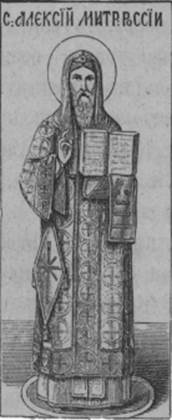
Родители св. Алексия, в крещении Елевферия, были бояре Черниговского княжества195. Феодор Бяконт, отец его перешел в Москву от того, что край Черниговский, опустошенный Батыем, не переставал терпеть нападения от хищных ослушников. Под защитою кроткого и благочестивого князя Даниила Александровича нашел он покойную жизнь и за благочестие свое благословен был долговечным потомством. Внук его, Даниил Феофанович, отличался сколько великими заслугами, столько и искренним благочестием. Ветви его – Плещеевы, Игнатьевы, Жеребцовы еще зеленеют и в наше время196. Старший сын его, Елевферий, родившийся 1300 г.197, воспринимаем был от купели сыном князя Даниила, отроком Иоанном. В свое время Елевферий отдан был учиться грамоте. На 12 году ему уже открыто было высокое назначение его. Раз раскинул он сети на птичек и, долго сторожа их, от утомления задремал. Неожиданно слышит он голос: «Алексий! к чему такой труд твой? тебе надобно быть ловцом людей». Пробужденный тем отрок изумился необыкновенному голосу и имени Алексия. Это видение глубоко запало в душу его; он стал молчалив, оставил игры и много стал думать о жизни и ее назначении. Родители изумлялись перемене жизни его, спрашивали у слуг о причине перемены, но те могли сказать только то, что Елевферий часто уходит в места уединенные. Спрашивали самого отрока, отчего он уклоняется от людей и занимается только книгами? К чему изнуряет себя постом? «Не печальтесь о мне, добрые родители, отвечал отрок: не делаю я худого, а желаю успевать в благом; пусть исполнится надо мною воля Господня». На 15 году Елевферий уже решился посвятить себя монашеской жизни. На 20 году (в 1320 г.) вступил в Московский Богоявленский монастырь и тогда же пострижен с именем Алексия, с тем самым, которое слышал он в сонном видении, за 7 лет пред тем. Хотя Богоявленский монастырь был на шумной торговой улице, но Алексий нашел покой здесь, предавшись подвигам. Он проводил время то в храме, то в молитвах келейных; читал книги и усердно изучал священное писание ветхого и нового завета; бдением нощным иссушал плоть и очищал сердце. «Бдением, говорит преп. Лествичник, погашаются плотские разжигания, истребляются гнусные сновидения, очи наполняются слез, смягчается сердце, охраняется чистота мыслей, пища варится в желудке, как в печи, прогоняются непристойные образы. Бодрый инок – ловец своих помыслов; во время нощного безмолвия он легко их примечает и ловит»198. Так обучал себя спасению и блаженный Алексий. Наставником и руководителем его был старец Геронтий, опытный в жизни духовной. Стефан, брат преп. Сергия, поступивший в обитель Богоявленскую, с 1337 г. был духовным братом его: они вместе певали на клиросе и духовно любили друг друга. Митрополит Феогност любил Стефана, Геронтия и Алексия и по временам призывал их к себе для духовных бесед. Первого святитель поставил в игумена обители. Сын и преемник Калиты, великий князь Симеон, который был моложе Алексия 17 годами, также отличал своим вниманием и Стефана и Алексия. Стефан был духовником великого князя и многих вельмож. Когда скончались родители Алексия, он похоронил их вблизи себя, в Богоявленской обители, чтобы молиться о их покое199.
The parents of St. Alexis, who was named Eleutherius in holy Baptism, were boyars of the Principality of Chernigov195. Theodore Byakont, his father, moved to Moscow because the land of Chernigov, laid waste by Batu, did not cease to suffer attacks from rapacious invaders. Under the protection of the meek and pious Prince Daniel Alexandrovich he found a peaceful life, and for his piety was blessed with long-lived posterity. His grandson, Daniel Theophanovich, was distinguished as much by great merits as by sincere piety. His branches—the Pleshcheevs, the Ignatievs, the Zherebtsovs—still flourish even in our time196. His eldest son, Eleutherius, born in the year 1300197, was received from the font by the son of Prince Daniel, the youth John. In due time Eleutherius was given to learn letters. At the age of twelve his lofty calling was already revealed to him. Once he spread nets for little birds and, having long watched over them, fell into a doze from weariness. Suddenly he heard a voice: "Alexis! Why this labor of yours? You must be a catcher of men." Awakened by this, the youth marvelled at the extraordinary voice and at the name Alexis. This vision sank deeply into his soul; he became silent, gave up games, and began to think much about life and its purpose. His parents marvelled at the change in his life and asked the servants about the cause of the change, but they could only say that Eleutherius often went off to solitary places. They asked the youth himself why he shunned people and occupied himself only with books, and why he wore himself out with fasting. "Grieve not for me, good parents," answered the youth; "I do nothing evil, but desire to prosper in what is good; let the will of the Lord be done upon me." At the age of fifteen Eleutherius already resolved to devote himself to the monastic life. At the age of twenty (in 1320) he entered the Moscow Monastery of the Theophany and was then tonsured with the name Alexis—the very name he had heard in the dream-vision seven years before. Although the Monastery of the Theophany was on a noisy trading street, Alexis found peace there, giving himself over to ascetic labors. He spent his time now in the church, now in cell prayers; he read books and diligently studied the Sacred Scripture of the Old and New Testaments; by nightly vigil he dried up the flesh and purified the heart. "By vigil," says the Venerable Climacus, "carnal kindlings are quenched, foul dreams are destroyed, the eyes are filled with tears, the heart is softened, purity of thoughts is guarded, food is cooked in the stomach as in a furnace, and unseemly images are driven away. A vigilant monk is a catcher of his own thoughts; during nightly silence he easily observes and catches them"198. Thus the blessed Alexis also trained himself for salvation. His instructor and guide was the elder Gerontius, experienced in the spiritual life. Stephen, the brother of the Venerable Sergius, who entered the Monastery of the Theophany in 1337, was his spiritual brother: together they sang on the kliros and loved one another spiritually. Metropolitan Theognostus loved Stephen, Gerontius, and Alexis, and from time to time summoned them to himself for spiritual conversations. The Hierarch appointed the first of them abbot of the monastery. The son and successor of Kalita, Grand Prince Simeon, who was seventeen years younger than Alexis, also distinguished both Stephen and Alexis with his attention. Stephen was the spiritual father of the Grand Prince and of many nobles. When the parents of Alexis reposed, he buried them near himself, in the Monastery of the Theophany, that he might pray for their repose199.
Прошло более 20 лет, как Алексий вступил в иноческие подвиги, и митрополит Феогност повелел Алексию жить в святительском дворе его и заведовать судебными делами Церкви. При таком отношении к святителю – Греку, открылись блаженному Алексию и нужды и средства узнать Греческий язык, разговорный и письменный. При занятиях судебными делами он коротко узнал людей и их слабости, также как приобрел обширные и точные сведения о церковных законах. Двенадцать лет отправлял он судейскую должность. с званием наместника митрополичьего. В конце 1352 года (декабря 6), блаженный Феогност посвятил блаженного Алексия в епископа Владимирского. Митрополит и великий князь положили, па общем совещании, быть блаженному Алексию преемником Феогноста на митрополичьей кафедре. Об этом избрании тогда же написано было в Константинополь, с просьбою «не поставлять никого другого в митрополита России, как преподобного Алексия, который много лет был наместником и жизни весьма добродетельной»200. Марта 11 дня скончался блаженный Феогност. Владимирский епископ вместе с двумя другими совершил надгробное пение над святителем – благодетелем своим. Но едва окончилось 40-дневное поминовение о почившем митрополите, как «Владимирский владыка Алексий» свидетельствовал духовное завещание умиравшего великого князя, который говорил своим братьям: «худых людей не слушайте; а если кто станет ссорить вас, слушайтесь отца нашего, владыки Алексия». После великого князя Симеона, в короткое время умерло от моровой язвы и еще несколько князей, и блаженному Алексию пришлось погребать многих201.
More than twenty years had passed since Alexis entered upon monastic labors, and Metropolitan Theognostus commanded Alexis to dwell at his hierarchal court and to administer the judicial affairs of the Church. In such a relation to the Hierarch—a Greek—there opened before the blessed Alexis both the need and the means to learn the Greek language, spoken and written. In his occupation with judicial affairs he came to know people and their weaknesses intimately, just as he acquired extensive and precise knowledge of the Church's laws. For twelve years he discharged the judicial office, with the rank of the metropolitan's deputy. At the end of 1352 (December 6), the blessed Theognostus consecrated the blessed Alexis as Bishop of Vladimir. The Metropolitan and the Grand Prince resolved, at a common council, that the blessed Alexis should be Theognostus's successor on the metropolitan cathedra. Concerning this election, word was then sent to Constantinople, with the request "to appoint no one else as Metropolitan of Russia but the Venerable Alexis, who for many years was deputy and is of a most virtuous life"200. On March 11 the blessed Theognostus reposed. The Bishop of Vladimir, together with two others, performed the funeral hymnody over the Hierarch—his benefactor. But scarcely had the forty-day commemoration for the departed metropolitan ended, when "Vladyka Alexis of Vladimir" witnessed the spiritual testament of the dying Grand Prince, who said to his brothers: "Listen not to evil men; but if anyone begins to set you at odds, hearken to our father, Vladyka Alexis." After Grand Prince Simeon, within a short time several more princes died of the pestilence, and the blessed Alexis had to bury many201.
Судьбами Божиими назначено было избранному в преемника Феогносту бороться в начале нового звания с разными неприятностями. Болгарский (Охридский) патриарх еще при жизни Феогноста посвятил Феодорита в митрополита России. Поступок Болгарского патриарха, не имевшего никаких прав на Россию, был очевидно несправедлив; но нет сомнения, что патриарх решился на него по просьбе южных князей России. Константинопольский собор, признав поступок Болгарского патриарха нерассудительным, отвергнул митрополита, незаконно поставленного. Согласно с другим определением собора, Алексий, епископ Владимирский, посвящен в митрополита России. Это было в 1354 году, при патр. Каллисте202. Но Константинопольский собор, отвергнув митрополита, посвященного Болгарским патриархом, уступил настойчивому требованию юго-западных князей, и Роман поставлен был в митрополита для запада России. Эго произвело тревогу в России, особенно тем, что Роман, не довольствуясь Галициею и Волынью, потребовал себе доходов и от Тверского епископа. Но и в Киеве не приняли Романа, а Тверской епископ, не смотря на желания князя своего, не хотел иметь сношения с Романом203. Блаженному Алексею известно было, что хотя при митр. Феогносте южные князья испрашивали себе особого митрополита, но это было не надолго, да и не в том виде, как хотел Роман. Чтобы положить конец смутам и тревогам, смиренный святитель, едва только возвратился из Царяграда, снова отправился (1356 г.) в Константинополь. Туда же явился и Роман. Патр. Каллист подтвердил Роману, чтобы был он митрополитом Литвы и Волыни, а Алексию предоставил считаться архиепископом Киева и великой России, с титлом «всечестнаго, митрополита и экзарха»204. На возвратном пути в Россию, блаженный святитель встретил новое бедствие. На море поднялась страшная буря: волны катались как горы, и корабль каждую минуту готов был исчезнуть в бездне. Все бывшие с митрополитом отчаивались в спасении. Святитель молился, молился усердно; он дал обет соорудить храм во имя того святого, которому будут праздновать в день высадки пловцов на берег. Господь услышал молитву святителя. Настала тишина, и корабль пристал к берегу 16 августа. Итак святитель остался обетным должником Всемилостивому Спасителю.
By the providence of God it was appointed that the one chosen as Theognostus's successor should struggle at the beginning of his new rank with various afflictions. The Patriarch of Bulgaria (Ohrid) had consecrated Theodoret as Metropolitan of Russia while Theognostus was still alive. The act of the Bulgarian Patriarch, who had no rights whatsoever over Russia, was evidently unjust; but there is no doubt that the Patriarch resolved upon it at the request of the southern princes of Russia. The Council of Constantinople, recognizing the act of the Bulgarian Patriarch as ill-considered, rejected the metropolitan who had been unlawfully appointed. In accordance with another decree of the council, Alexis, Bishop of Vladimir, was consecrated Metropolitan of Russia. This was in 1354, under Patriarch Callistus202. But the Council of Constantinople, having rejected the metropolitan consecrated by the Bulgarian Patriarch, yielded to the insistent demand of the southwestern princes, and Roman was appointed metropolitan for western Russia. This caused alarm in Russia, especially because Roman, not content with Galicia and Volhynia, demanded revenues also from the Bishop of Tver. But even in Kiev they did not receive Roman, and the Bishop of Tver, despite the wishes of his prince, did not wish to have dealings with Roman203. The blessed Alexis knew that although under Metropolitan Theognostus the southern princes had sought a separate metropolitan for themselves, this had been only for a short time, and not in the form that Roman desired. To put an end to the disturbances and alarms, the humble Hierarch, scarcely had he returned from Constantinople, again set out (in 1356) for Constantinople. Roman also appeared there. Patriarch Callistus confirmed to Roman that he should be Metropolitan of Lithuania and Volhynia, while to Alexis he granted the right to be considered Archbishop of Kiev and Great Russia, with the title of "most honorable, metropolitan and exarch"204. On the return journey to Russia, the blessed Hierarch encountered a new calamity. A terrible storm arose at sea: the waves rolled like mountains, and the ship was ready at every moment to vanish into the abyss. All those with the metropolitan despaired of salvation. The Hierarch prayed fervently; he made a vow to build a church in honor of that saint whose feast would fall on the day the voyagers came ashore. The Lord heard the prayer of the Hierarch. Calm came, and the ship put in to shore on August 16. And so the Hierarch remained a debtor by vow to the All-Merciful Savior.
В Москве приняли ожидаемого святителя с восторгами радости. И он с ревностию обратился к делам звания. Несколько епархий оставалось без архипастырей, от моровой язвы. Он посвятил епископов в Ростов, Смоленск и Рязань205. В то же время низложил он Сарайского епископа Афанасия за распоряжение в чужой епархии и посвятил в Сарай Иоанна206. По сему делу он предлагал и личные увещания, на Константинопольском пути своем. Теперь признал он нужным послать грамоту на Дон. «Веруйте, писал он, в святую единосущную Троицу, в Которую крестились; храните любовь и мир между собою, соблюдайте правду, чистоту, милосердие, исповедуйте грехи. Господь Бог Иисус Христос сказал ученикам и Апостолам Своим: идите в весь мир, проповедуйте Евангелие. И еще говорил: слушающий вас Меня слушает. Ту же благодать пресвятого Духа получил и я грешный от великого патриарха и собора, поставленный к св. Софии в Киев на митрополию всей России; для всех христиан России пастырь я и учитель, и на мне лежит тяжелый долг учить всех спасению душевному. – Вы, как показывает время, не слушаете слов учения моего, исполняете волю плоти и дела темные. Или не понимаете вы, что владыки всей России под моею властию и я их поставляю, по благодати пресвятого Духа? Так дана власть и вашему владыке. Истинный христианин узнается из дел: вера без дел мертва, говорит Апостол; таковы же и дела без веры. Потому творите, дети, дела света... Берегите себя, помните смерть и суд великого страшного Судии, покой праведных и вечную муку грешных. Если будете помнить то, – никогда не согрешите и не будете ослушиваться нас, которых Дух Святой поставил пастырями и учителями всех христиан. – Ходите в церковь и приносите что можете; любите священников и монахов, прося молитв их... О крае по великую Ворону, возле Хопра до Дону – положено определение собором... Ныне владыка Афанасий Сарайский – за вину его наказан писанием митрополита. С сего времени в том округе власть Рязанская. И ныне послал я к вам Рязанского владыку Василия с грамотою своею; поминайте его и давайте ему церковную пошлину по обычаю»207.
In Moscow, the expected Hierarch was received with transports of joy. And he turned with zeal to the affairs of his calling. Several dioceses remained without archpastors, owing to the plague. He consecrated bishops for Rostov, Smolensk, and Ryazan205. At the same time he deposed Athanasius, Bishop of Sarai, for interference in another diocese, and consecrated John for Sarai206. Concerning this matter he had already offered personal admonitions on his journey to Constantinople. Now he deemed it necessary to send a letter to the Don. "Believe," he wrote, "in the Holy Consubstantial Trinity, in which you were baptized; keep love and peace among yourselves; preserve righteousness, purity, mercy; confess your sins. The Lord God Jesus Christ said to His disciples and Apostles: Go into all the world, preach the Gospel. And again He said: He who hears you hears Me. That same grace of the Most Holy Spirit have I also, a sinner, received from the great patriarch and the council, being appointed to St. Sophia in Kiev for the metropolitanate of all Russia; for all Christians of Russia I am pastor and teacher, and upon me lies the heavy duty of teaching all unto the salvation of the soul. – You, as the times show, do not hearken to the words of my teaching; you fulfill the will of the flesh and works of darkness. Or do you not understand that the vladykas of all Russia are under my authority, and I appoint them, by the grace of the Most Holy Spirit? Thus also is authority given to your vladyka. A true Christian is known by his works: faith without works is dead, says the Apostle; and so likewise are works without faith. Therefore do, children, the works of light... Guard yourselves; remember death and the judgment of the great and terrible Judge, the rest of the righteous and the eternal torment of sinners. If you will remember these things, you will never sin and will not be disobedient to us, whom the Holy Spirit has appointed pastors and teachers of all Christians. – Go to church and offer what you can; love priests and monks, asking their prayers... Concerning the region as far as the great Vorona, near the Khopër as far as the Don – a decree has been set by the council... Now Vladyka Athanasius of Sarai has been punished by the writing of the metropolitan for his guilt. From this time, in that district, the authority is Ryazan's. And now I have sent to you Basil, the vladyka of Ryazan, with my letter; remember him and give him the church due according to custom"207.
В 1357 году совершились чудные подвиги святителя в орде. Молва о великих добродетелях его дошла до улусов татарских. Там супруга хана Джанибека Тайдула лежала больная и слепая уже три года. Об Алексии знала она уже и потому, что во время второго путешествия его в Царьград дала ему охранную грамоту208. Теперь явилось в Москву посольство от Джанибека, с письмом к великому князю. «Мы слышали, писал хан, что есть у вас служитель Божий, который если о чем попросит Бога, Бог слушает его. Отпустите его к нам – и если его молитвами исцелеет моя царица, будете иметь со мною мир; если же не отпустите его, пойду опустошать вашу землю». Смутился смиренный святитель, когда великий князь передал ему грамоту хана и просил исполнить волю Джанибека. Любовь к отчизне и св. Церкви не дозволяла отказаться от исполнения воли грозного хана; но как смиренному принять на себя такое великое дело? «Прошение и дело превышают меру сил моих, говорил святитель князю; но я верю Тому, Который дал прозреть слепому, – не презрит Он молитвы веры». Святитель начал готовиться к пути. В соборном храме со всем клиром совершил он молебствие пред иконою Богоматери и потом пред ракою святителя Петра. Во время самого моления, внезапно, пред глазами всех, сама собой зажглась свеча при гробе чудотворца Петра. Утешенный Алексий разделил чудесную свечу на части, роздал ее в благословение предстоявшим и, сделав яз остатка малую свечу, взял ее вместе с освященною водою для совершения нового молебствия в орде. Из Москвы отправился он 18-го августа. С верою твердою шел он в орду; а вера Тайдулы была укреплена видением. Когда блаженный Алексий был на пути, Тайдула видела во сне мужа, облеченного в святительскую одежду, пришедшего к ней, и с ним других, одетых в ризы. Она повелела устроить одежды того вида, как видела она. Ожидаемый принят был с честию в орде. – Святитель отслужил над болящею молебен с чудною свечою, окропил ее святою водою, и Тайдула стала видеть. Признательный хан дал святителю в знак почести перстень, который доселе можно видеть в патриаршей ризнице209.
In the year 1357, the wondrous labors of the Hierarch were accomplished in the Horde. The report of his great virtues reached the Tatar uluses. There, the wife of Khan Janibek, Taidula, lay sick and blind, already for three years. She knew of Alexis already, because during his second journey to Constantinople she had given him a safe-conduct208. Now an embassy from Janibek arrived in Moscow, with a letter to the Grand Prince. "We have heard," wrote the khan, "that you have a servant of God, who, if he asks anything of God, God hears him. Send him to us – and if by his prayers my queen is healed, you shall have peace with me; but if you do not send him, I will go to lay waste your land." The humble Hierarch was troubled when the Grand Prince handed him the khan's letter and asked him to fulfill Janibek's will. Love for the fatherland and the holy Church did not permit him to refuse to fulfill the will of the terrible khan; but how could a humble man take upon himself so great a work? "The request and the work exceed the measure of my strength," said the Hierarch to the prince; "but I believe in Him Who gave sight to the blind – He will not despise the prayer of faith." The Hierarch began to prepare for the journey. In the cathedral church, with all the clergy, he performed a moleben before the icon of the Mother of God, and then before the shrine of St. Peter. During the very service of supplication, suddenly, before the eyes of all, a candle lit of itself at the tomb of the Wonderworker Peter. Comforted, Alexis divided the miraculous candle into parts, distributed it as a blessing to those present, and, making from the remainder a small candle, took it together with holy water for the performance of a new moleben in the Horde. He set out from Moscow on the 18th of August. With firm faith he went to the Horde; and Taidula's faith was strengthened by a vision. When blessed Alexis was on the way, Taidula saw in a dream a man clothed in hierarchal vestments coming to her, and with him others clad in robes. She commanded that garments be made of the kind she had seen. The awaited one was received with honor in the Horde. – The Hierarch served a moleben over the sick woman with the wondrous candle, sprinkled her with holy water, and Taidula received her sight. The grateful khan gave the Hierarch, as a mark of honor, a ring, which to this day may be seen in the patriarchal sacristy209.
Святитель, совершив чудо веры между людьми тьмы, принужден был поспешно оставить орду: там начинались волнения. Джанибек умер. Бердибек, по совету вельможи Тавлубея, перерезал 12 братьев своих и сел на престол ханский. В Москву явился посол нового хана и требовал от Русских князей даров и их самих звал в орду. – Святителя умоляли снова идти в орду смягчать жестокость Бердибека. Опасность была очевидна. Но пастырь добрый полагает душу свою за овцы, сказал себе святитель, и отправился по Волге в Золотую орду. Святителю пришлось испытать в орде много притеснений и скорбей. Но при помощи Божией умел он снискать благосклонность Бердибека210. Он вступал там даже в спор с мурзою Мунзи о значении Магомета, и свободно обличал магометанство211. Совершенное чудо над Тайдулою само собою показывало в христианском святителе любимца Божия, и признательная Тайдула не могла забыть своего целителя. Святой Алексий получил от Бердибека ярлык в охрану духовенства Русского. Вот что писал Бердибек в ярлыке: «силою Вышнего Бога слово Бердибека, по примеру дедов и прадедов, татарским, улусным и ратным князьям и пр. Чингиз царь и прежние цари, предки наши, жаловали церковных людей, молитвенников, которые молят Бога, и весь чин священнический. Вспомнив это, мы пишем: какова ни будет дань или пошлина, наши молитвенники пусть не видят и не слышат о ней, чтобы в покое молили Бога и совершали моления. В таком виде давались ярлыки первыми и последующими царями. И мы, не изменяя первых ярлыков, тем же пожаловали митрополита Алексия. Когда он будет сидеть на столе своем и станет молиться за нас и за наше племя, то, какая бы ни была дань или пошлина, пусть не ведает и не слышит о ней. Пусть не смеют требовать у наших молитвенников ни подвод, ни корма, ни питья, ни даров, ни почести; какие есть у них церковные земли, воды, дома, огороды, сады, мельницы, пусть не берут и не отнимают у них ничего; если же кто взял бы, пусть отдаст без суда. В церковных домах не быть постою, ни тревоге; если же кто остановится в них или начнет бесчинствовать, тому будет худо, умрет злою смертию. Ты, Алексий митрополит, и весь ваш чин священнический, объявите о сем. Если что учините вы о церковными людьми и с церковными землями не по правде, – это на вас ляжет. Если кто учинит худое дело разбоем, воровством, ложью, и не будете смотреть за тем, то сам ведаешь, что тебе будет за то от Бога. Молись за нас Богу. Так сказав, мы дали ярлык с алою тамгою на сохранение ваше, в год курицы, в 10-й день десятого месяца, в 758 году (1357 г.)»212.
The Hierarch, having wrought a miracle of faith among people of darkness, was compelled to leave the Horde hastily: disturbances were beginning there. Janibek died. Berdibek, on the advice of the noble Tavlubey, cut down his twelve brothers and seated himself on the khan's throne. An envoy of the new khan appeared in Moscow, demanding gifts from the Russian princes and summoning them themselves to the Horde. – The Hierarch was entreated again to go to the Horde to soften the cruelty of Berdibek. The danger was evident. But the good shepherd lays down his life for the sheep, said the Hierarch to himself, and set out by the Volga for the Golden Horde. The Hierarch had to endure in the Horde many oppressions and sorrows. But with God's help he was able to win the favor of Berdibek210. He even entered there into a dispute with the murza Munzi concerning the significance of Mohammed, and freely denounced Mohammedanism211. The miracle wrought over Taidula itself showed in the Christian Hierarch a favorite of God, and the grateful Taidula could not forget her healer. St. Alexis received from Berdibek a yarlyk for the protection of the Russian clergy. Thus wrote Berdibek in the yarlyk: "By the power of the Most High God, the word of Berdibek, after the example of grandfathers and great-grandfathers, to the Tatar, ulus, and military princes, etc. Chingiz the tsar and the former tsars, our ancestors, favored the church people, the prayer-offerers who pray to God, and the whole priestly order. Remembering this, we write: whatever tribute or due there may be, let our prayer-offerers neither see nor hear of it, so that in peace they may pray to God and perform their supplications. In such form were yarlyks given by the first and subsequent tsars. And we, not altering the first yarlyks, have likewise favored Metropolitan Alexis. When he sits upon his throne and prays for us and for our kin, then whatever tribute or due there may be, let him neither know nor hear of it. Let them not dare to demand of our prayer-offerers either carts, or food, or drink, or gifts, or honor; whatever church lands, waters, houses, gardens, orchards, mills they have, let them not take or seize anything from them; but if anyone has taken, let him return it without trial. In church houses let there be no quartering, nor disturbance; but if anyone lodges in them or begins to act disorderly, it shall be ill for him; he shall die an evil death. You, Alexis the metropolitan, and all your priestly order, make this known. If you do anything with church people and church lands not according to right – that shall lie upon you. If anyone commits an evil deed – robbery, theft, falsehood – and you do not watch over it, then you yourself know what will be to you for that from God. Pray to God for us. Having thus said, we have given a yarlyk with the scarlet tamga for your preservation, in the year of the hen, on the 10th day of the tenth month, in the year 758 (A.D. 1357)"212.
Возвращающегося из орды ходатая за землю Русскую встречали с торжеством. В Нижнем встретили его князья Суздальские. В Москве великий князь Иоанн с юным Димитрием, весь освященный причт и народ вышли на встречу архипастырю за город. «Владыко! чем заплатим тебе за труды твои? ты даришь нас мирною жизнию», так говорил святителю юный наследник Московского престола213.
The intercessor for the Russian land, returning from the Horde, was met with triumph. At Nizhny Novgorod the Suzdal princes met him. In Moscow, the Grand Prince John with the young Demetrius, the entire consecrated clergy, and the people went out of the city to meet the archpastor. "Vladyko! with what shall we repay you for your labors? You gift us with a peaceful life," thus spoke to the Hierarch the young heir of the Moscow throne213.
В январе 1358 года Алексий отправился в Киев и возвратился в Москву уже в июне 1360 года. В разоренном Киеве надобно было долго жить, чтобы восстановить кое-что. Раздоры Тверских князей до того отяготили собою Тверского пастыря Феодора, что он, не видя никакой пользы от советов любви своей, решился отказаться от кафедры; святитель уговаривал его еще потерпеть: но в 1360 году посвятил на место его Василия214.
In January 1358, Alexis set out for Kiev and returned to Moscow only in June 1360. In the ruined Kiev it was necessary to live long in order to restore something. The dissensions of the Tver princes so weighed upon Theodore, the pastor of Tver, that he, seeing no benefit from the counsels of his love, resolved to resign his see; the Hierarch urged him to endure still longer: but in 1360 he consecrated Basil in his place214.
Когда скончался великий князь Иоанн (1359 года), на рамена святителя пала опека над несовершеннолетним князем Димитрием. Власть великого князя выпросил себе в орде Суздальский князь Димитрий Константинович. Святитель должен был благословить Суздальского князя на великое княжение в кафедральном Владимирском соборе. Димитрий Константинович упрашивал его жить при нем во Владимире; но Алексий и по любви к юному Димитрию и по вниманию к воле Божией, изреченной устами святителя Петра, не хотел расстаться с Москвою. В орде между тем шли смуты; каждый год являлось по нескольку ханов, истреблявших один другого; в 1362 году явилось два хана соперника. Юный Димитрий выпросил себе у Мюрида звание великого князя России и заставил Димитрия Константиновича удалиться из Владимира215. Святитель с радостию благословил питомца своего на великое княжение чудотворною Владимирскою иконою Богоматери. – Он был душою советов и дел князя Димитрия. «Мы целовали крест у отца своего Алексия, митрополита всея Руси», говорит в договоре своем великий князь Димитрий и брат его Владимир Андреевич, князь Серпуховский. И этот договор доставил великому князю верного и храброго помощника на все последующие невзгоды жизни216. Трудами святителя росла и крепла власть великого князя Московского. Димитрий Константинович, отказавшись от прав великого князя, желал получить часть из наследственного княжества Суздальского, которого не хотел ему уступить младший брат Борис, князь Нижегородский. Митрополит послал в Нижний Новгород преподобного Сергия убедить Бориса, чтобы явился в Москву на совет. Князь отвечал, что знает только волю хана. И Сергий, согласно с волею святителя, затворил все храмы в Нижнем, а великий князь двинул войска свои; Суздальские князья вынуждены были мирно разделиться между собою217.
When the Great Prince John reposed (in the year 1359), the care of the underage Prince Demetrius fell upon the shoulders of the Hierarch. The Suzdal Prince, Demetrius Constantinevich, obtained for himself the authority of the Great Prince in the Horde. The Hierarch was obliged to bless the Suzdal Prince for the great reign in the cathedral church of Vladimir. Demetrius Constantinevich entreated him to live with him in Vladimir; but Alexis, both out of love for the youthful Demetrius and out of regard for the will of God, uttered through the lips of St. Peter the Hierarch, did not wish to part from Moscow. Meanwhile, disturbances were taking place in the Horde; each year several khans appeared, destroying one another; in the year 1362 two rival khans appeared. The youthful Demetrius obtained from Murid the title of Great Prince of Russia and forced Demetrius Constantinevich to withdraw from Vladimir215. The Hierarch with joy blessed his charge for the great reign with the wonderworking Vladimir Icon of the Mother of God. – He was the soul of the counsels and deeds of Prince Demetrius. “We have kissed the cross before our father Alexis, Metropolitan of all Rus’,” says in his treaty the Great Prince Demetrius and his brother Vladimir Andreyevich, Prince of Serpukhov. And this treaty provided the Great Prince with a faithful and brave helper for all the subsequent adversities of life216. Through the labors of the Hierarch the power of the Great Prince of Moscow grew and strengthened. Demetrius Constantinevich, having renounced the rights of the Great Prince, desired to receive a portion of the hereditary Suzdal principality, which his younger brother Boris, Prince of Nizhny Novgorod, did not wish to cede to him. The Metropolitan sent the Venerable Sergius to Nizhny Novgorod to persuade Boris to appear in Moscow for counsel. The prince answered that he knew only the will of the khan. And Sergius, according to the will of the Hierarch, closed all the churches in Nizhny, while the Great Prince moved his troops; the Suzdal princes were compelled to divide peacefully among themselves217.
Между тем святитель занимался строением обителей иночества. В 1361 году основал он женскую общежительную обитель во имя ангела своего Алексия, где первою игумениею была благочестивая старица Иулиания218. В том же году основан им на берегу реки Яузы обетный монастырь во имя нерукотворенного образа Спасителева. «Хочу просить одного благодеяния от духовной любви твоей ко мне», говорил он преподобному пустыннику Сергию. «Ничто не возбранено в моей обители святительству твоему», отвечал смиренный пустынножитель. – «Хочу, сказал святитель, чтобы уступил ты мне одного из учеников твоих. Давно положил я устроить обитель во имя нерукотворенной иконы Спасителя», и рассказал, что было с ним на море. Преподобный Сергий с любовию отдал любимого ученика Андроника в настоятели новой обители219. В 1362 году основан святителем владычный монастырь, в 3 верстах от Серпухова; здесь был первым игуменом ученик его Варлаам, доселе чтимый за благочестивую жизнь220. После того, как святитель успел (1365 года) примирить ссорившихся Нижегородских князей, братьев Бориса и Димитрия, исполнил он прежнее намерение свое о восстановлении двух древних монастырей, Благовещенского в Нижнем-Новгороде и Константино-Еленского во Владимире. В том и другом введено им общежитие и на содержание приобретены земли; в первом построен и каменный храм221. В 1365 году основана в самом Кремле обитель в честь чуда Архангела Михаила, на месте, подаренном царицею Тайдулою. Это был благодарный памятник чуду, совершившемуся над царицею в день празднования чуду в Колоссаех (6-го сентября). Святитель со всею щедростию строил и украсил храм Архангела Михаила; обеспечил содержание обители, где положил быть полному общежитию222. «В Чудовом монастыре, писал преподобный Иосиф Волоколамский, блаженный митрополит Алексий посадил честных старцев, испросив одних у св. Сергия, а других взяв из иных монастырей, бывших под его рукою; эти иноки жили иночески, жизнию духовною, так, что многие приходили к ним, старые и юные, и получали пользу»223. Самым надежным наставником был здесь сам святитель. Он любил эту обитель и здесь подвизался, по временам, в посте и молитвах. Здесь, как писал патриарх Паисий, «великий между святителями отец наш Алексий митрополит во время жития своего богоугодно потрудился»224. Духовное завещание святителя о Чудовой обители показывает сколько живую любовь его к ней, столько и другие, еще более дивные, расположения святой души его. «Се аз смиренный, грешный раб Божий, Алексий», так писал он в грамоте. Кто это пишет? Великий первосвятитель Церкви, и он называет себя только смиренным Алексием, не называя и митрополитом. Великий святитель Божий именует себя грешным рабом Божиим. Что же должны думать о себе другие?.. «Пишу, говорит смиренный, душевную грамоту целым своим умом. Даю святому великому Архангелу Михаилу и честному его чуду село Жилинское, Черкизовское... Раменное, что есмь купил у Ильи у Озакова... А все те села (всего 12) даю с серебром и с половники и с третники и с животиною. А что моя в селех челяд, на них серебрецо». Вот на каком условии будут жить слуги обители. Если кому из них не захочется жить на земле монастырской, заплати деньги, взятые у святителя, и иди, куда угодно; свобода не отнята ни у кого. «А кто рост дает, тем воля ж». Какая благость святительская! Гражданская правда может требовать, чтобы должник сверх долга заплатил проценты. Святитель предоставляет доброй воле должника платить проценты монастырю. «Монастырь Михаила чуда приказываю тебе, своему сыну, великому князю Димитрию Ивановичу», говорит наконец святитель225.
Meanwhile the Hierarch was occupied with the building of monastic dwellings. In the year 1361 he founded a women’s cenobitic monastery in the name of his angel Alexis, where the first abbess was the pious elder nun Juliana218. In the same year, on the bank of the Yauza River, he founded a votive monastery in the name of the Image Not-Made-by-Hands of the Savior. “I wish to ask one favor of your spiritual love toward me,” he said to the Venerable hermit Sergius. “Nothing is forbidden in my monastery to your hierarchal office,” answered the humble hermit. – “I wish,” said the Hierarch, “that you would yield to me one of your disciples. Long have I resolved to establish a monastery in the name of the Icon Not-Made-by-Hands of the Savior,” and he related what had happened to him at sea. The Venerable Sergius with love gave his beloved disciple Andronicus as superior of the new monastery219. In the year 1362 the Hierarch founded the Vladychny Monastery, three versts from Serpukhov; here his disciple Barlaam was the first abbot, still honored for his pious life220. After the Hierarch had succeeded (in the year 1365) in reconciling the quarreling Nizhny Novgorod princes, the brothers Boris and Demetrius, he fulfilled his former intention of restoring two ancient monasteries, the Annunciation Monastery in Nizhny Novgorod and the Constantine-Helena Monastery in Vladimir. In both he introduced the cenobitic rule and acquired lands for their support; in the former a stone church was also built221. In the year 1365 a monastery was founded in the Kremlin itself in honor of the Miracle of the Archangel Michael, on the site given by the Tsaritsa Taidula. This was a grateful memorial of the miracle that had taken place over the Tsaritsa on the day of the feast of the Miracle at Colossae (September 6). The Hierarch with all generosity built and adorned the church of the Archangel Michael; he ensured the support of the monastery, where he decreed a full cenobitic rule222. “In the Chudov Monastery,” wrote the Venerable Joseph of Volokolamsk, “the blessed Metropolitan Alexis placed honorable elders, having obtained some from St. Sergius and taking others from other monasteries under his authority; these monks lived monastically, with a spiritual life, so that many came to them, old and young, and received benefit”223. The most reliable instructor here was the Hierarch himself. He loved this monastery and here he asceticised, at times, in fasting and prayers. Here, as Patriarch Paisius wrote, “the great among hierarchs, our father Alexis the Metropolitan, during his life labored in a God-pleasing manner”224. The spiritual testament of the Hierarch concerning the Chudov Monastery shows both his living love for it and other, even more wondrous, dispositions of his holy soul. “Behold I, the humble, sinful servant of God, Alexis,” thus he wrote in the charter. Who writes this? The great first-hierarch of the Church, and he calls himself only the humble Alexis, not even naming himself Metropolitan. The great Hierarch of God calls himself a sinful servant of God. What then should others think of themselves?.. “I write,” says the humble one, “a spiritual charter with my whole mind. I give to the holy great Archangel Michael and his honorable miracle the village of Zhilinskoye, Cherkizovskoye... Ramennoye, which I bought from Ilya Ozakov... And all those villages (twelve in all) I give with silver and with half-sharers and third-sharers and with livestock. And as for my household servants in the villages, there is a little silver on them.” Behold on what condition the servants of the monastery will live. If any of them does not wish to live on the monastery land, let him pay the money taken from the Hierarch and go wherever he wishes; freedom is taken from no one. “And whoever gives interest, to them freedom.” What kindness of the Hierarch! Civil justice may require that a debtor pay interest beyond the debt. The Hierarch leaves it to the good will of the debtor to pay interest to the monastery. “The Monastery of the Miracle of Michael I entrust to you, my son, the Great Prince Demetrius Ivanovich,” says the Hierarch at last225.
Моровая язва Симеонова времени являлась и при великом князе Димитрии: в Смоленске она свирепствовала три раза и от нее осталось там только 5 человек. В Москве была она один раз (1366 года). За то за год пред нею Москва страшно опустошена была пожаром. Святитель подал совет великому князю построить каменный кремль, безопасный от пожаров и надежный для защиты против неприятелей-соседов226.
The pestilence of Simeon’s time appeared also under the Grand Prince Demetrius: in Smolensk it raged three times and only five people remained there from it. In Moscow it occurred once (in the year 1366). But the year before it, Moscow was terribly devastated by a fire. The Hierarch gave counsel to the Grand Prince to build a stone Kremlin, safe from fires and reliable for defense against neighboring enemies226.
Тогда как святитель с отеческою любовью заботился о нуждах чад Русской Церкви, он покровительствовал, сколько мог, и православным Востока. При нем приходили из Иерусалима в Москву митрополит Герман и архимандрит Нифонт, впоследствии Иерусалимский патриарх, а с Синайской горы архиепископ Зиарк. По их извещению, бедствия христиан восточных были тогда тяжкие. Египетский султан, раздраженный нападением Киврских рыцарей, опустошил Иерусалим, Антиохию и Синайскую гору, разграбил храмы, запретил Богослужение, захватил в плен тысячи. – По просьбе Константинопольского императора, отпустил он пленных, но за дорогой выкуп. Святитель Алексий и великий князь Димитрий послали на Восток богатую милостыню227.
While the Hierarch with fatherly love cared for the needs of the children of the Russian Church, he also patronized, as much as he could, the Orthodox of the East. In his time there came from Jerusalem to Moscow the Metropolitan German and the Archimandrite Niphon, afterwards Patriarch of Jerusalem, and from Mount Sinai the Archbishop Ziarch. According to their report, the calamities of Eastern Christians were then grievous. The Egyptian Sultan, angered by the attack of the Cypriot knights, devastated Jerusalem, Antioch, and Mount Sinai, plundered the churches, forbade divine services, and took thousands captive. – At the request of the Emperor of Constantinople, he released the captives, but for a costly ransom. The Hierarch Alexis and the Great Prince Demetrius sent rich alms to the East227.
С 1367 года святителю Алексию много надлежало перенесть скорбей и трудов по делам Тверских князей. Кашинский князь Василий Михайлович ссорился с племянником князем Михаилом Александровичем за уделы умерших князей родичей. Дядя хотел быть главою Тверского княжества; племянник, как сын старшего брата, присвоил себе имя великого князя и хотел владеть уделами умерших, будто бы по завещанию. Дядя и брат Михаила просили себе суда у митрополита. Первосвятитель признал неправым Михаила. Михаил бежал к Ольгерду, женатому на сестре его, и с Литовским войском стеснил Тверских князей. При посредстве епископа враги примирились, но неискренно. Обиженные князья снова явились в Москву. Великий князь и митрополит пригласили Михаила в Москву на мирный суд. После суда бояры Димитрия схватили князя Михаила с его боярами и посадили в заключение; потом, обязав отказаться от городка и не поднимать более ссор, выпустили на свободу. – Святитель признавал в Михаиле преступною связь его с Литвою, по опасностям ее для гражданской свободы со стороны властолюбия Ольгердова, для свободы совести со стороны язычества и папизма. Он столько дорожил православием, что незадолго пред тем нарочно отправлялся в Тверь, о тем только, чтобы окрестить дочь Ольгердову, привезенную бабкою ее. Князь Михаил думал только о личных интересах. Он сильно жаловался теперь на святителя за то, что тот не помешал унизить его, и поспешил к Ольгерду. Литовский князь, враг Москвы, внес опустошение в пределы России. Михаил не был доволен и тем: он отправился к Мамаю, но едва не попался в руки Димитрия и скрылся в Вильне. Ольгерд в другой раз вступил в Россию, но заключил мир. Михаил достал себе в орде звание великого князя России. Димитрий принужден был, со страхом за жизнь свою, идти к Мамаю. Святитель Алексий провожал его до берегов реки Оки; там усердно молился за великого князя Димитрия, благословил его и бояр и заклинал последних беречь драгоценную жизнь государя. Святитель поспешил возвратиться в Москву, чтобы благословить брак князя Владимира с дочерью Ольгерда, едва ли менее опасного, чем Мамай. – Охраняемый молитвами святителя, Димитрий осыпан был ласками хана: в орде не только утвердили его в звании великого князя, но согласились брать дань более умеренную, чем прежде. Не умеренный в своих желаниях Михаил везде жаловался и без пользы для себя228. Он посылал жалобу на митрополита к патриарху. Ольгерд также писал в Царьград: «доныне и при отцах наших не бывало такого митрополита, каков сей митрополит. Благословляет Москвитян на пролитие крови; кто целовал крест мне и убежал к нему, митрополит снимает с него крестное целование». Эта жалоба на святителя – лучшая похвала святителю. Враг государства Московского зорко смотрел за тем, кто и сколько мешает ему выполнить замыслы его на Москву. И вот он, в неудержанной досаде, указывает на Алексия, как более других содействовавшего усилению могущества Москвы. «Князья Новосильский, Козельский, Вяземский, Кашинский и другие, целые города», говорит Ольгерд, «по убеждению Алексия отстали от Ольгерда и присоединились к Московскому великому князю». Патриарх Филофей понимал чистоту намерений святителя Московского и понимал Ольгерда. Одною грамотою уверял он великого князя Димитрия в своей любви к нему и в негодовании на князей, неприязненных ему. К князю Смоленскому писал он, что митрополит справедливо подверг его отлучению за то, что воевал он вместе с Ольгердом против православного великого князя. В третьей грамоте давал знать, что не снимет проклятия с князей, наложенного митрополитом всей России, пока не раскаются, не снимет потому, что «дали страшную клятву воевать против врагов нашей веры и преступили свою клятву». Князю Тверскому писал: «не следует князю судиться с митрополитом и чинить соблазн; это не полезно для его души и не служит к его чести». Наконец Михаил, после пяти лет вражды, вынужден был смириться пред великим князем Димитрием. Договор заключен был при посредстве святителя Алексия. В нем читаем: «по благословению отца нашего митрополита всей Руси князь Тверский дает клятву за себя и за своих наследников признавать великого князя Московского старшим своим братом, никогда не искать Владимирской отчины и не принимать ее от хана, равно как и великого Новгорода, а великий князь, с своей стороны, обещает не вступаться в его наследие и не отнимать у него Тверской отчины»229.
From the year 1367, the Hierarch Alexis had much to endure in sorrows and labors concerning the affairs of the Tver princes. Prince Basil Mikhailovich of Kashin quarreled with his nephew, Prince Michael Alexandrovich, over the appanages of deceased kinsmen. The uncle wished to be the head of the Tver principality; the nephew, as the son of the elder brother, arrogated to himself the title of Grand Prince and desired to possess the appanages of the deceased, allegedly by testament. The uncle and Michael's brother sought judgment from the Metropolitan. The First Hierarch found Michael to be in the wrong. Michael fled to Olgerd, who was married to his sister, and with the Lithuanian army he pressed the Tver princes. Through the mediation of a bishop, the enemies were reconciled, but insincerely. The offended princes again appeared in Moscow. The Grand Prince and the Metropolitan invited Michael to Moscow for a peaceful judgment. After the judgment, Demetrius's boyars seized Prince Michael together with his boyars and placed them in confinement; then, having bound him to renounce a certain town and to stir up no further quarrels, they released him. – The Hierarch considered Michael's connection with Lithuania to be criminal, on account of the dangers it posed to civil liberty from Olgerd's lust for power, and to freedom of conscience from paganism and papism. He so valued Orthodoxy that, not long before, he had made a special journey to Tver solely to baptize Olgerd's daughter, who had been brought there by her grandmother. Prince Michael thought only of his personal interests. He now complained bitterly against the Hierarch for not having prevented his humiliation, and hastened to Olgerd. The Lithuanian prince, an enemy of Moscow, brought devastation into the borders of Russia. Michael was not satisfied even with that: he set out for Mamai, but nearly fell into the hands of Demetrius and hid himself in Vilna. Olgerd invaded Russia a second time, but concluded peace. Michael obtained for himself in the Horde the title of Grand Prince of Russia. Demetrius was compelled, in fear for his life, to go to Mamai. The Hierarch Alexis accompanied him as far as the banks of the Oka River; there he fervently prayed for the Grand Prince Demetrius, blessed him and the boyars, and adjured the latter to guard the precious life of the sovereign. The Hierarch hastened to return to Moscow in order to bless the marriage of Prince Vladimir with the daughter of Olgerd, who was himself scarcely less dangerous than Mamai. – Protected by the Hierarch's prayers, Demetrius was showered with the khan's favors: in the Horde, not only was he confirmed in the title of Grand Prince, but they agreed to take a more moderate tribute than before. The immoderate Michael complained everywhere, but to no avail for himself228. He sent a complaint against the Metropolitan to the Patriarch. Olgerd also wrote to Constantinople: "Hitherto, even under our fathers, there has never been such a Metropolitan as this Metropolitan. He blesses the Muscovites to shed blood; whoever has kissed the cross to me and fled to him, the Metropolitan absolves him from the oath." This complaint against the Hierarch is the finest praise of the Hierarch. The enemy of the Muscovite state watched keenly to see who and how much hindered him from carrying out his designs against Moscow. And now, in unbridled vexation, he points to Alexis as the one who more than others contributed to the strengthening of Moscow's power. "The princes of Novosil, Kozelsk, Vyazma, Kashin, and others, entire cities," says Olgerd, "at the persuasion of Alexis, have abandoned Olgerd and joined the Grand Prince of Moscow." Patriarch Philotheus understood the purity of the Moscow Hierarch's intentions and understood Olgerd. In one letter, he assured the Grand Prince Demetrius of his love for him and of his indignation against the princes hostile to him. To the Prince of Smolensk, he wrote that the Metropolitan had justly placed him under excommunication for having waged war together with Olgerd against the Orthodox Grand Prince. In a third letter, he gave notice that he would not lift the curse from the princes imposed by the Metropolitan of all Russia until they repented, and would not lift it because "they gave a terrible oath to wage war against the enemies of our faith and have broken their oath." To the Prince of Tver, he wrote: "It is not fitting for a prince to go to law with the Metropolitan and cause scandal; this is not beneficial for his soul and does not redound to his honor." Finally, Michael, after five years of enmity, was compelled to humble himself before the Grand Prince Demetrius. A treaty was concluded through the mediation of the Hierarch Alexis. In it we read: "By the blessing of our father, the Metropolitan of all Rus', the Prince of Tver swears, for himself and for his heirs, to recognize the Grand Prince of Moscow as his elder brother, never to seek the Vladimir patrimony nor to accept it from the khan, nor likewise the Great Novgorod; and the Grand Prince, for his part, promises not to interfere in his inheritance and not to take away from him the Tver patrimony"229.
Последние годы святителя омрачены были скорбию и новом митрополите юго-запада. Властители Польши и Литвы сильно злились на св. Алексия за его заботы о Московском великом княжестве. Сперва они жаловались патриарху, что митрополит не посещает юго-западных епархий. Патриарх писал митрополиту: «справедливость требует, чтобы ты осматривал всю Россию и оказывал отеческую любовь ко всем князьям». Если бы не было сильных препятствий, святитель Алексий, без сомнения, и сам по себе посетил бы юго-запад, не взирая на старость свою. Но со стороны юго-запада эта жалоба не искренняя. Польский король Казимир писал к патриарху Филофею, что если не будет посвящен им Галицкий епископ Антоний в митрополита, король заставит Русских принять Римскую веру и подчинит Римскому архиепископу. «Великий князь огнепоклонников» – Ольгерд требовал того же. – Патриарх Филофей вынужден был уступить и, извещая о том св. Алексия, писал: «что мы должны были делать в таком положении? Тебя призываем в судьи; что ты сам скажешь? Другое дело, если бы государь земли был православный, нашей веры: тогда мы может быть подождали бы... Посуди сам, хорошо ли было бы, если бы так случилось, как писал король?... Мы дали Антонию Галич, чтобы быть митрополиею, епископии же – Владимир, Перемышль и Холм». По смерти Антония, князья Литвы просили у патриарха нового митрополита, и Филофей в 1376 году посвятил Киприана с тем, чтобы он по смерти Алексия остался митрополитом всей России. Великий князь Московский выразил свое неудовольствие на то, что Киприан прислан без его согласия230. В таких обстоятельствах святитель Алексий желал избрать преемника себе, как избрал его святитель Феогност. Он хотел назначить преподобного Сергия на архипастырскую кафедру. Но любитель пустыни решительно отказался от назначения высокого. Великий князь просил, чтобы святитель благословил быть на его месте любимцу его и духовнику Митяю-Михаилу. Митяй был весьма видной, красивой наружности, с отличным даром слова, с голосом громким и приятным; память имел необыкновенную, знал притчи, повести, книги и рассуждал о делах умно. Но щедро наделенный дарами Божиими, он плохо помнил, что все это не его, – был горд, самонадеян и заносчив. Святитель видел все это в Митяе, тогда как не все видели другие, и он сказал великому князю: «Митяй еще не давний монах, – надобно ему искуситься и облечься благими делами». Когда же великий князь и после того неотступно просил за Митяя, святитель отвечал: «если и даст Бог и святейший патриарх с собором, пусть будет; я же не могу благословить его». Известно, что Митяй потонул, не достигши Царяграда, куда по желанию великого князя спешил за посвящением. Святитель Алексий достиг глубокой старости, 78 лет, пробыв на кафедре митрополичьей 24 года231. В продолжение служения его посвящено им более 20 архипастырей Русской Церкви232.
The last years of the Hierarch were darkened by sorrow over a new Metropolitan of the Southwest. The rulers of Poland and Lithuania were greatly angered at St. Alexis for his care for the Grand Principality of Moscow. At first, they complained to the Patriarch that the Metropolitan did not visit the southwestern dioceses. The Patriarch wrote to the Metropolitan: "Justice requires that you inspect all of Russia and show fatherly love to all princes." Had there been no strong obstacles, the Hierarch Alexis would undoubtedly have visited the Southwest of his own accord, despite his advanced age. But from the Southwest, this complaint was insincere. The Polish King Casimir wrote to Patriarch Philotheus that if the Galician Bishop Anthony were not consecrated as Metropolitan, the king would force the Russians to accept the Roman faith and would subject them to the Roman archbishop. "The Grand Prince of the fire-worshippers"—Olgerd—demanded the same. – Patriarch Philotheus was compelled to yield and, informing St. Alexis of this, wrote: "What were we to do in such a situation? We call you as judge; what do you yourself say? It would be another matter if the sovereign of the land were Orthodox, of our faith: then we might perhaps have waited... Judge for yourself, would it have been good if what the king wrote had come to pass?... We gave Galich to Anthony to be a metropolis, and the bishoprics of Vladimir, Peremyshl, and Kholm." After Anthony's death, the princes of Lithuania asked the Patriarch for a new Metropolitan, and in 1376 Philotheus consecrated Cyprian, with the understanding that after Alexis's death he would remain Metropolitan of all Russia. The Grand Prince of Moscow expressed his displeasure that Cyprian had been sent without his consent230. In such circumstances, the Hierarch Alexis wished to choose a successor for himself, just as the Hierarch Theognostus had chosen one. He desired to appoint the Venerable Sergius to the archpastoral see. But the lover of the wilderness decisively refused the high appointment. The Grand Prince asked that the Hierarch bless his favorite and confessor, Mityai-Michael, to be in his place. Mityai was of a very striking, handsome appearance, with an excellent gift of speech, a loud and pleasant voice; he had an extraordinary memory, knew parables, tales, books, and reasoned about matters intelligently. But, abundantly endowed with God's gifts, he poorly remembered that all this was not his own—he was proud, self-confident, and arrogant. The Hierarch saw all this in Mityai, whereas others did not all see it, and he said to the Grand Prince: "Mityai is not yet a long-standing monk—he must be tested and clothed with good deeds." When the Grand Prince, even after that, persistently pleaded for Mityai, the Hierarch replied: "If God grants it and the Most Holy Patriarch with the Council, so be it; but I cannot bless him." It is known that Mityai drowned before reaching Constantinople, whither he had hastened for consecration at the Grand Prince's wish. The Hierarch Alexis reached a deep old age, 78 years, having occupied the metropolitan see for 24 years231. During the course of his service, he consecrated more than 20 archpastors of the Russian Church232.
Драгоценным памятником пастырского учения его служат кроме послания на Дон: а) евангелие его; б) окружное послание его к пастве; и в) послание к христианам Нижегородской области. Евангелие св. Алексия, писанное собственною рукою его, хранится в Чудовом монастыре; в прежнее время читали его во время молебна над болящими; ныне же выносится оно во дни памяти святителя на малом входе во время литургии. Оно писано тогда, как святитель был в Константинополе, и следовательно тогда, как мог он иметь в руках лучшие списки Греческого евангелия. Текст святителя во многом не сходен с Славянскими списками предшествовавшего ему времени. Он заключает в себе не только исправление ошибок, допущенных Славянскими писцами, но новый перевод с подлинника. Отличием сего перевода служит буквальная близость к Греческому тексту. Так святитель Божий не думал, как думают иные в наше время, будто непозволительно и противно православию исправлять ошибки в священных книгах, и непонятные или неточные слова перевода заменять понятными и точными233.
Precious monuments of his pastoral teaching, besides the epistle to the Don, are: a) his Gospel; b) his encyclical epistle to his flock; and c) his epistle to the Christians of the Nizhny Novgorod region. The Gospel of St. Alexis, written in his own hand, is preserved in the Chudov Monastery; in former times it was read during the moleben over the sick; now it is brought out on the days of the Hierarch's commemoration at the Little Entrance during the Divine Liturgy. It was written while the Hierarch was in Constantinople, and therefore at a time when he could have had in his hands the best copies of the Greek Gospel. The Hierarch's text differs in many respects from the Slavonic copies that preceded his time. It contains not only the correction of errors made by Slavonic scribes, but a new translation from the original. The distinguishing feature of this translation is its literal closeness to the Greek text. Thus the Hierarch of God did not think, as some in our time think, that it is impermissible and contrary to Orthodoxy to correct errors in the sacred books and to replace unintelligible or inaccurate words of a translation with intelligible and accurate ones233.
В окружном поучении святитель, сказав о своей обязанности учить паству и о расположениях, с какими паства должна принимать наставления, предлагает: пастве – общие правила о любви христианской и страхе Божием, частные – начальникам и судьям о правосудии, подчиненным – о покорности. Всем говорит: «приходите к иерею, отцу духовному, с покаянием и слезами; отвергните все дела злые и не возвращайтеся к ним. Истинное покаяние в том и состоит, чтобы возненавидеть свои прежние грехи. Оставив все дела свои, без лености собирайся на церковную молитву. Не говорите: отпоем себе дома. Как храмина без огня, от одного дыма, не может нагреться: так и та молитва без церковной. Церковь именуется земным небом. В ней закалается Агнец, Сын и Слово Божие, для очищения грехов всего мира; в ней проповедуется Евангелие Царствия Божия и писания св. Апостолов; в ней престол славы Божией, невидимо осеняемый херувимами; в ней руками священническими приемлются тело и кровь Божественные и преподаются верным во спасение и очищение души и тела. Итак, входя в церковь, вострепещи душою и телом: не в простую храмину входишь. Не дерзайте, дети, прогневлять Бога своими разговорами в церкви. Имейте знамение Христово в душах ваших. Знак же для овец стада Божия есть приобщение тела и крови Христовой. Вы, дети, как овцы словесного стада, не пропускайте ни одного поста, не возобновив на себе сего знамения, причащайтесь тела и крови Христовой»234.
In his circular instruction, the Hierarch, having spoken of his duty to teach the flock and of the dispositions with which the flock ought to receive instruction, sets forth: for the flock—general rules concerning Christian love and the fear of God; particular rules for rulers and judges concerning justice, and for subordinates concerning obedience. To all he says: "Come to the priest, your spiritual father, with repentance and tears; cast away all evil deeds and return not to them. True repentance consists in this: to hate your former sins. Leaving aside all your affairs, gather without sloth for church prayer. Say not: we will sing the service at home. As a house without fire cannot be warmed by smoke alone, so too is that prayer without church prayer. The Church is called earthly heaven. In her is slain the Lamb, the Son and Word of God, for the cleansing of the sins of the whole world; in her is preached the Gospel of the Kingdom of God and the writings of the holy Apostles; in her is the throne of the glory of God, invisibly overshadowed by the cherubim; in her, by priestly hands, the Divine Body and Blood are received and imparted to the faithful for the salvation and cleansing of soul and body. Therefore, entering the church, tremble in soul and body: you enter not a simple house. Dare not, children, to anger God by your conversations in church. Have the sign of Christ in your souls. The sign for the sheep of God's flock is the communion of the Body and Blood of Christ. You, children, as sheep of the rational flock, let not a single fast pass without renewing this sign upon yourselves; partake of the Body and Blood of Christ."234
В послании к Нижегородской пастве научает паству страху Божию. Пастырям говорит: «не убойтесь лица сильных, запрещайте им обижать меньших. – Пусть будет между христианами мир, любовь и правда, не на словах только и на языке, но в сердце чистом и душе прямой. Смотрите, дети, какой теперь мятеж у вас». Сильно восстает против пьянства. «Еще, дети, пишу вам и о том, чтобы вы отсекли у себя корень зла, поднимающий всякие беззакония, – пьянство. – Оно губит душу, помрачает очи, обессиливает тело, сокращает жизнь, потушает в человеке страх Божий, удаляет его от Бога и доводит до нищеты душевной и телесной»... В конце пишет: «пишу это не для одних игуменов и иереев, но и для князей и бояр, для мужей и жен, и для всех православных христиан. Имейте, дети, почтение, покорность и послушание к духовным отцам вашим, так как они учат вас полезному и спасительному для души»235.
In an epistle to the flock of Nizhny Novgorod, he teaches the flock the fear of God. To the pastors he says: "Fear not the face of the mighty; forbid them to oppress the lesser. – Let there be among Christians peace, love, and truth, not in word only and on the tongue, but in a pure heart and an upright soul. See, children, what turmoil there is now among you." He strongly inveighs against drunkenness. "Again, children, I write to you also concerning this: that you cut off from yourselves the root of evil that gives rise to every lawlessness—drunkenness. – It destroys the soul, darkens the eyes, weakens the body, shortens life, extinguishes in man the fear of God, removes him from God, and leads him to poverty of soul and body." ... At the end he writes: "I write this not only for abbots and priests, but also for princes and boyars, for husbands and wives, and for all Orthodox Christians. Have, children, reverence, submission, and obedience toward your spiritual fathers, for they teach you what is profitable and saving for the soul."235
Святитель Божий окончил земное течение свое 12 февраля 1378 года. Он завещал положить тело его в Чудовом монастыре, указал и место погребения «за алтарем храма» своего, не желая, по смирению, быть похороненным в храме. «Но великий князь никак не хотел исполнить того: такого уважаемого святителя с честию и усердием положили в церкви, близ алтаря»236. Целебные мощи его открылись спустя 50 лет после его кончины. При митрополите Фотии, во время литургии, от ветхости обвалился свод храма архистратига Михаила, но так, что не причинено вреда никому из бывших в храме. Надлежало строить новый храм. Когда начали копать рвы для основания храма, – обретены мощи святителя нетленными, и даже одежда на них оказалась совсем целою. Это было мая 20-го дня 1431 года. С того времени стали чтить память святителя237.
The Hierarch of God ended his earthly course on February 12, 1378. He bequeathed that his body be placed in the Chudov Monastery, and indicated the place of burial "behind the altar of the church," not wishing, out of humility, to be buried within the church. "But the Grand Prince would by no means consent to this: such a revered hierarch was laid with honor and zeal in the church, near the altar."236 His healing relics were uncovered fifty years after his repose. During the time of Metropolitan Photius, during the Divine Liturgy, the vault of the church of the Archangel Michael collapsed from age, but in such a way that no harm was done to anyone who was in the church. It was necessary to build a new church. When they began to dig trenches for the foundation of the church, the relics of the Hierarch were found incorrupt, and even the vestments upon them proved entirely intact. This occurred on May 20, 1431. From that time, the memory of the Hierarch began to be venerated.237
Со времени открытия мощей, исцеления и чудеса разного рода обильным током текут от святителя Божия. Известное описание чудес святителя заключает в себе записки трех разных времен238. Первое описание – описание 8 чудес, принадлежит тому же Пахомию, который описал и жизнь святителя. Описав последнее чудо – исцеление семилетнего отрока, укушенного бешеным псом, повествователь говорит: «слышав о стольких знамениях нового чудотворца, попытались мы передать писанию цельбоносные силы, истекающие от гроба его в пречестном храме Благовещения обители Архистратиговой». Так как святитель здесь называется новым чудотворцем, то и чудеса, описанные здесь, относятся, без сомнения, ко времени, близкому к открытию мощей святителя239. Второе из тех чудес было воскресение мертвого младенца при раке святителя. Четвертое чудо: «Михаил, причетник г. Владимира, уязвлен был ядовитою стрелою. По его просьбе, принесли его в обитель Архистратига: – сам он не владел ни одним из членов; положив больного близ раки, отпели молебен; началась литургия. И вот клирику видится, как говорил он: св. Алексий стоит между двумя священниками, как во время великого входа, и держит в руке потир. Больной громко воскликнул: святитель Алексий! помилуй мя. И чем более воспрещали ему, тем более взывал он, пока святитель не обратился к нему и не произнес слов: «востани, возьми одр твой и иди в дом твой». Сказав это, возлег он в свою раку. В ту же минуту исцелился клирик. В виду всех он встал, как не страдавший ничем. Он даже взял книгу, и во время молебного пения стал, как канонарх, переходить с клироса на клирос, возглашая песни»240. Пахомий в своей службе святителю (1460 г.) говорит о чуде назидательном. – «Ты не презрел слез обиженного и припадавшего к раке твоей, поет он святителю. В сонном видении учинил ты обидчика расслабленным, скорчил руки и ноги, и сказал: если не отдашь вскоре сокровища ближнему, не встанешь с одра; когда же тот вскоре с покаянием и слезами припал к твоей раке, получил исцеление»241. Феодосий митрополит описал, как очевидец, исцеление инока Наума. Наум с детства был с иссохшею ногою и ходил на деревяшке; с надеждою на помощь святителя поступил он в Чудову обитель; здесь, служа в поварне, долго он молился, молился неотступно. В одну ночь боль в ноге сильно мучила его; острая боль доводила его до исступления, и он молился: «отче святый Алексий, ты видишь страдания мои, или исцели меня, или пусть взята будет душа из бедного тела моего!» Внезапно напал на него страх, и в то же время скорченная нога его разогнулась и стала здоровою. Это было 24-го января 1462 года242. Из девяти чудес, описанных Чудовским архимандритом Ионою, самое и поразительное последнее чудо: «немощный руками и ногами и расслабленный всем телом принесен был сострадательными в обитель Архистратига, по его вере к великому святителю. При бедности, дал он монету священнику на молебен. Во время молебна, припав к мощам святителя, объят был каким-то страхом, и в то же время исцелен. Митрополит и великий князь Василий, услышав о том, совершили соборное молебствие». По летописи, чудеса, предшествовавшие этому чуду, совершились в 1519 году при митрополите Варлааме, а чудо с Василием совершилось в 1525 году243.
From the time of the uncovering of the relics, healings and miracles of various kinds flow in abundant streams from the Hierarch of God. The known account of the Hierarch's miracles contains records from three different periods.238 The first account—a description of eight miracles—belongs to the same Pachomius who also described the life of the Hierarch. Having described the last miracle—the healing of a seven-year-old boy bitten by a rabid dog—the narrator says: "Having heard of so many signs of the new Wonderworker, we attempted to commit to writing the healing powers flowing from his tomb in the most honorable church of the Annunciation of the Archangel's monastery." Since the Hierarch is here called a new Wonderworker, the miracles described here undoubtedly belong to a time close to the uncovering of the Hierarch's relics.239 The second of those miracles was the resurrection of a dead infant at the shrine of the Hierarch. The fourth miracle: "Michael, a cleric of the city of Vladimir, was struck by a poisoned arrow. At his request, they brought him to the Archangel's monastery: he himself had no control over any of his limbs; having placed the sick man near the shrine, they sang a moleben; the Divine Liturgy began. And then the cleric saw, as he himself related: St. Alexis stood between two priests, as during the Great Entrance, and held a chalice in his hand. The sick man cried out loudly: 'Holy Hierarch Alexis, have mercy on me!' And the more they forbade him, the more he cried out, until the Hierarch turned to him and spoke the words: 'Arise, take up your bed and go to your house.' Having said this, he lay down again in his shrine. In that same instant the cleric was healed. In the sight of all, he stood up as one who had suffered nothing. He even took a book, and during the singing of the moleben, like a canonarch, he began to go from cliros to cliros, chanting the hymns."240 Pachomius, in his service to the Hierarch (1460), speaks of an instructive miracle. – "You did not despise the tears of the wronged one who fell down at your shrine," he sings to the Hierarch. "In a dream vision you made the wrongdoer paralyzed, contorted his hands and feet, and said: 'If you do not soon return the treasure to your neighbor, you shall not rise from your bed'; when he soon fell down at your shrine with repentance and tears, he received healing."241 Metropolitan Theodosius described, as an eyewitness, the healing of the monk Naum. Naum had had a withered leg from childhood and walked on a wooden peg; with hope in the Hierarch's help, he entered the Chudov monastery; there, serving in the kitchen, he prayed long and prayed unceasingly. One night, pain in his leg tormented him greatly; sharp pain drove him to distraction, and he prayed: "Holy Father Alexis, you see my sufferings; either heal me, or let my soul be taken from my poor body!" Suddenly fear fell upon him, and at the same time his contracted leg straightened and became healthy. This occurred on January 24, 1462.242 Of the nine miracles described by Archimandrite Jonah of Chudov, the most striking is the last miracle: "A man weak in hands and feet and paralyzed in his whole body was brought by compassionate people to the Archangel's monastery, according to his faith in the great Hierarch. In his poverty, he gave a coin to the priest for a moleben. During the moleben, having fallen down at the relics of the Hierarch, he was seized with a kind of fear, and at the same time was healed. The Metropolitan and Grand Prince Basil, having heard of this, performed a cathedral moleben." According to the chronicle, the miracles preceding this miracle occurred in 1519 under Metropolitan Barlaam, while the miracle with Basil occurred in 1525.243
Родился в Константинополе в 828 году от благочестивых родителей, которые были из Фракии или Фригии. С младенчества было замечено в нем стремление к священным действиям; по смерти матери своей, будучи 12-ти лет, поступил в монастырь и, подражая настоятелю, проводил ночи в молитве и вел жизнь подвижника; со временем, против воли поставлен иеромонахом и затем настоятелем обители, в которой и отца своего постриг в иночество. Отличался особенною любовию к нищим и бедствующим, и во время настоятельства своего распространял благодеяния свои на отдаленных Скифов, Фракиан и Мизийцев, так что сам приходил в бедственное положение. Когда он однажды находился в оскудении, вдруг является человек или Ангел в виде человека, подает ему узел с золотом и быстро удаляется, сказав только: «прими это на нужды тех, о которых заботишься».
He was born in Constantinople in the year 828, of pious parents who were from Thrace or Phrygia. From infancy, a striving toward sacred actions was observed in him; after the death of his mother, being twelve years old, he entered a monastery and, imitating the abbot, spent nights in prayer and led the life of an ascetic; in time, against his will, he was made a hieromonk and later abbot of the monastery, in which he also tonsured his own father as a monk. He was distinguished by a particular love for the poor and the suffering, and during his abbacy he extended his benefactions to the distant Scythians, Thracians, and Mysians, so that he himself fell into a state of need. When he was once in want, suddenly a man—or an Angel in the form of a man—appeared, gave him a bundle of gold, and quickly departed, saying only: "Receive this for the needs of those for whom you care."
В 893 году поставлен патриархом и с императором Львом VΙ Мудрым (889–912) много сделал добра для Церкви. Скончался мирно в 895 году и вскоре после кончины много сотворил чудес; на 8-й день по кончине его мощи его издавали благоухание. Жизнь его и чудеса по кончине вскоре описаны современником его Никифором, философом и оратором, в виде ораторской речи. Этот патриарх жил после Фотия, но чтится Западною Церковию, как святой, 12-го же февраля244.
In the year 893 he was appointed patriarch, and together with the Emperor Leo VI the Wise (889–912) he did much good for the Church. He reposed peacefully in the year 895, and soon after his repose he wrought many miracles; on the eighth day after his repose, his relics emitted a fragrance. His life and the miracles after his repose were soon described by his contemporary Nicephorus, a philosopher and orator, in the form of an oration. This patriarch lived after Photius, but is venerated by the Western Church as a saint, also on February 12.244
В 1091 г. Египетский султан послал для усмирения Арабов отряд воинов, которые, преследуя Арабов, дошли до Синайского монастыря. Военачальник, уверив иноков в безопасности, был впущен в монастырь с несколькими воинами. Варвары стали требовать, чтобы им указали монастырскую сокровищницу. Игумен, епископ Иоанн, отказался открыть им ее, за что они и подвергли его жестоким истязаниям. Но он терпеливо и благодушно переносил их... Оставив его едва живого, воины раскопали все помосты и нашли только под св. трапезою три мраморные ковчега с святыми мощами. Ночью сделалось землетрясение и воины в испуге ушли из монастыря. А блаженный Иоанн через три дня после того предал Богу дух свой245.
In the year 1091, the Egyptian sultan sent a detachment of soldiers to pacify the Arabs, who, pursuing the Arabs, reached the Sinai monastery. The commander, having assured the monks of their safety, was let into the monastery with several soldiers. The barbarians began to demand that the monastery treasury be shown to them. The abbot, Bishop John, refused to open it to them, for which they subjected him to cruel tortures. But he endured them patiently and with good cheer... Leaving him barely alive, the soldiers dug up all the floors and found only, under the holy table, three marble coffins with holy relics. During the night an earthquake occurred, and the soldiers fled the monastery in terror. And the blessed John, three days thereafter, commended his spirit to God.245
Патриарх Никон, бывши еще митрополитом Новгородским, в 1651 году, проезжая из Новгорода в Москву, пленился живописными видами окрестностей и островов озера Валдайского. По вступлении своем на престол патриаршеский, пламенея усердною верою и любовию к чудотворной иконе Иверской, он вознамерился на одном из островов озера Валдайского устроить монастырь, по образцу монастыря Иверского на Афонской горе. Испросив соизволение царя Алексия Михайловича, патриарх отправил на Афонскую гору искусных живописцев снять новый список с древней Иверской иконы Божией Матери и самый верный план Иверского Афонского монастыря.
Patriarch Nikon, while still Metropolitan of Novgorod, in the year 1651, passing from Novgorod to Moscow, was captivated by the picturesque views of the surroundings and islands of Lake Valdai. Upon his ascension to the patriarchal throne, burning with fervent faith and love for the wonderworking Iveron Icon, he resolved to establish a monastery on one of the islands of Lake Valdai, after the model of the Iveron Monastery on Mount Athos. Having obtained the consent of Tsar Alexis Mikhailovich, the Patriarch sent skilled iconographers to Mount Athos to make a new copy of the ancient Iveron Icon of the Mother of God, and the most accurate plan of the Iveron Athonite Monastery.
В 1656 году новописанная икона принесена была в Святоозерский монастырь отправленными из Афонской горы иеромонахом Корнилием и монахом Никифором. Это событие было великим торжеством для патриарха. Он прибыл в сие время в новоустроенную обитель с митрополитами – Новгородским Макарием, Крутицким Питиримом и Лаврентием, архиепископом Тверским, нарочито для торжественного освящения соборного Успенского храма, который и был освящен 15-го августа, и святая икона Божией Матери поставлена на приготовленном месте.
In the year 1656, the newly painted icon was brought to the Holy Lake Monastery by the hieromonk Cornelius and the monk Nicephorus, sent from Mount Athos. This event was a great triumph for the Patriarch. He arrived at that time at the newly established monastery with the metropolitans—Macarius of Novgorod, Pitirim of Krutitsa, and Laurence, Archbishop of Tver—expressly for the solemn consecration of the cathedral Church of the Dormition, which was consecrated on the 15th of August, and the holy icon of the Mother of God was placed in the prepared location.
В день празднования Пресвятой Богородице Иверской иконы Церковь возглашает: «дерзость ненавидящих образ Господень, и держава нечестивых безбожно в Никею прииде, и посланнии безчеловечно вдовицу, благочестно чтущую икону Богоматере, истязают: но тая нощию с сыном икону в морс пусти, вопиющи: слава тебе, Чистая, яко тебе непроходимое море плеици своя подаде: слава правошествию твоему, едина Нетленная. От святые иконы твоея, о Владычице Богородице, исцеления и цельбы подаются обильно с верою и любовию приходящим к ней: тако и мою немощь посети, и душу мою помилуй, Благая, и тело исцели благодатию твоею, Пречистая».
On the day of the celebration of the Iveron Icon of the Most Holy Theotokos, the Church proclaims: "The insolence of those who hate the image of the Lord, and the power of the godless, came impiously to Nicaea, and those sent inhumanly tormented the widow who piously honored the icon of the Mother of God; but she, by night, with her son, set the icon upon the sea, crying: Glory to Thee, O Pure One, for the impassable sea offered Thee its waves; glory to Thy straight course, O only Incorrupt One. From Thy holy icon, O Lady Theotokos, healings and cures are bestowed abundantly upon those who come to it with faith and love: thus also visit my infirmity, and have mercy on my soul, O Good One, and heal my body by Thy grace, O Most Pure One."
О жизни cв. Марины древнее известие in Vitis Patrum. Метафрастово описание жизни еt (в Четье-Минее февраля 12-го) очень не многим дополняет сведения древнего сказания, – но по местам отступает от него, то сокращает, то разбавляет словами древнюю простоту. В сборном Патерике (знам. м. гл. 7) сокращено древнее известие и Евгений назван братом Марины по плоти – ошибочно. У Вершинского (стр. 24) местом подвига несправедливо показывается Вифанский монастырь: отец и дочь родились в Вифинии, но подвизались в Египте. У Румянцева 159, стр. 211) житие св. Марины и отца ее Евгения.
Concerning the life of St. Marina, the ancient account is found in Vitis Patrum. The Metaphrastic description of her life (in the Chet'i-Minei for February 12) adds very little to the information of the ancient account—but in places departs from it, sometimes abbreviating, sometimes diluting the ancient simplicity with words. In the Composite Patericon (sign. m. ch. 7) the ancient account is abbreviated, and Eugene is erroneously called Marina's brother by birth. In Vershinsky (p. 24) the place of her ascetic labors is incorrectly given as the Bethany monastery: the father and daughter were born in Bithynia, but they struggled in Egypt. In Rumyantsev 159, p. 211, the life of St. Marina and her father Eugene.
В древнем сказании не показывается время подвигов св. Марины, но так как о ней не упоминают ни Руфин, ни Палладий, то надобно положить, что она жила после них. Мощи св. Марины долго покоились в Константинополе, но в 1113 году увезены были в Венецию. Du-Cangii Const. chr. p. 149. 150. В Западной Церкви перенесение мощей – июля 17 го. Usuardi martyrol. auctump. 270.
The ancient account does not indicate the time of St. Marina's ascetic labors, but since neither Rufinus nor Palladius mentions her, one must suppose that she lived after them. The relics of St. Marina long reposed in Constantinople, but in the year 1113 were carried away to Venice. Du-Cangii Const. chr. p. 149. 150. In the Western Church, the translation of the relics is July 17. Usuardi martyrol. auctum p. 270.
В описании жизни св. Алексия будем следовать житию его, описанному Пахомием, по кратким запискам блаженного Питирима; частию же сочинению Епифания Славеницкого. Пахомиево творение в минее митр. Макария, в муз. Румянцева № 153; в Синодальной ркп. XV в. № 556. Славеницкого описание в прологе 12 Февраля. Пояснения и дополнения будут указаны.
In the description of the life of St. Alexis, we shall follow his life as written by Pachomius, based on the brief notes of Blessed Pitirim; partly also the composition of Epiphanius Slavenitsky. Pachomius's work is in the menaion of Metropolitan Macarius, in the Rumyantsev Museum No. 153; in the Synodal manuscript of the XV century No. 556. Slavenitsky's description is in the Prologue for February 12. Explanations and supplements will be indicated.
По летописи (Карамз. 5. пр. 254) в 1393: «февраля 13 скончался Даниил Феофанович, в монашестве Давид, постриженный самим митрополитом Киприаном; он был один из вельможных, старших бояр, самый лучший и первый из них, искренний благожелатель в. князя, верно служивший ему и в Орде и в Руси, как никто другой; отважный и храбрый, он подвергал жизнь опасностям в чужих странах, в местах неведомых. – Он положен в Чудовом, близ гроба митрополита Алексия дяди его». По родословной (времен. общ. ист. X, 98. 100. 178. 239) сыновья Феодора Бяконта – Алексий, Феофан, Матвей, Константин (бездетный) и Александр Плещей (родоначальник Плещеевых); сыновья Феофана Федоровича Даниил, родоначальник Игнатьевых и Жеребцовых, и Степан, от которого происходили Фомины – митрополичьи. По летописи Александр Плещей в 1375 г. Костромской воевода. См. Лакьера Геральдика стр. 481. 568. 570.
According to the chronicle (Karamz. 5. pr. 254) in 1393: "On February 13, Daniel Theophanovich died, in monasticism David, tonsured by Metropolitan Cyprian himself; he was one of the noble, senior boyars, the best and first of them, a sincere well-wisher of the Grand Prince, faithfully serving him both in the Horde and in Rus', as no one else; daring and brave, he exposed his life to dangers in foreign lands, in unknown places.—He was buried in Chudov, near the grave of Metropolitan Alexis, his uncle." According to the genealogy (Vremennik of the Society of History X, 98. 100. 178. 239) the sons of Theodore Byakont were Alexis, Theophanes, Matthew, Constantine (childless), and Alexander Pleshchei (founder of the Pleshcheev family); the sons of Theophanes Theodorovich were Daniel, founder of the Ignatiev and Zherebtsov families, and Stephen, from whom descended the Fomins—metropolitan's men. According to the chronicle, Alexander Pleshchei in 1375 was voivode of Kostroma. See Lakier's Heraldry, pp. 481. 568. 570.
Степ. кн. 1, 444–450. Никон. лет. 3,30. 4, 55–58. 209.210. В Никон. лет. 4,58. 65. сказауо, будто блаж. Алексий посвящен в епископа за 4 года до кончины Феогноста: «бысть во дворе у митр. Феогноста 12 л. 3 мес. во иночестве имея 40 лет». Но в епископа посвящен он только за месяц до кончины Феогноста (Собр. лет. 7, 217. 8, 27. Никон. лет. 3. 201); в Богоявленской обители прожил более 20 лет, и 12 л. был наместником (степ. кн. 1, 449. 450); след. всего в иночестве до посвящения в епископа прошло около 33 лет. Таким образом, св. Алексий посвящен в епископа и митрополита 53 лет, а не 60, как сказано в той же Никон. лет. 4, 65. Летопись вводит свой счет годов от того, что полагает всей жизни святителя 85 лет. – Но после показанного несогласия с действительностию, последнее оказывается также неверным.
Book of Degrees 1, 444–450. Nikon Chronicle 3, 30. 4, 55–58. 209. 210. In the Nikon Chronicle 4, 58. 65, it is said that Blessed Alexis was consecrated bishop 4 years before the death of Theognostus: "he was in the court of Metropolitan Theognostus 12 years and 3 months, being 40 years old in monasticism." But he was consecrated bishop only a month before the death of Theognostus (Collection of Chronicles 7, 217. 8, 27. Nikon Chronicle 3. 201); in the Epiphany monastery he lived more than 20 years, and was vicar for 12 years (Step. Kn. 1, 449. 450); consequently, in all, from his monastic tonsure to his consecration as bishop about 33 years passed. Thus, St. Alexis was consecrated bishop and metropolitan at 53 years of age, not 60, as stated in the same Nikon Chronicle 4, 65. The chronicle introduces its own reckoning of years from the supposition that the whole life of the Hierarch was 85 years.—But after the demonstrated disagreement with reality, the latter also proves incorrect.
Грамоты в Ж. М. Просв. 1847 июнь 140. 141. По Русским памятникам, послы Феогноста и Симеона возвратились с решением п. Филофея в 1353 г. (Собр. л. 217. Никон. л. 3. 203). Но когда они говорят, что Алексий посвящен был п. Филофеем (Степ. кн. 1, 451. 452. Никон. л.4:59): то ошибка. Собор о посвящении его был в 1354 г.; а тогда патриархом был Каллист. Филофей не надолго был патриархом в 1353 г. и при перемене на императорском престоле уступил кафедру и. Каллиоту. Серб Пахомий как видно, не звал ни перемен Константинопольских 1353 г., ни событий при м. Феогносте: иначе не стал бы приписывать поставление Романа одному корыстолюбию Царяграда (Степ. кв. 1. 452, 453), тем более, что п. Каллист был жизни духовной, подвижнической. – Летопись: «того же (1354) л. поставлен бысть митрополитом в Царигороде владыка Алексий на всю Русскую землю и на ту осень выйде из Царегорода». Собр. л. VIII. 9. V. 228 III. 86. IV. 62.
Charters in J. M. of Public Education 1847 June 140. 141. According to Russian Monuments, the envoys of Theognostus and Simeon returned with the decision of Patriarch Philotheus in 1353 (Collection of Chronicles 217. Nikon Chronicle 3. 203). But when they say that Alexis was consecrated by Patriarch Philotheus (Step. Kn. 1, 451. 452. Nikon Chronicle 4:59): that is an error. The council concerning his consecration was in 1354; and at that time the patriarch was Callistus. Philotheus was patriarch only briefly in 1353, and at the change of the imperial throne yielded the see to Patriarch Callistus. The Serb Pachomius, as is evident, knew neither the changes of Constantinople in 1353, nor the events under Metropolitan Theognostus: otherwise he would not have attributed the appointment of Romanus solely to the covetousness of Constantinople (Step. Kn. 1. 452, 453), especially since Patriarch Callistus was of spiritual, ascetic life.—The chronicle: "In the same (1354) year, Vladyka Alexis was appointed metropolitan in Constantinople for the whole Russian land, and that autumn he came out of Constantinople." Collection of Chronicles VIII. 9. V. 228 III. 86. IV. 62.
Грамота 1361 г. в Ж. М. Просв. 1847 г. стр. 141. Летопись под 6864 г.: «тое же осени Алексий митрополит пойде в Цареград. Тое же зимы приде Алексий митрополит из Царягорода». Собр. л. VIII. 10.
Charter of 1361 in J. M. of Public Education 1847, p. 141. Chronicle under 6864: "That same autumn Metropolitan Alexis went to Constantinople. That same winter Metropolitan Alexis came from Constantinople." Collection of Chronicles VIII. 10.
Григорьев о ярлыках стр. 89. 90. 95. 128. 129. «По ярлыку Джанибека Тайдулино слово темникам и тысячным князьям и пр. Когда сей митрополит Алексий войдет к Царюграду: пусть, где бы то ни было, никто не трогает его и не делает ему насилия; где случится ему остановиться, пусть не трогают его и не берут лошадей его, потому что он молит Бога за Джанибека, за детей его и за вас. Кто учинит насилие, будет отвечать великою молитвою. – Дали грамоту в 1355 г. 17 д. мес. арама».
Grigoriev on the yarlyks, pp. 89. 90. 95. 128. 129. "According to the yarlyk of Janibek, Taidula's word to the temniks and thousand-princes, etc. When this Metropolitan Alexis shall go to Constantinople: let no one, wherever it may be, touch him or do him violence; wherever he happens to stop, let them not touch him nor take his horses, because he prays to God for Janibek, for his children, and for you. Whoever commits violence shall answer with great prayer.—They gave the charter in 1355, on the 17th day of the month of aram."
Троиц. лет. у Карамз. 4. ир. 384. Степ. кв. I. 454. 455. Никон. лет. 3, 208. 209. 4, 61. 62. Продолж. Нестора 98. Лет. Даниловича, стр. 175. Львов. л. 2, 122. Саввы указатель Синод. ризеици стр. 109. М. 1859 г. В кратком житии св. Алексия, которое составил, вероятно, клирик Василий, хан, призывавший Алексия, называется Амуратом. Но Мюрид был ханом 1361–1363, и Тайдула была женою Джанибека (пр. 208).
Trinity Chronicle in Karamz. 4. pr. 384. Step. Kn. I. 454. 455. Nikon Chronicle 3, 208. 209. 4, 61. 62. Continuation of Nestor 98. Chronicle of Danilovich, p. 175. Lvov Chron. 2, 122. Sabbas's Index to the Synodal Sacristy, p. 109. M. 1859. In the brief life of St. Alexis, which was probably composed by the cleric Basil, the khan who summoned Alexis is called Amurat. But Murid was khan from 1361–1363, and Taidula was the wife of Janibek (pr. 208).
Собр. л. 4, 230. 231. 5, 228–230. 8, 10. Никон. л. 4, 12. 16. 3, 217. Степ. кн. I, 458. Вероятно во время посещения Киева св. Алексий встретил новые неприятности со стороны Романа. В 1361 г. Константинопольский собор отправил в Россию доверенных своих рассмотреть поступки Романа на месте и, отобрав отзывы епископов, князей и других достоверных лиц, донесть собору. Ж. М. Просв. 1847 г. июнь, 141. 142. Но смерть Романа прекратила дела.
Collection of Chronicles 4, 230. 231. 5, 228–230. 8, 10. Nikon Chronicle 4, 12. 16. 3, 217. Step. Kn. I, 458. Probably during his visit to Kiev, St. Alexis encountered new unpleasantness from Romanus. In 1361, the Council of Constantinople sent trusted men to Russia to examine Romanus's conduct on the spot and, having gathered the testimonies of bishops, princes, and other reliable persons, to report to the council. J. M. of Public Education 1847, June, 141. 142. But the death of Romanus put an end to the matter.
Бердибек в 1356 г. убит был Кулпою, – который в том же году умерщвлен был Наврузом; весною 1360 г. Хызр (Хидирь) убил Навруза и в следующем году убит был сыном своим Темир-Ходжею, который властвовал только 5 недель; в то же время был ханом Орду-Мелик, скоро убитый Гильдибеком (1361–1362 г.), которого свергнул Хаир-Пулад. Смуты в орде происходили от честолюбивого Мамая. Против него восстал Мюрид (1361–1363 г.), но Мамай поднял против него Абдуллаха (1362–1369 г.), который должен был воевать с ханами Джанибеком 2, Пулад-Тимуром, Азисом; в 1370 г. Мамай возвел на престол Мухаммед-Буляка. Запис. археол. общ. XII, 28–48. 190. 214.
Berdibek in 1356 was killed by Kulpa,—who in the same year was slain by Navruz; in the spring of 1360 Khyzr (Khidir) killed Navruz, and in the following year was killed by his own son Temir-Khoja, who ruled only 5 weeks; at the same time Ordu-Melik was khan, soon killed by Gildibek (1361–1362), who was overthrown by Khair-Pulad. The disturbances in the Horde arose from the ambitious Mamai. Against him rose Murid (1361–1363), but Mamai raised against him Abdullah (1362–1369), who had to war with the khans Janibek II, Pulad-Timur, Azis; in 1370 Mamai elevated Muhammad-Bulyak to the throne. Notes of the Archaeological Society XII, 28–48. 190. 214.
По летописи в 1393 г. скончалась – «игумения Алексеевская, Ульяна от града Ярославля, дщи некоего богата родителя и славна, сама же вело Богобоязлива, чернечествовавши лет более 30 (след. с 1361 г.), игуменья бывши 90 черницам и общему житью женскому начальница сущи и многим девицам утешительница бывши». Г. Снегирев (Стариина 4, 80–81) вместе с тем как указывает на слова летописи, называющей Иулианию дочерью богатого родителя из Ярославля, признает эту первую игуменью сестрою св. Алексия. Но сестра св. Алексия была Юлия, а не Иулиания; она с другою старшею сестрою Евпраксиею была инокинею в Алексиевском монастыре; Алексий родился в Москве, а не в Ярославле. По Нижегородскому Печерскому синодику род св. Алексия: «Феодор, Мария, игумения Юлия, монахиня Евпраксия, Феофан, Матвей, Константин, Александр» и проч. Если Юлия, сестра св. Алексия, и была игуменьею Алексеевскою: то равве после Иулиании, с 1393 г. Сл. Львов. л. 2, 162.
According to the chronicle, in the year 1393, there reposed – "the Abbess of the Alexeevsky [Monastery], Ulyana, from the city of Yaroslavl, daughter of a certain wealthy and renowned parent, herself most God-fearing, having lived as a nun for more than 30 years (consequently, from 1361), having been abbess to 90 nuns and being the superior of a women's cenobitic community, and having been a comforter to many maidens." Mr. Snegirev (Starina 4, 80–81), while pointing to the words of the chronicle, which calls Juliana the daughter of wealthy parents from Yaroslavl, acknowledges this first abbess as the sister of St. Alexis. But the sister of St. Alexis was Julia, not Juliana; she, together with another elder sister, Eupraxia, was a nun in the Alexeevsky Monastery; Alexis was born in Moscow, not in Yaroslavl. According to the Nizhny Novgorod Pechersk Synodicon, the lineage of St. Alexis is: "Theodore, Maria, Abbess Julia, Nun Eupraxia, Theophanes, Matthew, Constantine, Alexander," etc. If Julia, the sister of St. Alexis, was indeed the abbess of the Alexeevsky [Monastery], then it would have been after Juliana, from 1393. Cf. Lvov Chron. 2, 162.
Нижегор. лет. в др. вивлиоф. ч. 18. Лет. у Карамз. 5, вримеч. 122, степ. кн. I. 461. Арх. Макария памятн. 148–152. 182.
Nizhny Novgorod Chronicle in Ancient Bibliotheca, part 18. Chronicle in Karamzin 5, note 122, Book of Degrees I. 461. Arch. Macarius, Monuments 148–152. 182.
Никон. л. 4, 62. 63. Степ. кн. I. 461. 462. Собр. лет. VIII, 13. Снегирева Русская старина 3, 79–86. Питирим: «Поставил же есть церковь каменну, во имя свят. архан. Михаила, честваго его чуда, украси подписью, иконами, книгами и сосуды священными и, спроста рещи, всякими церковными узорочьи. Обещажеся тому монастырю быть общему житью, еже есть и до сего дне. Многа же села и домы и люди и озера и нивы и пажити подавал есть и вся, елико довлеет на потребу монастыреви... Созда же себе таковый монастырь за дванадесять лет до своего преставления».
Nikon Chronicle 4, 62. 63. Book of Degrees I. 461. 462. Collection of Chronicles VIII, 13. Snegirev's Russian Antiquity 3, 79–86. Pitirim: "He built a stone church in the name of the holy Archangel Michael, of his venerable Miracle, adorned it with painting, icons, books, and sacred vessels, and, to speak simply, with every kind of church ornament. He vowed that this monastery should be a cenobitic community, which it is to this day. He gave many villages, houses, people, lakes, fields, and pastures, and everything sufficient for the monastery's needs... He founded this monastery for himself twelve years before his repose."
Грамота п. Паисия 1657 г. в истор. иер. 2, 542. По Никон. л. IV. 62 в списке хиротонисанных свят. Алексием замечено: «сии суть епископы поставления его в Чудовском монастыре». Это может относиться разве ко второй половине хиротонисанных святителем, – а первые епископы посвящены еще тогда, как не было Чудова монастыря. См. прим. 221.
Charter of Patriarch Paisius of 1657 in History of the Hierarchy 2, 542. According to Nikon Chronicle IV. 62, in the list of bishops consecrated by St. Alexis, it is noted: "these are the bishops of his consecration in the Chudov Monastery." This can refer, at most, to the second half of those consecrated by the Hierarch—for the first bishops were consecrated when the Chudov Monastery did not yet exist. See note 221.
Собр. л. 4, 66. 69. Никон. л. 4. 12–34. Карамз. 5. пр. 10. «Князь великий понял, что бояры советывали ему недоброе о князе Михаиле, и отпустил его». Так говорят летописи. Ясно, что не митрополит был виною заключения Михаила и последний напрасно в негодовании говорил: «я больше всех имел веру к митрополиту, а он так посрамил и обругал меня». Г. Беляев (Чт. общ. ист. 1861 кн. 3) оправдывает митрополита тем, что он будто бы на старости «уже мало занимался государственными делами».– Нет, он незадолго пред тем был в Киеве и Твери, в 1370 г. ездил в Нижний крестить сына Бориса Константиновича. Не только духом, но и телом он был силен. Беда в том, что как ни много видели в нем опытов и патриотизма и благоразумия, бояры по временам распоряжались по своему, а не по совету митрополита.
Collection of Chronicles 4, 66. 69. Nikon Chronicle 4. 12–34. Karamzin 5. note 10. "The Grand Prince realized that the boyars had advised him ill concerning Prince Michael, and released him." So say the chronicles. It is clear that the Metropolitan was not the cause of Michael's imprisonment, and the latter was wrong in his indignation when he said: "I had more faith in the Metropolitan than anyone, and he has so shamed and insulted me." Mr. Belyaev (Readings of the Society of History, 1861, book 3) justifies the Metropolitan by claiming that in his old age he "already took little part in state affairs."—No, shortly before this he was in Kiev and Tver, and in 1370 he traveled to Nizhny [Novgorod] to baptize the son of Boris Konstantinovich. He was strong not only in spirit but also in body. The trouble is that, however many proofs of patriotism and prudence were seen in him, the boyars sometimes acted according to their own will, and not on the Metropolitan's advice.
Констант. протоколы в Ж. М. Просв. 1847 г. стр. 145. 147. 152– 154. 157. Синодальное деяние 1389 г. (в архиве истор. юрид. свед. 1861 г. стр. 9). Ио летописям видим, что св. Алексий был в Киеве в 1358 году. Для Вильны установлено им праздновать Литовским мученикам. Не это ли последнее действие особенно озлобило гордого Ольгерда против митрополита?
Constantinople Protocols in Journal of the Ministry of Public Education, 1847, pp. 145. 147. 152–154. 157. Synodal Act of 1389 (in Archive of Historical and Legal Information, 1861, p. 9). From the chronicles we see that St. Alexis was in Kiev in 1358. For Vilna, he established the celebration of the Lithuanian Martyrs. Was it not this last action that particularly embittered the proud Olgerd against the Metropolitan?
Собр. л. III, 91. 96. Никон. IV, 48. 63. 68. 73. Продолж. Нестора 137–142. Степ. кн. I. 464–466. См. пр. 199. И Питирим пишет, что св. Алексий «старее сый князя великаго Семиона 17 лет»; след. родился он в 1300 г. и скончался (12 февр. 1377 г.) 78, а не 85 лет. – Питирим еще так определяет время рождения св. Алексия: «родился во княжение великое Тферское Михаилово Ярославича, ври митрополbте Максиме, до убиеуия Акинфова». Боярин Акинф Гаврилович убит в 1304 г. (Карамз. IV, пр. 208. 324); мbтроп. Максим умер 6 декабря 1305 г.; св. Михаил пострадал 22 ноябр. 1318 г., быв велик. князем с 1304 г. Ясно, что это определение вовсе не подтверждает 85-летней старости св. Алексия. – По этому известию надлежало бы положить, что св. Алексий родился при самом вступлении кн. Михаила на великое княжение, за месяц, не более, до смерти Акинфа, в начале 1304 г., что однако не согласно с летами старшинства Алексиева пред князем Симеоном.
Collection of Chronicles III, 91. 96. Nikon IV, 48. 63. 68. 73. Continuation of Nestor 137–142. Book of Degrees I. 464–466. See note 199. And Pitirim writes that St. Alexis "was older than Grand Prince Simeon by 17 years"; consequently, he was born in 1300 and reposed (12 Feb. 1377) at 78, not 85 years of age. – Pitirim further defines the time of St. Alexis's birth thus: "He was born during the great reign of Tver under Michael Yaroslavich, during the metropolitanate of Maximus, before the murder of Akinf." The boyar Akinf Gavrilovich was killed in 1304 (Karamzin IV, notes 208. 324); Metropolitan Maximus died on 6 December 1305; St. Michael suffered on 22 November 1318, having been Grand Prince from 1304. Clearly, this definition does not at all confirm the 85-year old age of St. Alexis. – According to this account, one would have to suppose that St. Alexis was born at the very beginning of Prince Michael's reign as Grand Prince, about a month, no more, before the death of Akinf, at the beginning of 1304, which, however, does not agree with the years of Alexis's seniority over Prince Simeon.
Троицкая лет. (и Карамз. 5. пр. 55): «бяху же епископы ставленья его Игнатий Ростовский, Василий Рязанский, Феофилакт Смоленский, Иван Сарайский (выше пр. 223), Парфений Смоленский, Нафанаил Брянский, Афанасий Рязанский, Алексий Суздальский, Алексий Новгородский, Василий Тверский (выше пр. 227), Даниил Суздальский, Герасим Коломенский, Григорий Черниговский, Даниил Смоленский». Так и в степ. кн. 1. 464. По Никон. лет. 4, 62, после Даниила Суздальского и прежде Герасима Коломевскаго посвящены еще Матфей Сарайский, Арсений Ростовский, Евфимий Тверский и Диоиисий Суздальский; два последние посвящены 1374 году. Никон. л. 4, 40. 38. Львов. л. 3, 148. Так и в Питиримовом кратком житии, только здесь пропущены Иван Сарайский и Парфений Смоленский. Никонова летопись вообще удержала все отличия Питиримова сказания о св. Алексии, дополнив еще их своими догадками.
Trinity Chronicle (and Karamzin 5. note 55): "The bishops of his consecration were: Ignatius of Rostov, Basil of Ryazan, Theophylact of Smolensk, John of Sarai (above, note 223), Parthenius of Smolensk, Nathanael of Bryansk, Athanasius of Ryazan, Alexis of Suzdal, Alexis of Novgorod, Basil of Tver (above, note 227), Daniel of Suzdal, Gerasim of Kolomna, Gregory of Chernigov, Daniel of Smolensk." So also in the Book of Degrees 1. 464. According to Nikon Chronicle 4, 62, after Daniel of Suzdal and before Gerasim of Kolomna, there were also consecrated Matthew of Sarai, Arsenius of Rostov, Euthymius of Tver, and Dionysius of Suzdal; the last two were consecrated in 1374. Nikon Chronicle 4, 40. 38. Lvov Chron. 3, 148. So also in Pitirim's brief Life, except that John of Sarai and Parthenius of Smolensk are omitted there. The Nikon Chronicle in general has preserved all the distinctive features of Pitirim's account of St. Alexis, supplementing them further with its own conjectures.
См. обзор дух. литерат. § 70. Шевырева истор. Русск. словесн. III, 127–132. 157–159. 392–395. Греческая подпись его в опис. Румянцев. муз. стр. 48.
See Survey of Spiritual Literature, § 70. Shevyrev's History of Russian Literature III, 127–132. 157–159. 392–395. His Greek signature in Description of the Rumyantsev Museum, p. 48.
Пахомиево житие святителя. О перенесении св. мощей из одного храма в другой у Снегирева в Старине 3, 82. 83. и в прологе 20-го мая В Никон. лет. 4. 65. 66. открытие мощей св. Алексия отнесено прямо к 1431 году. Потоми показание о 60-летвем пребывании мощей в земле (степ кн. I. 470) должно призвать на неточное.
Pachomius's Life of the Hierarch. On the translation of the holy relics from one church to another, see Snegirev in Starina 3, 82. 83. and in the Prologue for May 20. In Nikon Chronicle 4. 65. 66, the uncovering of the relics of St. Alexis is directly assigned to the year 1431. Consequently, the indication of a 60-year sojourn of the relics in the earth (Book of Degrees I. 470) must be considered inaccurate.
Никон. лет. 4, 66. Здесь после того, как сказано о положении мощей в приделе Благовещения, построенном в 1431 г., прибавлено: «идеже источают исцеления всем, с верою приходящим». В б. общ. истор. № 55. 56.
Nikon Chronicle 4, 66. Here, after it is said that the relics were placed in the chapel of the Annunciation, built in 1431, it is added: "where they pour forth healings to all who come with faith." In the Library of the Society of History, No. 55. 56.
Пахомиево житие святителя с 8 чудесами – у Румянцева по опис. муз. стр. 204. в библ. обществ. ист. № 35. 56.
Pachomius's Life of the Hierarch with 8 miracles – in Rumyantsev, Description of the Museum, p. 204. in the Library of the Society of History, No. 35. 56.
Минея на февраль, М. 1646 г. Это чудо не помещено в известном описании чудес святителя. Ркп. служба святителю на 12-е февраля, у Царского № 563.
Menaion for February, M. 1646. This miracle is not included in the known description of the Hierarch's miracles. Manuscript service to the Hierarch for February 12, in Tsarsky's collection, No. 563.
Никон. л. 6, 217. 220. 221. Русск. времен. 2, 259–260. Львов. л. 3, 361. 363–365. В степ. кн. 2, 192. В описании 1519 года сказано: «тогда от честных мощей великого святителя и чудотворца Алексия – быша многа и различиные чудеса, исцеления. Бяху же и сия чудеса писана в книге сей в 11 степени, в житии сего святаго». Но в печатном издании (степ. книга 1, 476. 478) нет ни чудес 1519 г., ни им предшествовавших. Серебряная рака святителю с вызолоченным изображением его устроена но распоряжению великого князя в 1635 г. Карамз. VII, пр. 311.
Nikon Chronicle 6, 217. 220. 221. Russian Chronograph 2, 259–260. Lvov Chron. 3, 361. 363–365. In the Book of Degrees 2, 192. In the description of 1519 it is said: "then from the venerable relics of the great Hierarch and Wonderworker Alexis—there were many and various miracles and healings. And these miracles were written in this book in the 11th Degree, in the Life of this saint." But in the printed edition (Book of Degrees 1, 476. 478) there are neither the miracles of 1519 nor those preceding them. A silver reliquary for the Hierarch with a gilded image of him was made by order of the Grand Prince in 1635. Karamzin VII, note 311.