Власий был епископом города Севастии (ныне Сиваш, в ста верстах от Токата). Когда в царствование Диоклитиана настало общее гонение против христиан, то Власий сначала утешал христиан и посещал страждущих в темнице, причем и от св. великомученика Евстратия принял завещание (см. 13-го декабря), а потом, не вдаваясь на муки без известного указания Божия, скрывался от рук мучителей, как и многие другие, так что в городе оставались одни потаенные христиане. Так поступил он и в гонение Ликиниево; он скрывался в пустынной горе Аргеос (ныне Гяур-таг), и там в пещере проводил безмолвную жизнь в посте и молитвах. Посланные воеводою Агриколаем наловить диких зверей, на съедение которым отдавали тогда христиан, открыли убежище Власия; известившись о нем, Агриколай послал воинов, которые нашли Власия и сказали ему: «выходи из пещеры и иди с нами в город; тебя зовет воевода!» – «Пойдем, дети мои», отвечал Власий. – «Вспомнил меня Господь; Он три раза явился мне ныне ночью и сказал: возстань и принеси Мне жертву! Дети, хорошо, что пришли вы; Господь мой Иисус Христос да будет с вами!»
Blaise was bishop of the city of Sebaste (now Sivas, about a hundred versts from Tokat). When, in the reign of Diocletian, a general persecution arose against Christians, Blaise at first comforted the Christians and visited those suffering in prison, receiving also the testament of the holy Great Martyr Eustratius (see December 13). Afterwards, not rushing into torments without a known indication from God, he hid himself from the hands of the tormentors, as did many others, so that only secret Christians remained in the city. Thus he acted also in the persecution of Licinius; he hid on the desolate mountain Argeos (now Gyaur-tag), and there in a cave led a life of silence in fasting and prayers. Men sent by the voivode Agricolaus to catch wild beasts—to whose devouring Christians were then given—discovered Blaise's refuge; having learned of him, Agricolaus sent soldiers, who found Blaise and said to him: "Come out of the cave and go with us to the city; the voivode summons you!"—"Let us go, my children," answered Blaise. "The Lord has remembered me; He appeared to me three times this night and said: Arise and offer Me sacrifice! Children, it is good that you have come; may my Lord Jesus Christ be with you!"
На пути, близ самой Севастии, подошла к нему бедная вдова и со слезами жаловалась, что волк утащил у ней единственного вепреца (поросенка). «Не скорби и не плачь», сказал ей святой; «вепрец твой возвращен тебе будет живым и невредимым». Сказавши это, продолжал путь, а к вдовице прибежал волк с поросенком в зубах и пустил его пред нею живым и целым, сам же бежал в пустыню.
On the way, near Sebaste itself, a poor widow approached him and with tears complained that a wolf had carried off her only piglet. "Grieve not and weep not," the saint said to her; "your piglet shall be returned to you alive and unharmed." Having said this, he continued his journey, and to the widow ran a wolf with the piglet in its teeth and released it before her alive and whole, while it itself fled into the wilderness.
По прибытии в Севастию, на следующий день Власий был ласково убеждаем к идолослужению и, как твердый в своей вере, бит нещадно палками и снова заключен в темницу. Тогда бедная вдова, услышав о страданиях св. Власия за Христа, заколола своего поросенка и, сварив голову и ноги его, положила на блюдо, взяла также семян, плодов и овощей, какие имела, и, положивши все в корзинку и зажегши свечу (потому что в старину тюрьмы были все подземные, мрачные), принесла все в темницу к святому и припала к ногам его, прося принять от нее приношение и покушать. Св. Власий попробовал кушанья и, благословив вдову, сказал ей: «всякий год так совершай память мою, и не оскудеет в доме твоем ничто из потребных вещей; и если кто другой, подобно тебе, будет совершать память мою, то исполнится даров Божиих и благословен будет во всю жизнь свою». С этою заповедью вдова возвратилась в дом свой.
Upon arriving in Sebaste, on the following day Blaise was gently urged to idolatry and, as one firm in his faith, was beaten mercilessly with rods and again cast into prison. Then the poor widow, hearing of the sufferings of St. Blaise for Christ, slaughtered her piglet and, having boiled its head and feet, placed them on a dish; she also took seeds, fruits, and vegetables such as she had, and putting all into a basket and lighting a candle (because in olden times prisons were all underground and dark), brought everything to the saint in prison and fell at his feet, asking him to accept her offering and eat. St. Blaise tasted the food and, blessing the widow, said to her: "Every year thus perform my memory, and nothing needful shall be lacking in your house; and if anyone else, like you, shall perform my memory, he shall be filled with the gifts of God and be blessed all his life." With this commandment the widow returned to her house.
Мучитель, снова потребовав мученика и испытав непоколебимость веры его, велел повесить его обнаженным на дереве и строгать тело его острым железом; когда же и за сим мученик не поколебался, и даже смотревшие на муки его семь женщин христианок явно исповедали веру свою, то женщины были истязаны и обезглавлены в тот же день, а св. Власий, после темничного заключения, сначала брошен в озеро, и потом обезглавлен за городскою стеною.
The tormentor, again summoning the martyr and having tested the steadfastness of his faith, ordered him to be hung naked on a tree and his body to be scraped with sharp iron; and when even after this the martyr did not waver, and even seven Christian women who beheld his torments openly confessed their faith, the women were tortured and beheaded that same day, while St. Blaise, after imprisonment, was first thrown into a lake, and then beheaded outside the city wall.
Узнав о кончине святителя, помянутая вдова почтила его память, собравши соседей и знакомых; по ее примеру многие и ныне совершают память священномученика.
Having learned of the hierarch's death, the aforementioned widow honored his memory, gathering together neighbors and acquaintances; following her example, many even now perform the memory of the Hieromartyr.
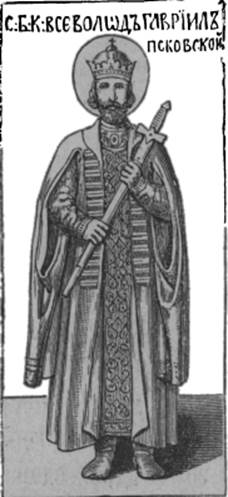
Подвизайся добрым подвигом веры, достигай вечной жизни, для которой ты и призван» (1Тим.6:12): так учил Апостол. Значит, могут быть и громкие дела на земле и не быть достойными желаний души бессмертной. Да, напрасны труды и подвиги, если они не одушевлены святою верою, если они не имеют значения для блаженной вечности. Почести, слава, знатность ценны ли по себе, когда проходят как сон? Жизнь князя Всеволода-Гавриила и в круге общественном и в круге частном была жизнию для вечности157. Потому-то известность его прочна.
"Fight the good fight of faith, lay hold on eternal life, whereunto thou art also called" (1 Tim. 6:12): so taught the Apostle. This means that there may be loud deeds on earth and yet they may not be worthy of the desires of the immortal soul. Yes, vain are labors and feats if they are not animated by holy faith, if they have no significance for blessed eternity. Are honors, glory, and nobility valuable in themselves, when they pass away like a dream? The life of Prince Vsevolod-Gabriel, both in the public sphere and in the private, was a life for eternity157. Therefore his fame is enduring.
Сын святого великого князя Мстислава и внук доблестного великого князя Владимира Мономаха является в жизни общественной в 1117 году. В этом году престарелый Мономах вызвал Мстислава из Новгорода в Киевский Белград, чтобы иметь в нем помощника себе, а в Новгороде велел оставить внука, юного Всеволода. Достойный сын великого Мстислава много сделал добра для Новгородцев, но они заплатили ему за то скорбями.
The son of the holy Grand Prince Mstislav and grandson of the valiant Grand Prince Vladimir Monomakh appears in public life in the year 1117. In that year the aged Monomakh summoned Mstislav from Novgorod to Kiev's Belgorod, to have him as a helper, and in Novgorod he ordered his grandson, the young Vsevolod, to remain. The worthy son of the great Mstislav did much good for the Novgorodians, but they repaid him with sorrows.
Начало своего княжения юный, добрый князь ознаменовал построением великолепного храма в Юрьевой обители. «Князь Всеволод Мстиславич, говорит летопись, заложил (в 1119 году) вместе с игуменом Кириаком каменную церковь в Великом Новгороде, в 3-х верстах от города, во имя святого великомученика Георгия; и устроили монастырь великий, собрали братию; князь Всеволод докончил храм и освятили его»158. «Вот я Всеволод дал св. Георгию серебряное блюдо, в 30 гривен серебра; велел бить в него на обед, когда обедает игумен»: так говорит смиренный князь в прибавлении к грамоте отца своего, которою тот дал монастырю село Буйце159. Всеволод дал еще Юрьеву монастырю погост Ляховичи с землею и с людьми и с коньми и лес и борти и ловища160. – Мир хочет жить только для своего удовольствия. «Чти Иегову из имения своего и из всех начатков доходов своих», говорит Богодухновенная мудрость (Притч.3:9). И князь Всеволод поступил не по правилам мира забывчивого, а по внушениям любви к Господу.
The young, good prince marked the beginning of his reign by building a magnificent church in the Yuriev monastery. "Prince Vsevolod Mstislavich," says the chronicle, "laid the foundation (in 1119) together with Abbot Kyriakos of a stone church in Great Novgorod, three versts from the city, in the name of the holy Great Martyr George; and they established a great monastery and gathered a brotherhood; Prince Vsevolod completed the church and they consecrated it"158. "Behold, I, Vsevolod, have given to St. George a silver dish, of 30 grivnas of silver; I ordered that it be struck at dinner, when the abbot dines": so says the humble prince in an addition to the charter of his father, by which the latter gave the monastery the village of Buitse159. Vsevolod also gave to the Yuriev monastery the pogost of Lyakhovichi with land, with people, and with horses, and forest, and beehives, and fishing grounds160.—The world wants to live only for its own pleasure. "Honor the Lord with thy substance, and with the firstfruits of all thine increase," says the God-inspired wisdom (Prov. 3:9). And Prince Vsevolod acted not according to the rules of the forgetful world, but according to the promptings of love for the Lord.
В 1122 г. женился он на дочери св. князя Черниговского Николая Святоши и весною 1123 г. совершил с Новгородскими дружинами тяжелый поход в Финляндию; не смотря на неблагоприятную погоду, дурные дороги и недостаток продовольствия, он разбил на голову врагов, разорявших пограничные места Новгородские161.
In 1122 he married the daughter of the holy prince of Chernigov, Nicholas Svyatosha, and in the spring of 1123 he made with the Novgorod druzhinas a difficult campaign into Finland; despite unfavorable weather, bad roads, and lack of provisions, he utterly defeated the enemies who were ravaging the borderlands of Novgorod161.
Благочестивый князь (1127 г.) построил на Торговой Новгородской площади, на Петрятине дворище, храм свят. Иоанна Предтечи, храм великолепный, снабженный дорогими иконами, весьма ценным евангелием и всеми книгами, при том с придельным храмом, где должна совершаться ранняя литургия по воскресным дням. Это было делом молитвы за сына Иоанна. – Но сын скоро умер162. Иные молитвы наши не выполняются в том виде, в каком хотели бы мы видеть исполнение их; не исполняются от того, что Всевидящий и Благий лучше нас видит и усерднее нас готовит нам лучшее для нас. Князь, благоговейный к воле Божией, оплакал кончину сына, как отец, но с молитвою за почившего выдал для нового храма грамоту, замечательную по ее содержанию. Он обеспечил ею и содержание храма, и содержание причта, и предписывал праздновать память Предтечи великолепно. Старосты храма собирали пошлину со всех предметов торговли. В храмовой праздник совершал литургию владыка; на другой день – Юрьевский архимандрит; на третий – игумен Антониевский. Всем назначены богатые дары. Так благочестивый князь убежден был, что Новгородская торговля будет процветать под влиянием молитв и усердия к Господу. В той же грамоте писал он: «на Торжке даю пуд вощанный (пошлины за вес воска), половину Св. Спасу, а половину св. великому Иоанну на Петрятине дворище». Эти слова князя дают видеть, что жалованьем его пользовались причты не в одном Новгороде163. Еще замечательнее грамота его для кафедрального Софийского собора, написанная в одно время с Предтечевою164. Здесь князь, по примеру св. Владимира, во первых предоставляет Новгородскому святителю наблюдать за торговыми весами и мерами с тем, чтобы половина пошлины шла на Софийскую кафедру, а другая на церковь Иоанна Предтечи; из штрафа же с виновных чиновников одна треть поступала бы в пользу города; далее перечисляет предметы суда святительского, с которого пошлины должны обращаться в пользу святителя и кафедрального причта; наконец показывает лиц, подлежащих ведению святителя. Князь не раз при том повторяет: «в церковные суды не вмешиваться ни детям, ни внукам моим, ни наместникам, ни тиунам (судьям)»; а в конце говорит: «приказываю моим тиунам не оскорблять церковного суда и с суда давать девять частей князю, а десятую св. Софии». Весьма замечательны правила грамоты о правах братьев и сестер на наследство. По «Русской Правде» дочерям боярина дается часть наравне с сыновьями, а дочери смерда (простого свободного человека) получают равную часть только тогда, когда не выданы замуж; иначе братья дают только приданое. Блаженный князь пишет: «если после кого-нибудь останутся сыновья и дочери, то как сыновьям, так и дочерям следует из всего имущества по равной части». Постановление, как видно, вполне согласное с духом христианской любви! Князь лишает наследства только нецеломудренную дочь; но и при этом говорит: «если брат, из желания корысти, взведет на свою сестру ложь, то он повинен за то смерти».
The pious prince (in 1127) built on the Novgorod market square, on the Petryatin court, a church of St. John the Forerunner—a magnificent church, furnished with precious icons, a very valuable Gospel, and all the books, and with a side chapel where an early Divine Liturgy was to be served on Sundays. This was a work of prayer for his son John.—But the son soon died162. Some of our prayers are not fulfilled in the form in which we would wish to see them fulfilled; they are not fulfilled because the All-Seeing and Good One sees better than we do and more zealously than we prepares what is better for us. The prince, reverent toward the will of God, mourned the death of his son as a father, but with prayer for the departed one issued for the new church a charter remarkable for its content. By it he secured both the maintenance of the church and the maintenance of the clergy, and prescribed that the memory of the Forerunner be celebrated magnificently. The elders of the church collected a toll on all articles of trade. On the feast day of the church the vladyka served the Divine Liturgy; on the second day, the archimandrite of Yuriev; on the third, the abbot of the Antoniev monastery. Rich gifts were appointed for all. Thus the pious prince was convinced that Novgorod's trade would flourish under the influence of prayers and zeal for the Lord. In the same charter he wrote: "In Torzhok I give a pood of wax (the toll for weighing wax), half to Holy Savior, and half to St. great John on the Petryatin court." These words of the prince show that his grants were enjoyed by the clergy not only in Novgorod163. Even more remarkable is his charter for the cathedral Church of St. Sophia, written at the same time as that of the Forerunner164. Here the prince, following the example of St. Vladimir, first entrusts the Novgorod hierarch with oversight of the trade weights and measures, so that half the toll should go to the Sophia see, and the other half to the church of John the Forerunner; and of the fine from guilty officials, one third should go to the benefit of the city; then he enumerates the matters of hierarchal judgment, from which the tolls should go to the benefit of the hierarch and the cathedral clergy; finally he indicates the persons subject to the hierarch's jurisdiction. The prince repeatedly adds: "Into church courts let neither my children nor my grandsons interfere, nor deputies, nor tiuns (judges)"; and at the end he says: "I command my tiuns not to offend the church court, and from the court to give nine parts to the prince, and the tenth to St. Sophia." Very remarkable are the rules of the charter concerning the rights of brothers and sisters to inheritance. According to the "Russkaya Pravda," to the daughters of a boyar a share is given equal to that of sons, while the daughter of a smerd (a simple free man) receives an equal share only when she has not been given in marriage; otherwise the brothers give only a dowry. The blessed prince writes: "If after anyone there remain sons and daughters, then both to sons and to daughters there should come from all the property an equal share." A decree, as is evident, fully in accord with the spirit of Christian love! The prince deprives of inheritance only an unchaste daughter; but even then he says: "If a brother, out of desire for gain, should bring a false accusation against his sister, he is liable to death for that."
В том же самом году, когда благочестивый князь, по любви к Господу, изливал столько благодеяний на Церковь Христову, Господь посетил Новгородскую сторону тяжким бедствием. Весною долго лежал снег, а осенью были сильные морозы и открылся сильный голод. Народ питался липовым листом, березовою корою, молотою соломою и мохом; люди падали от голоду и умирали; родители отдавали детей иноземным купцам на пропитание. В это печальное время Всеволод явил всю отеческую любовь свою к народу: он был питателем нищих и голодных, истощал на них казну свою, но и ее не доставало для множества просящих; благочестивый князь убедил страдавших готовиться к вечности165.
In that same year in which the pious prince, out of love for the Lord, poured out so many benefactions upon the Church of Christ, the Lord visited the Novgorod region with a grievous calamity. In spring the snow lay long, and in autumn there were severe frosts, and a great famine broke out. The people fed on linden leaves, birch bark, ground straw, and moss; people fell from hunger and died; parents gave their children to foreign merchants for sustenance. In this sorrowful time Vsevolod showed all his fatherly love for the people: he was a nourisher of the poor and hungry, exhausting his treasury upon them, but even that was not enough for the multitude of those asking; the pious prince urged the sufferers to prepare themselves for eternity165.
В 1130 году по воле отца своего, великого князя России, Всеволод и два брата его ходили смирять Эстов; непокорные враги преданы были мечу, имущества их сожжены, а жены и дети взяты в плен. не так счастлив был поход одного Всеволода в Эстонию, в 1131 году. Эстонцы обложены были данью, но много Новгородцев побито было в Клину, в углу нынешнего Дерптского уезда; зато со славою воевал он в том же году с Литвою и заставил ее платить дань166.
In the year 1130, by the will of his father, the Grand Prince of Russia, Vsevolod and his two brothers went to subdue the Estonians; the rebellious enemies were given over to the sword, their property was burned, and their wives and children were taken captive. Less fortunate was the campaign of Vsevolod alone into Estonia in the year 1131. The Estonians were subjected to tribute, but many Novgorodians were slain at Klin, in a corner of what is now the Dorpat district; however, with glory he warred in the same year against Lithuania and compelled it to pay tribute166.
В 1132 году дядя Всеволода, князь Ярополк, вступив на Киевский престол, отдал Всеволоду южный Переяславль, считавшийся старшим после Киева. С неудовольствием отпустили Новгородцы Всеволода; а между тем младшие сыновья Мономаха и дяди Всеволода восстали за Переяславль против великого князя; он хочет, говорили они, сделать племянника наследником Киевского престола. Утром въехал Всеволод в Переяславль и до обеда выгнан был дядею Юрием. – Избегая междоусобия, Богобоязненный князь возвратился в Новгород; но гордая вольница уже забыла благодетельное правление и громкие победы Всеволода, и не хотела принять его. – Впрочем на этот раз Новгородцы скоро одумались и пригласили к себе столько благотворившего им князя; только ограничили власть его новыми правами посадников своих. В 1133 году князь, заботливый о покое Новгородцев, ходил в Эстонию и взял Дерпт. В следующем году брат его Изяслав, изгнанный, по милости Юрия, из Турова, явился в Новгород за помощью против Юрия, дерзко оскорблявшего Мстиславичей. Новгородцы зашумели, вызываясь защищать Изяслава против властолюбивого Юрия, требовали похода; Всеволод изъявил согласие с волею веча, выступил с войском, но, не желая иметь дело с дядею, отпустил Изяслава в Чернигов и возвратился в Новгород. Новгородцы, не взирая ни на что, хотели воевать с Юрием. Напрасно митрополит Михаил уговаривал их и указывал на опасность зимнего похода. Посадник Давид послан был вместе с Всеволодом и сильною дружиною к Суздалю. Это было 31-го декабря. Метели и жестокий мороз преследовали Новгородское войско и очень обессилили. Января 26 (1135 г.) произошло кровопролитное сражение на Ждановой горе. Суздальцев больше было побито, чем Новгородцев; но победы не было на стороне последних, и они вынуждены были заключить мир. В том же году блаженный князь вместе с благочестивым архипастырем Нифонтом основал каменный великолепный храм св. Климента, но ему не довелось оканчивать его. В мае 1136 года вспыхнул мятеж в Новгороде. Гордые своевольники в гневе за то, что не удалось им повеличаться победою над Суздальцами, объявили Всеволода лишенным власти. Мало и того: они заключили его в княжеском доме с женою, детьми и тещею; семь недель держали его как преступника, за стражею 30 воинов. Когда князь Святослав Ольгович, друг Юрия, приехал по призыву княжить в Новгороде, они освободили Всеволода, но оставили у себя заложником сына его.
In the year 1132, Vsevolod’s uncle, Prince Yaropolk, having ascended the throne of Kiev, gave Vsevolod the southern Pereyaslavl, which was considered the senior city after Kiev. The Novgorodians let Vsevolod go with displeasure; meanwhile, the younger sons of Monomakh and Vsevolod’s uncles rose up against the Grand Prince over Pereyaslavl. “He wishes,” they said, “to make his nephew the heir to the throne of Kiev.” In the morning Vsevolod entered Pereyaslavl, and before dinner he was driven out by his uncle Yuri. – Avoiding internecine strife, the God-fearing prince returned to Novgorod; but the proud freemen had already forgotten the beneficent rule and glorious victories of Vsevolod, and would not receive him. – However, this time the Novgorodians soon came to their senses and invited back the prince who had done so much good for them; only they limited his authority by new rights of their posadniks. In the year 1133, the prince, solicitous for the peace of the Novgorodians, went to Estonia and took Dorpat. The following year, his brother Izyaslav, driven out, through the favor of Yuri, from Turov, appeared in Novgorod seeking help against Yuri, who had insolently insulted the Mstislavichi. The Novgorodians raised a clamor, offering to defend Izyaslav against the ambitious Yuri, and demanded a campaign; Vsevolod expressed his agreement with the will of the veche, set out with the army, but, not wishing to have dealings with his uncle, sent Izyaslav to Chernigov and returned to Novgorod. The Novgorodians, regardless of everything, wanted to war with Yuri. In vain did Metropolitan Michael try to dissuade them, pointing out the danger of a winter campaign. The posadnik David was sent together with Vsevolod and a strong retinue to Suzdal. This was on the 31st of December. Snowstorms and severe frost beset the Novgorodian army and greatly weakened it. On January 26 (1135 A.D.) a bloody battle took place at Zhdanova Hill. More Suzdalians were slain than Novgorodians; but victory was not on the side of the latter, and they were compelled to conclude peace. In the same year, the blessed prince, together with the pious archpastor Niphon, founded a magnificent stone church of St. Clement, but he was not destined to complete it. In May of 1136, a rebellion broke out in Novgorod. The proud self-willed men, angry that they had not been able to boast of a victory over the Suzdalians, declared Vsevolod deprived of authority. That was not enough: they imprisoned him in the prince’s house with his wife, children, and mother-in-law; for seven weeks they held him like a criminal, under a guard of thirty soldiers. When Prince Svyatoslav Olgovich, a friend of Yuri, arrived at the summons to reign in Novgorod, they freed Vsevolod, but kept his son as a hostage.
Добродушный великий князь Ярополк дал изгнанному Всеволоду Вышгород. Псковитяне, дорожа и благодеяниями и высокими качествами Всеволода, с живым усердием просили его к себе, и Всеволод согласился на призыв любви. На дороге имел оп утешение видеть на опыте, что христианская любовь еще жила между князьями его времени. Полоцкий князь Василий, тогда как мог мстить Всеволоду за обиды, нанесенные отцом его, принимал и провожал Всеволода со всею братскою любовью. В Пскове приняли Всеволода с восторгом. Благочестивый князь немедленно заложил каменный храм Святые Троицы, оконченный в следующем году. Новгородцы подняли было войну за то, что Всеволода приняли в Пскове; но конец земного пути св. князя близился скорее, чем войска неблагодарных Новгородцев. Блаженный князь во всю жизнь свою любил Господа и Его служителей; любил читать полезные книги и списывал их; любил нищих, которых снабжал всем щедро. Предчувствуя близкую смерть свою, он удвоил подвиги святой любви: сам перевязывал раны больным и смирял себя еще постом. Очищенный столькими скорбями в последние годы, блаженный Всеволод мирно скончался 11-го февраля 1138 года167.
The kindly Grand Prince Yaropolk gave the exiled Vsevolod Vyshgorod. The Pskovites, valuing both the benefactions and the high qualities of Vsevolod, with lively zeal begged him to come to them, and Vsevolod agreed to the call of love. On the way he had the consolation of seeing in practice that Christian love still lived among the princes of his time. The Prince of Polotsk, Basil, although he could have taken vengeance on Vsevolod for the wrongs inflicted by his father, received and saw Vsevolod off with all brotherly love. In Pskov, Vsevolod was received with delight. The pious prince immediately laid the foundation of a stone church of the Holy Trinity, which was completed the following year. The Novgorodians raised a war because Vsevolod had been received in Pskov; but the end of the earthly path of the holy prince was drawing nearer than the armies of the ungrateful Novgorodians. The blessed prince throughout his whole life loved the Lord and His servants; he loved to read useful books and copied them; he loved the poor, whom he supplied generously with everything. Foreseeing his imminent death, he redoubled the labors of holy love: he himself bound up the wounds of the sick and humbled himself further by fasting. Purified by so many sorrows in his last years, the blessed Vsevolod peacefully reposed on the 11th of February, 1138 A.D.167.
Мощи благов. князя погребены в построенном им храме великомуч. Димитрия; обретены нетленными спустя 52 года после его кончины; в 1192 г. св. князь явился в видении Богобоязненному человеку и сказал: «объяви властям, чтобы перенесли мощи в храм Св. Троицы; там хочу я возлечь. Господь Иисус Христос предал мне город Псков, чтобы хранил я его». Святые мощи благоговейно перенесены были в Троицкий собор168. В 1284 году, при раке св. князя совершилось чудо над бывшим Псковским посадником Елисеем. Старый посадник лежал расслабленный всем телом, так что не мог двинуть ни одного из членов своих. По вере в благодатную силу св. князя, велел он несть себя к мощам его. Когда священник, совершив молебствие, окропил больного святою водою, расслабленный встал и без помощи других возвратился в дом. В 1363 году спавшему в притворе храма пономарю явился св. князь Гавриил и сказал: «завтра объяви собору Св. Троицы и посадникам, чтобы вынесли иконы из церкви; в следующую ночь Бог покажет чудо над моими мощами». Приказание исполнено, и ночью пал громадный свод храма, но не причинил почти никакого вреда честным мощам святого, только отшиблена часть челюстей князя. Мощи поставлены потом в придельном храме Благовещения Богоматери. Впоследствии много совершилось чудес при мощах св. князя. В 1703 году устроен был в соборе придел во имя его. На гробнице его висит меч его с надписью: «honorem meum nemini dabo», – чести моей не уступлю никому169.
The relics of the Right-believing Prince were buried in the church of the Great Martyr Demetrius which he had built; they were found incorrupt fifty-two years after his repose. In 1192 A.D., the holy prince appeared in a vision to a God-fearing man and said: “Declare to the authorities that they should translate my relics to the church of the Holy Trinity; there I wish to lie. The Lord Jesus Christ has entrusted the city of Pskov to me, that I might guard it.” The holy relics were reverently translated to the Trinity Cathedral168. In 1284 A.D., a miracle was performed at the shrine of the holy prince over the former Pskov posadnik Elisha. The aged posadnik lay paralyzed in his whole body, so that he could not move any of his limbs. By faith in the grace-filled power of the holy prince, he ordered himself to be carried to his relics. When the priest, having performed a moleben, sprinkled the sick man with holy water, the paralytic arose and returned home without the help of others. In 1363 A.D., the holy prince Gabriel appeared to a sexton sleeping in the narthex of the church and said: “Tomorrow declare to the cathedral of the Holy Trinity and to the posadniks that they should carry the icons out of the church; on the following night God will show a miracle upon my relics.” The command was carried out, and during the night the enormous vault of the church fell, but caused almost no harm to the venerable relics of the saint; only a part of the prince’s jaw was broken off. The relics were then placed in a side-chapel of the Annunciation of the Mother of God. Afterwards, many miracles were performed at the relics of the holy prince. In 1703 A.D., a side-chapel was built in the cathedral in his name. Upon his tomb hangs his sword with the inscription: “honorem meum nemini dabo” – “I will yield my honor to no one”169.
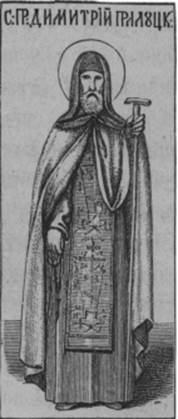
Рожденный от богатых родителей купеческого звания в суеверном Переяславле, Димитрий170 в юности обучен был чтению книг; но с юности уже не чувствовал склонности к занятиям отца своего; постриженный в иночество в Нагорном Борисоглебском монастыре171, жизнию чистою, равноангельскою, снискал он себе любовь братии. Ревнуя о умножении славы Божией, основал на берегу Переяславского озера Николаевский монастырь, с правилами строгого общежития. Игумен новой обители скоро собрал себе много учеников, благоговейно внимавших наставлениям его. Друзья Божии любят друг друга. Преп. Димитрий в первый раз познакомился с великим пустынником Сергием, конечно, тогда, как преп. Сергий приходил в Переяславль просить игумена для своей обители, и сколько ни отказывался, посвящен был сам в игумена блажен. епископом Афанасием. Это было в 1354 году172. С того времени преп. Димитрий часто ходил к преп. Сергию для духовных бесед и возвращался с одушевлением на новые подвиги. Блаж. Димитрий был весьма красив лицом и красота его расцветала от поста: во избежание искушений, в обители, посещаемой мирскими людьми, он закрывал лице свое кукулем и бегал жен. Одна из именитых жен Переяславских, слышавши о необыкновенной красоте его, захотела непременно видеть лице его, и ей удалось это тогда, как преподобный готовился к священнослужению; но нецеломудренная внезапно поражена была расслаблением. Братия, увидев жалкое положение ее, сжалились над нею и просили настоятеля простить ее. Тронутый раскаянием в слезами ее, он сказал: «зачем ты хотела видеть грешника, уже умершего миру?» и крестным знамением возвратил ей здравие.
Born of wealthy parents of the merchant class in superstitious Pereyaslavl, Demetrius170 was taught to read books in his youth; but from his youth he already felt no inclination toward his father's trade. Tonsured into monasticism in the Nagorny Borisoglebsky Monastery171, by a pure and angelic life he won the love of the brethren. Zealous for the increase of the glory of God, he founded the St. Nicholas Monastery on the shore of Lake Pereyaslavl, with rules of strict cenobitic life. The abbot of the new monastery soon gathered many disciples, who reverently heeded his instructions. The friends of God love one another. The Venerable Demetrius first became acquainted with the great hermit Sergius, of course, when the Venerable Sergius came to Pereyaslavl to ask for an abbot for his monastery, and, however much he refused, was himself consecrated abbot by the blessed Bishop Athanasius. This was in the year 1354172. From that time, the Venerable Demetrius often went to the Venerable Sergius for spiritual conversations and returned inspired for new labors. The blessed Demetrius was very handsome of face, and his beauty flourished through fasting; to avoid temptations, in the monastery, which was visited by worldly people, he covered his face with his cowl and fled from women. One of the noblewomen of Pereyaslavl, having heard of his extraordinary beauty, wanted at all costs to see his face, and she succeeded in this when the venerable one was preparing for the divine service; but the unchaste woman was suddenly struck with paralysis. The brethren, seeing her pitiable condition, took pity on her and asked the superior to forgive her. Touched by her repentance and tears, he said: "Why did you wish to see a sinner who is already dead to the world?" and by the sign of the cross he restored her to health.
Слух о высокой жизни преподобного Димитрия дошел до великого князя Димитрия, и он пригласил преподобного к себе, чтоб был он восприемником детей его. Преподобный исполнил желание доброго князя и получил от него щедрые дары для обители. Но, бегая славы человеческой, решился он удалиться в глухое место.
The report of the lofty life of the Venerable Demetrius reached the Grand Prince Demetrius, and he invited the venerable one to him, that he might be the godfather of his children. The venerable one fulfilled the desire of the good prince and received from him generous gifts for the monastery. But, fleeing from human glory, he resolved to withdraw to a remote place.
Взяв с собою любимого ученика своего Пахомия, преподобный отправился на север, тогда малолюдный, в Вологодские леса. Здесь на р. Великой, вблизи Авнежского селения, построил он храм Воскресения Христова; но окрестные жители, по привязанности к земному, не желая лишиться участков земли, не дозволили ему строить здесь монастырь. Преподобный доволен был, что построил храм Божий там, где имели в нем крайнюю нужду. – «У людей этого края, говорит древнее житие, мало было духовной пищи Божественного писания и назидания. Придя в эту страну, преподобный видел и слышал, что церквей Божиих еще мало в ней». Потому живо чувствовал, что надобно умножать в ней храмы. Не желая никому быть в тягость, преподобный удалился из Авиежского в Вологду; здесь были храмы и знали о монастырях, но на всем севере не было общежития иноческого. – За три версты от Вологды преподобный полюбил уединенное место при луке, образуемой коленом р. Вологды, и здесь решился основать общежительную обитель. Владельцы места (Илья и Исидор) оказались такими добрыми людьми, что не только с любовью уступили ему землю свою, но даже затоптали озимые нивы свои, лишь бы только немедленно построен был храм. Жаркое усердие явилось и у граждан Вологды. Каждый спешил жертвовать преподобному, что мог, для сооружения храма. И скоро построился (в 1371 году) храм в честь Спасителя. Когда узнали о водворении преподобного в Прилуках, многие из учеников перешли из Переяславля к любимому наставнику, в Прилуки. Так составилась общежительная обитель, первая в Вологодском краю173. Великий князь Димитрий Донской, узнав о том, прислал от себя пожертвования для новой обители преподобного Димитрия. Однажды Прилукские братия сказали игумену своему: «мало книг у нас». Преподобный отвечал: «если без лености будем хвалить Бога, то довольно и обычных книг. И они, как труба Божия, поют днем и ночью, нужна только чистота сердечная, духовная любовь и смирение». Сам он любил беседовать с Господом в молитве; для того, чтобы не видали другие слезной молитвы его, с левой стороны алтаря пристроено было им из досок место, и здесь он молился наедине. Обитель его стояла на дороге в великую Пермь: посетителей бывало много, но он никогда не оставлял молитвенного правила своего для посетителей. «Не ищи не только богатства, но и достатка, писал Великий Василий иноку, не ищи ни земной славы, ни земного могущества, ни излишнего телесного здоровья; не ищи никаких земных связей и ничего преходящего, а непрестанно всеми силами ищи, как повелено, Царствия Божия (Мф.6:38), т. е. спасения души; спасение души есть самое главное дело для человека. Потому день и ночь старайся устроять свое спасение»174. Так и поступал преподобный Димитрий. Не ища ничего от людей, он, по правилу Апостола, считал себя должником пред другими только по любви; потому в обители его находили себе пищу бедняки. Иногда подавал он им пособия тайно от братий, чтобы не возмутить покоя последних. Сам, довольствуясь только просфорою с теплою водою (таков был пост его даже и в те дни, когда уставом разрешалось вкушать рыбу и вино), он обходил монастырские угодья и заботился о том, чтобы для трапезы братии вовремя доставлялось все нужное. Одежда у него зимою и летом была одна: овчинный закорузлый тулуп, под которым летом бывал он мокрым от жары, а зимою страдал от морозов. Но для братий он ходил вместе с ними на работы. Для братии принимал он подаяние от мирских, но разборчиво. Одному из мнивших быть благотворителем сказал он: «отнеси назад, что принес нам, и накорми слуг и сирот (крестьян), живущих у тебя, чтобы не страдали они от голода и наготы; когда останется от того что-нибудь, принеси нашей нищете». Принесший едва мог умолить преподобного, чтобы дозволил он братии взять что-нибудь из принесенного для благословения трудов его. Так врачевал он богатого скупца и вместе предостерегал братию от участия в делах любви лицемерной, не искренней.
Taking with him his beloved disciple Pachomius, the Venerable one set out for the north, then sparsely populated, into the forests of Vologda. Here, on the River Velikaya, near the settlement of Avnega, he built a church of the Resurrection of Christ; but the local inhabitants, out of attachment to earthly things and not wishing to lose their plots of land, did not permit him to build a monastery here. The Venerable one was content that he had built a church of God where they had extreme need of it. – “The people of this region,” says the ancient Life, “had little spiritual food of Divine Scripture and edification. Coming to this land, the Venerable one saw and heard that there were still few churches of God in it.” Therefore he keenly felt that it was necessary to multiply churches in it. Not wishing to be a burden to anyone, the Venerable one withdrew from Avnega to Vologda; here there were churches and they knew about monasteries, but throughout the entire north there was no cenobitic monasticism. – Three versts from Vologda, the Venerable one came to love a solitary place at a bend formed by a loop of the Vologda River, and here he resolved to found a cenobitic monastery. The owners of the place (Ilya and Isidore) proved to be such good people that they not only gladly yielded their land to him, but even trampled down their winter crops, so that the church might be built without delay. Ardent zeal also appeared among the citizens of Vologda. Each hastened to offer the Venerable one what he could for the construction of the church. And soon (in 1371) a church was built in honor of the Savior. When they learned of the Venerable one’s settlement in Priluki, many of his disciples moved from Pereslavl to their beloved teacher in Priluki. Thus was formed a cenobitic monastery, the first in the Vologda region173. Grand Prince Demetrius of the Don, learning of this, sent donations from himself for the new monastery of the Venerable Demetrius. Once the brethren of Priluki said to their abbot: “We have few books.” The Venerable one replied: “If without laziness we praise God, then the usual books are sufficient. And they, like a trumpet of God, sing day and night; only purity of heart, spiritual love, and humility are needed.” He himself loved to converse with the Lord in prayer; so that others might not see his tearful prayer, on the left side of the altar he built a place of boards, and here he prayed in solitude. His monastery stood on the road to Great Perm: there were many visitors, but he never abandoned his prayer rule for visitors. “Seek not only wealth, but even sufficiency,” wrote St. Basil the Great to a monk, “seek neither earthly glory, nor earthly power, nor excessive bodily health; seek no earthly ties nor anything transitory, but unceasingly with all your strength seek, as it is commanded, the Kingdom of God (Mt. 6:33), that is, the salvation of the soul; the salvation of the soul is the most important thing for man. Therefore day and night strive to arrange your salvation”174. So also did the Venerable Demetrius act. Seeking nothing from men, according to the rule of the Apostle, he considered himself a debtor to others only in love; therefore in his monastery the poor found food. Sometimes he gave them aid secretly from the brethren, so as not to disturb the peace of the latter. Content himself only with a prosphora and warm water (such was his fast even on those days when the rule permitted the eating of fish and wine), he went around the monastery lands and cared that everything needed for the brethren’s meal be supplied in time. His clothing winter and summer was one and the same: a stiff sheepskin coat, under which in summer he was wet from the heat, and in winter he suffered from the frosts. But for the brethren he went with them to the labors. For the brethren he accepted alms from the worldly, but discerningly. To one who imagined himself a benefactor he said: “Take back what you have brought us, and feed the servants and orphans (peasants) living with you, so that they may not suffer from hunger and nakedness; when something remains from that, bring it to our poverty.” The one who brought could scarcely entreat the Venerable one to allow the brethren to take something from what was brought as a blessing for his labors. Thus he healed the rich miser and at the same time warned the brethren against participation in the works of hypocritical, insincere love.
Родной брат его, не имевший счастия в торговле Переяславской, два раза приходил к нему в обитель за благословением на путь для торговли, «в поганския человеки, еже зовут Югра и Печера, идеже живут Чудь и Самоядь». – Преподобный два раза давал ему благословение, дарившее брата счастием неожиданным; возвратясь в первый раз, уплатил он долга свои, в другой раз стал богатым человеком. Не довольствуясь тем, пришел он в третий раз. Преподобный сказал: «довольно, брат, можешь прожить и с тем, что приобрел, не ходи более, не погибнуть бы тебе от зверских людей». Брат не послушался и уже не возвратился ни с добычею, ни без добычи. Раз занимался он вместе с братиею на дворе монастырском работою и, вздохнув, сказал им: «мы, братия, строим земные, тленные дела; а благоверный великий князь Димитрий уже не печется о суетной жизни». II с того дня стал поминать великого князя Димитрия между усопшими. Спустя несколько дней пришло известие, что великий князь скончался, и скончался в тот самый день и час, когда говорил о том св. Димитрий (1389 г., мая 19-го).
His own brother, who had no success in the trade of Pereslavl, came to him twice to the monastery for a blessing on the journey for trade, “to the pagan peoples, called Yugra and Pechora, where the Chud and Samoyeds live.” – The Venerable one twice gave him his blessing, which granted his brother unexpected success; returning the first time, he paid off his debts; the second time he became a rich man. Not content with that, he came a third time. The Venerable one said: “Enough, brother, you can live on what you have acquired; go no more, lest you perish at the hands of savage people.” The brother did not listen and never returned, neither with spoil nor without spoil. Once he was working together with the brethren in the monastery courtyard and, sighing, said to them: “We, brethren, build earthly, perishable things; but the right-believing Grand Prince Demetrius no longer cares for vain life.” And from that day he began to commemorate Grand Prince Demetrius among the departed. Several days later news came that the Grand Prince had reposed, and had reposed on that same day and hour when St. Demetrius spoke of it (1389, May 19).
Достигнув глубокой старости и чувствуя близость кончины своей, преподобный назначил в преемники себе ученика своего Пахомия. Братия спрашивали, где похоронить его? «Бросьте, отвечал он, грешное тело мое в болото». Он уединился затем для молитв и скончался 11-го февраля 1392 года. Никого не было при кончине уединенного молитвенника; но когда пришли в келью его, – келья его исполнена была чудного благоухания, а он лежал, как заснувший. – Благоговейные ученики похоронили тело его в храме, который построил он сам.
Having reached a deep old age and feeling the nearness of his end, the Venerable one appointed his disciple Pachomius as his successor. The brethren asked where to bury him. “Throw,” he replied, “my sinful body into the swamp.” He then withdrew for prayer and reposed on February 11, 1392. No one was present at the end of the solitary man of prayer; but when they came to his cell, his cell was filled with a wondrous fragrance, and he lay as if asleep. – The reverent disciples buried his body in the church which he himself had built.
Спустя 16 лет после кончины преподобного, посетила жителей Вологды страшная и странная болезнь. Весьма многие страдали от сильного корчения; им давали в руки палку, чтобы в корчах, держась за нее, не делали себе вреда; много таких страдальцев привезено было ко гробу преподобного; здесь, в муках корчей валяясь, каялись они в грехах, призывали молитву преподобного на помощь и при гробе преподобного получали исцеление; их палки оставались в обители памятниками милости Божией. Это было в 1409 г. Тогда помянутая болезнь известна была и в других местах, от Рязани и Москвы до Вологды175. Не долго после того (1417 г.) Вятчане напали на Вологду и вошли в Прилуцкий монастырь, еще не огражденный стеною; самые наглые ворвались в храм, и один, сдирая пелены с икон, коснулся покрова, лежащего на гробе преподобного. Но лишь только коснулся последнего, как брошен был на пол и в муках умер. Это так устранило вождей Вятских, что они поспешили отпустить пленных обители, и в свою сторону возвратились немногие из грабителей. Вятчане долго памятовали это чудо, и раз с одним иноком обители, Закхеем, прислали богатую милостыню в обитель176.
Sixteen years after the repose of the Venerable one, a terrible and strange illness visited the inhabitants of Vologda. Very many suffered from violent convulsions; they were given a stick in their hands so that in their convulsions, holding onto it, they might not harm themselves; many such sufferers were brought to the tomb of the Venerable one; here, writhing in the torments of convulsions, they repented of their sins, called upon the prayer of the Venerable one for help, and at the tomb of the Venerable one received healing; their sticks remained in the monastery as memorials of God’s mercy. This was in 1409. That same illness was known in other places as well, from Ryazan and Moscow to Vologda175. Not long after that (1417), the Viatkans attacked Vologda and entered the Priluki monastery, not yet fortified with a wall; the most insolent broke into the church, and one, stripping the coverings from the icons, touched the veil lying on the tomb of the Venerable one. But no sooner had he touched it than he was thrown to the floor and died in torments. This so terrified the Viatkan leaders that they hastened to release the prisoners of the monastery, and few of the plunderers returned to their own side. The Viatkans long remembered this miracle, and once, with a certain monk of the monastery, Zacchaeus, they sent rich alms to the monastery176.
Князь Димитрий Шемяка, ведя несовестливую войну с великим князем Василием, в зимнее время подступил под Вологду. Осажденный город трепетал жестокого неприятеля. В следующую ночь инокиня видела такое видение: город окружен был светом, и святолепный старец шел к нему по дороге из Прилуцкой обители; к нему вышли на встречу из скудельницы два белоризца; стены города колебались. Белоризцы и старец, которого они называли Димитрием, обошли город и скрылись. На другой день граждане Вологды тучею стрел и камней отразили сильный приступ Шемяки и побили множество врагов. Шемяка, простояв потом несколько дней, принужден был удалиться к Галичу, но и там потерпел поражение177.
Prince Demetrius Shemyaka, waging an unconscientious war with Grand Prince Basil, approached Vologda in the winter season. The besieged city trembled before the cruel enemy. The following night a nun saw a vision: the city was surrounded by light, and a saintly elder was walking toward it along the road from the Priluki monastery; two white-robed men came out to meet him from the potter’s field; the walls of the city were shaking. The white-robed men and the elder, whom they called Demetrius, went around the city and vanished. The next day the citizens of Vologda, with a cloud of arrows and stones, repelled Shemyaka’s fierce assault and slew many of the enemy. Shemyaka, after standing for several days, was forced to withdraw to Galich, but there too he suffered defeat177.
Два храма сгорели, один за другим, в Прилуцкой обители, но рака преподобного осталась целою. Когда начали строить третий храм, – мало было дерева, а еще меньше пищи для 200 работников, и работа шла медленно. Один инок видит в видении – благолепный старец носит на раменах деревья к месту храма, и слышит голос: «посмотрите, сам преподобный Димитрий носит нам лес для церкви». Храм с того же дня быстро построился.
Two churches burned down, one after another, in the Priluki monastery, but the reliquary of the Venerable one remained intact. When they began to build the third church, there was little wood, and even less food for 200 workers, and the work proceeded slowly. A certain monk sees in a vision—a comely elder carrying trees on his shoulders to the site of the church, and hears a voice: “Look, the Venerable Demetrius himself is carrying wood for us for the church.” From that day the church was quickly built.
Тот же инок в новом видении, среди виденных им святых мужей, искал преподобного Димитрия, и голос возвестил ему: «ты Димитрия ищешь? он в Казани». В то время великий князь Иоанн отправил войско к Казани. Это был первый поход против Казани. Одно из двух ополчений послано было из Вятки и ему вручена была икона преподобного Димитрия. В час победы над Татарами князь видел явившегося преподобного, и по возвращении войска из похода, возвратил в обитель богато украшенную икону преподобного. Это было в 1545 году. Епископ Стефан с крестным ходом отнес икону в обитель преподобного. И с того времени стали каждый год совершать 3-го июля крестный ход в обитель178.
That same monk, in a new vision, among the holy men he saw, sought the Venerable Demetrius, and a voice announced to him: “You seek Demetrius? He is in Kazan.” At that time Grand Prince John had sent an army to Kazan. This was the first campaign against Kazan. One of the two detachments was sent from Viatka and was entrusted with an icon of the Venerable Demetrius. At the hour of victory over the Tatars, the prince saw the Venerable one appearing, and upon the return of the army from the campaign, he returned the richly adorned icon of the Venerable one to the monastery. This was in 1545. Bishop Stephen, with a cross procession, carried the icon to the monastery of the Venerable one. And from that time they began to hold a cross procession to the monastery every year on July 3178.
В 1609 г. Вологодский воевода писал: «здесь в Вологде преподобный Димитрий явил свою милость, обещался стоять с нами против врагов государевых. Он явился духовному старцу у гробницы и велел перенесть свой образ с гробницы в Вологду; архиепископ и воевода со всеми вологжанами и иногородными, сретив тот образ с великою честию, поставили его со слезами и с молебным пением в Вологде на площади, в церкви Всемилостивого Спаса, января 4 дня. Ныне сей образ стоит для уверения и поклонения всем христианам. Говорят, что сей образ преподобного Димитрия писал преподобный Дионисий Глушицкий; в Вологде хотят построить на площади храм во имя преподобного Димитрия. С твердым упованием на Всемилостивого Спаса и Пречистую Богородицу, на преподобного Димитрия и всех святых, – решились мы смело стоять против врагов государя и всего православного христианства»179.
In 1609, the Vologda voivode wrote: “Here in Vologda the Venerable Demetrius has shown his mercy, promising to stand with us against the enemies of the sovereign. He appeared to a spiritual elder at his tomb and commanded that his icon be brought from the tomb to Vologda; the archbishop and the voivode, with all the people of Vologda and those from other towns, having met that icon with great honor, placed it with tears and with moleben singing in Vologda on the square, in the church of the All-Merciful Savior, on January 4. Now this icon stands for the assurance and veneration of all Christians. They say that this icon of the Venerable Demetrius was painted by the Venerable Dionysius of Glushitsy; in Vologda they wish to build a church on the square in the name of the Venerable Demetrius. With firm hope in the All-Merciful Savior and the Most Pure Theotokos, in the Venerable Demetrius and all the saints, we have resolved to stand boldly against the enemies of the sovereign and of all Orthodox Christendom.”179
Блаженный Георгий180 родился в Сербском городе Кратове, что в 10-ти часах пути от Штипа181. Родители его, Димитрий и Сарра, были люди благочестивые; шести лет он отдан был учиться книжной науке и учился очень успешно; потом обучался мастерству дел серебряных и рано остался сиротою после отца. Прекрасный лицом и очень статный, Георгий боялся и оставаться в родном южном городе, как бы не взяли его силою ко двору султана, что тогда бывало часто. Потому удалился он в город Софию. Здесь, поселясь в доме священника Петра, просвещенного и благочестивого, усовершил он свои познания о вере и утвердился в любви к христианскому благочестию. Скоро стал он заметен по своим отличным качествам. Магометанам захотелось привлечь завидного молодого человека в свою касту. Они выбрали ловкого из своих ученых (улемов) для разговоров с Георгием.
The blessed George180 was born in the Serbian city of Kratovo, which is a ten-hour journey from Shtip181. His parents, Demetrius and Sarah, were pious people; at the age of six he was sent to learn book-learning and studied very successfully; afterwards he learned the craft of silverwork and early became an orphan after his father. Beautiful in face and very stately, George feared to remain in his native southern city, lest he be taken by force to the sultan’s court, as often happened then. Therefore he withdrew to the city of Sofia. Here, settling in the house of the priest Peter, an enlightened and pious man, he perfected his knowledge of the faith and was confirmed in love for Christian piety. Soon he became notable for his excellent qualities. The Mohammedans desired to draw the enviable young man into their caste. They chose a clever one from among their learned men (ulema) for conversations with George.
Лукавый законник явился к Георгию под видом заказа работы. Объяснив, что требуется сделать из принесенного серебра, и назначив щедрую плату, магометанский учитель похвалил искусство мастера и его дарования; затем говорил: «женился бы на дочери городского аги, тебя осыпали бы почетом, ты был бы первый человек в городе». – Георгий благодарил за участие и сказал: «а прочна слава земная?» Законник отвечал: «конечно, земное все не прочно, но Магомет обещал райские наслаждения исполнителям его заповедей». «В чем же состоят заповеди?» спросил Георгий. «В доброй вере и чистоте телесной, – а чистота требует омовений и молитв», отвечал законник. «Но если, спросил Георгий, живет человек блудно и предается ненасытно удовольствиям плоти и желудка, – примут его в рай?» Последователь Магомета должен был сознаться, что без исправления сердечного попадешь не в рай, а в муку. «Однако, продолжал Георгий, ваши властители, судии, начальники предаются нечистым делам и умирают, не думая отказываться от жизни грязной: не подлежат ли они, по твоим же словам, мучению вечному?» «Бог прощает грехи ради милостыни, говорил законник. Но смотри, сколько наши султаны и паши созидают мечетей, мостов, фонтанов, домов странноприимных!» – «Жертва нечистого сердца не угодна Богу, говорит Георгий. Какие здания великолепные построены языческими царями! Какие громкие дела совершены! Не скажешь же ты, что эти язычники в раю. – Вот у нас при искуплении жертвою Сына Божия, при благодати Духа Святого, сколько царей, священников, мирян, воинов в числе святых, и они источают исцеления для притекающих с благоговением! Если не веришь, – пойдем, я покажу тебе в этом городе краля нашего Милютина, который доселе покоится как бы спящий и мощи его благоухают. Ясно, как нельзя более, что это люди угодные Богу и вера их утверждается Богом, подающим силу чудес. Как же ты хочешь, чтобы отказался я от веры, которая приводит к Богу и вечному царству? Я уверен, что ты сам сознаешь все это; но прелести мира увлекают тебя за собою, вдаль от истины святой. Не так ли?»
The crafty lawman appeared to George under the guise of ordering work. Having explained what was required to be made from the silver he had brought, and having appointed a generous payment, the Mohammedan teacher praised the master’s skill and his gifts; then he said: “You should marry the daughter of the city agha; you would be showered with honor, you would be the first man in the city.” George thanked him for his concern and said: “But is earthly glory lasting?” The lawman answered: “Of course, all earthly things are not lasting, but Mohammed promised the delights of paradise to those who fulfill his commandments.” “And what do the commandments consist of?” asked George. “In good faith and bodily purity—and purity requires ablutions and prayers,” answered the lawman. “But if,” asked George, “a man lives in fornication and gives himself insatiably to the pleasures of the flesh and the belly—will he be received into paradise?” The follower of Mohammed had to admit that without correction of the heart one would fall not into paradise, but into torment. “However,” continued George, “your rulers, judges, and leaders give themselves to unclean deeds and die without thinking of renouncing a filthy life: are they not, according to your own words, subject to eternal torment?” “God forgives sins for the sake of almsgiving,” said the lawman. “But see how many mosques, bridges, fountains, and hospices our sultans and pashas build!” “A sacrifice from an unclean heart is not pleasing to God,” says George. “What magnificent buildings were built by pagan kings! What great deeds were accomplished! Yet you would not say that these pagans are in paradise. — Behold, with us, through the redemption by the sacrifice of the Son of God, through the grace of the Holy Spirit, how many kings, priests, laymen, and soldiers are among the saints, and they pour forth healings for those who draw near with reverence! If you do not believe—come, I will show you in this city our King Milutin, who to this day rests as if sleeping, and his relics are fragrant. It is as clear as can be that these are people pleasing to God, and their faith is confirmed by God, who grants the power of miracles. How then do you wish that I should renounce the faith that leads to God and the eternal kingdom? I am certain that you yourself know all this; but the allurements of the world draw you away from holy truth. Is it not so?”
Законник замолк и ушел; в душе его закипела злоба. Он чувствовал, что молодой человек, которого он надеялся легко увлечь за собой, сбил его с ног, его, знаменитого законника. Он видел, что такой защитник христианства не только в состоянии удержать готовых принять магометанство, но, – чего доброго? – отвлечет он сотни от Магомета ко Христу. Он сообщил своим собратам о разговоре своем с Георгием и прибавил: «если не разочтемся с ним, беда вере нашей». Законник явился к кадию с доносом, что Георгий хулит Магометову веру и всех султанов осудил на вечные муки. «Если оставить его быть христианином, прибавил он: вера его будет шириться насчет нашей; это – опасный человек».
The lawman fell silent and left; malice seethed in his soul. He felt that the young man, whom he had hoped easily to draw after him, had knocked him down, him, the famous lawman. He saw that such a defender of Christianity was not only able to restrain those ready to accept Mohammedanism, but—who knows?—he would draw hundreds away from Mohammed to Christ. He reported to his fellows about his conversation with George and added: “If we do not settle accounts with him, woe to our faith.” The lawman appeared before the qadi with a denunciation that George blasphemed the Mohammedan faith and condemned all sultans to eternal torments. “If he is left to be a Christian,” he added, “his faith will spread at the expense of ours; he is a dangerous man.”
Судья приказал привесть Георгия в себе, но без насилия; велел сказать, что хотят делать ему заказы. – Георгий понял, зачем зовут его, но не уклонился от того, чтобы свидетельствовать об истине Христовой. Когда вошел Георгий к кадию, кадий поражен был статностию его. Сделав ему заказы, высказал он и то, что райские блаженства Магометовы стоят того, чтобы быть магометанином. Георгий убедился, что призвали его не для заказов; он втайне помолился Господу Иисусу, да подаст ему свет и силу. Затем смело спросил: «чем могут доказать, что Магомет и усердные чтители корана пользуются блаженною долею?» – «Не покорились ли нам царства земные? отвечал кадий. Не платят ли нам дань народы? Если бы не любил нас Бог, не возвысил бы царства нашего». Георгий отвечал: «и прежде Магомета покоряли мечем царства: значит ли это, что все те победители, хотя бы язычники, угодны Господу? Земное счастье – не мера для вечности, а чаще говорит: ты принял благая в жизни, там тебе другая доля». – «Законодатель наш Магомет, говорил судья, беседовал с Богом и от Него принял закон». – «Ничем не доказал Магомет того, заметил Георгий, что он был в сношении с Богом, – ни чудесами, ни пророчествами. Знаете и вы, что когда Моисей принимал закон от Бога, тряслась гора Синайская от громов и молний: тут видел и понимал весь народ, что Моисей – посланник Божий, передает народу не свои вымыслы. Что же подобное найдете вы в жизни Магомета? Он говорил о себе то и другое: довольно ли того для доверия к нему? А каков закон его? Легкую преподал он веру, очень приятную страстям людским. Она нравится не содержанием святым, а тем, что дает волю скотским влечениям. Помилуйте, можно ли с здравым умом верить, что такая нечисть послана с неба?» Слушая неотразимые обличеиия, магометане выходили из себя и закричали: «умертвить нечестивца, он осрамил нашу веру». Судья приказал связать и отвесть его в тюрьму.
The judge ordered George to be brought to him, but without violence; he ordered them to say that they wished to give him orders. George understood why they were summoning him, but did not shrink from bearing witness to the truth of Christ. When George entered before the qadi, the qadi was struck by his stateliness. Having given him orders, he also expressed that the paradisal blisses of Mohammed were worth becoming a Mohammedan. George was convinced that he had been summoned not for orders; he secretly prayed to the Lord Jesus, that He might grant him light and strength. Then he boldly asked: “How can they prove that Mohammed and the zealous venerators of the Koran enjoy a blessed portion?” “Have not earthly kingdoms submitted to us?” answered the qadi. “Do not the peoples pay us tribute? If God did not love us, He would not have exalted our kingdom.” George answered: “Even before Mohammed, kingdoms were conquered by the sword: does this mean that all those conquerors, even if pagans, are pleasing to the Lord? Earthly happiness is not a measure for eternity, but rather says: you have received good things in life, there you have another portion.” “Our lawgiver Mohammed,” said the judge, “conversed with God and received the law from Him.” “Mohammed proved nothing,” remarked George, “of his having been in communion with God—neither by miracles nor by prophecies. You know as well that when Moses received the law from God, Mount Sinai trembled with thunders and lightnings: then all the people saw and understood that Moses was a messenger of God, delivering to the people not his own inventions. What similar thing do you find in the life of Mohammed? He said this and that about himself: is that enough for trust in him? And what of his law? He gave an easy faith, very pleasing to human passions. It pleases not by holy content, but by giving free rein to bestial inclinations. Have mercy, can one with a sound mind believe that such filth was sent from heaven?” Hearing these irrefutable reproofs, the Mohammedans were beside themselves and cried out: “Kill the impious one, he has shamed our faith.” The judge ordered him to be bound and taken to prison.
Священник просил стражей отдать ему Георгия на поруки. «Если любишь его, убеди принять магометанство, и тогда будет свободен», отвечали те. – Священник обратился к смотрителю тюрьмы, и тот по любви к священнику отпустил на время Георгия. Когда пришел Георгий в дом священника и они остались наедине, священник обнял исповедника и целуя говорил: «ты, Георгий, прославил ныне Господа, как первомученик Стефан. Будь же тверд и вперед: мученики славятся во всей вселенной; а какая еще слава ожидает их на суде всемирном!» Исповедник отвечал: «боюсь, что не вытерплю огня». – «Но подумай, говорил священник, что огонь геенский – страшнее; что значит временное страдание пред вечностию? Вся наша земная жизнь пред вечностию – мгновение». Георгий просил священника постараться выкупить его, если можно; «хотелось бы, прибавил он, потрудиться еще на земле для Господа». Священник обещал все сделать, что может, и отпустил Георгия.
The priest asked the guards to release George to him on surety. “If you love him, persuade him to accept Mohammedanism, and then he will be free,” they answered. The priest turned to the jailer, and he, out of love for the priest, released George for a time. When George came to the priest’s house and they were left alone, the priest embraced the confessor and, kissing him, said: “You, George, have today glorified the Lord, like the Protomartyr Stephen. Be firm also in the future: martyrs are glorified throughout the whole universe; and what glory awaits them at the universal judgment!” The confessor answered: “I fear that I will not endure the fire.” “But consider,” said the priest, “that the fire of Gehenna is more terrible; what is temporal suffering compared to eternity? All our earthly life before eternity is a moment.” George asked the priest to try to ransom him, if possible; “I would like,” he added, “to labor yet on earth for the Lord.” The priest promised to do all he could, and let George go.
На другой день грамотные Турки угрозами и бранью заставляли Георгия отказаться от Христа. Исповедник остался непреклонен, и его скованного посадили в темницу. Священник тайно ходил к судье и обещал ему большие деньги за свободу Георгия.
The next day, literate Turks with threats and abuse forced George to renounce Christ. The confessor remained unyielding, and he was put in chains and placed in prison. The priest secretly went to the judge and promised him a large sum of money for George’s freedom.
Спустя неделю исповедник снова выведен был на суд. Судья, указывая на сына, говорил, что наравне с сыном будет любить Георгия и сделает своим наследником, если Георгий исполнит известное желание его. Исповедник отвечал: «если так любишь меня, оставь меня быть христианином; иначе не нужны мне ни богатство, ни известность». – «Не требую от тебя, сказал судья, чтобы отрекся ты от Христа; ιι я уважаю Христа, как пророка, имеющего судить людей; но еще уважаем мы Магомета, так как вручил ему Бог ключи рая». – «Благодарение Богу, говорил Георгий, что признаешь ты Христа посланником Божиим, имеющим судить вселенную: но Магомет не доказал ничем, что он посланник Божий. Пророки не предсказывали об нем. Чувственный рай его – рай ли? Бесчестие человеческому смыслу. Коран упал ему с неба? Где доказательства тому? Басни, которыми наполнен коран, показывают. что не умное дело доверять корану».
After a week, the confessor was again brought forth for judgment. The judge, pointing to his son, said that he would love George equally with his son and make him his heir, if George would fulfill his known wish. The confessor answered: “If you love me so, leave me to be a Christian; otherwise I need neither wealth nor fame.” “I do not require of you,” said the judge, “that you renounce Christ; I also respect Christ as a prophet who is to judge men; but we also respect Mohammed, since God entrusted to him the keys of paradise.” “Thanks be to God,” said George, “that you acknowledge Christ as a messenger of God, who is to judge the universe: but Mohammed has proved nothing that he is a messenger of God. The prophets did not foretell of him. His sensual paradise—is it paradise? It is a dishonor to human reason. Did the Koran fall to him from heaven? Where is the proof of that? The fables with which the Koran is filled show that it is not a wise thing to trust the Koran.”
Магометане скрежетали зубами, и судья едва удержал их от насилий. «Сжечь его, кричали они: он обругал Магомета, султана и всех правоверных». Судья, обратясь к Георгию, сказал: «оправдывайся; слышишь, в чем обвиняют тебя». Исповедник отвечал, что «не хулил он создания Божия, а только показывал истину, чего должны ждать себе люди, подобные язычникам; за истину готов умереть». – «Хула ли это?»; спросил судья предстоящих. – «Мы слышали хулы его прежде, отвечали они; если отпустишь его, будем жаловаться султану». Судья, обратясь к народу, сказал: «грех будет на душах ваших; делайте, что хотите». – Рассвирепевшие бросились на исповедника и одни плевали на него с ругательствами, другие били и толкали. Глашатай прокричал: «правоверные! несите дрова, чтобы сжечь хулившего закон наш».
The Mohammedans gnashed their teeth, and the judge could scarcely restrain them from violence. "Burn him," they cried, "he has insulted Mohammed, the Sultan, and all the faithful." The judge, turning to George, said: "Defend yourself; you hear what you are accused of." The Confessor answered that "he had not blasphemed the creation of God, but only showed the truth, of which men like the pagans should expect; for the truth he was ready to die." – "Is this blasphemy?" the judge asked those standing by. – "We have heard his blasphemies before," they answered; "if you let him go, we will complain to the Sultan." The judge, turning to the people, said: "The sin will be upon your souls; do as you will." – The enraged mob rushed upon the Confessor, and some spat on him with abuse, while others beat and shoved him. The herald cried out: "Faithful ones! Bring wood to burn him who has reviled our law."
Когда шел мученик мимо церкви св. Софии, священник Петр подошел и сказал ему: «недолго терпеть, Георгий; потерпи». Георгий отвечал: «помолись, отче, чтобы укрепил меня Господь». Сторожа прогнали священника. Так как у священника был один человек, который хотя носил турецкую одежду, но любил христианскую веру и только по страху не исповедовал ее: то священник поручил этому человеку следовать за исповедником и замечать все, что будет происходить. В то же время священник просил иереев и всех христиан молиться за исповедника Христова, и все молились: укрепи его, Господи!
When the martyr was passing by the church of St. Sophia, the priest Peter approached and said to him: "You will not have to suffer long, George; endure." George answered: "Pray, Father, that the Lord may strengthen me." The guards drove the priest away. Since the priest had a man who, though he wore Turkish clothing, loved the Christian faith and only out of fear did not confess it, the priest charged this man to follow the Confessor and observe all that would happen. At the same time, the priest asked the priests and all Christians to pray for the Confessor of Christ, and all prayed: "Strengthen him, O Lord!"
На площади сложен был большой костер. Еще раз ласками и угрозами заставляли Георгия отречься от Христа. «Я уже не раз заявлял, что не отрекусь от моей веры», отвечал исповедник. Его раздели и оставили в одной рубашке. Зажгли костер и толкнули в костер. Когда взволдыряло тело, вытащили его и говорили: «каково? не жарко ли?» – «Ей, не чувствую, отвечал святой; для вас же несчастных готов огонь вечный». – С гневом и бранью бросили его опять в костер. Лице его обращено было к востоку. – Когда обгорели веревки, связывавшие руки его, он оградил себя крестным знамением и громко сказал: «Господи Иисусе Христе! в руки Твои предаю дух мой». Один из предстоявших, схватив обрубок, ударил им мученика по голове, и он испустил дух. Вслед затем, при ясном солнце, явилась на небе туча и пролился дождь. – Христиане прославили Бога и просили начальство отдать им тело мученика. – Не надейтесь, закричали Турки, все сожжем и развеем прах». Злобные набросали в костер животных, чтобы нельзя было распознать обгорелых остатков. Но все сгорело, кроме тела мученика. «Священник надеется достать тело, говорили фанатики, но сожжем его до завтра; если не так, бросим его в овраг нечистот». – Христиане почли за лучшее разойтись. Ночью тайно один взял тело мученика в дом свой, откуда перенесено оно в соборный храм св. Георгия. – Священник Петр, явясь к судье, объявил: «рано утром пришел в церковь и нашел там тело Георгия: позволено ли будет предать его погребению?» Судья сознался: «Георгий – святой: те, которые стерегли его, говорили, что сколько ни подбрасывали они дров, тело не горело». И дал разрешение похоронить усопшего. Святой мученик пострадал 1515 года февраля 11-го дня, в неделю мясопустную, на третьем году султана Селима, при митрополите Панкратии182.
A large pyre was built in the square. Once more, with caresses and threats, they tried to force George to renounce Christ. "I have already declared many times that I will not renounce my faith," the Confessor answered. They stripped him and left him in only his shirt. They lit the pyre and thrust him into it. When his body became blistered, they pulled him out and said: "Well? Is it not hot?" – "Indeed, I do not feel it," answered the saint; "for you, the wretched, eternal fire is prepared." – With anger and abuse they threw him back into the pyre. His face was turned to the east. – When the ropes binding his hands were burned through, he made the sign of the cross over himself and said loudly: "Lord Jesus Christ! Into Thy hands I commit my spirit." One of those standing by seized a piece of wood and struck the martyr on the head with it, and he gave up his spirit. Immediately afterwards, in clear sunshine, a cloud appeared in the sky and rain poured down. – The Christians glorified God and asked the authorities to give them the martyr's body. – "Do not hope for it," the Turks cried out, "we will burn everything and scatter the ashes." The malicious ones threw animals into the pyre so that the burned remains could not be distinguished. But everything was consumed except the martyr's body. "The priest hopes to obtain the body," said the fanatics, "but we will burn it until tomorrow; if not, we will throw it into a pit of filth." – The Christians thought it best to disperse. At night, one man secretly took the martyr's body into his house, from whence it was transferred to the cathedral church of St. George. – The priest Peter, appearing before the judge, declared: "Early in the morning I came to the church and found there the body of George: will it be permitted to bury it?" The judge confessed: "George is a saint: those who guarded him said that no matter how much wood they threw on, the body would not burn." And he gave permission to bury the deceased. The holy martyr suffered on the 11th day of February, in the year 1515, on Meatfare Sunday, in the third year of the reign of Sultan Selim, under Metropolitan Pancratius182.
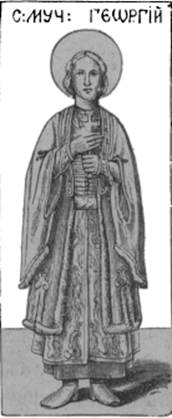
Мученик был 18 лет, ростом высокий и тонкий, брови высокие и густые, нос изогнутый книзу, пальцы тонкие и длинные; нравом смирный и простой, – всех предварял он поклоном и всякого называл господином; никогда не смеялся попусту и праздное слово не выходило из уст его; не хвалился ничем и не завидовал никому.
The martyr was 18 years old, tall and slender of stature, with high and thick eyebrows, a nose curved downward, and thin, long fingers; in disposition he was meek and simple—he would greet everyone first with a bow and call every man "lord"; he never laughed idly, and no vain word came from his lips; he boasted of nothing and envied no one.
Блаженная Феодора, дочь благородного Пафлагонского дома, давшего для империи многих даровитых людей184, быв супругою императора Феофила, удерживала мужа, сколько могла, от гонений против православия; тайно поклоняясь св. иконам в своих покоях, она усердно молила Господа, дабы Он Сам утишил бурю иконоборства185. Когда умер (в 842 г.) император Феофил, она, по малолетству сына, приняв правление империею, немедленно начала восстановлять покой Церкви: множество страдальцев, разосланных в ссылки за исповедание чистой веры, возвращено было на места покойной жизни; ложный архипастырь лишен власти и заключен в монастырь, а св. исповедник Мефодий возведен был на патриарший престол. Тогда же установлено было праздновать торжество православия каждый год в первое воскресенье великого поста186. Патриарх Мефодий предложил царице: «не служит к чести империи, если славный патриарх Никифор, за защиту чистой веры согнанный с престола и скончавшийся вдали, остается в пренебрежении; надобно, чтобы тело его возвратилось в столицу». Императрица, соглашаясь с тем, сказала: «выполнение мысли будет честию мне и детям моим». И святое тело торжественно перенесено было (13 марта 846 г.) в столицу187. Все лучшие люди отдавали уважение царице и за управление гражданскими делами империи: ее умным распоряжениям и твердости империя одолжена была (в 852 г.) успехами в отношениях к Болгарии. Но против нее восстал злобный и властолюбивый брат ее Варда. Царица вынуждена была (855 г.) отказаться от управления, и сперва жила уединенно в загородном дворце своем, называвшемся впоследствии дворцом святой Феодоры188. Оказывая помощь всякой бедности, изыскивала она способы для восстановления благочиния в обителях, столько страдавших от иконоборства; вызывала к себе опытных стариц-игумений, какова была святая Афанасия Эгинская, для бесед об устроении духовной жизни. Блаженная царица много сделала для св. Церкви тем, что воспитала в своем сыне, императоре Михаиле, твердую преданность св. православию. Как много и как долго страдала дотоле Церковь от магометанской ненависти верховных правителей империи к св. иконам! Мать желала, чтобы и нравственное поведение сына было достойно престола и полезно империи. Она все употребила в его юности, чтобы дать ему лучшее воспитание: наставниками Михаила были люди даровитые и с желаниями добрыми; св. Кирилл, просветитель Славян, был товарищем Михаила по учению. Но Михаил своим примером показал, что самое усердное воспитание не пересиливает в нас порчи природы: порча остается и открывается в жизни то теми, то другими дурными наклонностями. Мать старалась быть полезною Михаилу царю советами. Но Михаил только оскорблялся добрыми советами и вел жизнь разгульную в обществе дурных людей. Мать страдала. После многих бесполезных попыток вразумить сына, она увидела, что ей остается предать сына воле Божией, тем более, что ему было уже 17 лет. Она прервала всякую связь с миром и заключилась в монастыре189. Теперь занятиями ее были: молитва, пост, чтение душеполезных книг; известно ныне Евангелие, писанное ее рукою190. Строгим наблюдением над своею душою она очищалась и возвышалась в духовной жизни; прекрасные качества души ее, на свободе от дрязг света, раскрывались по Евангельскому закону. Так провела она восемь лет, в подвигах самоотречения, и мирно скончалась 11 февраля 867 г., а вскоре затем убит был сын ее191.
Blessed Theodora, daughter of a noble Paphlagonian house which had given many gifted men to the empire184, being the wife of the Emperor Theophilus, restrained her husband as much as she could from persecutions against Orthodoxy; secretly venerating the holy icons in her chambers, she earnestly prayed to the Lord that He Himself would calm the storm of iconoclasm185. When the Emperor Theophilus died (in A.D. 842), she, due to the minority of her son, having taken up the governance of the empire, immediately began to restore peace to the Church: a multitude of sufferers who had been sent into exile for confessing the pure faith were returned to places of peaceful life; the false archpastor was deprived of authority and confined to a monastery, while the holy Confessor Methodius was raised to the patriarchal throne. At that time it was also established to celebrate the Triumph of Orthodoxy each year on the first Sunday of Great Lent186. Patriarch Methodius proposed to the Empress: "It does not honor the empire if the glorious Patriarch Nicephorus, who was driven from his throne for defending the pure faith and died in exile, remains neglected; it is necessary that his body be returned to the capital." The Empress, agreeing with this, said: "The fulfillment of this thought will be an honor to me and to my children." And the holy body was solemnly transferred (on March 13, A.D. 846) to the capital187. All the best people gave respect to the Empress also for her governance of the civil affairs of the empire: to her wise decrees and firmness the empire owed (in A.D. 852) successes in its relations with Bulgaria. But her malicious and power-loving brother Bardas rose up against her. The Empress was forced (in A.D. 855) to renounce governance, and at first lived in seclusion in her suburban palace, which was later called the Palace of St. Theodora188. Showing help to every kind of poverty, she sought means to restore good order in the monasteries, which had suffered so much from iconoclasm; she summoned to herself experienced abbesses, elders, such as St. Athanasia of Aegina, for conversations on the ordering of the spiritual life. The blessed Empress did much for the holy Church by raising in her son, the Emperor Michael, a firm devotion to holy Orthodoxy. How much and how long had the Church suffered until then from the Mohammedan hatred of the supreme rulers of the empire toward the holy icons! The mother desired that the moral conduct of her son also be worthy of the throne and beneficial to the empire. She employed every means in his youth to give him the best education: Michael's teachers were gifted men with good intentions; St. Cyril, the enlightener of the Slavs, was Michael's fellow student. But Michael showed by his own example that even the most zealous upbringing cannot overcome the corruption of our nature: the corruption remains and manifests itself in life now by one, now by another evil inclination. The mother tried to be useful to Michael the Emperor with her counsels. But Michael only took offense at good counsels and led a dissolute life in the company of evil men. The mother suffered. After many fruitless attempts to reason with her son, she saw that it remained for her to commit her son to the will of God, the more so as he was already seventeen years old. She broke off all connection with the world and shut herself up in a monastery189. Now her occupations were: prayer, fasting, reading soul-profiting books; the Gospel written by her hand is known to this day190. By strict watch over her own soul she was purified and elevated in the spiritual life; the beautiful qualities of her soul, freed from the vexations of the world, unfolded according to the Gospel law. Thus she spent eight years in deeds of self-denial, and peacefully reposed on February 11, A.D. 867, and soon afterwards her son was killed191.
О житии и чудесах св. кв. Всеволода писал повествование известный говорливостию своею Василий (Румянц. муз. стран. 602. 605): во у него больше слов чем дела и есть ошибки. В степ. книг. I, 252–265 сокращено повествование Василия.
The account of the life and miracles of St. Right-believing Prince Vsevolod was written by Vasily, known for his loquacity (Rumyantsev Museum, pp. 602, 605): but in him there are more words than deeds, and there are errors. In the Book of Degrees I, 252–265, Vasily's account is abridged.
Грамота издана в Правосл. Собеседн. 1861 г. III, 210. 221–226 по списку 1493 г. Это древнейший список. С ним сходен второй список в дополн. к ист. акт. 1, № 3 и в достопам. 1. 77 –79. Первый список грамоты в дополн. к ист. акт. 1, № 3 позднейшей редакции.
The charter was published in the Orthodox Interlocutor, 1861, III, 210, 221–226, according to a copy from 1493. This is the oldest copy. A second copy, in Supplements to Historical Acts 1, No. 3 and in Memorials 1, 77–79, agrees with it. The first copy of the charter in Supplements to Historical Acts 1, No. 3 is of a later redaction.
Грамота собору по списку 1493 г., сличенному с другими, издана в Правосл. Собеседн. 1861 г. III, 212–221. Другие списки ее – в повести о начале Печерск. мон. М. 1831 г. 41–44, у преосв. Макария 2, 359–362, в собр. памят. древн. нрава 406–410. Спб. 1839 г. Так как в этой грамоте говорится о Предтечевой церкви: то ясно, что она дана не прежде 1127 г.
The charter to the council, according to the copy of 1493 collated with others, was published in the Orthodox Interlocutor, 1861, III, 212–221. Other copies of it are in the Tale of the Beginning of the Kiev-Pechersk Monastery, Moscow, 1831, pp. 41–44; in the work of His Grace Macarius 2, 359–362; in the Collection of Monuments of Ancient Law, pp. 406–410, St. Petersburg, 1839. Since this charter speaks of the Church of the Forerunner, it is clear that it was given no earlier than 1127.
Собр. л. 3, 6. 4. 3. 4. В степ. книге, или что тоже у Василия, о походе 1130 г. прибавлено: «блаженный же Всеволод и град их Ригу ратова». Но Риги при св. Всеволоде еще не было. Василий отвес поход другого князя Всеволода Мстиславича 1220 г. (Никон. л. 2, 346. Собр. л.7:124) к св. кв. Всеволоду.
Collection of Chronicles 3, 6. 4. 3. 4. In the Book of Degrees, or what is the same in Vasily, concerning the campaign of 1130 it is added: "Blessed Vsevolod also warred against their city of Riga." But Riga did not yet exist in the time of St. Vsevolod. Vasily mistakenly attributed the campaign of another prince, Vsevolod Mstislavich, in 1220 (Nikon Chronicle 2, 346. Collection of Chronicles 7:124) to St. Right-believing Prince Vsevolod.
Степен. кн. 1, 262–264. Собр. л. 3, 20. Пролог 27 ноября: мощи обретены ноября 27. Муз. Румянцева стр. 602.
Book of Degrees 1, 262–264. Collection of Chronicles 3, 20. Prologue, November 27: the relics were uncovered on November 27. Rumyantsev Museum, p. 602.
Степен. кн. 1. 264. 265. Пролог 27 ноября. Муз. Румянцева стр. 603. 6о5. Вид Псковского собора 1638 г., снятый с древнейшей иконы св. Гавриила, – у Князева в опис. Псков. соб. стр. 10–13. М. 1858. Там же и меч св. князя стр. 20, 78. 79; древние иконы его стр. 51. 52. 10. 13. Ркп. книга, где служба на 11 февраля, житие святого кн. до кончины, служба на 27 нояб. Сказание о перенесении мощей в Троицкий собор и о 21 чуде, стр. 65. 66. Новая рака 1834 г., стр. 26–29. Мощи св. князя, почивавшие открыто, закрыты при Петре I, и с того времени остаются под спудом.
Book of Degrees 1, 264, 265. Prologue, November 27. Rumyantsev Museum, pp. 603, 605. View of the Pskov Cathedral in 1638, taken from the most ancient icon of St. Gabriel—in Knyazev’s description of the Pskov Cathedral, pp. 10–13. M. 1858. There also the sword of the holy prince, pp. 20, 78, 79; his ancient icons, pp. 51, 52, 10, 13. A manuscript book containing the service for February 11, the life of the holy prince until his repose, the service for November 27. The account of the translation of the relics to the Trinity Cathedral and of 21 miracles, pp. 65, 66. The new reliquary of 1834, pp. 26–29. The relics of the holy prince, which had reposed openly, were covered under Peter I, and from that time remain hidden.
Ркп. житие пр. Димитрия, опис. игум. Макарием частию со слов ученика его Пахомия, в сборн. Сергиевой лавры, № 8. Румянц. № 96. 153. В Синодальной ркп. ХУ в. № 556 и XVI в. № 90. 555. В Минее Макария; извлечение в прологе 11 февр.
Manuscript life of the Venerable Demetrius, described by Abbot Macarius partly from the words of his disciple Pachomius, in the collection of the Trinity–St. Sergius Lavra, No. 8. Rumyantsev Nos. 96, 153. In the Synodal manuscripts of the 15th century, No. 556, and of the 16th century, Nos. 90, 555. In the Menaion of Macarius; an extract in the Prologue for February 11.
Писали: «постригся в инока в родном Переяславле в Горицком монастыре». Этого не могло быть: Горицкий монастырь устроен св. княгинею Евдокиею в 1392 г. (смот. июля 7 дня); кроме Никитского, в начале XIV в. существовал в Переяславле Нагорный Борисоглебский, известный и по житию св. Никиты. См. мая 24 дня.
Some have written: “he was tonsured a monk in his native Pereslavl, in the Goritsky Monastery.” This could not have been: the Goritsky Monastery was founded by the holy Princess Eudocia in 1392 (see July 7); besides the Nikitsky Monastery, at the beginning of the 14th century there existed in Pereslavl the Nagorny Borisoglebsky Monastery, known also from the life of St. Nikita. See May 24.
См. о пр. Сергие сент. 23 в ист. иер. и во Владим. Губ. Ведом. 1849 г. № 2 показывают, что Переяславский Никольский монастырь основан в 1392 г. Это – явная ошибка: в 1392 году последовала кончина преп. Димитрия в Прилуцкой обители.– Еще страннее эта ошибка там, где вместе писали, что Прилуцкий монастырь основан в 1371 г. (Христ. Чтен. 1861 г. сент., 176. 187).
See concerning the Venerable Sergius, September 23, in the History of the Hierarchy and in the Vladimir Provincial Gazette, 1849, No. 2, which shows that the Pereslavl St. Nicholas Monastery was founded in 1392. This is a clear error: in 1392 the repose of the Venerable Demetrius in the Prilutsk Monastery occurred. This error is even stranger where it is written together that the Prilutsk Monastery was founded in 1371 (Christian Reading, 1861, September, 176, 187).
Житие: «ни общаго жития не бысть в земле той, от Волги реки великия даже до последних моря... Се первая на Вологде общая обитель бяше великая пр. Димитрия и яко ту нача неотступно святый жити с братиею в купе и мнози иноцы приидоша к нему».
The Life: “there was no cenobitic life in that land, from the great Volga River even to the farthest sea… This first cenobitic monastery in Vologda was the great one of the Venerable Demetrius, and there the saint began to dwell unceasingly with the brethren together, and many monks came to him.”
О войне Вятчан в Двинской стране. Собр. л. 5, 260. 6, 141. 3, 106. Биограф препод. игум. Макарий прибавляет при этом: «такое же страшное чудо когда-то в городе Суроже. Князь Новгорода Русского, придя с войском взял город и забрал в плен не только людей, но и священные сосуды и даже гроб св. Стефана, покрытый дорогими покровами (паволоки); князь сам начал стаскивать (покровы) и незримо поражен был по лицу; тотчас его лице обратилось назад. – Он пришел в раскаяние; уверовав во Христа, принял крещение и отпустил пленных. Тогда опять он стал здоровым молитвами Стефана, получив исцеление, отправился он в свояси». О. Макарий очевидно имеет в виду неизвестное ныне житие св. Стефана Сурожского, переведенное с Греческого языка.
Concerning the war of the Viatkans in the Dvina region. Collection of Chronicles 5, 260; 6, 141; 3, 106. The biographer, Abbot Macarius, adds to this: “a similar terrible miracle once occurred in the city of Surozh. The Prince of Novgorod the Great, coming with an army, took the city and captured not only people, but also sacred vessels and even the tomb of St. Stephen, covered with costly cloths (pavoloki); the prince himself began to pull off (the cloths) and was invisibly struck on the face; immediately his face turned backward. — He came to repentance; believing in Christ, he received baptism and released the captives. Then he became well again through the prayers of Stephen, and having received healing, he departed to his own.” Abbot Macarius evidently has in mind the now unknown life of St. Stephen of Surozh, translated from the Greek language.
В печ. службе препод. Димитрию (мин. февраля 11-го дня) упоминаются все обстоятельства жизни препод. Димитрия и все помянутые нами чудеса: служба составлена при царе Иоанне Грозпом. Ркп. служба на 11 февраля у Царского № 563.
In the printed service to the Venerable Demetrius (Menaion, February 11), all the circumstances of the life of the Venerable Demetrius and all the miracles we have mentioned are recalled: the service was composed under Tsar John the Terrible. A manuscript service for February 11 is in the collection of Tsarsky, No. 563.
Последние чудеса препод. Димитрия у Румянцева № 153. Ист. иер. 6, 221, 222. Служба препод. Димитрию на 3-й день июня у Толстого 2. № 368. По описанию чудес, поход под Казаны а) был первый при Иване Васильевиче; б) был вслед за построением храма в обители. А храм в обители освящен в 1542 г., быв заложен в 1537 году (ист. иер. 6, 217); след. по тому и другому отличию это поход 1545 г. – О походе 1545 года Арцыбашев 2, 162. 163: «препод. Димитрий чудотворец» в грам. 1563 года. Ист. авт. 1,320. Жалованная грамота монастырю 1546 года в А. Э. 1, №208.
The later miracles of the Venerable Demetrius are in Rumyantsev No. 153. History of the Hierarchy 6, 221, 222. The service to the Venerable Demetrius on the 3rd day of June is in Tolstoy 2, No. 368. According to the description of the miracles, the campaign against Kazan a) was the first under Ivan Vasilievich; b) followed the building of the church in the monastery. And the church in the monastery was consecrated in 1542, having been founded in 1537 (History of the Hierarchy 6, 217); consequently, by both distinctions, this is the campaign of 1545. — Concerning the campaign of 1545, Artsybashev 2, 162, 163: “the Venerable Demetrius the Wonderworker” in a charter of 1563. History of the Acts 1, 320. A grant charter to the monastery of 1546 in Acts of History 1, No. 208.
Страдание св. Георгия, описанное очевидцем на Сербском языке, изд. в летоп. археогр. ком. Спб. 1864 г., переведенное на Греч. язык, с переменами, в нов. мартирологе, печ. в Венеции 1799. Сокращенное описание в прологе и четь-мин. 26-го мая.
The passion of St. George, described by an eyewitness in the Serbian language, published in the Chronicle of the Archaeographic Commission, St. Petersburg, 1864, translated into Greek, with changes, in the new martyrology, printed in Venice, 1799. A condensed description in the Prologue and the Cheti-Minei for May 26.
О Кратове см. янв. 15. Пролог: «в первых вельможах великаго града Средца бе именуяся отец его». Не верно.
Concerning Kratovo, see January 15. The Prologue: “among the first nobles of the great city of Sredets was his father, as he was called.” This is incorrect.
Об умерщвлении нескольких иноков мон. Эвсигмена и Дионисиата фанатиками турками в 1534 и 1535 гг. современные заметки у поклонника Святой горы стр. 123. К. 1864 г.
Concerning the killing of several monks of the monasteries of Evesigmen and Dionysiou by fanatical Turks in 1534 and 1535, contemporary notes in the Pilgrim of the Holy Mountain, p. 123. K. 1864.
Менолог Василия на 11-е февраля. Сказание пролога – перевод из Менолога, с добавлением известия о загробной участи Феофила.
Menologion of Basil for February 11. The account in the Prologue is a translation from the Menologion, with the addition of the news concerning the afterlife of Theophilus.
Кодин: «Монастырь св. Евфросинии, называемый Луговой, построен был в малом и бедном виде Ириною Афинянкою. Когда Михаил, сын императора Феофила, рассорился с материю своею, православною Феодорою, и сестрами своими: то выслал их из дворца и отправил в этот монастырь; тогда обогатил он его имуществами и украшениями. Он назывался Евфросинииным по имени одной из сестер его – Евфросинии, которая жила и подвизалась хорошо». Ed. Beckeri p. 97. Сличая известия Ви8антийцев о монастыре, где подвизалась св. царица Феодора и где лежали мощи ее (у Дю-ванжа Constant, chr. p. 110. 147. 156), должны мы положить, что Евфросиниин монастырь и монастырь Гастрийский – один и тот же, а не два, как у Дю-канжа... Первоначально построенный Ириною, он распространен Евфросиниею, матерью императора Феофила, которая жила и скончалась в нем. Мать св. Феодоры, Феоктиста, имела вблизи его дом свой, и также благотворила обители молитв. Еще более обогащен он был св. Феодорою. Евфросинииным назывался он по имени матери Феофила; а у императора Михаила не было сестры Евфросинии; сестры его, жившие в монастыре, были: Анна, Анастасия и Пульхерия. По словам Свилитзы, Василий Макед. сотослал дочерей ее (Феодоры) в монастырь бабки, называемый Гастрия». Du-Cangii famil. byzant. p. 134. Constant, chr. p. 156.
Codinus: “The monastery of St. Euphrosyne, called the Meadow, was built in a small and poor form by Irene the Athenian. When Michael, the son of Emperor Theophilus, quarreled with his mother, the Orthodox Theodora, and his sisters, he expelled them from the palace and sent them to this monastery; then he enriched it with properties and adornments. It was called Euphrosyne’s after the name of one of his sisters—Euphrosyne, who lived and struggled well.” Ed. Beckeri, p. 97. Comparing the accounts of the Byzantines concerning the monastery where the holy Empress Theodora struggled and where her relics lay (in Du-Cange, Constantinopolis Christiana, pp. 110, 147, 156), we must conclude that the Monastery of Euphrosyne and the Monastery of Gastria are one and the same, not two, as in Du-Cange… Originally built by Irene, it was expanded by Euphrosyne, the mother of Emperor Theophilus, who lived and reposed in it. The mother of St. Theodora, Theoctista, had her house nearby and also benefacted the monastery of prayer. It was further enriched by St. Theodora. It was called Euphrosyne’s after the name of Theophilus’s mother; and Emperor Michael had no sister Euphrosyne; his sisters who lived in the monastery were Anna, Anastasia, and Pulcheria. According to the words of Scylitzes, “Basil the Macedonian sent her (Theodora’s) daughters to the monastery of their grandmother, called Gastria.” Du-Cange, Familiae Byzantinae, p. 134. Constantinopolis Christiana, p. 156.
Это евангелие, писанное письмом мелким, ныне находится в С.-Петербургской публичной Библиотеке, куда подарено было в 1829 году Сильвестром архимандритом монастыря св. Иоанна Поктского. Catalogue de manuscrits grecs bibliot. imperiale publque, Pètersb. 1864. p. 29. 30.
This Gospel, written in a small hand, is now located in the St. Petersburg Public Library, where it was donated in 1829 by Sylvester, archimandrite of the Monastery of St. John of Pokta. Catalogue des manuscrits grecs de la bibliothèque impériale publique, Pétersbourg, 1864, pp. 29, 30.
Bollandistae ad II d. Februarii p. 552–556. Weiss Leben d. Heiligen 3, 11. 12. Мощи cb. царицы Феодоры лежали в Гастрийском монастыре. Du-Cangii Constant, chr. p. 110. 156.
Bollandistae ad II d. Februarii, pp. 552–556. Weiss, Leben d. Heiligen 3, 11, 12. The relics of the holy Empress Theodora lay in the Gastria Monastery. Du-Cange, Constantinopolis Christiana, pp. 110, 156.