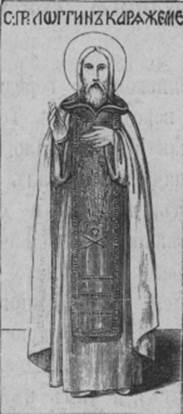
Харалампий был священником в городе Магнезии, и уже ста тринадцати лет от роду предан мукам за распространение св. веры и порицание императора Септимия Севера, начавшего гонение в 202 году. Сперва строгали его тело, причем двое слуг, Порфирий и Ваптос, и три женщины уверовали во Христа и были казнены; после того был он отослан в Антиохию к самому императору, который велел отрубить ему голову.
Charalampus was a priest in the city of Magnesia, and already one hundred thirteen years of age when he was delivered up to torments for the spread of the holy faith and for censuring the emperor Septimius Severus, who began the persecution in the year 202. First they scraped his body, whereupon two servants, Porphyrius and Vaptos, and three women believed in Christ and were executed; after that he was sent to Antioch to the emperor himself, who ordered his head to be cut off.
Евсевий, церковный историк († 340 г.), очевидец описываемых им событий гонения на христиан в Палестине, повествует о сих мученицах следующее (см. его книгу «О Палестинских мучениках», гл. 8).
Eusebius, the church historian († 340 A.D.), an eyewitness of the events of the persecution of Christians in Palestine which he describes, relates the following concerning these martyrs (see his book "On the Palestinian Martyrs," ch. 8).
Когда непрерывная буря гонения на нас вступила и в шестой год (308 по Р. Хр.), то великое множество исповедников благочестия из каменоломен Фенских (Фена – в пятнадцати верстах от Самарии) прислано в Кесарию Палестинскую, где жил префект Палестины, за твердость в вере подвергнуты изуродованию глаз и ног и снова отправлены в рудники. А из тех, которые взяты в городе Газе во время собрания, имевшего целию чтение Божественных писаний, одни потерпели мучения, одинаковые с мучениями вышеупомянутых, а другие и больше того, именно – подвергались ужаснейшим пыткам строгания боков. В числе последних одна, по телу жена, а по уму муж, не могши перенести угроз блуда, начала укорять тирана Максимина, императора, бывшего тогда в Кесарии, что власть судить он поручает людям столь жестоким, и за то сперва была высечена, потом повешена на дерево и испытала муки от строгания боков.
When the unceasing storm of persecution against us entered also the sixth year (308 A.D.), a great multitude of confessors of piety from the quarries of Pheno (Pheno – fifteen versts from Samaria) were sent to Caesarea in Palestine, where the prefect of Palestine dwelt; for their steadfastness in the faith they were subjected to the mutilation of eyes and feet and were again sent to the mines. And of those who were taken in the city of Gaza during a gathering which had as its purpose the reading of the Divine Scriptures, some suffered torments equal to those of the aforementioned, and others even greater, namely, they were subjected to the most terrible tortures of scraping their sides. Among the latter, one, a woman in body but a man in mind, unable to bear the threats of fornication, began to reproach the tyrant Maximinus, the emperor, who was then in Caesarea, for entrusting the power of judgment to men so cruel; and for this she was first scourged, then hung upon a tree and suffered torments from the scraping of her sides.
Но между тем как приставники, по повелению судии, с усильною ревностию производили свои пытки над Еннафою, как называлась исповедница, – другая, подобно первой избравшая себе целию девство, по телу казавшаяся очень слабою и на взгляд невидною, за то одаренная крепостию души и вмещавшая в себе ум больше тела, не могши перенести такой безжалостности, таких жестоких и бесчеловечных поступков, из толпы народа закричала судии: «долго ли будешь ты столь жестоко мучить сестру мою?» Сильно раздраженный этим, судья тотчас приказал схватить кричавшую. Привлеченная на средину, она ознаменовала себя Божественным именем Спасителя. Начали располагать ее к жертвоприношению сперва словами; а как она не слушалась, силою повлекли к жертвеннику. Но сестра, продолжая свое дело и сохраняя прежнюю готовность, бестрепетно и смело толкнула ногою жертвенник и опрокинула его вместе с находившимся на нем жертвенным костром. Тут судья, раздраженный гневом как дикий зверь, начал терзать ее бока такими когтями, какими не терзал никогда и никого, как будто в неистовстве хотел насытиться ее плотию. Когда же неистовство его насытилось, он связал обеих вместе, то есть и эту и другую, которую она назвала своею сестрою, и назначил им умереть от огня. Первая из них родилась, говорят, в Газской области, а последняя, известная всем, по имени Валентина, происходила из Кесарии.
But while the torturers, by order of the judge, with zealous effort were carrying out their torments upon Ennatha, as the confessor was called, another, who like the first had chosen virginity as her goal, appearing very weak in body and unremarkable in appearance, but endowed with strength of soul and possessing a mind greater than her body, unable to bear such pitilessness, such cruel and inhuman acts, cried out from the crowd of people to the judge: "How long will you torment my sister so cruelly?" Greatly angered by this, the judge immediately ordered the one who had cried out to be seized. Brought into the midst, she marked herself with the Divine name of the Savior. They began to dispose her to sacrifice, first with words; but when she would not listen, they dragged her by force to the altar. But the sister, continuing her work and preserving her former readiness, fearlessly and boldly kicked the altar with her foot and overturned it together with the sacrificial fire that was upon it. Then the judge, inflamed with anger like a wild beast, began to tear her sides with such claws as he had never torn anyone with, as if in a frenzy he wished to be sated with her flesh. When his frenzy was sated, he bound both together, that is, both this one and the other whom she had called her sister, and appointed them to die by fire. The first of them, they say, was born in the region of Gaza, while the latter, known to all, by the name Valentina, was from Caesarea.
«В княжение Святополка Изяславича (1098–1113)», так пишет блаженный Поликарп70, «много было насилий людям от князя; дома людей богатых, без всякой вины, искоренил он и у многих отнял имущества. Потому Бог попустил язычникам усилиться над ним, – много раз Половцы воевали при нем; к тому же была междоусобная война. От того в Русской земле были тогда и голод и большая бедность».
"During the reign of Sviatopolk Iziaslavich (1098–1113)," so writes the blessed Polycarp70, "there was much violence done to people by the prince; he destroyed the houses of rich men without any cause and took away the property of many. Therefore God permitted the pagans to prevail over him – many times the Polovtsy made war upon him in his time; in addition there was civil war. Because of this there was then in the Russian land both famine and great poverty."
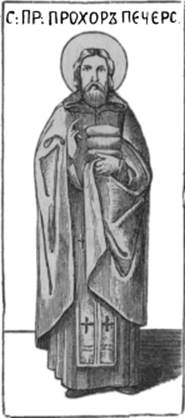
В то время пришедший из Смоленска мирянин принял ангельский образ от рук игумена Иоанна (1089–1103) и назван Прохором. Он так крепко подвизался, так полюбил воздержание, что лишил себя обыкновенного хлеба, а собирая лебеду, растирал ее, готовил себе хлеб и тем питался. Он заготовлял себе лебеду на целый год и таким образом до кончины своей не требовал себе хлеба, почему и прозван лебедником; кроме церковной просфоры, он в келье своей не вкушал никогда и овощей, не пил ничего, кроме воды. Он никогда не был печальным, и всегда весело работал Господу; не приходил в страх и от военных тревог; жил как птица, довольный одною лебедою. За такую терпеливую жизнь Господь дал ему Свои дары.
At that time a layman who had come from Smolensk received the angelic habit from the hands of Abbot John (1089–1103) and was named Prochorus. He struggled so strenuously, he so loved abstinence, that he deprived himself of ordinary bread, but gathering goosefoot, he ground it, prepared bread from it, and fed himself with it. He would lay in a supply of goosefoot for a whole year and thus until his death he did not require bread for himself, wherefore he was called the goosefoot-eater; besides the church prosphora, he never tasted even vegetables in his cell, nor drank anything but water. He was never sorrowful, but always worked cheerfully for the Lord; he did not take fright even from the alarms of war; he lived like a bird, content with goosefoot alone. For such a patient life the Lord gave him His gifts.
После военных тревог, настал в Русской земле голод. Лебеды родилось очень много. Блаженный Прохор удвоил труды свои, собирая лебеду и растирая ее в муку. Некоторые, по его примеру, также собирали лебеду, чтобы питаться ею во время голода; но не могли есть от горечи. Нуждающиеся обратились к Прохору и он всем раздавал хлеб свой, и хлеб его оказался приятным на вкус – до того, что не так хотели пшеничного хлеба, как испеченного Прохором. И вот еще чудная особенность: хлеб Прохора оказывался чистым и приятным, когда брали его по благословению Прохора; если же брали тайно, то оказывался горьким и черным. Один брат тайно, без благословения, взял хлеб у блаженного, стал есть, и он оказался до того горьким, что тот не мог глотать. Это повторялось не раз. Он стыдился исповедать блаженному грех свой и просить хлеба с благословением; но наконец, не могши терпеть голода и видя пред глазами голодную смерть, пришел в игумену Иоанну и открыл случившееся с ним, прося прощения. Игумен, не поверив ему, велел другому брату взять тайно хлеб у блаженного. Принесли хлеб, и оказалось то же самое, что говорил тот брат. Игумен послал к блаженному за хлебом и сказал: «уходя, возьмите другой хлеб тайно». Принесли два хлеба, и тайно взятый оказался черным и горьким, и взятый из рук Прохора был приятен и весьма чист. После этого разнесся слух о Прохоре всюду, и Прохор кормил весьма многих, страдавших от голода.
After the alarms of war, a famine came upon the Russian land. Goosefoot grew in great abundance. The blessed Prochorus doubled his labors, gathering goosefoot and grinding it into flour. Some, following his example, also gathered goosefoot to feed themselves during the famine; but they could not eat it because of its bitterness. The needy turned to Prochorus, and he distributed his bread to all, and his bread proved pleasant to the taste – so much so that they did not desire wheaten bread as much as that baked by Prochorus. And here is another wondrous peculiarity: Prochorus's bread proved pure and pleasant when it was taken with Prochorus's blessing; if it was taken secretly, it proved bitter and black. One brother secretly, without a blessing, took bread from the blessed one, began to eat it, and it proved so bitter that he could not swallow it. This happened more than once. He was ashamed to confess his sin to the blessed one and to ask for bread with a blessing; but at last, unable to endure hunger and seeing death by starvation before his eyes, he came to Abbot John and revealed what had happened to him, asking forgiveness. The abbot, not believing him, ordered another brother to take bread secretly from the blessed one. They brought the bread, and the same thing happened as that brother had said. The abbot sent to the blessed one for bread and said: "As you leave, take another loaf secretly." They brought two loaves, and the one taken secretly proved black and bitter, while the one taken from Prochorus's hands was pleasant and very pure. After this, word of Prochorus spread everywhere, and Prochorus fed very many who were suffering from the famine.
Святополк Изяславич начал войну с Давидом Игоревичем за ослепление Василька, которого ослепил Святополк, послушав Давида, и также с Володарем и с самим Васильком; это было в 1099 году71. Тогда не пустили гостей (иногородных продавцов) из Галича, ни своих людей из Перемышля, и не стало соли во всей Русской земле; таковы были неустройства. Народ сильно страдал.
Sviatopolk Iziaslavich began a war with David Igorevich for the blinding of Vasilko, whom Sviatopolk had blinded, heeding David, and also with Volodar and with Vasilko himself; this was in the year 109971. Then they did not allow merchants (out-of-town traders) from Galich, nor their own people from Peremyshl, and there was no salt in all the Russian land; such were the disorders. The people suffered greatly.
Блаженный Прохор, видя такое бедствие, собрал к себе золу из всех келий и начал раздавать ее всем нуждавшимся в соли. По молитвам блаженного, эта зола оказывалась чистою солью; ее доставало не только для всех в монастыре, но и мирские люди брали вдоволь по домам своим. Святой не брал ничего за свою соль, а раздавал всем даром. Торговая площадь становилась пустою, а монастырь был полон людьми, приходящими за солью. Тогда корысть и зависть подняли брань. Думали в это время нажить богатства за соль и оставались без всего: «они прежде продавали соль дорого – за куну две голважни, теперь отдавали десять, и никто не брал»72. Продавцы соли явились к князю Святополку и говорили: «Прохор, черноризец Печерского монастыря, делает нам подрыв: он обратил к себе всех за солью, мы платим дань и не можем сбыть соли, и от того обнищали». Князь хотел и успокоить продавцов, и нажить себе богатство. Он решился с советниками держать соль в высокой цене, отнять у Прохора соль, продавать ее чрез своих, и сказал крамольникам: «для вас оберу монаха». Святополк послал взять всю соль у Прохора; когда привезли ее, он сам вместе с крамолыгаками, клеветавшими на Прохора, вышел осмотреть ее, и увидали, что это – зола. Князь велел отведать ее, и во рту оказалась зола. Тогда, изумясь перемене, князь велел поберечь до трех дней, чтобы видеть, что будет после. Множество людей продолжали приходить к Прохору по прежнему за солью и, узнавши о насильственном отобрании ее, возвращались с проклятиями сделавшему это. Блаженный же говорил: «когда у князя высыпана будет, то ступайте, берите себе». Князь продержал золу до трех дней и, не найдя в ней ничего, кроме золы, велел высыпать ее ночью. Но высыпанная зола опять стала солью, и граждане с радостию брали ее себе. Князь, узнав о том, встревожился за свое насилие, которого нельзя было скрыть, и начал узнавать о деле. Тогда рассказали ему все дела Прохора, как о соли, изменяющейся из пепла, так и о лебедном хлебе, которым Прохор прокормил столько людей во время голода. Князь Святополк, узнав о всем, устыдился своего поступка и, придя в Печерский монастырь, примирился с игуменом Иоанном: прежде того враждовал он против него за его обличения в ненасытной страсти к обогащению и притеснении людей, и потому заточил его в Туров; но, убоясь восстания против себя со стороны христолюбивого князя Владимира Мономаха, скоро возвратил его в Печерский монастырь.
The blessed Prochorus, seeing such a calamity, gathered ashes from all the cells and began to distribute them to all who were in need of salt. Through the prayers of the blessed one, these ashes proved to be pure salt; there was enough not only for all in the monastery, but lay people also took as much as they needed to their homes. The saint took nothing for his salt, but distributed it to all freely. The marketplace became empty, but the monastery was full of people coming for salt. Then greed and envy stirred up strife. Those who had hoped to amass wealth from salt were left with nothing: "they who formerly sold salt dearly – for a kuna two golovazhni – now gave ten, and no one took it"72. The salt sellers came to Prince Sviatopolk and said: "Prochorus, a monk of the Caves Monastery, is undermining us; he has drawn everyone to himself for salt; we pay tribute and cannot sell our salt, and therefore we are impoverished." The prince wanted both to appease the sellers and to amass wealth for himself. He resolved with his counselors to keep salt at a high price, to take the salt from Prochorus, to sell it through his own men, and said to the slanderers: "For your sake I will despoil the monk." Sviatopolk sent to take all the salt from Prochorus; when they brought it, he himself, together with the slanderers who had maligned Prochorus, went out to inspect it, and they saw that it was ashes. The prince ordered it to be tasted, and in the mouth it proved to be ashes. Then, amazed at the change, the prince ordered it to be kept for up to three days, to see what would happen afterward. A multitude of people continued to come to Prochorus as before for salt, and learning of its forcible seizure, they returned with curses upon the one who had done this. The blessed one said: "When it is poured out at the prince's, then go, take it for yourselves." The prince kept the ashes for up to three days and, finding nothing in them but ashes, ordered them to be poured out at night. But the poured-out ashes again became salt, and the citizens joyfully took it for themselves. The prince, learning of this, was troubled by his violence, which could not be concealed, and began to inquire into the matter. Then they told him all the deeds of Prochorus, both concerning the salt that changed from ashes and concerning the goosefoot bread with which Prochorus had fed so many people during the famine. Prince Sviatopolk, learning all this, was ashamed of his conduct and, coming to the Caves Monastery, was reconciled with Abbot John: before that he had been hostile to him for his reproofs of his insatiable passion for enrichment and oppression of the people, and therefore had imprisoned him in Turov; but, fearing an uprising against himself on the part of the Christ-loving Prince Vladimir Monomakh, he soon returned him to the Caves Monastery.
По этим чудесам, Святополк начал иметь великое усердие к Пресвятой Богородице и к преподобным Антонию и Феодосию; особенно же стал уважать блаженного Прохора, признавая его за раба Божия. Он дал ему слово не делать более насилия никому, и еще сделал с ним такой договор: «если, по изволению Божию, я прежде тебя умру, то положи меня во гроб своими руками, чтобы видно было на мне твое незлобие; если же ты преставишься прежде меня, то, взяв на плечи свои, отнесу тебя сам в пещеру, чтобы Господь простил меня за грех мой пред тобою». После того Прохор еще несколько годов прожил чистою и Богоугодною жизнию. Потом сделался болен. Князь Святополк был в то время на войне с Половцами. По летописи, это было в 1107 году, Русские князья собрались тогда на Половцев, опустошавших места около Лубен73. Блаженный послал сказать Святополку: «близок час исхода моего; если хочешь выполнить обещание свое, приходи и положи меня во гроб; жду прихода твоего; если замедлишь и я умру без тебя, то я не виноват и война не будет так счастлива, как тогда, когда придешь комне». Святополк, услышав это, поспешил придти к больному Прохору. Преподобный, преподав ему наставление о милостыне, о будущем суде, о вечной жизни и нескончаемой муке, преподал ему прощение и благословение; простился и со всеми бывшими с князем, и потом предал дух свой Господу. Князь своими руками перенес его в пещеру. Потом возвратился к войску, и лишь только перешли реку Сулу и ударили на Половцев, Половцы, пораженные ужасом, бросились бежать, оставив весь обоз свой в добычу победителям; христианскому воинству оставалось поражать расстроенного неприятеля. После того Святополк, отправлялся ли на войну, или на охоту за зверями, всегда приходил в монастырь за благословением, поклонялся чудотворной иконе Богоматери и гробу преподобного Феодосия, а в пещере – гробу преподобных Антония и Прохора и других преподобных, и тогда уже отправлялся в дорогу74. После того у князя хорошо шло все в княжении по молитвам преподобного Прохора, тогда как до того времени столько было бед и неустройства; он сам исповедовал чудеса и знамения препод. Прохора, быв свидетелем их75.
By these miracles, Sviatopolk began to have great zeal for the Most Holy Theotokos and for the Venerable Anthony and Theodosius; especially did he come to respect the blessed Prochorus, acknowledging him as a servant of God. He gave him his word that he would no longer do violence to anyone, and further made with him this covenant: “If, by the will of God, I die before you, then place me in the coffin with your own hands, so that your meekness may be seen upon me; if, however, you repose before me, then, taking you upon my shoulders, I myself will carry you to the cave, that the Lord may forgive me my sin against you.” After that, Prochorus lived yet several years in a pure and God-pleasing life. Then he fell ill. Prince Sviatopolk was at that time at war with the Polovtsy. According to the chronicle, this was in the year 1107, when the Russian princes had gathered against the Polovtsy, who were ravaging the regions around Luben73. The blessed one sent word to Sviatopolk: “The hour of my departure is near; if you wish to fulfill your promise, come and place me in the coffin; I await your coming; if you delay and I die without you, then I am not to blame, and the war will not be as fortunate as it would be if you come to me.” Sviatopolk, hearing this, hastened to come to the ailing Prochorus. The Venerable one, having given him instruction concerning almsgiving, the future judgment, eternal life, and unending torment, gave him his forgiveness and blessing; he took leave also of all those who were with the prince, and then surrendered his soul to the Lord. The prince, with his own hands, carried him to the cave. Then he returned to his army, and as soon as they had crossed the Sula River and fell upon the Polovtsy, the Polovtsy, struck with terror, fled, leaving their entire camp as booty to the victors; the Christian host had only to strike down the disordered enemy. After that, Sviatopolk, whether setting out for war or for the hunt of wild beasts, always came to the monastery for a blessing, venerated the wonderworking icon of the Mother of God and the tomb of the Venerable Theodosius, and in the cave, the tombs of the Venerable Anthony and Prochorus and of the other venerable ones, and only then would he set out on his journey74. After that, everything in the prince’s reign went well through the prayers of the Venerable Prochorus, whereas before that time there had been so many calamities and disorders; he himself confessed the miracles and signs of the Venerable Prochorus, having been a witness to them75.
«Пусть Иов, раб Мой, помолится за вас, и Я ходатайство его приму, чтобы не поступить с вами худо» (Иов.43:8), так говорил Сам Бог друзьям праведного Иова. О! надобно дорожить друзьями Божиими! Надобно умолять их, чтобы молились они за нас, грешников. Странны люди! То они говорят, что ни к чему они не способны; то выставляют тебя такими сильными, такими богатыми, что им друзья Божии ни почем: ни молитва, ни помощь святых не нужны им; о себе говорят, что живут они благодатию, а в истинных друзьях Божиих не признают благодати. – Но чего же и ждать от мнений людских, как не противоречий себе самим? Ложь изменяет самой себе. Будем дорожить истиною, неизменяемою веками.
“Let Job, My servant, pray for you, and I will accept his intercession, so as not to deal badly with you” (Job 43:8), thus spoke God Himself to the friends of the righteous Job. O! we must treasure the friends of God! We must beseech them to pray for us sinners. Strange are men! At one moment they say that they are capable of nothing; at another, they present themselves as so strong, so rich, that the friends of God are nothing to them: neither the prayer nor the help of the saints is needed by them; they say of themselves that they live by grace, yet they do not acknowledge grace in the true friends of God. – But what else is to be expected from human opinions but contradictions of themselves? Falsehood betrays itself. Let us treasure the truth, which is unchangeable through the ages.
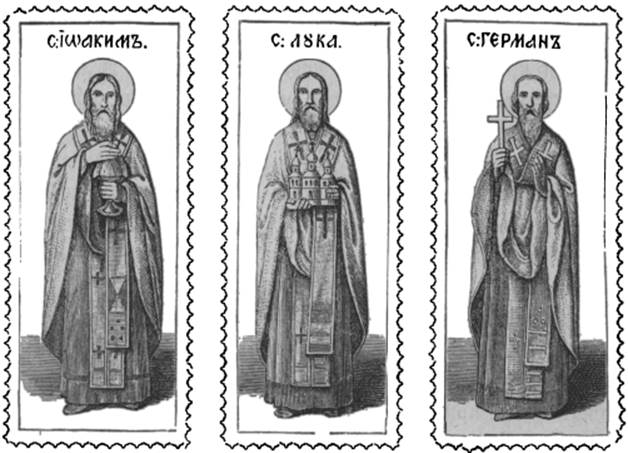
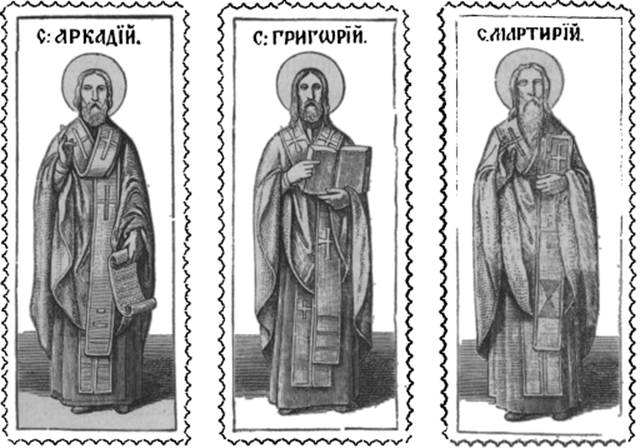
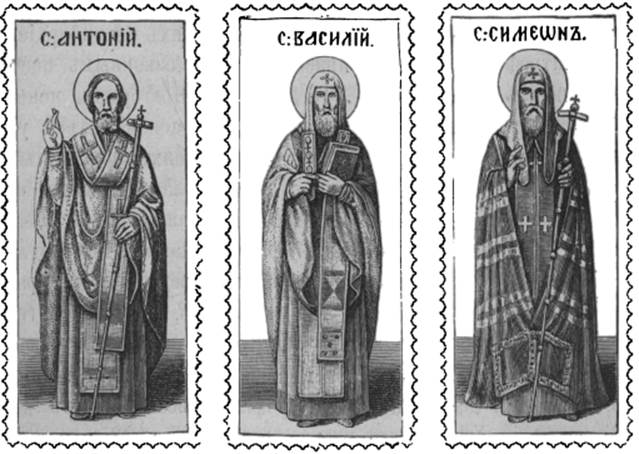
Согласно с волею неба, объявленною святителем Иоанном в 1439 году76, Церковь Великого Новгорода чтит февраля 10-го память святителей своих: Иоакима, Луки, Германа, Аркадия, Григория, Мартирия, Антония, Василия и Симеона77.
In accordance with the will of heaven, announced by Hierarch John in the year 143976, the Church of Great Novgorod venerates on February 10th the memory of its hierarchs: Joachim, Luke, German, Arcadius, Gregory, Martyrius, Anthony, Basil, and Simeon77.
Блаженный Иоаким был из числа священников, которых привез с собою из Корсуня великий князь Владимир, когда решился просветить Россию св. крещением78. При св. митрополите Михаиле, еще в сане священника, проповедовал он святую веру в Новгороде; он построил здесь тогда храм Преображения Господня и крестил некоторых из язычников79. Но язычество было в большой силе в Новгороде и упорно отстаивало власть свою над бедными людьми; оно не слушало проповедника св. веры и выступило с мятежом против распоряжений великого князя Владимира, вызвав на помощь себе вольницу Новгорода. В 993 г. Иоаким посвящен был во епископы Новгорода80. Для обуздания бунтующих язычников, Добрыня и Путята явились в Новгород с войсками. В Иоакимовой летописи читаем: «когда в Новгороде узнали, что Добрыня идет крестить, то собрали вече и все поклялись не пускать его в город и не давать идолов на извержение. И точно, когда пришел Добрыня, то Новгородцы разметали мост и вышли против него с оружием. Добрыня стал было уговаривать их ласковыми словами, но они не хотели и слушать, и поставили две каменометные машины. Особенно возбуждал их к непокорности главный из жрецов, Богомил Соловей. Еишскоп Иоаким со священниками находился на торговой стороне: они ходили по площадям и улицам, уча людей, и в два дня успели окрестить несколько сот. На другой стороне тысяцкий Угоняй ездил там и здесь и кричал: «лучше нам умереть, чем выдать богов наших на поругание». Народ рассвирепел, разорил дом Добрыни, разграбил имущество, убил жену его и еще некоторых из родии его. Иные пошли и разметали церковь Преображения Господня и стали грабить дома христиан». Путята с 500 Ростовцев выступил против мятежников, захватил угоняя и других лучших людей; Добрыня явился со всею своею дружиною и «велел зажечь некоторые дома ». Новгородцы, прекратив сражение, бросились тушить пожар, а самые знатные явились с покорностию к Добрыне. Воевода согласился на мир, но велел уничтожить идолов, – деревянные сжечь, а каменные, изломав, побросать в реку. «Мужчины и женщины с воплем и слезами просили за них, как за действительных богов. Добрыня с насмешкою отвечал: нечего вам жалеть о тех, которые сами себя оборонить не могут; какой пользы ждать вам от них? И послал объявлять везде, чтоб шли креститься. Тогда многие язычники, желая избавиться от крещения, объявляли, что они крещены: Иоаким велел всем крещенным надеть на шею кресты, а кто не будет иметь на себе креста, тому не верить, что крещен, и крестить. Разметанную церковь Преображения построили вновь»81. В других летописях еще читаем: Иоаким разорил жертвенники и ссек Перуна, он приказал стащить его в Волхов; его опутали веревками, волокли по навозу, поражая палками, и бросили в Волхов: Иоаким заповедал, чтобы никто нигде не останавливал его. Житель местечка Пидбла вышел рано на реку, думая везти горшки в город, и вот Перун приплыл к берегу; он оттолкнул его шестом. «Ты, Перунище, сказал он, досыта пил и ел, а теперь плыви прочь»82. Это известие показывает, что наставлениями блаженного Иоакима многие из Новгородцев доведены были до сердечного убеждения в несостоятельности идолов. И сподвижник блаженного Иоакима, Путята, строгий к возмутителям, действовал на совесть мерами убеждения: известна минея на месяц май, писанная его рукою в Новгороде83. Блаженный Иоаким был ревнителем христианского просвещения; князь Ярослав открыл училище в Новгороде. «И собра Ярослав от старост и от пресвитеров детей 300 и повеле учити книгам». Блаженный епископ определил в наставники ученика своего Ефрема, который усердно обучал детей истинам св. веры, а чрез них передавал наставления св. веры и их родителям84. Это было не задолго до кончины Иоакима. Прежде того блаженный архипастырь учил народ христианскому благочестию другими способами – храмами и их богослужением. Он построил храм святой Софии, вечной премудрости, Сыну Божию. Деревянный храм сей был с 13 главами – символами Христа Сына Божия, окруженного 12 Апостолами. Храм стоял на берегу Волхова, на том месте, где после, в 1127 году, богатый Новгородец Сотко построил каменный храм Бориса и Глеба, в конце Епископской улицы, не вдали от второго Софийского собора85. При кафедральном храме блаженный Иоаким устроил и монастырь, который назывался Софийским и Десятинным86. На месте низверженного Перуна освящена им церковь, 995 года, Рождества Богородицы. Кроме того построен им храм во имя ангела своего – Богоотца Иоакима и Анны87. Здесь он был и погребен в 1030 году. В конце XVII века мощи его перенесены в каменный Софийский собор, где положены в золотой паперти88, и св. Иоаким изображен в алтаре Софийского собора, на стене, первым между Новгородскими святителями89.
The blessed Joachim was among the priests whom the Grand Prince Vladimir brought with him from Korsun when he resolved to enlighten Russia with holy Baptism78. Under St. Metropolitan Michael, while still in the rank of priest, he preached the holy faith in Novgorod; he built there at that time a church of the Transfiguration of the Lord and baptized some of the pagans79. But paganism was in great strength in Novgorod and stubbornly defended its power over the poor people; it would not listen to the preacher of the holy faith and rose up in rebellion against the arrangements of Grand Prince Vladimir, calling upon the Novgorod freemen for help. In 993, Joachim was consecrated Bishop of Novgorod80. To restrain the rebellious pagans, Dobrynya and Putyata arrived in Novgorod with troops. In the Joachim Chronicle we read: “When the people of Novgorod learned that Dobrynya was coming to baptize them, they assembled a veche and all swore not to let him into the city and not to give up the idols for destruction. And indeed, when Dobrynya came, the Novgorodians broke down the bridge and came out against him with weapons. Dobrynya began to persuade them with gentle words, but they would not even listen, and they set up two stone-throwing machines. Especially did the chief of the priests, Bogomil Nightingale, incite them to disobedience. Bishop Joachim, with his priests, was on the Trade Side; they went about the squares and streets, teaching the people, and in two days they succeeded in baptizing several hundred. On the other side, the Tysyatsky Ugonyai rode here and there and shouted: ‘Better for us to die than to give our gods up to mockery.’ The people became enraged, destroyed Dobrynya’s house, plundered his property, killed his wife, and also some of his relatives. Others went and tore down the Church of the Transfiguration of the Lord and began to plunder the homes of Christians.” Putyata, with 500 Rostovites, advanced against the rebels, seized Ugonyai and other leading men; Dobrynya appeared with all his retinue and “ordered some houses to be set on fire.” The Novgorodians, ceasing the battle, rushed to put out the fire, and the most notable men came in submission to Dobrynya. The voivode agreed to peace, but ordered the idols to be destroyed—the wooden ones to be burned, and the stone ones, after being broken, to be thrown into the river. “Men and women, with wailing and tears, pleaded for them as for real gods. Dobrynya replied with mockery: ‘You have nothing to regret for those who cannot defend themselves; what benefit do you expect from them?’ And he sent word everywhere that they should come to be baptized. Then many pagans, wishing to avoid baptism, declared that they were already baptized; Joachim ordered all the baptized to wear crosses around their necks, and that whoever did not have a cross on him should not be believed to be baptized, and should be baptized. The demolished Church of the Transfiguration was built anew”81. In other chronicles we further read: Joachim destroyed the altars and hewed down Perun; he ordered him to be dragged to the Volkhov; they bound him with ropes, dragged him through the dung, striking him with sticks, and threw him into the Volkhov; Joachim commanded that no one should stop him anywhere. A dweller of the village of Pidbla came out early to the river, thinking to take pots to the city, and behold, Perun floated to the shore; he pushed him away with a pole. “You, Perunishche,” he said, “you have drunk and eaten your fill, and now swim away”82. This account shows that through the instructions of the blessed Joachim, many of the Novgorodians were brought to a heartfelt conviction of the worthlessness of idols. And the companion of the blessed Joachim, Putyata, strict with the rebels, acted upon the conscience by means of persuasion: a menaion for the month of May, written by his hand in Novgorod, is known83. The blessed Joachim was a zealot for Christian enlightenment; Prince Yaroslav opened a school in Novgorod. “And Yaroslav gathered 300 children from the elders and from the priests and commanded that they be taught books.” The blessed bishop appointed his disciple Ephraim as teacher, who diligently taught the children the truths of the holy faith, and through them conveyed the teachings of the holy faith to their parents as well84. This was not long before Joachim’s repose. Before that, the blessed archpastor taught the people Christian piety by other means—through churches and their divine services. He built a church of Holy Wisdom, of St. Sophia, the eternal Wisdom, the Son of God. This wooden church had 13 cupolas—symbols of Christ the Son of God, surrounded by the 12 Apostles. The church stood on the bank of the Volkhov, on the spot where later, in 1127, the wealthy Novgorodian Sotko built a stone church of Boris and Gleb, at the end of the Bishop’s Street, not far from the second Cathedral of St. Sophia85. At the cathedral church, the blessed Joachim also established a monastery, which was called the Sophia Monastery and the Tithe Monastery86. On the site of the overthrown Perun, he consecrated a church of the Nativity of the Theotokos in 995. Besides this, he built a church in the name of his own angel—the Holy Ancestors of God Joachim and Anna87. Here he was also buried in the year 1030. At the end of the 17th century, his relics were transferred to the stone Cathedral of St. Sophia, where they were placed in the Golden Porch88, and St. Joachim is depicted in the altar of the Cathedral of St. Sophia, on the wall, first among the Novgorod hierarchs89.
Блаженный Лука первый из Русских, сколько известно, удостоился сана епископского в 1035 году, а о Русском происхождении говорит прозвание его – Жидята90. В его время и под его надзором строился каменный Софийский собор, доселе существующий, который освящен им в 1049 году. Нужда в этом храме стала настоятельною особенно потому, что в марте 1055 года Софийский собор, построенный блаженным Иоакимом, сгорел. По известию не раннему, блаженный Лука выписывал иконописцев для сего храма из Царяграда; образ Спасителя в куполе храма по его распоряжению написан был с благословляющею рукою, но таинственный глас велел писать сжатою, и сказал: «в сей руке держу великий Новгород; когда раскроется рука моя, и городу конец»91. Еще целы остатки мусии на горнем месте алтарей92. Спустя пять лет по окончании собора, праведный пастырь подвергся горькой доле. В 1055 году он был оклеветан слугою своим Дудиком, отозван был из Новгорода в Киев и здесь содержался три года. К чему относилась эта клевета, неизвестно; но невинность святителя открыта и клеветнику обрезали нос и руки. Блаженный Лука снова вступил в управление паствою; потом отправился в Киев и на возвратном пути в 1058 году скончался 15 октября93.
The blessed Luke was the first of the Russians, as far as is known, to be deemed worthy of the episcopal rank in the year 1035, and his surname – Zhidyata90 – speaks of his Russian origin. In his time and under his supervision, the stone Cathedral of St. Sophia, which still exists, was built and consecrated by him in 1049. The need for this church became especially urgent because in March of 1055 the Cathedral of St. Sophia, built by the blessed Joachim, had burned down. According to a later account, the blessed Luke summoned iconographers for this church from Constantinople; the image of the Savior in the dome of the church was, by his order, painted with a blessing hand, but a mysterious voice commanded that it be painted with a closed hand, and said: 'In this hand I hold great Novgorod; when My hand opens, the city will come to an end.'91 Remains of the mosaic in the upper part of the sanctuary are still intact92. Five years after the completion of the cathedral, the righteous pastor suffered a bitter fate. In 1055 he was slandered by his servant Dudik, was summoned from Novgorod to Kiev, and was kept there for three years. To what this slander referred is unknown; but the innocence of the Hierarch was revealed, and the slanderer had his nose and hands cut off. The blessed Luke again entered upon the governance of his flock; then he set out for Kiev, and on the return journey in 1058 he reposed on October 1593.
Блаженный святитель оставил для Церкви пастырское поучение, драгоценное по простоте своей и силе духа. «Прежде всего должны мы, братия, так писал святитель, хранить сию заповедь – веровать в единого Бога, в Троице славимаго, в Отца, Сына и Святого Духа, как научили Апостолы и святые отцы. «Верую во единаго Бога» и проч. Веруйте воскресению, жизни вечной, вечной муке грешников. Не ленитесь ходить в церковь к заутрене, к обедне и к вечерне; и в своей клети, отходя ко сну, поклонись Богу, а потом уже ложись. В церкви стойте со страхом Божиим, не разговаривайте, не думайте ни о чем другом, но молите Бога всею душою, да простит вам Бог грехи. Имейте любовь ко всякому человеку, а больше к братии; не будь у вас в сердце одно, а на устах другое. Не рой брату яму, чтобы тебя не ввергнул Бог в худшую. Люби правду и за правду, за Божий закон, готов будь умереть, чтобы Бог причел тебя к святым. Переносите друг от друга обиду, не платите злом за зло; друг друга хвалите и Бог вас похвалит. Не ссорь других, чтобы не назвали тебя сыном дьявола; помири, да будешь сыном Богу. Не осуждай брата и мысленно; помни свои грехи, чтобы и тебя Бог не осудил. Милуйте странных, убогих, заключенных в темницы, и к своим сиротам (рабам) будьте милостивы; тот весьма милостив, кто оберегает от скорби своих домашних. Бесовских игрищ (москолудства) творить не следует, также как и говорить срамные слова и сердиться ежедневно; не унижай других, не смейся ни над кем; в напасти терпи, имея упование на Бога. Не будьте буйны и горды, а считайте других лучшими себя, – помните, что может быть завтра будете смрад, гной, черви. Будьте смирны, кротки, не многоречивы, чтобы быть и слушателями и исполнителями закона Божия; у гордого в сердце – диавол, и Божие слово не прильнет к нему. Почитайте старого человека и родителей своих. Не клянитесь именем Божиим и другого не заклинайте и не проклинайте. Судите по правде, взяток не берите. Денег в рост не давайте. Бога бойтесь, князя чтите; рабы, повинуйтесь сначала Богу, потом господам своим; чтите иерея Божия, чтите и слуг церковных. Не убивай, не крадь, не лги, лживым свидетелем не будь, не враждуй, не завидуй, не клевещи; блуда не твори ни с рабою, ни с кем-либо другим; не пей не во время и пей умеренно, а не до пьянства; не будь гневлив, ни дерзок; с радующимися радуйся, с печальными будь печален; не ешьте нечистого; святые дни чтите. Бог же мира со всеми. Аминь»94. Так поучал святитель Божий!
The blessed Hierarch left for the Church a pastoral instruction, precious for its simplicity and spiritual power. "Above all, brethren," thus wrote the Hierarch, "we must keep this commandment—to believe in the one God, glorified in Trinity, the Father, the Son, and the Holy Spirit, as the Apostles and holy fathers taught. 'I believe in one God,' etc. Believe in the resurrection, eternal life, and the eternal torment of sinners. Be not slothful in going to church for Matins, for the Liturgy, and for Vespers; and in your cell, when retiring to sleep, bow down to God, and then lie down. In church stand with the fear of God, do not converse, do not think of anything else, but pray to God with all your soul, that God may forgive you your sins. Have love for every man, but especially for the brethren; let there not be one thing in your heart and another on your lips. Dig not a pit for your brother, lest God cast you into a worse one. Love truth, and for truth, for God's law, be ready to die, that God may number you among the saints. Bear with one another's offenses, render not evil for evil; praise one another, and God will praise you. Do not set others at odds, lest you be called a son of the devil; make peace, that you may be a son of God. Judge not your brother even in thought; remember your own sins, lest God also judge you. Show mercy to strangers, the poor, those imprisoned in dungeons, and be merciful to your own orphans (servants); he is very merciful who guards his household from sorrow. You should not engage in demonic games (buffoonery), nor speak shameful words, nor be angry daily; do not humiliate others, do not mock anyone; in affliction be patient, having hope in God. Be not violent and proud, but consider others better than yourselves—remember that perhaps tomorrow you will be stench, pus, and worms. Be humble, meek, not given to much speaking, that you may be both hearers and doers of God's law; in the heart of the proud one dwells the devil, and God's word does not cleave to him. Honor the elderly and your parents. Do not swear by the name of God, and do not adjure or curse another. Judge righteously, take no bribes. Do not lend money at interest. Fear God, honor the prince; servants, obey first God, then your masters; honor the priest of God, honor also the servants of the church. Do not kill, do not steal, do not lie, be not a false witness, do not be hostile, do not envy, do not slander; commit no fornication, neither with a maidservant nor with anyone else; drink not at unseasonable times, and drink in moderation, not to drunkenness; be not wrathful nor insolent; rejoice with those who rejoice, be sorrowful with the sorrowful; eat nothing unclean; honor the holy days. May the God of peace be with you all. Amen"94. Thus did the Hierarch of God teach!
Святость жизни блаженного епископа Луки оказалась несомненною, спустя 500 лет после его кончины. По случаю пристройки к приделу Иоакима и Анны, мощи его, в святительском омофоре, обретены нетленными и положены в Мартириевой паперти Софийского собора95.
The holiness of the life of the blessed Bishop Luke was shown to be undoubted five hundred years after his repose. On the occasion of an addition being built to the side-chapel of Joachim and Anna, his relics, in a hierarch's omophorion, were found incorrupt and placed in the Martyriev Porch of the Cathedral of St. Sophia95.
О блаженном Германе, Новгородском епископе, по летописям известно, что он хиротонисан в 1078 году и преставился в Киеве в 1096 году96. Блаж. Симеон поставляет его между воспитанниками Пещерной обители97. И по ркп. святцам видим его между Печерскими подвижниками. К Киевским подвигам блаж. Германа должны мы отнести основание монастыря на Берестове, известного в летописях под именем «Германеча» и Спасского. Оправданием тому служит как современность св. Герману игумена и основателя монастыря Германеча, известного в 1072 году98, так и совершенно подобные деяния другого Печерского подвижника и епископа, св. Стефана, оставившего свое имя монастырю «Стефанечу»99. Монастырь «Германеч» в 1096 году (июля 23-го) был опустошен Половцами100. В том же году св. Герман совершил свое последнее путешествие в Киев. При такой близости двух событий, вероятно, что несчастие Спасской обители и вызвало основателя ее в Киев, откуда он уже более не возвращался в Новгород101.
Concerning the blessed German, Bishop of Novgorod, it is known from the chronicles that he was consecrated in 1078 and reposed in Kiev in 109696. The blessed Simeon places him among the disciples of the Monastery of the Caves97. And in the manuscript Menologia we see him among the ascetics of the Caves. To the Kiev exploits of the blessed German we must ascribe the founding of the monastery at Berestovo, known in the chronicles under the name 'Germanich' and the Savior's. The justification for this is both the contemporaneity of St. German with the abbot and founder of the Germanich monastery, known in 107298, and the completely similar deeds of another ascetic of the Caves and bishop, St. Stephen, who left his name to the monastery 'Stefanich'99. The monastery 'Germanich' in 1096 (on July 23) was devastated by the Polovtsy100. In the same year St. German made his final journey to Kiev. Given such proximity of the two events, it is probable that the misfortune of the Savior's monastery summoned its founder to Kiev, whence he no longer returned to Novgorod101.
По летописям в 1153 году «игумен Аркадий срубил церковь Успения Святые Богородицы и составил монастырь, который стал убежищем христиан, радостию Ангелов и пагубою диаволу». Аркадиева обитель с деревянным храмом Богородичным основалась в 3-х верстах от Новгорода102. При такой близости ее к городу мирские люди, утомляемые суетами, могли часто ходить в Аркадиеву обитель и здесь молитвами оживлять уставшую душу; жизнь иноков, заботливых о небе и вечности, без слов показывала каждому, что не для земли должен жить человек, а для неба, тем более страшно жить в грехах. Преподобный основатель обители был при том подвижником, от которого можно было научиться многому, на радость души. И благие чувства, благие расположения посетителей Аркадиевой обители были радостию для Ангелов, радующихся о грешнике кающемся. Блаженный игумен пользовался славою добродетельного и рассудительного человека: доместик Антониевой обители Игирик обращался к нему с вопросами о разных предметах и некоторые ответы его записал даже в число церковных правил103. Новгородцы высоко ценили достоинства блаж. Аркадия. В 1156 г., когда скончался в Киеве св. Нифонт, «собрался весь город и все захотели, чтобы был епископом Новгорода избранный Богом муж Аркадий; народ, князь Мстислав Юрьевич, весь клир св. Софии, все городские священники пошли и взяли его из монастыря и, введя во двор св. Софии, поручили ему епископию, пока придет митрополит в Россию»104. Так все единодушно признали в Аркадии того, кто может быть достойным архипастырем обширной Новгородской паствы. В 1157 году посвящен он митрополитом Константином в Киеве и возвратился в Новгород 13-го сентября. Во время его управления Новгородскою паствою не раз меняли посадников и князей; но ни разу не видно там ни убийства, ни грабежей, как видно в другие времена. Это зависело сколько от доброго великого князя Ростислава, столько и от внушений благочестивого святителя105. Из памятников архипастырского правления его сохранился до нашего времени стихирарь, замечательный по многим отношениям. Здесь в стихире на Рождество Христово читается: «Господу Иисусу рожьшуся от Святые Девиця». В стихире предпразднству Богоявления написано: «пакы Иисус мой очищается в Иердане». – В приписке к стихирарю упоминается состоявший при епископе Аркадии тиун Тупочель, как помощник его по управлению106. – Боголюбивый святитель мирно почил 19-го сентября 1162 года, «и его с великою честию положили в притворе св. Софии»107. – И по минее митр. Макария, и по ркп. святцам блажен. Аркадий – в числе святых108. Обитель, основанная им, существовала до 1764 года; каменный Успенский храм ее, построенный в 1186 году109, и другой каменный трапезный, построенный в честь Архангела Михаила в 1395 г.110, целы поныне111.
According to the chronicles, in 1153 "Abbot Arcadius built the church of the Dormition of the Most Holy Theotokos and established a monastery, which became a refuge for Christians, a joy for Angels, and a destruction for the devil." The Arcadius monastery with its wooden church of the Theotokos was founded three versts from Novgorod102. Being so close to the city, lay people, wearied by vanities, could often go to the Arcadius monastery and there revive their weary souls through prayers; the life of the monks, solicitous for heaven and eternity, showed everyone without words that man ought not to live for the earth but for heaven, and that it is all the more terrible to live in sins. The venerable founder of the monastery was moreover an ascetic from whom one could learn much, to the joy of the soul. And the good feelings, the good dispositions of the visitors to the Arcadius monastery were a joy for the Angels, who rejoice over a repenting sinner. The blessed abbot enjoyed the fame of a virtuous and prudent man: the domesticus of the Anthony monastery, Igirik, turned to him with questions on various subjects, and even recorded some of his answers among the church canons103. The Novgorodians highly valued the merits of the blessed Arcadius. In 1156, when St. Niphon reposed in Kiev, "the whole city gathered and all desired that the man chosen by God, Arcadius, should be bishop of Novgorod; the people, Prince Mstislav Yuryevich, all the clergy of St. Sophia, all the city priests went and took him from the monastery, and bringing him into the court of St. Sophia, entrusted the episcopacy to him until the metropolitan should come to Rus'"104. Thus all unanimously recognized in Arcadius one who could be a worthy chief pastor for the vast Novgorod flock. In 1157 he was consecrated by Metropolitan Constantine in Kiev and returned to Novgorod on September 13. During his governance of the Novgorod flock, posadniks and princes changed more than once; but neither murder nor robbery is seen there at that time, as is seen in other periods. This depended as much on the good Grand Prince Rostislav as on the admonitions of the pious Hierarch105. Of the monuments of his archpastoral rule, a sticherarion, remarkable in many respects, has been preserved to our time. Here in the sticheron for the Nativity of Christ is read: "When the Lord Jesus was born of the Holy Virgin." In the sticheron for the Forefeast of Theophany is written: "Again my Jesus is cleansed in the Jordan." – In a postscript to the sticherarion, mention is made of a tiun named Tupochel, who served under Bishop Arcadius as his assistant in administration106. – The God-loving Hierarch peacefully reposed on September 19, 1162, "and they laid him with great honor in the porch of St. Sophia"107. – Both in the Menologion of Metropolitan Macarius and in the manuscript Menologia, the blessed Arcadius is numbered among the saints108. The monastery founded by him existed until 1764; its stone Dormition church, built in 1186109, and another stone refectory church, built in honor of the Archangel Michael in 1395110, remain intact to this day111.
Родной брат св. Иоанна, архиепископа Новгородского, Гавриил вместе с братом подвизался в 1179 г. при построении на озере Мячине Благовещенского монастыря, употребляя на то и свою собственность. Когда св. Иоанн решился отказаться от кафедры для уединенного приготовления себя к вечности, то назначил в преемника себе блаженного Гавриила, и он, приняв с иночеством имя Григория, в 1187 году посвящен был в архиепископа Новгородского. Летопись заметила совершенное им освящение каменного храма в Аркадиевом монастыре. Каменный крест с надписью, поставленный при основании сего храма, доселе еще цел112. В летописи замечено еще следующее событие времени блажен. архиепископа: «в первый год его архиепископства был крестный ход от св. Софии к св. Архангелу Михаилу, на Михайловскую улицу; пели 9 песнь канона, как вдруг ударил такой страшный гром, что народ пал; деревянная церковь загорелась, но Бог сохранил (от бед) молитвами св. Архангела и св. Григория; не было никакого бедствия в церкви, только два человека найдены мертвыми в деревянном храме». – Блаженный Григорий управлял Новгородскою паствою шесть лет, напоминая ей своими добродетелями великого брата. Он скончался 24-го мая 1193 г. и погребен вблизи брата в Софийском соборе; мощи его обретены в 1558 году и почивают под ракою, на которой изображен святитель во весь рост113.
The own brother of St. John, Archbishop of Novgorod, Gabriel, together with his brother, labored in 1179 at the building of the Annunciation Monastery on Lake Myachino, spending his own property on it. When St. John decided to resign his see in order to prepare himself in seclusion for eternity, he appointed the blessed Gabriel as his successor, and he, having received with monasticism the name Gregory, was consecrated Archbishop of Novgorod in 1187. The chronicle notes his consecration of the stone church in the Arcadius monastery. A stone cross with an inscription, placed at the foundation of this church, is still intact112. The chronicle also notes the following event from the time of the blessed archbishop: 'In the first year of his archbishopric, there was a procession from St. Sophia to St. Michael the Archangel, on Michael Street; they were singing the ninth ode of the canon, when suddenly such a terrible thunderclap struck that the people fell; the wooden church caught fire, but God preserved (them from harm) through the prayers of St. Michael the Archangel and St. Gregory; there was no calamity in the church, only two men were found dead in the wooden church.' – The blessed Gregory governed the Novgorod flock for six years, reminding it by his virtues of his great brother. He reposed on May 24, 1193, and was buried near his brother in the Cathedral of St. Sophia; his relics were uncovered in 1558 and rest under a shrine, on which the Hierarch is depicted in full stature113.
По смерти блаж. Григория в народном Новгородском правлении произошло разногласие о преемнике его: «одни хотели Митрофана, другие Мартирия, третьи Грека. Положили на престол св. Софии три жребия и послали с веча слепца взять жребий; и Божиею благодатию вынут был жребий Мартирия». – Мартирий был родом из Старой Русы, и здесь на острове основал в 1192 году Преображенский монастырь, поныне существующий. – Избранный посвящен был в архиепископа в Киеве 10-го декабря 1193 г. Первый год правления его прошел в тревогах. Сперва горели Ладога и Руса; потом от недели святых до праздника Успения были частые и сильные пожары в Новгороде; народ был до того напуган в Новгороде, что уже не жил в домах, а в поле. В мае 1195 г. блаженный пастырь заложил храм Богоматери на городских воротах. Осенью того же года основан им храм Воскресения Христова в новой женской обители у озера Мячина, а в следующем году 13-го сентября освящен. Летопись так говорит о сем подвиге святителя: «владыка трудился, палимый во время дня зноем, а ночью скорбел от заботы, как бы окончить и видеть в полной красоте церковь; чего желал, получил он, – Царство Небесное и радость нескончаемую»114. Между тем в том же году усердные два брата, Караваковичи, по благословению святителя, основали еще монастырь в Нелезине, на Лубяной улице, в честь св. Кирилла и Афанасия, монастырь замечательный и потому, что Новгородцы признавали потом в св. Кирилле защитника своего от Татар, и этот монастырь доселе существует115. В 1197 г. святитель имел утешение заложить в Плотницком конце храм св. м. Евфимии с девичьим монастырем, а постройку приняла на себя благочестивая Полюда, жительница Городища116. Блаженный пастырь продолжал заботиться и о полном устройстве основанного им монастыря в Старой Русе. В январе 1197 г. освящал он в нем храм в честь св. патр. Никифора; а в мае 1198 г. начал там же строить каменный храм Преображения Господня и освятил его в день Успения Богоматери; «блаженный, говорит летопись, веселился душою, устроив себе вечную память, а христианам честный монастырь»117. В том же году было изумительное происшествие: один набожный Новгородец каждый день посещал храм Божий и, с благоговением принимая антидор и просфору, с благоговением и вкушал. Раз нес он Богородичную просфору в дом и, по немощи, заснул на дороге. Псы, почуяв хлеб, подошли и хотели похитить просфору, но отскакивали прочь, отражаемые какою-то силою. Это было в виду людей. Когда доложили об этом блаженному Мартирию, он приказал на месте происшествия основать храм в честь Богородицы. Супруга князя Ярослава Владимировича Елена приняла на себя построить храм и женскую обитель, и в следующем году освящен на Торговой стороне, на Молоткове, монастырский храм Рождества Богородицы118. В 1199 году, вследствие сильных неудовольствий великого князя Всеволода на Новгород блаженный пастырь должен был отправиться с посадником и лучшими людьми во Владимир. Изможденный летами и трудами, «раб Божий архиепископ Мартирий» скончался на дороге на берегу озера Селигера, 24-го августа. Св. тело его привезли в Новгород и положили в притворе св. Софии, который потом назывался Мартириевою папертию и златою папертию119.
After the death of the blessed Gregory, a disagreement arose in the popular government of Novgorod concerning his successor: "some wanted Mitrophan, others Martyrius, still others a Greek. They placed three lots upon the throne of St. Sophia and sent a blind man from the veche to draw a lot; and by the grace of God the lot of Martyrius was drawn." – Martyrius was a native of Staraya Russa, and there on an island he founded in 1192 the Transfiguration Monastery, which exists to this day. – The chosen one was consecrated as archbishop in Kiev on December 10, 1193. The first year of his rule passed in anxieties. First Ladoga and Russa burned; then from the Sunday of the Saints until the feast of the Dormition there were frequent and severe fires in Novgorod; the people in Novgorod were so frightened that they no longer lived in houses, but in the fields. In May 1195, the blessed pastor laid the foundation of a church of the Mother of God on the city gates. In the autumn of that same year, he founded a church of the Resurrection of Christ in a new women's monastery near Lake Myachino, and in the following year, on September 13, it was consecrated. The chronicle speaks thus of this labor of the Hierarch: "the vladyka labored, burned by the heat during the day, and at night he grieved from care, that he might finish and see the church in full beauty; what he desired, he received—the Kingdom of Heaven and unending joy"114. Meanwhile, in that same year, two zealous brothers, the Karavakoviches, with the blessing of the Hierarch, founded another monastery in Nelezino, on Lobyana Street, in honor of Sts. Cyril and Athanasius, a monastery remarkable also because the Novgorodians later recognized in St. Cyril a defender of theirs against the Tatars, and this monastery exists to this day115. In 1197, the Hierarch had the consolation of laying the foundation in the Plotnitsky End of a church of the holy Martyr Euphemia with a convent, and the pious Polyuda, a resident of Gorodishche, undertook the construction116. The blessed pastor continued to care also for the full establishment of the monastery he had founded in Staraya Russa. In January 1197, he consecrated in it a church in honor of the holy Patriarch Nicephorus; and in May 1198, he began there to build a stone church of the Transfiguration of the Lord and consecrated it on the day of the Dormition of the Mother of God; "the blessed one," says the chronicle, "rejoiced in soul, having established for himself an eternal memory, and for Christians an honorable monastery"117. In that same year, an astonishing event occurred: a certain devout Novgorodian visited the church of God every day and, receiving the antidoron and prosphora with reverence, partook of them with reverence as well. Once he was carrying a prosphora of the Mother of God home and, from weakness, fell asleep on the road. Dogs, scenting the bread, approached and wanted to snatch the prosphora, but they sprang back, repelled by some force. This happened in sight of people. When this was reported to the blessed Martyrius, he ordered a church in honor of the Mother of God to be founded on the spot. The wife of Prince Yaroslav Vladimirovich, Helena, undertook to build the church and a women's monastery, and in the following year, on the Trade Side, at Molotkovo, the monastery church of the Nativity of the Mother of God was consecrated118. In 1199, as a result of the great displeasure of Grand Prince Vsevolod with Novgorod, the blessed pastor had to set out with the posadnik and the best men for Vladimir. Exhausted by years and labors, "the servant of God, Archbishop Martyrius" reposed on the road on the shore of Lake Seliger, on August 24. His holy body was brought to Novgorod and placed in the narthex of St. Sophia, which was later called the Martyriev Porch and the Golden Porch119.
В 1201 году богатый Новгородец Добрыня Андрейкович, по благочестивым расположениям души, путешествовал в Константинополь и, возвратясь с Востока, постригся в Хутыне монастыре с именем Антония. В это самое время Новгородцам неожиданно не понравился архиепископ их Митрофан, которого сами они избрали в 1201 г. на место почившего Мартирия120. Кажется, его винили в том, что Новгород в 1211 году опустошен был пожаром, истребившим до 1300 дворов. Как бы то ни было, только от него не требовали ни объяснения, ни оправдания, и без всякого сношения с митрополитом отправили его в Торопец на житье, а на его место выбрали Антония и отправили к митрополиту для посвящения121. Но выбор, по отношению к избранному, был счастливый: Антоний отличался и благочестием и образованностию. О последней говорит его описание путешествия в Константинополь. В этом описании сообщил он Новгородцам сведения об иконах и иконописцах, виденных им, – о древнем иконописце Лазаре, написавшем в алтаре св. Софии Пресв. Богородицу с Предвечным Младенцем и двумя Ангелами, о дорогом блюде, подаренном св. княгинею Ольгою патриарху122. Антоний был искренним иноком, и митрополит посвятил его в архиепископа. По возвращении в Новгород, первым делом архиепископа Антония было то, что он обратил палаты Митрофана в храм препод. Антония, своего ангела. В 1218 году блаженный Антоний построил каменный храм св. мученицы Варвары в девичьем монастыре, который известен был еще в 1138 году, но теперь возобновлен заботливым архипастырем123. В том же году из Новгорода удалился князь Мстислав, принимавший особенное участие в избрании Антония, и вслед затем прибыл из Владимира Митрофан. Новгородцы, на первый раз, назначили Митрофану для пребывания Благовещенский монастырь; когда же Антоний отправился по делам служения в Торжок, они ввели Митрофана в архиепископский дом, а Антонию послали сказать: – пусть идет, куда хочет, – у них есть архиепископ Митрофан. Антоний, признавая себя законным пастырем, прибыл в Новгород. Тогда только Новгородцы поняли, что без митрополита не надлежало им распоряжаться участию архипастырей своих. Они просили обоих архипастырей отправиться к митрополиту на суд и послали с ними своих доверенных. Митрополит Матфей, посвящавший и Митрофана и Антония124, назначил Митрофана в Новгород, а Антония, на время удержав при себе, определил на праздную Перемышльскую кафедру125. Митрофан, спустя три года, скончался. Надлежало ожидать, что Новгородцы вызовут теперь Антония, по их вине потерпевшего неприятности. Напротив, в самый день кончины Митрофана, ввели они в дом архиепископский Хутынского инока Арсения. В 1225 г. Антоний прибыл из Перемышля в Новгород, сел на своей кафедре, и «Новгородцы рады были своему владыке»126. Спустя три года, Антоний, сильно заболев, добровольно (1228 г.) удалился в Хутынь монастырь; Арсений снова начал управлять делами епархии. С половины августа до 6-го декабря (1228 г.) шли проливные дожди, опустошившие поля. Народ, не оглядываясь на самого себя, взволновался и стал кричать: «тепло стоит так долго за то, что Арсений купил себе место у князя Ярослава и вытеснил Антония». Он вывел Арсения из архиепископского дома и едва не умертвил. Арсений убег в Хутынь, а Антония, против воли, привели в архиепископский дом и дали ему в пособие, для судебных дел, двух светских чиновников. Мятежники не довольствовались тем: они ограбили владычнего стольника, несколько других чиновников, в том числе и тысяцкого, по подозрению в том, будто они наводят на зло князя Ярослава127. Но Антоний стал сильно болен и совсем онемел. Прибывший (в 1229 г.) в Новгород князь Михаил предложил вечу: «вот у вас нет владыки, а без него нельзя быть в городе; на Антония положил Бог руку Свою; можете ли вы терпеть такого даже в числе священников или игуменов?» Стали выбирать преемника Антонию, но опять явилось разногласие: одни хотели Волынского епископа Иоасафа, другие иеродиакона Спиридона, иные же кого-нибудь из Греков. «Положим три жребия, сказал князь Михаил, пусть решает воля Божия, кому быть архипастырем». С престола Софийского вынулся жребий Спиридона, и ему поручили заведовать делами архиепископа. Блаженный Антоний более двух лет лежал больным и немым в Хутынском уединении и, страданиями очищенный, преставился 8-го октября 1231 года. «Душа его, говорит летопись, взошла на небо, а мощи его с честию положены были в притворе святой Софии» 128.
In 1201, a wealthy Novgorodian, Dobrynya Andreykovich, from pious dispositions of soul, traveled to Constantinople and, returning from the East, was tonsured in the Khutyn Monastery with the name Anthony. At this very time, the Novgorodians unexpectedly took a dislike to their Archbishop Mitrophan, whom they themselves had chosen in 1201 in place of the reposed Martyrius120. It seems they blamed him for the fact that Novgorod was devastated by a fire in 1211, which destroyed up to 1300 households. Be that as it may, they demanded neither explanation nor justification from him, and without any communication with the metropolitan, they sent him to Toropets to live, and in his place they chose Anthony and sent him to the metropolitan for consecration121. But the choice, with respect to the chosen one, was a fortunate one: Anthony was distinguished both by piety and by education. The latter is evidenced by his description of his journey to Constantinople. In this description, he communicated to the Novgorodians information about the icons and iconographers he had seen—about the ancient iconographer Lazarus, who painted in the altar of St. Sophia the Most Holy Theotokos with the Pre-Eternal Child and two Angels, and about the precious plate given by the holy Princess Olga to the patriarch122. Anthony was a sincere monk, and the metropolitan consecrated him as archbishop. Upon his return to Novgorod, the first act of Archbishop Anthony was to convert the chambers of Mitrophan into a church of the Venerable Anthony, his angel. In 1218, the blessed Anthony built a stone church of the holy Martyr Barbara in a convent, which had been known as early as 1138, but was now renewed by the solicitous archpastor123. In that same year, Prince Mstislav, who had taken a particular part in the election of Anthony, departed from Novgorod, and soon after Mitrophan arrived from Vladimir. The Novgorodians, at first, assigned the Annunciation Monastery to Mitrophan for his residence; but when Anthony set out on matters of service to Torzhok, they brought Mitrophan into the archbishop's house, and sent word to Anthony: "let him go where he wishes—they have an archbishop, Mitrophan." Anthony, recognizing himself as the lawful pastor, arrived in Novgorod. Only then did the Novgorodians understand that they ought not to have disposed of the fate of their archpastors without the metropolitan. They asked both archpastors to go to the metropolitan for judgment and sent with them their trusted men. Metropolitan Matthew, who had consecrated both Mitrophan and Anthony124, appointed Mitrophan to Novgorod, and Anthony, keeping him with himself for a time, assigned him to the vacant see of Peremyshl125. Mitrophan reposed three years later. It was to be expected that the Novgorodians would now summon Anthony, who had suffered unpleasantness through their fault. On the contrary, on the very day of Mitrophan's repose, they brought into the archbishop's house the Khutyn monk Arsenius. In 1225, Anthony arrived from Peremyshl in Novgorod, sat upon his cathedra, and "the Novgorodians were glad of their vladyka"126. Three years later, Anthony, having fallen severely ill, voluntarily (1228) withdrew to the Khutyn Monastery; Arsenius again began to administer the affairs of the diocese. From the middle of August until December 6 (1228), torrential rains fell, devastating the fields. The people, not looking to themselves, became agitated and began to cry out: "the warm weather lasts so long because Arsenius bought his place from Prince Yaroslav and drove out Anthony." They dragged Arsenius out of the archbishop's house and nearly killed him. Arsenius fled to Khutyn, and Anthony, against his will, was brought to the archbishop's house, and two secular officials were given him as assistants for judicial matters. The rebels were not satisfied with that: they plundered the vladyka's steward, several other officials, including the tysyatsky, on suspicion that they were inciting Prince Yaroslav to evil127. But Anthony became severely ill and completely lost his speech. Prince Michael, who arrived in Novgorod (in 1229), proposed to the veche: "behold, you have no vladyka, and without him it is impossible to be in the city; God has laid His hand upon Anthony; can you tolerate such a one even among the priests or abbots?" They began to choose a successor to Anthony, but again disagreement arose: some wanted the Bishop of Volhynia, Joasaph, others the hierodeacon Spiridon, still others someone from among the Greeks. "Let us place three lots," said Prince Michael, "let the will of God decide who is to be archpastor." From the throne of St. Sophia the lot of Spiridon was drawn, and he was entrusted with the administration of the affairs of the archbishop. The blessed Anthony lay ill and speechless for more than two years in the solitude of Khutyn and, purified by sufferings, reposed on October 8, 1231. "His soul," says the chronicle, "ascended to heaven, and his relics were honorably placed in the narthex of holy Sophia"128.
В Софийском соборе хранится крест шестиконечный, в котором положена часть животворящего древа, в виде четвероконечного креста, с надпись: «Господи, помози рабу Своему Антону, архиепископу Новгородскому, давшему крест святой Софии». Этот крест употребляется при торжественном освящении воды, в день Богоявления и 1-го августа129.
In the Cathedral of St. Sophia is preserved a six-pointed cross, in which is placed a portion of the life-giving wood, in the form of a four-pointed cross, with the inscription: "Lord, help Thy servant Anton, Archbishop of Novgorod, who gave the cross to holy Sophia." This cross is used at the solemn blessing of water, on the day of Theophany and on August 1129.
После того, как св. Моисей в 1329 г. добровольно отказался от кафедры для безмолвной жизни, Новгородцы избрали на архиепископскую Кафедру Космодемьянского священника Григория Калеку. Послание его о рае свидетельствует, что по примеру многих других путешествовал он по Востоку и был любопытен для того, чтобы собирать необыкновенные по чему-либо мнения и рассказы о предметах, прикосновенных к вере130. избранный в архиепископа, принял он иночество и имя Василия и в 1331 году хиротонисан был во Владимире-Волынском. В то же время приготовились для него неприятности: великий князь Литовский Гедимин хотел, чтобы Псков, отдавшийся под его покровительство и доселе состоявший в епархии Новгородской, имел особенного епископа. Исполнение этого желания могло иметь благоприятные последствия для православия: Псковский епископ, близким надзором своим, мог охранить православие на пределах Литовских и Лифляндских от происков папизма и от оскорблений дикого язычества. – Но недальновидный и самолюбивый Новгород сильно оскорблялся желанием Пскова прервать узы зависимости от Новгорода. И митрополит Феогност не посвятил и Арсения в епископа Псковского. Самолюбие Гедимина сильно оскорбилось тем. Когда посвященный Василий со своей свитой отправился из Владимира в Новгород, Гедимин хотел дать ему почувствовать свое оскорбление, если не вынудит на согласие со своим желанием: он послал за ним Киевского князя Владимира Ольгердовича. Извещенный во время митрополитом о погоне, Василий со свитою успел, особыми путями, достигнуть Чернигова; здесь едва не произошло кровопролитной схватки; но Василий откупился деньгами и прибыл наконец в Новгород, где встречен был с радостию131. Еще до путешествия своего к митрополиту Василий начал дело общеполезное – заложил каменную стену вокруг Новгорода. Теперь он с радостию продолжал это дело, и в течение двух лет громадная постройка была окончена. В это же время (1333 г.) он возобновил Софийский собор, покрыл его свинцом и поставил на главе новый крест. Летопись, говоря об этом, прибавляет: «за то дай ему Бог и св. София в сем и в будущем веке отпущение грехов, ему и детям его Новгородцем»132.
After St. Moses in 1329 voluntarily resigned his see for the sake of a life of silence, the Novgorodians elected to the archiepiscopal see the priest of the Church of Sts. Cosmas and Damian, Gregory Kaleka. His epistle on paradise testifies that, following the example of many others, he traveled in the East and was curious to gather extraordinary opinions and accounts concerning matters touching upon the faith130. Having been elected archbishop, he received monastic tonsure and the name Basil, and in 1331 was consecrated in Vladimir-Volynsk. At the same time, troubles were prepared for him: the Grand Prince of Lithuania, Gediminas, desired that Pskov, which had placed itself under his protection and had hitherto belonged to the Novgorod diocese, should have its own bishop. The fulfillment of this desire could have had favorable consequences for Orthodoxy: a bishop of Pskov, by his close oversight, could protect Orthodoxy on the borders of Lithuania and Livonia from the intrigues of papism and from the outrages of savage paganism. – But the shortsighted and self-loving Novgorod was greatly offended by Pskov’s desire to break the bonds of dependence on Novgorod. And Metropolitan Theognostus did not consecrate even Arsenius as bishop of Pskov. The self-love of Gediminas was greatly offended by this. When the consecrated Basil set out with his retinue from Vladimir to Novgorod, Gediminas wanted to make him feel his offense, if not to compel agreement with his desire: he sent after him the Kievan Prince Vladimir Olgerdovich. Warned in time by the metropolitan of the pursuit, Basil with his retinue managed, by special routes, to reach Chernigov; here a bloody skirmish nearly broke out; but Basil bought himself off with money and finally arrived in Novgorod, where he was received with joy131. Even before his journey to the metropolitan, Basil had begun a work of common benefit – he laid the foundation of a stone wall around Novgorod. Now he continued this work with joy, and within two years the enormous construction was completed. At the same time (1333), he renewed the Cathedral of St. Sophia, covered it with lead, and placed a new cross on its dome. The chronicle, speaking of this, adds: “For this may God and holy Sophia grant him remission of sins in this age and in the age to come, to him and to his children, the Novgorodians”132.
Так как великий князь Калита, изъявляя гнев на Новгород за отказ в платеже закамской подати, производил опустошение в Новгородской области, и посадники, отправлявшиеся к нему для мира, возвратились ни с чем: Василий принял на себя ходатайствовать пред великим князем за Новгород. Отправясь с послами, он предложил великому князю в дар 500 рублей, лишь бы он оставил за Новгородом некоторые из его прав. Ходатайство не имело успеха, – но долг пастыря-патриота выполнен. Василий не остановился однако на том: в следующем году отправлялся он во Владимир к митрополиту, и вслед за тем Калига, возвратясь из орды, примирился с Новгородом, по нужде в помощи его для себя133.
Since Grand Prince Kalita, expressing anger at Novgorod for refusing payment of the Zakama tribute, was devastating the Novgorod region, and the posadniks sent to him for peace returned with nothing, Basil took it upon himself to intercede before the Grand Prince for Novgorod. Setting out with envoys, he offered the Grand Prince a gift of 500 rubles, only that he would leave to Novgorod some of its rights. The intercession had no success – but the duty of a pastor-patriot was fulfilled. Basil did not stop there, however: the following year he set out for Vladimir to the metropolitan, and soon after, Kalita, returning from the Horde, made peace with Novgorod, needing its help for himself133.
В 1335 и 1336 г. попечительный архипастырь занимался строением церкви и, между прочим, построил при Софийском соборе, на место теремна, храм входа Спасителева в Иерусалим; стены храма расписаны были Греческим иконописцем Исаиею и его товарищами; для Софийского собора блаж. Василий устроил медные золоченые двери. На этих дверях особенно замечательна молитва блаженного архипастыря – голос души благочестивой: «Пречистая Госпожа, Дева Богородица! на Тебя возлагаю упование, Ты Ходатаица моя пред Сыном Твоим и Богом. Притекающий в честный храм Твой верно получает дары. Потому и я, смиренный и грешный раб Твой, архиепископ Василий, возлагаю надежду мою да Тебя, Пречистая Госпожа; к Тебе прибегаю и припадаю, преклоняю грешную главу мою и простираю недостойные руки мои, касаюсь пречистых стоп Твоих, – де отринь меня от лица Твоего, чтобы не потерял я, убогий, надежды. А тех, которые восстают на церковь Твою, посрами и низложи крестом Сына Твоего, верным людям подай радость, да хранят собственность дома Твоего». Эта молитва 1336 года134. В следующем году поднявшаяся вода Волхова разрушила мост, соединявший стороны Новгорода. За этим несчастием последовало другое: началась сильная ссора между сторонами Новгорода, едва не дошедшая до кровопролития. Архипастырь умирил горячую вражду тем, что на счет доходов кафедры возобновил мост135. Новое наводнение опять (1338 г.) сильно повредило мост и архипастырь, в облегчение бедных из Новгородцев, опять возобновил его своими людьми «и много добра сотвори христианам», говорит признательный летописец136.
In 1335 and 1336, the solicitous chief pastor occupied himself with the building of churches and, among other things, built at the Cathedral of St. Sophia, in place of the tower, a church of the Entry of the Savior into Jerusalem; the walls of the church were painted by the Greek iconographer Isaiah and his companions; for the Cathedral of St. Sophia, blessed Basil made gilded copper doors. On these doors, the prayer of the blessed chief pastor is especially remarkable – the voice of a pious soul: “O Most Pure Lady, Virgin Theotokos! On Thee I place my hope; Thou art my Intercessor before Thy Son and God. He who flees to Thy venerable temple faithfully receives gifts. Therefore I also, Thy humble and sinful servant, Archbishop Basil, place my hope on Thee, O Most Pure Lady; to Thee I flee and fall down, I bow my sinful head and stretch forth my unworthy hands, I touch Thy most pure feet – cast me not away from Thy face, lest I, the wretched one, lose hope. And those who rise up against Thy Church, put to shame and cast down by the Cross of Thy Son; grant joy to the faithful people, that they may preserve the property of Thy house.” This prayer is from 1336134. The following year, the rising waters of the Volkhov destroyed the bridge connecting the two sides of Novgorod. After this misfortune, another followed: a violent quarrel began between the sides of Novgorod, nearly leading to bloodshed. The chief pastor pacified the heated enmity by renewing the bridge at the expense of the cathedral revenues135. A new flood again (1338) severely damaged the bridge, and the chief pastor, to relieve the poor among the Novgorodians, again renewed it with his own people, “and did much good to the Christians,” says the grateful chronicler136.
Страшный пожар 1340 г. вызвал архипастыря на самую усиленную деятельность. Пожар, начавшийся на Разваже, в конце города, истребил Перевский конец и с Чудинцевой улицы перебросился в Кремль, истребил дом владыки, опустошил Софийский храм, из которого не успели вынесть всех икон. – Пламя так было сильно, что не остановила его вода Волхова: пожирая Волховский мост, перешло оно на Торговую сторону и здесь обратило в пепел дома, лавки, храмы. Испуганному народу казалось, что настал конец миру. не успевали выносить ни из храмов утвари, ни из домов имущества. К большему несчастию, дурные люди спешили пользоваться бедствием других: грабили и уносили все, что было спасено от огня. Всего сгорело 48 деревянных церквей и 3 каменных. Попечительному пастырю пришлось теперь и облегчать беспомощную бедность и восстановлять свой дом и храмы. Он опять покрыл свинцом Софийский собор, устроил новый иконостас, исправил иконы и стены собора; построил для себя дом, слил большой колокол и восстановил мост на Волхове. Когда же в 1342 году новый пожар навел ужас на жителей, – архипастырь пригласил всех к общественной молитве и покаянию, наложил пост тридневный на граждан и сам с крестным ходом ходил от монастыря к монастырю и от одного храма к другому, по всему городу совершая моления об утолении гнева Божия137. Поднялось еще и другое пламя – пламя междоусобия: за убийство богатого и своевольного Новгородца, шумно восстала одна сторона на другую, и начался грабеж. – Архипастырь, не страшась бури народной, явился на шумное вече, и убеждениями своими успел остановить междоусобие: «и возвеличен бысть крест, а посрамлен дьявол», говорит летопись138. В последующие годы добродушный архипастырь много трудился для храмов Божиих. В Софийском соборе устроены им серебряные ризы на иконы Спасителя и премудрости Божией. Он и сам занимался иконописью; для Космодемьянского храма написаны им иконы; для Благовещенского Городищенского храма, тогда перестроенного, написал он храмовую икону; в Борисоглебском храме поныне цела писанная им икона св. князей Бориса и Глеба. – Признательный современник говорит: «Дай ему, Господи, жить много лет на сем свете и на том поставь его одесную Себя, – он много потрудился для Церкви Твоей»139.
A terrible fire in 1340 called forth the chief pastor’s most intense activity. The fire, which began at Razvazh, at the end of the city, destroyed the Perevsky quarter and, from Chudintseva Street, spread into the Kremlin, destroyed the vladyka’s house, and devastated the Cathedral of St. Sophia, from which they did not manage to carry out all the icons. – The flame was so strong that the waters of the Volkhov did not stop it: devouring the Volkhov bridge, it crossed to the Trading Side and there reduced to ashes houses, shops, and churches. To the frightened people, it seemed that the end of the world had come. They did not manage to carry out either the vessels from the churches or the property from the houses. To make matters worse, evil men hastened to profit from the calamity of others: they plundered and carried off everything that had been saved from the fire. In all, 48 wooden churches and 3 stone churches burned. The solicitous pastor now had both to relieve helpless poverty and to restore his own house and the churches. He again covered the Cathedral of St. Sophia with lead, made a new iconostasis, repaired the icons and walls of the cathedral; built a house for himself, cast a large bell, and restored the bridge on the Volkhov. When, in 1342, a new fire struck terror into the inhabitants, the chief pastor summoned all to common prayer and repentance, imposed a three-day fast on the citizens, and himself went with a cross procession from monastery to monastery and from one church to another, throughout the whole city offering supplications for the appeasement of God’s wrath137. Yet another flame arose – the flame of civil strife: over the murder of a wealthy and self-willed Novgorodian, one side rose up noisily against the other, and plunder began. – The chief pastor, not fearing the storm of the people, appeared at the tumultuous veche, and by his persuasions succeeded in stopping the civil strife: “and the Cross was exalted, and the devil was put to shame,” says the chronicle138. In the following years, the kind-hearted chief pastor labored much for the churches of God. In the Cathedral of St. Sophia, he had silver rizas made for the icons of the Savior and of the Wisdom of God. He himself also occupied himself with iconography; for the Church of Sts. Cosmas and Damian he painted icons; for the Church of the Annunciation at Gorodishche, then being rebuilt, he painted the temple icon; in the Church of Sts. Boris and Gleb, an icon of the holy princes Boris and Gleb painted by him remains to this day. – A grateful contemporary says: “Grant him, O Lord, to live many years in this world, and in the next set him at Thy right hand – he has labored much for Thy Church”139.
В 1346 г. архиеп. Василий являлся в Москву приглашать вел. князя и митрополита в Новгород. Деятельный пастырь отличен тогда от других митрополитом: ему даны были крещатые ризы140. После того, прислан был архиеп. Василию белый клобук патриархом Константинопольским141, который сам около этого времени украшался этим знаком чистоты душевной142. Преемники Василия носили белый клобук, как отличие кафедры143. Спустя полтора столетия после Василия, написали «повесть о белом клобуке». В ней рассказывали, будто белый клобук дан был имп. Константином Римскому папе Сильвестру и долго хранился в Риме, пока один из пап, устрашенный чудесными явлениями, не отослал его в Цареград к патр. Филофею; Апостолы Петр и Павел сказали в видении Филофею, что Царьград скоро взят будет неверными и велено отослать белый клобук в Новгород144. Собор 1667 г. назвал эту повесть баснословною и – справедливо. В ней, кроме мысли о присылке клобука в Новгород из Константинополя, – все вымысел, и вымысел детский: для клобука не бывает чудес! Белый клобук блаж. Василия, из белого крученого шелка, хранится в ризнице Софийской и дает чувствовать, что он был на главах великих святителей, хотя и не был в Риме145.
In 1346, Archbishop Basil went to Moscow to invite the Grand Prince and the metropolitan to Novgorod. The active pastor was then distinguished by the metropolitan: he was given vestments with crosses140. After that, a white klobuk was sent to Archbishop Basil by the Patriarch of Constantinople141, who himself around that time was adorned with this sign of purity of soul142. Basil’s successors wore the white klobuk as a distinction of the see143. A century and a half after Basil, the “Tale of the White Klobuk” was written. In it, it was related that the white klobuk was given by Emperor Constantine to Pope Sylvester of Rome and was long preserved in Rome, until one of the popes, terrified by miraculous visions, sent it to Constantinople to Patriarch Philotheus; the Apostles Peter and Paul said in a vision to Philotheus that Constantinople would soon be taken by the infidels and commanded him to send the white klobuk to Novgorod144. The Council of 1667 called this tale fabulous – and justly so. In it, apart from the idea of the sending of the klobuk to Novgorod from Constantinople, everything is fiction, and a childish fiction: there are no miracles for a klobuk! The white klobuk of blessed Basil, made of white twisted silk, is preserved in the sacristy of St. Sophia and makes one feel that it was upon the heads of great hierarchs, although it was not in Rome145.
Блаженный Василий отличался преимущественно практическою мудростию. В 1349 году Магнус, Шведский король, усердный слуга папы, прислал сказать Новгородцам: «пришлите на совет своих умных людей, а я вышлю своих, пусть они рассудят, какая вера лучше? Если ваша окажется лучшею, перейду в нее; а если наша, вы должны принять нашу; если же не хотите единства, иду на вас войною». Архипастырь, посадник и тысяцкий, по общему совету, отвечали: «если хотите знать, какая вера лучше, наша ли, или ваша, пошлите за тем к патриарху – мы приняли веру от Греков. Если же между нами есть дело государственное, посылаем послов для переговоров». Посланный тысяцкий, явясь к Магнусу, спросил: какую обиду нанес Новгород королю? «Обиды никакой нет, отвечал король: но если не принимаете моей веры, иду войною». Так слуга папы мечом проповедует веру! Магнус осадил Орехов (нынешний Шлиссельбург), а Ижорцев послал силою крестить по обрядам папизма, несогласных же на перекрещение предавать смерти. Новгородцы выслали малую дружину для защиты своих подданных единоверцев – Корелов. Дружина разбила отряды Шведов. Но с Магнусом было много войска. Великий князь, по просьбе Новгородцев, прислал только незначительный отряд, да и тот, услышав, что Орехов взят, удалился с поля битвы. Новгородцам пришлось одним рассчитываться с Магнусом; призвав в помощь Бога и св. князей Русских, они выгнали Шведов из Орехова и преследовали их до Выборга.
Blessed Basil was distinguished chiefly by practical wisdom. In 1349, Magnus, King of Sweden, a zealous servant of the pope, sent word to the Novgorodians: "Send your wise men to a council, and I will send mine; let them judge which faith is better. If yours proves better, I will embrace it; but if ours, you must accept ours. If you do not desire unity, I will come against you in war." The archpastor, the posadnik, and the tysyatsky, by common counsel, replied: "If you wish to know which faith is better, ours or yours, send for that to the patriarch—we received our faith from the Greeks. But if there is a matter of state between us, we send envoys for negotiations." The sent tysyatsky, appearing before Magnus, asked: what offense had Novgorod done to the king? "There is no offense at all," answered the king; "but if you do not accept my faith, I will go to war." Thus does the servant of the pope preach the faith by the sword! Magnus besieged Oreshek (present-day Shlisselburg), and sent the Izhorians to be forcibly baptized according to the rites of papism, while those who refused rebaptism were to be put to death. The Novgorodians sent out a small company to defend their fellow believers, their subjects the Korels. The company routed the Swedish detachments. But Magnus had a great host with him. The Grand Prince, at the request of the Novgorodians, sent only an insignificant detachment, and even that, upon hearing that Oreshek had been taken, withdrew from the field of battle. The Novgorodians had to settle accounts with Magnus alone; calling upon God and the holy Russian princes for help, they drove the Swedes out of Oreshek and pursued them as far as Vyborg.
Сношения Новгорода с Тверью, в которые вступал Новгород во время войны с Магнусом, вызвали Василия на письменное сношение си. епископом Твери о вере. Василий писал к Тверскому епископу Феодору «послание о рае». Это послание показывает собою, что блаженному Василию не был дан дар разумения веры в таком же обилии, в каком даны ему житейская мудрость и ревность к общему благу отчизны. В послании доказывается, что рай и доселе на земле и его видели видоки146.
The relations of Novgorod with Tver, into which Novgorod entered during the war with Magnus, prompted Basil to a written communication with the bishop of Tver concerning the faith. Basil wrote to Theodore, Bishop of Tver, an "epistle concerning paradise." This epistle shows that blessed Basil was not given the gift of understanding the faith in the same abundance in which worldly wisdom and zeal for the common good of the fatherland were given to him. In the epistle it is argued that paradise is still on earth and that witnesses have seen it146.
Как велика была любовь блаженного Василия к пастве своей, показал он в последние дни свои. В 1352 году разразилась в Пскове «черная смерть», переселившая пред тем в другой мир миллионы на Востоке и в Европе. В Пскове, с весны до зимы, она едва оставила в живых треть жителей. Псковичи общим советом послали просить архипастыря прибыть в Псков и помолиться за паству. Василий, ни взирая на опасность, отправился утешить и подкрепить скорбных детей своих. Он служил в соборе св. Троицы, потом в трех других церквах, обошел крестным ходом весь город. Народ с воплем взывал; Господи, помилуй! Блаженный пастырь оставил Псков утешенным, и смертная эпидемия скоро окончилась там. Но сам добродетельный пастырь на дороге сильно занемог и в обители Архангела Михаила, на устье реки Узы, впадающей в Шелонь, скончался 3 июля 1352 г. Много трудившееся тело его привезли в Новгород; святитель Моисей отпел его в Деревяницком монастыре, где мощи его покоятся под спудом, в Воскресенском храме147.
How great was the love of blessed Basil for his flock, he showed in his last days. In 1352, the "Black Death" broke out in Pskov, having just before carried away millions in the East and in Europe. In Pskov, from spring to winter, it scarcely left a third of the inhabitants alive. The Pskovians by common counsel sent to ask the archpastor to come to Pskov and pray for the flock. Basil, regardless of the danger, set out to comfort and strengthen his sorrowing children. He served in the cathedral of the Holy Trinity, then in three other churches, and walked in procession around the whole city. The people cried out with wailing: "Lord, have mercy!" The blessed pastor left Pskov comforted, and the deadly epidemic soon ceased there. But the virtuous pastor himself fell grievously ill on the road, and in the monastery of the Archangel Michael, at the mouth of the River Uza, which flows into the Sheloni, he reposed on July 3, 1352. His much-labored body was brought to Novgorod; Hierarch Moses performed the funeral service over him in the Derevyanitsky Monastery, where his relics rest under a bushel, in the Church of the Resurrection147.
В 1415 году, на место отказавшегося от кафедры архиепископа Иоанна, жребием избран был инок Хутынского монастыря Самсон. В следующем году митрополит Фотий хиротонисал его в архиепископа и наименовал Симеоном. В том же году новый архиепископ построил в честь святителя Петра каменный храм, поныне целый. В 1416 году «черная смерть» перешла из Твери в Новгородскую область. Умирающих было так много, что не успевали хоронить. Страшное бедствие вызвало и забывчивых на раскаяние. Святитель Симеон, постригши двух посадников в иночество, с семью соборами Новгородского духовенства обошел весь город, совершая моления об утолении гнева Божия. Новгородцы, одни на лошадях, другие на себе, привезли из леса бревна, и в один день построили храм св. Анастасии, а святитель освятил его и совершил в нем литургию (29-го октября 1416 года). Кающаяся любовь не обманулась в надеждах: мор ослабел148. В 1418 году, по милости одного негодяя, поднялось было страшное междоусобие в Новгороде. Какой-то Степанко, по личной злобе, поймал боярина Божина и стал кричать: «добрые люди! помогите мне управиться с злодеем». Народ, без всякого исследования, бросил боярина в Волхов. – Спасенный рыбаком, боярин потребовал негодяя к суду. Чернь взволновалась, начали звонить по всему городу. – Начались грабежи. Приписывая богатым дороговизну хлеба, разрушили дворы богатых. Вся Торговая сторона поднялась на Софийскую, многих побросали в Волхов. Святитель собрал духовенство в Софийский храм, вышел с ним и со св. иконами на мост и, проливая слезы молитвы, благословлял обе стороны св. крестом. Шум и волнения унялись, явилось умиление. Архипастырь послал архимандрита и духовника на Ярославов двор к посадникам сказать: владыка благословляет всех идти по домам. И мятежные толпы разошлись. «Слава Богу, говорили образумившиеся: Он послал нам святителя учительного, который может одних вразумити. духовным наставлением, других грозою запрещения. Вот и эту брань укротил он силою креста Господня и своим увещанием. Да сохранят нас молитвы его от подобных бед»149. Поныне подле Волховского моста стоит высокий деревянный крест, называемый чудным. Это тот самый, которым святитель Симеон утишил народный мятеж150. Он первый раз водружен был св. князем Владимиром на месте, где начинали строить каменный Софийский храм. В 1065 году эту святыню похищал у Софийского храма князь Всеслав Полоцкий, но в том же году тайно возвратил151.
In 1415, in place of Archbishop John, who had declined the see, the monk Samson of the Khutyn Monastery was chosen by lot. In the following year, Metropolitan Photius consecrated him as archbishop and named him Simeon. In the same year, the new archbishop built a stone church in honor of St. Peter, which remains intact to this day. In 1416, the "Black Death" passed from Tver into the Novgorod region. There were so many dying that they did not have time to bury them. The terrible calamity also moved the forgetful to repentance. Hierarch Simeon, having tonsured two posadniks into monasticism, with seven councils of the Novgorod clergy walked around the whole city, offering prayers for the appeasement of God's wrath. The Novgorodians, some on horses, others carrying on themselves, brought logs from the forest, and in one day built a church of St. Anastasia, and the hierarch consecrated it and celebrated the Divine Liturgy in it (October 29, 1416). Repentant love was not deceived in its hopes: the pestilence abated148. In 1418, through the malice of one scoundrel, a terrible internecine strife arose in Novgorod. A certain Stepanko, out of personal spite, seized the boyar Bozhin and began to shout: "Good people! help me deal with this villain." The people, without any inquiry, threw the boyar into the Volkhov. – Saved by a fisherman, the boyar demanded the scoundrel be brought to trial. The mob was stirred up; bells began to ring throughout the city. – Robberies began. Attributing the high price of bread to the rich, they destroyed the courtyards of the wealthy. The whole Trading Side rose up against the Sophia Side; many were thrown into the Volkhov. The hierarch gathered the clergy into the Cathedral of St. Sophia, went out with them and with the holy icons onto the bridge, and, shedding tears of prayer, blessed both sides with the holy cross. The noise and turmoil ceased; compunction appeared. The archpastor sent the archimandrite and the spiritual father to the Yaroslav's Court to the posadniks to say: the vladyka blesses all to go home. And the rebellious crowds dispersed. "Glory to God," said those who had come to their senses: "He has sent us a teaching hierarch, who can instruct some by spiritual admonition, and others by the terror of prohibition. And behold, this strife too he has tamed by the power of the cross of the Lord and by his exhortation. May his prayers preserve us from such calamities"149. To this day, beside the Volkhov bridge stands a tall wooden cross, called the wondrous cross. This is the very one with which Hierarch Simeon quieted the popular revolt150. It was first erected by St. Prince Vladimir at the place where they began to build the stone Cathedral of St. Sophia. In 1065, Prince Vseslav of Polotsk stole this holy object from the Cathedral of St. Sophia, but in the same year secretly returned it151.
Святитель Симеон был пастырь с прекрасным даром слова и с ясным разумением истин веры. В октябре 1418 года был он в Пскове. Псковичи приняли его худо, они не допустили его совершать служение с обрядом православия в Псковском соборе. Блаженный пастырь не хотел спорить с людьми упорными. Пересмотрев судные дела, он при прощании предложил им на бумаге превосходное поучение: «Благородные и почтенные мужи! писал святитель. Вы знаете, что, какая честь воздается святителю, она воздается Самому Христу, от Которого все мы ожидаем сторичной награды в вечности. Итак, воздавайте, дети, честь своему святителю и вашим духовным отдам, наставляющим вас в опасении; воздавайте с покорностию и любовью, не докучая им пытливостиио, не делая пререканий наставнику, своему отцу. Смотрите за самими собою и за своим спасением, укоряйте и судите самих себя, плачьте о грехах своих. Не похищайте чужого. Не радуйтесь бедам братии своей. Не мудрствуйте сами по себе, не превозноситесь, но со смирением повинуйтесь духовным отцам своим. Живите, как следует жить православным христианам, состоящим под законом Божиим. – Не обижайте Церкви Божией: Церковь Божия не переносит обид ни от кого. Не вступайтесь, дети, ни в какие дела церковные, которые изначала принадлежат епископии, дому Божию св. Софии, как было при прежних архиепископах, не вступайтесь в земли, воды, суды, печать и другие церковные пошлины. Если же кто вмешается во что-либо церковное, вы сами, «дети, поставьте его на место и снимите грех с души своей по указанию церковных правил, не ожидая на себя суда, по правилу св. отцов»152. Вот и еще пастырское наставление блаженного пастыря, – наставление Снетогорскому монастырю: «Приказываю игумену и всем старцам, писал он, крепко хранить монашеское житие, чернецам быть в послушании у игумена и старцев, каждому иметь духовного отца; кто не будет слушаться, таких удалять из обители, причем вклада не возвращать им. Если чернец умрет, то все оставшееся после него имущество составляет собственность обители и братии, а мирские люди не должны прикасаться к тому. Если чернец, вышедший из обители, станет поджигать мирских людей или судей на игумена и на старцев, такой будет под тяжестию церковного суда, равно и те миряне, которые вступаются в монашеские дела. Если же произойдет ссора между братиями, то разбирает их дело игумен со старцами и старостами Святой Богородицы, а миряне не вступаются»153.
Hierarch Simeon was a pastor with a beautiful gift of speech and a clear understanding of the truths of the faith. In October 1418 he was in Pskov. The Pskovians received him badly; they did not allow him to perform the service with the rites of Orthodoxy in the Pskov cathedral. The blessed pastor did not wish to argue with obstinate people. Having reviewed the judicial cases, at his farewell he offered them in writing an excellent instruction: "Noble and honorable men!" wrote the hierarch. "You know that whatever honor is shown to a hierarch is shown to Christ Himself, from Whom we all expect a hundredfold reward in eternity. Therefore, children, render honor to your hierarch and to your spiritual fathers, who instruct you in caution; render it with submission and love, not troubling them with inquisitiveness, not making objections to your instructor, your father. Watch over yourselves and over your salvation; reproach and judge yourselves; weep for your sins. Do not seize what belongs to others. Do not rejoice in the calamities of your brethren. Do not be wise in your own eyes, do not exalt yourselves, but with humility obey your spiritual fathers. Live as it behooves Orthodox Christians to live, who are under the law of God. – Do not offend the Church of God: the Church of God endures offenses from no one. Do not meddle, children, in any church affairs, which from the beginning belong to the episcopate, to the house of God, Holy Sophia, as it was under former archbishops; do not meddle in the lands, waters, courts, seal, and other church dues. But if anyone interferes in anything belonging to the Church, do you yourselves, children, put him in his place and remove the sin from your own soul according to the direction of the church canons, not awaiting judgment upon yourselves, according to the rule of the holy fathers"152. Here is yet another pastoral instruction of the blessed pastor—an instruction to the Snetogorsk Monastery: "I command the abbot and all the elders," he wrote, "to keep firmly the monastic life; the monks are to be in obedience to the abbot and the elders; each is to have a spiritual father; those who will not obey are to be removed from the monastery, and their deposit is not to be returned to them. If a monk dies, all property remaining after him constitutes the possession of the monastery and the brethren, and worldly people are not to touch it. If a monk who has left the monastery should incite worldly people or judges against the abbot and the elders, such a one shall be under the weight of the church court, and likewise those laymen who meddle in monastic affairs. But if a quarrel arises among the brethren, the abbot with the elders and the wardens of the Most Holy Theotokos shall settle their matter, and laymen are not to meddle"153.
В 1420 году Псковская паства блаженного Симеона видела в Чирске знамение на иконе Богоматери: на Чирской иконе ее текли из очей слезы; это явление повторилось и тогда, как икона принесена была с крестным ходом в Псков и поставлена в соборном храме. В страхе за будущность и в раскаянии за прошлое народ восклицал: «Владычице! защити нас».154
In 1420, the Pskov flock of blessed Simeon saw a sign in Chirsk on an icon of the Mother of God: tears flowed from the eyes of the Chirsk Icon; this phenomenon was repeated also when the icon was brought with a cross-procession to Pskov and placed in the cathedral church. In fear for the future and in repentance for the past, the people cried out: "O Lady! protect us."154
Не задолго до смерти блаженного архипастыря, Новгород два раза был в сильной тревоге. В апреле наводнение Волхова повредило мост, и городские улицы до того наполнены были водою, что ко многим храмам не было доступу и много потонуло людей. В мае, в полночь, нашли страшные громовые тучи, молнии превращали ночь в день, а дождь в день лился с сильным градом. Святитель со своим духовенством и благоговейными людьми пел молебен в Софийском соборе об утишении гнева Божия, а по другим церквам совершались моления священниками, и днем настала тишина. Это было 19-го мая 1421 года, а 15-го июня святитель почил мирно и положен на Мартириевой паперти155.
Not long before the death of the blessed archpastor, Novgorod was twice in great alarm. In April, the flooding of the Volkhov damaged the bridge, and the city streets were so filled with water that many churches were inaccessible and many people drowned. In May, at midnight, terrible thunderclouds came up; lightning turned night into day, and rain poured down by day with heavy hail. The hierarch with his clergy and devout people sang a moleben in the Cathedral of St. Sophia for the appeasement of God's wrath, while in other churches prayers were offered by the priests, and by day calm returned. This was on May 19, 1421, and on June 15 the hierarch reposed peacefully and was laid in the Martiriev porch155.
Преподобный Логгин долго подвизался в Обнорской Павловской пустыни. Это показывает и лежащий на его гробнице крест, на котором надпись говорит: «лета 7033 (1525) крест Христов Павловой пустыни». Крест, как видно, дан Павловою пустынию ее постриженнику в благословение на подвиги на новом месте. Блаженный Логгин некоторое время жил и в Сольвычегодском Борисоглебовском монастыре. Отселе он и друг его, Симон, удалились вверх по Вычегде и за 10 верст от Сольвычегодска, на устье реки Коряжемки, в глухом месте, расчистили лес, построили келью и часовню. Скоро собрались братия, построили храм в честь св. Николая и таким образом в 1535 году основалась обитель Коряжемская. Преподобный Логгин жил подвижнически и сам более других работал для св. общины: еще цел колодезь, выкопанный его руками вблизи храма; цела и его власяница.
The Venerable Longinus struggled for a long time in the Pavlovsk Hermitage of Obnora. This is also shown by the cross lying on his tomb, on which the inscription says: “In the year 7033 (1525), the cross of Christ of the Pavlovsk Hermitage.” The cross, as is evident, was given by the Pavlovsk Hermitage to its tonsured one as a blessing for struggles in a new place. The blessed Longinus lived for some time also in the Borisoglebsk Monastery of Solvychegodsk. From there, he and his friend Simon withdrew up the Vychegda River and, ten versts from Solvychegodsk, at the mouth of the Koryazhemka River, in a desolate place, they cleared the forest, built a cell and a chapel. Soon brethren gathered, built a church in honor of St. Nicholas, and thus in the year 1535 the Koryazhma monastery was founded. The Venerable Longinus lived an ascetic life and himself labored more than others for the holy community: a well, dug by his hands near the church, is still intact; his hairshirt is also intact.
Старцем придя на новое место подвигов, он жил здесь уже не долго, не более 6 лет. Он завещал похоронить его при входе в храм, чтобы, как говорил он, попирали его входящие в храм. В ркп. святцах читаем: «Преподобный Логгин, начальник Никольского Коряжемского монастыря на реке Вычегде, новый чудотворец, преставися в лето 7048 (1540) февраля в 10-й день». Спустя 16 лет после кончины, по особенному видению, святое тело его положено было в самом храме. Ныне мощи его почивают под спудом в каменном храме, построенном в 1665 году. – На старинном покрове вышит серебром и золотом образ его. Память его совершается по особой службе, сочиненной в давнее время вместе с житием и описанием чудес. – Еще цела фелонь, в которой преподобный совершал служение Господу156.
Having come as an elder to a new place of struggles, he lived here not long, no more than six years. He gave orders to bury him at the entrance to the church, so that, as he said, those entering the church would trample upon him. In the manuscript Menologia we read: “The Venerable Longinus, superior of the St. Nicholas Koryazhma Monastery on the Vychegda River, new wonderworker, reposed in the year 7048 (1540) on the 10th day of February.” Sixteen years after his death, by a special vision, his holy body was placed within the church itself. Now his relics rest under a bushel in the stone church built in 1665. – On an ancient cover, his image is embroidered in silver and gold. His memory is celebrated according to a special service, composed in ancient times together with his life and a description of his miracles. – The phelonion in which the venerable one performed the service to the Lord is still intact156.
«Голважня»– старая весовая единица для соли, известная и в Русской Правде: «вирнику взяти семь голважень». Впрочем, отношение ее к нынешнему весу еще не определено. Коссов обходит непонятные для него слова так: «oni barzo drogo przedawali – они очень дорого продавали». Paterikon. 119.
“Golvazhnya” – an old unit of weight for salt, known also in the Russkaya Pravda: “the vira collector shall take seven golvazhni.” However, its relation to the current weight has not yet been determined. Kossov bypasses the words incomprehensible to him thus: “oni barzo drogo przedawali – they sold very dearly.” Paterikon. 119.
Кроме Поликарпа, Мономах в завещании, стр. 41. Собр. лег. 1, 120. По летописи, Боняк был под Переяславлем в мае месяце; летом же Половцы подошли к Лубнам и здесь были разбиты 12 августа. «Святополк пришел в Печерский монастырь в утреню, на Успение святой Богородицы; братия поздравили его с великою радостию, что враги наши побеждены молитвами святой Богородицы и св. отца нашего Феодосия. Святополк имел такое обыкновение, когда шел на войну, или в другое место, приходил поклоняться гробу препод. Феодосия и брал молитву у игумена, и тогда шел в свой путь». Так говорит Нестор... В отношении к Святополку – точность на стороне Поликарпа. Он показывает, когда и как произошла благая перемена в Святополке. Если после сего принять, что препод. Прохор преставился февр. 10 д., когда совершается память его, то надобно положить, что Святополк возвращен был в Киев Прохором еще прежде, чем Боняк явился под Перерславлем. Коссов о Прохоре: «жил около 1113 года Господнего» (Paterikon 117). Нет, – не дожил.
Besides Polycarp, Monomakh in his Testament, p. 41. Collection of Chronicles 1, 120. According to the chronicle, Bonyak was near Pereyaslavl in the month of May; in the summer the Polovtsy approached Lubny and were defeated there on August 12. “Sviatopolk came to the Pechersk Monastery for Matins, on the Dormition of the Most Holy Theotokos; the brethren congratulated him with great joy, that our enemies were conquered by the prayers of the Most Holy Theotokos and of our holy father Theodosius. Sviatopolk had such a custom, when he went to war, or to another place, to come and bow before the tomb of the Venerable Theodosius and to take a blessing from the abbot, and then he went on his way.” So says Nestor... In relation to Sviatopolk – accuracy is on the side of Polycarp. He shows when and how the good change in Sviatopolk took place. If after this one accepts that the Venerable Prochorus reposed on February 10, when his memory is celebrated, then one must suppose that Sviatopolk was brought back to Kiev by Prochorus even before Bonyak appeared near Pereyaslavl. Kossov about Prochorus: “he lived around the year 1113 A.D.” (Paterikon 117). No – he did not live that long.
Никон. л. 1. 105 говорит, что когда Иоаким поставлен был в епископа Новгороду, тогда «и достальныя требища разори», след. предшествовало тому начальное истребление предметов суеверия; роспись владык и 3 Новгор. лет. относят прибытие Иоакима в Новгород к 989 г. (Собр. л. 3. 179, 207); это согласно с тем, что Иоаким Корсунянин взят был благоч. Влад. для насаждения веры. Иоакимова летопись говорит о христианах и храме Преображения, бывших в Новгороде до Добрыни.
The Nikon Chronicle 1. 105 says that when Joachim was appointed bishop to Novgorod, then “he also destroyed the remaining pagan shrines,” consequently, the initial destruction of objects of superstition preceded that; the list of bishops and the 3rd Novgorod Chronicle date Joachim’s arrival in Novgorod to the year 989 (Collection of Chronicles 3. 179, 207); this agrees with the fact that Joachim the Korsunian was taken by the pious Vladimir for the planting of the faith. The Joachim Chronicle speaks of Christians and a church of the Transfiguration that existed in Novgorod before Dobrynya.
Собр. л. 3. 207. 4. 175. 3 121. Супрасльская лет. 10. 11. Никон. л. 1. 103: «От Новгорода за 3 версты на Пидбе»; у Карамз. 9 пр. 258. Погодина исслед. V. 534, 535.
Collection of Chronicles 3. 207. 4. 175. 3 121. Suprasl Chronicle 10. 11. Nikon Chronicle 1. 103: “Three versts from Novgorod on Pidbe”; in Karamzin 9 pr. 258. Pogodin’s Researches V. 534, 535.
Известия 2 отд. акад. 6. 40–43. На последнем л. минеи: «Путята писал – даче криво, да исправите, но не кляните. Даче, вм. да аще, Новгородская поговорка. Показание канонов сей минеи в записк. акад. кн. 2 вып. 2 стр. 126. 127.
Proceedings of the 2nd Department of the Academy 6. 40–43. On the last folio of the Menaion: “Putyata wrote – if it be crooked, correct it, but do not curse. ‘Dache’ instead of ‘da ashche,’ a Novgorodian saying. Indication of the canons of this Menaion in the Notes of the Academy, book 2, issue 2, pp. 126, 127.
Собр. л. 3. 2.127, 128. Супрасльская лет. 11. В ркп. летописце Никольского дворищенского собора: «заложи церковь каменную св. страстотерпца Бориса и Глеба Сотко в каменном городе Детинце, идеже прежде была София при архиепископе Иоакиме, и тая церковь (Бориса и Глеба) разорена от Немец до основания, а стояла близ церкви муч. Андрея стратилата»; Сотко –изумительный богач и строитель храмов – любимый предмет народной поэзии Новгородской. Рыбникова народные былины. Спб. 1861. г. Безсонова калики, Спб. 1861 г.
Collection of Chronicles 3. 2.127, 128. Suprasl Chronicle 11. In the manuscript chronicle of the St. Nicholas Cathedral on the Marketplace: “Sotko founded a stone church of the holy passion-bearers Boris and Gleb in the stone city of the Detinets, where formerly Sophia was under Archbishop Joachim, and that church (of Boris and Gleb) was razed to the ground by the Germans, and it stood near the church of the martyr Andrew Stratelates”; Sotko – an astonishing rich man and builder of churches – a favorite subject of Novgorodian folk poetry. Rybnikov’s folk byliny. St. Petersburg. 1861. Bessonov’s kaliki, St. Petersburg. 1861.
Супрасльская летопись, стр. 11, называет Софийский монастырь десятинным, конечно потому, что в пользу кафедры собиралась десятина, на что есть указание и в Святославовой грамоте.
The Suprasl Chronicle, p. 11, calls the St. Sophia Monastery the tithe monastery, undoubtedly because a tithe was collected for the benefit of the see, for which there is an indication also in the charter of Sviatoslav.
В 1598 г. сент. 12 «перенесены мощи из каменной палатки в собор и погребены в золотой паперти, подле Луки епископа, перваго епископа Иоакима Корсунянина, точию кости едины, а в вемли быша 668 лет». Собр. л. 3. 275.
In 1598, September 12, “the relics were transferred from a stone chamber into the cathedral and buried in the golden porch, next to Bishop Luke, the first bishop Joachim the Korsunian, only bones alone, and they had been in the earth for 668 years.” Collection of Chronicles 3. 275.
Описание Новг. соб. стр. 24. 107. Ркл. святцы: «св. Иоаким первий епископ Новгород. родом Корсунянин». См. словарь святых стр. 120.
Description of the Novgorod Cathedral pp. 24. 107. Manuscript Menologia: “St. Joachim, first bishop of Novgorod, by birth a Korsunian.” See Dictionary of Saints p. 120.
После Иоакима, учитель Ефрем «благословлен учити в его место. Он учил 5 лет, но святительства не сподобися». Прибывший в Новгород Ярослав избрал Луку. Собрание летопис. 3. 179. 200. Описание Румянц. муз. 510.
After Joachim, the teacher Ephraim “was blessed to teach in his place. He taught for 5 years, but was not deemed worthy of the episcopacy.” Yaroslav, who arrived in Novgorod, chose Luke. Collection of Chronicles 3. 179. 200. Description of the Rumyantsev Museum 510.
Поучение изд. в 1 ч. достопам. стр. 7–10. М. 1845. По другому списку с некоторыми, не важными, отличиями, напеч. у преосв. Макария в Ист. Рус. Ц. 1,262. 263. Последний список не лучший, хотя и более древний.
The Instruction published in part 1 of Monuments pp. 7–10. M. 1845. According to another manuscript, with some unimportant differences, printed by His Grace Macarius in the History of the Russian Church 1, 262. 263. The latter manuscript is not the best, although it is more ancient.
У Румянцева № 154, житие св. Никиты: «обретоша гроб шестью дсками каменными соделав; на верхней каменной дске воображение бе честнаго креста... и отверсти его повеле (архиепископ) и абие виде мощи святительски, свидетельствующему омофору, яко быти епископу лежащему во гробе том. Взем же мощи оны, архиепископ внесе в притвор великия церкве, иже суть притвор с полуденныя страны. Взыскающе же по памятованием обретоша, яко ту погребен есть епископ Лука, иже бе от крещения вашего вторый епископ великому Новгороду». Это было в 1558 г. Ркп. святцы: «св. Лука епископ преставися в лето 6562», в другом списке прибавлено: «окт. в 15 день». См. пр. 51. Св. Лука епископ написан на столбе, в алтаре собора. Опис. Новгор. соб. стр. 94. 107. Спб. 1858. Память св. Луки местно чтится 10 февраля вместе с другими святителями. Словарь святых стр. 170. 77–80. Словарь 1836 г. стр. 170.
In the Rumyantsev collection No. 154, the Life of St. Nikita: “they found a tomb made of six stone slabs; on the upper stone slab there was an image of the venerable cross... and he (the archbishop) commanded it to be opened, and immediately he saw the hierarchal relics, the omophorion testifying that a bishop lay in that tomb. Taking those relics, the archbishop brought them into the narthex of the great church, which is the narthex on the south side. Searching according to the records, they found that Bishop Luke is buried there, who was the second bishop of Great Novgorod after your baptism.” This was in 1558. Manuscript Menologia: “St. Luke the bishop reposed in the year 6562,” in another manuscript it is added: “on October 15.” See pr. 51. St. Luke the bishop is painted on a pillar in the altar of the cathedral. Description of the Novgorod Cathedral pp. 94. 107. St. Petersburg. 1858. The memory of St. Luke is locally venerated on February 10 together with other saints. Dictionary of Saints pp. 170. 77–80. Dictionary 1836 p. 170.
Собр. л. 1. 78. 79. 99. 2. 6. Карамз. 2 прим. 240. 3. пр. 3.81. В 1806 г. Германов монастырь, или Спасский на Берестовом, был деревянный, почему η сгорел. Отселе очевидно, что Берестовский Спасский храм каменный построен после 1096 г., и Кальнофойский ошибается, показывая, что сей каменный храм построен св. Владимиром.
Collection of Chronicles 1. 78. 79. 99. 2. 6. Karamzin 2 note 240. 3. note 3.81. In 1806, the German Monastery, or the Savior’s on Berestovo, was wooden, which is why it burned. From this it is evident that the stone church of the Savior on Berestovo was built after 1096, and Kalnofoisky is mistaken in showing that this stone church was built by St. Vladimir.
Собр. лет. III, 11. 215. IV, 8. В 3 Новгород. лет. сказано: «сей Аркадий во игуменстве заложи церковь каменную Успения». Но это – ошибка. Им построен деревянный храм. Собр. лет. III, 11. 97. IV, 8.
Collection of Chronicles III, 11. 215. IV, 8. In the 3rd Novgorod Chronicle it is said: “this Arcadius, during his abbacy, founded a stone church of the Dormition.” But this is a mistake. He built a wooden church. Collection of Chronicles III, 11. 97. IV, 8.
Памятники XII века стр. 181. «Телнаго ради женскаго с Оркадьем молвих, се со игуменом, а творяшеся и епископа прошав и инех, а не подкладоша ни за что же». О другом предмете: «Прашах и сего: ажь девица лезете на девицю... И Аркадий молвяше: то есть акы содомскыи грех».
Monuments of the 12th Century p. 181. “Concerning the bodily matter of women I spoke with Arcadius, that is, with the abbot, and he pretended to ask the bishop and others, but they paid no attention to it whatsoever.” On another subject: “I asked also about this: that a maiden climbs upon a maiden... And Arcadius said: that is like the Sodomite sin.”
Стихирарь Новгород. Софийск. б-кн на л. 99 приписка: коньцяшася книгы сия мес. сентября в 13 день на канон Взъдвиженья, от мес. июня, при епископе Аркадие и при тиюне Тупочеле». – После того одним и тем же почерком написаны стихиры и канон св. кн. Борису и Глебу и канон Апостол. Петру и Павлу. Содержание стихираря – в изв. акад. VI, 58–61. Начальных 8 тетрадей его недостает. Но другой стихирарь того же XII века, принадлежащий ныне академии наук, сохранился во всей полноте. Зап. 2 отд. акад. кн. 2 стр. 121–126.
Sticherarion of the Novgorod St. Sophia Library, on folio 99 a note: “These books were completed on the 13th day of the month of September, on the eve of the Exaltation, from the month of June, under Bishop Arcadius and under the tiun Tupochele.” – After that, in the same hand, stichera and a canon to the holy princes Boris and Gleb and a canon to the Apostles Peter and Paul were written. The contents of the sticherarion are in the Proceedings of the Academy VI, 58–61. The first 8 quires of it are missing. But another sticherarion of the same 12th century, now belonging to the Academy of Sciences, has been preserved in its entirety. Notes of the 2nd Department of the Academy, book 2, pp. 121–126.
Святцы: «св. Аркадий епископ преставился в л. 6671 мес. сент. в 18 день». В минее Макария память св. Аркадия, епископа Новгород. – под 18 сент. В Отенских святцах 1718 г. прибавлено: «положен бысть в Маргириевой паперти: повествует о нем в письменных четьих минеях, в соборе в той день», т. е. читают в соборе 18 сент. Житие его по четьим минеям Макария. Словарь: «память его празднуется в соборе февр. 10 и окт. 4 обще с другими угодниками».
Menologia: “St. Arcadius the bishop reposed in the year 6671, on the 18th day of the month of September.” In the Menaion of Macarius, the memory of St. Arcadius, bishop of Novgorod, is under September 18. In the Otnya Menologia of 1718 it is added: “he was laid to rest in the Margiriev porch; it is related of him in the written Chetii-Minei, in the cathedral on that day,” i.e., they read in the cathedral on September 18. His life according to the Chetii-Minei of Macarius. Dictionary: “his memory is celebrated in the cathedral on February 10 and October 4 together with other saints.”
Собр. л. 3, 17–21. 216. 217. 5, 168.169. Ρκπ. святцы. «Святый Григорий архиепископ, брат Иоаннов, преставися 6700 месяца в день». Описание Новг. Софийского собора стр. 94. 100–102. Спб. 1858 г. Здесь в надписи на гробнице день преставления – 24 мая.
Collection of Chronicles 3, 17–21. 216. 217. 5, 168. 169. Manuscript Menologia. "St. Gregory the Archbishop, brother of John, reposed in the year 6700, on the day of the month." Description of the Novgorod Cathedral of St. Sophia, pp. 94. 100–102. St. Petersburg, 1858. Here, in the inscription on the tomb, the day of repose is May 24.
Собр. л. III, 23. 24. 52.. 217. IV, 18. 94. Макария древности, 507, 508. Только напрасно о. Макарий, из того, что Новгородцы считали св. Кирилла защитником своим от татар, выводит заключение, будто монастырь после 1239 г. был вновь перестроен. Иначе точно такое же заключение надлежало бы составить и о храме св. Софии.
Collection of Chronicles III, 23. 24. 52. 217. IV, 18. 94. Macarius' Antiquities, 507, 508. Only in vain does Fr. Macarius, from the fact that the Novgorodians considered St. Cyril their defender from the Tatars, draw the conclusion that the monastery was rebuilt anew after 1239. Otherwise, exactly the same conclusion would have to be drawn concerning the church of St. Sophia.
Собр. л. 3, 24. 25. 218. 5,171. Св. Мартирий архиепископ изображен на столбе в алтаре собора. Опис. Новгор. Соф. соб. стр. 94. Спб. 1858.
Collection of Chronicles 3, 24. 25. 218. 5, 171. St. Martyrius the Archbishop is depicted on a pillar in the altar of the cathedral. Description of the Novgorod Cathedral of St. Sophia, p. 94. St. Petersburg, 1858.
Собр. л. 3, 31. 128. 180. 219. 7,118. В последней сказано: «пришел бяше из Царягорода Добрыня Андрейкович и привезе с собою гроба Господня и постригся на Хутыне у св. Спаса». В Софийском соборе поныне хранится мера гроба Господня, т. е. то самое, что привезено Добрынею.– Опис. Новг. Соф. соб. 115.
Collection of Chronicles 3, 31. 128. 180. 219. 7, 118. In the last it is said: "Dobrynya Andreykovich came from Constantinople and brought with him the Lord's tomb and was tonsured at Khutyn at St. Savior's." In the Cathedral of St. Sophia, the measure of the Lord's tomb is preserved to this day, i.e., that very thing which was brought by Dobrynya. – Description of the Novgorod Cathedral of St. Sophia, p. 115.
Собр. л. 3, 42. 48.180. 181. 219. 4, 29. Никонов. л. 2, 368. Почти везде повторено: «бысть в болезни, онемев, не глаголя, лет 6 и 7 месяцев и дний 9». Но этот счет неверен, несогласен с показаниями самых летописей. – Здесь сказано: «в том же (6740 л.) преставися архиепископ Антоний». По ркп. святцам нреставидся 17 января. Опис. Соф. соб. стр. 115.
Collection of Chronicles 3, 42. 48. 180. 181. 219. 4, 29. Nikon's Chronicle 2, 368. Almost everywhere it is repeated: "he was in illness, mute, not speaking, for 6 years and 7 months and 9 days." But this reckoning is incorrect, inconsistent with the evidence of the chronicles themselves. – Here it is said: "in the same year (6740) Archbishop Anthony reposed." According to manuscript Menologia, he reposed on January 17. Description of the Cathedral of St. Sophia, p. 115.
Снимок с креста – в 1 отд. древн. Рос. госуд. № 25. 48. 49. Опис. Новг. Соф. соб. 169–170.
A copy of the cross – in the 1st section of Antiquities of the Russian State, No. 25. 48. 49. Description of the Novgorod Cathedral of St. Sophia, 169–170.
Послание о рае. «Самовидец есмь сему, брате, егда Христос, идый в Иерусалим на страсть вольную, затвори Своима рукама врата градная и до сего дни не отворимы суть; а егда поствся Христос над Ерданом, своима очима видел есмь постницу Его, и сто финик Христос посадил, недвижимы суть, и до ныне не погибли, не погнилн». Собр. л. 6, 88.
Epistle on Paradise. "I am an eyewitness to this, brother: when Christ, going to Jerusalem to His voluntary passion, shut the gates of the city with His own hands, and to this day they are not opened; and when Christ fasted over the Jordan, with my own eyes I saw His fasting-place, and the hundred date-palms Christ planted are immovable, and to this day they have not perished, nor rotted." Collection of Chronicles 6, 88.
Собр. л. 3, 77. 131. 225. 4, 53. Медные двери ныне находятся в Успенском соборе г. Александрова, бывшей Александровской слободы; они увезены сюда по воле грозного царя. Описание Нов. собор. 141. 142. Спб. 1858 г. Владимир. сборник, стр. 101. 1857 г. Описание дверей в VI отд. древн. Рос. госуд. стр. 72–84.
Collection of Chronicles 3, 77. 131. 225. 4, 53. The bronze doors are now located in the Dormition Cathedral of the city of Alexandrov, the former Alexandrovskaya Sloboda; they were taken there by the will of the Terrible Tsar. Description of the Novgorod Cathedral, pp. 141–142. St. Petersburg, 1858. Vladimir Collection, p. 101. 1857. Description of the doors in the VI section of Antiquities of the Russian State, pp. 72–84.
По позднему списку завещания пр. Лазаря (см. март. 8), белый клобук доставлен Василию от патриарха в 1347 г. и след. прислан п. Исидором Бухирою. Во 2 Новгор. л. под 9952 г. (стр. 140) сказано: «клобук белый дал патриарх Иерусалимский владыке Василию, а патриарху дал папа Римский, и с тех мест клобук белый в Новгороде». Но Василий был архиепископом с 1331 г. Относительно патриарха известие Лазаря, доставленного клобук, конечно, должно быть предпочтено всякому другому известию. В 3 Новгор. л. под 6843 г. (стр. 225) сказано: «При сем архиеп. Василие принесен бысть белый клобук от царя Константина и папы Сильвестра в вел. Новгород, иже и доныне Новгородские митрополиты на главах своих подобием носят». – Год доставления клобука здесь также не показан, а прочее взято из повести о белом клобуке.
According to a later copy of the testament of Venerable Lazarus (see March 8), the white klobuk was delivered to Basil from the patriarch in 1347 A.D., and consequently was sent by Patriarch Isidore Boucheiras. In the 2nd Novgorod Chronicle under the year 9952 (p. 140) it is said: "the white klobuk was given by the Patriarch of Jerusalem to Vladyka Basil, and the patriarch was given it by the Pope of Rome, and from that time the white klobuk is in Novgorod." But Basil was archbishop from 1331 A.D. Concerning the patriarch, the account of Lazarus, who delivered the klobuk, must of course be preferred to any other account. In the 3rd Novgorod Chronicle under the year 6843 (p. 225) it is said: "Under this Archbishop Basil, the white klobuk was brought from Emperor Constantine and Pope Sylvester to Great Novgorod, which even to this day the Novgorod metropolitans wear on their heads in likeness." – The year of the delivery of the klobuk is also not shown here, and the rest is taken from the Tale of the White Klobuk.
В 1341 г. к. патриар. Иоанн украсил белое головное покрывало свое золотом с изображениями Спасителя, Богоматери и Предтечи. Contacuz. III. с. 36.
In 1341 A.D., Patriarch John of Constantinople adorned his white head-covering with gold with images of the Savior, the Mother of God, and the Forerunner. Contacuz. III. p. 36.
Соборная грамота 1564 г. (Ист. акт. 1. 333) предоставила Московскому митрополиту носить белый клобук с рясами и херувимами, как носил Новгородский архиепископ.
A conciliar charter of 1564 A.D. (Historical Acts 1. 333) granted the Metropolitan of Moscow the right to wear the white klobuk with riasas and cherubim, as the Novgorod archbishop wore it.
Дмитрия Герасимова послание к Геннадию о белом клобуке напечатано суеверами в Супрасле 1756 г. Оно же не редко встречается в рукописях. Обзор. Русс. дух. литер. § III.
The epistle of Demetrius Gerasimov to Gennadius concerning the white klobuk was printed by the superstitious in Suprasl in 1756 A.D. It is also not infrequently encountered in manuscripts. Survey of Russian Spiritual Literature, § III.
Опис. Новгор. собора стр. 194–196. Древн. Рос. гос. отд. 1. № 57. Макария древн. Новг. 2. 343–359. Украшения клобука, без сомнения, не принадлежат временя блаж. Василия, а как указывает и опись 1690 г., устроены архиеписк. Леонидом (1576 г.).
Description of the Novgorod Cathedral, pp. 194–196. Antiquities of the Russian State, section 1, No. 57. Macarius' Antiquities of Novgorod 2, 343–359. The adornments of the klobuk, without doubt, do not belong to the time of blessed Basil, but, as the inventory of 1690 A.D. also indicates, were made by Archbishop Leonidas (1576 A.D.).
Собр. л. III. 58. IV, 62–64. 191. Ркп. Святцы: «св. Василий архиепископ преставися 3 июля 1352 г ». Описание Новгор. святцы 1634 г. в Чтен. Общ. Ист. 1862 г. кн. 4.
Collection of Chronicles III. 58. IV, 62–64. 191. Manuscript Menologia: "St. Basil the Archbishop reposed on July 3, 1352 A.D." Description of the Novgorod Menologia of 1634 A.D. in Readings of the Society of History, 1862, book 4.
В летописях сказано, что молебствие совершено было на Волховском мосту. Но так как на Волховском мосту молились пред чудным крестом (Собр. л. 3. 167. 245), то известие летописей означает тоже, что молились пред чудным крестом.
In the chronicles it is said that the moleben was performed on the Volkhov Bridge. But since on the Volkhov Bridge they prayed before the wonderworking cross (Collection of Chronicles 3. 167. 245), the account of the chronicles means the same thing: that they prayed before the wonderworking cross.
Материалы статистики стр. 43. Спб. 1831 г. Собр. л. 3. 2. В л. 6577 (1069): «обретеся крестВладимира в Святой Софеи на полатах, егоже взял бе князь Всеслав ратию в святей Софии» Смотри о сем кресте изв. археол. общ. 2. 86–89.
Materials for Statistics, p. 43. St. Petersburg, 1831. Collection of Chronicles 3. 2. In the year 6577 (1069): "the crossof Vladimir was found in St. Sophia in the galleries, which Prince Vseslav had taken by force in St. Sophia." See concerning this cross: News of the Archaeological Society 2, 86–89.
Собр. л. 3. 109. 138–140. 183. 237. В Соф. лет. (6, 142) днем кончины св. Симеона показан 15 д. июля. Но это – ошибка писца. По всем летописям Симеон управлял паствою 6 лет без 2 месяцев и 4 дней, а он избран 14 августа 1415 г. По ркп. святцам, «святый Симеон архепископ преставился 1421 г. июня в 15 день». По летописи (Собр. л. 3, стр. 241) в 1462 г. «на двух гробех кровь явися у архиепископов Новгородских Симеова и Мартирия, у Софии, Мартириевой панерти». Макария древности Новг. I, 73. В Тихвинской церкви Софийской стороны ркп. служба святителям Новгородским 17 в.
Collection of Chronicles 3. 109. 138–140. 183. 237. In the Sophia Chronicle (6, 142) the day of the end of St. Simeon is shown as July 15. But this is a scribal error. According to all chronicles, Simeon governed the flock for 6 years less 2 months and 4 days, and he was elected on August 14, 1415 A.D. According to manuscript Menologia, "St. Simeon the Archbishop reposed on June 15, 1421 A.D." According to the chronicle (Collection of Chronicles 3, p. 241) in 1462 A.D. "blood appeared on two tombs of the Novgorod archbishops Simeon and Martyrius, at St. Sophia, in the Martyrian narthex." Macarius' Antiquities of Novgorod I, 73. In the Tikhvin church of the Sophia side, a manuscript service to the Hierarchs of Novgorod of the 17th century.