Святого великомученика Феодора Стратилата
The Holy Great Martyr Theodore the Commander (Stratelates)
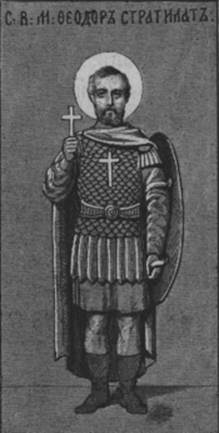
Уроженец Евхаит, Феодор, храбрый и мудрый военачальник, получил достоинство воеводы (по-гречески стратилата) в городе Ираклии Понтийской (ныне Пендераклия). Живя тут, Феодор проповедовал о Христе и многих приводил к святой вере. Ликиний, император, желая поддержать язычество, наперекор Константину соимператору, поддерживавшему христианство, преследовал особенно епископов и военных из христиан. В 319 году он лично посетил Ираклию, чтобы своим присутствием ободрить унывавших поборников язычества и увериться в образе мыслей воеводы Ираклийского, о котором дошли к нему неприятные слухи. Сев на уготованное посреди города высокое место, он произнес хвалебную речь городу и сказал «нигде не почитаются боги, как здесь. Это место самое приличное, это город самый достойный для служения богам. Великий бог Иракл и возлюбил этот город и назвал его своим именем, а тебе, Феодор, достойно владеть этим городом и таким благочестивым народом. И теперь, докажи любовь твою к богам пред нами и принеси им жертвы! Пусть народ увидит твое усердие к богам и узнает, какой ты искренний друг им и доброхот царю!»
A native of Euchaita, Theodore, a brave and wise military commander, received the rank of voivode (in Greek, stratelates) in the city of Heraclea Pontica (now Penderaklia). Living here, Theodore preached about Christ and brought many to the holy faith. Licinius, the emperor, wishing to support paganism in opposition to his co-emperor Constantine, who supported Christianity, persecuted especially the bishops and military men who were Christians. In the year 319, he personally visited Heraclea, in order by his presence to encourage the despondent champions of paganism and to ascertain the way of thinking of the Heraclean voivode, about whom unpleasant rumors had reached him. Seated upon a high place prepared in the midst of the city, he delivered a speech of praise to the city and said: "Nowhere are the gods honored as they are here. This place is the most fitting, this city is the most worthy for the service of the gods. The great god Hercules loved this city and called it by his own name, and you, Theodore, are worthy to rule this city and such a pious people. And now, prove your love for the gods before us and offer them sacrifices! Let the people see your zeal for the gods and learn what a sincere friend you are to them and a well-wisher to the emperor!"
«Царь! отвечал св. Феодор, дай мне сегодня в дом мой великих богов, золотых и серебряных, которых ты привез с собою! С жертвами и кадилами я поклонюсь им в эту ночь, а потом и торжественно, когда прикажешь, принесу им жертву пред всем народом». – Царь с радостию согласился и велел принесть богов. Взявши их, Феодор дома в ту же ночь разбил их на части и роздал эти ценные части нищим.
"O Emperor!" answered St. Theodore, "give me today into my house the great gods, of gold and silver, which you have brought with you! With sacrifices and censers I will worship them this night, and afterwards, solemnly, when you command, I will offer them sacrifice before all the people." The emperor gladly agreed and ordered the gods to be brought. Taking them, Theodore at home that same night broke them into pieces and distributed these valuable pieces to the poor.
Чрез два дня Ликиний назначил быть торжественному жертвоприношению и, заняв свое место, сказал Феодору: «теперь принеси жертвы богам, чтобы народ видел твое усердие к ним!» – Но тут подошел к царю сотник и возвестил, что вчера видел он золотую голову богини Артемиды в руках одного нищего, и на вопрос: где приобрел ее? получил ответ, что эту вещь дал ему Феодор Стратилат. Царь от изумления и гнева долго не мог ничего сказать; наконец, обратясь к Феодору, сказал: «так ли благодаришь богов за принятые от них дары? Этого ли ждал я, когда шел сюда из Никомидии? Но я не прощу тебе этого!» Феодор отвечал: «государь, за что гневаешься? Сам рассуди о силе богов твоих, которые не что иное, как бездушные вещи. Ты скорбишь о богах своих, а я радуюсь о гибели их; ты кланяешься мертвым идолам, а я кланяюсь Богу живому!»
After two days, Licinius appointed a solemn sacrifice to be held, and taking his place, said to Theodore: "Now offer sacrifices to the gods, so that the people may see your zeal for them!" But at that moment a centurion approached the emperor and announced that yesterday he had seen the golden head of the goddess Artemis in the hands of a certain beggar, and when asked: "Where did you acquire it?" received the answer that Theodore the Commander had given him this object. The emperor, from astonishment and anger, could say nothing for a long time; finally, turning to Theodore, he said: "Is this how you thank the gods for the gifts received from them? Is this what I expected when I came here from Nicomedia? But I will not forgive you for this!" Theodore answered: "Sovereign, why are you angry? Judge for yourself the power of your gods, which are nothing but soulless things. You grieve for your gods, but I rejoice at their destruction; you bow down to dead idols, but I bow down to the living God!"
После жестокого бичевания воловьими жилами и оловянными прутьями, тело Феодора было палимо огнем и раздираемо острыми орудиями. Св. Феодор в жестоких муках восклицал: «слава Тебе, Боже мой»! После таких истязаний, его заключили в темницу. Чрез пять дней распяли его на кресте, причем вбили острый «и длинный гвоздь во внутренности св. мученика, бритвами резали тело его, а иные пускали стрелы в лице его. «Я же», говорит Уар, описатель страданий святого, «видя его тяжкие муки и слыша болезненные стоны, опустив свиток, на котором писал, с плачем упал к ногам страдальца и сказал: благослови меня, господин мой, и скажи мне последнее слово! – Уар, отвечал мне тихим голосом св. Феодор, не оставляй дела своего, но опиши все мои страдания до конца и запиши день кончины моей!» – Последнее означало, что Феодор просил для себя ежегодного поминовения в церкви в день кончины.
After a cruel scourging with ox sinews and tin rods, Theodore's body was burned with fire and torn with sharp instruments. St. Theodore in his fierce torments cried out: "Glory to Thee, my God!" After such tortures, he was cast into prison. After five days, they crucified him on a cross, driving a sharp and long nail into the entrails of the holy martyr, cutting his body with razors, and others shooting arrows into his face. "But I," says Uarus, the recorder of the saint's sufferings, "seeing his grievous torments and hearing his painful groans, let fall the scroll on which I was writing, and with weeping fell at the feet of the sufferer and said: 'Bless me, my lord, and speak to me a final word!' – 'Uarus,' St. Theodore answered me in a quiet voice, 'do not abandon your task, but describe all my sufferings to the end and record the day of my death!'" This last meant that Theodore asked for an annual commemoration for himself in the church on the day of his death.
Потом, изрекши краткий молитвенный вопль ко Господу, мученик умолк и ничего больше не говорил. Все тело его было растерзано. Палачи оставили тело висеть на кресте; но ночью Ангел Господень снял св. Феодора со креста и исцелил его от язв. Ликиний же еще до наступления утра послал двух сотников с приказанием: «принесите сюда тело умершего Феодора; я вложу его в оловянный ящик и брошу в море, чтобы безумные христиане не взяли и не боготворили его».
Then, having uttered a brief prayerful cry to the Lord, the martyr fell silent and said nothing more. His whole body was torn apart. The executioners left the body hanging on the cross; but at night an Angel of the Lord took St. Theodore down from the cross and healed him of his wounds. Licinius, however, before the approach of morning, sent two centurions with the order: "Bring here the body of the dead Theodore; I will put it in a tin box and cast it into the sea, lest the foolish Christians take it and worship it."
Когда сотники подошли к месту казни, то, увидевши Феодора сидящим на земле и славящим Бога, сами уверовали во Христа, и с ними семьдесят воинов. Узнав об этом, Ликиний послал наместника своего с тремя стами воинов избить всех уверовавших во Христа. Но и они, видя чудеса величия Божия, также уверовали, а в народной толпе послышались восклицания: «один есть Бог, это – Бог христианский; где Ликиний мучитель? Мы побьем его камнями!» В это время некий воин с обнаженным мечем бросился на Феодора, но царский наместник вырвал меч из рук его и проколол его, а другой воин бросился на наместника и убил его. Феодор, укрощая мятеж, говорил народу: «перестаньте, возлюбленные! Господь Иисус Христос распялся и удержал Ангелов, чтобы они не делали отмщения человеческому роду». Умиротворивши народ и проповедуя Христа Бога, Феодор предался в руки посланных убить его; сказал только Уару: «не ленись записать день кончины моей, а тело мое положи в Евхаите; когда же и ты будешь кончать жизнь, завещай похоронить себя со мною налево от меня».
When the centurions approached the place of execution, seeing Theodore sitting on the ground and glorifying God, they themselves believed in Christ, and with them seventy soldiers. Learning of this, Licinius sent his deputy with three hundred soldiers to kill all who had believed in Christ. But they also, seeing the miracles of God's majesty, likewise believed, and in the crowd of people there were heard exclamations: "There is one God, this is the Christian God; where is Licinius the tormentor? We will stone him!" At that time a certain soldier with a drawn sword rushed at Theodore, but the imperial deputy snatched the sword from his hand and pierced him, and another soldier rushed at the deputy and killed him. Theodore, calming the tumult, said to the people: "Cease, beloved! The Lord Jesus Christ was crucified and restrained the Angels, that they might not execute vengeance upon the human race." Having pacified the people and preached Christ God, Theodore gave himself up into the hands of those sent to kill him; he said only to Uarus: "Do not be lazy to record the day of my death, and place my body in Euchaita; and when you too end your life, command that you be buried with me on my left side."
Помолившись и сказав «аминь», он преклонил под меч главу свою и скончался 8-го февраля, в субботу, в третьем часу дня. Впоследствии император Иоанн Цимисхий (969–976) воздвиг в Евхаите великолепный храм святому в благодарность за победу над Русскими.
Having prayed and said "Amen," he bowed his head under the sword and died on the 8th of February, on a Saturday, at the third hour of the day. Afterwards, the Emperor John Tzimiskes (969–976) erected in Euchaita a magnificent church to the saint in gratitude for the victory over the Russians.