Пилусиотом называется от того, что был настоятелем близ города Пилусия (или Пелузия, в северном Египте, на пограничьи Азийском). Родился в Александрии от благородных и богатых родителей, почему и имел средства получить блистательное образование в светских науках; но еще в молодых летах оставил шумную городскую жизнь и около 398 года принял монашество в монастыре Горы близ Пилусия. Здесь глубокое уединение, строгие подвиги и поучение в слове Божием просветили его ум и возвысили душу его; а желание послушать Златоустого побудило отправиться в Константинополь и привело быть очевидцем несправедливого суда над сим святителем (в 403 году, в июне). То, что видел и слышал Исидор у Златоуста, равно и писания его остались для Исидора и на последующую жизнь предметом внимательного изучения и удивления, так что ясность ума Златоустова, простота и ревность И. Златоуста соделались собственностию Исидора и отпечатлелись на всех его действиях. По возвращении в Пилусиотскую обитель, он продолжал свою подвижническую жизнь, не стыдясь и обличать лицемеров и обидчиков: епископа своего обличил за то, что назначал цену местам, а гражданских властеначальников за пристрастие. Посему и страдал много за свою ревность, но утешался словом Апостольским: вам дано ради Христа не только веровать в Него, но и страдать за Него (Фил.1:29). Как ревнитель благочестия, он принимал участие в защите истины против ереси Нестория. Скончался около 440 года, оставив нам более двух тысяч сочинений, в виде Писем, из коих большая часть заключает в себе объяснение разных мест св. Писания.
He is called of Pelusium because he was the superior of a monastery near the city of Pelusium (or Pelusium, in northern Egypt, on the Asiatic border). He was born in Alexandria to noble and wealthy parents, and therefore had the means to receive a brilliant education in the secular sciences; but even in his youth he left the noisy city life and around the year 398 received monastic tonsure in a monastery of the Mountain near Pelusium. Here deep solitude, strict ascetic labors, and instruction in the word of God enlightened his mind and exalted his soul; and a desire to hear Chrysostom moved him to set out for Constantinople and led him to be an eyewitness of the unjust trial of that Hierarch (in the year 403, in June). What Isidore saw and heard from Chrysostom, as well as his writings, remained for Isidore throughout his subsequent life a subject of attentive study and admiration, so that the clarity of Chrysostom's mind, the simplicity and zeal of St. John Chrysostom became Isidore's own possession and were imprinted upon all his actions. Upon returning to the Pelusium monastery, he continued his ascetic life, not being ashamed to rebuke hypocrites and wrongdoers: he rebuked his own bishop for setting a price on offices, and the civil authorities for partiality. Therefore he suffered much for his zeal, but was consoled by the Apostolic word: For unto you it is given in the behalf of Christ, not only to believe on Him, but also to suffer for His sake (Phil. 1:29). As a zealot of piety, he took part in the defense of the truth against the heresy of Nestorius. He reposed around the year 440, leaving us more than two thousand works, in the form of Letters, the greater part of which contain explanations of various passages of Holy Scripture.
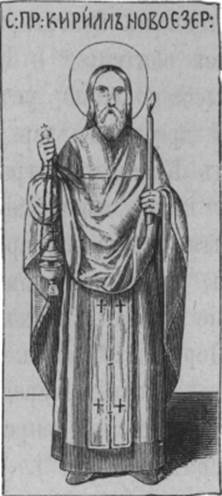
Вы – друзья Мои, если исполняете то, что Я заповедую вам» (Ин.15:14), сказал Сын Божий. – Какое высокое преимущество для человека быть другом Сына Божия! Что же нужно, чтобы получить это преимущество? Надобно исполнить заповеди Сына Божия. После того удивительно только то, что люди так мало дорожат заповедями Сына Божия. Как счастливы, как высоки умом те, которые с юности до гроба, как блаженный Кирилл Новоезерский19, творят волю Сына Божия!
"Ye are My friends, if ye do whatsoever I command you" (Jn. 15:14), said the Son of God. – What a high privilege for a man to be a friend of the Son of God! What is needed to obtain this privilege? One must fulfill the commandments of the Son of God. After that, it is only surprising that people value the commandments of the Son of God so little. How happy, how exalted in mind are those who from youth to the grave, like the blessed Cyril of New Lake19, do the will of the Son of God!
Земною родиною блаженного Кирилла, родившегося для неба в 4 день февраля, был город Галич. Родители его были люди богатые и благочестивые, дворяне Белые20. – Кирилл еще отроком почувствовал непреодолимое желание иноческой жизни и тайно оставил родительский дом, чтобы найти на реке Обноре преп. Корнилия, о котором много слышал он от родителей. От Галича до келии Корнилия было 80 верст. Отрок прошел 15 верст и не знал, куда идти далее. Но на дороге увидел он старца, украшенного сединами. На вопрос старца, куда идет он? Кирилл отвечал: «к Корнилию; у него, как слышно, учатся спасению, а мне хотелось бы спастись». «Благословен Бог, вразумивший тебя, отвечал старец; если хочешь, иди за мною к Корнилию». На другой день в виду было местопребывание Корнилия; указывая на него, старец сказал: «иди, чадо, к блаженному Корнилию; я попрошу его за тебя», и благословил его. Отрок более не видел старца. Преподобный Корнилий с любовию принял отрока и тогда же постриг его в иночество21; ему было тогда около 20 лет22. Молодой инок с горячею любовию начал совершать подвиги иночества, послушание, пост, молитву. После молитвы общей, со всем усилием трудился то в пекарне, то на другой службе. В свободное от трудов время поучался житию святых, читал св. книги, особенно псалмы Давидовы. Чистая, духовная жизнь его радовала всех, живших с Корнилием. Родители блаженного, без пользы искав сына долгое время, начали уже считать его умершим, как спустя 7 лет Комельский инок сказал им, что в их пустыни ведет высокую жизнь молодой инок, неизвестно откуда пришедший. Отец отправился в пустынь с богатыми пожертвованиями и не узнал в строгом постнике Кирилле сына своего. Сын продолжал молить Господа о спасении родителей. Наконец отец, узнав сына, объявил преподобному Корнилию, что сам желает иночества, и его постригли с именем Варсонофия. Спустя 8 дней получено известие, что мать блаженного скончалась инокинею Еленою. По распоряжению Кирилла, оставшееся имение роздано было бедным, и слугам дана была свобода. Отец прожил в обители около трех лет, в посте и молитвах, и сын покоил старость его до гроба.
The earthly homeland of the blessed Cyril, who was born for heaven on the 4th day of February, was the city of Galich. His parents were wealthy and pious people, nobles of the Bely family20. – Cyril, while still a youth, felt an irresistible desire for the monastic life and secretly left his parental home to find the Venerable Cornelius on the River Obnora, of whom he had heard much from his parents. From Galich to the cell of Cornelius was 80 versts. The youth walked 15 versts and did not know where to go further. But on the road he saw an elder adorned with gray hairs. To the elder's question, where was he going? Cyril answered: "to Cornelius; with him, as I hear, they learn salvation, and I would like to be saved." "Blessed be God, Who has given you understanding," answered the elder; "if you wish, follow me to Cornelius." The next day the dwelling place of Cornelius was in sight; pointing to it, the elder said: "go, child, to the blessed Cornelius; I will ask him for you," and blessed him. The youth saw the elder no more. The Venerable Cornelius received the youth with love and immediately tonsured him into monasticism21; he was then about 20 years old22. The young monk began to perform the labors of monasticism with fervent love: obedience, fasting, prayer. After the common prayer, he labored with all his might, now in the bakery, now at another service. In his free time from labors, he studied the lives of the saints, read holy books, especially the Psalms of David. His pure, spiritual life rejoiced all who lived with Cornelius. The parents of the blessed one, having sought their son in vain for a long time, had already begun to consider him dead, when, after 7 years, a monk of Komel told them that in their hermitage a young monk, unknown whence he came, was leading a high life. The father set out for the hermitage with rich donations and did not recognize in the strict faster Cyril his own son. The son continued to pray to the Lord for the salvation of his parents. Finally the father, recognizing his son, declared to the Venerable Cornelius that he himself desired monasticism, and he was tonsured with the name Barsanuphius. Eight days later, news came that the mother of the blessed one had reposed as the nun Helena. By Cyril's arrangement, the remaining property was distributed to the poor, and the servants were given their freedom. The father lived in the monastery for about three years, in fasting and prayers, and the son cared for his old age until the grave.
Спустя год по смерти родителя, Кирилл, стремясь к высшему совершенству, решился вести жизнь отшельническую, в глуши лесов северных. По благословению св. Корнилия отправился он на север ходить по пустыням; пищу его составляли теперь то разные травы, то кора сосновая; чаще ему случалось видеть зверей, чем людей. Так провел он около 7 лет23, очищая в уединении душу молитвою и созерцаниями духовными. По временам посещал он, как благоговейный поклонник, святые места Новгорода и Пскова; но, проходя по жилым местам, не заходил он ни в один дом и не брал ни от кого подаяний, кроме разве куска хлеба. Дух его возвысился в таких подвигах, но телесное здоровье ослабело, и он молил Господа – указать ему место постоянного пребывания. Молитва была услышана.
A year after the death of his parent, Cyril, striving for higher perfection, resolved to lead a hermit's life, in the wilds of the northern forests. With the blessing of St. Cornelius, he set out for the north to wander through the wilderness; his food now consisted of various herbs, now of pine bark; more often he encountered beasts than men. Thus he spent about 7 years23, purifying his soul in solitude through prayer and spiritual contemplation. From time to time he visited, as a devout pilgrim, the holy places of Novgorod and Pskov; but, passing through inhabited places, he did not enter a single house and took no alms from anyone, except perhaps a piece of bread. His spirit was exalted in such labors, but his bodily health weakened, and he prayed to the Lord to show him a place of permanent abode. The prayer was heard.
По небесному указанию блаж. Кирилл из Тихвина пошел к Белуозеру; с Кобылиной горы увидел Новое озеро и на нем Красный остров; ангел во сне известил его, что здесь место его. На Кобылиной горе и ныне стоит часовня, а в ней та самая Тихвинская икона Богоматери, с которою пришел сюда преподобный Кирилл; сюда каждый год бывает крестный ход из обители в благодарное воспоминание о милости Божией, основавшей обитель24. Преп. Кирилл на Красном острову, под высокою елью, устроил себе хижину; – это было в 1517 г. У крестьян дер. Шиднем, Дия, Григория и Давида выпросил он Красный остров для основания обители; построив другую келию, сборную для ожидаемой братии, соорудил он две малые церкви Воскресения Христова и Одигитрии. Вероятно тогда, как испрашивал он благословение архипастыря на освящение храмов своих, посвящен он был в сан священства. Церковная песнь поет: «зная, что разумение Богодухновенного писания – средство ко спасению, ты благоговейно изучил все писание, преподобный Кирилл; затем и принял сан священства»25.
By heavenly guidance, the blessed Cyril went from Tikhvin to White Lake; from Kobylina Hill he saw New Lake and on it Red Island; an angel announced to him in a dream that this was his place. On Kobylina Hill there still stands a chapel, and in it the very Tikhvin Icon of the Mother of God with which the Venerable Cyril came here; every year a cross-procession goes there from the monastery in grateful remembrance of God’s mercy, which founded the monastery24. The Venerable Cyril, on Red Island, under a tall fir tree, built himself a hut; – this was in 1517. From the peasants of the village of Shidnem, Diya, Gregory, and David, he obtained Red Island for the foundation of a monastery; having built another cell, a common one for the expected brethren, he erected two small churches: of the Resurrection of Christ and of the Hodegetria. It was probably then, when he sought the blessing of the archpastor for the consecration of his churches, that he was ordained to the priesthood. The church hymn sings: "Knowing that the understanding of the God-inspired Scripture is a means of salvation, you reverently studied all the Scripture, Venerable Cyril; therefore you also received the rank of priesthood"25.
Первым учеником его на острову был Дионисий; потом стали приходить к нему и другие. – Не мало искушений встречалось для новой обители молитвенников. Но преподобный Кирилл был уже тверд. Рыболовы, приезжавшие на остров, для своего острова видели в Кирилле своего врага, – они делали ему разные оскорбления, домогаясь согнать его с острова. Блаженный переносил оскорбления их терпеливо. – Не так принял он людей, живших бесчестным, бесчеловечным ремеслом (в тогдашнее время таких людей было довольно). Шайка разбойника, грабившего берега Нового озера, досадовала уже и на то, что поселились на острову люди,
His first disciple on the island was Dionysius; then others began to come to him. – Not a few temptations befell the new monastery of prayerful ones. But the Venerable Cyril was already steadfast. Fishermen who came to the island saw in Cyril an enemy for their own island; they offered him various insults, seeking to drive him from the island. The blessed one bore their insults patiently. – Not so did he receive people who lived by a dishonorable, inhuman trade (in those times there were many such people). A band of robbers who plundered the shores of New Lake were already annoyed that people had settled on the island
которые могут знать о ее делах. Хищники приплыли на челнах к Красному острову. «Сыны беззакония! грозно сказал преподобный при встрече с ними. Вы забыли, что есть грозный суд правды Божией, и на пустой остров явились вы для грабежа, и у пустынника думаете найти корысть? Что вы делаете?»... Приведенные в ужас, хищники молили простить их. «Вперед не злодействуйте, чтобы не быть в аду», сказал преподобный, и отпустил их. – Это чудесное укрощение злодеев утешило и одушевило собравшихся к преподобному молитвенников. В другой раз, теснимые бедностию, воры сняли колокола у бедного храма обители и спешили переправиться на другой берег, но заблудились. «Зачем вы прибыли сюда?» спросил встретивший их Кирилл. Те пали к ногам св. мужа и просили прощения. «Еще не бывало того, сказал преподобный, чтобы кто-либо счастлив был чужим добром. Алчешь чужого, потеряешь свое. Вор не бывает богат, а бывает горбат. И с умом воровать, беды не миновать. Вот – трудовая копейка – до веку живет. Заработанный ломоть лучше краденого каравая. Помните эту народную мудрость». Затем велел он накормить их и отпустить с миром. Блаженный служил для учеников своих образцом подвижнической жизни: сам копал землю и рубил лес. В жестокие морозы ходил в худой одежде и даже иногда босой. Когда только нужно было для других, сам совершал литургию, никогда не утомляясь. Похотливая жена вздумала прельстить блаженного на грех; она явилась в келью, когда чтением молитв готовился он к совершению литургии. На вопрос блаженного: «зачем пришла?» лукавая отвечала, что, не зная, где добыть огня, пришла за огнем. Преподобный обличил ее пред всею братиею: «вздумала, говорил он, видеть тело мое мертвое, заживо погребенное». Пораженная страхом, трепетала она всем телом. Преподобный успокоил ее кротким наставлением, но запретил женам являться на острову его. Блаженный Александр Свирский присылал ученика своего Никифора видеть подвижника Божия Кирилла. Было чему учиться у него ученикам его.
who might know of their deeds. The predators sailed in boats to Red Island. "Sons of lawlessness!" said the Venerable One sternly when meeting them. "You have forgotten that there is a terrible judgment of God's righteousness, and you have come to a deserted island for plunder, and you think to find gain from a hermit? What are you doing?"... Struck with terror, the predators begged him to forgive them. "Do not commit evil deeds in the future, lest you be in hell," said the Venerable One, and dismissed them. – This miraculous taming of the evildoers comforted and inspired the prayerful ones gathered to the Venerable One. Another time, pressed by poverty, thieves removed the bells from the poor church of the monastery and hastened to cross to the other shore, but lost their way. "Why have you come here?" asked Cyril, meeting them. They fell at the feet of the holy man and asked forgiveness. "It has never happened," said the Venerable One, "that anyone was made happy by another's goods. You covet another's, you will lose your own. A thief is not rich, but is bent. Even if you steal cleverly, you will not avoid trouble. Behold – a kopek earned by labor lives forever. A piece earned by work is better than a stolen loaf. Remember this folk wisdom." Then he ordered them to be fed and sent away in peace. The blessed one served as an example of ascetic life for his disciples: he himself dug the ground and cut wood. In severe frosts he went about in poor clothing and sometimes even barefoot. Whenever it was necessary for others, he himself celebrated the Divine Liturgy, never growing weary. A lustful woman thought to seduce the blessed one into sin; she appeared in his cell while he was preparing for the celebration of the Divine Liturgy by reading prayers. To the blessed one's question: "Why have you come?" the crafty one answered that, not knowing where to get fire, she had come for fire. The Venerable One rebuked her before all the brethren: "She thought," he said, "to see my dead body, buried alive." Struck with fear, she trembled all over. The Venerable One calmed her with a gentle instruction, but forbade women to appear on his island. The blessed Alexander of Svir sent his disciple Nicephorus to see the ascetic of God, Cyril. His disciples had much to learn from him.
Благодать Божия до того возросла в духе блаженного подвижника, что открывалась и для людей сторонних в осязаемых опытах. Ученик его Дионисий видел преподобного в великий четверток, когда вся братия должна была приобщаться, служащим вместе с диаконом; но при выходе из храма уже не видно было диакона. «Где же сослуживший диакон?» спросил Дионисий авву своего. «Не сказывай о том, что видел ты, до моей смерти». – В обитель Кирилла собралось много иноков, а средства обители были бедны, и ученики Кирилла по временам страдали от недостатков содержания. – Преподобный усердно молился за учеников, и помощь подаваема была неожиданно26. Раб Божий доставил им и постоянное обеспечение. Князь Иван Васильевич Пенков был тяжко болен. Во сне говорит ему кто-то: «иди в пустынь Кирилла Белаго, за Тихвин, и – выздоровеешь». Князь спрашивал потом: что это за пустынь? И узнав, что она на Новом озере, отправился по указаниям. Когда увидал он блаженного Кирилла, то узнал в нем являвшегося ему. По просьбе больного князя, Кирилл служил литургию и молебен: от жестокого мороза другие не могли стоять в церкви, а Кирилл служил в разодранной одежде своей и босой. Больной князь совсем выздоровел и, признательный к милости Божией, дал грамоту – выдавать для обители Кирилловой каждый год 40 мер ржи, масло и соль. Церковная песнь поет блаженному Кириллу: «мглу страстей прогнав молитвами, ты представил Богу сердце твое чистым. Потому и вселилась в тебя благодать Святого Духа, так что видел ты будущее, как близкое к тебе. И просившим у тебя с верою, разрешил узы неплодствия»27. Пред кончиною своею преподобный видел и объявил бедствия, готовившиеся для России. «Будет, говорил он, на нашей земле мятеж между людьми и беды великие, прольется сильный гнев Божий, падут от меча многие и многие разбросаны будут между чужими. Плачьте, братия, пред Господом и пречистою Материю Его за твердость русского царства». Потом прибавил: «но царство наше будет умирено и устроено Богом». Причастившись св. Таин, оградив себя крестным знамением, сказал он: «слава Богу за все», и предал Господу дух свой 4 февраля 1532 года.
The grace of God had so increased in the spirit of the blessed ascetic that it was revealed even to outsiders in tangible experiences. His disciple Dionysius saw the Venerable One on Great Thursday, when all the brethren were to receive Communion, serving together with a deacon; but upon leaving the church, the deacon was no longer to be seen. "Where is the deacon who served with you?" Dionysius asked his abba. "Do not tell what you have seen until my death." – Many monks gathered in Cyril's monastery, but the monastery's means were poor, and Cyril's disciples sometimes suffered from a lack of sustenance. – The Venerable One fervently prayed for his disciples, and help was sent unexpectedly26. The servant of God also provided them with a permanent endowment. Prince Ivan Vasilievich Penkov was grievously ill. In his sleep someone said to him: "Go to the hermitage of Cyril the White, beyond Tikhvin, and you will recover." The prince later asked: what hermitage is this? And learning that it was on New Lake, he set out according to the directions. When he saw the blessed Cyril, he recognized him as the one who had appeared to him. At the sick prince's request, Cyril served the Divine Liturgy and a moleben: from the severe frost others could not stand in the church, but Cyril served in his tattered garment and barefoot. The sick prince was completely healed and, grateful for God's mercy, gave a charter to deliver to Cyril's monastery each year 40 measures of rye, oil, and salt. The Church hymn sings to the blessed Cyril: "Having driven away the darkness of passions with prayers, you presented your heart pure to God. Therefore the grace of the Holy Spirit dwelt in you, so that you saw the future as near to you. And to those who asked of you with faith, you loosed the bonds of barrenness"27. Before his end, the Venerable One saw and declared the calamities preparing for Russia. "There will be," he said, "in our land turmoil among the people and great woes, the strong wrath of God will be poured out, many and many will fall by the sword and be scattered among strangers. Weep, brethren, before the Lord and His most pure Mother for the steadfastness of the Russian kingdom." Then he added: "but our kingdom will be pacified and ordered by God." Having partaken of the Holy Mysteries, having signed himself with the sign of the cross, he said: "Glory to God for all things," and surrendered his spirit to the Lord on February 4, 1532.
Вслед за кончиною преподобного Кирилла, открылись знамения близости его ко Господу. Больной инок Кириак, которого послушанием было ловить рыбу для братии, по болезни не был при погребении преподобного и сильно скорбел о том. Явился преподобный и сказал: «что ты так болен, брат Кириак? Вставай, иди ловить рыбу». Осенив больного крестным знамением, престал он быть видимым. Больной, дотоле лежавший без употребления рук и ног, начал двигаться, а принесенный к гробу преподобного, совсем выздоровел. Рассказав изумленной братии бывшее ему видение, пошел он ловить рыбу и наловил столько, как никогда прежде. В ряду разных исцелений, следовавших за тем, особенно поразительно исцеление инока Макария. Он поступил в Новоезерскую обитель из Корельской стороны. Своевольный и сварливый, не хотел он переносит скудость обители и вышел в монастырь г. Белозерска. Здесь посетила его жестокая болезнь, так что ни ел, ни спал он. Придя в сознание грехов своих, обратился он с молитвою к преподобному Кириллу. Почувствовав затем некоторое облегчение, он, по его просьбе, отведен было в обитель преподобного. Здесь вдруг стал он кричать и упал бездыханным. Испуганные братия положили его на самый гроб преподобного. Он очнулся, встал и вот что говорил о себе: «демоны без милости мучили меня, но благолепный старец прогнал их жезлом. Встань, сказал он мне, и более не греши». Царю Иоанну св. Кирилл, явясь во сне, сказал не ходить в приемную палату до 3 часов дня. И в этот час палата упала, от чего несколько человек лишилось жизни. Опасенный царь, кроме того, что утвердил за обителию деревни Шиднем и Кобылино, отдал монастырю всю землю на 3 версты во все стороны монастыря. Это было в 1542 году28.
Immediately after the repose of the Venerable Cyril, signs of his nearness to the Lord were revealed. The sick monk Cyriacus, whose obedience was to catch fish for the brethren, was not present at the burial of the Venerable One due to illness and grieved greatly over it. The Venerable One appeared and said: "Why are you so ill, brother Cyriacus? Arise, go catch fish." Having made the sign of the cross over the sick man, he ceased to be visible. The sick man, who had until then lain without use of his hands and feet, began to move, and when brought to the grave of the Venerable One, was completely healed. Having told the astonished brethren of the vision that had come to him, he went to catch fish and caught as many as never before. Among various healings that followed, the healing of the monk Macarius was especially striking. He had come to the Novoezero monastery from the Korel side. Self-willed and quarrelsome, he did not wish to bear the monastery's poverty and left for the monastery of the city of Belozersk. There a severe illness visited him, so that he neither ate nor slept. Coming to awareness of his sins, he turned in prayer to the Venerable Cyril. Feeling some relief, he was taken, at his request, to the Venerable One's monastery. Here he suddenly began to cry out and fell down breathless. The frightened brethren laid him on the very grave of the Venerable One. He came to, stood up, and said this of himself: "Demons tormented me without mercy, but a comely elder drove them away with a staff. 'Arise,' he said to me, 'and sin no more.'" To Tsar John, St. Cyril, appearing in a dream, said not to go into the reception hall until three o'clock in the afternoon. And at that hour the hall collapsed, from which several people lost their lives. The saved tsar, besides confirming the villages of Shidnem and Kobylino for the monastery, gave the monastery all the land for three versts in every direction from the monastery. This was in 154228.
В 1620 году жена священника Михаила, села Кема, сильно страдала от родов. Преподобный явился ей в иерейском облачении, с крестом в руке, и сказал: «иди в монастырь мой и будешь здорова». Она почувствовала облегчение, хотела идти в обитель, но удержана была родными, под опасением за нее. Преподобный явился опять в прежнем виде, но еще держал свечу и кадильницу. «Не бойся, Антонина! сказал он: пусть с свечою и ладаном священник отслужит молебен, и ты будешь здорова. Мужу твоему иерею Михаилу скажи, чтобы учил людей добру. Видите гнев Божий: то нападают иноплеменники, то посещает голод или мор. Это за то, что презирают праздники Божии, не постятся в среду и пяток, не чтят воскресного дня и валяются в грязи грехов. Если не покаются, хуже того будет»29. Дивная сила молитвы святых Божиих! В деревне Шиднем поныне живут, не вымирая, потомки Дия, Григория и Давыда, уступивших остров преподобному для обители молитв30.
In 1620, the wife of the priest Michael, of the village of Kema, suffered greatly in childbirth. The Venerable One appeared to her in priestly vestments, with a cross in his hand, and said: "Go to my monastery and you will be well." She felt relief and wished to go to the monastery, but was held back by her relatives, out of fear for her. The Venerable One appeared again in the same form, but also holding a candle and a censer. "Fear not, Antonina!" he said: "let the priest serve a moleben with a candle and incense, and you will be well. Tell your husband, the priest Michael, to teach the people good. You see the wrath of God: now foreigners attack, now famine or pestilence visits. This is because they despise the feasts of God, do not fast on Wednesday and Friday, do not honor the Lord's Day, and wallow in the filth of sins. If they do not repent, worse than this will come"29. Wondrous is the power of the prayers of God's saints! In the village of Shidnem, the descendants of Dius, Gregory, and David, who ceded the island to the Venerable One for a monastery of prayer, still live to this day without dying out30.
Мощи преподобного Кирилла обретены были нетленными при основании нового храма, отроившегося по обету спасенного от бед боярина Иорозова. По определению собора, они свидетельствованы были Вологодским архиепископом Маркеллом; а в 1652 году августа 22-го дня перенесены были в раке в новый храм», где и ныне почивают, источая чудеса31.
The relics of the Venerable Cyril were found incorrupt during the foundation of a new church, built according to a vow of the boyar Morozov, who had been saved from calamities. By decree of a council, they were examined by Marcellus, Archbishop of Vologda; and in 1652, on August 22, they were transferred in a reliquary to the new church, where they now repose, pouring forth miracles31.
«По успении твоем, блаженный, и твоя рака – учитель нам: истекающими из нее чудесами, возбуждая к трудам и подвигам, говорит нам: любите Господа, чтобы обрести благодать вечную; не ставьте ничего выше Его, дабы тогда, как приидет Он, найти покой с избранными. О! да сподобимся мы того твоими молитвами»32.
"After your dormition, O blessed one, your reliquary is a teacher to us: by the miracles flowing from it, stirring us to labors and struggles, it says to us: Love the Lord, that you may find eternal grace; set nothing above Him, that when He comes, you may find rest with the elect. O may we be vouchsafed this by your prayers"32.
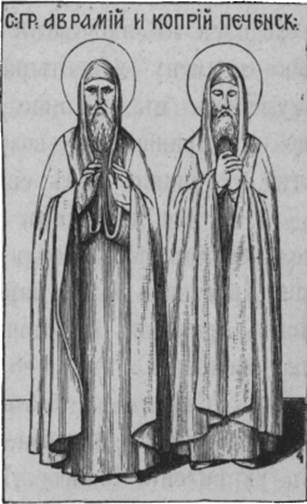
По ркп. описанию святых Вологодских, «преподобные отцы Аврамий и Коприй, иже у Спаса на Печенге, быша в лето 7000 (1492)». Спасская пустынь на речке Печенге, закрытая в 1764 году, находилась в 20 верстах от Вологды, в Грязовецком уезде. В 1492 году блаженные ревнители пустынной жизни в первый раз поселились в здешнем, тогда глухом, лесном месте. Много надобно было им вытерпеть разных нужд и скорбей: но они твердо подвизались для Господа до гроба. Мощи их почивают под спудом в Спасской церкви, ныне приходской33.
According to the manuscript description of the saints of Vologda, "the Venerable Fathers Abramius and Coprius, who were at the Savior's on the Pechenga, lived in the year 7000 (1492)." The Savior's Hermitage on the river Pechenga, closed in 1764, was located 20 versts from Vologda, in Gryazovets district. In 1492, the blessed zealots of the desert life first settled in this then remote, wooded place. Much did they have to endure of various needs and sorrows: but they struggled steadfastly for the Lord until the grave. Their relics rest hidden beneath the ground in the Savior's church, now a parish church33.
Богаты были VΙΙΙ и начало IХ-го столетия исповедниками и мучениками, охранявшими чистоту христианского учения и неустрашимо возвышавшими голос в опровержение одно за другим возникавших заблуждений. Между прочими свирепствовала ересь иконоборства и производила сильное смятение на Востоке. Казни и пытки за иконопочитание почти не прекращались, но православные не отступали ни перед какими мучениями и громогласно заявляли свое почитание Господа и Святых Его в их изображениях.
The 8th and beginning of the 9th centuries were rich in confessors and martyrs who guarded the purity of Christian teaching and fearlessly raised their voices in refutation of the errors that arose one after another. Among other things, the heresy of iconoclasm raged and caused great turmoil in the East. Executions and tortures for the veneration of icons almost never ceased, but the Orthodox did not retreat before any torments and loudly declared their veneration of the Lord and His Saints in their images.
Одним из претерпевших за иконопочитание жестокие истязания и изгнание был преподобный Николай, игумен Студийского монастыря. Он родился в 793 году в Крите, в гор. Кидонии. Достигнув 10-летнего возраста, был отдан родителями в Студийскую обитель, в Константинополь, где находился в иночестве дядя его Феофан. Представленный дядею игумену монастыря Феодору, мальчик был помещен игуменом в училище, находившееся при монастыре. Когда же он пришел в возраст, то был пострижен в иночество и принял сан священства.
One of those who suffered cruel tortures and exile for the veneration of icons was the Venerable Nicholas, abbot of the Studion monastery. He was born in 793 in Crete, in the city of Cydonia. Having reached the age of ten, he was given by his parents to the Studion monastery in Constantinople, where his uncle Theophanes was a monk. Presented by his uncle to the abbot of the monastery, Theodore, the boy was placed by the abbot in the school attached to the monastery. When he came of age, he was tonsured into monasticism and received the rank of the priesthood.
Достойно проходил Николай служение свое и созрел для великой борьбы, которая предстояла ему в жизни. Мир церкви Христовой был нарушен тогда иконоборною ересью. Царь Лев Армянин ожесточенно преследовал тогда защитников иконопочитания (813–820), и св. Николай вместе с св. Феодором Студитом были заточены в Мезопу, близ озера Аполлониадского, отсюда же переведены в восточные страны – в укрепление Вониту. Но и из заточения находили они возможность вести сношения с православными и распространять благочестие. Узнав об этом, царь приказал подвергнуть их жестоким истязаниям и морить голодом. Они были изранены до костей и нагими оставлены на всю ночь на стуже. Среди страданий они только благодарили и славили Бога; через три года после того, за новые писания их в защиту св. икон, они снова были подвергнуты мучениям, переведены израненные в Смирнские пределы, также в темницу, где и оставались около 20-ти месяцев.
Worthily did Nicholas fulfill his service and mature for the great struggle that awaited him in life. The peace of the Church of Christ was then disturbed by the iconoclast heresy. The Emperor Leo the Armenian fiercely persecuted the defenders of icon veneration (813–820), and St. Nicholas together with St. Theodore the Studite were exiled to Mesopa, near Lake Apolloniad, and from there transferred to the eastern regions – to the fortress of Bonita. But even from exile they found the means to maintain contact with the Orthodox and spread piety. Learning of this, the emperor ordered them to be subjected to cruel tortures and starved. They were wounded to the bone and left naked all night in the cold. Amid their sufferings they only thanked and glorified God; three years after that, for their new writings in defense of the holy icons, they were again subjected to torments, transferred wounded to the region of Smyrna, also to a prison, where they remained for about twenty months.
При Михаиле II – Бальбе, также иконоборце, но не преследовавшем народ за иконопочитание, все заключенные в темницах были освобождены, но так как в Константинополе не позволялось держать икон, то святые Феодор и Николай поселились в Акрите, мысе в Вифинии, где св. Феодор и скончался в 826 году, 11-го ноября.
Under Michael II the Stammerer, also an iconoclast, but one who did not persecute the people for icon veneration, all those imprisoned were freed, but since it was not permitted to keep icons in Constantinople, the saints Theodore and Nicholas settled in Akrita, a promontory in Bithynia, where St. Theodore reposed in 826, on November 11.
Когда при воцарении Феофила снова началось гонение на святые иконы, то преподобный Николай, оставив свое убежище, скитался с места на место до смерти гонителя и уже во время царствования благочестивой жены его Феодоры, успокоившей Церковь восстановлением иконопочитания на 7-м Вселенском Соборе, возвратился в Студийскую обитель. Здесь был он поставлен игуменом, но года через три отказался от игуменства, желая предаться полному безмолвию. Со временем, при возникших при дворе и в городе смутах, против которых действовал безуспешно сам патриарх Игнатий, преподобный Николай, бывший тогда по настоятельной просьбе братии вторично игуменом, оставил обитель и снова скитался по разным убежищам, пока не был схвачен но повелению царя и заключен на два года в темницу Студийского монастыря при игумене Савве.
When under the reign of Theophilus persecution of the holy icons began again, the Venerable Nicholas, leaving his refuge, wandered from place to place until the death of the persecutor, and only during the reign of his pious wife Theodora, who pacified the Church by restoring icon veneration at the Seventh Ecumenical Council, did he return to the Studion monastery. Here he was appointed abbot, but after about three years he resigned the abbacy, desiring to give himself over to complete silence. In time, during the disturbances that arose at court and in the city, against which even Patriarch Ignatius acted unsuccessfully, the Venerable Nicholas, who was then abbot for a second time at the urgent request of the brethren, left the monastery and again wandered to various refuges, until he was seized by order of the emperor and imprisoned for two years in the prison of the Studion monastery under Abbot Sabbas.
Только с воцарением императора Василия I Македонянина (867–893) был освобожден из темницы преподобный Николай и по желанию царя поставлен снова в игумены Студийского монастыря, хотя и отговаривался своею старостию от этого настоятельства.
Only with the accession of Emperor Basil I the Macedonian (867–893) was the Venerable Nicholas freed from prison and, at the emperor’s wish, again appointed abbot of the Studion monastery, although he excused himself from this superiorship on account of his old age.
Теперь, хотя и не надолго, успокоился наконец много пострадавший, пользуясь великим уважением, с которым стали относиться к нему все, в особенности после того, как Бог прославил его даром целений и предведения будущего, как бы в указание того, что преподобный Николай был одним из тех верующих, про кого сказал Христос: «верующий в Меня, дела, которые творю Я, и он сотворит, и больше сих сотворит» (Ин.15:12).
Now, though not for long, he who had suffered so much finally found rest, enjoying the great respect with which all began to regard him, especially after God glorified him with the gift of healings and foreknowledge of the future, as if to indicate that the Venerable Nicholas was one of those believers of whom Christ said: “He who believes in Me, the works that I do he will do also, and greater works than these he will do” (Jn. 15:12).
Ркп. житие препод. Кирилла с чудесами, писанное в 1620 году, у Царского № 162, 682, в Импер. библ. № 731, 733. Извлечение в прологе 4-го февраля. – Так как житие написано довольно поздно после кончины препод. Кирилла: то неудивительно, что в нем встречается несколько неточных показаний.
Manuscript Life of the Venerable Cyril with miracles, written in 1620, at Tsarsky No. 162, 682, in the Imperial Library No. 731, 733. An extract in the Prologue for the 4th of February. — Since the Life was written rather late after the repose of the Venerable Cyril, it is not surprising that it contains several inaccurate statements.
Надпись жития: «февраля 4-го житие препод. отца нашего Кирилла-игумена Белаго, Новоезерскаго чудотворца». В ист. акт. 2, 401. Белой Никита Васильевич воевода осадный. По летописи Белый Василий дьяк. Карамз. 7, пр. 152. 187.
Inscription of the Life: “February 4, the Life of our Venerable Father Cyril, Abbot of the White Lake, Wonderworker of New Lake.” In Historical Acts 2, 401. Bely Nikita Vasilievich was a siege voivode. According to the chronicle, Bely Vasily was a deacon. Karamzin 7, note 152, 187.
Так показано в ркп. житии. В летописи, присоединенной в конце жития, сказано, что Кирилл пришел к Корнилию в 1481 году. Но тогда Корнилий еще не жил в Комельском лесу. В житии сказано: «пришед отрок ко вратам монастыря видит иноков монастыря (Комельского); хощу, рече, видети игумена». По житию Корнилия это не могло быть раньше 1501 г., когда Корнилий облечен саном священства и стал начальником обители, жив с 1497 года отшельником в Комельском лесу.
Thus it is shown in the manuscript Life. In the chronicle appended at the end of the Life, it is said that Cyril came to Cornelius in 1481. But at that time Cornelius did not yet live in the Komel forest. The Life says: “The youth, coming to the gates of the monastery, sees the monks of the (Komel) monastery; ‘I wish,’ he says, ‘to see the abbot.’” According to the Life of Cornelius, this could not have been earlier than 1501, when Cornelius was invested with the rank of priesthood and became the head of the monastery, having lived as a hermit in the Komel forest since 1497.
Жития февраль, стр. 51: «в подвиге трудного странничества провел он до двадцати лет». Слишком много. Если Кирилл прожил у Корнилия с 1501 г. не менее 10 лет: то после того до 1517 г. остается для странствования не более 7 лет. – В числе растений, которыми питался пр. Корнилий в пустыне, поставляется «вахта» – трава северного климата, menyanthes.
Lives for February, p. 51: “In the labor of difficult wandering he spent up to twenty years.” That is too many. If Cyril lived with Cornelius from 1501 for no less than 10 years, then after that until 1517 there remains for wandering no more than 7 years. — Among the plants with which the Venerable Cornelius nourished himself in the wilderness is listed “bogbean” — a plant of the northern climate, Menyanthes.
Церковная служба на 4 февраля. Приемля твои молитвы, Бог подавал обитавшим с тобою, во время скудости, нужное для жизни (Пес. 8).– Минея за февраль. М. 1646 г.
Church service for the 4th of February. “Receiving your prayers, God supplied those who dwelt with you, in time of scarcity, with what was needful for life” (Ode 8). — Menaion for February. Moscow, 1646.
Особое повествование о обретении мощей нап. в Чтен. Общ. Ист. 1864 г. кн. 3. В старинной описи Вологодского архиерейского дома значится грамота д. Алексея Мих. от 21 окт. 1651 г. о поставлении раки для мощей чудотворца Кирилла в его монастыре Новоезерском. – Донесение архиеп. Маркелла 1649 г. об освидетельствовании мощей пр. Кирилла нап. в Волог. Епарх. Ведом. 1865 г. № 22. Здесь сказано: «а как чудотворец Кирилл Белый преставися и погребен, тому сто семнадцать лет».
A separate account of the uncovering of the relics is printed in the Readings of the Society of History, 1864, Book 3. In the old inventory of the Vologda bishop’s house there is recorded a charter of Tsar Alexis Mikhailovich, dated October 21, 1651, concerning the placing of a reliquary for the relics of the Wonderworker Cyril in his New Lake monastery. — The report of Archbishop Marcellus in 1649 on the examination of the relics of the Venerable Cyril is printed in the Vologda Diocesan Gazette, 1865, No. 22. Here it is said: “And since the Wonderworker Cyril the White reposed and was buried, it has been one hundred and seventeen years.”
Стихира литии в минее. М. 1646 г. Здесь на 4 февр. и два канона, Ркп. служба преподобному на 4 февр. у Царского, № 126. «Ноября 7 слово на обретение честных и многоцелебных мощей преп. и богоноснаго отца нашего Кирилла игумена Белаго, Новоезерскаго чудотворца», у Толстого 2, № 114.
Sticheron at the Litia in the Menaion. Moscow, 1646. Here, for the 4th of February, there are also two canons. A manuscript service to the Venerable One for the 4th of February is at Tsarsky, No. 126. “November 7, a discourse on the uncovering of the honorable and most-healing relics of our Venerable and God-bearing Father Cyril, Abbot of the White Lake, Wonderworker of New Lake,” at Tolstoy 2, No. 114.