Orthodox Translations

February 33 февраля

Old Calendar: civil February 16 · New Calendar: civil February 3

History

Святых праведных Симеона Богоприимца и Анны пророчицы

Sts. Simeon the God-receiver and Anna the Prophetess, the Righteous

E1.TAI draft

Святых праведных Симеона Богоприимца и Анны пророчицы. О них довольно сказано выше, в празднике Сретения.

Sts. Simeon the God-receiver and Anna the Prophetess, the Righteous. Enough has been said about them above, in the Feast of the Meeting of the Lord.

E1.0AI draft

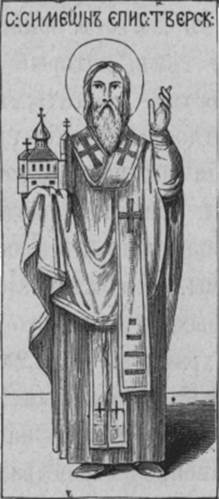
† Преставление св. Симеона, епископа Тверского

† The Repose of St. Simeon, Bishop of Tver

E2.TAI draft
Engraving

В рукописных святцах Симеон, епископ Тверской, поставлен между святыми русской Церкви. Летописи разных времен, говоря о нем, называют его «преподобным епископом», чем показывают в нем подвижническую, святую жизнь1.

In manuscript menologia, Simeon, Bishop of Tver, is numbered among the saints of the Russian Church. Chronicles of various times, speaking of him, call him "the Venerable bishop," thereby showing in him an ascetic, holy life1.

E2.0AI draft

Блаженный Симеон был первым Тверским епископом2, а седьмым Полоцким епископом3. По некоторым памятникам, он был из рода князей Полоцких4. Последнее подтверждается и тем, что множество земель и угодий роздано им Полоцким обителям и церквам5. Скорби времени заставили его оставить Полоцк. В 1263 г. убит был князь Миндовг, женатый на княжне Тверской. Тогда же лишен был жизни и племянник его, князь Полоцкий, Товтивилл. Сын Товтивилла скрылся в Новгород; другие князья и бояры бежали, кто куда мог6. Полоцкий епископ, заведовавший и прежде того церквами Тверского княжества, уклонился от бед в Тверь, тем более, что в то же самое время Тверский князь Ярослав Ярославич стал великим князем России и любимую им Тверь избрал в свой престольный город. – Благоверный князь принял блаженного пастыря со всею любовию: он наделил Тверскую кафедру его богатыми имениями и угодьями7. По летописи, блаженный пастырь в 1271 году с любовию отдавал последний долг любви и уважения почившему благотворителю своему. Великий князь Ярослав Ярославич скончался на пути из Орды, и его привезли в Тверь для погребения; «Тверской епископ Симеон совершил над ним обычное надгробное пение, и его положили в соборном храме св. Козмы и Дамиана»8. Блаженный Симеон управлял паствою, как пастырь искренний, как один из лучших пастырей церкви. По свидетельству летописей, он был «учительный и хорошо знакомый с книгами; не боясь неприятностей и бед, вступал в спор с князем и вельможами, а нищим и сиротам благотворил9. Снисходительный и добрый для обижаемых и несчастных, внимательный к чину иноческому и священническом у, он бы л грозен для оскорблявших правду и добродетель, – они боялись его10. Памятники древности передают разговор его с Полоцким князем Константином. «Константин, князь Полоцкий, называемый Безрукий, желая уколоть своего тиуна, сказал вслух всех епископу: «где будут наши тиуны на том свете?» Владыка Симеон отвечал: «там же, где и князь». Князю это не понравилось и он сказал: «тиун судит неправо, берет деньги, продает и мучит людей, делает все худое; а я что делаю?» Владыка сказал ему: «если князь добр и Богобоязнен, жалеет людей, любит правду, и потому выбирает в тиуна или властелина человека доброго и Богобоязненного, умного и правдолюбивого: то князь будет в раю и тиун его с ним. Если же князь без страха Божия, не жалеет христиан, не думает о сиротах и вдовах, и поставляет начальника злого, нерассудительного, только бы добывал ему куны (деньги), пускает его, как голодного пса на падаль, губить людей: то и князь будет в аду и тиун его с ним. Говорю вам, князьям и наместникам: утешайте печальных, избавляйте слабых из руки сильных. Богатые обижают их, и они к вам приходят как к защитникам добрым. Вы же, князья и наместники, подобны дождевой туче, пущающей воду над морем, а не над землею жаждущею. Вы тем дасте и помогаете, у которых много серебра и золота, а не тем, которые не имеют ни пенязя; бедных отдаете в рабство, а богатых наделяете щедро»11. Это свободное, бестрепетное обличение сильных земли, это чистое сознание требований правды древность русская почтила тем, что внесла его в общие руководства правосудия12. В 1276 г. пожар истребил жилые строения гор. Твери; истреблены были и все храмы, за исключением одного. Заботливому святителю много надо было употребить трудов для построения дома святительского и храмов. В 1282 году снова был пожар в Твери13. Ветхий деревянный кафедральный храм св. Козмы и Дамиана был разобран и на его месте в 1285 г. святитель основал каменный кафедральный храм в честь Спасителя. В следующем году святитель имел утешение видеть опыт искренней любви паствы своей к пастырю. Хищные Литовцы внезапно напали на церковные волости Тверского владыки и ограбили их. Тверитяне добровольно, сами собой, бросились за хищниками, догнали их и отняли все награбленное. Такой князь, каков был святой Михаил Ярославич, употребил все, чтобы новый собор строился без замедления и остановок. Но прочный великолепный храм не мог быть построен скоро. Святитель, чувствуя, что при его старости не доживет он до освящения нового собора, и скучая без служения при кафедре, столько отрадного для печальной старости, освятил (1287 г.) в созидавшемся соборе подвижной престол, чтобы молиться здесь вместе с паствою, нока может. И точно, он мирно почил 3-го февраля 1289 года а храм был освящен преемником его, епископом Андреем, в 1290 году14.

Blessed Simeon was the first Bishop of Tver2, and the seventh Bishop of Polotsk3. According to certain records, he was of the lineage of the Princes of Polotsk4. This is confirmed also by the fact that he distributed many lands and estates to the monasteries and churches of Polotsk5. The sorrows of the time compelled him to leave Polotsk. In 1263, Prince Mindaugas, who was married to a princess of Tver, was killed. At the same time, his nephew, Prince Tovtivil of Polotsk, was also put to death. The son of Tovtivil took refuge in Novgorod; other princes and boyars fled wherever they could6. The Bishop of Polotsk, who had previously administered the churches of the Tver principality, withdrew from the calamities to Tver, all the more because at that same time the Tver Prince Yaroslav Yaroslavich became Grand Prince of Russia and chose his beloved Tver as his capital city. – The Right-believing Prince received the blessed pastor with all love: he endowed the Tver cathedra with rich estates and lands7. According to the chronicle, in 1271 the blessed pastor lovingly rendered the last duty of love and respect to his departed benefactor. Grand Prince Yaroslav Yaroslavich died on the way from the Horde, and he was brought to Tver for burial; "Bishop Simeon of Tver performed over him the customary funeral chant, and they laid him in the cathedral church of Sts. Cosmas and Damian"8. Blessed Simeon governed his flock as a sincere pastor, as one of the best pastors of the Church. According to the testimony of the chronicles, he was "learned and well-versed in books; fearing neither trouble nor hardship, he disputed with prince and nobles, and showed kindness to the poor and orphans"9. Kind and compassionate toward the oppressed and unfortunate, attentive to the monastic and priestly orders, he was fearsome to those who offended truth and virtue – they feared him10. Monuments of antiquity preserve his conversation with Prince Constantine of Polotsk. "Constantine, Prince of Polotsk, called the Armless, wishing to taunt his steward, said aloud to the bishop: 'Where will our stewards be in the world to come?' Vladyka Simeon answered: 'Where the prince will be.' This displeased the prince, and he said: 'The steward judges unjustly, takes money, sells, and torments people—he does every evil; but what do I do?' The Vladyka said to him: 'If a prince is good and God-fearing, pities people, loves truth, and therefore appoints as steward or ruler a man who is good and God-fearing, wise and truthful, then the prince will be in paradise, and his steward with him. But if the prince is without the fear of God, has no pity for Christians, gives no thought to orphans and widows, and appoints a wicked, senseless ruler, only so that he may gather kunas (money) for him, and lets him loose like a hungry dog upon carrion to destroy people, then the prince will be in hell, and his steward with him. I say to you, princes and rulers: comfort the sorrowful, deliver the weak from the hand of the strong. The rich oppress them, and they come to you as to good defenders. But you, princes and rulers, are like a rain cloud that pours water upon the sea, and not upon the thirsty land. You give and help those who have much silver and gold, and not those who have not a single penny; the poor you deliver into slavery, while the rich you endow generously"11. This free, fearless rebuke of the mighty of the earth, this pure awareness of the demands of justice, Russian antiquity honored by incorporating it into general guides of justice12. In 1276, a fire destroyed the residential buildings of the city of Tver; all the churches were also destroyed, except one. The solicitous Hierarch had to expend much labor to rebuild the bishop's house and churches. In 1282, there was again a fire in Tver13. The old wooden cathedral church of Sts. Cosmas and Damian was dismantled, and on its site in 1285 the Hierarch laid the foundation of a stone cathedral church in honor of the Savior. In the following year, the Hierarch had the consolation of seeing a proof of the sincere love of his flock for their pastor. Predatory Lithuanians suddenly attacked the church lands of the Tver vladyka and plundered them. The people of Tver voluntarily, of their own accord, rushed after the plunderers, overtook them, and recovered all that had been stolen. A prince such as St. Michael Yaroslavich used every effort so that the new cathedral might be built without delay or hindrance. But a solid, magnificent church could not be built quickly. The Hierarch, feeling that in his old age he would not live to see the consecration of the new cathedral, and grieving at being unable to serve at the cathedra—a source of such comfort in sorrowful old age—consecrated (in 1287) a portable altar in the cathedral under construction, so that he might pray there together with his flock as long as he could. And indeed, he peacefully reposed on February 3, 1289, and the church was consecrated by his successor, Bishop Andrew, in 129014.
E2.1AI draft

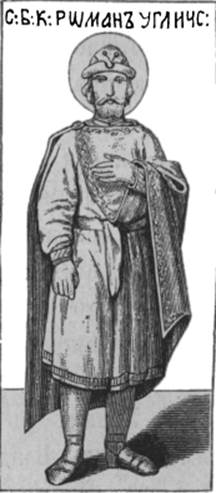
† Преставление благоверного Романа, князя Угличского

† The Repose of the Right-believing Roman, Prince of Uglich

E3.TAI draft
Engraving

Благоверный князь Роман Угличский был сын князя Владимира Угличского и внук великого князя Константина I-го; – с молодых лет обучали его христианским добродетелям, особенно же обучали его тому скорби жизни. Ему было 23 года, когда Батый с своими страшными полчищами вступил в Россию. На общем совете с боярами князь Владимир положил оставить Углич в ведении старшего боярина, и когда Батый потребует сдачи его, то немедленно сдать, чтобы не лилась бесполезно кровь христианская. Сам же князь Владимир с двумя сыновьями, Андреем и Романом, удалились в Новгород. Батый был в Угличе в феврале 1237 года и оставил его не тронутым. Князь Владимир с семьею своею целые три года скитался в Новгородской области и, когда татары уже совсем оставили Россию, возвратился в Углич. В 1244 году Владимир вместе с другими князьями был в Орде и Батый дозволил князьям владеть отчинами; князь Владимир возвратился в Углич. – Но в то страшное время нельзя было жить покойно ни в одном углу России. В 1248 году явились в Углич татарские чиновники; князь Владимир отправился во Владимир и здесь умер в 1249 году15. Чиновники хана нашли, что Угличское княжество покорно хану и исправно платит дань. Потому старший сын князя Владимира Андрей стал управлять княжеством Угличским. Но бездетный Андрей был болен, и с 1261 года Роман Владимирович вступил в управление княжеством16. Блаженный Роман был попечительным отцом подвластных ему. Область его заключала в себе при нем города: Углич, Кашин, Бежецкий верх, Устюжну, Дмитров, Звенигород, и он еще построил на высоком берегу Волги, напротив слободы Борисоглебской, новый город Романов. Под кров доброго князя приходили и из других княжеств. Им устроены были богадельни и странноприимные дома, и первые содержались на его счет, а последние от монастырей. До 15 храмов построено им в разных местах княжества его. Каждый день слушал он службу Божию и часто беседовал с опытными иноками, любил читать душеспасительные книги.

The Right-believing Prince Roman of Uglich was the son of Prince Vladimir of Uglich and the grandson of Grand Prince Constantine I; from his youth he was instructed in Christian virtues, and especially was he taught by the sorrows of life. He was twenty-three years old when Batu with his terrible hordes entered Russia. At a general council with the boyars, Prince Vladimir resolved to leave Uglich under the authority of the senior boyar, and when Batu should demand its surrender, to surrender it immediately, so that Christian blood might not be shed uselessly. Prince Vladimir himself, with his two sons, Andrew and Roman, withdrew to Novgorod. Batu was in Uglich in February of 1237 and left it untouched. Prince Vladimir with his family wandered for three whole years in the Novgorod region, and when the Tatars had completely left Russia, he returned to Uglich. In 1244, Vladimir together with other princes was in the Horde, and Batu permitted the princes to hold their patrimonies; Prince Vladimir returned to Uglich. – But in that terrible time it was impossible to live peacefully in any corner of Russia. In 1248, Tatar officials appeared in Uglich; Prince Vladimir set out for Vladimir and died there in 124915. The Khan's officials found that the Uglich principality was submissive to the Khan and paid tribute regularly. Therefore, the elder son of Prince Vladimir, Andrew, began to govern the Uglich principality. But the childless Andrew was ill, and from 1261 Roman Vladimirovich entered upon the governance of the principality16. Blessed Roman was a solicitous father to those under his authority. His domain at that time included the cities: Uglich, Kashin, Bezhetsky Verkh, Ustyuzhna, Dmitrov, Zvenigorod, and he also built on the high bank of the Volga, opposite the settlement of Borisoglebsk, the new city of Romanov. People from other principalities also came under the shelter of the good prince. He established almshouses and hospices, the former being maintained at his expense, and the latter by the monasteries. Up to fifteen churches were built by him in various places of his principality. Each day he heard the service of God and often conversed with experienced monks; he loved to read soul-profiting books.

E3.0AI draft

В 1278 г. оплакал он смерть матери, затем спустя года два умерла и бездетная супруга его. Осиротевший в мире блаженный Роман посвящал последние годы жизни своей преимущественно подвигам благочестия, молитве, посту и благотворительности. Он скончался 3-го февраля 1285 года и погребен был в соборном храме гор. Углича17. В 1486 году, при основании нового соборного храма, обретены нетленные мощи благоверного князя Романа. По распоряжению патриарха Иова они были вновь свидетельствованы (в 1595 году) Казанским митрополитом Гермогеном. – В 1609 году ляхи предали огню соборный храм и св. мощи князя: но останки их продолжают источать исцеления; они хранятся ныне в приделе, посвященном имени благоверного князя Романа18.

In 1278 he mourned the death of his mother; then, about two years later, his childless wife also died. Left orphaned in the world, Blessed Roman devoted the last years of his life chiefly to deeds of piety, prayer, fasting, and charity. He reposed on February 3, 1285, and was buried in the cathedral church of the city of Uglich17. In 1486, during the foundation of a new cathedral church, the incorrupt relics of the Right-believing Prince Roman were uncovered. By order of Patriarch Job, they were again examined (in 1595) by Metropolitan Hermogenes of Kazan. – In 1609, the Poles consigned the cathedral church and the holy relics of the prince to the flames; but the remains continue to pour forth healings; they are preserved today in a side-chapel dedicated to the name of the Right-believing Prince Roman18.

E3.1AI draft

Примечания Notes

В 1285 г. «заложена бысть церковь каменная на Твери преподобным епископом Семеоном». Собр. л. 1, 207. В 1320 г. «положиша тело святаго великаго князя Михаила в церкви св. Спаса на десной стране, подле преподобнаго епископа Семеона». Собр. л. 5, 216.

In 1285, "a stone church was founded in Tver by the Venerable Bishop Simeon." Collection of Chronicles 1, 207. In 1320, "they laid the body of the holy Great Prince Michael in the church of the Holy Savior on the right side, beside the Venerable Bishop Simeon." Collection of Chronicles 5, 216.

N1AI draft

Воск. л. под 1289 г.: «преставися Семеон, первый епископ Тверский». Собр. л. 7, 179. Ник. л.: «служиша в ней (в кафедр. Спаской церкви) Господеви епископи мнози Тверстии Божественную и священную службу: первый Семион при великом князе Михаиле Ярославиче; 2 Андрей, при нем же; 3 Варсонуфий, при великом князе Михаиле и при сынех его Димитрие, Александре, Константине и Василие; 4 Феодор, при великом князе Константине Михаиловиче; 5 Феодор, при великом князе Василие Михаиловиче; 6 Василий; 7 Евфимий Вислень, при князе Михаиле Александровиче; 8 Арсений чудотворец». Никон. Л. 4, 284. По этому известию следует исправить ошибки в Ист. иер. 1, 274, 275.

Vosk. Chr. under the year 1289: "Simeon, the first Bishop of Tver, reposed." Collection of Chronicles 7, 179. Nik. Chr.: "Many bishops of Tver served the Divine and sacred service to the Lord in it (in the cathedral Church of the Savior): the first, Simeon, under Grand Prince Michael Yaroslavich; the second, Andrew, under him; the third, Barsanuphius, under Grand Prince Michael and under his sons Demetrius, Alexander, Constantine, and Basil; the fourth, Theodore, under Grand Prince Constantine Mikhailovich; the fifth, Theodore, under Grand Prince Basil Mikhailovich; the sixth, Basil; the seventh, Euthymius Vislen, under Prince Michael Alexandrovich; the eighth, Arsenius the Wonderworker." Nikon Chr. 4, 284. According to this information, the errors in Hist. of Hier. 1, 274, 275 should be corrected.

N2AI draft

Платона Ист. Рос. Ц. 1, гл. 7.

Plato, Hist. of the Russ. Ch. 1, ch. 7.

N3AI draft

Ист. иер. 1, 274. В списке епископов по Никон. л. (т. 1, прилож. стр. 5): «Семион из Полоцка; Андрей из Литвы». Собр. л. 7, 179.

Hist. of Hier. 1, 274. In the list of bishops according to the Nikon Chr. (vol. 1, app., p. 5): "Simeon from Polotsk; Andrew from Lithuania." Collection of Chronicles 7, 179.

N4AI draft

Так говорят акты иезуитов на имения, которые отняты были у православия.

So say the acts of the Jesuits concerning the estates that were taken away from Orthodoxy.

N5AI draft

См. мая 20-го житие е. Довмонта.

See May 20, Life of St. Dovmont.

N6AI draft

Собр. л. 1, 60. Собр. грам. 1, 297. 298.

Collection of Chronicles 1, 60. Coll. of Charters 1, 297, 298.

N7AI draft

Никон. л. 3, 54. 65. Собр. л. 1, 28. 29.

Nikon Chr. 3, 54, 65. Collection of Chronicles 1, 28, 29.

N8AI draft

Троиц. летоп. у Карамз. 4, пр. 178.

Trinity Chron. in Karamzin 4, note 178.

N9AI draft

Никон. л. 3, 86.

Nikon Chr. 3, 86.

N10AI draft

Карамз. 4, пр. 178.

Karamzin 4, note 178.

N11AI draft

Обличение святителя внесено было в «Мерило праведное» – юридический сборник. Правосл. Собесед. 1851 г. 1, 19. 92. Розенкампф о кормчей 217. 218.

The Hierarch's denunciation was included in the "Righteous Measure" – a legal collection. Orthodox Interlocutor 1851, 1, 19. 92. Rosenkampf on the Kormchaya 217. 218.

N12AI draft

Собр. л. 1. 36. Сурманова ист. свед. о Тверском княж. 1778 года.

Collection of Chronicles 1. 36. Surmanov's Historical Information about the Tver Principality, 1778.

N13AI draft

Собр. л. 1, 107. 4, 44. Никон. л. 3, 87. 88. Карам. 4, пр. 178. 182.

Collection of Chronicles 1, 107. 4, 44. Nikon Chronicle 3, 87. 88. Karamzin 4, note 178. 182.

N14AI draft

Карамз. 4, прим. 37. 113. Никон. л. 3, 18 Киселя ист. Углича стр. 45–59.

Karamzin 4, note 37. 113. Nikon Chronicle 3, 18. Kisel's History of Uglich, pp. 45–59.

N15AI draft

Жития февр. 3: «известно только, что оставшись в юных летах после кончины родителей княжил», стр. 2. Кн. Роману в 1237 году было 23 года, а в 1249 году было 35 лет.

Lives of the Saints, February 3: "it is only known that, having been left in his youth after the death of his parents, he reigned," p. 2. Prince Roman in 1237 was 23 years old, and in 1249 was 35 years old.

N16AI draft

Никон. л. 3, 40. 41. Собр. л. 7,174, 178. Русск. времен. I, 148. Карамз. 4, пр. 182. Кисель об Угличе, стр. 68–73. Ркп. святцы: «святый благоверный князь Роман Угличский, чудотворецт, преставися в 6790 (1282) февраля 3-го дня».

Nikon Chronicle 3, 40. 41. Collection of Chronicles 7, 174, 178. Russian Timepiece I, 148. Karamzin 4, note 182. Kisel on Uglich, pp. 68–73. Manuscript Saints' Calendar: "the holy Right-believing Prince Roman of Uglich, Wonderworker, reposed in the year 6790 (1282) on February 3."

N17AI draft

Ркп. полное житие препод. Папсия Угличского: «на том основании соборные церкви дарова ему (кн. Андрею Васильевичу) Бог обрести мощи св. благов. кн. Романа Угличского чудотворца. Мощи св. кн. Романа целы и нетленны лежали в соборной церкви вящши 120 лет, даже до Польского нахождения на Россию и на г. Углич. Тогда грех ради наших мощи св. князя Романа от злых людей Польских сожжены и церковь соборная в крепости города, от тех же злых людей, весьма разбита. Остались св. мощей глава, кости ребр, обоих рук и ног. И чудеса паки творят», Никон. л. 8, 32. Летоп. о мятежах, стр. 42. Свед. о мон. церкви, 562. М. 1852. Царская грамота 1683 г. (у Киселя стр. 417): «ко князю Роману Угличскому чудотворцу два пуда воску». В сборнике Нижегород. Благовещ. мон.: «повесть, стихеры и каноны (св. кн. Роману) сотворены по благословению св. патриарха Иова – тщанием инока Сергия, обители Пресвятые Троицы Данилова монастыря Переяславля Залесскаго». В словаре стр. 235 не верно.

Manuscript full Life of the Venerable Paisius of Uglich: "on that foundation of the cathedral church God granted him (Prince Andrew Vasilievich) to uncover the relics of St. Right-believing Prince Roman of Uglich the Wonderworker. The relics of St. Prince Roman lay whole and incorrupt in the cathedral church for more than 120 years, even until the Polish invasion of Russia and of the city of Uglich. Then, for our sins, the relics of St. Prince Roman were burned by evil Polish people, and the cathedral church in the fortress of the city, by those same evil people, was greatly destroyed. There remained of the holy relics the head, the bones of the ribs, of both arms and legs. And miracles are again wrought." Nikon Chronicle 8, 32. Chronicle of Rebellions, p. 42. Information about Monasteries and Churches, 562. M. 1852. Tsar's charter of 1683 (in Kisel, p. 417): "to Prince Roman of Uglich the Wonderworker, two poods of wax." In the collection of the Annunciation Monastery of Nizhny Novgorod: "the tale, stichera, and canons (to St. Prince Roman) were composed by the blessing of St. Patriarch Job—by the diligence of the monk Sergius, of the monastery of the Most Holy Trinity, Danilov Monastery of Pereslavl-Zalessky." In the dictionary, p. 235, it is incorrect.

N18AI draft