Каждый из трёх вселенских учителей и святителей отличался высокими, истинными достоинствами: Василий был глубок словом, Григорий высок, Златоуст обилен; и каждый имел у себя особенных чтителей и подражателей. Об особенных чтителях св. Василия Великого св. Григорий Богослов говорит: «такова доблесть Василия, таково величие славы, что многие, подражая даже его телесным качествам, обращали их для себя в средство к славе. Таковы были у Василия бледность лица, тихость походки, медленность в речах, необычайная задумчивость и углубление в себя; что во многих, по причине неискусного подражания и неправильного разумения, сделалось угрюмостью. Таковы же были у Василия и вид одежды, устройство кровати, приёмы при вкушении пищи; и всё это делалось у него просто. И ты увидишь многих Василиев по наружности; это – изваяния, представляющие тень Васильеву; ибо много сказать, чтоб они были и эхом. Эхо, хотя есть окончание только речений, однако же, повторяет явственно; а эти люди более отстоят от Василия, нежели сколько желают к нему приблизиться. Справедливо же ставилось в немалую и даже в великую честь, если кому случалось или близким быть к Василию, или прислуживать ему, или заметить на память что-либо им сказанное или сделанное». Народ, а особенно люди сильнейшие и умнейшие, подозревая Евсевия, епископа Кесарийского, в удалении Василия – мужа по жизни и красноречии славнейшего, и любя его, думали оставить своего епископа и собираться особо.
Each of the three ecumenical teachers and hierarchs was distinguished by high and true merits: Basil was profound in word, Gregory sublime, Chrysostom abundant; and each had his own particular admirers and imitators. Concerning the particular admirers of St. Basil the Great, St. Gregory the Theologian says: "Such is the valor of Basil, such the greatness of his glory, that many, imitating even his bodily qualities, turned them into a means of glory for themselves. Such were Basil's pallor of face, gentleness of gait, slowness of speech, extraordinary pensiveness and inward concentration; which in many, through unskillful imitation and incorrect understanding, became sullenness. Such also were Basil's manner of dress, arrangement of his bed, his habits at meals; and all this was done by him simply. And you will see many Basils in outward appearance; they are statues representing a shadow of Basil—for it would be too much to say that they are even an echo. For an echo, though it is only the ending of utterances, yet repeats them distinctly; but these people are further from Basil than they desire to approach him. And it was rightly accounted no small, but even a great honor, if anyone happened to be close to Basil, or to serve him, or to note for memory something said or done by him." The people, and especially the more powerful and intelligent men, suspecting Eusebius, the bishop of Caesarea, of removing Basil—a man most renowned in life and eloquence—and loving him, thought to abandon their own bishop and gather separately.
В своём месте и Григорий Богослов имел у себя особенных чтителей. Он сам о себе говорит: «что со мною делается? Меня влекут туда и сюда; входят о трудах моих в тяжбу, без милосердия требуя с меня слова, как некоего долга, любят меня больше, нежели я сами себя. Все говорят, что не перестанут докучать мне, пока от малой искры не воспламенится огнь слова. А некоторые из них обещают уже и выгоды от моих слов, поставляют мне на вид большие награды; во-первых, ту, что они сами себе сделают добро, предав себя Богу и мне в плодоношение слова, – потом ту, что через переписку окажется добро и всем присутствующим здесь, то есть, моему клиру и моей пастве, с коими я поступил бы очень несправедливо, если бы не имел усердия благодетельствовать им всеми мерами».
In his own place, Gregory the Theologian also had his particular admirers. He says of himself: "What is happening to me? I am drawn hither and thither; they enter into dispute over my labors, mercilessly demanding from me a word, as though it were some debt, and love me more than I love myself. All say that they will not cease to importune me until from a small spark the fire of the word is kindled. And some of them already promise benefits from my words, setting before me great rewards: first, that they themselves will do good by surrendering themselves to God and to me as a fruit-bearing of the word; then, that through transcription, good will appear also to all present here, that is, to my clergy and my flock, with whom I would act very unjustly if I did not have the zeal to benefit them by every means."
Наконец, много было особенных чтителей достоинств и св. Иоанна Златоустого. Слова или поучения его чрезвычайно любили слушать. Однажды он предоставил говорить вместо себя прибывшему из Галаты пастырю: «народ с воплями отступал, болезнуя, как будто оставаясь долгое время в голоде, и желал нашей речи, которая рассекала, укоряла, трогала, печалила, поступая точно так, как дитя, которое и тогда, когда его бьют и наказывают, не отстаёт от матери, но со слезами следует за нею, держась сбоку за одежды матери либо даже и увлекаясь за нею с рыданиями».
Finally, there were many particular admirers of the merits of St. John Chrysostom as well. They exceedingly loved to hear his words or teachings. Once, when he gave the floor to a pastor who had arrived from Galata to speak in his stead: "the people drew back with cries, grieving as though remaining long in hunger, and desiring our speech, which cut, reproved, moved, saddened, acting exactly like a child which, even when it is beaten and punished, does not leave its mother, but follows her with tears, clinging to the side of her garments, or even being dragged after her with sobs."
Когда он несправедливо низложен был, то многие, ему преданные, отделились от Церкви под именем Иоаннитов, и имели особенные Богослужебные собрания. Это отделение прекратилось по перенесении мощей св. Златоуста из места заточения в Константинополь. В обличение сих ревностных, но неразумных чтителей св. Иоанна Златоуста, Константинопольский патриарх Аттик, заботясь о единстве Церкви православной, установил в V веке, чтобы молитвенные поминовения как св. Иоанна, так и прочих епископов, совершались равночестно.
When he was unjustly deposed, many who were devoted to him separated from the Church under the name of Johannites, and held special liturgical gatherings. This separation ceased upon the translation of the relics of St. Chrysostom from the place of his exile to Constantinople. To rebuke these zealous but unwise admirers of St. John Chrysostom, the Patriarch of Constantinople, Atticus, caring for the unity of the Orthodox Church, established in the fifth century that prayerful commemorations of both St. John and the other bishops should be performed with equal honor.
В царствование Алексия Комнина, в конце XI века, особенно усилилась между верующими распря о заслугах трёх св. великих вселенских учителей и святителей. Одни превозносили Василия, другие возвышали Григория, иные предпочитали Иоанна. От этого произошло разделение между чтителями св. светильников мира, так что одни называли себя Василианами, другие Григорианами, третьи Иоаннитами. Этот спор решили сами святители: явившись все вместе Иоанну, епископу Евхаитскому, открыли, что «они все у Бога имеют одно равное достоинство. Итак, объяви, чтобы христиане оставили напрасный спор. Мы как во время жизни старались о единодушии, так и по преставлении своём всего более желаем единомыслия верующих; установи для нас один праздник».
In the reign of Alexius Comnenus, at the end of the eleventh century, a dispute among the faithful concerning the merits of the three holy great ecumenical teachers and hierarchs especially intensified. Some extolled Basil, others exalted Gregory, and still others preferred John. From this arose a division among the admirers of the holy luminaries of the world, so that some called themselves Basilians, others Gregorians, and still others Johannites. This dispute was resolved by the hierarchs themselves: appearing together to John, the bishop of Euchaita, they revealed that "they all have one equal dignity before God. Therefore, declare that Christians should cease this vain dispute. We, who during life strove for unanimity, after our repose desire above all the unity of mind of the faithful; establish for us a single feast."
Епископ объявил о видении Церкви, и в честь трёх св. вселенских учителей и святителей установлено общее торжество в 1076 году 30 января, совершаемое после раздельного в этом месяце празднования каждому, а именно после празднования в 1 день января св. Василию Великому, 25 – св. Григорию Богослову и в 27 – св. Иоанну Златоусту.
The bishop announced the vision to the Church, and in honor of the three holy ecumenical teachers and hierarchs, a common celebration was established in the year 1076 on January 30, to be observed after the separate commemoration of each in this month, namely, after the celebration on January 1 of St. Basil the Great, on the 25th of St. Gregory the Theologian, and on the 27th of St. John Chrysostom.
В VIII веке от св. Иоанна Дамаскина, в XI от Иоанна Евхаитского и Нила Ксанфопула Церковь приняла многие священные песни в честь трёх святителей вселенских, поемые ныне православной Церковью в 30 день января. От Иоанна Евхаитского сохранилось также слово на день трёх вселенских святителей. Равночестно прославляя и вместе различая их, Церковь уподобляет их трём древним патриархам – Аврааму, Исааку и Иакову; мужам мудрым, художным и смысленным; отцам, коих произволи Господь любити; праведным и избранным. Василия называет великим и священноявленным, Григория – Божественным и Богоглаголивым, Иоанна – зело златым языком; Василия – церковным светилом и столпом непревратным, Григория – умом небесным, архиереем превеличайшим, Иоанна – златословом всезлатным; Василия – исполнил Дух Божий художества, Григория – огнём высокоречия, Иоанна – Христовыми устами; Василий – столп, огнём людям верным предваряющий и опаляющий враги, Григорий – услаждение слуха всякого, Иоанн – река духовных дарований. На высоту Христовой любви восшед, Василий узрел неизреченные и Божественные тайны, кои изъяснил людям, яко благочестия проповедник мудрый. Григорий разрешил связание ересей, мудростью словес и учений своих, и в единомыслии собрал православных, в благоразумии Христа хвалящих. Иоанна Христос утвердил неразоримым укреплением Своей Церкви. Трие суть высочайшие угодники Троицы и служители; троеострый меч благодати.
In the eighth century from St. John of Damascus, in the eleventh from John of Euchaita and Nilus Xanthopulus, the Church received many sacred hymns in honor of the three ecumenical hierarchs, now sung by the Orthodox Church on January 30. A homily for the day of the three ecumenical hierarchs by John of Euchaita has also been preserved. Glorifying them with equal honor and yet distinguishing them, the Church likens them to the three ancient patriarchs—Abraham, Isaac, and Jacob; to wise, skillful, and intelligent men; to fathers whom the Lord was pleased to love; to the righteous and the elect. Basil she calls great and sacredly manifest, Gregory divine and God-speaking, John most golden of tongue; Basil the luminary of the Church and unshakable pillar, Gregory the heavenly mind and most great high priest, John the all-golden golden-speaker; Basil the Spirit of God filled with skill, Gregory with the fire of lofty eloquence, John with the lips of Christ; Basil is a pillar going before the faithful with fire and consuming the enemies, Gregory the delight of every ear, John a river of spiritual gifts. Having ascended to the height of Christ's love, Basil beheld the ineffable and divine mysteries, which he explained to men as a wise preacher of piety. Gregory loosed the binding of heresies by the wisdom of his words and teachings, and gathered the Orthodox in unity of mind, praising Christ in prudence. John Christ established as an indestructible fortification of His Church. These three are the most exalted favorites and servants of the Trinity; the three-edged sword of grace.
Св. Ипполит, папа Римский, одновременно с другими от 218 по 235 г., когда вместе с Понтианом был сослан в Сардинию, по освобождению из ссылки 238 г., проживал на востоке в Антиохии и Аравии; прибыв с поручениями восточных епископов в Рим и исполнив их, вёл жизнь уединённую, но как распространитель веры схвачен 268 года и пострадал в одно время с сенатором Кенсорином, Савином и многими другими.
St. Hippolytus, Pope of Rome, together with others from 218 to 235, when along with Pontian he was exiled to Sardinia; after his release from exile in 238, he lived in the East, in Antioch and Arabia; having come to Rome with commissions from the Eastern bishops and fulfilled them, he led a solitary life, but as a preacher of the faith he was seized in 268 and suffered at the same time as the senator Censorinus, Sabinus, and many others.
«Проведый тя, Владыко, унша в братии, сюще мьнших, яко Давида помазав, порючи землю сию съблюдати всеко от напасти»362.
"Having foreseen you, O Master, the youngest among the brethren, the least of them, having anointed you like David, charging you to guard this land from every calamity"362.
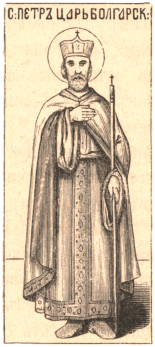
По этим хвалам видно, что прославляемый Церковью царь Пётр есть сын воинственного Болгарского князя Симеона († 927 г.). Он ещё в юном возрасте назначен отцом во властителя Болгарии вместо старшего брата и любил мир, а не войну, во время правления363.
From these praises it is evident that the Tsar Peter glorified by the Church is the son of the warlike Bulgarian Prince Simeon († 927). He was appointed by his father at a young age as ruler of Bulgaria in place of his elder brother, and during his reign he loved peace, not war363.
Получив возможное сведение, царь Пётр на другой день с несколькими искренними сам отправился в горы; дойдя до потока Рыла, он встретил неприступные утёсы с непроходимыми обвалами. Он взошёл на гору Книшаву. Отсюда ему указали на недоступный утёс, где видели преподобного. Он послал двух любимых отроков, – дабы они, как бы то ни было, добрались до старца Божия и испросили у него благословения царю, сильно желающему видеть его. Отроки исполнили поручение царское. Пустынник послал царю ответное слово любви. «Труд твой и приношения, как благовонное кадило, вознеслись к Богу; но поспеши уйти с места, на котором стоишь: место опасное, можешь неожиданно пострадать с твоими искренними. Худости нашей не увидишь в этой жизни; но в будущем узрим друг друга, насладимся радостью, если принесём плоды достойные покаяния». Царь послал после того к отшельнику много золота и снеди и писал: «всечестному Иоанну пустынножителю краль Петр. Слышав о Боголюбивой жизни твоей и пустынном пребывании, о совершенном удалении от мира и ангельском житии, весьма желал я видеть твоё преподобие и послушать твоих наставлений. Надеялся я получить много пользы от одного созерцания твоей жизни, хотя несколько взглянуть на свет невещественной жизни. Желание богатства, суетная слава, страсти не оставляют нас, мирских людей, и душевные очи наши помрачены мирским; мятежом. Потому-то, пробудившись несколько от глубокого сна, желал я видеть твою святость. Но – несчастный я, лишился этой благодати по грехам моим. Потому припадаю и молю: пошли мне какое-нибудь утешение, прохлади зной печали моей. Твоё преподобие знает, какие бури мира и какие заботы обуревают сердце царское».
Having obtained what information he could, Tsar Peter himself set out the next day with a few trusted companions into the mountains; having reached the Rila stream, he encountered inaccessible cliffs with impassable landslides. He ascended Mount Knishava. From there they pointed out to him an inaccessible crag where they had seen the venerable one. He sent two beloved youths—that they might, by whatever means, reach the elder of God and ask his blessing for the tsar, who greatly desired to see him. The youths fulfilled the tsar's commission. The hermit sent back to the tsar a word of love in reply. "Your labor and offerings, like fragrant incense, have ascended to God; but hasten to depart from the place on which you stand: it is a dangerous place; you may unexpectedly suffer harm together with your companions. You will not see my lowliness in this life; but in the future we shall behold one another and delight in joy, if we bring forth fruits worthy of repentance." The tsar afterwards sent much gold and food to the hermit and wrote: "To the all-honorable John the hermit, Kral Peter. Hearing of your God-loving life and hermitic abode, of thy perfect withdrawal from the world and angelic way of life, I greatly desired to see your reverence and to hear your instructions. I hoped to receive much benefit from the mere contemplation of your life, to gaze even a little upon the light of the immaterial life. The desire for riches, vain glory, and passions do not leave us worldly people, and the eyes of our soul are darkened by worldly turmoil. Therefore, having awakened somewhat from deep sleep, I desired to see your holiness. But—wretched that I am—I have been deprived of this grace by my sins. Therefore I fall down and pray: send me some consolation, cool the heat of my sorrow. Your reverence knows what storms of the world and what cares buffet the heart of a tsar."
Блаженный Иоанн, по любви к любви царской, принял присланные плоды и покушал. Но до золота не хотел и коснуться. В ответе своём он писал царю: «пустыннику не нужно золото и даже опасно. Царю оно нужно: на оружие и на войско он должен тратить деньги.
The blessed John, out of love for the tsar’s love, accepted the sent fruits and ate of them. But he did not wish even to touch the gold. In his reply he wrote to the tsar: “A hermit has no need of gold, and it is even dangerous. A tsar has need of it: he must spend money on weapons and on an army.
Если хочешь наследовать Небесное Царство, будь щедр, как Отец Небесный. Не надейся на неправду и не жажди корысти; будь кроток и тих, доступен для каждого. Князья твои пусть не носят похвальбы на языке своём. Багряница твоя пусть сияет добродетелями. Память о смерти да посещает душу твою. Смиряйся перед стопами матери нашей Церкви; преклоняй главу твою пред её первопрестольниками, дабы Царь царствующих, видя такое усердие твоё, подал тебе блага, какие не всходили на сердце человеку».
If you desire to inherit the Heavenly Kingdom, be generous, as the Heavenly Father is generous. Do not trust in unrighteousness and do not thirst for gain; be meek and quiet, accessible to everyone. Let your princes not carry boasting upon their tongue. Let your purple robe shine with virtues. Let the remembrance of death visit your soul. Humble yourself before the feet of our mother the Church; bow your head before her chief hierarchs, that the King of kings, seeing such zeal of yours, may grant you those good things which have not entered into the heart of man.”
Получив это письмо, царь с любовью поцеловал его и потом постоянно держал его при себе, часто читал и тем отгонял от себя суеты мирские365.
Having received this letter, the tsar kissed it with love and thereafter constantly kept it with him, often reading it, and thereby drove away from himself worldly vanities365.
Поелику же известно, что св. Иоанн скончался в 946 г., то тревожное состояние, на которое жалуется царь пустыннику, должно быть отнесено ко времени, предшествовавшему событиям 941 г. По Греческим летописям, царь Пётр, женившийся на внучке императора, заключил выгодный мир с Греками: завоевания Симеона оставлены за Болгарией, за Болгарским государем признан титул императора, и Греки обязались по-прежнему присылать дань366. После того до 933 г. царь Пётр жил спокойно. В это время он примирил Болгарскую Церковь с Константинопольским патриархом, и тот признал за независимым Болгарским архиепископом звание Болгарского патриарха367. Вся иерархия Болгарии при Петре была Болгарская, без примеси Греческой368; да и сам царь Пётр не иначе переписывался с Греками, как на Болгарском языке369.
Since, however, it is known that St. John reposed in the year 946, the troubled state of which the tsar complains to the hermit must be referred to the time preceding the events of the year 941. According to the Greek chronicles, Tsar Peter, who had married the granddaughter of the emperor, concluded a favorable peace with the Greeks: the conquests of Symeon were left to Bulgaria, the title of emperor was recognized for the Bulgarian sovereign, and the Greeks bound themselves to continue sending tribute366. After that, until the year 933, Tsar Peter lived peacefully. At this time he reconciled the Bulgarian Church with the Patriarch of Constantinople, and the latter recognized the independent Bulgarian archbishop with the title of Bulgarian Patriarch367. The entire hierarchy of Bulgaria under Peter was Bulgarian, without any admixture of Greek368; and Tsar Peter himself corresponded with the Greeks in no other language but Bulgarian369.
В 933 г., не без происков со стороны Греков, царю Петру пришлось терпеть сильные тревоги. Сперва поднялись против него некоторые от имени брата Иоанна. Царь Пётр, при всей кротости, вынужден был запереть Иоанна в темницу, а бунтовщиков смирить разными наказаниями. Потом другой брат, монах Михаил, заняв одну крепость, волновал и разорял Стримонскую область, домогаясь венца; но сообщники его бунта умертвили его и рассеялись. Венгры в 934 г. делали нападения на Болгарию370. На эти-то политические бури жаловался благочестивый царь пред великим пустынником.
In the year 933, not without intrigues on the part of the Greeks, Tsar Peter had to endure great anxieties. First, some rose up against him in the name of his brother John. Tsar Peter, for all his meekness, was compelled to shut John in prison and to subdue the rebels with various punishments. Then another brother, the monk Michael, having occupied a certain fortress, stirred up and ravaged the Strymon region, striving for the crown; but his fellow rebels killed him and scattered. The Hungarians in the year 934 made incursions into Bulgaria370. It was of these political storms that the pious tsar complained before the great hermit.
Тяжёлым несчастьем для Церкви времени царя Петра была ересь богомилов. «Случися Болгарстей земли в лета православного царя Петра: бысть поп именем Богумил, а по истине рещи, Богу не мил, иже первее нача учити ереси в земле Болгарстей», – говорит современник Петра371.
A grievous misfortune for the Church in the time of Tsar Peter was the heresy of the Bogomils. “It happened in the Bulgarian land in the years of the Orthodox Tsar Peter: there was a priest named Bogumil, but to speak truly, not dear to God, who first began to teach heresy in the Bulgarian land,” says a contemporary of Peter371.
Уже Иоанн экзарх, современник Симеона, говорил: «да ся страмляють убо вси пошибени (сумасбродные) и скверни манихеи и вси погани словесни»372. Но при Симеоне манихейство ограничивалось кру́гом пришлых людей и было презираемо наравне с язычеством. При Петре манихейство усвоено Богомилом и явилось в особенном виде, в смягчённом: Богомил два начала, доброе и злое, подчинял единому Божеству и старался мирить манихейство с христианством373. Ересь его тем легче распространялась, что прикрывалась наружным видом благочестия, – постной жизнью, мягким обращением с другими. Поп Богомил стал, наконец так смел, что изложил учение своё в книгах374. Товарищем Богомила были поп Иеремия, а ученики – Михаил, самый любимый ученик, Феодор добрый, Стефан, Василий и Пётр375.
Already John the Exarch, a contemporary of Symeon, had said: “Let all the perverse (foolish) and foul Manichaeans and all the pagan word-worshippers be ashamed”372. But under Symeon, Manichaeism was confined to a circle of newcomers and was despised on a par with paganism. Under Peter, Manichaeism was adopted by Bogomil and appeared in a particular form, a softened one: Bogomil subordinated the two principles, good and evil, to the one Divinity and strove to reconcile Manichaeism with Christianity373. His heresy spread all the more easily because it was covered by an outward appearance of piety—a life of fasting, a gentle manner with others. The priest Bogomil finally became so bold that he set forth his teaching in books374. The companion of Bogomil was the priest Jeremiah, and his disciples were Michael, the most beloved disciple, Theodore the Good, Stephen, Basil, and Peter375.
Царь Пётр не мог теперь не вспомнить слов великого пустынника: «смиряйся перед стопами матери нашей Церкви». В виду дерзостей ереси, они подвергли ересь соборному осуждению, а еретиков наказаниям; собор поручил пресвитеру Козме написать пространное слово против богомилов376.
Tsar Peter could not now but recall the words of the great hermit: “Humble yourself before the feet of our mother the Church.” In view of the insolence of the heresy, they subjected the heresy to conciliar condemnation and the heretics to punishments; the council charged the presbyter Cosmas to write an extensive discourse against the Bogomils376.
Самое тяжёлое время для благочестивого царя Петра было в последние два года жизни его. После оскорблений, нанесённых империей, вельможи Петра послали послов к императору Никифору с суровыми требованием дани тяжёлой. Это значило, что вельможи Петра, вопреки пророческому совету преподобного, «носили похвальбу на языке».
The most grievous time for the pious Tsar Peter was in the last two years of his life. After insults inflicted by the Empire, Peter’s nobles sent envoys to the Emperor Nikephoros with a harsh demand for heavy tribute. This meant that Peter’s nobles, contrary to the prophetic counsel of the Venerable One, “carried boasting upon their tongue.”
Никифор обошёлся с послами крайне оскорбительно и ещё требовал от царя Петра не допускать Венгров, переходить Дунай против империи. Царь Пётр отвечал, что так как не получил он от империи помощи против Венгров, отчего принуждён был заключить мир с Венгрией, нарушить же договора не может, то не может и исполнить желания империи. Империя была виновата. Дикие Мадьяры врывались в империю через Болгарию в 959 и 962 гг., и проход этих грабителей, без сомнения, был тяжёл для Болгарской страны. Оставленные без договорной помощи Болгары, и ещё грубо оскорбляемые в лице послов, не могли не воевать с Никифором. Это понимал Никифор, как и то, что империя была очень слаба. Потому он поспешил тайно нанять Святослава, князя Русского, для войны с Болгарией. Войнолюбивый Святослав охотно согласился. В апреле 967 г. Русские со Святославом неожиданно явились в устье Дуная. Пётр выслал войско, какое только мог собрать, чтобы не пускать неприятеля на землю Болгарскую; но войско не устояло против натиска Русских и поспешно заперлось в Дрествине, а потом так же скоро сдалось.
Nikephoros treated the envoys with extreme insult and further demanded of Tsar Peter that he not allow the Hungarians to cross the Danube against the Empire. Tsar Peter replied that, since he had received no help from the Empire against the Hungarians, for which reason he had been forced to conclude peace with Hungary, and could not break the treaty, he could not fulfill the Empire’s wish. The Empire was at fault. The wild Magyars burst into the Empire through Bulgaria in the years 959 and 962, and the passage of these plunderers was, without doubt, grievous for the Bulgarian land. The Bulgarians, left without the promised help and further grossly insulted in the person of their envoys, could not but war with Nikephoros. This Nikephoros understood, as also that the Empire was very weak. Therefore he hastened secretly to hire Sviatoslav, the Prince of Rus’, for war with Bulgaria. The warlike Sviatoslav willingly agreed. In April of the year 967, the Rus’ with Sviatoslav unexpectedly appeared at the mouth of the Danube. Peter sent out whatever army he could gather to prevent the enemy from entering the Bulgarian land; but the army did not withstand the onslaught of the Rus’ and hastily shut itself up in Dristra, and then just as quickly surrendered.
Продолжатель Амартола: «мая 27 инд. 15 (927 г.) скончался Симеон князь Болгарский, назначив наперёд князем сына своего Петра, которого имел он от второй супруги своей, сестры Георгия Сурсувула; последнего оставил он опекуном детей своих. Михаил же, сын первой жены, пострижен был в монахи. Иоанн и Вениамин, братия Петра, ещё носили Болгарские рубашки». Χρονικον Αμαρτολου, СПб. 1859, стр. 830. Krug, byzant. chronol. s. 166. 167.
The Continuator of Hamartolus: “On May 27, indiction 15 (927), Symeon, Prince of Bulgaria, died, having previously appointed his son Peter as prince, whom he had by his second wife, the sister of George Sursuvul; the latter he left as guardian of his children. Michael, the son of his first wife, was tonsured a monk. John and Benjamin, Peter’s brothers, still wore Bulgarian shirts.” Χρονικον Αμαρτολου, St. Petersburg, 1859, p. 830. Krug, Byzant. Chronol., pp. 166, 167.
Жизнь ц. Петра описал Феофилакт Болгарский, тот, который писал о Струмницких мучениках и о св. Клименте но описание остаётся в недоступных рукописях. Eabricii bibl. grace, ed. Harlcs VII, 598. Здесь неизданные сочинения Феофилакта: «разговор о природе, посвящённый Петру, царю Болгарскому», и «жизнь сего царя».
The life of Tsar Peter was written by Theophylact of Bulgaria, the same who wrote about the Martyrs of Strumitsa and about St. Clement, but the description remains in inaccessible manuscripts. Fabricii Bibl. Graec., ed. Harles, VII, 598. Here are unpublished works of Theophylact: “A Discourse on Nature, Dedicated to Peter, Tsar of Bulgaria,” and “The Life of This Tsar.”
Константин de ceremoniis. Люитпранд в письме к Оттону; Георгий мон. р. 904, 905. Лев Грамм. 315. Кедрин 308. Зонара 18. Продолж. Амартола р. 830, 831.
Constantine, De Ceremoniis. Liutprand in a letter to Otto; George the Monk, pp. 904, 905. Leo Grammaticus, 315. Cedrenus, 308. Zonaras, 18. Continuator of Hamartolus, pp. 830, 831.
Le-Quien or. chr. 11. 290-Assemani calend. 111, 149. Ещё в XV в. по распоряжению собора пели вечную память Преславским патриархам Леонтию, Димитрию и Григорию. Болгарский синодик в 23 кн. Временника.
Le-Quien, Or. Chr., II, 290. Assemani, Calend., III, 149. Even in the 15th century, by decree of a council, they sang “Eternal Memory” to the Preslav Patriarchs Leontius, Demetrius, and Gregory. Bulgarian Synodikon in the 23rd book of the Vremennik.
Лев, архиепископ Болгарский, при Константине Мономахе (1042–1054 г.) был первый (πρώτος) владыка из Греков в Болгарии. Le-Quien or. 11. 292. О городах Болгарских – в изв. акад., 1, 348, 349. II, 109–112 Палаузова век Симеона, стр. 29–33.
Leo, Archbishop of Bulgaria, under Constantine Monomachus (1042–1054) was the first (πρώτος) prelate from among the Greeks in Bulgaria. Le-Quien, Or. Chr., II, 292. On Bulgarian cities—in Izv. akad., I, 348, 349; II, 109–112. Palauzov, The Age of Symeon, pp. 29–33.
Krug byzant. chronol. s. 166, 167. Впрочем, чтение у Симеона Логофета: επιςολην εκομισαντο βυλγαρικν, при сличении с продолжателем Феофана и Георгием монахом до́лжно признать за испорченное и должно быть восстановлено так: ετι σολην εκομισατο βουλγαρικήν. О письменном договоре между Болгарами и Греками Срезневский в древн. Прохорова, тетр. 8. 1864 года, стран. 119.
Krug, Byzant. Chronol., pp. 166, 167. However, the reading in Symeon Logothetes: επιςολην εκομισαντο βυλγαρικν, when compared with the Continuator of Theophanes and George the Monk, must be recognized as corrupt and should be restored thus: ετι σολην εκομισατο βουλγαρικήν. On the written treaty between the Bulgarians and the Greeks: Sreznevskii in Drevn. Prokhorova, tetr. 8, 1864, p. 119.
Продолжатель Феофана, Кедрин, Георгий Акрополит – у Стриттера: Bulgarica § 129, 130, у Черткова о войне Святослава 137–147, Раича, 1, 401–405.
The Continuator of Theophanes, Cedrenus, George Acropolites—in Stritter: Bulgarica, § 129, 130; in Chertkov, On the War of Sviatoslav, pp. 137–147; Raich, I, 401–405.
Болгарский синодик в 23 кн. временника проклинает «попа Богомила, иже при Петре ц. Болгарстем въсприимшого манихейскую ересь и в Болгарстей земли разсеившаго, к сим же прирекшаго, яко в привидении Христос Бог наш от св. Богородицы родися и в привидении растпяся и обоженную плоть възнесе и на въздусе остави».
The Bulgarian Synodikon in the 23rd book of the Vremennik curses “the priest Bogomil, who under Peter, Tsar of Bulgaria, received the Manichaean heresy and scattered it in the Bulgarian land, and further added that Christ our God was born of the Holy Theotokos in appearance and was crucified in appearance and took up His deified flesh and left it in the air.”
В сборнике Новгород. Софийск. б. XV века: «а еже о еретических книгах Богумила попа, то блядство его злохитростно». В Синод. ркп. № 322 сказано: «творцы быша еретическим книгам в Болгарской земле поп Еремей да поп Богумил». Летопись археогр. комм. 1, 26, 27, 29, 40. СПб. 1862. Басни попа Еремии, проникнутые богомильством, – в обзоре истории Славянск. литературы Цыпина, СПб. 1865 г., стр. 65–79.
In a collection of the Novgorod St. Sophia Library of the 15th century: “And as for the heretical books of Bogomil the priest, that is his cunningly wicked nonsense.” In a Synodal manuscript No. 322 it is said: “The authors of heretical books in the Bulgarian land were the priest Jeremiah and the priest Bogomil.” Letopis’ Arkheogr. Komm., I, 26, 27, 29, 40. St. Petersburg, 1862. The fables of the priest Jeremiah, permeated with Bogomilism, are in Obozrenie istorii Slavyanskoi literatury by Tsypin, St. Petersburg, 1865, pp. 65–79.
Всё слово напеч. в archivu za powiestnicu iugoslavenscu VI, 69–97. Отрывки в Вятск. Епарх. Ведом. 1865 г. Время, когда писано слово, определяется словами Козмы: «подражайте Иоанна пресвитера, его же и от вас самих мнози знают», Козма прямо не говорит о соборе но говорит о наказаниях, которыми преследовалась ересь.
The entire discourse is printed in Archiv za poviestnicu iugoslavenscu, VI, 69–97. Excerpts in Vyatsk. Eparkh. Vedom., 1865. The time when the discourse was written is determined by the words of Cosmas: “Imitate John the Presbyter, whommany of you yourselves know.” Cosmas does not directly speak of a council, but he speaks of the punishments with which the heresy was persecuted.