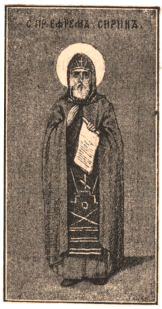
«От предков моих (землевладельцев) получил я наставление о Христе, – говорит о себе преп. Ефрем, – родившие меня по плоти внушили мне страх Господень. Видел я соседей, живущих в благочестии, слышал о многих, пострадавших, за Христа. Отцы при мне исповедовали Его перед судьями; я – родственник мученикам».
"From my forebears (landowners) I received instruction concerning Christ," says the Venerable Ephraim of himself, "those who gave me birth according to the flesh instilled in me the fear of the Lord. I saw neighbors living in piety; I heard of many who suffered for Christ. The fathers confessed Him before the judges in my presence; I am a kinsman of the martyrs."
Благотворные впечатления детства отразились такими же и последствиями. Несмотря на то, что в молодости, по причине слишком пылкого своего характера, Ефрем вдавался в предосудительные и опасные крайности, был чрезмерно раздражителен и увлекался воображением даже до хульных помыслов, тем не менее, доброе семя, посеянное в его сердце родителями, не могло погибнуть и взошло в своё время роскошными плодами. Господь Сам излил благодать Свою на уготованную почву и направил горячность раба Своего в спасительную сторону.
The beneficial impressions of childhood were reflected in equally beneficial consequences. Despite the fact that in his youth, because of his overly ardent temperament, Ephraim fell into reprehensible and dangerous extremes, was excessively irritable and carried away by his imagination even to blasphemous thoughts, nevertheless, the good seed sown in his heart by his parents could not perish and in due time sprang up with luxuriant fruit. The Lord Himself poured out His grace upon the prepared soil and directed the fervor of His servant into a saving path.
Орудием к его вразумлению Господь послал ему испытание – в виде незаслуженного наказания, которому был предан Ефрем по ложному обвинению (за пропажу из одного стада нескольких овец). Вместе с ним, и также невинно, были заключены в темницу ещё два человека, и все они сильно роптали на несправедливость в отношении к ним местного судьи.
As an instrument for his correction, the Lord sent him a trial—in the form of an undeserved punishment to which Ephraim was subjected on a false accusation (over the loss of several sheep from a flock). Together with him, and also innocently, two other men were cast into prison, and all of them murmured greatly against the injustice of the local judge toward them.
Между тем, однажды ночью во сне Ефрем услышал следующие слова: – «будь благочестив, и уразумеешь Промысл Божий. Перебери в мыслях, о чём ты думал, и что ты делал, и по себе дознаешь, что эти люди страдают не несправедливо, но не избегнут наказания и виновные».
Meanwhile, one night in a dream Ephraim heard these words: "Be pious, and you will understand the Providence of God. Go over in your thoughts what you have thought and what you have done, and you will learn from yourself that these people suffer not unjustly, but the guilty will not escape punishment either."
Когда Ефрем передал свой сон другим заключённым, то все они, поразмыслив, вспомнили, что есть за ними некоторые вины, оставшиеся неизвестными людям и ненаказанными.
When Ephraim told his dream to the other prisoners, they all, after reflecting, remembered that they had certain faults which had remained unknown to men and unpunished.
Сообщив друг другу свои мысли, «при сих рассказах, – говорит Ефрем, – начал я приходить в сокрушение, потому что в этом было явное воздаяние»...
Having shared our thoughts with one another, "during these accounts," says Ephraim, "I began to come to compunction, because in this there was a clear recompense"...
Это обстоятельство было для Ефрема спасительным исходом из его прежней необдуманной жизни, полной неразумными увлечениями. С этих пор стал он внимательно вникать в себя, и следствием этого было такое глубокое смирение и сокрушение о грехах своих, которые преобразили и как бы окрылили его на совершенно новую жизнь по выходу его из темницы.
This circumstance was for Ephraim a saving departure from his former thoughtless life, full of unwise passions. From that time on he began to heed himself attentively, and the consequence of this was such deep humility and compunction for his sins that they transformed and, as it were, winged him for an entirely new life after his release from prison.
Он оставил мир и удалился тогда в горы к отшельникам, и сделался учеником св. Иакова, будущего святителя Низибийского. Под его руководством стал он упражняться в различных подвигах благочестия и изучать св. Писание. Преп. Ефрем достиг такого глубокого знания этого предмета, что прославился впоследствии, как вселенский учитель, своими многочисленными и разнообразными писаниями. Поучениями же своими, который читались публично в церквах после св. Писания, он даже заслужил наименование Сирского пророка286.
He forsook the world and withdrew then to the mountains to the hermits, and became a disciple of St. James, the future Hierarch of Nisibis. Under his guidance he began to exercise himself in various feats of piety and to study Holy Scripture. The Venerable Ephraim attained such profound knowledge of this subject that he was later glorified as an ecumenical teacher through his numerous and varied writings. By his teachings, which were read publicly in churches after Holy Scripture, he even earned the name of the Syrian Prophet286.
При кратком объёме этих «Житий Святых» едва только несколько строк можно поместить при очерке жизни св. Ефрема из произведений этого великого христианского писателя287. И прежде всего вспомнить молитву его, которая читается во время Великого поста, с поклонами: «Господи и Владыко живота моего! дух праздности, уныния, любоначалия и празднословия не даждь ми! Дух же целомудрия, смиренномудрия, терпения и любве даруй ми, рабу Твоему. Ей, Господи Царю! даруй ми зрети моя прегрешения и не осуждати брата моего, яко благословен еси во веки веков, аминь».
Within the brief scope of these "Lives of the Saints," scarcely a few lines can be devoted in the sketch of the life of St. Ephraim to the works of this great Christian writer287. And first of all, let us recall his prayer, which is read during Great Lent, with prostrations: "O Lord and Master of my life! A spirit of idleness, despondency, love of power, and idle talk give me not! But a spirit of chastity, humility, patience, and love grant unto me, Thy servant. Yea, O Lord King! Grant me to see my own transgressions and not to judge my brother, for blessed art Thou unto the ages of ages. Amen."
Вечную память о себе из рода в род и из уст в уста оставил молитвенник Божий, и место хранения её – сама Церковь!
The man of prayer of God left an eternal memory of himself from generation to generation and from mouth to mouth, and the place of its preservation is the Church herself!
Чувством смиренного сокрушения о грехах проникнуты все размышления преп. Ефрема, но нераздельно с ним присутствует непоколебимое упование на милосердие Божие.
All the reflections of the Venerable Ephraim are imbued with a feeling of humble compunction for sins, but inseparable from it is an unwavering hope in the mercy of God.
Плакать для Ефрема было то же, что для других дышать воздухом, – день и ночь лились у него слёзы, – говорит о нём св. Григорий Нисский, – но лицо Ефрема цвело и сияло радостью, тогда как ручьи слёз лились из глаз его. Ефрем и там, где говорит о сокрушении, возносится мыслью к благости Божией, изливает благодарение и хвалу Всевышнему... Во всех словах и делах его исторгалось из души его псаломское слово: «на Него упова сердце мое.
To weep for Ephraim was the same as for others to breathe air—day and night tears flowed from him, says St. Gregory of Nyssa of him, but Ephraim's face bloomed and shone with joy, while streams of tears poured from his eyes. Ephraim, even where he speaks of compunction, lifts his thought to the goodness of God, pours forth thanksgiving and praise to the Most High... In all his words and deeds, the psalmist's word was wrested from his soul: "My heart trusted in Him."
Сам Ефрем говорит о себе: «когда ложусь я для отдыха, любовь Твоя к людям, Господи, приходит мне на мысль, и я встаю среди ночи, чтобы благодарить Тебя. Но воспоминание о грехах устрашает меня, и я начинаю изливаться в слезах, готов даже упасть духом, если бы не поспешили укрепить меня полумёртвого – разбойник, мытарь, грешница, хананеянка, кровоточивая, Самарянка»...
Ephraim himself says of himself: "When I lie down to rest, Thy love for mankind, O Lord, comes to my mind, and I rise in the middle of the night to thank Thee. But the remembrance of my sins terrifies me, and I begin to pour forth in tears, ready even to lose heart, were it not that the thief, the publican, the sinful woman, the Canaanite woman, the woman with the issue of blood, the Samaritan woman hastened to strengthen me half-dead"...
«В один день, – пишет пр. Ефрем, – встав очень рано, вышел я с двумя братиями из благословенного города Едессы288; возвёл очи свои на небо, которое, подобно чистому зеркалу, со славою осиявало звёздами землю, и в удивлении сказал: – если звезды сияют с такой славой, то не более ли воссияют неизреченным светом Спасителя праведные и святые, творившие волю Святого Бога, в тот час, когда придёт Господь?»
"One day," writes the Venerable Ephraim, "rising very early, I went out with two brethren from the blessed city of Edessa288; I lifted my eyes to heaven, which, like a pure mirror, gloriously illumined the earth with stars, and said in amazement: 'If the stars shine with such glory, will not the righteous and holy ones, who did the will of the Holy God, shine even more with the ineffable light of the Savior, in that hour when the Lord comes?'"
«Но лишь я вспомнил о том страшном пришествии Господнем, как содрогнулись кости мои; душа и тело затрепетали; я заплакал с болезнью сердечной и сказал, воздыхая: каким я, грешник, окажусь в тот страшный час? Как предстану престолу страшного Судии? Как мне, рассеянному, иметь место с совершенными? Как мне, бесплодному, явиться в число тех, которые принесли плоды правды? Что мне делать, когда святые в чертоге небесном будут узнавать друг друга? Кто признает меня? Мученики покажут свои раны; подвижники – свои добродетели; а я что покажу, кроме лени и нерадения?»
"But as soon as I remembered that terrible coming of the Lord, my bones shuddered; my soul and body trembled; I wept with heartache and said, sighing: 'What shall I, a sinner, appear to be in that terrible hour? How shall I stand before the throne of the terrible Judge? How shall I, the scattered one, have a place with the perfect? How shall I, the barren one, appear among those who have brought forth fruits of righteousness? What shall I do, when the saints in the heavenly chamber recognize one another? Who will acknowledge me? The martyrs will show their wounds; the ascetics, their virtues; but what shall I show, except laziness and negligence?'"
Но поучениями своими охранял Едесскую церковь от распространившихся тогда различных ложных учений: «Христов воин, облечённый всеоружием Христовым, – говорит о нём один древний биограф его, – открыл войну с врагами Христовыми, особенно же с нечестием Вардесана и его последователей». Он защищал против них догмат о воскресении мёртвых.
But by his teachings he guarded the Church of Edessa from the various false doctrines then spreading: "A soldier of Christ, clothed in the whole armor of Christ," says one ancient biographer of him, "he opened war against the enemies of Christ, especially against the impiety of Bardesanes and his followers." He defended against them the dogma of the resurrection of the dead.
«Песни об умерших» в поэтическом отношении – лучшие из произведений препод. Ефрема. Из них видно, что поминовение усопших издревле входило в состав церковной службы. «Поминайте меня, братия и друзия мои, ради Бога, разлучившего меня с вами», – говорится в одной из его песен, – «когда сонм ваш стоит на служении, да вознесётся молитва ваша и отрясёт прах с очей моих».
The "Songs on the Departed" are, in poetic terms, the best of the works of the Venerable Ephraim. From them it is evident that the commemoration of the departed from ancient times formed part of the church service. "Remember me, my brethren and friends, for God's sake, who has separated me from you," is said in one of his songs, "when your assembly stands at the service, may your prayer be lifted up and shake the dust from my eyes."
Среди благодетельных трудов своих, которыми сам смиренный Ефрем всегда был не удовлетворён, пожелал он посетить пустынножителей Египетских и знаменитых учителей веры, чтобы поучиться от них. О пребывании его у отшельников на горе Нитрийской так говорит Иоанн Колов: «был у нас здесь человек Божий Сириянин, старец великий между отцами, просвещённый умом и сердцем». Отсюда проехал препод. Ефрем в Кесарию, где виделся со св. Василием Великим289. По возвращении в Едессу, пожелал он остальную жизнь провести в уединении и поселился за городом; но снова отправился в Едессу, чтобы оказать помощь жителям словом своим во время бывшего там голода, и действительно успел склонить богатых делиться с бедными своими запасами хлеба, которые, прежде того, они и продавать не хотели. По возвращении из Едессы Ефрем вскоре заболел и, написав «завещание», мирно скончался, около 373 г.
Amidst his beneficial labors, with which the humble Ephraim himself was always dissatisfied, he desired to visit the hermits of Egypt and the renowned teachers of the faith, to learn from them. Concerning his stay with the hermits on Mount Nitria, John Kolobos speaks thus: "There was here among us a man of God, a Syrian, a great elder among the fathers, enlightened in mind and heart." From there the Venerable Ephraim traveled to Caesarea, where he met with St. Basil the Great289. Upon returning to Edessa, he desired to spend the rest of his life in solitude and settled outside the city; but he again set out for Edessa to render aid to the inhabitants by his word during the famine that occurred there, and indeed he succeeded in persuading the rich to share their stores of bread with the poor, which they had previously been unwilling even to sell. Upon returning from Edessa, Ephraim soon fell ill and, having written a "testament," peacefully reposed, around the year 373 A.D.
«Прославлять надобно того, кто – в устах всех христиан, Ефрема Сирина, того Ефрема, которого жизнь и наставления сияют в целом мире» – пишет о нём св. Григорий Нисский.
"One must glorify him who is on the lips of all Christians, Ephraim the Syrian, that Ephraim whose life and teachings shine throughout the whole world," writes St. Gregory of Nyssa of him.
Так оправдалось в жизни препод. Ефрема сновидение его родителей о нём, когда ещё он был дитём... Виделось им, что виноградная лоза разрастается из уст Ефрема и покрывается гроздьями; птицы небесные питаются ими, а плоды всё умножаются... И действительно, не одни только современные жители Сирии и Месопотамии питались словом препод. Ефрема, но и для отдалённого потомства всех христианских стран плоды слова его составляют неистощимую целебную пищу душевную.
Thus was fulfilled in the life of the Venerable Ephraim the dream of his parents concerning him, when he was still a child... They saw that a vine grew from Ephraim's mouth and became covered with clusters; the birds of heaven fed on them, and the fruits multiplied... And indeed, not only the contemporary inhabitants of Syria and Mesopotamia were nourished by the word of the Venerable Ephraim, but for the distant posterity of all Christian lands, the fruits of his word constitute an inexhaustible healing food for the soul.
Между учениками препод. Ефрема многие290 также прославились сочинениями и святостью жизни и содействовали распространению христианского просвещения в Сирии.
Among the disciples of the Venerable Ephraim, many290 were also glorified by their writings and the holiness of their lives and contributed to the spread of Christian enlightenment in Syria.
Преп. Ефрем был родом из Венгров. Между этими поздними поселенцами Карпат семена христианской веры первоначально посеяны были Востоком. Князья их Булозуд и Гилас в половине X века крестились в Константинополе; последний посвящён был в сан епископа Венгерского291 и успел много сделать для распространения чистой, святой веры между Венграми, особенно через брачный союз дочери своей с королём Гейзой292.
The Venerable Ephraim was a native of Hungary. Among these later settlers of the Carpathians, the seeds of the Christian faith were first sown by the East. Their princes, Bulozud and Gyula, were baptized in Constantinople in the middle of the tenth century; the latter was consecrated to the rank of Bishop of Hungary291 and accomplished much for the spread of the pure, holy faith among the Hungarians, especially through the marriage of his daughter to King Géza292.
Сын Гейзы, король (с 997 года) Стефан, крещённый ещё в юности, после того, как брачным союзом с Бургонской принцессой вступил в родственные связи со многими владетельными домами Запада, уклонился в суеверное уважение к папе293; призвав толпы западных монахов, он дозволил им фанатически действовать как против язычников, так и против христиан восточного исповедания294.
The son of Géza, King (from 997 A.D.) Stephen, baptized in his youth, after entering into kinship ties with many ruling houses of the West through his marriage to a Burgundian princess, inclined toward superstitious reverence for the pope293; summoning crowds of Western monks, he allowed them to act fanatically both against pagans and against Christians of the Eastern confession294.
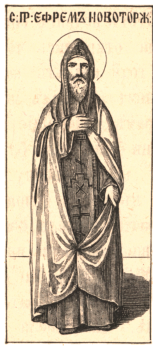
Без сомнения, эти-то насилия фанатизма всего более заставили Ефрема и его двух братьев, Георгия и Моисея, удалиться в Россию. Здесь вступили они в службу к святому князю Борису. Но и здесь пришлось им видеть жалкие происки папизма. При жизни Владимира, к Святополку прибыл с дочерью Болеслава Польского бискуп Рейнберг; он стал подучать Святополка восстать против отца, чтобы потом отторгнуть юную Русскую церковь от Восточной.
Without doubt, it was these violences of fanaticism above all that compelled Ephraim and his two brothers, George and Moses, to withdraw to Russia. Here they entered the service of the holy Prince Boris. But even here they were to witness the lamentable intrigues of papism. During the lifetime of Vladimir, Bishop Reinberg arrived to Svyatopolk with the daughter of Boleslaus of Poland; he began to incite Svyatopolk to rise against his father, so that afterwards he might tear the young Russian Church away from the Eastern [Church].
«В темнице, – говорит западный писатель, – почтенный отец совершил то, чего не смог совершать открыто»295. Что же такое совершил? совратил в папизм? без сомнения, это делано. Но не сделано ли и более того? не тот же ли, кто возбуждал сына против отца, научил Святополка восстать против братьев, чтобы княжить одному и распространить власть папы на Россию? Опыты такой политики отцов Римских очень известны. Когда св. Борис умерщвлён был жалким воспитанником бискупа (1015 г.), а с ним убит и любимый брат Ефрема Георгий, – блаженный Ефрем пришёл на берега Альты (вероятно из Ростова, где мог оставаться в отсутствие князя); ему хотелось отыскать тело любимого брата, но он обрёл только главу его, которую узнал по особому признаку. Оплакав потерю брата на Альте, он взял с собой дорогую главу его и, приняв (вероятно в Киеве или Переяславле) иночество, удалился от бурь суеты на берег реки Тверцы296. Здесь, в Новом Торжке, принадлежавшем тогда, как и долго после, к Новгородским владениям297, построил он странноприимный дом. Подвиг странноприимства был тогда подвигом Церкви; она принимала странников под свою защиту, покоила, питала, одевала; по уставу Владимира они были люди церковные. Лучшие Русские христиане высоко уважали подвиг странноприимства и считали его святым подвигом. Такой подвиг принял на себя блаженный Ефрем, отказавшийся от мирских почётных должностей и утешений.
“In prison,” says a Western writer, “the venerable father accomplished what he could not accomplish openly”295. And what was it that he accomplished? The perversion to papism? Without doubt, this was done. But was not something more done as well? Did not the same one who stirred up the son against the father teach Svyatopolk to rise against his brothers, that he might reign alone and extend the power of the pope over Russia? The experiments of such a policy on the part of the Roman fathers are very well known. When St. Boris was put to death by the pitiable pupil of the bishop (1015 A.D.), and with him was slain the beloved brother of Ephraim, George, — the blessed Ephraim came to the banks of the Alta (probably from Rostov, where he may have remained in the absence of the prince); he wished to find the body of his beloved brother, but he found only his head, which he recognized by a particular mark. Having lamented the loss of his brother on the Alta, he took with him the precious head and, having received the monastic tonsure (probably in Kiev or Pereyaslavl), withdrew from the storms of vanity to the bank of the Tvertsa River296. Here, in Novy Torg, which belonged then, as for long afterwards, to the Novgorod domains297, he built a house of hospitality for strangers. The labor of hospitality was at that time a labor of the Church; she received strangers under her protection, gave them rest, fed them, and clothed them; according to the statute of Vladimir, they were people of the Church. The best Russian Christians held the labor of hospitality in high esteem and considered it a holy endeavor. Such a labor did the blessed Ephraim take upon himself, having renounced worldly honorable offices and consolations.
Когда открылись мощи св. князей, блаженный Ефрем в 1038 году создал каменный храм в честь св. мучеников и при нём основал монастырь. Он веселился духом, что в его храме верующие славят св. князей, к которым он при жизни был так близок. Свободной душой молился он любимому князю своему, прославленному Господом.
When the relics of the holy princes were uncovered, the blessed Ephraim in the year 1038 built a stone church in honor of the holy martyrs and founded a monastery beside it. He rejoiced in spirit that in his church the faithful glorified the holy princes, to whom he had been so close in life. With a free soul he prayed to his beloved prince, glorified by the Lord.
Он подвизался в посте и молитвах и ревностно наставлял благочестию братию обители своей298; препод. Ефрем достиг высокой духовной силы и мирно почил в глубокой старости, 28 января 1053 г.299. По его завещанию, с ним положена была в гроб и глава брата его Георгия, убиенного вместе со св. Борисом.
He struggled in fasting and prayers and zealously instructed the brethren of his monastery in piety298; the Venerable Ephraim attained high spiritual power and peacefully reposed in deep old age, on January 28, 1053 A.D.299. According to his testament, the head of his brother George, slain together with St. Boris, was laid in the grave with him.
Из числа учеников его особенно ревновал подражать строгой жизни учителя Аркадий. Он начально подвизался на родине в Вязьме, уединённо занимаясь молитвой, на том месте, где ныне женский Аркадиев монастырь. Св. Ефрем, увидавшись с ним доро́гой из Киева в Торжок, полюбил его; Аркадий сперва посещал Ефрема в Торжке, а потом остался навсегда в его обители, принял иночество и до гроба шёл путём строгого подвижничества300.
Among his disciples, Arcadius was especially zealous to imitate the strict life of the teacher. He at first struggled in his homeland in Vyazma, occupying himself in solitude with prayer, at the place where now stands the women's Arcadius Monastery. St. Ephraim, having met him on the way from Kiev to Torzhok, loved him; Arcadius at first visited Ephraim in Torzhok, and afterwards remained forever in his monastery, received the monastic tonsure, and walked to the grave along the path of strict asceticism300.
Ещё в начале XIV века обитель Ефремова хранила у себя житие преподобного основателя своего и вместе с тем благоговейно чтила память его. В 1315 г. князь Михаил Ярославич, после победы над князем Афанасием, сторонником Новгородцев и брата своего князя Юрия Даниловича, захватил все имущества Новоторжцев и в том числе взял в Тверь и дорогое житие преп. Ефрема; обитель не успела выкупить своего сокровища, как оно сгорело в Тверском пожаре301.
Even at the beginning of the fourteenth century, the monastery of Ephraim preserved the Life of its venerable founder and at the same time reverently honored his memory. In 1315 A.D., Prince Michael Yaroslavich, after his victory over Prince Athanasius, a partisan of the Novgorodians and of his brother Prince Yuri Danilovich, seized all the possessions of the Novotorzhians and among them took to Tver the precious Life of the Venerable Ephraim; the monastery had not time to redeem its treasure before it burned in the fire of Tver301.
Так говорит «житие» XVI века, где описаны многие чудеса преподобного, происходившие при царе Грозном. Из них самое замечательное следующее: Черемисин и Замятня-Завоплюцкий везли царскую казну в Новгород и на дороге грабили народ. Замятня строго потребовал от обители Ефремовой, чтобы её люди везли казну водой. Иноки заняли в городе значительную сумму денег и ею купили у Замятни свободу от его насилий. Замятня, плывя Тверцой, уронил в воду деньги и затем сделался отчаянно болен. Товарищ его ужаснулся; вместе с больным отправился в обитель Ефремову и вознаградил пострадавшую обитель, а больному явился старец и, сделав выговор за неправды, возвратил здоровье302.
Thus says the "Life" of the sixteenth century, in which many miracles of the Venerable One are described, which took place under Tsar Ivan the Terrible. Of these, the most remarkable is the following: Cheremisin and Zamyatnya-Zavoplyutsky were conveying the tsar's treasury to Novgorod and on the way robbed the people. Zamyatnya sternly demanded of the monastery of Ephraim that its people convey the treasury by water. The monks borrowed a considerable sum of money in the city and with it bought from Zamyatnya freedom from his violence. Zamyatnya, sailing on the Tvertsa, dropped the money into the water and then fell desperately ill. His companion was horrified; together with the sick man he went to the monastery of Ephraim and compensated the wronged monastery, and to the sick man an elder appeared and, having reproved him for his injustices, restored his health302.
Сын благородных родителей, Ефрем служил при великом князе Изяславе Ярославиче в должности казначея, заведуя всем хозяйством его. Соскучив шумной и суетливой жизнью, он пришёл к преп. Антонию и умолял святого подвижника принять его в пещеру молитв. Преподобный, преподав ему наставление о пути к спасению, передал его блаженному Никону, чтобы тот постриг его в иночество. Никон, исполняя волю святого старца, облёк его в иноческие одежды. Это навлекло на препод. Антония и его пещеру сильный гнев великого князя.
The son of noble parents, Ephraim served at the court of Grand Prince Izyaslav Yaroslavich in the office of treasurer, administering all his household affairs. Having grown weary of the noisy and bustling life, he came to the Venerable Anthony and besought the holy ascetic to receive him into the cave of prayer. The Venerable One, having instructed him in the way of salvation, entrusted him to the blessed Nikon, that he might tonsure him into monasticism. Nikon, fulfilling the will of the holy elder, clothed him in the monastic habit. This brought upon the Venerable Anthony and his cave the great wrath of the Grand Prince.
Блаженный Ефрем отправился в Константинополь изучать христианскую жизнь в примерах и памятниках его304. Благочестивое путешествие оказалось благодетельным не для одной души Ефрема. Блаженный принёс с собой в Россию как знание устава монашеской жизни церковного благочиния, так и достаточные познания в церковной архитектуре. По поручению преп. Феодосия, списал он в Константинополе Студийский устав и доставил его в Печерскую обитель. Это было не раньше 1063 г.305.
The blessed Ephraim set out for Constantinople to study the Christian life in its examples and monuments304. The pious journey proved beneficial not for the soul of Ephraim alone. The blessed one brought back with him to Russia both a knowledge of the rule of monastic life and church order, and sufficient knowledge of church architecture. By the commission of the Venerable Theodosius, he copied in Constantinople the Studite Rule and delivered it to the Monastery of the Caves. This was not earlier than the year 1063 A.D.305.
Блаженный подвизался опять в Печерской обители несколько лет. Когда скончался Переяславский епископ Николай, так же, как и Ефрем, постриженец пещеры, – святой митрополит Иоанн 2-й удостоил Ефрема сана епископа Переяславского. Слабое здоровье митрополита Иоанна 3-го, не дозволявшее много заниматься делами, и личные высокие качества Ефрема, известные и в Константинополе, достаточны были для того, чтобы доверить блаж. Ефрему управление делами митрополии. В 1090 г. он называется в летописи митрополитом, хотя жил тогда в любимом Переяславле306.
The blessed one again struggled in the Monastery of the Caves for several years. When Nicholas, Bishop of Pereyaslavl, who like Ephraim had been tonsured from the cave, reposed, the holy Metropolitan John II deemed Ephraim worthy of the rank of Bishop of Pereyaslavl. The weak health of Metropolitan John III, which did not permit him to occupy himself much with affairs, and the personal high qualities of Ephraim, known even in Constantinople, were sufficient to entrust to the blessed Ephraim the administration of the affairs of the metropolis. In 1090 A.D. he is called metropolitan in the chronicle, although he then lived in his beloved Pereyaslavl306.
В 1091 г. установлено им в Русской церкви празднование перенесения мощей святителя Николая307. Самым приятным занятием для него было строить храмы к славе имени Божия и в пользу душ христианских. В Переяславле построен им обширный каменный храм архангела Михаила, бывший потом кафедральным, и потом другой храм при воротах, в честь Апостола Андрея. Он оградил Переяславль каменной стеной, а это очень нужно было для города, открытого нападениям хищных Половцев.
In 1091 A.D. he established in the Russian Church the celebration of the translation of the relics of St. Nicholas307. His most pleasant occupation was to build churches to the glory of the name of God and for the benefit of Christian souls. In Pereyaslavl he built a spacious stone church of the Archangel Michael, which afterwards became the cathedral, and then another church at the gates, in honor of the Apostle Andrew. He enclosed Pereyaslavl with a stone wall, and this was very necessary for a city exposed to the attacks of the predatory Polovtsians.
И в отдалённом Суздале, но подведомом Переяславскому князю, построены им два храма, и один, в честь великомученика Димитрия, снабжён сёлами. Нестор говорит ещё, что блаж. Ефрем устроил «каменное строение банное, чего дотоле не было в России»308. По другим известиям, блаж. Ефрем открыл в разных местах больницы, где безвозмездно пользовались больные309. Средства для такого числа построек и заведений могли доставить ему происхождение и служба при великом князе; но без искренней любви Евангельской в сердце средства эти употреблены были бы иначе. Блаж. Ефрем за свою любовь к Господу получил от Христа дар творить чудеса при жизни и по смерти. В 1096 году он посвятил преп. Никиту в епископа Новгородского и в том же году скончался310. Древняя летопись называет его преблаженным, а последующие – чудотворцем и святым311. Мощи его почивают в пещерах преподобного Антония312.
And in distant Suzdal, though subject to the Prince of Pereyaslavl, he built two churches, and one, in honor of the Great Martyr Demetrius, was endowed with villages. Nestor also says that the blessed Ephraim built “a stone bathhouse structure, such as had not before existed in Russia”308. According to other accounts, the blessed Ephraim opened hospitals in various places, where the sick were treated without charge309. The means for such a number of buildings and institutions could have been supplied to him by his origin and his service at the court of the Grand Prince; but without sincere evangelical love in the heart, these means would have been used otherwise. The blessed Ephraim, for his love of the Lord, received from Christ the gift of working miracles both in life and after death. In 1096 A.D. he consecrated the Venerable Nikita as Bishop of Novgorod, and in the same year he reposed310. The ancient chronicle calls him most blessed, and later [chronicles] call him wonderworker and saint311. His relics repose in the caves of the Venerable Anthony312.
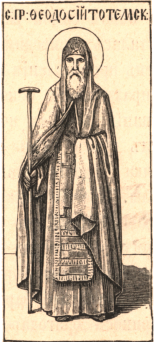
Преподобный Феодосий, по фамилии Суморин, родился в Вологде313. Воспитанный в страхе Божием, он и в юности отличался благочестивым настроением души. По настоянию родителей своих вступил он в брачную жизнь и имел дочь Марину; но любовь супруга и родителя не отвлекала его от любви Божией; он усердно посещал храм Божий и во время Богослужения уединялся от людей, чтобы не развлекаться ничем земным; душа его постоянно стремилась к высшему духовному совершенству. По смерти родителей вступил в Прилуцкую обитель преп. Димитрия и принял иночество. Здесь усердно проходил он тяжёлые послушания, носил воду, рубил дрова, а вместе с тем соблюдал строгий пост и не оставлял славословий храма. Воля настоятеля Прилуцкого указала ему надзирать в Тотьме за солеваренными заводами обители. Феодосий полюбил пустынную тогда Тотьму и, найдя между жителями её ревнителей иночества, положил основать здесь обитель; ему понравился высокий мыс между реками, впадающими в Сухону, отенённый лесом и горой. Место это принадлежало Марье Григорьевне Истоминой; но благочестивая вдова, узнав о желании Феодосия устроить здесь монастырь, с радостью уступила ему свою собственность314. Получив благословение игумена своего на своё благочестивое намерение, Феодосий поставил на новом месте крест и выкопал себе пещеру. В 1554 году отправился он в Москву к царю и митрополиту с просьбою жителей Тотьмы дозволить основание новой обители близ Тотьмы. «В Тотьме и во всём Тотемском уезде, – писали Тотемцы, – нет ни одного монастыря; кто захотел бы при старости или при смерти принять пострижение, постричься негде. Старец Феодосий Суморин желает воздвигнуть в Тотьме церковь и монастырь». Потому просили дозволить исполнить желание Феодосия и их общее. В 20-й день февраля 1554 г. дана несудимая грамота, которой царь дозволил Феодосию строить храм и обитель близ Сухоны, на избранном месте, и освободил новый монастырь от суда наместника Тотемского. Митрополит дал знать Ростовскому архиепископу, в ведении коего была тогда Тотьма, дабы выдана была благословляющая грамота на построение храма и обители. На обратном пути Феодосий снова заходил и в Прилуцкую обитель испросить благословение великого угодника Божия на своё предприятие, и получил в благословение икону Божией Матери, известную поныне в обители его с именем Суморинской чудотворной иконы315. В 1556 г., вследствие просьбы его, дана ему другая царская грамота, которой дозволено ему иметь на Тотемских солеварнях монастырские трубы и добываемую соль продавать без пошлины, в пользу обители. Попечительный основатель обители приобрёл куплей и вкладами и другие угодья для обители, как говорит он в своём завещании. Он обновил ещё бывшую в Тотемском уезде пустынь Ефремову и завёл в ней братство316. Быв настоятелем двух обителей, Феодосий не уменьшал подвиг борьбы с самолюбивой и ленивой природой, а увеличил их: на теле его лежали вериги, а поверх их жёсткая власяница; вериги врезались, наконец, в тело его, но он терпел боль; строго исполнял он правила иночества и особенно любил служение храма. Братию назидал наставлениями и примером жизни своей.
The Venerable Theodosius, surnamed Sumorin, was born in Vologda313. Brought up in the fear of God, even in his youth he was distinguished by a pious disposition of soul. At the insistence of his parents, he entered into married life and had a daughter, Marina; but the love of husband and father did not distract him from the love of God; he diligently attended the church of God and during the Divine services withdrew from people, so as not to be distracted by anything earthly; his soul constantly strove for the highest spiritual perfection. After the death of his parents, he entered the monastery of the Venerable Demetrius at Priluki and received the monastic tonsure. Here he diligently performed heavy obediences, carried water, chopped wood, and at the same time observed a strict fast and did not abandon the praises of the church. The will of the abbot of Priluki assigned him to oversee the saltworks of the monastery in Totma. Theodosius came to love the then-deserted Totma and, finding among its inhabitants zealots of monasticism, resolved to found a monastery there; he was pleased by a high promontory between rivers flowing into the Sukhona, shaded by forest and a hill. This place belonged to Maria Grigorievna Istomina; but the pious widow, learning of Theodosius's desire to establish a monastery there, gladly yielded her property to him314. Having received the blessing of his abbot for his pious intention, Theodosius set up a cross on the new site and dug himself a cave. In the year 1554, he went to Moscow to the Tsar and the Metropolitan with a petition from the inhabitants of Totma to permit the founding of a new monastery near Totma. "In Totma and in the entire Totma district," wrote the people of Totma, "there is not a single monastery; if anyone wished to receive the tonsure in old age or at the hour of death, there is nowhere to be tonsured. The elder Theodosius Sumorin desires to erect a church and a monastery in Totma." Therefore they asked that the wish of Theodosius and their common wish be allowed to be fulfilled. On the 20th day of February 1554, a non-appealable charter was given, by which the Tsar permitted Theodosius to build a church and monastery near the Sukhona, on the chosen site, and freed the new monastery from the jurisdiction of the Totma vicegerent. The Metropolitan informed the Archbishop of Rostov, under whose authority Totma then was, so that a blessing charter might be issued for the building of the church and monastery. On his return journey, Theodosius again stopped at the Priluki monastery to ask the blessing of the great saint of God for his undertaking, and received as a blessing an icon of the Mother of God, known to this day in his monastery by the name of the Sumorin Wonderworking Icon315. In 1556, at his request, another royal charter was given to him, by which he was permitted to have monastic pipes at the Totma saltworks and to sell the salt obtained without duty, for the benefit of the monastery. The provident founder of the monastery also acquired by purchase and donations other lands for the monastery, as he says in his testament. He also restored the former Ephraim hermitage in the Totma district and established a brotherhood there316. Being the superior of two monasteries, Theodosius did not diminish the struggle against his self-loving and lazy nature, but increased it: on his body he wore chains, and over them a rough hair-shirt; the chains finally cut into his body, but he endured the pain; he strictly observed the rules of monasticism and especially loved the service of the church. He edified the brethren by his instructions and by the example of his life.
Для общей пользы их приобретены им, как видно по завещанию, учительные книги: Ефрем, Златоуст и два сборника, – Богослужебные: Евангелие, Псалтирь со следованием, трефолог, два молитвенника. Перед смертью, в духовном завещании своём, говорил он: «дать от меня на Прилуки Спасу 10 р., и в Тотьме всем церквам по полтине на сорокоусты». Назначив подарки близким к нему людям, говорил: «в синодике записан род мой; если исключите его и меня – всемилостивый Спаситель пред вами; усердно прошу вас выполнить всё, что написано в этой памяти, – не берите тяжести на свою душу и меня не отягчайте.
For their common benefit, as is evident from his testament, he acquired instructive books: Ephraim, Chrysostom, and two collections; liturgical books: a Gospel, a Psalter with the Order, a trefologion, and two prayer books. Before his death, in his spiritual testament, he said: "Give from me to the Savior at Priluki 10 rubles, and in Totma to all the churches a half-ruble each for forty-day memorials." Having designated gifts for those close to him, he said: "My lineage is recorded in the synodicon; if you exclude it and me—the all-merciful Savior is before you; I earnestly ask you to fulfill everything that is written in this memorandum—do not take a burden upon your soul and do not burden me.
Простите меня грешного для Бога, – поминайте в молитвах. И вас Бог простит»317. Так преподобный не думал, как думали современные ему проповедники реформы, что поминовение умерших – суеверие бесполезное. Он лучше их понимал и сердце человеческое, и учение откровенное; он видел, что ни то, ни другое не ставит у могилы предела для любви христианской, и действий молитвы пред распятым Спасителем мира не пресекает у гроба (Иак.5:16); смиренный не на одних словах, он считал не христианским делом надеяться на свою правду или веру и не чувствовать нужды в помощи других.
Forgive me, a sinner, for God's sake—remember me in your prayers. And may God forgive you"317. Thus the Venerable One did not think, as did the contemporary preachers of reform, that the commemoration of the dead is a useless superstition. He understood better than they both the human heart and revealed doctrine; he saw that neither one nor the other sets a limit at the grave for Christian love, and that the actions of prayer before the crucified Savior of the world are not cut off at the tomb (Jas. 5:16); humble not in words alone, he considered it unchristian to rely on one's own righteousness or faith and not to feel the need of help from others.
Не прошло и 40 лет после кончины блаженного Феодосия, как уже начались исцеления при гробе его. Девица Ирина, полтора года лежавшая расслабленной, получила здоровье; слепая Иустина – зрение; жене воеводы Тотемского, обезумевшей, возвращён смысл; иноку Уару – здоровье. В 1626 г. написана была икона преп. Феодосия со слов столетнего старца Козьмы Любевцова; в 1635 г. написан был другой образ, в большем виде, и положен был на самой гробнице, над которой устроена и сень.
Not even 40 years had passed after the death of the blessed Theodosius when healings began at his grave. The maiden Irene, who had lain paralyzed for a year and a half, received health; the blind Justina received her sight; the wife of the Totma voivode, who had lost her mind, had her reason restored; the monk Uarus received health. In 1626, an icon of the Venerable Theodosius was painted from the words of the hundred-year-old elder Cosmas Lyubevtsov; in 1635, another icon was painted, of larger size, and was placed on the very tomb, over which a canopy was also erected.
В 1659 г. пожар истребил помост храма и решётку близ самой раки; а рака с сенью, иконами и покровами осталась невредимой. В 1729 г. сочинена была служба на день преставления преп. Феодосия, и обитель совершала по ней празднование основателю своему319.
In 1659, a fire destroyed the floor of the church and the grating near the reliquary itself; but the reliquary with its canopy, icons, and coverings remained unharmed. In 1729, a service was composed for the day of the repose of the Venerable Theodosius, and the monastery celebrated its founder according to it319.
В 1796 г., при копании рва для нового храма Вознесения Господня, обретён был гроб и в нём покрытое схимой нетленное тело начальника Феодосия: глава, руки, весь состав и даже одежда были целы. После трёхкратного свидетельствования Святейшим Синодом определено (30 сентября 1798 г.) празднование новоявленному чудотворцу преп. Феодосию совершать повсеместно 28 января. Император Павел, посылая в обитель полную ризницу крестчатого бархата, писал (8 января 1799 г.): «духовное принося благодарение Промыслу Творца Всевышнего за озарение начала царствования моего явлением и многими чудотворениями святых мощей преподобного Феодосия, Тотемского чудотворца, в изъявление благоговения моего к оным, посылаю в обитель преподобного полную бархатную ризницу для соборного священнослужения. Приемля сердцем чистым и благодарным сие на дни наши излияние Божия благодати, духовно молю, да всегда она на мне и на царстве моем пребывает»320.
In 1796, while digging a trench for the new church of the Ascension of the Lord, the coffin was found, and in it the incorrupt body of the founder Theodosius, covered with the schema: the head, hands, entire frame, and even the clothing were intact. After a threefold investigation by the Most Holy Synod, it was decreed (September 30, 1798) that the celebration of the newly-appeared Wonderworker, the Venerable Theodosius, should be held everywhere on January 28. Emperor Paul, sending to the monastery a full set of vestments of cross-patterned velvet, wrote (January 8, 1799): "Bringing spiritual thanksgiving to the Providence of the Creator Almighty for the illumination of the beginning of my reign by the uncovering and many miracles of the holy relics of the Venerable Theodosius, the Wonderworker of Totma, in expression of my reverence for them, I send to the monastery of the Venerable One a full velvet set of vestments for cathedral sacred service. Receiving with a pure and grateful heart this outpouring of God's grace upon our days, I spiritually pray that it may always abide upon me and upon my kingdom"320.
Он оставил после себя много сочинений высокого духовного содержания. «Душа, которая однажды предала себя Богу, – говорит пр. Исаак, – верою и многими опытами приобрела чувство содействия Его, не заботится более о самой себе... Иначе противодействием разума она лишилась бы Божественного Промысла, втайне посещающего её, непрестанно пекущегося о ней и неотступно сопровождающего всеми способами. Те, в которых восходит Свет веры... умными очами веры каждый час видят отеческий Промысл, коим осеняет их истинный Отец».
He left behind many writings of high spiritual content. "The soul which has once given itself over to God," says the Venerable Isaac, "and through faith and many experiences has acquired a sense of His assistance, no longer cares for itself... Otherwise, by the opposition of reason, it would deprive itself of the Divine Providence which secretly visits it, ceaselessly cares for it, and unceasingly accompanies it in every way. Those in whom the Light of faith rises... with the mental eyes of faith see every hour the paternal Providence with which the true Father overshadows them."
О значительном распространении христианства между Венграми до 977 г. писал и Пассауский бискуп Пильгрим в письме к п. Венедикту VI. Mansi Concil. Т. XXIX. Замечателен дух, каким жили Венгерские христиане того времени: ita Concordes sunt, говорит бискуп, pagani cum christianis tanquam ad invicem habent familiaritatem, ut illic videatur Isaiae impleri prophetia: lupus et agnus pascentur simul. Эта любовь кроткая, эта терпеливость учеников Востока поражали бискупа конечно потому, что он не видал ничего подобного между питомцами папы, каков был Войтех.
About the significant spread of Christianity among the Hungarians before 977, the Bishop of Passau, Pilgrim, also wrote in a letter to Pope Benedict VI. Mansi, Concilia, Vol. XXIX. Remarkable is the spirit with which the Hungarian Christians of that time lived: "ita Concordes sunt," says the bishop, "pagani cum christianis tanquam ad invicem habent familiaritatem, ut illic videatur Isaiae impleri prophetia: lupus et agnus pascentur simul." This gentle love, this patience of the disciples of the East struck the bishop, of course, because he had seen nothing similar among the wards of the Pope, such as Adalbert was.
Пролог 28 января; Нестор о св. Борисе и Глебе и в летописи. Третья Новгородская летопись под 1015 г.: «преп. отец наш Ефрем Новоторжский бе в сия времена». Собр. л. 3, 208.
Prologue, January 28; Nestor on Sts. Boris and Gleb and in the Chronicle. The Third Novgorod Chronicle under the year 1015: "Our Venerable Father Ephraim of Novy Torg was in these times." Collection of Chronicles, 3, 208.
Киевская летоп. под 1147 г.: «иде Гюрги воевать Новгородской волости и пришед взя Новый торг, и Мьсту всю взя». Договорная грамота Новгорода с великим князем 1255 г. «А се, княже, волости Новгородские: Торжек, Бежице, Городец» и проч.
The Kiev Chronicle under the year 1147: "Yuri went to war against the Novgorod volost and, coming, took Novy Torg, and took all of the Msta." The treaty charter of Novgorod with the Grand Prince in 1255: "And these, Prince, are the Novgorod volosts: Torzhok, Bezhitsy, Gorodets," etc.
Ркп. житие (б. общ. ист. № 44): «пр. Ефрем отъиде от нынешнего века в вечный покой в л. 6561 (1063)». Ркп. святцы: «пр. Ефрем, архимандрит Борисоглебского монастыря, преставися в л. 6561 месяца января 3 в 28 день, а перенесены мощи его в л. 6574 (1066) июля в 11 день»; в печ. житии сказано, что он преставился в 6523 (1015) г. – это обмолвка, Преп. Ефрема называли архимандритом только потому, что в 1572 г., когда вновь открыты мощи его, обитель его уже была архимандрией.
Manuscript Life (of the Society of History, No. 44): "The Venerable Ephraim departed from the present age to eternal rest in the year 6561 (1063)." Manuscript Menology: "The Venerable Ephraim, Archimandrite of the Borisoglebsk Monastery, reposed in the year 6561, in the month of January, on the 28th day, and his relics were translated in the year 6574 (1066), on the 11th day of July"; in the printed Life it is said that he reposed in the year 6523 (1015)—this is a slip. The Venerable Ephraim was called archimandrite only because in 1572, when his relics were uncovered anew, his monastery was already an archimandry.
В ркп. житии Тверской князь назван князем Михаилом Александровичем. Но это – очевидная ошибка. При князе Михаиле Александровиче († 1399 г.) не было в Торжке кн. Афанасия. Напротив, очень известна по летописям битва кн. Михаила Ярославича с кн. Афанасием Даниловичем у Торжка 1315 г., см. Львов, л. 2, 70. 71. Русск. времен. 1, 153, 154.
In the manuscript Life, the Tver prince is named Prince Michael Alexandrovich. But this is an obvious error. During the reign of Prince Michael Alexandrovich († 1399), there was no Prince Athanasius in Torzhok. On the contrary, the battle of Prince Michael Yaroslavich with Prince Athanasius Danilovich near Torzhok in 1315 is very well known from the chronicles; see Lvov, fol. 2, 70, 71; Russk. Vremen. 1, 153, 154.
Ркп. служба преп. Ефрему у Царского № 378, 563. Между ркп. патр. Филарета, по описи 1630 г. «стихиры и канон Ефрему Новоторжскому». Иванова описание госуд. архива, стр. 293. М. 1849 года.
Manuscript service to the Venerable Ephraim, in Tsarsky's collection, Nos. 378, 563. Among the manuscripts of Patriarch Philaret, according to the inventory of 1630, "stichera and canon to Ephraim of Novy Torzhok." Ivanov's Description of the State Archive, p. 293. Moscow, 1849.
Собр. лет. 1, 89, 90. 2, 278, 358. Ист. Русск. Церкви 1, 160, 199–202. Пишут: «по смерти епископа Переяславского Петра был он (Ефрем) рукоположен митроп. Киевским Ионой». Никакая летопись не знает Киев. митроп. Ионы, современного Ефрему. Блажен. Симон говорит, что после Леонтия и Илариона поставлены из Печерской обители епископы Николай и Ефрем, оба в Переяславль. В 1072 г. при перенесении мощей св. князей были Переяславский епископ Пётр и Переяславский игумен Николай (собр. лет. I, 78); Пётр по древнему списку считается первым Переяславским епископом (собр. лет. 2, 338). Итак блаженный Ефрем рукоположен в епископа не после Петра, а после Николая. Г. Максимович (о древн. Переяславской еписк. в Чтен. М. Общ. Ист. кн. 4. 1858) справедливо полагает, что отдельная Переяславская епархия учреждена около 1054 года вслед за тем, как Ярослав назначил Всеволоду Переяславл; а до 1031 года жили в Переяславле Киевские митрополиты. Но г. Максимович напрасно допускает трёх современных Ефремов – Ефрема Переяславского, Ефрема митрополита Грека Митиленского и Ефрема епископа суздальского. Суздаль был тогда под ведением Переяславского князя и след., Переяславского епископа Ефрема; Никон. лет. и Степ. кн. строителя разных зданий Ефрема Переяславского выводят из Митилены, – а не другого Ефрема. Равно вопреки памятникам г. Максимович называет Николая первым Переяславским епископом.
Collection of Chronicles 1, 89, 90; 2, 278, 358. History of the Russian Church 1, 160, 199–202. They write: "after the death of Peter, Bishop of Pereyaslavl, he (Ephraim) was consecrated by the Kiev Metropolitan Jonah." No chronicle knows of a Kiev Metropolitan Jonah contemporary with Ephraim. Blessed Simon says that after Leontius and Hilarion, the bishops Nicholas and Ephraim were appointed from the Monastery of the Caves, both to Pereyaslavl. In 1072, at the translation of the relics of the holy princes, Peter was Bishop of Pereyaslavl and Nicholas was Abbot of Pereyaslavl (Collection of Chronicles I, 78); according to an ancient list, Peter is considered the first Bishop of Pereyaslavl (Collection of Chronicles 2, 338). Thus Blessed Ephraim was consecrated bishop not after Peter, but after Nicholas. Mr. Maksimovich (On the Ancient Pereyaslavl Diocese, in Readings of the Moscow Society of History, Book 4, 1858) rightly supposes that the separate Pereyaslavl diocese was established around 1054, soon after Yaroslav assigned Pereyaslavl to Vsevolod; and before 1031, the Kiev metropolitans resided in Pereyaslavl. But Mr. Maksimovich mistakenly admits three contemporary Ephraims—Ephraim of Pereyaslavl, Ephraim the Greek Metropolitan of Mytilene, and Ephraim Bishop of Suzdal. Suzdal was then under the authority of the Prince of Pereyaslavl and, consequently, of Ephraim, Bishop of Pereyaslavl; the Nikon Chronicle and the Book of Degrees derive Ephraim of Pereyaslavl, the builder of various structures, from Mytilene—not another Ephraim. Likewise, contrary to the sources, Mr. Maksimovich calls Nicholas the first Bishop of Pereyaslavl.
Опис. Киевск. лавры 290, 292. У Кальнофойского: «святый старец Ефрем резанец (евнух) кн. Изяслав». В ркп. святцах: «преп. Ефрем евнух».
Description of the Kiev Lavra, 290, 292. In Kalnofoysky: "the holy elder Ephraim, a eunuch of Prince Izyaslav." In the manuscript saints' calendars: "the Venerable Ephraim the Eunuch."
«Се аз Марья, Григорьева дочи, а Истоминская жена, да с своими детьми, с Феодором да Петром, да со внуком Ивановым сыном, приданово дали есма старцу Феодосию Суморину, от отца своего благословение пустошь Симакинскую на Песье Денге и на Ковде со всем угодьем, что к ним исстари потягло... и дали есма ему на монастырское строение... Данную писал Коземка Иванов, сын Тараканов, л. 7061 (1553) августа в 10 день».
"I, Maria, daughter of Gregory, wife of Istoma, together with my children, Theodore and Peter, and with my grandson, Ivan's son, have given as a dowry to the elder Theodosius Sumorin, from my father's blessing, the wasteland Simakinskaya on Pesya Denga and on Kovda, with all the appurtenances that have from old belonged to them... and we have given it to him for the building of the monastery... This deed of gift was written by Kozemka Ivanov, son of Tarakanov, in the year 7061 (1553), August 10."
На ризе иконы надпись: «в Спасо-Суморинскую обитель сей святой образ принесён руками преп. Феодосия, Тотемского нового чудотворца, из Спасо-прилуцкого Вологодского монастыря, в 1554 г. июня 29 дня». Эта надпись, очевидно, не древняя, но она основана на древней монастырской описи.
On the riza of an icon is the inscription: "This holy icon was brought to the Spaso-Sumorin monastery by the hands of the Venerable Theodosius, the new Wonderworker of Totma, from the Spaso-Prilutsky Monastery of Vologda, on June 29, 1554." This inscription is evidently not ancient, but it is based on an ancient monastery inventory.
Над гробом преподобного положена была каменная плита с надписью: «Лета 7076 ианнуария 28 дня преставися раб Божий строитель и начальник сей пустыни Феодосий Улиянов Суморин». Эта плита от пожаров раздробилась.
Over the grave of the Venerable One was placed a stone slab with the inscription: "In the year 7076, January 28, the servant of God, the builder and founder of this hermitage, Theodosius Ulyanov Sumorin, reposed." This slab was shattered by fires.
По ркп. святцам XVII века: «преп. Феодосий, Суморина монастыря игумен, иже на Сухоне реце и на речке Песьядентя». Нафанаила опис. мон., стр. 35–37.
According to manuscript saints' calendars of the 17th century: "the Venerable Theodosius, abbot of the Sumorin monastery, which is on the Sukhona River and on the little river Pesya Denga." Nathaniel's Description of the Monastery, pp. 35–37.