По прославлению св. Иоанна Златоустого пастыри более прежнего начали превозносить его достойными похвалами. В 438 году св. Прокл, ученик и впоследствии преемник Златоустого на Цареградской кафедре (437–445), по обыкновению в день памяти св. Златоуста в похвальном ему слове говорил: «О, Иоанн! жизнь твоя многотрудна, но смерть славна, гроб твой блажен и воздаяние обильно по благодати и милосердию Господа нашего Иисуса Христа. О, благодать, препобеждающая пределы, место и время! Место препобедила любовь, предел уничтожила незабвенная память, и местом не ограничились чудеса святителя. Он лежит в Понте, а во всём мире похваляется».
After the glorification of St. John Chrysostom, pastors began to extol him with worthy praises even more than before. In the year 438, St. Proclus, a disciple and later successor of Chrysostom on the See of Constantinople (437–445), according to custom on the day of remembrance of St. Chrysostom, said in a word of praise: "O John! your life was full of labors, but your death is glorious, your grave is blessed, and your reward is abundant according to the grace and mercy of our Lord Jesus Christ. O grace, overcoming boundaries, place, and time! Love overcame place, unforgettable memory abolished the boundary, and the miracles of the hierarch were not limited by place. He lies in Pontus, but is praised throughout the whole world."
Константинопольский народ, чрезвычайно любивший и уважавший святителя Златоустого, слыша о высоких его добродетелях в слове св. Прокла, прервал его восклицаниями и просил перенести мощи невинно пострадавшего святителя Иоанна в Константинополь. Прокл убедил царя Феодосия II исполнить благочестивое и справедливое желание народа.
The people of Constantinople, who greatly loved and revered the Hierarch Chrysostom, hearing of his lofty virtues in the word of St. Proclus, interrupted him with exclamations and asked that the relics of the innocently suffering Hierarch John be translated to Constantinople. Proclus persuaded the Emperor Theodosius II to fulfill the pious and just desire of the people.
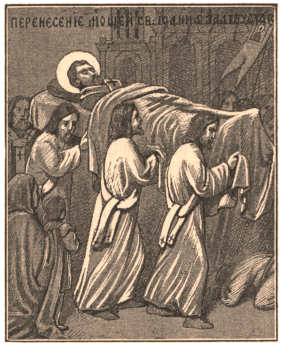
Честные останки Златоустого обретены были нетленными и положены в серебряную раку, и торжественно перенесены из Коман, где скончался он и погребён, в Константинополь. «Православный народ при перенесении мощей множеством судов сделал море как бы сушей, устье Босфора покрыл светильниками. Царь со священным собором и синклитом при стечении многочисленного народа встретил св. мощи в Халкидоне и совершил благоговейное поклонение им. Склонив на гроб святителя очи и чело, Феодосий принёс молитву за своих родителей, Аркадия и Евдоксию, и умолял простить им обиду, причинённую ему по неведению». Из Халкидона мощи св. Златоустого на царском корабле перевезены были в Константинополь и положены в храме св. Апостолов. Перенесение мощей сопровождалось славой чудес и совершилось в 438 году 27 января. Утешительным последствием перенесения мощей св. Златоуста из места заточения в Константинополь было то, что приверженцы Иоанна тронуты были общим к нему благоговением и присоединились к Церкви.
The honorable remains of Chrysostom were found incorrupt and placed in a silver reliquary, and were solemnly translated from Comana, where he had reposed and was buried, to Constantinople. "The Orthodox people, at the translation of the relics, made the sea as if it were dry land with a multitude of ships, and covered the mouth of the Bosphorus with lamps. The Emperor, with the sacred council and the senate, at the gathering of a great multitude of people, met the holy relics in Chalcedon and performed a reverent veneration of them. Bowing his eyes and brow upon the coffin of the hierarch, Theodosius offered a prayer for his parents, Arcadius and Eudoxia, and begged him to forgive them the offense caused to him through ignorance." From Chalcedon, the relics of St. Chrysostom were transported on the imperial ship to Constantinople and placed in the Church of the Holy Apostles. The translation of the relics was accompanied by the glory of miracles and took place in the year 438, on January 27. The consoling consequence of the translation of the relics of St. Chrysostom from the place of exile to Constantinople was that the adherents of John, moved by the general reverence for him, joined the Church.
В IX веке Иосиф, Косма Веститор и другие написали песнопения на перенесение мощей Златоустого, ныне поемые Церковью в день воспоминания этого события. В этот день, по песнопениям Церкви, «яко украшение царское, царский град прием мощи Златоустаго и ими украшается. Заточен быв от стада завистно, Божиим же мановением паки к нему по погребению возвратися Златоустый, источая струи чудес и реки проливая врачеваний. Радуется Церковь Христова, на свещник священный взирающи – на св. священномученика, его же низложивше враги, под спудом молчания скрыта. На славу царску днесь от Коман ко граду приходит царствующу».
In the ninth century, Joseph, Cosmas Vestitor, and others composed hymns for the translation of the relics of Chrysostom, now sung by the Church on the day of remembrance of this event. On this day, according to the hymns of the Church, "as a royal adornment, the royal city receives the relics of Chrysostom and is adorned by them. Having been exiled from the flock through envy, by the divine nod Chrysostom returned to it again after burial, pouring forth streams of miracles and rivers of healings. The Church of Christ rejoices, beholding the sacred lampstand—the holy Hieromartyr, whom the enemies, having cast down, hid under a bushel of silence. Today, for royal glory, he comes from Comana to the reigning city."
В ожесточённой, многовековой борьбе со стороны мусульманского фанатизма против враждебного ему православного подвластного Турецкому игу населения – проявляются от времени до времени такие подвиги терпения и самоотвержения в лице исповедников христианского учения, которые не уступают подвигам древних мучеников во времена гонений христиан первых веков. И с полным основанием причисляет Греческая церковь к лику святых – этих новых мучеников, этих верных сынов порабощённой Христианской Церкви. Их страдальческим подвигом более всего держится глубоко потрясаемое враждебными силами Православие несчастных, волей судеб подпавших под власть Турецкого султана. Пример их оживляет угасающую в народе под гнётом всевозможных гонений и искушений любовь к Православию, и как ни уменьшается количество исповедников его, всё же немало примеров, доказывающих, что неодолима и неизменна хотя по качеству привязанность к родной вере в лице уцелевших от гнёта Турок и от нравственного насилия католиков.
In the bitter, centuries-long struggle of Muslim fanaticism against the Orthodox subject population under the Turkish yoke, hostile to it, there appear from time to time such feats of patience and self-sacrifice in the person of confessors of the Christian teaching, which are not inferior to the feats of the ancient martyrs in the times of the persecutions of Christians in the first centuries. And with full justification, the Greek Church numbers among the ranks of the saints these new martyrs, these faithful sons of the enslaved Christian Church. By their suffering feat, the Orthodoxy of the unfortunate ones, who by the will of fate fell under the power of the Turkish Sultan, is most of all sustained, deeply shaken as it is by hostile forces. Their example revives in the people, under the oppression of all kinds of persecutions and temptations, the fading love for Orthodoxy, and however much the number of its confessors diminishes, there are still not a few examples proving that the attachment to the native faith, though in quality, is invincible and unchanging in the person of those who have survived the oppression of the Turks and the moral violence of the Catholics.
Подтверждением этого, между прочим, служит пример воспоминаемого сегодня Греческой церковью новомученика Димитрия. Казалось бы, что ничем особенным не был он подготовлен к великому подвигу исповедничества: не получил он никакого образования; по обстановке своей принадлежал к числу тех, которые, быть может, наиболее подвергаются всякой испорченности среди примеров низшего слоя общества, не ограждённого чистой нравственной подготовкой. Между тем и в нём уцелела неискоренимая в народе православная вера.
A confirmation of this, among other things, is the example of the new martyr Demetrius, commemorated today by the Greek Church. It would seem that he was prepared for the great feat of confession by nothing special: he received no education; by his circumstances he belonged to those who, perhaps, are most subject to every kind of corruption amidst the examples of the lower stratum of society, not protected by pure moral preparation. Yet even in him the Orthodox faith, ineradicable in the people, remained intact.
Димитрий служит подносчиком в таверне (в Константинопольской Галате – в Каракиой); красивой наружностью и добрыми душевными свойствами выделялся он между другими служащими; этим – в иных возбуждал он зависть, а другие Турки досадовали, что он – иноверец, и всякими хитростями старались завлечь его в исламизм; однако же, это не удавалось им и раздражало их ещё более против молодого прислужника.
Demetrius served as a waiter in a tavern (in Constantinople's Galata—in Karaköy); he stood out among the other servants by his handsome appearance and good spiritual qualities; by this he aroused envy in some, while other Turks were annoyed that he was of another faith, and by all sorts of cunning they tried to entice him into Islam; however, this did not succeed with them and irritated them even more against the young servant.
Однажды между опьяневшими посетителями таверны вышла ссора и драка. Димитрий, по обязанности своей, вмешался в эту ссору – с тем, чтобы разнять и выпроводить из таверны забуянивших пьяниц. Это им не понравилось, и они подали на другой день на Димитрия жалобу, обвиняя его в самоуправстве и нанесении ран одному Турку при насильственном вмешательстве в его ссору с другими.
One day, a quarrel and a fight broke out among drunken visitors to the tavern. Demetrius, by his duty, intervened in this quarrel—in order to separate and expel the rowdy drunkards from the tavern. This displeased them, and the next day they filed a complaint against Demetrius, accusing him of taking the law into his own hands and inflicting wounds on a Turk by his forcible intervention in his quarrel with others.
Визирь позвал Димитрия, но выслушав его правдивое оправдание, тем не менее не захотел предоставить удовлетворение христианину. Он предложил Димитрию одно из двух: или перейти в магометанскую Веру, или быть казнённым за мнимое преступление.
The vizier summoned Demetrius, but having heard his truthful justification, nevertheless did not wish to grant satisfaction to a Christian. He offered Demetrius one of two things: either to convert to the Mohammedan faith, or to be executed for the alleged crime.
Я не причинил ни малейшего зла Турку, – отвечал Димитрий, – и не могу быть Турком. Сохрани меня Бог от этого! Я – христианин и останусь христианином...
"I have done not the slightest harm to the Turk," answered Demetrius, "and I cannot become a Turk. God forbid! I am a Christian and will remain a Christian..."
Визирь попытался подействовать на Димитрия ласковым увещанием, обещал ему почести и богатство, если он отурчится. Но всё это возбуждало в христианине только возражения против Магометанской веры. Раздражённый сановник предал его тогда на произвол тех, кто жаловался на него. Они привели Димитрия в кофейную, снова стали убеждать его потурчиться, но Димитрий был непреклонен. После того сделан ему был новый допрос, на основании которого, присоединив к прежнему обвинению то, что он дерзнул хулить магометанскую религию, визирь приказал обезглавить его перед таверной. С непоколебимой твёрдостью принял мученическую смерть смиренный простолюдин, обнаружив с такой величественной простотой ту глубину родной веры, которая неискоренимо таится в православном народе...
The vizier tried to influence Demetrius with a gentle admonition, promising him honors and wealth if he would turn Turk. But all this aroused in the Christian only objections against the Mohammedan faith. The irritated dignitary then abandoned him to the will of those who had complained about him. They brought Demetrius to a coffeehouse, again began to persuade him to turn Turk, but Demetrius was unyielding. After that, a new interrogation was made of him, on the basis of which, adding to the former accusation that he had dared to blaspheme the Mohammedan religion, the vizier ordered him to be beheaded in front of the tavern. With unshakable firmness, the humble commoner accepted a martyr's death, revealing with such majestic simplicity that depth of native faith which ineradicably lies hidden in the Orthodox people...