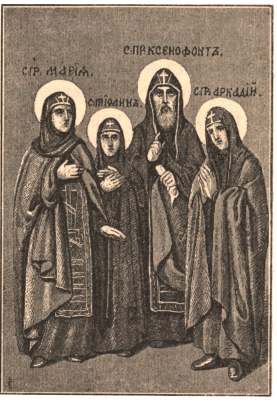
Ксенофонт и Мария были знатные и богатые граждане г. Византии, жившие в V стол. Они вели благочестивую жизнь и более всего заботились о том, чтобы воспитать детей своих истинными христианами. Исполнитель угодных Ему стремлений человеческого сердца благословил труды их полным успехом: плоды христианского воспитания юношей не замедлили обнаружиться в полном блеске.
Xenophon and Mary were noble and wealthy citizens of the city of Byzantium, living in the fifth century. They led a pious life and were concerned above all to raise their children as true Christians. The Fulfiller of the pleasing aspirations of the human heart blessed their labors with complete success: the fruits of the Christian upbringing of the youths were not slow to manifest themselves in full splendor.
Укрепив детей своих домашним душевным воспитанием, родители отпустили их в г. Берит для доставления им там и научного образования.
Having strengthened their children by domestic spiritual education, the parents sent them to the city of Berytus to provide them with a scholarly education there as well.
«Поступайте всегда, как я заповедовал вам, – говорил Иоанну и Аркадию отец их, расставаясь с ними, – не из тщеславия, но из желания вам добра говорю вам, что если вы будете иметь примером жизнь мою, то и не будет вам лучшего учителя, так как домашнее учение, изображённое в словах и в делах, полезнее всякого учения. Дети! сохраните заповеди Господни и мои, и Бог мира да будет с вами
"Always act as I have commanded you," said their father to John and Arcadius as he parted from them, "not out of vainglory, but out of a desire for your good I say to you, that if you have my life as an example, you will have no better teacher, for domestic instruction, portrayed in words and in deeds, is more profitable than any teaching. Children! Keep the commandments of the Lord and mine, and the God of peace shall be with you."
Такие слова отца и такие сердца детей, бывали уготованной почвой для восприятия доброго семени, оказались спасением Иоанна и Аркадия против всяких подводных камней в море житейском... Господь-Сердцеведец, не посылающий испытаний свыше сил наших и знающий силу уготованных для Него душ, посетил этих юношей жестоким испытанием, нераздельным, впрочем, и с великим милосердием, посредством которого промысл Его устраивает всегда всё к лучшему для людей. На пути в Берит путешественники были застигнуты бурей. Корабль потерпел крушение, и спасавшиеся на обломках его были выкинуты волнами на берег, по разным сторонам. Разделённые таким образом и считая один другого погибшим, каждый из братьев решился не возвращаться домой, чтобы не иметь прискорбия огорчить родителей вестью о погибели другого из них... Между тем, поражённые такой великой утратой на первом шагу при вступлении в жизнь, они внезапно постигли непрочность всех земных благ и устремились душой к единственной надёжной ограде счастья истинного и нетленного – жизни уединённой, посвящённой молитве. Иоанн и Аркадий – различными путями – достигли одинаковой цели: подвизаться в иночестве.
Such words of the father and such hearts of the children, being prepared soil for the reception of the good seed, proved to be the salvation of John and Arcadius against every hidden reef in the sea of life... The Lord, the Knower of hearts, Who does not send trials beyond our strength and knows the strength of souls prepared for Him, visited these youths with a severe trial, inseparable, however, from great mercy, through which His providence always arranges everything for the best for men. On the way to Berytus the travelers were overtaken by a storm. The ship was wrecked, and those who saved themselves on its fragments were cast by the waves onto the shore, on different sides. Thus separated and each considering the other lost, each of the brothers resolved not to return home, so as not to have the sorrow of grieving their parents with news of the other's perdition... Meanwhile, struck by such a great loss at the very first step upon entering life, they suddenly perceived the instability of all earthly goods and rushed with their souls to the only sure refuge of true and incorruptible happiness—a solitary life dedicated to prayer. John and Arcadius—by different paths—reached the same goal: to struggle in monasticism.
После долгой неизвестности об уехавших детях, родители приняли все меры к отысканию их, и по дошедшим до них сведениям могли только предположить, что дети их погибли во время бури... Твёрдые духом, вынесли они это чрезвычайное горе с покорностью воле Божией, подобно Иову, и ободрённые после усердной молитвы сонным видением, представившим им сыновей их, предстоящих Господу в великой славе, старцы, с надеждой на Бога, предприняли поклонение святым местам и вместе с тем разыскивание детей своих.
After a long period of uncertainty about their departed children, the parents took every measure to find them, and from the information that reached them could only suppose that their children had perished during the storm... Firm in spirit, they bore this extraordinary grief with submission to the will of God, like Job, and encouraged after fervent prayer by a dream-vision that showed them their sons standing before the Lord in great glory, the elders, with hope in God, undertook a pilgrimage to the holy places and at the same time a search for their children.
«Не скорби, госпожа моя, – поддерживал старец Ксенофонт жену свою Марию, – верую, что Бог не допустит погибнуть нашим детям, и надеюсь, что Он не захочет оскорбить старость мою, как я никогда не дерзнул оскорбить благостыню Его».
"Grieve not, my lady," the elder Xenophon supported his wife Mary, "I believe that God will not allow our children to perish, and I hope that He will not wish to offend my old age, as I have never dared to offend His goodness."
И не посрамил Бог такого праведного упования на Него. Неисповедимыми путями Его Божественного Промысла старцы встретились с детьми своими... Во время путешествия они встретили их иноками в различных монастырях, и не пожелали уже тогда отвлекать их от спасительного пути, к которому приведены были дети их волей Божией. И сами, чуждые пристрастия к миру и благам его, раздав имущество бедным, уединились в тихих обителях, где, в молитвах все друг за друга, пребывали до мирной кончины – в ожидании вечного соединения друг с другом в Царстве Небесном после кратковременной разлуки в этом мире, среди которой уже воссоединил их однажды чудно Господь, как бы в залог их будущего блаженного воссоединения навеки...
And God did not put such righteous hope in Him to shame. By the inscrutable ways of His Divine Providence, the elders met with their children... During their journey they encountered them as monks in various monasteries, and they did not then wish to draw them away from the saving path to which their children had been led by the will of God. And they themselves, being strangers to attachment to the world and its goods, having distributed their property to the poor, withdrew into quiet monasteries, where, praying for one another, they remained until a peaceful end—awaiting eternal union with one another in the Kingdom of Heaven after a brief separation in this world, in the midst of which the Lord had once already wondrously reunited them, as a pledge of their future blessed reunion forever...
Блаженны праведно воспитавшее детей своих! Блаженны плоды христианского воспитания! Блаженны постигающее и воспринимающее посещение и промышление о себе Господа, подобно истинно возлюбившим Бога старцам Ксенофонту и Марей и детям их Иоанну и Аркадию!
Blessed are those who have righteously raised their children! Blessed are the fruits of Christian upbringing! Blessed are those who comprehend and receive the visitation and providence of the Lord for themselves, like the elders Xenophon and Mary and their children John and Arcadius, who truly loved God!
«Древний Греческий толкователь творений преп. Иоанна Лествичника замечает, что, по мнению некоторых, Иоанн Лествичник был одним из сыновей Ксенофонта»271.
"An ancient Greek commentator on the works of Venerable John of the Ladder notes that, in the opinion of some, John of the Ladder was one of the sons of Xenophon."271
Отец блаженной Павлы272 происходил из рода Агамемнонова, а мать – из дома Сципеонов и Павла Эмилея; муж её был потомок дома Юлиева. Блистательной знаменитости происхождения соответствовало богатство супругов. Павла была доброй супругой и матерью пятерых детей. Но счастье земное могло повредить доброму сердцу Павлы. И вот Господь посылает ей тяжёлую скорбь: любимый супруг умирает, когда ей было 32 года.
The father of blessed Paula272 was descended from the race of Agamemnon, and her mother from the house of the Scipios and Paulus Aemilius; her husband was a descendant of the house of Julius. The brilliant fame of her lineage was matched by the wealth of the couple. Paula was a good wife and mother of five children. But earthly happiness could have harmed Paula's good heart. And so the Lord sends her a heavy sorrow: her beloved husband dies when she was 32 years old.
Павла, у которой сердце было нежное, неутешно плакала о смерти мужа. Благочестивая и образованная вдова Маркелла послужила ей подпорой. Она смягчала скорби её христианскими утешениями и обратила сердце её к Господу. Павла стала Евангельской вдовицей. Огромное состояние доставляло ей средства отирать слёзы сотням семейств бедных. Не было между бедными умершего, которого не хоронили бы на счёт Павлы, не было больного, которому не оказывала бы пособия любовь Павлы. Павла отыскивала бедность и горе в огромном городе, чтобы утешить их. Она считала себя несчастливой, если ей не удавалось оказать пособие страждущей семье. Блаженный Иероним, когда познакомился с нею, считал должным говорить ей: нет ли излишеств в благотворительности её? Но сам же сознаётся, что она обезоружила его словами: я желаю быть нищей для Господа, обнищавшего для нас.
Paula, whose heart was tender, wept inconsolably over her husband's death. The pious and learned widow Marcella served as a support for her. She softened her sorrows with Christian consolations and turned her heart to the Lord. Paula became an evangelical widow. Her enormous fortune provided her with the means to wipe away the tears of hundreds of poor families. There was no poor person who died whom Paula did not bury at her own expense, no sick person whom Paula's love did not assist. Paula sought out poverty and grief in the great city to comfort them. She considered herself unhappy if she failed to provide aid to a suffering family. Blessed Jerome, when he became acquainted with her, considered it his duty to say to her: is there no excess in your charity? But he himself confesses that she disarmed him with the words: I wish to be poor for the Lord, Who became poor for us.
Когда св. Епифаний Кипрский и Павлин Антиохийский прибыли в Рим по церковным делам (это было в 382 г.), Епифаний и Иероним жили в доме Павлы, и она же доставляла всё нужное Павлину; беседы со святителями были для неё самыми приятным наслаждением.
When St. Epiphanius of Cyprus and Paulinus of Antioch arrived in Rome on church business (this was in 382 A.D.), Epiphanius and Jerome lived in Paula's house, and she also supplied everything needed for Paulinus; conversations with the hierarchs were for her the most pleasant delight.
Старшая дочь её, необыкновенно даровитая, жившая с мужем только 7 месяцев, готовилась вступить в монастырь, но умерла. Это было сильным ударом для сердца Павлы. Блаженный Иероним должен был утешать её. «Дочь твоя, – писал он, – перешла в тот мир с прекрасной решимостью посвятить себя Богу; уже более 4 месяцев очищалась душа её покоем. Ты и не думаешь о том, что говорит тебе Спаситель: Павла, зачем ты скорбишь о том, что дочь твоя стала Моей? Твои слёзы – возмущение против Моих забот, оскорбление Мне. Знаю, что надобно уступать природе матери; но излишняя скорбь – не честь для веры»273.
Her eldest daughter, extraordinarily gifted, who had lived with her husband only seven months, was preparing to enter a monastery, but died. This was a heavy blow to Paula's heart. Blessed Jerome had to comfort her. "Your daughter," he wrote, "has passed into that world with a beautiful resolve to dedicate herself to God; for more than four months her soul was being purified by peace. You do not think of what the Savior says to you: Paula, why do you grieve that your daughter has become Mine? Your tears are a rebellion against My care, an offense to Me. I know that one must yield to a mother's nature; but excessive grief is no honor for faith."273
Брак сына её Токсотия последствиями изумил Рим и утешал Павлу. Лета, жена Токсотия, была дочь верховного языческого жреца. «Кто бы мог подумать, – говорит Иероним, – чтобы внучка языческого жреца Альбина родилась по обещанию мученика, чтобы деду улыбающемуся лепечущая внучка пела: „аллилуиа“, и Христову невесту кормил на коленях своих такой старец? Но мы счастливо надеялись: „святой и верующий дом освящает неверующего“. Старый язычник стал христианином»274.
The marriage of her son Toxotius, by its consequences, amazed Rome and comforted Paula. Laeta, the wife of Toxotius, was the daughter of the high pagan priest. "Who could have thought," says Jerome, "that the granddaughter of the pagan priest Albinus would be born by the vow of a martyr, that the lisping granddaughter would sing 'alleluia' to her smiling grandfather, and that such an elder would nurse the bride of Christ on his knees? But we happily hoped: 'the holy and believing household sanctifies the unbeliever.' The old pagan became a Christian."274
Вселенский Собор 381 г. наименовал Иерусалимскую Церковь «матерью всех Церквей»; а Рим что такое в христианской истории?275 Павла сильно желала быть дщерью Иерусалимской Церкви. Это желание внушено было ей другом её Маркеллой и поддержано Иеронимом. Нелегко было ей расставаться с детьми и с обширной знатной роднёй. Но в 385 г. знаменитая и богатая патрицианка отправилась с дочерью опасным морским путём на Восток.
The Ecumenical Council of 381 A.D. named the Church of Jerusalem "the mother of all Churches"; but what is Rome in Christian history?275 Paula strongly desired to be a daughter of the Church of Jerusalem. This desire was inspired in her by her friend Marcella and supported by Jerome. It was not easy for her to part from her children and from her extensive noble family. But in 385 A.D., the famous and wealthy patrician set out with her daughter by the dangerous sea route to the East.
На острове Понтии, который прославлен ссылкой знаменитой патрицианки Флавии Домитиллы при Домитиане, видела келийки, где долго томилась св. страдалица276. В Кипре виделась с св. Епифанием; десять дней проведено здесь не для отдыха, а на посещение обителей и храмов277. Потом была она в Антиохии у Павлина. «На берегу в Сарепте входила в малый храм (turriculum) Илии, где поклонялась Господу Спасителю278; песками Тира, на которых преклонял колена Павел, достигла Акка, нынешней Птолемаиды: – полями Мегиддонскими, знающими о смерти Иосии, вошла в землю Филистимскую; дивилась развалинам Дора, когда-то весьма крепкого города; возвратившись, была в Кесарии, где видела дом Корнилия сотника, обращённый в церковь, и храмины Филиппа и четырёх дев пророчиц279. Видела Лидду, переименованную в Диосполис, славную воскресением Энея; также недалёкий от неё Аримафей, селение Иосифа, почтившего погребением тело Спасителя280; Иоппию, порт, из которого бежал Иона. Повторив путь, была в Никополе, называвшемся прежде Эммаусом, где Господь узнан был в преломлении хлеба и освятил дом Клеопы в церковь»281.
On the island of Pontia, which is glorified by the exile of the famous patrician Flavia Domitilla under Domitian, she saw the little cells where the holy sufferer languished for a long time276. In Cyprus she met with St. Epiphanius; ten days were spent here not for rest, but for visiting monasteries and churches277. Then she was in Antioch with Paulinus. “On the shore at Zarephath she entered the small church (turriculum) of Elijah, where she worshipped the Lord Savior278; by the sands of Tyre, on which Paul knelt, she reached Acre, the present-day Ptolemais: through the plains of Megiddo, which know of the death of Josiah, she entered the land of the Philistines; she marveled at the ruins of Dor, once a very strong city; returning, she was in Caesarea, where she saw the house of Cornelius the centurion, turned into a church, and the chambers of Philip and the four virgin prophetesses279. She saw Lydda, renamed Diospolis, glorious for the resurrection of Aeneas; also Arimathea not far from it, the village of Joseph, who honored the body of the Savior with burial280; Joppa, the port from which Jonah fled. Retracing the way, she was in Nicopolis, formerly called Emmaus, where the Lord was recognized in the breaking of bread and consecrated the house of Cleopas as a church”281.
В Иерусалиме, проконсул приготовил для неё дворец, но она поместилась в маленьком, бедном домике. «Она простиралась пред крестом Спасителя; лобызала камень, отваленный ангелом, и то место, где лежало тело Принявшего на Себя грехи всего мира. Сколько тут пролито было слёз, сколько вздохов и скорби! Показывали ей столп, окроплённый кровью Господа, где привязанного Его бичевали. Указывали место, где сошёл Дух Святой на 120 верующих».
In Jerusalem, the proconsul prepared a palace for her, but she lodged in a small, poor house. "She prostrated herself before the cross of the Savior; she kissed the stone rolled away by the angel, and that place where the body of Him Who took upon Himself the sins of the whole world lay. How many tears were shed here, how many sighs and sorrow! They showed her the pillar sprinkled with the blood of the Lord, where He was tied and scourged. They pointed out the place where the Holy Spirit descended upon the 120 believers."
Раздав бедным, что могла, пришла в Вифлеем и посещала пещеру, где родился Христос Господь. «Какое счастье, – говорила она, – для бедной грешницы, какова я, лобызать эти ясли, где Спаситель мой лежал младенцем! Надобно ли ещё мне искать для себя места, после того, которое избрал для Себя Спаситель мой?»
Having distributed to the poor what she could, she came to Bethlehem and visited the cave where Christ the Lord was born. "What happiness," she said, "for a poor sinner such as I am, to kiss these manger-beds where my Savior lay as an infant! Need I still seek a place for myself, after that which my Savior chose for Himself?"
Посещая окрестности Вифлеема, Павла восходила на башню Гадер, башню стада, подле которой282 Иаков пас стада овец (Быт.37 гл.), а бодрствовавшее ночью пастухи удостоились слышать: слава в вышних Богу (Лк.2:14); из Восора была в Есяоле; видела следы дуба Авраамова, Хеврон Кафар-Сарун и печальное озеро. Потом путешествовала в Иерихон, где видела Галгалский лагерь (Нав.5 гл.); с берега Иордана была в Вефиле и на горе Ефремовой, где отдала честь гробницам Иисуса, сына Навина, и Елеазара, сына Ааронова; прошла через Сихем, видела гробницы 12-ти патриархов, Севастию или Самарию, где «погребены пророки Елисей и Авдия, и тот, которого больше не было из числа рождённых жёнами, Иоанн Креститель»283; там поражена и потрясена была она многими странностями. Она видела, как демоны потешались разными мучениями, как люди пред гробницами святых выли по-волчьи, лаяли как собаки, рыкали будто львы, шипели как змеи, мычали как волы, а другие вертелись на голове и через спину макушкой касались земли. Жалела она обо всех и о каждом, проливала слёзы, умоляя Христа о милосердии.
Visiting the environs of Bethlehem, Paula ascended the Tower of Gader, the Tower of the Flock, near which282 Jacob pastured his flocks of sheep (Gen. 37), and where the shepherds keeping watch by night were deemed worthy to hear: "Glory to God in the highest" (Lk. 2:14); from Bosor she went to Eshcol; she saw the traces of Abraham's oak, Hebron Kafar-Sarun, and the sorrowful lake. Then she journeyed to Jericho, where she saw the camp at Gilgal (Josh. 5); from the bank of the Jordan she went to Bethel and to Mount Ephraim, where she paid honor to the tombs of Joshua, son of Nun, and Eleazar, son of Aaron; she passed through Shechem, saw the tombs of the twelve patriarchs, Sebaste or Samaria, where "the prophets Elisha and Obadiah are buried, and that one than whom no greater was born of women, John the Baptist"283; there she was struck and shaken by many strange things. She saw how demons amused themselves with various torments, how people before the tombs of the saints howled like wolves, barked like dogs, roared like lions, hissed like snakes, bellowed like oxen, while others spun on their heads and touched the ground with the crown of their heads over their backs. She pitied each and every one, shed tears, imploring Christ for mercy.
Из Вифлеема мать и дочь отправились посетить пустыни Египта. Они принимали благословение и советы Макариев, Исидоров, Серапионов и других дивных пустынников.
From Bethlehem, mother and daughter set out to visit the deserts of Egypt. They received the blessing and counsel of the Macarii, the Isidores, the Serapions, and other wondrous hermits.
По возвращении в Вифлеем, Павла построила на дороге к Иерусалиму странноприимный дом и монастырь мужской, где блаж. Иероним был настоятелем. В Вифлееме устроен был обширный монастырь женский, с тремя отделениями. В воскресение все собирались в храм на общие молитвы; в прочее дни служили Богослужение в комнатах молитвы.
Upon returning to Bethlehem, Paula built a hospice for pilgrims on the road to Jerusalem and a men's monastery, where the blessed Jerome was abbot. In Bethlehem, a spacious women's monastery was established, with three divisions. On Sundays, all gathered in the church for common prayers; on other days, they served the Divine Service in prayer rooms.
Сёстрам была предписана строгая воздержность в речах, ни одно резкое слово не должно было исходить из уст девы, посвятившей себя Богу; «если случалась между ними сварливая, дерзкая, заносчивая, – остановив её не раз, Павла принуждала её молиться у дверей трапезы, позади всех сестёр, и есть отдельно от них, дабы стыд образумил ту, которую не вразумили слова».
Strict restraint in speech was prescribed for the sisters; no harsh word was to issue from the lips of a virgin who had dedicated herself to God. "If a quarrelsome, insolent, or arrogant woman appeared among them, after stopping her more than once, Paula would compel her to pray at the doors of the refectory, behind all the sisters, and to eat apart from them, so that shame might teach the one whom words had not admonished."
Той, которая выказывала в одежде более чем опрятность, говорили, что щегольство её – вывеска грязной души. О слабых и больных заботливость была ревностная.
To one who showed more than neatness in her clothing, it was said that her finery was the sign of a dirty soul. Care for the weak and the sick was zealous.
Строгая мать Павла была училищем благочестия для сестёр её. Смирение её было изумительное. Когда она была окружена сонмом дев, то казалась последней между ними и по одежде, и по голосу, и по приёмам, и по поступи. Она спала на голой земле, даже в лихорадке, мало вкушала пищи и при том самой простой, а питалась более слезами. Исключая праздничные дни, она почти вовсе не подбавляла в пищу масла. Когда просили её поберечь своё слабое здоровье, она отвечала: «мне надобно обезобразить лицо своё, которое столько раз выставляла я напоказ, натирая красками, в оскорбление воли Божией; справедливость требует истязывать тело, которое слишком много вкушало сладостей; надобно мне плакать много, после безумных и преступных весёлостей; я должна заменять власяницей роскошные одежды, которые льстили суетности и неге; довольно я старалась нравиться свету, хочу употребить всё, чтобы сколько-нибудь быть угодной Богу».
The strict mother Paula was a school of piety for her sisters. Her humility was astonishing. When she was surrounded by a host of maidens, she seemed the last among them in dress, in voice, in manner, and in gait. She slept on the bare ground, even in a fever; she ate little and that of the simplest food, nourishing herself more with tears. Except on feast days, she added almost no oil to her food. When asked to spare her weak health, she replied: "I must disfigure my face, which I so often displayed, painting it with cosmetics, to the offense of God's will; justice demands that I mortify the body which has tasted too many sweets; I must weep much, after my mad and sinful gaieties; I must replace the luxurious garments that flattered vanity and luxury with a hair-shirt; I have striven enough to please the world; I wish to use everything to be, in some measure, pleasing to God."
Господь привёл к Павле одну грешницу. В окрестностях Кесарии Палестинской подвизался преп. Маркиан. В бурную ночь пришла к его келье жена, одетая в рубище, и просила у него покрова. Пустынник принял её человеколюбиво в переднюю келью. На другой день видит он жену, одетую в роскошную одежду. Зажёгши огонь среди кельи, он стал на него босыми ногами и говорил с собою: «как кажется тебе, Маркиан, этот огонь? Ведь это не то, что огонь геенский! Если хочешь геенского огня, подойди к этой женщине». Поражённая самоотречением и его проповедью, грешница бросилась к ногам святого отшельника, исповедала грехи свои и просила у него духовного исцеления. Преподобный отвёл её в монастырь Павлы, и здесь она, под надзором преподобной, проводила строгую жизнь до смерти и почила с миром, с именем преподобной Зои284.
The Lord brought a certain sinner to Paula. In the vicinity of Caesarea of Palestine, the Venerable Marcian was asceticising. On a stormy night, a woman dressed in rags came to his cell and asked him for shelter. The hermit received her humanely into the outer cell. The next day, he saw the woman dressed in luxurious clothing. Lighting a fire in the middle of the cell, he stood on it with bare feet and said to himself: "How does this fire seem to you, Marcian? Surely this is not the same as the fire of Gehenna! If you want the fire of Gehenna, approach this woman." Struck by his self-denial and his sermon, the sinner threw herself at the feet of the holy hermit, confessed her sins, and asked him for spiritual healing. The Venerable One led her to Paula's monastery, and there, under the supervision of the Venerable Paula, she led a strict life until her death and reposed in peace, with the name of the Venerable Zoe284.
Немало оскорблений пришлось вытерпеть блаж. Павле от партии, не умно понимавшей и ещё не умнее защищавшей личные мнения Оригена. Когда же не удалось хитростью склонить на свою сторону знаменитую Римлянку, а не удалось от того, что блаж. Иероним был против этой партии, – партия стала бросать в Павлу разные оскорбления; выдавали её за помешанную и говорили: нужно бы оградить её от расстройства. Дело доходило до того, что блаженный наставник советовал Павле удалиться с Востока. Она отвечала ему: «ты был бы справедлив, отец мой, если бы где-либо могла я найти любимый мною Вифлеем. И зачем скрываться от людской злости? надобно превозмогать её терпением! Почему не одержать победы над гордостью смирением? Почему, получая удар в одну щеку, не подставлять другой»?
The blessed Paula had to endure many insults from the party that unwisely understood and even more unwisely defended the personal opinions of Origen. When they failed to win the famous Roman woman over to their side by cunning—and they failed because the blessed Jerome was opposed to this party—the party began to hurl various insults at Paula; they gave her out to be mad and said that she needed to be protected from derangement. Matters reached such a point that the blessed teacher advised Paula to withdraw from the East. She answered him: "You would be right, my father, if I could anywhere find the Bethlehem I love so much. And why hide from human malice? It must be overcome with patience! Why not conquer pride with humility? Why, upon receiving a blow on one cheek, not offer the other?"
Приближалась и кончина св. Павлы. В тяжкой болезни своей, она тихо читала псалмы. «Не слишком ли страдаешь ты и не от того ли не просишь советов?» – спросил её духовник. Она отвечала по-Гречески: «мне хорошо». И это были последние слова её.
The end of St. Paula was approaching. In her severe illness, she quietly read the psalms. "Are you not suffering too much, and is that why you do not ask for advice?" her spiritual father asked her. She answered in Greek: "I am well." And these were her last words.
Иерусалимский архиепископ Иоанн, с несколькими другими епископами, множество иноков и инокинь совершали погребение над нею. Псалмы петы были на языках Еврейском, Греческом, Латинском и Сирском. Вдовы и бедные указывали на одежды, доставленные ею: толпы нуждающихся кричали, что «потеряли они мать и кормилицу свою». Она почила января 26 дня 404 г. на 58 году своей жизни285.
John, the Archbishop of Jerusalem, together with several other bishops and a multitude of monks and nuns, performed her burial. Psalms were sung in Hebrew, Greek, Latin, and Syriac. Widows and the poor pointed to the garments she had provided for them; crowds of the needy cried out that "they had lost their mother and nourisher." She reposed on January 26, A.D. 404, in the 58th year of her life285.
Жизнь св. Павлы описана блаж. Иеронимом. Migne, Patrol. I. 22 р. 878. Русский перевод – в «Христ. Чтен.» 1847 г., 4, 186 не очень искусный.
The life of St. Paula was written by the blessed Jerome. Migne, Patrol. I. 22 p. 878. A Russian translation is in Christian Reading, 1847, 4, 186, not very skillful.
Ер. 22. Письмо писано в 384 г. вскоре по возвращении Иеронима в Вифлеем. В письме к Евстохию писано было: «помню, что почти за 5 лет пред сим, быв в Риме, читал я со святой Блезиллой Екклезиаста, чтобы вызвать её отречься от мира и признать всё мирское за пустоту; я объяснял ей тёмные места, дабы могла понимать, что читает» (Ер. 116). В письме к Павле: «если говорит (Блезилла) по-Гречески, подумаешь, что не знает она по Латыни. Если обращаешься к Римским звукам, в речи не замечаешь ничего чужого. В немногие, не говорю месяцы, а дни, победила трудности Еврейского языка до того, что состязалась с матерью в изучении и пении псалмов». Ер. 25.
Ep. 22. The letter was written in 384, soon after Jerome's return to Bethlehem. In a letter to Eustochium it was written: "I remember that almost five years ago, when I was in Rome, I read Ecclesiastes with the holy Blaesilla to induce her to renounce the world and to acknowledge all worldly things as vanity; I explained the obscure passages to her so that she might understand what she read" (Ep. 116). In a letter to Paula: "If she (Blaesilla) speaks in Greek, you would think she knows no Latin. If you turn to Roman sounds, nothing foreign is noticed in her speech. In a few, I will not say months, but days, she overcame the difficulties of the Hebrew language to such an extent that she vied with her mother in the study and singing of the psalms." Ep. 25.
Послание собора 381 г. «Объявляем достопочтенного и благоговейного Кирилла епископом Иерусалимской Церкви, которая есть матерь всех церквей», Феодорита ист. 15, 8, 9.
Epistle of the Council of 381. "We declare the most honorable and reverend Cyril to be bishop of the Church of Jerusalem, which is the mother of all churches," Theodoret, Hist. 15, 8, 9.
Хроника Евсевия: «при Домитилле очень многие из христиан совершили подвиг мученичества; между ними и Флавия Домитилла, внучка по сестре консула Флавия Климента, сослана на остров Понтию за то, что исповедала себя христианкой». Память св. девы мученицы Домитиллы 7 мая. Usuardi Martyrol. ad 7 Man; Act. Sanct. ad 12 Maii.
Chronicle of Eusebius: "Under Domitilla, very many Christians performed the feat of martyrdom; among them was Flavia Domitilla, a granddaughter on the sister's side of the consul Flavius Clemens, who was exiled to the island of Pontia for confessing herself a Christian." Memory of the holy virgin martyr Domitilla, May 7. Usuardi Martyrol. ad 7 Man; Act. Sanct. ad 12 Maii.
Игум. Даниил XII века: «Кюпр же остров велик весьма, – суть бо епископы в нём 24, а все митрополия едина. И святых ту много, без числа, лежит. Ту бо лежит св. Епифаний и Апостол Варнава и св. Зенон и св. Филагрис епископ, его же крестил Паул, Апостол Христов». Путеш. Даниила с превосходными примечаниями г. Норова, СПб. 1864 г., стр. 12, 13.
Abbot Daniel of the 12th century: "The island of Cyprus is very large—there are 24 bishops in it, and all one metropolis. And there are many saints there, lying without number. There lie St. Epiphanius and the Apostle Barnabas and St. Zeno and St. Philagris the bishop, whom Paul, the Apostle of Christ, baptized." The Journey of Daniel with excellent notes by Mr. Norov, St. Petersburg, 1864, pp. 12, 13.
Греческий путешественник XII века Фока: «подле Сидона, на самом взморье, основан замок Сарепта и среди города храм пророка Илии в доме вдовы, принимавшей его». Путеш. Даниила, стр. 154. СПб. 1864 года.
The Greek traveler of the 12th century, Phocas: "Near Sidon, on the very seashore, is built the fortress of Sarepta, and in the middle of the city, the church of the prophet Elijah, in the house of the widow who received him." The Journey of Daniel, p. 154. St. Petersburg, 1864.
Кесария приморская, отличная от Филипповой, соседней с Ливаном, – ныне развалины. Allioli bibl. Altherth. 2, 424–426. Филипп, крестивший Самарян и евнуха царицы Кандакии, был одним из семи диаконов (Деян.8:13–27). Его четыре дочери девы наделены были даром пророчества (Деян.21:8–10); две из них почили девственницами в Иераполе, как свидетельствует Поликрат, Ефесский, епископ II века (Евсевия Ист. 3, 31); одна дочь Ермиопия – мученица (сент. 4). Это не то, что Апостол Филипп, Вифсаидянин, один из двенадцати учеников Спасителя (Ин.1:43, 12:21; Деян.1:13; Лк.6:14). Никифор Каллист (2, 44), смешивая диакона Филиппа с Апостолом Филиппом, приписывал сему последнему дочерей.
Caesarea Maritima, distinct from Caesarea Philippi, neighboring to Lebanon—now ruins. Allioli bibl. Altherth. 2, 424–426. Philip, who baptized the Samaritans and the eunuch of Queen Candace, was one of the seven deacons (Acts 8:13–27). His four virgin daughters were endowed with the gift of prophecy (Acts 21:8–10); two of them reposed as virgins in Hierapolis, as Polycrates, Bishop of Ephesus of the 2nd century, testifies (Eusebius, Hist. 3, 31); one daughter, Hermionia, was a martyr (Sept. 4). This is not the same as the Apostle Philip, a native of Bethsaida, one of the twelve disciples of the Savior (Jn. 1:43, 12:21; Acts 1:13; Lk. 6:14). Nicephorus Callistus (2, 44), confusing the deacon Philip with the Apostle Philip, attributed daughters to the latter.
Даниил: «оттуду от (Севасты) 4 версты от Аримафея; ту есть место в горах каменных, создан городок мал; в том городке гроб св. Иосифа Аримафейского, иже испроси у Пилата тела Иисусова». Стр. 107.
Daniel: "From there (from Sebaste) 4 versts to Arimathea; there is a place in the rocky mountains, a small town built; in that town is the tomb of St. Joseph of Arimathea, who asked Pilate for the body of Jesus." P. 107.
Об Эммаусе слова Даниила и западных паломников со справедливыми замечаниями г. Норова, посещавшего два раза Иерусалим – в Путеш. Даниила, стр. 152, 158.
Concerning Emmaus, the words of Daniel and of Western pilgrims, with the just remarks of Mr. Norov, who visited Jerusalem twice—in The Journey of Daniel, pp. 152, 158.
Башня стада в 4 вёрстах от Вифлеема. Равноапостольная Елена устроила здесь храм (Каллиста ист. VIII. 30), Епифаний монах в путнике Иерусалимском: «на Востоке от Вифлеема построен монастырь, называемый Овечьим; здесь пастухи видели Ангела, который сказал им: „оставьте стеречь овец, – пойте радостно“».
The Tower of the Flock, 4 versts from Bethlehem. The Equal-to-the-Apostles Helen built a church here (Callistus, Hist. VIII. 30). Epiphanius the Monk, in his Jerusalem Traveler: "To the east of Bethlehem is built a monastery called the Sheepfold; here the shepherds saw an Angel, who said to them: 'Leave off watching the sheep—sing joyfully.'"
Игум. Даниил: «от Самарии есть место к западу лицы вдалее 2 версты, имя месту Севастиполь. На том месте создан городок и в том городке темница св. Иоанна Предтечи и в той темници усечен бысть Иоанн Предтеча; ту же и гроб его есть; создана церковь на месте том во имя св. Иоанна Предтечи», стр. 106, 107. «Мне указали, – говорит г. Норов, – также на гробницу Авдия. Гробницы находятся в подземной церкви, в которую входят по лестнице в 20 ступеней; дверь подземелья высечена из гранитного мономета, точно так же, как и двери царских гробниц», стр. 110.
Abbot Daniel: "From Samaria there is a place, facing west, two versts distant; the name of the place is Sebastopolis. On that spot a small town was built, and in that small town is the prison of St. John the Forerunner, and in that prison John the Forerunner was beheaded; there also is his tomb; a church was built on that place in the name of St. John the Forerunner," pp. 106, 107. "They also pointed out to me," says Mr. Norov, "the tomb of Obadiah. The tombs are in an underground church, which is entered by a staircase of twenty steps; the door of the underground chamber is hewn from a single block of granite, just like the doors of the royal tombs," p. 110.
Житие преп. Маркиана – в Четье-Минее февр. 13. Игум. Даниил: «ту же (в Касарии) есть гора вдалее 2 версты от Кесарии; на той горе жил св. отец Маркиан, к нему же блудница прииде искусить его». Путеш., стр. 153. Вершинский, стр. 25, 242, 254.
The Life of the Venerable Marcian – in the Cheti-Minei for February 13. Abbot Daniel: "There also (in Caesarea) is a mountain, two versts distant from Caesarea; on that mountain lived the holy father Marcian, to whom a harlot came to tempt him." Travels, p. 153. Vershinsky, pp. 25, 242, 254.
Мартиролог Усуарди на 27 янв.: «в Вифлееме Иудовом успение св. Павлы; жизнь её, чудную по добродетелям, описал св. Иероним и засвидетельствовал, что она увенчана долгим мученичеством». По Римскому Мартирологу, кончина её 26 янв. О годе смерти Росвейн in notis ad vitam s. Pavlae.
Usuard's Martyrology for January 27: "In Bethlehem of Judah, the repose of St. Paula; her life, wondrous in virtues, was described by St. Jerome, and he testified that she was crowned with long martyrdom." According to the Roman Martyrology, her end was on January 26. Concerning the year of her death, Rosweyde in notis ad vitam s. Paulae.