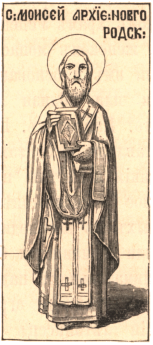
Св. Григория Богослова, архиеп. Константинопольского
St. Gregory the Theologian, Archbishop of Constantinople
Известие о жизни своей сообщает нам сам Григорий в своих писаниях. Этот вселенский учитель и святитель, – друг, сверстник и сподвижник св. Василия Великого, родился от благородных, не бедных и благочестивых христианских родителей – Григория, бывшего епископом Назианзским, и Нонны, в Арианзе – городе Каппадокийском, около 328 года. Благочестивая Нонна в молитвах своих просила у Бога даровать ей сына и обещалась посвятить его на особенное служение Господу, как нового Самуила. В сновидении открыты были ей образ и имя будущего сына её Григория. Благословенный сын с рождением получил превосходный ум, расположение к наукам и уединению, созревшее под влиянием благочестивой матери, которая, занимаясь первоначальным его воспитанием, многократно внушала отроку, что он есть плод молитв и обета её. Добрый сын слагал в сердце своём слова матери, которая по времени, обнимая его и вручая ему священные книги, говорила: «я, как обещала, приношу тебя Богу; исполни же моё желание. Ты рождён у меня по молитвам моим, о том теперь и молюсь, чтобы ты был совершен. Вручаю тебе, сын мой, это драгоценное сокровище, обладай им во всю настоящую жизнь твою; а в будущей получишь ещё лучшие блага». Сын исполнил волю матери. «Меня не пленяли, – говорит он, – прекрасные волны шёлковых одежд; не любил я продолжительных трапез, не любил пресыщать чрево – эту погибельную мать плотоугодия; не любил жить в огромных и великолепных палатах; не расслаблял я сердца музыкальными звуками, нежно потрясающими слухи; меня не упоевало негой роскошное испарение благовонных мазей. Серебро и золото предоставлял я другим. Для меня приятен – кусок хлеба; у меня сладкая приправа – соль, и питие трезвенное – вода. Моё лучшее богатство – Христос, Который непрестанно возносит ум мой горе. Не нужны мне честь, которая проходит скорее разливающегося дыхания, и скоро гибнущая слава; не важно для меня иметь могущество в городах или между гражданами, увеселяться лживыми мечтами, которые одна за другой приходят и исчезают. Но меня сподобил Христос преимущественной славы. Сперва дал меня в дар матери, которая молилась из глубины сердца, и Сам принял меня в дар от родителей. А потом ночными видениями вселил в меня любовь к целомудренной жизни».
Gregory himself gives us an account of his life in his writings. This ecumenical teacher and hierarch—the friend, contemporary, and fellow-laborer of St. Basil the Great—was born of noble, not poor, and pious Christian parents—Gregory, who was bishop of Nazianzus, and Nonna—in Arianzus, a city of Cappadocia, about the year 328. The pious Nonna in her prayers asked God to grant her a son and promised to dedicate him to the special service of the Lord, as a new Samuel. In a dream, the image and name of her future son Gregory were revealed to her. The blessed son received from birth an excellent mind, a disposition toward learning and solitude, which matured under the influence of his pious mother, who, attending to his early upbringing, repeatedly impressed upon the youth that he was the fruit of her prayers and vow. The good son laid up his mother's words in his heart; she, in time, embracing him and giving him the sacred books, said: "I, as I promised, offer you to God; fulfill now my desire. You were born to me through my prayers; for this I now pray, that you may be perfect. I entrust to you, my son, this precious treasure; possess it throughout all your present life; and in the future life you shall receive even better blessings." The son fulfilled his mother's will. "I was not captivated," he says, "by the beautiful waves of silk garments; I did not love lengthy feasts, nor did I love to fill my belly—that destructive mother of fleshly indulgence; I did not love to dwell in huge and magnificent palaces; I did not weaken my heart with musical sounds that gently shake the hearing; I was not intoxicated with the luxurious fragrance of perfumed ointments. Silver and gold I left to others. For me, a piece of bread is pleasant; my sweet seasoning is salt, and my drink is sober water. My best wealth is Christ, Who continually lifts my mind on high. I have no need of honor, which passes more quickly than a spreading breath, and glory that soon perishes; it is not important for me to have power in cities or among citizens, to delight in false dreams that come and go one after another. But Christ has vouchsafed me a preeminent glory. First, He gave me as a gift to my mother, who prayed from the depths of her heart, and He Himself received me as a gift from my parents. And afterwards, by night visions, He instilled in me a love for the chaste life."
С такой наклонностью сердца, св. Григорий, после домашних родительских христианских наставлений, занимался науками в Кесарии Каппадокийской, учился в процветавшей древле Кесарии Палестинской, потом в Александрии и, наконец, в Афинах, куда плывя на корабле в месяце ноябре, он чрезвычайно устрашён был морской бурей, потому что боялся умереть без крещения. «Двадцать дней и ночей, – говорит Григорий, – лежал я на корме корабельной, моля милосердого Бога о спасении, и в этой-то опасности я дал обет, – посвятить себя Богу, и по обету спасся». Григорий прилежно и долго занимался науками. В Афинах он совершенно познакомился и на всю жизнь подружился с Василием Великим; лично узнал Юлиана, который обозревал Грецию и её училища, и при встречах с которым он говорил: «какое зло питает Римская Империя».
With such an inclination of heart, St. Gregory, after his home instruction in the Christian faith from his parents, studied the sciences in Caesarea of Cappadocia, studied in the once-flourishing Caesarea of Palestine, then in Alexandria, and finally in Athens. While sailing by ship in the month of November, he was exceedingly terrified by a storm at sea, because he feared to die unbaptized. "For twenty days and nights," says Gregory, "I lay on the stern of the ship, praying to the merciful God for deliverance, and in this danger I made a vow—to dedicate myself to God, and by the vow I was saved." Gregory diligently and long applied himself to learning. In Athens he became fully acquainted and formed a lifelong friendship with Basil the Great; he personally came to know Julian, who was inspecting Greece and its schools, and at their meetings he would say: "What evil the Roman Empire is nourishing."
По окончании учения около 358 года, как отличнейший своими сведениями и благонравием, Григорий, по усиленным просьбам Афинян, остался у них на короткое время преподавателем красноречия, в надежде скоро соединиться с единственным своим другом – Василием. Науки, для которых посвятил он бо́льшую часть жизни своей, показали ему всю суету идолослужения, утвердили его в вере христианской и ещё сильнее расположили его к благочестивому уединению. «Все познания, – говорит Григорий, – повергнув долу, положил я к стопам Христовым, чтобы они уступили слову великого Бога, которое затмевает собою всякое извитие и многообразное слово ума человеческого».
Upon completing his studies about the year 358, as one most distinguished for his knowledge and good conduct, Gregory, at the urgent requests of the Athenians, remained with them for a short time as a teacher of rhetoric, in the hope of soon being reunited with his only friend, Basil. The sciences, to which he had devoted the greater part of his life, showed him all the vanity of idolatry, confirmed him in the Christian faith, and inclined him even more strongly toward pious solitude. "All knowledge," says Gregory, "I cast down and laid at the feet of Christ, that it might yield to the word of the great God, which eclipses every subtlety and manifold speech of the human mind."
Григорий тайно оставил Афины, возвратился к родителям около 30 лет от рождения и, приняв св. крещение, решился удалиться в безмолвную пустыню. Только усиленные просьбы сограждан, которые надеялись иметь его наставником красноречия, а ещё более любовь к престарелым родителям, для которых хотел он быть утешителем и помощником, отвлекли его на время от исполнения благочестивого его намерения. Живя в доме родительском, он совершенно посвятил себя трудам и лишениям подвижнической жизни; пищей служили ему чёрный хлеб с солью, питием – вода, постелью – голая земля, одежда грубая; постоянным занятием его было упражнение в слове Божием. «Признаюсь, – писал Григорий Василию в пустыню, я не сдержал своего слова, – соединить свою жизнь с твоей, в училище нового любомудрия, не сдержал обещания, данного ещё в Афинах, где дружба, если достаточно моё выражение, слила наши души в одну. Так я не исполнил своего обещания, но не по своей воле. Одна обязанность налагает молчание на другую; закон дружбы должен уступить закону сыновней любви».
Gregory secretly left Athens, returned to his parents about the age of thirty, and having received holy Baptism, resolved to withdraw into the silent wilderness. Only the urgent entreaties of his fellow citizens, who hoped to have him as a teacher of rhetoric, and still more his love for his aged parents, for whom he wished to be a comforter and helper, diverted him for a time from fulfilling his pious intention. Living in his parental home, he wholly devoted himself to the labors and privations of the ascetic life; his food was black bread with salt, his drink water, his bed the bare ground, his clothing coarse; his constant occupation was meditation on the word of God. "I confess," wrote Gregory to Basil in the wilderness, "I did not keep my word—to unite my life with yours in the school of new philosophy; I did not keep the promise made still in Athens, where friendship, if the expression suffices, fused our souls into one. So I did not fulfill my promise, but not by my own will. One obligation imposes silence on another; the law of friendship must yield to the law of filial love."
Впрочем жизнь при родителях, возложившая на Григория обязанности хозяина и господина дома, управление домочадцами, которые, говорит св. Григорий, к строптивым господам питают всегдашнюю ненависть, к кротким не имеют уважения, к злым не снисходительны, а добрым не благопокорны, на тех и других дышат неразумным гневом, а сверх того забота об имуществе, заставлявшая Григория вносить подати, переносить сильные угрозы сборщика податей; провождение времени среди волнений многочисленной толпы, пред высокими седалищами, с которых решаются людские распри, выслушивание громких возражений противника или терпение скорбей в запутанных сетях, замечания, преимущества злых пред добрыми, лихоимство блюстителей правосудия, которые могут быть куплены той и другой стороной; невозможность с такими людьми, без помощи Божьей, избежать лихоимства, лжей и хитросплетений: всё это в полном свете показало Григорию превратность и тщету земного и навсегда отвлекло высокий дух его от земли на небо.
However, life with his parents, which placed upon Gregory the duties of master and lord of the house, the management of household servants who, as St. Gregory says, always harbor hatred toward harsh masters, have no respect for the gentle, are not indulgent toward the wicked, and are not obedient to the good, breathing irrational anger upon both, and besides this, the care of property, which forced Gregory to pay taxes and endure severe threats from the tax collector; the spending of time amid the turmoil of a great crowd, before the high seats from which human disputes are decided, listening to the loud objections of an opponent or enduring sorrows in tangled snares, the observations, the advantages of the wicked over the good, the covetousness of the guardians of justice who can be bought by either side; the impossibility, with such people and without God's help, of avoiding covetousness, lies, and cunning fabrications: all this fully showed Gregory the perversity and vanity of earthly things and forever drew his lofty spirit from earth to heaven.
После различных неудовольствий в обществе св. Григорий прибыл в пустыню к св. Василию и углубился в спасительные созерцания небесных предметов. В пустыне Василий и Григорий вместе молились, занимались и работали. Время, проведённое здесь, было так приятно для Григория, что и после с величайшим удовольствием он вспоминал о своём пребывании в пустыне с Василием. «С тех пор, – говорит он, – я умер для мира, и мир для меня. О, если бы я в ранние дни моей жизни сокрылся в пропастях земных, или в вертепах, или в горах! Свободный от всех суетных попечений о житейском, я навсегда бы себя посвятил единому Христу и, в удалении от шума людского, чистым умом возносился бы к Богу, доколе, наконец, смерть не отверзла бы надежде моей дверь неба».
After various displeasures in society, St. Gregory came to the wilderness to St. Basil and immersed himself in the saving contemplation of heavenly things. In the wilderness, Basil and Gregory together prayed, studied, and labored. The time spent there was so pleasant for Gregory that even afterwards he recalled with the greatest delight his sojourn in the wilderness with Basil. "From that time," he says, "I died to the world, and the world to me. O, if only in the early days of my life I had hidden myself in the caverns of the earth, or in caves, or in the mountains! Free from all vain cares of daily life, I would have dedicated myself forever to Christ alone, and, removed from the noise of men, with a pure mind I would have ascended to God, until at last death would have opened the door of heaven to my hope."
Но два друга инока, призываемые нуждами Церкви, возмущаемой лжеучителями, опять разлучились для блага Церкви. Призываемый престарелым отцом и жителями Назианза, Григорий возвратился в Назианз. Отец убедил и принудил Григория принять сан пресвитера (около 361 г.), на принятие которого он согласился с чрезвычайной неохотой, как по важности сана, который требует высокой святости и способности, так и по трудным обстоятельствам времени, в которое лжеучители постоянно возмущали Церковь. В сане пресвитера св. Григорий занимался наставлением оглашенных и проповедью слова. Тяготясь своим избранием, Григорий вскоре удалился в пустыню Васильеву. Но снедаемый любовью к престарелому отцу своему и верному народу, смущаемый примером пророка Ионы и страшась сделаться противником Богу, он возвращается к празднику Пасхи в Назианз около 362 г. В день этого праздника св. Григорий произнёс в храме: «меня возвратили к вам, во-первых, – приверженность моя к вам и чувствование взаимной вашей приверженности ко мне: во-вторых, – собственная моя забота, собственное моё дело, – седина и немощь моих родителей, болезнующих более обо мне, нежели о летах своих, – этого Авраама патриарха – драгоценной и равноангельской для меня главы, и Сарры, духовно рождающей нас учением веры. Для них быть жезлом в старости, опорой в немощи – составляло первый, данный мною обет, который и исполнял я по возможности, так что решился я оставить и самое любомудрие, – это стяжание и имя всего для меня драгоценнейшее. Вот причины, коими побеждён я и сделался уступчив».
But the two monk friends, summoned by the needs of the Church, troubled by false teachers, were again parted for the good of the Church. Summoned by his aged father and the inhabitants of Nazianzus, Gregory returned to Nazianzus. His father persuaded and compelled Gregory to receive the rank of presbyter (about 361), which he accepted with extreme reluctance, both because of the importance of the rank, which requires high holiness and ability, and because of the difficult circumstances of the time, in which false teachers constantly troubled the Church. In the rank of presbyter, St. Gregory occupied himself with instructing the catechumens and preaching the word. Burdened by his election, Gregory soon withdrew to the wilderness of Basil. But consumed by love for his aged father and the faithful people, troubled by the example of the prophet Jonah, and fearing to become an opponent of God, he returned for the feast of Pascha to Nazianzus about the year 362. On the day of this feast, St. Gregory spoke in the church: "I was brought back to you, first, by my attachment to you and the feeling of your mutual attachment to me; second, by my own care, my own concern—the gray hair and infirmity of my parents, who are more sick with anxiety for me than for their years—this patriarch Abraham, a head precious and equal to the angels for me, and Sarah, who spiritually gives birth to us by the teaching of faith. To be a staff for them in old age, a support in infirmity—this constituted the first vow I made, which I fulfilled as far as possible, so that I resolved to leave even philosophy itself—this possession and name most precious to me of all. These are the reasons by which I was conquered and became compliant."
Пришедший из пустыни на помощь церкви Назианзской, Григорий неусыпно стоял на страже для её мира. Одною из главных его заслуг было примирение отца своего – епископа с иноками, отделившимися от общения с ним за то, что он по своей простоте подписал двусмысленное изложение веры. Своей проповедью, растворённой духом кротости и сопутствуемой непрестанными молитвами, св. Григорий успел примирить паству Назианзскую с её епископом. Радость Григория о соединении церкви была неописуема, и он всенародно выразил благодарность свою Господу. В 363 году пал Юлиан, гонитель Церкви; при всеобщей радости христиан Григорий в 363 году изобразил все свойства и действия Юлиана в двух словах на него от своего и Васильева имени. Григорий принимал живое участие и в церкви Кесарийской и своим участием успел примирить Евсевия, епископа Кесарийского, с Василием, и тем оградил её против нападения ариан.
Having come from the wilderness to the aid of the church of Nazianzus, Gregory kept unceasing watch for its peace. One of his chief services was the reconciliation of his father, the bishop, with the monks who had separated from communion with him because he, in his simplicity, had signed an ambiguous confession of faith. By his preaching, tempered with a spirit of meekness and accompanied by unceasing prayers, St. Gregory succeeded in reconciling the flock of Nazianzus with its bishop. Gregory's joy over the unity of the church was indescribable, and he publicly expressed his gratitude to the Lord. In 363, Julian, the persecutor of the Church, fell; amid the universal joy of Christians, Gregory in 363 depicted all the traits and actions of Julian in two orations against him, in his own name and that of Basil. Gregory also took an active part in the church of Caesarea, and by his involvement succeeded in reconciling Eusebius, the bishop of Caesarea, with Basil, and thus shielded it against the attacks of the Arians.
В 370 году св. Григорий оплакал в своих надгробных словах смерть брата Кесария, блиставшего при царском дворе как утренняя звезда и разделявшего с Григорием заботы семейные, и смерть сестры своей Горгоны в том же году.
In 370, St. Gregory mourned in his funeral orations the death of his brother Caesarius, who shone at the imperial court like the morning star and shared with Gregory the cares of the family, and the death of his sister Gorgonia in the same year.
В 371 году св. Григорий, вопреки своим ожиданиям, избран был на степень епископа св. Василием Великим, по согласию с родителем Григория, на новооткрытую св. Василием в Каппадокии кафедру Сасимскую, открытием которой св. Василий Великий хотел оградить церковь Каппадокийскую от разделений. Но епископ Анфим, в округе которого находилась Сасимская кафедра по новому разделению церкви Каппадокийской, не допустил св. Григория в Сасим. Григорий оставил Назианз и в 373 году удалился на одну гору и там служил больным и назидал их поучениями. И вот что, между прочим, писал Григорий в оправдание своего тайного удаления от епископства: «я крайне, – говорит он, – поражён был внезапностью, подобно человеку, поражаемому внезапным громом; не собрался с мыслями, и потому преступил скромность, к которой приучал себя всю жизнь. Потом овладела мною привязанность к благу безмолвия и уединения. Любя уединение с самого начала, сколько едва ли любит кто из занимающихся науками и, дав обет безмолвной жизни, я не вынес принуждения, не допустил ввергнуть себя в волнения и насильно отвлечь от такой жизни, как бы от священного убежища. Мне казалось, что всего лучше, замкнув как бы чувства, отрешившись от плоти и мира, собравшись в самого себя, без крайней нужды не касаясь ни до чего человеческого, беседуя с самим собой и с Богом, жить превыше видимого и носить в себе Божественные образы, всегда чистые и не смешанные с земными и обманчивыми напечатлениями, быть и непрестанно делаться истинно чистым зерцалом Бога и Божественного, приобретать к свету свет, к менее ясному лучезарнейший, упованием пожинать уже блага будущего века, жить в единении с Ангелами и, находясь ещё на земле, оставлять землю и быть возносиму Духом горе́. Если кто из вас объят подобной любовью, тот поймёт, что говорю, и извинит тогдашнее состояние моего духа».
In 371, St. Gregory, contrary to his own expectations, was chosen for the rank of bishop by St. Basil the Great, with the consent of Gregory's father, for the newly established see of Sasima in Cappadocia, which St. Basil the Great had opened in order to protect the Cappadocian Church from divisions. But Bishop Anthimus, in whose district the see of Sasima lay according to the new division of the Cappadocian Church, did not permit St. Gregory to enter Sasima. Gregory left Nazianzus and in 373 withdrew to a mountain, where he served the sick and edified them with his teachings. And this, among other things, Gregory wrote in justification of his secret withdrawal from the episcopacy: "I was," he says, "utterly struck by the suddenness, like a man struck by a sudden thunderclap; I could not collect my thoughts, and therefore transgressed the modesty to which I had accustomed myself all my life. Then there took hold of me a love for the good of silence and solitude. Loving solitude from the very beginning, as hardly anyone who devotes himself to learning loves it, and having made a vow of a silent life, I could not bear the compulsion, I did not allow myself to be cast into turmoil and forcibly drawn away from such a life, as if from a sacred refuge. It seemed to me that it was best of all, having closed off, as it were, the senses, having detached oneself from the flesh and the world, having gathered oneself into oneself, not touching anything human without extreme necessity, conversing with oneself and with God, to live above the visible and to bear within oneself Divine images, always pure and unmixed with earthly and deceptive impressions, to be and continually to become a truly pure mirror of God and of the Divine, to acquire light from light, from the less clear a more radiant one, to reap by hope the blessings of the future age, to live in union with the Angels, and while still on earth to leave the earth and be borne aloft by the Spirit. If any of you is seized by such love, he will understand what I say and will excuse the then state of my spirit."
По желанию престарелого родителя своего, Григорий снова возвратился в Назианз и сделался помощником отца своего в делах епископства Назианзского и св. Василия Великого; был питателем нищих, служителем больных, упокоителем странных, утешителем бедствующих, защитником несчастных. По смерти отца своего, в 374 году, упрошенный епископами, Григорий остался блюстителем Церкви Назианзской, только ненадолго. Непрестанно беспокоимый недоброжелателями и ища уединения, св. Григорий удалился из Назианза в Селевкию, в монастырь св. Феклы. Здесь он получил известие о смерти вселенского светильника – св. Василия Великого, при погребении которого св. Григорий не мог быть по болезни своей, но которого впоследствии почтил своим надгробным словом.
At the desire of his aged parent, Gregory again returned to Nazianzus and became a helper to his father in the affairs of the episcopacy of Nazianzus and of St. Basil the Great; he was a nourisher of the poor, a servant of the sick, a giver of rest to strangers, a comforter of the afflicted, a defender of the unfortunate. After the death of his father in 374, being entreated by the bishops, Gregory remained as guardian of the Church of Nazianzus, but only for a short time. Continually troubled by ill-wishers and seeking solitude, St. Gregory withdrew from Nazianzus to Seleucia, to the monastery of St. Thecla. There he received news of the death of the universal luminary—St. Basil the Great—at whose burial St. Gregory could not be present due to his illness, but whom he later honored with his funeral oration.
В 379 году православная Церковь, ободрённая по смерти Валента, покровителя ариан, и смущаемая вновь возникшим лжеучением Македония, призвала Григория на защиту угнетаемого православия в Константинополь.
In 379, the Orthodox Church, encouraged by the death of Valens, the patron of the Arians, and troubled by the newly arisen false teaching of Macedonius, summoned Gregory to Constantinople for the defense of oppressed Orthodoxy.
Из всех Церквей Востока Константинопольская особенно порабощена была лжеучителями. Кроме ариан в ней появились многие другие ереси, а православные, которых было там немало, жили без пастыря и церкви. Евагрий, православный епископ, изгнан был из Константинополя Валентом. Всеми церквами завладели ариане. Никто более св. Григория не был способен восстановить Константинопольскую церковь. Это был муж благочестивейший и своим благочестием превосходил всех современников. Его добродетели, учение, красноречие приобрели ему великое уважение. Притом он был епископом без церкви; не заведовал ни Сасимской, для которой рукоположен был, ни Назианзской, для которой служил за неимением ею своего епископа и от которой удалился уже около 10 лет. Православные миряне Константинополя и епископы призывали его принять попечение об оставленной Церкви. Он уступил общим представлениям, считая лучшим достоинством посвятить остаток сил и жизни своей на пользу Церкви.
Of all the Churches of the East, the Church of Constantinople was especially enslaved by false teachers. Besides the Arians, many other heresies had appeared in it, while the Orthodox, of whom there were not a few, lived without a shepherd and without a church. Evagrius, the Orthodox bishop, had been driven out of Constantinople by Valens. All the churches were seized by the Arians. No one was more capable than St. Gregory of restoring the Church of Constantinople. He was a most pious man, and in his piety surpassed all his contemporaries. His virtues, teaching, and eloquence had won him great respect. Moreover, he was a bishop without a church; he had charge neither of Sasima, for which he had been ordained, nor of Nazianzus, for which he had served in the absence of its own bishop and from which he had withdrawn about ten years earlier. The Orthodox laity of Constantinople and the bishops called upon him to take care of the abandoned Church. He yielded to their common entreaties, considering it the best merit to devote the remainder of his strength and life to the benefit of the Church.
Наружность Григория была непривлекательна. Его стан был согбен от старости, голова лишена волос, лицо иссохло в его слезах и подвигах. Он был беден, одет худо, его речь казалась жителям столицы несколько грубой. Он прибыл из страны отдалённой, и едва знали место его рождения. Сначала он был очень дурно принят в Константинополе; ариане не могли вообразить, что он пришёл поборать их ересь, давно торжествующую в столице.
Gregory's appearance was unattractive. His frame was bent with age, his head was bald, his face was withered from his tears and ascetic labors. He was poor, poorly dressed, and his speech seemed somewhat rough to the inhabitants of the capital. He came from a distant country, and his birthplace was scarcely known. At first he was received very badly in Constantinople; the Arians could not imagine that he had come to combat their heresy, which had long triumphed in the capital.
Св. Григорий открыл свои собрания в небольшом доме своих родственников, которые оказали ему гостеприимство. «К этому дому впоследствии присоединили обширный храм, который исповедниками единосущной Троицы, единомысленными с св. Григорием и веровавшими подобно ему христианами, обращён был в церковь. Между городскими храмами она сделалась знаменитой, и теперь, – говорили историки в V веке, – славится не только красотой и величием зданий, но и благотворностью поразительных Богоявлений; ибо здесь является Божественная сила, нередко подающая помощь больным и потерпевшим несчастье. Веруют, что это – помощь Богоматери. А называют ту церковь Воскресением (Αναστασία), потому что учение Собора Никейского, вследствие усиления еретиков, уже павшее в Константинополе и, так сказать умершее, действием Григорьевой проповеди снова оживилось. Рассказывали также, как несомненную истину, что во время церковного собрания здесь одна беременная женщина упала с верхней галереи и умерла. Но когда все принесли за неё общую молитву, она ожила и была спасена вместе со своим дитятей. По случаю такого-то явленного здесь Богом чуда, эта церковь с того времени получила своё название».
St. Gregory began his gatherings in a small house belonging to his relatives, who showed him hospitality. "To this house they later added a spacious temple, which was turned into a church by the confessors of the consubstantial Trinity, who were of one mind with St. Gregory and believed as he did. Among the city churches it became famous, and now," said historians in the fifth century, "it is renowned not only for the beauty and grandeur of its buildings, but also for the beneficence of the striking Theophanies; for here Divine power appears, often granting help to the sick and to those who have suffered misfortune. They believe that this is the help of the Mother of God. And they call that church the Resurrection (Αναστασία), because the teaching of the Council of Nicaea, which, due to the strengthening of the heretics, had already fallen in Constantinople and, so to speak, died, was revived again through the action of Gregory's preaching. They also related, as an undoubted truth, that during a church gathering there, a pregnant woman fell from the upper gallery and died. But when all offered a common prayer for her, she came back to life and was saved together with her child. By reason of such a miracle wrought there by God, that church from that time received its name."
Св. Григорий вскоре сделался в Царьграде удивлением для всех – своим глубоким знанием писания, своим суждением правильным и властным, своим воображением плодотворным и блистательным, своей необычайной лёгкостью в объяснении, своей речью точной и сжатой. Проповеди, им произносимые в храме Анастасии, привлекали к нему многочисленных слушателей, не только православных, но и разномыслящих христиан и даже язычников. Слушатели волновались около кафедры его, подобно бурному морю, громко выражали знаки одобрения рукоплесканиями и восклицаниями и записывали слова его.
St. Gregory soon became the wonder of all in Constantinople—for his profound knowledge of Scripture, his correct and authoritative judgment, his fruitful and brilliant imagination, his extraordinary ease in explanation, his precise and concise speech. The sermons he delivered in the Church of Anastasia drew to him numerous listeners, not only Orthodox, but also Christians of differing opinions and even pagans. The listeners surged around his pulpit like a stormy sea, loudly expressing signs of approval with applause and exclamations, and they wrote down his words.
За своё высокое Богословское учение о Св. Троице, чего так долго лишены были христиане, и в отличие от других Григориев святитель Назианзский назван Богословом, подобно древнейшему Богослову, св. Евангелисту Иоанну. Св. Димитрий, митрополит Ростовский, изображая силу слова св. Григория в борьбе с арианами и другими лжеучителями, говорит: «с еретиками борением крепким просияв, он знаем бысть всеми, и славима была премудрость его повсюду, и прозван бысть от всея св. Прав. Церкви Богословом, в знамение его над многочисленными еретиками торжества и одоления: и оттоле начаша вси звати его Богословом».
For his lofty theological teaching on the Holy Trinity, of which Christians had so long been deprived, and in distinction from other Gregorys, the Hierarch of Nazianzus was called the Theologian, like the most ancient Theologian, St. John the Evangelist. St. Demetrius, Metropolitan of Rostov, depicting the power of St. Gregory's word in the struggle with the Arians and other false teachers, says: "shining forth in strong combat with the heretics, he became known to all, and his wisdom was praised everywhere, and he was called by all the Holy Orthodox Church the Theologian, as a sign of his triumph and victory over the many heretics; and from then on all began to call him the Theologian."
Назидая павославных и смиряя разномыслящих силой своего слова, св. Григорий назидал и вразумлял их святостью своей жизни и своим терпением. Жизнь его была столь умеренна, что он нимало не бременил своих хозяев; его пищей были растения. Он редко выходил из дома своего; его не видели ни в общественных, ни в более приятных местах великого города. Он не делал визитов, но проводил время у себя, размышляя и беседуя с Богом. И эта простота, и чистота поведения и любомудрия привлекла к Григорию любовь народа. Заботясь о восстановлении правосудия и благоустройства между православными, потрясёнными лжеучителями, святитель сильно препирался против них и сделал их своими личными врагами. Они преследовали его насмешками, клеветами, посягали на его жизнь, врывались в его малую церковь, вооружённые палками и камнями, влачили его пред судилище как возмутителя, бросали в него камнями. На все оскорбления Григорий отвечал молчанием и терпением во имя Иисуса Христа. Святитель мог надеяться и на стороннюю помощь, но он при своём великом терпении не входил в состязание с еретиками об отчуждении у них церквей и церковного имущества, которыми они насильно завладели в ущерб православным.
Edifying the Orthodox and humbling those of differing opinions by the power of his word, St. Gregory also edified and instructed them by the holiness of his life and his patience. His life was so moderate that he was in no way a burden to his hosts; his food was plants. He rarely went out of his house; he was not seen either in public or in the more pleasant places of the great city. He paid no visits, but spent his time at home, meditating and conversing with God. And this simplicity, purity of conduct, and wisdom drew the love of the people to Gregory. Caring for the restoration of justice and good order among the Orthodox, who had been shaken by false teachers, the Hierarch strongly contended against them and made them his personal enemies. They persecuted him with mockery, slanders, made attempts on his life, burst into his small church armed with sticks and stones, dragged him before the tribunal as a disturber, and threw stones at him. To all insults Gregory answered with silence and patience in the name of Jesus Christ. The Hierarch could have hoped for outside help, but in his great patience he did not enter into contention with the heretics over the alienation of the churches and church property which they had forcibly seized to the detriment of the Orthodox.
Мелетий Антиохийский и другие многие епископы предоставили св. Григорию предстоятельство в Церкви Константинопольской, согласно с желанием благочестивого императора Феодосия. Православный император, узнав, что все церкви до Македонии чтут Бога Слова и Святого Духа наравне с Отцом, а области к востоку волнуются, так что народ разделяется на различные ереси, и особенно в Константинополе, объявил, чтобы кафолической называлась Церковь только тех христиан, которые признают Святую Троицу равночестной, и чтобы иначе думающие носили имя еретиков. Св. Григорий, слыша, что некоторые ропщут на него, как на чужеземца, начал отказываться от пребывания в Константинополе. Благочестивый же Феодосий, заботясь восстановить мир, водворить единодушие и распространить православную Церковь, объявил главе арианства Демофилу, епископу Константинопольскому, чтобы он принял учение Никейского Собора, соединил народ и утвердил мир: в противном случае должен удалиться из мест молитвенных. Таким образом, ариане, около 40 лет владевшие молитвенными домами, отказавшись от мира и единомыслия с царём Феодосием, удалились за город в 380 году, и там начали делать свои собрания.
Meletius of Antioch and many other bishops entrusted to St. Gregory the presidency of the Church of Constantinople, in accordance with the desire of the pious Emperor Theodosius. The Orthodox emperor, learning that all the churches as far as Macedonia honored God the Word and the Holy Spirit equally with the Father, while the regions to the east were in turmoil, so that the people were divided into various heresies, and especially in Constantinople, declared that only those Christians who acknowledged the Holy Trinity as equal in honor should be called the Catholic Church, and that those who thought otherwise should bear the name of heretics. St. Gregory, hearing that some murmured against him as a foreigner, began to decline remaining in Constantinople. But the pious Theodosius, caring to restore peace, to establish unanimity, and to spread the Orthodox Church, declared to the head of Arianism, Demophilus, Bishop of Constantinople, that he should accept the teaching of the Council of Nicaea, unite the people, and confirm peace: otherwise he must withdraw from the places of prayer. Thus the Arians, who had possessed the houses of prayer for about forty years, refusing peace and unanimity with the Emperor Theodosius, withdrew outside the city in the year 380, and there began to hold their assemblies.
Император, признательный св. Григорию за его успешные труды на пользу православия, решился вверить его управлению Великую или Главную церковь Константинопольскую. По этому случаю множество ариан собралось в столицу; все улицы наполнились ими. Только император своим присутствием удержал ярость еретиков против св. Григория, который отвечал им одними вздохами и слезами. Император и Григорий, окружённые духовенством, торжественно вступили в храм. Все единодушно криками обнаружили пред императором желание видеть Григория на Константинопольской первосвятительской кафедре. Благочестивый Феодосий, желая водворить мир в Церкви и зная о святой жизни и высоких достоинствах ума его, охотно согласился на избрание его Константинопольским иерархом. Но св. Григорий принял избрание только в надежде, что на этой кафедре Бог поможет ему соединить восток и запад, с давнего времени разделённые по поводу Антиохийского раскола. Святые отцы Второго Вселенского Собора, под председательством Антиохийского Мелетия, до прибытия на Собор епископов Египетских и Македонских, утвердили св. Григория в 381 году архиепископом Константинопольским. Присутствуя на этом Соборе, св. Григорий отсёк от общения с Церковью духоборца Македония и имя его изгладил из священных диптихов, равно как и имена других лжеучителей. Полагают, что в составлении Символа Веры, с восьмого члена до конца, принимал ближайшее участие св. Григорий Богослов.
The emperor, grateful to St. Gregory for his successful labors on behalf of Orthodoxy, resolved to entrust to his governance the Great or Principal Church of Constantinople. On this occasion a multitude of Arians gathered in the capital; all the streets were filled with them. Only the emperor by his presence restrained the fury of the heretics against St. Gregory, who answered them only with sighs and tears. The emperor and Gregory, surrounded by the clergy, solemnly entered the church. All with one accord by their cries manifested before the emperor their desire to see Gregory on the Constantinopolitan primatial throne. The pious Theodosius, wishing to establish peace in the Church and knowing of his holy life and the lofty excellences of his mind, willingly consented to his election as Hierarch of Constantinople. But St. Gregory accepted the election only in the hope that on this throne God would help him to unite East and West, which had long been divided over the Antiochian schism. The holy fathers of the Second Ecumenical Council, under the presidency of Meletius of Antioch, before the arrival at the Council of the Egyptian and Macedonian bishops, confirmed St. Gregory in the year 381 as Archbishop of Constantinople. Being present at this Council, St. Gregory cut off from communion with the Church the Pneumatomachian Macedonius and erased his name from the sacred diptychs, as also the names of other false teachers. It is supposed that St. Gregory the Theologian took the closest part in the composition of the Creed, from the eighth article to the end.
Между тем, по поводу возведения Григория на кафедру Константинопольскую, возникли неудовольствия со стороны епископов, особенно Египетских и Македонских, которые говорили, что Константинопольского епископа должен поставлять Александрийский, а не Антиохийский. Св. Григорий многократно говорил в оправдание своё: «я пришёл не по своей воле, не по собственному вызову, как многие ныне вторгаются в председатели, – но призванный, принуждённый и покорный страху и Духу. Народ, кипя ревностью и гневом, несмотря на мой вопль и слёзы, возвёл меня на этот престол». Когда же несогласие между епископами не прекращалось, Григорий, став посреди Собора, сказал: «мужи и пастыри! я не лучше Ионы пророка, повергните и меня в море, только да умолкнут прения». Св. Григорий утвердился в своём намерении оставить Константинополь. Он просил у императора, как благодеяния, позволения удалиться из столицы, представляя причиной своего прошения телесную немощь, по которой царь согласился уволить его. Святитель начал уклоняться от собраний, под предлогом своей болезни, переменил даже своё жилище, оставив соединённый с церковью дом, в котором присутствовал Собор и который принадлежал епископу Константинопольскому. Лица, очень расположенные к святителю, видя, что он в самом деле решился оставить свою кафедру, со слезами на глазах умоляли его не покидать дело, которое он так хорошо начал, и пожертвовать благу Церкви своей жизнью; это чувствительно трогало его, но не могло переменить его решимости. Пред своим удалением из Константинополя св. Григорий произнёс в Главной или Великой церкви трогательное прощальное слово. «Любезные пастыри и сопастыри! некогда паства эта была малочисленна, даже, судя по видимому, эта была не паства, а малые следы и останки паствы, – без порядка, без надзора, без точных пределов; она не имела ни свободной пажити, ни ограждённого двора, скиталась в горах и вертепах и в пропастях земных (Евр.11:38), рассеянная и разбросанная там и здесь. Всякий, помышляя о своём спасении, находил себе, по произволу, руководителя и пастыря. Она была подобна стаду, которое львове изнуриша, (Иер.50:17), погубила буря или рассеял мрак. Такова была некогда паства сия, а ныне сделалась благоустроенной и расширенной. И если она ещё и не совершенна, то через постепенные приращения восходит к совершенству; и я предрекаю, что и будет восходить. Смотрите: языки противников стали кротки, и вооружавшиеся против Божества безмолвствуют предо мною. И это плоды Духа, и это плоды моего делания».
Meanwhile, on account of Gregory's elevation to the throne of Constantinople, displeasure arose on the part of the bishops, especially the Egyptian and Macedonian, who said that the Bishop of Constantinople ought to be appointed by the Alexandrian, and not by the Antiochian. St. Gregory repeatedly said in his own defense: "I came not by my own will, not by my own summons, as many now thrust themselves into the presidency—but called, constrained, and obedient to fear and to the Spirit. The people, boiling with zeal and anger, despite my cry and tears, raised me to this throne." When, however, the disagreement among the bishops did not cease, Gregory, standing in the midst of the Council, said: "Men and shepherds! I am no better than Jonah the prophet; cast me also into the sea, only let the disputes be silenced." St. Gregory was confirmed in his intention to leave Constantinople. He asked of the emperor, as a favor, permission to withdraw from the capital, presenting as the reason for his request bodily infirmity, on account of which the emperor consented to release him. The Hierarch began to absent himself from assemblies, under the pretext of his illness; he even changed his dwelling, leaving the house connected with the church, in which the Council was present and which belonged to the Bishop of Constantinople. Persons very well disposed toward the Hierarch, seeing that he was in truth resolved to leave his throne, with tears in their eyes besought him not to abandon the work which he had begun so well, and to sacrifice his life for the good of the Church; this touched him deeply, but could not change his resolve. Before his departure from Constantinople, St. Gregory pronounced in the Principal or Great Church a touching farewell discourse. "Beloved shepherds and fellow-shepherds! Once this flock was small in number; even, judging by appearances, this was not a flock, but small traces and remnants of a flock—without order, without oversight, without precise limits; it had neither free pasture nor an enclosed fold, but wandered in mountains and in dens and caves of the earth (Heb. 11:38), scattered and dispersed here and there. Every man, thinking of his own salvation, found for himself, at his own will, a guide and shepherd. It was like a flock which the lions have destroyed (Jer. 50:17), which the storm has ruined or the darkness scattered. Such was this flock once, and now it has become well-ordered and enlarged. And if it is not yet perfect, yet through gradual increases it ascends to perfection; and I foretell that it will ascend. Behold: the tongues of adversaries have become gentle, and those who armed themselves against the Divinity are silent before me. And these are fruits of the Spirit, and these are fruits of my labor."
«Но я не безмездный подвижник добродетели, и не достиг ещё до такого совершенства. Вознаградите меня за труды. Чем же? Не тем, о чём подумали бы некоторые, способные подозревать всякого; но тем, чего безопасно желать. Успокойте меня от долговременных трудов, уважьте эту седину, почтите моё странничество, и введите на моё место – другого, кто мог бы во всём удовольствовать вас и нести церковные попечения; ибо настоящее время особенно требует таких пастырей. А у меня, видите, в каком состоянии тело, истощённое временем, болезнью, трудами. На что вам нужен старик робкий, ослабевший, умирающий, так сказать, ежедневно, не телом только, но и заботами, – старик, который и это с трудом говорит вам! Поверьте голосу учителя, так как никогда не отказывали ему в доверенности. Я устал, слушая обвинения моей кротости; устал, препираясь и со словом, и с завистью, и с врагами, и со своими».
"But I am not an unrewarded laborer of virtue, nor have I yet attained to such perfection. Reward me for my labors. With what? Not with that which some might think of, who are capable of suspecting everyone; but with that which it is safe to desire. Give me rest from my long labors, respect this gray hair, honor my sojourning, and bring in my place—another, who might in all things satisfy you and bear the cares of the Church; for the present time especially requires such shepherds. But as for me, you see in what state my body is, exhausted by time, by illness, by labors. What need have you of an old man, timid, enfeebled, dying, so to speak, daily—not in body only, but also in cares—an old man who with difficulty speaks even this to you! Believe the voice of a teacher, since you have never refused him your confidence. I am weary of hearing accusations against my gentleness; I am weary of contending both with the word, and with envy, and with enemies, and with my own."
«Может быть, и за то будут порицать меня (как уже и порицали), что нет у меня ни богатого стола, ни соответственной сану одежды, ни торжественных выходов, ни величавости в обхождении. Не знал я, что мне до́лжно входить в состязания с консулами, правителями областей, знатнейшими из военачальников, которые не знают, куда расточить своё богатство; – что и мне надобно роскошествовать из достояния бедных. Не знал, что и мне надобно ездить на отличных конях, блистательно выситься на колеснице, что и мне должны быть встречи, приёмы с подобострастием, что все должны мне давать дорогу и расступаться предо мною, как скоро даже издали увидят идущего. Если такая простота моя была для вас тягостна, то простите меня в том; это теперь кончилось. Поставьте над собой другого, который бы угоден был народу, а мне дайте пустыню, сельскую жизнь и Бога; Ему одному угожу я простотой своей жизни. Так, ради Самой Троицы, Которую я чту и вы чтёте, ради общей нашей надежды и ради Церкви, окажите мне эту милость – отпустите меня с молитвами. Дайте мне увольнительное писание, как цари дают воинам, и, если угодно, с добрым свидетельством, чтобы мне иметь награду: а если нет, как хотите; я не воспрекословлю».
"Perhaps they will also reproach me (as they have already reproached me) that I have neither a rich table, nor clothing befitting my rank, nor solemn processions, nor majesty in my bearing. I did not know that I ought to enter into rivalry with consuls, governors of provinces, the most distinguished of the military commanders, who know not where to squander their wealth—that I too must live luxuriously from the possessions of the poor. I did not know that I too must ride on excellent horses, shine splendidly on a chariot, that there must be for me meetings, receptions with servility, that all must give way to me and part before me as soon as they saw me coming even from afar. If such simplicity of mine was burdensome to you, forgive me in this; it is now ended. Set over yourselves another, who may be pleasing to the people, but give me a desert, a country life, and God; Him alone will I please by the simplicity of my life. So, for the sake of the Trinity Itself, Whom I honor and you honor, for the sake of our common hope and for the sake of the Church, show me this mercy—dismiss me with prayers. Give me a letter of discharge, as emperors give to soldiers, and, if you will, with a good testimony, that I may have a reward; but if not, as you wish; I will not gainsay."
Прости, Анастасия, получившая от благочестия наименование, ибо ты воскресила нам учение, дотоле презираемое! Прости, место общей победы, Силом, в котором с начала водрузили мы скинию, сорок лет носимую и странствовавшую по пустыне! Прости, великий и славный храм, новое наследие, храм, получивший настоящее величие от Слова, храм, который чрез меня соделался Иерусалимом! Простите, и прочие храмы, близкие по красоте к Анастасии, – храмы, подобно узам и связующие собой разные части города и присвоенные той части, которая с каждым соседственна, – храмы, которые наполнил не я, имеющие столько немощи, но наполнила благодать, со мною недостойным! Простите, Апостолы, прекрасное селение, мои учителя в подвижничестве! Прости, кафедра, – эта завидная и опасная высота; прости, собор архиереев, почтенных сановитостью и летами: простите все, служащие Богу при священной трапезе и приближающееся к Тому, Кто приближается к Богу (Лев.10:2)! Простите, ликостояния Назореев, стройные псалмопения, всенощные стояния, честность дев, благопристойность жён, толпы вдов и сирот, очи нищих, устремлённые к Богу и к нам! Простите, страннолюбивые и Христолюбивые домы, помощники моей немощи! Простите, любители моих слов, простите и эти народные стечения, и эти трости, пишущие явно и скрытно, и эта решётка, едва удерживающая теснящихся к слушанию! Простите, цари и царские дворцы! Прости, град великий и Христолюбивый! Простите, Восток и Запад! За вас и от вас терпим мы нападение: свидетель сему Тот, Кто примирит нас. А сверх всего и паче всего воскликну: простите, Ангелы, хранители сея Церкви и также моего здесь пребывания и отшествия отсюда, если только и мои дела в руце Божией! Прости мне, Троица – моё помышление и украшение! Чада, «сохраните предания» (1Тим.6:20).
Farewell, Anastasia, who hast received thy name from piety, for thou hast revived for us a teaching hitherto despised! Farewell, place of common victory, Shiloh, in which from the beginning we pitched the tabernacle, carried for forty years and wandering in the wilderness! Farewell, great and glorious church, new inheritance, church which hast received thy present greatness from the Word, church which through me hast become Jerusalem! Farewell, and ye other churches, near in beauty to Anastasia—churches which, like bonds, unite the different parts of the city and are appropriated to that part which is neighboring to each—churches which not I have filled, having so much weakness, but grace has filled, together with me the unworthy! Farewell, Apostles, beautiful dwelling, my teachers in asceticism! Farewell, throne—this envied and dangerous height; farewell, assembly of hierarchs, honored for dignity and years: farewell, all ye who serve God at the sacred table and draw near to Him Who draws near to God (Lev. 10:2)! Farewell, choirs of Nazirites, harmonious psalmodies, all-night vigils, the honor of virgins, the modesty of wives, the throngs of widows and orphans, the eyes of the poor, fixed upon God and upon us! Farewell, hospitable and Christ-loving houses, helpers of my weakness! Farewell, lovers of my words, farewell also these gatherings of the people, and these pens writing openly and in secret, and this lattice, scarcely restraining those who press to hear! Farewell, emperors and imperial palaces! Farewell, great and Christ-loving city! Farewell, East and West! For you and from you we suffer attack: witness to this is He Who will reconcile us. And above all and beyond all I cry: farewell, Angels, guardians of this Church and also of my sojourn here and my departure hence, if indeed my works also are in the hand of God! Forgive me, O Trinity—my meditation and my adornment! Children, "keep the traditions" (1 Tim. 6:20).
Отказавшись в 381 году добровольно от управления Константинопольской церковью, к великому огорчению царя и народа, великий святитель отправился в Кесарию, где и произнёс похвальное или надгробное слово св. Василию Великому; потом к церкви Назианзской, которую возмущало лжеучение Аполлинариево, распространившееся в Сирии. Последние дни своей многотрудной жизни святитель провёл в уединении, в отеческой веси Арианзе, не преставая, впрочем, трудиться для блага Церкви, возмущаемой македонянами и аполлинаристами, и вести жизнь подвижническую. Весь пост пред Пасхой он провёл в молчании и написал стихотворение на безмолвие во время поста, чтобы дать отчёт в подвиге своего молчания, и другое стихотворение: песнь Христу, желая прекратить молчание славословием воскресшего Иисуса Христа. Видя, что еретики (аполлинаристы) не только сеют плевелы своего лжеучения, но и клевещут на него самого, будто бы и он разделяет с ними мысли их, св. Григорий написал послание к пресвитеру Кледонию, которому в своё отсутствие он вверил главное попечение о пастве, для обнаружения клеветы своих врагов; к Феодору епископу для опровержения лжей, которые взводили на св. Григория по случаю удаления его от управления церковью Назианзскою.
Having voluntarily resigned from the governance of the Church of Constantinople in the year 381, to the great sorrow of the emperor and the people, the great Hierarch set out for Caesarea, where he delivered a eulogy or funeral oration for St. Basil the Great; afterwards, he went to the church of Nazianzus, which the false teaching of Apollinarius, which had spread in Syria, was disturbing. The Hierarch spent the last days of his much-labored life in seclusion, in his paternal village of Arianzus, ceasing not, however, to labor for the good of the Church, which was troubled by the Macedonians and Apollinarians, and to lead an ascetic life. He spent the entire fast before Pascha in silence and wrote a poem on silence during the fast, in order to give an account of the feat of his silence, and another poem: a hymn to Christ, desiring to end his silence with a doxology to the risen Jesus Christ. Seeing that the heretics (the Apollinarians) not only sowed the tares of their false teaching, but also slandered him, claiming that he shared their thoughts, St. Gregory wrote an epistle to the presbyter Cledonius, to whom in his absence he had entrusted the chief care of the flock, for the exposure of the slander of his enemies; and to Theodore the bishop for the refutation of the falsehoods which were brought against St. Gregory on the occasion of his removal from the governance of the church of Nazianzus.
По удалению из Константинополя, св. Григорий жил около 7 лет, проводя время в молитве, в отдохновении в лесу и поле, в путешествиях на тёплые воды и в обители, в переписке по ходатайству о разных лицах и проч.
After his departure from Constantinople, St. Gregory lived for about seven years, spending his time in prayer, in rest in the forest and field, in journeys to the warm springs and to monasteries, in correspondence on behalf of various persons, and so forth.
Испытав непостоянство настоящей жизни, св. Григорий изобразил превратность её в сильных чертах. «Много путей многобедственной жизни, – говорит он, – и каждый исполнен своих скорбей. Богатство – неверно; бедность – оковы; красота – краткий блеск молнии; молодость – зной лета; старость – печальный запад жизни; красноречие – парящая птица; слава – воздух; изобилие – притеснитель; супружество – иго; многочадие – необходимая забота; бесчадие – болезнь; собрания – изобретатели пороков; уединение – бездействие; искусства – занятия людей, прилепленных к земле; горек чужой кусок хлеба; тяжело возделывать землю; мореплаватели часто плывут к своей могиле; страна чуждая приносит бесчестие. Всё здесь скорбь для смертных: всё здешнее – смех, пух, тень, призрак, роса, дуновение, перо, пар, сон, волна, поток, след корабля, ветер, прах, круг, всегда кружащийся и всё одинаково вращающий, и неподвижный и вертящийся, и разрушающийся и непременный – во временах года, днях, ночах, трудах, смертях, заботах, забавах, болезнях, лишениях и успехах. И это есть определение Твоей премудрости, Творче и Слове! Всё непостоянно, чтобы мы сохраняли в себе любовь к Постоянному! Одно прекрасно и прочно для человека – взять крест и преселяться отселе. Прекрасны слёзы и воздыхания, ум, питающиеся Божественными надеждами! Прекрасны отрешение от неразумной персти, нерастление образа, приятого нами от Бога! Прекрасно жить жизнью чуждой жизни и, один мир променяв на другой, терпеливо переносить все горести.
Having experienced the inconstancy of this present life, St. Gregory depicted its vicissitudes in strong terms. "Many are the paths of this much-afflicted life," he says, "and each is filled with its own sorrows. Wealth is uncertain; poverty is fetters; beauty is a brief flash of lightning; youth is the heat of summer; old age is the sad sunset of life; eloquence is a soaring bird; glory is air; abundance is an oppressor; marriage is a yoke; many children are a necessary care; childlessness is a sickness; assemblies are inventors of vices; solitude is idleness; arts are occupations of men cleaving to the earth; bitter is another's morsel of bread; heavy is it to till the soil; mariners often sail to their own grave; a foreign land brings dishonor. All here is sorrow for mortals: all here is laughter, down, a shadow, a phantom, dew, a breath, a feather, vapor, a dream, a wave, a stream, the wake of a ship, wind, dust, a circle, ever turning and revolving all things equally, both motionless and whirling, both perishing and unchanging—in seasons, days, nights, labors, deaths, cares, amusements, sicknesses, deprivations, and successes. And this is the decree of Thy wisdom, O Creator and Word! All is inconstant, that we might preserve in ourselves love for the Constant! One thing is beautiful and lasting for man—to take up the cross and to depart hence. Beautiful are tears and sighs, a mind nourished by Divine hopes! Beautiful is the detachment from senseless clay, the incorruption of the image we have received from God! Beautiful is it to live a life alien to life, and, exchanging one world for another, to bear patiently all griefs."
В 390 году 25 января Григорий скончался, имея 62 года от рождения своего. Тело его положено было в Назианзе. Современники Григория называют его святым, Божественным, писания его несравненными, и свои суждения о предметах веры подтверждают словами его.
In the year 390, on January 25, Gregory reposed, being 62 years of age from his birth. His body was laid to rest in Nazianzus. The contemporaries of Gregory call him holy, divine, his writings incomparable, and they confirm their own judgments on matters of faith by his words.
В V веке Анатолий Константинопольский, в VIII – Косьма Маюмский, в IX – Феофан и другие написали хвалебные песни св. Григорию Богослову, поемые ныне православной Церковью в честь сего святителя.
In the 5th century, Anatolius of Constantinople; in the 8th, Cosmas of Maiuma; in the 9th, Theophanes and others composed hymns of praise to St. Gregory the Theologian, which are now sung by the Orthodox Church in honor of this Hierarch.
В 950 году при Константине Порфирородном тело св. Григория Богослова перенесено в Константинополь и положено в церкви св. Апостолов, в помощь и защищение граду. А во время Крестоносцев, по сказаниям западным, часть нетленных мощей св. Григория Богослова перенесена в Рим, из женского монастыря Греческих инокинь, что на Марсовом поле, и папой Григорием XIII, в 1580 году, в честь этого перенесения учреждено там празднование 11 июня.
In the year 950, under Constantine Porphyrogennetos, the body of St. Gregory the Theologian was translated to Constantinople and placed in the Church of the Holy Apostles, for the help and protection of the city. And during the time of the Crusaders, according to Western accounts, a portion of the incorrupt relics of St. Gregory the Theologian was translated to Rome, from a convent of Greek nuns on the Field of Mars, and by Pope Gregory XIII, in the year 1580, a celebration was established there on June 11 in honor of this translation.
В песнопениях Богослужебных православная Церковь взывает к св. Григорию: «Богословным языком твоим сплетения риторская разрушивый, славне, православия одеждой свыше истканной Церковь украсил еси: радуйся, отче, Богословия уме крайнейший».
In the liturgical hymns, the Orthodox Church cries out to St. Gregory: "With thy theological tongue, having destroyed the rhetorical webs, O glorious one, thou hast adorned the Church with the robe of Orthodoxy woven from above: Rejoice, O father, O utmost height of theology."
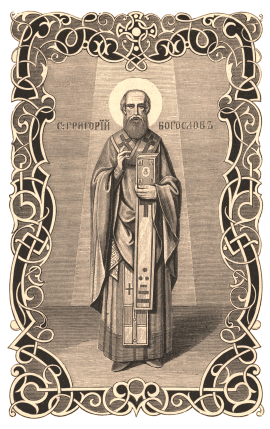
Православная Церковь называет св. Григория Богословом вторым и таинником, светлым прописателем Троицы, у которого и вид честен, и зрак благоговейный, – «лицо смиренно, бледно, брови возвышенные и густые, взор кроткий, брада не длинная, но густая и широкая».
The Orthodox Church calls St. Gregory the second Theologian and initiate, the bright proclaimer of the Trinity, whose appearance is honorable and countenance reverent—"a face humble, pale, eyebrows raised and thick, a meek gaze, a beard not long but thick and broad."