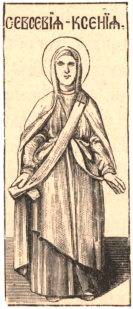
В старом Риме был знаменитый сенатор и добрый христианин. У него была одна дочь – Евсевия, дорогая для него, как глаз248. Когда достигла она возраста, вельможа и сенатор просил родителей Евсевии выдать дочь за сына его. После семейного совета, обручили Евсевию с благородным юношей, равным ей по знатности рода и богатству. Назначен был и день для брака. Но девушка, полная святой любви, желала уневеститься Небесному Жениху, Христу Господу. Это желание скрывала она от родителей, так как знала, что если бы узнали они о её намерении никак не допустили бы исполниться желанно её. Она была у них одна наследница богатства их, и они желали иметь утешение во внуках. У Евсевии были две верные служанки, жившие при ней с детского её возраста, усердные и преданные ей. Им открыла она свою душу; получив от них обещание быть верными ей до смерти, она сказала, что ни за что не согласится она вступить в брак. «Что жизнь земная? – говорила она, – сон и мечты». Так все три девушки решились жить для одного Господа, в чистоте девственной.
In old Rome there was a famous senator and good Christian. He had one daughter, Eusebia, as dear to him as the apple of his eye248. When she reached the proper age, a nobleman and senator asked Eusebia's parents to give their daughter in marriage to his son. After a family council, they betrothed Eusebia to a noble youth, equal to her in rank of birth and wealth. The day for the wedding was also appointed. But the maiden, full of holy love, desired to be betrothed to the Heavenly Bridegroom, Christ the Lord. This desire she concealed from her parents, for she knew that if they learned of her intention, they would by no means allow her wish to be fulfilled. She was their only heir to their wealth, and they wished to have the consolation of grandchildren. Eusebia had two faithful maidservants who had lived with her from her childhood, zealous and devoted to her. To them she opened her soul; having received from them a promise to be faithful to her unto death, she said that she would by no means consent to enter into marriage. "What is earthly life?" she said, "a dream and fantasies." So all three maidens resolved to live for the Lord alone, in virginal purity.
Евсевия тайно, через верных служанок, раздавала деньги бедным. Потом, все три, одевшись в мужскую одежду, тайно скрылись из Рима и на корабле прибыли в Александрию. Отселе переплыли на остров Ко, что в вёрстах 50 от Карийского города Галикарнаса. Здесь, наняв дом, Евсевия жила некоторое время со служанками как со своими сёстрами, взяв с них слово никому не говорить, кто она, и называть её не иначе, как Ксенией. Я – странница для Господа, говорила она. Состояние их на острове казалось им небезопасным: не видя ни в ком защиты, они опасались всего более за чистоту свою249. Но Господь послал им помощь по их молитве.
Eusebia secretly, through her faithful maidservants, distributed money to the poor. Then, all three, having dressed themselves in men's clothing, secretly fled from Rome and arrived by ship in Alexandria. From there they sailed to the island of Cos, which is about 50 versts from the Carian city of Halicarnassus. Here, having rented a house, Eusebia lived for some time with her maidservants as with her sisters, having taken from them a promise to tell no one who she was, and to call her nothing other than Xenia. "I am a stranger for the Lord," she said. Their situation on the island seemed unsafe to them: seeing no one's protection, they feared most of all for their purity249. But the Lord sent them help according to their prayer.
Раз встретилась Евсевия со стариком-странником почтенного вида и просила его принять её и сестёр в духовных дочерей; «я думаю, – прибавила она, – что ты – епископ Божий». Старец спросил, кто они? «Мы из далёкой страны, – отвечала Ксения, – и ищем одного – спасения души».
Once Eusebia met an old wanderer of venerable appearance and asked him to accept her and her sisters as spiritual daughters; "I think," she added, "that you are a bishop of God." The elder asked who they were. "We are from a distant country," answered Xenia, "and we seek one thing—the salvation of our souls."
– Поверьте мне, сказал старец, я сам странник, иду из святой земли; я не епископ, а настоятель обители св. Апостола Андрея, что в Карийском городе Миласе. Ксения умоляла старца взять их с собою и укрыть своей защитой от искушений. Старец согласился. В Миласе, вблизи соборного храма, Евсевия купила дом, устроила небольшой храм, во имя архидиакона Стефана и составила общину дев. Блаженный старец Павел усердно заботился о новой общине и постриг в монашество Ксению и её подруг250.
– Believe me, said the elder, I myself am a wanderer, coming from the Holy Land; I am not a bishop, but the abbot of the monastery of the Holy Apostle Andrew, which is in the Carian city of Mylasa. Xenia implored the elder to take them with him and shelter them with his protection from temptations. The elder agreed. In Mylasa, near the cathedral church, Eusebia bought a house, built a small church in the name of the Archdeacon Stephen, and formed a community of virgins. The blessed elder Paul zealously cared for the new community and tonsured Xenia and her companions into monasticism250.
Спустя недолгое время, почил епископ Миласа Кирилл, и на его место поставлен был игумен Андреевой обители Павел. Новый епископ, посетив общину Ксении, поставил Ксению в диакониссы, против её желания. Жизнь её была высокая. Она принимала пищу через день, через два, а иногда через неделю, и только один хлеб; она не касалась даже овощей, ни масла. Помня Давидовы слова: пепел яко хлеб ядях и питие*мое с плачем растворях*, и она посыпала хлеб свой пеплом и окропляла его слезами. Недовольная молитвами храма, она всю ночь стояла на молитве в своей келье, с поднятыми к небу руками. Это скрывала она; но подруги её, ревнуя подражать подвигам её, видели это своими глазами. Одежда на ней была самая плохая. Строгая к себе самой, она была весьма милосердна ко всем, тиха, добра к сёстрам, внимательна и к малым их надобностям; никому не говорила она слова жёсткого, согрешавших вразумляла с кроткой любовью. Блаженная подвижница совершала свои подвиги и под влиянием высокой жизни Палестинского подвижника, преподобного Евфимия, тогда как императрица Евдокия путешествовала к святым местам251. Блаженный Павел рассказывал ей о Евфимии, как очевидец его.
After a short time, Cyril, the bishop of Mylasa, reposed, and in his place was appointed Paul, the abbot of the monastery of the Holy Apostle Andrew. The new bishop, having visited Xenia's community, appointed Xenia a deaconess, against her will. Her life was sublime. She took food every other day, every two days, and sometimes after a week, and only bread; she did not touch even vegetables or oil. Remembering the words of David: I have eaten ashes like bread and mingled my drink with weeping, she also sprinkled her bread with ashes and moistened it with tears. Not content with the prayers of the church, she stood all night in prayer in her cell, with her hands raised to heaven. This she concealed; but her companions, zealous to imitate her struggles, saw this with their own eyes. Her clothing was the poorest. Strict with herself, she was very merciful to all, gentle and kind to the sisters, attentive even to their small needs; she spoke a harsh word to no one, admonishing those who sinned with meek love. The blessed ascetic performed her struggles also under the influence of the sublime life of the Palestinian ascetic, the Venerable Euthymius, at the time when the Empress Eudocia was traveling to the holy places251. Blessed Paul told her about Euthymius, as an eyewitness of him.
«Когда приблизилась кончина высокой девственницы, настала тогда память св. Ефрема, епископа Милосского, и блаженный епископ Павел со всем клиром отправился в село Левкин, где в храме лежали мощи св. Ефрема». Преподобная Ксения, созвав сестёр в монастырский храм, сказала им: «вы оказывали много любви ко мне, сёстры; продолжите и ещё любовь вашу, молитесь за меня, – я умираю; попросите и отца нашего епископа Павла молиться за меня; он так много заботился о душе моей». Сестры зарыдали. Она продолжала: «Апостол Пётр говорит: не коснит Господь обетования, якоже нецыи коснение мнят, но долготерпит на нас, не хотя, да кто погибнет, но да вcuв покаяние приидут (2Пет.3:9–10). Итак, не надобно лениться, а надобно бодрствовать. Бодрствуйте, сёстры, готовьтесь встретить жениха Господа с елеем добрых дел и с горящей любовью». Отпустив сестёр, осталась она в храме на молитве и наутро найдена была почившей, января 24 числа. Епископ и весь город с честью положили тело её на месте, указанном ею. Через год умерла одна подруга жизни её; пред смертью другой упросили сёстры эту подругу рассказать, кто такова была Ксения. Теперь только узнали в обители и в городе, какого высокого рода была Евсевия. При гробе великой подвижницы, почившей не позже 457 года, совершались исцеления больных во славу Божию252.
"When the end of the sublime virgin drew near, the commemoration of St. Ephraim, Bishop of Mylasa, occurred, and the blessed Bishop Paul with all the clergy set out for the village of Leukai, where the relics of St. Ephraim lay in a church." The Venerable Xenia, having summoned the sisters to the monastery church, said to them: "You have shown much love to me, sisters; continue your love still more, pray for me—I am dying; ask also our father Bishop Paul to pray for me; he has cared so much for my soul." The sisters burst into tears. She continued: "The Apostle Peter says: The Lord is not slack concerning His promise, as some count slackness, but is longsuffering toward us, not willing that any should perish, but that all should come to repentance (2 Pet. 3:9–10). Therefore, one must not be slothful, but must watch. Watch, sisters, prepare to meet the Bridegroom the Lord with the oil of good works and with burning love." Having dismissed the sisters, she remained in the church in prayer, and in the morning was found reposed, on January 24. The bishop and the whole city honorably placed her body in the place she had indicated. A year later, one companion of her life died; before the death of another, the sisters begged this companion to tell who Xenia was. Only then did they learn in the monastery and in the city of how high a lineage Eusebia was. At the tomb of the great ascetic, who reposed no later than 457 A.D., healings of the sick were performed to the glory of God252.
Св. Григорию беседователю, после того, как рассказано было о кончине чистой девы в день, назначенный Богоматерью, предложен был вопрос: призываются ли на небо души праведных прежде соединения их с телами? Св. Григорий отвечал: «не обо всех праведных можем утверждать это и не обо всех отвергать. Апостол Павел желал разрешиться и быть с Христом. Итак, кто верит, что Христос на небе, тот верит и тому, что душа Павлова на небе со Христом»253. И видел я, говорит тайнозритель, престолы и сидящих на них: и дано было им судить: и души обезглавленных за свидетельство Иисуса и за слово Божие... Они ожили и царствовали с Христом тысячу лет (Откр.20:4). Ожившие называются здесь душами; ясно, что это души ещё не соединившиеся с телами. И однако они царствуют с Христом, не только наслаждаются блаженством, но ещё участвуют в царственной власти Христа Господа, или, что то же, совершают дела могущества Божия, чудеса. С другой стороны, Спаситель сказал: в дому Отца Моего обители многи суть (Ин.14:2). Этим ясно означено, что не все праведные души находятся в одинаковом блаженном состоянии, не все одинаково близки к Господу, различаясь степенями и видами нравственного совершенства. «Однажды пришла мне такая мысль, – рассказывал авва Афанасий, игумен лавры св. Саввы, – что̀ будет с теми, которые не подвизаются? Я впал как бы в исступление. В это время некто говорит мне: иди за мною. Приведши в одно место, исполненное света, поставил у двери; вида сей двери изобразить нельзя; только за нею мы слышали неисчислимое множество хвалящих Бога. Когда постучались мы, то, услышав некто внутри, спросил нас: что вам нужно? Проводник мой отвечал: „мы желаем войти“. Но тот отвечал: „сюда не войдёт никто из тех, которые нерадиво живут; если хотите войти, идите и подвизайтесь, не озабочиваясь суетами мира“»254.
St. Gregory the Dialogist, after the account of the death of the pure maiden on the day appointed by the Mother of God, was asked the question: are the souls of the righteous received into heaven before their reunion with their bodies? St. Gregory answered: "We cannot affirm this concerning all the righteous, nor deny it concerning all. The Apostle Paul desired to depart and be with Christ. Therefore, whoever believes that Christ is in heaven also believes that the soul of Paul is in heaven with Christ"253. And I saw, says the seer of mysteries, thrones, and they sat upon them, and judgment was given unto them: and the souls of them that were beheaded for the witness of Jesus, and for the word of God... And they lived and reigned with Christ a thousand years (Rev. 20:4). Those who lived are here called souls; it is clear that these are souls not yet united with bodies. And yet they reign with Christ, not only enjoying blessedness, but also participating in the kingly authority of Christ the Lord, or, what is the same, performing works of the power of God, miracles. On the other hand, the Savior said: In My Father's house are many mansions (Jn. 14:2). By this it is clearly indicated that not all righteous souls are in the same blessed state, not all are equally close to the Lord, differing in degrees and kinds of moral perfection. "Once such a thought came to me," related Abba Athanasius, abbot of the Lavra of St. Sabbas, "what will become of those who do not struggle? I fell into a kind of ecstasy. At that time someone said to me: come after me. Having led me to a place filled with light, he placed me at a door; the appearance of this door cannot be described; only behind it we heard an innumerable multitude praising God. When we knocked, someone inside, having heard us, asked us: what do you need? My guide answered: 'We wish to enter.' But he answered: 'No one who lives carelessly shall enter here; if you wish to enter, go and struggle, not being preoccupied with the vanities of the world'"254.