«Дитя моё, дитя моё, от пелен осиротевшее, о сиротстве прежде чем об отце своём узнавшее, но и в сиротстве – не сирота, потому что отец у тебя есть – Христос, обогативший тебя дарами! От меня ты рождён плотию, духовную же жизнь ты принял от Небесного Отца. Молю тебя, сын мой, будь Ему сыном, служи Ему Одному, всю надежду возложи на Него Одного, потому что воистину в Нём всё спасение наше... Он сошёл с небес, чтобы возвести нас с Собою на небеса».
"My child, my child, orphaned from the cradle, who learned of orphanhood before knowing of your father, yet in orphanhood not an orphan, for you have a Father—Christ, Who has enriched you with gifts! By me you were born in the flesh, but the spiritual life you received from the Heavenly Father. I beseech you, my son, be a son unto Him, serve Him alone, place all your hope in Him alone, for truly in Him is all our salvation... He came down from heaven to raise us up with Himself to heaven."
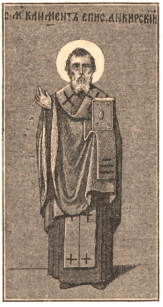
Так описывает св. Димитрий Ростовский предсмертную речь одной христианки III столетия к 12-летнему сыну её Клименту, христианское воспитание которого было единственной целью её жизни.
Thus does St. Demetrius of Rostov describe the dying speech of a Christian woman of the third century to her twelve-year-old son Clement, whose Christian upbringing was the sole aim of her life.
Так преисполнена была Боголюбивая мать этой заботой, что, чувствуя, что смерть скоро наложит молчание на уста её, она спешила в последние предсмертные минуты излить перед возлюбленным сыном всю любовь её к нему, всё попечение о душе его, все наставления для его дальнейшей земной жизни, все упования, которые должны были превратить их временную разлуку в вечное блаженное соединение...
So filled was the God-loving mother with this concern that, feeling death would soon silence her lips, she hastened in her last dying moments to pour out before her beloved son all her love for him, all her care for his soul, all the instructions for his further earthly life, all the hopes that were to transform their temporary separation into an eternal blessed reunion...
Полуотделившаяся уже от земных оков душа её прозирала светлую истину; самые тайны будущего открывались её созерцанию, и вот, как бы вдохновенная, продолжала она последнюю беседу с дитятей своим, которого воспитала «благочестием более, чем молоком из груди своей»...
Her soul, already half-loosed from earthly bonds, discerned the radiant truth; the very mysteries of the future opened to her contemplation, and thus, as if inspired, she continued her final conversation with her child, whom she had raised "more by piety than by the milk of her breast"...
– Послушай, сын мой! Неизбежно и близко лютое гонение на всех, исповедующих имя Христово... И ты предстанешь перед царями и властителями... Тогда, о, молю тебя я, мать твоя, воздай мне честью за любовь мою к тебе, и болезни, и труды ради тебя; предстань перед гонителями, во имя Христа, смело и мужественно! Будь непоколебим в исповедании Христа! Я уповаю, дитя моё, что скоро процветёт на тебе венец мученичества... Это будет славой моей и во спасение многих душ... Приготовь же сердце твоё к подвигу страдальческому, чтобы не застало тебя неготовым время подвигов... Не бойся, сын мой, временного страдания: скоро проходит скорбь, а радование – вечно! Будь, о, будь исповедником истины, да удостоюсь я быть матерью мученика, да прославлюсь в тебе, за Христа страждущем, и ради тебя да упокоюсь со святыми... Да не будет посрамлена моя надежда на тебя, но да спасусь я по слову Апостольскому: «деторождения ради»!.. Да пострадаю в тебе, как в моем истинном теле... Отдай его на изъязвление,.. и возвеселюсь я ранами твоими, как бы сама пострадавшая! Жена Еврейская семерых сынов своих предала на мученичество – за благочестие, и в семи телах детей своих одной душой своей пострадавшая – пребыла непобедимою; в тебе же одном – весь подвиг мой, вся слава моя! Телом отхожу я, но дух мой не отлучится от тебя, и с тобою вместе припаду я к престолу Христа и похвалюсь перед Ним твоими страданиями, и увенчаюсь подвигами сына моего: ведь и корень дерева под землёю орошается тою же росою, которой живут ветки его, видимые на земле!..
—Hearken, my son! Inevitable and near is the fierce persecution against all who confess the name of Christ... And you shall stand before kings and rulers... Then, O, I beseech you, I, your mother, render me honor for my love for you, and for the pangs and labors for your sake; stand before the persecutors, in the name of Christ, boldly and courageously! Be steadfast in the confession of Christ! I trust, my child, that soon the crown of martyrdom shall blossom upon you... This shall be my glory and for the salvation of many souls... Prepare then your heart for the feat of suffering, lest the time of feats overtake you unprepared... Fear not, my son, temporal suffering: soon does sorrow pass away, but joy is eternal! Be, O, be a confessor of the truth, that I may be deemed worthy to be the mother of a martyr, that I may be glorified in you, suffering for Christ's sake, and for your sake may I rest with the saints... Let not my hope in you be put to shame, but let me be saved according to the Apostle's word: 'for the sake of childbearing'!.. Let me suffer in you, as in my true body... Give it up to wounds,.. and I shall rejoice in your wounds, as though I myself had suffered! The Hebrew woman gave up her seven sons to martyrdom—for piety, and suffering in the seven bodies of her children with one soul—she remained unconquered; in you alone is all my feat, all my glory! In body I depart, but my spirit shall not be parted from you, and together with you I shall fall down before the throne of Christ and boast before Him of your sufferings, and be crowned with the feats of my son: for even the root of a tree underground is watered by the same dew by which its branches, visible above the earth, live!..
И, припадая к сыну своему и расточая нежнейшие прощальные приветы ему, умирающая мать сливала уже как бы в одно: желания свои и исполнение их и, воскликнув пророчески: «о, блаженная я теперь, что преклоняюсь к членам мученическим», она, припав к груди сына своего, предала Богу дух свой...
And, clinging to her son and bestowing the tenderest farewell greetings upon him, the dying mother already fused, as it were, into one: her desires and their fulfillment, and crying out prophetically: "O blessed am I now, that I bow down to the members of a martyr," she, falling upon the breast of her son, gave up her spirit to God...
Такой ли любви умереть? Христианка продолжала жить в сыне своём. В предсмертном завете, сосредоточившем всю её жизнь, всю любовь, она излилась, так сказать, перешла в душу своего сына, чтобы в нём продолжать любить Христа и принять страдания – полную чашу...
Could such love die? The Christian woman continued to live in her son. In the deathbed testament, which concentrated all her life, all her love, she poured herself out, so to speak, passed into the soul of her son, that in him she might continue to love Christ and receive sufferings—the full cup...
И не мог остаться без осуществления завет матери-христианки, любившей и воспитавшей сына своего по-христиански: он начертался в жизни сына её не короткими мгновениями или немногими днями, но двадцатью восемью годами страданий, которым, быть может, не было подобных в мире, особенно же по долговременности их...
And the testament of the Christian mother, who loved and raised her son in a Christian manner, could not remain unfulfilled: it was inscribed in the life of her son not in brief moments or a few days, but in twenty-eight years of sufferings, which perhaps had no equal in the world, especially in their duration...
Оставшись после матери своей, вдовы Евфросинии, одиноким сиротой, Климент был принят на попечение другом своей матери, богатой и благородной женщиной – по имени Софией, не имевшей своих детей. София была очень сострадательна. Во время голода, бывшего в Галатии, в г. Анкире, где жила она, некоторые язычники, не имея в то время средств прокормить детей своих, бросали их на произвол судьбы: Климент, продолжавший по смерти матери быть под хорошим влиянием, следовательно – христиански участливый, приводил этих брошенных детей в дом Софии; она пропитывала и одевала их: Климент во всём помогал ей; впоследствии учил этих детей и готовил их к крещению, так что дом Софии сделался как бы приютом бедности и воспитательным.
Having been left after the death of his mother, the widow Euphrosyne, a lonely orphan, Clement was taken into the care of a friend of his mother, a wealthy and noble woman named Sophia, who had no children of her own. Sophia was very compassionate. During a famine that occurred in Galatia, in the city of Ancyra where she lived, some pagans, having no means at that time to feed their children, abandoned them to their fate: Clement, who after his mother's death continued under good influence, and consequently was Christianly compassionate, brought these abandoned children into Sophia's house; she fed and clothed them: Clement helped her in everything; later he taught these children and prepared them for baptism, so that Sophia's house became, as it were, a shelter for the poor and a place of upbringing.
Такая деятельность и вообще чистая жизнь Климента возбудили к нему общее уважение. Едва достигнув 20-летнего возраста и, перейдя через низшие степени священства, он был избран в епископы.
Such activity and Clement's generally pure life aroused universal respect for him. Having scarcely reached the age of twenty and having passed through the lower degrees of the priesthood, he was chosen as bishop.
Теперь он стал учителем не одних детей, но уже целой паствы, и действовал с успехом, распространяя христианство и утверждая всех в добродетелях христианских.
Now he became a teacher not only of children, but of a whole flock, and he acted with success, spreading Christianity and confirming all in Christian virtues.
Но не замедлило исполнение предсмертного завета его матери... Началось гонение Диоклитианово. Одним из первых подвергся преследованию ревностный пастырь Климент. Неумолимы и жестоки были истязания над ним, но терпение его всё превышало. Мучители уставали мучить его и сменялись одни другими, Климент же, которого уже нельзя было узнать от ран (всё его тело, исстроганное железом до обнажённых внутренностей, было – одна сплошная рана...), в таком состоянии был брошен в темницу. Но Господь чудно исцелил его. Спустя несколько времени, решено было отправить Климента в Рим, где он снова был подвергнут истязаниям и тюремному заключению.
But the fulfillment of his mother's deathbed testament was not slow in coming... The Diocletian persecution began. The zealous shepherd Clement was among the first to be persecuted. Relentless and cruel were the tortures inflicted upon him, but his endurance surpassed everything. The tormentors grew weary of tormenting him and were replaced one after another, while Clement, who could no longer be recognized from his wounds (his whole body, scraped with iron down to the bare entrails, was one continuous wound...), in such a state was thrown into prison. But the Lord wondrously healed him. After some time, it was decided to send Clement to Rome, where he was again subjected to tortures and imprisonment.
Но Богу угодно было совершить над ним чудесные исцеления, между тем, народ, поражённый подвигами мученика и славой Божьих чудес над ним – во множестве обращался к Богу христианскому. Многие из обращённых приняли мученическую смерть.
But God was pleased to perform wondrous healings upon him; meanwhile, the people, struck by the feats of the martyr and the glory of God's miracles upon him, turned in great numbers to the Christian God. Many of the converted suffered a martyr's death.
Из Рима Климент был послан в Никомидию, где предан он был мучениям вместе с новокрещённым учеником своим Агафангелом; потом снова подвергли его мучениям в отечественном его городе Анкире; в Тарсе протомился он многие годы в темнице. Но никогда не изнемогал он душой; он как бы освоился со страданием, он желал даже страдать всё больше и больше, видя, как через страдания его умножается число христиан; чувствуя, как дивно Сам Господь поддерживает его в страданиях, на изобретение которых для него, казалось, изощрилась, но всё ещё не утолилась злоба людская.
From Rome Clement was sent to Nicomedia, where he was given over to torments together with his newly-baptized disciple Agathangelus; then he was again subjected to torments in his native city of Ancyra; in Tarsus he languished many years in prison. But he never grew faint in soul; he seemed to have become accustomed to suffering; he even desired to suffer more and more, seeing how through his sufferings the number of Christians increased; feeling how wondrously the Lord Himself sustained him in sufferings, for the invention of which human malice seemed to have sharpened itself, yet still remained unquenched.
По воцарении императора Максимина темничные смотрители напомнили городскому начальству о давнишних узниках – Клименте и Агафангеле. «Что делать с этими узниками? – спрашивали они, – много лет были они мучимы от разных властителей, но все живы и здоровы, и мы думаем, что не бессмертны ли уже они?»
Upon the accession of the Emperor Maximinus, the prison guards reminded the city authorities of the long-time prisoners—Clement and Agathangelus. "What is to be done with these prisoners?" they asked, "For many years they have been tormented by various rulers, yet they are all alive and well, and we think—are they not already immortal?"
По приказанию Максимина, св. Климент был отправлен на родину в г. Анкиру. Правитель здешний Луций велел отвести его в темницу и там ежедневно мучить его до смерти. В течение двух месяцев ежедневно били его по лицу и по голове острой, суковатой палкой, наносили ему по 150-ти ударов; весь пол темницы был залит кровью. Сами мучители удивлялись его непоколебимому терпению.
By order of Maximinus, St. Clement was sent to his native city of Ancyra. The local ruler, Lucius, ordered him to be taken to prison and there daily tormented to death. For two months, daily they beat him on the face and head with a sharp, knotty stick, inflicting 150 blows upon him; the entire floor of the prison was flooded with blood. The tormentors themselves marveled at his unshakable patience.
От одиннадцати мучителей пострадал таким образом св. Климент в продолжение 28-летних насильственных странствований его из города в город, из страны в страну. Наконец преисполнилась вожделенная чаша страданий, завещанная сыну христолюбивой матерью...
Thus did St. Clement suffer from eleven tormentors during twenty-eight years of forced wanderings from city to city, from country to country. At last the longed-for cup of sufferings, bequeathed to her son by the Christ-loving mother, was filled...
Однажды св. Климент, воспользовавшись приездом нового правителя города, в ночь на день Богоявление вышел из темницы и до 23 января оставался среди своей паствы, совершая Божественную службу и наставляя паству, которой в это время предсказал и о приближении своей смерти, и о прекращении гонений, и о торжестве христианства при благочестивом царе...
Once, St. Clement, taking advantage of the arrival of a new city ruler, went out of prison on the night before the day of Theophany and remained among his flock until January 23, celebrating the Divine service and instructing the flock, to whom at this time he also foretold the approach of his death, the cessation of persecutions, and the triumph of Christianity under a pious emperor...
23 же Января (312 г.) был он обезглавлен во время самого Богослужения и совершения бескровной жертвы, вместе с клириками своими, диаконами Христофором и Харитоном. Останки их были преданы погребению блаженной Софией.
On January 23 (A.D. 312), he was beheaded during the very Divine service and the offering of the bloodless sacrifice, together with his clergy, the deacons Christopher and Chariton. Their remains were committed to burial by the blessed Sophia.
Если не было другого примера такого пламенного рвения матери пострадать за Христа страданием сына своего, то не было примера и такого плодотворного и преизобильного осуществления подобного рвения...
If there was no other example of such fervent zeal of a mother to suffer for Christ through the suffering of her son, then there was no example of such fruitful and abundant fulfillment of such zeal either...
Многострадание св. Климента – неподражаемо, и чудеса, сотворённые им – обращения неверующих и самих мучителей своих, исцеления больных словом и возложением рук, и другие – неисчислимы.
The long-suffering of St. Clement is inimitable, and the miracles wrought by him—the conversion of unbelievers and even of his own tormentors, the healing of the sick by word and the laying on of hands, and others—are innumerable.
Мощи св. Климента были долго в Константинополе. Стефан Новгородец в 1342 году и иерод. Зосима в 1420 г. видели их в монастыре Константина в Царьграде. Глава же его в XIII стол. была перенесена Латинянами в Париж.
The relics of St. Clement were long in Constantinople. Stephen of Novgorod in 1342 and Hierodeacon Zosimas in 1420 saw them in the Monastery of Constantine in Constantinople. His head, however, was transferred by the Latins to Paris in the 13th century.
Жил в богатстве и в великом почёте; 20-ти лет был сенатором, в 375 г. консулом и потом правителем богатой области Кампании. Женился на благочестивой христианке, и её влиянию, равно как и содействию Амвросия, епископа Медиоланского, был обязан обращением своим в христианскую веру. Будучи 25-ти лет, принял св. крещение и с тех пор всецело предал себя Христу. Раздал имение своё бедным и уединился в Испании, в Пиренеях. Вскоре душа его подверглась тяжёлым испытаниям. Все прежние друзья восстали на него с укорами и насмешками. Сам воспитатель его, знаменитый Авзоний (поэт и оратор, учитель императора Грациана), упрекал его в своих письмах, что «он забыл долг перед отечеством, перед славой предков и перед наукой», но смиренный христианин твёрдо выдержал мирские искушения и почитал «блаженным оскорблением – не нравиться вместе с Христом».
He lived in wealth and great honor; at twenty years of age he was a senator, in 375 A.D. a consul, and afterwards governor of the wealthy region of Campania. He married a pious Christian woman, and to her influence, as well as to the assistance of Ambrose, Bishop of Milan, he owed his conversion to the Christian faith. Being twenty-five years old, he received holy Baptism and from that time wholly gave himself to Christ. He distributed his possessions to the poor and withdrew to Spain, into the Pyrenees. Soon his soul underwent severe trials. All his former friends rose up against him with reproaches and mockeries. Even his own tutor, the famous Ausonius (a poet and orator, teacher of the Emperor Gratian), reproached him in his letters, saying that "he had forgotten his duty to his fatherland, to the glory of his ancestors, and to learning," but the humble Christian firmly endured worldly temptations and considered it "a blessed insult—to be displeasing together with Christ."
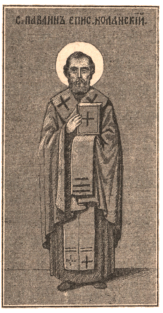
Жители Барселоны, видя в Павлине великий образец Христианского подвижничества, принудили его, вопреки его желанию, принять сан пресвитера. Тогда он удалился из Испании, посетил св. Амвросия Медиоланского и поселился в местечке Ноле в Кампании, близ церкви и мощей благоговейно чтимого им св. мученика Феликса. О жизни его здесь блаженный Августин в 392 г. писал ученику своему: «ступай в Кампанию, посмотри на Павлина, столько славного по роду, талантам и богатству. Подумай, с каким величием духа сей раб Иисуса Христа отказался от всего, чтобы только приобрести Бога. Посмотри, как отрёкся он величия света, чтобы обнять кротость креста. Посмотри, как он теперь обращает сокровища познаний во славу Божию, те сокровища, которые иначе были бы потеряны, если бы не посвятил он их Тому, Кто даровал их».
The inhabitants of Barcelona, seeing in Paulinus a great example of Christian asceticism, compelled him, against his will, to accept the rank of presbyter. Then he departed from Spain, visited St. Ambrose of Milan, and settled in the town of Nola in Campania, near the church and relics of the holy martyr Felix, whom he reverently venerated. Concerning his life there, Blessed Augustine in 392 A.D. wrote to his disciple: "Go to Campania, look upon Paulinus, so renowned for his lineage, talents, and wealth. Consider with what greatness of spirit this servant of Jesus Christ renounced everything in order to gain only God. See how he has denied the grandeur of the world, that he might embrace the meekness of the cross. See how he now turns the treasures of knowledge to the glory of God—those treasures which would otherwise have been lost, had he not dedicated them to Him Who bestowed them."
Здесь занимался св. Павлин украшением церквей иконописью. О св. иконах говорит, что он! – «превосходный способ учить вере и благочестию». «Кто видит изображение, получает понятие об истине изображённого, и через это изображение будет насыщать мысль свою верой».
Here St. Paulinus occupied himself with adorning churches with iconography. Concerning holy icons, he says that they are "an excellent means of teaching faith and piety." "Whoever sees the image receives an understanding of the truth of what is depicted, and through this image will nourish his thought with faith."
Он сочинял также высоко-поэтические церковные песни. Построил странноприимный дом, кельи для иноков. Углублялся в изучение истин веры; вёл переписку с современниками, замечательную по глубокому благочестию, которым проникнуты его письма. В 409 г. был поставлен епископом Ноланским.
He also composed highly poetic church hymns. He built a hospice and cells for monks. He delved deeply into the study of the truths of the faith; he carried on a correspondence with his contemporaries, remarkable for the deep piety with which his letters are imbued. In 409 A.D. he was appointed Bishop of Nola.
Ученик его Ураний так описывает пастырскую жизнь его: «он старался быть более предметом любви, чем страха; гнев не возмущал покоя души его: если надобно было показать строгость, он растворял её кротостью. Бедный не отходил от него без того, чтобы не быть выслушанным; для всех готов у него был отеческий совет, для всех нуждающихся готова помощь; щедрость его к бедным доводила его самого до бедности. Перед смертью, когда он уже приобщился св. таин, ему сказали, что за платье для бедных требуют 40 сребреников; он отвечал с улыбкой: будет заплачено, и через несколько часов присылают ему из другого места 50 сребреников. Павлин возблагодарил Бога, расплатился и мирно скончался в 431 г.»
His disciple Uranius thus describes his pastoral life: "He strove to be more an object of love than of fear; anger did not disturb the peace of his soul: if it was necessary to show severity, he tempered it with meekness. The poor man did not depart from him without being heard; for all he had a fatherly counsel ready, for all the needy, help was ready; his generosity to the poor brought him himself to poverty. Before his death, when he had already partaken of the Holy Mysteries, he was told that forty pieces of silver were required for clothing for the poor; he answered with a smile: it will be paid, and within a few hours fifty pieces of silver were sent to him from another place. Paulinus gave thanks to God, paid the debt, and peacefully reposed in 431 A.D."
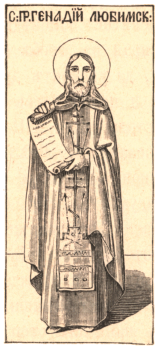
Сын богатых родителей юго-западной Руси, жителей Могилёва, Григорий, в иночестве Геннадий239, ещё в молодости почувствовал влечение служить Единому Господу: он соблюдал пост и усердно ходил в храм Божий. Родители, осуетясь жизнью, недовольны были такими поступками сына.
The son of wealthy parents from southwestern Rus', inhabitants of Mogilev, Gregory—in monasticism Gennadius239—even in his youth felt a drawing to serve the One Lord: he kept the fast and diligently attended the church of God. His parents, being caught up in worldly life, were displeased with such conduct of their son.
«К чему ты, – говорила мать его, – как церковник, то и дело ходишь в церковь? Ты стыдишь и срамишь нас». Григорий положил тайно оставить дом родительский. Сняв с себя богатую одежду, он отдал её нищему, а у него выпросил его рубище, и в этом рубище отправился к Москве. В дремучих лесах, на неизвестной дороге, молодому человеку пришлось испытать много разных тревог, между прочим и страха от зверей. В Москве обошёл он святые места её, поклонился угодникам Божьим и искал, но не нашёл, обители по духу своему. Встретив здесь Богобоязненного молодого человека, вместе с ним отправился на поклонение Новгородским угодникам и потом на р. Свирь к преп. Александру. Оба юноши просили св. старца принять их в обитель. Преподобный сказал: «ты, чадо Феодор (спутник Григория), будешь водить зверя белоглавого, а ты, чадо Григорий, пастырь словесных овец, иди в Комельский лес к Корнилию, и он наставит тебя на путь; у нас же в пустыни труды не по силам молодых людей».
"Why do you," his mother said, "like a churchman, keep going to church? You shame and disgrace us." Gregory resolved secretly to leave his parental home. Taking off his rich clothing, he gave it to a beggar, and from him begged his rags, and in these rags set out for Moscow. In the dense forests, on an unknown road, the young man had to experience many various anxieties, among them fear of wild beasts. In Moscow he visited its holy places, venerated the saints of God, and sought, but did not find, a monastery according to his spirit. Meeting there a God-fearing young man, together with him he set out to venerate the saints of Novgorod and then to the River Svir to the Venerable Alexander. Both youths asked the holy elder to receive them into his monastery. The Venerable One said: "You, child Theodore (the companion of Gregory), shall lead a white-headed beast, and you, child Gregory, shall be a shepherd of rational sheep; go to the Komel forest to Cornelius, and he will instruct you in the way; for in our wilderness the labors are beyond the strength of young men."
«Ты, чадо Григорий, – сказал Корнилий, – войди в эту убогую келью, а ты, Феодор, будешь иметь жену и детей». Сказанное отцами о Феодоре исполнилось. Григорий пострижен и с именем Геннадия удвоил подвиги свои. По случаю неприятностей, Геннадий вместе со старцем перешёл в Костромские леса, на Сурское озеро, и здесь, построив себе келью, жили оба отшельнически; выпросив себе земли у соседних жителей, сами пахали землю и рубили лес.
"You, child Gregory," said Cornelius, "enter this humble cell, and you, Theodore, shall have a wife and children." What was said by the fathers concerning Theodore came to pass. Gregory was tonsured and, with the name Gennadius, doubled his ascetic labors. On account of certain difficulties, Gennadius together with the elder moved to the Kostroma forests, to Lake Surskoye, and here, having built themselves a cell, they both lived as hermits; having begged land from the neighboring inhabitants, they themselves plowed the land and cut timber.
В 1529 году преподобный Корнилий возвратился в Комельскую обитель240; Геннадий с шестью подвижниками остался на Сурском озере. Болотистая местность заставляла много трудиться для неё, пустынники копали пруды. По просьбе преп. Корнилия, великий князь назначил для содержания пустыни отпускать хлеб. Число пустынников умножилось. Геннадий построил храм Преображения Господня и другой во имя преп. Сергия Радонежского. Преподобный подвизался неутомимо для братии и для Господа: на теле носил он тяжёлые вериги и делил с братией труды по обители, иногда рубил он дрова для братии и ночью разносил их по кельям; в другое время трудился в пекарне или пёк просфоры. Любимым занятием его было, по преданию, писание св. икон, и он своими трудами украшал свои храмы241. Известно наставление его, предложенное от имени духовного старца, новоначальному иноку242, драгоценное как плод духовной опытности и как картина древнего иноческого жития.
In 1529 the Venerable Cornelius returned to the Komel monastery240; Gennadius, with six ascetics, remained at Lake Surskoye. The marshy locality required much labor; the hermits dug ponds. At the request of the Venerable Cornelius, the Grand Prince appointed that grain be allotted for the support of the hermitage. The number of hermits increased. Gennadius built a church of the Transfiguration of the Lord and another in the name of the Venerable Sergius of Radonezh. The Venerable One labored tirelessly for the brethren and for the Lord: on his body he wore heavy chains and shared with the brethren the labors of the monastery; sometimes he chopped wood for the brethren and at night carried it to their cells; at other times he worked in the bakery or baked prosphora. His beloved occupation was, according to tradition, the writing of holy icons, and he adorned his churches with his own labors241. His instruction, given in the name of a spiritual elder, to a novice monk242, is known—precious as the fruit of spiritual experience and as a picture of ancient monastic life.
«Если пришёл ты, брат, ко мне немощному, грешному, грубому и ленивому рабу, грешному более всех в мире; если хочешь жить со мною грешным, по благословению настоятеля; если хочешь, брат, быть у Бога и отдаёшься в послушание для Господа; если хочешь наследовать Царство Небесное и подражать житью св. отцов, – я, грешный, окаянный и недостойный, – не творец делу, а слышал от св. отцов, как надобно жить иноку. Первое – надобно более всего любить Бога и брата своего, как себя. Отличия и преимущество жизни твоей, брат, таковы: не пещись тебе о суетном, ни о живых, ни о мёртвых, ни о своём теле, что есть и пить и чем одеться; не иметь ни золота, ни серебра, ни лошадей, ни работника, ни другого имущества; не держать у себя ничего, кроме необходимой одежды; из монастыря не ездить и не ходить; не пить ни мёда, ни пива, разве по нужде и то по благословению; не дружиться с мирянами ни в чём, не давать им, не брать и не просить у них, не принимать их в келью. Если кто из мирских захочет постричься или придёт старец или брат-странник, то по благословению позвать его в келью и говорить должное, а празднословия не допускать. К церковному пению ходить к началу и стоять со страхом до конца молитвы; если в силах, – не наклоняться к стене, ни к крылосу, не лежать на посохе, не говорить праздных слов; кто к чему призван, тем и занимайся. На всё наука; а церковь есть земное небо. Если стоим на молитве без страха, не оберегаемся празднословия и смеха, то больше прогневляем Бога. Надобно стоять, где поют, и внимать чтению и пению. До обеда, брат, и после эфимона не есть и не пить; от молитвы не уходить для пития воды; пить, пока не начали молитвы.
"If you have come, brother, to me, a weak, sinful, coarse, and lazy servant, more sinful than all in the world; if you wish to live with me a sinner, with the blessing of the superior; if you wish, brother, to be with God and give yourself up to obedience for the Lord's sake; if you wish to inherit the Kingdom of Heaven and imitate the life of the holy fathers—I, a sinful, wretched, and unworthy one—am not the doer of the work, but have heard from the holy fathers how a monk ought to live. First—you must above all love God and your brother as yourself. The distinctions and privileges of your life, brother, are these: do not be anxious about vain things, neither about the living nor the dead, nor about your own body—what to eat and drink and wherewith to be clothed; have neither gold nor silver, neither horses nor a servant, nor any other property; keep nothing for yourself except necessary clothing; do not travel or walk from the monastery; drink neither mead nor beer, except in necessity and then only with a blessing; do not make friends with laymen in anything, do not give to them, do not take from them, nor ask of them, nor receive them into your cell. If any of the worldly wishes to be tonsured, or if an elder or a wandering brother comes, then with a blessing call him into the cell and speak what is fitting, but allow no idle talk. Go to the church singing from the beginning and stand with fear until the end of the prayer; if you are able, do not lean against the wall nor against the choir-stall, do not lean on your staff, do not speak idle words; let each be occupied with that to which he is called. For everything there is a discipline; and the church is an earthly heaven. If we stand in prayer without fear, and do not guard ourselves from idle talk and laughter, we anger God the more. You must stand where they sing, and attend to the reading and singing. Before dinner, brother, and after the evening office, do not eat or drink; do not leave prayer to drink water; drink before the prayers have begun.
Если на молитве придёт немощь телесная, или некоторая нужда, то по благословению можно выйти, но сказать мне, почему выходишь. Если не услышишь призыва к молитве или, стоя на молитве, не поспеешь к началу, взять прощение в том; а к чему спеешь, по окончании пения прочитать то и потом выполнять келейное правило. Стоя на молитве с братией, „Господи, помилуй“, в одно слово с тем, с кем сряду, – поклон класть также вместе с ним, – ибо так велит чин... После литургии идти из церкви за панагией после братии, а не в ряду, и говорить псалом 144; если же проговорил его в келье, то говори молитву Иисусову. Из трапезы идти в келью также за панагией, после братии, одному за другим, в молчании; на монастыре не оставаться, идя в церковь, или в трапезу, ни у дверей или окна старца или брата не стоять. Если у тебя есть дело до старца или брата, – иди к нему в келью после обеда или после вечерни, по благословению, но скажи мне, зачем идёшь.
If during prayer bodily weakness or some need comes upon you, you may go out with a blessing, but tell me why you go out. If you do not hear the call to prayer, or, standing at prayer, you do not arrive at the beginning, ask forgiveness for it; and for what you do arrive in time for, after the singing is finished read that portion, and then fulfill the cell rule. Standing at prayer with the brethren, say 'Lord, have mercy' in one word with him who is next to you, and make a prostration also together with him—for so the order commands... After the Divine Liturgy, go from the church for the Panagia after the brethren, not in the row, and say Psalm 144; if you have already said it in your cell, say the Jesus Prayer. From the refectory go to your cell also for the Panagia, after the brethren, one after another, in silence; do not linger in the monastery courtyard when going to church or to the refectory, nor stand at the door or window of an elder or brother. If you have business with an elder or brother, go to his cell after dinner or after Vespers, with a blessing, but tell me why you are going."
Придя после молитвенного пения в келью или после обеда или ужина, должен ты положить 12 поклонов, также за умершего брата; если же такой день, когда не положены поклоны, – то до пояса. Рукодельем занимайся, брат, на монастырь, по силе, сколько можешь, для спасения своего; а на себя или на иного кого не работай и не продавай никому и не нанимайся у мирянина или брата. Если же кому придёт особенная нужда, и захочешь послужить брату, то по благословению можешь. Торговлей не заниматься ни с кем, не продавать и не покупать, не брать у брата и не давать ему. К молодым братиям не приставать и не дружиться с ними. Без благословения не выходить из монастыря и не бродить поздно, не вести пустых бесед, сидя или стоя на монастыре или за монастырём, и не ходить по монастырю без нужды. В келье, брат, также не должно быть празднословия, ни споров, ни гнева не держи в сердце; если же что имеешь против брата, то со смирением скажи о том и примирись с ним. Если услышишь от старца или брата о моём невежестве, то Бога ради сказывай мне о том наедине в келье, без стыда, – я глуп и безумен. Чужих вещей не бери на хранение. Что между нами бывает в келье, того из кельи не выноси; но если что увидишь или услышишь худое вне кельи, того не вноси в келью. Знай только церковь и трапезу да свою келью.
When you come to your cell after prayerful singing, or after dinner or supper, you must make 12 prostrations, likewise for a departed brother; but if it is a day when prostrations are not prescribed, then make them to the waist. Engage in handiwork, brother, for the monastery, according to your strength, as much as you are able, for your own salvation; but do not work for yourself or for anyone else, and do not sell to anyone, and do not hire yourself out to a layman or a brother. If, however, someone has a particular need, and you wish to serve a brother, you may do so with a blessing. Do not engage in trade with anyone, neither sell nor buy, neither take from a brother nor give to him. Do not attach yourself to the younger brethren nor become friends with them. Without a blessing, do not go out of the monastery and do not wander about late, do not engage in idle conversations, sitting or standing in the monastery or outside the monastery, and do not walk about the monastery without need. In the cell, brother, there must likewise be no idle talk, nor disputes, nor keep anger in your heart; but if you have something against a brother, speak of it with humility and be reconciled with him. If you hear from an elder or a brother about my ignorance, then for God's sake tell me of it privately in the cell, without shame—for I am foolish and senseless. Do not take other people's things for safekeeping. What passes between us in the cell, do not carry out of the cell; but if you see or hear something evil outside the cell, do not bring it into the cell. Know only the church and the refectory and your own cell.
Какую работу поручат, или какую одежду дадут, ту и бери. Какую пищу и питье поставят на трапезе, ту и вкушай и пей. Не ропщи ни на что, для Бога, помни жития св. отцов... Сказано: многими скорбями подобает в Царство Небесное внити (Деян.14:22).
Whatever work is assigned to you, or whatever clothing is given you, take that. Whatever food and drink are set before you at the refectory, eat and drink that. Murmur at nothing, for God's sake; remember the lives of the holy fathers... It is said: Through many tribulations we must enter the Kingdom of Heaven (Acts 14:22).
Но ты, господин брат, знаешь более меня... Чем потешит тебя служащий или старец, то ешь и пей, не рассуждая... Если за обедом или ужином понездоровится тебе и тебе не хочется есть то, что едят другие, а служащий брат спросит: не хочешь ли того или другого, – отвечай ему со смирением: воля Божия и твоя да будет; но сам не проси... Если ты здоров телом, после всенощной и утрени не спи; если вчерашний день был на монастырском труде, после утрени усни, а после всенощной не ложись, – на всё опыт, – от того бывает искушение; трудись в молитве и в чтении книг, если не умеешь грамоте – в рукоделии... Если берёт тебя дремота и леность, борись Бога ради; если не можешь отогнать сна, прими благословение и иди в поварню или хлебную и, что велят, послужи в том... В правиле келейном и церковном не ослабевай, за исключением великой нужды, да испытанный венец приимешь, который уготова Бог любящим Его (Иак.1:12). Если упал как-нибудь, не лги. Брата не осуждай за недостаток и не радуйся, чтобы самому не впасть в то же, или в иную сеть неприязненную. Таков союз любви. Без него не совершается никакая добродетель. Если придёт тебе скорбь от кого, вини себя и терпи для Небесного Царствия. Если кто унизит тебя, или укорит и досадит, или возведёт что на тебя, или причинит великое зло, возверзи на Господа печаль твою (Пс.54:23), – сам не брани; сам ты не должен досаждать другому, ни гневаться, ни помнить зла, ни завидовать. Такова любовь Божья. Господь сказал: любите враги ваша, добро творите ненавидящим вас и молитеся за творящая вам напасть и изгоняющая вас (Мф.5:44)... Если найдёт уныние до обеда, когда занимаешься рукоделием, или учишь наизусть или читаешь книгу, то стань на молитву; если не сможешь победить уныния, приняв благословение, иди в поварню или пекарню, и там по благословению послужи с молитвой, любовью и молчанием. Если найдёт уныние после обеда или после вечерни, читай книги или иди к старцу, которому особенно доверяешь, посиди у него, и зачем пришёл, скажи без празднословия, только бездельным не будь.
But you, lord brother, know more than I... Whatever the serving brother or the elder offers to cheer you, eat and drink that, without questioning... If at dinner or supper you feel unwell and do not wish to eat what others are eating, and the serving brother asks: "Would you like this or that?"—answer him with humility: "May the will of God and yours be done"; but do not ask for anything yourself... If you are healthy in body, do not sleep after the All-night Vigil and Matins; if the previous day you were engaged in monastic labor, sleep after Matins, but after the All-night Vigil do not lie down—in all things there is experience; from this comes temptation; labor in prayer and in reading books; if you do not know letters, then in handiwork... If drowsiness and laziness overcome you, struggle for God's sake; if you cannot drive off sleep, receive a blessing and go to the kitchen or the bakery, and whatever they bid you, serve in that... Do not grow slack in the rule of the cell and the church, except for great need, that you may receive the tested crown which God has promised to those who love Him (Jas. 1:12). If you have fallen in any way, do not lie. Do not judge a brother for a fault, and do not rejoice, lest you yourself fall into the same thing, or into another snare of the enemy. Such is the bond of love. Without it no virtue is accomplished. If sorrow comes to you from someone, blame yourself and endure for the sake of the Heavenly Kingdom. If someone humiliates you, or reproaches and vexes you, or brings a charge against you, or does you great evil, cast thy care upon the Lord (Ps. 54:23)—do not yourself revile; you yourself must not vex another, nor be angry, nor bear a grudge, nor envy. Such is the love of God. The Lord said: Love your enemies, do good to them that hate you, and pray for them that despitefully use you and persecute you (Mt. 5:44)... If despondency comes upon you before dinner, when you are occupied with handiwork, or learning by heart, or reading a book, then stand up for prayer; if you cannot overcome the despondency, having received a blessing, go to the kitchen or the bakery, and there, with a blessing, serve with prayer, love, and silence. If despondency comes after dinner or after Vespers, read books or go to the elder in whom you have particular trust, sit with him, and tell him why you have come without idle talk; only do not be idle.
Если приходит блудный помысл, или сонное мечтание, или плотское разжжение, то спасайся постом, слёзными молитвами, рукоделием, безмолвием, – трудись по силе с молитвой, но не твори своей воли. Если придёт ночное страхование, то стой на молитве неподвижно и, воздев руки, говори: Господи Иисусе Христе, Сыне Божий, помилуй мя грешного, помилуй мя создание Твое... Если находят скверные и хульные мысли, когда стоишь, или сидишь, или лежишь, или идёшь, – не обращай на них внимания, а молись Богу со смирением и усердием... С братиями живи ровно, не кажись очень хорошим. Если и по Боге жизнь твоя, но чтобы не оказалось имя твоё выше дел, будь в сердце твоём ниже всех, и человеколюбивый Бог избавит тебя от бесовского навета. Если сохранён ты Богом от телесной скверны, смотри, не плошай, – не считай себя в сердце праведником, а повторяй со смирением пророческое слово: в беззакониях зачат есмь и во гресех роди мя мати моя (Пс.50:7)».
If a lustful thought comes, or a nocturnal fantasy, or fleshly burning, then save yourself by fasting, tearful prayers, handiwork, silence—labor according to your strength with prayer, but do not do your own will. If nocturnal terror comes, then stand at prayer motionless and, raising your hands, say: "Lord Jesus Christ, Son of God, have mercy on me, a sinner; have mercy on me, Thy creature..." If foul and blasphemous thoughts come, whether you are standing, or sitting, or lying down, or walking—pay no attention to them, but pray to God with humility and fervor... Live evenly with the brethren; do not appear very good. Even if your life is according to God, lest your name be found above your deeds, be in your heart lower than all, and the merciful God will deliver you from the devil's wiles. If you have been preserved by God from bodily defilement, see that you do not grow careless—do not consider yourself righteous in your heart, but repeat with humility the prophetic word: Behold, I was conceived in iniquities, and in sins did my mother bear me (Ps. 50:7)."
Подвигами самоотречения и Богомыслия дух преп. Геннадия очистился до прозрения тайн будущего. В одно время случилось ему быть в Москве с двумя учениками своими и посетить дом боярыни Иулиании Феодоровны, жены Романа Юрьевича Захарьева. Благочестивая боярыня с любовью приняла его и просила благословить детей её: Даниила, Никиту и дщерь Анастасию. Преподобный, благословляя детей, сказал Анастасии «ты, ветвь прекрасная, плодовитая, будешь нам царицей». И Анастасия была супругой царя Грозного, супругой в самом лучшем значении. В 1549 году блаженный старец Геннадий был восприимным отцом первой дщери доброй Анастасии243. В одно время стоял он в придворной церкви, где много было боярских жён. Входит в храм бедная женщина с ребёнком на руке и с другим, которого вела за руку. Одна боярыня, взглянув на неё, сказала: «вот какой нищете даёт Бог детей; у нас есть чем кормить детей, а их нет». Старец сказал вслух: «не ропщите, боярыни! живите по-христиански, и будут у вас дети». Слова старца исполнились во всей точности, как для добрых христианок, так, и для забывчивых о вечности.
Through feats of self-denial and divine contemplation, the spirit of the Venerable Gennadius was purified even unto the discernment of the secrets of the future. On one occasion, he happened to be in Moscow with two of his disciples and visited the house of the boyarina Juliana Theodorovna, the wife of Roman Yurievich Zakharyev. The pious boyarina received him with love and asked him to bless her children: Daniel, Nikita, and her daughter Anastasia. The Venerable One, blessing the children, said to Anastasia: "You, beautiful and fruitful branch, shall be our tsaritsa." And Anastasia became the wife of Tsar the Terrible—a wife in the best sense of the word. In 1549, the blessed elder Gennadius was the godfather of the first daughter of the good Anastasia243. On one occasion, he was standing in the court church, where many boyars' wives were present. A poor woman entered the church with a child in her arms and another whom she led by the hand. One boyarina, glancing at her, said: "See how God gives children even to the destitute; we have the means to feed children, but they do not." The elder said aloud: "Murmur not, boyarinas! Live as Christians, and you shall have children." The elder's words were fulfilled in all exactness, both for good Christian women and for those forgetful of eternity.
Блаженный дал ему свой посох и – князь стал здоров. Домашний священник Василий, которому князь поручил доставить посох в дом, бросил посох в воду с гордым пренебрежением и – нашёл жену свою умершей, а сам стал болен. Почувствовав грех свой, дал он обет – постричься в обители Геннадия, и Геннадий с любовью принял его.
The blessed one gave him his staff, and the prince became well. The household priest Basil, whom the prince charged with delivering the staff to his home, threw the staff into the water with proud contempt—and found his wife dead, and himself fell ill. Perceiving his sin, he made a vow to be tonsured in the monastery of Gennadius, and Gennadius received him with love.
Вологодский и Пермский епископ Киприан также испытал на себе целебную силу преподобного, которого он любил и чтил. Он долго не вставал с постели, но по прибытии св. старца мог встать и вкушал с ним пищу. Когда же Киприан просил Геннадия, чтобы помолился о совершенном исцелении его, Геннадий отвечал: «нога твоя не исцелеет до конца жизни, она – учитель тебе о смерти». Киприан жил после того 5 лет244. Пред кончиной своей преп. Геннадий написал духовное завещание для своей обители.
Cyprian, Bishop of Vologda and Perm, also experienced the healing power of the Venerable One, whom he loved and honored. He had long been unable to rise from his bed, but upon the arrival of the holy elder he was able to rise and partook of food with him. When Cyprian asked Gennadius to pray for his complete healing, Gennadius answered: "Your foot will not be healed until the end of your life; it is a teacher to you concerning death." Cyprian lived for another five years after that244. Before his own end, the Venerable Gennadius wrote a spiritual testament for his monastery.
«Духовные братья мои и спостники! – говорил преподобный; – день мой склоняется к вечеру и секира у корня: иду к судилищу Христову. Для святой заповеди Господа не забывайте меня в молитвах! взирая на гроб мой, поминайте любовь мою и молитесь Христу, да упокоит дух мой с праведными. Дети мои! бойтесь Бога и повинуйтесь во всём наставникам вашим, по слову Апостола (Евр.13:17). Уважайте святителей, чтите царя православного. Все игумены обязаны повиноваться царю по духовной совести; а вы, братия, повинуйтесь со всей покорностью игумену, кому бы ни было поручено управление обителью Спаса. Особенно же прошу вас не выходить из сего места без благословения настоятеля, по вражде. Не спорьте брат с братом, а угождайте один другому; не творите дел тьмы; пусть жизнь ваша располагается по преданию св. отцов. Как написал отец наш Корнилий, так и должно быть всё в обители смирения нашего. Тебя, игумена Вассиана, прошу не оставлять обители своим усердием».
"My spiritual brothers and fellow ascetics!" said the Venerable One; "my day is declining toward evening and the axe is at the root: I go to the judgment seat of Christ. For the sake of the holy commandment of the Lord, forget me not in your prayers! Looking upon my grave, remember my love and pray to Christ, that He may grant rest to my spirit with the righteous. My children! Fear God and obey your instructors in all things, according to the word of the Apostle (Heb. 13:17). Honor the hierarchs, reverence the Orthodox Tsar. All abbots are obliged to obey the Tsar according to spiritual conscience; and you, brethren, obey with all submission the abbot, whosoever may be entrusted with the governance of the monastery of the Savior. Especially I entreat you: do not leave this place without the blessing of the superior, out of enmity. Let not brother contend with brother, but please one another; do not do the works of darkness; let your life be ordered according to the tradition of the holy fathers. As our father Cornelius wrote, so must everything be in the monastery of our humility. You, Abbot Bassian, I entreat not to abandon the monastery through lack of zeal."
«Братья мои и дети! не нарушайте ничем предания нашего. Не оставляйте собрания церковного. Первая мерзость в чернецах – не приходить в церковь, или придя смеяться, осуждать, а в келейной молитве быть ленивым. От сего слабеет тело и душа, и труд ваш пропадает. Лукавый сатана готов живым свести в ад чернеца. Прошу вас, спостники мои, не быть ленивыми в монастырских службах, не отягчаться трудами. Вы питаетесь трудами рук ваших. Не ропщите на настоятеля: ропщущий чернец унижает себя. Будьте внимательны к поучениям, возбуждайте ленивых, чтобы не уклонялись от службы Божией. Чернец, не приступавши к св. причастию в течение шести недель, уже не чернец. Не расхищайте ни орудия монастырского, ни хлеба, ни овощей не выносите за монастырь по своему произволу. Не держите пищи по кельям и не берите хлеба из трапезы, разве только по болезни. Пусть для всех одинаковая будет одежда и пища. Не объедайтесь и не упивайтесь на трапезе: это – мерзость пред Богом и болезнь плоти. Не ссорьтесь между собой: по учению писания, творящие вражду, хульники, клеветники не наследуют Царствия Божия. Нерадивые иноки близки к пучине ада. Праведные, мало потерпев и сохранив заповеди Божии, будут вечно радоваться. Христос вселяет единомысленных в дом Свой. Так, дети мои, старайтесь идти жёстким путём, сквозь тесные врата, чтобы получить вечную жизнь».
"My brothers and children! Do not violate our tradition in anything. Do not forsake the church assembly. The first abomination among monks is not to come to church, or having come, to laugh, to judge, and to be lazy in cell prayer. From this the body and soul grow weak, and your labor is lost. The crafty Satan is ready to lead a monk alive into hell. I entreat you, my fellow ascetics, be not lazy in the monastic services, be not burdened by labors. You are nourished by the labor of your hands. Murmur not against the superior: a murmuring monk humiliates himself. Be attentive to teachings, stir up the lazy, that they may not turn aside from the service of God. A monk who has not approached Holy Communion for six weeks is no longer a monk. Do not plunder the monastery's tools, nor carry out bread or vegetables beyond the monastery at your own will. Do not keep food in your cells, and do not take bread from the refectory, except only in case of illness. Let there be the same clothing and food for all. Do not eat to excess and do not get drunk at the refectory: this is an abomination before God and a sickness of the flesh. Do not quarrel among yourselves: according to the teaching of Scripture, those who cause enmity, revilers, slanderers shall not inherit the Kingdom of God. Negligent monks are near the abyss of hell. The righteous, having suffered a little and kept the commandments of God, shall rejoice eternally. Christ makes those who are of one mind to dwell in His house. So, my children, strive to walk the hard path, through the narrow gate, that you may obtain eternal life."
«Служителям обители и работающим заповедаю не гневаться, не ссориться, повиноваться во всём настоятелю, не оскорблять братию ни словом, ни делом, бережно хранить вещи обители, не касаться до чужого. Грех предаёт душу негасимому огню».
"To the servants of the monastery and to those who labor I command: be not angry, do not quarrel, obey the abbot in all things, do not offend the brethren either by word or deed, keep the possessions of the monastery with care, and touch not what belongs to another. Sin delivers the soul to the unquenchable fire."
«Дети мои! берегите себя от всего неразумного и другим напоминайте о наших словах. Трудитесь по послушаниям без ропота и волнения. Не будьте человекоугодниками, а работайте и заочно верно и правдиво. Не обижайте крестьян насилием. Не гордитесь посетителями; довольствуйтесь последним местом; не переносите ложных слов игумену и братии. Будьте поспешны в добре. Учитесь добру из св. Евангелия и Апостольских писаний. Приобретайте для обители книги, которые очищали бы ум ваш и умножали познания по учению св. отцов. Соблюдающей заповеди Божьи и веру Божью будет веселиться вечно».
"My children! Guard yourselves from all that is unwise, and remind others of our words. Labor in your obediences without murmuring or agitation. Be not men-pleasers, but work faithfully and truthfully even when unseen. Do not oppress the peasants with violence. Take no pride in visitors; be content with the last place; carry no false words to the abbot or the brethren. Be swift in doing good. Learn goodness from the holy Gospel and the Apostolic writings. Acquire for the monastery books that may purify your mind and increase your knowledge according to the teaching of the holy fathers. He who keeps the commandments of God and the faith of God shall rejoice eternally."
Блаженная кончина преподобного аввы Геннадия последовала 23 января 1565 года245. Мощи ого найдены нетленными при копании рвов для каменного храма в 1646 году, и ныне покоятся они в приделе сего храма, под спудом246. Но служба ему составлена была ранее того времени247.
The blessed repose of the Venerable Abba Gennadius occurred on January 23, 1565245. His relics were found incorrupt while digging trenches for a stone church in 1646, and now they rest in a side-chapel of that church, under the ground246. But a service to him had been composed before that time247.
Ркп. житие пр. Геннадия, опис. учеником его Алексием ок. 1585 г. в б-ке общ. ист. № 42, в Синод. б. № 929, в Импер. б. № 710. Извлечение из него в прологе 23 января. Житие пр. Геннадия, описанное учеником его Алексием – напеч. в Яросл. Епарх. Ведом. 1860 г. № 31. В прологе янв. 23, с некоторыми дополнениями. В поздней редакции жития сделаны ещё дополнения. В Имп. публичной б-ке № 710, кроме жития «наказание Геннадия».
Manuscript life of the Venerable Gennadius, described by his disciple Alexis around 1585, in the library of the Society of History, No. 42; in the Synodal Library, No. 929; in the Imperial Library, No. 710. An extract from it in the Prologue for January 23. The life of the Venerable Gennadius, described by his disciple Alexis, was printed in the Yaroslavl Diocesan Gazette, 1860, No. 31. In the Prologue for January 23, with some additions. In a later redaction of the life, further additions were made. In the Imperial Public Library, No. 710, besides the life, there is the "Instruction of Gennadius."
Наставление это напечатано по ркп. XVI и XVII века г. Невоструевым в материалах для истории церк. Харьков. 1862 г. в ркп. оно без имени сочинителя. Но Малорусские выражения, встречающиеся в нём – паробок, узимати*, чи*, вместе со временем списков, наставления, показывают, что оно принадлежит пр. Геннадию, уроженцу Могилёва.
This instruction was printed from manuscripts of the 16th and 17th centuries by Mr. Nevostruev in Materials for Church History, Kharkov, 1862. In the manuscripts it is without the name of the author. But the Little Russian expressions occurring in it—parobok, uzimati, chi—together with the time of the manuscripts of the instruction, show that it belongs to the Venerable Gennadius, a native of Mogilev.
По летописям Киприан, иначе Кириак, посвящён в январе 1547 г. и был на соборах 1547 и 1551 г. (Карамз. 8 пр. 197, 246. 9 пр. 87). В ист. иер. 1, 350 год кончины его не показан; а о преемнике его Иоасафе сказано, что упоминается в 1560, 1562, 1566 гг. Если Киприан скончался в 1659 г., то Геннадий был у него в 1555 г.
According to the chronicles, Cyprian, otherwise Cyriacus, was consecrated in January 1547 and was present at the councils of 1547 and 1551 (Karamzin, 8, notes 197, 246; 9, note 87). In History of the Hierarchy, 1, 350, the year of his death is not shown; and concerning his successor Joasaph, it is said that he is mentioned in 1560, 1562, and 1566. If Cyprian died in 1659, then Gennadius visited him in 1555.
Так показано время в ркп. житии и в прологе. Ркп. святцы «преп. Геннадий авва начальник монастыря, иже на Сурском озере, Костромской и Любимоградский чудотворец, преставися в л. 7073 (1565) месяца января в 23 день».
Thus the time is shown in the manuscript life and in the Prologue. Manuscript calendar: "The Venerable Gennadius, abba and founder of the monastery on Lake Sursk, wonderworker of Kostroma and Lyubimograd, reposed in the year 7073 (1565), on the 23rd day of January."