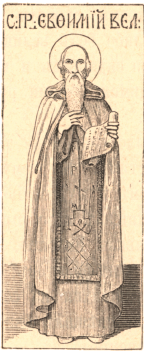
Евфимий Великий родился около 380 года в Мелитине, городе Никейской митрополии, от благочестивых и благородных родителей, по молитвам их, которые доселе были бесчадны, и назван Евфимий – Благодушный, по радости и утешению их о его рождении. В отрочестве он посвящён был Богу и отдан матерью на воспитание брату её, а от него принял Евфимия для воспитания епископ Мелитинский. Воспитанный в правилах добродетельной христианской жизни под отеческим попечением архипастыря Мелитинской церкви, Евфимий рукоположен был от него в чтеца и пресвитера. Ему поручено было старейшинство и попечение о монастырях того города, в котором он жил.
Euthymius the Great was born around the year 380 in Melitene, a city of the Nicene metropolis, to pious and noble parents, through their prayers, for they had until then been childless; and he was named Euthymius—Good-spirited—because of their joy and consolation at his birth. In his youth he was consecrated to God and given by his mother to her brother for upbringing, and from him the Bishop of Melitene received Euthymius for his education. Brought up in the rules of a virtuous Christian life under the paternal care of the chief shepherd of the Melitene Church, Euthymius was ordained by him as reader and presbyter. He was entrusted with the eldership and care of the monasteries of that city in which he lived.
Поэтому, любя иночество и безмолвие, он более пребывал в монастыре, соседнем городе, а на дни Великого поста уединялся в пустыню. Видя, что безмолвие его по обязанностям его звания нередко нарушается, Евфимий, 29 лет, тайно удалился с другом своим Феоктистом в пещеру Иерусалимской пустыни, принадлежавшей лавре Фаранской. Из своей пещеры они ежегодно 14 дня января удалялись в пустыню и возвращались в свои кельи на цветную неделю. Пребывая в пещере и пустыне, преподобные питались трудами рук своих и имели одно попечение – угодить Богу. Через пять лет два друга-инока переселились для высших подвигов благочестия почти в непроходимый места пустыни. Но в непродолжительное время и сии дикие места, прославленные подвигами Евфимия и Феоктиста, процвели благочестивым обществом, и под их руководством устроилась киновия. Преподобный Евфимий для всех пустынников был образом благочестия и врачом духовным: каждый из братий открывал пред ним совесть свою, исповедуя свои помышления.
Therefore, loving monasticism and silence, he dwelt mostly in a monastery neighboring the city, and during the days of Great Lent he withdrew into the wilderness. Seeing that his silence was often disturbed by the duties of his calling, Euthymius, at 29 years of age, secretly withdrew with his friend Theoctistus into a cave of the Jerusalem wilderness, which belonged to the Lavra of Pharan. From their cave they withdrew annually on January 14 into the wilderness and returned to their cells on Palm Sunday. Dwelling in the cave and the wilderness, the Venerable Ones nourished themselves by the labor of their hands and had but one care—to please God. After five years, the two monk-friends moved to almost impassable places of the wilderness for higher feats of piety. But in a short time even these wild places, glorified by the struggles of Euthymius and Theoctistus, blossomed into a pious community, and under their guidance a cenobium was established. For all the hermits, the Venerable Euthymius was an image of piety and a spiritual physician: each of the brethren opened his conscience before him, confessing his thoughts.
Учеников своих преп. Евфимий отечески исправлял учением и увещанием, наставлением и утешением. Он обыкновенно говорил им: «братие, для чего удалились вы от мира, для того и подвизайтесь! Не пренебрегайте своим спасением, но ежечасно будьте бодры, по слову Господню: бдите и молитеся, да не внидете в напасть (Мф.26:41)! Знайте, что отрёкшимся от мира и хотящим иночествовать надобно отречься своей воли, хранить во всём послушание, в уме иметь памятование о смерти и последнем суде. При внутреннем Богомыслии инокам надобно и телесно трудиться, а особенно юным, коим при тщательном хранении себя потребно и телесное удручение, чтобы плоть повиновалась духу. Да будем же подражателями Ап. Павлу, который трудился день и ночь, не только убегая праздности, но и служа трудами своими себе и иным: требованию моему, говорит он, и сущим со мною послужисте руци мои сии (Деян.20:34). Если мирские люди так много подъемлют трудов и страждут, непрестанно работая для пропитания жён и детей своих, и от труда своего и Богу приносят и милостыни творят по силе, и дани дают: нам ли не трудиться на потребу единого только тела нашего, дабы и праздности убегать, и чужих трудов не поядать, по заповеди Апостола: аще кто не хощет делати, ниже да яст (2Фес.3:10)». Назидаемые святыми наставлениями Евфимия, иноки, подвизаясь в вере и благочестии, творили плоды, достойные своего звания.
The Venerable Euthymius corrected his disciples paternally with teaching and admonition, instruction and consolation. He was accustomed to say to them: "Brethren, for what purpose have you withdrawn from the world? For that same purpose strive! Do not neglect your salvation, but be watchful every hour, according to the word of the Lord: Watch and pray, that ye enter not into temptation (Mt. 26:41)! Know that those who have renounced the world and wish to be monks must renounce their own will, keep obedience in all things, and have in mind the remembrance of death and the Last Judgment. Along with inner contemplation of God, monks must also labor bodily, especially the young, who, with careful guarding of themselves, also need bodily mortification, that the flesh may be subject to the spirit. Let us then be imitators of the Apostle Paul, who labored day and night, not only fleeing idleness but also serving himself and others by his labors: These hands have ministered unto my necessities, and to them that were with me (Acts 20:34). If worldly people endure so many labors and sufferings, working unceasingly for the sustenance of their wives and children, and from their labor they also offer to God and give alms according to their ability, and pay taxes—should we not labor for the needs of our body alone, both to flee idleness and not to eat the labors of others, according to the Apostle's commandment: If any would not work, neither should he eat (2 Thess. 3:10)?" Instructed by the holy teachings of Euthymius, the monks, striving in faith and piety, brought forth fruits worthy of their calling.
Особенно строг был Евфимий к самому себе. «Не дал еси, – воспевает Церковь в честь его, – сна очесем твоим, ниже веждом дремания, дóндеже душу и тело от страстей свободил еси, и себе уготовал еси Духа жилище». Один из учеников Евфимия говорит о нём: «мы никогда не видели его ядущим, кроме субботы и воскресного дня, ни беседующим с кем-либо без великой нужды, ни почивающим на боку, но всегда сидящим и мало дремлющим, иногда же стоящим и держащимся обеими руками за вервь, нарочно для того протяжённую».
Euthymius was especially strict with himself. "You did not give," the Church sings in his honor, "sleep to your eyes, nor slumber to your eyelids, until you had freed soul and body from passions, and prepared for yourself a dwelling place of the Spirit." One of Euthymius's disciples says of him: "We never saw him eating, except on Saturday and Sunday, nor conversing with anyone without great need, nor reclining on his side, but always sitting and sleeping but little, sometimes standing and holding with both hands a rope stretched on purpose for that."
Имя св. Евфимия было славно не только в Палестине, но и по окрестным областям. К нему притекали многие, ища спасения. Своим влиянием и мудростью он обратил ко Христу многих Сарацын; защищал веру против несториан, евтихиан, манихеев; исправил Евдокию, супругу Феодосия Младшего от заблуждения монофизитов; подкреплял в правой вере епископов, собиравшихся на соборы. «Всюду лучи чудес испущая, всех просвещал святый, и подобно магниту привлекал к своему учению».
The name of St. Euthymius was glorious not only in Palestine but also in the surrounding regions. Many flocked to him, seeking salvation. By his influence and wisdom he converted many Saracens to Christ; he defended the faith against Nestorians, Eutychians, and Manichaeans; he corrected Eudocia, the wife of Theodosius the Younger, from the error of the Monophysites; and he strengthened the bishops gathered for councils in the right faith. "Everywhere emitting rays of miracles, the saint enlightened all, and like a magnet drew them to his teaching."
Избегая славы человеческой и ища безмолвия, Евфимий часто удалялся из обители в пустынные места для безмолвия, сначала на время, а, наконец и совсем удалился в пустыню Зиф близ Мёртвого моря, предоставив настоятельство над монастырём Феоктисту. Но преп. Евфимий и на новом месте уединения недолго оставался один. Господь в видении открыл ему, чтобы он не возбранял желающим селиться кругом его и быть под его руководством. Таким образом образовалась новая лавра Евфимиева, в которой он жил до конца своей жизни и был славен как чудотворец и прозорливец ведавший человеческие помышления. В год своей смерти преп. Евфимий не пошёл, по обыкновению, в пустыню на время четыредесятницы и сказал братии: «я пробуду с вами первую седмицу, а в субботу в полночь отлучусь от вас»; – и точно в это время последовала его блаженная кончина. Отходя в жизнь вечную, преподобный завещал братии: «да не затворяются никогда врата монастырские для приходящих; да будут всегда отверсты странникам, и всё, что имеете, предлагайте нуждающимся, и так изобильное свыше благословение будет подаваться вам от Бога».
Fleeing human glory and seeking silence, Euthymius often withdrew from the monastery into desert places for silence, at first for a time, and finally he withdrew completely into the wilderness of Ziph near the Dead Sea, entrusting the abbacy of the monastery to Theoctistus. But the Venerable Euthymius did not remain alone for long even in his new place of solitude. The Lord revealed to him in a vision that he should not forbid those who wished to settle around him and be under his guidance. Thus a new Lavra of Euthymius was formed, in which he lived until the end of his life and was renowned as a wonderworker and a seer who knew human thoughts. In the year of his death, the Venerable Euthymius did not go, as was his custom, into the wilderness for the time of the Forty-day Fast, and said to the brethren: "I will remain with you the first week, and on Saturday at midnight I will depart from you"; and indeed at that time his blessed end occurred. Departing into eternal life, the Venerable One bequeathed to the brethren: "Let the gates of the monastery never be closed to those who come; let them always be open to strangers, and whatever you have, offer to the needy, and thus abundant blessing from on high will be given you from God."
Преп. Евфимий был нравом препрост, лицом красив, возраста среднего, сед, имел браду даже до колен; жил 97 лет и преставился в 477 году, 20 января. С того времени Церковь чтит преподобного и Богоносного отца нашего Евфимия Великого. По преставлению его, от его мощей совершились многие чудеса. Св. Дамаскин, Герман, Студит и Феофан написали многие песнопения на день св. Евфимия, ныне возносимые православной Церковью в этот день. Дамаскин написал канон в похвалу преподобного с краестрочием: «богатство явился еси земнородных, Евфимие». Священные чтения в день преподобного Евфимия те же, какие и в честь Антония Великого.
The Venerable Euthymius was of a most simple disposition, handsome in face, of medium stature, gray-haired, with a beard reaching to his knees; he lived 97 years and reposed in the year 477, on January 20. From that time the Church honors our Venerable and God-bearing Father Euthymius the Great. After his repose, many miracles were performed from his relics. Sts. Damascene, Germanus, the Studite, and Theophanes composed many hymns for the day of St. Euthymius, now offered up by the Orthodox Church on this day. Damascene wrote a canon in praise of the Venerable One with the acrostic: "Thou hast appeared as a treasure of the earthborn, O Euthymius." The sacred readings on the day of the Venerable Euthymius are the same as those in honor of Anthony the Great.
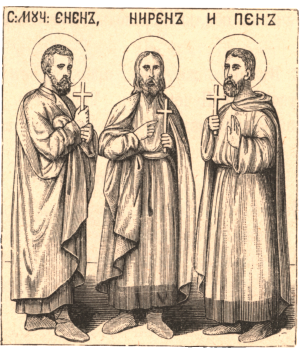
«Святые были из Скифии, из северной стороны, ученики святого Апостола Андрея. Они учили об имени Христовом и многих из варваров, обратив к правой вере, крестили. По этой причине были схвачены князем (παρα Αρχοντος) варваров, но не могли быть доведены до того, чтобы отречься от Христа и принести жертву идолам. Тогда стояла жестокая зима; реки скреплены были морозом так, что по льду ходили не только люди, но и кони, и возки. Князь приказал поставить в лёд большие брёвна как целые деревья и привязать к ним святых. Итак, когда вода взволновалась, и лёд постепенно умножался, так что дошёл до шеи святых, они, измученные страшной стужей, предали Господу блаженный свои души»209.
"The saints were from Scythia, from the northern side, disciples of the holy Apostle Andrew. They taught in the name of Christ and, converting many of the barbarians to the right faith, baptized them. For this reason they were seized by the prince (παρα Αρχοντος) of the barbarians, but could not be brought to renounce Christ and offer sacrifice to idols. At that time there was a severe winter; the rivers were frozen so hard that not only men but also horses and wagons walked on the ice. The prince ordered large logs, like whole trees, to be set in the ice and the saints to be bound to them. Then, when the water surged and the ice gradually increased, so that it reached the necks of the saints, they, tormented by the terrible cold, surrendered their blessed souls to the Lord."209
Буквальный славянский перевод этого сказания читается в Белградском синаксаре 1340 г. и в Сербском прологе XIII в.210. Здесь мученики называются Енен, Нирен и Пень.
A literal Slavonic translation of this account is read in the Belgrade Synaxarion of 1340 and in the Serbian Prologue of the 13th century.210 Here the martyrs are called Enen, Niren, and Pen.
Β Иеронимовом мартирологе под 20 января читается: «в Ниведуне мученическая кончина Тирса, Кириака, Геллиника». Итак, местом страданий мучеников был новый Дунаец, стоявший на берегу Дуная, в Малой Скифии, и имена мучеников, показанные в Греческом и Славянском известии, были народные, Славянские, тогда как по крещению страдальцы веры назывались иначе211.
In the Hieronymian Martyrology, under January 20, we read: "At Nividun, the martyrdom of Thyrsus, Cyriacus, and Gellinicus." Thus, the place of the martyrs' sufferings was the new Dunaets, which stood on the bank of the Danube, in Lesser Scythia, and the names of the martyrs given in the Greek and Slavonic accounts were native, Slavonic names, whereas after baptism the sufferers of the faith were called otherwise.211
Полагают, что страдальческая кончина мучеников была «где-то гораздо севернее Киева, но, во всяком случае, между Русскими Славянами»212. Но это – напрасно. Большая река, указываемая в повести о страдании, – известный Греку Дунай. С другой стороны, так как проповедники Скифы были ученики Ап. Андрея, то Скифию их надобно искать там, где проповедовал Ап. Андрей. В повествовании инока Епифания IX в. читаем: «Господь сказал Андрею: иди в Вифинию, Я с тобою, куда ни пойдёшь ты, – ещё и Скифия ожидает тебя. Когда Андрей сказал о том Иоанну, они простились: и Андрей, взяв учеников своих, пошёл в Лаодикию, а отселе в Мизию, в город Одиссос. Проведя здесь немного времени, поставил епископа Апиона»213. Последний по другим памятникам называется Амплием и претерпел мученическую смерть за Христа214. Одиссос, Аполлония и Месемврия у Птолемея215 и Страбона216 причисляются к Малой Скифии. По словам Плиния, страна, которой владели Скифы-земледельцы, простираясь от устьев Дуная к Фракии, заключала в себе «прекраснейшие города Дунаец, Томи (Кюстенджи), Калатис, Кроны»217. Итак, несомненно, что Ап. Андрей проповедовал в Малой Скифии и для неё поставил епископа. А с тем вместе, несомненно и то, что Скифия учеников его, продолжавших проповедь его в Скифии, есть та, которая лежит на правом берегу Дуная и по западному берегу Чёрного моря. Жившие здесь при Апостолах были и не Греки, и не Римляне. Их называли то Скифами, то Гетами, то Сарматами: собственно же это были Славяне, бодрые, воинственные, но занимавшиеся и земледелием. «Хочешь ли знать, что за народ Томитанской страны? – писал поэт Овидий, живший заточённым в Томах. – Хотя это смесь из Греков и Гетов, но жители вообще происходят от Гетов, из них большинство народонаселения. Разъезжают верхом туда и сюда, никого не встретишь без копья, лука и стрел; рука искусная в обладании мечом, висящим у всякого на боку. Весьма немного осталось следов Греческого языка, да и те, при Гетском произношении, стали варварскими. Я уже выучился говоритьпо-Гетски и по-Сарматски»218. Поэт, испорченный Римской роскошью, скучал, что «приезжают в Томы Сарматы со своими скрипучими возами, – тянут Сарматские быки возы варварские»219. Точное известие о жителях страны сообщают Моисей Хоренский и историк VII века Симокатта. Первый пишет, что во Фракии живут «семь Славянских племён»220. Симокатта говорит, что Славян, воевавших в VI веке с империей, в древнее время называли Гетами221. Христианство Малой Скифии уже знал Тертуллиан: «во Христа веруют, – писал он, – племена Гетов (varietates Getulorum), Сарматов и Скифов»222. Не говорим здесь о последующем времени223.
Some suppose that the martyrs’ suffering death took place “somewhere far north of Kiev, but, in any case, among the Russian Slavs”212. But this is in vain. The great river mentioned in the account of the passion is the Danube, well known to the Greeks. On the other hand, since the Scythian preachers were disciples of the Apostle Andrew, their Scythia must be sought where the Apostle Andrew preached. In the narrative of the monk Epiphanius of the ninth century we read: “The Lord said to Andrew: Go into Bithynia, I am with you, wherever you go—Scythia also awaits you. When Andrew told John of this, they took leave of one another; and Andrew, taking his disciples, went to Laodicea, and from there to Mysia, to the city of Odyssos. After spending a short time there, he appointed Apion as bishop”213. The latter, according to other monuments, is called Amplias and suffered a martyr’s death for Christ214. Odyssos, Apollonia, and Mesembria are reckoned by Ptolemy215 and Strabo216 as belonging to Lesser Scythia. According to Pliny, the country possessed by the Scythian farmers, extending from the mouths of the Danube toward Thrace, contained “the most beautiful cities: Dunajec, Tomi (Constanța), Callatis, and Croni”217. Thus, it is beyond doubt that the Apostle Andrew preached in Lesser Scythia and appointed a bishop for it. And together with this, it is also beyond doubt that the Scythia of his disciples, who continued his preaching in Scythia, is that which lies on the right bank of the Danube and along the western shore of the Black Sea. Those who lived here in apostolic times were neither Greeks nor Romans. They were called sometimes Scythians, sometimes Getae, sometimes Sarmatians; in reality, however, they were Slavs—vigorous, warlike, yet also engaged in agriculture. “Do you wish to know what kind of people inhabit the Tomitan land?” wrote the poet Ovid, who lived in exile in Tomi. “Although it is a mixture of Greeks and Getae, the inhabitants generally descend from the Getae, who form the majority of the population. They ride about on horseback here and there; you will meet no one without a spear, bow, and arrows; every man’s hand is skilled in wielding the sword that hangs at his side. Very few traces of the Greek language remain, and even these, with the Getic pronunciation, have become barbarous. I have already learned to speak Getic and Sarmatian”218. The poet, corrupted by Roman luxury, complained that “the Sarmatians come to Tomi with their creaking wagons—Sarmatian oxen drag the barbarian carts”219. Precise information about the inhabitants of the country is provided by Moses of Khoren and the seventh-century historian Simocatta. The former writes that in Thrace live “seven Slavic tribes”220. Simocatta says that the Slavs who warred with the empire in the sixth century were in ancient times called Getae221. Christianity in Lesser Scythia was already known to Tertullian: “The tribes of the Getae (varietates Getulorum), the Sarmatians, and the Scythians believe in Christ,” he wrote222. We shall not speak here of the subsequent period223.
Родом из Солуни, игуменья монастыря близ Иерусалима, бывшая образцом чистоты и христианского подвижничества, ревнительница веры против еретиков евтихиан, была уважаема царственными лицами и вела переписку с императрицей Пульхерией († 451 года).
A native of Thessalonica, abbess of a monastery near Jerusalem, she was a model of purity and Christian asceticism, a zealot for the faith against the Eutychian heretics. She was respected by royal persons and corresponded with the Empress Pulcheria († 451).
Народные имена страдальцев писались не одинаково. В Васильевом менологе: Ιννα, Ρημα καὶ Πιννα. В Белградском синаксаре 1340 года Енен (Инна), Нирин (Ирин, Рим) и Пень (Пинна). Нирин и Пень – понятны; не совсем понятен Енен.
The popular names of the sufferers were not written uniformly. In the Menologion of Basil: Ιννα, Ρημα καὶ Πιννα. In the Belgrade Synaxarion of 1340: Enen (Inna), Nirin (Irin, Rim), and Pen (Pinna). Nirin and Pen are understandable; Enen is not entirely clear.
VII, 6. Скимн Хиосский: «при подошве горы Эмоса (Балкан) гор. Месемврия, пограничный между Фракией и Гетиею» (Orbis descrip, v. 742–744) По словам Феофана, «Варна близ Одисса». Вблизи же Греческая колония Маркианополь, у Славян великая Преслава.
VII, 6. Scymnus of Chios: “at the foot of Mount Haemus (the Balkans) the city of Mesembria, on the border between Thrace and Getia” (Orbis descriptio, vv. 742–744). According to Theophanes, “Varna is near Odyssos.” Nearby also the Greek colony Marcianopolis, among the Slavs Great Preslav.
См. Ист. Рус. Ц. 1, 3. пр. 12. Даже для имп. Константина Славяне Стримонской области – Скифы (De provinciis). Но Никифор и Феофан, говоря о занятии Фракии Болгарами 678 г., называют жителей малой Скифии Славянами. «Перейдя реку (Дунай) достигают Вирны и соседнего Одиссоса, проходят серединные поля... покоряют жившие там племена Славян в числе семи». Stritteri Bulgarica р. 507, 508.
See Ist. Rus. Ts. 1, 3, note 12. Even for the Emperor Constantine, the Slavs of the Strymon region are Scythians (De provinciis). But Nikephoros and Theophanes, speaking of the occupation of Thrace by the Bulgarians in 678, call the inhabitants of Lesser Scythia Slavs. “Having crossed the river (the Danube) they reach Virna and neighboring Odyssos, they pass through the central plains... they subjugate the Slavic tribes living there, seven in number.” Stritteri Bulgarica, pp. 507, 508.