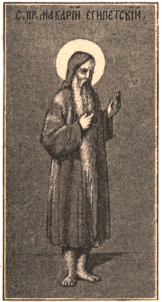
Преподобный Макарий, родом Египтянин, в мире – поселянин, в детстве и юношестве – пастух, остальное время своей жизни, около 60 лет, подвизался в пустыне и положил основание иночеству в Скитской пустыне205. Место его подвигов до сих пор называется пустыней Макария, и в ней находится монастырь его имени.
The Venerable Macarius, an Egyptian by birth, in the world a peasant, in childhood and youth a shepherd, spent the remaining time of his life, about sixty years, struggling in the desert and laid the foundation of monasticism in the Skete Desert205. The place of his struggles is still called the Desert of Macarius, and in it there is a monastery of his name.
В первые же годы своей жизни в пустыне пр. Макарий уже прославился своими строгими подвигами, что и привлекло к нему множество благочестивых людей, стремившихся подражать его примеру. Служа им чудным руководителем, он был, на 40-м году своей жизни, посвящён в сан пресвитера, чтобы совершать и Божественное служение для многочисленных учеников своих, для которых он устроил иноческое житие и соорудил св. храмы. Вскоре он удостоен был от Бога различных откровений и дара великих чудотворений.
In the very first years of his life in the desert, the Venerable Macarius was already renowned for his strict ascetic labors, which attracted to him a multitude of pious people striving to imitate his example. Serving them as a wonderful guide, in the fortieth year of his life he was ordained to the rank of presbyter, in order to perform the Divine service for his numerous disciples, for whom he established a monastic life and built holy churches. Soon he was vouchsafed by God various revelations and the gift of great wonderworkings.
Между бывшими ему откровениями замечательно то, которое указало ему на двух женщин, живущих в мире, как на совершеннейших его в добродетели. Макарий нарочно отправился в город, чтобы научиться от этих женщин, и узнал, что они спасаются не посредством каких-нибудь чрезвычайных подвигов, а самым простым и общедоступным образом. Это были две женщины, жёны двух родных братьев, жившие всегда вместе в мире и согласии и усердно исполнявшие все свои семейные обязанности. У них было расположение к иноческой жизни, но они предпочли жить дома по воле мужей своих. Не произносили никогда не только праздного, но даже просто лишнего слова и строго наблюдали за собой в исполнении всех заповедей Божьих.
Among the revelations given to him, that which pointed out to him two women living in the world as being more perfect than he in virtue is remarkable. Macarius purposely went to the city to learn from these women, and learned that they were saved not by means of any extraordinary ascetic feats, but in the simplest and most accessible manner. These were two women, wives of two brothers, who always lived together in peace and harmony and diligently fulfilled all their family duties. They had a disposition toward the monastic life, but they preferred to live at home according to the will of their husbands. They never uttered not only an idle word, but even a simply superfluous one, and strictly watched over themselves in the fulfillment of all God's commandments.
Пришлось и в другой раз великому пустынножителю оставить пустыню свою. Это было в царствование Валента, когда епископ Люций, поставленный арианами вместо Петра, преемника Афанасия Александрийского, вооружённой силой вынуждал отшельников к принятию арианства. Многие из них тогда скончались мученически, а Макарий с некоторыми другими был заточён на одном из островов Египетских. Здесь явился он просветителем язычников и вскоре все язычники, жившие на острове, приняли христианскую веру. Тогда епископ Люций освободил его из заточения, и Макарий возвратился в свою любимую пустыню, где мирно скончался около 391 г., на 90-м году своей жизни. Останки его находятся в Амальфи, в Италии.
It happened also another time that the great desert-dweller had to leave his desert. This was in the reign of Valens, when Bishop Lucius, appointed by the Arians in place of Peter, the successor of Athanasius of Alexandria, compelled the hermits by armed force to accept Arianism. Many of them then died as martyrs, while Macarius, together with some others, was imprisoned on one of the Egyptian islands. Here he appeared as an enlightener of the pagans, and soon all the pagans living on the island received the Christian faith. Then Bishop Lucius released him from imprisonment, and Macarius returned to his beloved desert, where he peacefully reposed around the year 391 A.D., in the ninetieth year of his life. His remains are in Amalfi, in Italy.
Из жизнеописания св. Макария не видно, чтобы он получил образование, однако же, после него осталось 50 слов, 7 наставлений и 2 послания на греч. яз., существующие в переводах Сирском и Арабском. В них заключаются не учёные прения о догматах, а мудрые и вместе с тем простые беседы о внутренней духовной жизни, служащие вразумительным разрешением необходимых для всякой души вопросов.
From the life of St. Macarius it is not evident that he received an education; nevertheless, after him there remain fifty discourses, seven instructions, and two epistles in the Greek language, existing in Syriac and Arabic translations. They contain not learned disputations about dogmas, but wise and at the same time simple conversations about the inner spiritual life, serving as an instructive resolution of questions necessary for every soul.
«Господь знает ум твой, – пишет Макарий, – помышления и движения мыслей; назирает, как ищешь Его, от всей ли души твоей, не с леностью ли, не с нерадением ли; и когда увидит усердие твоё к исканию Его, тогда явится и откроется тебе и даст помощь Свою».
"The Lord knows your mind," writes Macarius, "your thoughts and the movements of your thoughts; He watches how you seek Him, whether with all your soul, not with laziness, not with negligence; and when He sees your zeal in seeking Him, then He will appear and reveal Himself to you and give thee His help."
«Горе душе, если она остаётся только при одной себе, надеется только на дела свои и не имеет общения с Духом Божиим. Она умирает, не сподобясь вечной, Божественной жизни».
"Woe to the soul if it remains only with itself alone, hopes only in its own works, and has no communion with the Spirit of God. It dies, not being vouchsafed eternal, divine life."
«Человеческое естество, будучи не в состоянии само по себе производить совершенные плоды добродетели, имеет нужду в духовном деятеле душ наших – в Духе Христовом».
"Human nature, being unable of itself to produce perfect fruits of virtue, has need of the spiritual agent of our souls—the Spirit of Christ."
«Младенец, хотя ничего не может сделать и не может сам прийти к матери, но он движется и плачет, ища матери. Мать над ним сжаливается и радуется, что он ищет её с усилием; она сама подходит к нему, побуждаясь любовью к дитяти, берёт его на руки, прижимает к груди и кормит с великой нежностью. Так делает и человеколюбивый Бог с приступающими к Нему и ищущими Его душой».
"An infant, although it can do nothing and cannot come to its mother by itself, yet it stirs and cries, seeking its mother. The mother takes pity on it and rejoices that it seeks her with effort; she herself comes to it, moved by love for the child, takes it in her arms, presses it to her breast, and feeds it with great tenderness. So also does the man-loving God with those who draw near to Him and seek Him with their soul."
Вопрос: как нам молиться? – преп. Макарий разрешает так: – «говорите: Господи, как Тебе угодно и как знаешь, помилуй меня! – И Господь, знающи, что вам надо, поможет вам».
Question: how are we to pray? The Venerable Macarius resolves it thus: "Say: 'Lord, as it is pleasing to Thee and as Thou knowest, have mercy on me!' And the Lord, knowing what you need, will help you."
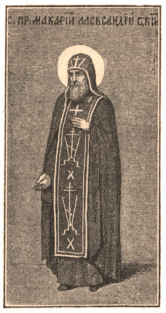
Близ Скитской пустыни, где подвизался пр. Макарий Египетский, жил друг и сподвижник его, также Макарий, по месту рождения Александрийский. До 40-летнего возраста он был язычником, но после того принял христ. веру, св. крещение и удалился в пустыню Келий (между Скитской и Нитрийской).
Near the Skete Desert, where the Venerable Macarius of Egypt struggled, lived his friend and fellow-ascetic, also Macarius, by place of birth of Alexandria. Until the fortieth year of his age he was a pagan, but after that he received the Christian faith, holy Baptism, and withdrew to the Desert of the Cells (between the Skete and Nitrian deserts).
Поставленный пресвитером, он сделался начальником подвизавшихся тут в безмолвии, каждый отдельно в своей келье, отшельников. Имел он и свою келью по разным местам, но ни в одной из них не было ни окон, ни дверей, и были они до того тесны, что в них нельзя было протянуть ног, исключая той кельи просторной, где он принимал приходящих. С мудростью и кротостью руководил он иноками, подкрепляя наставления примером своей собственной высокой жизни. Прославился чудотворной силой и скончался ста лет от роду, через 5 лет после преставления пр. Макария Египетского.
Ordained a presbyter, he became the superior of the hermits who struggled there in silence, each separately in his own cell. He also had his own cell in various places, but in none of them were there windows or doors, and they were so narrow that one could not stretch out one's legs, except for that spacious cell where he received visitors. With wisdom and meekness he guided the monks, strengthening his instructions by the example of his own lofty life. He was renowned for wonderworking power and reposed at the age of one hundred, five years after the repose of the Venerable Macarius of Egypt.
Арсений, архиепископ Корцирский (ныне острова Корфу), родом из Вифинии, жил в конце IX и в первой половине X века; славен был мудростью, учительностью и неоднократным заступничеством за невинных пред властями.
Arsenius, Archbishop of Corcyra (now the island of Corfu), a native of Bithynia, lived at the end of the ninth and in the first half of the tenth century; he was renowned for wisdom, teaching, and repeated intercession for the innocent before the authorities.
Скончался в 959 году; нетленные мощи его почивают в кафедральной церкви, где и Евангелие, писанное его рукою. Им приведён в нынешний состав «чин таинства Елеосвящения».
He reposed in the year 959; his incorrupt relics rest in the cathedral church, where also is the Gospel written by his hand. He brought the "Order of the Mystery of Holy Unction" into its present form.
Св. мученица Евфрасия дева, за исповедание веры жестоко пострадавшая в Никомидии, во время гонения Максимианова, в 303 г., и преданная, наконец, во власть язычника, прибегла к честному обману, чтобы избавиться от его дикого произвола: она назвала себя волшебницей, владеющей чарами (в виде какого-то растения), против которых будто бы бессильно всякое оружие, и в доказательство своих слов предложила суеверному язычнику нанести ей удар по шее, обложенной таинственным растением...
The holy Martyr Euphrasia, a virgin, who for confessing the faith suffered cruelly in Nicomedia during the persecution of Maximian in the year 303 A.D., and was finally given over into the power of a pagan, resorted to an honorable deception to deliver herself from his savage will: she called herself a sorceress possessing charms (in the form of some plant), against which every weapon was supposedly powerless, and in proof of her words she proposed to the superstitious pagan that he strike her on the neck, which was bound with the mysterious plant...
Не постигая такой неустрашимости перед смертью молодой христианки и с любопытством поспешив испытать действие такого важного зелья, язычник нанёс Евфрасии удар мечом, и таким образом чистая дева освободилась от позорной власти над нею грубого варвара...
Not comprehending such fearlessness before death in a young Christian woman, and hastening with curiosity to test the effect of such an important potion, the pagan struck Euphrasia a blow with his sword, and thus the pure virgin freed herself from the shameful power of the rude barbarian over her...
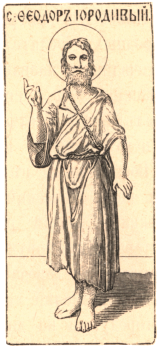
Блаженный Феодор207 родился в Новгороде и в юных летах обучен был чтению книг. Он рано начал любить благочестие, – в среду и пяток не вкушал ничего, и постоянно посещал храм Божий. По примеру великих юродивых востока, он избрал для спасения своего путь юродства. Не имея нигде постоянного жилья себе, он в морозы ходил босым и полунагим; всё, что получал от боголюбивых, раздавал бедным, а сам терпел нужду во всём; ветреная молодёжь смеялась над ним, оскорбляя его словами и побоями; но он переносил всё весело. Когда другие предавались глубокому сну, Феодор обходил храмы города и молился. Так протекла жизнь его! Современником его был блаженный Николай Качанов, живший на Софийской стороне, – тогда как Феодор ходил на Торговой. Когда блаженному Феодору случилось переходить Волховским мостом на Софийскую сторону, блаженный Николай гнал его на Торговую; то же делал и Феодор, когда заставал Николая на Торговой стороне. Блаженные, понимая друг друга и себя, видимою враждой своею напоминали Новгородцам их междоусобия, которые так часто бывали кровавыми и по предлогам самым пустым. Случалось, что блаженный Феодор говорил вслух: «берегите хлеб», – и наступал голод. В другое время говорил: «чисто тут будет, – хорошо будет сеять репу», – и пожар опустошал улицы Торговой стороны. Пред кончиной своей говорил он встречавшимся с ним: «прощайте; далеко иду». Он просил похоронить его близ торжища и скончался 19 января 1392 г. Впоследствии над гробом его построена была часовня, и здесь больные получали исцеления. В новой, каменной часовне, при храме Победоносца Геория на Лубянице, построенном ещё в 1181 г., и ныне мощи блаженного. Ему есть особая (печатная) служба, по которой чтится память его 19 января и совершается молебствие при мощах его208.
The blessed Theodore207 was born in Novgorod and in his youthful years was taught to read books. He early began to love piety—on Wednesdays and Fridays he ate nothing, and he constantly attended the church of God. Following the example of the great fools-for-Christ of the East, he chose the path of foolishness for his salvation. Having no permanent dwelling anywhere, he walked barefoot and half-naked in the frosts; everything he received from the God-loving he distributed to the poor, while he himself endured need in everything; the frivolous youth mocked him, insulting him with words and blows; but he bore everything cheerfully. When others gave themselves over to deep sleep, Theodore would go around the churches of the city and pray. Thus his life passed! His contemporary was the blessed Nicholas Kachanov, who lived on the Sophia side—whereas Theodore walked on the Trade side. When it happened that the blessed Theodore crossed the Volkhov bridge to the Sophia side, the blessed Nicholas would drive him back to the Trade side; Theodore did the same when he found Nicholas on the Trade side. The blessed ones, understanding each other and themselves, by their apparent enmity reminded the Novgorodians of their internecine strife, which so often was bloody and over the most trivial pretexts. It happened that the blessed Theodore would say aloud: "Take care of the bread," and famine would come. At another time he would say: "It will be clean here—it will be good to sow turnips," and a fire would devastate the streets of the Trade side. Before his end he would say to those he met: "Farewell; I am going far." He asked to be buried near the marketplace and reposed on January 19, 1392. Later a chapel was built over his grave, and here the sick received healings. In the new stone chapel, at the church of the Victory-bearer George on Lubyanitsa, built as early as 1181, the relics of the blessed one rest even now. There is a special (printed) service for him, according to which his memory is honored on January 19 and a moleben is performed at his relics208.
В наше время путь блаж. Феодора – путь, заросший травой. Но пусть этот путь, путь полного отречения от земного, слишком высок. Пусть купец остаётся купцом, чиновник чиновником, земледелец земледельцем, только бы жили, не забывая Господа, не оскорбляя святых заповедей Его. Чем занят век наш? О том только хлопочут, как отыскать новые средства к жизни, и, находя, расточают их безумно; люди как в угаре от жадности к удобствам земной жизни.
In our time, the path of the blessed Theodore is a path overgrown with grass. But let this path, the path of complete renunciation of the earthly, be too lofty. Let the merchant remain a merchant, the official an official, the farmer a farmer, only let them live without forgetting the Lord, without offending His holy commandments. With what is our age occupied? They only trouble themselves about how to find new means of life, and, finding them, squander them madly; people are as if in a stupor from greed for the comforts of earthly life.
«В поте лица твоего будешь есть хлеб твой», таково определение Божие о грешном человеке. Но надобно, чтобы труд твой для земли не был потерянным или во вред для вечности твоей. Ужели для тебя, как и для язычника, и боги, и жизнь только на земле? Трудись, работай, но – всегда пред очами Бога, Судии всеведущего и строгого в правде. Не отнимай работой для земли ни времени, ни души твоей у дел служения Господу. Занимайся нуждами земными, но не иначе, как во славу Божию. Иначе, что ждёт тебя, если ты пренебрегаешь Владыкою неба и земли?
“In the sweat of thy face shalt thou eat bread”: such is the decree of God concerning sinful man. But it is necessary that your labor for the earth not be wasted or to the harm of your eternity. Is it for you, as for a pagan, that both gods and life are only on earth? Labor, work, but—always before the eyes of God, the all-knowing Judge, strict in righteousness. Do not take away from the works of serving the Lord either the time or your soul by laboring for the earth. Attend to earthly needs, but not otherwise than for the glory of God. Otherwise, what awaits you if you neglect the Lord of heaven and earth?
«Господи! кто может пребывать в скинии Твоей? кто может обитать на святой горе Твоей? Тот, кто поступает непорочно, творит правду и говорит истину от сердца; – кто не клевещет языком своим, не делает другому зла; – кто клянётся ближнему и не изменяет; кто серебра своего не отдаёт в рост и не принимает даров против невинного» (Пс.14:1–5). «Бесполезно богатство в день гнева, а правда спасает от смерти» (Притч.11:4). «Явилась благодать Божия, спасительная для всех человеков, научающая нас, чтобы мы, отвергнув нечестие и мирские похоти, трезвенно, праведно и благочестиво жили в настоящем веке» (Тит.2:11–12).
“Lord, who shall abide in Thy tabernacle? who shall dwell in Thy holy hill? He that walketh uprightly, and worketh righteousness, and speaketh the truth in his heart; he that backbiteth not with his tongue, nor doeth evil to his neighbour; he that sweareth to his neighbour and changeth not; he that putteth not out his money to usury, nor taketh a bribe against the innocent” (Ps. 14:1–5). “Riches profit not in the day of wrath: but righteousness delivereth from death” (Prov. 11:4). “For the grace of God that bringeth salvation hath appeared to all men, teaching us that, denying ungodliness and worldly lusts, we should live soberly, righteously, and godly, in this present world” (Titus 2:11–12).
«Скитская пустыня – часть Нитрийской, называющейся ныне долиной Нитровой. Это – море песчаное, где можно ходить только по указанию звёзд. Она расположена на границах Ливии и Египта, на пятичасовом расстоянии от Нитрийской горы, отстоящей на 13-часовом расстоянии к юго-западу от Александрии» (Путеш. Норова, 1, 84, 85).
“The Skete desert is a part of the Nitrian desert, now called the Valley of Nitre. It is a sea of sand, where one can walk only by the guidance of the stars. It is situated on the borders of Libya and Egypt, at a distance of five hours from the Nitrian mountain, which is thirteen hours’ distance to the southwest of Alexandria” (Norov’s Travels, 1, 84, 85).