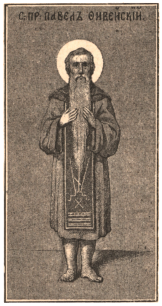
В продолжение 90 лет таился в пустыне подвижник Божий Павел. Вдали от людей, перед лицом одного Бога, совершал он свой жизненный путь в неизбежной для всякаго человека и труднейшей борьбе с самим собой. Но не утаилось бесследно для мира так долго сокрываемое пустыней сокровище. Господь открыл о нём в сонном видении другому подвижнику Своему Антонию Великому.
For ninety years the man of God, Paul, concealed himself in the desert. Far from men, before the face of God alone, he accomplished his life's path in that struggle with himself which is unavoidable for every man and the most difficult of all. But the treasure so long hidden by the desert did not remain without trace for the world. The Lord revealed it in a dream-vision to another of His ascetics, Anthony the Great.
Извещённый Божьм откровением, что в отдалённейшем краю той же пустыни Фиваидской, к востоку от Чермного моря, где провёл он 70 лет своей жизни, живёт другой отшельник, совершеннейший его, св. Антоний пожелал отыскать его, и после двухдневного трудного пути через знойную, бесплодную пустыню дошел он по следам бежавшей гиены до пещеры блаженного старца. Приветствовали друг друга Богом открытые друг другу великие таинники Божьей благодати... Впервые после векового уединения своего, встретив человека, с любовью спросил его о людях отрешившийся от мира жилец пустыни: – «расскажи же мне, как живёт род человеческий? Что делается в мире? Неужели есть еще идолопоклонники? Преследуют ли еще христиан?» и проч.
Informed by divine revelation that in the most distant region of the same Thebaid desert, to the east of the Red Sea, where he himself had spent seventy years of his life, there dwelt another hermit more perfect than he, St. Anthony desired to find him; and after a two-days' difficult journey through the scorching, barren desert, he followed the tracks of a fleeing hyena to the cave of the blessed elder. They greeted one another, these great initiates of God's grace, revealed to each other by God... For the first time after a century of solitude, meeting a man, the dweller of the desert who had renounced the world asked him with love: "Tell me then, how does the human race live? What is happening in the world? Are there still idolaters? Are Christians still being persecuted?" and so forth.
Преподобный Антоний отвечал на его вопросы, и потом сам стал спрашивать старца об его жизни. Павел рассказал ему, что 113 лет тому назад родился он в Египте, в Нижней Фиваиде, что родители его были христиане и доставили ему высшее научное воспитание; но что по природе своей он был более расположен к отдаленно от мира, чем к общению с миром и пристрастию к житейским преимуществам. Такого рода настроение определилось в нём окончательно под влиянием внешних побудительных причин. Лишившись родителей, он наследовал от них богатое имущество и разделил его пополам с сестрой. Муж сестры его, жестокий и корыстный человек, не удовольствовался этим и, рассчитывая на открывшееся тогда от императоров Декия и Валериана гонение на христиан (249 г.), он замыслил предать Павла в руки гонителей, чтобы воспользоваться его имением. Узнав о намерениях своего зятя, Павел добровольно отказался от всего и покинул мир, представлявший тогда ужасающее зрелище истязаний за правду и лютых жестокостей со стороны язычников – палачей против жертв их – христиан.
The Venerable Anthony answered his questions, and then himself began to question the elder about his life. Paul told him that one hundred and thirteen years before, he had been born in Egypt, in Lower Thebaid; that his parents were Christians and had given him the highest scholarly education; but that by his nature he was more disposed to withdrawal from the world than to communion with the world and attachment to worldly advantages. This disposition was finally confirmed in him under the influence of external motives. Having lost his parents, he inherited from them a rich property and divided it equally with his sister. His sister's husband, a cruel and covetous man, was not satisfied with this and, counting on the persecution of Christians then begun by the emperors Decius and Valerian (A.D. 249), he plotted to betray Paul into the hands of the persecutors in order to take possession of his property. Learning of his brother-in-law's intentions, Paul voluntarily renounced everything and left the world, which at that time presented a horrifying spectacle of tortures for the truth and fierce cruelties on the part of the pagan executioners against their Christian victims.
Переходя с места на место и отыскивая удобнейший приют в пустыне, Павел подошёл к каменной горе и недалеко от подошвы её нашёл пещеру, заслонённую камнем. Выдвинув камень, он увидел внутри обширный ход, открытый верх которого был осенён длинными и густыми ветвями финикового дерева, и вблизи протекал источник с весьма чистой водой. Это уединённое и от всех сокрытое место так полюбилось юноше, что он решился поселиться тут навсегда. Поселившись в пустыне, подвижник прожил в ней около девяноста одного года... Дни и ночи проводил он в молитве; питался плодами своей пальмы, одевался её листьями.
Moving from place to place and seeking a more convenient refuge in the desert, Paul came to a rocky mountain and, not far from its foot, found a cave screened by a stone. Having moved the stone, he saw within a spacious passage, the open top of which was shaded by the long and thick branches of a date palm, and nearby a spring of very pure water flowed. This solitary place, hidden from all, so pleased the youth that he resolved to settle there forever. Having settled in the desert, the ascetic lived in it for about ninety-one years... He spent his days and nights in prayer; he fed on the fruit of his palm and clothed himself with its leaves.
Окончив рассказ свой, блаженный Павел сказал св. Антонию: «теперь наступило время моего успения, и потому ты прислан от Бога, чтобы покрыть тело моё землёй... Тебе же надобно ещё жить для пользы братии твоей. Иди теперь в монастырь и для облачения тела моего принеси мне одежду»186.
Having finished his account, the blessed Paul said to St. Anthony: "Now the time of my repose has come, and therefore you have been sent from God to cover my body with earth... But you must still live for the benefit of your brethren. Go now to the monastery and bring me a garment to clothe my body."186
Антоний, с печалью припав к ногам Павла, простился с ним и отправился исполнить его поручение, но, придя во второй раз в его пещеру, он не застал уже старца в живых. Блаженный стоял на коленах с воздетыми к небу руками. Тело его ещё пребывало в молитвенном положении, но душа вознеслась к своему Создателю..,
Anthony, sorrowfully falling at Paul's feet, took leave of him and set out to fulfill his commission; but when he came a second time to his cave, he no longer found the elder alive. The blessed one was standing on his knees with his hands raised to heaven. His body was still in a posture of prayer, but his soul had ascended to its Creator...
С великой печалью св. Антоний облачил тело умершего погребальной одеждой и совершил над ним погребение с горячей молитвой. После того взял с собою пальмовую одежду Павла и возвратился в свою обитель. В самые только торжественные праздники он облачался в эту драгоценную одежду, о которой писатель жизни св. Павла – блаженный Иероним выразился в такпх словах: «если бы предстояло мне выбирать, то я скорее избрал бы рубище Павла с его заслугами, нежели порфиру царей с царствами их»...
With great sorrow, St. Anthony clothed the body of the deceased in a burial garment and performed the burial over him with fervent prayer. After that, he took Paul's palm-leaf garment with him and returned to his own monastery. Only on the most solemn feasts did he clothe himself in this precious garment, of which the writer of the life of St. Paul, the blessed Jerome, expressed himself in these words: "If I were faced with a choice, I would sooner choose Paul's rags with his merits than the purple of kings with their kingdoms"...
Когда ученики св. Антония расспрашивали его о посещении им дивного отшельника, то он отвечал им со слезами: – горе мне грешному! я – монах только по имени... я видел Илию, я видел Иоанна в пустыне, поистине я видел Павла в раю...
When the disciples of St. Anthony questioned him about his visit to the wondrous hermit, he answered them with tears: "Woe is me, a sinner! I am a monk only in name... I have seen Elijah, I have seen John in the desert; truly I have seen Paul in paradise"...
Место погребения св. Павла не было предано забвению, и по воле императора Греческаго Мануила Комнена (1143–1180) мощи его были перенесены в Константинополь и положены в монастыре Богородицы Перивлепты. В 1240 г. они были перенесены в Венецию и, наконец, в Венгрию, в г. Офен. Часть главы св. Павла находится в Риме.
The place of the burial of St. Paul was not consigned to oblivion, and by the will of the Greek emperor Manuel Comnenus (1143–1180), his relics were transferred to Constantinople and placed in the monastery of the Theotokos Peribleptos. In 1240, they were transferred to Venice, and finally to Hungary, to the city of Buda. A portion of the head of St. Paul is in Rome.
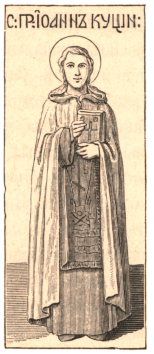
Иоанн Кущник, сын богатых и знатных родителей, Евтропия и Феодоры, живших в Константинополе, в царствование императора Феодосия Младшего († 450). С юных лет в душе Иоанна таилась необыкновенная любовь к Богу. Приятнейшим занятием Иоанна было читать слово Божие и ходить к Богослужению. Вообще он был кроток, незлобив и смирен: получил отличное образование.
John the Hut-Dweller, the son of rich and noble parents, Eutropius and Theodora, who lived in Constantinople during the reign of the emperor Theodosius the Younger († 450). From his youth, an extraordinary love for God was hidden in John's soul. John's most pleasant occupation was to read the word of God and to go to divine services. In general, he was meek, guileless, and humble; he received an excellent education.
Однажды некоторый инок зашёл в дом, где учился Иоанн; увидев его, Иоанн спросил его: откуда он и куда идёт. Услышав, что инок из обители Неусыпающих и идёт в Иерусалим на поклонение св. местам, отрок воспламенился духом и с любопытством расспрашивал странника об иноческом житии, о молитве и посте, о неусыпаемом пении и о иных подвигах. Иоанн упросил инока зайти на обратном пути к нему и взять его с собою. Между тем Иоанн упросил родителей подарить ему Евангелие. Они подарили ему Евангелие, украшенное золотом и драгоценными камнями. Прежний инок зашёл, и Иоанн, взяв Евангелие, тайно от родителей удалился с иноком и отплыл на корабле в обитель Неусыпающих.
Once a certain monk came into the house where John was studying; seeing him, John asked him: whence he came and whither he was going. Hearing that the monk was from the monastery of the Unsleeping Ones and was going to Jerusalem to venerate the holy places, the youth was inflamed in spirit and with curiosity questioned the stranger about the monastic life, about prayer and fasting, about the unceasing singing, and about other ascetic labors. John begged the monk to come to him on his return journey and to take him with him. Meanwhile, John begged his parents to give him a Gospel. They gave him a Gospel adorned with gold and precious stones. The same monk came, and John, taking the Gospel, secretly from his parents departed with the monk and sailed on a ship to the monastery of the Unsleeping Ones.
Св. игумен обители, провидя в нём совершенную готовность к жизни иноческой, несмотря на его молодость, не подверг его обыкновенному искусу и облёк в одежду инока. В скором времени Иоанн успел в подвигах иноческих так, что и других превзошёл непрестанным к Богу молением, безропотным послушанием и чрезвычайным пощением. Игумен, видя его подвиги, советовал ему беречь себя и не подвергать здоровья своего опасности. Но здоровье юноши снедалось не столько подвигом наружным, сколько внутренним. Он никак не мог забыть нужной любви к себе своих родителей. Самое Евангелие, их дар, хотя учило его любви к Богу совершенной, но напоминало ему и родителей, – и любовь к ним с новой силой пробудилась в сердце, юноши. Мысль, что они убиваются горестно по своему сыну, сделалась для него самым сильным искушением и мучила его непрестанно; ничто не могло успокоить его.
The holy abbot of the monastery, foreseeing in him a perfect readiness for the monastic life, despite his youth, did not subject him to the usual trial and clothed him in the monastic habit. Soon John so excelled in monastic labors that he surpassed others by his unceasing prayer to God, his uncomplaining obedience, and his extraordinary fasting. The abbot, seeing his labors, advised him to take care of himself and not to endanger his health. But the youth's health was consumed not so much by outward asceticism as by inward. He could in no way forget the loving affection of his parents for him. The very Gospel, their gift, although it taught him perfect love for God, also reminded him of his parents—and love for them awakened with new force in the youth's heart. The thought that they were grievously grieving for their son became for him the strongest temptation and tormented him unceasingly; nothing could calm him.
Шесть лет провёл он в обители, и во всё это время борьба любви к Богу и к родителям не утихала в душе его. Иоанн открыл состояние души своей св. Маркеллу, игумену обители: старец со слезами благословил юношу на возвратный путь в дом родительский.
He spent six years in the monastery, and during all this time the struggle between love for God and love for his parents did not abate in his soul. John revealed the state of his soul to St. Marcellus, the abbot of the monastery; the elder with tears blessed the youth to return to his parental home.
Но не любовь к родителям, а любовь к Богу явилась торжествующей в сердце Иоанна и по возвращении его к родительскому дому Иоанн решился не открывать себя родителям. В рубище нищего возвратился он в Царьград и три года жил в убогой палатке или куще, лёжа пред вратами дома отеческого, как бедный Лазарь или Иов в гноище, получая пищу от трапезы родителей, которые из сострадания к бесприютному нищему, претерпевающему стужу, зной и дождь, посылали ему милостыню, ради Христа.
But it was not love for his parents, but love for God that proved triumphant in John's heart, and upon his return to his parental home, John resolved not to reveal himself to his parents. In the rags of a beggar he returned to Constantinople and for three years lived in a wretched little tent, or hut, lying before the gates of his father's house, like poor Lazarus or Job on the dunghill, receiving food from his parents' table, who, out of compassion for the homeless beggar enduring cold, heat, and rain, sent him alms for Christ's sake.
За три дня перед кончиной своей преподобный Иоанн, страдавший на одре болезни предсмертной, испросил позволение видеть госпожу дома и принесён был к ней на одре. Закрыв лицо своё, больной говорит своей матери: «уже совершилось человеколюбивое служение ваше ко мне нищему, и за милостыню вашу готово вам воздаяние от Господа, Который говорит в Евангелие понеже сотвористе единому сих братий Моих меньших, Мне сотвористе (Мф.25:46). Но и я нищий хочу оставить тебе некоторое благословение; только прошу тебя и заклинаю Господом исполнить моё последнее желание: прошу тебя, чтобы ты велела меня погребсти на том же самом месте, где теперь куща моя, и покрыть меня сим же рубищем, в котором теперь меня видишь». В заключение слов своих, он подал матери Евангелие и сказал: «это да будет вам в настоящей жизни утешением, а к будущей жизни добрым путём – для тебя и твоего мужа». Это было то самое Евангелие, которое дано было родителями Иоанну в его юности; и теперь оно послужило к открытию сына пред родителями. Но как скоро отец и мать узнали своё Евангелие, а потом – в больном нищем оплакиваемого ими сына, святой Иоанн отошёл от них к Отцу Небесному.
Three days before his death, the Venerable John, suffering on a bed of mortal illness, asked permission to see the mistress of the house and was brought to her on his bed. Covering his face, the sick man said to his mother: "Your merciful service to me, a beggar, is now completed, and for your alms a reward is prepared for you from the Lord, Who says in the Gospel: Inasmuch as ye have done it unto one of the least of these My brethren, ye have done it unto Me (Mt. 25:40). But I, a beggar, also wish to leave you a certain blessing; only I ask you and adjure you by the Lord to fulfill my last wish: I ask you to have me buried in that same place where my hut now is, and to cover me with these same rags in which you now see me." In conclusion of his words, he handed his mother the Gospel and said: "Let this be for you a consolation in this present life, and for the future life a good path—for you and your husband." This was the very Gospel which had been given to John by his parents in his youth; and now it served to reveal the son to his parents. But as soon as the father and mother recognized their Gospel, and then in the sick beggar their lamented son, the holy John departed from them to the Heavenly Father.
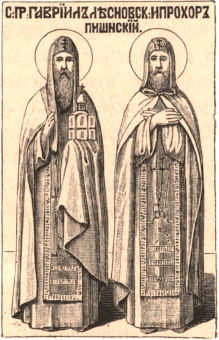
По Болгарскому синаксарю 1340 г. преп. отец наш Гавриил, сын благородных и богатых родителей, был отдан книжному учению и помощью Божьей хорошо успел в нём. Когда пришёл в возраст, обручили его с невестой хорошего рода; но он, не коснувшись её, ушёл в монастырь и стал монахом.
According to the Bulgarian Synaxarion of 1340, our Venerable Father Gabriel, the son of noble and wealthy parents, was given to book-learning and, with God's help, succeeded well in it. When he came of age, he was betrothed to a bride of good family; but he, not having touched her, went to a monastery and became a monk.
Получив большое богатство, удалился в Лесновскую гору и создал храм св. архистратига Михаила, поставил игумена, собрал много иноков и оставил тут всё своё имущество, а сам отошёл в гору и пребывал день и ночь в молитве, бдении и молчании.
Having received great wealth, he withdrew to Mount Lesnovo and built a church of the holy Archistrategos Michael, appointed an abbot, gathered many monks, and left all his property there; but he himself departed to the mountain and remained day and night in prayer, vigil, and silence.
При них совершалось много чудес: – слепые прозревали, хромые выздоравливали, беснующиеся исцелялись прикосновением к св. мощам. Спустя долгое время мощи святого перенесены были в гор. Тернов Болгарский и положены были в трапезе св. Апостолов187.
Many miracles were performed at them: – the blind received sight, the lame were healed, the possessed were cured by touching the holy relics. After a long time, the relics of the saint were translated to the Bulgarian city of Tarnovo and placed in the refectory of the Holy Apostles187.
В житии преп. Иоакима Осоговского читается: «чудные и истинно новопросвещённые отцы наши и пустынножители, небесные человеки и земные ангелы, Христовы друзья, Иоанн и Прохор вместе с Гавриилом, а с ними и Иоаким отец наш, честная четверица, Богоизбранное дружество, трудолюбивые делатели Христовы, вышедшие на возделывание духовной нивы ралом веры и на сеяние семени духовного, чтобы принести сторичный плод... Преп. отец наш Иоанн по Давиду витал по горам, как птица и изволил взойти на гору высокую, называемую Книшеву, и там водворившись, прилеплялся одному Владыке Богу... Святой преп. отец наш Прохор по подвигам подобен Иоанну; желая явиться подражателем ему, молился Господу: настави мя, Господи, на путь Твой, да вниду к олтарю Божию и к Богу, веселящему юность мою. Идёт в путь и поёт иные псалмы. По смотрению Божию преподобный пришёл в пустыню Брянскую на р. Пшин и стал тут совершать постническое и равноангельское житие; подвизавшись искусно и богоугодно, с миром переселился к Христу в обитель небесную. По преставлении сего блаженного св. мощи его совершают дивные чудеса»188.
In the life of the Venerable Joachim of Osogovo it is read: "Our wondrous and truly newly-enlightened fathers and desert-dwellers, heavenly men and earthly angels, friends of Christ, John and Prochorus together with Gabriel, and with them Joachim our father, a venerable foursome, a God-chosen fellowship, laborious workers of Christ, who went forth to cultivate the spiritual field with the plough of faith and to sow the spiritual seed, that they might bring forth a hundredfold fruit... Our Venerable Father John, after David, dwelt upon the mountains like a bird and was pleased to ascend a high mountain called Knisheva, and settling there, he cleaved to the one Lord God... The holy Venerable Father Prochorus was like John in his struggles; desiring to become his imitator, he prayed to the Lord: Guide me, O Lord, in Thy way, that I may go unto the altar of God, unto God who maketh glad my youth. He goes on his way and sings other psalms. By the dispensation of God, the venerable one came to the Bryansk wilderness on the river Pshin and there began to lead a fasting and angel-like life; having struggled skillfully and in a God-pleasing manner, he departed in peace to Christ in the heavenly abode. After the repose of this blessed one, his holy relics perform wondrous miracles"188.
Так как по этому известию, Иоанн, Прохор и Гавриил поставляются близкими между собой по времени, а Иоанн, выставляемый здесь, как образец жизни для преп. Прохора, есть ни кто другой, как преп. Иоанн Рыльский, почивший в 946 г., то земные подвиги преп. Прохора надобно отнести к концу X века, а подвиги преп. Гавриила к началу XI века. По Сербской летописи, благочестивый король Милютин (1276–1320) построил прекрасный храм в честь преп. Прохора Пшинского189.
Since, according to this account, John, Prochorus and Gabriel are placed as close to one another in time, and John, presented here as a model of life for the Venerable Prochorus, is none other than the Venerable John of Rila, who reposed in A.D. 946, the earthly struggles of the Venerable Prochorus must be assigned to the end of the 10th century, and the struggles of the Venerable Gabriel to the beginning of the 11th century. According to the Serbian chronicle, the pious King Milutin (1276–1320) built a beautiful church in honor of the Venerable Prochorus of Pshin189.
О месте подвигов преп. Гавриила известно следующее: Лесновский монастырь отделяется от города Кратова Злетовской горой, почему и называется иначе Кратовским. Здесь великолепный храм построен в 1341 г. наместником Сербского царя Оливером. Известна постная триодь 1342 г., писанная «в горе Злетовской, в м. Лескове, в монастыре великого воеводы арх. Михаила, у гроба преп. отца Гавриила, – егоже великий воевода Оливерь созда из темени (с основания), всякими добротами украсив – сосуды златыми и серебряными, покова великия иконы серебром и златом».
Concerning the place of the struggles of the Venerable Gabriel, the following is known: The Lesnovo monastery is separated from the city of Kratovo by the Zletovo mountain, which is why it is also called the Kratovo monastery. Here a magnificent church was built in A.D. 1341 by the viceroy of the Serbian Tsar, Oliver. The Lenten Triodion of A.D. 1342 is known, written "on Mount Zletovo, in the place Leskovo, in the monastery of the great voivode of the Archangel Michael, at the tomb of the Venerable Father Gabriel, – which the great voivode Oliver built from the foundation, adorning it with every beauty – with golden and silver vessels, having overlaid the great icons with silver and gold."
Недавно стал известен синодик Пшинского монастыря св. Прохора, что близ Враны; город стоит на восточной Мораве, в Приштинском округе, а обитель – исчезла191.
Recently the diptych of the Pshin monastery of St. Prochorus, near Vrana, has become known; the city stands on the Eastern Morava, in the Pristina district, but the monastery has disappeared191.
Зап. акад. VI статья Ламанского, стр. 125. По синаксарю Норова память преп. Прохора поставлена под 19 октября, как и преп. Иоанна Рыльского (зап. акад. VI, 108). Это значит, что мощи преп. Прохора перенесены были в Тернов в один день с мощами преп. Иоанна.
Notes of the Academy, VI, article by Lamansky, p. 125. According to the Synaxarion of Norov, the commemoration of the Venerable Prochorus is placed under October 19, as is that of the Venerable John of Rila (Notes of the Academy, VI, 108). This means that the relics of the Venerable Prochorus were translated to Tarnovo on the same day as the relics of the Venerable John.