В начале IV столетия (311–13) отшельники, жившие на г. Синае, Хориве и в Раифской пустыни (на восточном берегу Красного моря, в двух днях пути от Синая), и проводившие строгую, подвижническую жизнь, подверглись нападению Сарацин (одного арабскаго племени, необузданно предававшегося в это время разбою по случаю смерти своего вождя). Все почти иноки (из 40 – 38) были убиты. Между ними были необыкновенные подвижники, проявившие истинное христианское величие во время этого нападения и истязания от варваров, домогавшихся ошибочно предполагаемых ими у иноков богатств.
At the beginning of the fourth century (A.D. 311–13), the hermits living on Mount Sinai, Horeb, and in the Raithu wilderness (on the eastern shore of the Red Sea, two days' journey from Sinai), who led a strict and ascetic life, were attacked by Saracens (an Arab tribe that at that time was unrestrainedly given to brigandage on the occasion of the death of their leader). Almost all the monks (38 out of 40) were killed. Among them were extraordinary ascetics who manifested true Christian greatness during this attack and torture by the barbarians, who were mistakenly seeking the riches they supposed the monks possessed.
«Не готовимся ли мы всякий час к смерти, – убеждал смутившихся иноков настоятель их Павел, – если Богу угодно освободить нас от земной жизни, то неужели скорбеть и бояться? Не следует ли радоваться и благодарить! Предадим себя Богу и встретим смерть мужественно!» – И настоятель сам первый принял мученическую смерть от варваров, напрасно домогавшихся выпытать от него, где он скрывает несуществующее золото...
"Are we not preparing ourselves every hour for death?" urged their abbot Paul to the dismayed monks. "If God is pleased to free us from earthly life, should we then grieve and fear? Ought we not rather to rejoice and give thanks! Let us surrender ourselves to God and meet death courageously!" And the abbot himself was the first to accept a martyr's death at the hands of the barbarians, who vainly sought to extract from him where he had hidden the gold that did not exist.
Во второй раз произошло такое же кровопролитное избиение Сарацинами иноков в V веке; оно описано подвизавшимся тогда на Синае Нилом постником (пам. его 12 ноября), бывшим прежде того префектом Константинополя. Варвары разорили Синайскую обитель, многих иноков предали смерти, а других забрали в плен, в том числе и молодаго сына Нилова – Феодула, котораго продали потом в рабство; но из рабства он был выкуплен епископом Елузы, в доме которого и был встречен отцом своим Нилом, и посвященные епископом в иереи, оба они возвратились в Синайскую обитель, где мирно подвизались до конца их жизни. Нетленные останки их были перенесены в Царьград при императоре Иустине Младшем (565–578) и положены в церкви св. Апостолов в Орфанотрофии.
A second such bloody slaughter of monks by the Saracens occurred in the fifth century; it was described by Nilus the Faster (commemorated November 12), who was then practicing asceticism on Sinai and had formerly been prefect of Constantinople. The barbarians ravaged the Sinai monastery, put many monks to death, and took others captive, including Nilus's young son Theodulus, who was later sold into slavery; but he was redeemed from slavery by the bishop of Elusa, in whose house he was met by his father Nilus, and after both were ordained priests by the bishop, they returned to the Sinai monastery, where they peacefully practiced asceticism until the end of their lives. Their incorrupt relics were translated to Constantinople under the Emperor Justin the Younger (A.D. 565–578) and placed in the church of the Holy Apostles in the Orphanotrophium.
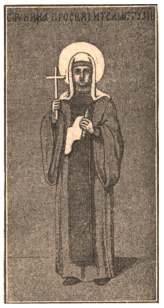
Чудное явление представляет в истории распространения христианской веры просветительница Иверии (Грузии), св. равноапостольная Нина. Высокий жребий выпал на долю её, как бы отзыв на благодатную почву души её, подготовленную влиянием чистых существ, которыми окружена она была с детства, в годы своего первоначального воспитания. Жизнь св. Нины являет новый пример того, как важно и, можно сказать, всемогущественно значение воспитательного влияния на молодую душу: оно, можно сказать, почти исключительно определяет участь всей дальнейшей судьбы человека.
A wondrous manifestation in the history of the spread of the Christian faith is the enlightener of Iberia (Georgia), St. Nina, Equal-to-the-Apostles. A high lot fell to her, as if in response to the fertile soil of her soul, prepared by the influence of the pure beings with whom she was surrounded from childhood during the years of her early upbringing. The life of St. Nina presents a new example of how important and, one might say, all-powerful is the significance of educational influence on a young soul: it may be said to determine almost exclusively the fate of a person's entire subsequent life.
О если бы родители и воспитатели были достаточно проникнуты сознанием значения воспитательного влияния, то великий и спасительный страх поселился бы в душах их за ответственность, сопряжённую с делом воспитания; они отнеслись бы тогда со строжайшим вниманием к тому, к чему относятся обыкновенно вовсе необдуманно и с пагубной легкомыслепностью.
O if only parents and educators were sufficiently imbued with the awareness of the significance of educational influence, then a great and saving fear would settle in their souls for the responsibility connected with the work of education; they would then treat with the strictest attention that which they ordinarily treat with utter thoughtlessness and ruinous frivolity.
Не среди детских балов и недетских театров, не среди роскошной обстановки и примера вечнаго светского рассеяния своих родителей была воспитана великая Нина, просветительница народов. Не окружал её сонм учителей (большей частью односторонне развитых и вовсе не христианского направления), наполняющих ум и память детей разнообразными учебными предметами, не имеющими никакого отношения к воспитанию сердца детскаго. Нина была дочь истинно благочестивых родителей. Отец её – Завулон, человек знаменитого рода, и мать – Сосанна, воспитывали дочь свою в страхе Божьем и в любви к Богу и к людям. Отчизной их был г. Коластра в Каппадокийской области, но когда Нине было 12 лет, то они переехали в Иерусалим, где Завулон пожелал посвятить себя пустынной жизни, а Сосанна пожелала, приняв благословение брата своего, поступить на служение нищим сёстрам. Нина же была отдана на воспитание старице Сарре-Ниофоре, бывшей также воспитательницей и матери Нины. В общении то с этой благочестивой старицей (армянкой по происхождению) процвели роскошным цветом благодатные ростки, насаждённые христианами-родителями в сердце блаженнаго ребёнка. «Старица Ниофора, основательно изучившая св. Писание, могла многое знать и во многом удовлетворить благочестивую любознательность своей воспитанницы. Нину же, привыкшую слышать о Христе, сжившуюся, так сказать, с образом Его, в обществе родителей, всей мыслью и делом преданных Ему, в высшей степени занимало всё, что она могла слышать о Христе. Таким образом, часто рас спрашивала она Ниофору о страданиях Христа, о распятии о погребении, о воскресении Его. С верой и любовью изливала старица в душу дитяти всё, чем преисполнена была собственная душа её, и сообщала Нине разные сведения о Богочеловеке, о учении и учениках Его и о различных странах, где они проходили, проповедуя Евангелие, и о своей родной стороне, Армении и Карталинии с г. Мцхетом, где, по преданию, находился хитон Иисуса Христа»184.
Not amid children's balls and unchildlike theatres, not amid luxurious surroundings and the example of the perpetual worldly dissipation of her parents, was the great Nina, enlightener of nations, raised. She was not surrounded by a host of teachers (for the most part one-sidedly developed and of a completely unchristian direction), who fill the minds and memories of children with various academic subjects having no relation to the education of the child's heart. Nina was the daughter of truly pious parents. Her father, Zebulon, a man of illustrious lineage, and her mother, Sosanna, raised their daughter in the fear of God and in love for God and for men. Their homeland was the city of Kolastra in the region of Cappadocia, but when Nina was twelve years old, they moved to Jerusalem, where Zebulon wished to devote himself to the desert life, and Sosanna wished, having received the blessing of her brother, to enter upon the service of the poor sisters. Nina was given over to be raised by the elder Sarah-Niophara, who had also been the teacher of Nina's mother. In communion with this pious elder (an Armenian by origin), the grace-filled shoots planted by her Christian parents in the heart of the blessed child blossomed luxuriantly. "The elder Niophara, having thoroughly studied the Holy Scriptures, could know much and in many things satisfy the pious curiosity of her pupil. And Nina, accustomed to hear of Christ, having become, so to speak, one with His image in the company of her parents, who were devoted to Him in all thought and deed, was in the highest degree occupied with everything she could hear about Christ. Thus she often inquired of Niophara about the sufferings of Christ, about the crucifixion, about the burial, about His resurrection. With faith and love the elder poured into the soul of the child everything with which her own soul was filled, and imparted to Nina various information about the God-Man, about His teaching and His disciples, and about the various countries where they went, preaching the Gospel, and about her own native land, Armenia and Kartalinia with the city of Mtskheta, where, according to tradition, the tunic of Jesus Christ was located."184
– Народ тот живёт во тьме язычества, – рассказывала старица,–поклоняется он идолам и не знает ничего о Христе... Не просветил ещё его никто светом Евангельскаго учения.
"That people lives in the darkness of paganism," the elder related, "they worship idols and know nothing of Christ... No one has yet enlightened them with the light of the Gospel teaching."
– Как же можно жить без Христа? – недоумевало сердце мудрого ребенка, наполненное уже святой, пламенной любовью к Богу, – и жалость к тёмным идолопоклонникам доводила Нину до истиннаго страдания; она не могла помириться с мыслью, что есть люди, не знающие о Христе.
"How can one live without Christ?" wondered the heart of the wise child, already filled with holy, fervent love for God—and pity for the dark idolaters brought Nina to genuine suffering; she could not reconcile herself to the thought that there were people who did not know Christ.
...Следя за впечатлениями воспитанницы своей, проникая в её разумную и любящую душу, старица Ниофора, как бы предвидя, до какой силы созреет она, сказала ей однажды, среди одной из их задушевных бесед – «вижу, дитя моё, силу твою – равную силе львицы, которая страшнее всех четвероногих животных; или можно уподобить тебя орлице, парящей в воздухе. Для неё земля кажется маленькой жемчужинкой, но лишь только завидит она с высоты свою добычу, то мгновенно, подобно молнии, устремляется на неё и нападает... Такова же точно будет и жизнь твоя»...
...Following the impressions of her pupil, penetrating into her intelligent and loving soul, the elder Niophara, as if foreseeing to what strength she would mature, said to her one day, in the midst of one of their heartfelt conversations: "I see, my child, your strength—equal to the strength of a lioness, which is more terrible than all four-footed animals; or you may be likened to an eagle soaring in the air. To her the earth seems a small pearl, but as soon as she spies her prey from on high, she instantly, like lightning, rushes upon it and attacks... Such exactly will your life be."
Глубоко запали в душу Нины слова старицы. В ней загорелся порыв увидеть те страны, в которых живут такие несчастные, не ведающие света люди: захотелось рассказать им о чудном Иисусе Христе, хотелось также разыскать и поклониться скрытому в той земле хитону Иисуса Христа, связанному Богоматерью... («Хитон же был не сшитый, а весь тканый сверху»... Ин.19:23). Нина пламенно молилась Божией Матери, чтобы Она исполнила её заветные желания... И вот, посетила её во сне Матерь Божия и благословила её крестом из виноградных лоз, сказав ей: «прими этот крест, он будет тебе щитом и ограждением против всех видимых и невидимых врагов твоих; силой его водрузишь в стране той знамя веры в Сына Моего». В другой раз увидела Нина во сне Спасителя, вручившего ей свиток со словами: «идите, научите все народы, крестя их во имя Отца и Сына и Св. Духа» (Мф.28:19).
The elder's words sank deep into Nina's soul. A yearning blazed up within her to see those countries where such unfortunate people, ignorant of the light, lived: she wanted to tell them about the wondrous Jesus Christ, and she also wanted to find and venerate the tunic of Jesus Christ, hidden in that land, woven by the Mother of God... ("Now the tunic was without seam, woven from the top throughout." Jn. 19:23). Nina prayed fervently to the Mother of God that She would fulfill her cherished desires... And behold, the Mother of God visited her in a dream and blessed her with a cross made of grapevines, saying to her: "Receive this cross; it will be for you a shield and protection against all your visible and invisible enemies; by its power you will plant in that land the banner of faith in My Son." Another time Nina saw in a dream the Savior, handing her a scroll with the words: "Go, teach all nations, baptizing them in the name of the Father and of the Son and of the Holy Spirit" (Mt. 28:19).
С восторгом поспешила Нина объявить дяде своему, епископу иерусалимскому, об этих снах и полученных ею... повелениях. Епископ и мать её благословили её на тот подвиг, к которому вдохновенно и неудержимо стремилась она, и действительно Господь привёл Нину совершить его. Она достигла до Иверии. Основываясь на одном предании, можно заключить, что она искала в этой стране спасения от гонения, воздвигнутого Диоклитианом (см. жизнь мучен. Рипсимии, 29 сент.). По другому же преданию, она была взята в плен Иверийцами.
With rapture Nina hastened to announce to her uncle, the bishop of Jerusalem, these dreams and the commands she had received. The bishop and her mother blessed her for that feat toward which she was inspired and irresistibly striving, and indeed the Lord led Nina to accomplish it. She reached Iberia. Based on one tradition, it may be concluded that she sought refuge in that country from the persecution raised by Diocletian (see the life of the Martyr Rhipsime, September 29). According to another tradition, she was taken captive by the Iberians.
Вскоре по прибытии в Иверию Нины, чудпым образом одиноко достигшей до г. Мцхета, ей пришлось присутствовать при народном торжестве в честь одного из главных языческих богов, именем Армаза.
Soon after Nina's arrival in Iberia—having miraculously reached the city of Mtskheta alone—she happened to be present at a popular festival in honor of one of the chief pagan gods, named Armaz.
Следуя здесь за толпой, Нина дошла до того места, где на возвышении стоял идол, перед которым совершалось жертвоприношение. Царь Мириан, царица Нонна, воины и народ с благоговением поклонялись идолу. В высшей степени поражена была этим зрелищем носящая в душе своей образ Распятого Христа Нина. Великой скорбью наполнилась душа её при виде столькпх заблуждающихся и не знавших истинного Бога несчастных людей. Пламенно молилась она, чтобы Господь просветил их, и как бы в отзыв на молитвенный вопль её произошло чудное явление: среди яснаго дня вдруг засверкала молния, поднялась страшная буря... Прекращено было жертвоприношение, вся толпа спешила укрыться от грозы и рассеялась по домам своим. Покинутый бог-идол сокрушился вдребезги; стены капища обрушились; сильным ветром снесено было всё в пропасть горы, так что скоро не осталось на горе и признаков от идольскаго капища. Святая же Нина, хранимая Богом, стояла невредимой в расселине скалы. Это случилось 6 августа, в день праздника Преображения Господня.
Following the crowd there, Nina came to the place where on a height stood the idol, before which a sacrifice was being offered. King Mirian, Queen Nona, the soldiers, and the people bowed down in reverence to the idol. Nina, who bore in her soul the image of the crucified Christ, was struck to the highest degree by this spectacle. Great sorrow filled her soul at the sight of so many erring and unfortunate people who knew not the true God. She prayed fervently that the Lord would enlighten them, and as if in response to her prayerful cry, a wondrous phenomenon occurred: in the midst of a clear day, lightning suddenly flashed, a terrible storm arose... The sacrifice was stopped, the whole crowd hastened to take shelter from the storm and scattered to their homes. The abandoned idol-god was shattered to pieces; the walls of the temple collapsed; a strong wind swept everything into the abyss of the mountain, so that soon no trace of the idol temple remained on the mountain. But holy Nina, protected by God, stood unharmed in a cleft of the rock. This happened on August 6, the day of the feast of the Transfiguration of the Lord.
После этого происшествия, Нина направилась на восток, по рубежу горы, где в древности был гор. Армазик; пройдя вдоль р. Куры, подошла к царскому саду, где теперь находится храм патриарший. Увидев здесь небольшой домик сторожа, она подошла к нему и радушно была принята женой сторожа Анастасией, которая, побеседовав с Ниной несколько времени, начала вместе с мужем своим уговаривать странницу поселиться у них. Нина пожила с ними некоторое время, но потом пожелала уединиться и, найдя за стеной города что-то вроде шалаша из листьев и ветвей ежевики (на этом месте находится теперь алтарь верхней церкви, называемой Самтавро), поселилась в нём. Здесь проводила она дни и ночи в молитве, ожидая от Бога указаний и вразумления на её дальнейшую деятельность. В скором времени она сделалась известной в окрестностях, потому что Бог освятил её молитвы чудодейственной силой исцелять все болезни приходящих к ней за советами страдающих разными недугами людей. Народ начал во множестве стекаться к ней, и тогда, леча и исцеляя от болезней, Нина вместе с тем проповедовала народу об Иисусе Христе. Слова её и дивная жизнь сильно действовали на народ, и многие начали принимать веру в истинного Бога.
After this event, Nina directed herself eastward, along the border of the mountain where in ancient times had stood the city of Armazik; passing along the River Kura, she approached the royal garden, where now stands the patriarchal church. Seeing there a small watchman's house, she drew near to it and was kindly received by the watchman's wife, Anastasia, who, after conversing with Nina for some time, together with her husband began to urge the stranger to settle with them. Nina lived with them for a while, but then desired solitude and, finding beyond the city wall something like a hut made of leaves and bramble branches (on this spot now stands the altar of the upper church, called Samtavro), she settled in it. Here she spent her days and nights in prayer, awaiting from God guidance and enlightenment for her further labors. Soon she became known in the vicinity, because God hallowed her prayers with the wonder-working power to heal all the ailments of those who came to her for counsel, suffering from various infirmities. The people began to flock to her in multitudes, and then, while treating and healing their illnesses, Nina at the same time preached to the people about Jesus Christ. Her words and her wondrous life strongly affected the people, and many began to accept faith in the true God.
Отсюда Нина ходила иногда в город, и в Еврейском квартале старалась разузнавать, где находится хитон Господень, о котором разсказывала ей воспитательница ея Ниофора, слышавшая о нём от Евреев, приезжавших из Иверии в Иерусалим на праздник Пасхи. В городе обратился к Нине Еврейский первосвященник Авиафар (потомок Елиоза, привёзшего в Мцхет хитон Спасителя), желая услышать от неё о Христе, и скоро, вместе с дочерью своею Сидонией, приняли христианскую веру и стали помогать Нине в распространении её между жителями. Таким образом св. Нина положила основание веры в Иисуса Христа, но обращённые ею, за неимением священника, не были еще просвещены святым крещением.
From here Nina sometimes went into the city, and in the Jewish quarter she tried to learn where the Lord's tunic was kept, about which her instructress Niofora had told her, having heard of it from Jews who came from Iberia to Jerusalem for the feast of Pascha. In the city, the Jewish high priest Abiathar (a descendant of Elioz, who had brought the Savior's tunic to Mtskheta) turned to Nina, desiring to hear from her about Christ, and soon, together with his daughter Sidonia, he accepted the Christian faith and began to help Nina in spreading it among the inhabitants. Thus St. Nina laid the foundation of faith in Jesus Christ, but those converted by her, lacking a priest, had not yet been enlightened by holy Baptism.
Новообращённый Авиафар разсказал св. Нине, что знает от отца своего и что сохраняется предание и у многих других о том, что хитон Иисуса Христа хранится под кедром в виноградниках царскаго сада, где жила прежде Нина. Под тенью его часто молилась она, чтобы Господь привёл народ Иверии к познанию истинного Бога. Чудные видения подкрепляли веру, с которой она ожидала исполнения молитв своих. Однажды, заснув после обычной молитвы, она увидела сон, который потом повторялся не раз: ей представилось множество чёрных птиц, направлявших полёт свой к реке Арагве; опустившись в воду, они вылетели из неё – белыми, как снег, и, рассеявшись на ветвях кедра, оглашали всю окрестность дивным пением. Св. Нина рассказала ученице своей Сидонии это сновидение. – «Иерусалиме, Иерусалиме! – вдохновенно отозвалась Сидония, – ты широко раскидываешь крылья свои и собираешь к себе все народы со всех концов вселенной! Вот и сюда пришедшая от тебя жена сия Нина, изменит обычаи и закон этой страны»... и затем, обратясь к Нине, прибавила: – твой сон означает, что место это будет обращено тобою в духовный сад, который приносит Божественные плоды вовеки...
The newly-converted Abiathar told St. Nina what he knew from his father and what tradition preserved among many others: that the tunic of Jesus Christ was kept under a cedar in the vineyards of the royal garden, where Nina had previously lived. In its shade she often prayed that the Lord might bring the people of Iberia to the knowledge of the true God. Wondrous visions strengthened the faith with which she awaited the fulfillment of her prayers. Once, falling asleep after her usual prayer, she saw a dream which later repeated itself more than once: she beheld a multitude of black birds directing their flight toward the River Aragva; descending into the water, they emerged from it white as snow, and, scattering upon the branches of the cedar, filled the whole vicinity with wondrous singing. St. Nina told her disciple Sidonia about this dream. "Jerusalem, Jerusalem!" Sidonia responded with inspiration, "you spread your wings wide and gather to yourself all peoples from all ends of the universe! Behold, even here this woman Nina, who came from you, will change the customs and the law of this land"... and then, turning to Nina, she added: "Your dream means that this place will be transformed by you into a spiritual garden, which will bear Divine fruits forever..."
Эти слова воодушевили св. Нину, и она с усиленной ревностью открыто проповедовала Евангелие Царствия Божьего. Вместе с нею участвовали в проповеди и просвещённые ею Авиафар, дочь его Сидония, шесть Еврейских женщин и сторож царского сада со своей женой. Из них Авиафар, бывший первосвященник, по ревности своей был подобен Апостолу Павлу и, хорошо знакомый с ветхим заветом, он с успехом действовал на своих соплеменников.
These words inspired St. Nina, and she with increased zeal openly preached the Gospel of the Kingdom of God. Together with her, those enlightened by her—Abiathar, his daughter Sidonia, six Jewish women, and the watchman of the royal garden with his wife—took part in the preaching. Among them, Abiathar, the former high priest, was like the Apostle Paul in his zeal, and being well acquainted with the Old Testament, he successfully influenced his fellow tribesmen.
Слух о чудной страннице дошёл до царя. В это время сильно занемогла жена его Нонна. Не получая никакой помощи от лечивших её врачей, она обратилась к прославившейся исцелениями больных св. Нине. Именем Иисуса Христа исцелила её Нина, царица уверовала в силу учения Христова; вскоре обратился к истинному Богу и царь Мириан. По совету Нины, он послал просить царя Константина прислать епископа и священников для совершения таинства крещения над народом. Прибывшаго в столицу епископа с иереями и диаконами царь и весь народ – по сильному желанию принять крещение – встретили с великим почётом и радостью, и вскоре началось совершение св. крещения (326 г.). Прежде всех принял св. крещение царь, за ним царица с детьми. После этого, приготовив крещальню у моста, на р. Куре, там, где стоял дом первосвященника Елиоза, епископ совершил водо- освящение и крестил всю знать царскую, – место это до сих пор носит название «купели вельмож», а несколько ниже купели вельмож два иерея и диаконы крестили в то же время весь народ, который принимал св. крещение так усердно и стремился к тому с такою поспешностью, что в исполнении таинственнаго обряда было немало замешательств. Такое усердие происходило от того, что народ хорошо помнил наставление святой Нины, говорившей им, что кто не примет крещения, тот не может найти вечного света. Таким образом, почти вся Карталиния приняла св. крещение, за исключением Кавказских горцев, оставшихся во тьме язычества»185.
The report of the wondrous stranger reached the king. At that time his wife Nonna fell gravely ill. Receiving no help from the physicians who treated her, she turned to St. Nina, who had become renowned for healing the sick. In the name of Jesus Christ, Nina healed her; the queen believed in the power of Christ's teaching; and soon King Mirian also turned to the true God. On Nina's advice, he sent to ask Emperor Constantine to send a bishop and priests to administer the mystery of Baptism to the people. When the bishop, together with priests and deacons, arrived in the capital, the king and all the people—driven by a strong desire to receive Baptism—met them with great honor and joy, and soon the celebration of holy Baptism began (A.D. 326). First the king received holy Baptism, then the queen with her children. After this, having prepared a baptistery at the bridge on the River Kura, where the house of the high priest Elioz had stood, the bishop performed the blessing of the water and baptized all the royal nobility—this place to this day bears the name "the Font of the Nobles"; and a little below the Font of the Nobles, two priests and deacons at the same time baptized all the people, who received holy Baptism with such zeal and hastened to it with such haste that in the performance of the sacred rite there was no little confusion. Such zeal arose from the fact that the people well remembered the instruction of St. Nina, who told them that whoever did not receive Baptism could not find the eternal light. Thus almost all of Kartli received holy Baptism, with the exception of the Caucasian highlanders, who remained in the darkness of paganism."185
Вслед за тем царь отправил послов в Константинополь с просьбой к императору прислать в Иверию архитекторов для постройки храмов. Император хорошо принял послов, исполнил их просьбу и вместе с ними отправил в новопросвещённый край много архитекторов и иереев, вручив в распоряжение епископа большую сумму денег для постройки церквей.
Thereupon the king sent envoys to Constantinople with a request to the emperor to send architects to Iberia for the construction of churches. The emperor received the envoys well, fulfilled their request, and together with them sent to the newly-enlightened land many architects and priests, placing at the bishop's disposal a large sum of money for the building of churches.
Побуждаемая святым усердием, Нина продолжала проповедо вать Евангелие. Она старалась распространять слово Божие между горцами и наконец отправилась в Кахетию, находящуюся в другой части Иверии. Здесь поселилась она в ущелье Бодбийском и обратила к познанию Бога множество народа и самую царицу Кахетинскую Софию, и после 33-летнего своего равноапостольного подвига мирно скончалась 14 января 335 г., на 67-м году от рождения, устроив много храмов во имя св. великомученика Геория, который был ей родственником.
Impelled by holy zeal, Nina continued to preach the Gospel. She strove to spread the word of God among the highlanders and finally set out for Kakheti, located in another part of Iberia. Here she settled in the Bodbe Gorge and brought many people, as well as the Kakhetian queen Sophia herself, to the knowledge of God; and after her thirty-three-year Equal-to-the-Apostles labors, she peacefully reposed on January 14, A.D. 335, in the sixty-seventh year of her life, having built many churches in the name of the holy Great Martyr George, who was her kinsman.
Тело св. Нины было предано земле на месте, завещанном ею, близ селения Буди, в куще, ею самою устроенной. Эта могила существует доныне в храме Бодбийском, сооружённом царём Мирианом на месте погребения её и возобновлённом покойным митрополитом Грузинским Иоанном (скончавшимся в 1837 г.).
The body of St. Nina was committed to the earth in the place she had bequeathed, near the village of Budi, in a hut she herself had constructed. This grave exists to this day in the Bodbe church, built by King Mirian on the site of her burial and restored by the late Metropolitan John of Georgia (who reposed in A.D. 1837).
Между тем, из глубины пятнадцати веков ещё слышатся слова блаженного царя Мириана, сказавшего епископам перед смертью своей: «наблюдайте, чтобы место то (где покоятся останки св. Нины) не пришло в запустение»...
Meanwhile, from the depths of fifteen centuries, the words of the blessed King Mirian are still heard, spoken to the bishops before his death: "See to it that that place (where the relics of St. Nina rest) does not fall into desolation"...
Грузинская Церковь чествует св. Мириана, супругу его Нонну и сына их Бекара, как распространителей веры Христовой в Грузии. Могила их находится в Самтаврском храме; над нею беднейшая, едва приметная плита булыжника, в уровень с полом, при входе из малой церкви в большой храм налево.
The Georgian Church venerates Sts. Mirian, his wife Nonna, and their son Bekar as spreaders of the faith of Christ in Georgia. Their grave is in the Samtavro church; above it is a most humble, barely noticeable slab of cobblestone, level with the floor, at the entrance from the small church into the large church on the left.
Хитон Иисуса Христа попал в Грузию следующим образом: с давнего времени, рассеявшись после пленения Вавилонского, некоторые Иудеи проживали в Иверии, но, верные своим обычаям, посещали они Иерусалим во время празднования Пасхи; там слышали они рассказы об Иисусе Христе, об учении, о чудесах Его и, передавая слышанное о Нём по возвращении в Иверию, поразили и тронули в особенности сердце одной семейной, пожилой женщины Иудеянки. Чуткое благочестие души её постигло тайну воплощения Бога; далёкое расстояние не помешало ей умственным взором следить за происходившим в это время в Иерусалиме... и когда Спаситель умирал на кресте, то она вдруг воскликнула: «ныне совершилось падение царства Израильского», и упала мёртвой. Сын же её Елиоз был в это время в Иерусалиме, видел страдание Спасителя и купил хитонъ Его у воина, которому он достался по жребию. Этот хитон привёз он домой, где не застал уже своей матери, и передал хитон сестре своей Сидоніи. Она же, прижав его к груди, тогда же и скончалась... И похоронили её в царском саду, вместе с хитоном... На месте же том вырос величественный кедр.
The tunic of Jesus Christ came to Georgia in the following manner: from ancient times, having been scattered after the Babylonian captivity, some Jews lived in Iberia, but, faithful to their customs, they visited Jerusalem during the celebration of Pascha; there they heard accounts of Jesus Christ, of His teaching, of His miracles, and, relating what they had heard about Him upon their return to Iberia, particularly struck and moved the heart of one elderly Jewish woman of a certain family. The keen piety of her soul grasped the mystery of the Incarnation of God; the great distance did not prevent her from following with her mental gaze what was happening at that time in Jerusalem... and when the Savior was dying on the Cross, she suddenly cried out: "Now the fall of the kingdom of Israel has been accomplished," and fell down dead. Her son Elioz was at that time in Jerusalem, saw the suffering of the Savior, and bought His tunic from the soldier to whom it had fallen by lot. He brought this tunic home, where he no longer found his mother, and gave the tunic to his sister Sidonia. She, pressing it to her breast, then and there reposed... And they buried her in the royal garden, together with the tunic... And on that spot a majestic cedar grew.