Среди печалей земной жизни одно из благотворнейших утешений, данных Богом человеку, это – дружба. Бескорыстие и самопожертвование, нераздельно связанные с этим чувством, очищают и возвышают душу, способную питать это чувство. Дружба в её настоящем виде или смысле ведёт прямым путём к единственной цели существования человека на земле: нравственному усовершенствованию. Воздействие дружбы так сильно, что оно может совершенно изменять человека; и благо тому, кто встретит в жизни истинного друга; он обеспечен от беспомощного и безотрадного состояния, в которое могут ввергнуть его душу испытания и скорби житейские. Друг поддержит, друг не даст изнемочь, и больше того: тот из друзей, который выше другого по своему душевному состоянию, поставит любимого им в уровень с собою, и часто из области тьмы выведет его на стезю света и спасения. В жизни святых встречается много примеров благодатной дружбы, имевшей великое значение, как напр., дружба между св. Василием Великим и св. Григорием Богословом.
Amidst the sorrows of earthly life, one of the most beneficent consolations given by God to man is friendship. Disinterestedness and self-sacrifice, inseparably bound up with this feeling, purify and elevate the soul capable of nurturing it. Friendship, in its true form or meaning, leads by a direct path to the sole goal of man's existence on earth: moral perfection. The influence of friendship is so strong that it can completely transform a man; and blessed is he who meets a true friend in life; he is secured from the helpless and desolate state into which the trials and sorrows of life might cast his soul. A friend will support, a friend will not let him grow faint, and more than that: that one of the friends who is higher in his spiritual state will raise the one he loves to his own level, and often from the realm of darkness will lead him onto the path of light and salvation. In the lives of the saints, many examples of grace-filled friendship are encountered, which had great significance, such as, for instance, the friendship between St. Basil the Great and St. Gregory the Theologian.
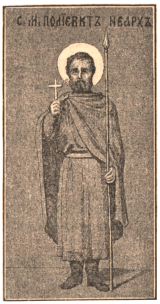
Для чествуемых же сегодня свв. мучеников – Полиевкта, бывшего язычником, и Неарха, бывшего христианином, дружба, убоявшаяся вечной разлуки, испуганная тем разъединением судьбы, которому подвергало их бывшее тогда сильное гонение на христиан, оказалась путём к нераздельному слиянию их в одном общем веровании в Иисуса Христа. Путём дружбы с христианином язычник постиг в этом случае истину вечной жизни в Царствии Вечного Бога, Единого общего Отца.
For the holy martyrs honored today — Polyeuctus, who was a pagan, and Nearchus, who was a Christian — friendship, which feared eternal separation, frightened by that division of fate to which the fierce persecution of Christians then raging subjected them, proved to be the path to their indivisible union in one common faith in Jesus Christ. Through friendship with a Christian, the pagan in this case came to comprehend the truth of eternal life in the Kingdom of the Eternal God, the one common Father.
Свв. Полиевкт и Неарх в мире были воинами и искренними друзьями; без сомнения, Неарх христианин часто изливал пред другом своим язычником заветные верования своей души, просвещённой христианской верой, и, без сомнения, не чужды они были чистому и возвышенному по природе сердцу Полиевкта.
Sts. Polyeuctus and Nearchus were soldiers in the world and sincere friends; without doubt, Nearchus the Christian often poured out before his pagan friend the cherished beliefs of his soul, enlightened by the Christian faith, and, without doubt, they were not alien to the pure and lofty heart of Polyeuctus by nature.
«Наша душа – сама по себе христианка», – говорит Тертуллиан. Вероятно и душа Полиевкта вмещала в себе все свойства для восприятия Божественной истины, и под влиянием своего друга ждала только случая для осуществления всего подготовленного в его душе этим влиянием. Случай этот представился. В 259 г. началось сильное гонение на христиан от императора римского Валериана.
"Our soul is by nature Christian," says Tertullian. Probably the soul of Polyeuctus also contained within itself all the qualities for receiving Divine truth, and under the influence of his friend awaited only the occasion for the realization of all that had been prepared in his soul by this influence. This occasion presented itself. In the year 259, a fierce persecution of Christians began under the Roman emperor Valerian.
Сильная скорбь овладела душой Неарха, когда объявлено было царское повеление о преследовании христиан. Не за свою участь встревожился он, его терзала та мысль, что друг его Полиевкт отречётся от него и оставить его, когда предадут его на мучения и смерть за веру, чуждую душе язычника. Мысль о вечной разлуке с другом была для него началом мученических испытаний...
Great sorrow seized the soul of Nearchus when the imperial decree for the persecution of Christians was announced. He was not troubled for his own fate; he was tormented by the thought that his friend Polyeuctus would renounce him and abandon him when he was delivered up to torments and death for a faith alien to the pagan's soul. The thought of eternal separation from his friend was for him the beginning of martyrdom's trials...
От любящего, чуткого сердца Полиевкта не укрылась печаль его друга. Узнав о причине её, он сам был поражён мыслью о предстоящей им разлуке.
The grief of his friend did not escape the loving, sensitive heart of Polyeuctus. Learning its cause, he himself was struck by the thought of their impending separation.
– Но зачем же разлучаться? – восставала вся душа его против ожидаемого события и впервые сознала в себе ту силу, которая побеждает всё в мире, перед которой нет несокрушимых препятствий. Впервые сделалось ему ясно, до какой степени он давно уже разделяет единственные истинные убеждения своего друга, до какой степени он, безусловно, причастен его христианскому влиянию.
"But why must we be separated?" — his whole soul rose up against the expected event, and for the first time it recognized within itself that power which conquers all things in the world, before which there are no insurmountable obstacles. For the first time it became clear to him to what extent he had long shared the sole true convictions of his friend, to what extent he was unconditionally partaker of his Christian influence.
– Неарх! – отозвался он к величайшему радостному изумлению своего друга, – чего опасаешься ты? разве я не знаю Христа твоего! Не горело ли сердце во мне, когда ты рассказывал мне о Нём, когда ты читал мне Евангелие! Только именем христианина ещё не назывался я до сих пор, но я гнушаюсь идолов и всегда чувствовал веру во Христа, Сына единого истинного Бога...
"Nearchus!" — he responded, to the greatest joyful astonishment of his friend, — "what do you fear? Do I not know your Christ! Did my heart not burn within me when you told me of Him, when you read the Gospel to me! Only by the name of Christian have I not yet been called until now, but I abhor idols and have always felt faith in Christ, the Son of the one true God..."
– Слава милосердию Божьему! – молился Неарх, слыша эти слова; – но любишь ли ты Бога так сильно, чтобы оставить ради Него и жену твою, и детей, и богатство? – тревожно спрашивал он Полиевкта.
"Glory to the mercy of God!" — prayed Nearchus, hearing these words; — "but do you love God so strongly as to leave for His sake both your wife, and your children, and your wealth?" — he asked Polyeuctus anxiously.
И с этими словами и в порыве неизъяснимого и неудержимого чувства, он бросился на городскую площадь, где, прочитав царский указ, разорвал и бросил его при народе, и потом, увидев, что несут идолов в капище, Полиевкт бросился к ним и разрушил их...
And with these words, and in a rush of inexpressible and irrepressible feeling, he rushed to the city square, where, having read the imperial decree, he tore it up and threw it down before the people, and then, seeing that idols were being carried to the temple, Polyeuctus rushed at them and destroyed them...
Немедленно был он схвачен и предан истязаниям. Напрасно жена его и тесть умоляли его не губить себя, не делать их несчастными. Он отвечал им только мольбой, чтобы они познали истинного Бога, чтобы они убедились, что ничтожны те боги, которых он сейчас так легко мог сокрушить в прах.
Immediately he was seized and given over to tortures. In vain his wife and father-in-law begged him not to destroy himself, not to make them unhappy. He answered them only with an entreaty that they might come to know the true God, that they might be convinced that those gods were worthless, which he had just now so easily been able to crush to dust.
С торжеством и любовью обращал Полиевкт свои последние взоры на толпу, обступившую его, и, увидав Неарха, к нему обратил последние слова свои: – мужайся, друг! помни завет любви, который утверждён между нами!.. – и вслед за тем преклонил голову под меч и предал Богу дух свой.
With triumph and love, Polyeuctus turned his last glances upon the crowd that surrounded him, and, seeing Nearchus, he addressed his last words to him: "Be of good courage, friend! Remember the covenant of love which has been established between us!.." — and immediately after, he bowed his head under the sword and commended his spirit to God.
Он был первым мучеником в Мелитине Армянской, близ правого берега р. Евфрата. Вслед за ним принял мученическую смерть и Неарх. Память о св. Полиевкте чтилась издревле. В храме, основанном в память его, молились родители преподобного Евфимия Великого и сам Евфимий.
He was the first martyr in Melitene of Armenia, near the right bank of the river Euphrates. After him, Nearchus also accepted a martyr's death. The memory of St. Polyeuctus was honored from ancient times. In the church founded in his memory, the parents of the Venerable Euthymius the Great and Euthymius himself prayed.
На Западе, как и на Востоке, мученик этот почитался карателем нарушителей клятв и договоров. Внучка императора Валентиниана III, Иулиания, построила великолепный храм в честь его, в Константинополе, при императоре Юстиниане.
In the West, as in the East, this martyr was revered as the punisher of violators of oaths and covenants. The granddaughter of the emperor Valentinian III, Juliana, built a magnificent church in his honor in Constantinople, under the emperor Justinian.
Св. мощи его почивали в храме Апостолов, в Константинополе, в XIV и XV столетиях, по свидетельству Русских и паломников Стефана и Зосимы.
His holy relics rested in the Church of the Apostles in Constantinople, in the 14th and 15th centuries, according to the testimony of the Russian pilgrims Stephen and Zosimas.
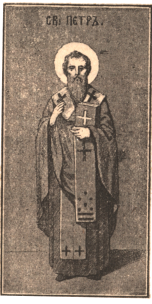
Св. Пётр был младшим братом св. Василия Великого и св. Григория Нисского. Его душевное воспитание совершилось под неотразимым влиянием христианской семьи: праведных родителей, святой сестры Макрины и святого брата Василия. Цветущая отрасль процветшей благочестием семьи, он оказался плодотворным деятелем на поприще Христова служения. Подражал в благочестии сестре своей, св. Макрине, в пустынножительстве – старшему брату своему Василию. Был им поставлен в епископы Севастии Армянской (ныне Савас), присутствовал членом 2-го Вселенского собора против ереси Македония, в 381 г.
St. Peter was the younger brother of St. Basil the Great and St. Gregory of Nyssa. His spiritual upbringing was accomplished under the irresistible influence of a Christian family: righteous parents, his holy sister Macrina, and his holy brother Basil. A flourishing offshoot of a family that had flourished in piety, he proved to be a fruitful worker in the field of Christ's service. He imitated his sister, St. Macrina, in piety, and his elder brother Basil, in the hermit life. He was appointed by him as bishop of Sebaste in Armenia (now Savas), and was present as a member of the Second Ecumenical Council against the heresy of Macedonius, in the year 381.
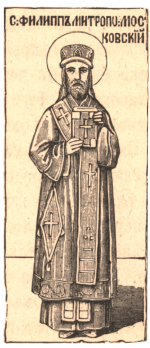
В жизни великого между святыми Божиими Филиппа – две части: жизнь пустынника и жизнь пастыря Церкви. Первой отвечал он словам Господа: буди верен до смерти (Откр.2:10). Во второй выполнял слова Господа: пастырь добрый душу свою полагает за овцы (Ин.10:11)68.
In the life of St. Philip, great among the saints of God, there are two parts: the life of a hermit and the life of a shepherd of the Church. In the first, he answered the words of the Lord: Be thou faithful unto death (Rev. 2:10). In the second, he fulfilled the words of the Lord: The good shepherd giveth his life for the sheep (Jn. 10:11)68.
Святой Филипп, в мире Феодор, родился 11 февраля 1507 г.69 Знатность происхождения и отличия предков по службе обещали ему блистательный ход в свете. Он происходил из знаменитого рода Колычевых70. Дед его Иван Лобан Колычев пользовался доверенностью Иоанна III; он был послом при Менгли-Гирее, занимал опасные посты: то воеводы передового полка, то начальника весьма важной Ивангородской крепости; под стенами последней он сложил и голову71. Отец Феодора, Степан Иванович, старший из пяти сыновей Лобана72, был любим великим князем Василием, как «муж, исполненный ратного духа». Преданный великому князю, боярин жил в Москве, тогда как братия его жили в Новгородских имениях; но не ослеплялся «высотою сана». Он любил читать полезные книги; когда же нужно было действовать для общей пользы, был твёрд и решителен, «стропотные стези до конца стирая». Мать Феодора, Варвара, была набожна и благочестива; она и скончалась инокиней Варсонофьей. Лучшим утешением для родителей Феодора было – защитить обиженного, дать кров бесприютным, накормить и одеть нищего. Понятно, что сын таких родителей получил лучшее воспитание. Феодор учился, как и другие – по церковным книгам, и любовь к душеполезному чтению осталась в нём до гроба; другим училищем был для него храм Божий. Дворянин знатного рода готовился и на службу отчизне. К Феодору приставлены были «отроки», с тем, чтобы упражнять его в верховой езде; у них учился он стрелять в цель из пищали и из лука, ловко владеть копьём и саблей, чего требовало тогдашнее приготовление к службе. Вероятно, он участвовал в Крымском походе 1522–1524 г. и в другом 1530 г.; в первом видим дядей его, а отец его желал, чтобы сын был воином отчизны73. Великий князь Василий взял Феодора ко двору, узнав о благородных качествах души его. Юный Иоанн полюбил его. Но в малолетство Иоанна жизнь при дворе была вдвойне опасна: опасна была для жизни от интриг боярских, опасна для сердца от разврата. Молодой придворный не разделял с другими жизни рассеянной; но не был и тем, чем мог быть. То самое, что, будучи старше 25 лет, не вступал он в супружескую жизнь, показывает, что в душе его была уже мысль о другом роде жизни; но он медлил, откладывал от времени до времени; и вот Господь Сам позвал его к лучшей жизни.
Saint Philip, in the world Theodore, was born on 11 February 150769. The nobility of his lineage and the distinctions of his ancestors in service promised him a brilliant course in the world. He came from the famous family of the Kolychevs70. His grandfather, Ivan Loban Kolychev, enjoyed the confidence of John III; he was an ambassador to Mengli-Girey, and occupied dangerous posts: now as voivode of the advance regiment, now as commandant of the very important Ivangorod fortress; beneath the walls of the latter he also laid down his head71. Theodore's father, Stepan Ivanovich, the eldest of Loban's five sons72, was beloved by Grand Prince Basil as "a man filled with a martial spirit." Devoted to the Grand Prince, the boyar lived in Moscow, while his brothers lived in the Novgorod estates; but he was not blinded by "the height of rank." He loved to read useful books; when it was necessary to act for the common good, he was firm and resolute, "utterly crushing crooked paths." Theodore's mother, Barbara, was devout and pious; she ended her life as the nun Barsanuphia. The best consolation for Theodore's parents was to defend the wronged, to give shelter to the homeless, to feed and clothe the poor. It is understandable that the son of such parents received the best upbringing. Theodore studied, like others, from church books, and his love for soul-beneficial reading remained with him to the grave; another school for him was the church of God. A nobleman of a famous lineage was also preparing for service to the fatherland. "Youths" were assigned to Theodore, to exercise him in horsemanship; from them he learned to shoot at a target with an arquebus and a bow, to wield a spear and saber skillfully, which the preparation for service at that time required. He probably participated in the Crimean campaign of 1522–1524 and in another in 1530; in the first we see his uncles, and his father desired that his son be a warrior for the fatherland73. Grand Prince Basil took Theodore to court, having learned of the noble qualities of his soul. The young John loved him. But during John's minority, life at court was doubly dangerous: dangerous for life from boyar intrigues, dangerous for the heart from debauchery. The young courtier did not share the dissipated life of others; but neither was he what he might have been. The very fact that, being over 25 years old, he did not enter into married life shows that in his soul there was already a thought of another kind of life; but he delayed, put it off from time to time; and then the Lord Himself called him to a better life.
В суровое правление Елены подвергся опале кн. Андрей, дядя великого князя Иоанна. Пред ним обязались клятвой сохранить жизнь и свободу его и его друзей. И, однако, заперли в тюрьму, где вскоре уморили. Колычевы, вместе с другими близкими к князю Андрею, подверглись жестокому преследованию. Родной дядя Феодора Степановича, Иван Колычев-Умный, ближний боярин князя Андрея, подвергнут был пытке и заперт в темницу, из которой освободился уже по смерти Елены; а Гавриил Владимирович Колычев был бит кнутом и потом повешен. Эта житейская буря была в мае 1537 г.74 Горькие события, столько близкие по родству к душе Феодора Степановича, не могли не подействовать на него; он живо почувствовал греховность и пустоту светской жизни. В третий воскресный день после пятидесятницы (5 июня 1537 г.), случилось ему во время литургии слушать слова Спасителя: «никтоже может двема господинома работати». На этот раз слова Спасителя так сильно поразили его, что он решился навсегда расстаться с миром. Это было на 30 году жизни его.
During the harsh rule of Elena, Prince Andrew, the uncle of Grand Prince John, fell into disgrace. Before him an oath was sworn to preserve the life and freedom of him and his friends. And yet, he was locked in prison, where he was soon starved to death. The Kolychevs, together with others close to Prince Andrew, were subjected to cruel persecution. Theodore Stephanovich's own uncle, Ivan Kolychev-Umny, a close boyar of Prince Andrew, was put to torture and locked in a dungeon, from which he was freed only after Elena's death; and Gabriel Vladimirovich Kolychev was beaten with a knout and then hanged. This storm of worldly life occurred in May 1537.74 The bitter events, so close by kinship to the soul of Theodore Stephanovich, could not but affect him; he keenly felt the sinfulness and emptiness of worldly life. On the third Sunday after Pentecost (June 5, 1537), it happened that during the Divine Liturgy he heard the words of the Savior: "No man can serve two masters." This time the words of the Savior struck him so powerfully that he resolved to part forever with the world. This was in the 30th year of his life.
Феодор тайно, в одежде простолюдина, удалился из Москвы и близ озера Онеги в деревне Хижах пробыл несколько времени в занятиях селянина, чтобы остаться незамеченным в случае поиска; потом явился он в Соловецкую обитель и, незнаемый никем, кто и откуда он, принял на себя суровые работы: «сын знаменитых и славных родителей рубил дрова, копал в огороде землю, работал на мельнице и на рыбной ловле». Испытанный в течение полутора года, пострижен он, по желанию своему, в монашество с именем Филиппа и отдан под надзор опытному старцу Ионе, собеседнику преподобного Александра Свирского75. Игумен Алексий послал нового инока в монастырскую кузницу, и Филипп колотил железо тяжёлым молотом; потом заставили его работать в хлебне. Филипп оказывался во всём лучшим послушником; несмотря на тяжёлую работу, он никогда не оставлял служений храма, – первым являлся в храме и последним выходил из него. Смиренный труженик ободрён был в подвигах небесным покровом: в храме обители поныне показывают образ Богоматери «хлебенный», утешивший хлебопекаря Филиппа. Братия хвалили трудолюбивого инока, но он удалился из обители в уединение, и долго подвизался там, незримый людьми. Когда же возвратился в обитель, игумен Алексий поручил ему надзор за начальными послушниками. Спустя 9 лет жизни Филипповой в обители, игумен Алексий, чувствуя свою дряхлость, пожелал, чтобы братия избрали себе другого настоятеля. Выбор пал на Филиппа.
Theodore secretly, in the garb of a commoner, withdrew from Moscow and near Lake Onega in the village of Khižy spent some time in the labors of a peasant, so as to remain unnoticed in case of a search; afterwards he appeared at the Solovetsky monastery and, unknown to anyone as to who he was or whence he came, took upon himself severe labors: "the son of renowned and illustrious parents chopped wood, dug in the garden, worked at the mill and at fishing." Having been tested for a year and a half, he was tonsured, according to his own desire, into monasticism with the name Philip and placed under the supervision of the experienced elder Jonah, a companion of the Venerable Alexander of Svir.75 Abbot Alexis sent the new monk to the monastery forge, and Philip beat iron with a heavy hammer; afterwards they set him to work in the bakery. Philip proved himself in everything the best novice; despite the heavy labor, he never abandoned the church services—he was the first to appear in church and the last to leave it. The humble toiler was encouraged in his struggles by a heavenly protection: in the monastery church they still show the "Bread" Icon of the Mother of God, which comforted the baker Philip. The brethren praised the industrious monk, but he withdrew from the monastery into solitude, and long struggled there, unseen by men. When he returned to the monastery, Abbot Alexis entrusted him with the supervision of the new novices. After 9 years of Philip's life in the monastery, Abbot Alexis, feeling his own infirmity, desired that the brethren choose another superior for themselves. The choice fell upon Philip.
Посвящённый не по желанию в игумена (1548 г.) Новгородским архиепископом Феодосием, он с ревностью принялся за дела звания своего; но скоро опять удалился в любезную пустыню и только для причащения св. приходил в обитель76. Игум. Алексий ещё более года управлял обителью, и скончался. По просьбам братии, св. Филипп снова принял игуменство. В 1550 и 1551 г. новый игумен был в Москве и Новгороде по нуждам обители; он привёз дары царя для Соловецких чудотворцев и три жалованный грамоты: одной из них, по просьбе блаж. Филиппа, предоставлено Соловецкой обители построить храм на месте, где скончался преп. Савватий, и деревня отдана в её ведение77. При блаж. Филиппе Соловецкая обитель получила новый вид и в хозяйственном, и в нравственном быту.
Consecrated as abbot against his will (1548) by Novgorod Archbishop Theodosius, he zealously took up the duties of his office; but soon again withdrew to his beloved hermitage, coming to the monastery only for Holy Communion.76 Abbot Alexis governed the monastery for yet more than a year and then reposed. At the entreaties of the brethren, St. Philip again accepted the abbacy. In 1550 and 1551 the new abbot was in Moscow and Novgorod on monastery business; he brought gifts from the Tsar for the Solovetsky Wonderworkers and three charters of grant: by one of them, at the request of the blessed Philip, the Solovetsky monastery was permitted to build a church on the spot where the Venerable Sabbatius had reposed, and a village was given over to its administration.77 Under the blessed Philip, the Solovetsky monastery received a new aspect both in its economic and in its moral life.
В 1538 г. обитель обращена была в пепел пожаром78 Игумен Алексий, при слабости своей, немногое успел восстановить. Число братии не уменьшалось, напротив увеличивалось, являя ропот на скудость содержания79. Хозяйственные распоряжения Филиппа были изумительны. Не говорим о множестве зданий, построенных им для жилья и экономических нужд. Он умножил и улучшил соляные варницы, – главный источник содержания обители; соль на судах отвозили в Холмогоры, Устюг, Вологду, Тотьму, и на деньги, полученные за соль, покупали хлеб и другие съестные припасы80. При нём устроена в обители мельница; 52 озера соединены каналом и тем осушены болотистые места для сенокосов; проведены дороги по дебрям и болотам. Для братии необходимо было молоко, а по уставу обители запрещалось держать в обители плодящихся животных.
In 1538 the monastery was reduced to ashes by a fire.78 Abbot Alexis, in his weakness, succeeded in restoring little. The number of brethren did not diminish; on the contrary, it increased, giving rise to murmuring about the scantiness of provisions.79 Philip's economic arrangements were astonishing. We say nothing of the multitude of buildings he erected for dwelling and for economic needs. He multiplied and improved the saltworks—the main source of the monastery's support; the salt was shipped to Kholmogory, Ustiug, Vologda, Totma, and with the money received for the salt they bought grain and other food supplies.80 Under him a mill was built in the monastery; 52 lakes were joined by a canal, and thereby marshy places were drained for hayfields; roads were laid through thickets and swamps. Milk was necessary for the brethren, but according to the monastery rule it was forbidden to keep breeding animals within the monastery.
Блаж. игумен представил то и другое архипастырю, и, по архипастырскому разрешению, на одном из островов, в 10 вёрстах от монастыря, построил скотный двор и завёл рогатый скот; здесь же пустил в леса лапландских оленей. Таким образом улучшена была пища братии: при блаж. Филиппе являлись на трапезе, кроме других блюд, щи с маслом, пироги, кисель, чего прежде не было81. Выписывая из разных мест огромное количество сукон и кож, он нашёл возможность выделывать меха и кожи из собственных оленей и также нерпьи кожи82. Он написал (1553 г.) для братии устав, сколько должно быть у каждого в келье одежды и обуви, и тем положил границы своеволию83. Чтобы доставить покой и призрение дряхлым и больным, устроил он в монастыре больницу. Царь Иоанн Васильевич, по просьбе благочестивого игумена, дарил обители и льготы, и земли84. Уставные грамоты, данные препод. игуменом в руководство заведовавшим монастырскими вотчинами, сколько дышат любовью, столько же показывают в писавшем их умную предусмотрительность, осторожное благоразумие и верность правде85. Он назначил тиуну, слугам, доводчикам жалования: это значит, что он освободил крестьян от обязанности того времени – содержать правосудие и правление на свой счёт. Современный св. Филиппу иностранец писал (1553 г.): «у русских нет величайшего из зол – законников, а каждый за себя адвокат»86. Это верно, хотя ныне некоторым нравится «величайшее зло». Но, не допустив одного зла, допускали другое, – предоставляли тиунам и доводчикам жить на счёт подсудимых. Преп. игумен изгонял и это зло. Он предписывал наблюдать, при раскладке повинностей, самую строгую правду, не допускать между крестьянами пьянства и азартной игры в зернь.
The blessed abbot presented both matters to the archpastor, and, with the archpastor's permission, on one of the islands, 10 versts from the monastery, he built a cattle yard and introduced horned cattle; here he also released Lapland reindeer into the forests. Thus the food of the brethren was improved: under the blessed Philip, besides other dishes, cabbage soup with butter, pies, and kissel appeared at the refectory, which had not been there before.81 Ordering huge quantities of cloth and hides from various places, he found it possible to dress furs and leather from his own reindeer and also sealskins.82 He wrote (1553) a rule for the brethren, specifying how much clothing and footwear each should have in his cell, and thereby set limits to self-will.83 To provide peace and care for the infirm and sick, he built a hospital in the monastery. Tsar Ivan Vasilievich, at the request of the pious abbot, granted the monastery both privileges and lands.84 The charters of regulation given by the Venerable abbot as a guide to those in charge of the monastery's estates breathe as much love as they show in their author intelligent foresight, cautious prudence, and fidelity to truth.85 He assigned salaries to the tiun, servants, and dovodchiks: this means that he freed the peasants from the obligation of that time—to support justice and administration at their own expense. A foreigner contemporary with St. Philip wrote (1553): "The Russians have no greatest evil—lawyers, but each man is his own advocate."86 This is true, although nowadays some like "the greatest evil." But, not admitting one evil, they admitted another—they allowed tiuns and dovodchiks to live at the expense of those under judgment. The Venerable abbot drove out this evil as well. He prescribed that the strictest justice be observed in the apportionment of duties, and that drunkenness and gambling at dice not be permitted among the peasants.
Если преподобный игумен так заботился о нравственности рабочих обители, то понятно, сколько заботился он о возвышении духовной жизни между братиями-иноками.
If the Venerable abbot so cared for the morality of the monastery's workers, it is understandable how much he cared for the elevation of spiritual life among the brethren-monks.
Жизнь духовная цвела при нём в обители: опыт тому – преподобные Иоанн и Логгин, Вассиан и Иона, прославленные Господом. Блажен. Филипп принимал в обитель разборчиво, только таких, которые искренно желали подвизаться для Господа. Он не давал места в обители для праздности и лени: все трудились в ней. Чтобы оживить в братии дух, живший в великих основателях обители, он старался восстановить всё, напоминавшее о них: отыскал образ Богоматери-Одигитрии, принесённый на остров св. Савватием; нашёл каменный крест, стоявший пред его кельей, псалтырь и служебные ризы преподобных; эти ризы он починил, отличил надписью и «учинил их первыми ризами». По его распоряжению описаны были чудеса, совершённые преподобными, по прибытии его на остров87. Храм – училище христианского благочестия; храм – дом Божий. Блажен. Филипп построил в обители такие храмы, которые достойно носят имя селений и славы Божией и учат благоговению. С 1552 г. начал он строить каменный Успенский храм с трапезой и колокольней, всё здание 82 сажени в окружности; храм освящён в 1557 г. Прежде того в обители были клепала каменные и била деревянные; блаж. игумен приобрёл три колокола: один – в 173 пуда, другой – в 80 п., третий – в 30 п.88. Затем, приступил он к построению каменного главного храма обители, в честь Преображения Господня. Братия указали ему на недостаток средств. Он отвечал: «упование на Бога необманчиво; Он пошлёт средства, если намерение наше угодно Ему». В 1558 г. заложил он храм на 170 квадр. саженях. Игумен участвовал своими руками в работах, и по его просьбе царь прислал 1.000 р. для нового храма. Преподобный приготовил утварь для храма, разноцветные стёкла для рам, многое дал из своей собственности. Под северной папертью выкопал себе могилу, рядом с могилой наставника своего о. Ионы89. По временам от хлопот звания своего удалялся он на безмолвие, за 2 версты от обители, и место уединённых подвигов его доселе называется пустыней Филипповой. Для ревнителей уединения устроил он на Заяцком острове скит, а по другим местам – уединённые кельи.
Spiritual life flourished under him in the monastery: evidence of this are the Venerable John and Longinus, Bassian and Jonah, glorified by the Lord. The blessed Philip admitted to the monastery only those who sincerely desired to struggle for the Lord. He gave no place in the monastery to idleness and laziness: all labored there. To revive in the brethren the spirit that had lived in the great founders of the monastery, he strove to restore everything that reminded them of them: he found the Hodegetria Icon of the Mother of God, brought to the island by St. Sabbatius; he discovered the stone cross that had stood before his cell, the Psalter and the service vestments of the Venerable ones; he repaired these vestments, distinguished them with an inscription, and "made them the first vestments." By his order, the miracles performed by the Venerable ones were recorded after his arrival on the island.87 The church is a school of Christian piety; the church is the house of God. The blessed Philip built in the monastery such churches as worthily bear the name of dwellings and glory of God and teach reverence. In 1552 he began to build a stone Dormition church with a refectory and bell-tower, the whole building 82 sazhens in circumference; the church was consecrated in 1557. Before that, the monastery had stone semantra and wooden beaters; the blessed abbot acquired three bells: one of 173 poods, another of 80 poods, a third of 30 poods.88 Then he set about building the stone main church of the monastery, in honor of the Transfiguration of the Lord. The brethren pointed out to him the lack of means. He replied: "Hope in God is not deceptive; He will send the means if our intention is pleasing to Him." In 1558 he laid the foundation of the church on 170 square sazhens. The abbot participated with his own hands in the work, and at his request the Tsar sent 1,000 rubles for the new church. The Venerable one prepared vessels for the church, colored glass for the windows, and gave much from his own possessions. Under the northern porch he dug a grave for himself, next to the grave of his instructor, Father Jonah.89 From time to time, from the cares of his office, he withdrew into silence, two versts from the monastery, and the place of his solitary struggles is still called Philip's Hermitage. For zealots of solitude he built a skete on Zayatsky Island, and in other places—solitary cells.
В 1566 году Иоанн Грозный вызвал игумена Филиппа в Москву «для духовного совета». Это значило, что Филипп облечён будет саном первосвятительским, который сложили с себя Афанасий и блаженный Герман, отягчённые делами Иоанна. Царь принял Филиппа с честью, говорил и обедал с ним дружески, и, наконец, объявил, что желает видеть его на кафедре митрополита. Филипп долго не соглашался принять высокий сан. «Не могу, – говорил он со слезами, – принять на себя дело, превышающее силы мои, отпусти меня, Господа ради; зачем малой ладье поручать тяжесть великую?» Царь настаивал на своём. Филипп объявил, наконец, что исполнит волю царя, но с тем, чтобы уничтожена была опричнина, от которой страдает Россия. Иоанн отвечал, что опричнина нужна для царя и царства; что иначе против него злоумышляют. Блаженного Филиппа уговорили согласиться на такую последнюю волю гневного царя: «не вступаться в дела двора и опричнины, после поставления не удаляться с митрополии за то, что царь не уничтожит опричнины, но советоваться с царём, как советовались прежнее митрополиты». Таким образом, св. Филипп оставил за своей совестью свободу и долг печаловаться за невинно гонимых и говорить о правде Евангельской. В этом не могли отказать ему, потому что и отец Иоанна, и сам Иоанн не раз в грамотах писали, что для отца своего митрополит государь прощает того или другого или возвращает взятое в казну90. Блаженный Филипп 25 июля посвящён был в митрополита91. В первое за тем время дела шли покойно. Развратная опричнина притихла, опасаясь пустынного святителя. Царь осыпал его ласками и вниманием уважительным. Москва радовалась, увидев тишину с появлением нового святителя. Святителю много было дел и хлопот в столице, близ царя. И он говорил себе: «что случилось с тобою, Филипп? Из какой тишины и в какой шум попал ты?».
In 1566, Ivan the Terrible summoned Abbot Philip to Moscow “for spiritual counsel.” This meant that Philip would be invested with the hierarchal rank, which Athanasius and the blessed German had laid aside, burdened by the deeds of Ivan. The Tsar received Philip with honor, spoke and dined with him in a friendly manner, and finally declared that he wished to see him on the metropolitan cathedra. For a long time Philip did not consent to accept the high rank. “I cannot,” he said with tears, “take upon myself a work exceeding my strength; let me go, for the Lord’s sake; why entrust a great burden to a small boat?” The Tsar insisted on his will. Philip finally declared that he would fulfill the Tsar’s will, but on condition that the oprichnina, from which Russia was suffering, be abolished. Ivan replied that the oprichnina was necessary for the Tsar and the kingdom; that otherwise they were plotting evil against him. The blessed Philip was persuaded to agree to such a final will of the wrathful Tsar: “not to interfere in the affairs of the court and the oprichnina, not to withdraw from the metropolitanate after his installation because the Tsar would not abolish the oprichnina, but to counsel with the Tsar as the former metropolitans had counseled.” Thus, St. Philip retained for his conscience the freedom and duty to intercede for the innocently persecuted and to speak the truth of the Gospel. They could not refuse him this, because both Ivan’s father and Ivan himself had more than once written in charters that, for the sake of his father the metropolitan, the sovereign would forgive one or another person or return what had been taken into the treasury90. The blessed Philip was consecrated metropolitan on July 2591. In the time immediately following, affairs proceeded peacefully. The depraved oprichnina grew quiet, fearing the desert-dwelling hierarch. The Tsar showered him with caresses and respectful attention. Moscow rejoiced, seeing tranquility with the appearance of the new hierarch. The hierarch had much work and trouble in the capital, near the Tsar. And he said to himself: “What has happened to you, Philip? From what stillness and into what turmoil have you fallen?”
Чтобы иметь вблизи себя любезные ему предметы оставленной пустыни, построил он храм Зосимы и Савватия на своём дворе. Из пастырских распоряжений его замечательно определение Суздальского епископа Афанасия в архиепископа недавно возвращённому Полоцку. Афанасий и после посвящения оставался в Москве до конца года, частью потому, что в Смоленске была зараза, более же оттого, что Полоцкая епархия, в которой господствовал фанатизм папистов, требовала особенных советов и пособий первосвятителя: св. Филипп впоследствии отправил в Полоцк из Новгорода 33 священника и диакона92.
In order to have near him the beloved objects of the desert he had left, he built a church of Zosimas and Sabbatius in his own court. Among his pastoral directives, notable is the appointment of Athanasius, Bishop of Suzdal, as archbishop to the recently recovered Polotsk. Athanasius, even after his consecration, remained in Moscow until the end of the year, partly because there was a plague in Smolensk, but more because the Polotsk diocese, in which the fanaticism of the Papists held sway, required the special counsel and assistance of the chief hierarch: St. Philip later sent thirty-three priests and deacons from Novgorod to Polotsk92.
В последней половине 1567 г. поднялись дела опричнины – доносы, клеветы, убийства, грабежи; особенно по возвращению из безуспешного похода литовского царь был в сильном раздражении, и этим пользовались злодеи. Над стонами невинных смеялись они и предавались гнусным делам93. Святитель убеждал Новгородского архиепископа Пимена и других пастырей стать за правду, но те от малодушия трепетали. Св. Филипп отправился увещевать царя в Александровскую слободу, – эту берлогу разврата и злодейств94. «Державный царь! – говорил святитель наедине Иоанну, – облечённый саном самым высоким, ты должен более всего чтить Бога, от Которого принял сан; ты образ Божий, но вместе и прах. Властелин – тот, кто владеет собой и не служит низким похотям. Слышно ли, чтобы благочестивые цари волновали свою державу, как взволнована твоя?» Иоанн закипел гневом и сказал: «что тебе, чернецу, до наших царских дел?» Святитель отвечал: «по благодати Св. Духа, по избранию священного собора и по нашему изволению, я – пастырь Христовой церкви. Мы с тобой должны заботиться о благочестии и покое православного христианского царства».
In the latter half of 1567, the affairs of the oprichnina intensified—denunciations, slanders, murders, robberies; especially after returning from an unsuccessful Lithuanian campaign, the Tsar was in a state of great irritation, and the evildoers took advantage of this. They mocked the groans of the innocent and gave themselves over to vile deeds93. The hierarch urged Archbishop Pimen of Novgorod and other pastors to stand for the truth, but they trembled from faint-heartedness. St. Philip set out to admonish the Tsar in Alexandrovskaya Sloboda—that den of debauchery and villainy94. “Sovereign Tsar!” said the hierarch to Ivan in private, “clothed with the highest rank, you must above all honor God, from Whom you received the rank; you are an image of God, but also dust. A master is he who masters himself and does not serve base passions. Is it heard that pious tsars have agitated their realm as yours is agitated?” Ivan blazed with anger and said: “What is it to you, a monk, concerning our royal affairs?” The hierarch replied: “By the grace of the Holy Spirit, by the election of the sacred council and by our own will, I am a shepherd of Christ’s Church. You and I must care for the piety and peace of the Orthodox Christian kingdom.”
Молчание неуместно теперь, отвечал святитель: оно размножило бы грехи и пагубу. Если будем выполнять произволы человеческие, какой ответ дадим в день пришествия Христова? Господь сказал: да любите друг друга; больши сея любве никтоже имать, да кто душу свою положит за други своя. Аще в любви Моей пребудете воистину ученицы Мои будете.
“Silence is out of place now,” replied the hierarch; “it would multiply sins and destruction. If we fulfill human whims, what answer shall we give on the day of Christ’s coming? The Lord said: Love one another; greater love hath no man than this, that a man lay down his life for his friends. If ye abide in My love, ye shall truly be My disciples.”
Твёрдый начётчик книжный отвечал словами Давида: «искреннии мои прямо мне приближишася и сташа, и ближнии мои отдалече мене сташа, и нуждахуся ищущии душу мою, ищущии злая мне».
The Tsar, a firm expert in books, replied with the words of David: “Mine own familiar friends have drawn near and stood before me, and they that were near me stood afar off, and they that sought my soul laid snares for me, and they that sought evil to me”.
«Государь царь! – сказал святитель, – надобно различать добрых людей от худых: одни берегут общую пользу, другие говорят тебе неправду, по своим видам; грешно не обуздывать людей худых; прогони от себя людей негодных, пагубных тебе и царству; пусть водворится любовь на месте разделения и вражды».
“Sovereign Tsar!” said the hierarch, “it is necessary to distinguish good people from bad: some guard the common good, others speak falsehood to you for their own purposes; it is sinful not to restrain evil people; drive away from yourself worthless men, ruinous to you and the kingdom; let love be established in place of division and enmity.”
«Я не посылал, – отвечал святитель, – ни просьбы, ни ходатаев, и не наполнял ничьих рук деньгами, чтобы получить сей сан. Ты лишил меня пустыни моей. Твори, как хочешь».
“I sent neither petition nor intercessors,” replied the hierarch, “nor did I fill anyone’s hands with money to obtain this rank. You deprived me of my desert. Do as you wish.”
Опричники – Малюта Скуратов, Василий Грязной и другие стали теперь настойчиво вооружать царя против митрополита, а от насилия и злодейств их ещё более стали страдать невинные. Иоанн возвратился в Москву в чёрной одежде и с обнажённым мечом; в таком виде сопровождали его опричники. Последовали казни. К святителю приходили вельможные и простые, и со слезами умоляли о защите. Святитель утешал несчастных словами Евангелия. «Дети! – говорил он, – Господь милостив! Он не посылает искушений более, чем можем понести; надобно быть и соблазнам; горе тому, кем соблазн приходит. Всё это, избранники Божии, случилось с нами по грехам нашим, для исправления нашего; да и счастье обещано нам не на земле, а на небе». Марта 2 (1568 г.), в крестопоклонное воскресение, царь пришёл в храм соборный. Он и опричники были в чёрных одеждах, с высокими шлыками на главах с обнажёнными оружиями. Иоанн подошёл к митрополиту, стоявшему на своём месте, и ждал благословения. Святитель безмолвно смотрел на образ Спасителя. Опричники сказали: «Владыко! Государь пред тобою, благослови его». Блаженный, взглянув на Иоанна, сказал: «Государь! Кому поревновал ты, приняв на себя такой вид и исказив благолепие твоего сана? Ни в одежде, ни в делах – не видно царя. У татар и язычников есть закон и правда, а в России нет правды; в целом свете уважают милосердие, а в России нет сострадания даже для невинных и правых. Убойся, государь, суда Божия. Сколько невинных людей страдает! Мы здесь приносим жертву бескровную Богу, а за алтарём льётся невинная кровь христианская! Грабежи и убийства совершаются именем царя. Если и есть виновные, прости, чтобы тебя простил Господь. Кто не любит брата, тот не Божий»96.
The oprichniki—Malyuta Skuratov, Vasily Gryaznoy, and others—now began persistently to arm the Tsar against the metropolitan, and from their violence and villainies the innocent suffered even more. Ivan returned to Moscow in black clothing and with a drawn sword; the oprichniki accompanied him in such attire. Executions followed. Noble and simple people came to the hierarch, beseeching him with tears for protection. The hierarch comforted the unfortunate with the words of the Gospel. “Children!” he said, “the Lord is merciful! He does not send temptations beyond what we can bear; there must also be offenses; woe to him by whom the offense comes. All this, chosen ones of God, has happened to us because of our sins, for our correction; and happiness is promised us not on earth, but in heaven.” On March 2 (1568), on the Sunday of the Veneration of the Cross, the Tsar came to the cathedral church. He and the oprichniki were in black garments, with high pointed caps on their heads and with drawn weapons. Ivan approached the metropolitan, who was standing in his place, and waited for a blessing. The hierarch silently gazed at the icon of the Savior. The oprichniki said: “Vladyka! The Sovereign is before you; bless him.” The blessed one, looking at Ivan, said: “Sovereign! Whom have you emulated, taking upon yourself such an appearance and disfiguring the comeliness of your rank? Neither in clothing nor in deeds is a tsar to be seen. Among Tatars and pagans there is law and justice, but in Russia there is no justice; throughout the whole world mercy is respected, but in Russia there is no compassion even for the innocent and the righteous. Fear, O Sovereign, the judgment of God. How many innocent people are suffering! Here we offer the bloodless sacrifice to God, but behind the altar innocent Christian blood is shed! Robberies and murders are committed in the Tsar’s name. If there are guilty ones, forgive, that the Lord may forgive you. He who does not love his brother is not of God”96.
Иоанн распалился гневом и, растерявшись, сказал: «Филипп! – ужели думаешь переменить нашу волю? Не лучше ли быть тебе одних с нами мыслей?»
Ivan burned with anger and, losing his composure, said: “Philip! Do you think to change our will? Would it not be better for you to be of one mind with us?”
«К чему же вера наша? – отвечал святитель. – Напрасны и страдания Спасителя, и Его заповеди, данные нам. Не жалею я тех, которые пострадали невинно; они мученики Божьи, но скорблю за твою душу».
“To what purpose, then, is our faith?” replied the hierarch. “Vain are the sufferings of the Savior and His commandments given to us. I do not grieve for those who have suffered innocently; they are martyrs of God, but I sorrow for your soul.”
Иоанн пришёл в неистовство, махал рукой на святителя, стучал палкой об пол храма и грозил казнями. «Нам ли противишься ты? Увидим твёрдость твою», говорил Иоанн.
Ivan flew into a frenzy, waved his hand at the hierarch, struck his staff on the floor of the church, and threatened executions. “Do you oppose us? We shall see your firmness,” said Ivan.
Вне себя от ярости, Иоанн вышел из храма. Перед собором епископов явился чтец с гнусной клеветой на святителя. Новгородский Пимен, унижавшийся пред царём, тогда как не мог в душе верить клевете, сказал вслух других: «царя обличает, а сам делает гнусности». Исповедник правды сказал Пимену: «любезный! человекоугодничеством домогаешься ты получить чужой престол, но лишишься и своего». Чтец тогда же со слезами сознался, что его заставили угрозами взнести клятву. Святитель, простив чтеца, предал себя в волю Божию.
Beside himself with rage, Ivan left the church. Before the council of bishops, a reader appeared with a vile slander against the hierarch. Pimen of Novgorod, who humbled himself before the Tsar, though he could not in his soul believe the slander, said aloud in the presence of others: “He denounces the Tsar, yet commits vile deeds himself.” The confessor of truth said to Pimen: “Beloved! By pleasing men you seek to obtain another’s throne, but you will lose your own as well.” The reader then, with tears, confessed that he had been forced by threats to bring a false accusation. The hierarch, forgiving the reader, surrendered himself to the will of God.
«Вижу, – говорил он духовным сановникам, – что хотят моей погибели, и за что же? за то, что никому не льстил я, не давал никому подарков, не угощал никого пирами. Но что бы ни было, не перестану говорить правду, – не хочу носить бесполезно сан святительский».
“I see,” he said to the spiritual dignitaries, “that they desire my destruction, and for what? Because I flattered no one, gave gifts to no one, feasted no one with banquets. But whatever may happen, I will not cease to speak the truth—I do not wish to bear the hierarchal rank uselessly.”
Он переехал из Кремля на Никольскую улицу в старый монастырь св. Николая (ныне греческий)97, так как уже очевидно было, что царь не хочет видеть его близ себя; но блаженный исповедник не оставлял по своей воле вверенного ему Господом служения. Июля 28 он совершал крестный ход в Новодевичьем монастыре. Иоанн, желавший казаться набожным, явился здесь с опричниками в их полном наряде. В то время, когда пришёл царь, святитель хотел читать Евангелие, и, преподавая мир всем, увидел опричника в тафье. «Державный царь! – сказал святитель, – добрые христиане слушают слово Божье с непокрытыми главами; с чего же эти люди вздумали следовать магометанскому закону – стоять в тафиях?»
He moved from the Kremlin to Nikolskaya Street, to the old monastery of St. Nicholas (now the Greek monastery)97, since it was already evident that the Tsar did not wish to see him near himself; but the blessed confessor did not abandon of his own will the ministry entrusted to him by the Lord. On July 28, he was conducting a procession of the cross at the Novodevichy Monastery. Ivan, who wished to appear devout, appeared there with the oprichniki in their full attire. At the time when the Tsar arrived, the hierarch was about to read the Gospel, and, giving the peace to all, he saw an oprichnik wearing a skullcap. “Sovereign Tsar!” said the hierarch, “good Christians listen to the word of God with uncovered heads; why have these people taken it into their heads to follow the Mohammedan law—to stand in skullcaps?”
«Кто это такой?» спросил царь. Но виновный спрятал тафью, а товарищи его сказали, что митрополит лжёт и восстаёт на царя. Иоанн вышел из себя, грубо ругал святителя, называл его лжецом, мятежником, злодеем, клялся, что уличит его в преступлениях.
“Who is that?” asked the Tsar. But the guilty one hid his skullcap, and his companions said that the metropolitan was lying and rising up against the Tsar. Ivan lost his temper, grossly reviled the hierarch, calling him a liar, a rebel, a villain, and swore that he would convict him of crimes.
После совещания со Скуратовым и духовником Евстафием, которого святитель подверг запрещению за недостойную жизнь, приказано было произвести следствие в Соловках. Долго не могли там и пытками вынудить какое-либо обвинение Филиппу; там называли его праведным и святым; наконец игумен Паисий, которому обещали сан епископа, монах Зосима и с ним ещё некоторые, враждовавшие на Филиппа ещё во время его игуменства, согласились быть клеветниками против святителя. Составили донос. В Москве Паисий, в присутствии царя и духовенства, со всей наглостью обвинял Филиппа. Святитель кротко сказал Паисию: «что сеешь, то и пожнёшь». И обратившись к царю, говорил: «государь! – не думаешь ли, что я боюсь смерти? Достигнув старости, готов я предать дух мой Всевышнему, моему и твоему Владыке. Лучше умереть невинным или и мучеником, чем в сане митрополита безмолвно терпеть ужасы и беззакония несчастного времени. Оставляю жезл и мантию митрополичьи. А вы, святители и все служители алтаря! пасите верное стадо Христово; готовьтесь дать отчёт и страшитесь Небесного Царя более, чем земного». Святитель снял с себя белый клобук и мантию. Но царь остановил его, сказав, что ему до́лжно ждать суда над собою, заставил назад взять утварь святительскую и ещё служить литургию 8 ноября98. Это значило, что Иоанн хотел предать публичному позору святого и вместе дать своим насилиям над святителем вид законного суда пред народом. Участь святителя тогда же, ноября 4-го, была решена: свирепый Иоанн требовал сжечь Филиппа как волшебника, и только духовенство упросило оставить ему жизнь без сана99. Ноября 8-го, в день архангела Михаила, святитель начал служение в соборе. Явился Басманов и в слух народа прочёл осуждение Филиппу по доносам клеветы. Опричники бросились в алтарь, сорвали со святителя одеяние его, одели в рубище, вытолкали из храма, посадили на дровни и повезли в Богоявленский монастырь, осыпая бранью и побоями. Толпы народа со слезами провожали святителя, а он спокойно благословлял народ и свою долю. Пред вратами обители он сказал народу: «дети! всё, что мог, сделал я; если бы не для любви к вам, и одного дня не оставался бы я на кафедре... Уповайте на Бога, терпите». На другой день привели его в Кремль, для выслушивания приговора: Филиппу, будто бы уличённому в волшебстве и тяжких винах, надлежало кончить дни в заключении.
After conferring with Skuratov and the confessor Eustathius—whom the Hierarch had suspended for an unworthy life—an investigation was ordered to be conducted at Solovki. For a long time, even under torture, they could not extort any accusation against Philip there; there they called him righteous and holy. Finally, Abbot Paisius, to whom the rank of bishop was promised, the monk Zosima, and with them a few others who had borne enmity toward Philip during his abbacy, agreed to become slanderers against the Hierarch. They drew up a denunciation. In Moscow, Paisius, in the presence of the Tsar and the clergy, accused Philip with utter insolence. The Hierarch meekly said to Paisius: “What you sow, you shall reap.” And turning to the Tsar, he said: “Sovereign! Do you think that I fear death? Having reached old age, I am ready to give up my spirit to the Most High, my Lord and yours. It is better to die innocent, or even as a martyr, than to bear in silence, in the rank of metropolitan, the horrors and lawlessness of this unhappy time. I lay down the metropolitan’s staff and mantle. And you, hierarchs and all servants of the altar! Shepherd the faithful flock of Christ; prepare to give account and fear the Heavenly King more than the earthly one.” The Hierarch removed his white klobuk and mantle. But the Tsar stopped him, saying that he must await judgment upon himself, and forced him to take back the hierarchal vestments and to serve the Divine Liturgy again on November 898. This meant that John wished to subject the saint to public disgrace and at the same time give his violence against the Hierarch the appearance of a lawful trial before the people. The Hierarch’s fate was decided at that time, on November 4: the savage John demanded that Philip be burned as a sorcerer, and only the clergy prevailed upon him to spare his life, but without his rank99. On November 8, the day of the Archangel Michael, the Hierarch began the service in the cathedral. Basmanov appeared and read aloud to the people the condemnation of Philip based on the slanderous denunciations. The oprichniki rushed into the altar, tore the vestments from the Hierarch, dressed him in rags, thrust him out of the church, placed him on a sled, and drove him to the Monastery of the Theophany, showering him with abuse and blows. Crowds of people followed the Hierarch with tears, while he calmly blessed the people and his own lot. Before the gates of the monastery he said to the people: “Children! I have done all that I could; if it were not for love of you, I would not have remained on the cathedra for a single day... Trust in God, endure.” The next day they brought him to the Kremlin to hear the sentence: Philip, supposedly convicted of sorcery and grave crimes, was to end his days in confinement.
«Вспомни, царь, – сказал праведник, – каковы были добрые цари; помни, что на злых есть строгий суд правды Божией». Иоанн движением руки велел неумолимым стражам взять Филиппа. Его отвели в смрадную комнату, заковали в оковы, на шею наложили тяжёлую колоду, руки скрепили цепью и целую неделю не давали ему куска хлеба. Твёрдый молитвенник питался молитвой, и его нашли без оков и цепей – свободным. Царь, услышав о том, изумился, но потом сказал: «чары, чары Так люди готовы объяснять великие дела самыми странными причинами, лишь бы не признавать в них действия силы Божией, грозной для их нечистой совести. Царь велел перевести Филиппа в монастырь старого Николая. Не довольствуясь тем, что терпел св. Филипп, царь подверг пыткам и казням служивших ему детей боярских; из родственников его Колычевых умерщвлены один за другим десять человек. Любимый святителем Иван Борисович Колычев пел псалмы, когда терзали его пытками; царь отослал голову его Филиппу со словами: «вот твой любимый сродник, не помогли ему твои чары». Святитель, когда вошли к нему с таким подарком, встал, благословил и поцеловал главу и велел отнести к царю. Наконец Иоанн велел отправить Филиппа в заточение в Тверской Отроч монастырь100.
“Remember, Tsar,” said the righteous man, “what the good tsars were like; remember that there is a strict judgment of God’s truth upon the wicked.” John, with a motion of his hand, ordered the relentless guards to take Philip. They led him into a foul-smelling room, put him in fetters, placed a heavy block on his neck, bound his hands with a chain, and for a whole week gave him not a morsel of bread. The steadfast man of prayer nourished himself with prayer, and they found him without fetters or chains—free. The Tsar, hearing of this, was amazed, but then said: “Sorcery, sorcery!” Thus are men ready to explain great deeds by the strangest reasons, rather than acknowledge in them the action of God’s power, terrible for their unclean conscience. The Tsar ordered Philip transferred to the Monastery of St. Nicholas the Old. Not content with what St. Philip suffered, the Tsar subjected the boyars’ children who had served him to torture and execution; of his relatives, the Kolychevs, ten men were killed one after another. Ivan Borisovich Kolychev, beloved by the Hierarch, sang psalms while they tormented him with torture; the Tsar sent his head to Philip with the words: “Here is your beloved kinsman; your sorcery did not help him.” The Hierarch, when they came to him with such a gift, rose, blessed and kissed the head, and ordered it taken back to the Tsar. Finally, John ordered Philip sent into exile at the Tver Otroch Monastery100.
Прошло около года, как св. Филипп томился в заточении. Иоанн отправился в Новгород. Малюта Скуратов явился в келью Филиппа и с видом смирения сказал: «владыко святый! преподай благословение царю на путь в Новгород». Святитель знал, зачем явился Малюта. Ещё за три дня до того сказал он бывшим при нём: «вот приблизился конец моего подвига», и причастился св. таин. Малюте отвечал он: «делай, что хочешь, но дара Божия не получают обманом». Сказав это, он стал на молитву и просил Господа, да приимет дух его с миром. Малюта задушил святителя подушкой, и, сказав настоятелю, что умер он от угару, приказал при себе похоронить его. Это было 23 декабря 1569 года101.
About a year passed while St. Philip languished in confinement. John set out for Novgorod. Malyuta Skuratov appeared in Philip’s cell and said with a semblance of humility: “Holy Vladyko! Give your blessing to the Tsar for his journey to Novgorod.” The Hierarch knew why Malyuta had come. Three days earlier he had said to those with him: “The end of my struggle is near,” and had communed of the Holy Mysteries. He answered Malyuta: “Do what you will, but the gift of God is not obtained by deceit.” Having said this, he stood up in prayer and asked the Lord to receive his soul in peace. Malyuta smothered the Hierarch with a pillow, and, telling the abbot that he had died of fumes, ordered him buried in his presence. This was on December 23, 1569101.
Из памятников, оставшихся после святого Филиппа, святительская грамота его в Кириллов монастырь замечательна по отзыву его о протестантстве. «Литовский король Сигизмунд Август, – пишет он, – и немцы, впавшие в разные ереси, а особенно в лютерову прелесть, ругаясь над святыми иконами, составили злой умысел против св. храмов, честных икон и благочестивой веры нашего греческого христианства». Затем, извещая, что послано войско против врагов православия, предписывает служить молебны в храме и молиться в кельях об успехе православного воинства102.
Among the memorials left by St. Philip, his hierarchal letter to the Monastery of St. Cyril is notable for his opinion on Protestantism. “King Sigismund Augustus of Lithuania,” he writes, “and the Germans, who have fallen into various heresies, and especially into the Lutheran delusion, reviling the holy icons, have formed an evil design against the holy churches, the venerable icons, and the pious faith of our Greek Christianity.” Then, informing that an army had been sent against the enemies of Orthodoxy, he prescribes that molebens be served in church and prayers offered in cells for the success of the Orthodox host102.
Некоторые оставшиеся после него вещи поучительны для любителей мнимой старины. В Соловецкой обители фелонь его с четырёхконечным крестом; там же две следованные псалтыри: в них после обычных псалмов везде сказано: аллилуиа трижды, так же как и в часослов его; там же – апостол его, где сладчайшее имя Спасителя пишется так: Іѵ., служебник, где на проскомидии шесть просфор103.
Some of the objects that have survived him are instructive for lovers of false antiquity. In the Solovetsky Monastery, his phelonion bears a four-pointed cross; there also are two Following Psalters: in them, after the usual psalms, it is written everywhere: Alleluia thrice, as also in his Horologion; there, too, is his Apostolos, where the sweetest name of the Savior is written thus: Іѵ., and a service book where, at the Proskomedia, there are six prosphora103.
В 1591 году нетленное тело святителя перенесено было из Твери в Соловецкую обитель, на место иноческих подвигов его, и сперва поставлено было под папертью созданного им храма, а в 1646 году – в самом храме104 Память святителя чтила вся церковь 23 декабря ещё с 1591 г.105
In 1591, the incorrupt body of the Hierarch was transferred from Tver to the Solovetsky Monastery, the place of his monastic labors, and was first placed under the porch of the church he had built, and in 1646, within the church itself104. The memory of the Hierarch was venerated by the whole Church on December 23 from as early as 1591105.
В 1652 году, по мыслям блаженного Никона, тогда ещё митрополита Новгородского, мощи святителя торжественно были перенесены в Москву. В грамоте, обращённой к святителю, живому пред Господом, благочестивый государь писал: «молю тебя – прииди сюда, дабы разрешено было согрешение прадеда нашего царя и великого князя Иоанна, учинённое пред тобою неудержимой яростью, по влиянию зависти. Твоё негодование на него выставляет и нас участниками в преступлении его: но я невинен в страдании твоём. Гроб прадеда заставляет меня скорбеть за него, а совесть благоговейная пред твоею жизнью и страданием побуждает скорбеть о том, что, невинно изгнанный, ты и поныне лишён святительской кафедры царственного града. Итак, преклоняю царский сан мой за согрешившего пред тобою: пришествием твоим к нам оставь согрешение его»106. Трогательно и поучительно было торжество святителя, возвращавшегося на кафедру. Царь писал в письме к боярину Оболенскому: «Бог даровал нам, великому государю, великое солнце. Как древле царю Феодосию возвратил Он мощи пресветлого Иоанна Златоустого, так и нам благоволил возвратить мощи целителя, нового Петра, второго Павла проповедника, второго Златоуста, великое солнце, Филиппа митрополита Московского. Мы, великий государь, с богомольцем нашим Никоном, митрополитом Новгородским, ныне же по милости Божией патриархом, со всем священным собором, с боярами и со всеми православными даже до грудного младенца, встретили его у Напрудного и приняли на свои главы с великой честью. Лишь только приняли его, подал он исцеление бесноватой немой; она стала говорить и выздоровела. Когда принесли на пожарище к лобному месту, ещё исцелил девицу при посланниках Литвы, которые стояли у лобного места. Когда поставили св. мощи его на лобном месте: все пролили слёзы умиления: пастырь невинно изгнанный возвращается на свой престол. На площади у Грановитой палаты исцелён слепой. В соборе на самой средине, стоял он десять дней и во все дни, с утра до вечера, был звон, как в пасхальную неделю. Не менее, как два-три человека в сутки, а то пять-шесть и семь человек получали исцеление. Исцелена жена Стефана Вельяминова. Она уже сказала, чтобы читали ей отходную, как забылась, и ей явился чудотворец и сказал: вели несть себя к гробу моему. Она была слепа и глуха 8 лет и лежала больной. Когда же принесли её, то прозрела, стала слышать, и пошла здоровой. Когда принесли его в соборную церковь и поставили на его кафедре: как не дивиться, как не проливать слёзы при мысли, что изгнанный возвращается и принимает честь, принадлежащую ему? Где же теперь гонители? Где лживые советники? Где клеветники и наушники? Где ослеплённые мздою очи? Где искавшие власти за гонимого? Не все ли они погибли? Не все ли исчезли навек? Не все ли приняли месть от прадеда моего? Да и вечную примут месть, если не покаялись! О, блаженны заповеди Христовы! О, блаженна правда, не меряющая лиц! О, блажен, истинно преблажен тот, кто исполнял заповеди Христовы и пострадал за правду от своих! Ей, ничего нет лучше того, как утешаться правдой, за неё страдать и судить людей по правде. Каждый день молим Создателя всещедрого Бога и Пречистую Его Матерь, чтобы Господь Бог, по прошению Богоматери и по молитвам всех святых, даровал нам вместе с боярами своими судить людей Его по правде, всех одинаково»107.
In 1652, at the instigation of the blessed Nikon, then still Metropolitan of Novgorod, the relics of the Hierarch were solemnly transferred to Moscow. In a letter addressed to the Hierarch, alive before the Lord, the pious sovereign wrote: “I beseech thee—come hither, that the sin of our great-grandfather, the Tsar and Grand Prince John, committed against thee in unbridled fury, under the influence of envy, may be absolved. Thy indignation against him makes us also participants in his crime: but I am innocent of thy suffering. The tomb of my great-grandfather makes me grieve for him, and a conscience reverent before thy life and suffering impels me to grieve that, unjustly exiled, thou art still deprived of the hierarchal cathedra of the royal city. Therefore, I bow my royal dignity for the one who sinned against thee: by thy coming to us, forgive his transgression”106. The triumph of the Hierarch, returning to his cathedra, was touching and instructive. The Tsar wrote in a letter to the boyar Obolensky: “God has granted us, the great sovereign, a great sun. As once He returned to Emperor Theodosius the relics of the most radiant John Chrysostom, so has He deigned to return to us the relics of a healer, a new Peter, a second Paul the preacher, a second Chrysostom, a great sun, Philip, Metropolitan of Moscow. We, the great sovereign, together with our intercessor Nikon, Metropolitan of Novgorod—now by the mercy of God Patriarch—with the entire sacred council, with the boyars, and with all the Orthodox, even to the nursing infant, met him at Naprudnoye and received him upon our heads with great honor. As soon as we received him, he granted healing to a possessed mute woman; she began to speak and recovered. When they brought him to the place of execution at the burnt site, he healed a maiden in the presence of the envoys of Lithuania, who were standing at the place of execution. When they placed his holy relics at the place of execution, all shed tears of tenderness: the pastor, unjustly exiled, returns to his throne. On the square before the Faceted Chamber, a blind man was healed. In the cathedral, in the very center, he stood for ten days, and all those days, from morning until evening, there was ringing, as in Paschal week. No fewer than two or three persons a day, and sometimes five, six, or seven persons, received healing. The wife of Stefan Velyaminov was healed. She had already said to read the prayers for the departing to her, when she lost consciousness, and the Wonderworker appeared to her and said: ‘Have thyself carried to my tomb.’ She had been blind and deaf for eight years and lay ill. When they brought her, she regained her sight, began to hear, and walked away healthy. When they brought him into the cathedral church and placed him on his cathedra: how can one not marvel, how can one not shed tears at the thought that the exiled one returns and receives the honor due to him? Where now are the persecutors? Where are the false counselors? Where are the slanderers and whisperers? Where are the eyes blinded by bribery? Where are those who sought power at the expense of the persecuted? Have they not all perished? Have they not all vanished forever? Have they not all received vengeance from my great-grandfather? And they will receive eternal vengeance if they have not repented! O, blessed are the commandments of Christ! O, blessed is truth, which does not measure persons! O, blessed, truly most blessed is he who fulfilled the commandments of Christ and suffered for the truth from his own! Yea, there is nothing better than to take comfort in truth, to suffer for it, and to judge people according to truth. Every day we pray to the all-generous Creator God and His Most Pure Mother, that the Lord God, at the intercession of the Mother of God and through the prayers of all the saints, may grant us, together with our boyars, to judge His people according to truth, all equally”107.
Житие св. Филиппа, написанное в 1592 г. Соловецким иноком (обзор литер. § 150), напечатано в примеч. к начертанию жития. М. 1860 г. Соловецкий инок, писавший, спустя 20 л. после кончины святителя, был, по его словам, очевидцем некоторых событии «не от иного слышах, но сам видех»; о другом слышах «от не ложных язык». Тем не менее описание его требует поверки другими памятниками, и по местам оказывается неверным. Монастырская жизнь св. Филиппа ему известна, но известия о Московской жизни – сбивчивы, хотя и старался он быть подробным.
The Life of St. Philip, written in 1592 by a Solovki monk (survey of literature § 150), was printed in the notes to the Outline of the Life. Moscow, 1860. The Solovki monk, writing twenty years after the repose of the Hierarch, was, in his own words, an eyewitness of certain events: “I did not hear it from another, but saw it myself”; of other matters he heard “from truthful tongues.” Nevertheless, his account requires verification by other sources, and in places proves inaccurate. The monastic life of St. Philip is known to him, but his reports concerning his life in Moscow are confused, although he strove to be detailed.
Царст. кн. стр. 72, 73. Никон. л. VII, 18. По родосл. кн. 2 ч., казнены ещё Андрей Иванович и Василий Иванович Пупковы-Колычевы, троюродные братия Фёдора Степановича.
Imperial Book, pp. 72, 73. Nikon Chronicle VII, 18. According to the Genealogical Book, part 2, Andrei Ivanovich and Vasily Ivanovich Pupkov-Kolychev, second cousins of Theodore Stepanovich, were also executed.
Под папертью церкви Зосимы и Савватия надпись на стене: «лета 7076 (1568) преставися раб Божий инок Иона Шамин, м. генв. 10 дня». Это – наставник св. Филиппа, предваривший кончину его одним годом.
Beneath the porch of the church of Zosimas and Sabbatius, an inscription on the wall: “In the year 7076 (1568) the servant of God, the monk Jonah Shamin, reposed, on the 10th day of January.” This was the instructor of St. Philip, who preceded his end by one year.
Опис. Солов. монаст. ч. III, стр. 7–23. Собор о праздновании Русским святым был в 1549 г., а не в 1551 г.; а собор о судебнике был не в 1550 г., а февр. 1551 г. Карам. 8, 68, 69. В грамоте 1550 г. сказано: игум. Филипп бил ми челом, а сказал, что де и пр. В Солов. л. под 1551 г.: «вел. гос. пожаловал Филиппа или кто по нём будет, кормы давать, на дорогу, как игумен с Москвы поедет». По летописи (Собр. л. з. 155) в декаб. 7060 (1551 г.) «Филипп игумен Соловецкого монастыря» вместе с архиепископом погребал сына Новгородского наместника кн. Курлятева. В житии Солов. чуд. гл. 55 сказано, что «осенью, приспевшим заморозкам, в самое нужное и безгодное время», игум. Филипп ездил из Новгорода в Москву. Соображая все эти показания о пребывании Филиппа в Москве, должны мы положить, что в конце лета 1550 г. Филипп прибыл в Новгород и отсюда вызван был осенью в Москву; здесь пробыл не только до конца 1550 г., но и в 1551 г. до первого зимнего пути.
Description of the Solovki Monastery, part III, pp. 7–23. The Council on the celebration of Russian saints was in 1549, not in 1551; and the Council on the law code was not in 1550, but in February 1551. Karamzin 8, 68, 69. In a charter of 1550 it is said: Abbot Philip petitioned me, and said, that, etc. In the Solovki Chronicle under 1551: “the great sovereign granted Philip, or whoever shall be after him, provisions for the journey, when the abbot travels from Moscow.” According to the chronicle (Collection of Chronicles 3, 155), in December 7060 (1551) “Philip, abbot of the Solovki Monastery,” together with the archbishop, buried the son of the Novgorod vicegerent, Prince Kurlyatev. In the Life of the Solovki Wonderworkers, ch. 55, it is said that “in autumn, when the frosts had set in, at the most difficult and unseasonable time,” Abbot Philip traveled from Novgorod to Moscow. Considering all these indications of Philip’s sojourn in Moscow, we must conclude that at the end of summer 1550 Philip arrived in Novgorod and from there was summoned to Moscow in autumn; he remained there not only until the end of 1550, but also in 1551 until the first winter road.
По Солов. л. пожар случился в 1538 г. По Лаврской рук. «в самый праздник Вознесения Христова, в вечер глубок, погоре от молнии весь монастырь до основания».
According to the Solovki Chronicle, the fire occurred in 1538. According to a Lavra manuscript, “on the very feast of the Ascension of Christ, late in the evening, the entire monastery burned to the ground from lightning.”
Там же, стр. 74, 75. В Солов. л. сказано, что при Филиппе прибыло промыслов: в Колежме 2 црена, за морем 2 промысла, да железный промысел 1 в Солокурбе, в Луде 2 црена, стр. 20, 21, 26.
Ibid., pp. 74, 75. In the Solovki Chronicle it is said that under Philip the number of industries increased: in Kolezhma, 2 salt-pans; beyond the sea, 2 industries; and 1 iron industry in Solokurba; in Luda, 2 salt-pans, pp. 20, 21, 26.
Ркп. Сергиевой лавры № 40. Пред 46 гл. надпись: «списашася сия в л. 7056 (1548) при игумене Филиппе честные обытели Соловецкия». В 47 гл. видение старца Леонида о пожаре, случившемся спустя несколько дней после видения (1 мая 1538 г.) и проч.
Manuscript of the Holy Trinity–St. Sergius Lavra, no. 40. Before chapter 46, an inscription: “These were written in the year 7056 (1548) under Abbot Philip of the honorable monastery of Solovki.” In chapter 47, the vision of the elder Leonidas concerning the fire, which occurred a few days after the vision (May 1, 1538), etc.
Опис. Солов. мон., стр. 225, 234, 236, 292–296. Соловецк. летоп. «Филипп Степанович Колычев, игумен Солов. мон., просил всего братства, чтобы написать в вечный поминок, в литию, отца его Стефана, да матерь его инокиню Варсонофию, да брата Бориса, а как он, игумен, преставится, написать и его в литию; а поминовение отправлять мес. ноября в 7 д.; а дача его, что он дал в монастырь, на 171 руб., сверх того иные дачи», следует перечисление пожертвований.
Description of the Solovki Monastery, pp. 225, 234, 236, 292–296. Solovki Chronicle: “Philip Stepanovich Kolychev, abbot of the Solovki Monastery, petitioned the entire brotherhood to write into the eternal commemoration, for the lity, his father Stephen, and his mother the nun Barsanuphia, and his brother Boris; and when he, the abbot, should repose, to write him also into the lity; and to perform the commemoration on the 7th day of the month of November; and his donation, which he gave to the monastery, amounted to 171 rubles, besides other donations.” A list of donations follows.
Собр. грам. 1 № 139. Грамота подписана св. Филиппом 20 июля; а «июля в 25 день (1566 г.) поставлен бысть на митрополию игум. Филипп Колычев». Собр. лет. 4, 317. Курбский: «возведён бысть Филипп, Соловецкого острова игумен, на архиепископский престол Русской митрополии, муж славный и велика рода и от младости вольною монашескою пищею и священнолепным жительством украшен: в разуме же крепок и мужествен». Об ошибках древнего биографа относительно времени учреждения опричнины Карамзина IX, стр. 174.
Collection of State Charters 1, no. 139. The charter was signed by St. Philip on July 20; and “on the 25th day of July (1566) Abbot Philip Kolychev was installed as metropolitan.” Collection of Chronicles 4, 317. Kurbsky: “Philip, abbot of the Solovki island, was elevated to the archiepiscopal throne of the Russian Metropolis, a man glorious and of great lineage, and from youth adorned with voluntary monastic fare and sacredly comely life; in understanding, firm and courageous.” Concerning the errors of the ancient biographer regarding the time of the establishment of the oprichnina, see Karamzin IX, p. 174.
Летоп. у Карам. 9 пр. 177, 268. В Суздаль на место Афанасия посвящён Елевферий. Ещё хиротонисан в 1567 г. Ростовский архиепископ Афанасий; а в февр. 1568 г. Астраханский архиеп. Лаврентий.
Chronicle in Karamzin 9, notes 177, 268. Eleutherius was consecrated to Suzdal in place of Athanasius. Also consecrated in 1567 was Rostov Archbishop Athanasius; and in February 1568, Astrakhan Archbishop Laurence.
О казни Фёдора Челядина, Чулкова, князей Куракина, Ряполовского, трёх Ростовских, Щенятева, Турунтая-Пронского, казначея Тютина у Карам. 9 пр. 182–188.
Concerning the execution of Theodore Chelyadin, Chulkov, Princes Kurakin, Ryapolovsky, three of the Rostov princes, Shchenyatev, Turuntai-Pronsky, and Treasurer Tyutin, see Karamzin 9, notes 182–188.
По словам Таубе и Крузе, первое увещание святителя царю происходило тайно – erstlich in gelieim (Карамз. 9 пр. 189). Это вполне сообразно с благоразумием святителя и с наставлением Господа, Который повелел «обличать согрешающего сперва наедине». В феврале 1567 г. шведские послы принимаемы были в Александровой слободе. Карамзина IX, 12.
According to the words of Taube and Kruse, the first admonition of the Hierarch to the Tsar took place secretly—erstlich in geheim (Karamzin 9, note 189). This is entirely consistent with the prudence of the Hierarch and with the instruction of the Lord, Who commanded “to rebuke the sinner first in private.” In February 1567, Swedish ambassadors were received at Alexandrova Sloboda. Karamzin IX, 12.
Служба на 23 дек., составленная в 1590 г. «Язык твой, движимый страхом Божьим, оказался мечом острым с обеих сторон; разумно обличая начальствующих, он приводил в свидетельство Христа Царя всех и Его учеников». «Ты явился по ревности новым Моисеем, изумляя не страшными знамениями, но наставляя учением слова Божия, выводил ты нового Израиля из страстного Египта в тихое пристанище». Минея. М. 1649 г.
Service for December 23, composed in 1590: “Your tongue, moved by the fear of God, proved to be a sword sharp on both sides; wisely rebuking the rulers, it called to witness Christ, the King of all, and His disciples.” “You appeared, through zeal, a new Moses, astounding not with terrible signs, but instructing by the teaching of the word of God; you led the new Israel out of passionate Egypt into a quiet haven.” Menaion. Moscow, 1649.
Таубе у Карамз. 2 пр. 199. Карамзин (пр. 198) справедливо заметил, что в рпк. житии несообразно с порядком дел св. Филипп выставляется уличаемым и отвечающим уже после судебного приговора. Курбский: «собирает (Иоанн) на святителя скверные свои соборища и приходят вкупе в великую церковь садятся на месте святе и повелевают привести пред себя епископа преподобного, в священных одеждах облечена, и поставляют лжесвидетелей, мужей скверных и предателей своего спасения». Ркп. житие: «поставиша пред царем лжесвидетелей и свитки своя положиша. Царь наслышав сия книги, яко суть ему угодны, повеле пред собою и пред бояры чести». Собор был под личным распоряжением царя. Но где? Грозный любил давать делам своим вид святости, потому вероятно и то, что сонмище заседало в Успенском соборе.
Taube in Karamzin 2, note 199. Karamzin (note 198) rightly observed that in the manuscript Life, contrary to the order of events, St. Philip is presented as being convicted and answering only after the judicial sentence. Kurbsky: “He (John) gathers his foul assemblies against the Hierarch, and they come together into the great church, sit in the holy place, and order the venerable bishop, vested in sacred garments, to be brought before them, and they set up false witnesses, foul men and betrayers of their own salvation.” The manuscript Life: “They set false witnesses before the Tsar and laid down their scrolls. The Tsar, having heard these books, as they were pleasing to him, ordered them to be read before him and the boyars.” The council was under the personal direction of the Tsar. But where? The Terrible Tsar loved to give his deeds an appearance of holiness; therefore it is also probable that the assembly met in the Dormition Cathedral.
В архивской летописи сказано, что Филипп лишён сана 4 ноября 1568 г., а ноября 11 избран был новый митрополит Кирилл. Таубе и Крузе говорят, что Иоанн хотел сжечь Филиппа, и только духовенство упросило оставить ему жизнь. Это вполне вероятно: Филиппа обвиняли в волшебстве, обвинение само по себе нелепое, но для Иоанна самое лучшее, чтобы сжечь святителя. В числе виновников скорбной участи святителя древнее житие поставляет Новгородского архиепископа Пимена. И Курбский пишет: «Пимен был чистой и подвижнической жизни, но со странностями; говорят, что он потворствовал мучителю (Иоанну Грозному) и вместе с ним был гонителем митрополита Филиппа» (Истор. Иоанна, стр. 123). Пимен сведён с кафедры февраля 24 1570 г., то есть спустя только две недели после кончины св. Филиппа; его заточили в Венев монастырь, где он скончался в сентябре 1571 г. Соб. л. III, 186. 262.
In the Archive Chronicle it is said that Philip was deprived of his rank on November 4, 1568, and on November 11 a new metropolitan, Cyril, was elected. Taube and Kruse say that John wanted to burn Philip, and only the clergy begged him to spare his life. This is entirely probable: Philip was accused of sorcery—an accusation in itself absurd, but for John the best pretext to burn the Hierarch. Among those responsible for the sorrowful fate of the Hierarch, the ancient Life places Novgorod Archbishop Pimen. And Kurbsky writes: “Pimen was of pure and ascetic life, but with eccentricities; they say that he indulged the tormentor (John the Terrible) and together with him was a persecutor of Metropolitan Philip” (History of John, p. 123). Pimen was removed from his see on February 24, 1570, that is, only two weeks after the repose of St. Philip; he was confined in the Venev Monastery, where he died in September 1571. Collection of Chronicles III, 186, 262.
Ркп. житие, Курбский, стр. 108, 109, 117–120. По житию, казнён «брат его от родных Михаил Иванович Колычев»; по Курбскому «родной Иван? Борисович Колычев». Михаил Иванович Колычев, сын Ивана Ивановича Хромого и внук Ивана Семёновича, брата Лобанова. Иван Борисович был родственник, но другого колена (Родослов. кн., стр. 160, 161). Кому верить? Курбский говорит: «слышал от самовидца». По другим памятникам, окольничие Михаил Иванович Колычев казнён уже в 1571 г. (Вивлиоф. XX, 51). В Кирилловском синодике Иоанна записаны: Василий, Андрей, Тимофей, Венедикт Колычевы. В малой кормовой книге Сергиевой лавры октября 8 поминали Иоанна и Георгия Колычевых. Юрий Никитич жив был в начале 1568 г. В большой Юрий кормовой книге лавры, гл. 137: «1568 генв. в 5 д. дал вкладу Юрий Никитин сын Колычев по брате своем Антоне денег 50 руб.»
Manuscript Life; Kurbsky, pp. 108, 109, 117–120. According to the Life, “his blood brother Michael Ivanovich Kolychev” was executed; according to Kurbsky, “his own Ivan? Borisovich Kolychev.” Michael Ivanovich Kolychev was the son of Ivan Ivanovich Khromoi and grandson of Ivan Semyonovich, brother of Lobanov. Ivan Borisovich was a relative, but of another branch (Genealogical Book, pp. 160, 161). Whom to believe? Kurbsky says: “I heard it from an eyewitness.” According to other sources, the okolnichy Michael Ivanovich Kolychev was executed only in 1571 (Vivliofika XX, 51). In the Kirillov Synodikon of John are recorded: Vasily, Andrei, Timothy, Venedikt Kolychev. In the small memorial book of the Holy Trinity–St. Sergius Lavra, on October 8 they commemorated John and George Kolychev. Yuri Nikitich was alive at the beginning of 1568. In the large memorial book of the Lavra, ch. 137: “On the 5th day of January 1568, Yuri Nikitin son Kolychev gave as a deposit for his brother Anton 50 rubles in money.”
Курбский, стр. 120, 121. В 3 Новгород. лет. под 7077 г. сказано: «того же лета идучи в Тверь (Иоанн) задушити велел старого митрополита Филиппа Московского и всея России чудотворца Колычева». Так как и по другим сведениям, кончина святителя последовала тогда, как Иоанн шёл чрез Тверь в Новгород, а в Новгороде свирепствовал он с 6 января 1570 года, после того, как делал то же в Клину и Твери в декабре 1569 г. (Карамз. 9, 85, 86); то несомненно, что святитель страдальчески скончался в декабре 1569 г. Ркп. житие: «венцем мучений увязеся дек. в 23 д.» То же в ркп. святцах и в Соловецкой надписи на стене Опис. Солов. мон. 1, 303. М. 1836. В словаре святых СПб. 1836 г. сказано: «число кончины везде показано января 9». Неправда! См. ниже пр. 99 и 102.
Kurbsky, pp. 120, 121. In the 3rd Novgorod Chronicle, under the year 7077, it is said: “In the same year, going to Tver (John) ordered the old metropolitan of Moscow and all Russia, the Wonderworker Philip Kolychev, to be strangled.” Since, according to other information, the repose of the Hierarch occurred when John was passing through Tver to Novgorod, and he raged in Novgorod from January 6, 1570, after having done the same in Klin and Tver in December 1569 (Karamzin 9, 85, 86); it is therefore beyond doubt that the Hierarch suffered martyrdom in December 1569. The manuscript Life: “He was crowned with a martyr’s wreath on December 23.” The same is found in the manuscript calendar of saints and in the Solovki inscription on the wall (Description of the Solovki Monastery 1, 303. Moscow, 1836). In the Dictionary of Saints (St. Petersburg, 1836) it is said: “The date of his death is everywhere given as January 9.” Not true! See below, notes 99 and 102.
Ркп. житие; Соловецкий летописец. Надпись на плите: «л. 7099 (1591) перевезены мощи Филипповы в Соловецкий монастырь и погребены августа в 11 день».
Manuscript Life; Solovki Chronicle. Inscription on the slab: “In the year 7099 (1591) the relics of Philip were brought to the Solovki Monastery and buried on the 11th day of August.”
В минее декабрьской, печ. М. 1636 г. под 23 дек. служба святителю – та самая, которая ныне поётся 9 января. В святцах М. 1660 г. память 23 дек. См. пр. 102.
In the December Menaion, printed in Moscow in 1636, under the 23rd of December there is a service to the Hierarch — the very one that is now sung on the 9th of January. In the Saints' Calendar of Moscow, 1660, the commemoration is on the 23rd of December. See note 102.
Послание ц. Алексия Михайлов. в Соловецкую обитель – в собр. гос. грам. 3, 470. 471. Сл. ист. а. 4, 245.
The Epistle of Tsar Alexis Mikhailovich to the Solovki Monastery — in the Collection of State Charters, 3, 470, 471. See also History of the Acts, 4, 245.
А. э. 4, 491. Собр. пис. ц. Алексия Μ. М. 1856 г. На месте встречи св. мощей поставлен был крест с надписью, доселе целый у Крестовской заставы, получившей от него своё название.
Acts of the Archeographic Expedition, 4, 491. Collection of Letters of Tsar Alexis M., Moscow, 1856. At the place of the meeting of the holy relics, a cross was erected with an inscription, which remains intact to this day at the Krestovskaya Gate, which received its name from it.
Словарь святых. СПб. 1784 г. стр. 227. Месяцеслов 1856 г. В Москве ещё и в другие дни июля праздновали святителю (см. Строева указатель к выходам царей, стр. 100), вероятно в память Московских чудес. В выходах царей (М. 1844 г.) о 1661 г., стр. 367 под 23 дек. замечено: «празднику Филиппа митр. праздновать государь не изволил; а праздновал после рождества генв. 9». В последующих годах память святителя также 9 янв., стр. 36. 410, 431, 453. Под 9 янв. память в уставе 1682 г. и в минее М. 1693 г. То же и ныне.
Dictionary of Saints. St. Petersburg, 1784, p. 227. Menologion of 1856. In Moscow, the Hierarch was also commemorated on other days of July (see Stroev's Index to the Tsars' Processions, p. 100), probably in memory of the Moscow miracles. In the Tsars' Processions (Moscow, 1844), concerning the year 1661, p. 367, under the 23rd of December it is noted: "The Sovereign did not deign to celebrate the feast of Metropolitan Philip; but celebrated after Christmas, on the 9th of January." In subsequent years, the commemoration of the Hierarch is likewise on the 9th of January, pp. 36, 410, 431, 453. Under the 9th of January, the commemoration appears in the Typicon of 1682 and in the Menaion of Moscow, 1693. The same is observed to this day.